Last updated on · ⓘ How we make our floor plans
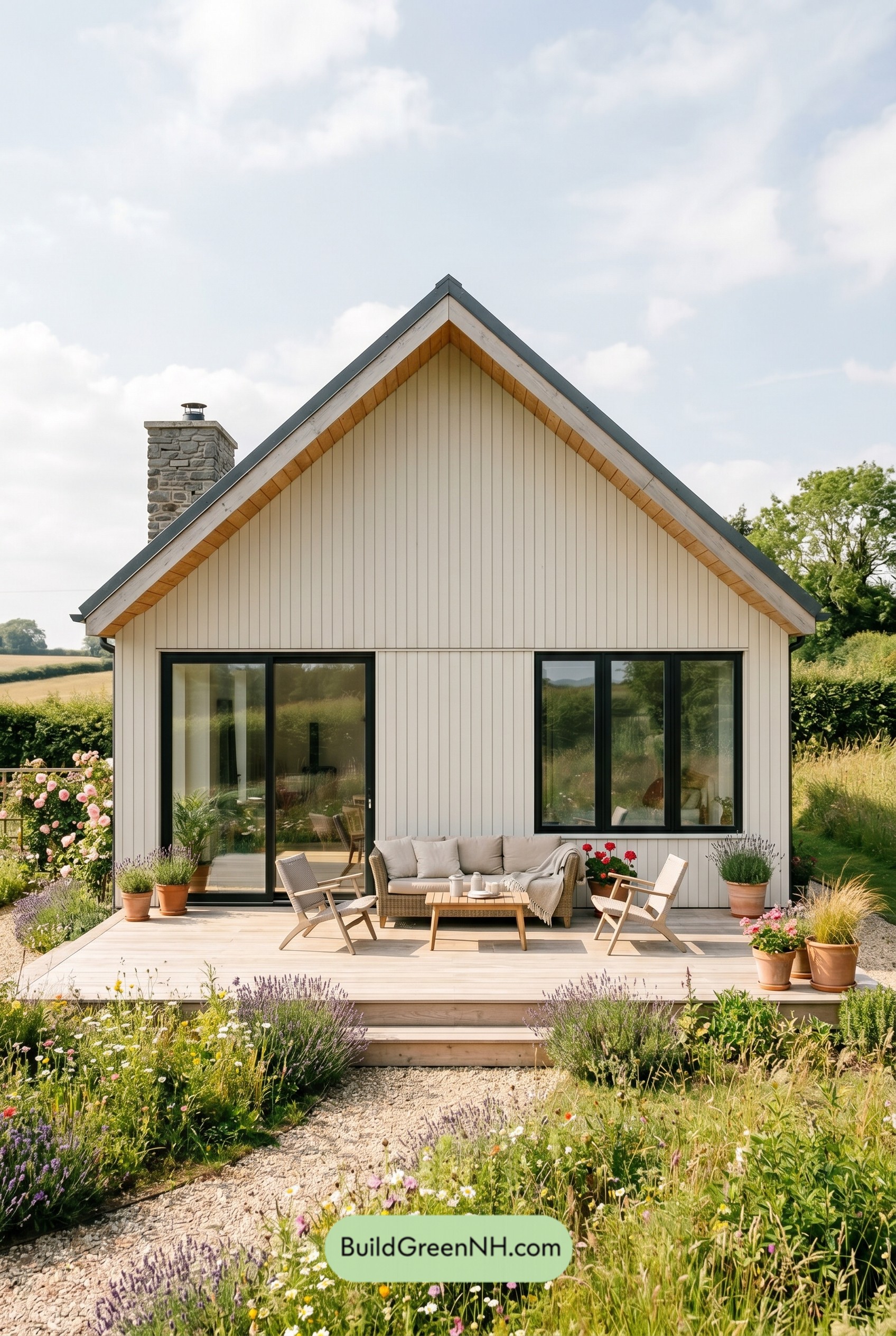

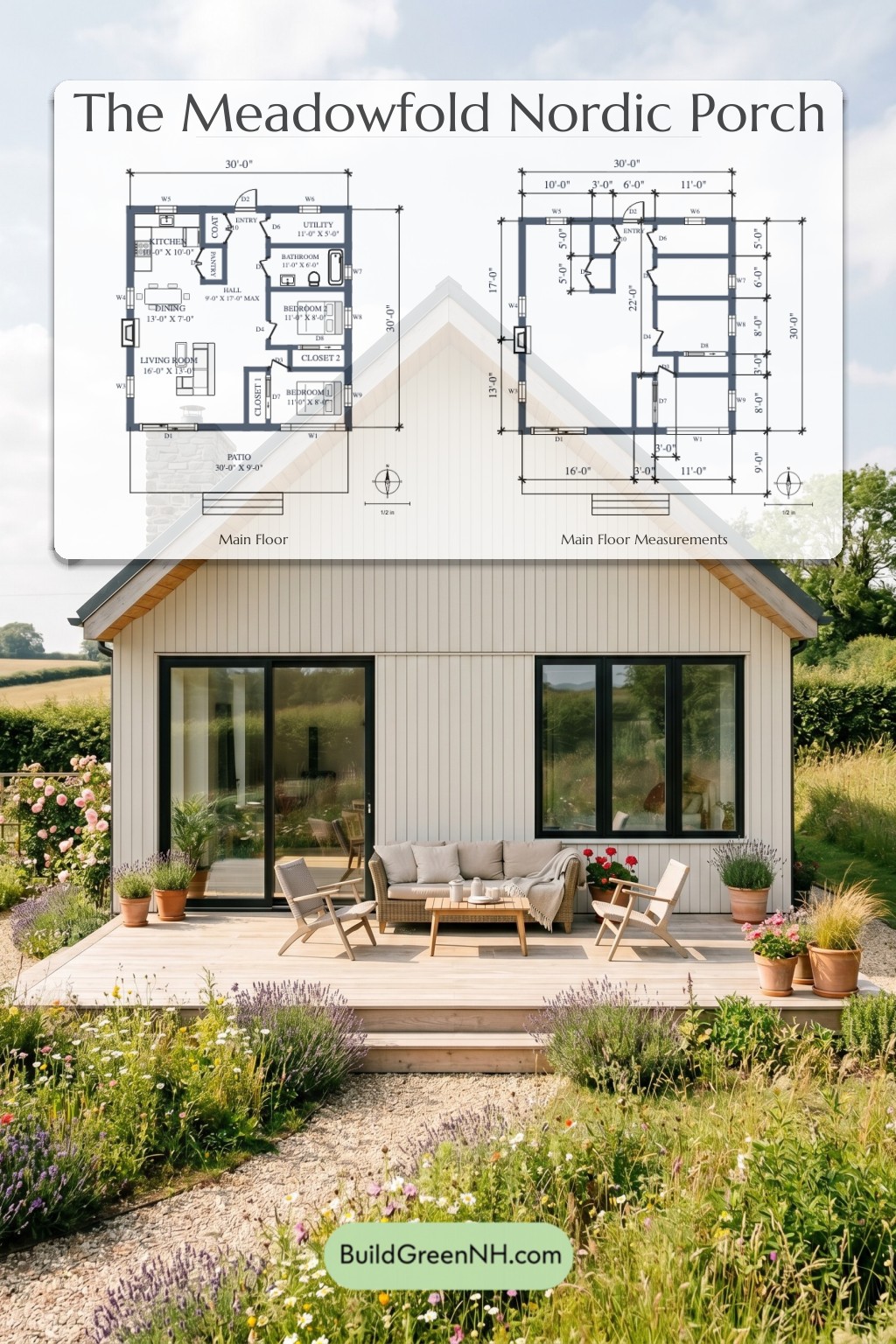
This is a compact 900 sq ft single-level cottage with a clean 30 ft by 30 ft main footprint. The plan is practical, bright, and pleasantly disciplined. No wasted maze-corridors here. The hallway behaves.
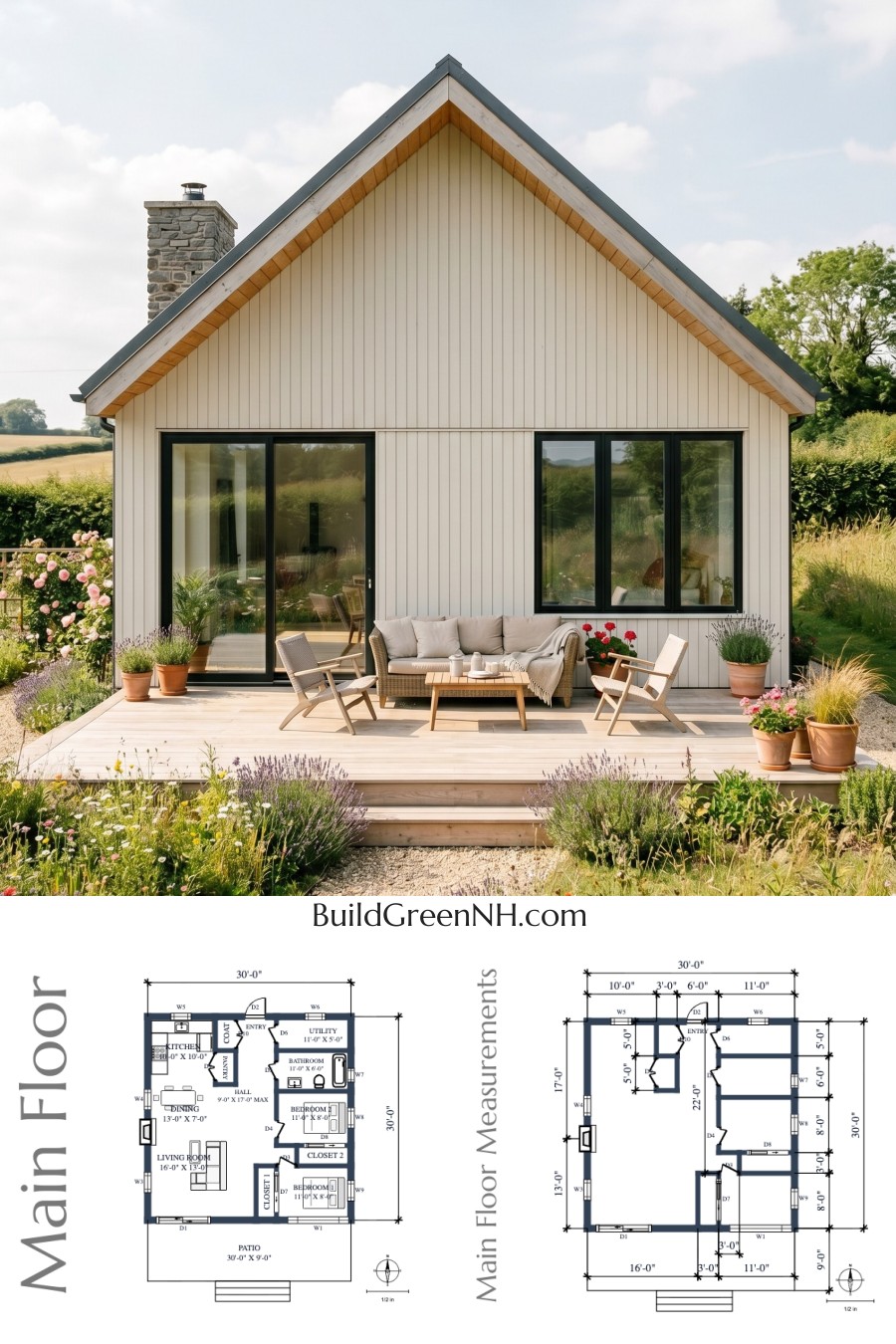
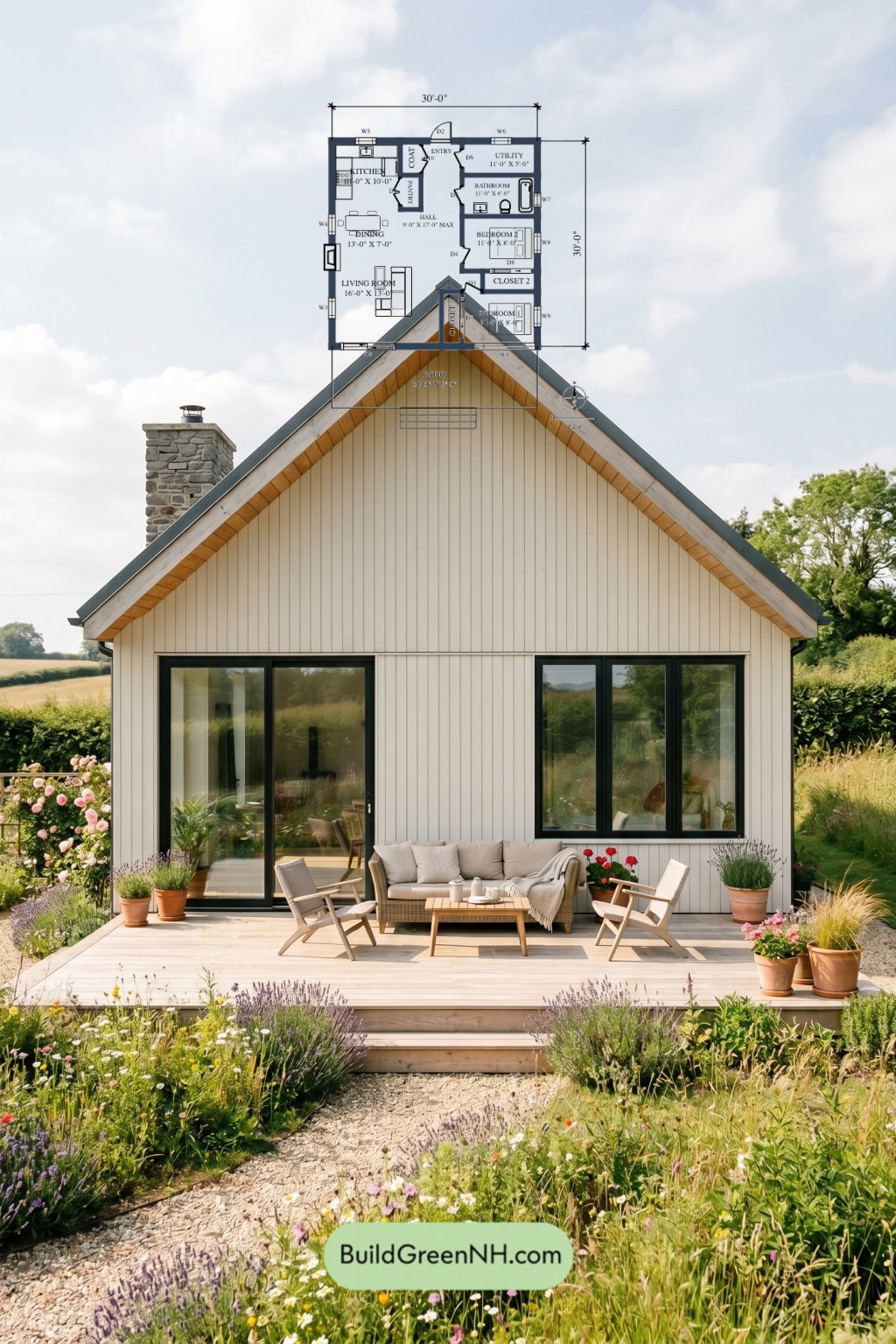
The facade has a simple modern cottage character. A tall front gable gives the house a crisp, confident shape. Vertical light-toned siding keeps the elevation slender and tidy, while dark window frames add a sharp contemporary contrast. The roofline is steep and clean, finished with dark trim and broad pale fascia. Warm wood soffits soften the look, and the stone chimney adds a sturdy traditional accent.
- Total area: 900 sq ft
- Bedrooms: 2
- Bathrooms: 1
- Floors: 1
Main Floor
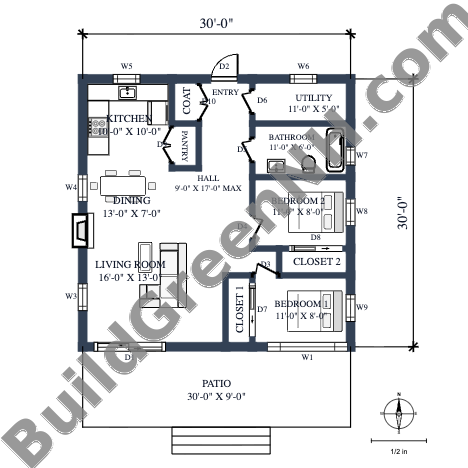
The main floor is arranged as a clear split plan. Living, dining, and kitchen spaces sit to the left in an open social zone. The bedrooms, bathroom, and utility area are grouped to the right for quieter daily use.
The entry opens into a central hall, which works as the organizing spine of the home. Storage is used with care: a coat closet at the entry, a pantry beside the kitchen, and dedicated bedroom closets. Small spaces, big manners.
The living room is the largest interior space at 208 sq ft. It connects directly with the dining area and keeps the plan feeling open. The kitchen is compact at 100 sq ft, supported by a 16 sq ft pantry for practical food storage. The 55 sq ft utility room is placed near the bathroom, keeping service functions neatly tucked away.
- Entryway: 31 sq ft
- Hall: 96 sq ft
- Living Room: 208 sq ft
- Dining: 92 sq ft
- Kitchen: 100 sq ft
- Pantry: 16 sq ft
- Coat Closet: 15 sq ft
- Utility: 55 sq ft
- Bathroom: 66 sq ft
- Bedroom 1: 89 sq ft
- Closet 1: 24 sq ft
- Bedroom 2: 88 sq ft
- Closet 2: 25 sq ft
- Patio: 270 sq ft
The two bedrooms are close in size, which keeps the plan fair and flexible. Bedroom 1 includes a 24 sq ft closet, while Bedroom 2 has a 25 sq ft closet. The patio adds a generous outdoor extension at 270 sq ft, giving the compact home a welcome extra zone for lounging, dining, or pretending to read a book.
We have more facade options of this design:
Urbane Bronze Siding
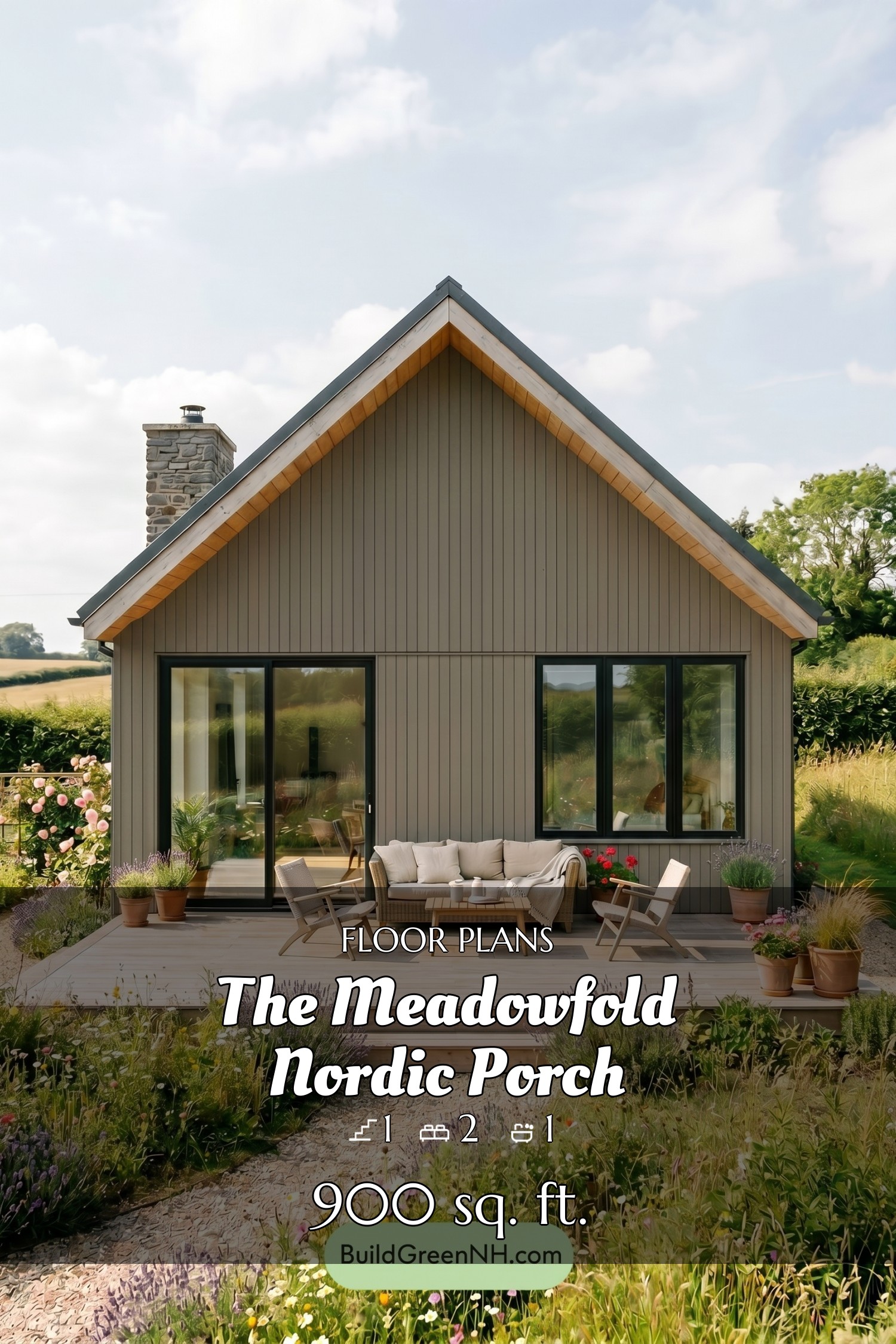
The big change is the siding color: shifting it to Urbane Bronze gives the facade a moodier, sharper presence right away. That deep brown-gray makes the vertical cladding feel more tailored, almost like the house put on a very good jacket, while the simple gabled form suddenly reads bolder and more sculpted.
With the siding darkened, the black window frames blend in more cleanly and the pale wood soffit trim pops with extra warmth. The broad glass openings, stone chimney, and crisp roofline all stand out in a richer way, giving the front elevation a more modern Nordic character with a little extra swagger.
Dusty Blue Siding
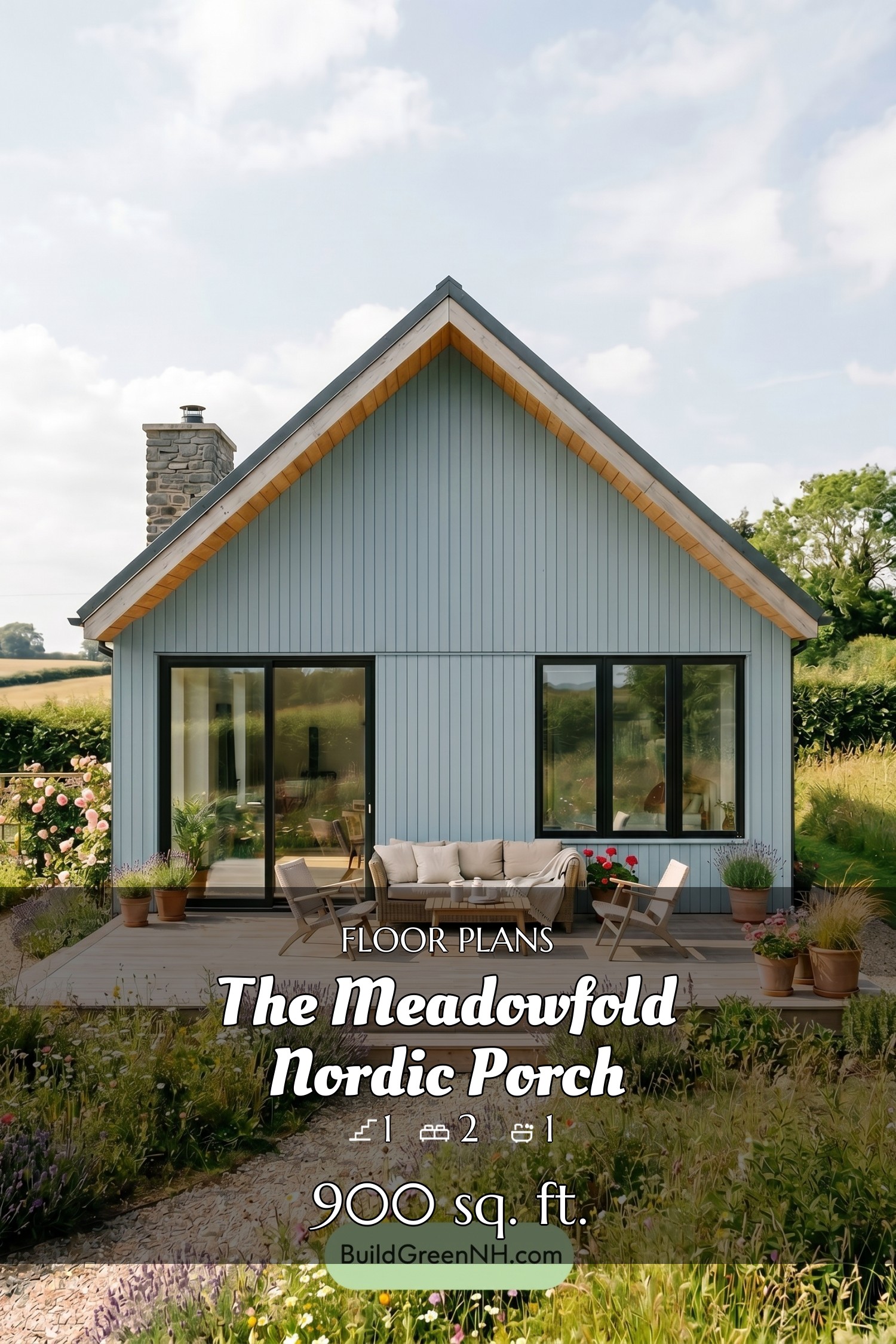
The big change is the siding: it’s now a dusty blue, and that single shift completely remixes the facade. The vertical cladding feels softer and more Nordic-cool, giving the sharp gabled front a calmer, breezier face without stealing its crisp geometry.
That dusty blue also makes the black window frames pop harder and lets the pale timber trim under the eaves glow a bit more—show-off behavior, but tasteful. Against the stone chimney and simple deck frontage, the new color gives the house a cleaner, lighter character, like the facade finally found its favorite sweater.
Deep Navy Siding
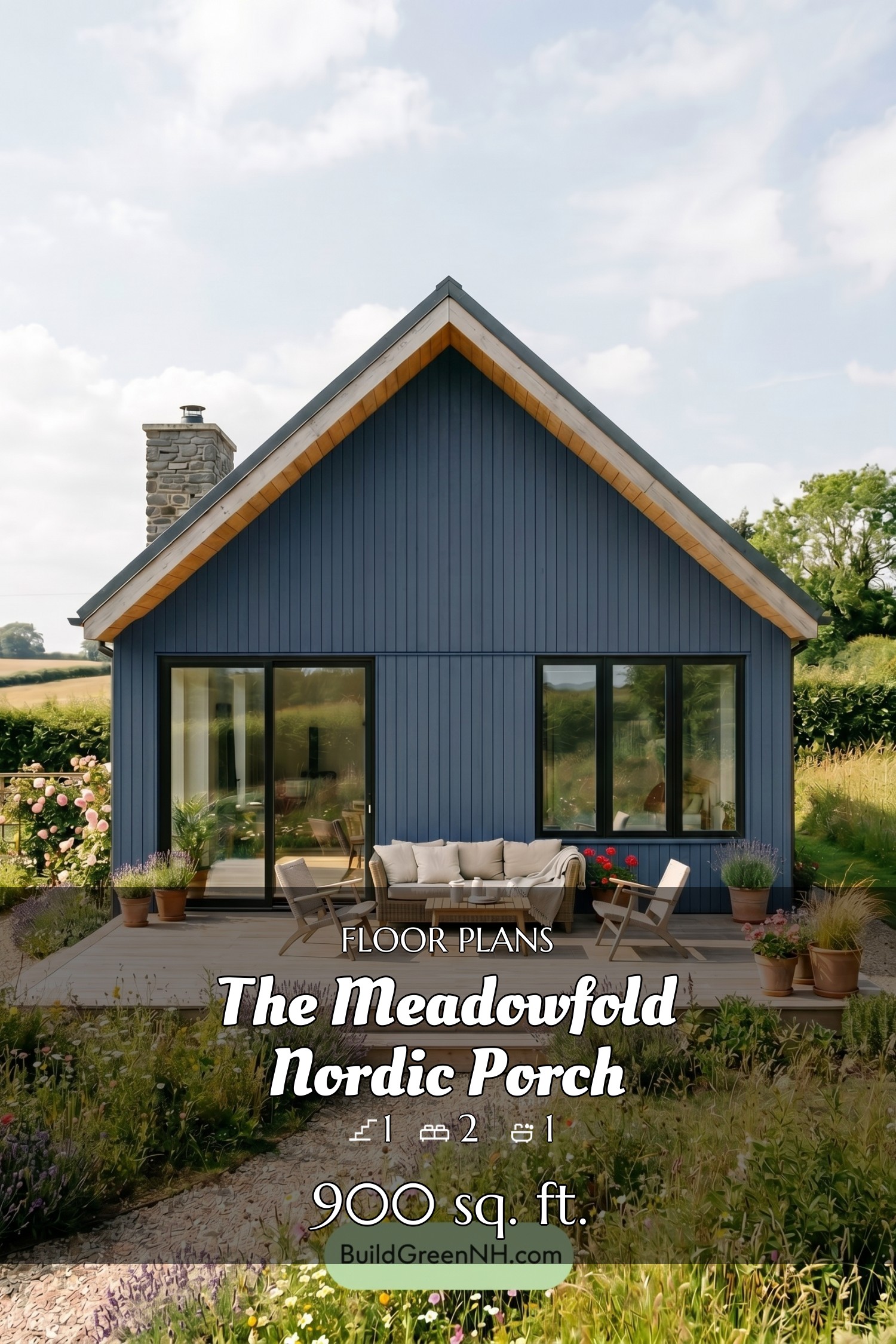
The big change is the siding, now finished in a deep navy that gives the facade a cooler, sharper Nordic mood. It makes the vertical cladding read even cleaner and more tailored, turning the simple gabled front into a neat little show-off without getting loud.
That richer color also boosts the contrast with the pale timber eaves, black-framed glazing, and rugged stone chimney, so every facade element pops a bit more. The broad front window, sliding glass door, and crisp roofline feel more graphic now—calm, modern, and just moody enough to look expensive in a very smug way.
Deep Red Siding
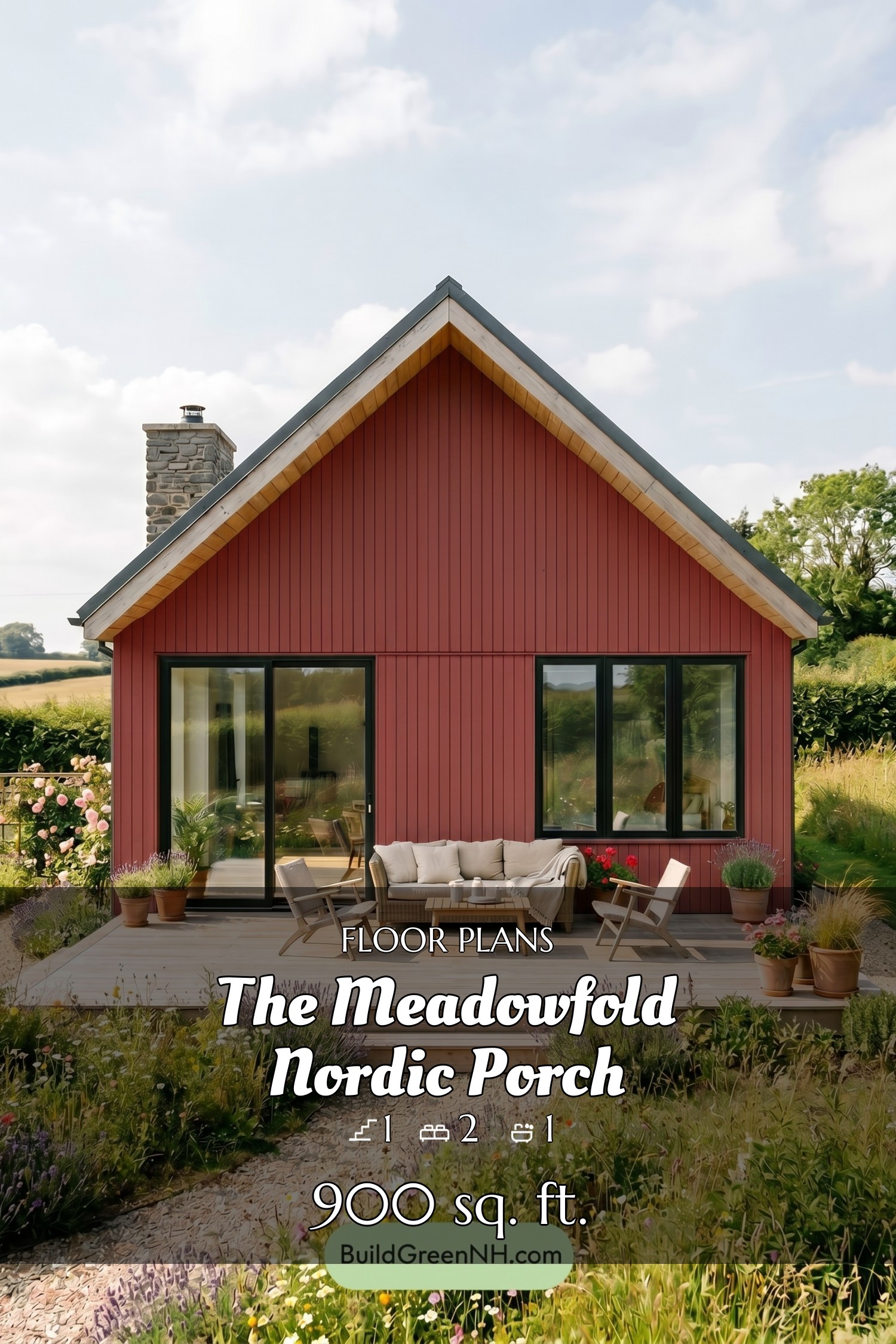
The big change is the siding color: it’s now a deep red, and the whole facade wakes up fast. That richer tone gives the vertical cladding a sharper rhythm, making the simple gabled form feel bolder without losing its clean Nordic calm—like a cottage that suddenly discovered confidence.
Against that deep red skin, the pale wood trim under the roofline looks warmer, the black-framed windows read crisper, and the stone chimney gets a sturdier, more grounded presence. The facade stays minimal and tidy, but the new color adds a punchy barn-house charm that says “quiet design” with just a tiny wink.
Charcoal Siding
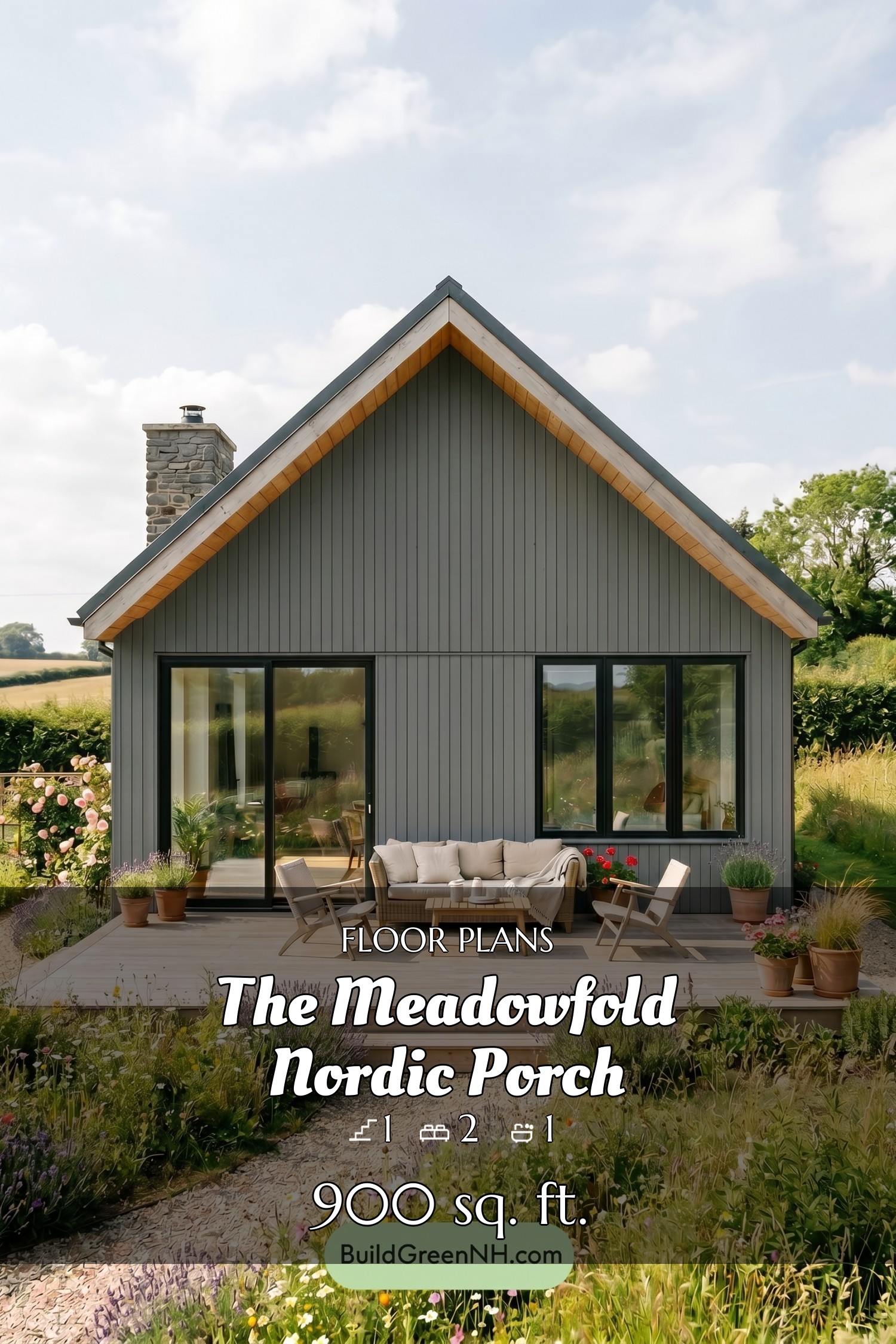
The big change is the charcoal siding, and it gives the front facade a sharper, moodier edge right away. That darker vertical cladding makes the simple gable form feel crisper and more graphic, like the house put on a very stylish coat and meant it.
With the siding deepened to charcoal, the pale wood trim under the roofline pops harder, and the black-framed windows look even sleeker. The stone chimney now reads as a rugged accent instead of a side note, while the whole facade leans more Nordic-modern, calm, clean, and just a little bit dramatic.
Olive Green Siding
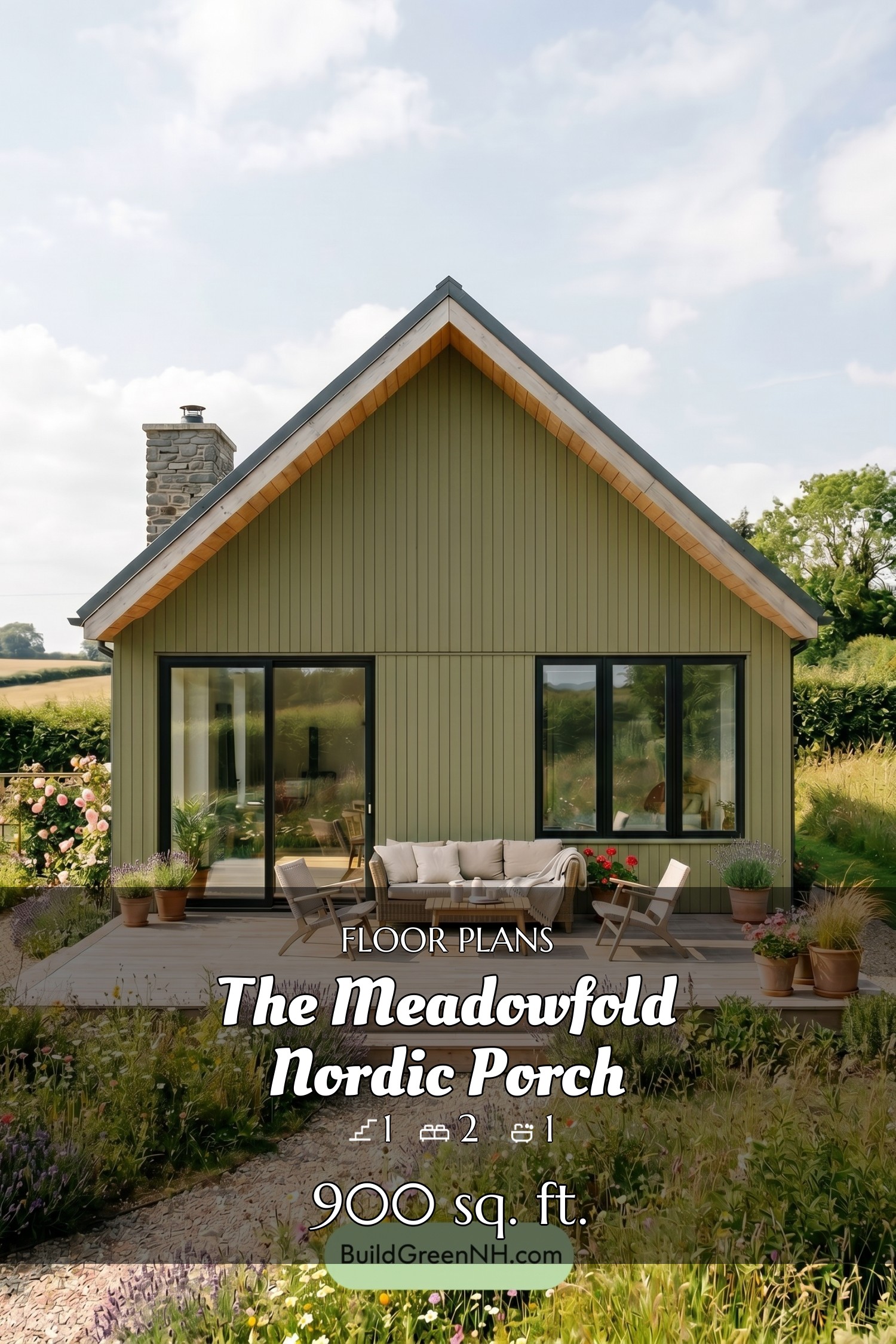
The big change is the olive green siding, and it completely shifts the facade’s mood. It gives the vertical cladding a softer, earthier presence, making the simple gabled front feel more tucked into the landscape—like the house finally decided to dress for the garden.
That new olive tone plays especially well with the pale timber trim under the roofline, the dark window frames, and the stone chimney.
The contrast now feels crisper but still cozy, keeping the clean Nordic lines intact while adding a bit more character. Quietly handsome, with just enough swagger.
Sage Green Siding
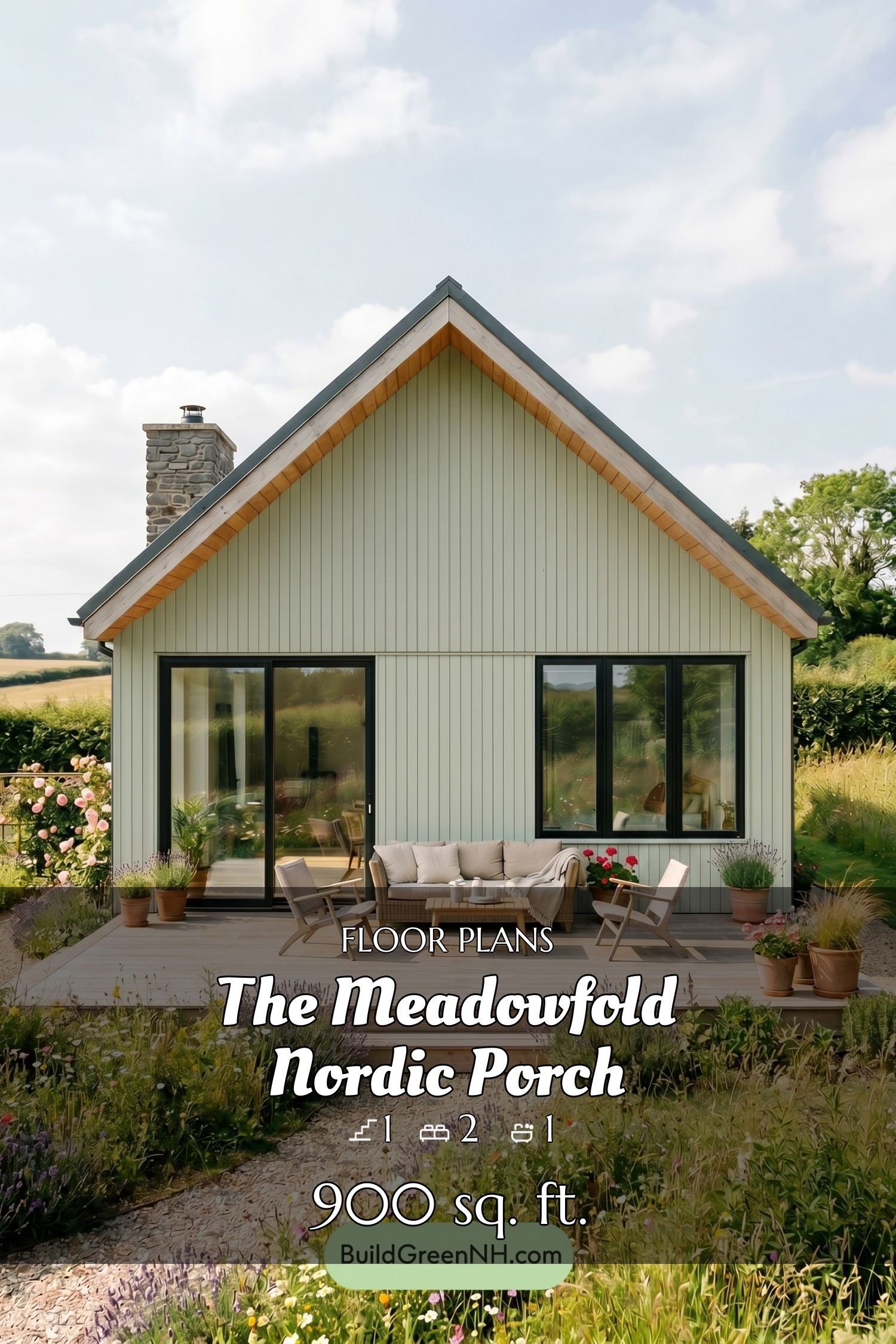
The big change is the siding, now finished in sage green, and it instantly softens the whole facade. That muted tone gives the vertical cladding a calmer, more Nordic feel, making the steep front gable look even cleaner and more tailored—like it put on its best outdoor sweater.
With the new sage green skin, the black-framed glazing pops harder, the pale timber eaves feel warmer, and the stone chimney reads more grounded and rustic. The facade still stays crisp and minimal, but the color swap makes it friendlier, fresher, and a touch smug in the nicest way.
Black Siding
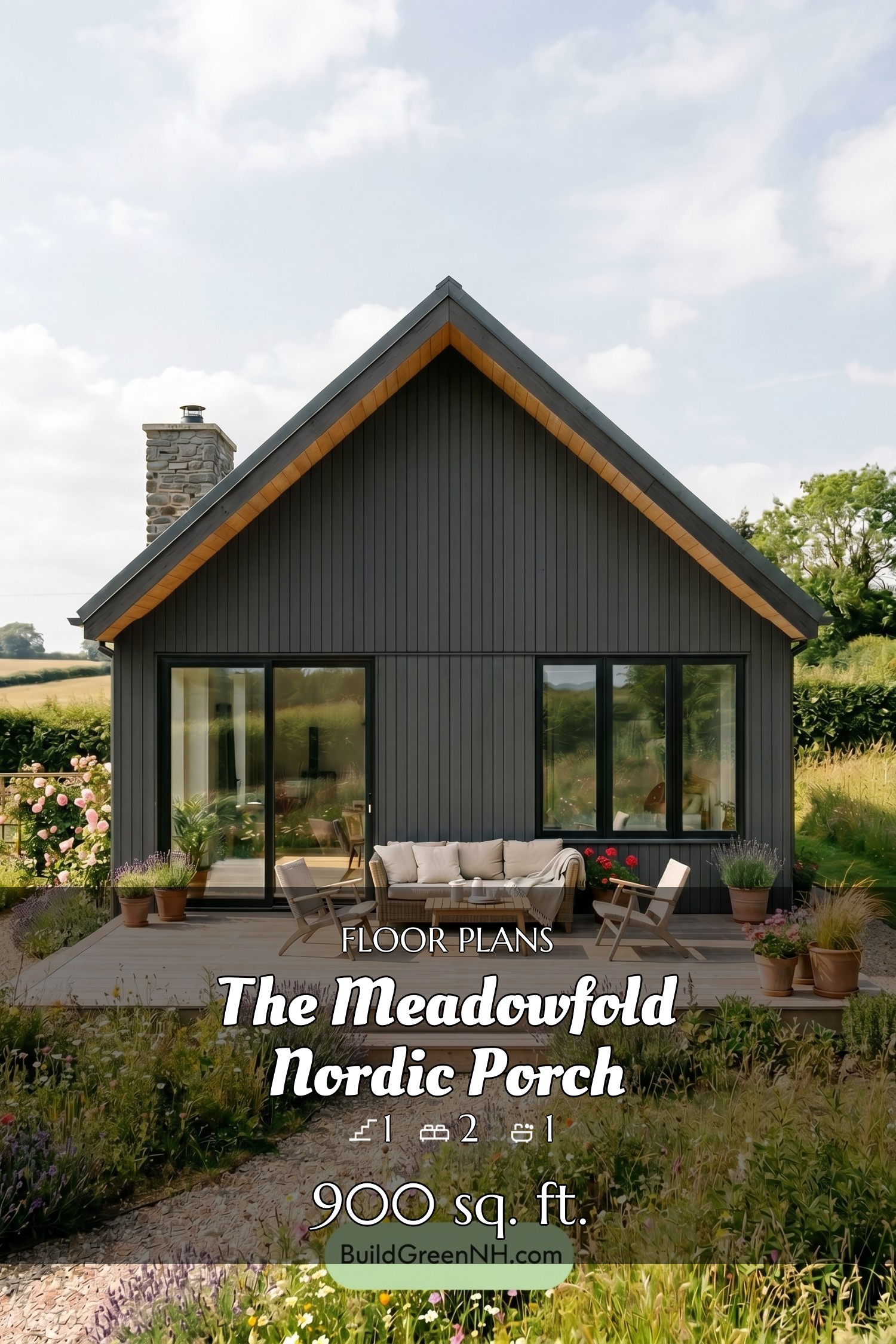
Switching the siding to black gives the facade a sharper, moodier edge right away. The vertical cladding now makes the tall front gable feel even cleaner and more graphic, while the warm timber lining under the roof pops nicely against it—very chic, slightly dramatic, zero tantrums.
That darker skin also pulls the whole front together with the black-framed windows and sliding glass door, so the facade reads as one crisp composition. Even the stone chimney looks more rugged beside it, and the pale deck furniture stands out with a neat little spotlight effect.
Crisp White Siding
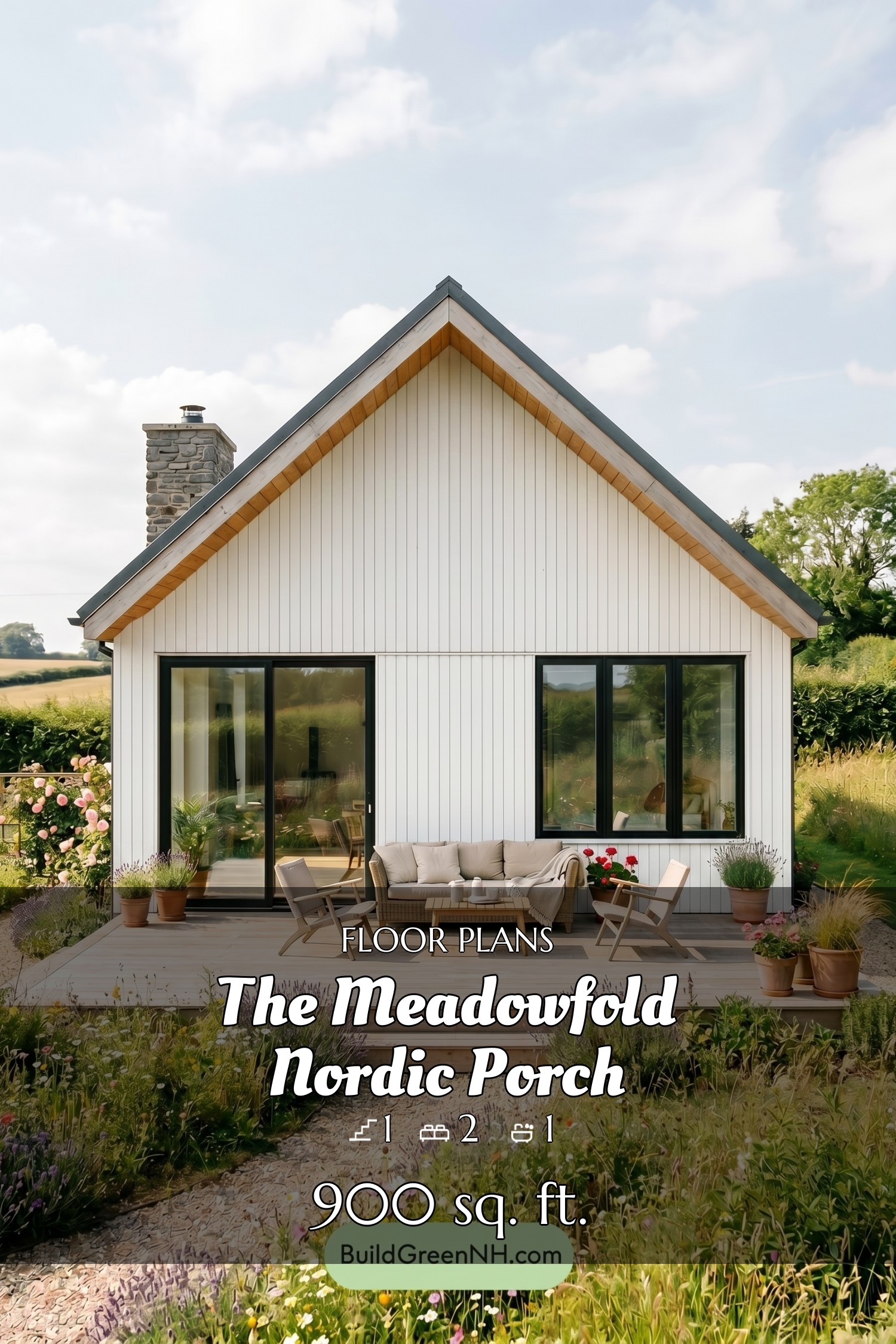
The big change is the siding: it’s now a crisp white, and the whole facade feels instantly brighter, cleaner, and more Nordic-chic. That fresh finish makes the vertical boards read sharper, gives the steep front gable a tidier outline, and lets the black-framed windows pop like they dressed for the occasion.
With the siding lightened up, the warm wood under the eaves stands out more, adding a neat honey-toned accent beneath the roofline. Even the stone chimney looks more sculptural against the pale shell, while the simple deck-front elevation keeps the composition calm, crisp, and just a little smug about how good it looks.
Pin this for later:
Want More?
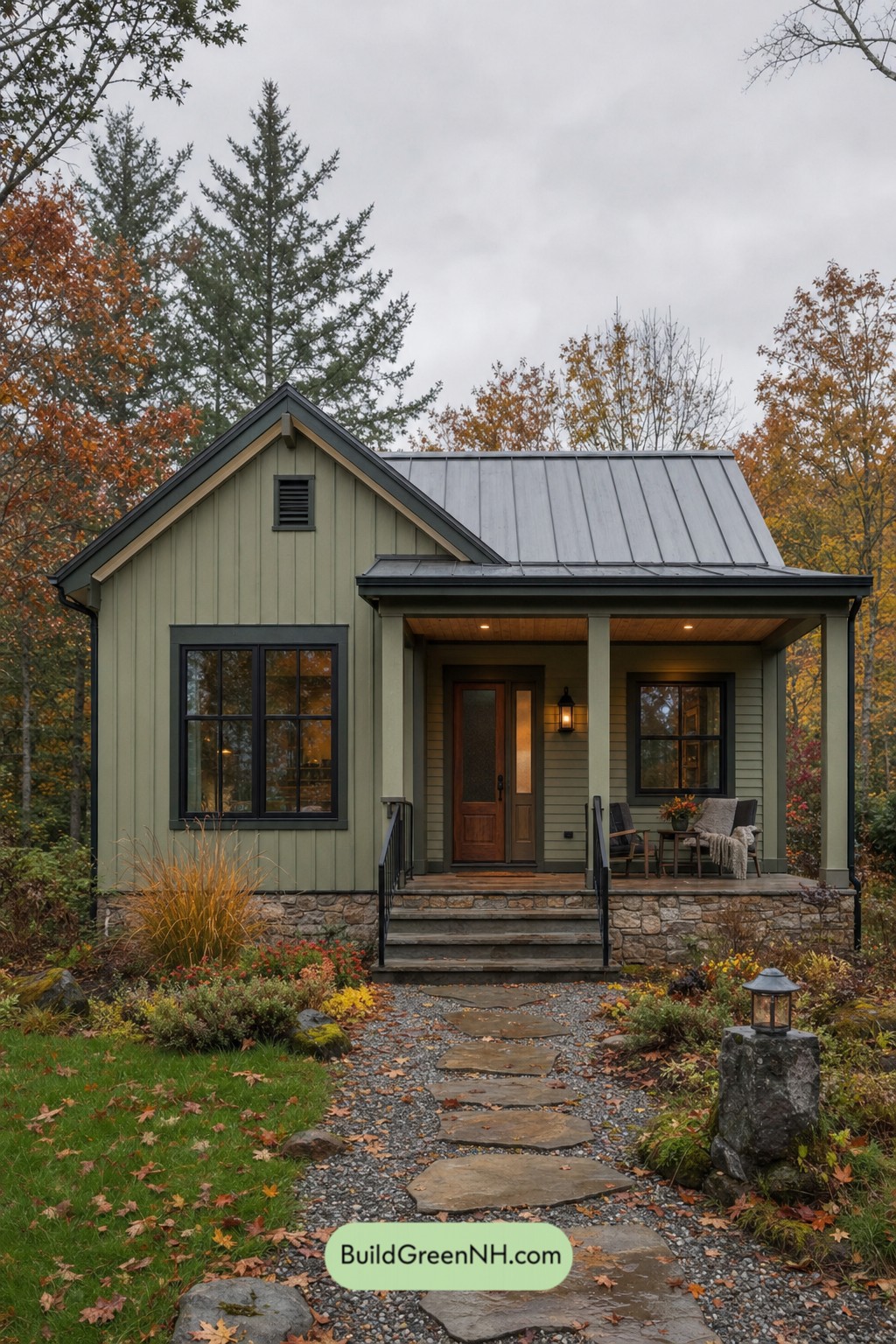 531 sq. ft., 1 Bed, 1 Bath, Single Story Cottage Floor Plans: Mossline Cottage Profile
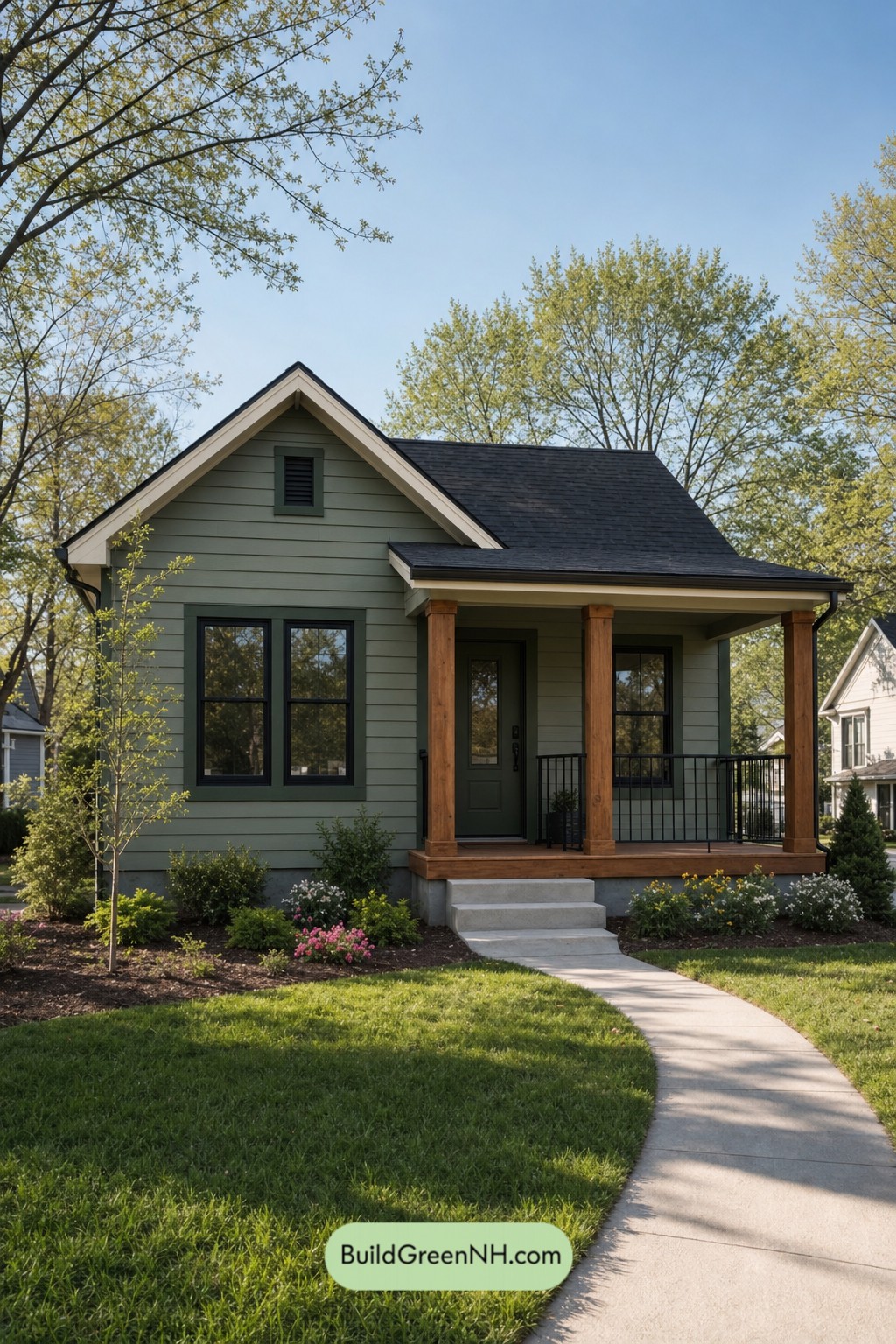 531 sq. ft., 1 Bed, 1 Bath, Single Story Small Modern Cottage Floor Plans: Sage Gable Porchcraft
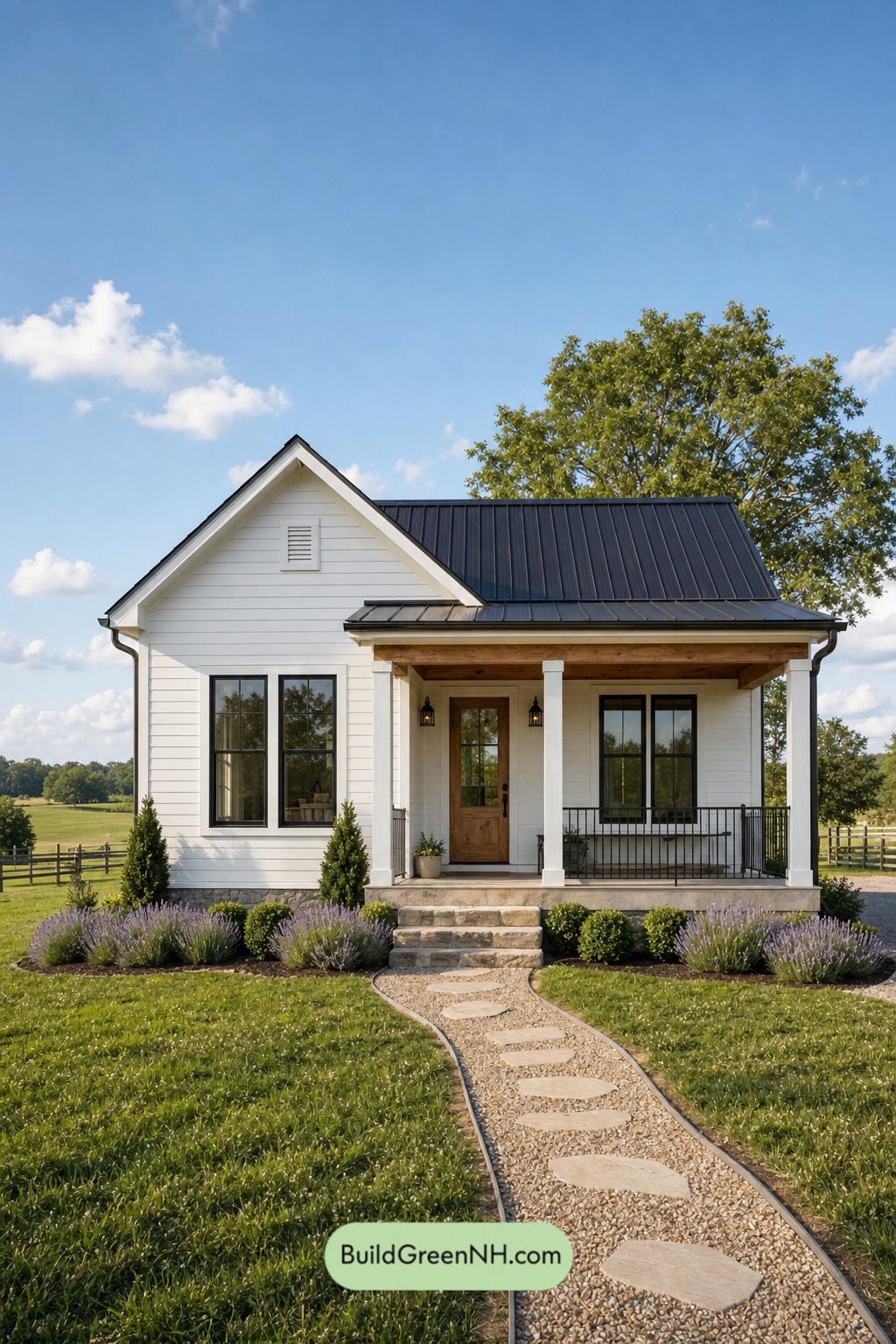 531 sq. ft., 1 Bed, 1 Bath, Small Modern Cottage Floor Plans: Cedarcrest Farm Cottage
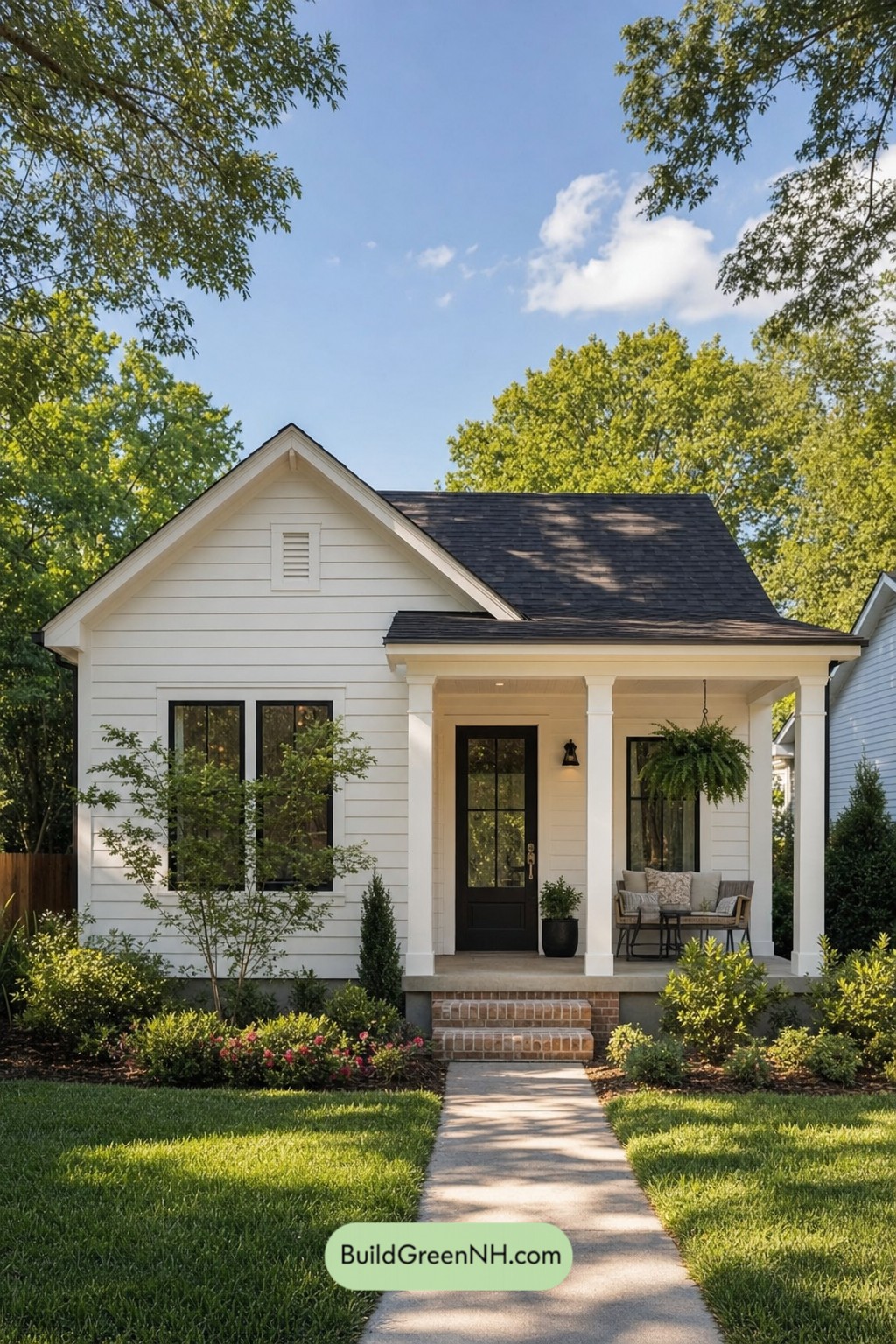 531 sq. ft., 1 Bed, 1 Bath, Single Floor Cottage House Floor Plans: Gablewood Quiet Cottage
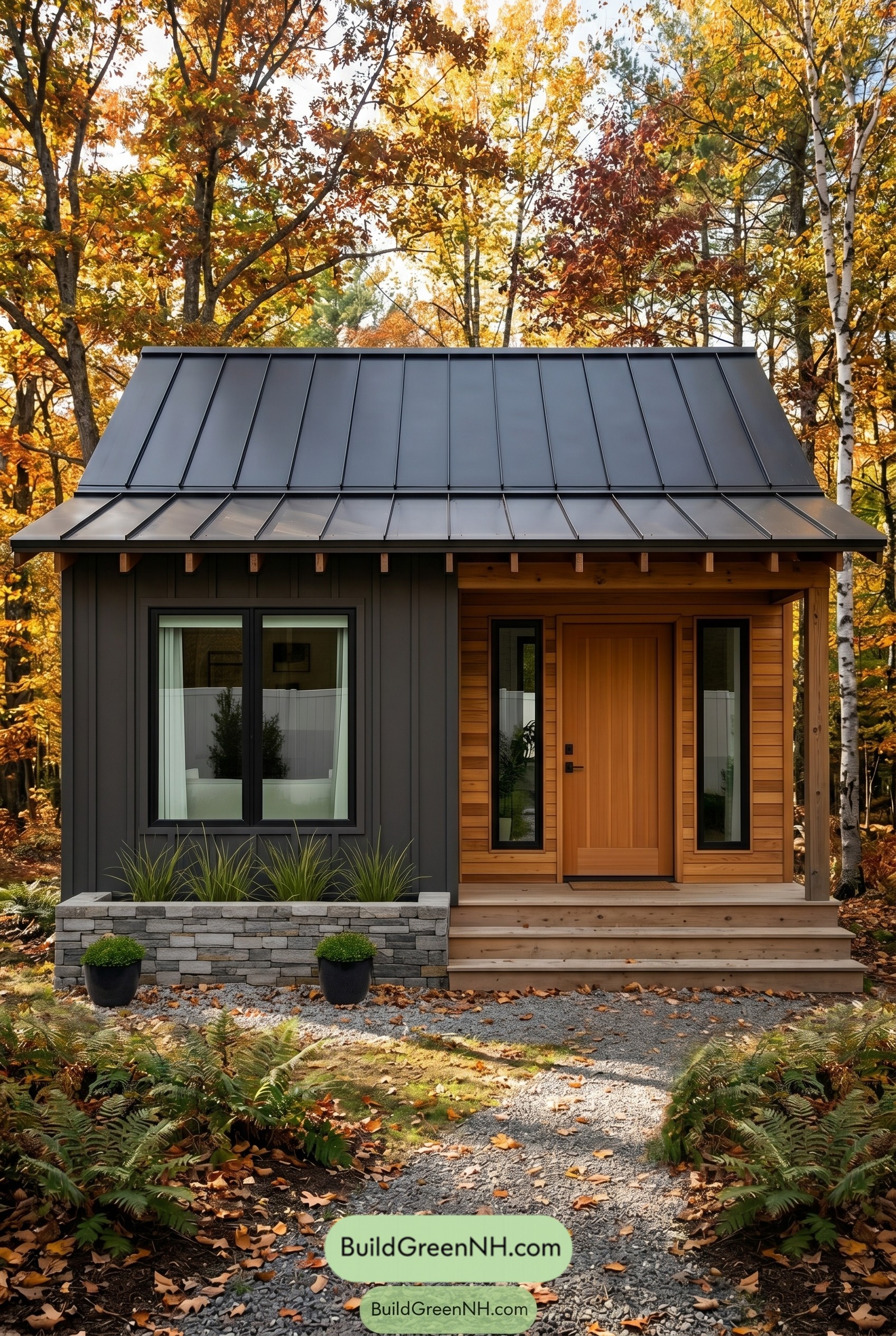 526 sq. ft., 1 Bed, 1 Bath, Single Story Small House Floor Plans: Pine Edge Microhouse
Table of Contents