Last updated on · ⓘ How we make our designs
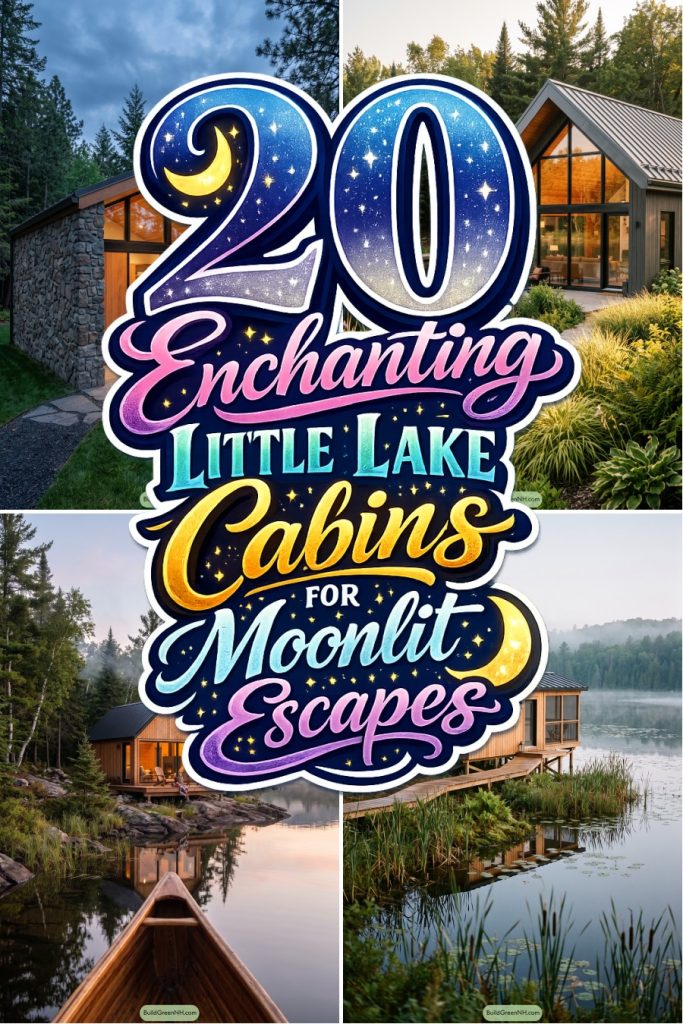
See how tiny lake cabins borrow from canoe sheds, mossy rocks, and birches, then tuck in decks, stoves, solar roofs, and a proper coffee perch without crowding the shore.
Little lake cabins have to be clever, not loud. We shaped these new builds from old canoe sheds, boathouses, mossy rocks, birches, and the very serious business of finding the best coffee spot.
Pay attention to the steep gables, low decks, broad glass fronts, tucked porches, and roofs ready for moody lake weather. Some go dark and quiet, some wear cedar shingles or a tangerine door, because even a tiny cabin can have a personality.
These designs stay compact on purpose, with stoves, docks, solar panels, planted roofs, and canoe corners tucked in without feeling squeezed. Keep going and notice how each one sits close to the water without bossing the lake around.
Gabled Pines Lake Cabin
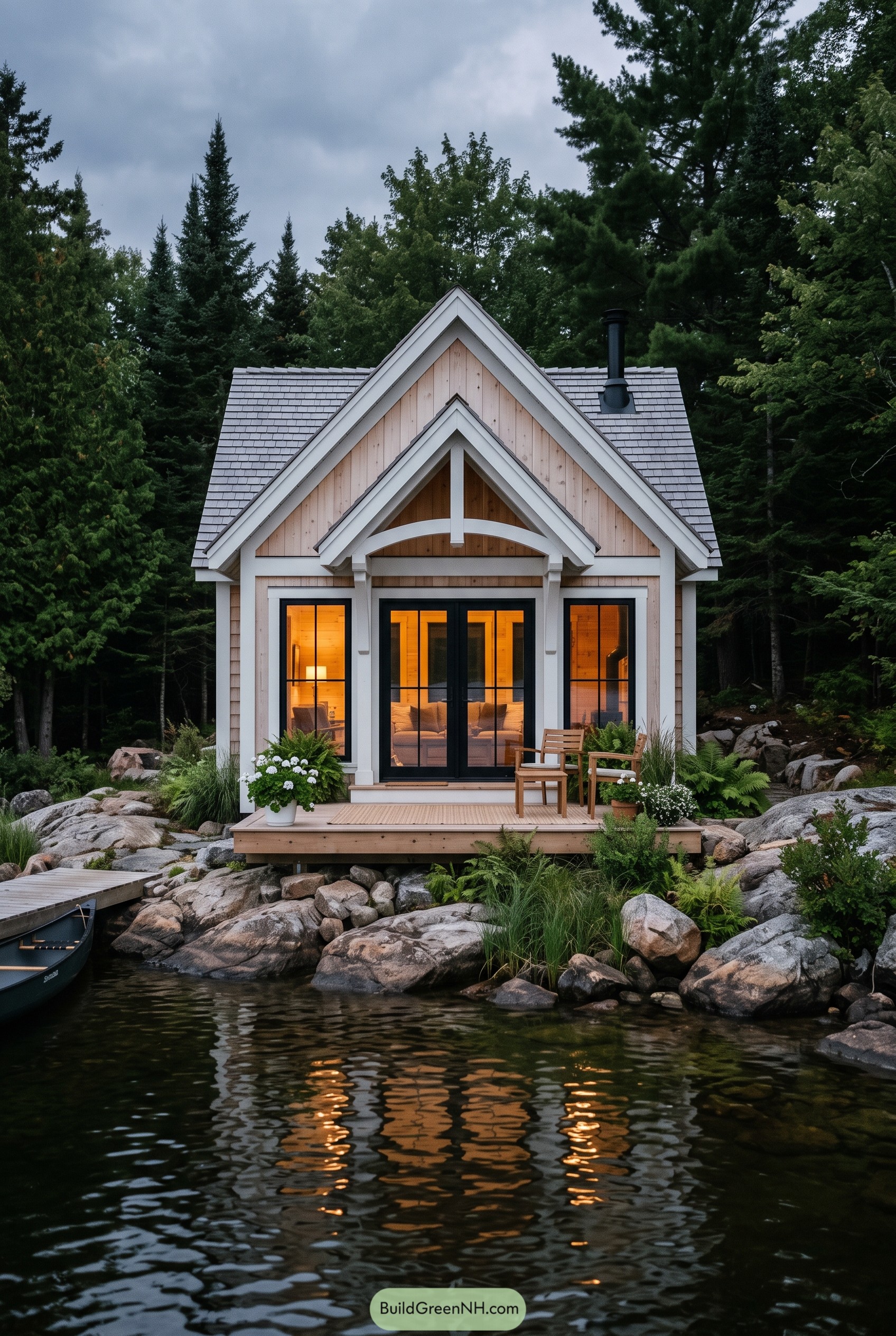

The steep layered gables give this lake cabin a tidy storybook shape, like it wandered out of the pines and found the best seat by the water. Pale vertical siding and crisp white trim keep the front fresh while the black framed doors add just enough city manners.
We pulled inspiration from old lakeside cottages and canoe sheds, then cleaned it up so it feels new without getting fancy. The shallow deck, planted edges, and big glass openings make the cabin feel close to the shore, which is exactly where everyone wants to be anyway.
Cedar Raft Hearth Cabin
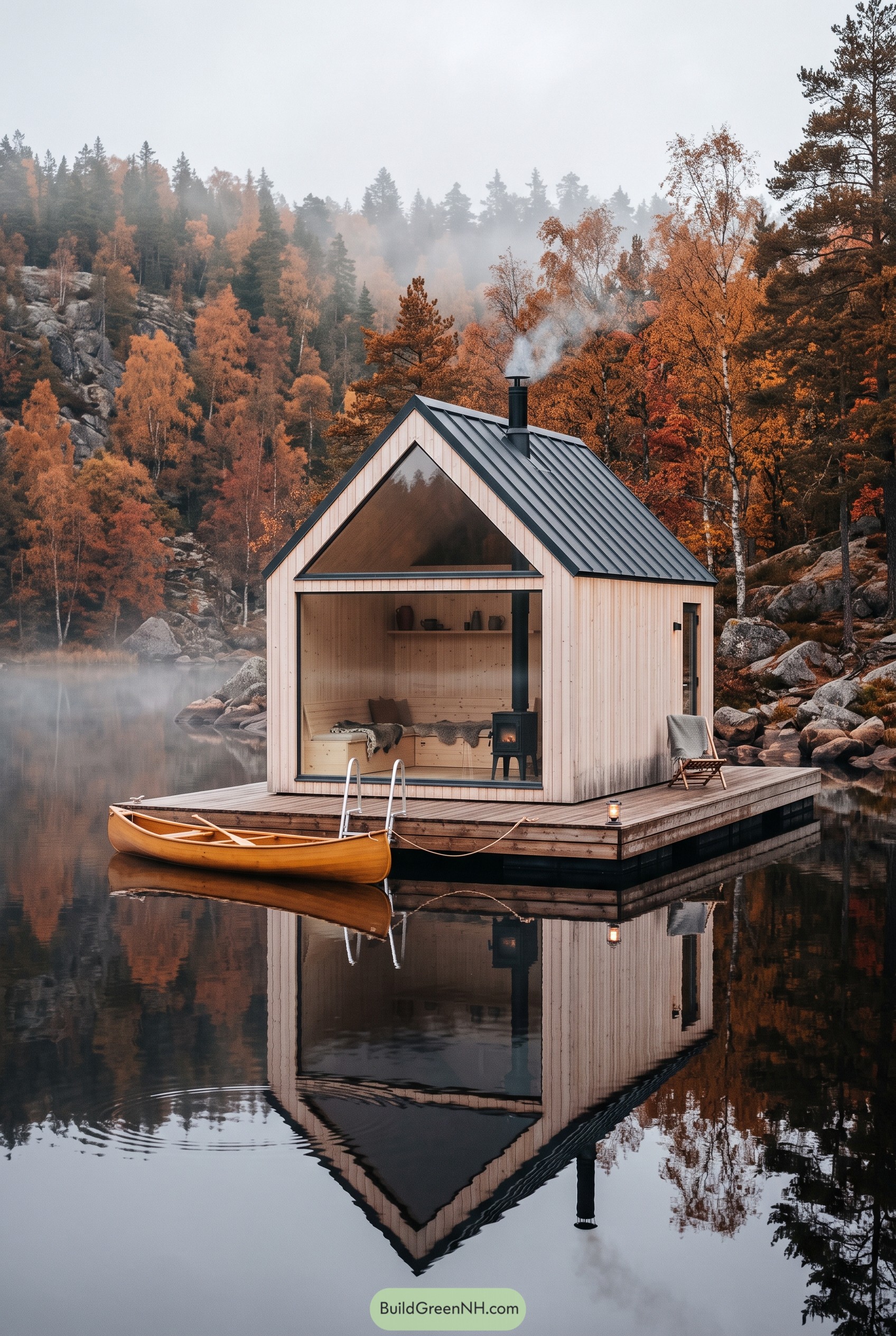

This compact cedar retreat sits on a broad timber dock, pulled close to the water like it forgot land was an option. The steep black metal roof and tall stove pipe give it a crisp little silhouette, while the pale vertical siding keeps the whole thing warm and calm.
The big triangular front window borrows from classic boathouse shapes, framing the sitting nook and making the small room feel much bigger than it is. A canoe at the edge, a simple deck chair, and that tiny wood stove make the design feel practical, cozy, and just a bit smug about having the best seat on the lake.
Black Roof Birch Hideaway
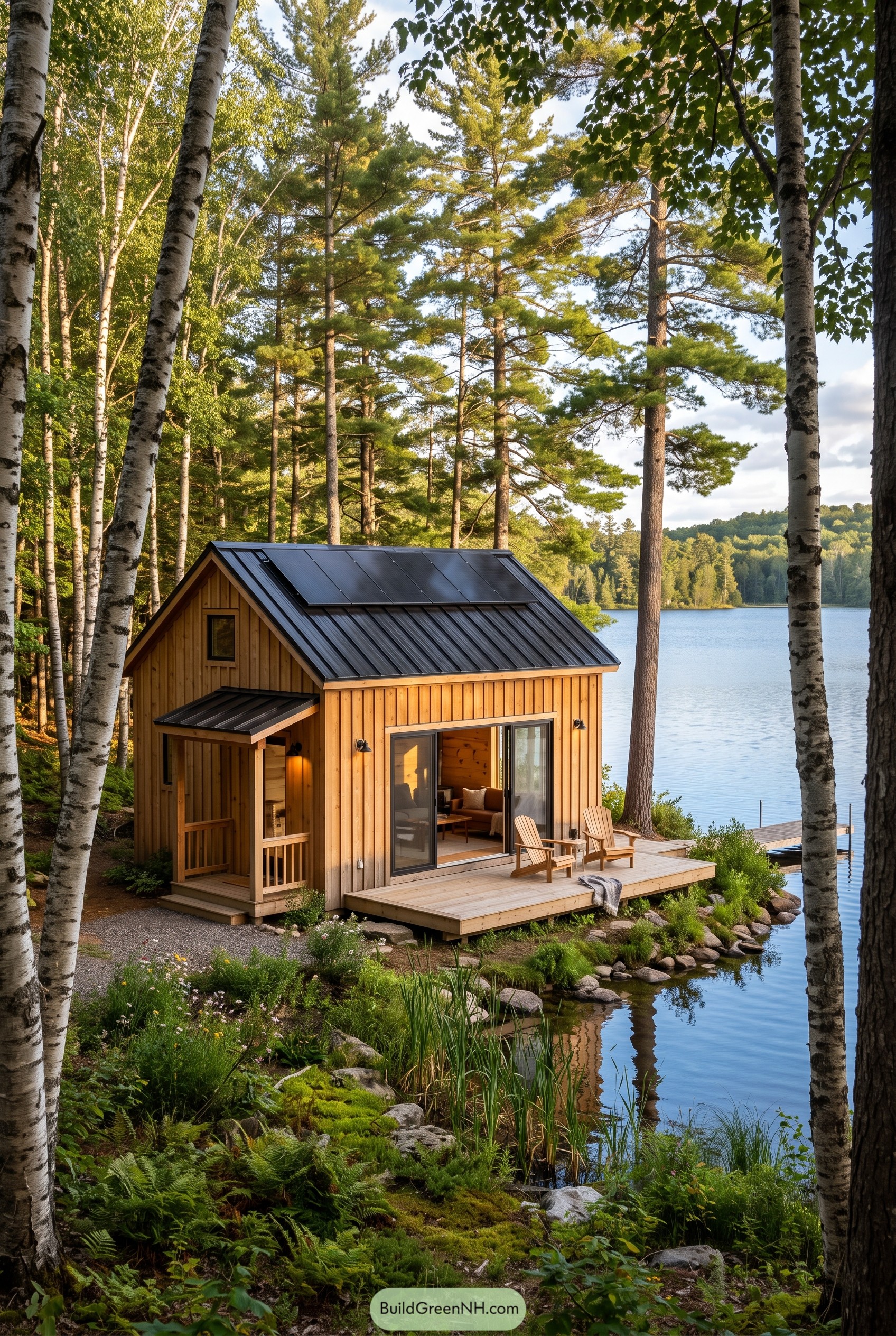

The cabin tucks into the birch and pine shoreline with a simple gabled form, vertical wood siding, and a black metal roof carrying a neat row of solar panels. That compact shape keeps the build calm on the site, while the warm boards help it feel like it grew up there, just with better insulation and fewer mosquitoes inside.
The lakeside deck is kept low and wide so the doors can slide open and turn the main room toward the water. A tiny covered entry, slim exterior sconces, and the clean roof edge give the place a practical polish, because even a weekend hideaway deserves to look sharp.
Ember Shore Pocket Retreat
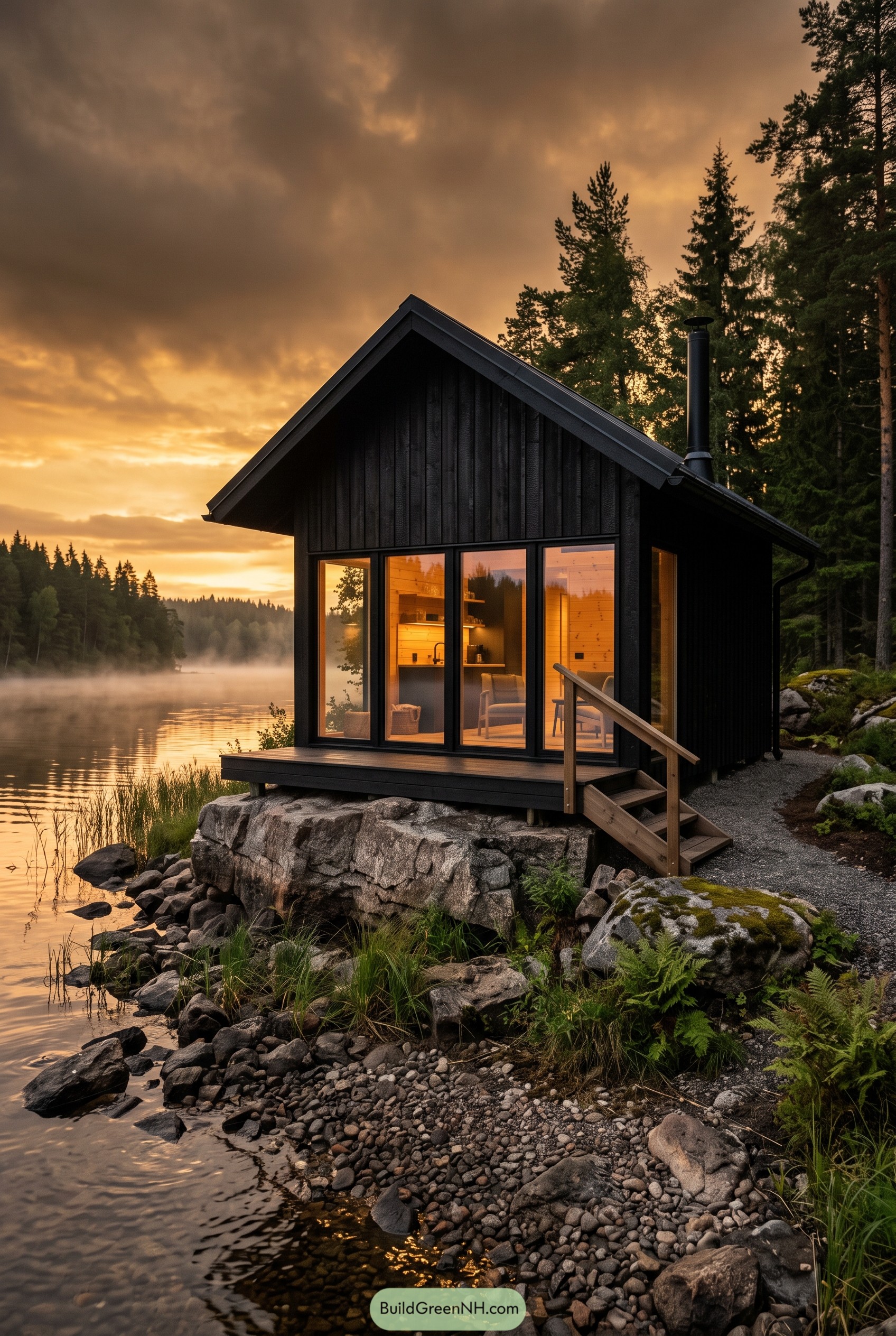

This compact cabin leans into a dark, tucked away look, with vertical black siding and a steep gable that mirrors the firs behind it. The front glass wall keeps the lake close from the sitting area and kitchen, because nobody comes this far out to stare at drywall.
The design was inspired by shoreline rocks, quiet pine forests, and that last orange glow after dinner. A small deck, simple timber steps, and the black stove pipe keep it practical, cozy, and just a bit smug about having the best seat on the water.
Moss Cap Canoe Cabin
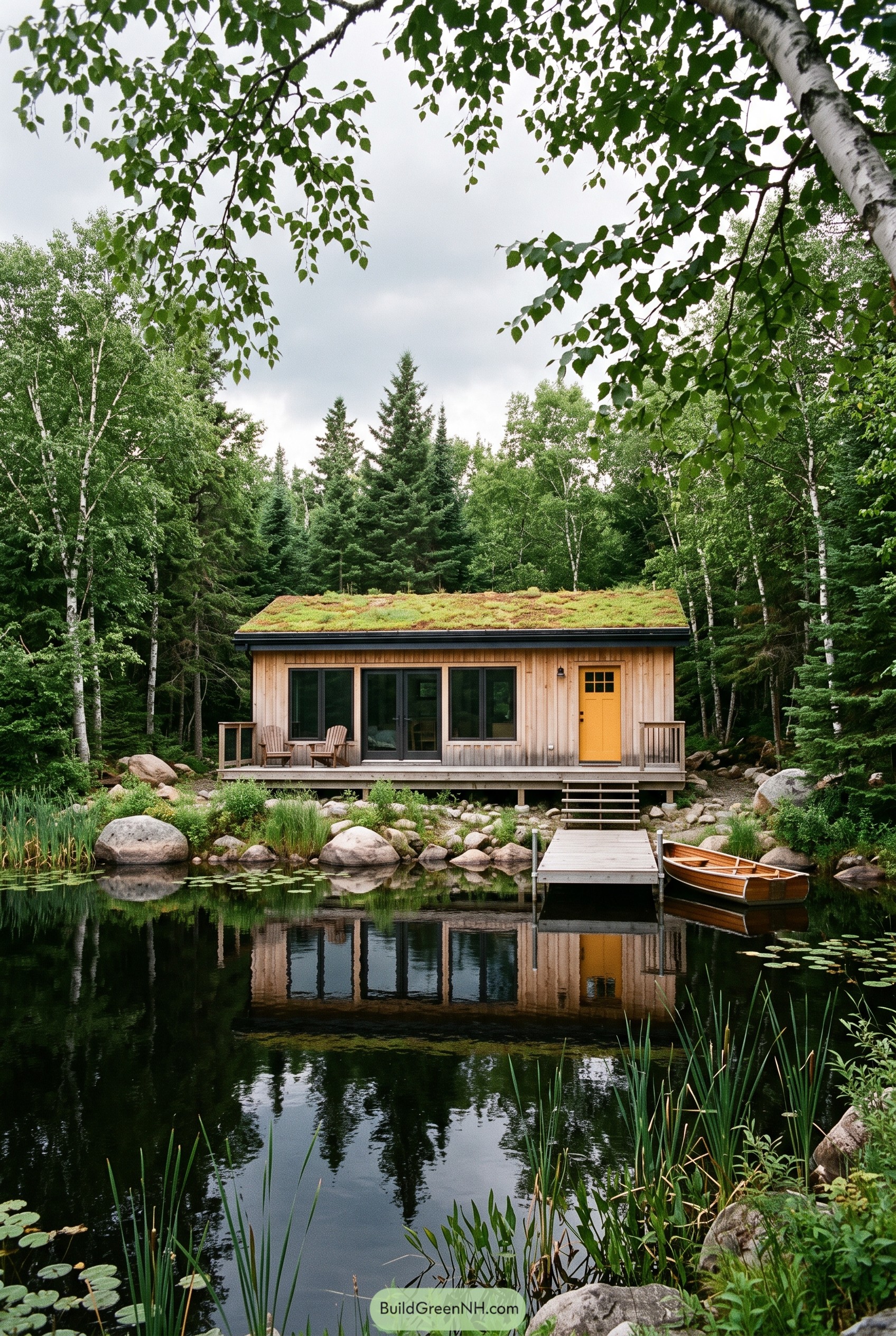

This compact lakeside cabin tucks a soft planted roof under the birch canopy, taking its cue from the mossy rocks along the shore. The vertical wood siding keeps the front simple, while the sunny yellow door adds a small wink, because cabins deserve accessories too.
A low deck stretches toward the dock and canoe, making the water feel like part of the floor plan. Wide glass doors keep the living space visually tied to the lake, and the planted roof helps soften rain runoff while blending the cabin into the trees.
Glass Gable Waterline Lodge
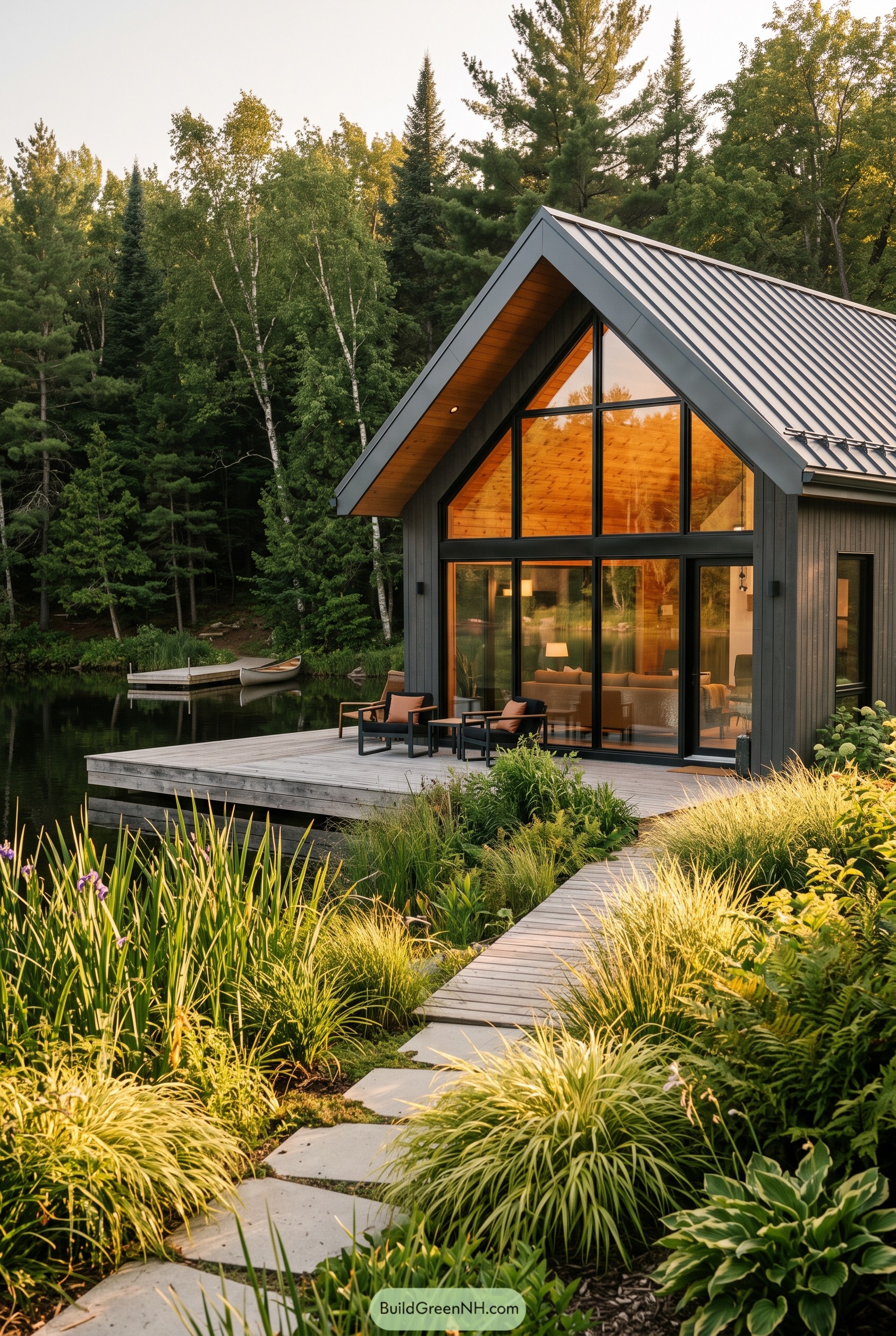



This cabin leans into a clean A frame profile, with a standing seam metal roof wrapping down over charcoal vertical siding and warm cedar tucked under the peak. The big triangular glass wall faces the water so the main room feels wide open, which is exactly what you want when the lake is basically the best TV in the house.
The design was inspired by old shoreline boathouses, only sharpened up a bit so it feels fresh without getting fussy. A broad deck, soft planting, and the simple boardwalk path make the whole place feel easy to use, even when someone forgets the canoe paddles again.
Granite Eave Timber Cabin
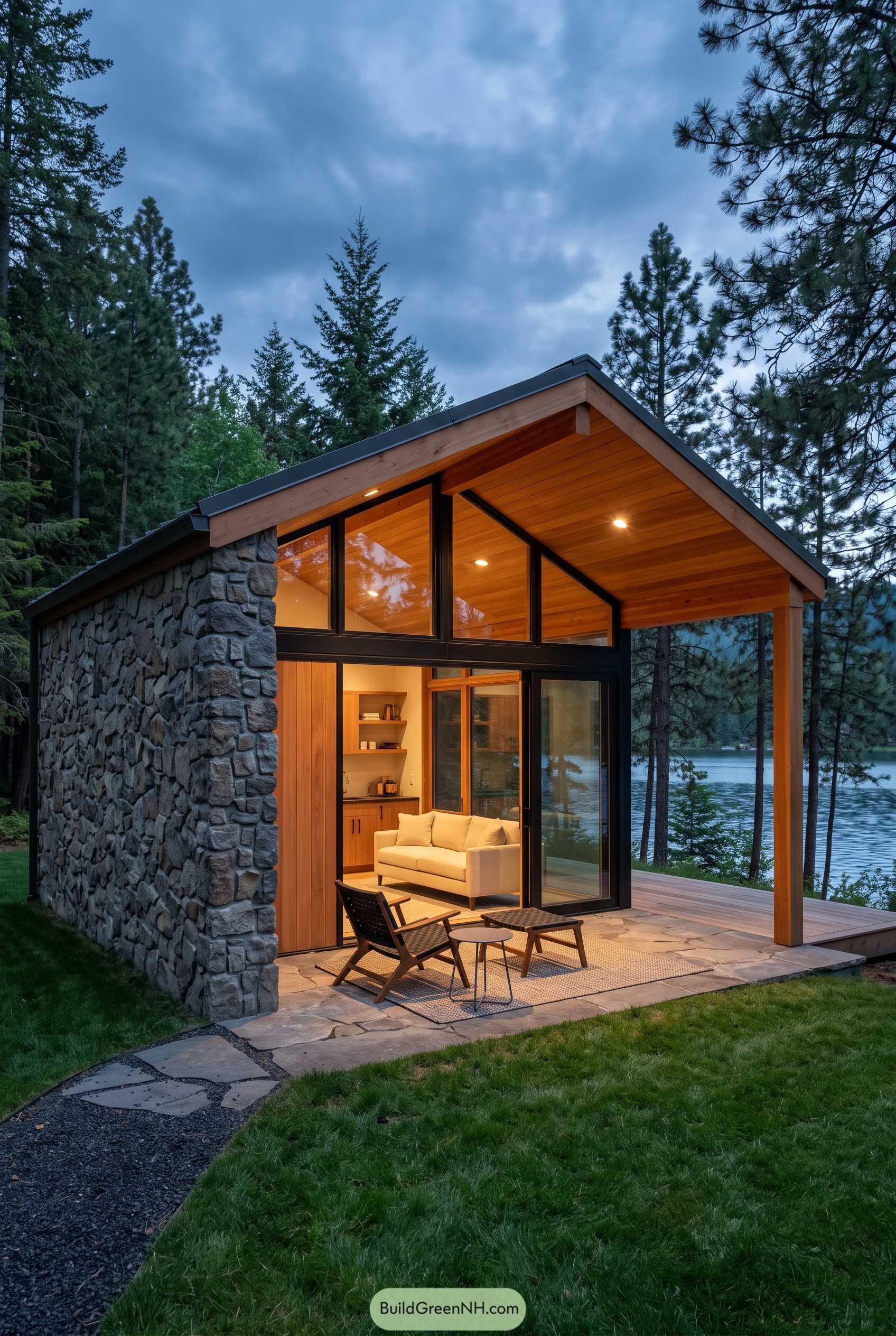

This cabin takes its cue from the rocky bank and the tall pines around it, so the stone wall feels like it grew out of the site. The big timber roof reaches forward over the deck, which is great for rainy mornings and suspiciously long coffee breaks.
Black framed glass opens the living room toward the water, while the warm wood ceiling keeps the inside feeling calm and cozy. The compact layout is simple on purpose, giving the view the best seat in the house without making the cabin feel too precious.
Lantern Dock Shingle Cottage
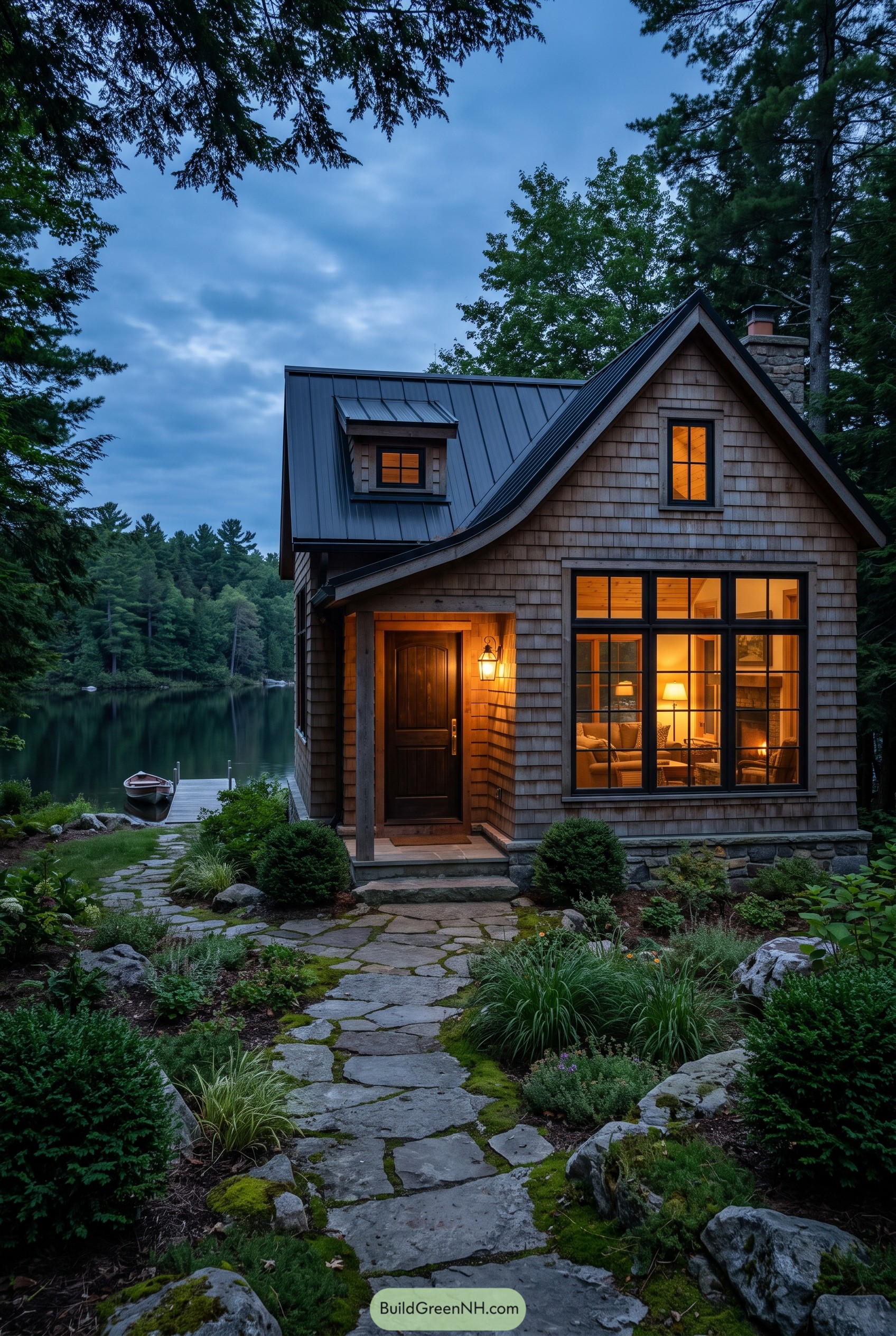

Cedar shingles wrap this cottage in a soft wood texture, while the black standing seam roof bends into a snug little entry that feels made for wet boots and bad jokes. We pulled the idea from old boathouses and pine tucked shorelines, then gave it cleaner windows so the living room can glow across the water at night.
The stone base anchors it into the garden, and the flagstone path makes the walk from porch to dock feel easy and kind of inevitable. Tall divided windows, a simple chimney, and that compact gable give the cabin a classic lake presence without acting too fancy about it.
Solar Ledge Lake Studio
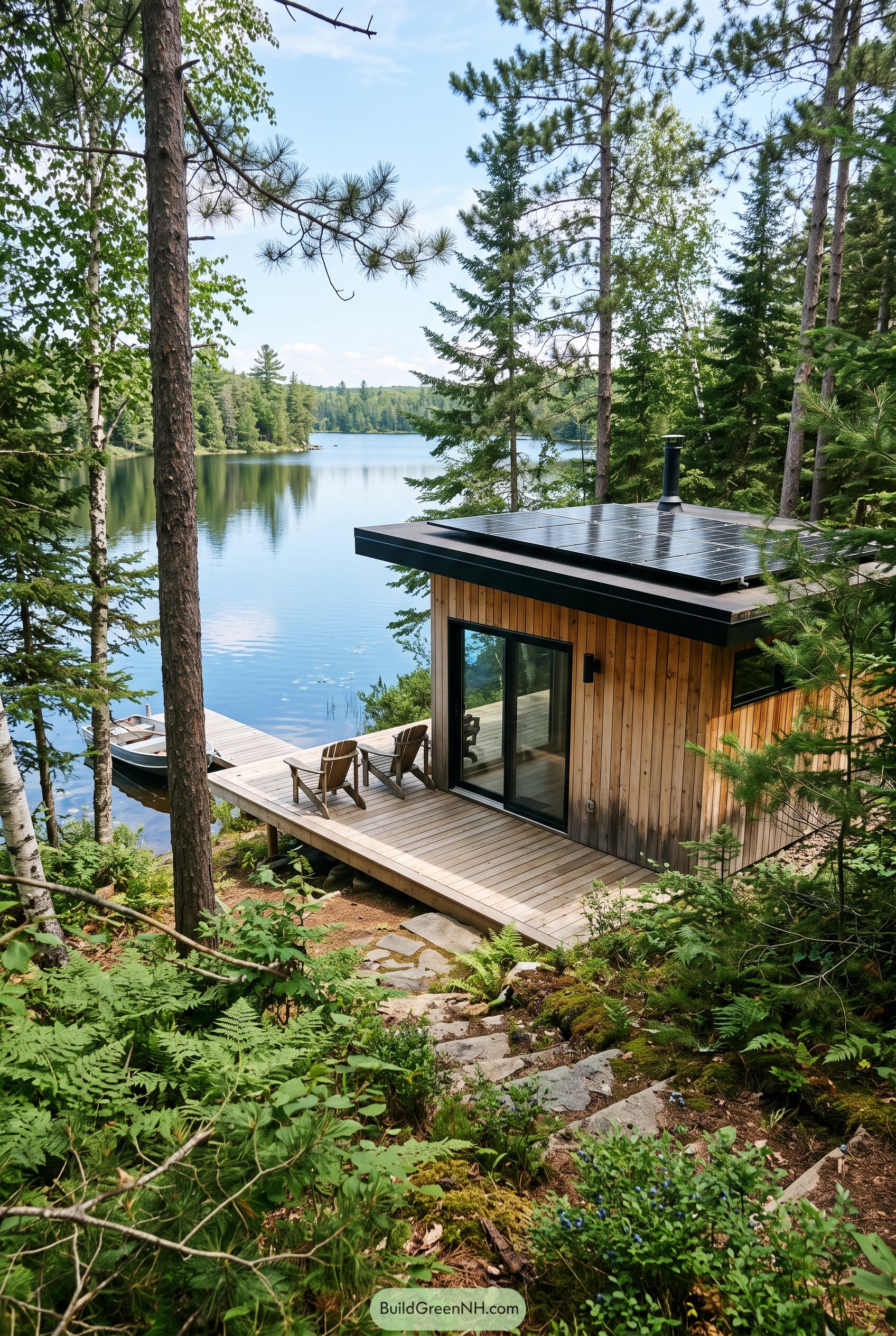

This compact lakeside studio tucks into the trees with warm vertical cedar siding and a crisp black roof that keeps the profile low. The idea came from old dock sheds and canoe landings, just cleaned up enough that nobody has to pretend they enjoy splinters.
The solar panels sit right on the flat roof, so the cabin can sip power while the deck handles the important business of coffee, chairs, and lake staring. Wide glass doors open the room to the deck, and the narrow footprint leaves ferns, pines, and the stone path feeling like part of the plan.
Raven Gable Rain Porch
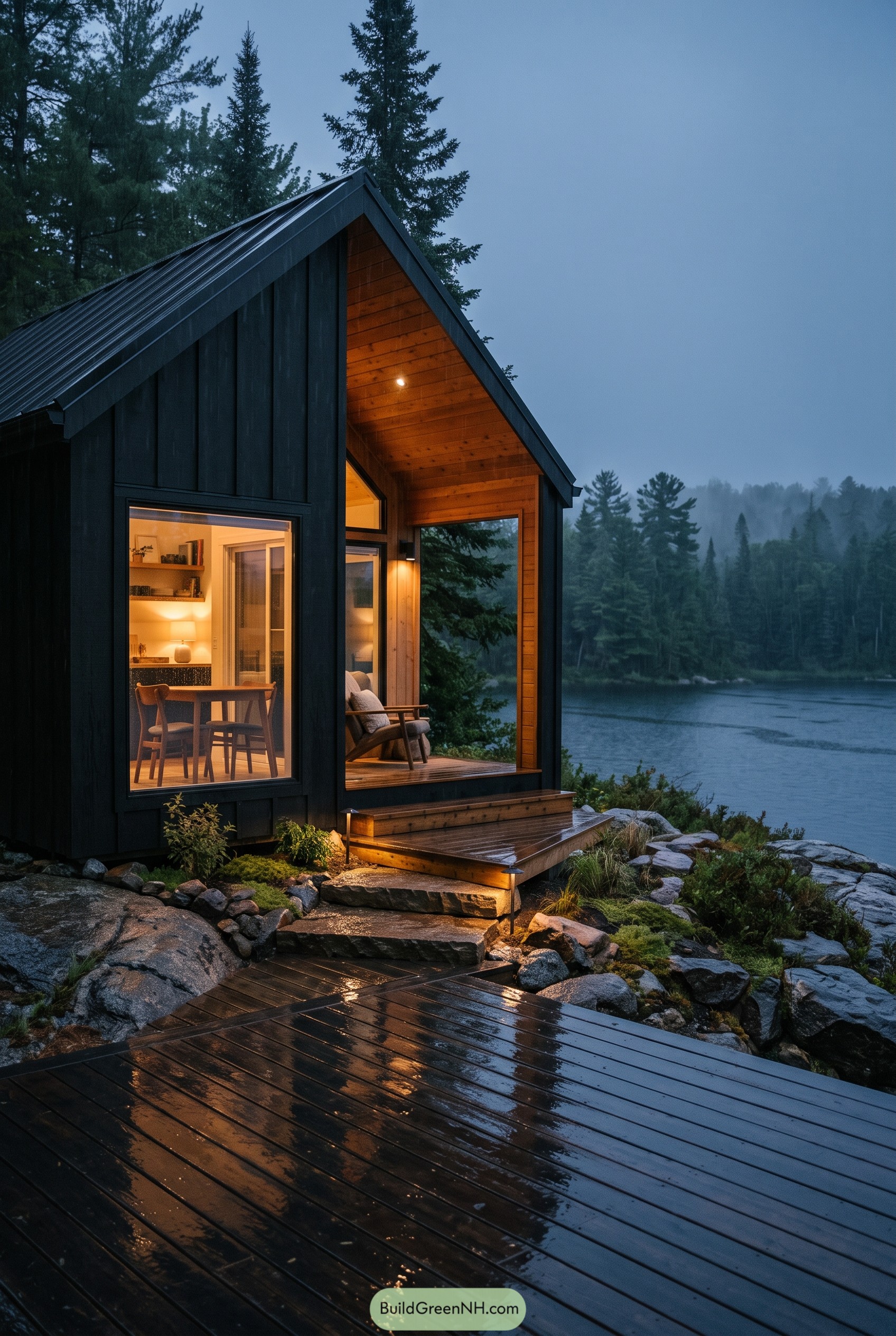

The deep metal shell gives this little lakeside cabin a quiet, tucked in feel, while the cedar lined porch warms up the entry the second you step close. We shaped the steep gable after old boathouses and forest sheds, just cleaned up a bit, because nobody needs a fussy roof in rain country.
Big glass panels pull the sitting nook and dining corner toward the water, so the small footprint feels generous without pretending to be a mansion. The low deck, stone steps, and planted edges let the cabin settle into the rock, and yes, the wet boards look pretty smug about it.
Plywood Cove Sleeper Cabin
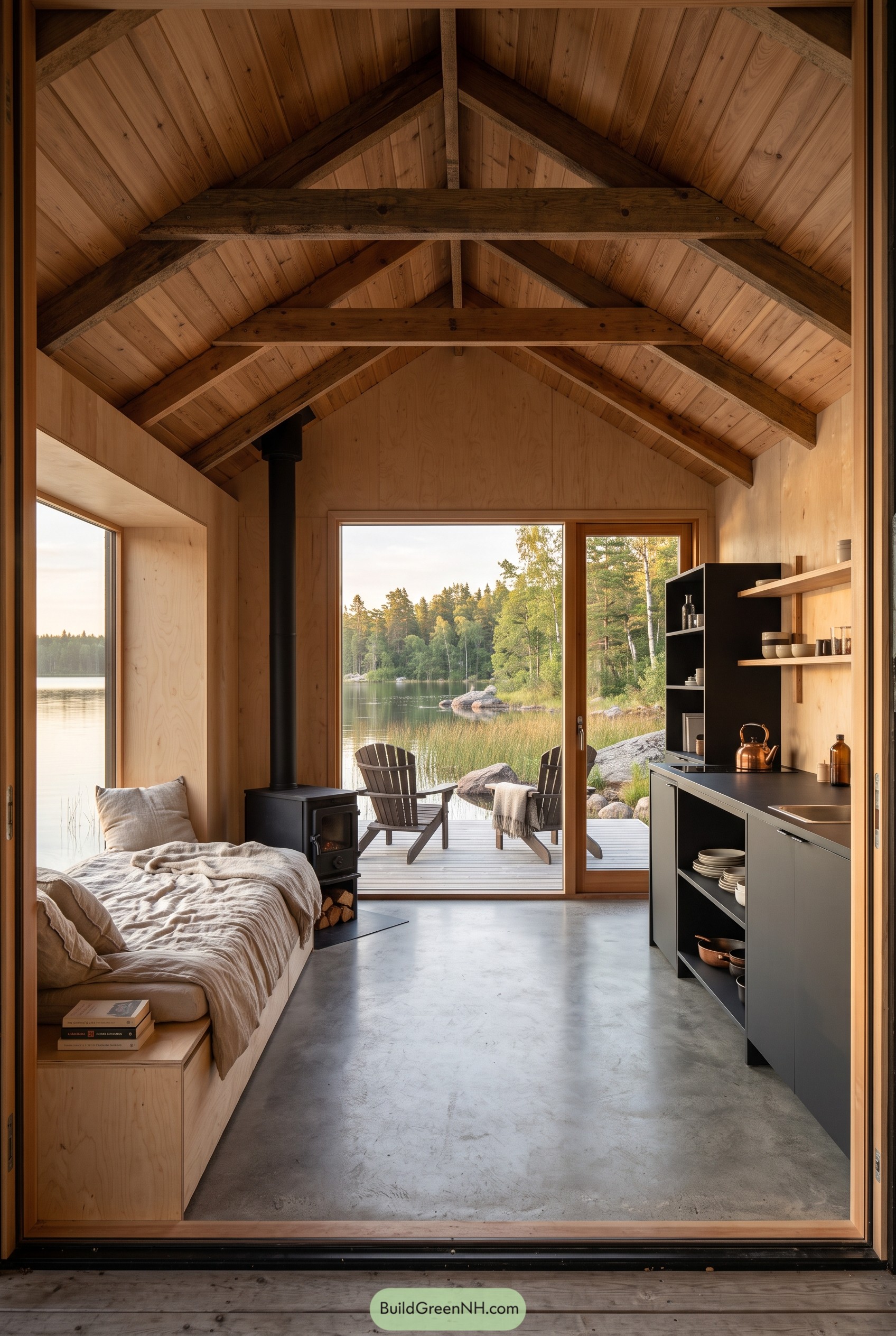

The Plywood Cove Sleeper Cabin keeps everything close, with a built in bed on one side and a neat black kitchenette on the other. The vaulted timber ceiling and chunky cross beams were inspired by old lakeside boat sheds, which is why the small room feels tucked in instead of cramped.
The wide glass doors pull the deck and water right into daily life, so morning coffee has a pretty unfair advantage. A slim wood stove, polished concrete floor, and simple shelving make the cabin easy to use after wet swims, muddy boots, and the usual snack parade.
Ochre Rock Landing Cabin
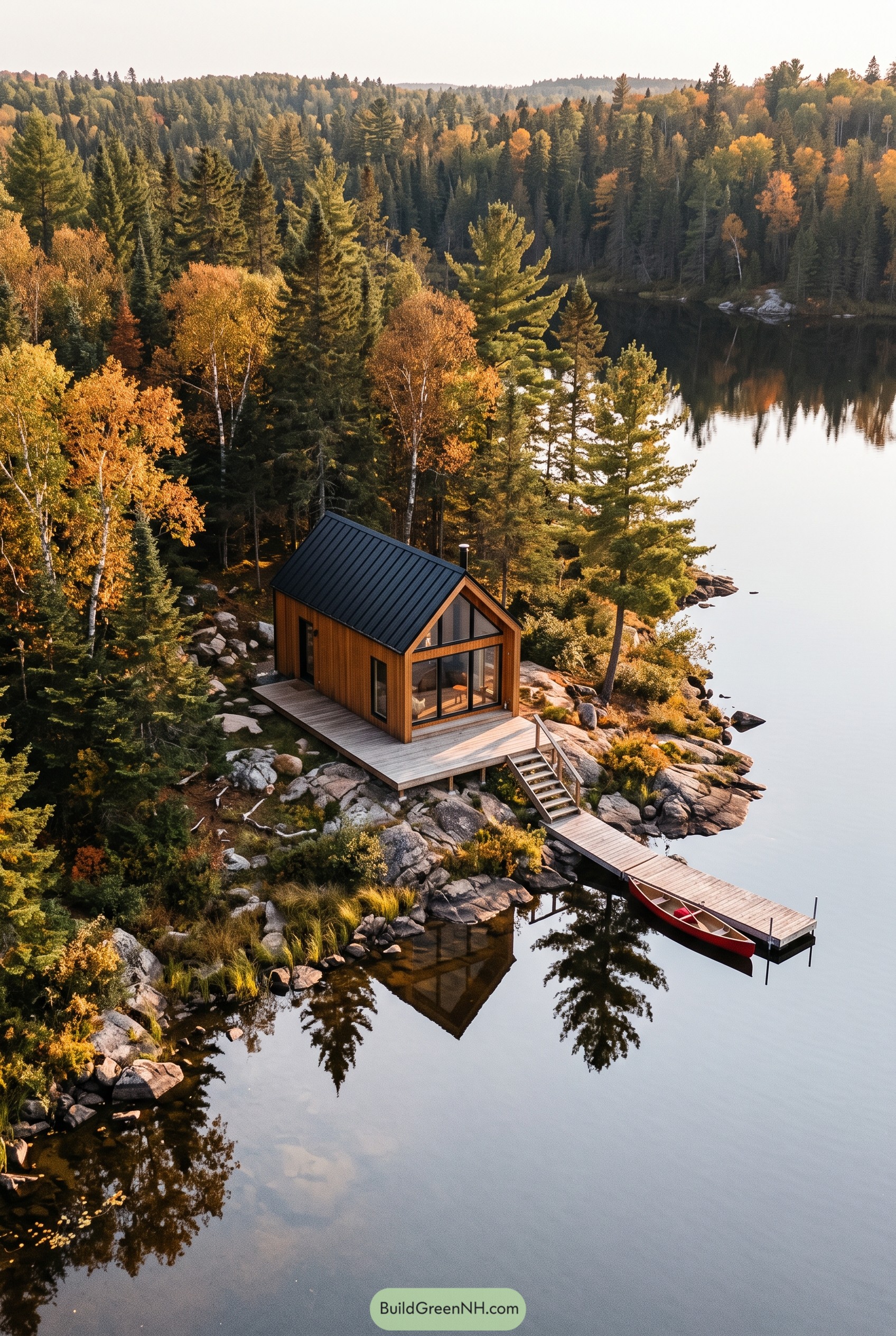

This compact cabin leans into the rocky point instead of trying to tame it, with warm vertical siding and a crisp black roof that feels right among the pines. The tall glass front was shaped to catch lake views from the main room, because staring at water is basically a sport up here.
A broad deck wraps the cabin and steps down to the dock, making the trip from coffee to canoe very short and dangerously easy. The steep roof, raised platform, and simple gable form were inspired by old shoreline sheds, just cleaned up a bit so it feels fresh without getting fancy.
Nightfall Fern Glass Cabin
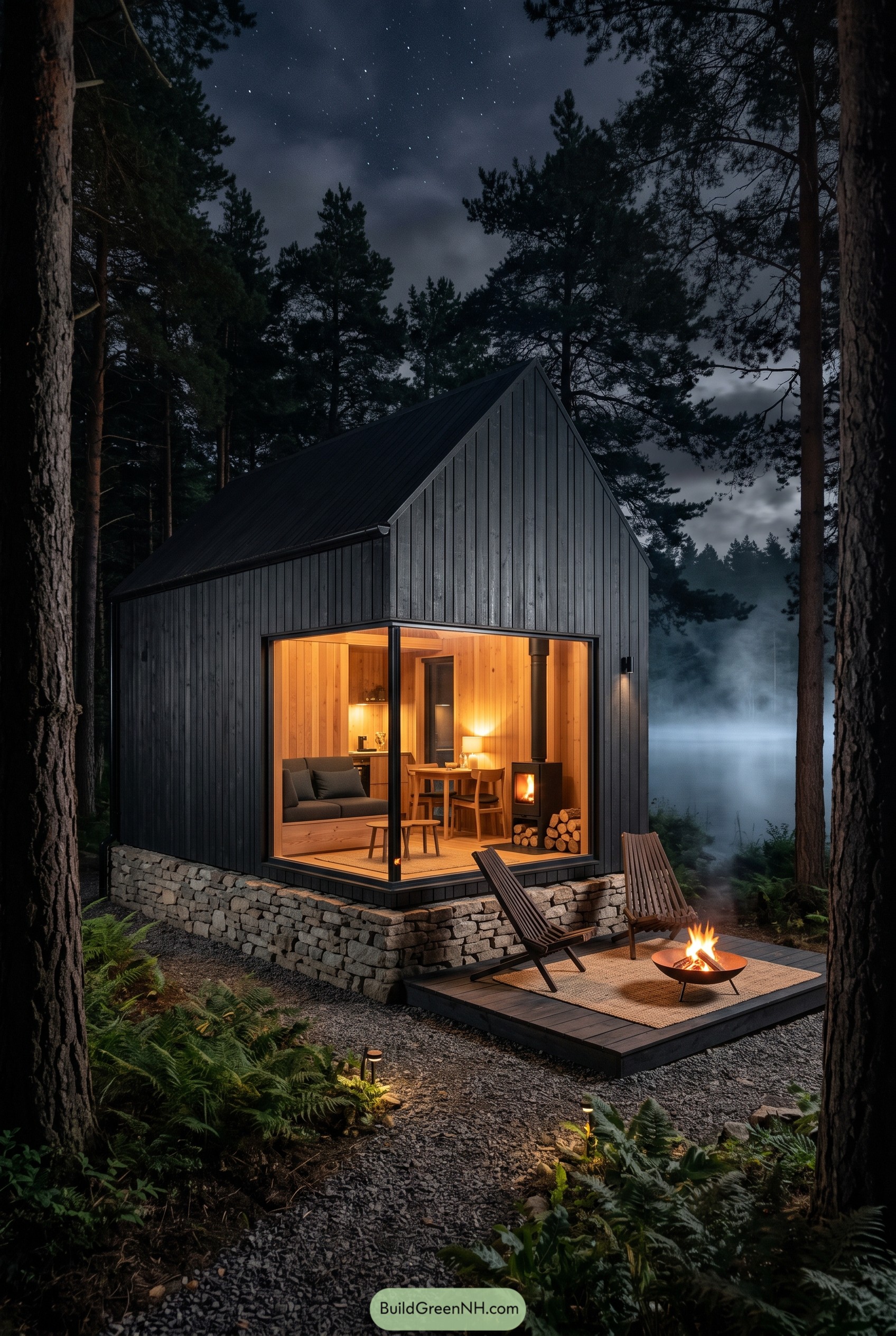

The compact gable form is wrapped in dark vertical boards so it settles quietly between the pines, while the stacked stone base gives it a firm perch above the ferny ground. A big glass corner opens the living space toward the lake and lets the warm wood interior feel a bit like a lantern, but thankfully with better chairs.
Inside, the plan keeps things simple with a sofa, dining nook, and wood stove all sharing one cozy room. The little deck and fire bowl pull the evening outside, inspired by those misty shoreline nights when everyone says they are going to bed early and nobody does.
Metal Cloak Shore Nook
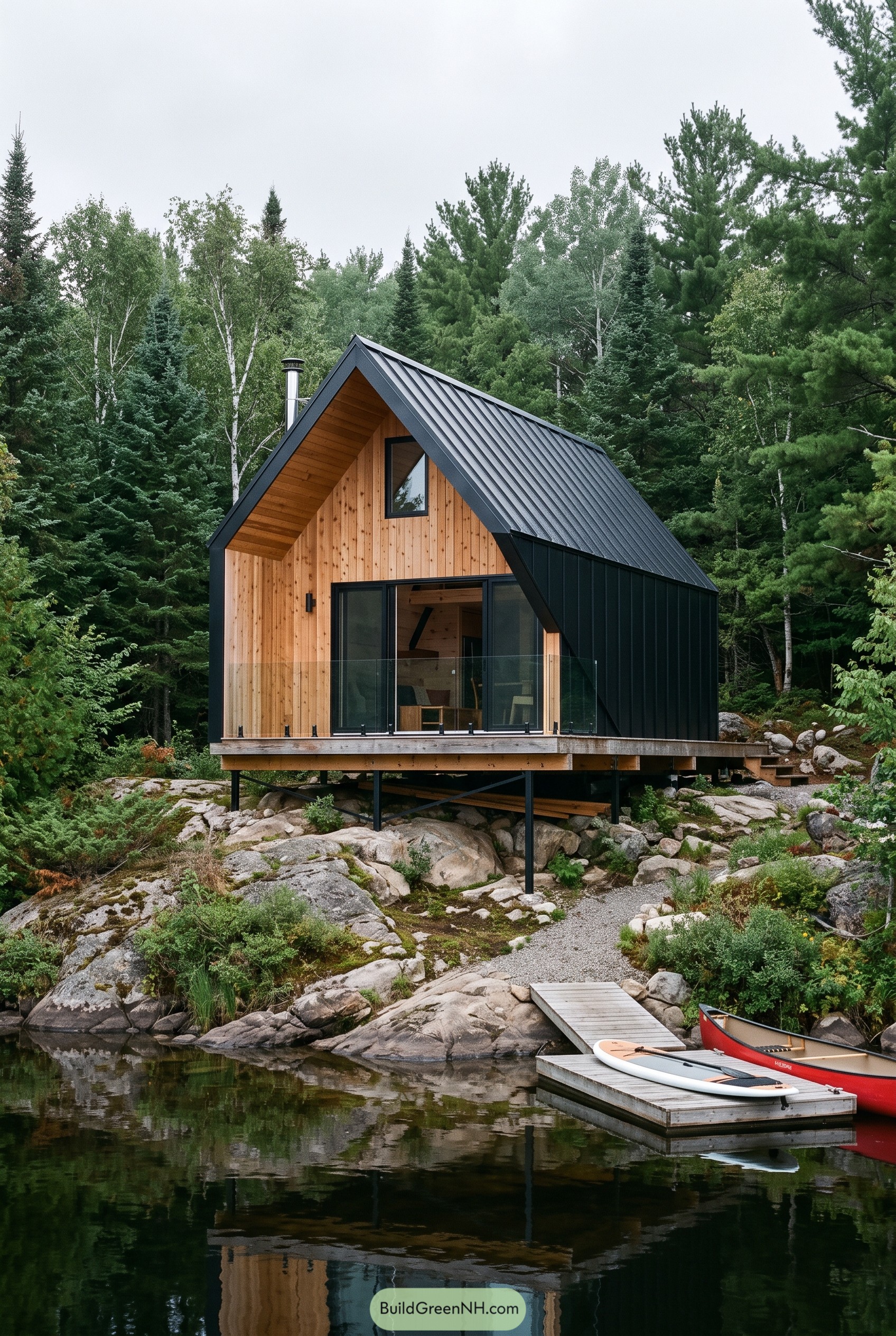

The steep black metal shell wraps over the cabin like a raincoat, which is pretty handy when the lake weather gets moody. Warm vertical timber fills the front gable, softening the sharp roof and giving the small deck a cozy face toward the water.
We shaped it around the rocky shoreline, lifting the floor on slim supports so the cabin sits gently above the uneven ground. Big glass doors open to the view and the dock below, because getting to the canoe should feel easy, not like a tiny expedition.
Hydrangea Keel Lake Chalet
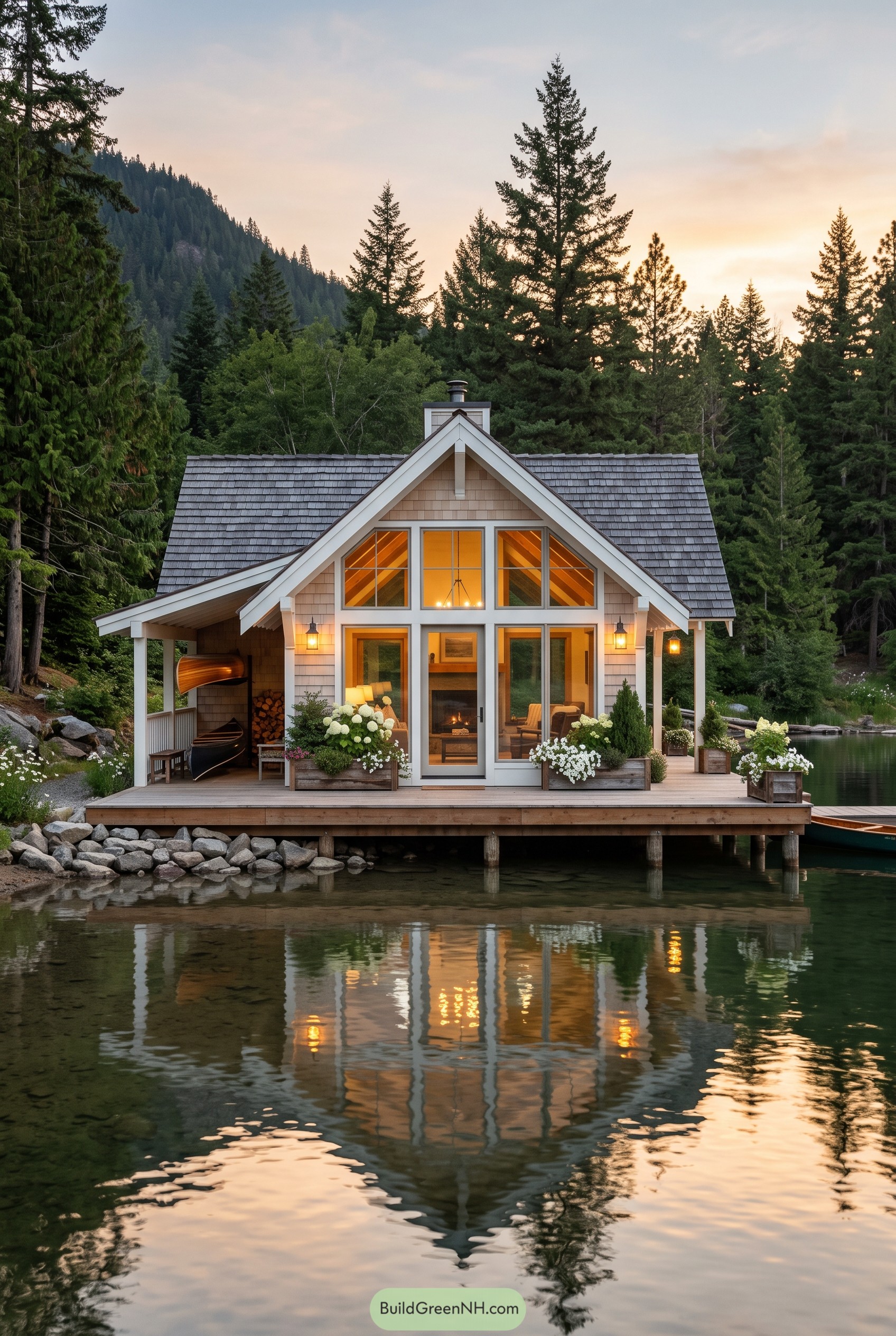

This compact lakeside chalet takes its cue from old boathouses and alpine cabins, with a big front gable pulled low over the deck like a cap. The cedar shingles, white trim, and neat grid of tall glass keep it crisp without making it feel too polished, which is good because lake life is rarely that tidy.
A covered side bay gives the canoe a proper home, while the wide platform deck sits right over the water for easy swims, coffee, and questionable fishing stories. Planter boxes, simple lanterns, and the centered chimney add just enough charm, all in a way that feels useful and not fussy.
Split Tone Pinefront Cabin
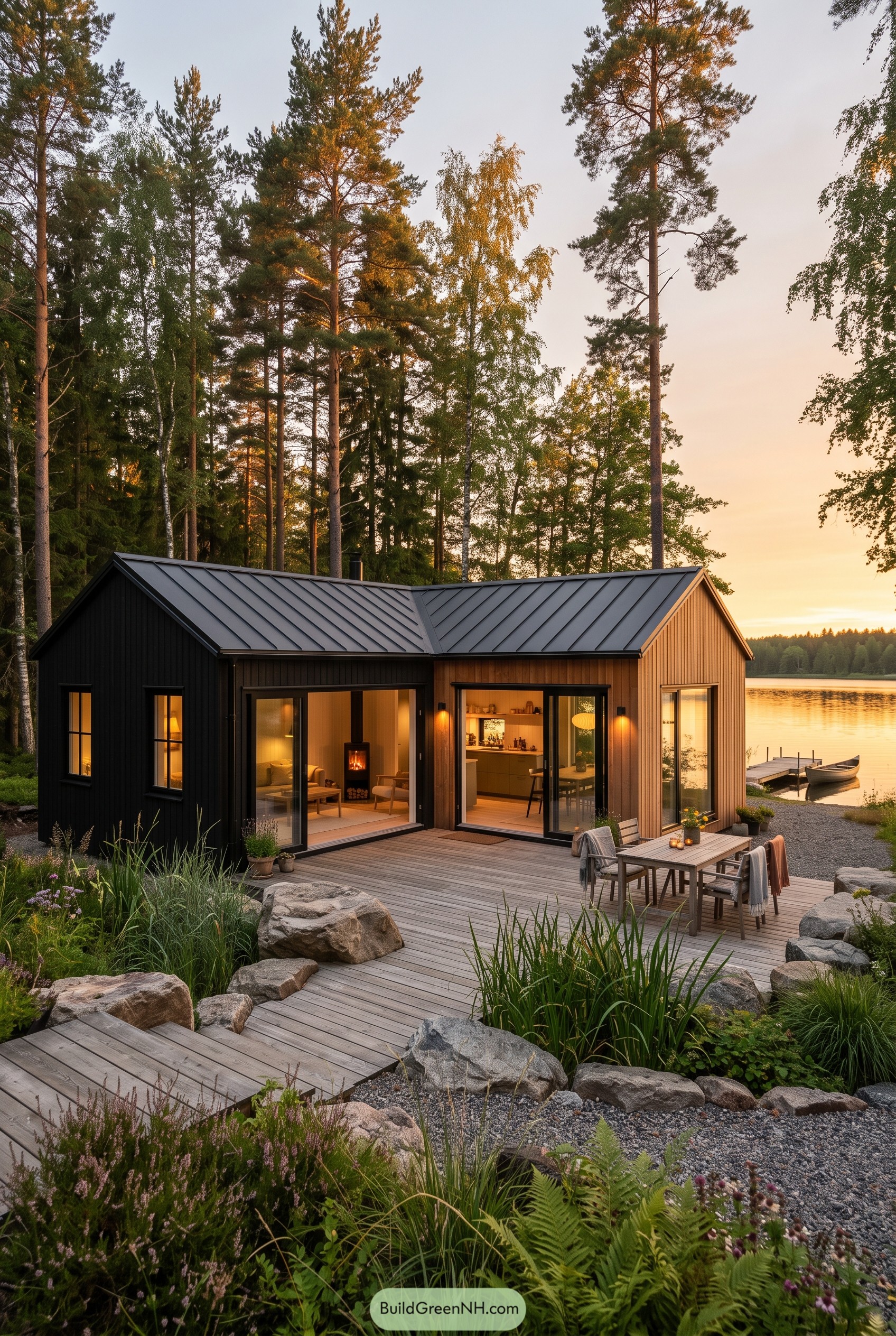

This compact lake cabin pairs a matte black wing with a warm timber wing, so it settles into the pines without going full camouflage. The folded metal roof pulls the two volumes together and sheds rain neatly, which matters when the weather decides to be a comedian.
Wide sliding doors open the living spaces straight onto the deck, making the small footprint feel generous and easy to use. We took cues from the shoreline rocks, tall trunks, and quiet dock, then kept the detailing simple so the cabin feels relaxed rather than precious.
Cattail Bridge Stilt Cabin
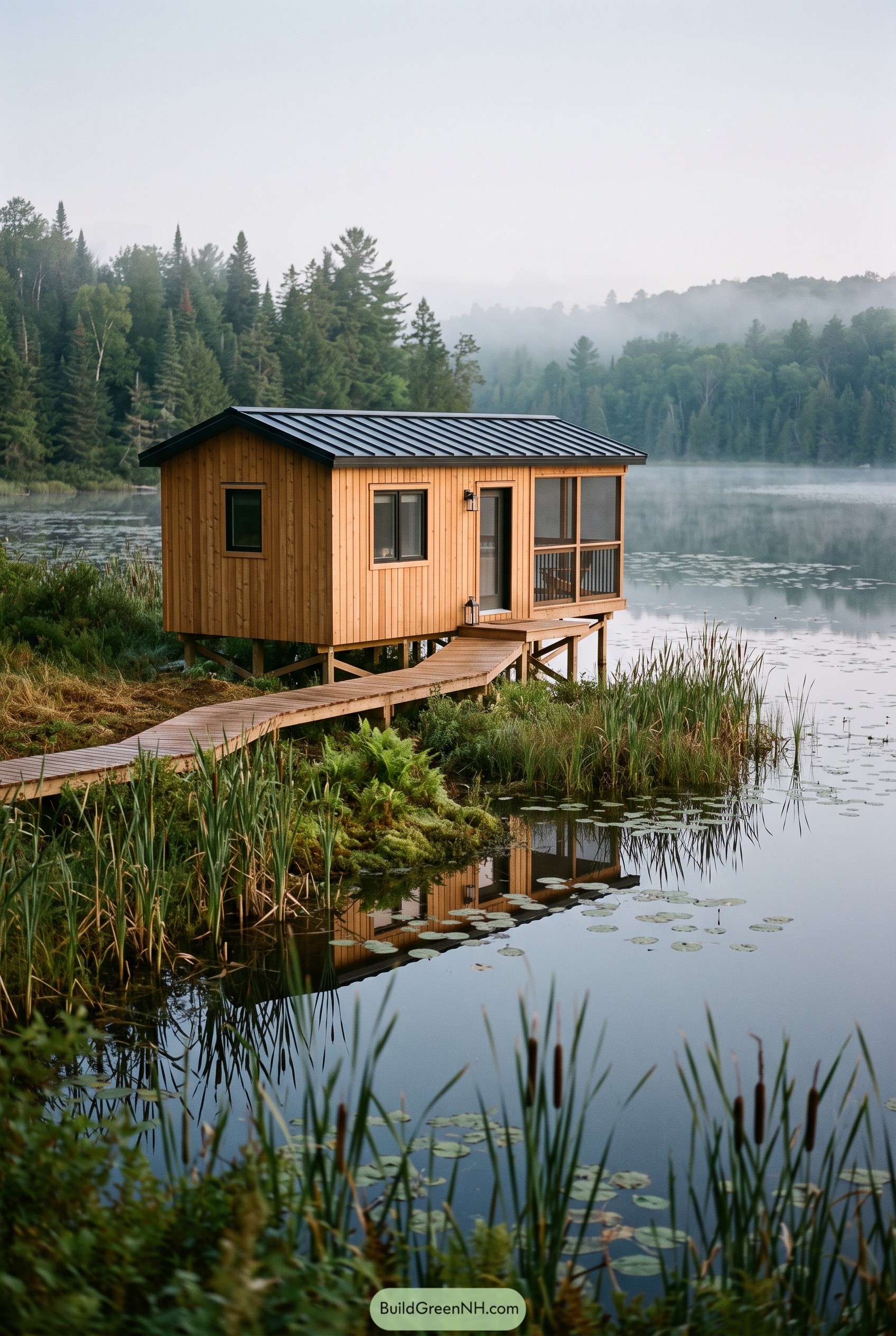

The cattails gave us the cue here, so the cabin lifts itself on slim piers and lets the wetland keep breathing underneath. Vertical cedar boards make the small box feel taller than it is, which is handy when the square footage is not exactly bragging.
A black metal roof keeps the profile crisp and sheds rain fast, because lake weather loves a surprise. The screened porch and curved timber walk turn arrival into a slow little ritual, muddy boots included.
Tangerine Door Waterside Bunkhouse
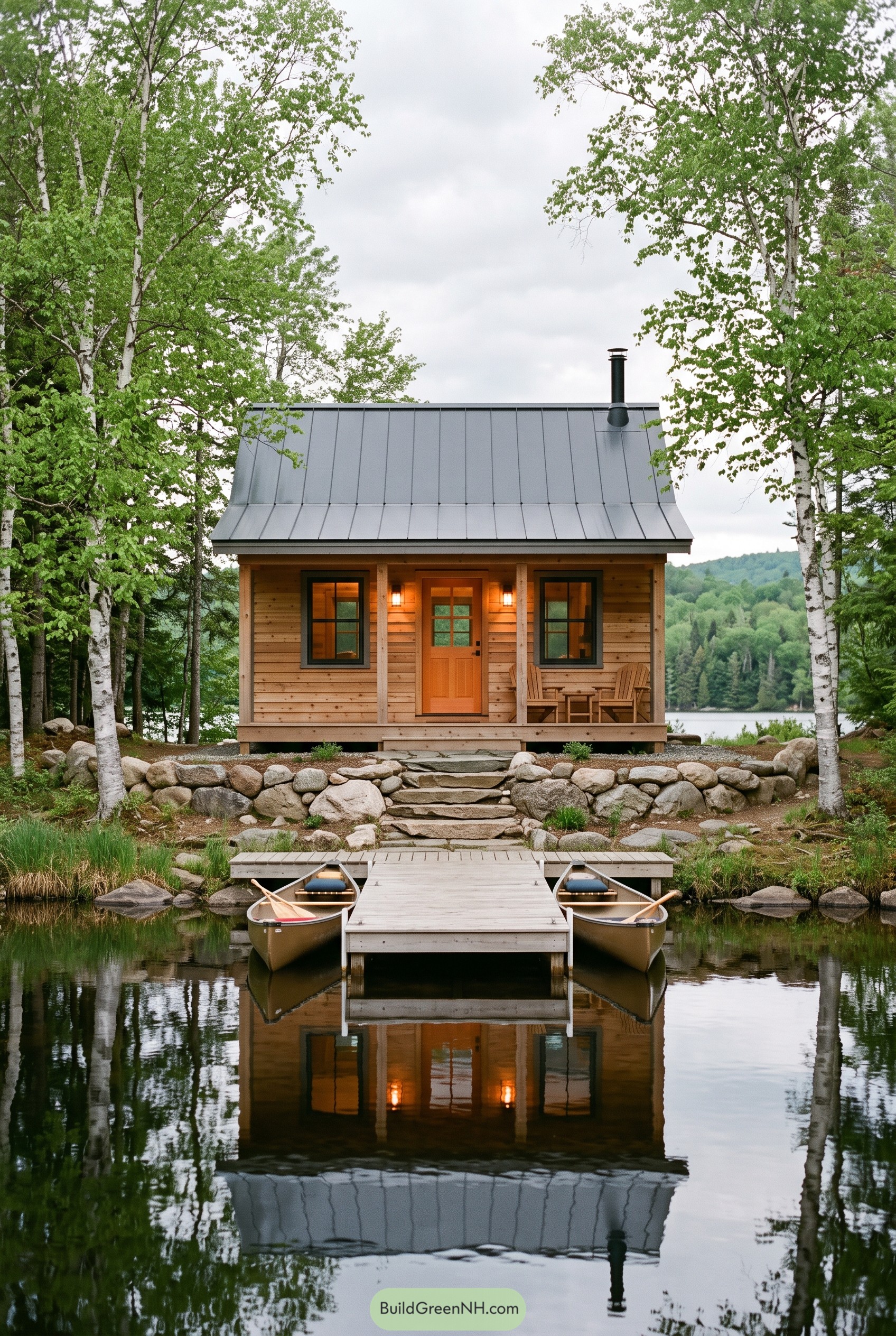

The compact timber cabin pairs honey toned siding with a crisp gray metal roof, giving it a neat cap that sheds rain and snow without fuss. An orange front door and black framed windows add just enough punch, because even quiet cabins can wear a fun hat.
We shaped the porch to face the dock so wet towels, coffee mugs, and canoe paddles all have a natural landing spot. The stone steps and low boulder edge borrow from the shoreline around it, making the cabin feel tucked into the birches instead of parked in front of them.
Fjord Edge Ember Dwelling
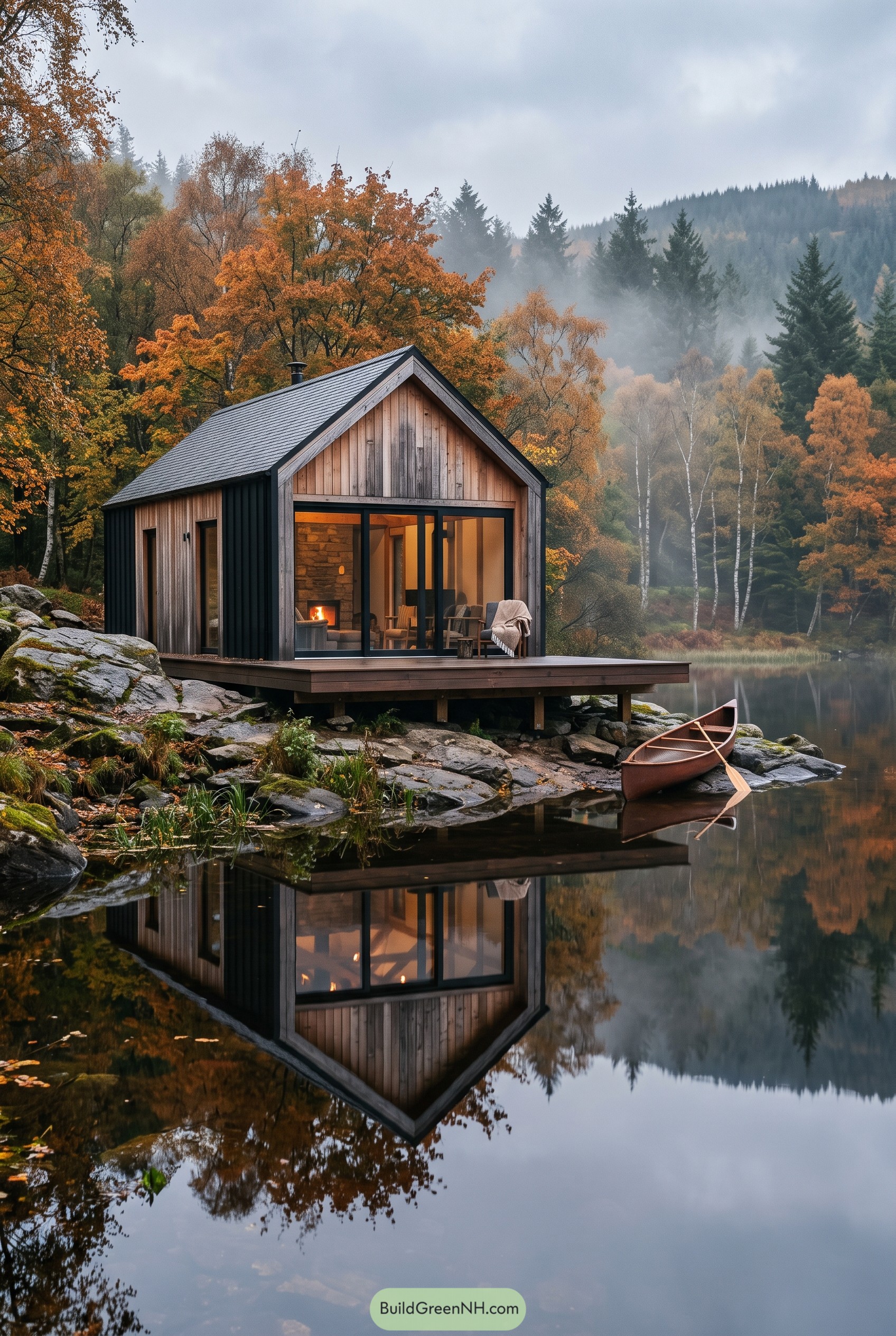

This compact lakeside cabin pairs a steep charcoal roof with vertical timber siding, then opens the front with tall black framed glass so the water feels close enough to steal your slippers. The dark side panels tuck the little form into the trees, while the warm wood face keeps it from feeling too serious.
The design was inspired by misty autumn shorelines and those old simple cabins that knew exactly where to sit. A raised deck bridges the rocks and lake edge, giving you a dry perch for coffee, canoe plans, and probably changing your mind about checking email.
Loonrise Spruce Oar House
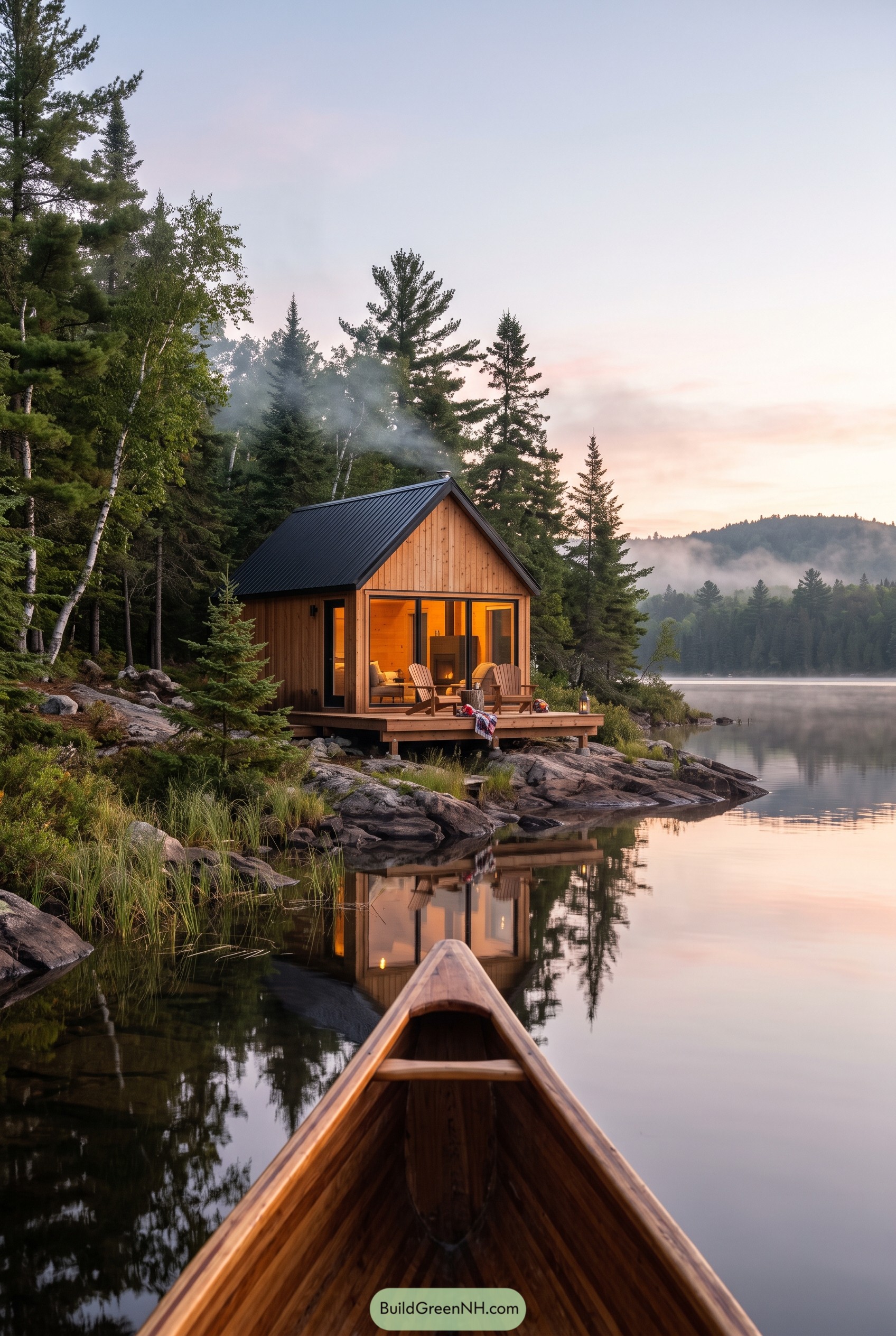

The cabin sits right on the rock shelf, with a simple gable form tucked into spruce and birch like it found the last good seat by the lake. Warm vertical cedar, a dark standing seam roof, and a glassy front keep the shape tidy while giving the main room a big water view.
We pulled the idea from old canoe sheds and lakeside saunas, then cleaned it up so it feels fresh without getting fussy. The low deck is just deep enough for chairs, wet towels, and one person pretending they know where the loons went, while the raised base keeps the structure clear of splash and spring melt.
Pin this for later:
Want More?
 20 Coastal House Front Elevations To Make Your Home The Star Of The Shore
 20 Cape Cod House Front Elevations to Bring Storybook Magic to Your Street
 20 Stunning Colonial House Front Elevations to Turn Your Home Into a Neighborhood Legend
 20 Stunning Modern Facade Elevation Designs That Turn Everyday Homes Into Living Art
 20 Daring Folded Roof Houses That Turn Rain Into Art
Table of Contents