Last updated on · ⓘ How we make our floor plans
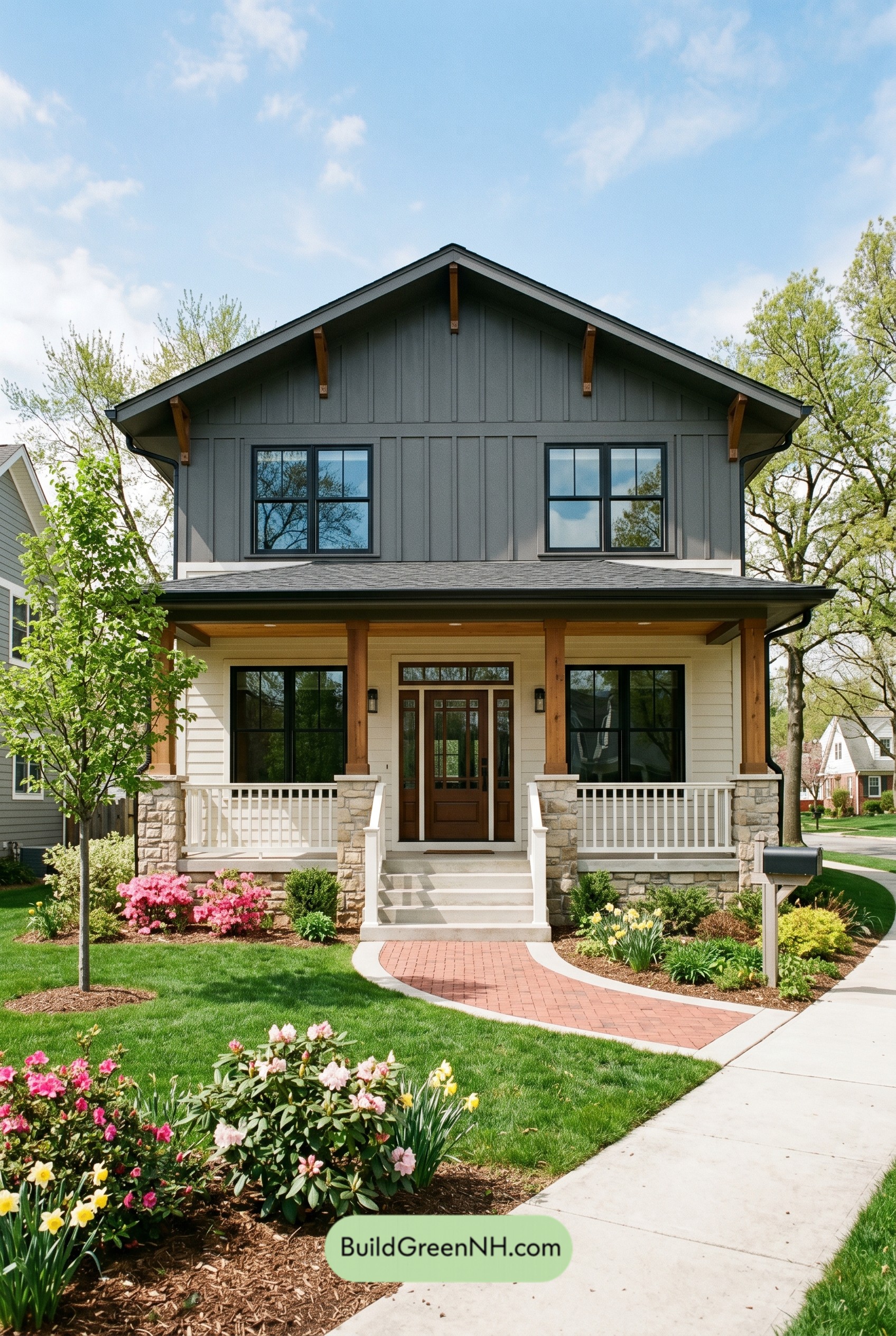

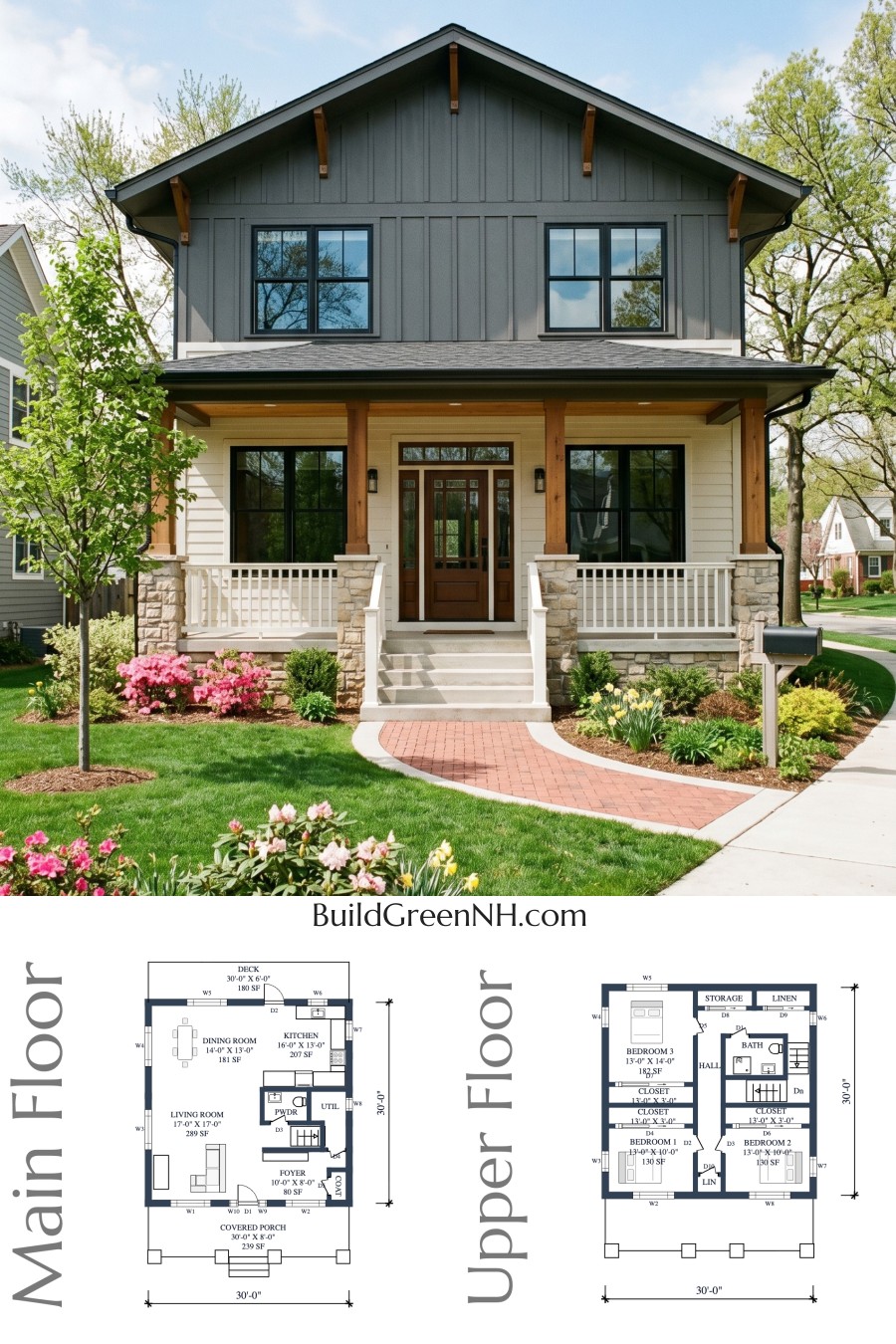
This is a compact two-story family house plan with 1,688 sq ft across two efficient floors. The layout is clear, practical, and not trying to win a maze competition.
The facade has a modern Craftsman character with a strong front gable, generous covered porch, and sturdy timber posts set on stone bases. The lower level uses light horizontal lap siding, while the upper level shifts to gray board-and-batten siding for a crisp vertical rhythm. Dark trim, black-framed windows, and a warm wood entry door add contrast. The roof is a dark shingle gable roof with broad overhangs and exposed bracket accents.
- Total area: 1,688 sq ft
- Bedrooms: 3
- Bathrooms: 1 full bathroom and 1 powder room
- Floors: 2
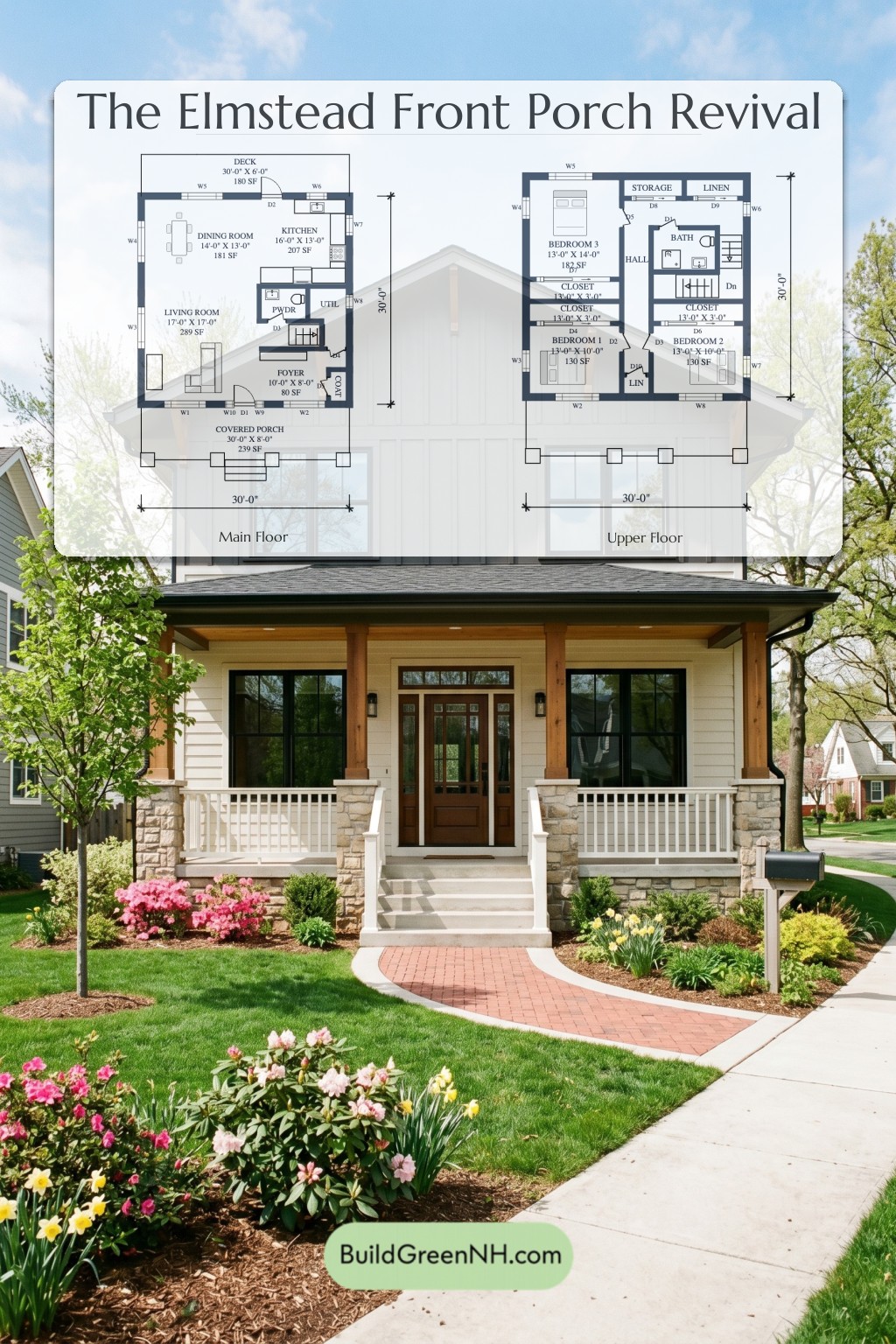
Main Floor
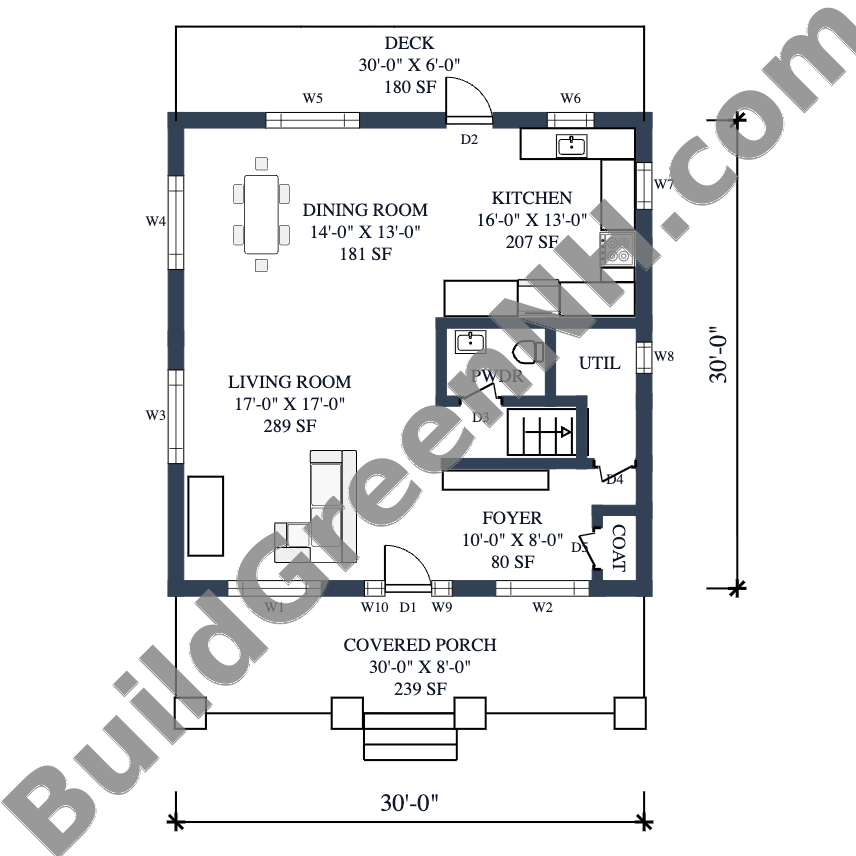
The main floor measures 30 ft by 30 ft and provides 855 sq ft of interior floor area. It is organized around a welcoming front foyer, open living and dining zones, and a rear kitchen with direct deck access. The utility spaces are tucked neatly to the side, because laundry deserves privacy too.
- Covered Porch: 240 sq ft
- Foyer: 81 sq ft
- Living Room: 290 sq ft
- Dining Room: 182 sq ft
- Kitchen: 208 sq ft
- Powder Room: 35 sq ft
- Utility/Laundry: 47 sq ft
- Coat Closet: 15 sq ft
- Deck: 181 sq ft
The covered porch spans the front and leads into the foyer. The living room sits to the left, open and generous. The dining room connects naturally to the kitchen at the rear, keeping meals and conversation in easy orbit.
Upper Floor
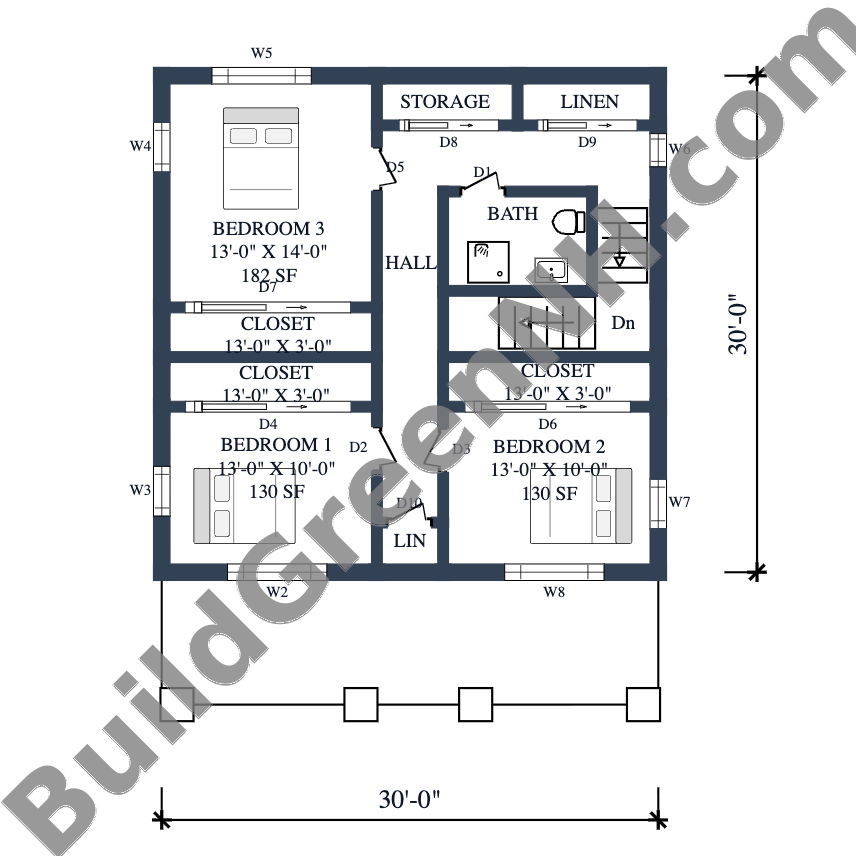
The upper floor also measures 30 ft by 30 ft and contains 833 sq ft. It holds all three bedrooms, one full bathroom, hallway circulation, storage, linen space, and closets. A tidy sleeping level. No drama, just doors where they should be.
- Bedroom 1: 130 sq ft
- Bedroom 2: 130 sq ft
- Bedroom 3: 182 sq ft
- Bathroom: 54 sq ft
- Hall: 161 sq ft
- Storage: 24 sq ft
- Linen Closet: 13 sq ft
- Closet: 39 sq ft
Bedroom 3 is the largest bedroom on this level. Bedrooms 1 and 2 are balanced in size and placed at the front side of the plan. The full bathroom is positioned near the stair and hall, making it accessible without turning the morning routine into a treasure hunt.
We have more facade options of this design:
Earthy Brown Siding
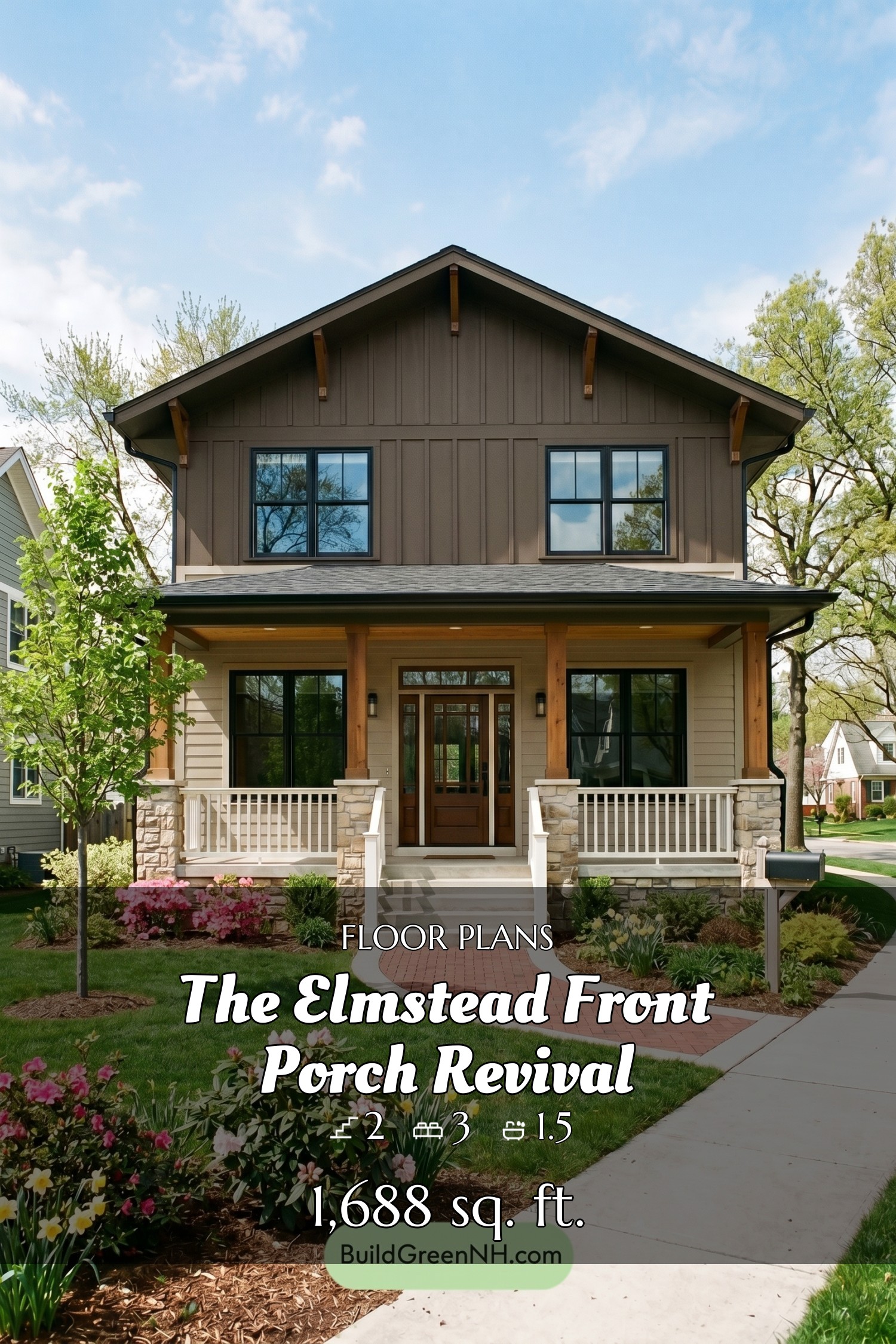
The biggest shift is the new earthy brown siding, and it gives the facade a richer, grounded mood right away. Across the upper gable and vertical board-and-batten panels, the color makes the front feel more settled and a touch more rustic—in a polished way, not log-cabin cosplay.
That warmer brown also sharpens the rest of the facade nicely: the black-framed windows look crisper, the white porch railings and trim pop harder, and the stone porch bases feel more naturally tied in. Paired with the timber posts and broad gable roof, the whole front now reads warmer, sturdier, and a little more handsome—like the house finally found its favorite jacket.
Dusty Blue Siding
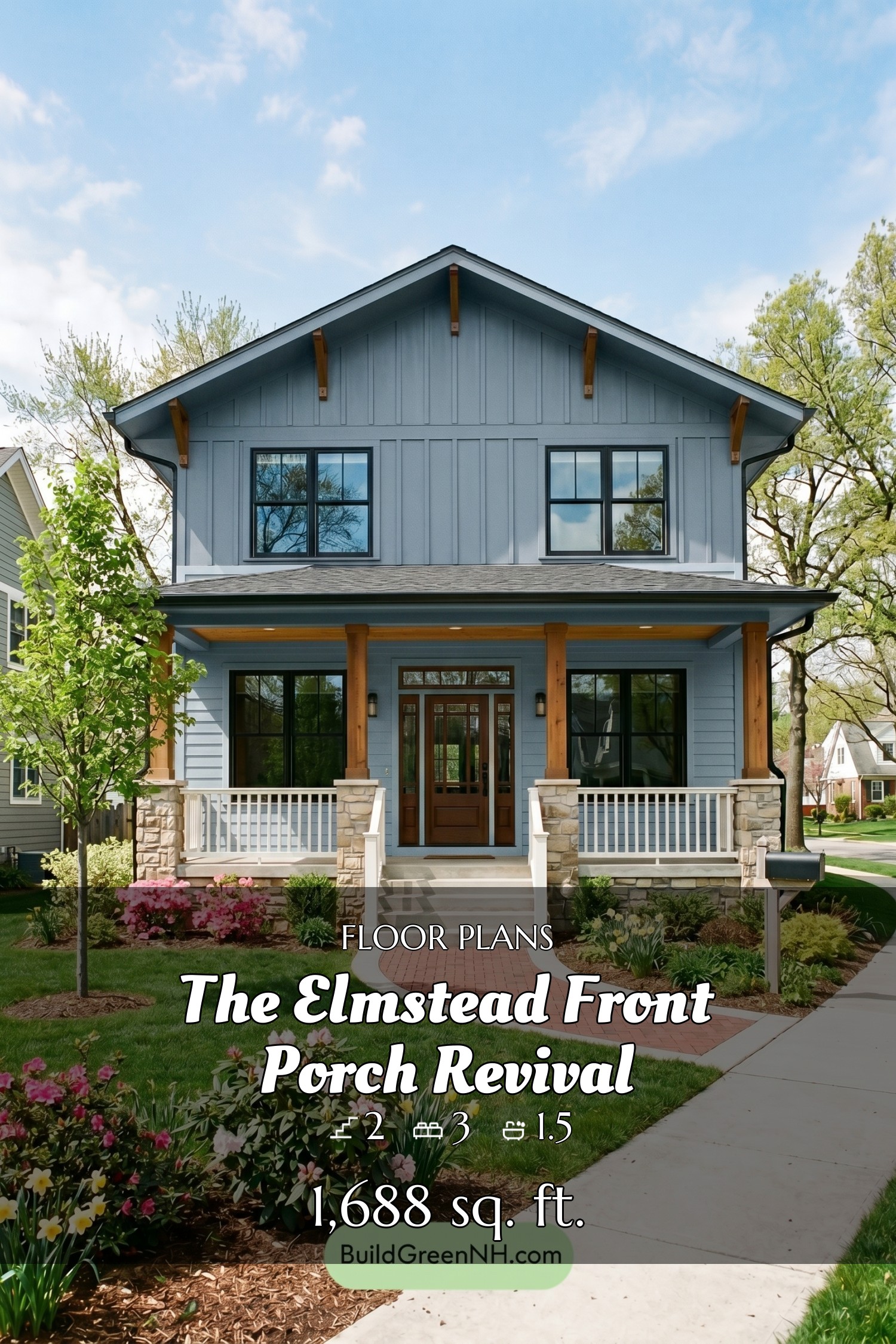
The switch to dusty blue siding gives the facade a calmer, more tailored look right away. It softens the tall front elevation, lets the black window frames pop with extra snap, and makes the white trim feel crisper without getting fussy—basically a glow-up with manners.
That new hue also plays beautifully with the warm wood porch posts, brackets, and front door, so the craftsman details read richer and more intentional. Against the stone porch bases and broad gabled roofline, the dusty blue adds just enough polish to keep the house charming, not showy—like it dressed up but still wore comfy shoes.
Deep Navy Siding
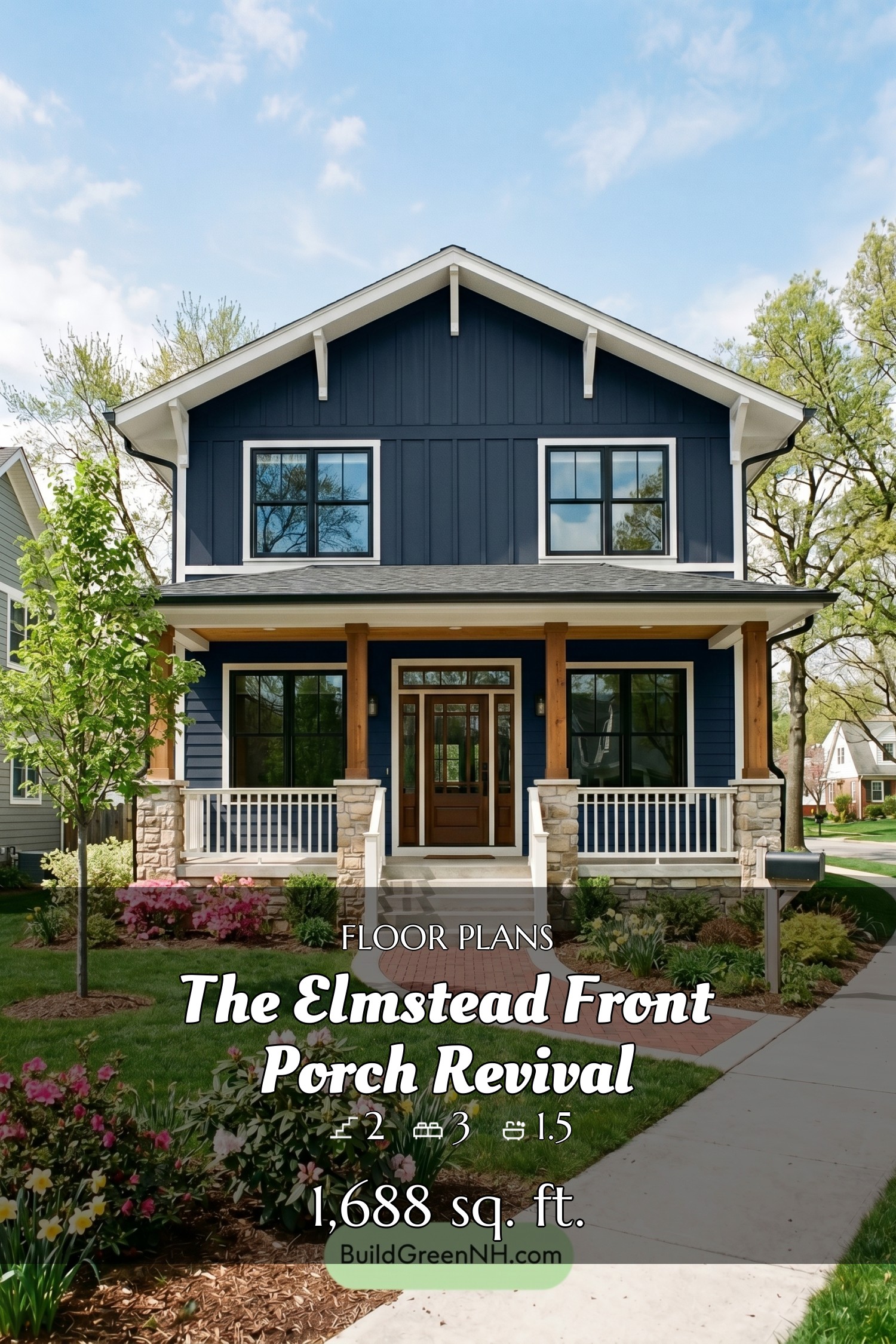
The big change is the deep navy siding, and it instantly gives the facade a sharper, more tailored mood. Against the crisp white trim and eaves, the color makes the front gable feel bolder, the black window frames punchier, and the vertical siding lines more pronounced—like the house finally found its good jacket.
That darker facade also boosts the porch composition. The warm wood columns, stone piers, and stained front door now stand out with extra richness, while the clean rooflines and railings read more clearly and with more snap.
It’s a simple color swap, but wow, the front elevation suddenly has a bit of swagger.
Soft Black Siding
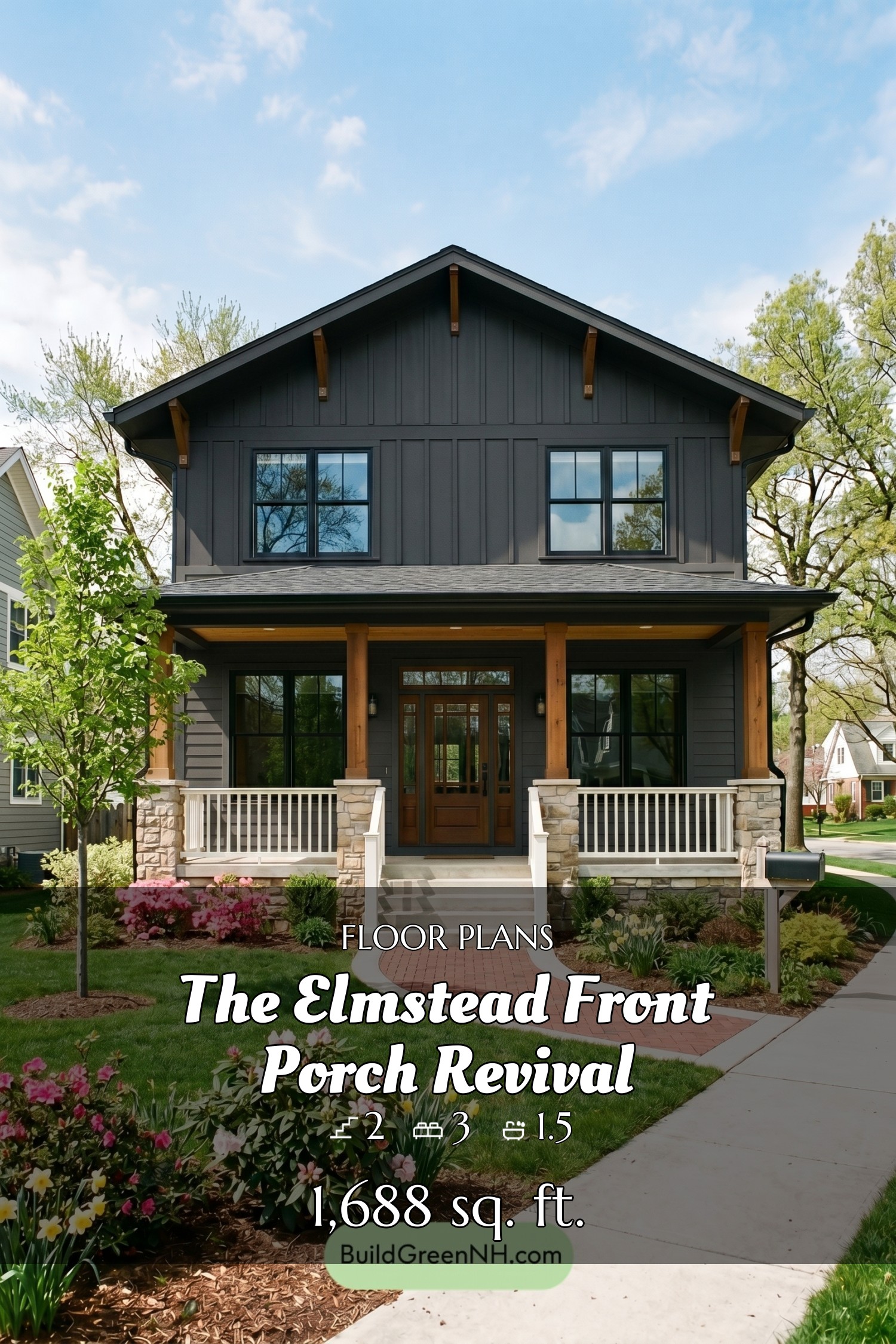
The big change is the siding: it’s now a soft black, and that one move gives the whole facade a sharper, moodier edge. The vertical board-and-batten on the upper level and the horizontal lap siding below suddenly read much crisper, like the house put on a well-tailored jacket and knew it looked good.
That softer black also makes the natural wood porch posts, warm front door, and bracket details pop with extra swagger. The black window frames feel more graphic, the pale stone porch bases look brighter, and the broad front gable gains a stronger silhouette—quiet drama, no tantrum.
Deep Red Siding
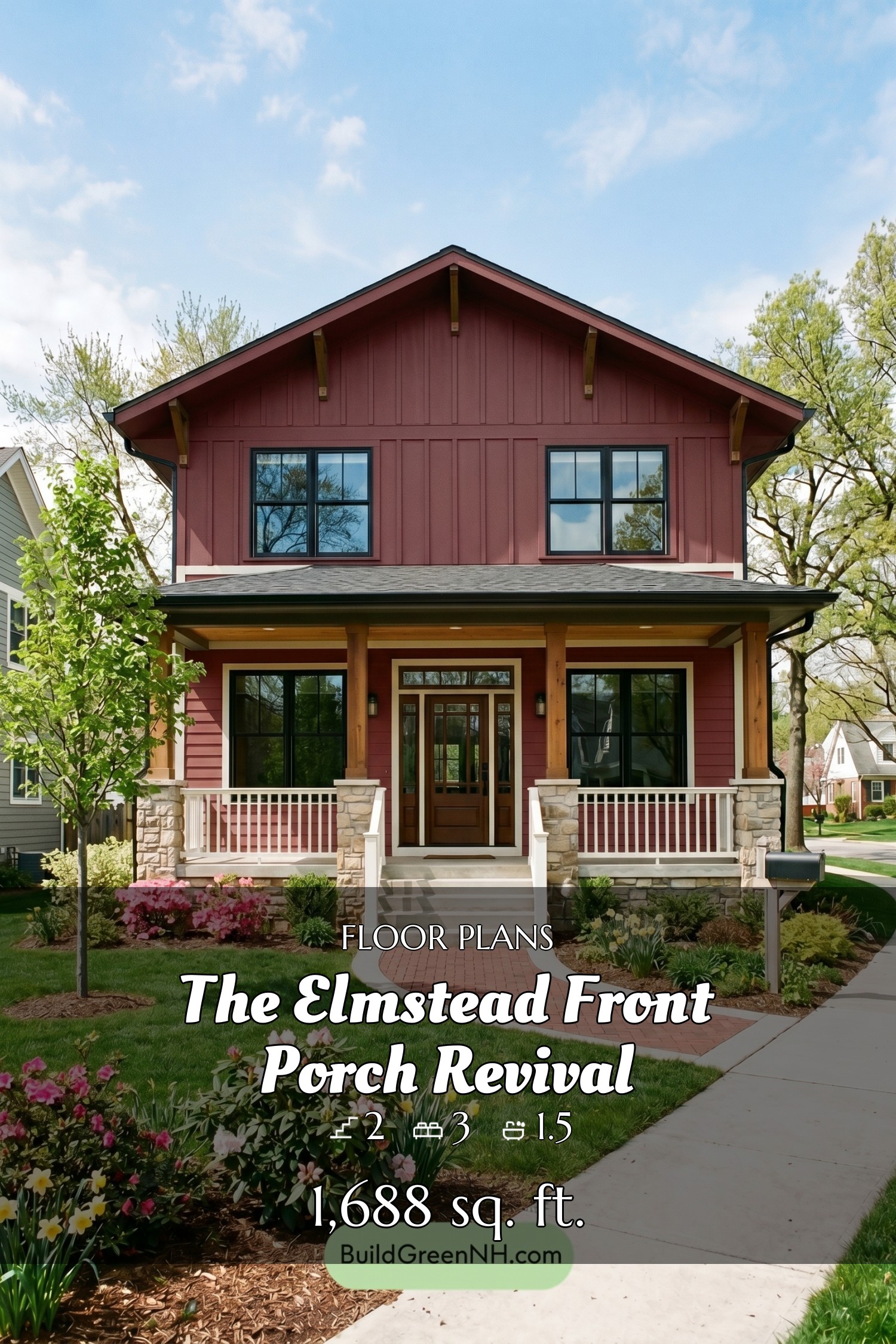
The big change is the siding: a deep red skin that gives the facade a richer, punchier presence. It sharpens the tall front gable and makes the board-and-batten upper wall feel even more graphic, while the lower horizontal siding reads crisp instead of quiet.
The house went from polite to pleasantly bossy.
That new color also turns the trim and details into a full-on contrast party. The white porch railing and bands pop harder, the black window frames look cleaner, and the warm wood posts and front door feel extra toasty against the red backdrop.
Even the stone porch bases get a sturdier, more grounded look—very composed, with just a tiny bit of swagger.
Olive Green Siding
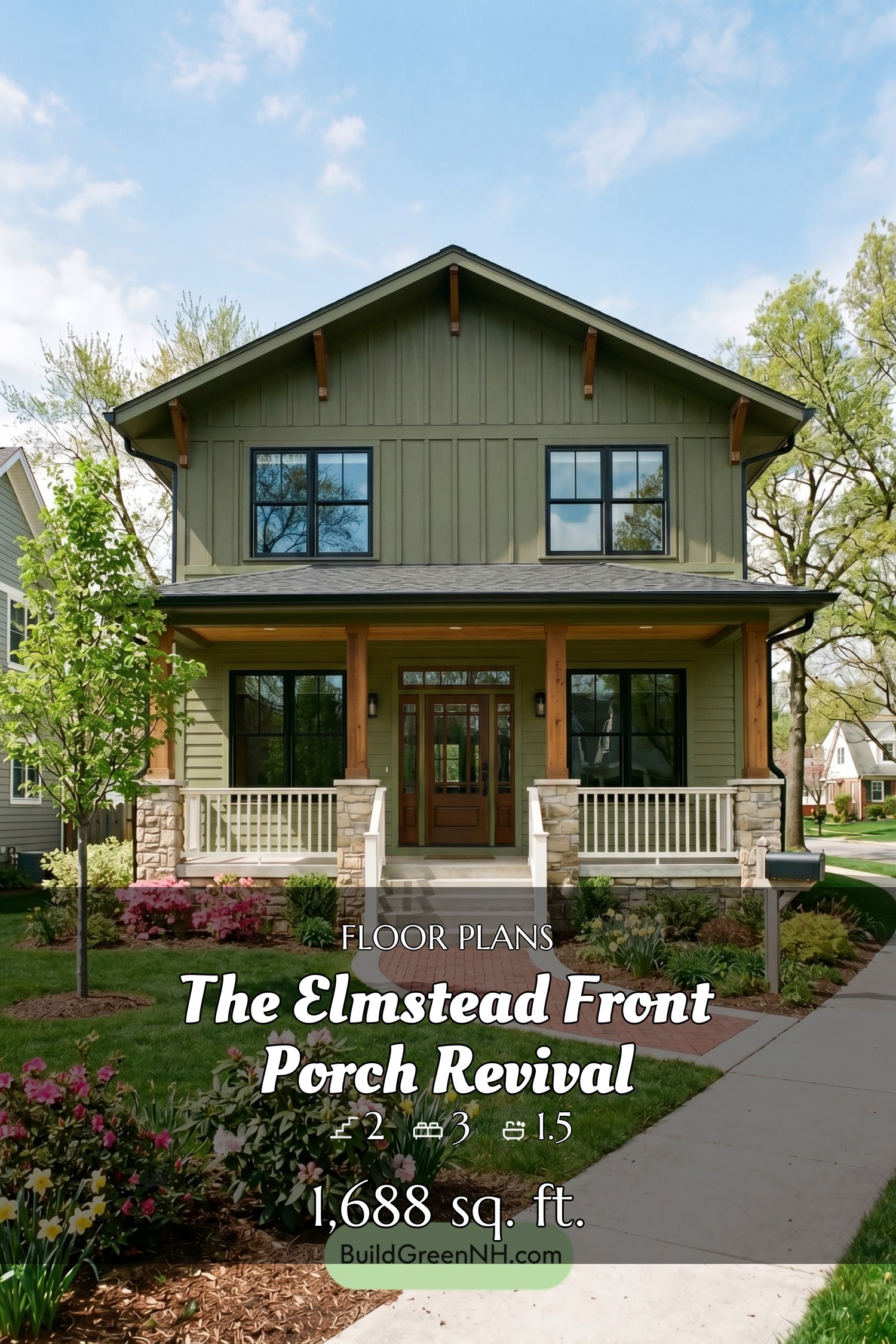
The big shift is the olive green siding, and it gives the facade a calmer, more grounded mood right away. On the upper front gable, the vertical board-and-batten reads crisper in this color, while the lower horizontal siding feels a touch softer—same bones, better outfit.
That new olive tone also makes the black-framed windows pop harder and lets the warm wood porch posts and gable brackets show off a bit. Paired with the pale stone bases and white railing, the front porch looks more layered and polished; the house basically traded its plain tee for a tailored jacket.
Pin this for later:
Want More?
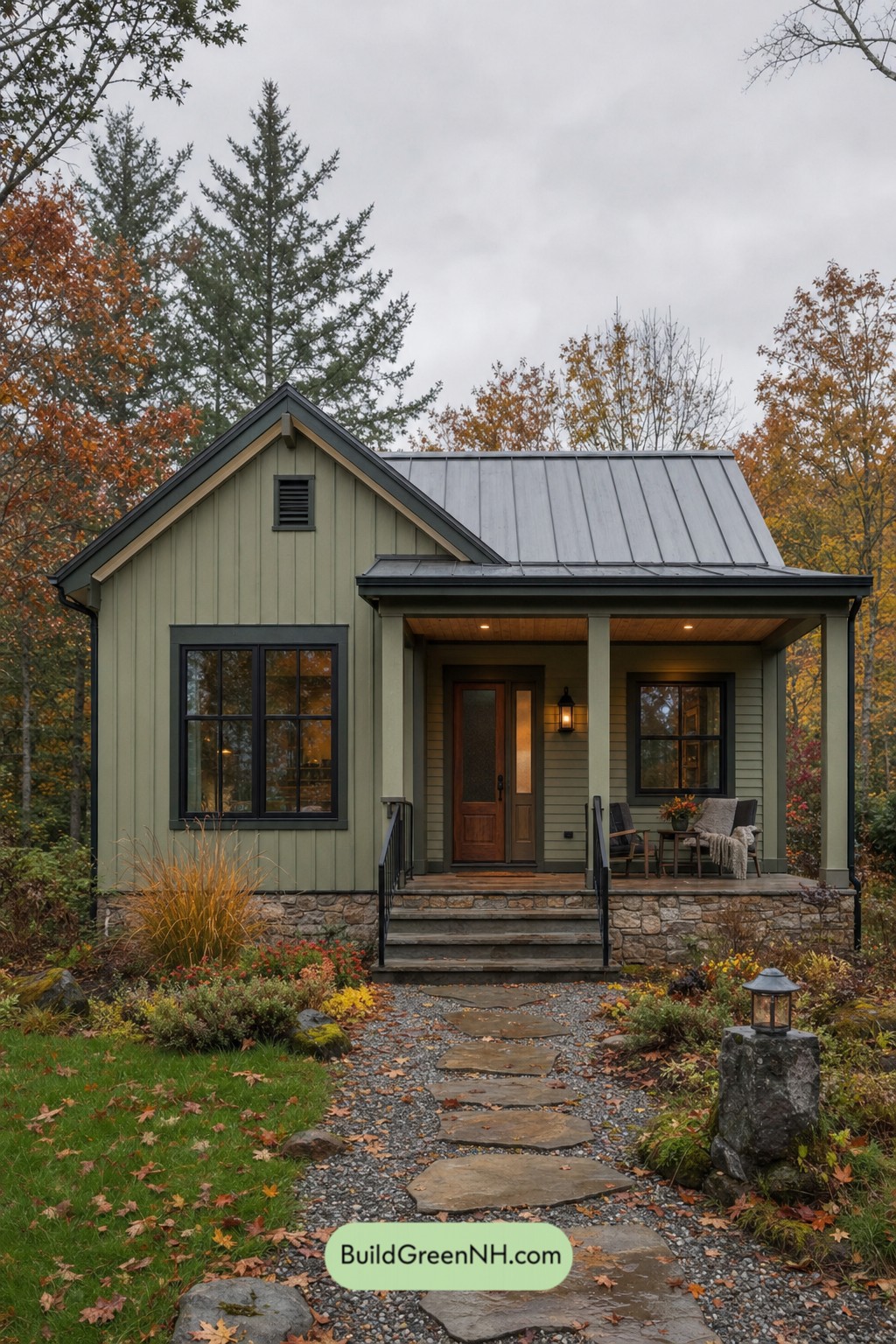 531 sq. ft., 1 Bed, 1 Bath, Single Story Cottage Floor Plans: Mossline Cottage Profile
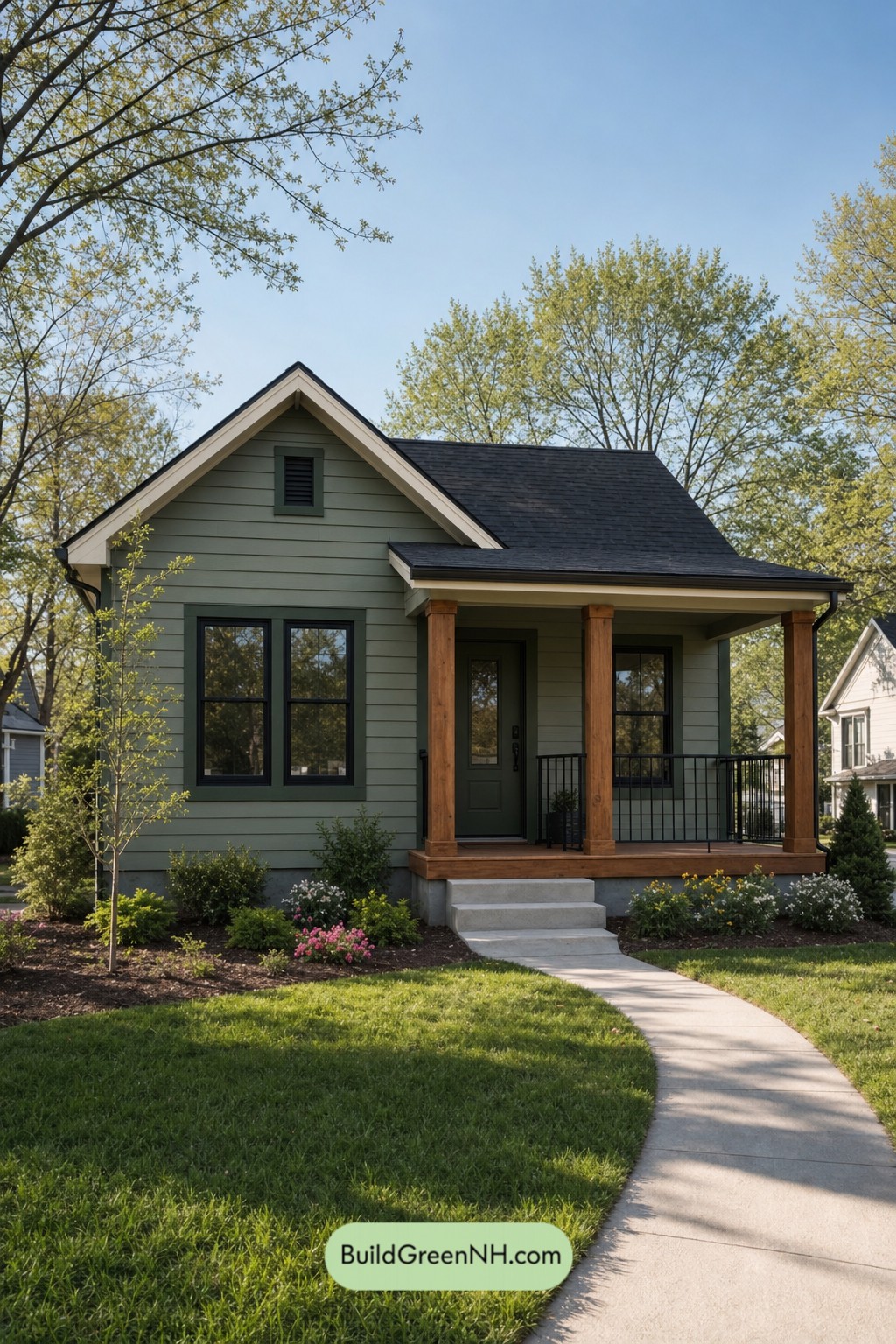 531 sq. ft., 1 Bed, 1 Bath, Single Story Small Modern Cottage Floor Plans: Sage Gable Porchcraft
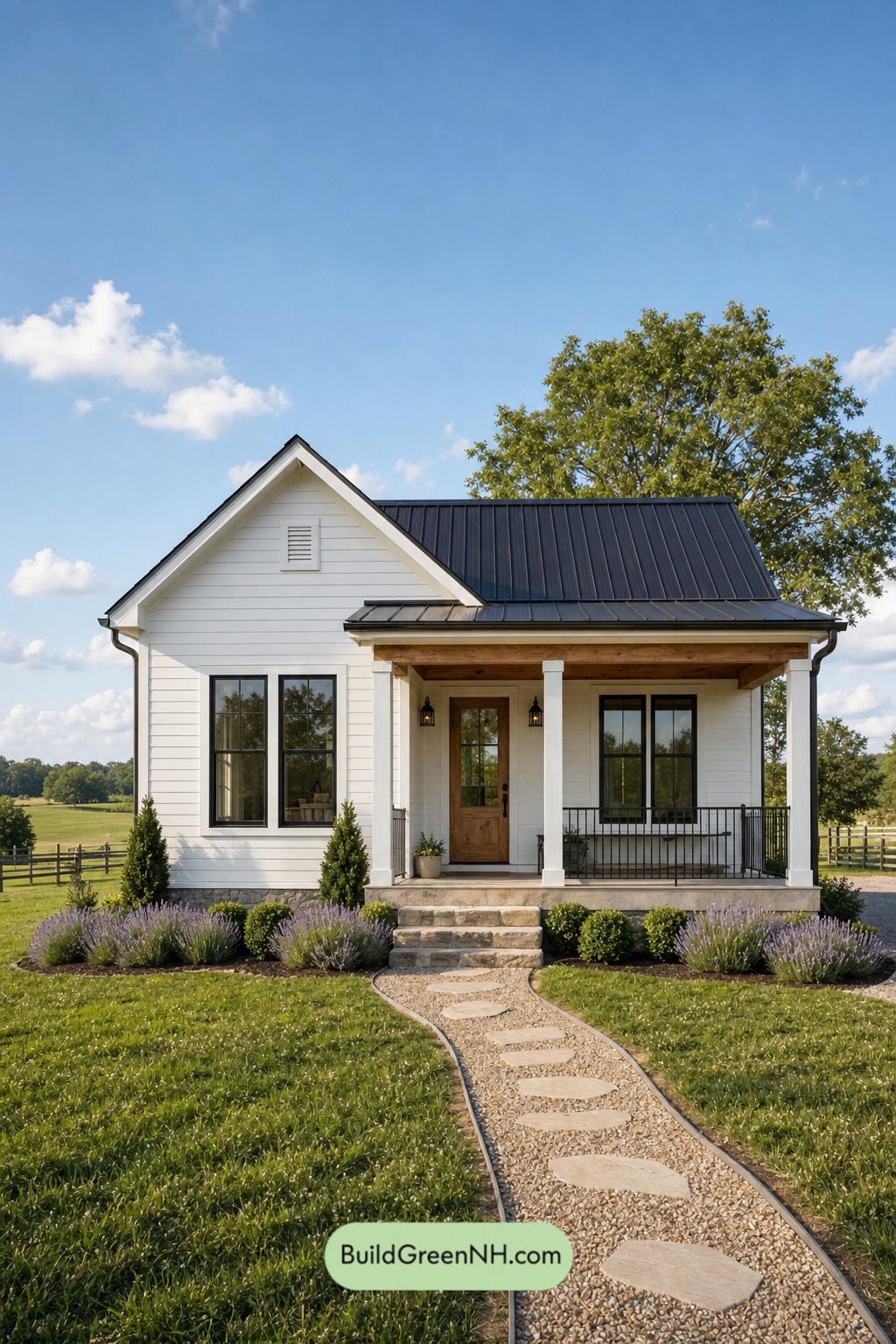 531 sq. ft., 1 Bed, 1 Bath, Small Modern Cottage Floor Plans: Cedarcrest Farm Cottage
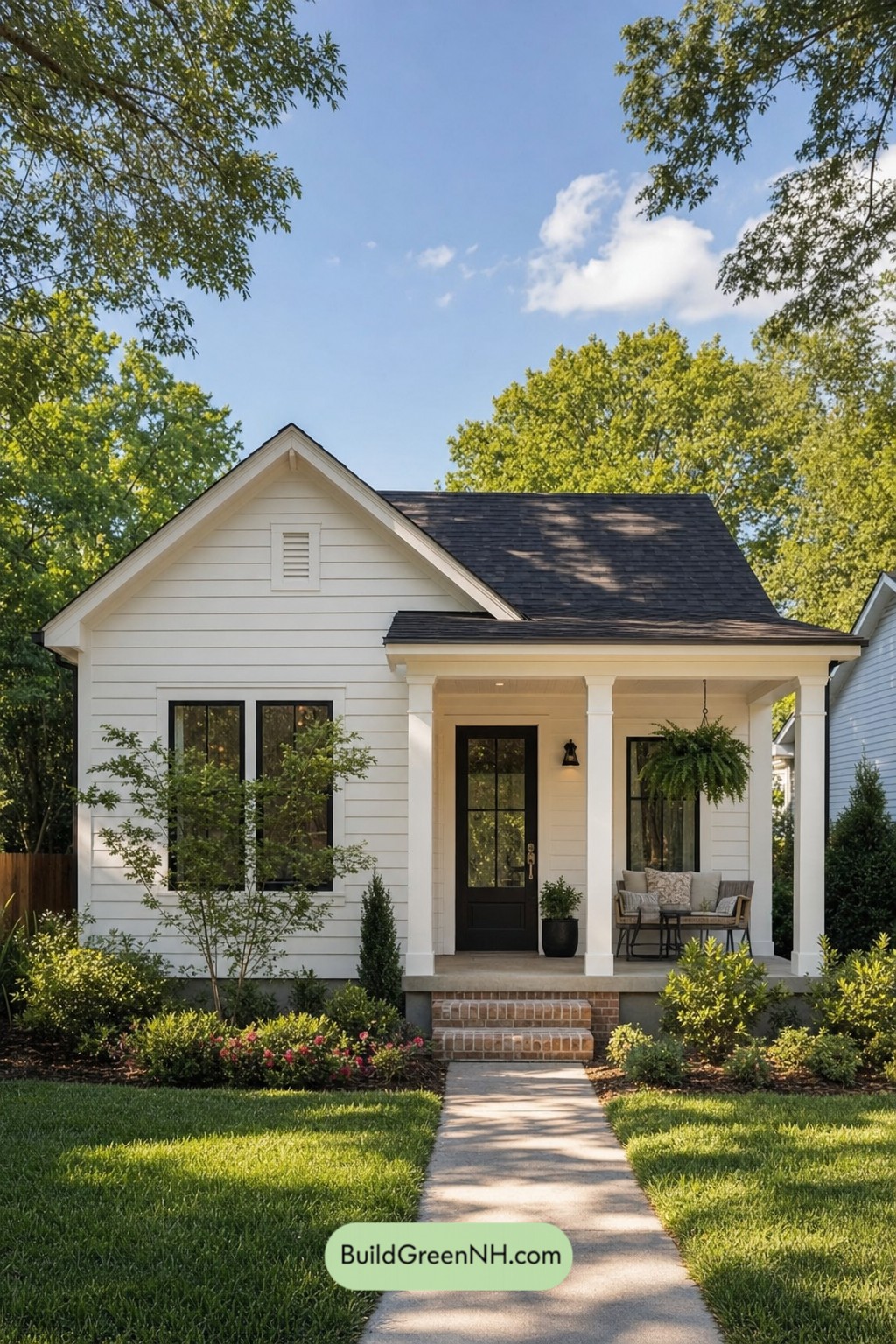 531 sq. ft., 1 Bed, 1 Bath, Single Floor Cottage House Floor Plans: Gablewood Quiet Cottage
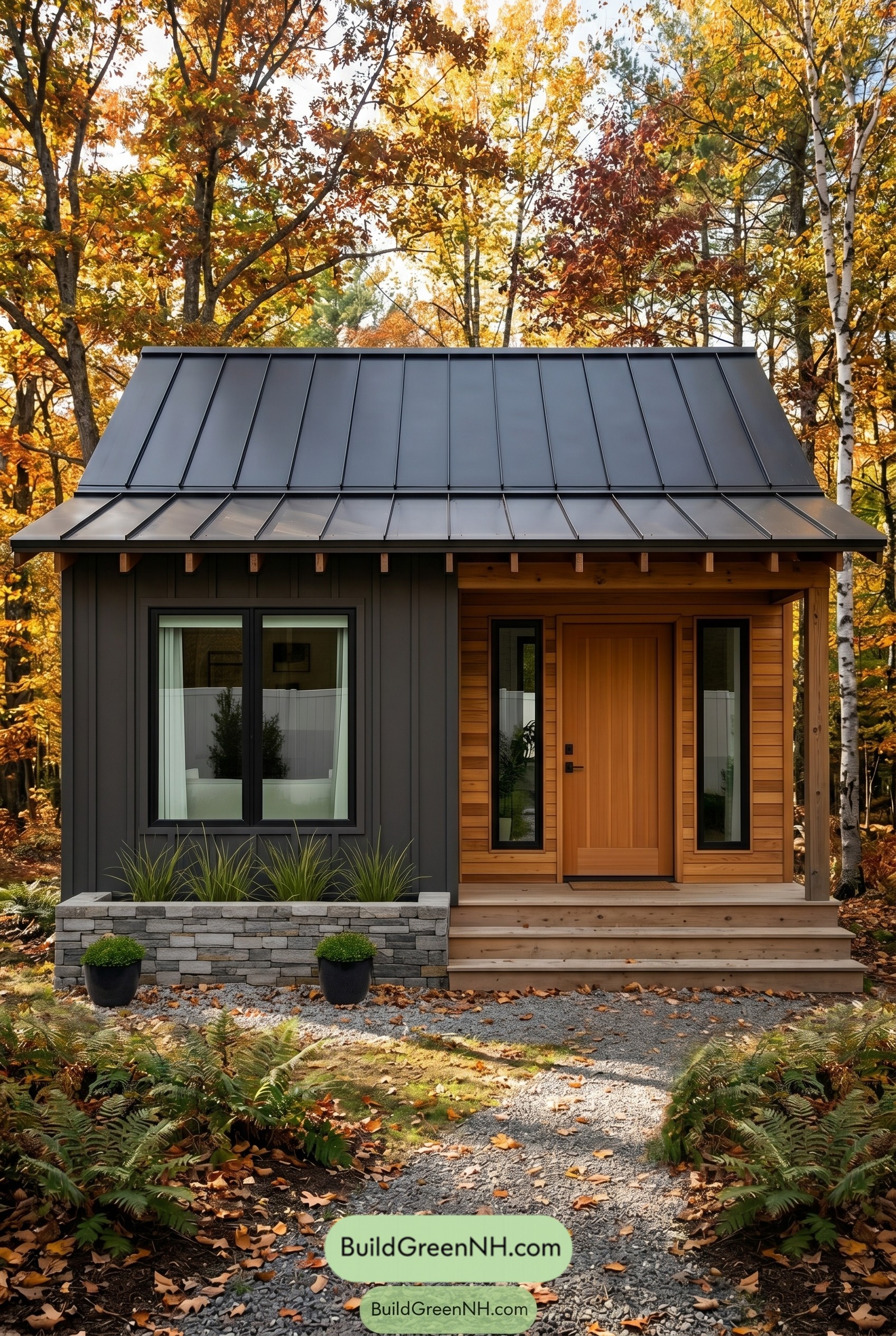 526 sq. ft., 1 Bed, 1 Bath, Single Story Small House Floor Plans: Pine Edge Microhouse
Table of Contents