Last updated on
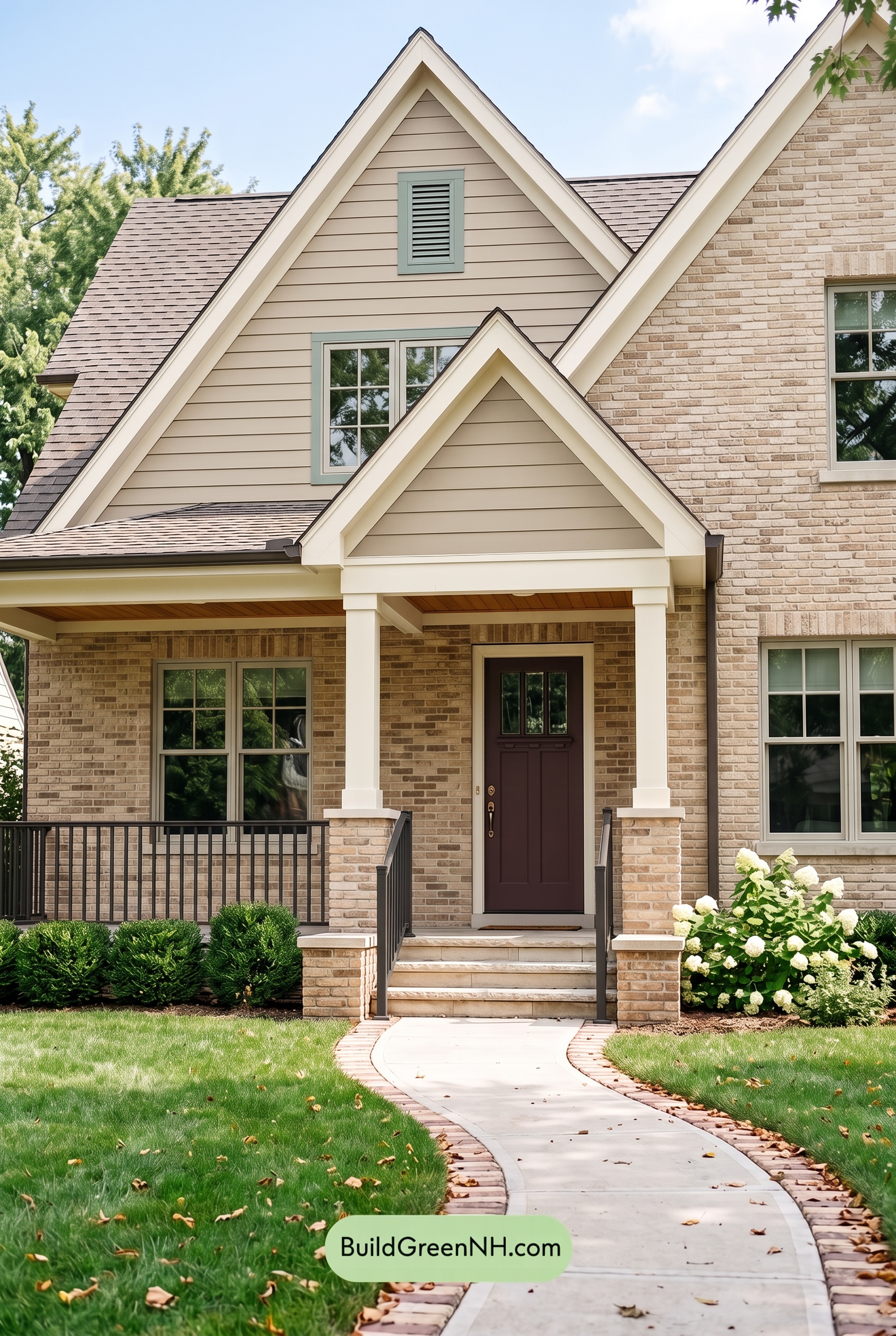

This layered blend of warm neutrals, crisp light trim, and earthy accents gives the home a polished character that feels both timeless and welcoming.
A Soft, Grounded Foundation
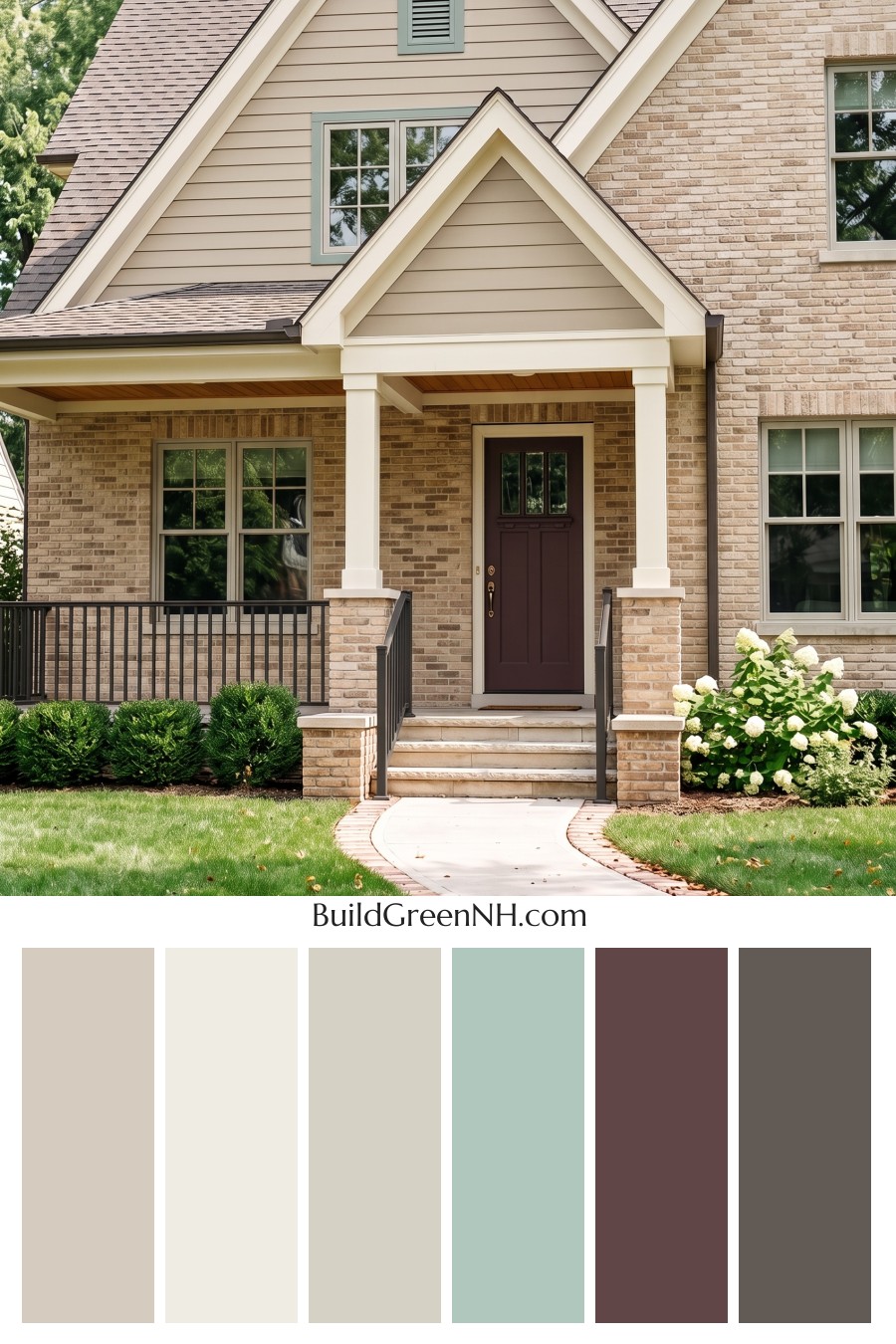
The exterior begins with warm beige siding that brings gentle depth to the steep gables and horizontal lines. Its muted, mid-tone quality feels relaxed rather than flat, allowing the home’s detailed architecture to stand out without overwhelming the facade.
Brick areas introduce a varied mix of sandy beige, tan, and soft brown shades, creating texture around the entry and across the main walls. This tonal variation makes the color scheme feel especially natural, as though every element belongs together from the start.
Light Trim That Defines the Architecture
Creamy white trim provides a clean, luminous outline around the rooflines, gables, porch posts, and windows. It brightens the beige exterior and gives the sharply peaked roof forms a tailored, elegant presence.
The light trim also frames the windows beautifully, making each opening feel intentional and refined. Against the warmer wall and brick shades, it adds contrast without looking stark, keeping the overall result soft and inviting.
Earthy Accents with Lasting Appeal
A subdued sage green accent at the upper window adds a subtle hint of color to the neutral palette. This quiet green shade connects effortlessly with the surrounding landscape and gives the upper gable an extra layer of visual interest.
At the entry, the deep brown front door becomes a rich focal point. Its dark, grounded shade offers welcome contrast against the lighter brick and trim while reinforcing the home’s classic, dependable character. Matching dark brown railings continue that detail along the porch, adding definition and a sense of balance.
Above it all, the muted brown-gray roof provides a calm finishing layer. It anchors the lighter facade and links naturally to the deeper tones at the door and railings, creating a cohesive palette that feels warm, composed, and beautifully at home in a leafy setting.
Next, see how this color scheme looks under different lighting simulations throughout the day.
Overcast
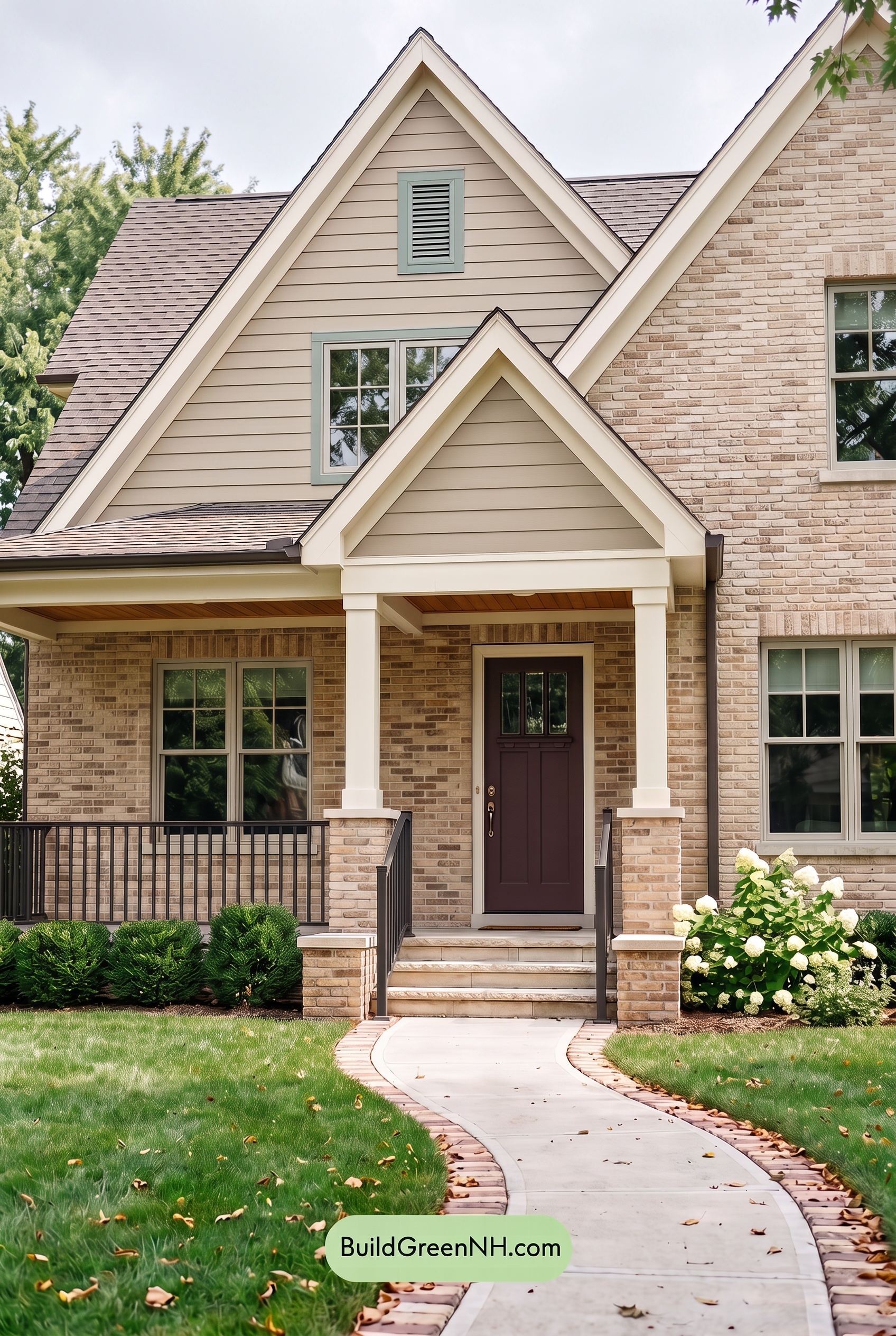
Under overcast skies, the beige siding and brick take on a quieter, slightly cooler cast than they show in neutral daylight, with their warm undertones feeling softer and less pronounced. The white trim appears gentler rather than bright, while the muted green accents lose a touch of saturation and settle into a more refined, gray-leaning shade.
With direct sun removed, shadows along the gables, porch, and railings become broader and less dramatic, reducing sharp contrast across the façade. The deep brown door and dark railings still anchor the composition, but the overall palette feels more even, calm, and welcoming—an understated mood that lets the home’s layered architectural details stand out.
Golden Hour
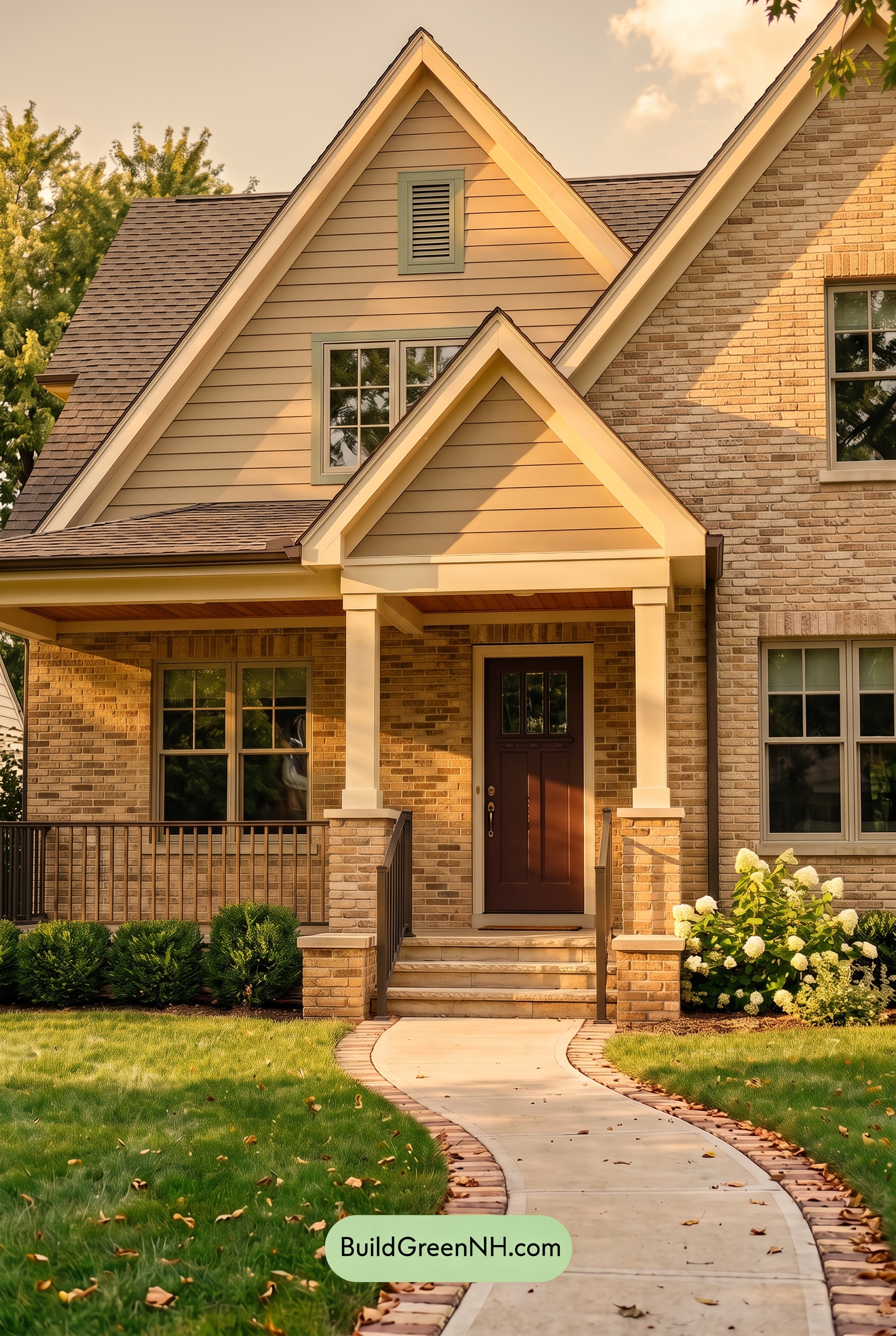
Under Golden Hour, the beige exterior takes on a richer, honeyed warmth than it shows in neutral daylight, making the façade feel more saturated and inviting. The white trim softens into a creamy glow, while the green accents appear more muted and earthy against the sunlit surfaces.
Low, warm light deepens the brown details and lengthens shadows beneath the gables and porch, increasing contrast and giving the architecture extra dimension. Compared with the clearer, more even look of neutral daylight, this evening light creates a relaxed, welcoming mood with a gentle, golden depth.
Shade
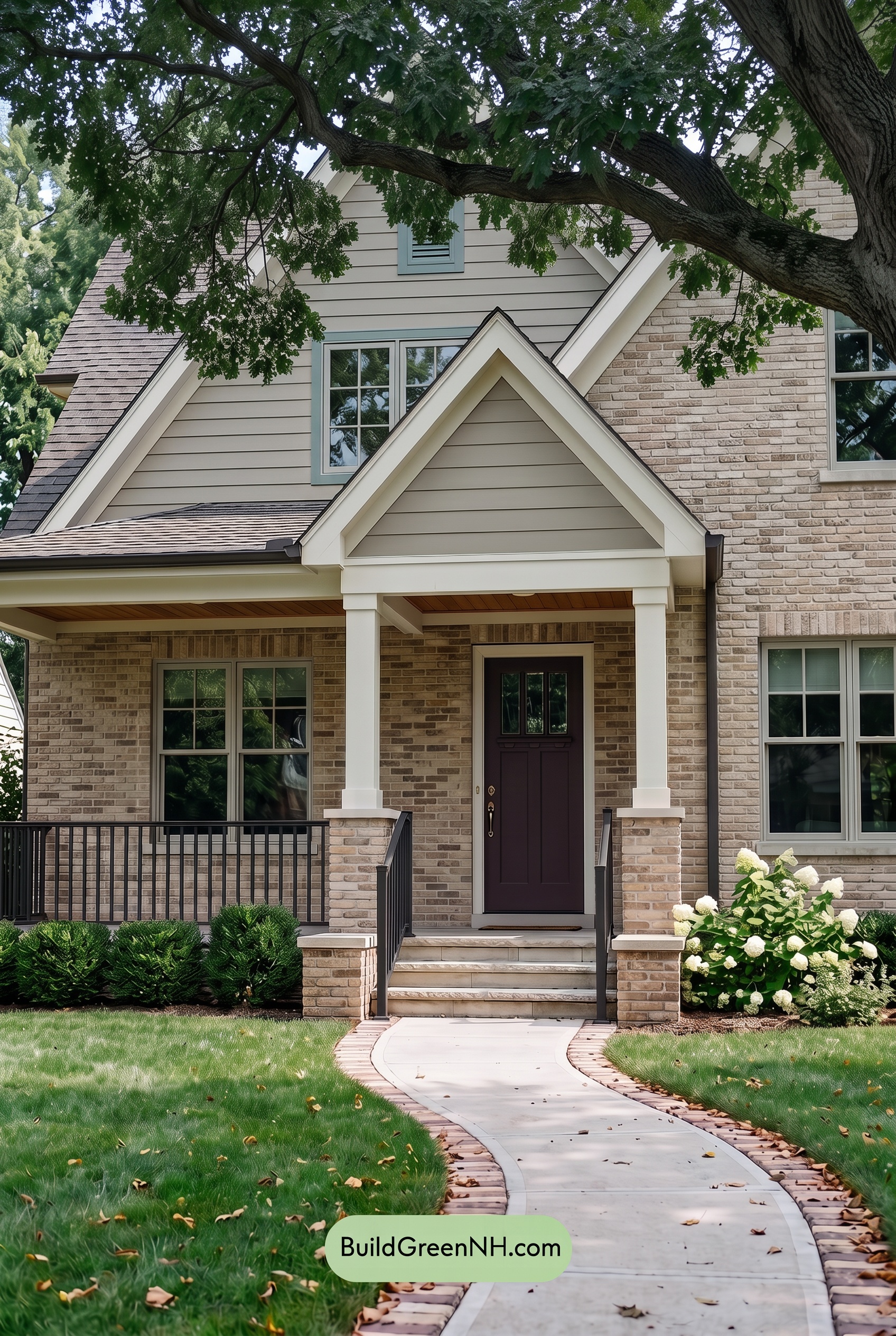
Under shade, the beige exterior shifts away from the gentle warmth it shows in neutral daylight, reading softer and slightly more muted. The white trim loses some of its brightness, becoming a quieter creamy neutral, while the green window accents appear deeper and less saturated against the subdued siding.
Layered shadows beneath the trees strengthen the contrast around the crisp trim, dark brown door, and railings, giving the entry more definition. Rather than feeling sunlit and airy, the palette takes on a calm, grounded mood, with the warm neutrals and deep brown details feeling especially inviting.
Nighttime
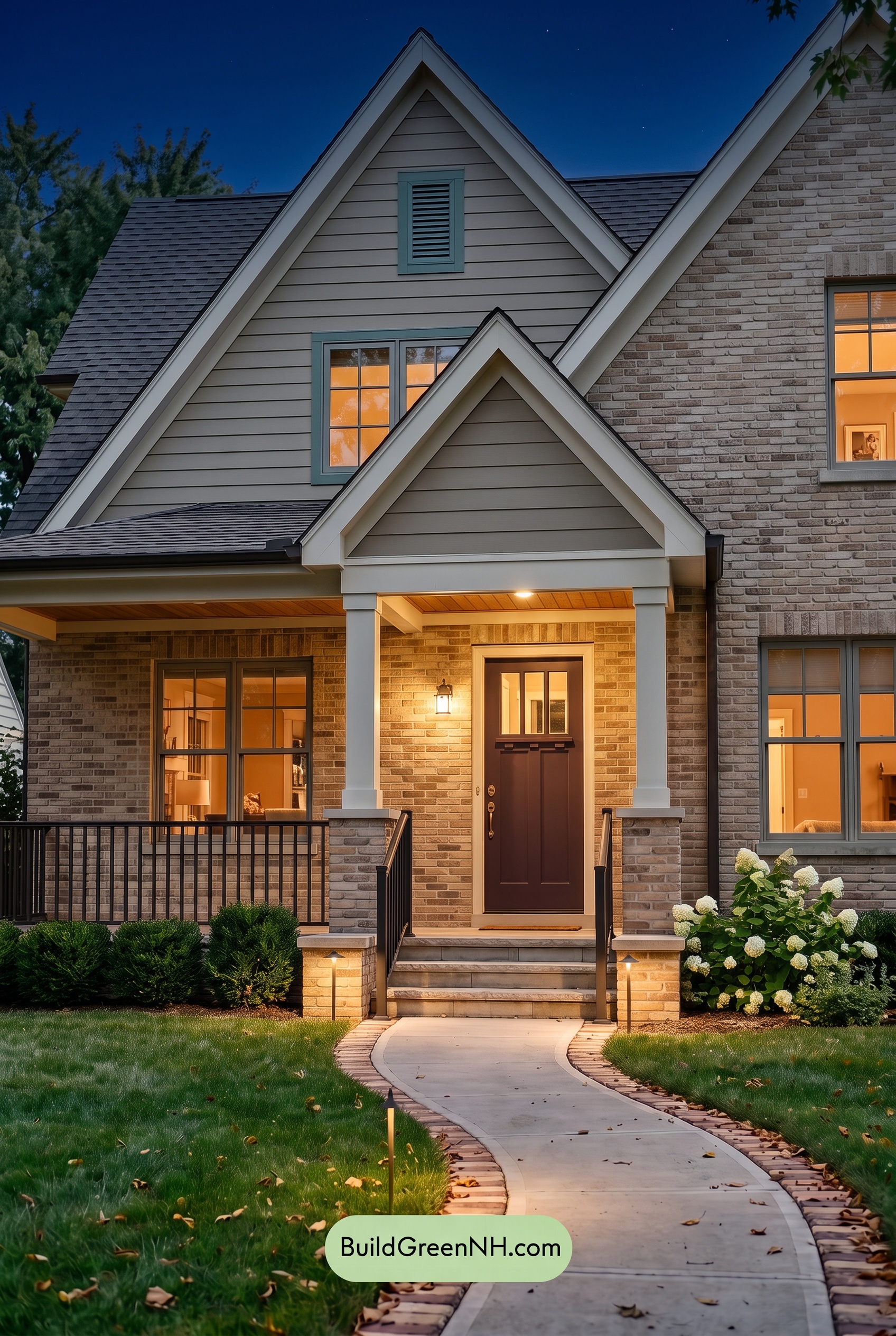
At night, the beige exterior shifts away from its neutral daylight look, taking on a deeper, softer warmth near the entry while receding into cooler shadows across the upper gables. The white trim remains a crisp outline in the illuminated areas, but its brightness gently falls away at the rooflines, giving the architecture more depth and definition.
The green shutters appear more muted and blue-leaning in the low light, while the brown door and railings become richer, darker anchors against the glowing porch. Warm interior and entry lighting heightens contrast around the windows and doorway, creating an inviting, intimate mood that feels more dramatic than the balanced appearance of daylight.
Pin these for later:
Want More?
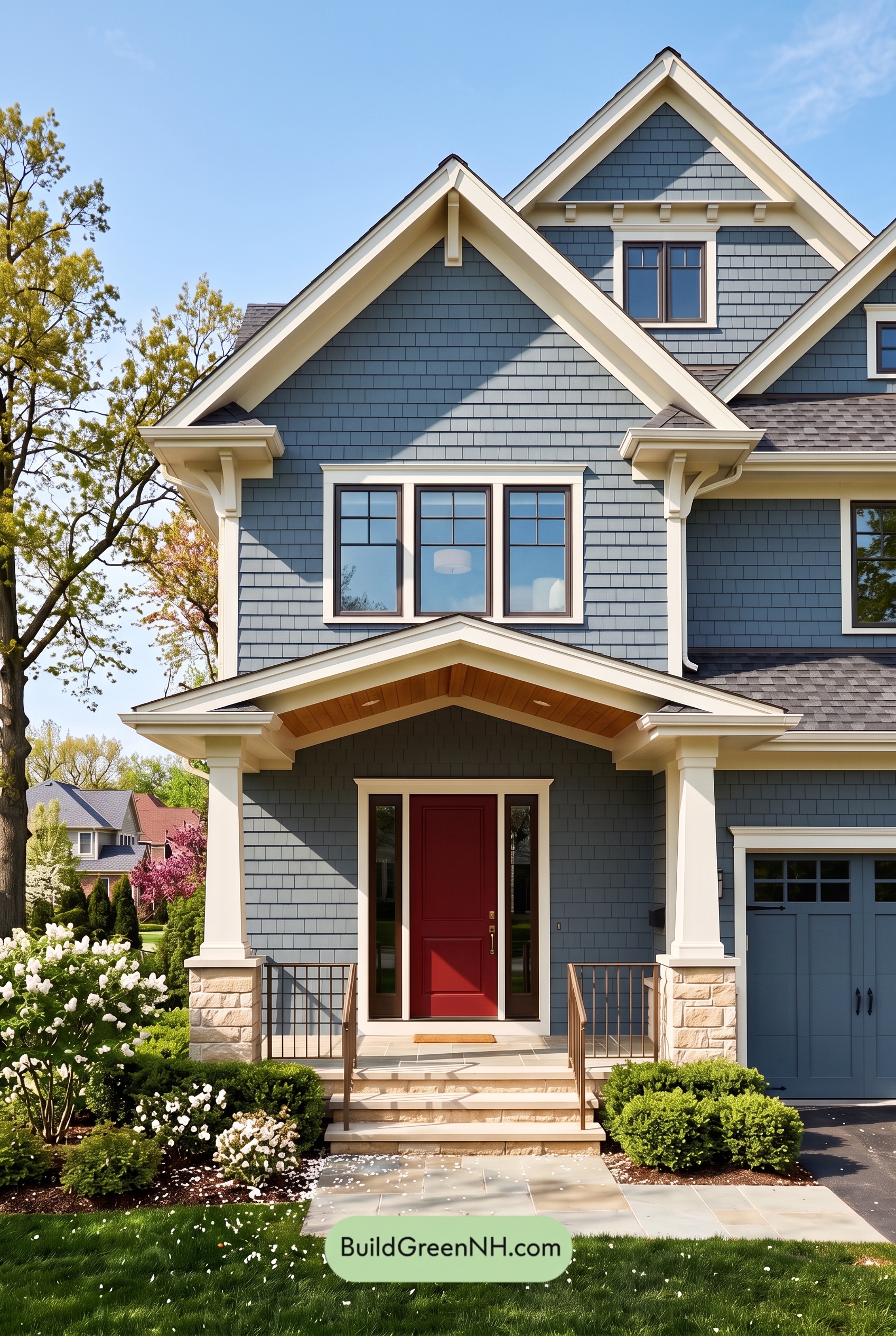 Red Front Door House Paint Color Scheme: Denim Blue Homecoming
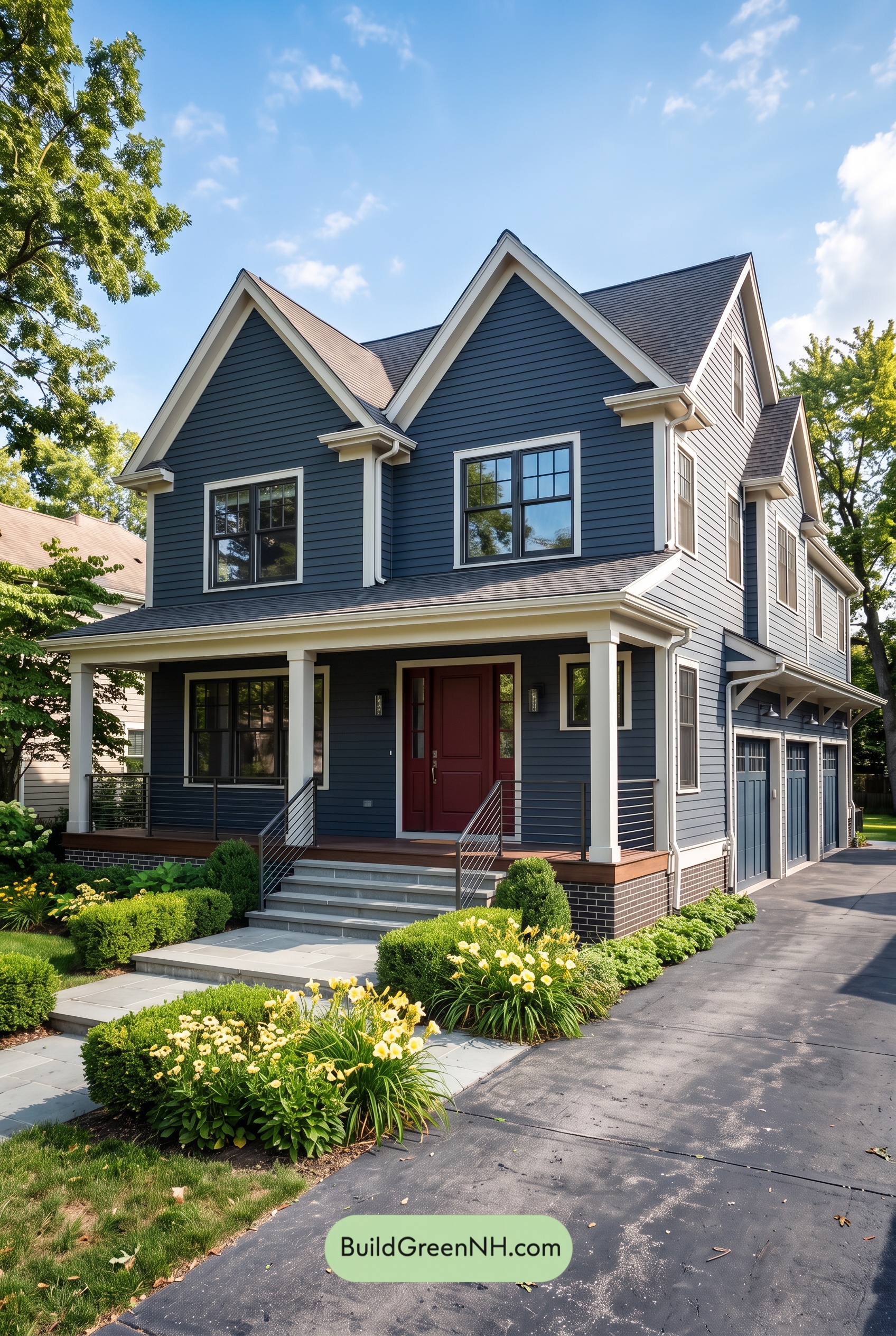 Red Front Door House Paint Color Scheme: Midnight Blue Assurance
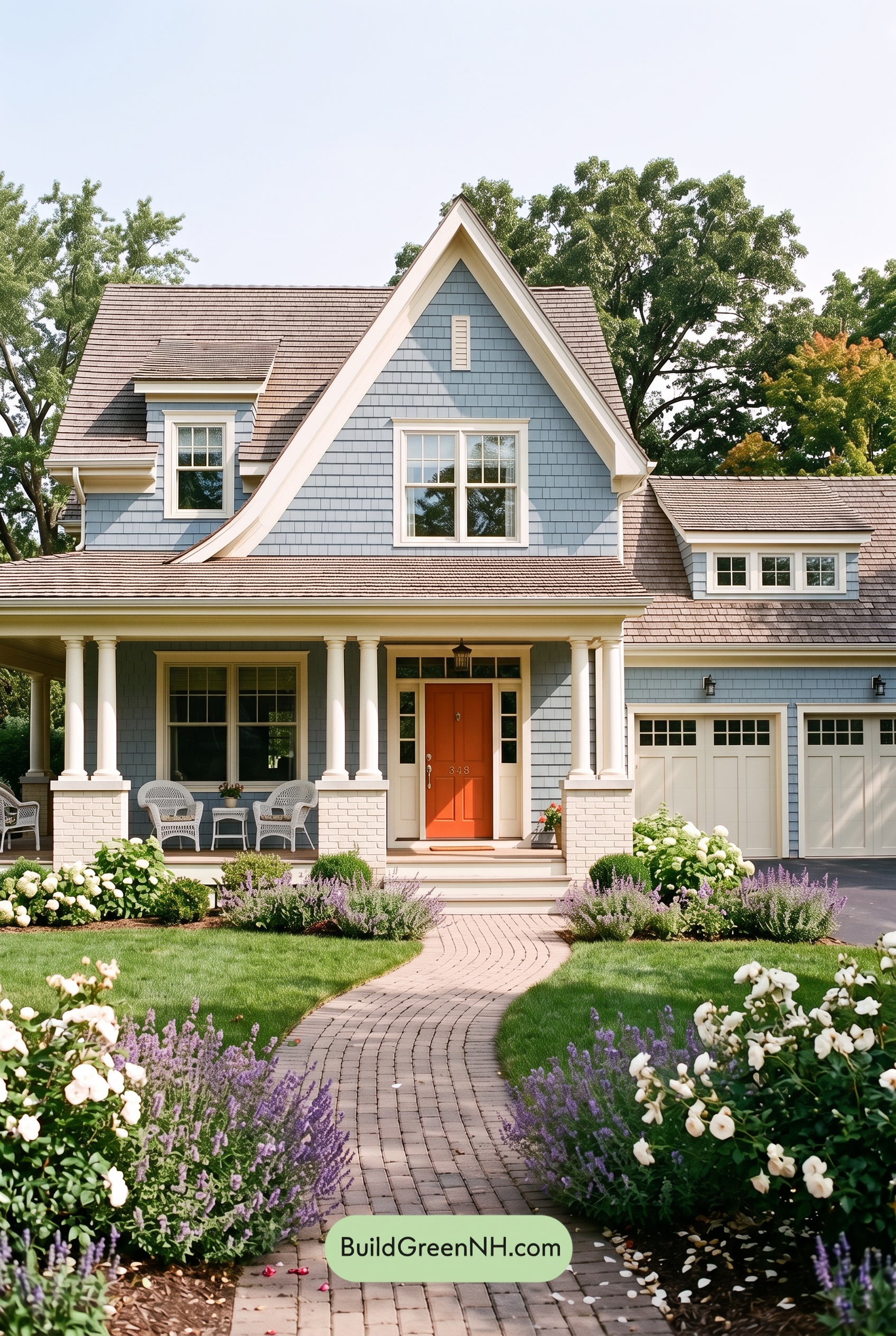 Red Front Door House Paint Color Scheme: Pale Blue Joy
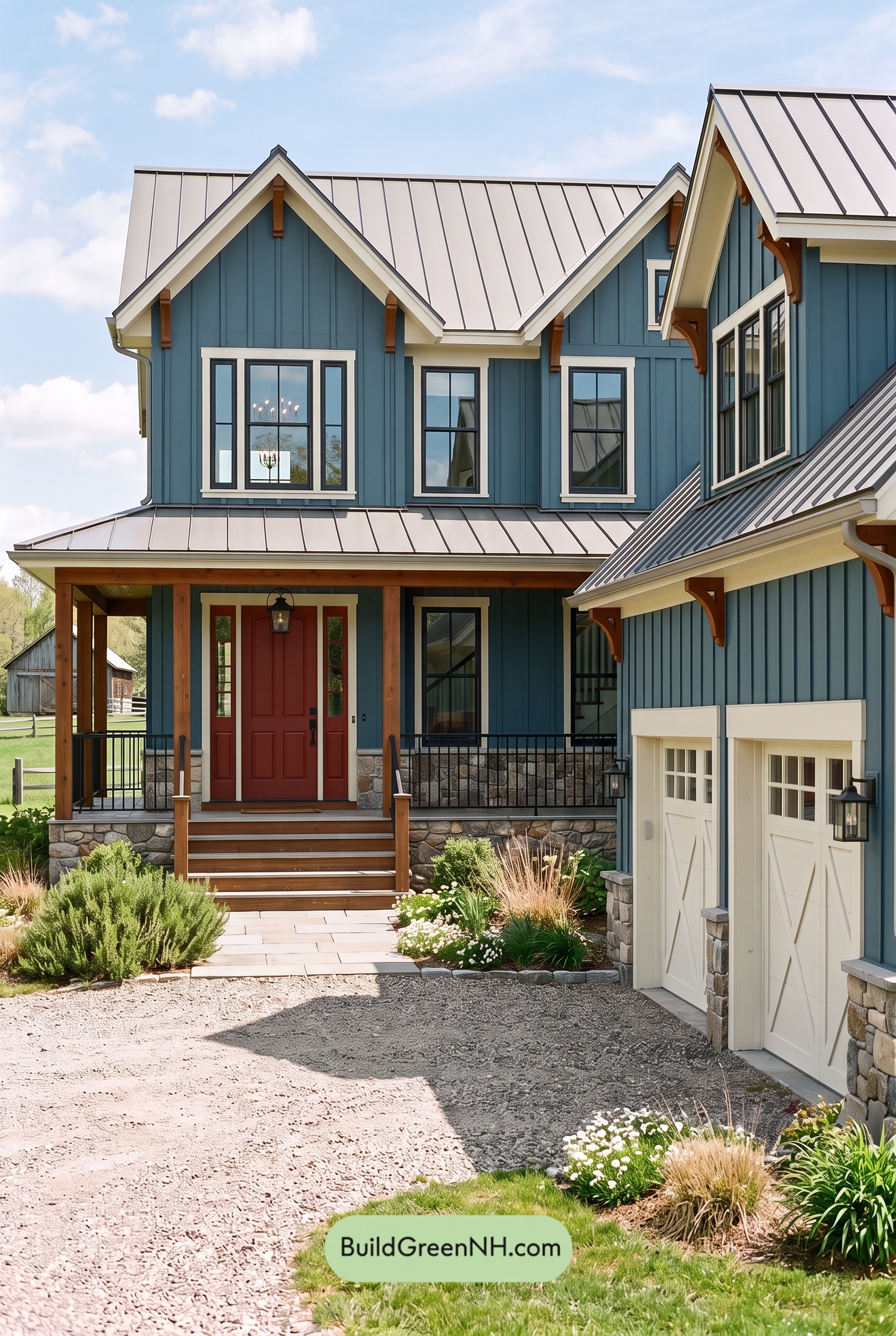 Red Front Door House Paint Color Scheme: Teal Blue Kinship
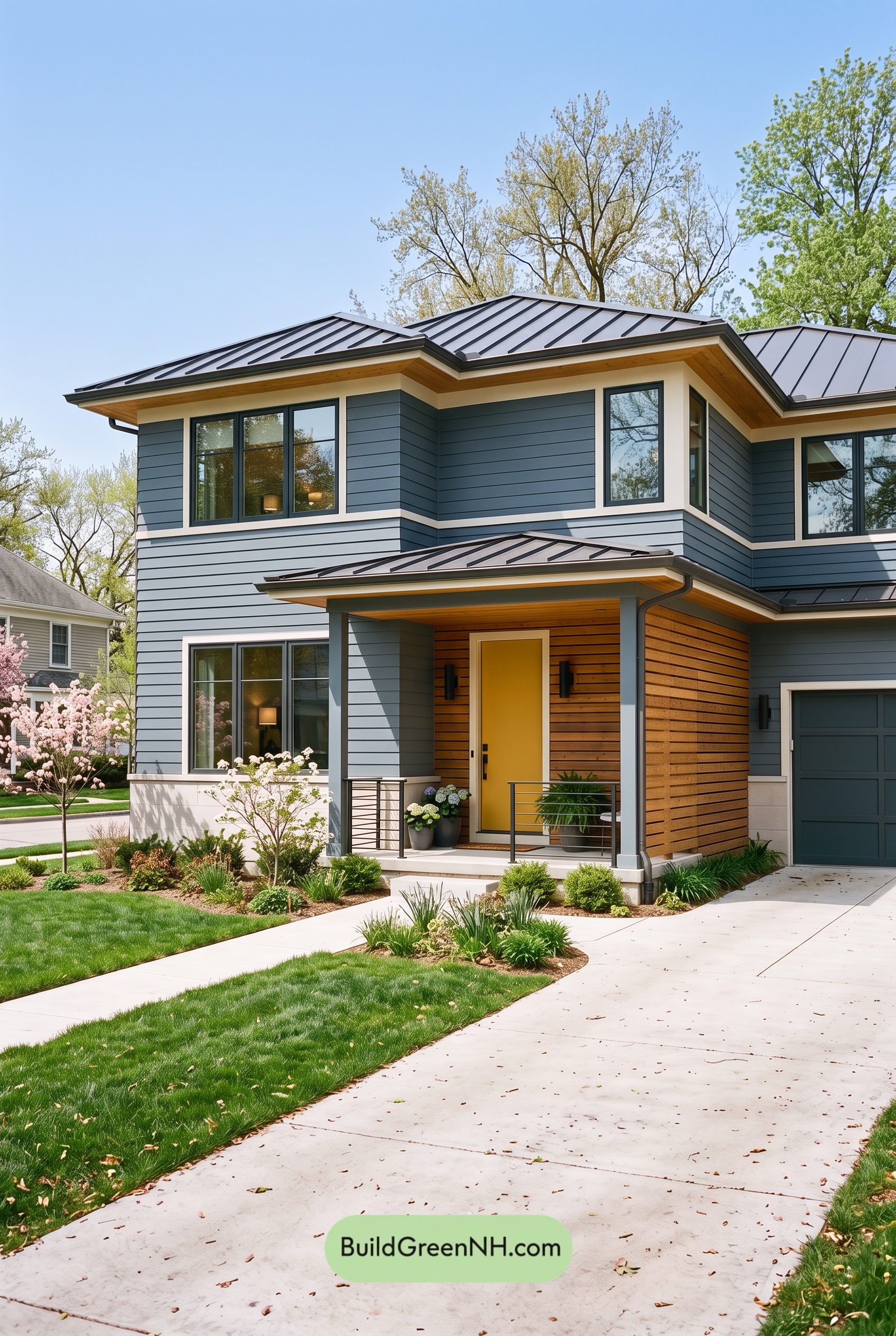 Blue House Front Door Color Scheme: Harbor Saffron
Table of Contents