Last updated on
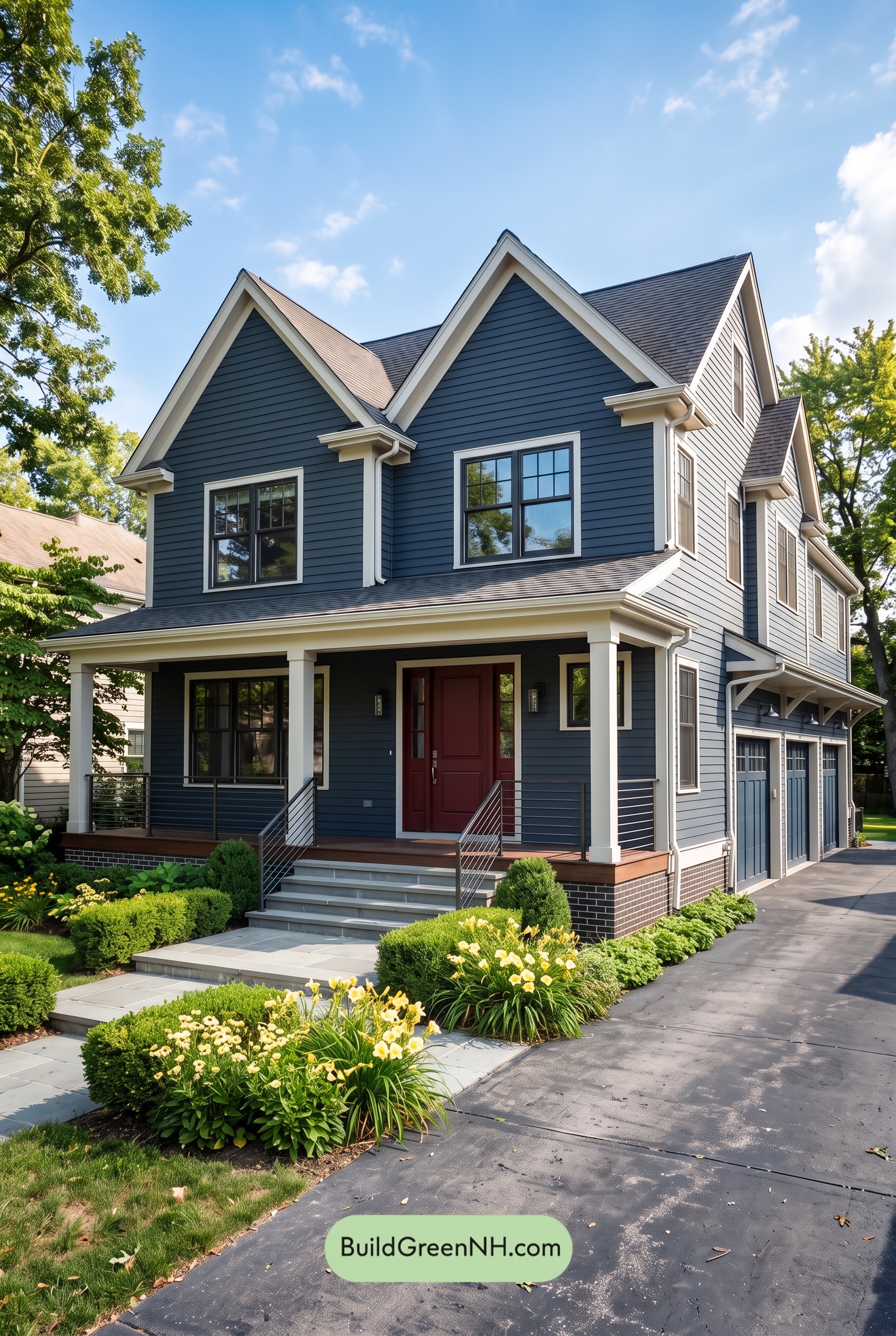

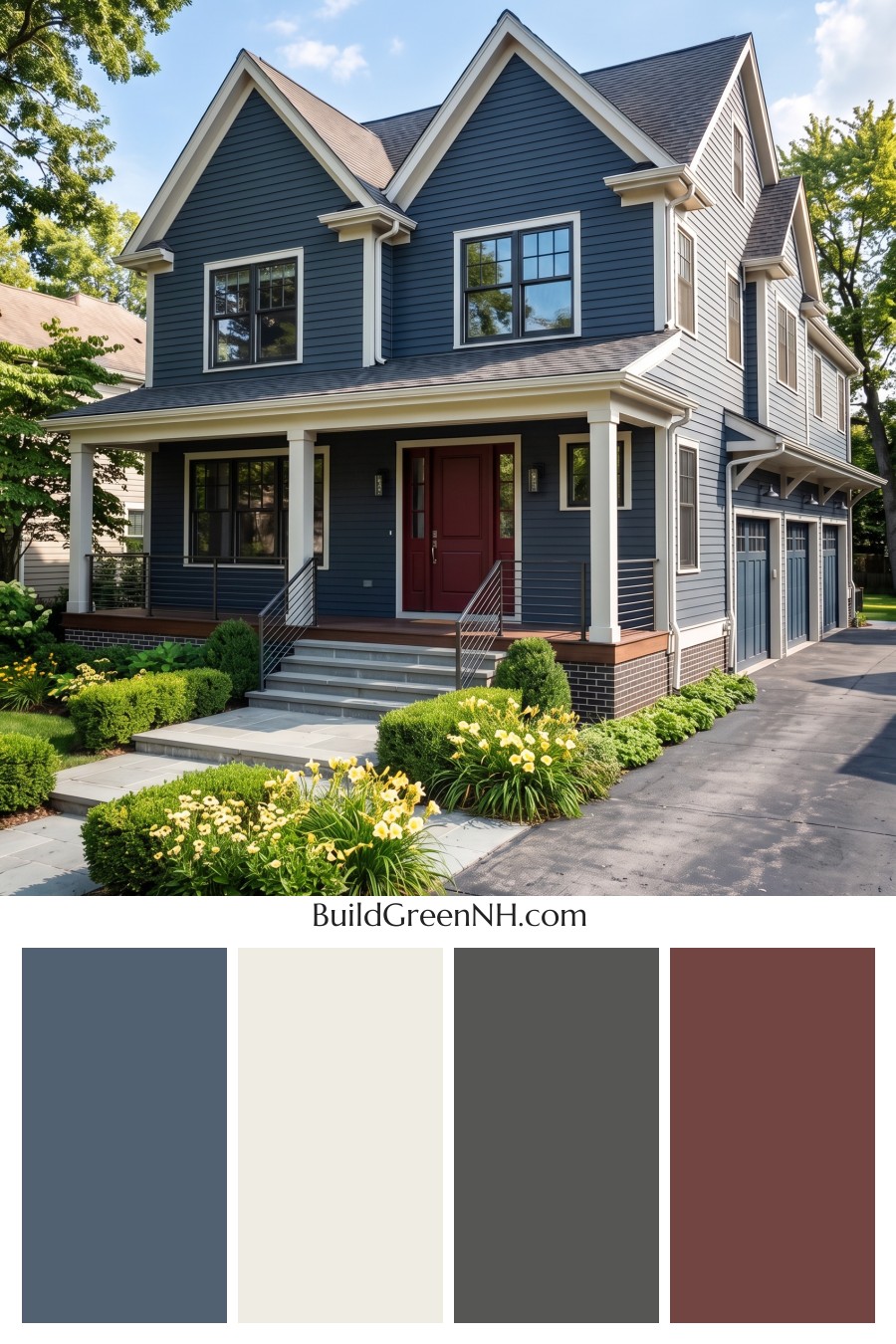
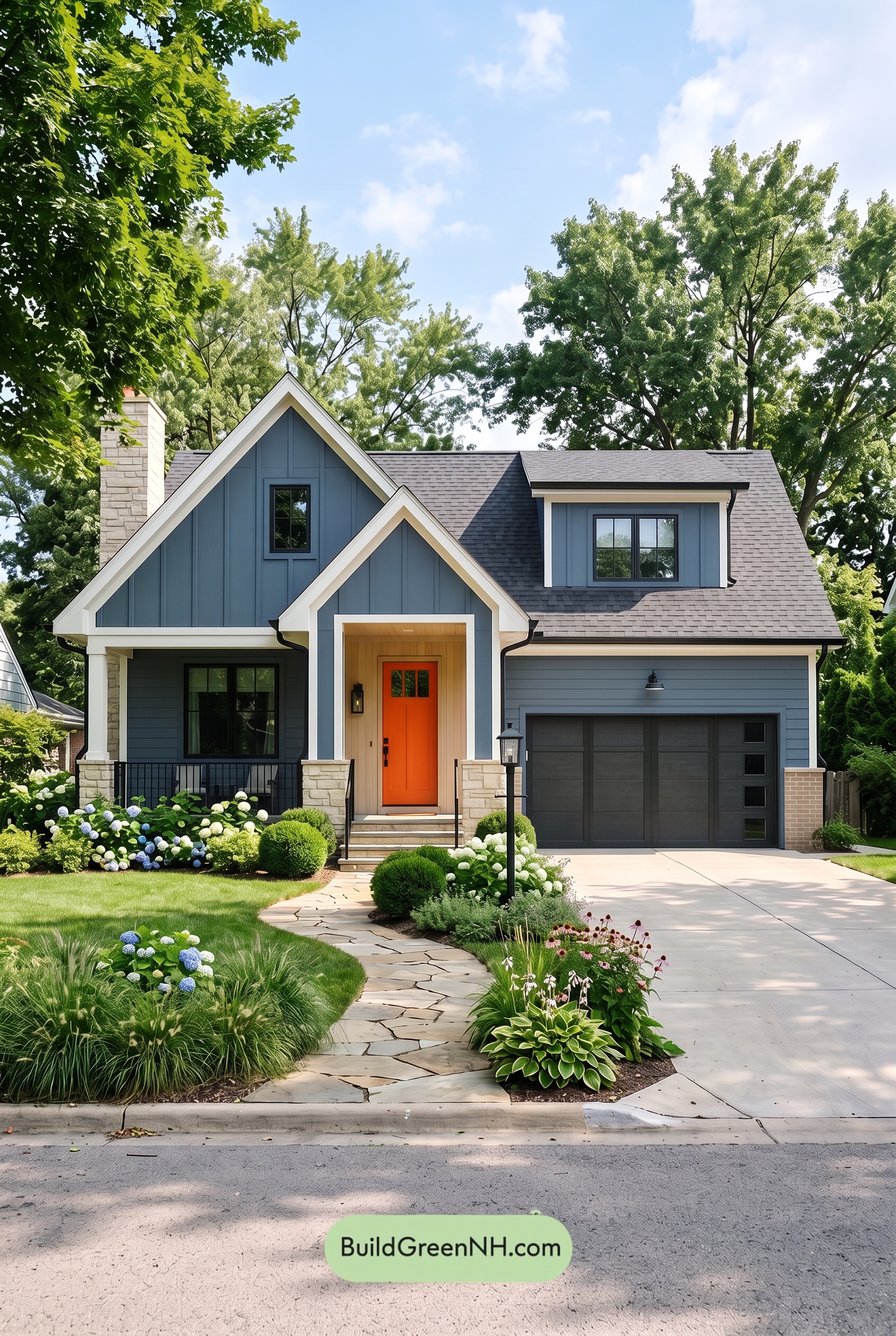
Deep blue siding, warm white trim, and rich brown accents give this home a beautiful balance of crisp architectural detail and welcoming warmth.
Deep Blue Creates a Confident Foundation
A muted, gray-leaning shade of deep blue wraps the horizontal siding, giving the house a substantial presence without feeling overly formal. Across the tall gables, this blue makes the rooflines especially striking. Along the shaded porch, it takes on a deeper, quieter character.
The garage doors repeat the blue family, connecting the side elevation to the front. That repetition matters: it keeps the broad exterior cohesive rather than letting the garage become a separate visual feature.
Warm White Brings the Architecture Into Focus
Warm white trim traces the gables, outlines the windows, and brightens the porch roof. Against the darker siding, these lighter edges make the home’s proportions easy to appreciate. Every peak and opening feels clearly defined.
The porch columns carry that same warm white down to the entry level, creating a pleasing rhythm across the facade. Its slight warmth softens the contrast with the blue, keeping the overall effect inviting rather than stark.
Brown Adds Warmth Where It Counts
The front door introduces a deep, reddish shade of brown that stands apart from the cooler siding. It is a restrained but effective focal point, drawing attention toward the entrance without competing with the dramatic gables above.
Warm medium-brown porch decking echoes the door’s earthy character. Together, these touches give the entry a comfortable, grounded feeling and prevent the blue-and-white palette from becoming too cool.
Gray Details Tie Everything Together
Dark charcoal-gray window frames add definition inside the lighter trim, while similarly shaded railings bring a clean, understated edge to the porch and stairs. Their slender profiles let the larger blocks of blue and white remain the main attraction.
The charcoal-gray roof provides a quiet finishing layer above the siding. Below, pale gray steps and darker gray masonry continue the neutral palette, connecting the house visually to the surrounding hardscape.
The result feels polished, calm, and approachable. Blue supplies depth, white highlights the architecture, gray keeps the details cohesive, and brown gives the entrance its welcoming warmth—a thoughtful balance that looks equally at home beside leafy greens and soft yellow flowers.
Next, see how this color scheme looks under different lighting simulations throughout the day.
Overcast
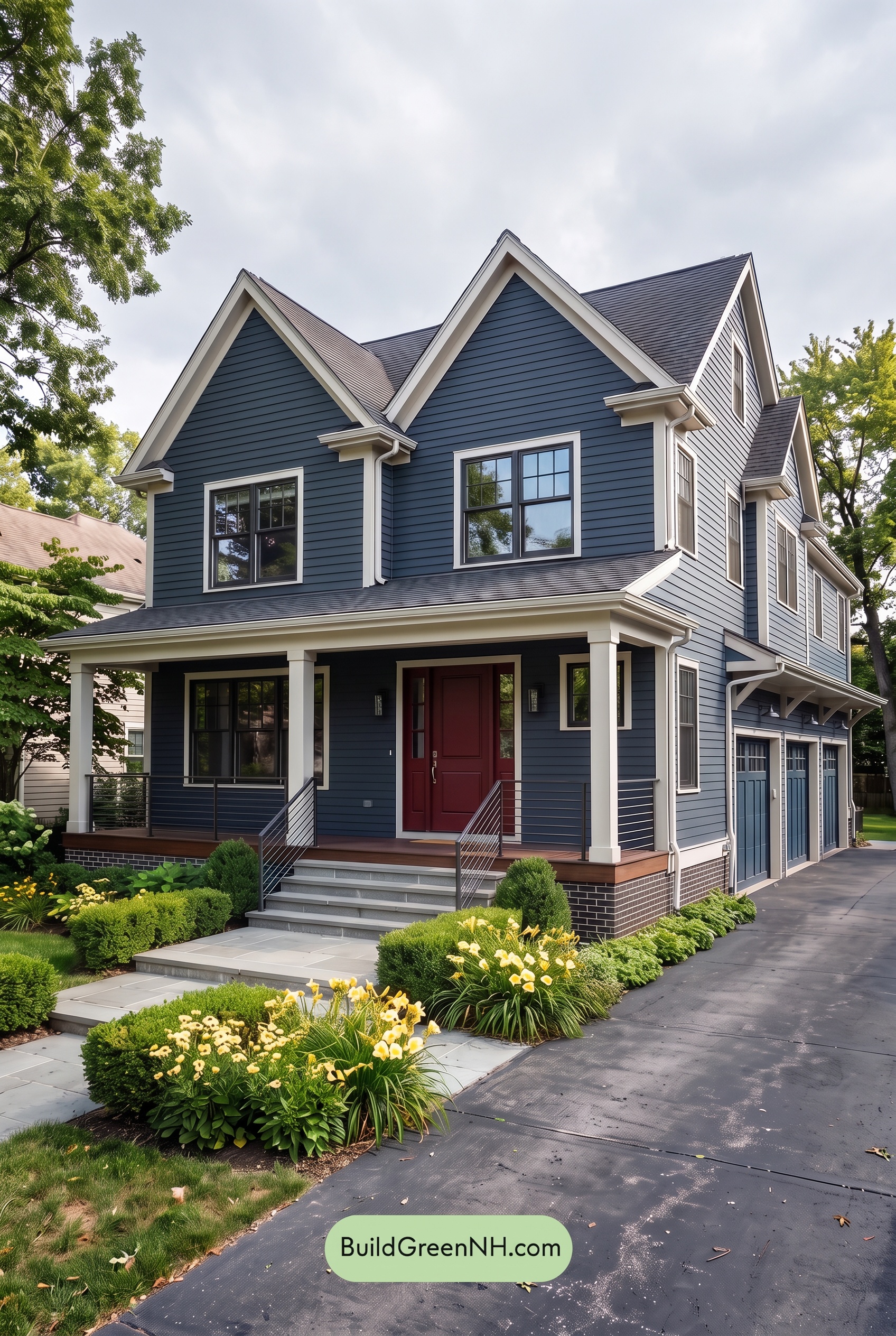
Under overcast skies, this deep shade of blue can look cooler and slightly more muted than in neutral daylight, with its gray undertones becoming more noticeable. The blue siding and garage doors read more evenly as bright highlights fade, while the white trim and columns appear softer and less warm.
Diffused light softens shadows beneath the gables and porch, easing the contrast between exposed and sheltered surfaces. The darker gray accents feel less sharply defined, and the brown at the entrance loses some warmth while remaining a welcoming counterpoint to the blues. White against deep blue still gives the house definition, but the overall mood becomes quieter, cooler, and more restrained.
Golden Hour
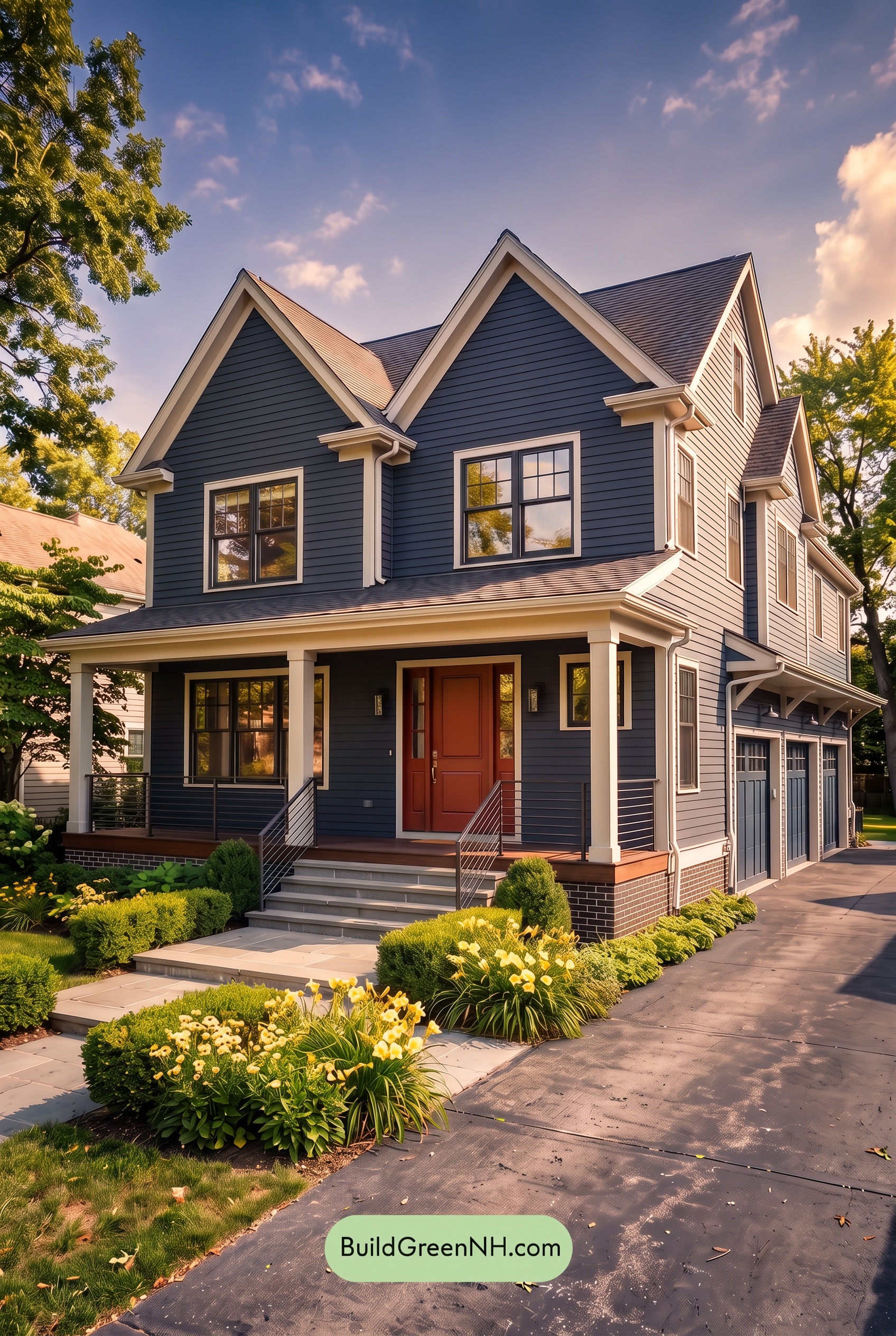
Golden Hour gives this blue exterior a softer, more layered character than neutral daylight. Sunlit areas appear warmer and slightly less saturated, while the shaded front holds deeper, richer blue tones. The white accents take on a creamy warmth rather than looking crisp and cool, creating a gentle glow against the darker siding.
Long shadows beneath the porch and rooflines strengthen the contrast between pale highlights and deep blue recesses. The gray details feel warmer where sunlight catches them and darker in shade, while the brown entry’s reddish undertones become more pronounced. Compared with the clearer, more even palette of neutral daylight, the overall mood feels cozy, welcoming, and quietly dramatic.
Shade
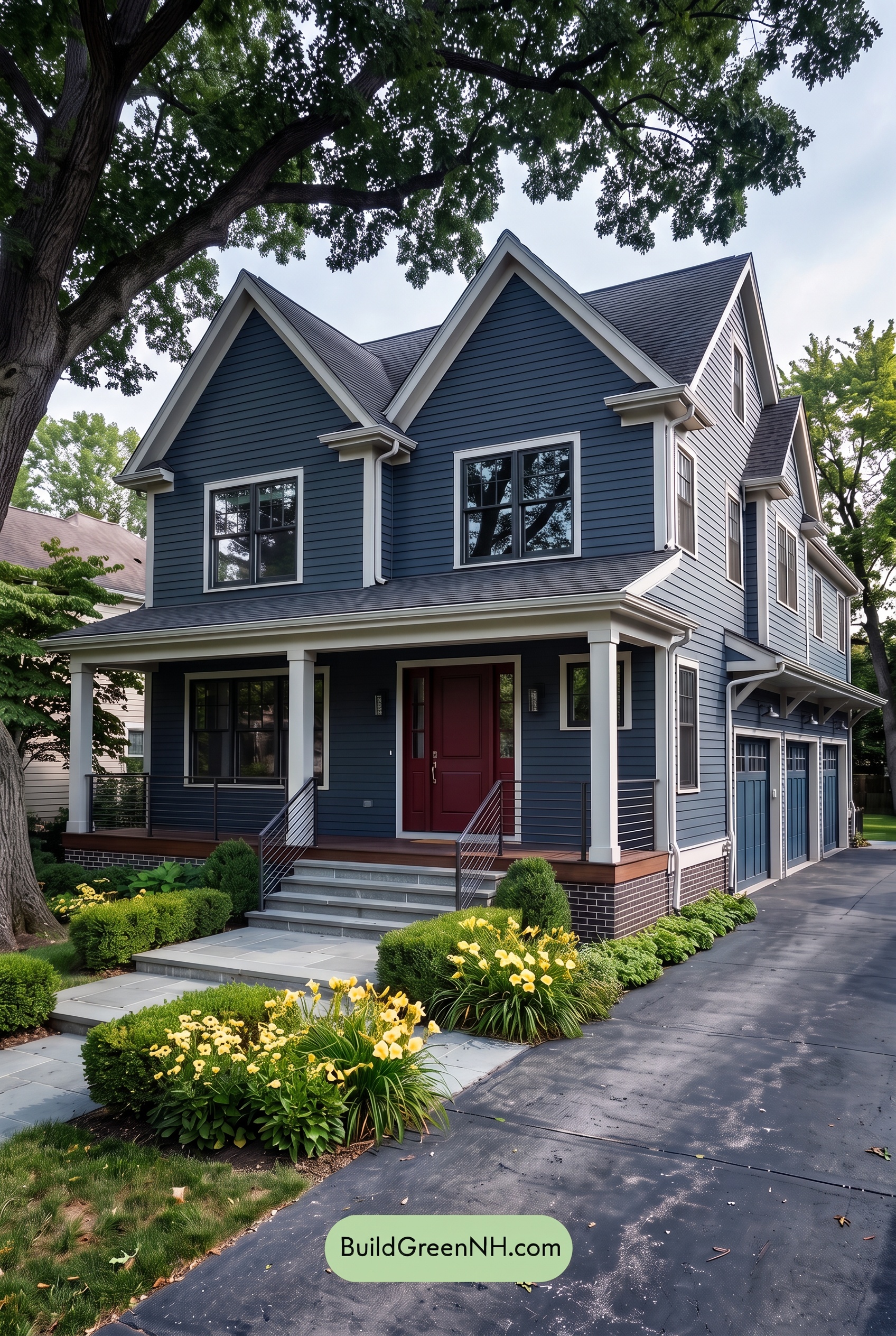
In shade, this blue deepens and leans cooler, with its saturation feeling more restrained than in neutral daylight. Gray undertones become more noticeable, giving the exterior a quieter, more grounded presence. Beneath the porch and eaves, deeper shadows draw the blue toward a dark blue-gray, while the more exposed areas retain a lighter, clearer blue.
The whites lose some brightness and take on a soft gray cast, yet still stand out against the darkened blue. The darker grays blend more closely into the shadows, softening smaller details. Meanwhile, the reddish browns feel less warm and more subdued than they would in neutral daylight. Together, these shifts create a calm, sheltered mood, with gentle transitions across the walls and crisp contrast around the lighter edges.
Nighttime
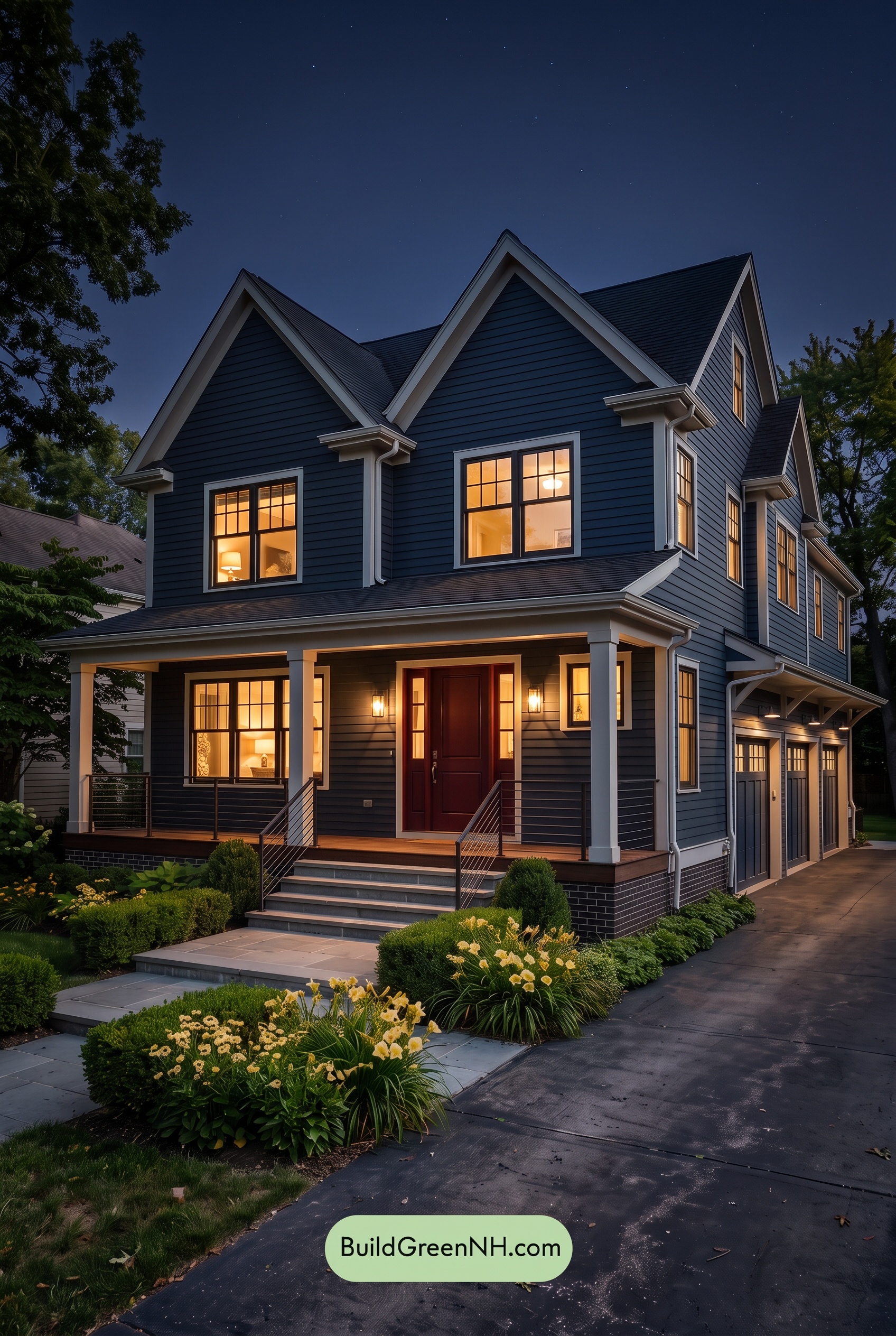
At night, this shade of blue deepens toward a nearly black-blue in the shadows, appearing less vividly saturated than it would in neutral daylight. Warm yellow light softens the blue near the porch and garage, while the upper walls retain a cooler cast. Shadows beneath the gables and between siding boards become more pronounced, giving the exterior a stronger sense of depth.
The white trim and columns shift from crisp daylight accents to softer, creamy shades where the lights reach them, contrasting with the dark blue walls. Gray details become darker and less distinct away from the glow, while the brown entry takes on a richer, reddish warmth. Together, these shifts turn a fresh daytime palette into a quieter, more intimate nighttime setting, with the warmly lit entrance drawing the eye.
Pin these for later:
Want More?
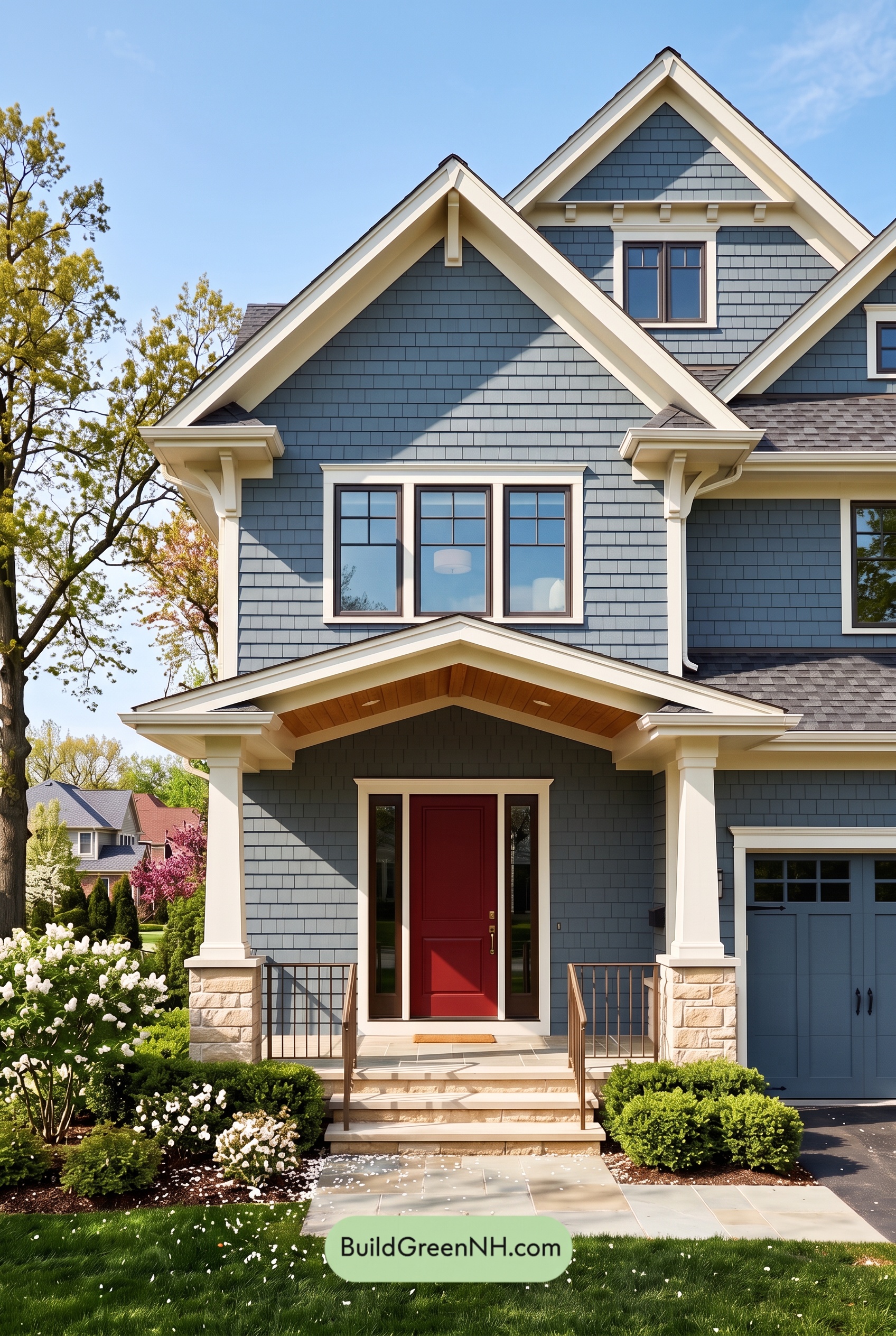 Red Front Door House Paint Color Scheme: Denim Blue Homecoming
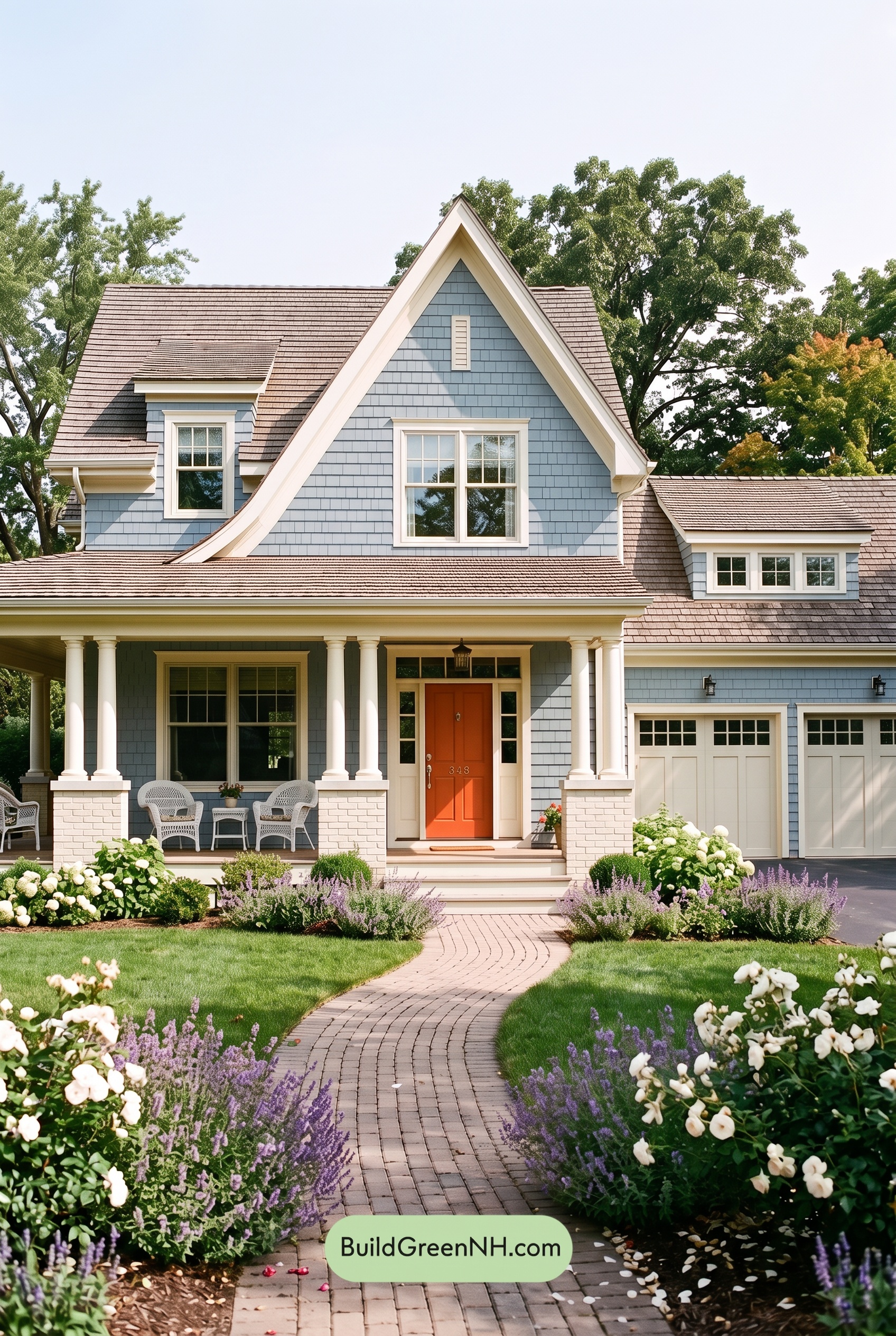 Red Front Door House Paint Color Scheme: Pale Blue Joy
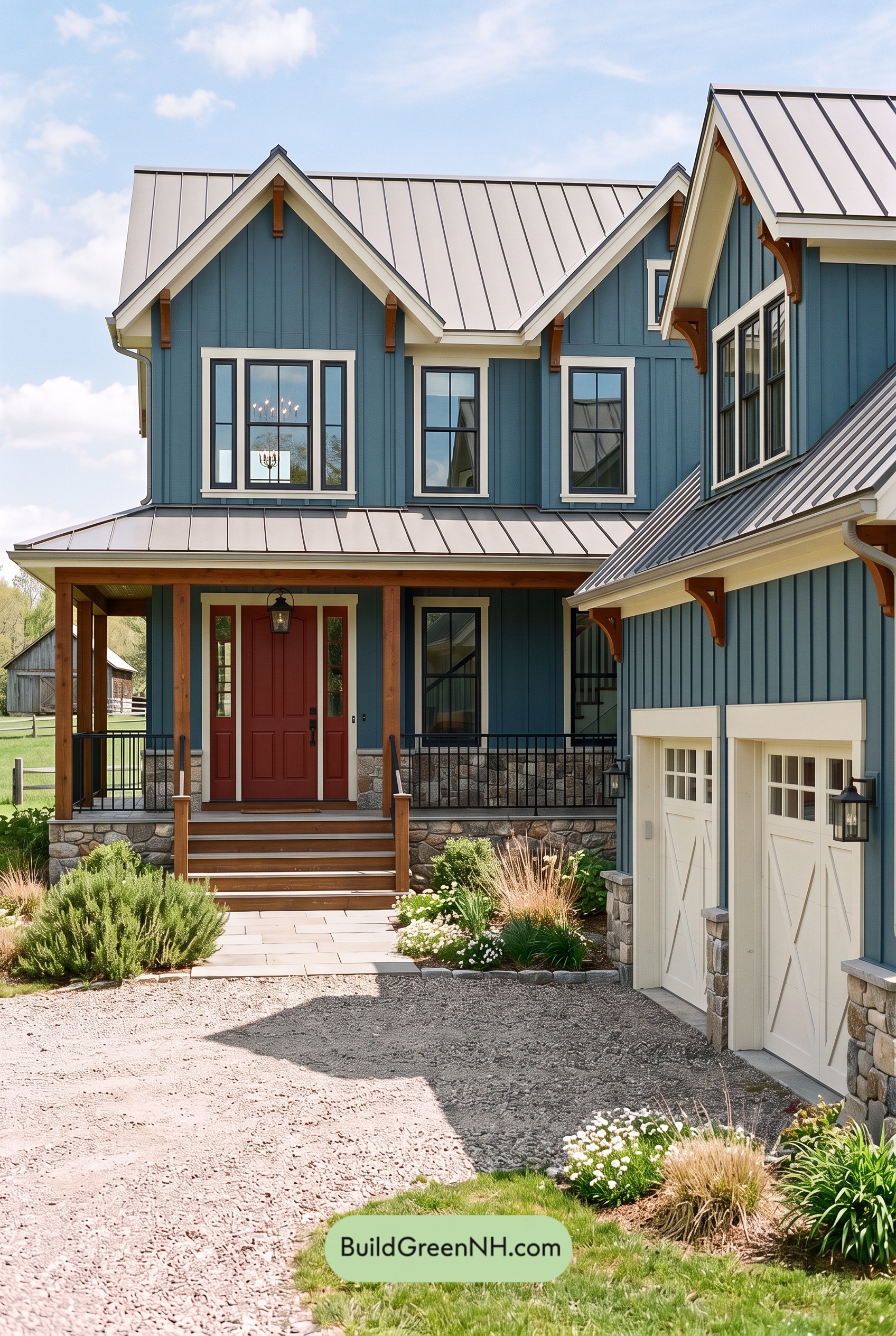 Red Front Door House Paint Color Scheme: Teal Blue Kinship
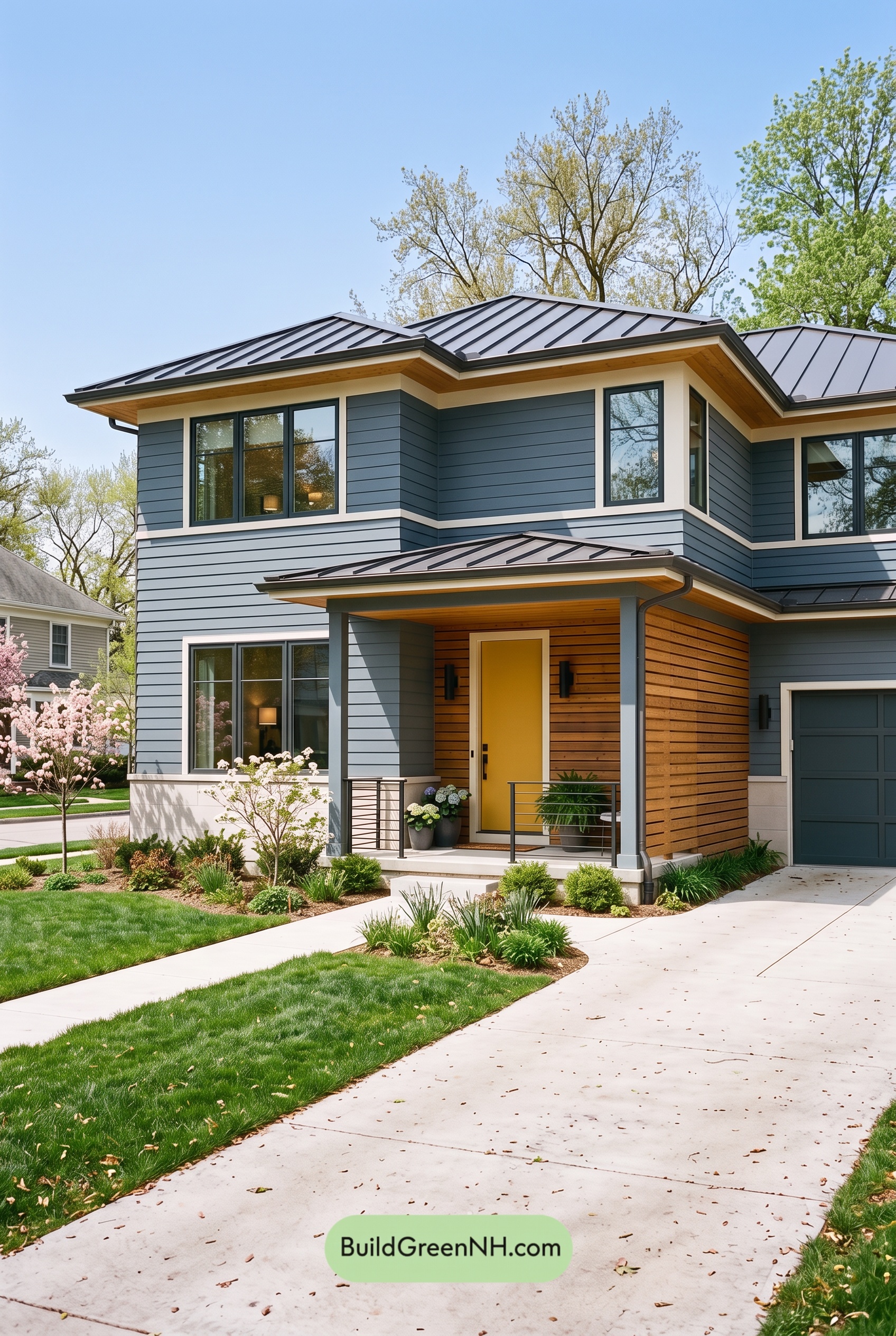 Blue House Front Door Color Scheme: Harbor Saffron
 Blue House Front Door Color Scheme: Cobalt Persimmon
Table of Contents