Last updated on
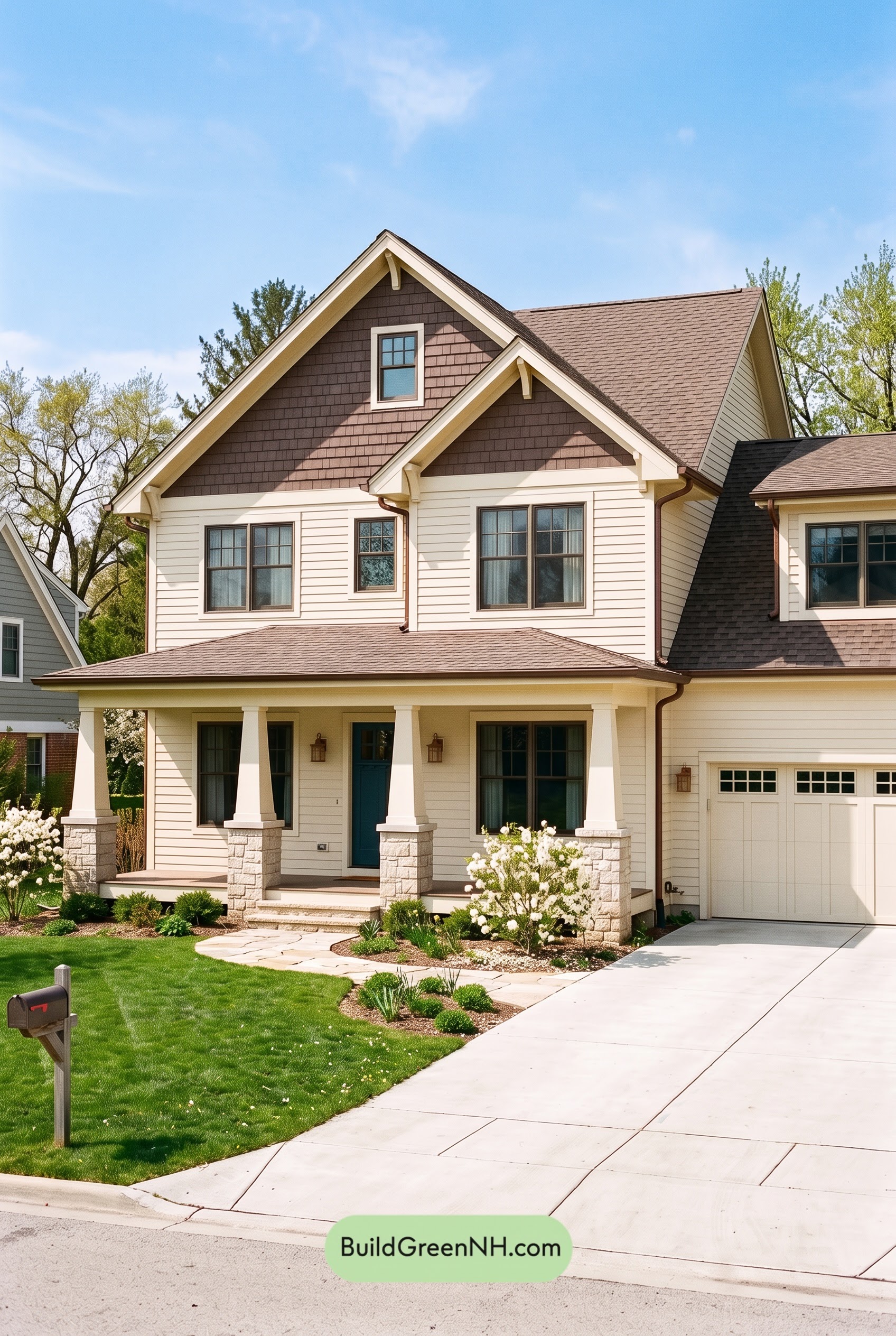

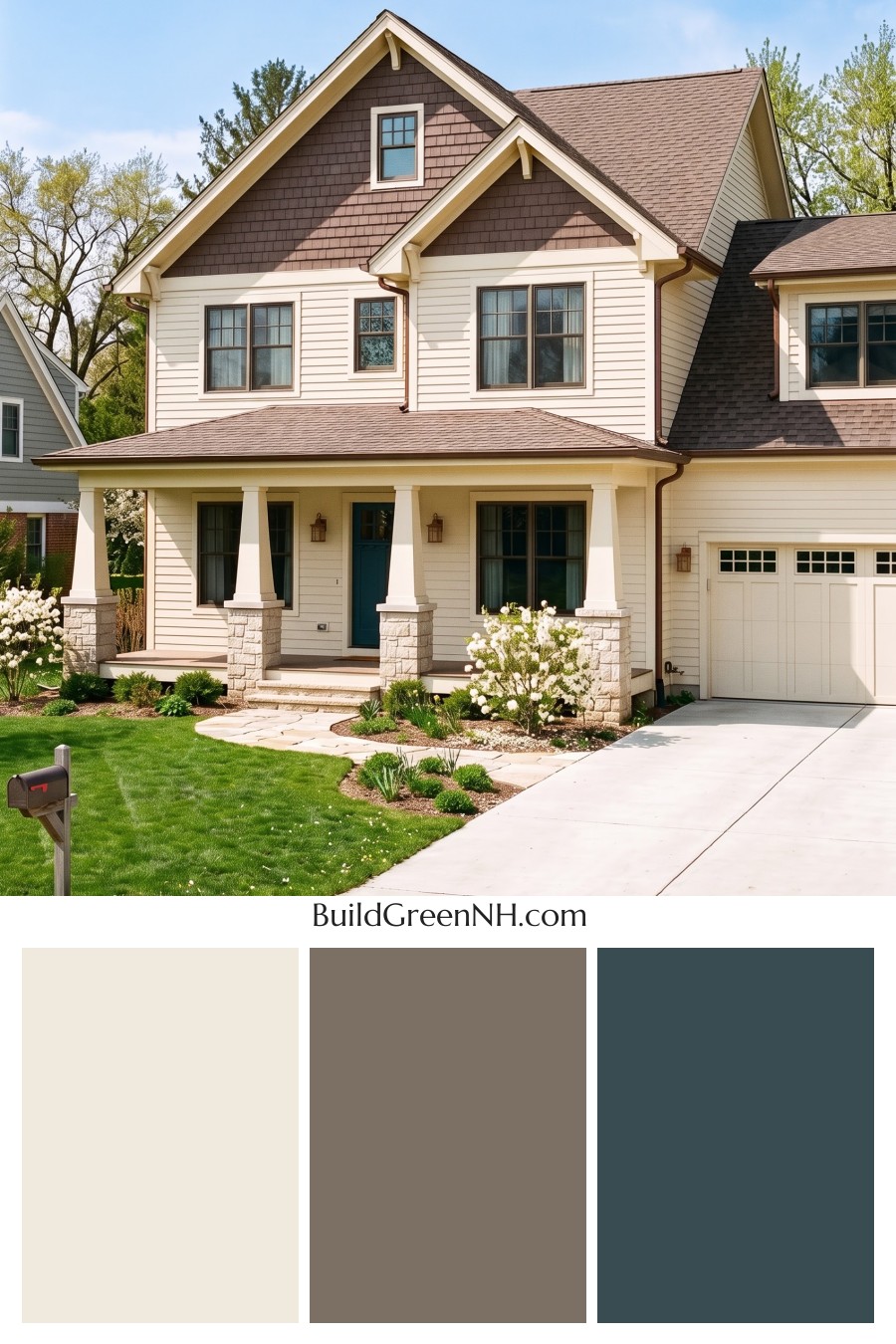
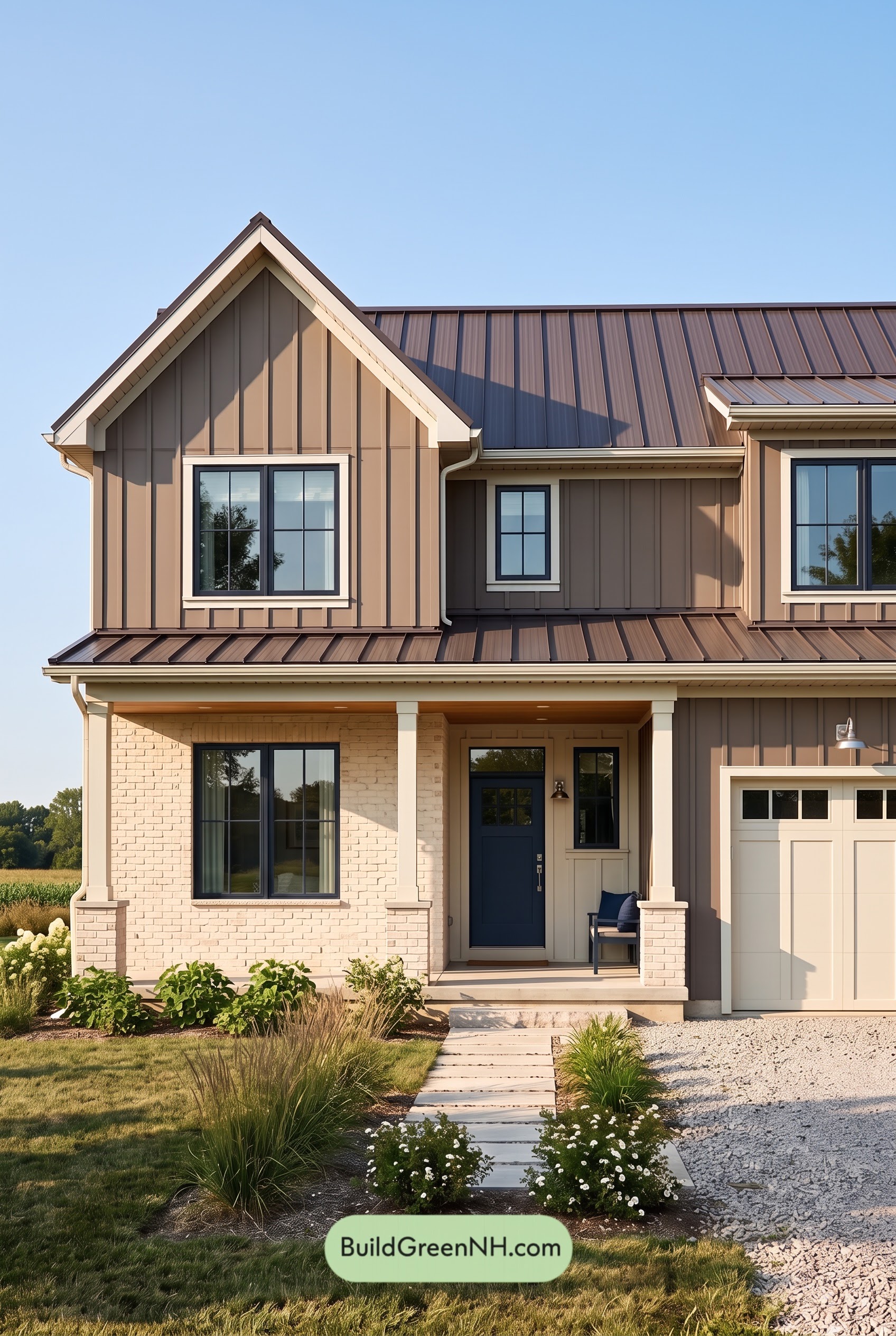
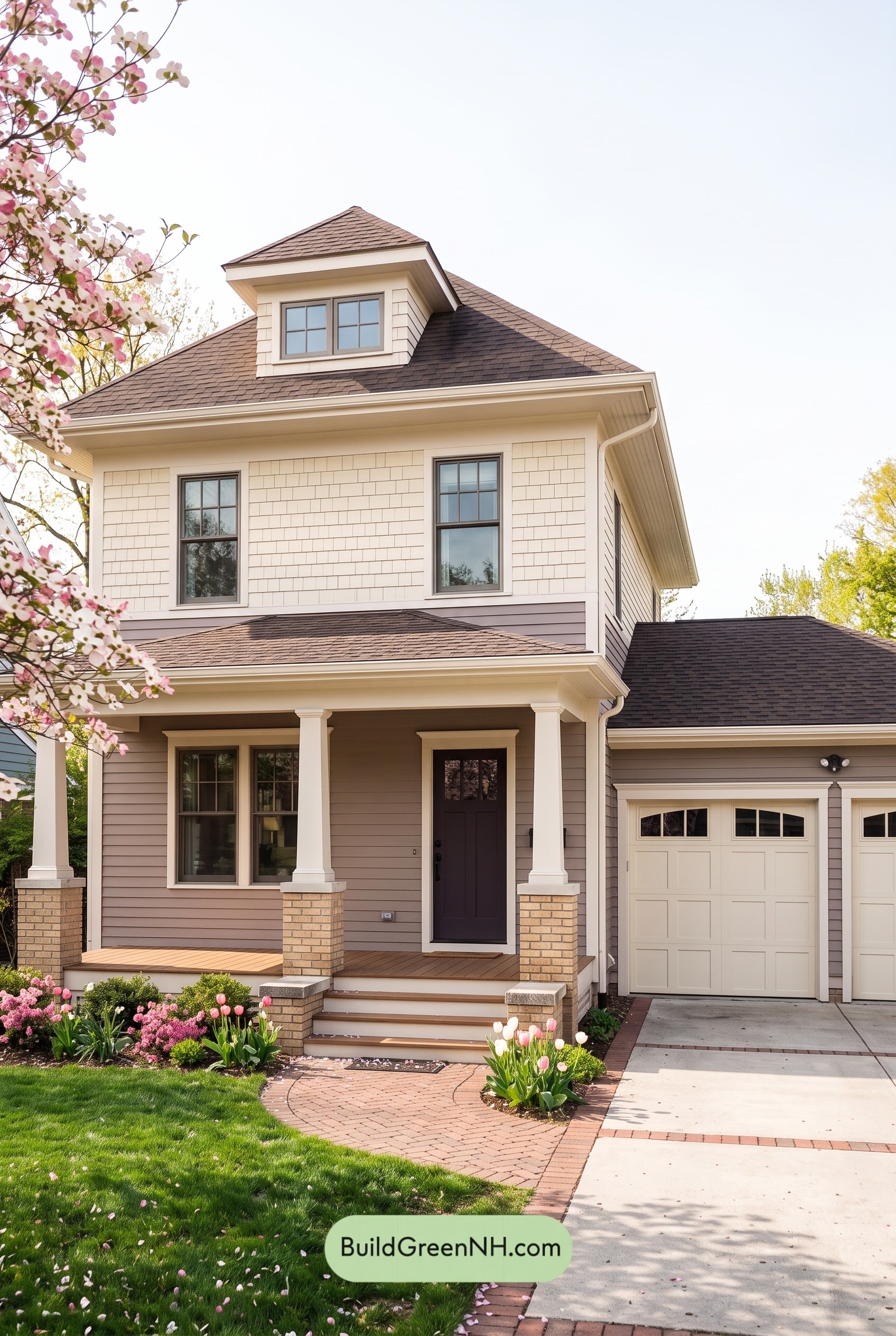
Warm beige, earthy brown, and a deep blue front door give this home its inviting charm, balancing soft contrast with just enough personality to stand out.
A Soft Beige Foundation
A pale, warm beige covers the horizontal siding, creating a bright backdrop for the home’s layered rooflines and generous front porch. It feels gentle rather than stark, allowing the architectural details to shine without making the exterior look busy.
The garage door stays within the same light beige family. That continuity keeps its broad surface from dominating the facade and lets the eye travel naturally toward the entrance.
Earthy Brown Adds Depth Up High
The shingle-style siding in the front-facing gables introduces a muted, medium brown. Against the lighter walls below, this deeper shade gives each peak a clear identity and makes the change in siding texture more noticeable.
Brown window frames repeat that warmth throughout the exterior. Their darker outlines bring definition to the windows, while the brown gutters and downspouts connect these smaller details to the larger areas above. The repetition feels cohesive, not overly matched.
Light Trim Highlights the Architecture
A lighter shade of beige traces the gables, window surrounds, porch beams, and decorative brackets. These edges separate the brown upper siding from the roof and emphasize the home’s distinctive shapes.
The tapered porch columns carry that same light warmth down to ground level. Their pale beige finish pairs comfortably with the beige and soft gray tones of the stone bases, giving the porch a substantial yet welcoming presence.
A Blue Door with Quiet Personality
Tucked beneath the porch, the deep blue front door provides a cool counterpoint to the warmer exterior. It is a small area of color with a big role: drawing attention to the entry without competing with the gables.
The shade is dark and restrained, so it feels at home beside the brown window frames. It adds character without disrupting the calm palette.
A Roof That Ties Everything Together
The roof’s muted brown and gray-brown tones bridge the light beige siding and deeper brown accents. Across the main roof, porch, and garage, those related shades help the different sections read as one home.
The overall mood is relaxed, warm, and quietly polished. Light surfaces keep the exterior airy, deeper browns give it definition, and that blue door supplies a memorable finishing touch.
Next, see how this color scheme looks under different lighting simulations throughout the day.
Overcast
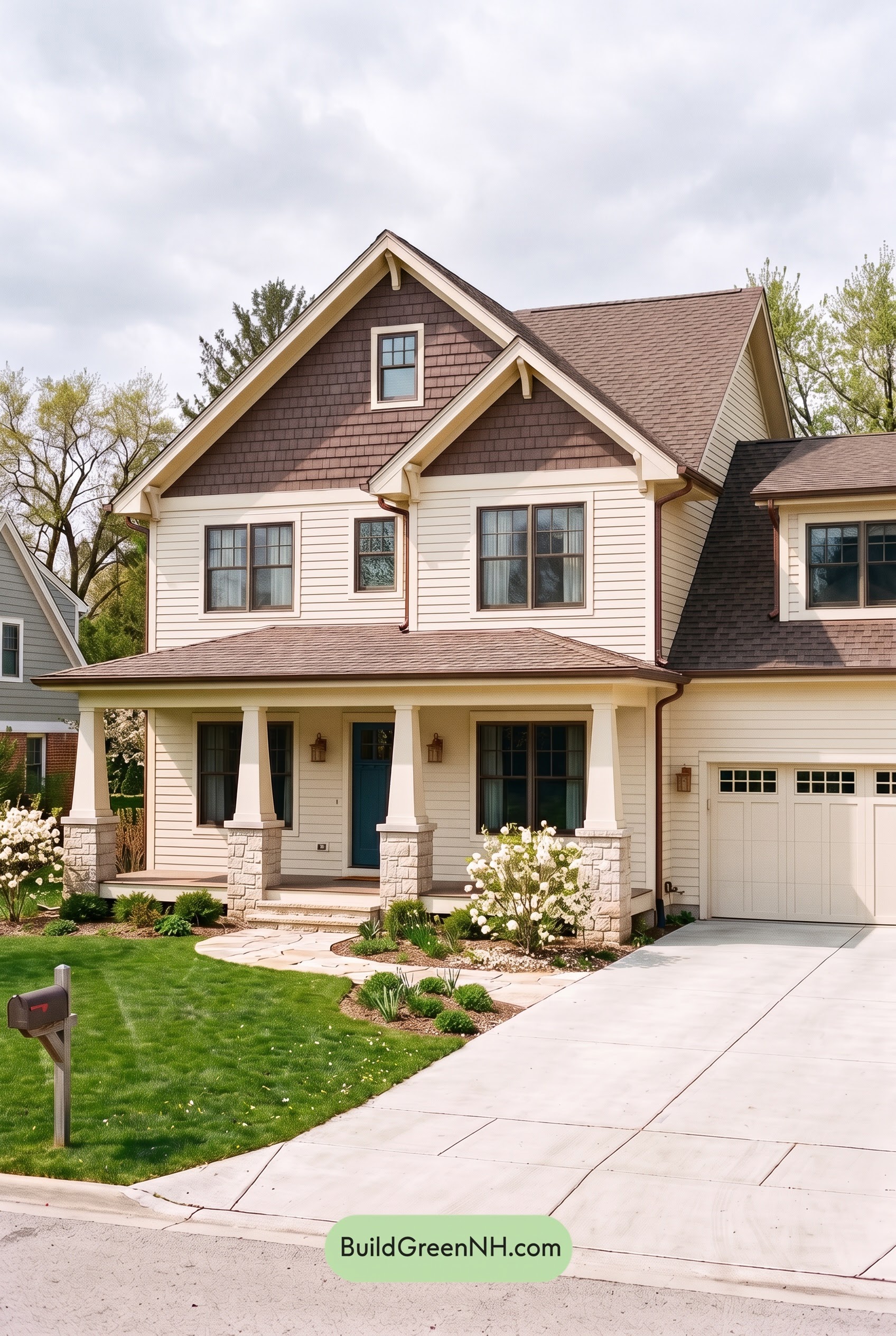
Under overcast skies, the light beige siding and trim would feel softer and slightly cooler than in neutral daylight, with their golden warmth gently dialed back. The brown shades across the gables and window frames would appear more subdued, their warm undertones less pronounced. Overall, the palette would look quieter and less saturated without losing its inviting character.
Diffused light would soften shadows beneath the eaves and across the porch columns, reducing sharp shifts between bright and shaded surfaces. The deeper browns would still define the pale beige exterior, but with gentler contrast. The blue front door could read as a deeper, more muted accent, giving the entrance a calm, understated presence rather than a bright pop.
Golden Hour
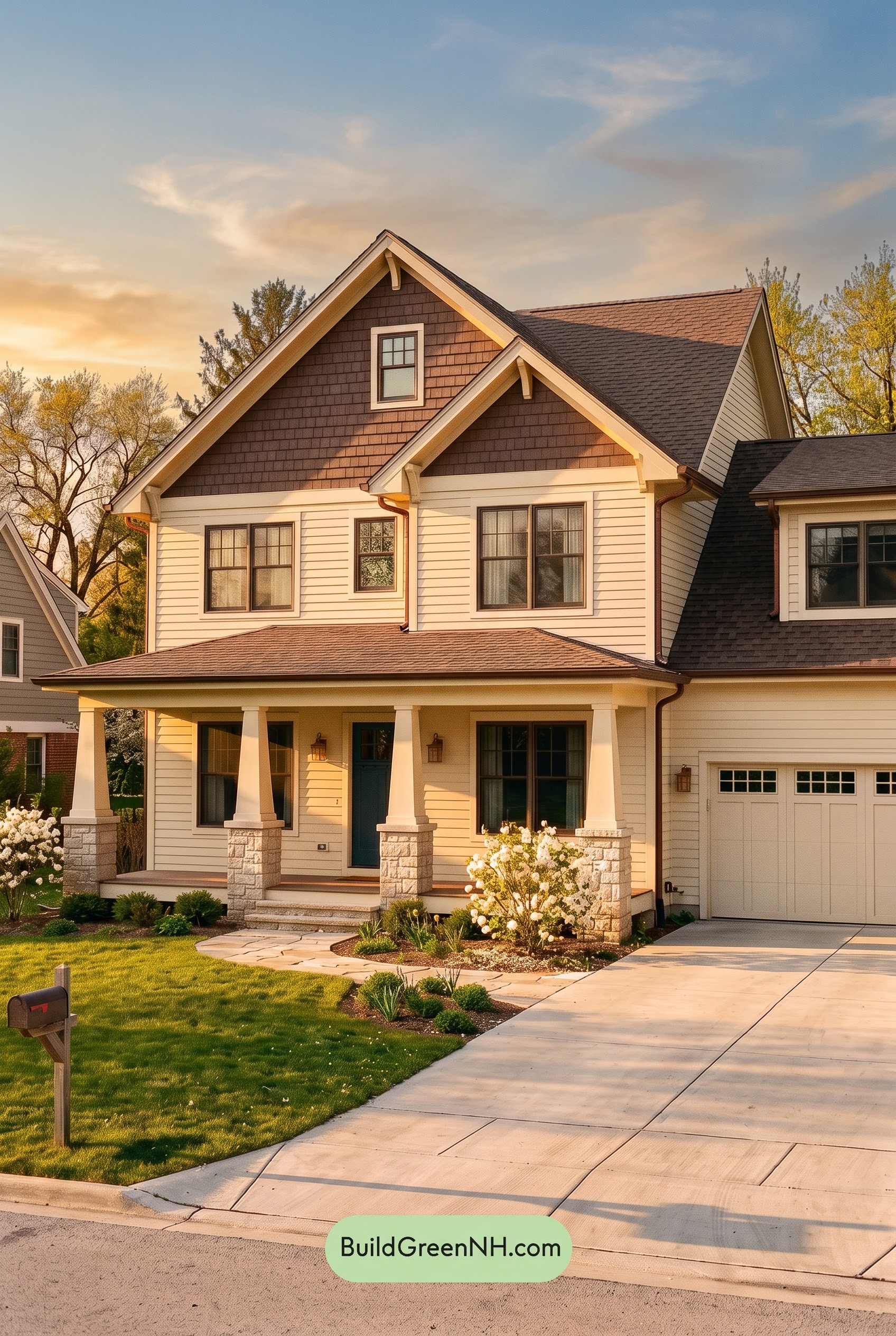
Golden Hour gives the light beige siding and trim a warmer, softer glow than neutral daylight, bringing out subtle yellow undertones. The brown shades across the gables appear richer and more saturated where sunlight catches them, while shaded areas deepen. That mix of glowing light neutrals and dark browns makes the rooflines and layered details feel more pronounced.
Beneath the porch, this shade of blue appears deeper and more subdued, offering a cool counterpoint to the sunlit beige. Longer shadows strengthen the contrast around the columns and windows, even as the warm light softens the overall palette. Compared with the more balanced appearance of neutral daylight, the house feels cozier and more inviting.
Shade
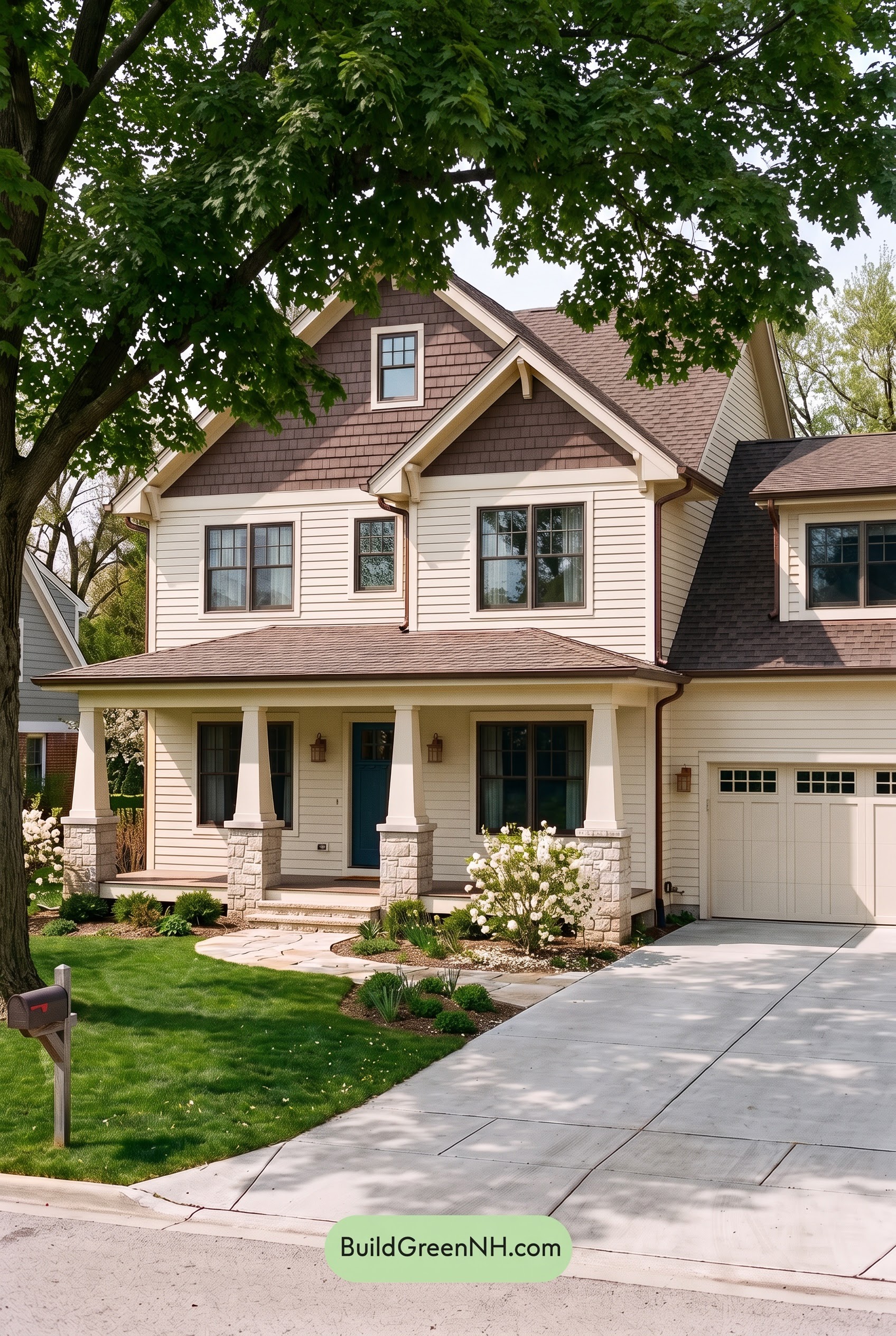
In shade, the light beige shades feel softer and cooler than they would in neutral daylight, with their golden warmth gently dialed back. The browns appear deeper and slightly grayer, their warm undertones less pronounced. This quieter saturation gives the exterior a calm, understated character while keeping the pale trim distinct against the darker upper walls.
Beneath the porch roof, the blue deepens into a moody accent, looking less vivid but more enveloping. Shadows darken the surrounding neutrals, making the sheltered entry feel intimate. Where leafy shade meets brighter patches, shifting contrasts add depth without disturbing the palette’s relaxed, welcoming mood.
Nighttime
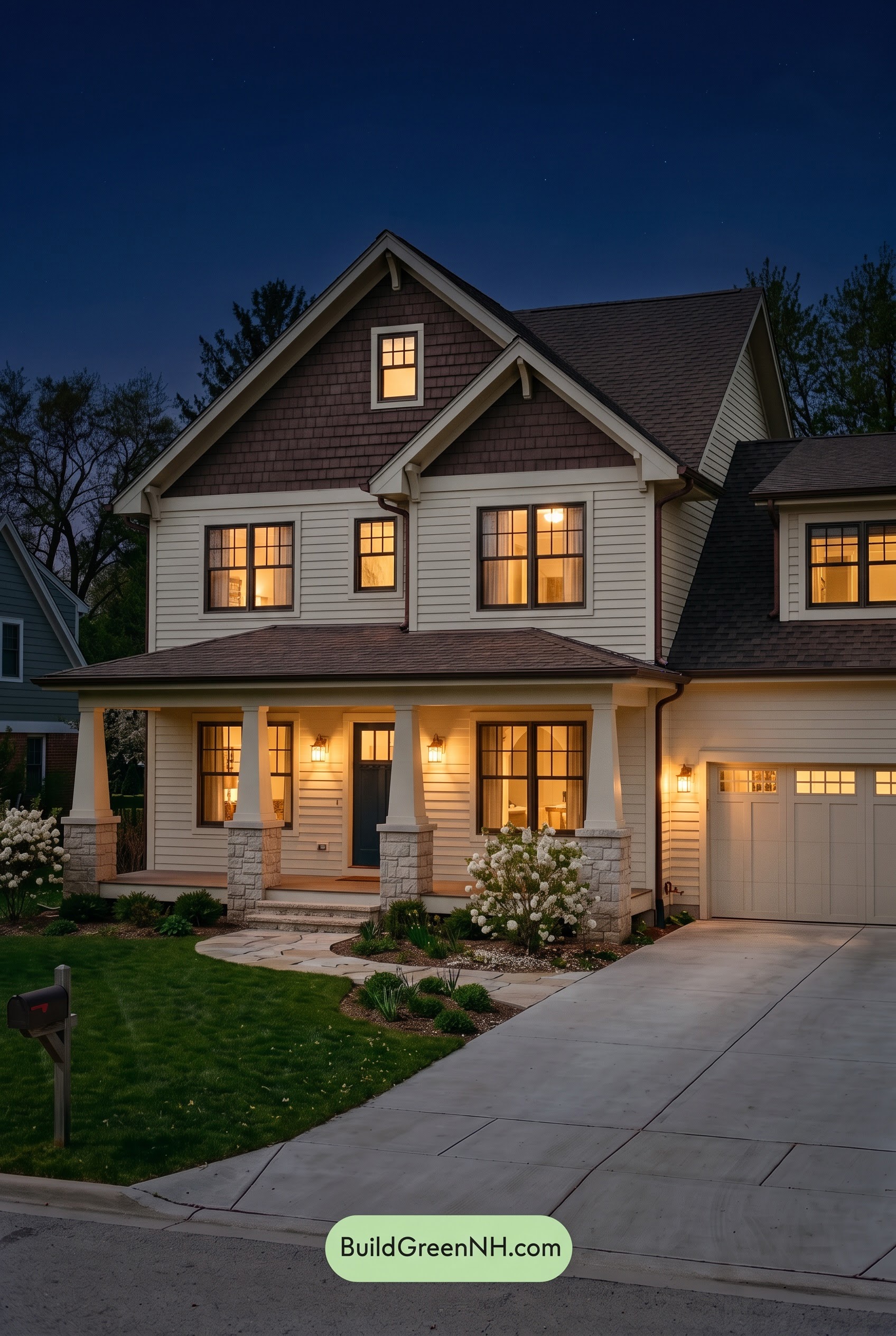
At night, the light warm neutrals take on a softer, creamier glow around the porch and garage, while unlit areas appear cooler and grayer than they would in neutral daylight. The deeper brown shades across the upper walls lose some visible saturation and settle into shadow, making the pale trim stand out more clearly along the gables.
The blue at the entry deepens into an almost-black shade, becoming a quiet accent rather than the clearer splash of color it would offer by day. Shadows beneath the eaves and porch roof strengthen the contrast between illuminated neutrals and darker recesses. Together, these shifts give the exterior a more intimate, welcoming mood, with warmth concentrated around the entrance.
Pin these for later:
Want More?
 Cream Exterior Paint Color Schemes With a Brown Roof: Cocoa and Burgundy Embrace
 Cream Exterior Paint Color Schemes With a Brown Roof: Cocoa and Green Grace
 Cream Exterior Paint Color Schemes With a Brown Roof: Cream and Sage Serenity
 Cream Exterior Paint Color Schemes With a Brown Roof: Cocoa and Navy Assurance
 Cream Exterior Paint Color Schemes With a Brown Roof: Cocoa and Plum Charm
Table of Contents