Last updated on
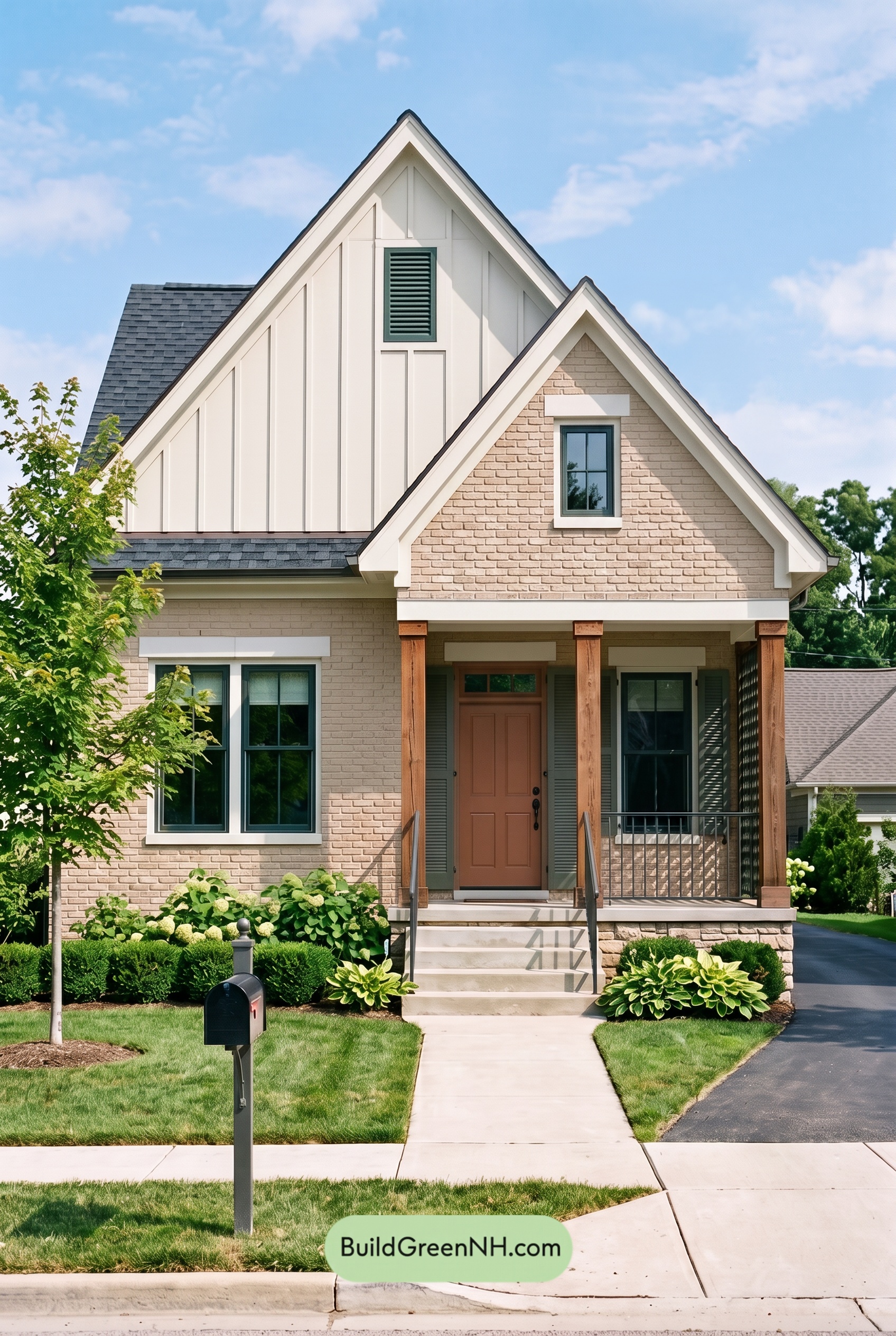

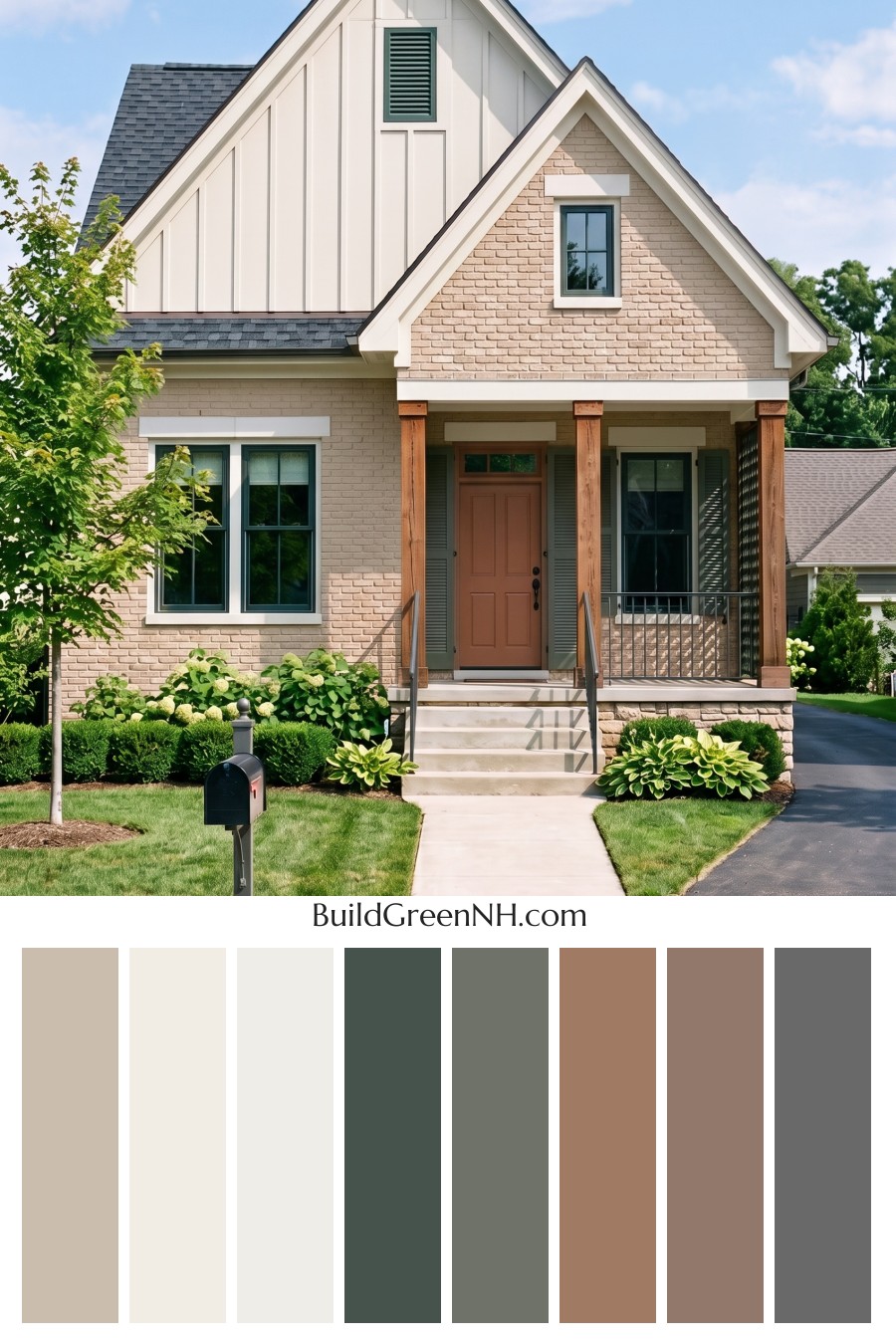
This balanced blend of warm neutrals, earthy wood tones, and deep accents gives the home an inviting character that feels polished in every season.
A Warm Neutral Foundation
The exterior begins with a soft beige brick finish that brings gentle warmth to the lower level and front-facing gable. Its lightly muted shade keeps the façade bright without feeling stark, while the texture of the brick adds depth and visual interest.
Above, a pale beige siding creates an airy contrast. The vertical boards emphasize the steep rooflines and give the upper façade a crisp, tailored appearance. Because both wall finishes stay within a warm beige family, the mix of materials feels cohesive rather than busy.
Trim That Sharpens Every Detail
Light beige trim traces the roof peaks, window surrounds, fascia, and porch details with clean definition. This brighter neutral frames the architecture beautifully, highlighting each gable and creating a fresh edge between the warm walls and the darker roof.
The effect is especially successful around the brick gable, where the pale trim gives the home’s layered silhouette a refined, almost storybook quality. It adds contrast, but remains soft enough to preserve the relaxed mood.
Deep Green and Gray Accents
Deep green window frames introduce a cool, grounded note against the warmer beige exterior. This shade gives the windows a sense of depth and makes them stand out as intentional architectural features rather than fading into the surrounding walls.
Muted gray shutters at the entry and dark gray railings add another layer of balance. Their quieter, cooler presence connects naturally with the charcoal-gray roof, which anchors the full design and gives the home a confident finish from the street.
A Welcoming Porch Palette
The front door carries a richer warm beige shade, offering a subtle point of focus without overpowering the façade. It feels welcoming and understated, especially when framed by the surrounding gray accents and pale trim.
Warm brown porch columns bring in an organic, natural element. Their medium-toned wood-like shade adds welcome depth beneath the lighter gables, making the entry feel sheltered, substantial, and approachable.
The Overall Mood
This color scheme feels classic, calm, and quietly sophisticated. Warm beige shades provide the welcoming backdrop, deep green frames lend character, gray accents add structure, and warm brown columns introduce an earthy finishing touch.
Together, these shades create a home that looks equally at ease among lush landscaping, bright summer skies, and changing seasonal foliage. It is a thoughtfully layered exterior palette with lasting curb appeal.
Next, see how this color scheme looks under different lighting simulations throughout the day.
Overcast
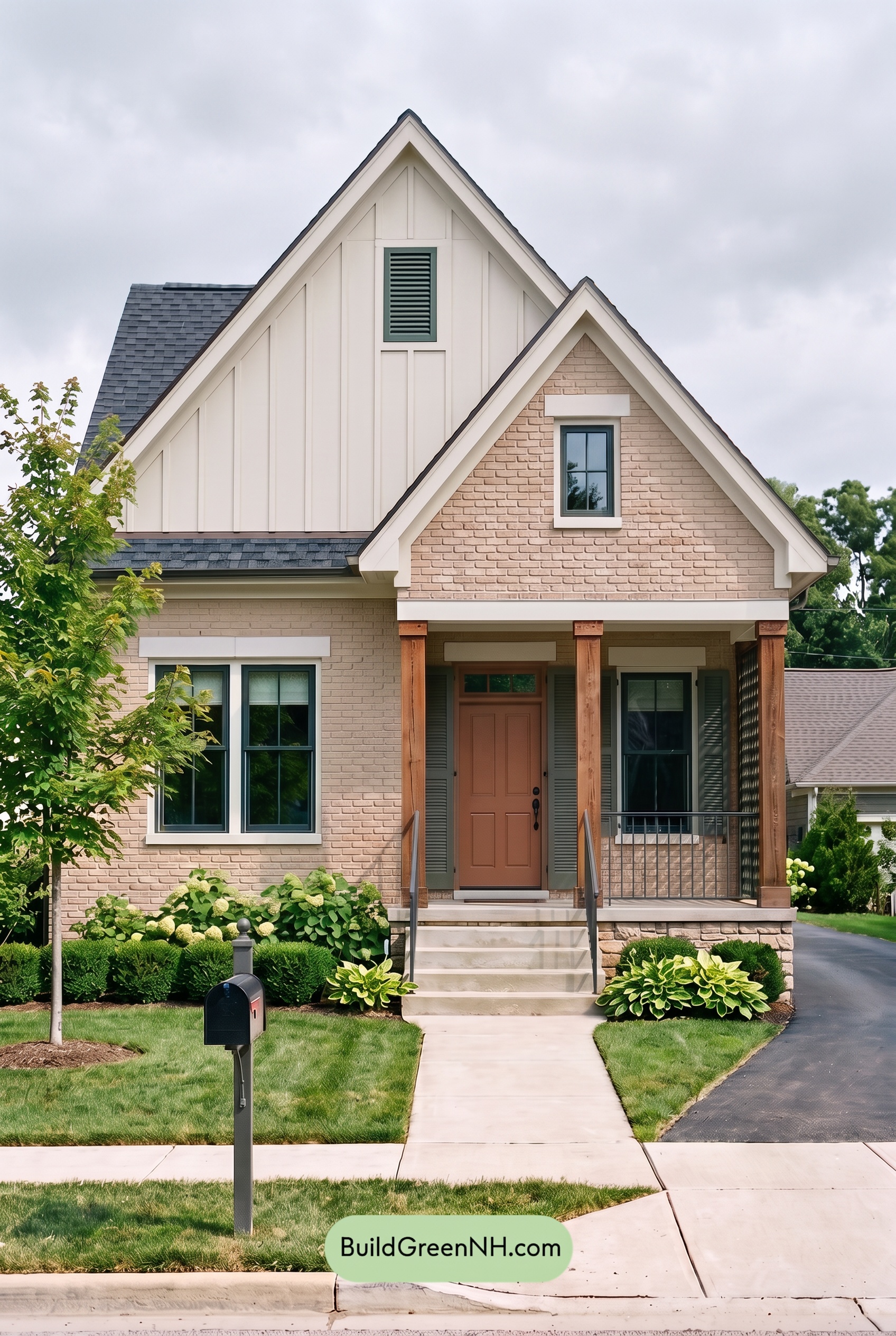
Under overcast skies, the beige walls and trim lose some of their sunlit glow, reading softer and slightly cooler than they do in neutral daylight. The brown columns and front door appear more muted, while the green window frames and gray shutters take on a deeper, steadier presence as saturation becomes more restrained.
With direct sunlight removed, shadows are gentler and more evenly spread across the siding and brickwork, reducing sharp contrast while keeping architectural lines clear. The result is a calm, polished mood: warm neutrals feel more understated, dark accents feel quietly grounding, and the whole exterior gains an inviting, softly balanced character.
Golden Hour
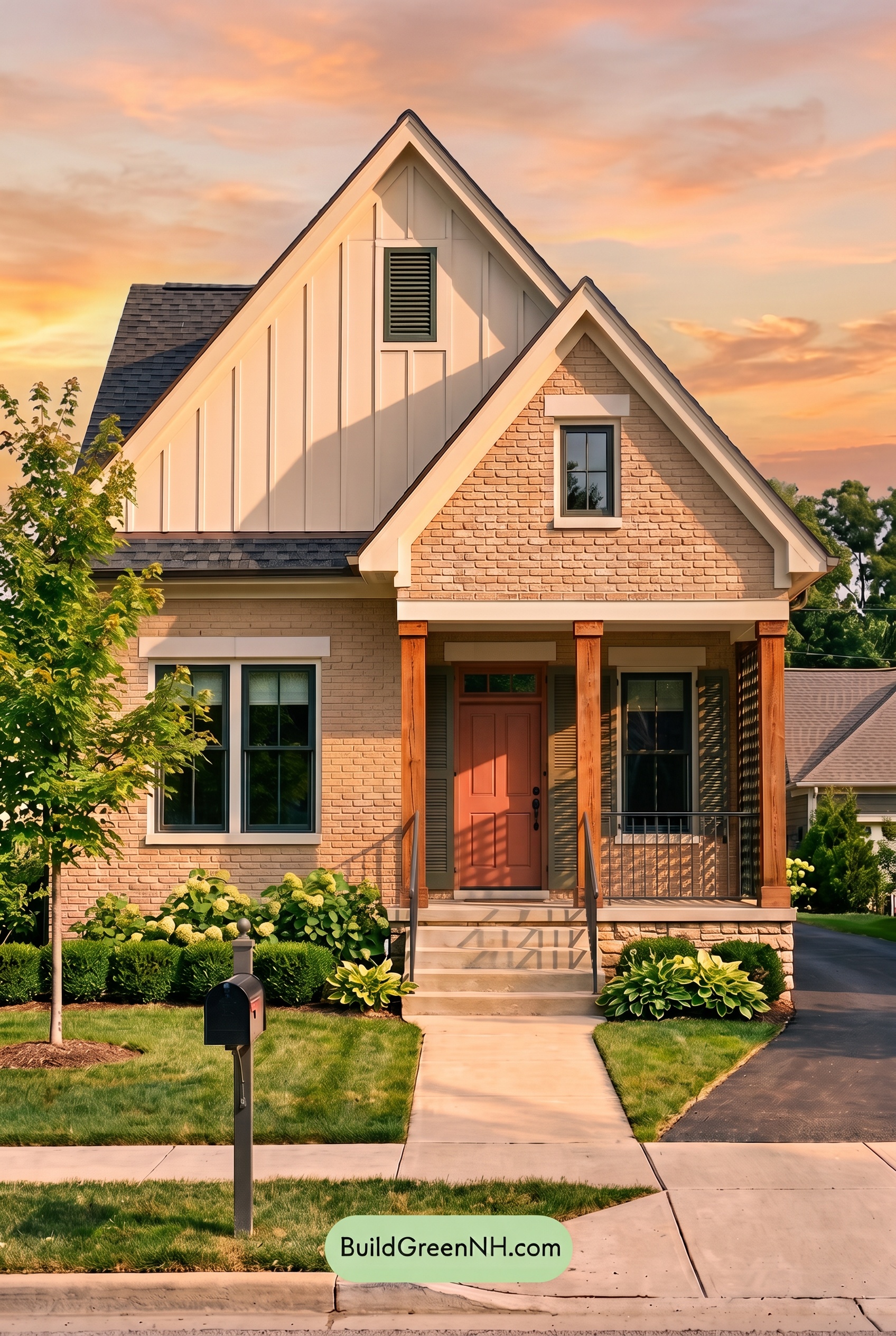
Under neutral daylight, the layered beige exterior reads clean and balanced, while the green window frames and gray shutters provide crisp, grounded contrast. At Golden Hour, the low sun enriches the warm neutrals, making the beige walls and trim appear creamier and more luminous. The brown columns gain a deeper, honeyed richness, and the front door takes on a softer, warmer presence.
Longer shadows heighten the home’s architectural texture, deepening the gray elements and making the green accents feel moodier and more saturated by comparison. This shift from even daylight to warm, directional light creates a welcoming, relaxed mood, with brighter sunlit surfaces glowing against more dramatic shaded recesses.
Shade
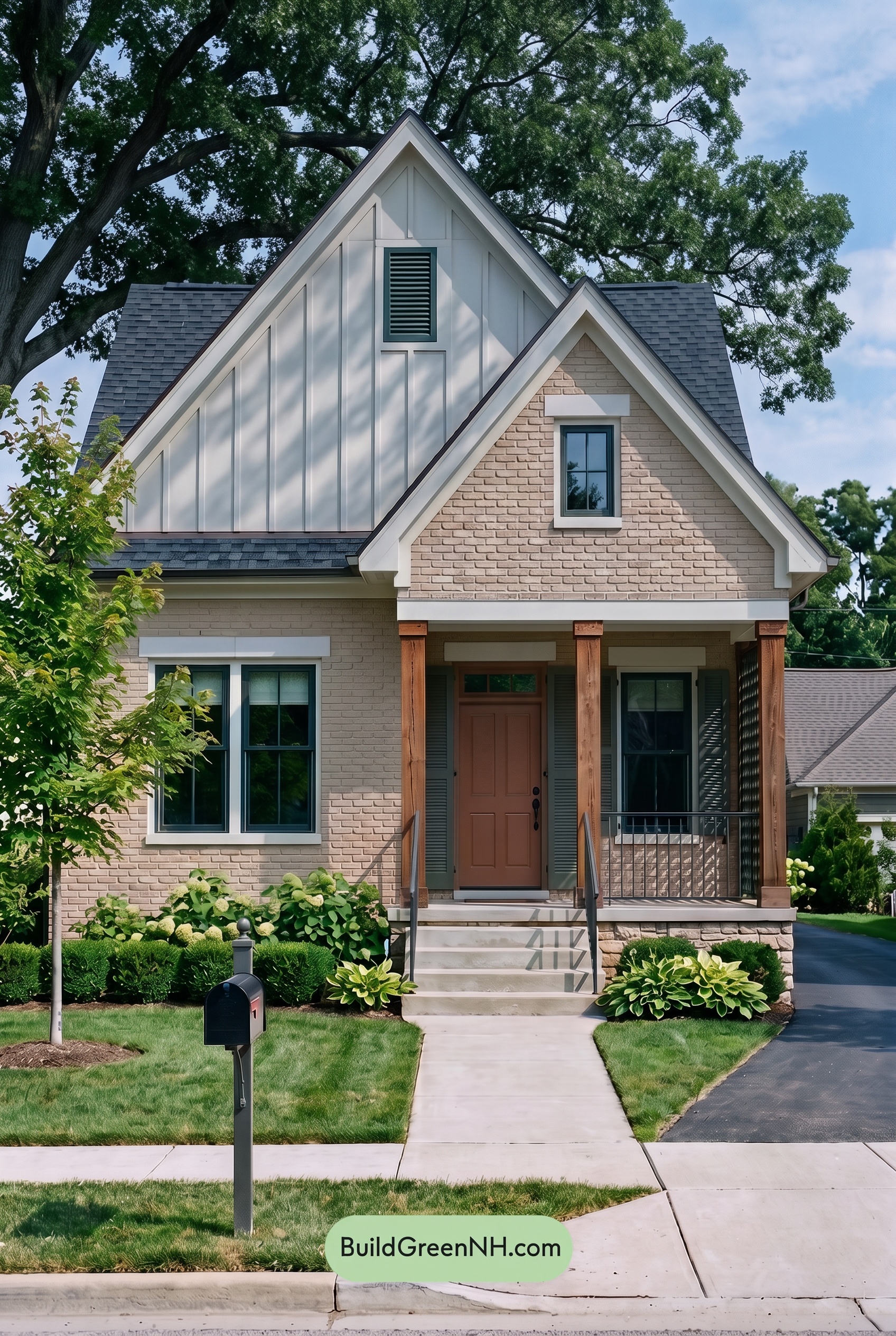
Under the tree’s shade, the beige walls take on a softer, more muted character than they show in neutral daylight, with their warmth gently subdued by the cool cast of the canopy. Dappled shadows deepen the recessed areas and brick texture, creating a quieter, more layered look while keeping the light trim visually crisp.
The green window frames and gray accents appear deeper and slightly more saturated in the shade, strengthening their contrast against the softened neutrals. Brown columns and the warm-toned entry gain a richer, cozier presence, giving the façade an inviting, sheltered mood rather than the brighter, more open feel it has in even daylight.
Nighttime
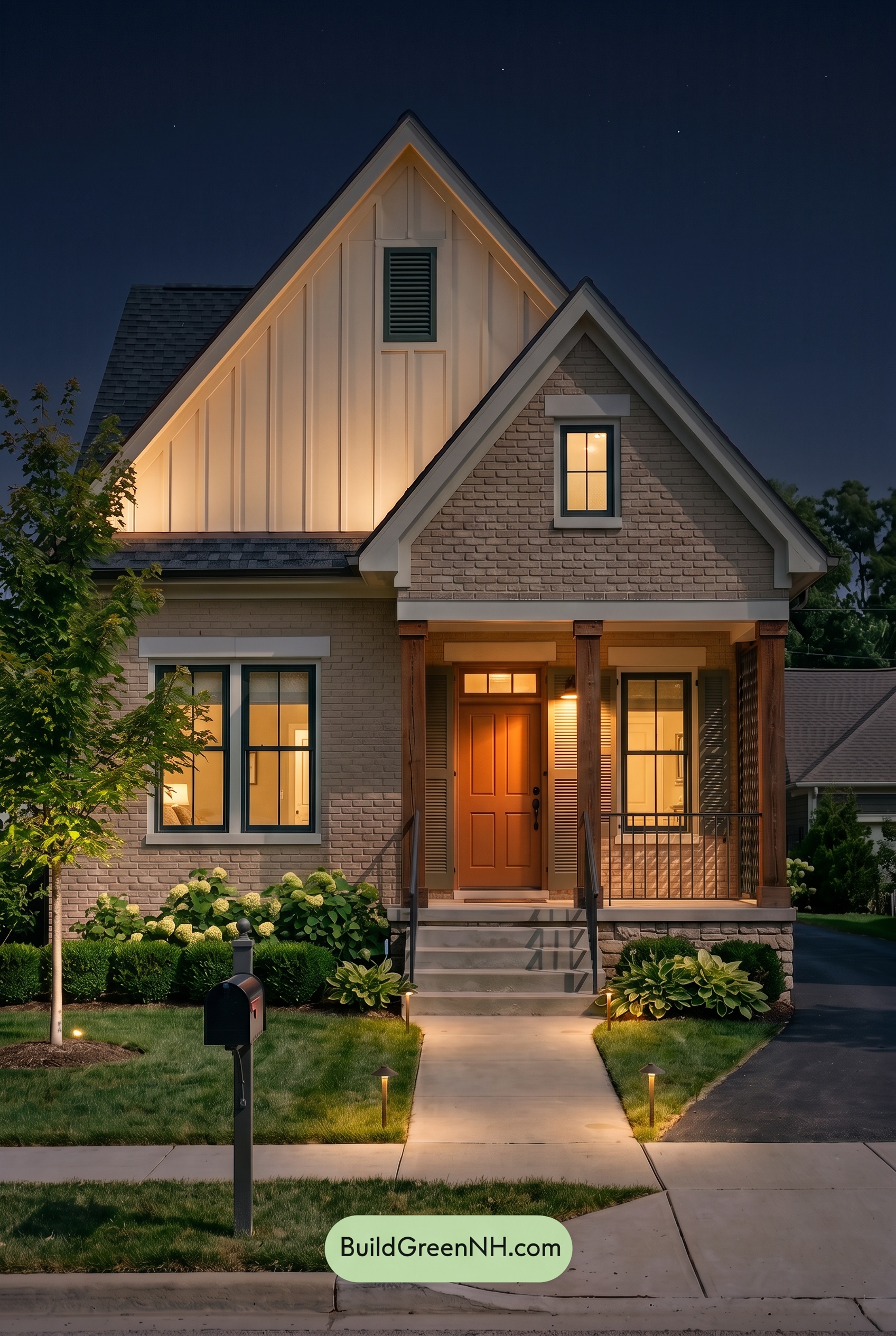
At night, warm exterior and interior lighting gives the beige walls and trim a richer, softer glow than they show in neutral daylight. The brown columns take on deeper, more pronounced warmth, while the entry’s warm beige shade becomes an inviting focal point with heightened saturation.
Beyond the pools of light, shadows add depth to the siding and brick texture, and the gray shutters and railings recede into moodier charcoal-like tones. The dark green window frames appear deeper and more dramatic, creating crisp contrast against illuminated warm neutrals for a cozy, refined nighttime presence.
Pin these for later:
Want More?
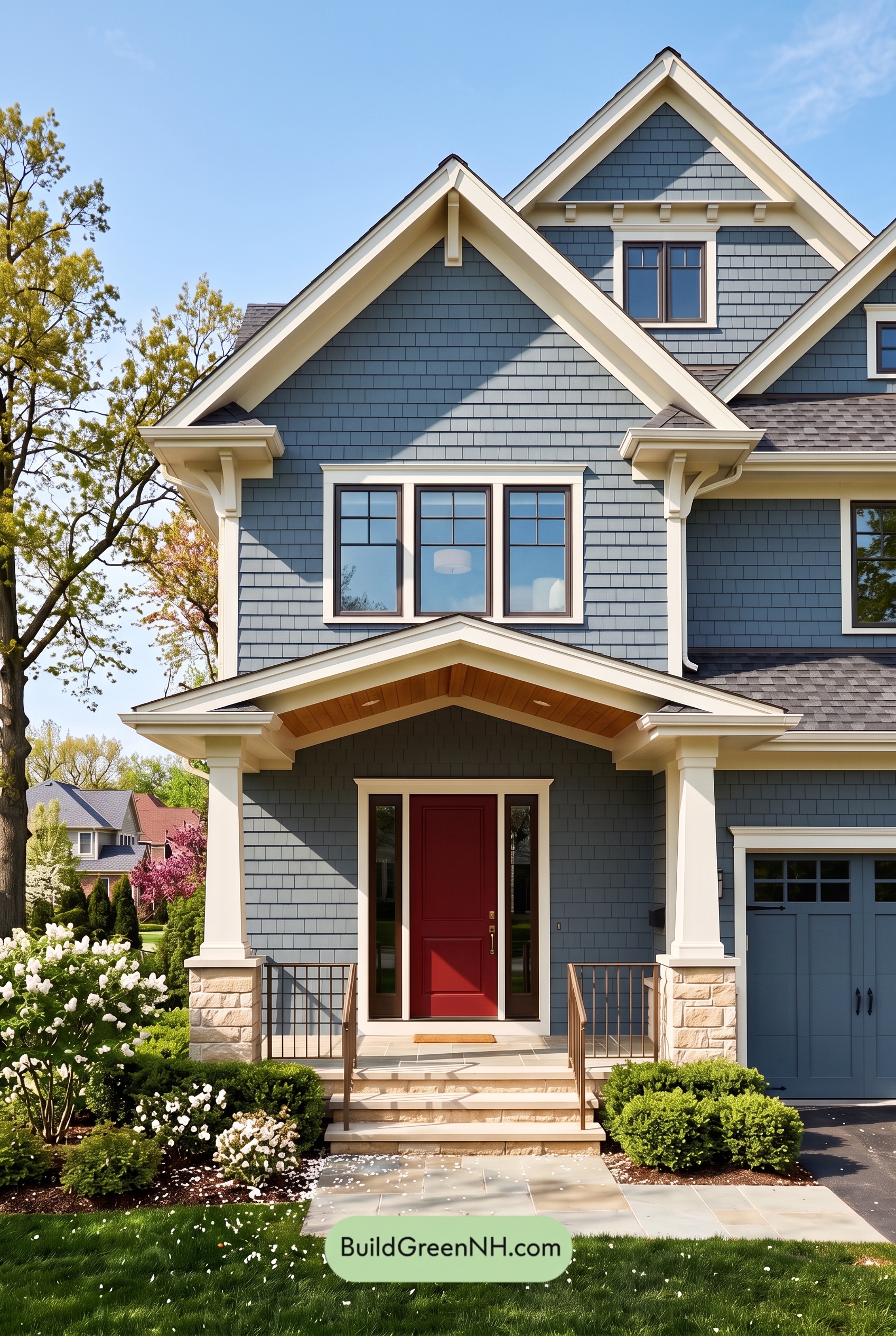 Red Front Door House Paint Color Scheme: Denim Blue Homecoming
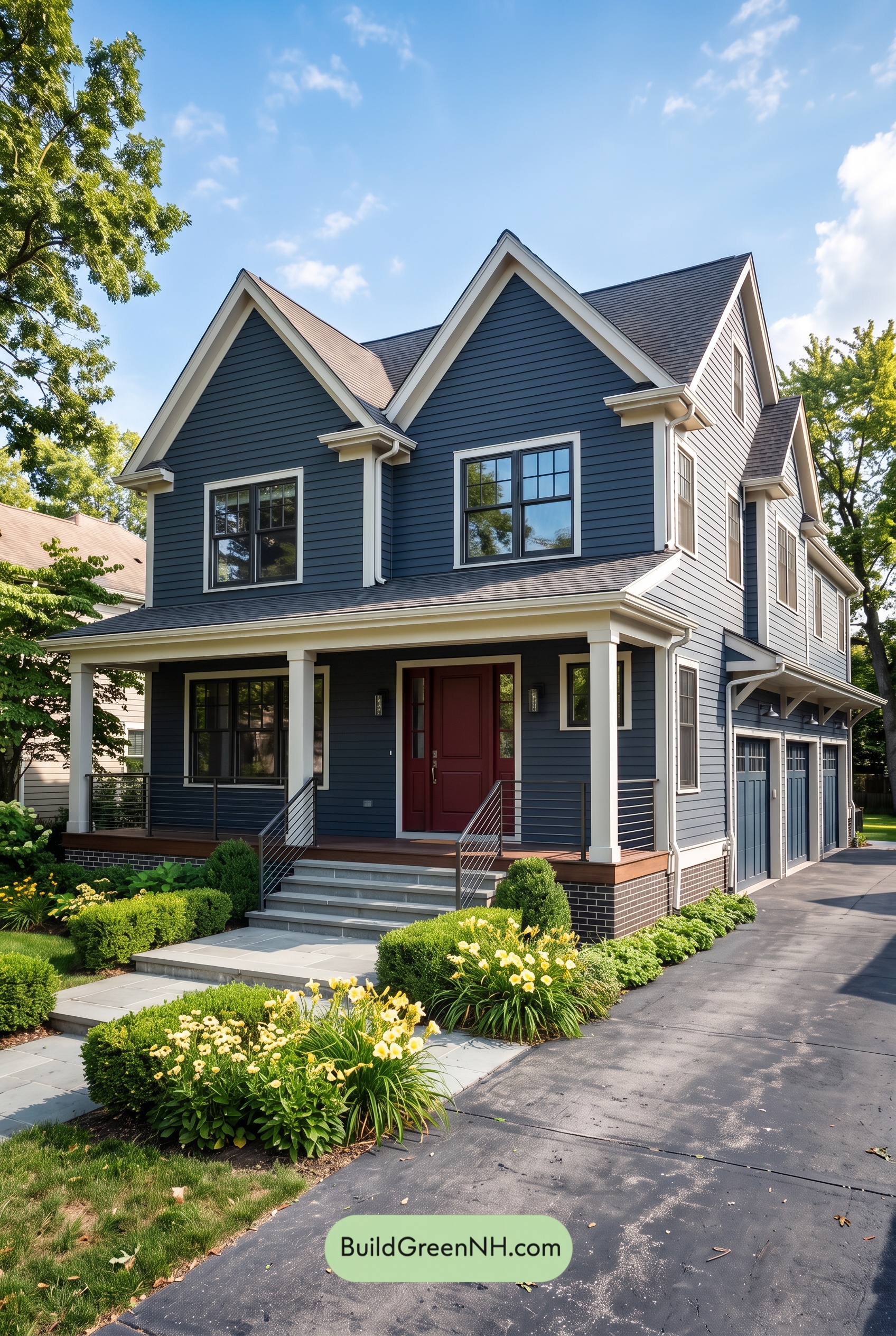 Red Front Door House Paint Color Scheme: Midnight Blue Assurance
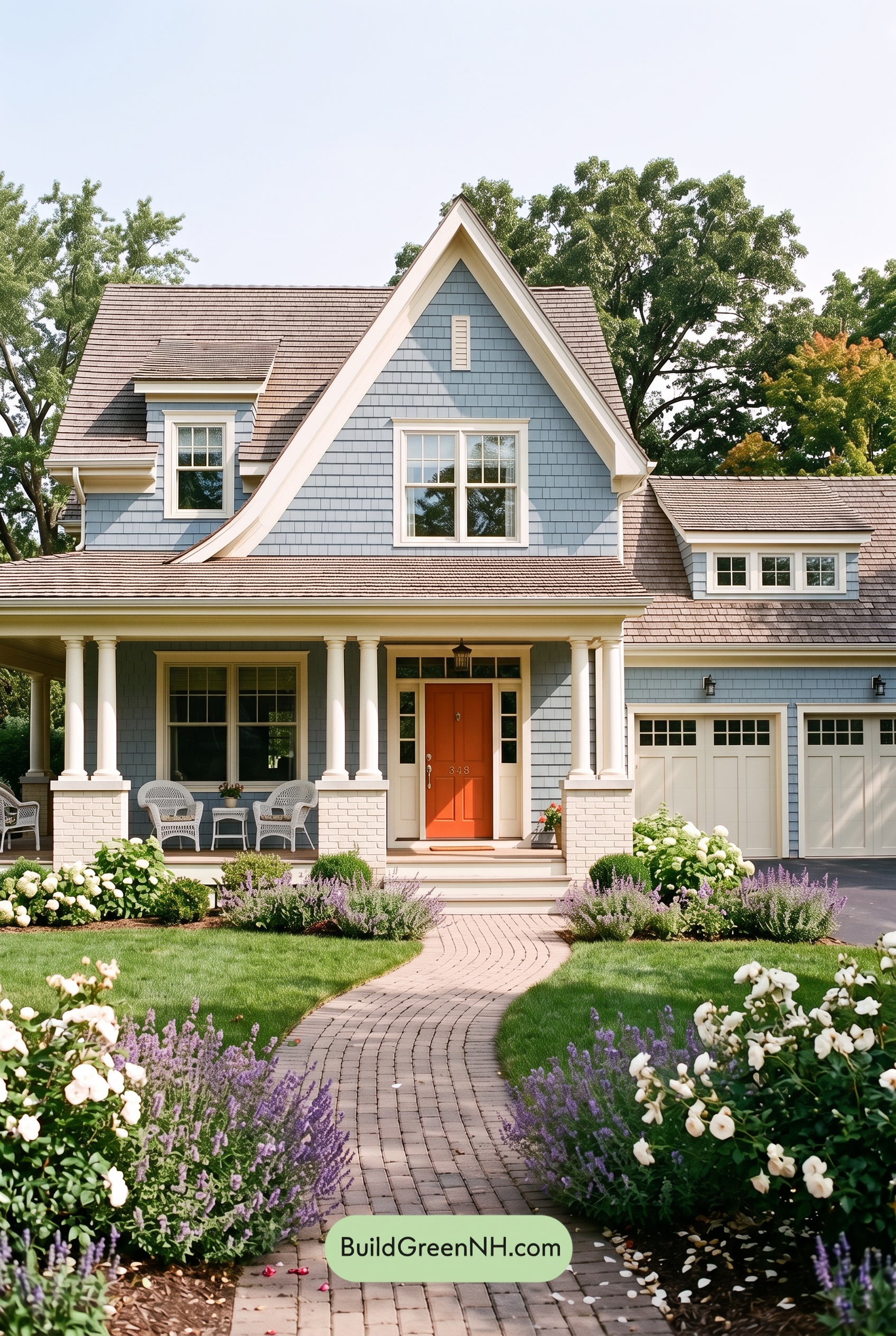 Red Front Door House Paint Color Scheme: Pale Blue Joy
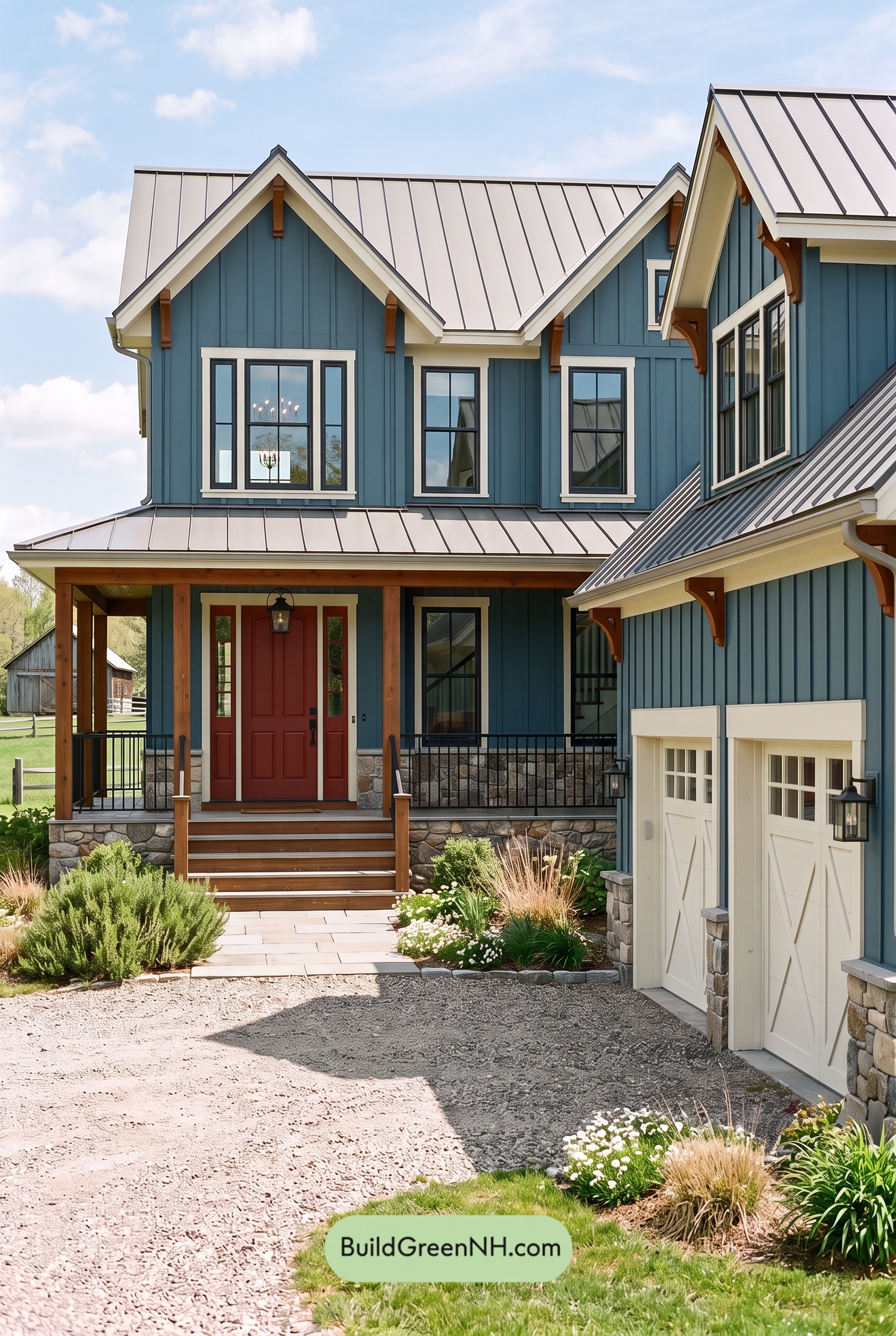 Red Front Door House Paint Color Scheme: Teal Blue Kinship
 Blue House Front Door Color Scheme: Harbor Saffron
Table of Contents