Last updated on
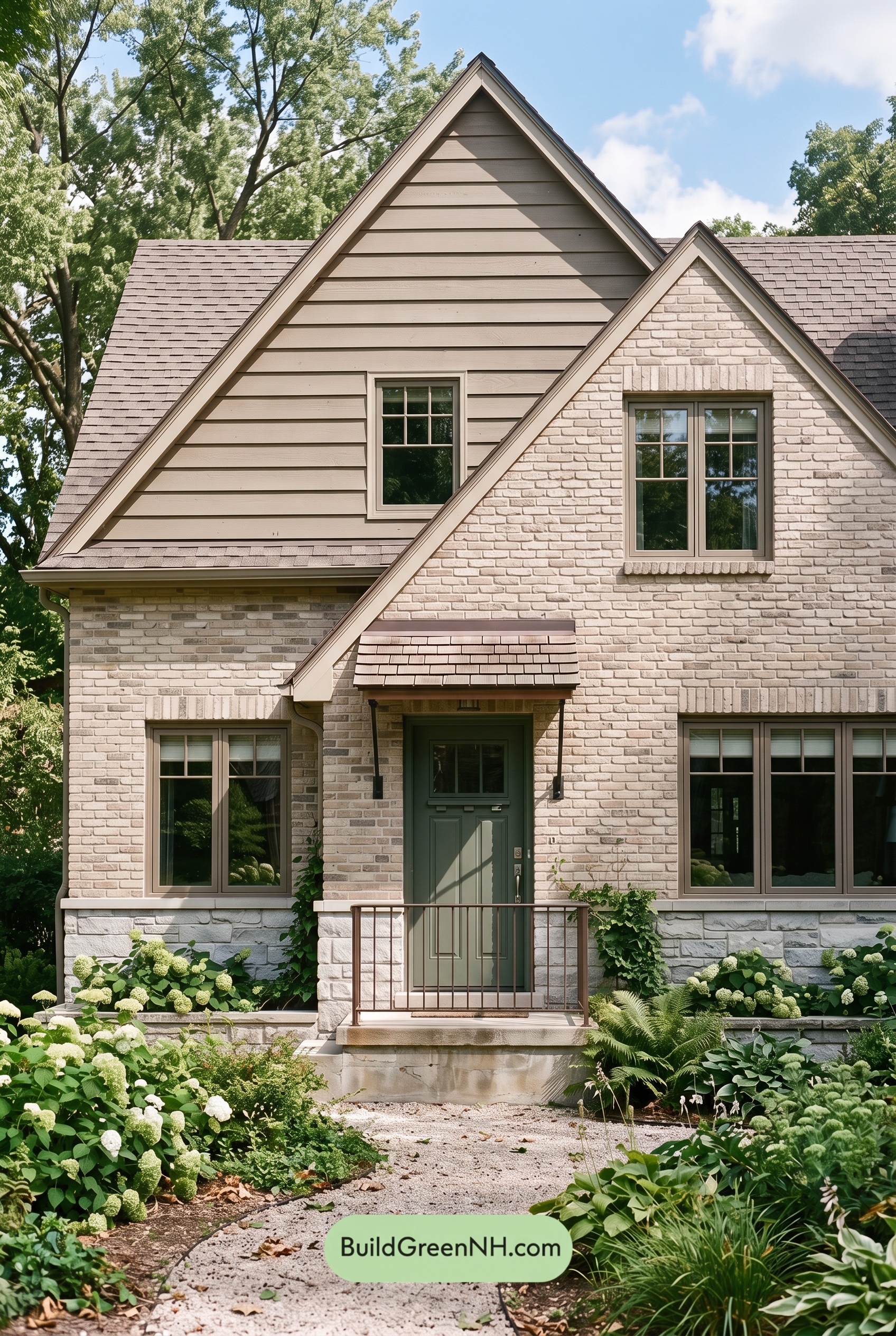

This beautifully balanced blend of soft beige, tailored gray, and earthy roof tones gives the home a timeless presence that feels both polished and warmly inviting.
A Soft, Layered Neutral Foundation
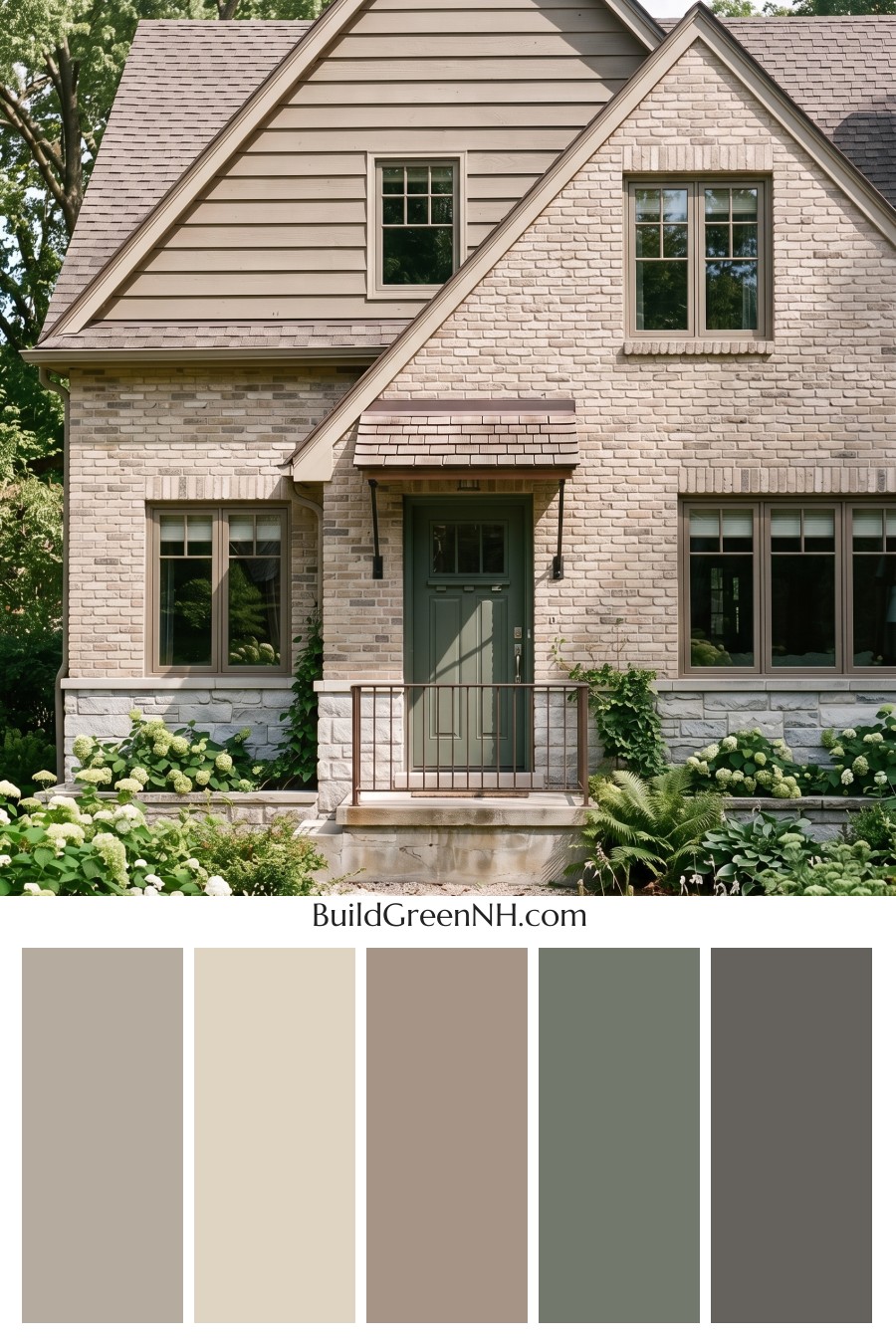
The exterior is grounded in a light beige palette that brings a gentle warmth to the home’s tall gables, horizontal siding, and textured masonry. Rather than feeling flat, the related beige shades create subtle dimension from one surface to the next. The siding reads as a calm, mid-light beige, while the brickwork introduces a slightly varied mix of creamy beige, pale taupe, and muted gray-beige undertones.
This layered approach is especially effective on a home with strong rooflines and multiple exterior materials. It lets the architectural details stand out without creating a busy or overly contrasted look.
Trim That Defines the Architecture
A lighter beige trim crisply outlines the steep gables, eaves, window surrounds, and entry roof. This soft contrast gives each roof peak a clean, finished edge while preserving the relaxed character of the overall scheme. The trim is light enough to brighten the façade, yet warm enough to remain connected to the siding and masonry below.
The window frames continue this quiet neutral story in a slightly deeper beige-gray shade. Their restrained color adds definition around the glass and brings a sense of order to the varied wall textures.
A Grounded Gray Entry
The front door introduces a deeper gray-green shade that creates a natural focal point at the center of the façade. It is a thoughtful choice: dark enough to anchor the entry, but softened by its earthy undertone so it never feels harsh against the surrounding beige exterior.
Matching gray-toned railings reinforce that entry emphasis. Their darker finish adds a slim, tailored line in front of the porch and gives the house a bit of visual weight at ground level. Together, the door and railings offer just enough contrast to guide the eye toward the welcome point of the home.
Roof Tones That Pull It All Together
The roof’s muted taupe-gray shingles bridge the warm beige walls and the cooler gray accents beautifully. This medium-depth shade gives the upper elevations definition and complements the shadowed edges of the gables. It also helps the home settle naturally into its leafy landscape, where warm neutrals and softened grays feel especially at home.
The Overall Mood
This exterior color scheme feels serene, classic, and quietly sophisticated. The warm beige foundation keeps the home approachable, while the gray accents provide a modern note of structure and depth. Every shade works in the same softened, nature-inspired range, resulting in a façade that looks cohesive in bright sun, dappled shade, and changing seasons alike.
Next, see how this color scheme looks under different lighting simulations throughout the day.
Overcast
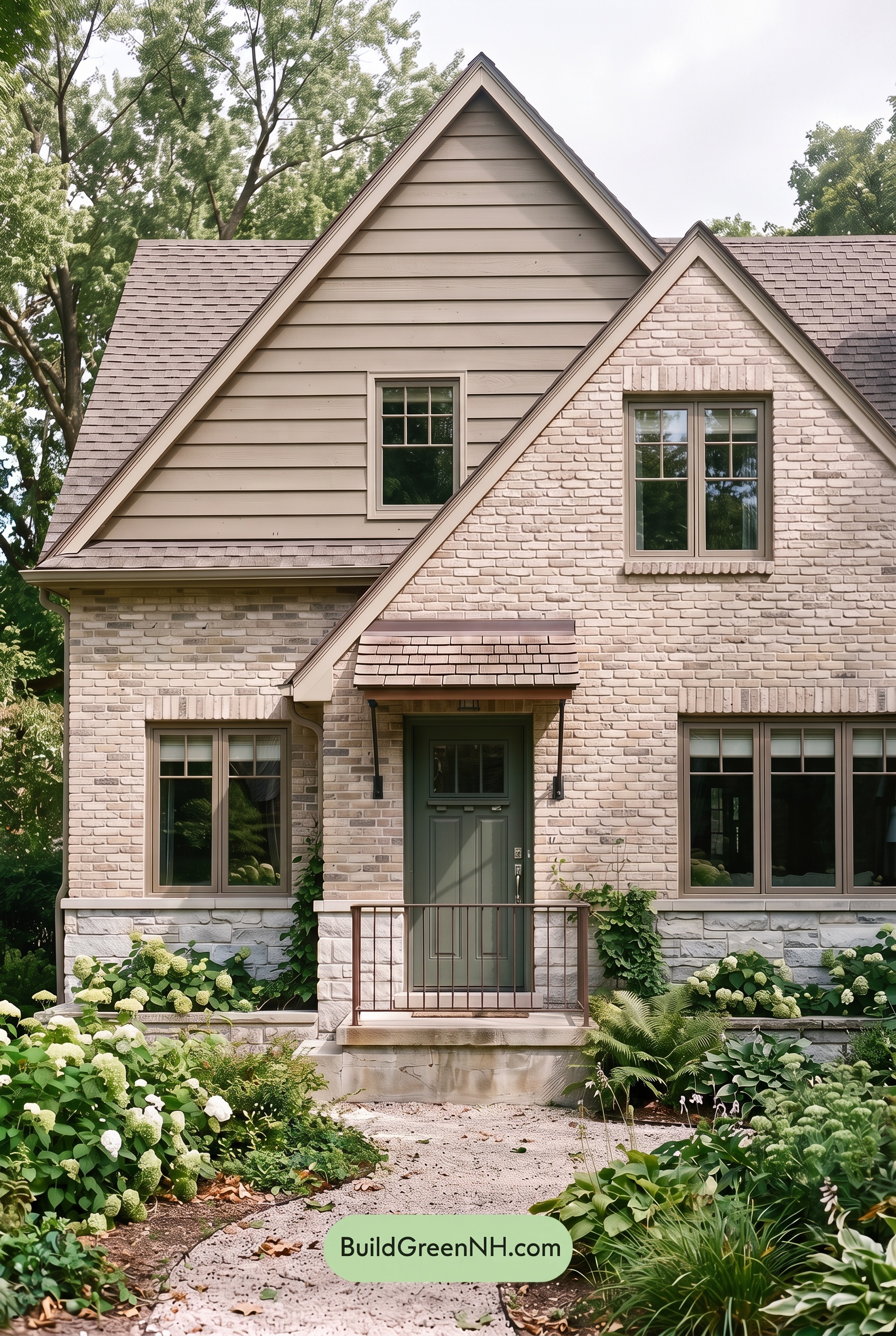
Under overcast skies, the beige exterior reads softer and slightly less saturated than it does in neutral daylight, with its warmth becoming more muted and refined. Even lighting reduces the bright highlights across the siding and masonry, allowing the subtle range of light and mid-tone neutrals to feel more cohesive.
The gray door and railings take on a deeper, steadier presence against the softened beige surroundings. With fewer hard shadows and less sharp contrast, architectural lines appear gentler, giving the facade a calm, inviting mood that feels polished rather than dramatic.
Golden Hour
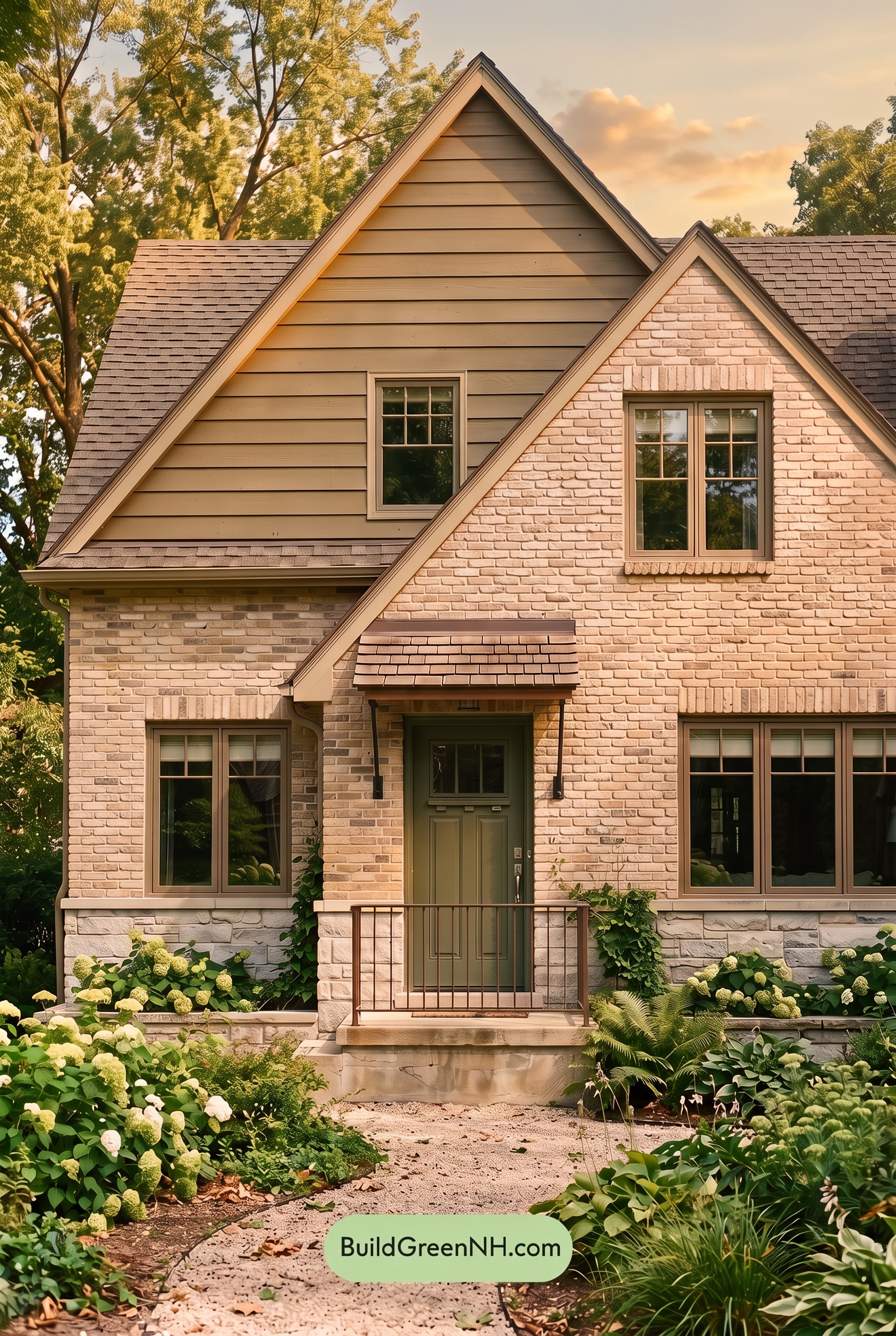
Under Golden Hour light, the beige exterior shifts from a balanced neutral in daylight to a richer, honeyed shade, with warmth and saturation becoming more pronounced across the siding, brick, and trim. The softly glowing beige details feel more unified, while the low-angle sun brings out texture and creates a welcoming, relaxed mood.
Gray elements take on a gentler, warmer cast than they show in neutral daylight, while shaded recesses deepen dramatically for stronger contrast. This interplay of luminous warm surfaces and cool-looking shadowed areas gives the facade extra depth, making the entry and architectural lines feel more defined and inviting.
Shade
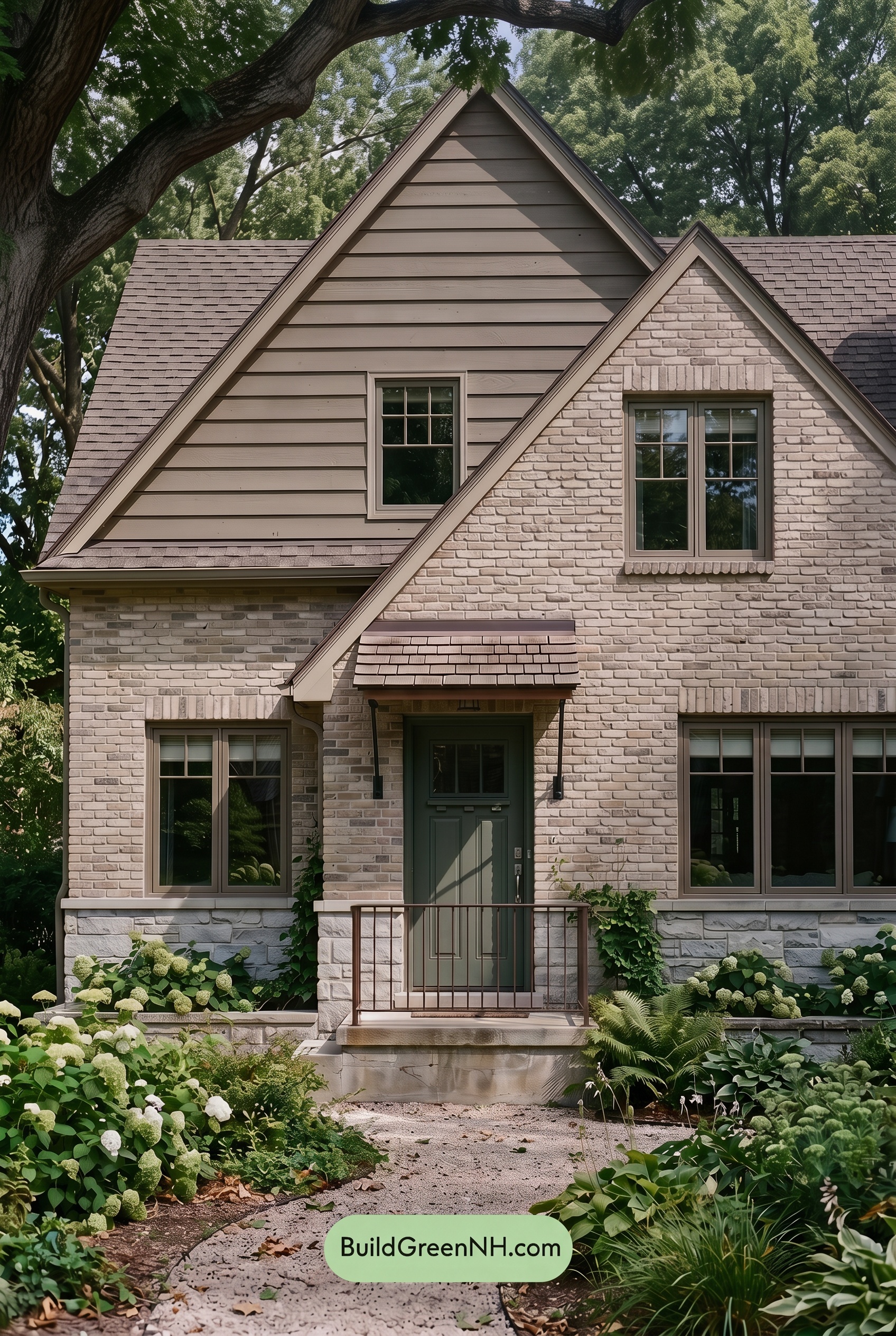
In shade, the beige exterior takes on a quieter, more muted character than it would in neutral daylight. Its warmth softens and its saturation appears lower, allowing the layered beige wall, trim, and window details to blend into a calm, cohesive composition. Dappled shadows across the siding and masonry add depth, shifting some areas toward deeper, cooler-looking neutral shades.
The gray door and railings gain visual weight beneath the tree canopy, creating a more defined contrast against the softened beige surroundings. Rather than feeling stark, the darker gray accents ground the entry and lend the façade a serene, tucked-away mood—especially as changing leaf shadows move across the front of the home.
Nighttime
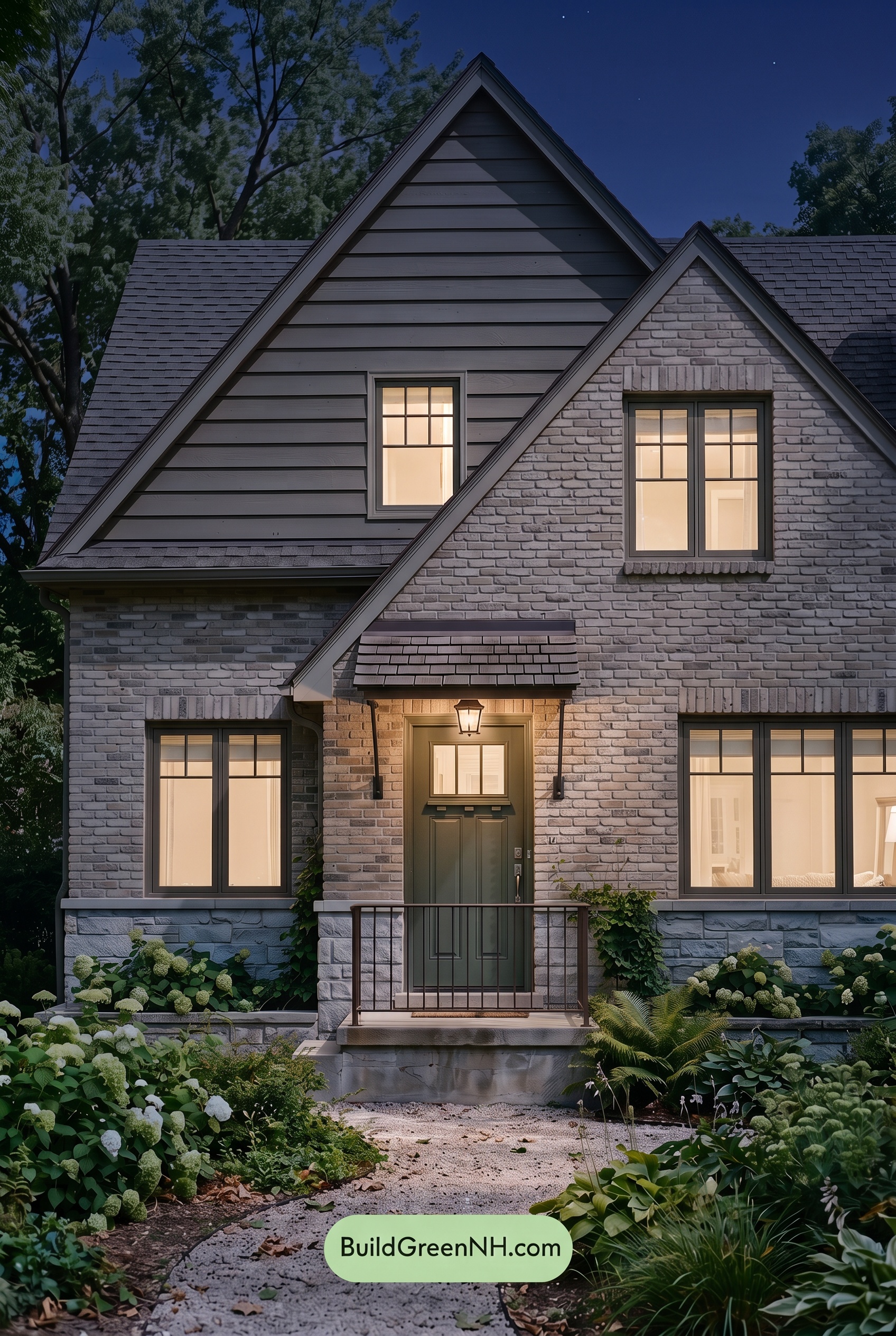
At night, the beige exterior shifts away from its neutral daylight softness, appearing deeper, cooler, and more muted beneath the blue-toned sky. Shadows settle into the siding and brick texture, lowering saturation and creating stronger definition along the rooflines, trim, and recessed details.
Warm window and entry lighting brings the beige shades back to life near the façade, giving them a gentle golden glow and making the gray door, frames, and railings feel darker and more grounded by comparison. This mix of cool exterior shadow and warm illumination creates a welcoming, quietly dramatic mood.
Pin these for later:
Want More?
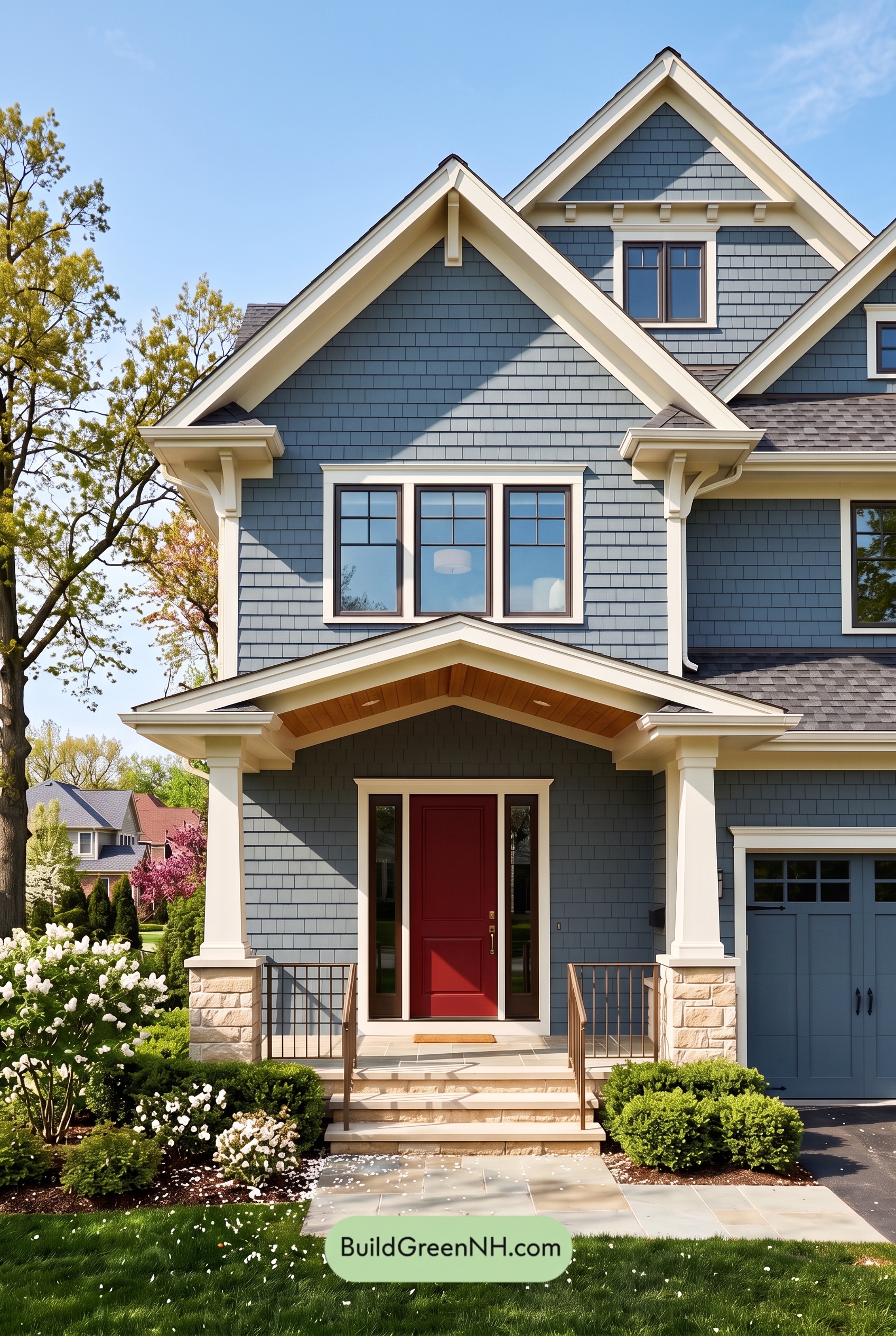 Red Front Door House Paint Color Scheme: Denim Blue Homecoming
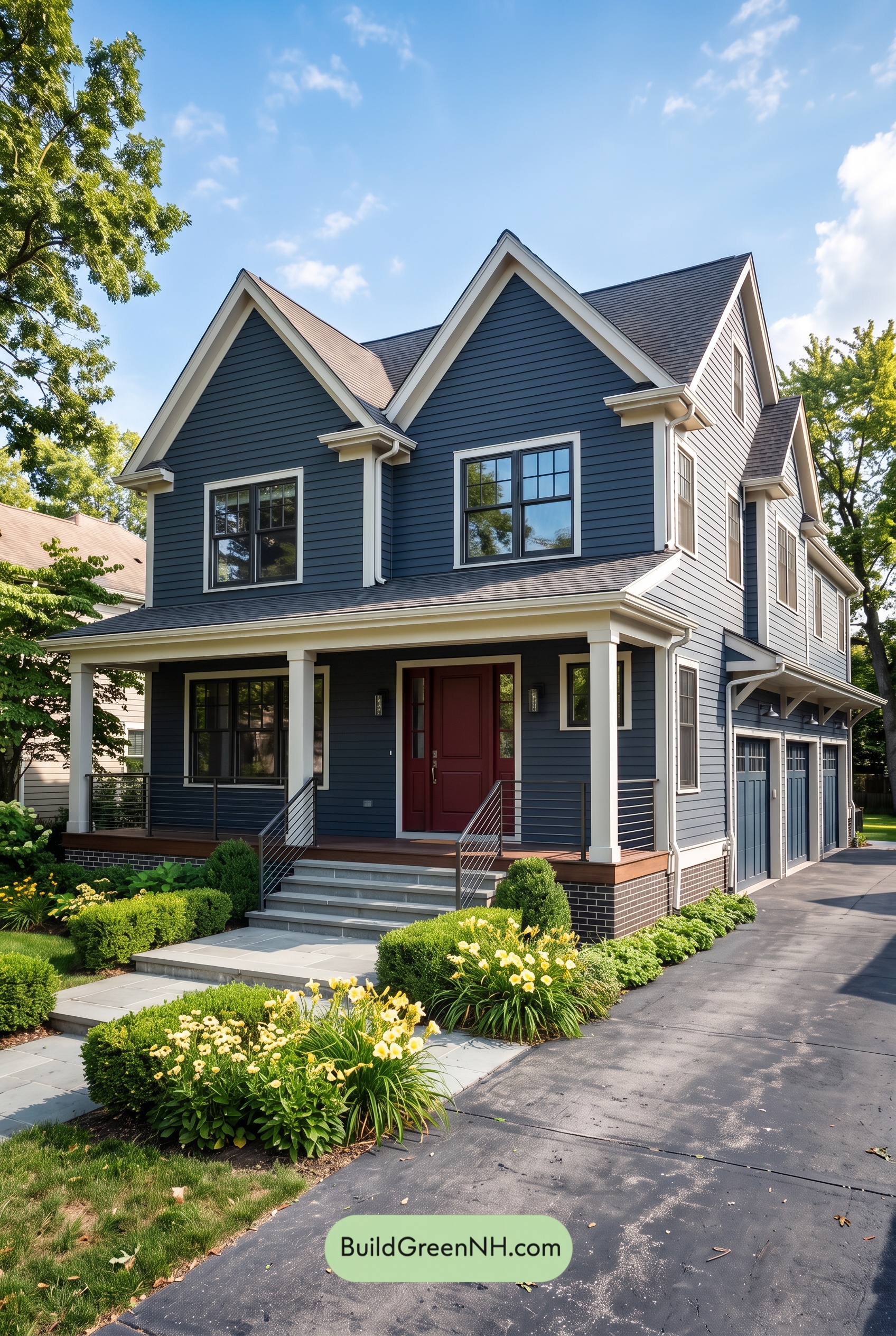 Red Front Door House Paint Color Scheme: Midnight Blue Assurance
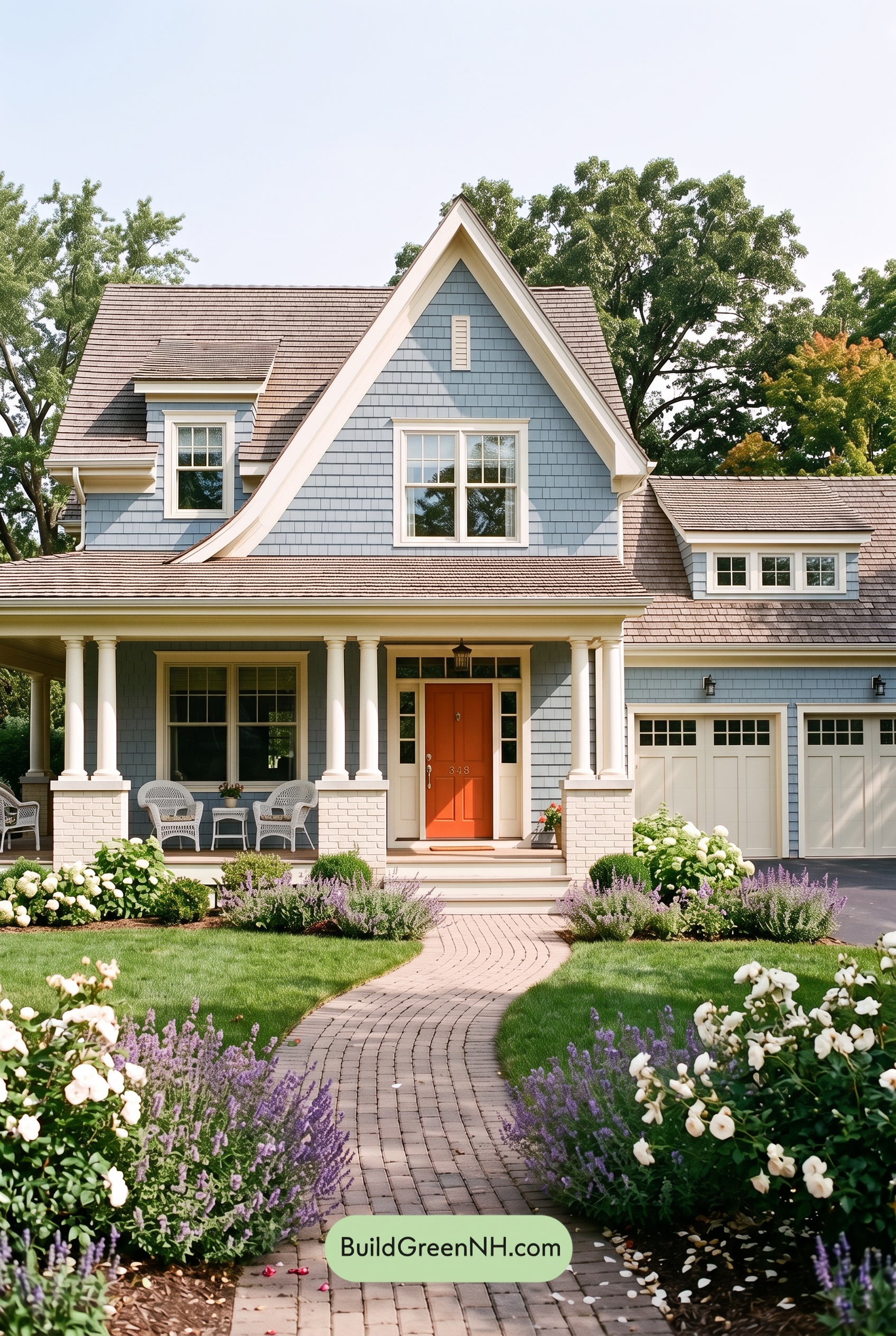 Red Front Door House Paint Color Scheme: Pale Blue Joy
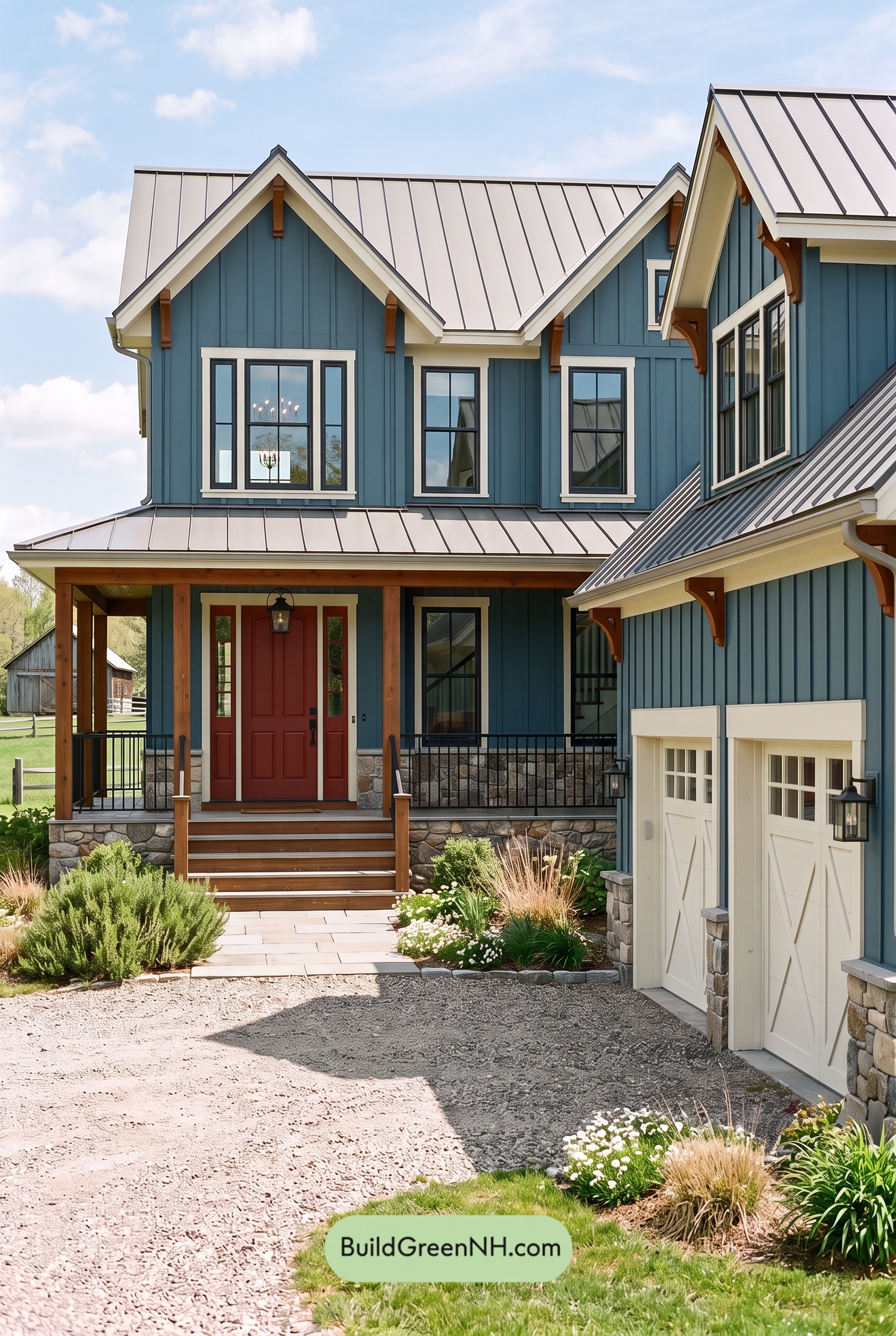 Red Front Door House Paint Color Scheme: Teal Blue Kinship
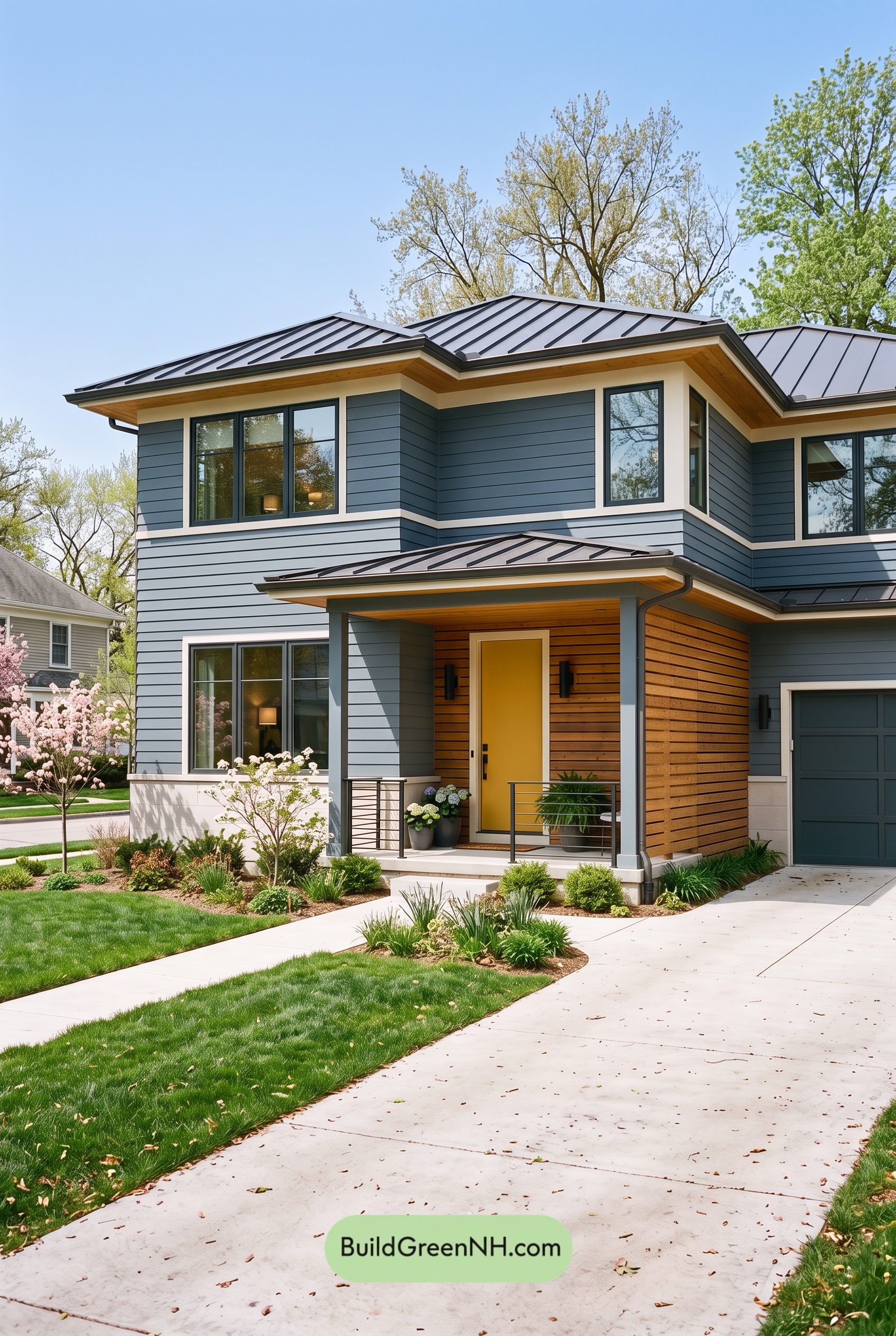 Blue House Front Door Color Scheme: Harbor Saffron
Table of Contents