Last updated on
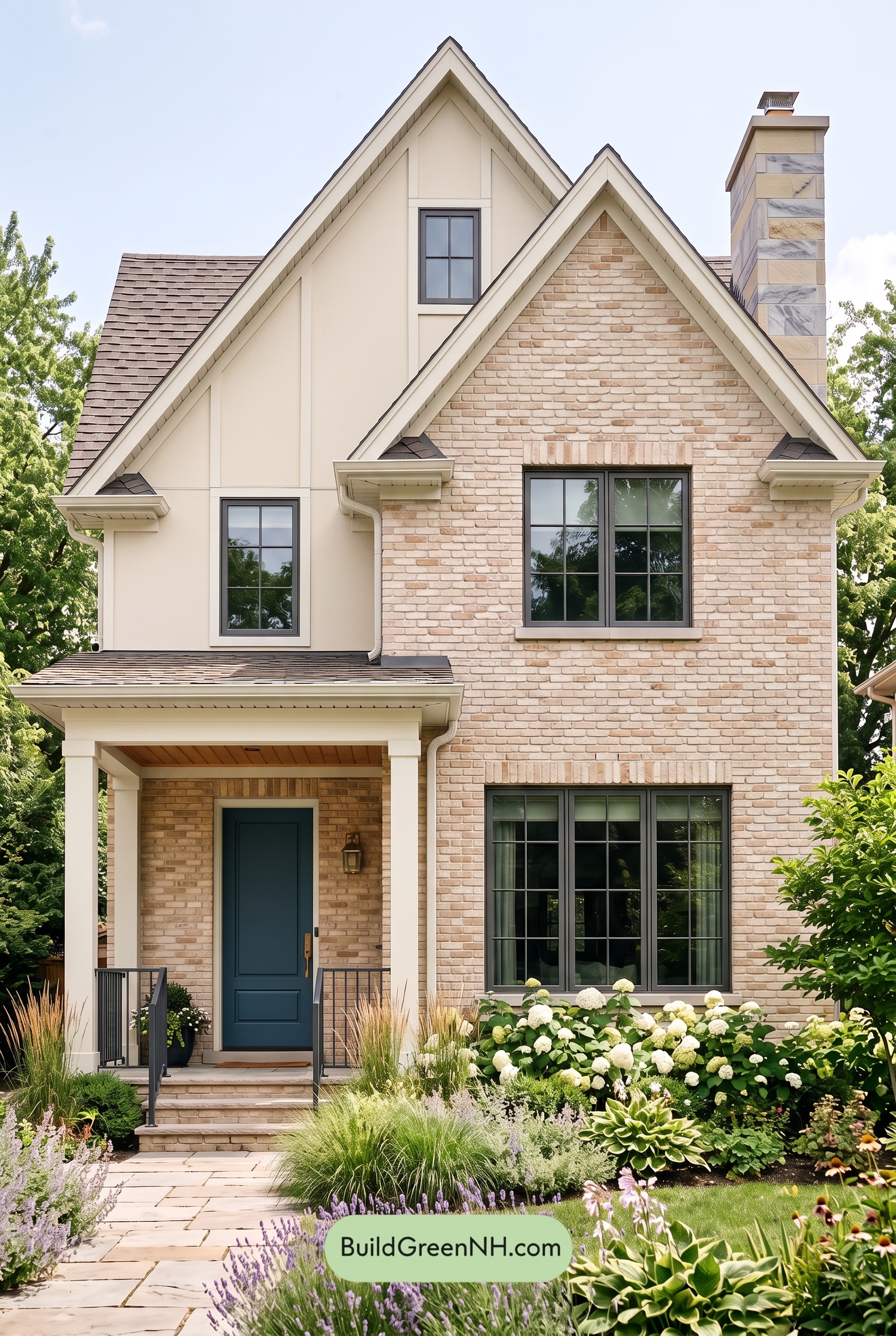

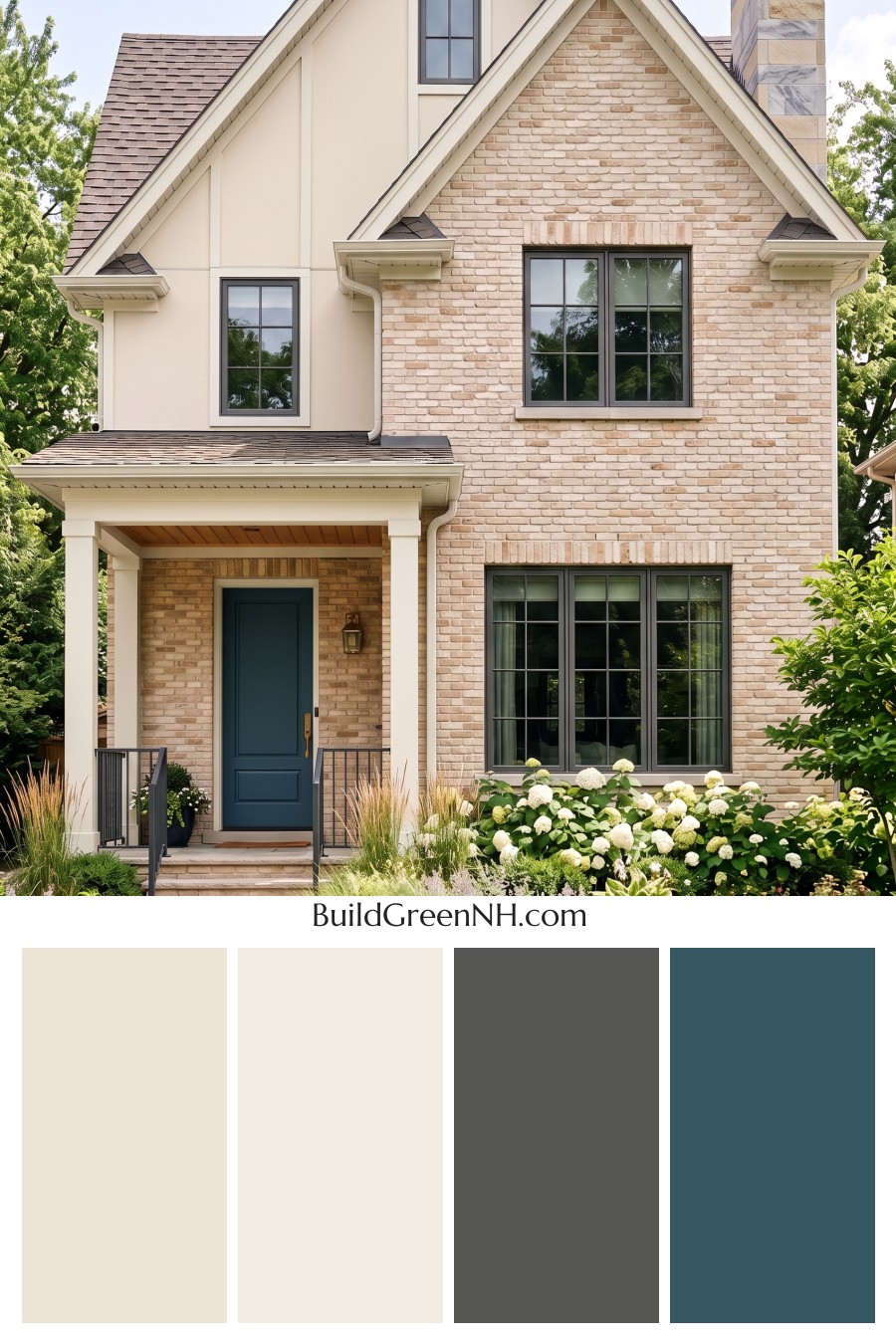
This graceful mix of warm neutrals and dark accents gives the home a polished, welcoming presence that feels both timeless and current.
A Soft, Layered Neutral Foundation
The exterior begins with a light, creamy beige across the upper siding and gabled sections, creating an airy backdrop for the home’s tall rooflines and detailed architecture. A similarly light beige trim wraps the windows, eaves, columns, and porch structure, keeping the overall look cohesive rather than stark.
Warm beige brick adds another layer of depth to the façade. Its subtle variation brings texture and character without competing with the painted surfaces, making the house feel established, refined, and pleasantly inviting.
Dark Details That Define the Architecture
Deep gray window frames provide crisp definition against the pale siding and warm brick. Their strong outlines draw attention to the generous windows and give the traditional forms a more tailored, modern edge.
The nearly black front door serves as the most dramatic focal point near the entry. It anchors the porch, adds a sense of depth, and creates a confident contrast that makes the doorway instantly memorable. Matching dark gray railings repeat that visual weight at the front steps, neatly tying the entrance together.
A Roof Color That Bridges Warm and Cool
The roof’s muted brown-gray shade works beautifully as a connector between the warm beige exterior and the cooler gray accents. Rather than feeling heavy, it gives the soaring gables a grounded finish and lets the lighter trim stand out along every roof edge.
The Overall Mood
This color scheme feels calm, elegant, and welcoming. Light beige surfaces keep the home bright, warm brick lends softness, and the charcoal-toned details add just enough contrast for a sophisticated finish. It is a balanced exterior palette that enhances the home’s architectural detail from the front walk to the highest peak.
Next, see how this color scheme looks under different lighting simulations throughout the day.
Overcast
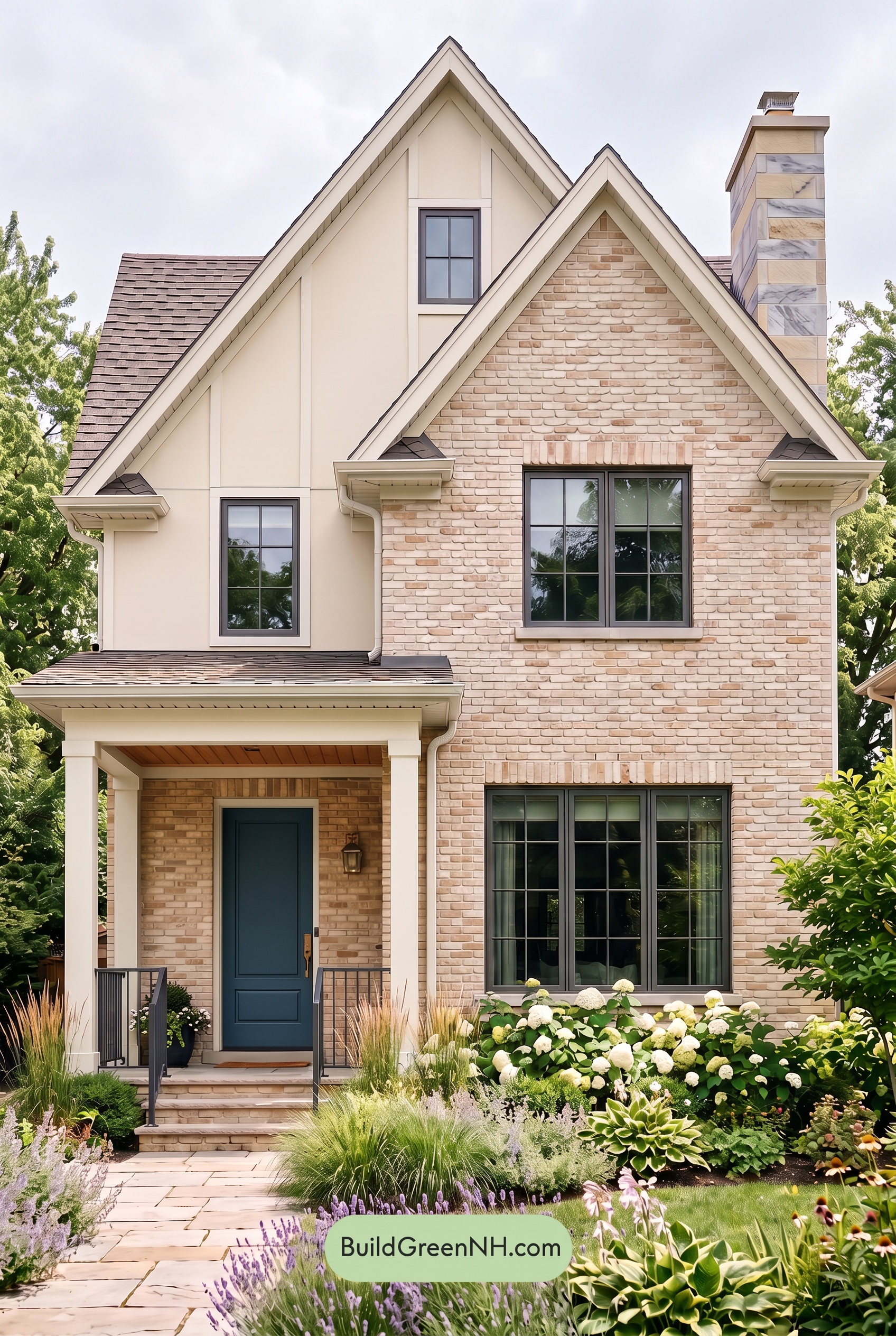
Under overcast skies, the beige exterior reads softer and slightly cooler than it does in neutral daylight, with its warmth becoming more understated and refined. The pale trim blends more gently with the main walls, while the varied beige shades in the masonry appear quieter and less saturated.
Diffuse cloud cover softens sharp shadows beneath the rooflines and porch, reducing contrast across the façade. Gray window frames and railings take on a smoother, more prominent presence against the muted light neutrals, while the black front door feels deeper and more grounded. The overall mood shifts from crisp and sunlit to calm, elegant, and welcoming.
Golden Hour
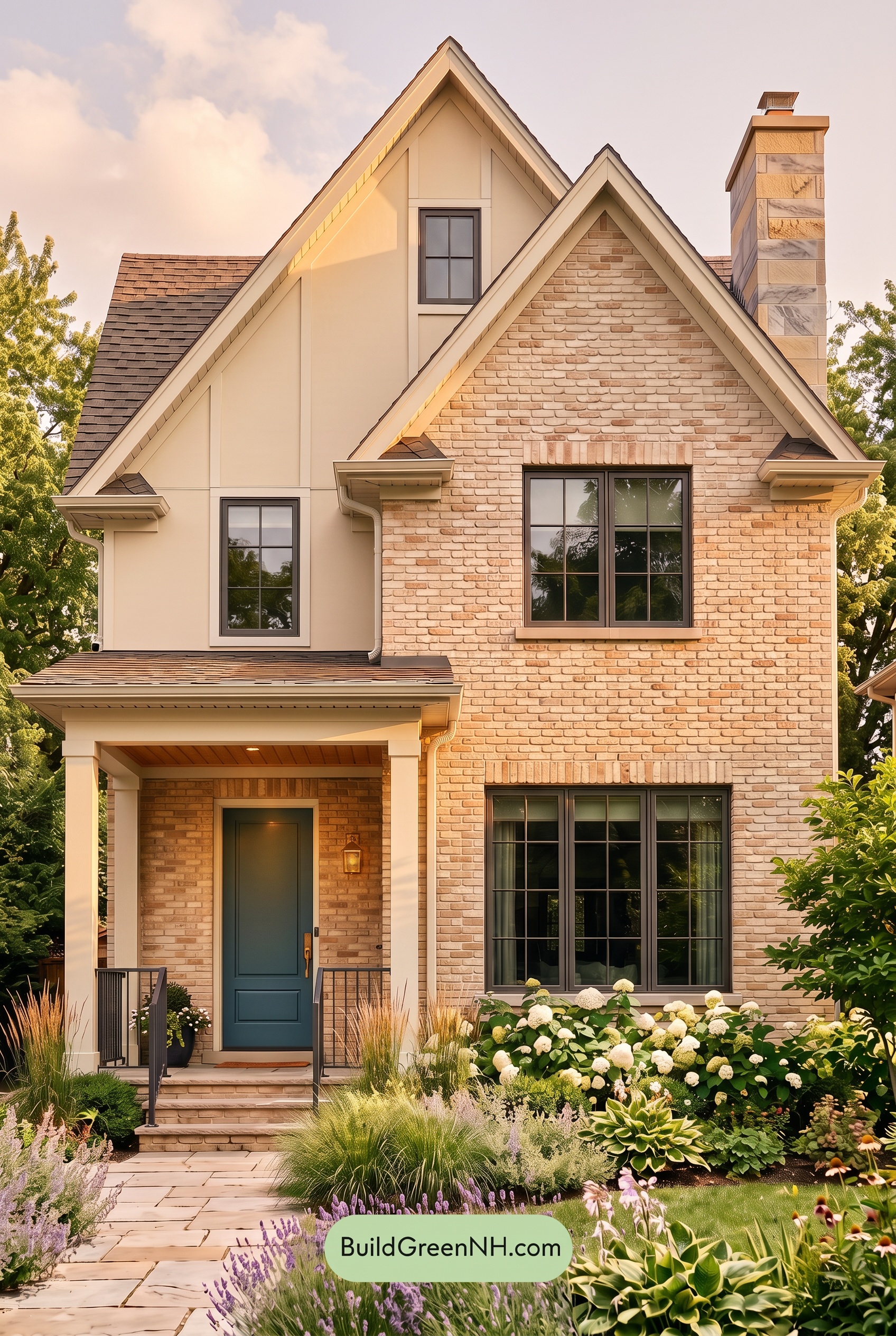
Under Golden Hour, the beige exterior shifts from quietly neutral to softly luminous, with warmer undertones rising to the surface and giving the facade a richer, more inviting glow. Compared with neutral daylight, the overall palette feels more saturated and cohesive, while the lighter beige trim catches the low sun and appears gently creamy rather than stark.
As shadows lengthen beneath the rooflines and porch, the gray window frames and railings deepen into a moodier charcoal presence, sharpening their contrast against the sunlit walls. The black front door becomes even more dramatic in the shade, creating a grounded focal point that balances the warm, golden atmosphere with a touch of tailored sophistication.
Shade
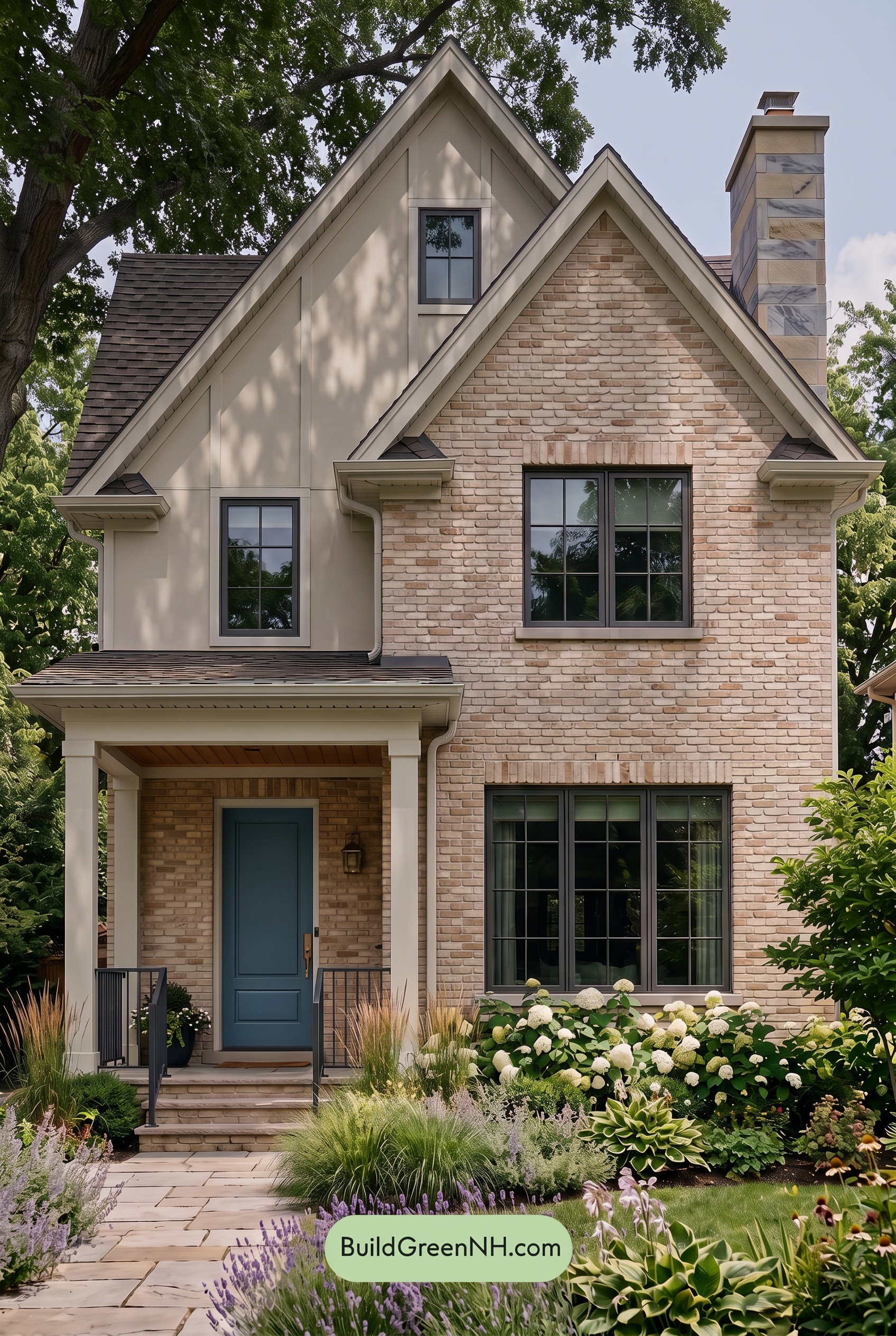
In shade, the soft beige exterior takes on a quieter, more muted character than it would in neutral daylight. Its warmth feels gentler and less golden, while the matching beige trim blends more smoothly into the siding. Dappled shadows add depth across the façade, creating a calm, layered look rather than a bright, high-saturation finish.
The gray window frames and railings appear deeper and cooler in the lower light, while the black entry detail becomes a stronger visual anchor. This shift increases the crisp contrast around openings and architectural lines, giving the home a refined, sheltered mood beneath the tree canopy.
Nighttime
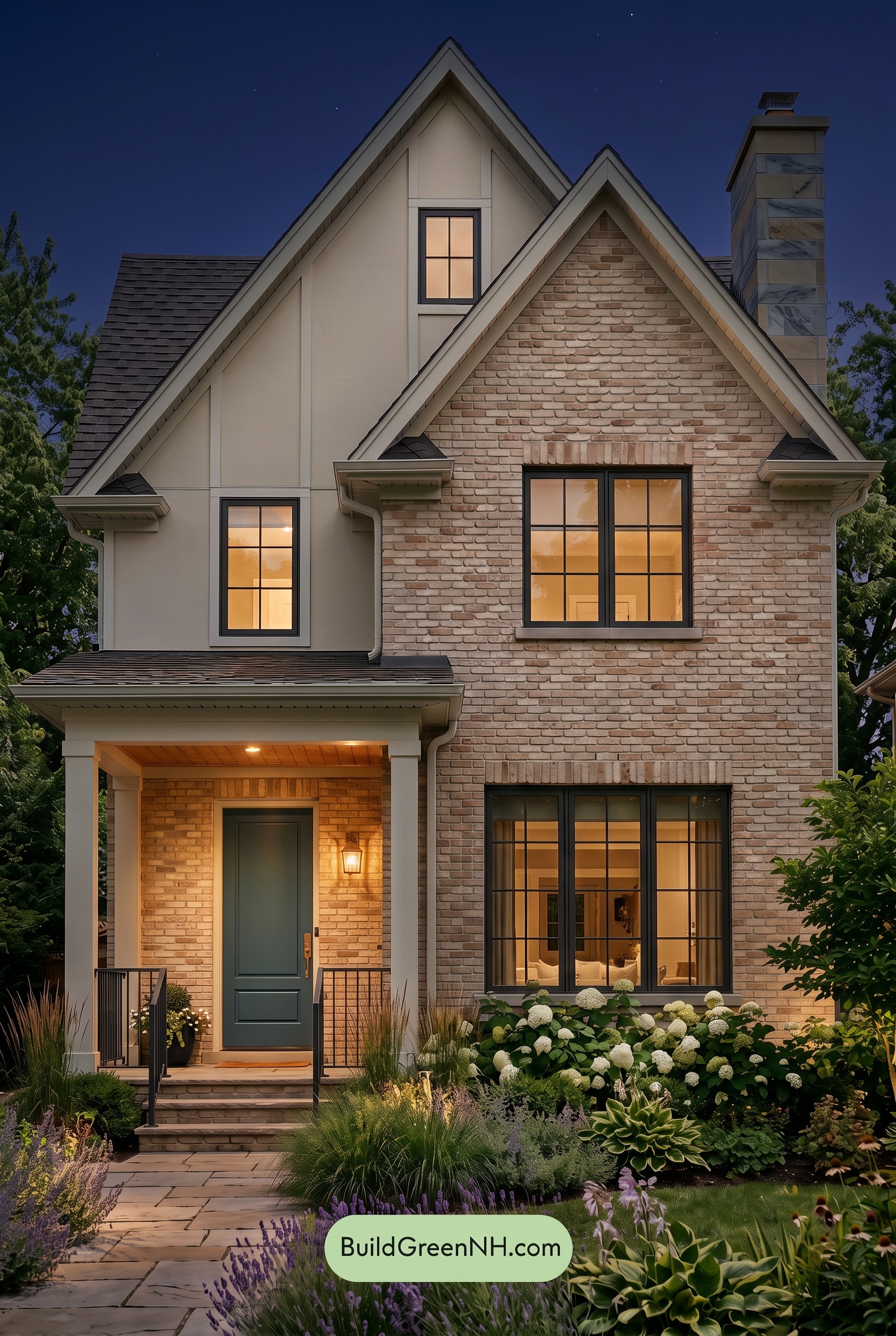
At night, the beige exterior shifts away from its neutral daylight balance and takes on a softer, warmer cast beneath the porch and window lighting. Its saturation appears more subdued in the unlit areas, while the illuminated sections feel creamy and welcoming. Deep shadows along the gables and recesses add dimension, making the layered façade feel more sculptural.
The gray window frames and railings recede into richer charcoal-like shadows, creating crisp contrast against the glowing warm neutrals. The black front door becomes even more dramatic and grounded, while the warm interior light brings a cozy glow to the overall composition. Compared with daylight, the nighttime palette feels quieter, more intimate, and distinctly inviting.
Pin these for later:
Want More?
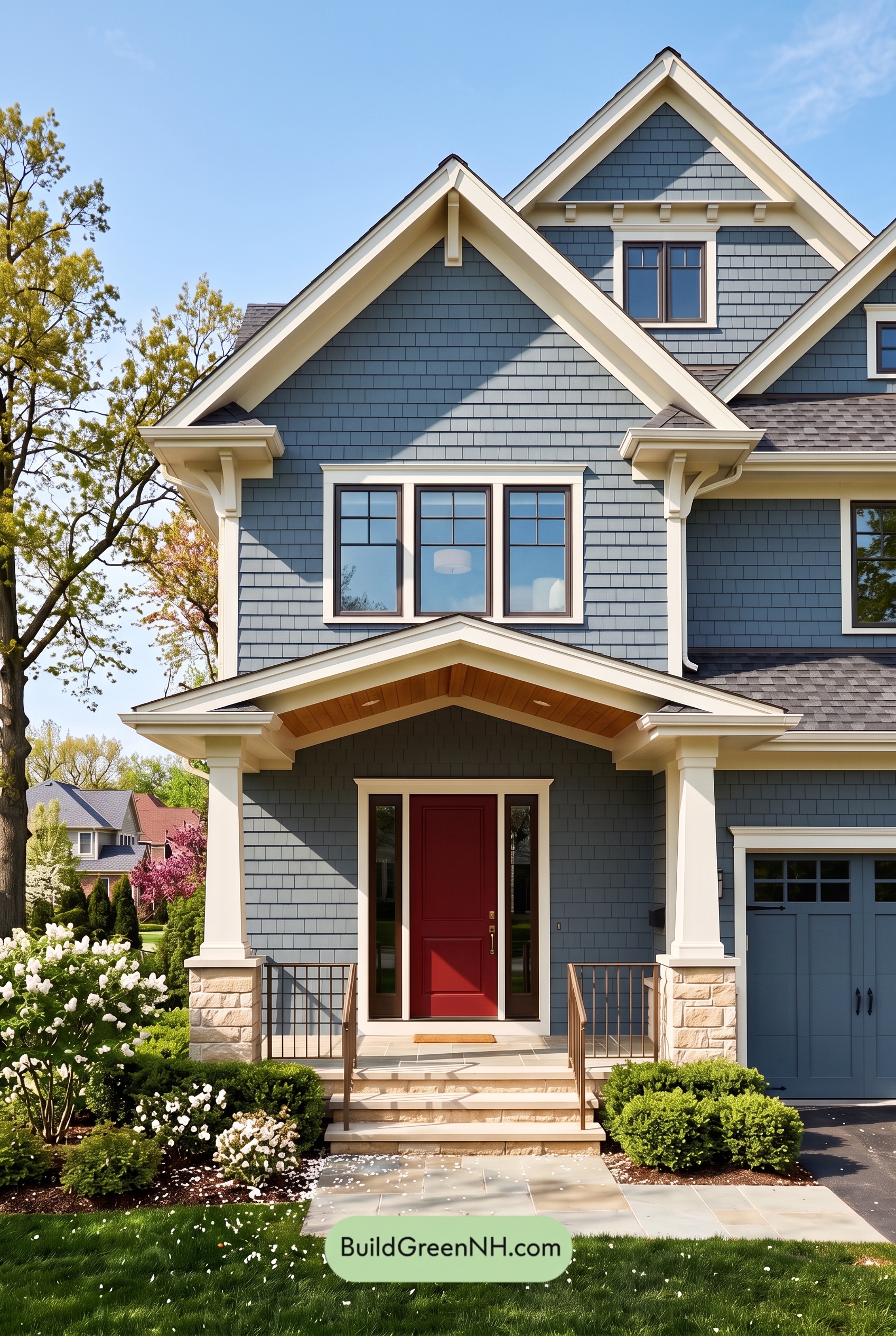 Red Front Door House Paint Color Scheme: Denim Blue Homecoming
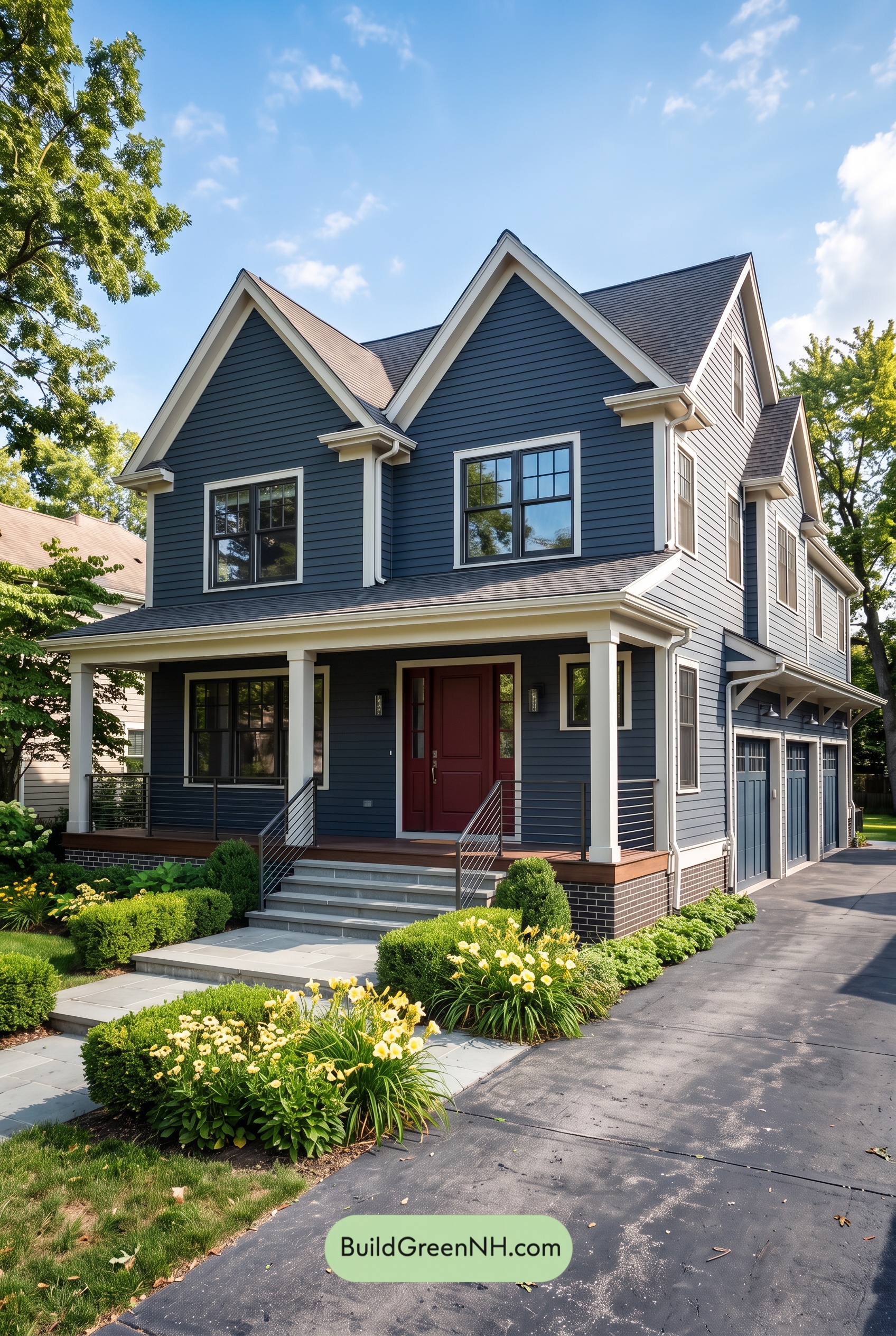 Red Front Door House Paint Color Scheme: Midnight Blue Assurance
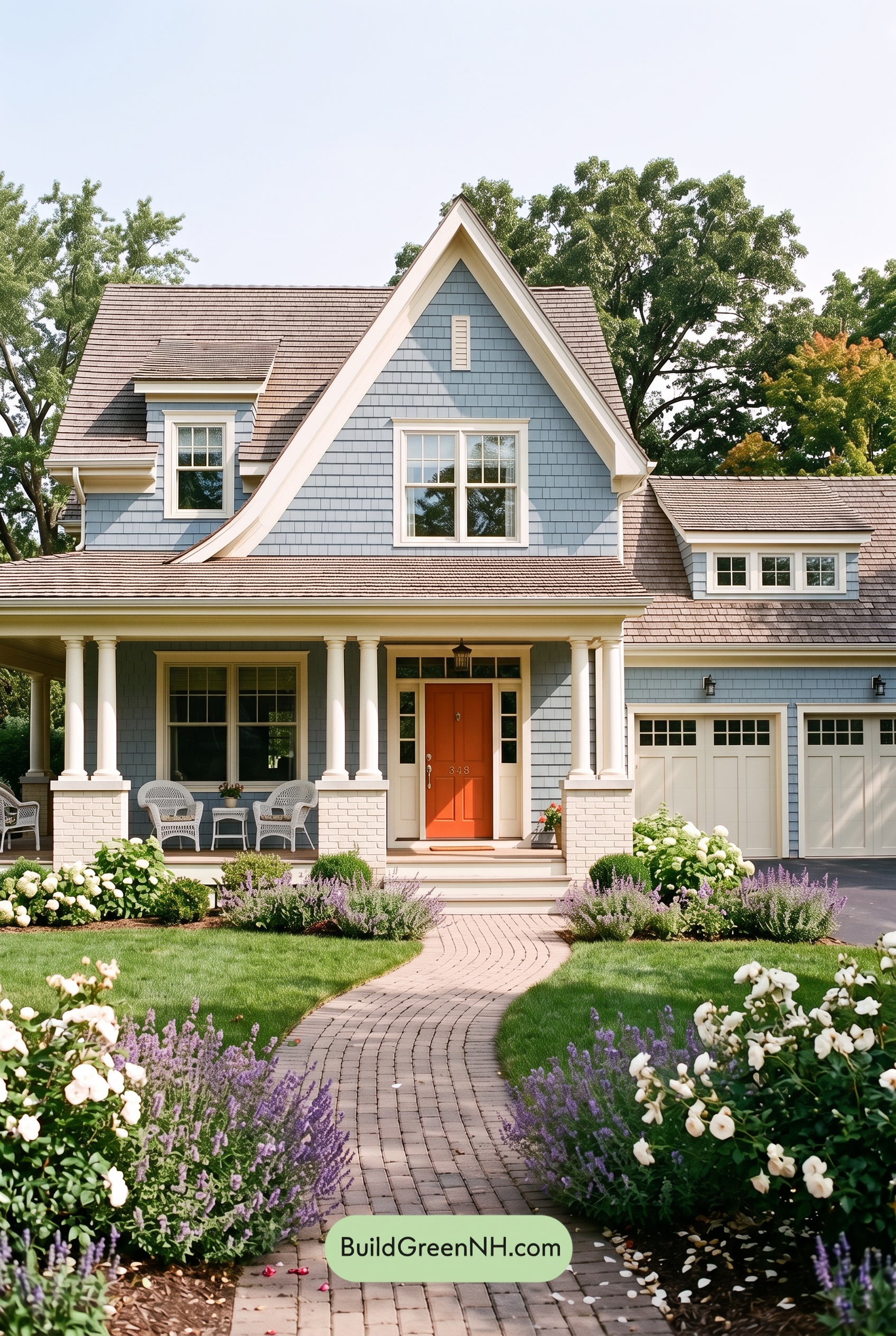 Red Front Door House Paint Color Scheme: Pale Blue Joy
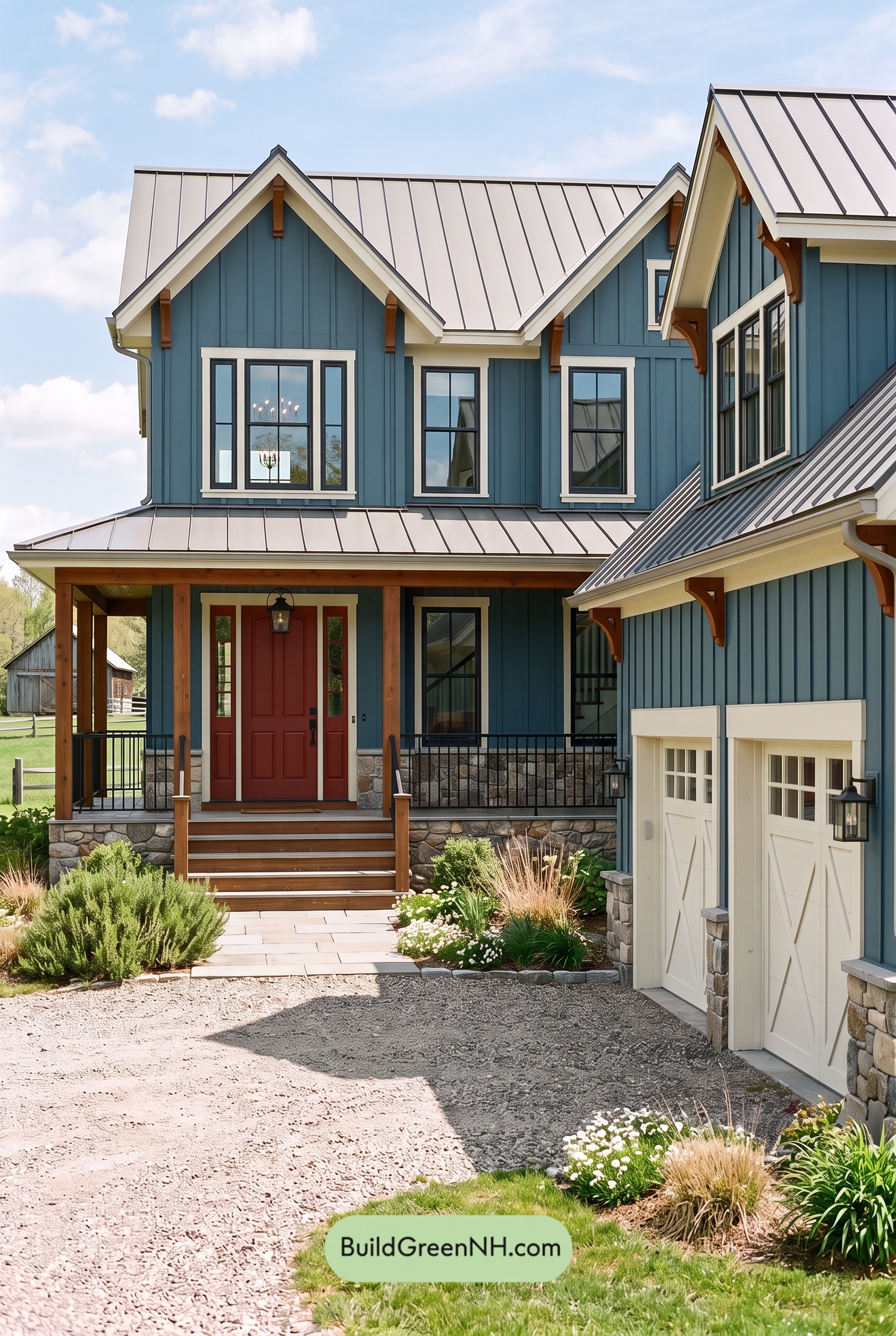 Red Front Door House Paint Color Scheme: Teal Blue Kinship
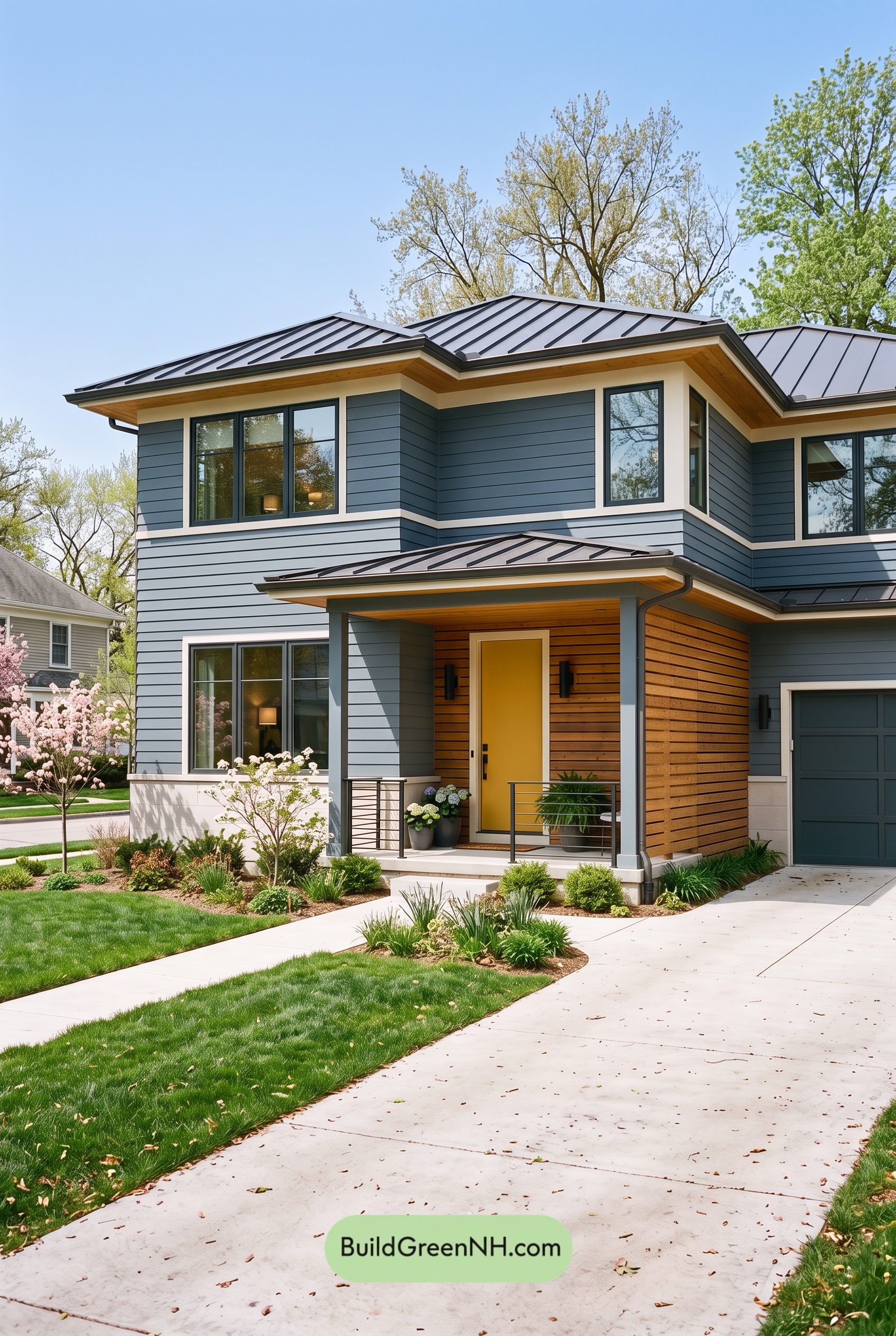 Blue House Front Door Color Scheme: Harbor Saffron
Table of Contents