Last updated on
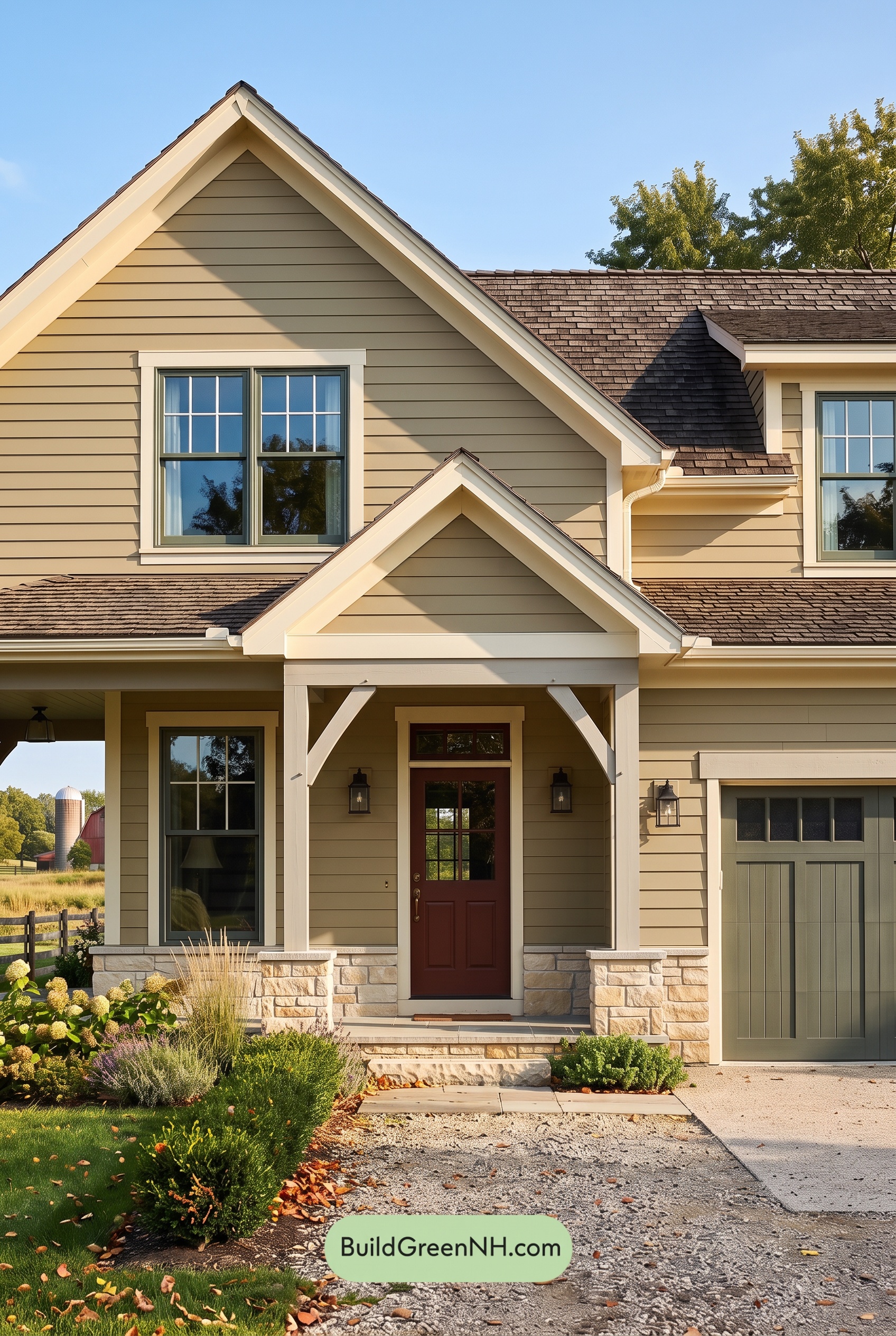

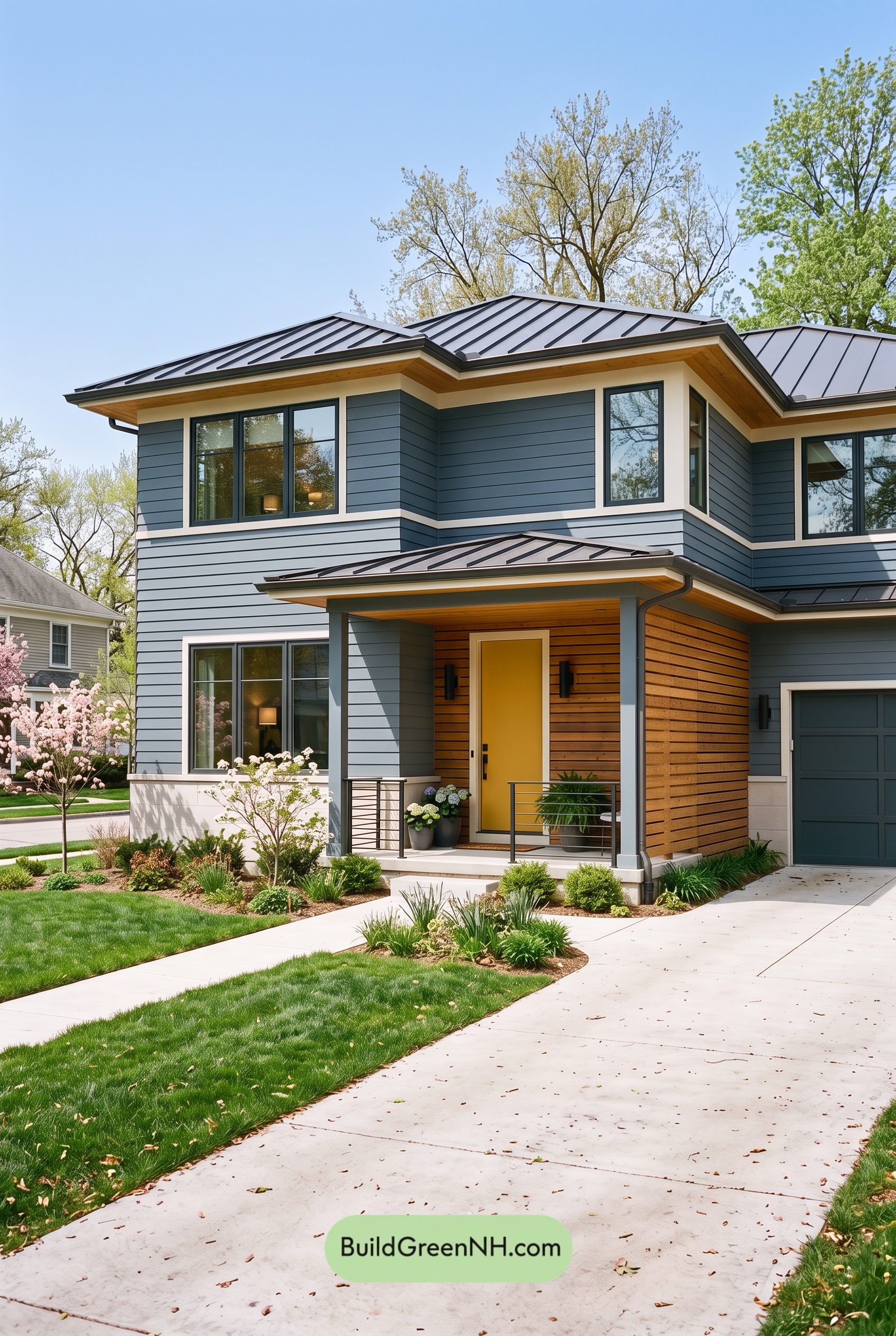
This inviting mix of warm neutrals, grounded gray accents, and a rich brown entry creates a timeless exterior with instant curb appeal.
A Warm, Layered Foundation
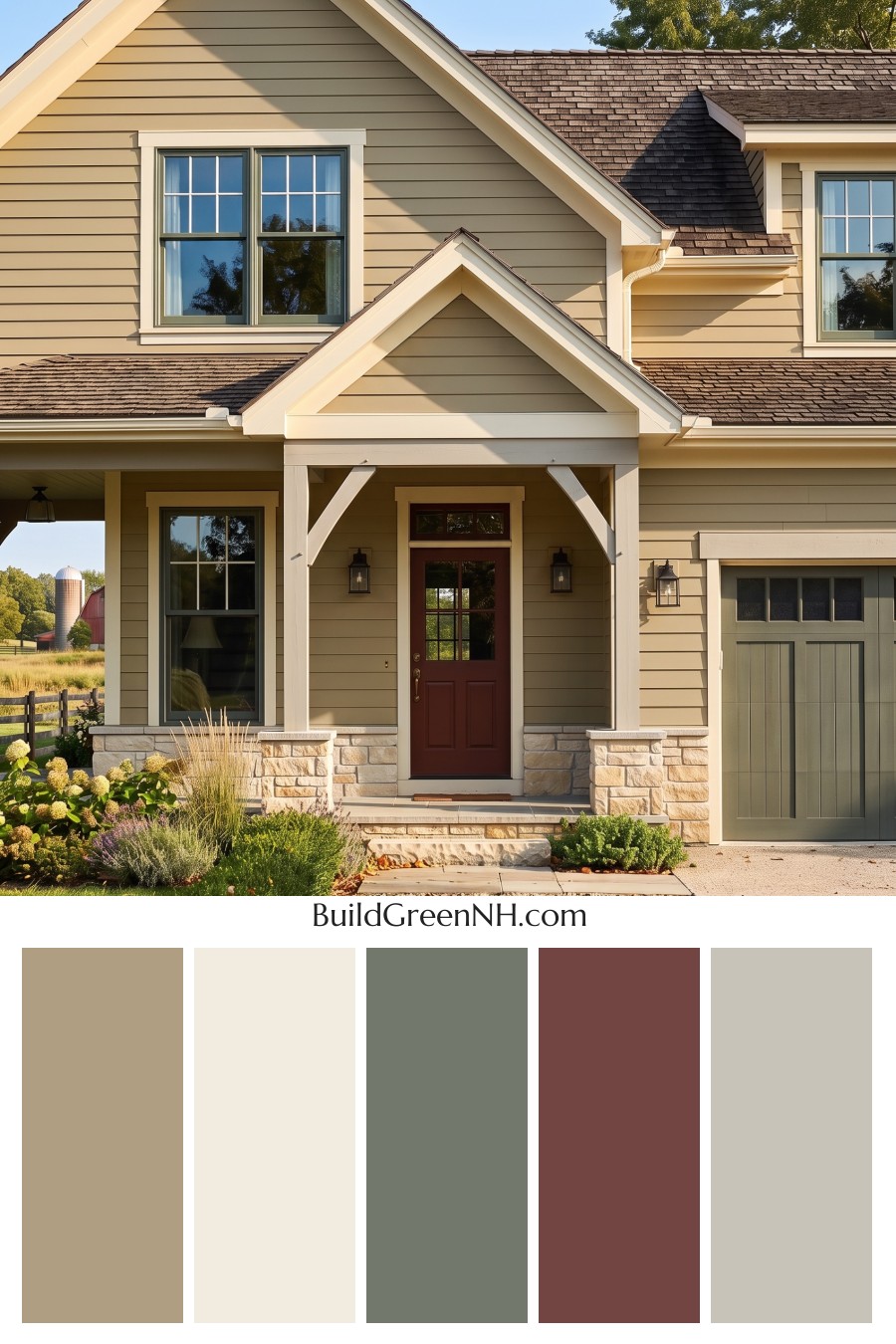
The siding is finished in a soft, warm beige that gives the home a relaxed and welcoming presence. Its gentle earthy undertone works beautifully with the farmhouse-inspired architecture, allowing the layered rooflines and horizontal boards to feel detailed without becoming visually busy.
A lighter creamy beige is used on the trim, gables, porch framing, and columns. This brighter shade crisply defines the roof edges, windows, and front entry while adding a clean sense of contrast against the deeper wall color. The effect is polished but never stark.
Balanced Gray Accents
Muted gray window frames introduce a cool, tailored note to the otherwise warm palette. They give the large windows more definition and help the reflective glass stand out, creating a pleasing connection between the house and the open sky.
The garage door carries a similar soft gray shade, which keeps this larger feature visually quiet and coordinated. Rather than competing with the entrance, it supports the overall scheme with subtle depth and a refined, understated character.
A Rich Welcome at the Entry
The front door provides the deepest accent in a rich red-brown shade. Set beneath the light porch structure, this warm, saturated color naturally draws the eye toward the entry and gives the facade a strong focal point. It feels traditional, welcoming, and beautifully at home beside the beige siding.
Light neutral stone at the porch base adds another layer of warmth, echoing the siding and trim while bringing in natural texture. Above it, the deep brown roof grounds the full composition and lends just enough contrast to make the pale architectural details shine.
The Overall Mood
Warm beige, creamy trim, softened gray, and deep brown work together to create a home that feels both classic and current. The palette is calm, approachable, and especially suited to a landscaped setting, where greenery can enhance the quiet warmth of the exterior. It is an excellent example of how a restrained range of shades can make a detailed home feel cohesive, welcoming, and enduring.
Next, see how this color scheme looks under different lighting simulations throughout the day.
Overcast
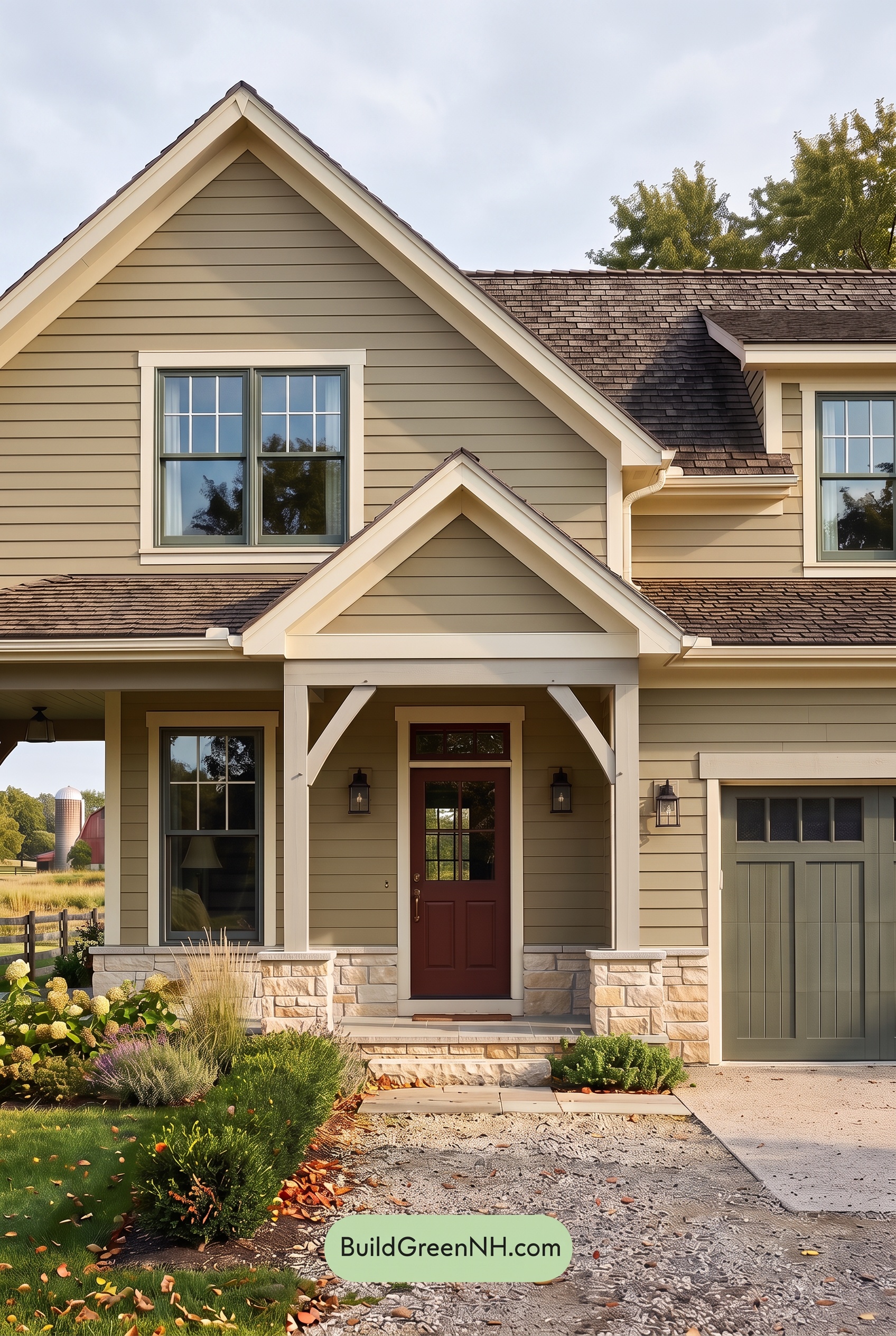
Under overcast skies, the beige siding and trim lose some of the golden warmth they show in neutral daylight, settling into softer, quieter neutral shades. Their saturation feels more restrained, while the gray window frames and garage door read cooler and slightly deeper against the muted walls.
With direct sun removed, sharp shadows beneath the eaves and porch soften into gentle layers, reducing contrast while preserving the home’s architectural detail. The brown front door becomes a richer focal point against the calm facade, giving the overall exterior a grounded, welcoming mood with a more understated elegance.
Golden Hour
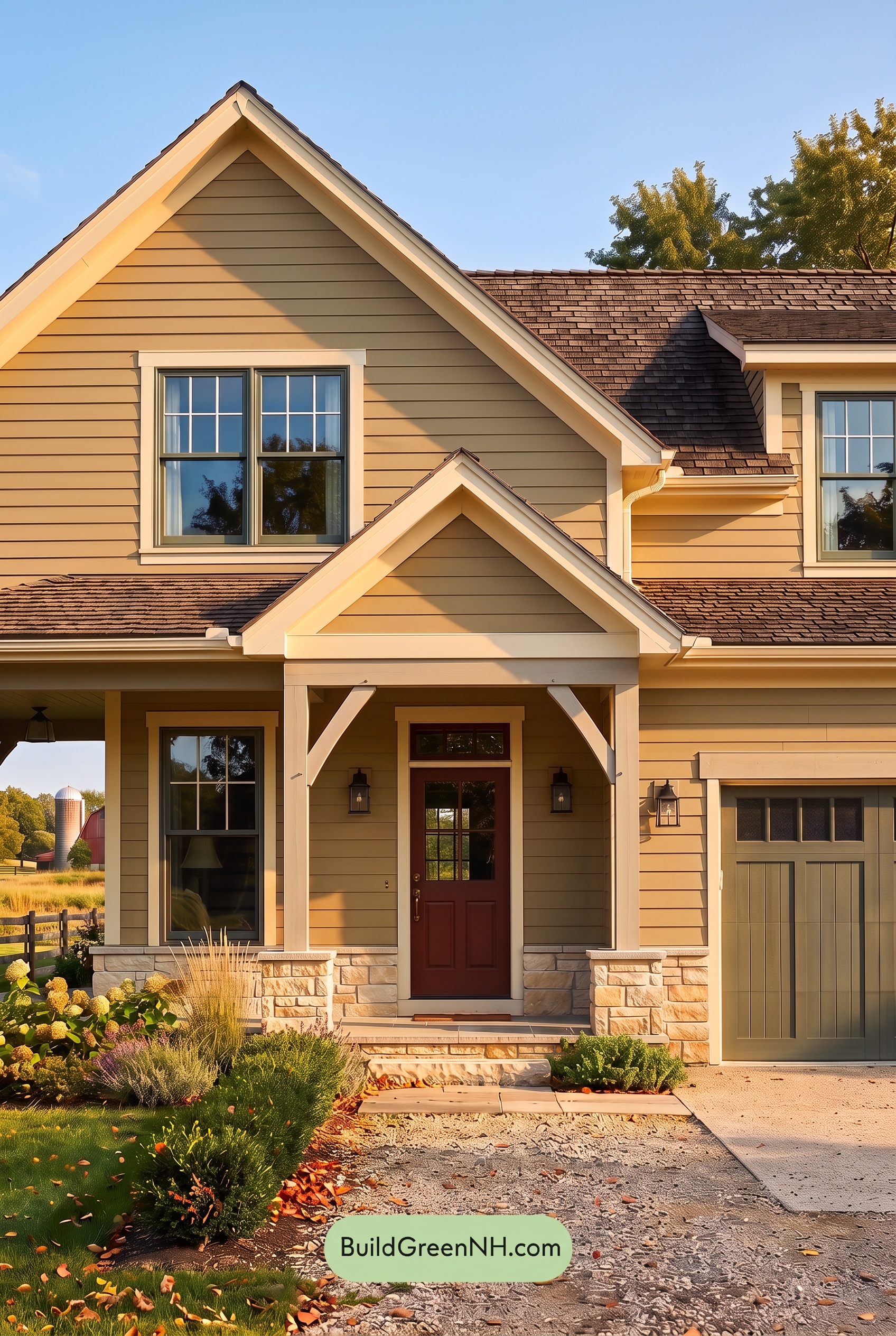
Under Golden Hour, the beige siding and trim take on a richer, more sun-kissed cast than they show in neutral daylight, with their warm undertones feeling fuller and more inviting. The brown entry door gains depth and saturation, becoming a stronger focal point against the softly glowing neutral façade.
As the low light stretches across the exterior, shadows deepen beneath the rooflines, porch, and trim, sharpening the home’s architectural layers. The gray window frames and garage door appear moodier and slightly more subdued by comparison, creating elegant contrast with the illuminated warm neutrals and giving the whole exterior a relaxed, welcoming evening character.
Shade
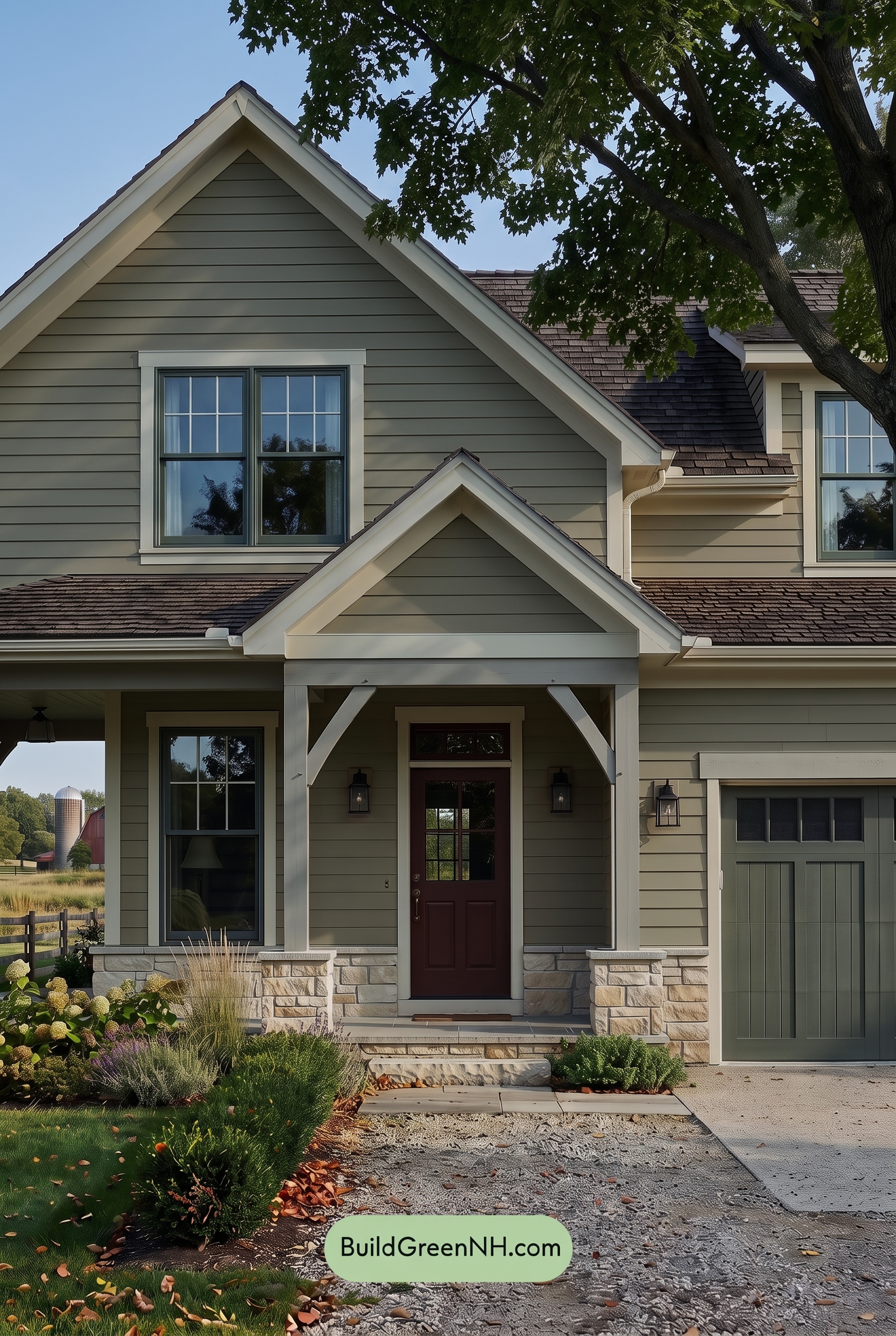
In shade, the beige siding and trim lose some of their sunlit warmth, reading softer and slightly more muted than they would in neutral daylight. The gray window frames and garage door deepen toward cooler, more subdued shades, while layered shadows along the siding and gables make the architectural lines feel crisper.
The brown front door becomes a richer, darker focal point against the quieter neutrals, though its saturation appears restrained in the lower light. Overall, the reduced brightness softens contrast across the broad exterior surfaces while preserving deeper accents, creating a calm, grounded mood with a touch of drama beneath the tree canopy.
Nighttime
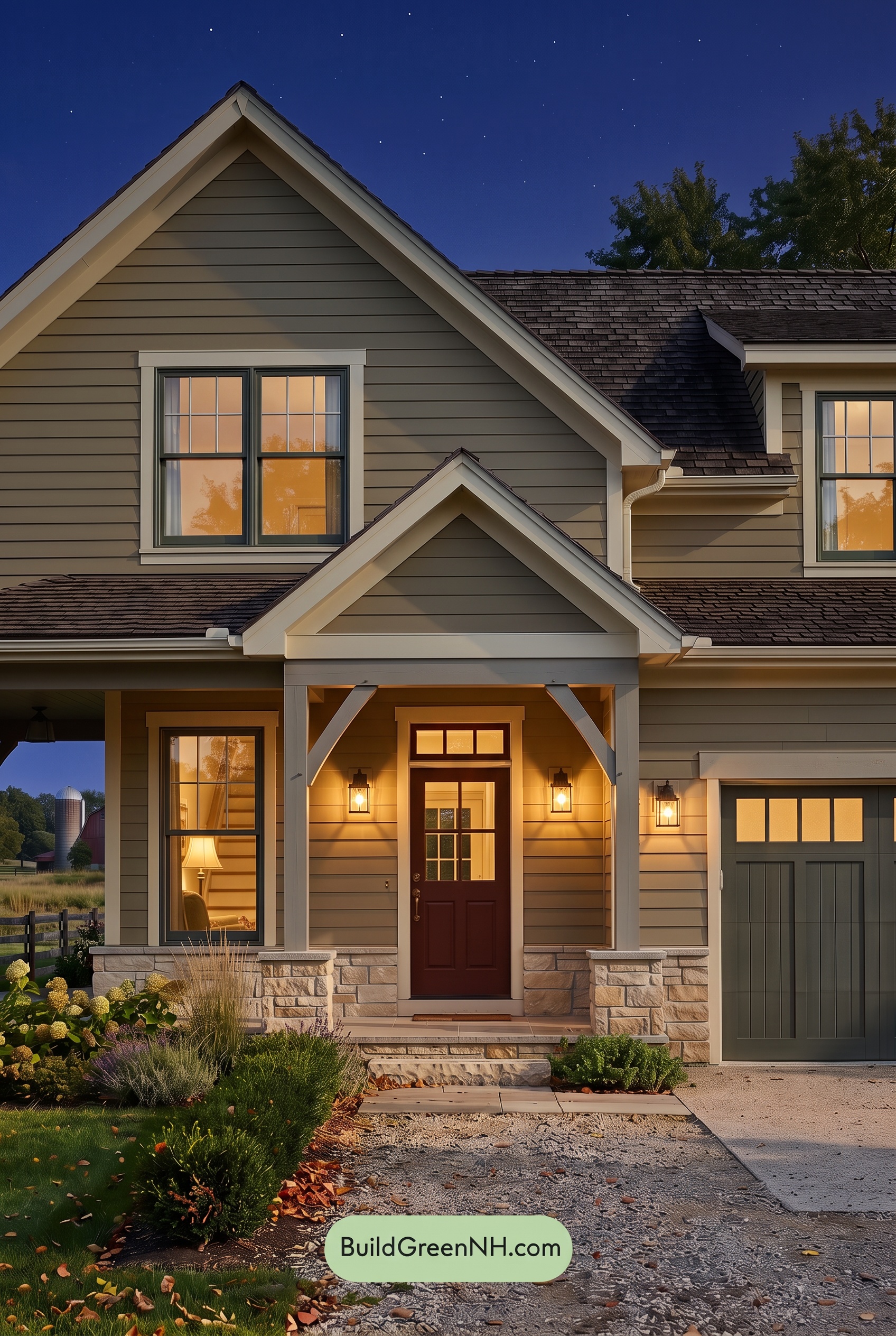
At night, the beige siding and trim take on a richer, softer warmth under the porch and window light, while areas beyond the glow become more muted and shadowed. Compared with neutral daylight, saturation feels lower across the broad wall surfaces, but the warm illumination creates inviting highlights around the entry and columns.
The gray window frames and garage door recede into deeper, cooler-looking shades, sharpening their contrast against the lit beige details. The brown front door appears fuller and more dramatic in the warm pool of light, giving the façade a layered, welcoming mood with stronger shadows and a more intimate sense of depth.
Pin these for later:
Want More?
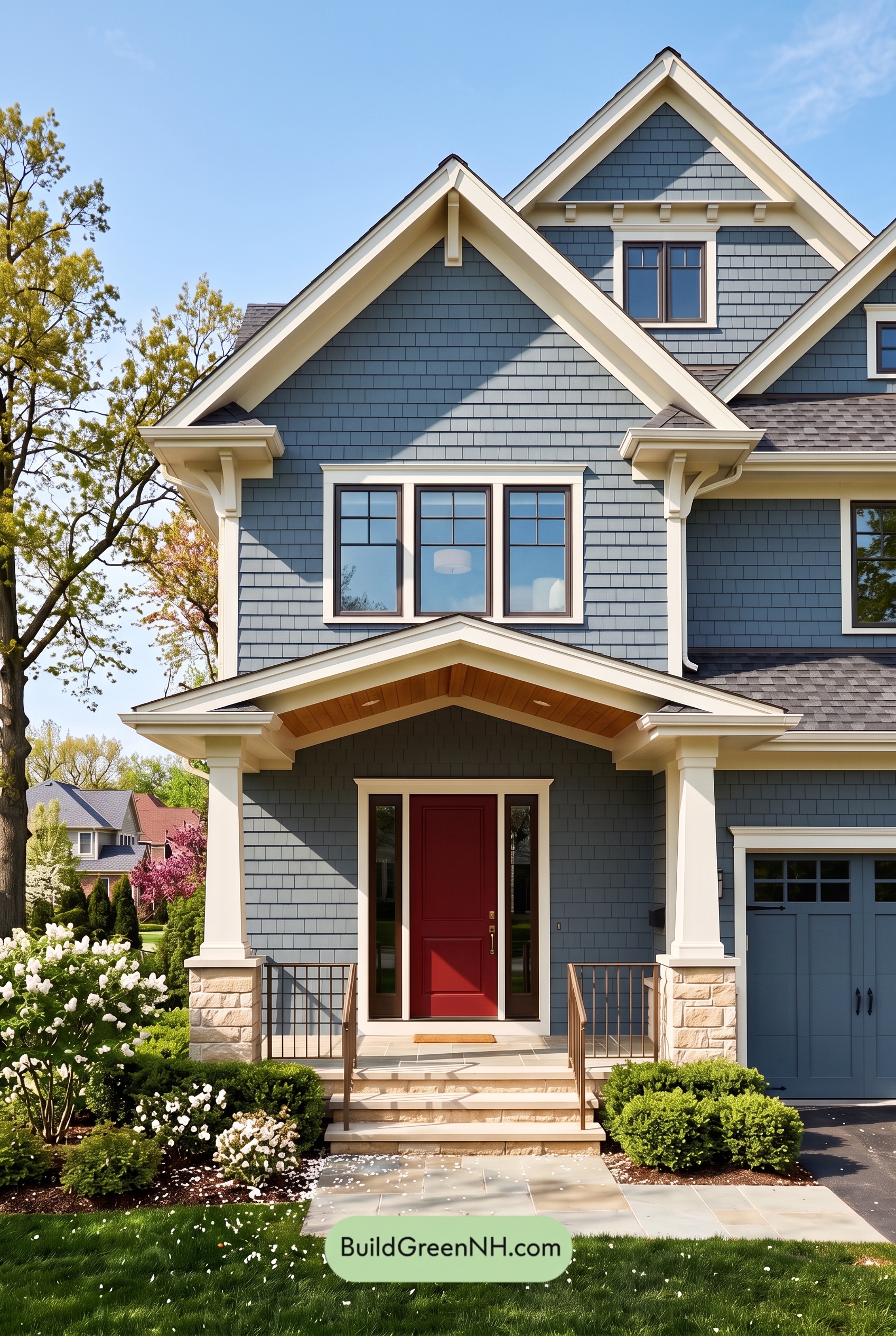 Red Front Door House Paint Color Scheme: Denim Blue Homecoming
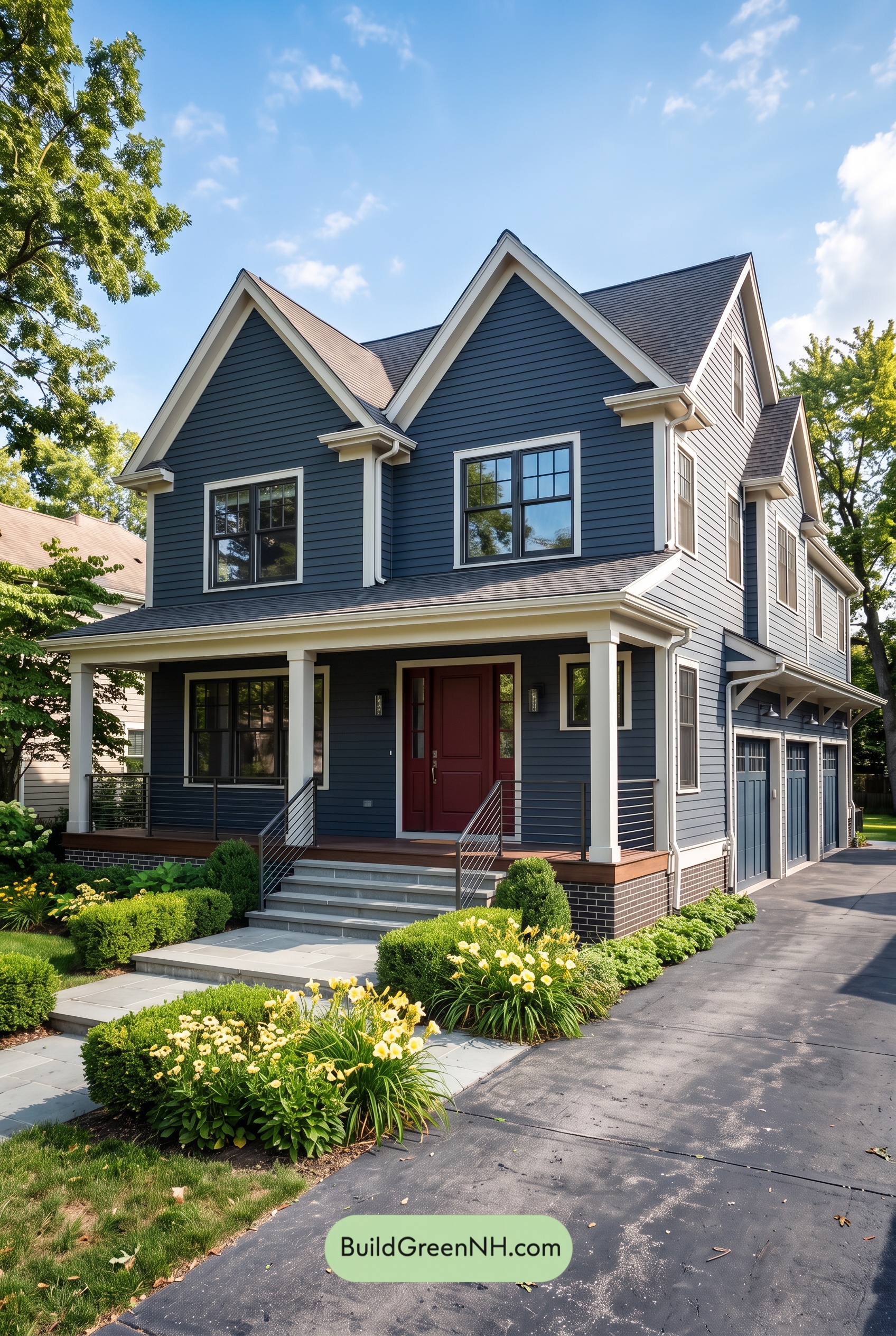 Red Front Door House Paint Color Scheme: Midnight Blue Assurance
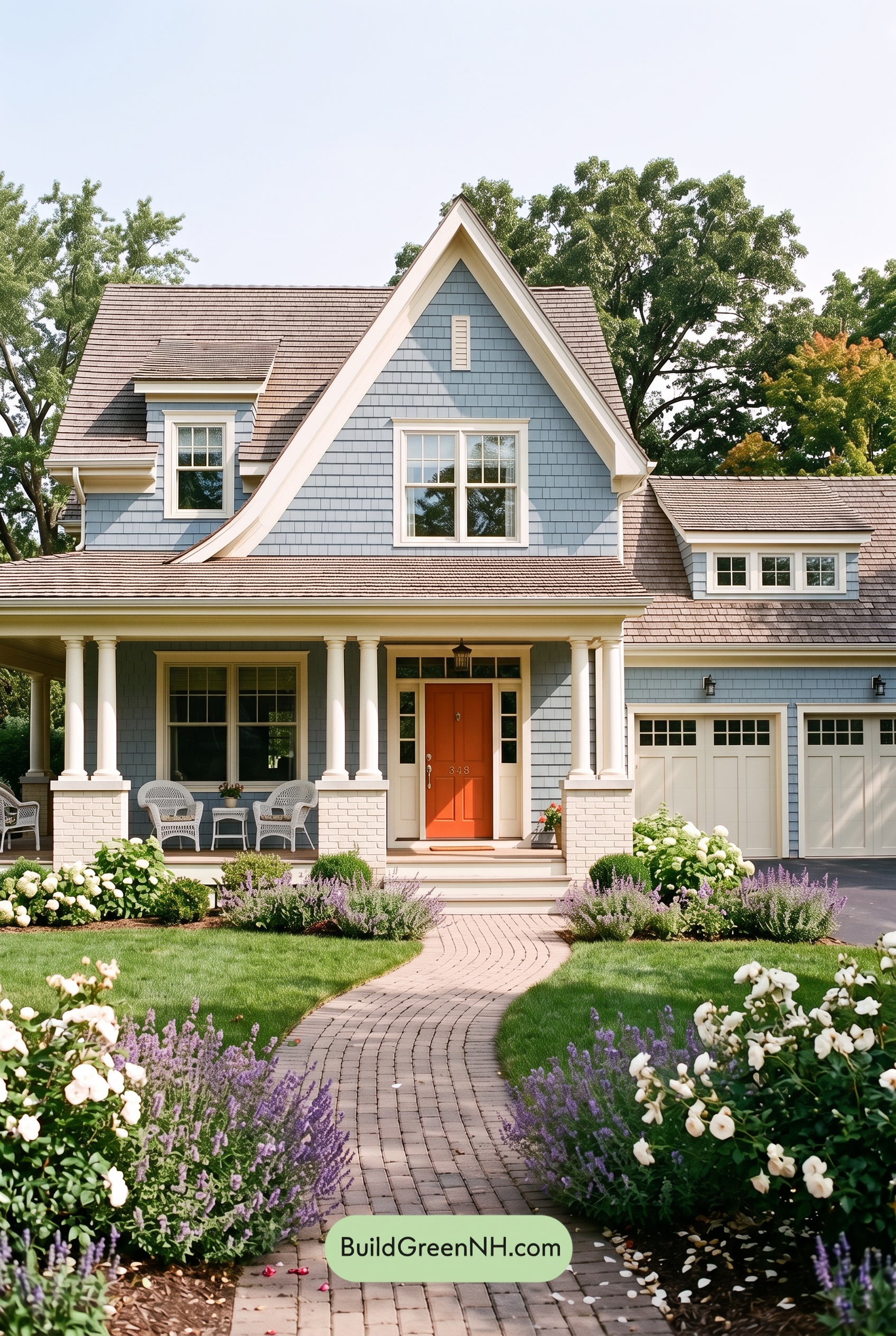 Red Front Door House Paint Color Scheme: Pale Blue Joy
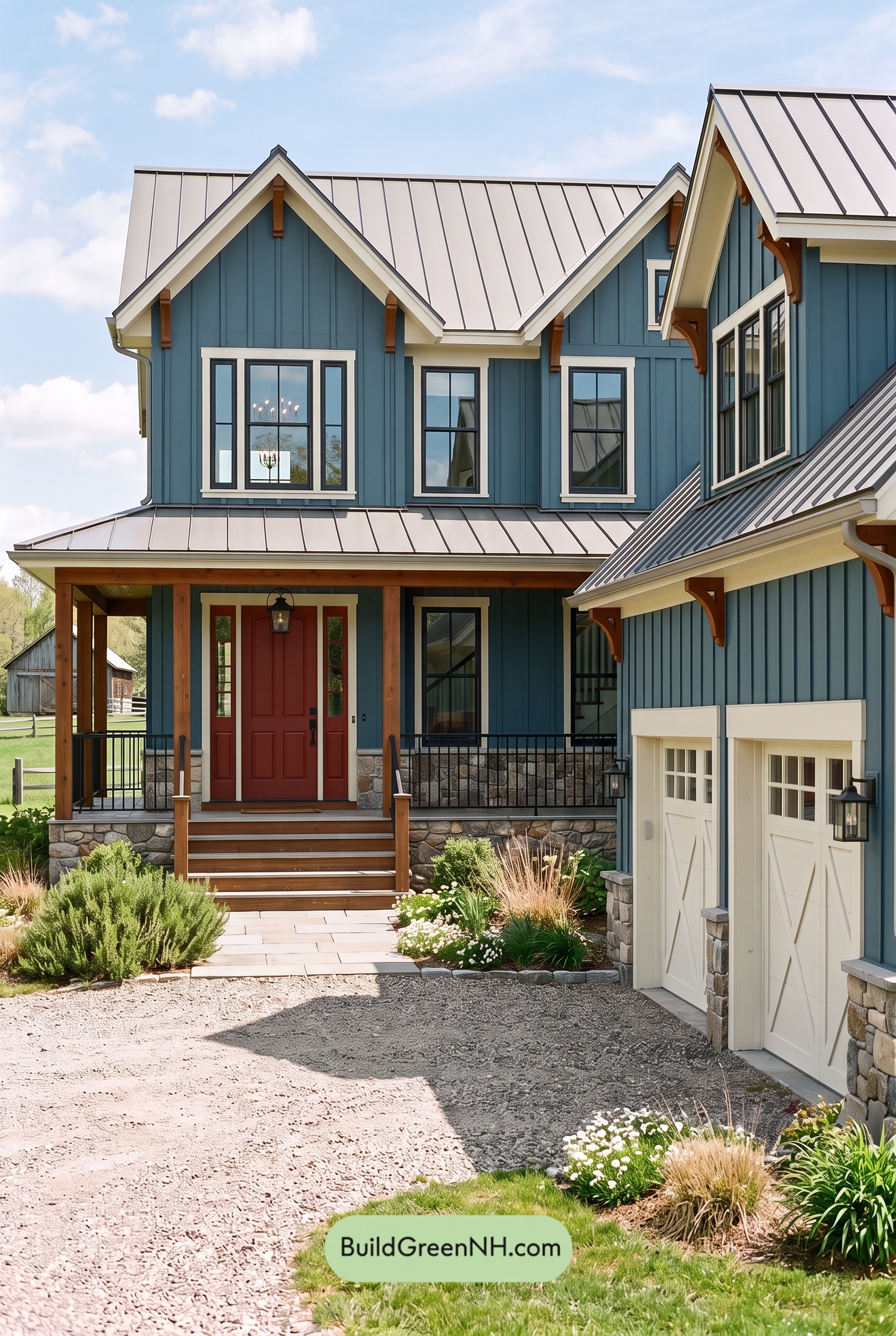 Red Front Door House Paint Color Scheme: Teal Blue Kinship
 Blue House Front Door Color Scheme: Harbor Saffron
Table of Contents