Last updated on
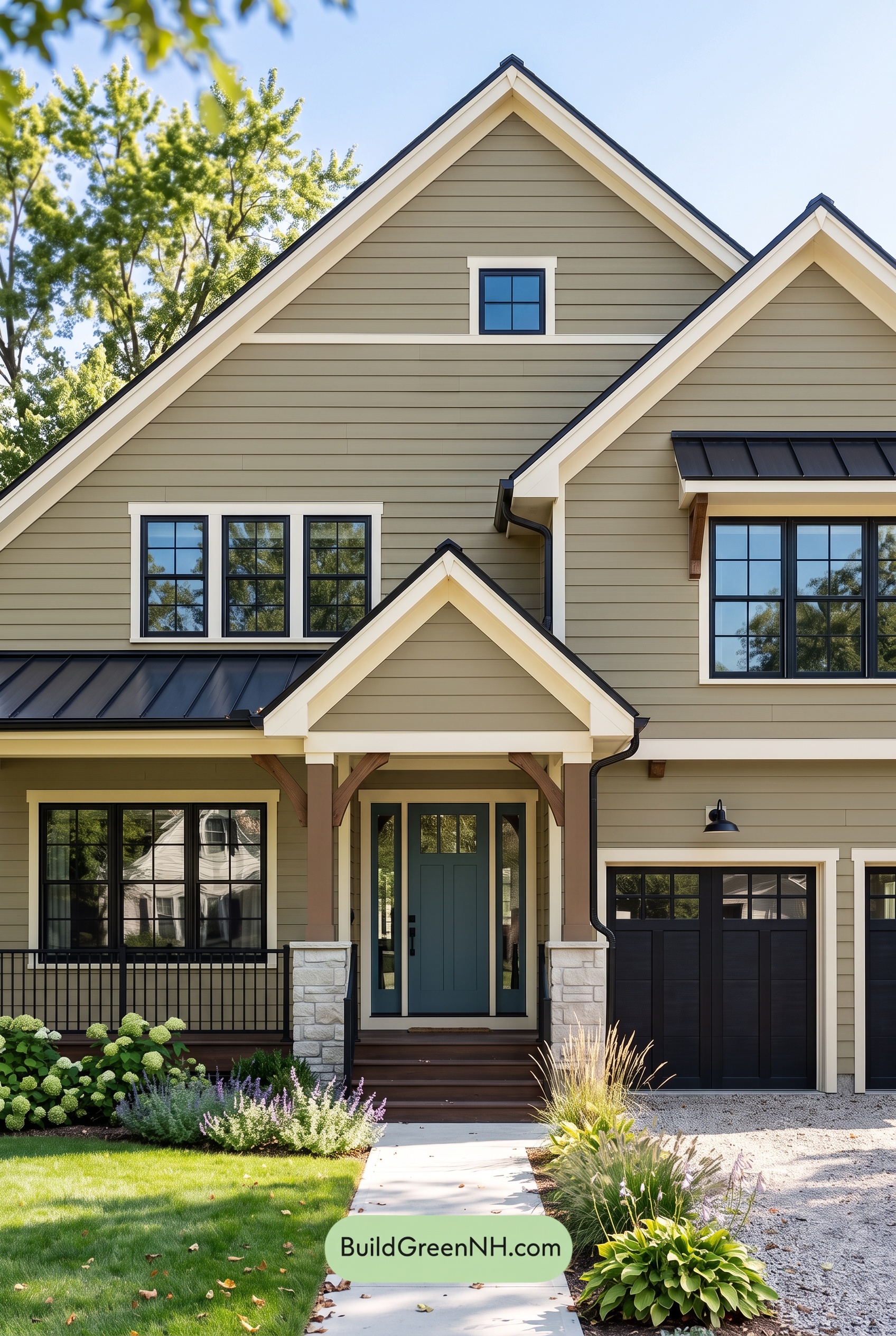

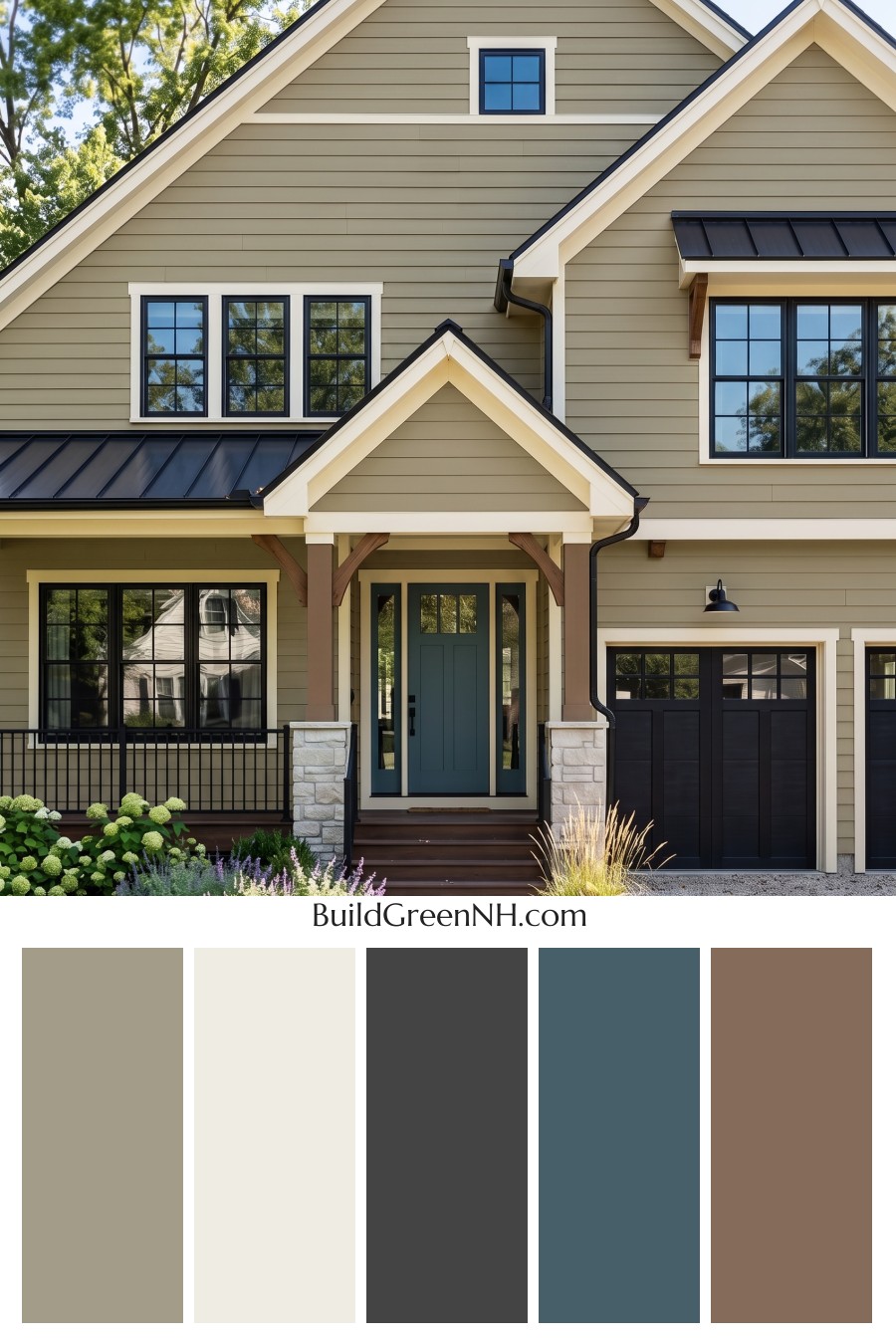
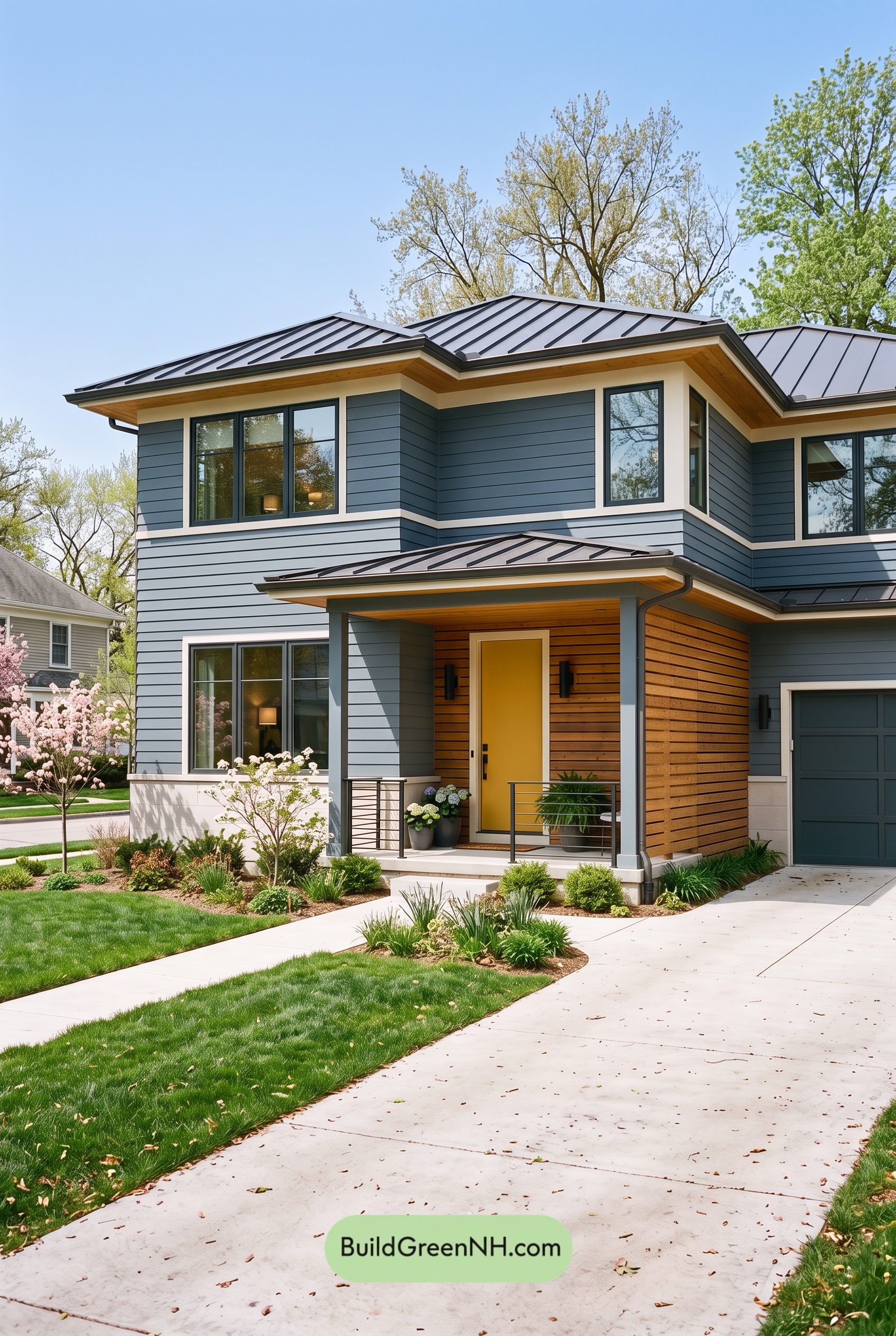
This layered exterior color scheme feels instantly welcoming because its soft warmth, crisp contrast, and cool blue focal point give the home polished curb appeal without sacrificing character.
A Soft, Grounded Main Color
The siding is finished in a muted yellow-based neutral that reads as warm, gentle, and beautifully understated. Its softened depth keeps the large facade from feeling stark while giving the home a relaxed, traditional presence. The horizontal boards catch the light subtly, adding dimension across the tall gables and lower-level walls.
Bright Trim Defines the Architecture
Clean white trim frames the rooflines, windows, entry gable, and garage opening. This bright contrast gives every peak and edge a tailored appearance, especially against the more subdued siding. The trim also highlights the home’s layered roof shape, making the architecture feel intentional and refined rather than busy.
Dark Gray Details Add Structure
Deep gray window frames, railings, gutters, and garage doors bring welcome definition to the palette. These dark accents create a crisp outline around the lighter siding and trim, lending the home a modern edge. The garage doors are especially effective: their nearly black gray shade anchors the right side of the facade and connects visually with the dark roof.
The roof’s rich charcoal-gray tone completes that grounding effect. It gives the upper elevations a strong silhouette while allowing the warm siding and light trim to remain the stars.
A Blue Door with Inviting Presence
The front door introduces a muted blue shade that feels calm, confident, and distinctly welcoming. Set within the bright trim and framed by darker surrounding details, it becomes a natural destination at the center of the porch. This cool blue note balances the warmth of the main siding beautifully, creating a front entry that feels both fresh and timeless.
Warm Wood-Toned Support
Medium brown porch columns and brackets add another layer of warmth beneath the entry roof. Their earthy tone softens the contrast between the white trim and dark gray railings, while bringing a handcrafted quality to the exterior. Paired with the pale stone bases, the brown elements make the porch feel substantial and inviting.
The Overall Effect
This is a thoughtfully balanced palette: a soft warm neutral for comfort, bright white for clarity, dark gray for definition, brown for natural warmth, and blue for personality. The result is an exterior that feels classic yet current, polished yet approachable. It is the kind of color scheme that looks equally appealing in bright daylight, under leafy shade, and at dusk.
Next, see how this color scheme looks under different lighting simulations throughout the day.
Overcast
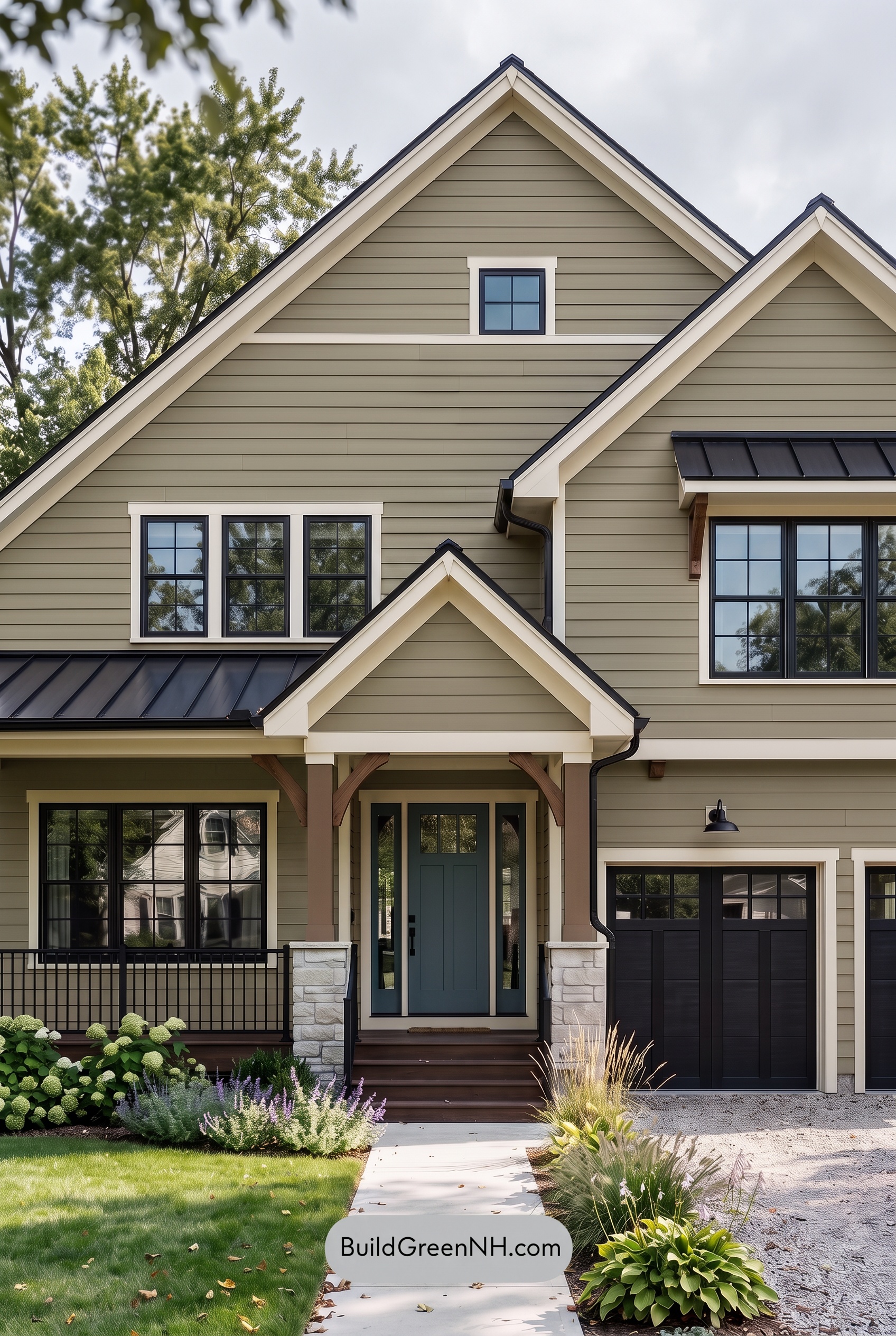
Under overcast skies, the yellow-toned siding loses some of the sunny intensity it shows in neutral daylight, reading as a softer, more muted warm neutral. The white trim appears gentler and slightly cooler, while the brown columns take on a quieter, less golden character. Diffused light also minimizes sharp shadows, allowing the siding texture and layered rooflines to feel more even and refined.
The deep gray window frames, garage door, and railings become stronger visual anchors against the softened exterior, although their contrast is less crisp than it would be in direct neutral daylight. The blue front door deepens into a moodier shade, creating a calm focal point. Overall, overcast light gives the palette a grounded, welcoming, and subtly sophisticated atmosphere.
Golden Hour
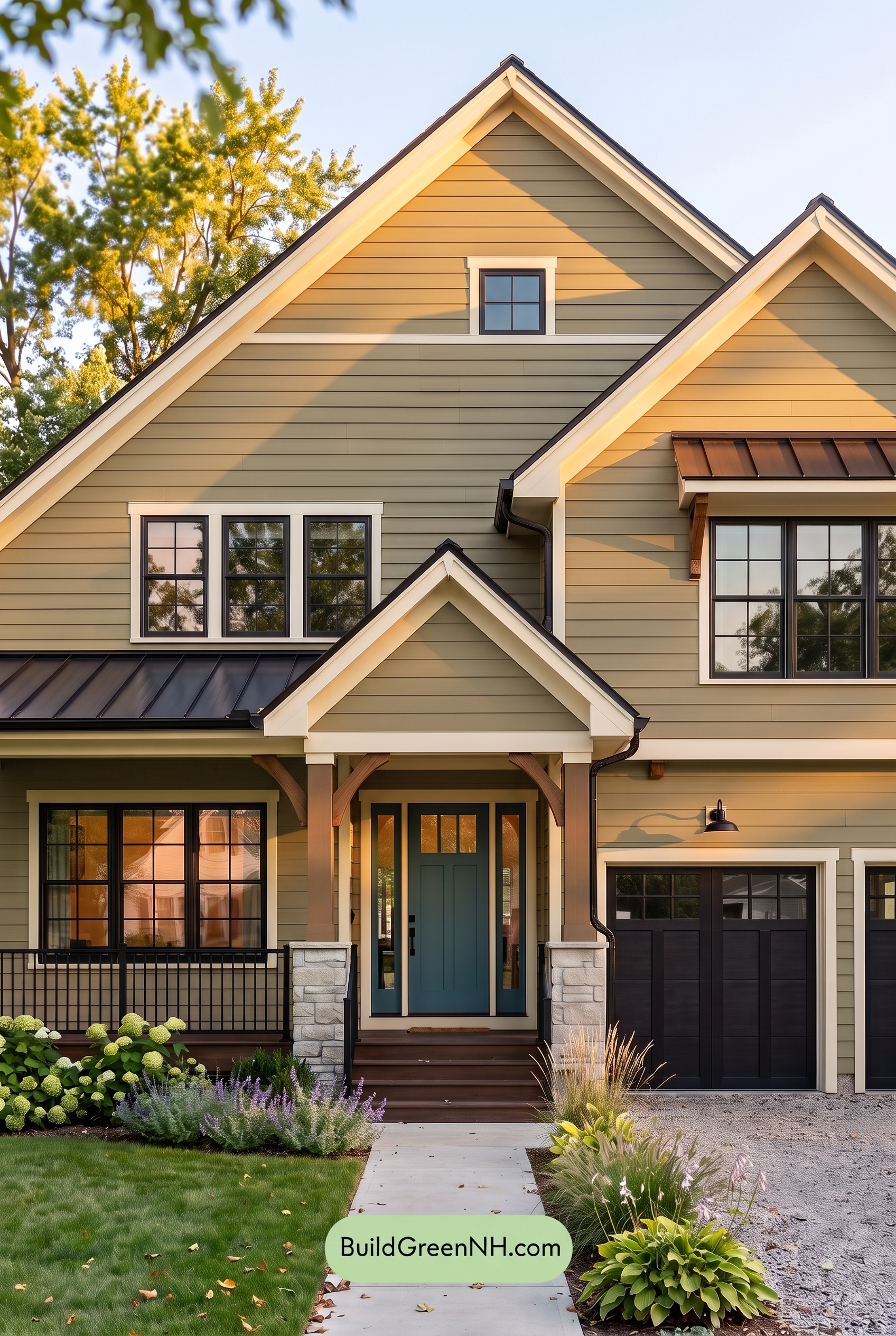
Under neutral daylight, the yellow-toned siding reads balanced and understated, while the white trim feels crisp and the gray details appear cleanly defined. At Golden Hour, the low amber light enriches the siding into a warmer, more saturated shade, softening the bright trim into a creamy glow and giving the brown columns a deeper, more inviting presence.
Longer shadows bring stronger contrast to the gables, siding lines, and architectural recesses, making the darker gray elements feel nearly charcoal. The blue front door deepens against the surrounding warmth, creating a calm focal point. Overall, the palette shifts from fresh and tailored in daylight to layered, cozy, and welcoming in the evening light.
Shade
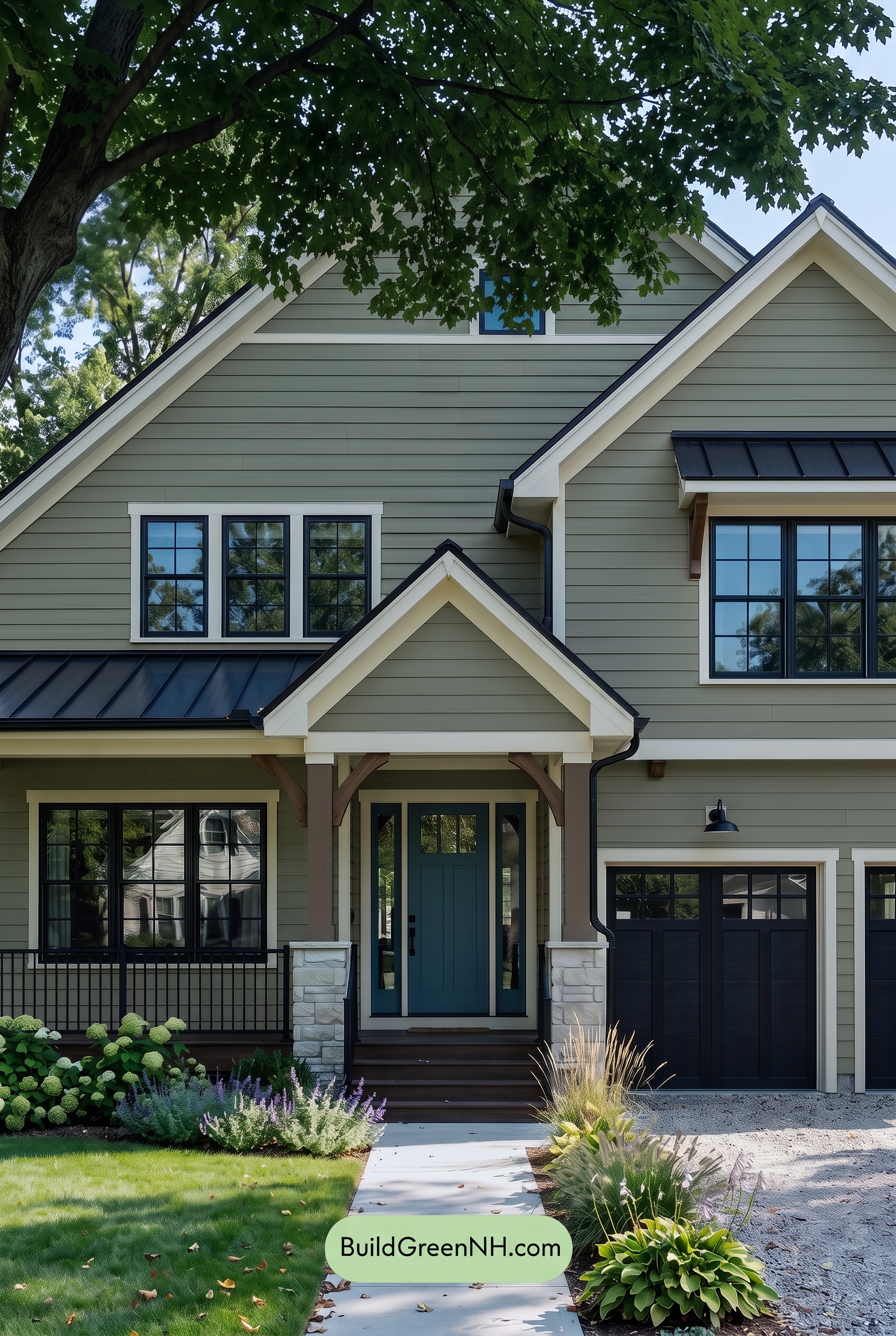
In shade, the yellow-based siding reads softer and more muted than it would in neutral daylight, with its warmth settling into a calm, earthy cast. The white trim loses a little brilliance and feels creamier, while the gray details take on a deeper, cooler presence through the tree-filtered shadows.
This lower-saturation light strengthens the contrast between the softened wall color and the dark gray framing, railings, and garage door. The blue front door also appears richer and more reserved, while the brown columns gain depth, giving the exterior a quiet, welcoming mood rather than the crisp brightness it would show in open daylight.
Nighttime
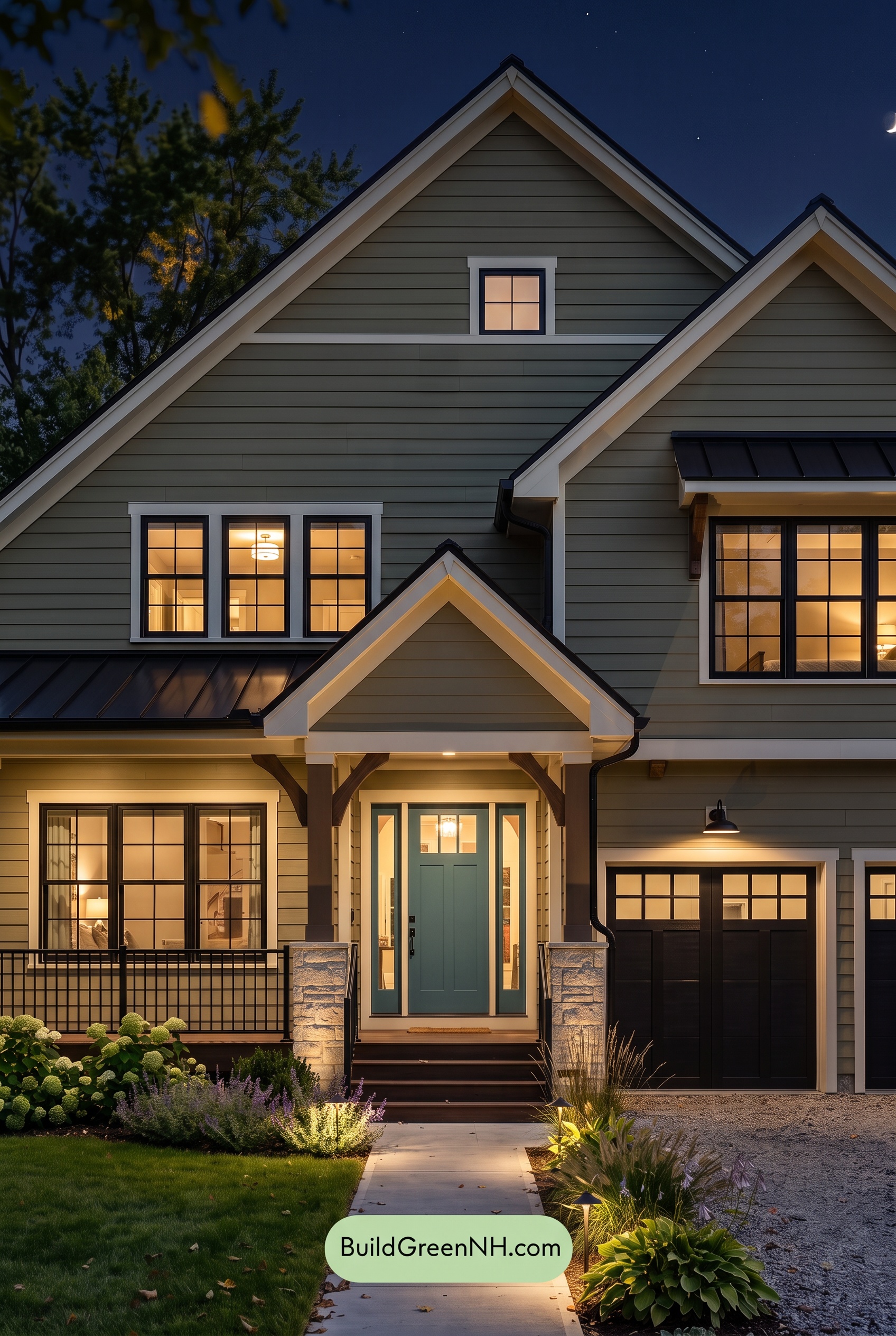
At night, the yellow-toned siding loses some of its daylight brightness and settles into a quieter, more muted shade, while the cool blue front door deepens into a richer focal point. Warm light spilling from the windows and entry softens the surrounding neutrals, giving the white trim a gentle creamier cast rather than its crisp daylight appearance.
Shadows strengthen the contrast between the pale trim, dark gray details, and brown structural accents, making rooflines, columns, and railings feel more defined. This mix of cool nighttime shadows and warm pools of light creates a welcoming, layered mood—more intimate and dramatic than the balanced look of neutral daylight.
Pin these for later:
Want More?
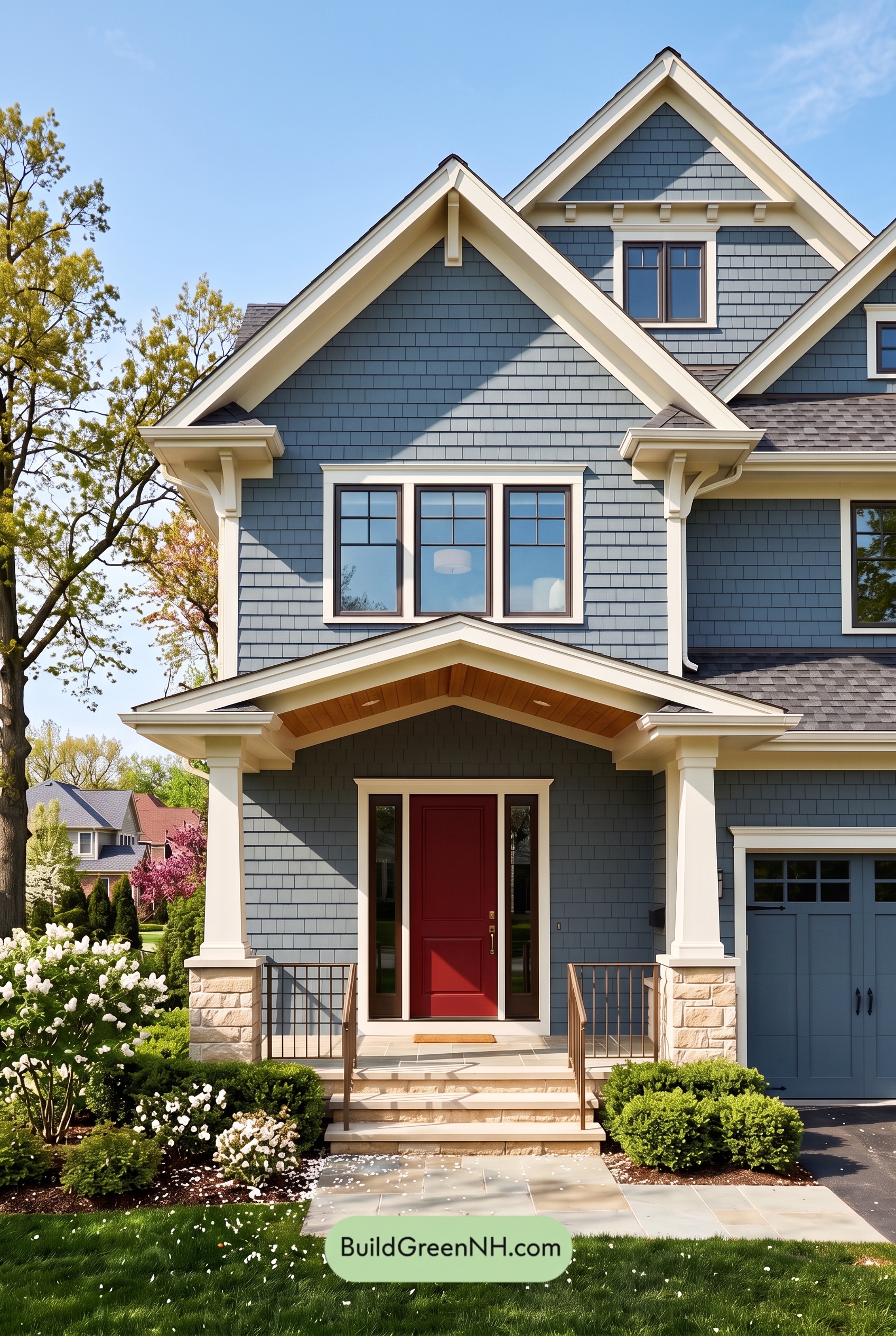 Red Front Door House Paint Color Scheme: Denim Blue Homecoming
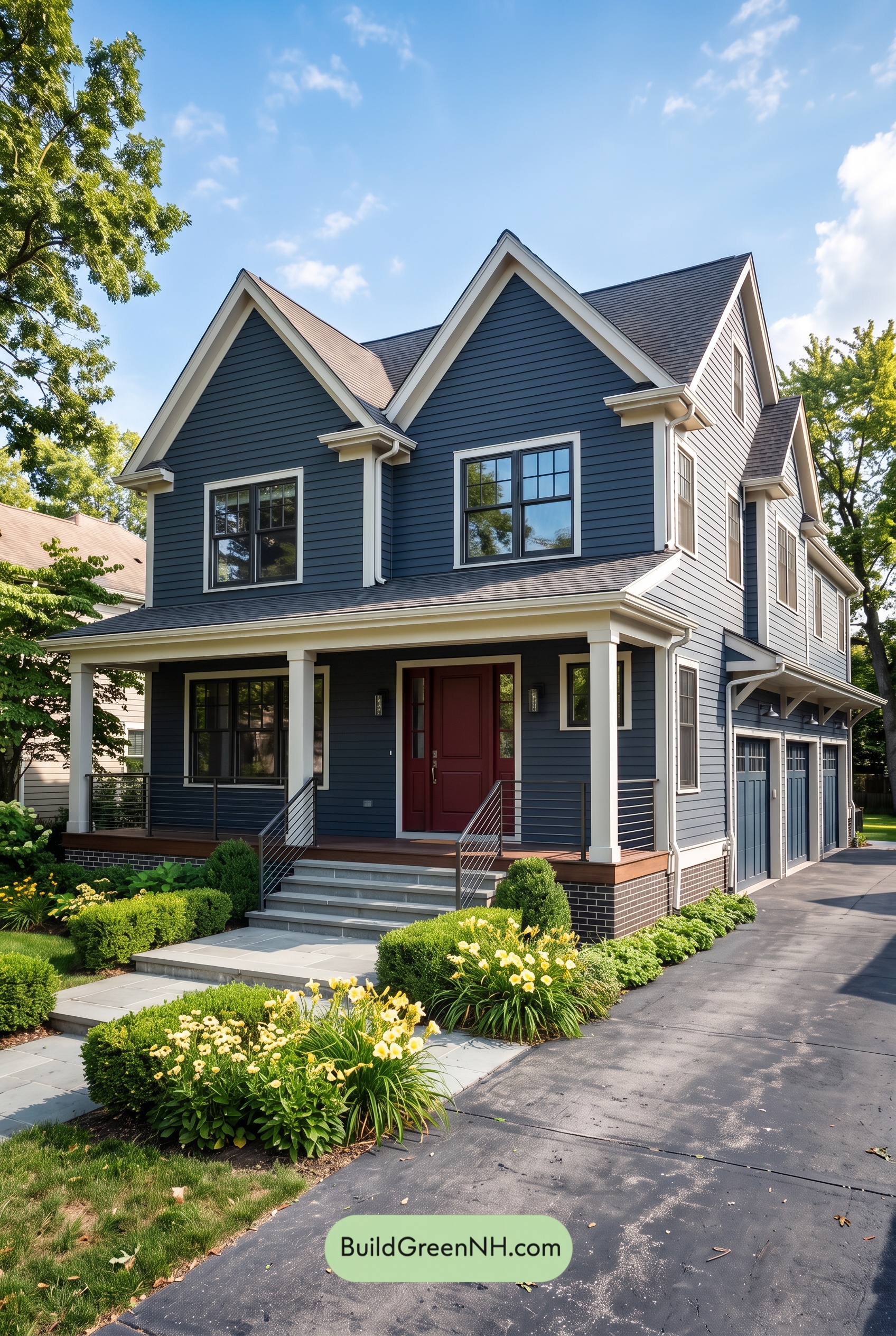 Red Front Door House Paint Color Scheme: Midnight Blue Assurance
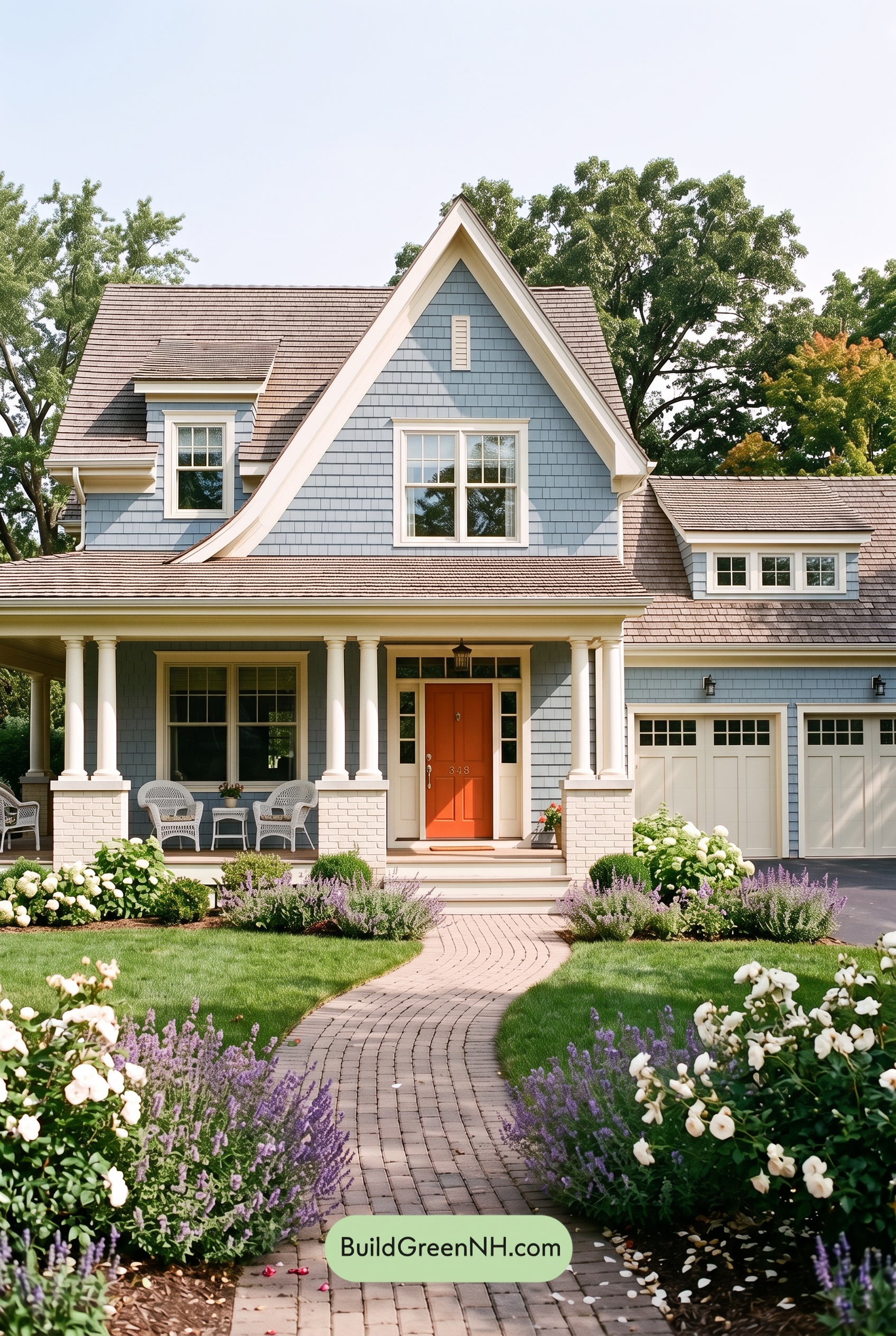 Red Front Door House Paint Color Scheme: Pale Blue Joy
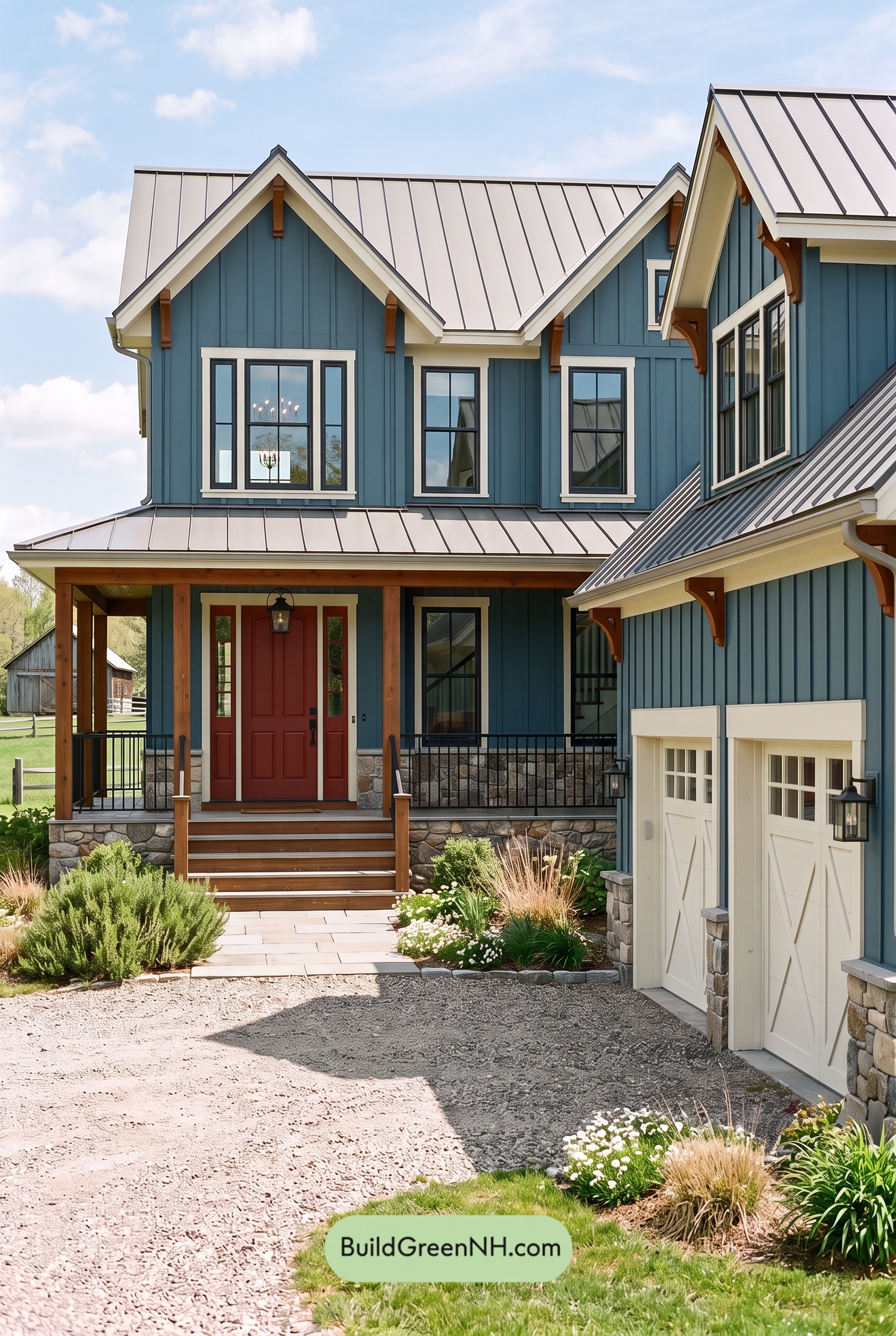 Red Front Door House Paint Color Scheme: Teal Blue Kinship
 Blue House Front Door Color Scheme: Harbor Saffron
Table of Contents