Last updated on
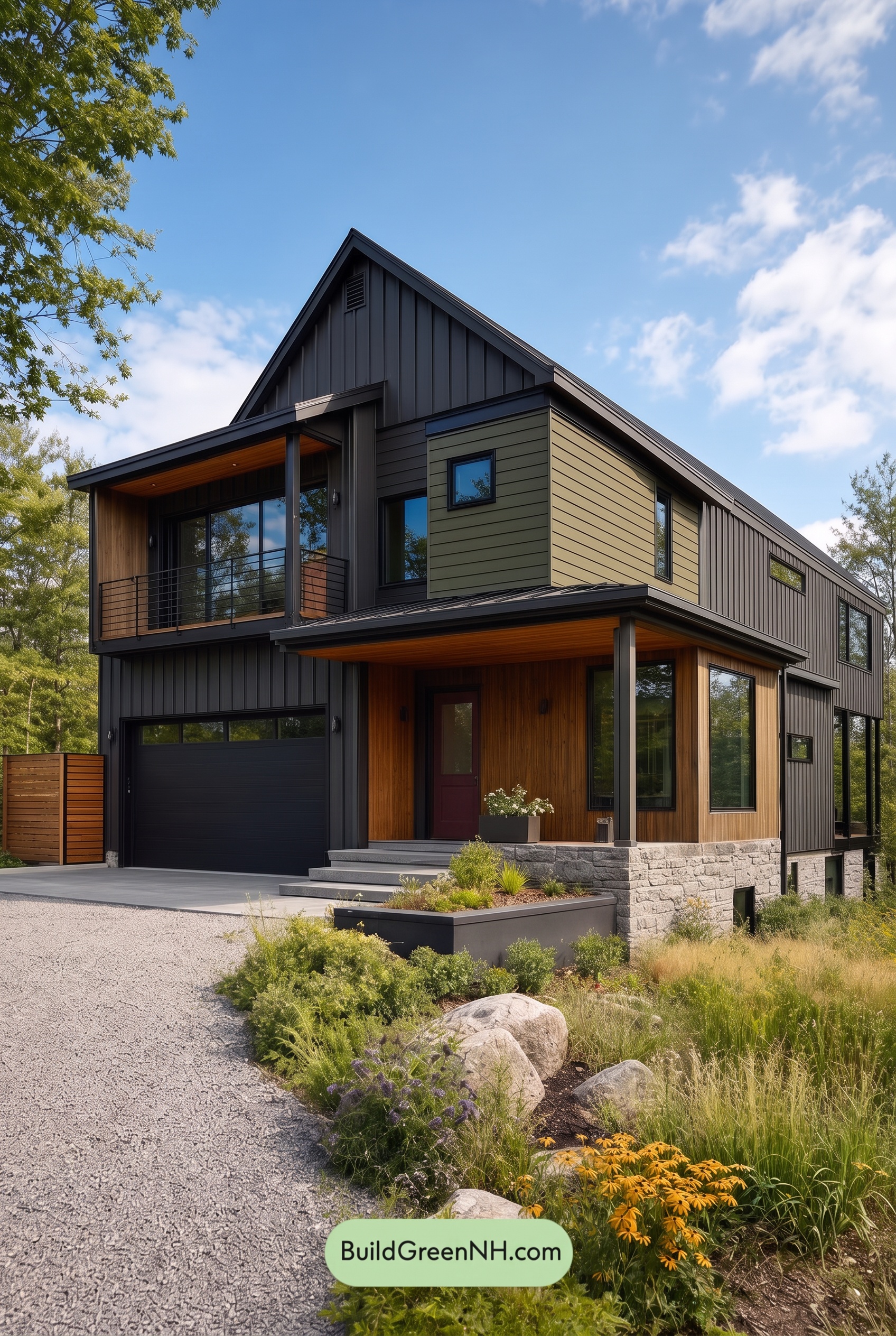

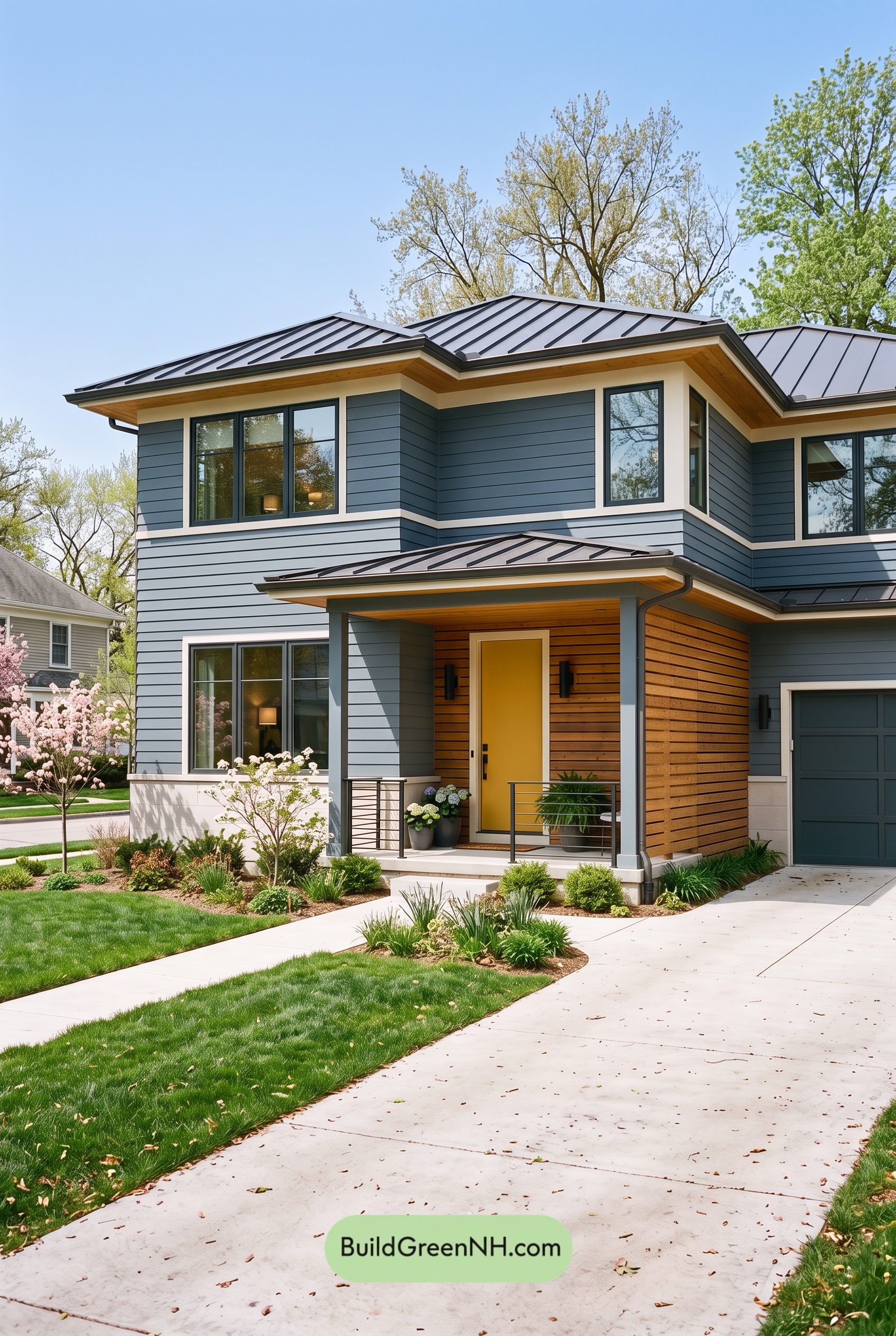
This layered blend of deep gray, muted green, and warm brown gives the home a striking modern presence without losing its connection to the landscape.
A Grounded Modern Palette
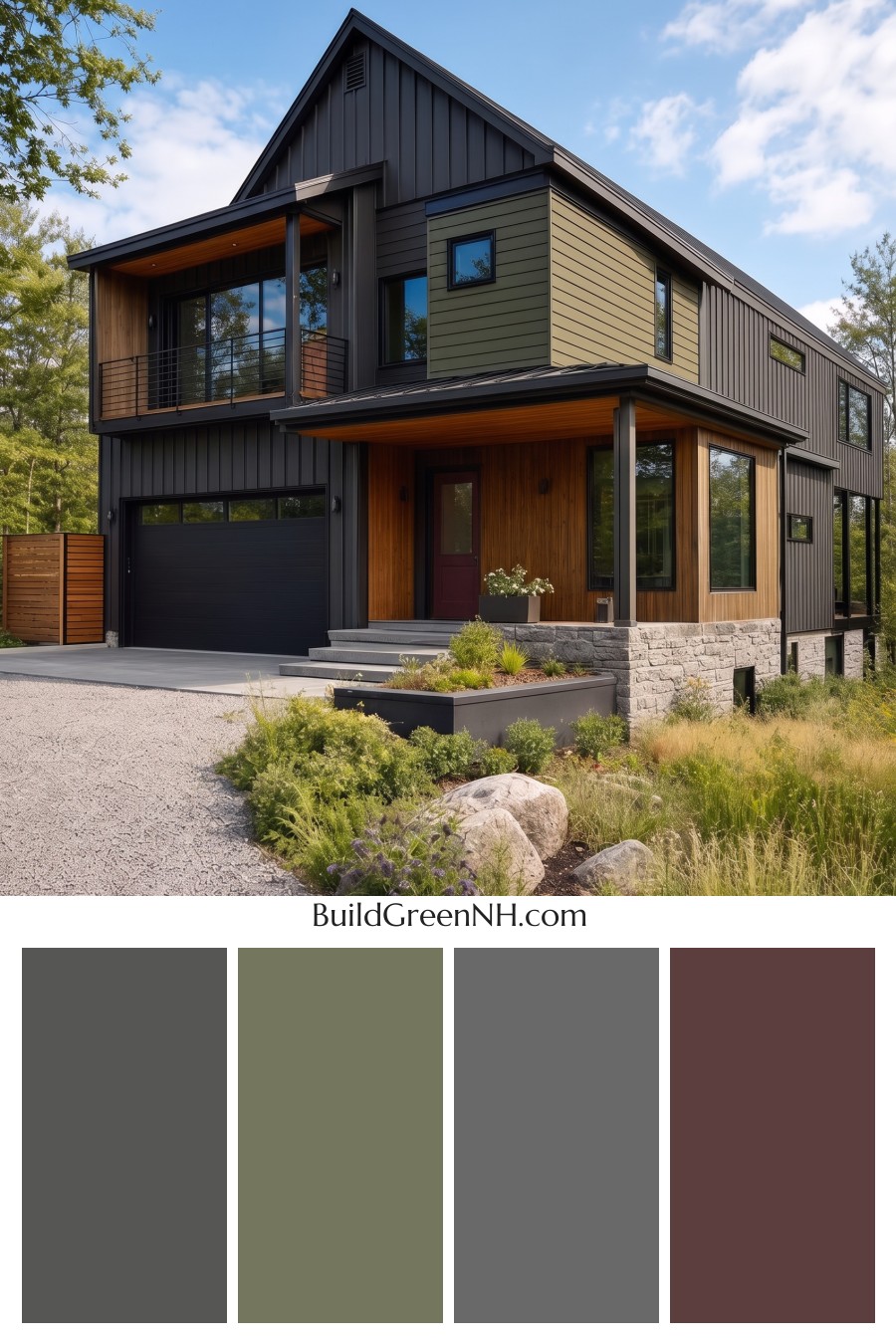
The exterior is anchored by a deep charcoal-gray on the main vertical siding, creating a confident, tailored backdrop for the home’s crisp geometry. This dark shade gives the tall gables, lower facade, and side elevation a cohesive look while making the architecture feel especially refined.
A muted olive-green siding section adds a welcome shift in tone across the upper front volume. Its softened, earthy character prevents the darker gray from feeling too severe and ties the house beautifully to the surrounding trees, grasses, and planting beds.
Dark Details That Define the Architecture
Near-black gray trim outlines the rooflines, windows, overhangs, and structural edges with clean precision. The same deep gray carries through the window frames, balcony railings, columns, and garage door, creating a disciplined repetition that makes every level of the facade feel intentional.
The dark gray roof continues this streamlined effect. Rather than competing with the siding, it visually caps the home and reinforces its bold, contemporary silhouette against the sky.
Warm Brown Accents Bring Welcome Contrast
Warm medium-to-deep brown tones soften the dramatic gray exterior at the covered entry, balcony area, and underside of the overhangs. These warmer accents add richness and dimension, especially where they frame the front entrance and outdoor living spaces.
The front door introduces another deep brown focal point. Set against the surrounding charcoal-gray and warm brown surfaces, it feels inviting, substantial, and easy to spot from the approach.
A Calm, Nature-Inspired Finish
The overall mood is modern, grounded, and quietly dramatic. Deep gray provides sophistication, muted green brings an organic note, and the warm brown accents keep the scheme welcoming. Light gray stone at the base offers a natural transition to the path and landscaping, while the restrained palette lets the home’s strong lines remain the main attraction.
This is a thoughtful exterior color scheme that feels equally at home among lush summer greenery, golden autumn grasses, and soft winter light.
Next, see how this color scheme looks under different lighting simulations throughout the day.
Overcast
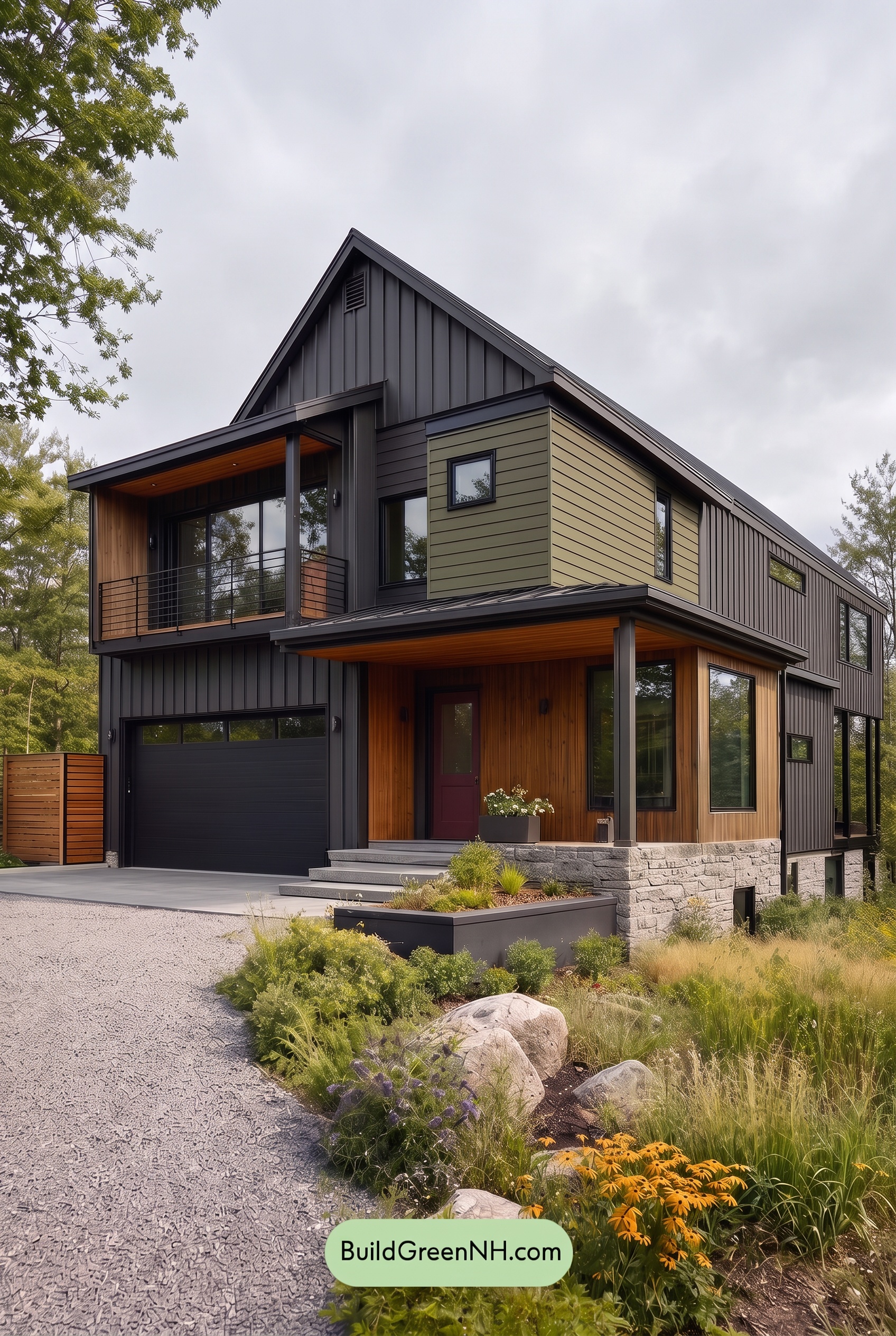
Under overcast skies, the deep gray siding and matching trim read more even and slightly softer than they do in neutral daylight, with less sparkle and fewer sharp highlights. The muted green upper wall also appears quieter and more grounded, while the contrast between the dark gray elements and the lighter green planes remains clear without feeling severe.
The brown entry area and front door lose some of their sunlit glow in this diffused light, yet their warmth becomes a welcoming counterpoint to the cooler gray families. With shadows softened across the siding, columns, and railings, the overall palette takes on a calm, refined mood—rich in depth, but more subdued and cohesive.
Golden Hour
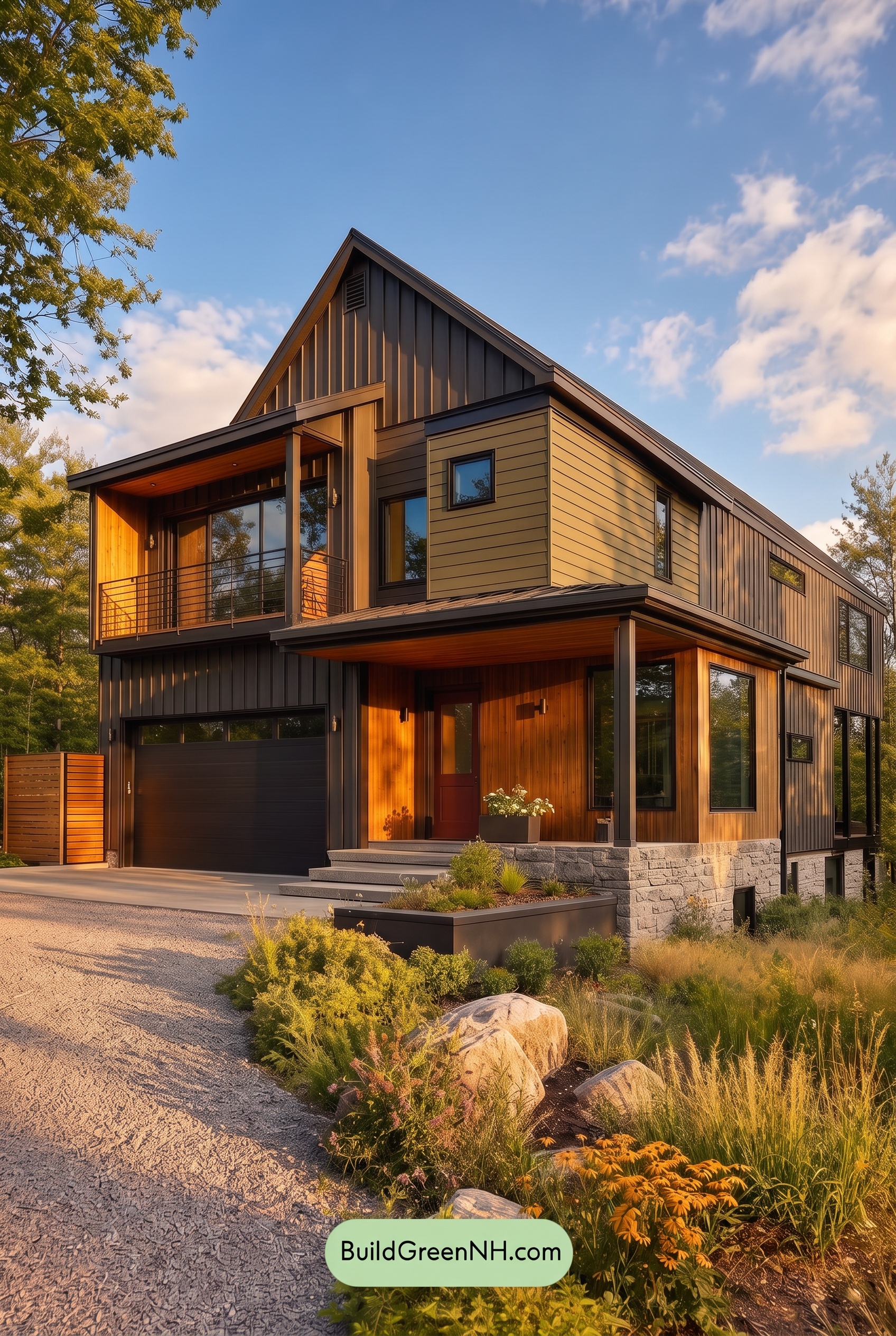
Under Golden Hour, the gray exterior shifts from its neutral daylight character into a softer, warmer shade, while the green upper wall takes on a muted, earthy cast. The brown front door becomes richer and more saturated, creating a welcoming focal point against the sunlit siding. Warm light also gently softens the contrast between the gray trim, columns, and wall surfaces.
As the low sun stretches shadows across the façade, the deeper gray details settle into dramatic near-black tones, sharpening the home’s clean lines. Compared with neutral daylight, the overall palette feels less crisp and more layered—glowing in the highlights, deeper in the recesses, and distinctly more relaxed and inviting.
Shade
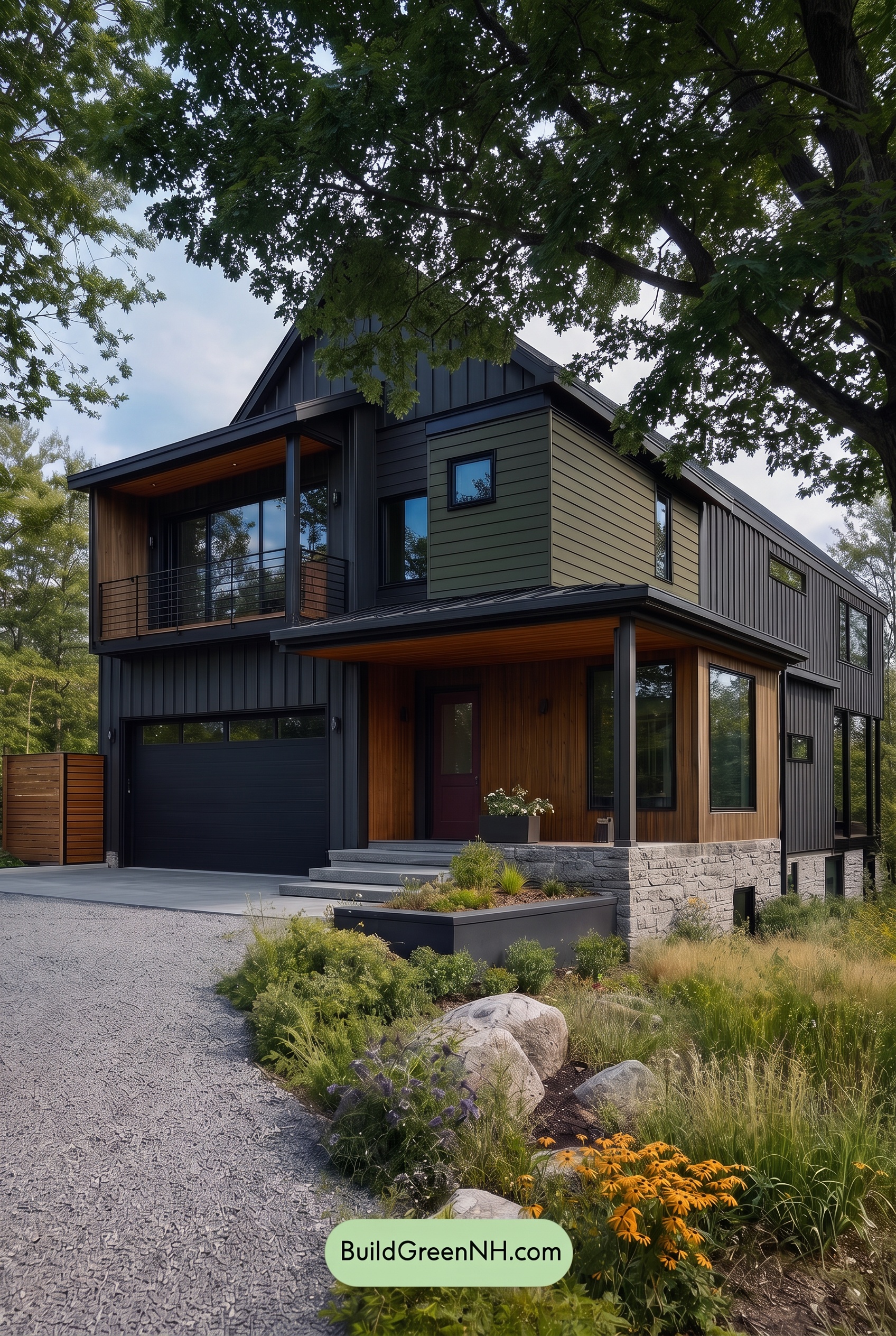
Under shade, the gray exterior takes on a deeper, cooler cast than it would in neutral daylight, with its saturation appearing more restrained and its vertical lines feeling especially crisp. The green upper wall becomes quieter and more muted beneath the tree canopy, creating a softened transition against the darker gray trim, frames, columns, and railings.
Shadows intensify the contrast around the recesses and rooflines, giving the facade a tailored, architectural mood. Meanwhile, the brown entry area reads warmer and richer against the cooler surrounding shades, adding an inviting focal point that keeps the shaded palette from feeling too severe.
Nighttime
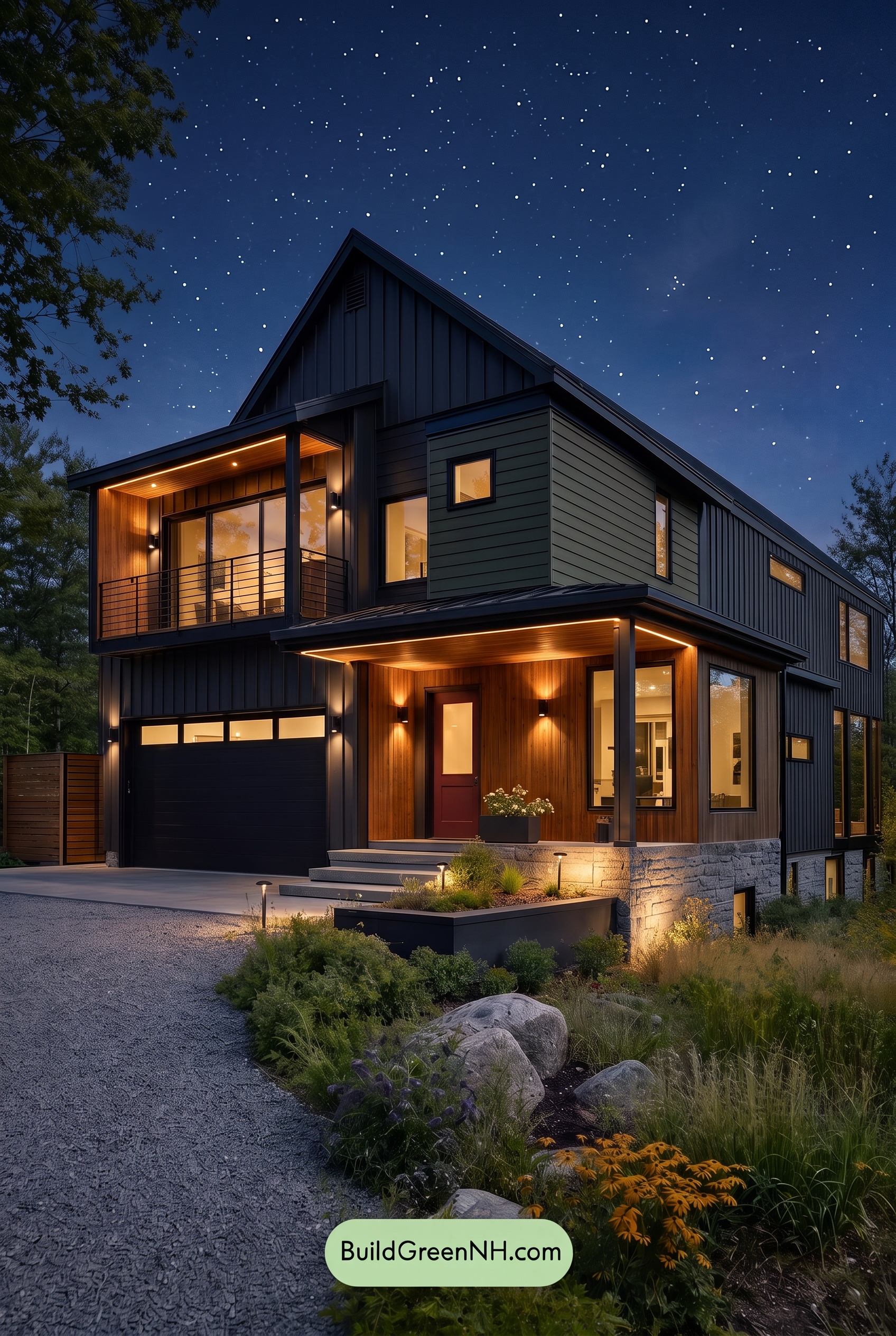
At night, the gray exterior shades deepen toward a dramatic charcoal presence, while the muted green upper wall becomes quieter and less saturated than it appears in neutral daylight. Cool ambient light strengthens the shadow lines in the siding, trim, and railings, giving the façade sharper definition and a more sculptural profile.
Warm lighting at the entry softens the brown door and surrounding warm wood-toned surfaces, creating a welcoming glow against the darker gray shell. This shift heightens the contrast between illuminated areas and recessed planes, turning a balanced daytime palette into a moody, layered composition with an inviting focal point at the front door.
Pin these for later:
Want More?
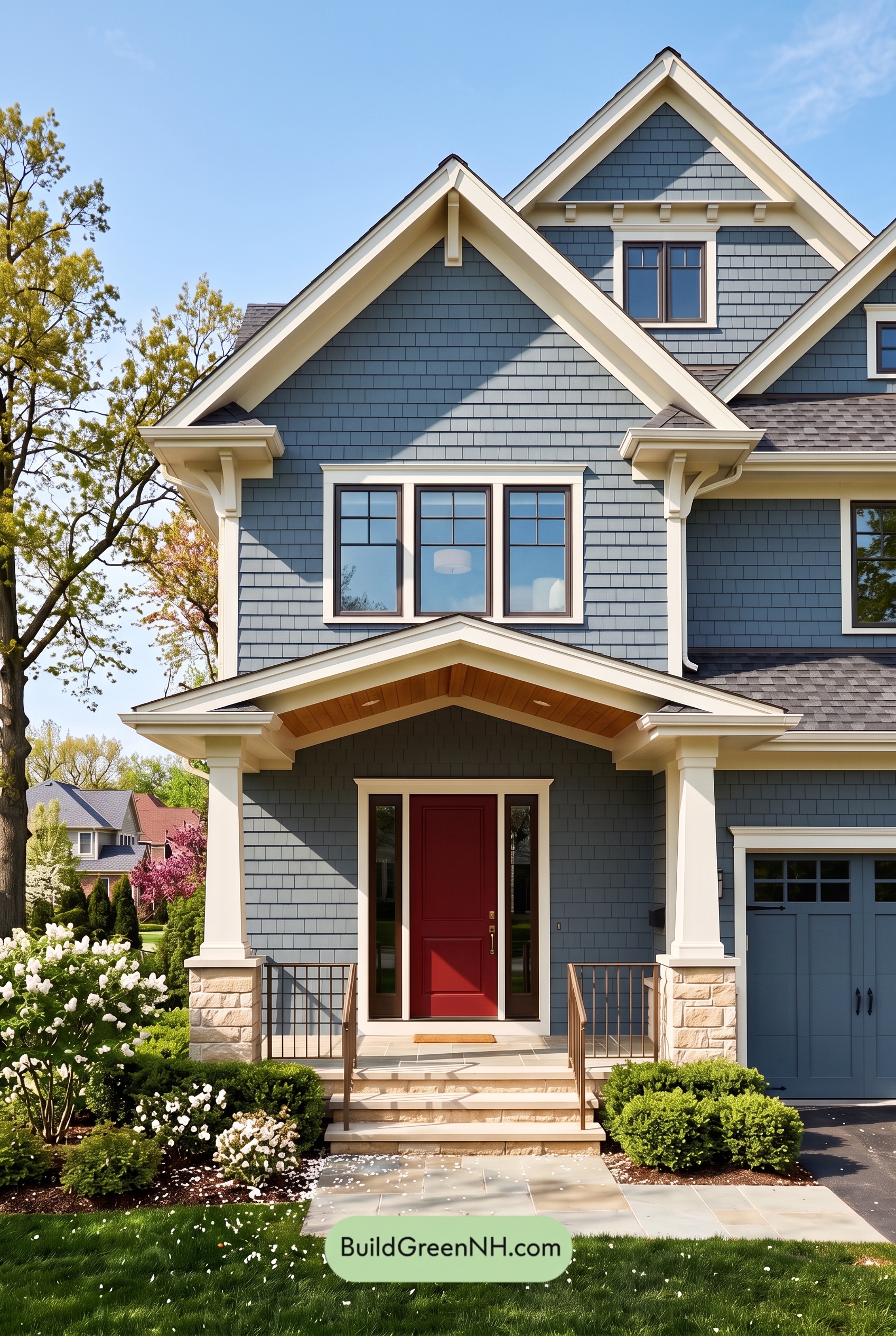 Red Front Door House Paint Color Scheme: Denim Blue Homecoming
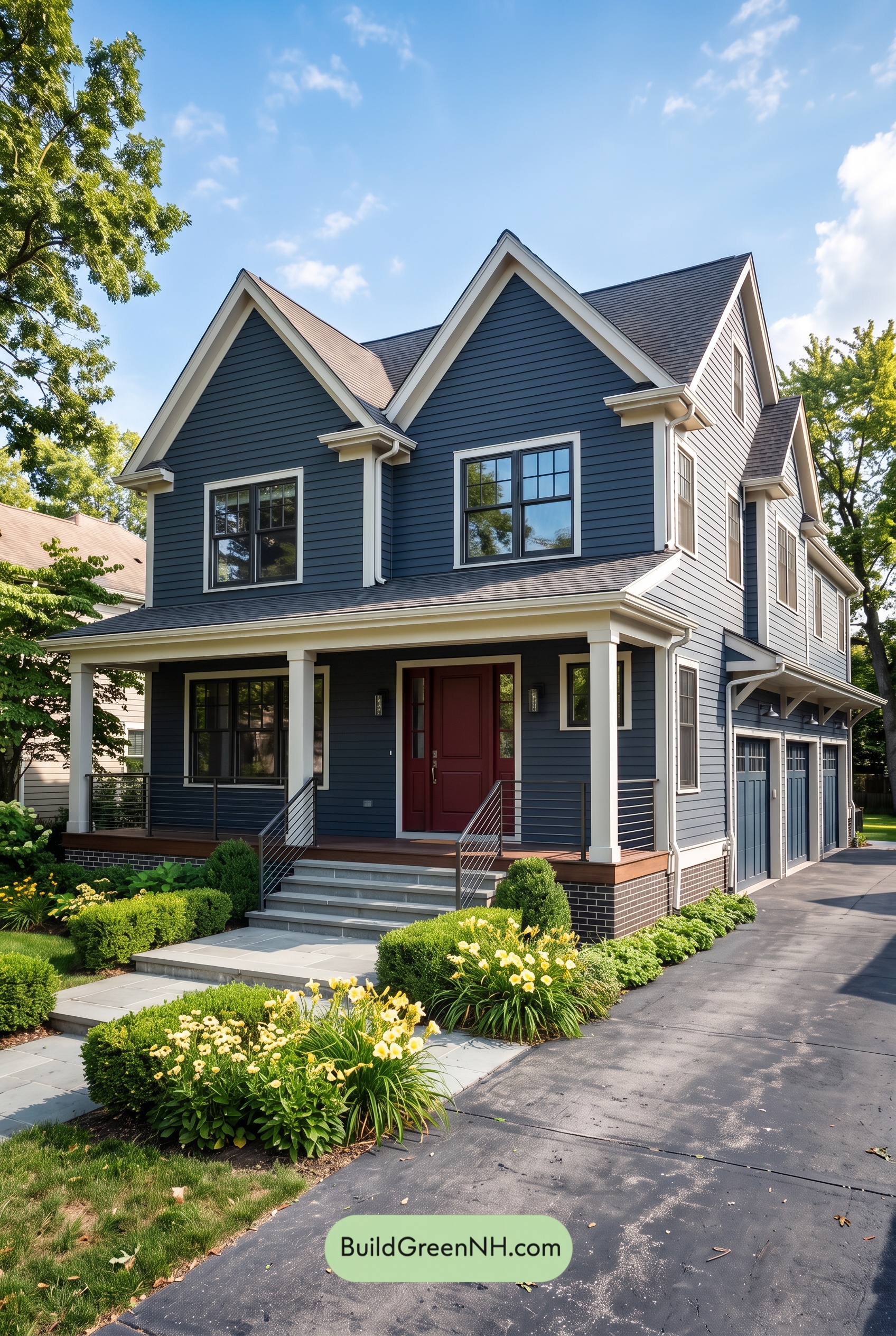 Red Front Door House Paint Color Scheme: Midnight Blue Assurance
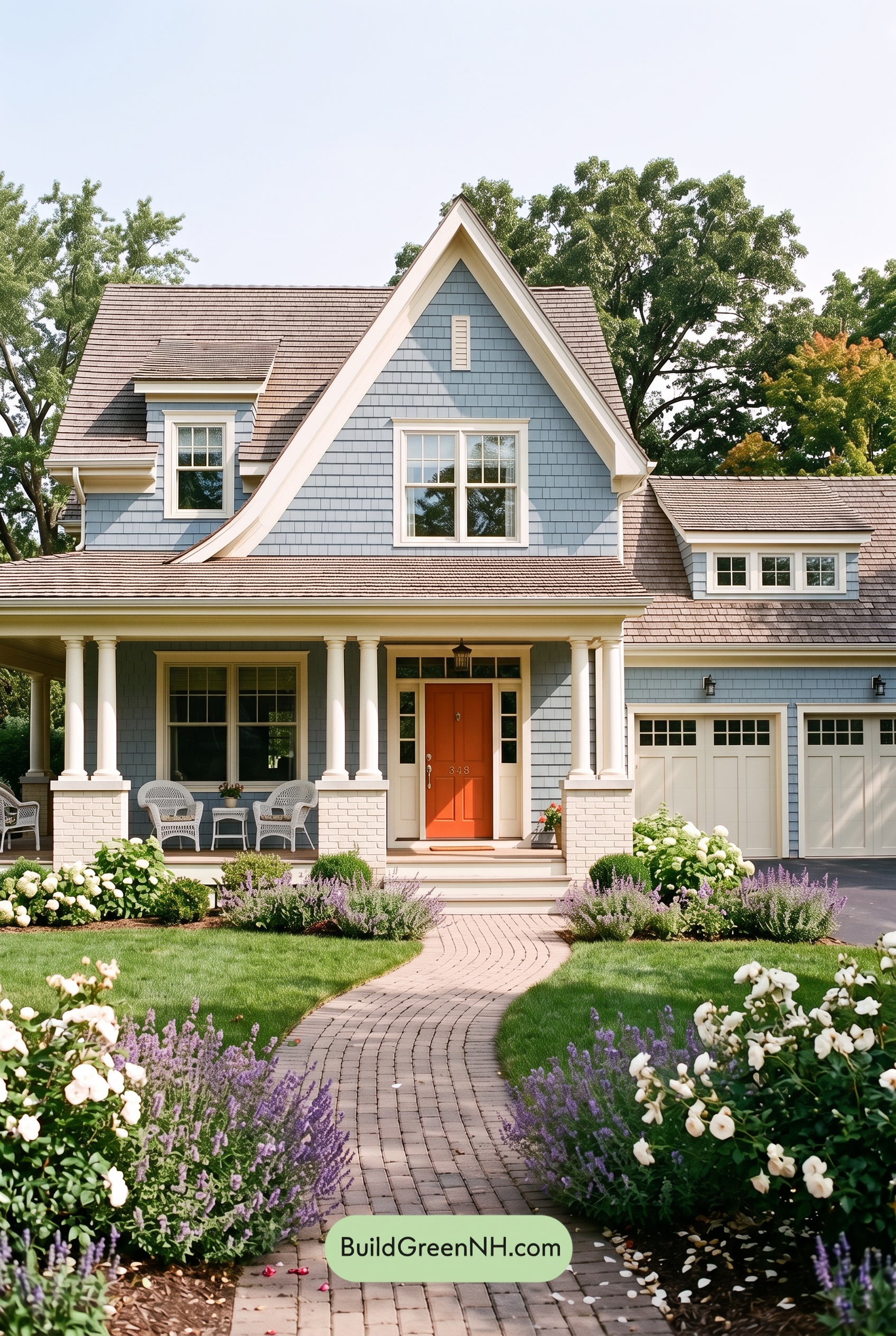 Red Front Door House Paint Color Scheme: Pale Blue Joy
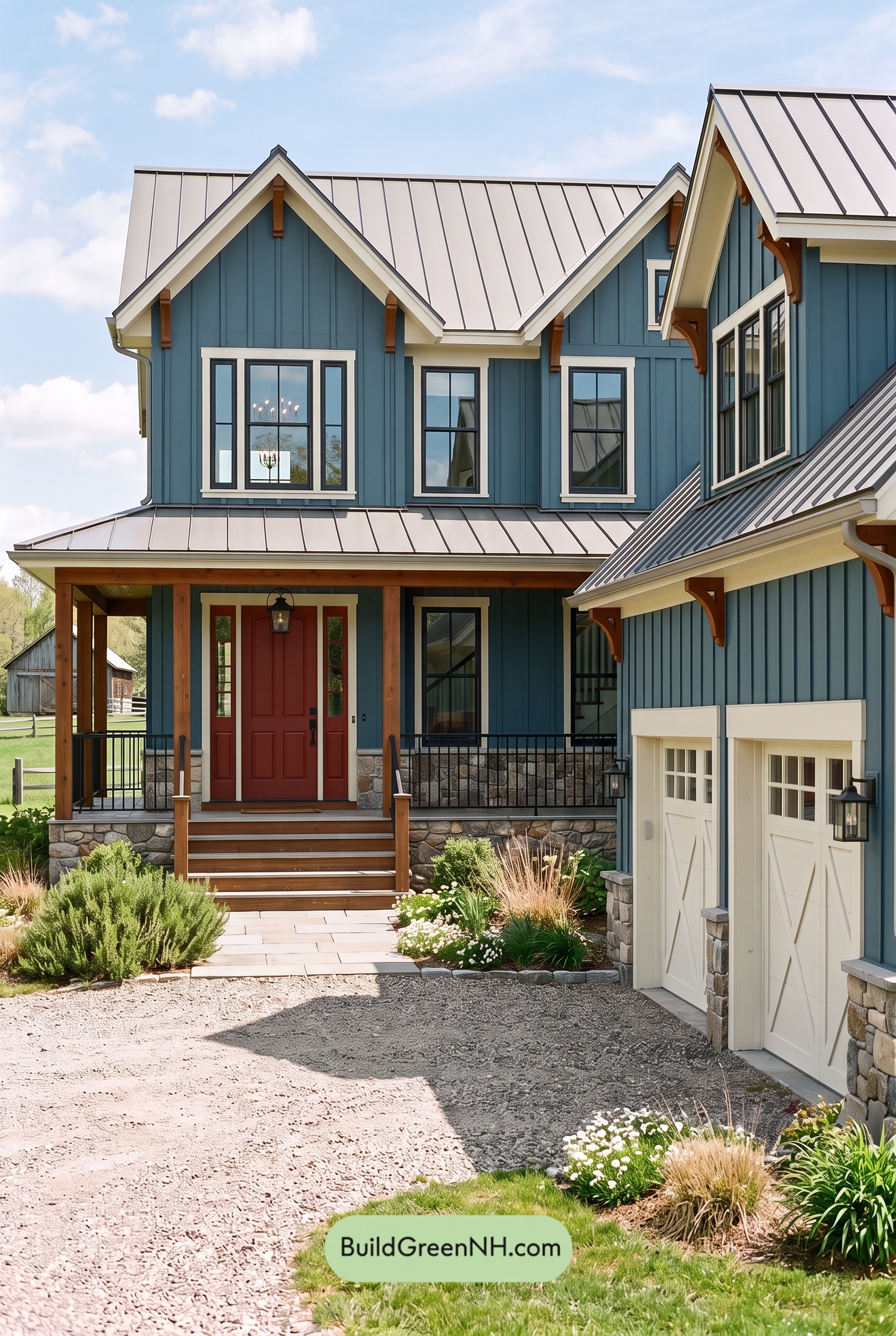 Red Front Door House Paint Color Scheme: Teal Blue Kinship
 Blue House Front Door Color Scheme: Harbor Saffron
Table of Contents