Last updated on
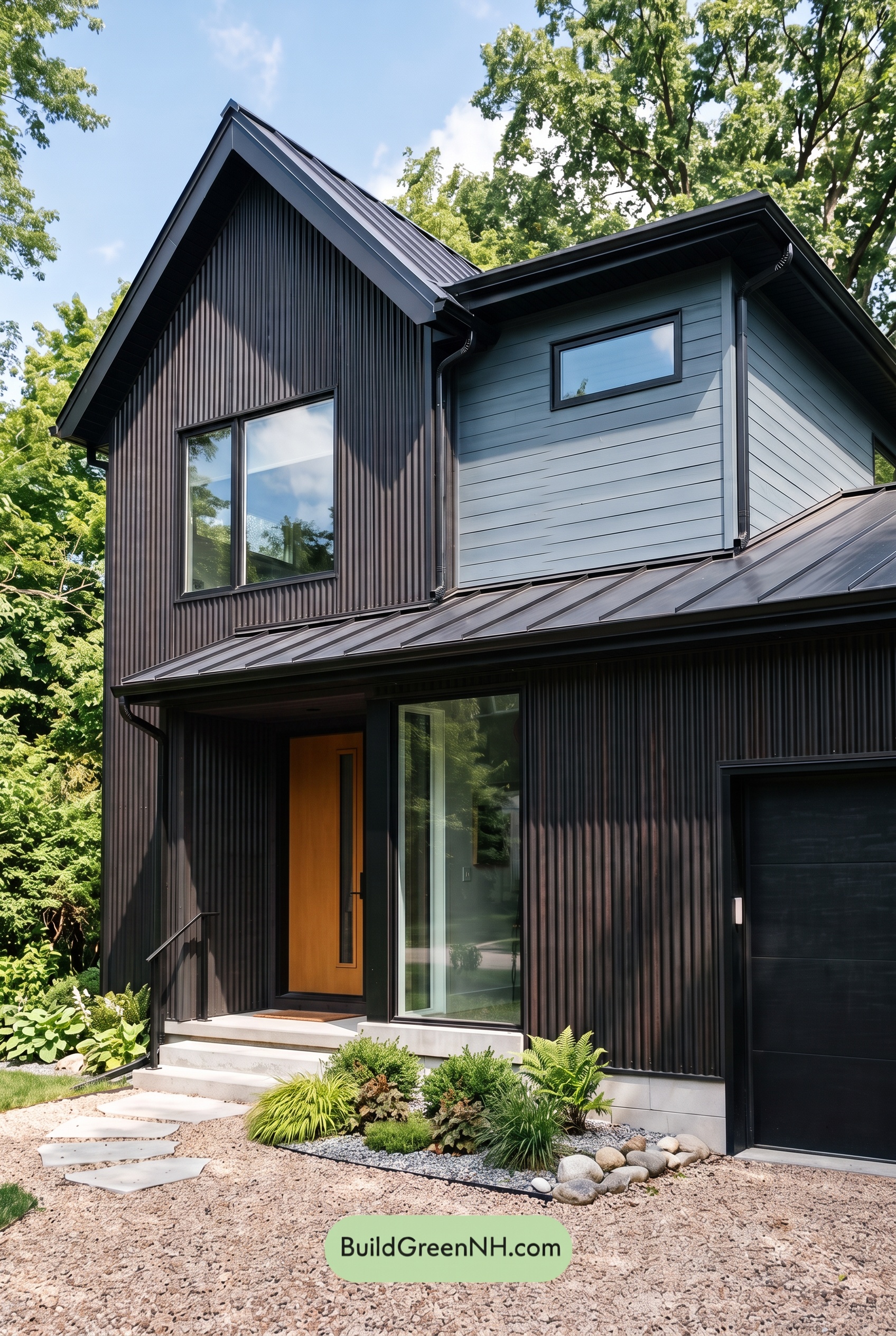

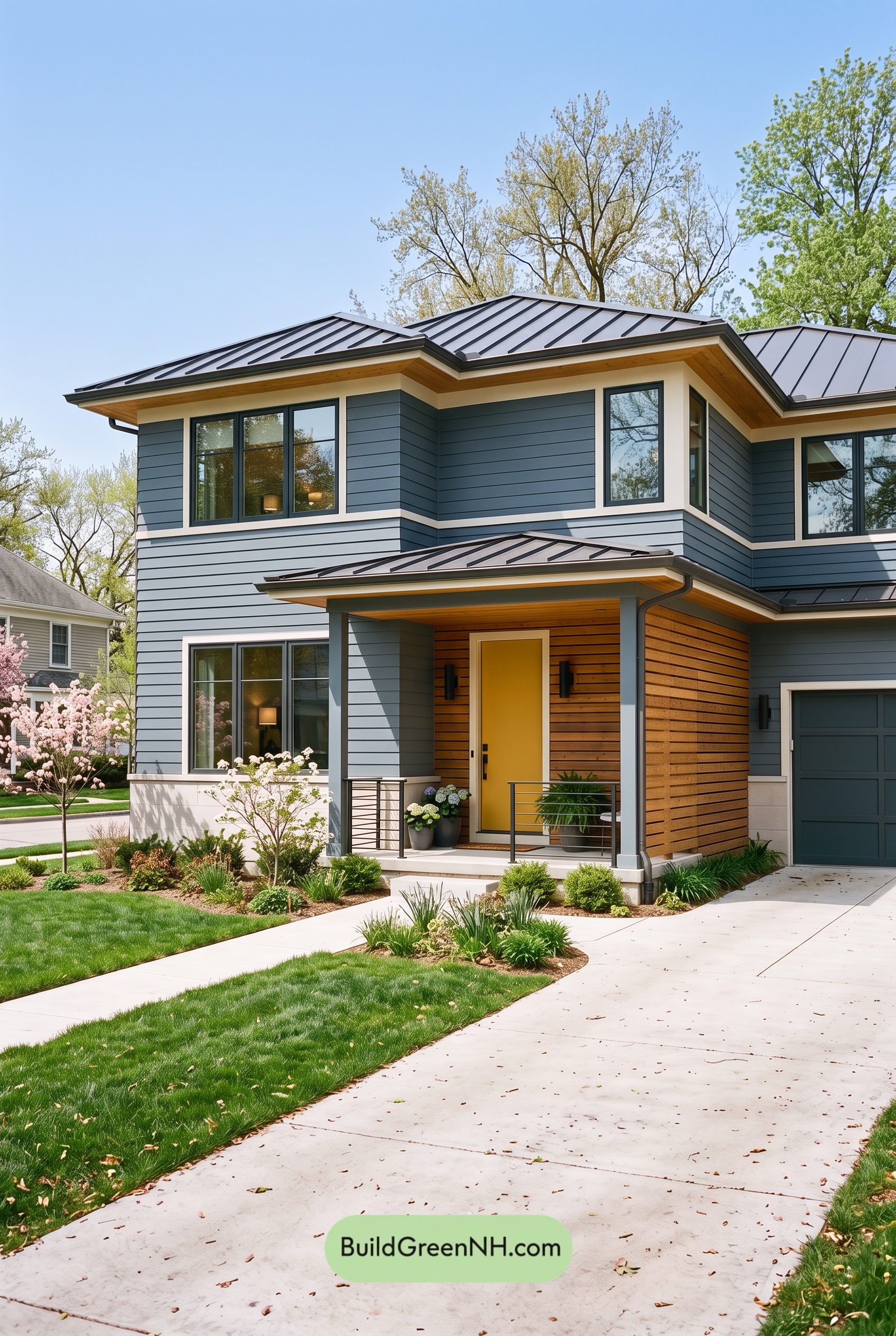
This layered gray exterior proves that a moody palette can feel strikingly modern while still offering a wonderfully warm welcome.
A Sophisticated Mix of Gray Shades
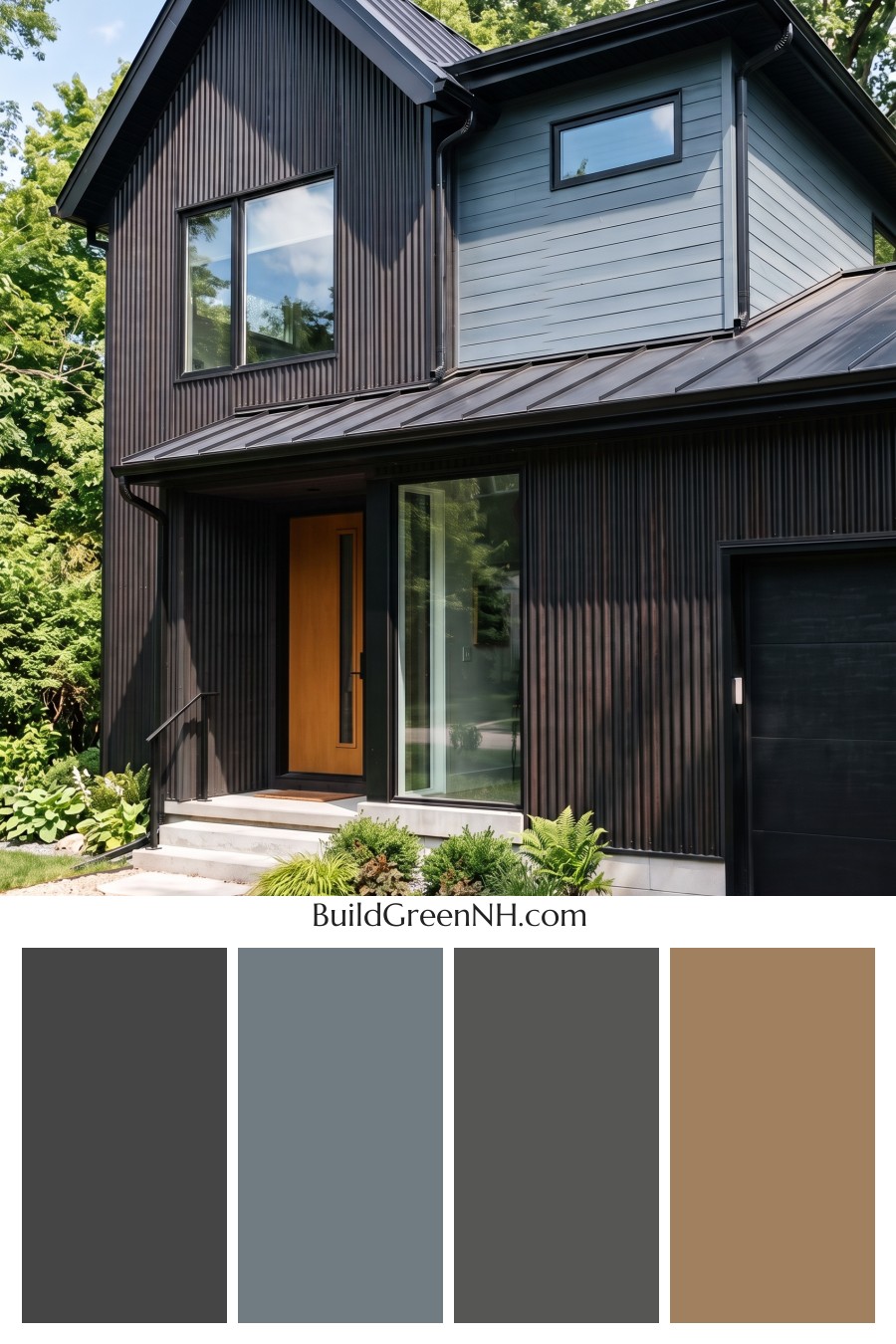
The home’s main exterior is wrapped in a deep charcoal-gray shade that gives the vertical siding a bold, architectural presence. Its dark tone emphasizes the home’s clean lines and sharp roof angles, creating a dramatic contrast against the surrounding landscape.
Above and alongside it, a lighter blue-gray shade appears on the horizontal siding. This cooler gray softens the composition without interrupting its contemporary feel. The change in shade also helps distinguish the upper wall planes, adding depth and making the varied siding profiles feel intentional.
Dark Details That Define the Architecture
Near-black charcoal-gray trim outlines the windows, roof edges, gutters, railings, and garage door with crisp precision. These darker accents act like a frame around the lighter gray sections, sharpening every gable, overhang, and opening.
The metal roof continues the dark gray story in a slightly reflective shade, tying the upper architecture to the front façade. Because the trim, roof, and garage door share this deep gray direction, the house feels cohesive rather than overly busy, even with several distinct exterior surfaces.
A Warm Brown Door Creates an Inviting Focal Point
At the entry, a rich golden-brown front door brings an essential note of warmth to the otherwise cool gray palette. It immediately catches the eye beneath the covered porch, creating a welcoming destination against the dark siding and window surrounds.
This warm brown accent keeps the exterior from feeling too severe. Paired with the pale gray foundation and light stone-like walkway, it gives the entrance a balanced, grounded look that feels both polished and approachable.
Modern, Calm, and Connected to the Landscape
Overall, the palette delivers a confident modern mood: deep gray feels refined and dramatic, while the softer gray siding adds airiness and visual relief. The warm brown door provides just enough contrast to make the entry memorable.
Set among lush green planting and mature trees, these cool gray shades feel especially at home. The result is an exterior that looks sleek and current while maintaining a calm, natural connection to its setting.
Next, see how this color scheme looks under different lighting simulations throughout the day.
Overcast
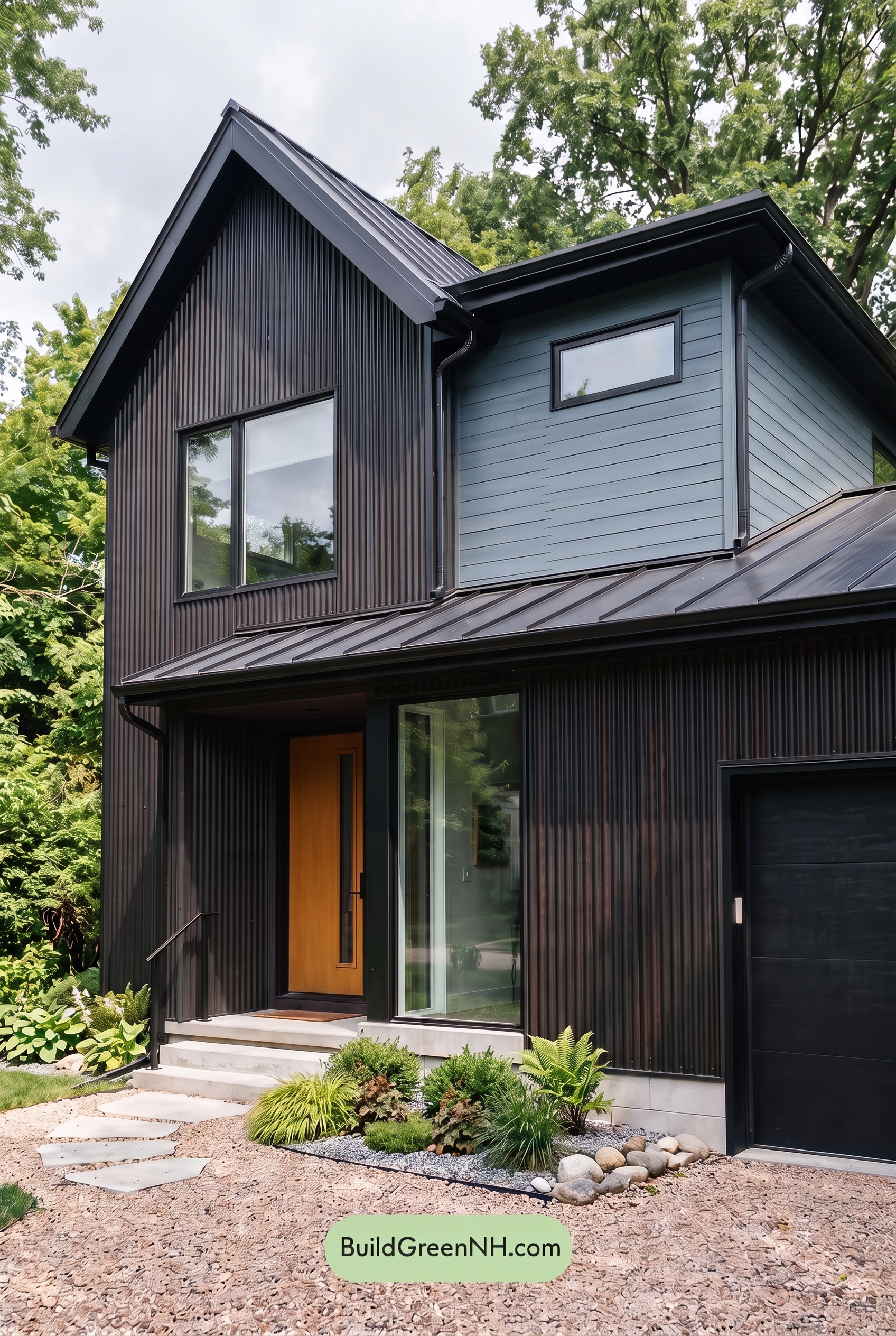
Under overcast skies, the layered gray exterior reads softer and more unified than it does in neutral daylight. Without direct sun, saturation eases back and cooler gray shades can appear slightly deeper and calmer, while the distinction between the dark cladding, trim, frames, and garage becomes more subtle.
Shadows spread into gentle, even layers rather than crisp lines, allowing the vertical texture and roof details to feel refined instead of stark. The warm brown entry gains a welcoming presence against the muted grays, creating a cozy focal point and giving the home a quiet, sophisticated mood.
Golden Hour
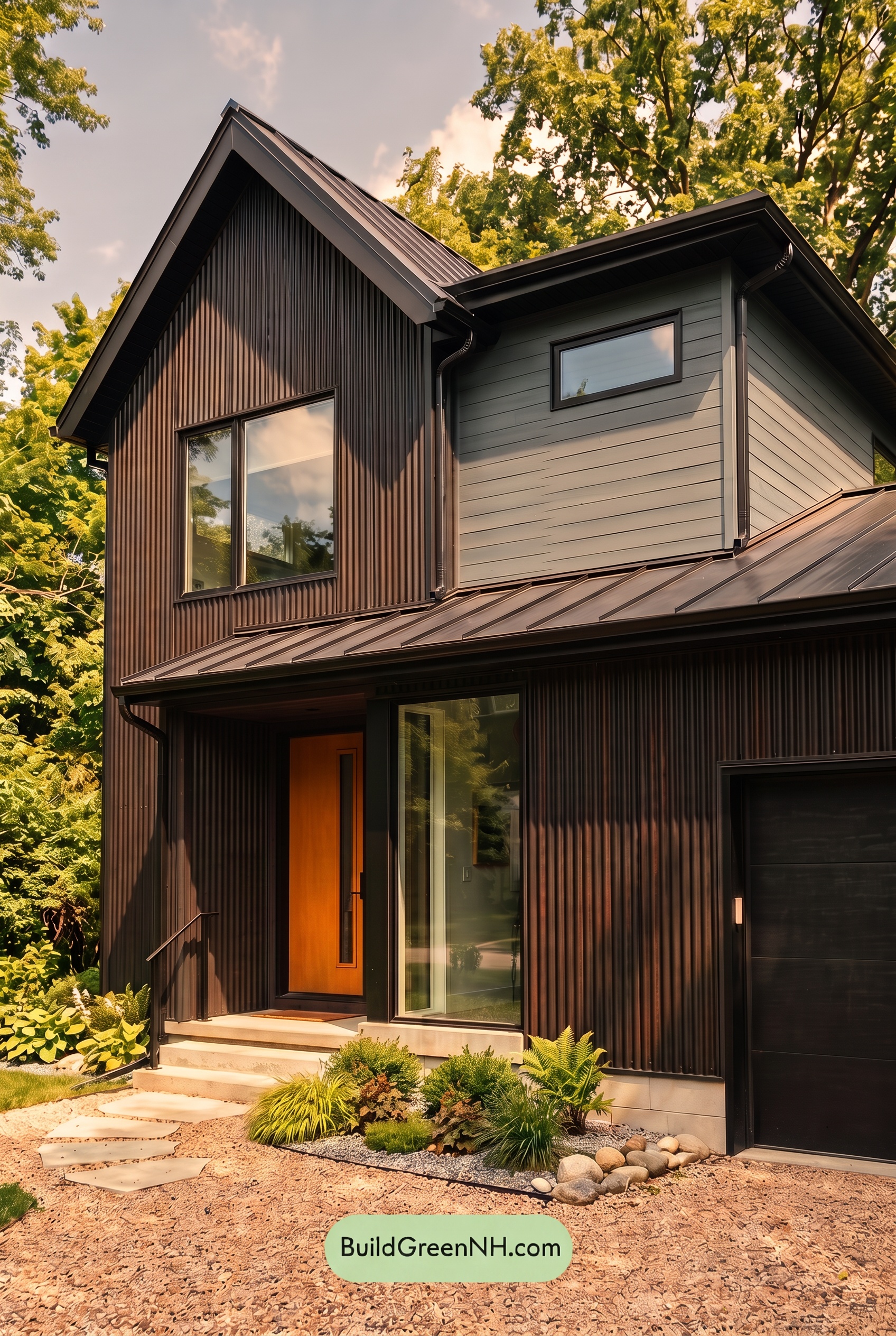
Under neutral daylight, the gray exterior reads crisp, balanced, and distinctly modern, with clear separation between the lighter wall planes and deeper trim, frames, and railings. At Golden Hour, the low warm light softens those gray shades with a gentle amber cast, making the lighter areas feel creamier while the darkest surfaces take on richer, more dimensional depth.
Longer shadows emphasize the vertical texture and rooflines, increasing contrast across the facade without making it feel harsh. The brown entry becomes more saturated and inviting in the warm glow, creating a focal point against the shadowed gray surroundings and giving the home a dramatic yet welcoming evening mood.
Shade
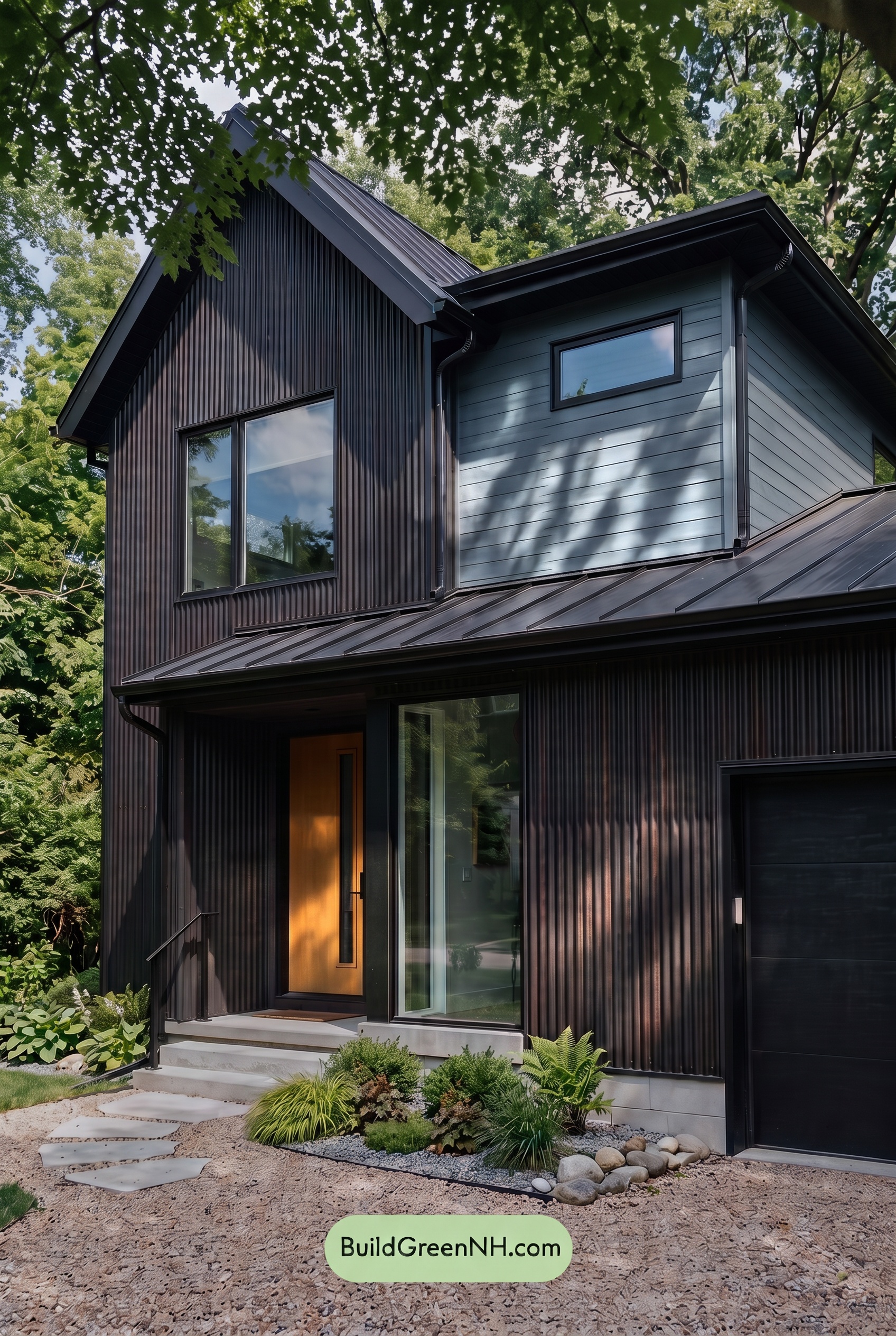
In shade, the gray exterior shifts away from the crisp clarity it has in neutral daylight, reading deeper, cooler, and slightly less saturated. The dark gray siding and matching details settle into the surrounding shadows, while the lighter gray areas take on a soft, muted cast that makes the layered architecture feel calm and refined.
With direct brightness reduced, contrast becomes more selective: dark window frames, railings, and garage details feel richer, while the warm brown front door stands out as a welcoming focal point. Dappled tree shadows add movement across the facade, giving the overall palette a moody, sheltered character rather than the sharper, more even look it would have in neutral daylight.
Nighttime
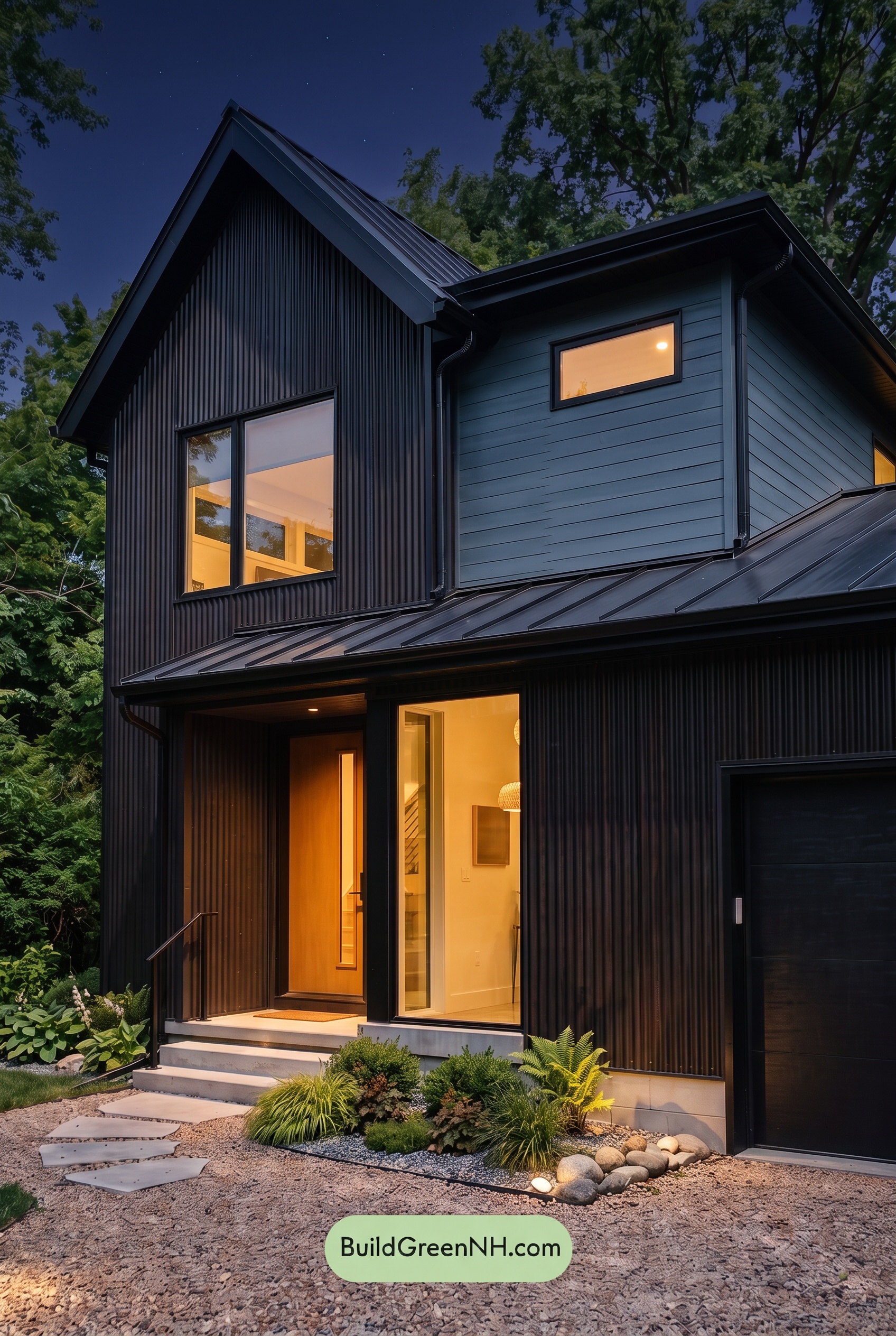
At night, the gray exterior shifts cooler and deeper than it appears in neutral daylight, with the darkest gray surfaces settling into rich, nearly black shadows. Subtle differences between the walls, trim, frames, and garage become more restrained, while the vertical texture catches just enough light to keep the façade dimensional.
Warm light glowing through the windows and entry creates a striking contrast against those cool, shadowed grays. The brown door reads warmer and more inviting, turning the overall mood from crisp and architectural in daylight to intimate, dramatic, and welcoming after dark.
Pin these for later:
Want More?
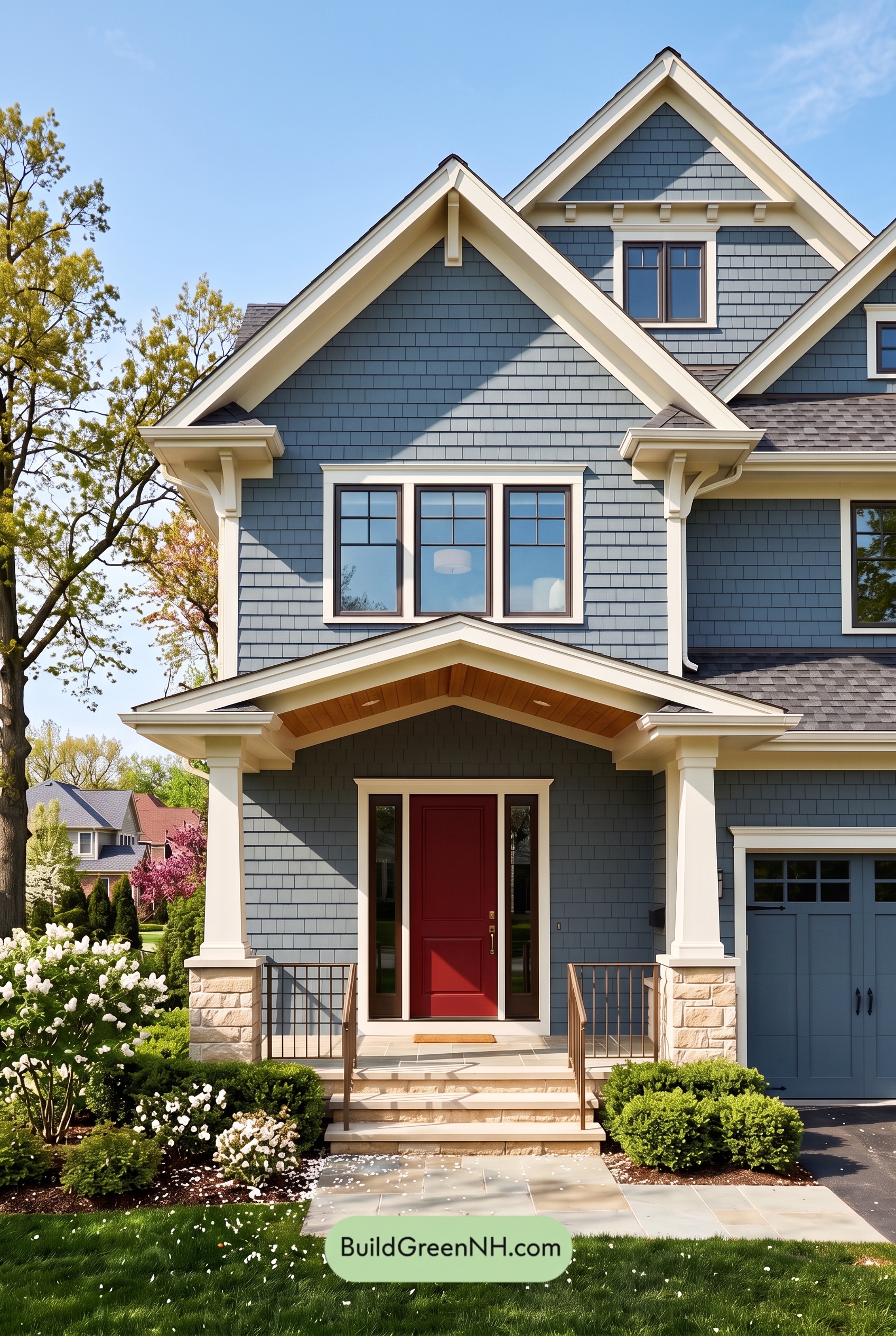 Red Front Door House Paint Color Scheme: Denim Blue Homecoming
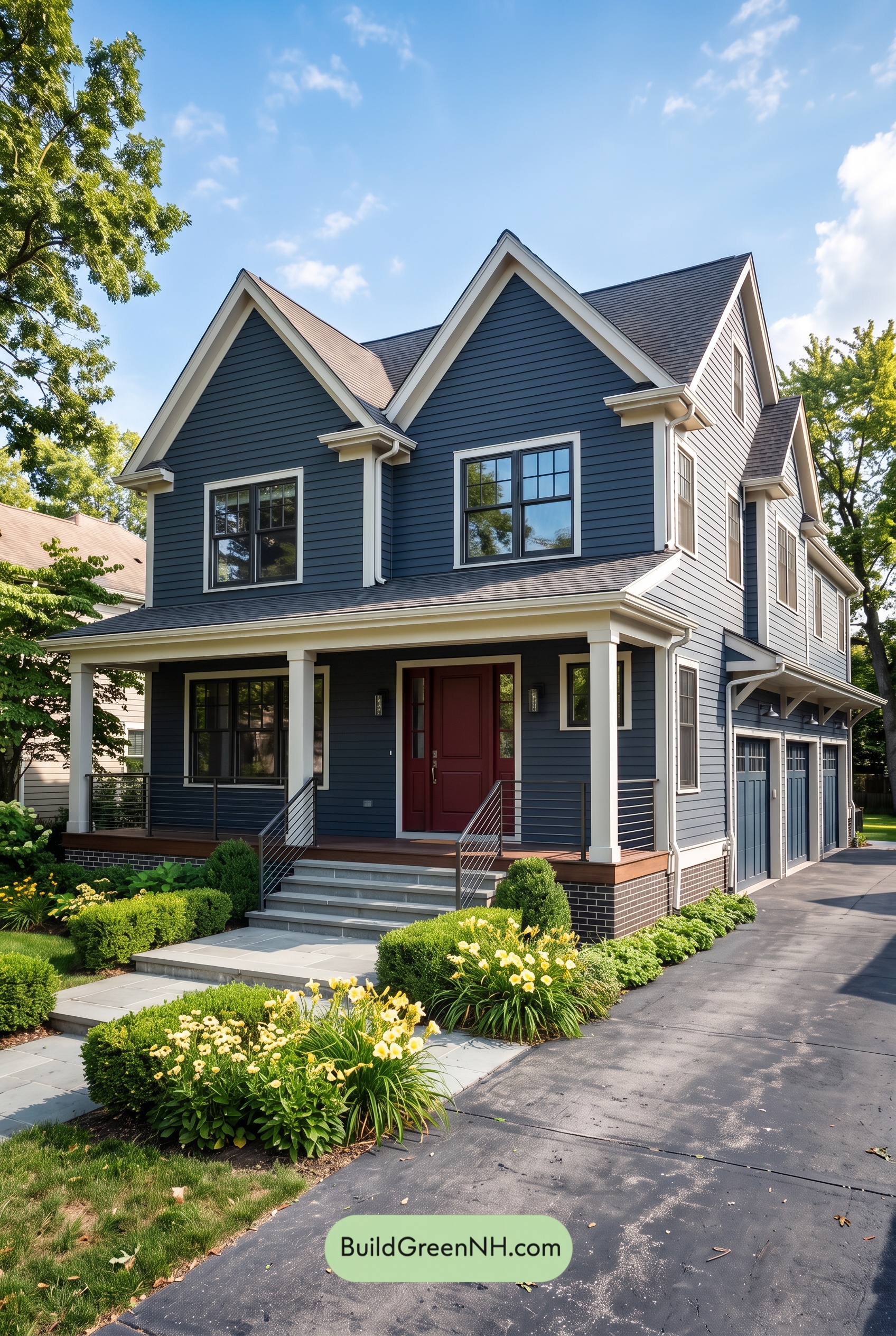 Red Front Door House Paint Color Scheme: Midnight Blue Assurance
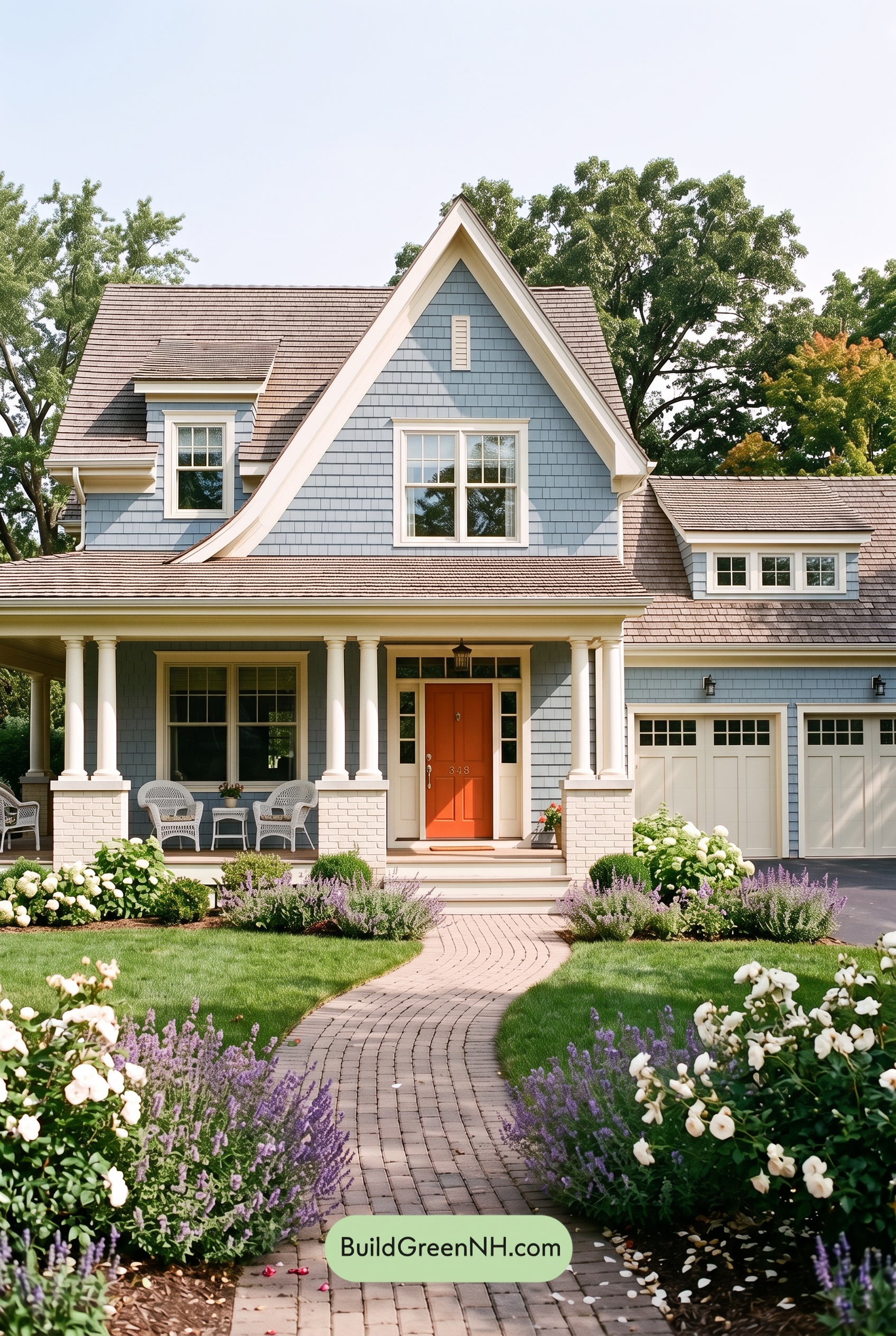 Red Front Door House Paint Color Scheme: Pale Blue Joy
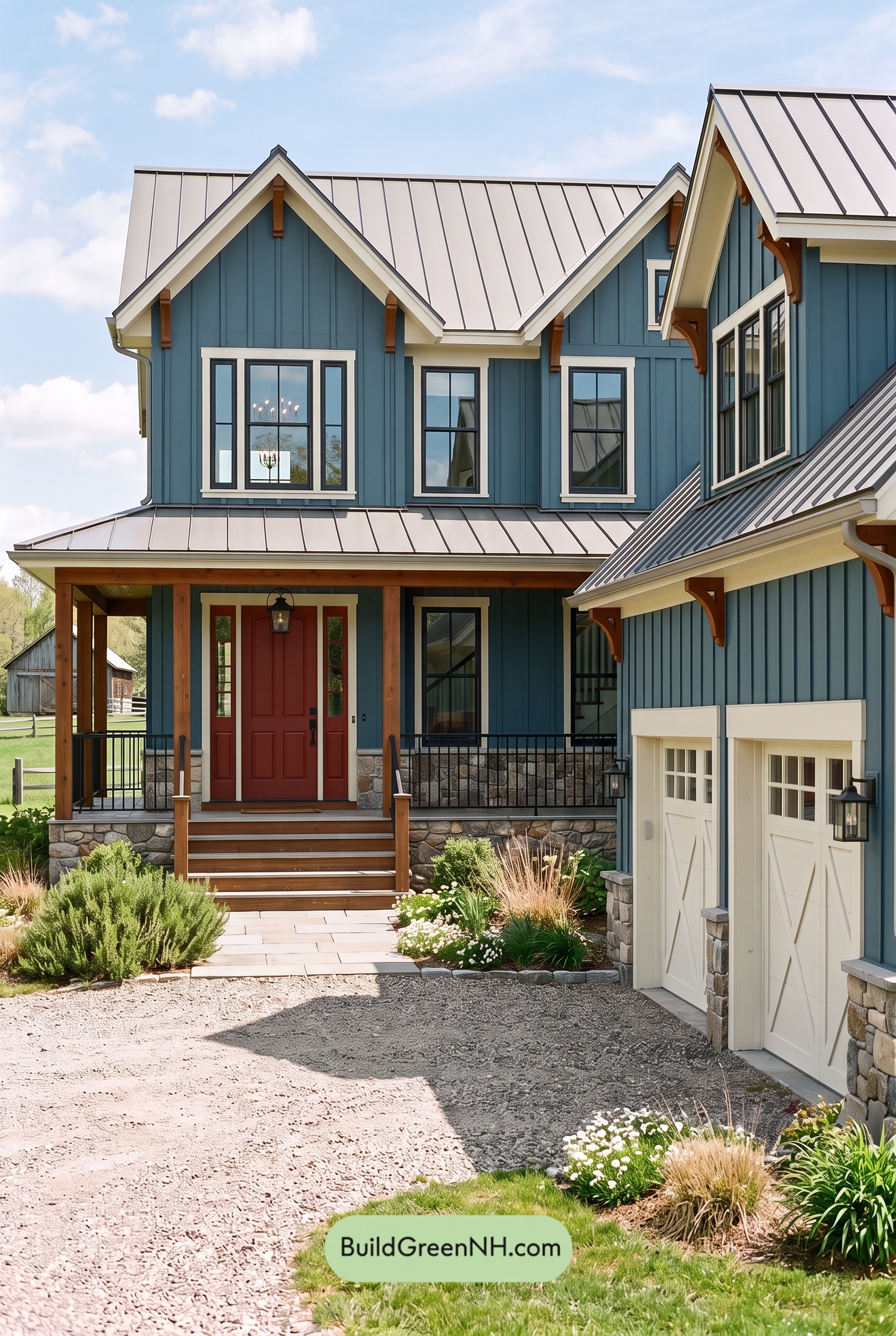 Red Front Door House Paint Color Scheme: Teal Blue Kinship
 Blue House Front Door Color Scheme: Harbor Saffron
Table of Contents