Last updated on · ⓘ How we make our designs
See how these modern houses use cathedral windows to turn simple gables into calm, bold homes, with timber, stone, and even tucked entries keeping all that glass from getting smug.
These houses show what a cathedral window can do when it is more than just a big sheet of glass. We used it to stretch the familiar gable into something calm, bold, and a little cheeky, like a barn or cabin that cleaned up very well.
The ideas came from rural barns, coastal cottages, desert shelters, chapel hints, and those sturdy little outbuildings that always seem right where they are. You’ll notice black frames, warm timber, stone bases, steep roofs, and tucked entries showing up a lot, because big glass needs good company or it starts acting a bit smug.
As you go through the designs, pay attention to how each glazed front answers its setting, whether that’s a cliff, a lake, snowy woods, dunes, vineyards, or a rainy field. The nice part is not only the window, it’s how the paths, decks, rooflines, and planted edges help each house settle in without making a fuss.
Barn House With Cathedral Glass
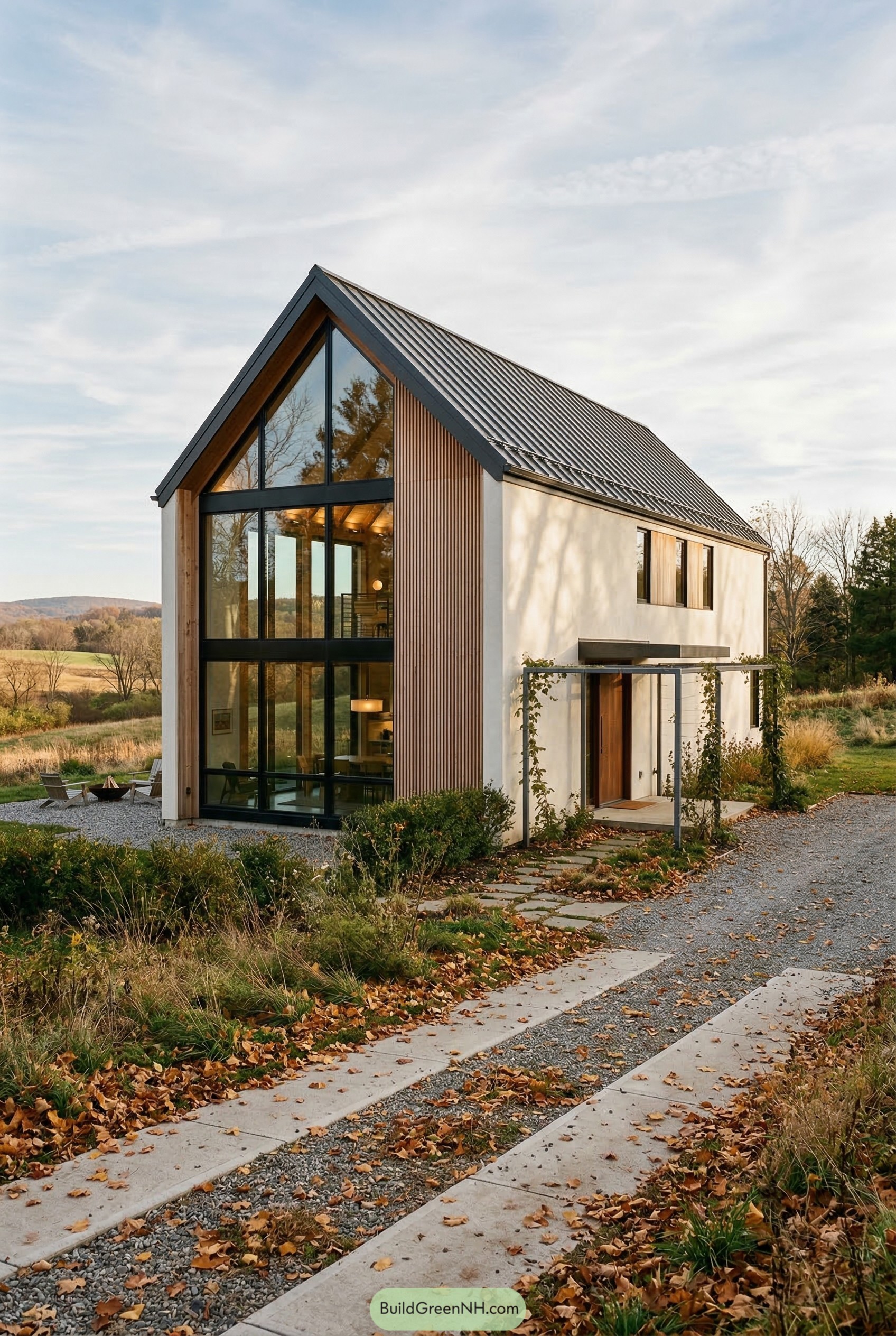

This narrow gabled house borrows from the old barn silhouette and trims it into something crisp and quietly bold. The soaring cathedral glass at the front was inspired by that simple rural form, while the black framing and warm timber lining keep it welcoming, not a fancy greenhouse.
We love how the white walls, vertical slat cladding, and dark metal roof give the whole exterior a clean contrast without making a big scene. The tucked entry and gravel track help the house settle into the landscape, which matters here because the form is so sleek it almost looks ready to tiptoe away.
Clifftop Gable Retreat
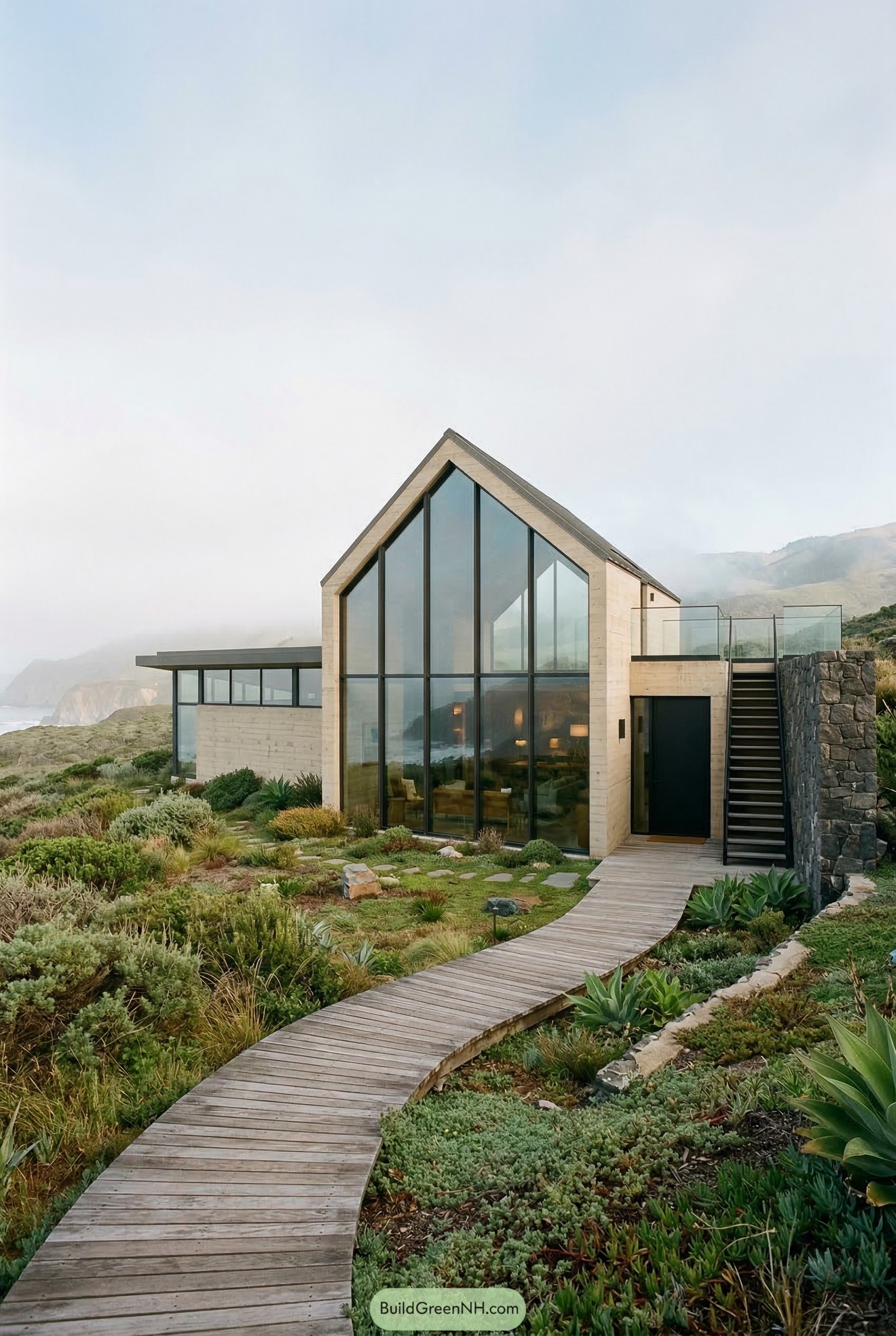

The tall gabled front makes the cathedral window the clear star, pulling the ocean and hillside right into the living space. Pale concrete walls and slim black framing keep the look crisp, while the curved boardwalk adds a soft little welcome that feels pretty charming.
This design borrows from coastal cabins and simple rural forms, then cleans everything up for a more refined finish. The stone side wall, rooftop terrace, and low planting help it sit naturally on the slope, because a house this close to the elements needs to look composed and not overly fussy.
Lakeside Apex Haven
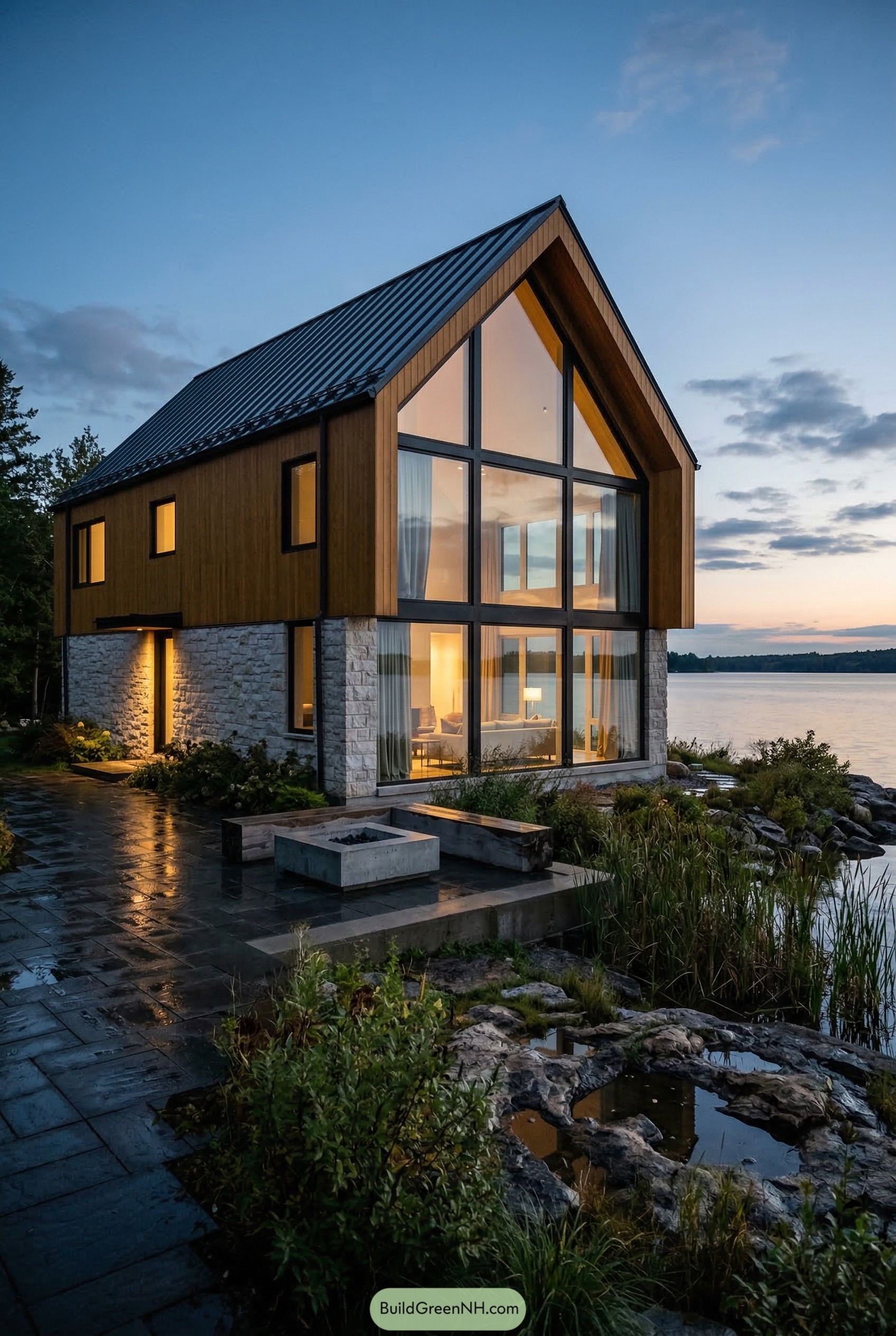

The whole design takes the familiar gable house and sharpens it into something cleaner and calmer, with a full cathedral window wall facing the water. That glazed front is the showpiece, obviously, but the dark frame keeps it crisp so the facade does not turn into a giant fishbowl.
We paired warm vertical wood cladding with a stone base and a black metal roof, which helps the house sit nicely against the rocky shoreline. The tucked entry, slim side windows, and low fire pit terrace make it feel cozy from every angle, kind of like a cabin that suddenly got very good taste.
Mesa Oxide Monolith
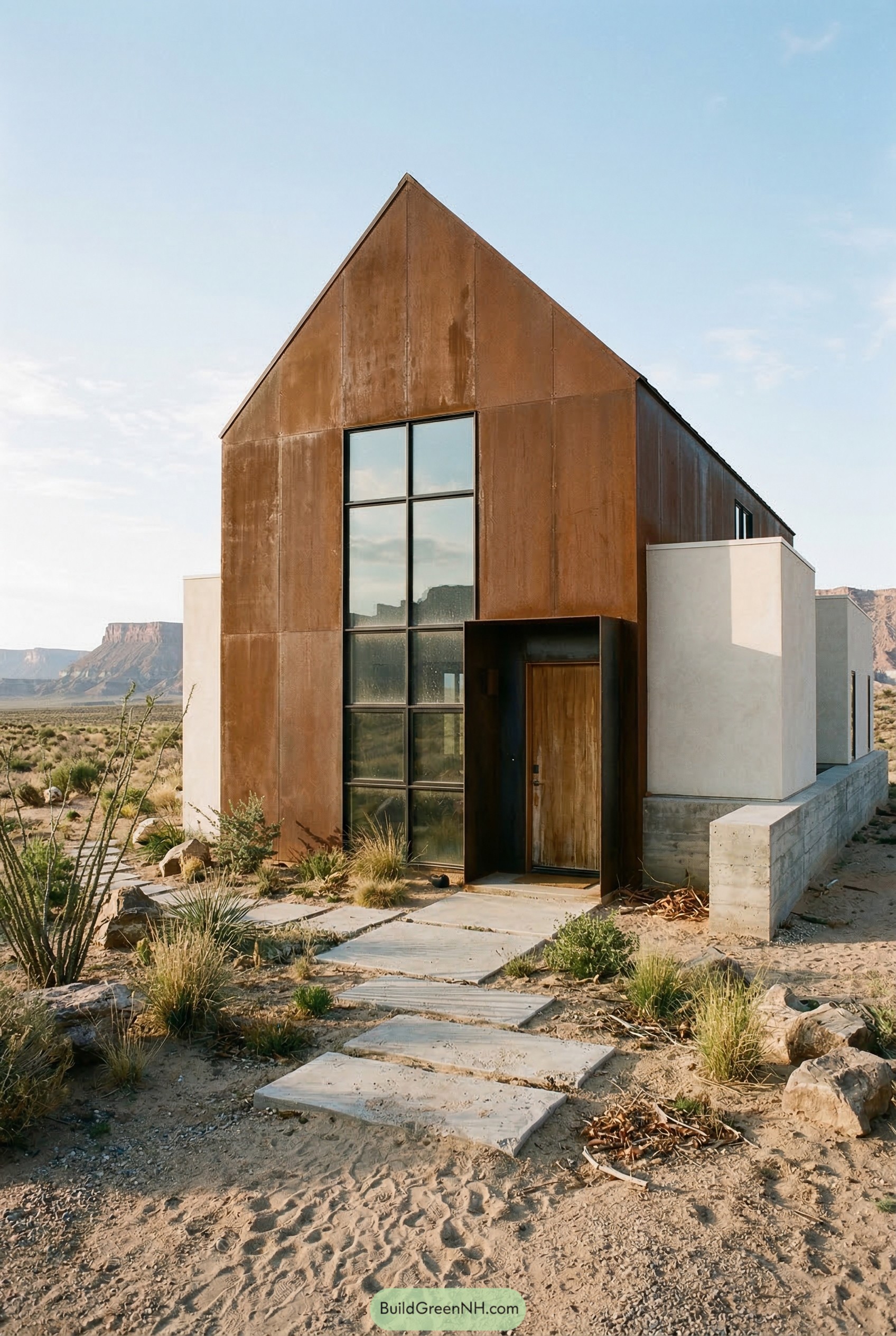

The steep gable and towering center window give this desert house a calm almost chapel like presence, though it never feels fussy. It was inspired by remote desert outbuildings and the flat topped mesas around it, so the weathered steel front and crisp stucco wings sit right at home in the scrub.
That tall grid window climbs into the peak to make the interior feel generous from the moment you arrive, and it turns the front into one clear move. A recessed black entry, concrete base, and spare path keep the composition grounded and practical, which matters out here because the landscape is gorgeous but not exactly cuddly.
Snowline Charcoal Gable
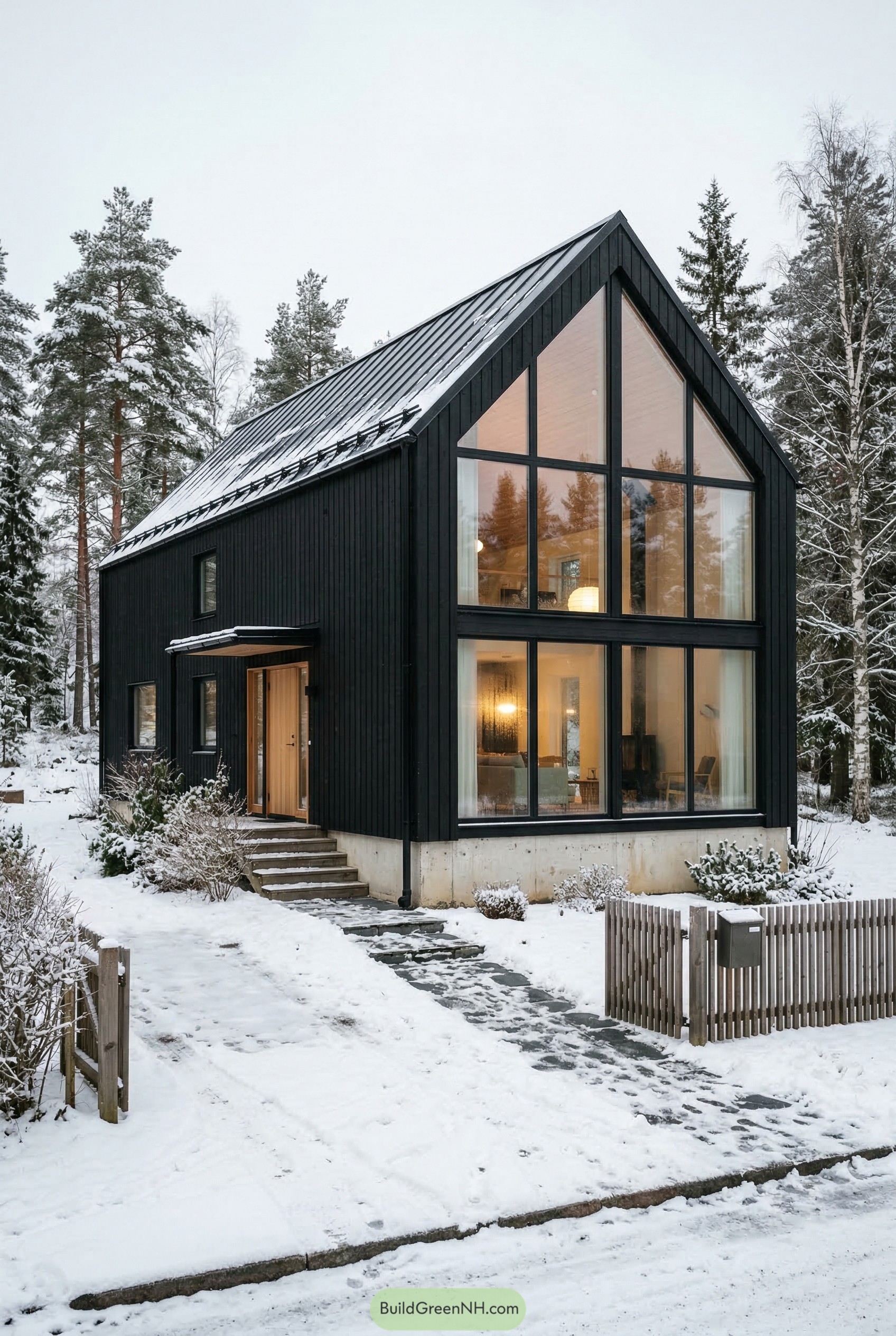

The steep black gable and oversized glazed front give this woodland home a crisp Nordic feel, like a classic cabin that got a very polished haircut. We shaped the cathedral window wall to open up the double height living space and frame the pines, so the house feels bigger than its footprint lets on.
Vertical cladding, a slim metal roof, and that warm timber entry keep the exterior clean without feeling cold, which really matters in a snowy setting where too much fuss looks silly fast. The concrete base lifts the house above the slush, and the sharp roof pitch helps snow slide off instead of hanging around like an uninvited cousin.
Sage Bluff Lantern House
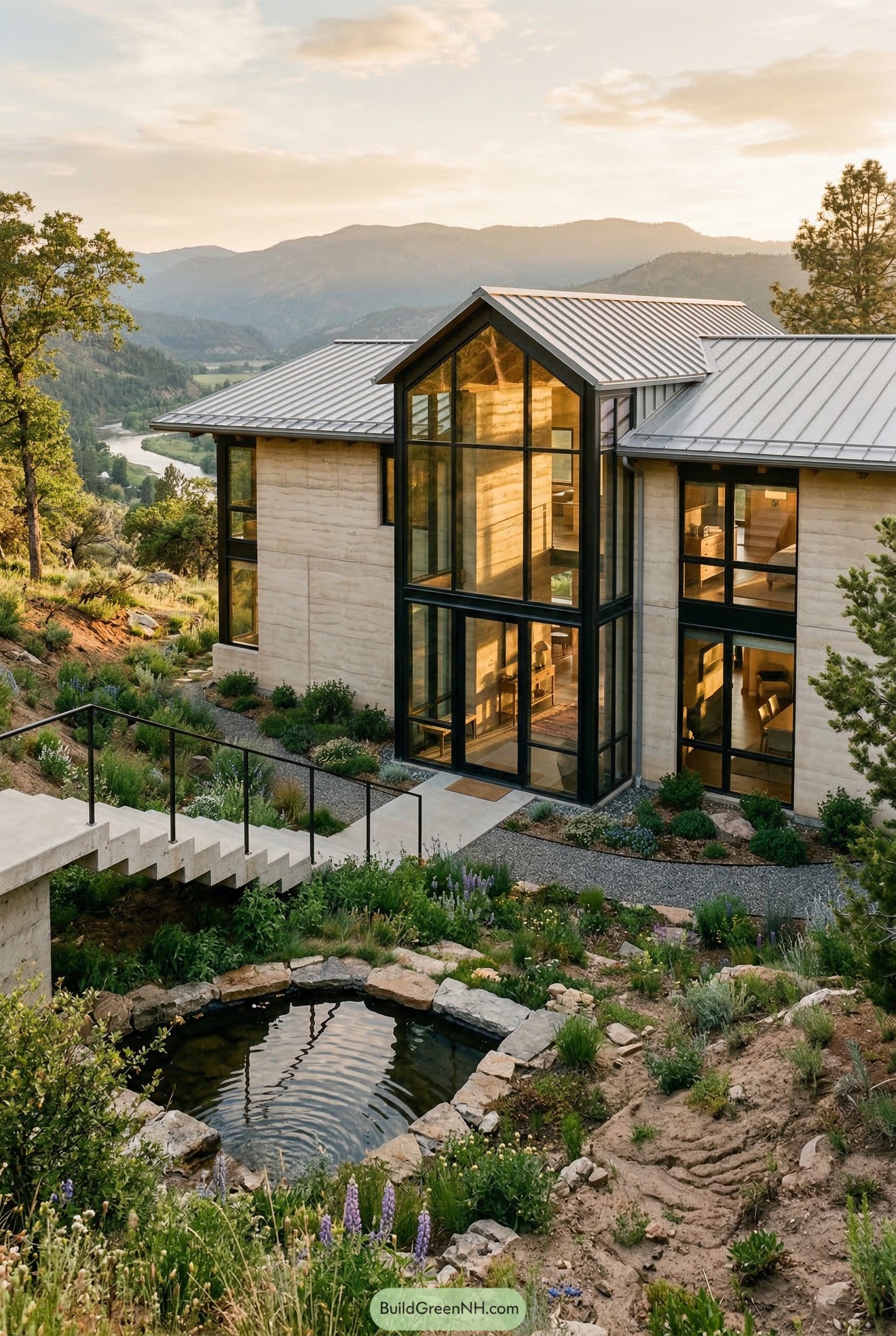

Set into the slope, the house pulls its gabled glass volume forward so the entry feels crisp, open, and very sure of itself. Pale stone walls and black steel framing give the form a clean mountain edge, while the standing seam roof keeps everything sharp without getting fussy.
The design feels borrowed from the ridgelines around it, with stepped rooflines, tall glazing, and a path that wanders through native planting to a small reflecting pond. That mix really matters because it softens the geometry and anchors the house to the hillside, which is good, because a place this polished could get a little smug.
Porcelain Roofline Residence
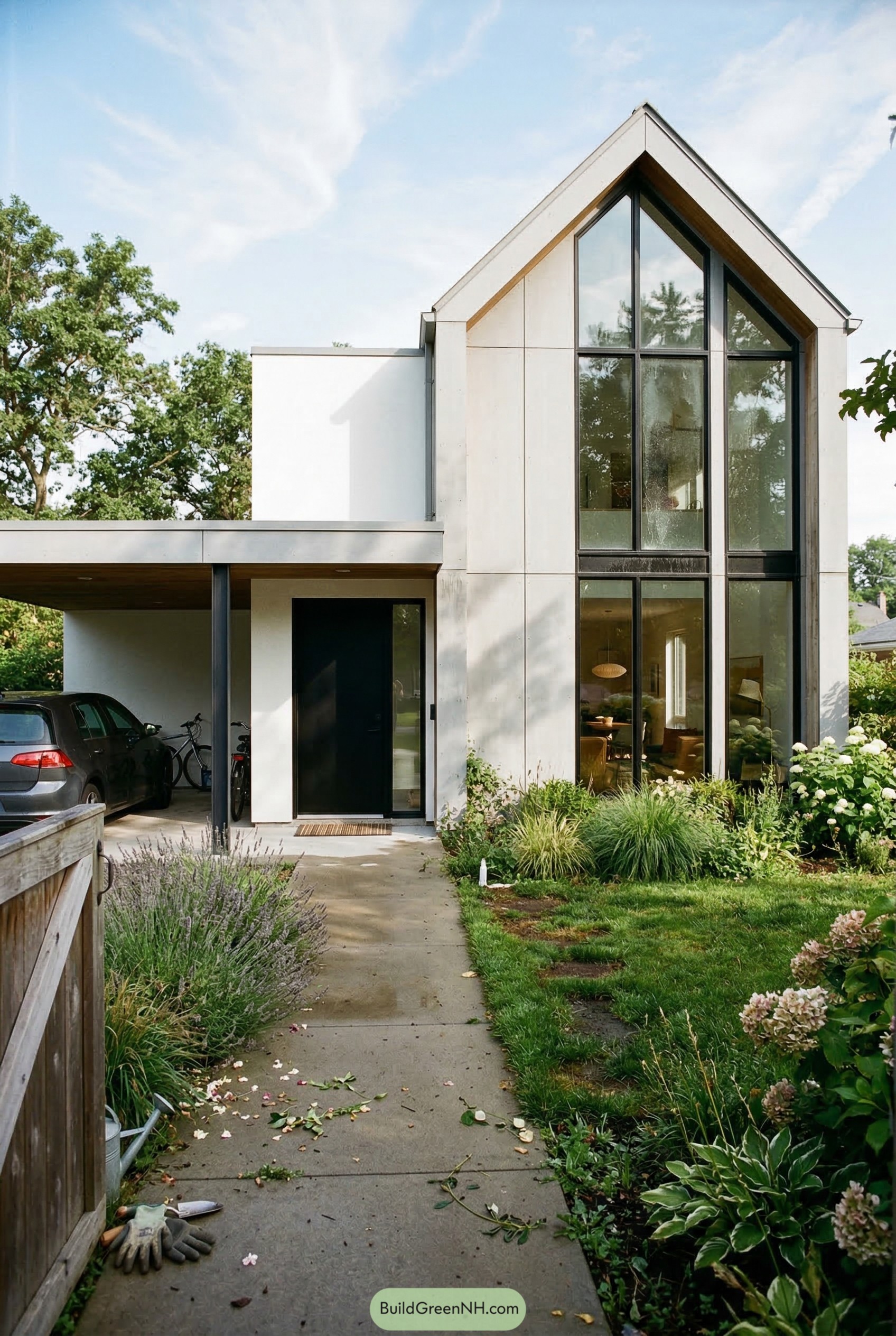

This one takes the familiar pitched roof form and pares it down to a crisp white volume, then stretches a cathedral window almost the full height of the front gable. That big glazed face makes the house feel open and airy from the street, even though the overall composition stays neat and fairly compact.
We shaped the side carport as a low flat extension so the tall main volume would feel balanced, not a bit too eager. Black window frames, a recessed wood-lined eave, and soft garden edges keep the design sharp but welcoming, which is a tricky combo and honestly a nice little flex.
Desert Storm Glass Peak
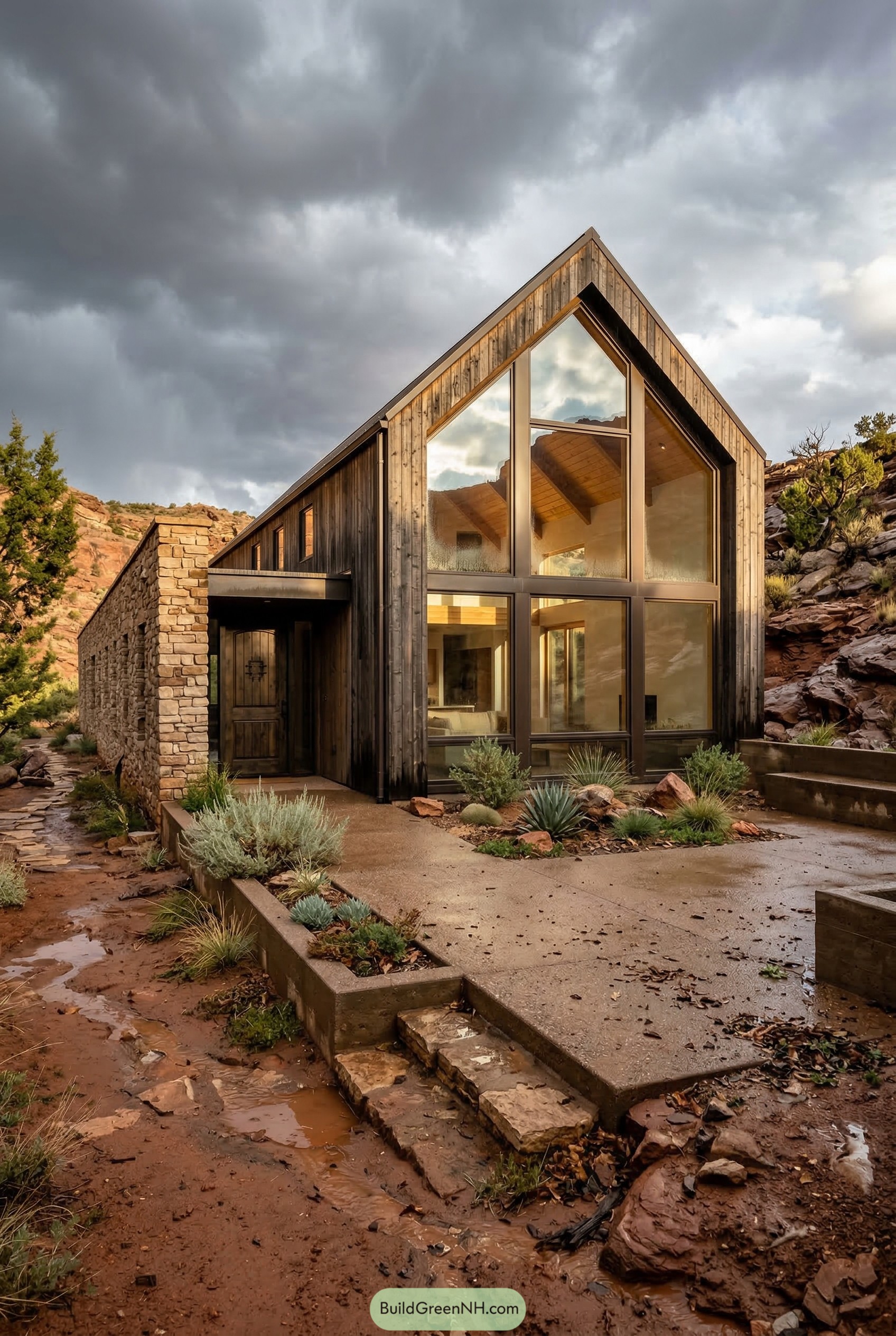

Set into the red rock like it grew there on a good stubborn day, this house pairs a rugged stone flank with dark timber cladding and one big soaring gable of glass. That mix is the whole charm, because the solid side hugs the site while the glazed front opens the rooms to the canyon and sky.
We shaped it with desert shelters and mountain cabins in mind, then cleaned up the lines so it feels crisp instead of costume. The tucked entry, black framed glazing, and drought friendly planting make it practical too, and that giant window is a bit of a show off in the best way.
Mistbank Cedar Prism
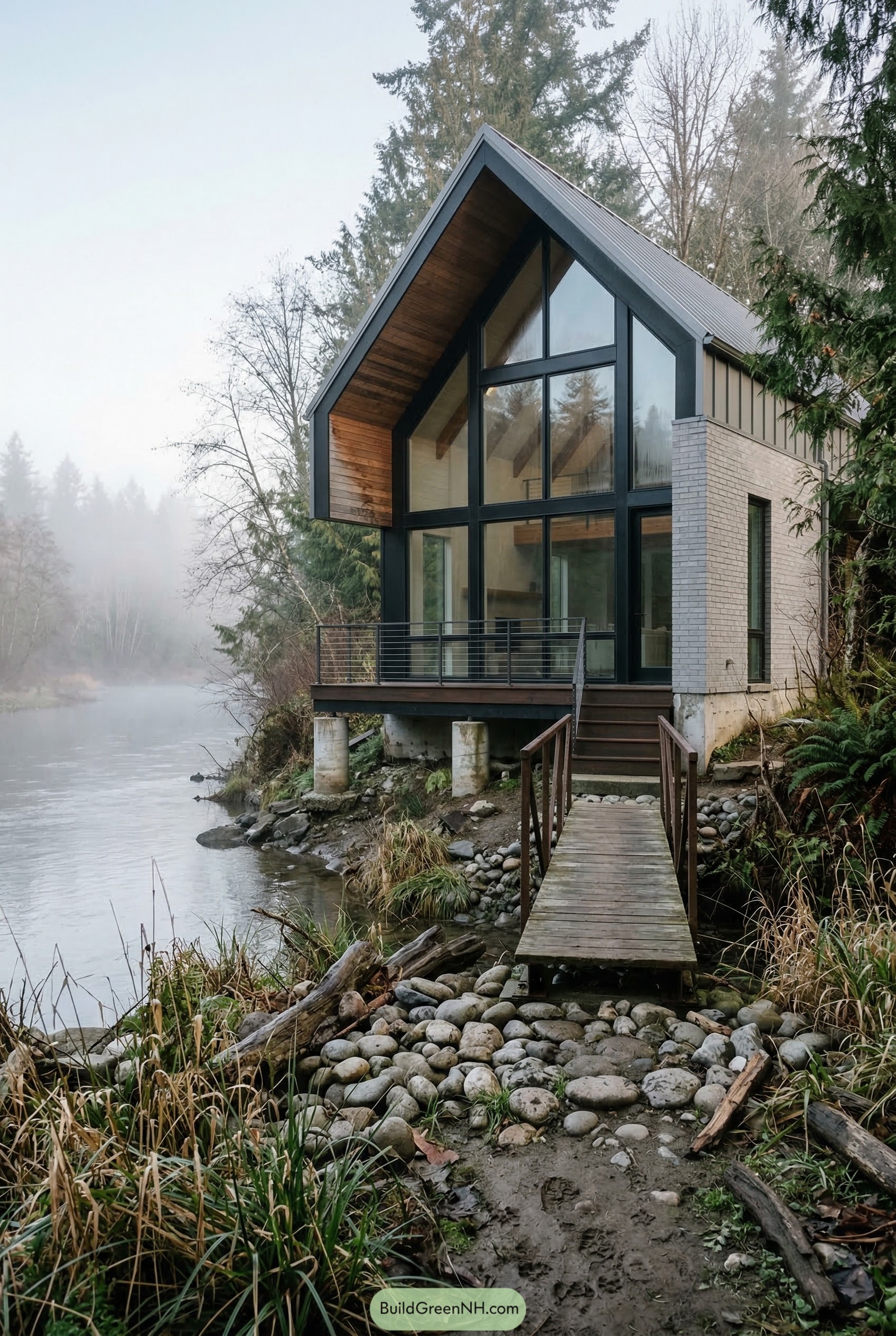

This riverside retreat takes the familiar gable form and sharpens it into something cleaner, calmer, and a bit more adventurous. The tall cathedral glazing runs from deck to peak, giving the compact facade a wide open connection to the water.
We paired dark metal framing with pale brick and a warm cedar-lined eave so the house feels crisp without turning cold, which is harder than it looks. The raised deck and slim bridge entry answer the rocky bank and shifting water edge, and they make the approach feel just a little movie-worthy.
Vineyard Chapel Frame
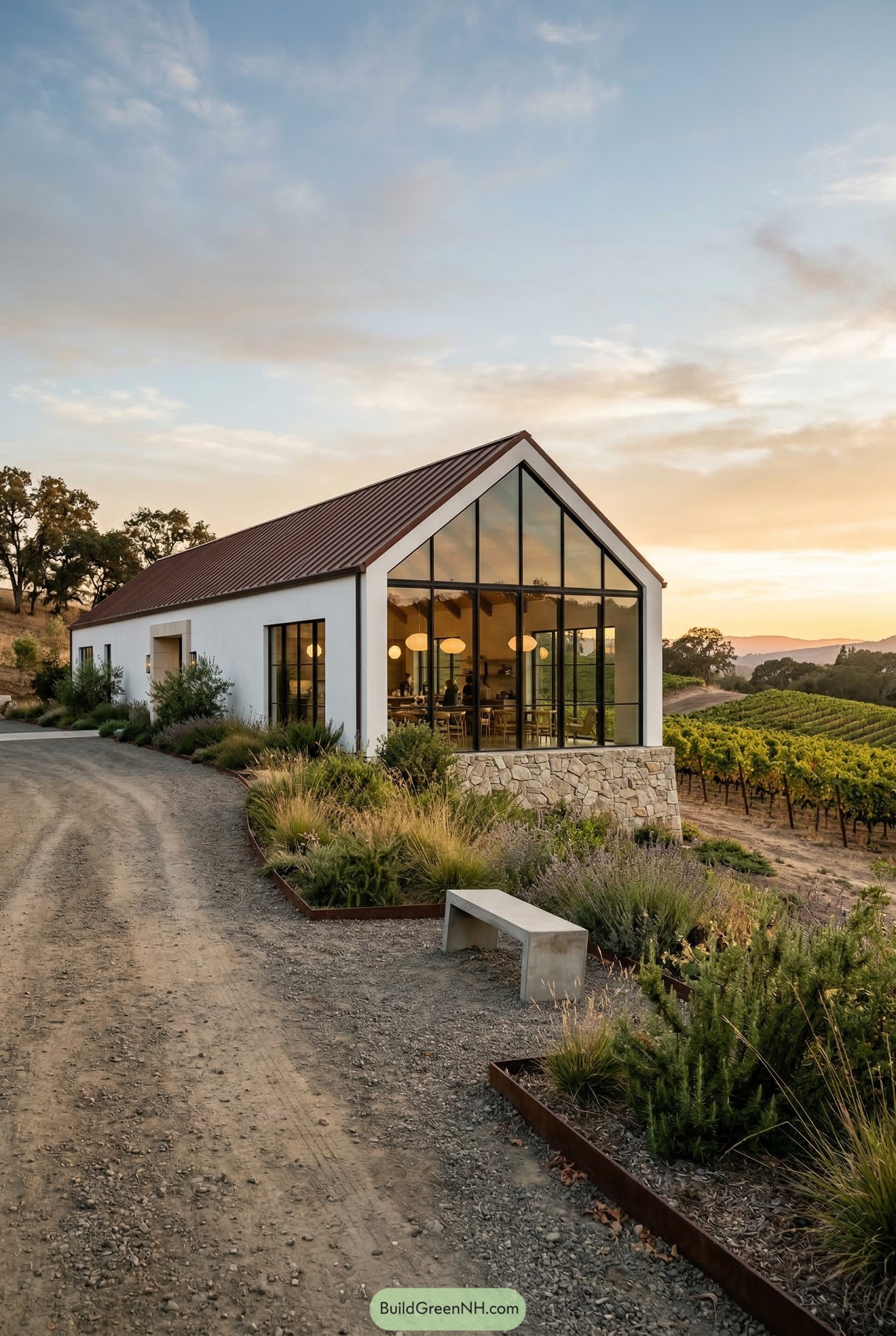

This vineyard house pares everything back to one clean pitched form, with a towering cathedral window turning the gable into a calm focal point. The shape feels loosely inspired by rural barns and little chapel silhouettes, though it’s clearly dressed for modern life.
White walls, a weathered red metal roof, and a chunky stone base give it a grounded look, while the black window grid keeps all that glass feeling crisp instead of floaty. We love how the long side stays quiet and simple, then the glazed end opens wide to the vines, because sometimes one smart move really is enough.
Townhouse Ember Peak
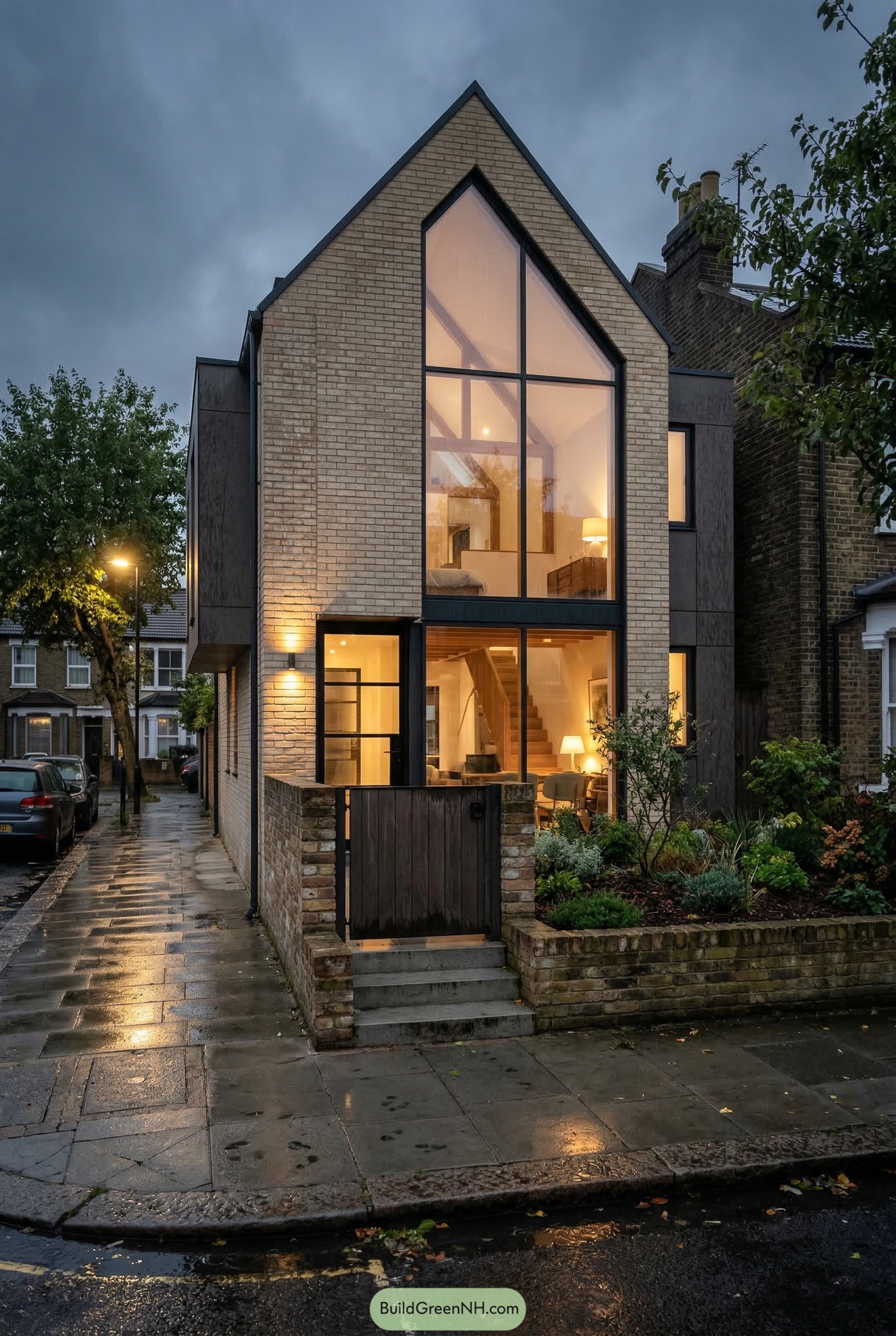

This narrow gabled home turns a tight city plot into something surprisingly calm, with pale brick across the front and a cathedral window stretching nearly the full height of the facade. We shaped it like a crisp little chapel crossed with a townhouse, so it feels familiar on the street but a bit sharper, in a good way.
The black framed glass, recessed entry, and dark side volumes give the house depth, which keeps the tall front from feeling flat or too polite. Inside, the double height front brings the stair and upper room right into view, and that little reveal is half the charm, nosy neighbors and all.
Frostcrest Window Lodge
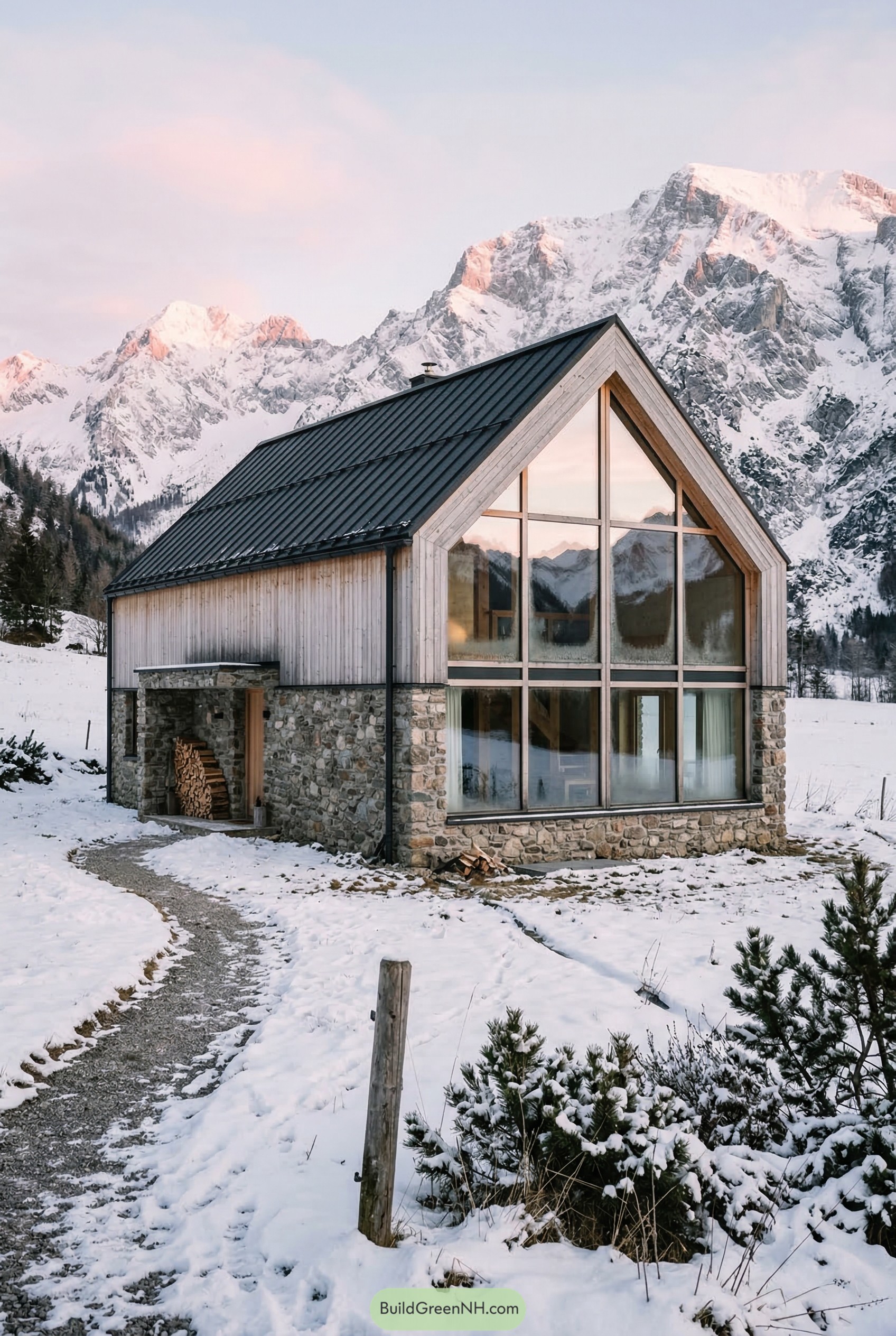

This alpine retreat pares the classic gable form down to the good stuff, a steep black roof, a full height cathedral window, and a sturdy stone base that feels planted in the snow. We shaped it with old mountain barns in mind, then cleaned up the lines so it looks crisp instead of costume y.
The pale timber cladding softens the sharp silhouette, while the deep window framing gives the glass real presence and a cozy sense of shelter from the cold. Stone wraps the ground floor and entry porch for durability, which matters out here, because winter has a bit of an attitude.
Saltgrass Mirror Cottage
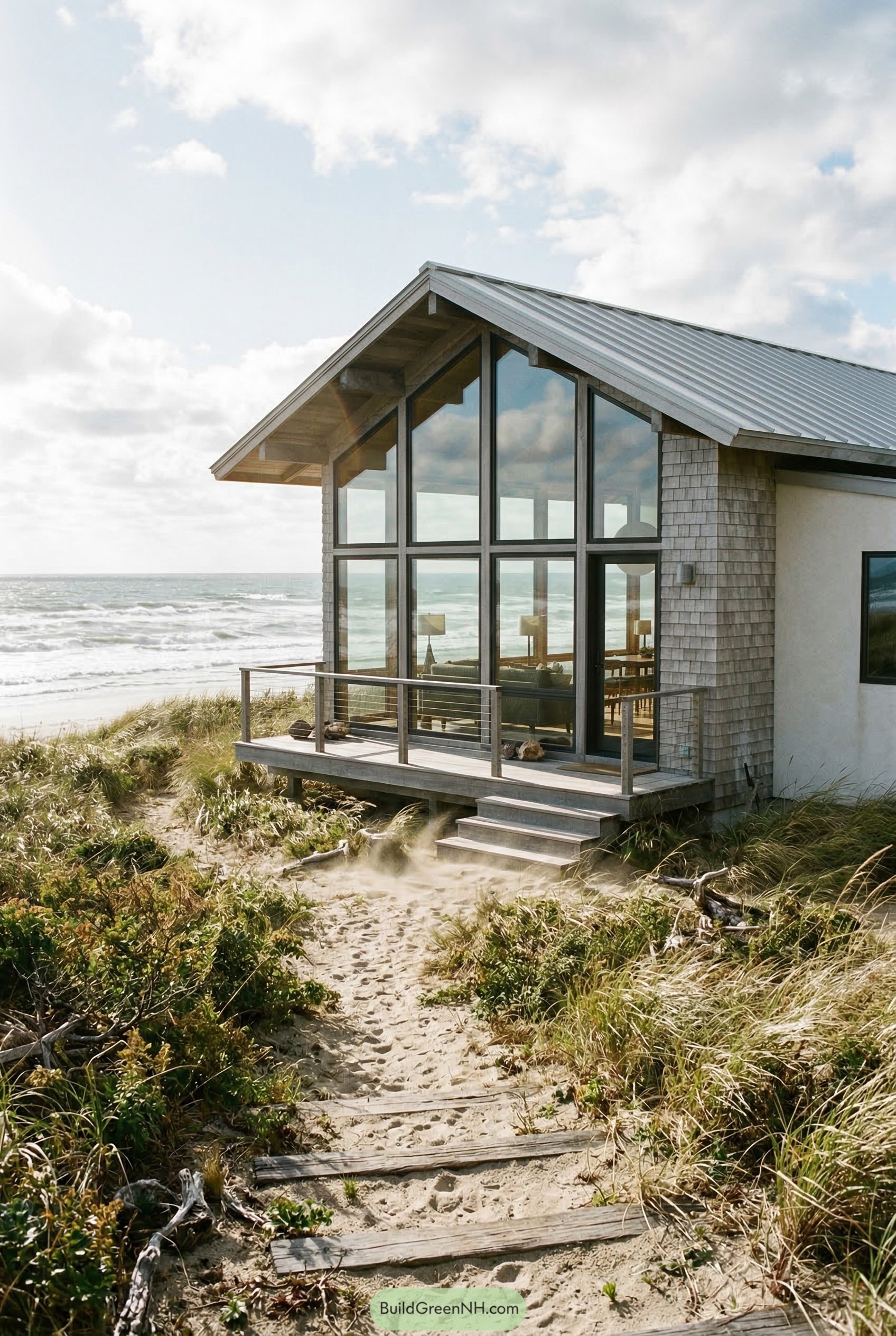

Set right in the dunes, this coastal cottage keeps its shape clean with a steep roof, cedar shingle cladding, and a full cathedral window wall aimed at the waves. That tall glazed front gives the living space a front row seat to the ocean, which feels a bit unfair to every other room.
We kept the deck small and low so the house feels tucked into the grasses instead of plopped on the beach like a picnic cooler. The metal roof, deep eaves, and sturdy window framing bring a crisp edge to the soft shoreline setting, and that contrast is what makes the whole place stick in your mind.
Olive Courtyard Glassfold
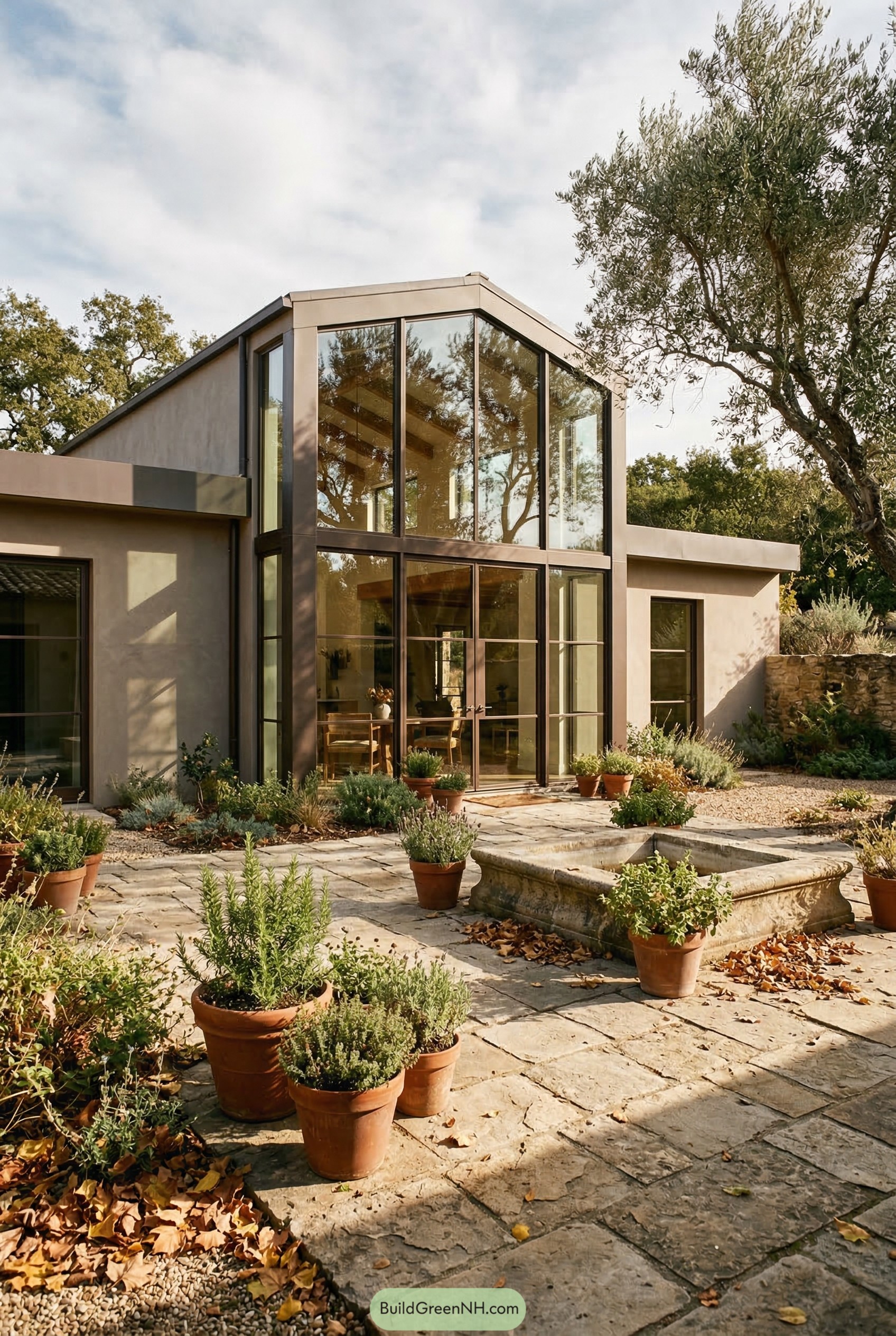

The tall glazed gable sets the whole composition, rising from a calm stucco base and giving the house a soft Mediterranean edge. It feels a bit like a tiny chapel that learned to relax, which is exactly why the form lands so well.
We shaped the lower wings with clean horizontal lines so that big cathedral window could stay the star without getting shouty. Stone paving, terracotta pots, and the courtyard basin bring in that garden first mood, and they matter because the house feels rooted and breezy instead of slick for no reason.
Hemlock Obsidian Cabin
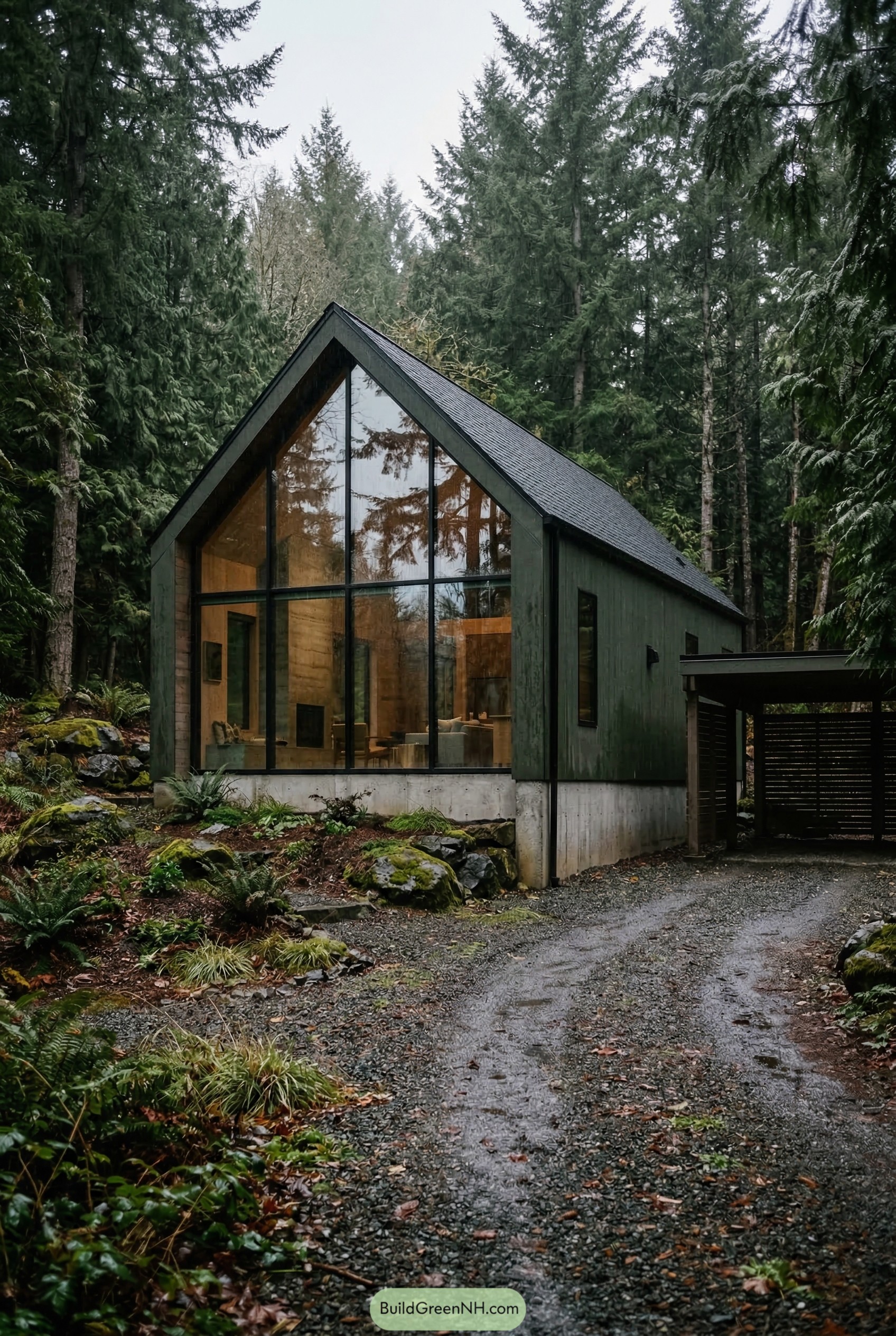

The steep roof and full height front glazing give this woodland retreat a crisp silhouette that feels pulled straight from the fir trees around it. We shaped it with a dark stained shell and a slim footprint so it settles into the site quietly, which is nice because the forest already has plenty to say.
A concrete base lifts the living spaces above the wet ground, while the warm wood interior keeps the big glass wall from feeling too slick or showroom perfect. Small side openings protect privacy and frame select views, so the whole place feels tucked in and open at the same time, a neat little trick.
Citrus Rill Farmhouse
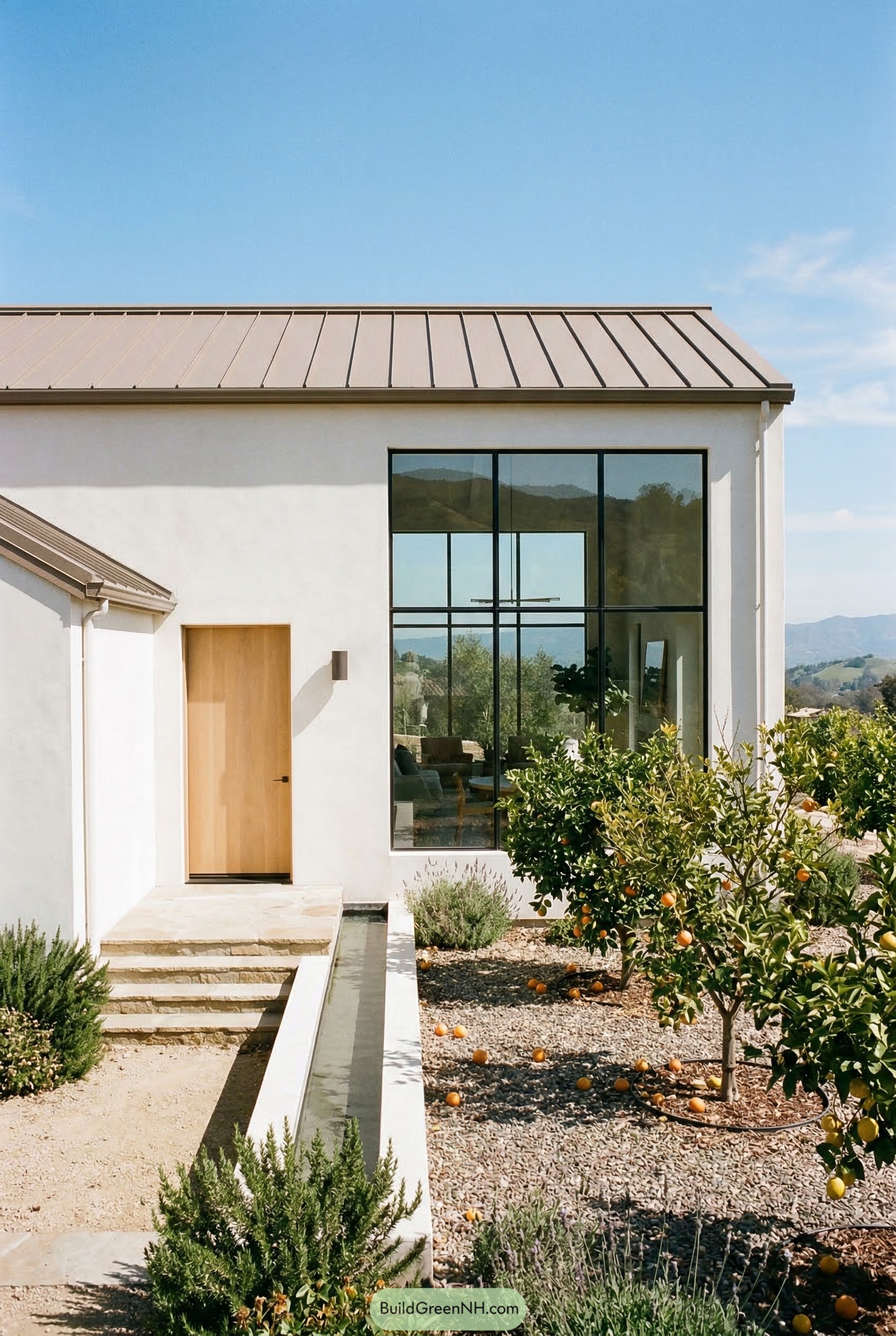

We leaned into a calm farmhouse silhouette here, pairing white stucco walls and a pale metal roof with a cathedral window that almost works like a framed landscape painting. The black steel mullions keep the glazing crisp and graphic, while the simple wood door stops the front from feeling too polished, which is nice because perfect gets dull fast.
The stone steps and narrow water rill slow the approach just enough, then the citrus planting softens all those clean edges with color and a bit of backyard swagger. It was inspired by warm hillside living, so the tall glass, gravel garden, and pared back palette make the whole place feel easy, airy, and not one bit fussy.
Rainfield Timber Crest
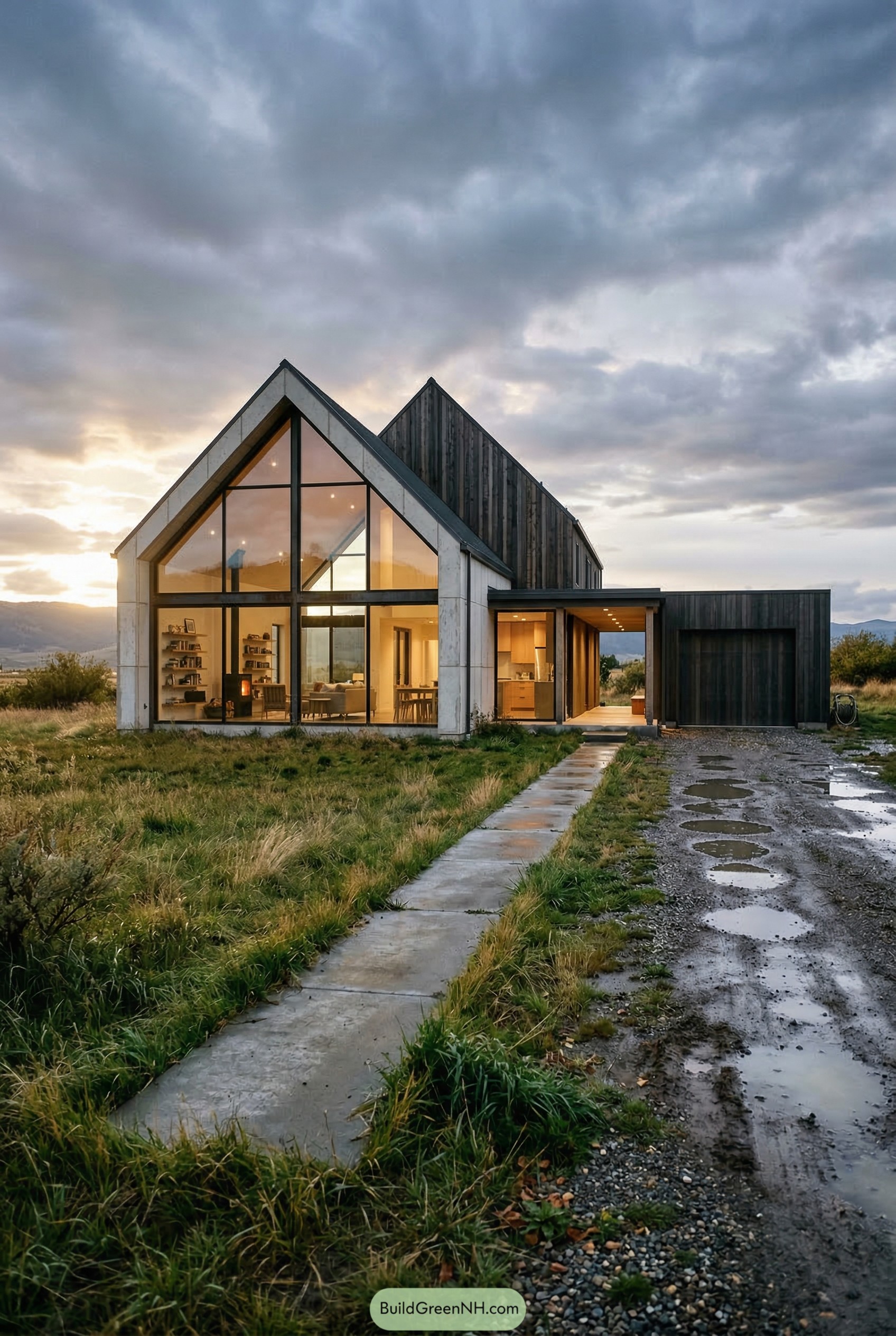



This one borrows the calm shape of a rural barn, then sharpens it with a huge glazed gable wrapped in pale concrete and dark vertical timber. The contrast gives the front a crisp edge and keeps the house feeling grounded, not too precious about itself.
The lower side wing and covered passage stretch the composition outward, so the tall main volume feels balanced and easy on the site. We love the sheltered entry and attached garage here, because a house in a wet field should look good and still have a plan for muddy boots.
Rainforest Veranda A Frame
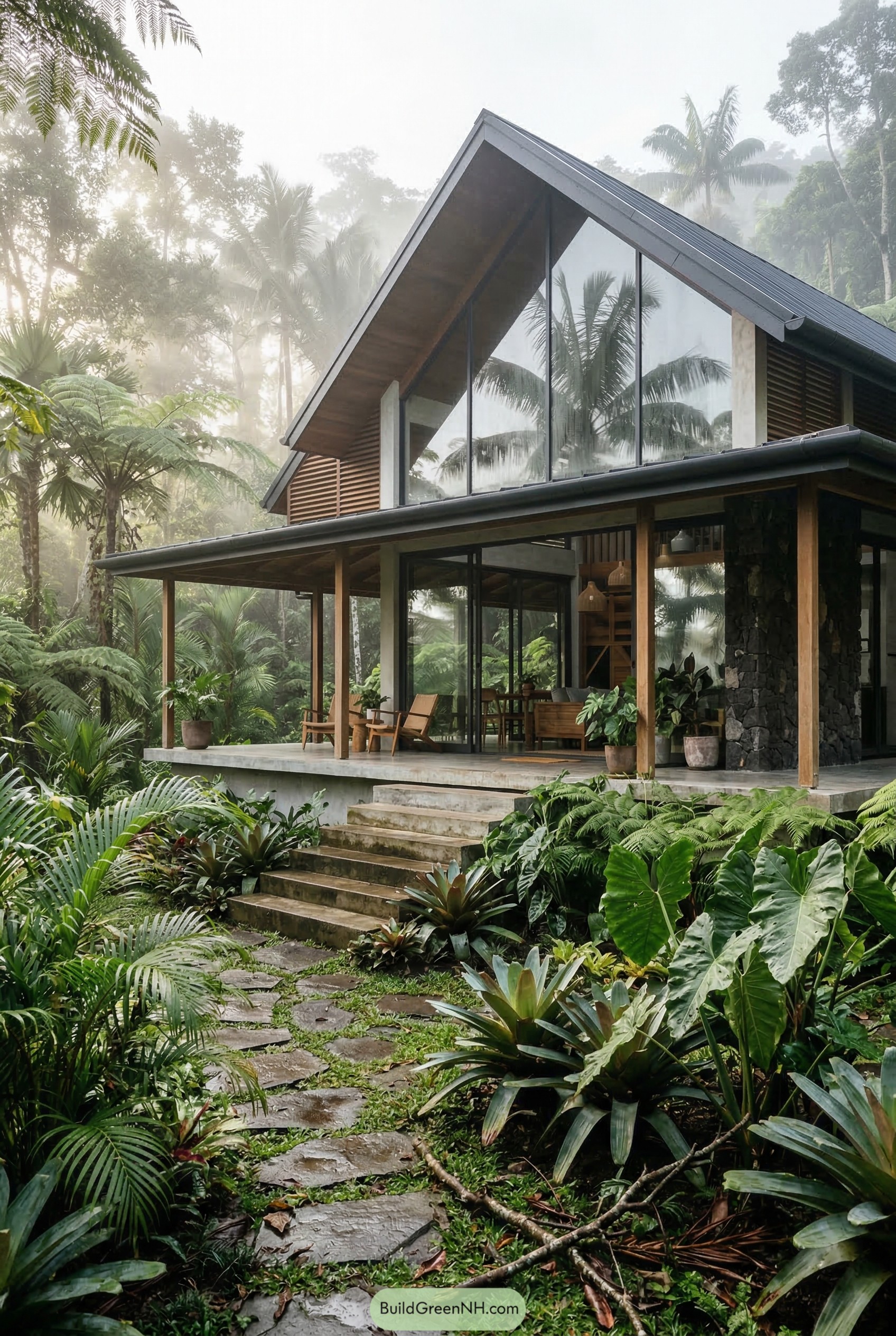

Set on a raised concrete plinth, the house pairs a steep gable roof with a full height cathedral window that turns the upper facade into one clean, quiet move. We shaped the deep porch and slim timber posts to keep the edges open and breezy, because in a jungle setting nobody wants a house that sulks indoors.
The palette mixes dark metal roofing, warm wood soffits, black stone, and broad sliding glass panels, inspired by tropical lodges but edited into a sharper profile. That contrast really matters, since the grounded base settles the home into all that greenery while the glazed gable pulls the canopy right into the rooms, which is a neat little trick for one roof.
Pin this for later:
Want More?
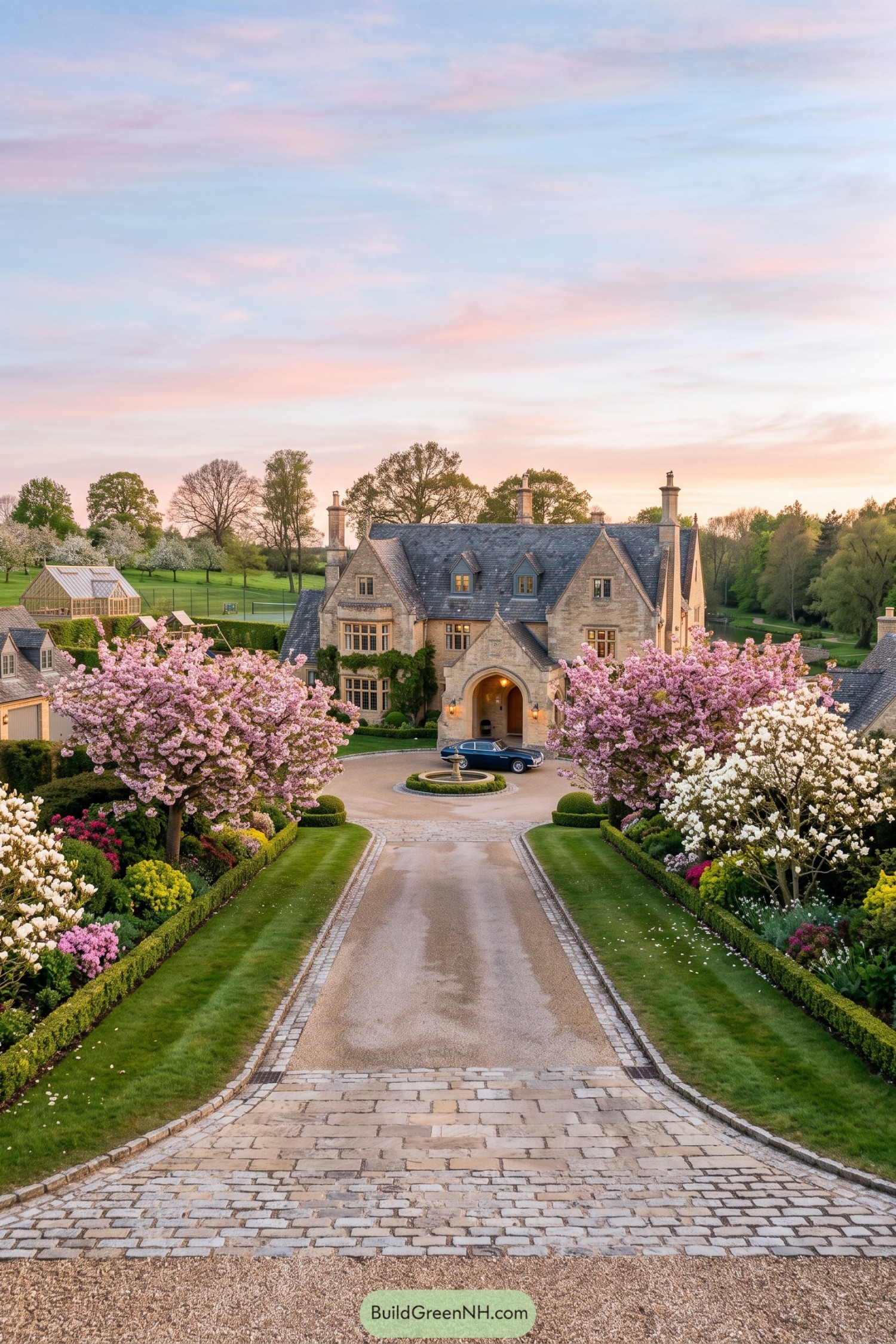 21 Luxury Family Compounds Where Generations Thrive
 20 Luxury Ski Chalets for Unforgettable Alpine Escapes
 21 Stunning Fall House Exteriors That Make Neighbors Stop And Stare
 19 Brilliant Family Village Designs You’ll Love
 21 Stunning Hill Villas for Cloud Level Escapes
Table of Contents