Last updated on · ⓘ How we make our designs
See how rooftops become meadow edges, herb gardens, bee havens, and even pond-side terraces. These designs are making modern homes feel rooted rather than merely covered.
Green roofs can make a modern home feel less parked on the land and more settled into it. We drew from forest floors, prairie meadows, alpine slopes, orchards, and dry Mediterranean gardens to shape these planted rooftops.
Notice how grasses, wildflowers, sedums, herbs, and shrubs soften clean rooflines while helping with rainwater, insulation, and cooling. Solar panels, skylights, ponds, terraces, and vegetable beds prove a roof can be more than a very expensive hat.
From lakeside retreats to city homes with room for bees, each design carries the landscape upward. Keep an eye on the small connections between planting, views, and outdoor spaces, they’re where the good stuff grows.
Layered Meadow Roof Retreat
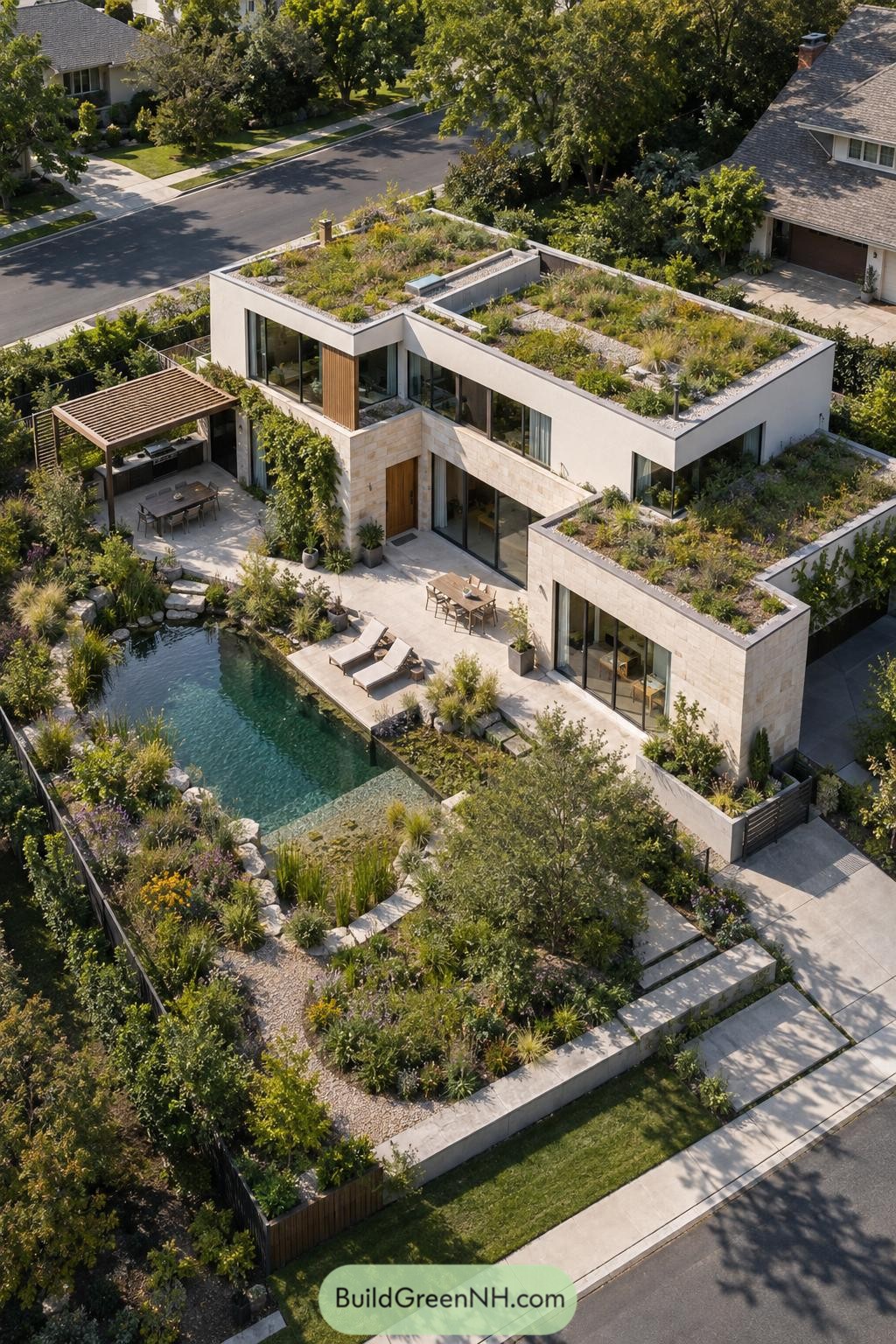

Planted roof terraces turn the home into a layered meadow, inspired by the easy mix of wild landscapes and clean modern lines. Grasses, flowering perennials, and gravel pockets soften the crisp white roof edges without making them feel fuzzy.
Warm limestone walls and broad glass openings connect each room to the pondside patio and garden. The roof planting helps blend the structure into its leafy setting, while the pond brings a little vacation energy to an ordinary backyard.
Woodland Canopy Roofscape
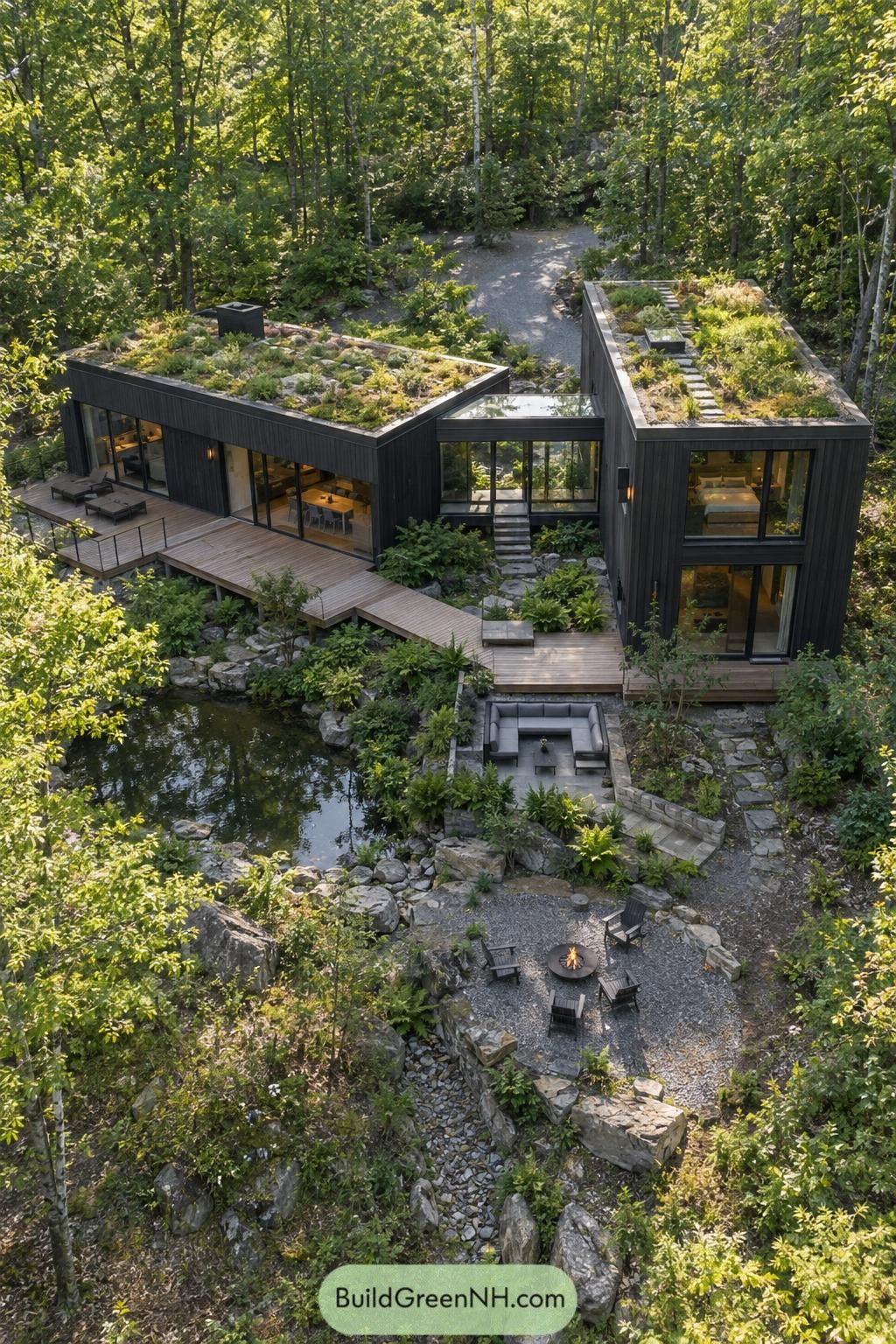

Two planted roof planes extend the woodland over this dark-clad retreat, with low sedums, grasses, and hardy perennials settling into a textured living cover. The approach was inspired by the surrounding forest floor, so the home feels tucked in rather than parked in the trees.
A stepped roof garden softens the clean angular forms while helping manage rainwater before it reaches the pond below. Timber decks, stone paths, and a small fire circle make the site feel lived in, not overly polished, which is kind of the point.
Orchard Homestead Living Roof
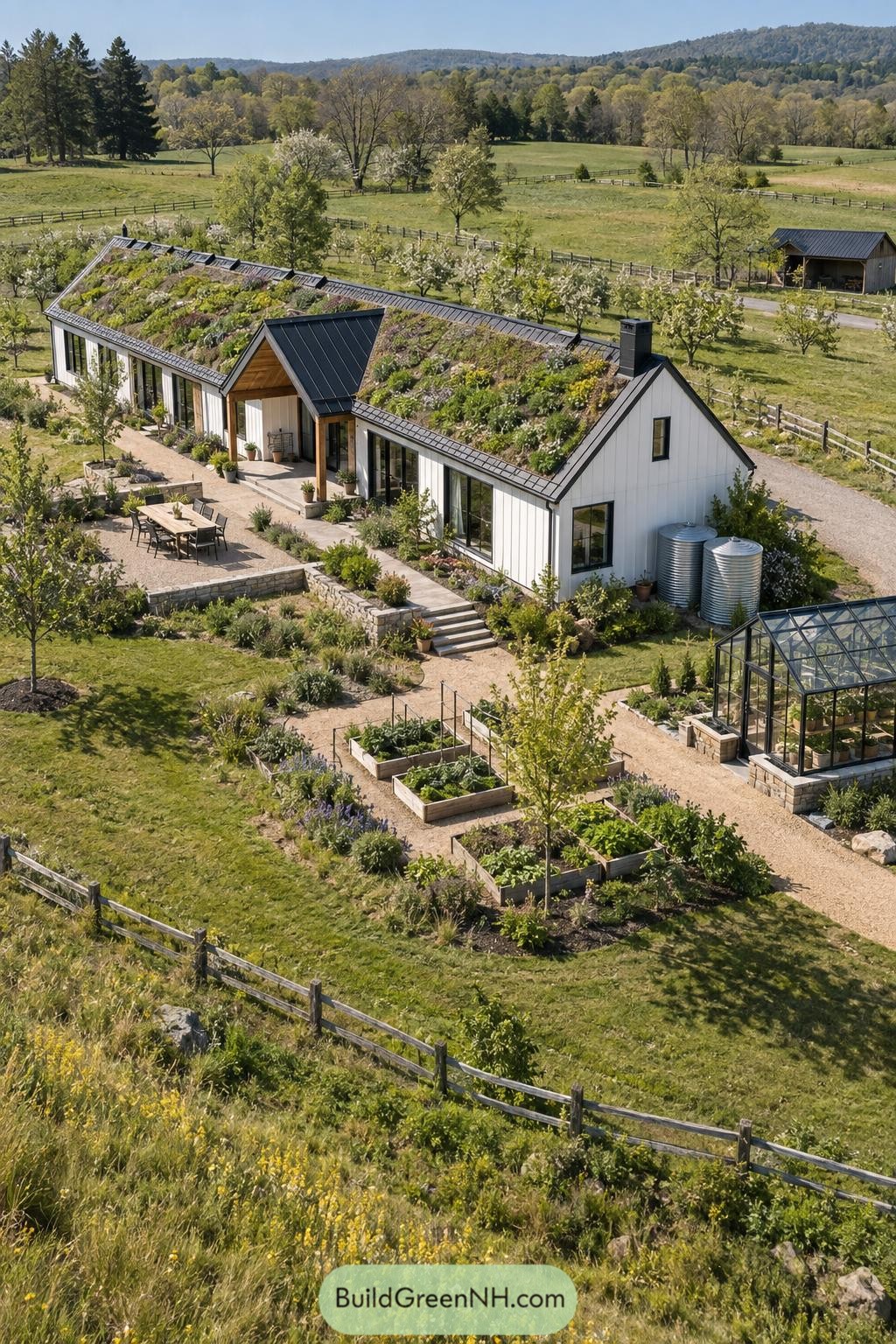



This country home pairs crisp white board cladding and dark gabled metal sections with a sprawling living roof planted in low flowering perennials. The roof softens the long house shape and gives it that lovely settled-in feeling, like the building has been gardening a little for itself.
Raised vegetable beds, orchard trees, and a glass greenhouse extend the growing space beyond the roofline. Stone terraces and gravel paths tie each area together, making the whole property feel practical, abundant, and pleasantly hard to leave.
Alpine Terrace Wildflower House
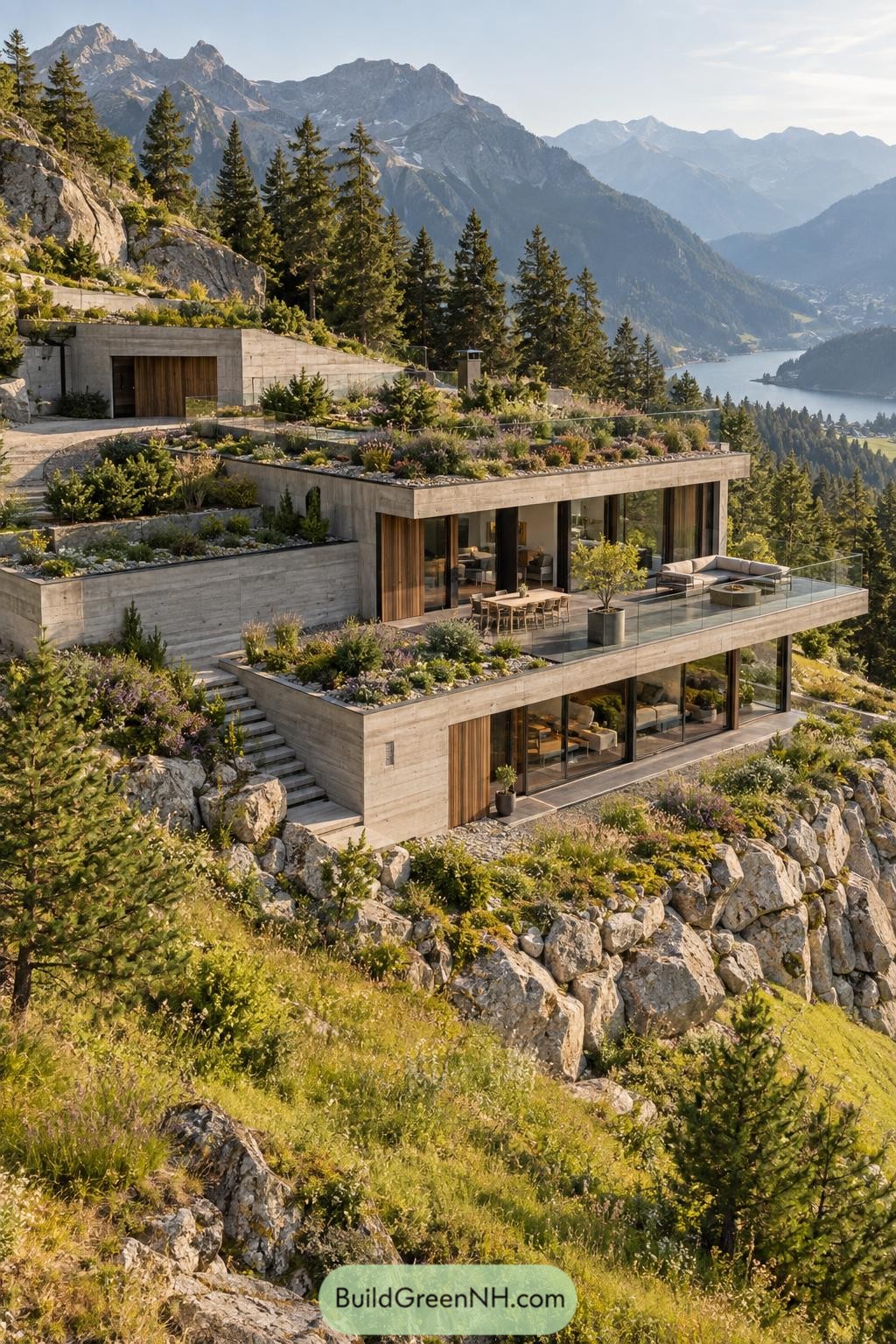

Built into a rugged mountainside, this home uses planted roof terraces to extend the native meadow across its concrete levels. Low wildflowers, grasses, and small shrubs soften the edges while keeping the architecture close to the terrain.
Broad glass walls and timber accents open each floor toward the lake and distant peaks. The terraced gardens also create useful outdoor pockets for dining and lounging, because a mountain view deserves more than one seat.
Courtyard Herbarium Green Roof
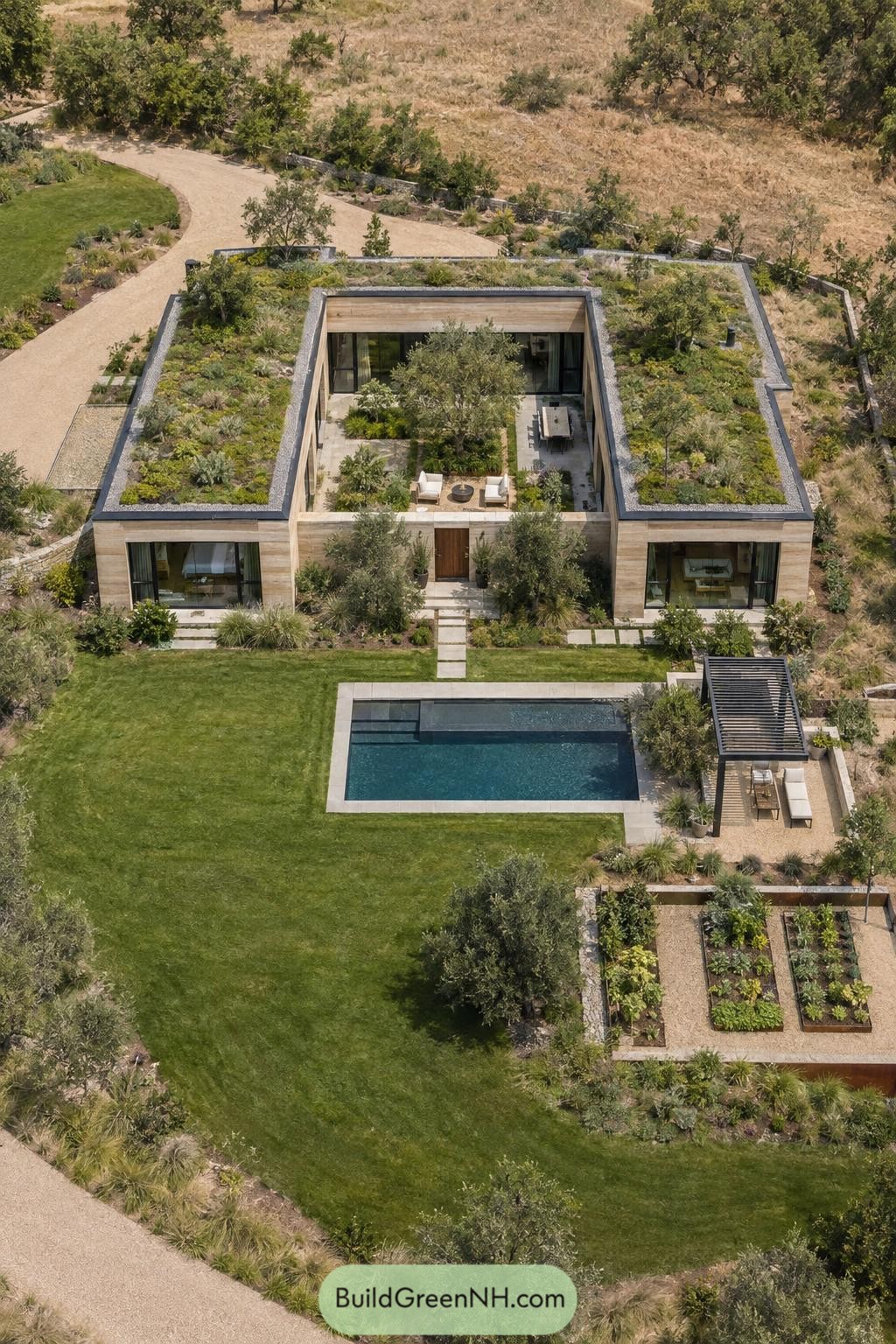

Native grasses and low planting soften the broad roof planes, making the house feel tucked into its dry garden setting. The roof gardens wrap a sunken courtyard, with olive trees bringing a little Mediterranean calm to the center.
Stone-edged planting zones frame the pale timber volumes and help the roof hold rainwater where it lands. Below, the pool, pergola, and neat kitchen garden extend that lived-in landscape feeling, because a roof garden should not have all the fun.
Fernside Watershed Roof Home
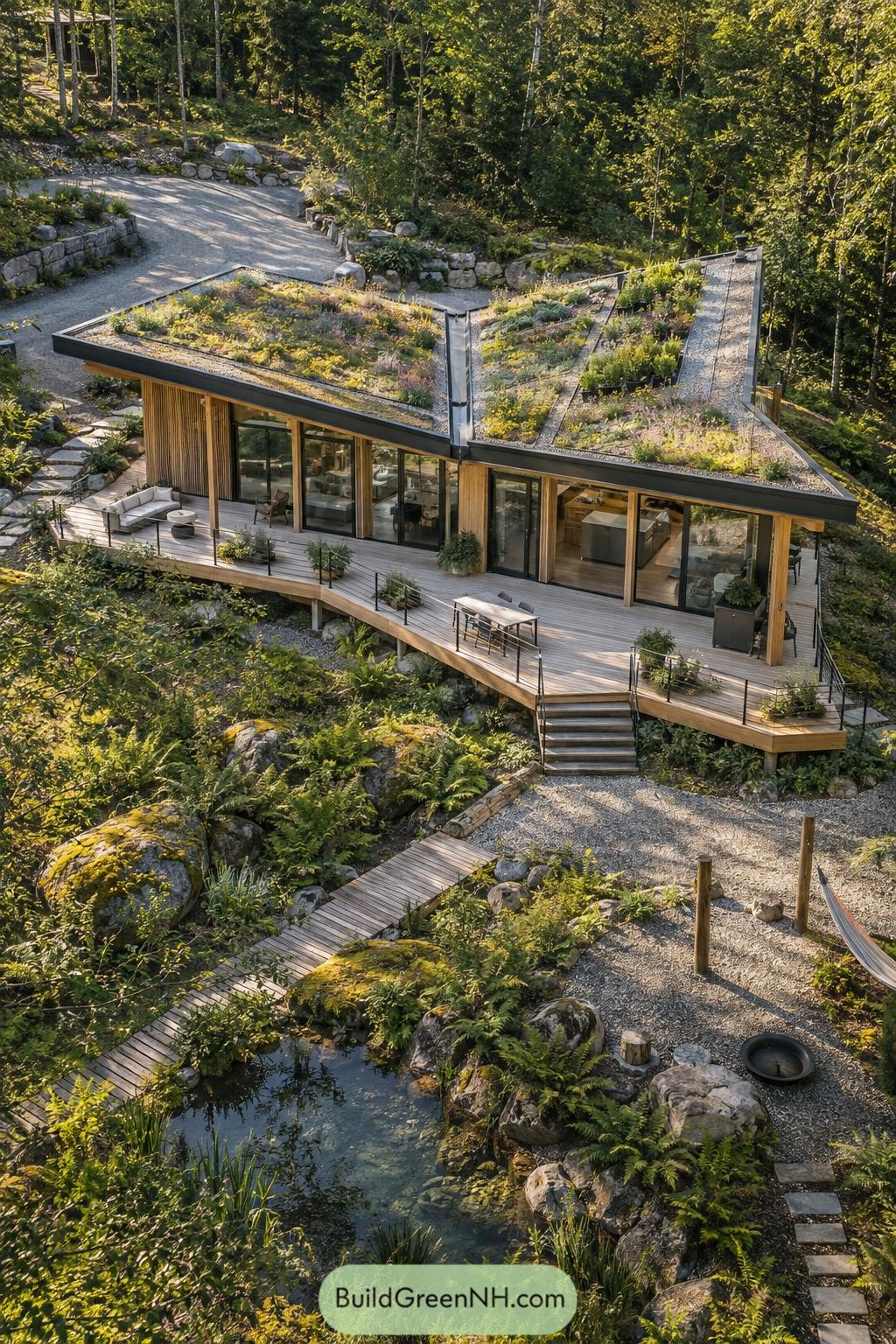

This low, wide home settles into its wooded site with a planted roof that feels like an extension of the surrounding ferns and boulders. Native grasses, small blooms, and hardy groundcovers give the roof a soft, changing finish, no mowing circus required.
Broad glazing opens the interior toward the wraparound deck, pond, and forest beyond. The gently sloped roof manages rainwater while adding insulation, and its varied planting beds make the house feel pleasantly tucked into the landscape.
Solar Garden Courtyard Residence
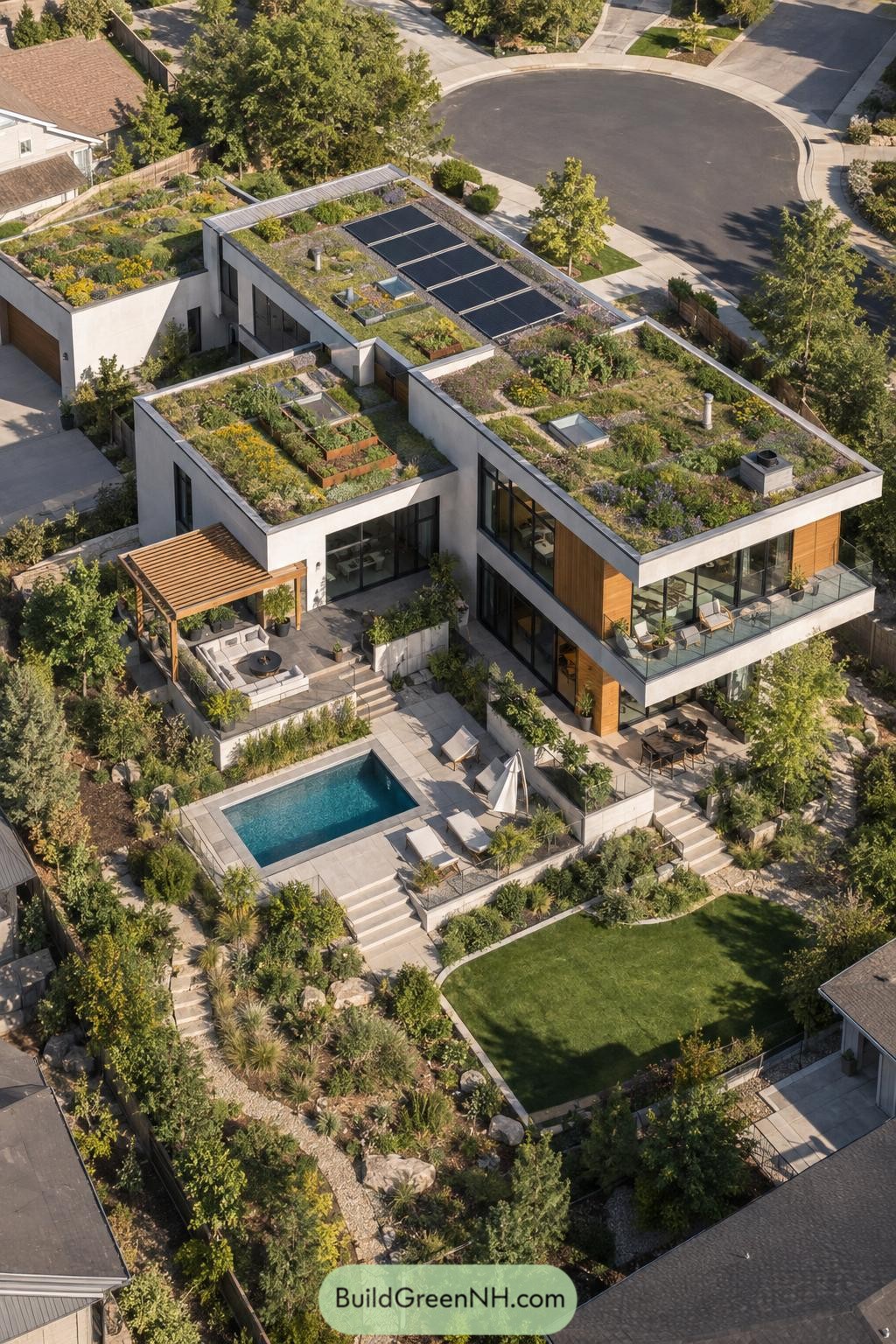

Vegetated roof planes turn this crisp, terraced residence into a lush extension of its landscaped lot. Pollinator-friendly planting, gravel paths, and raised edible beds give the upper levels a relaxed garden feel, minus the muddy boots.
Solar panels sit neatly among the greenery, pairing homegrown energy with a roof designed to cool and soften the structure. Broad glazing, warm wood accents, and shaded patios connect the living spaces to a pool courtyard that feels pretty darn inviting.
Hedgerow Sedum Farmhouse
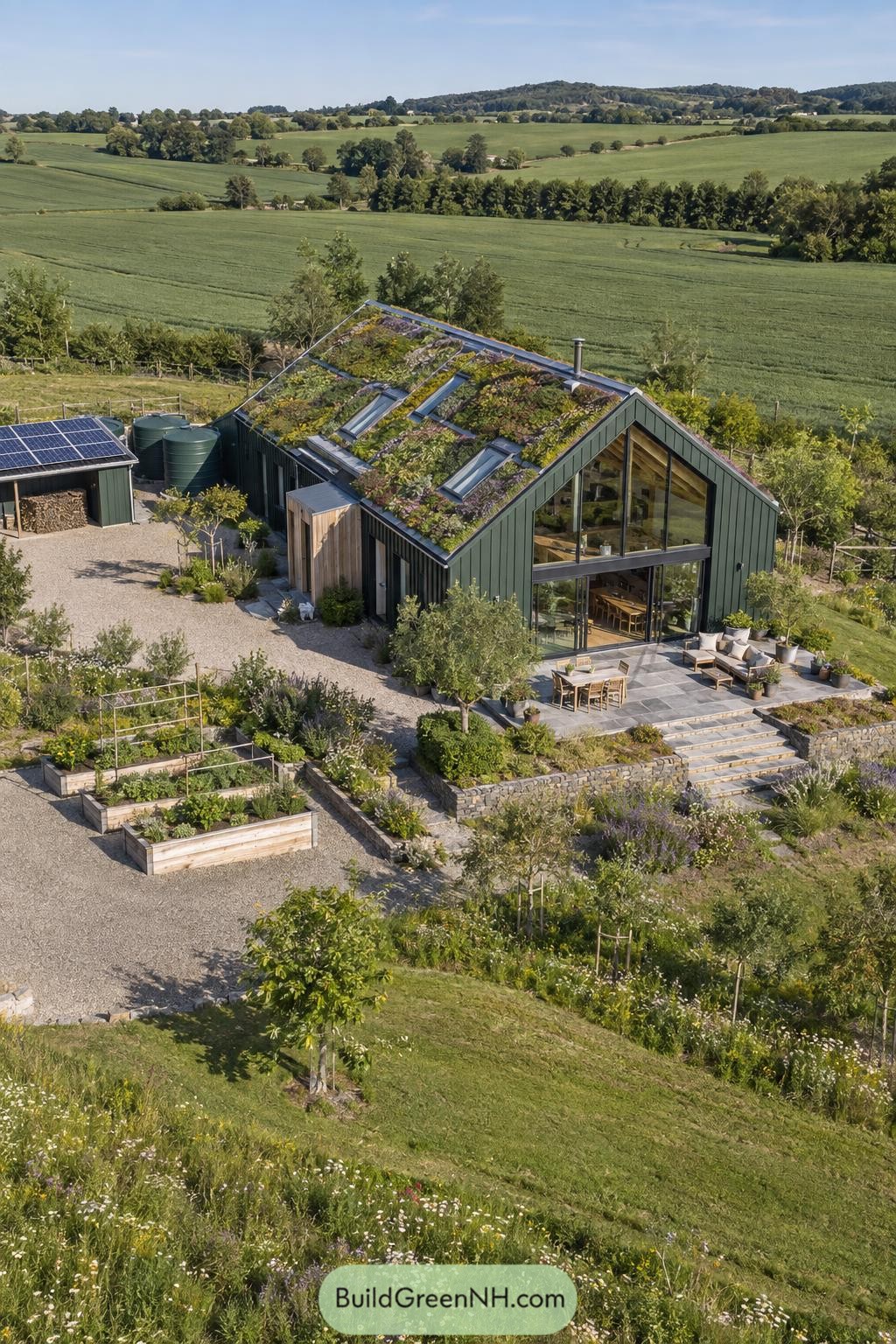

This dark-clad farmhouse settles neatly into its hillside setting with a planted gable roof that carries sedums, wildflowers, and small grasses. Skylights slip between the planting beds, bringing daylight inside without turning the roof into a shiny spaceship.
Inspired by the patchwork fields beyond, the roof garden softens the crisp contemporary form and helps the house feel rooted in the countryside. Stone terraces, raised vegetable beds, young orchard trees, and solar panels create a practical outdoor setup that is lovely too, which is quite the overachiever.
Olive Grove Xeriscape Villa
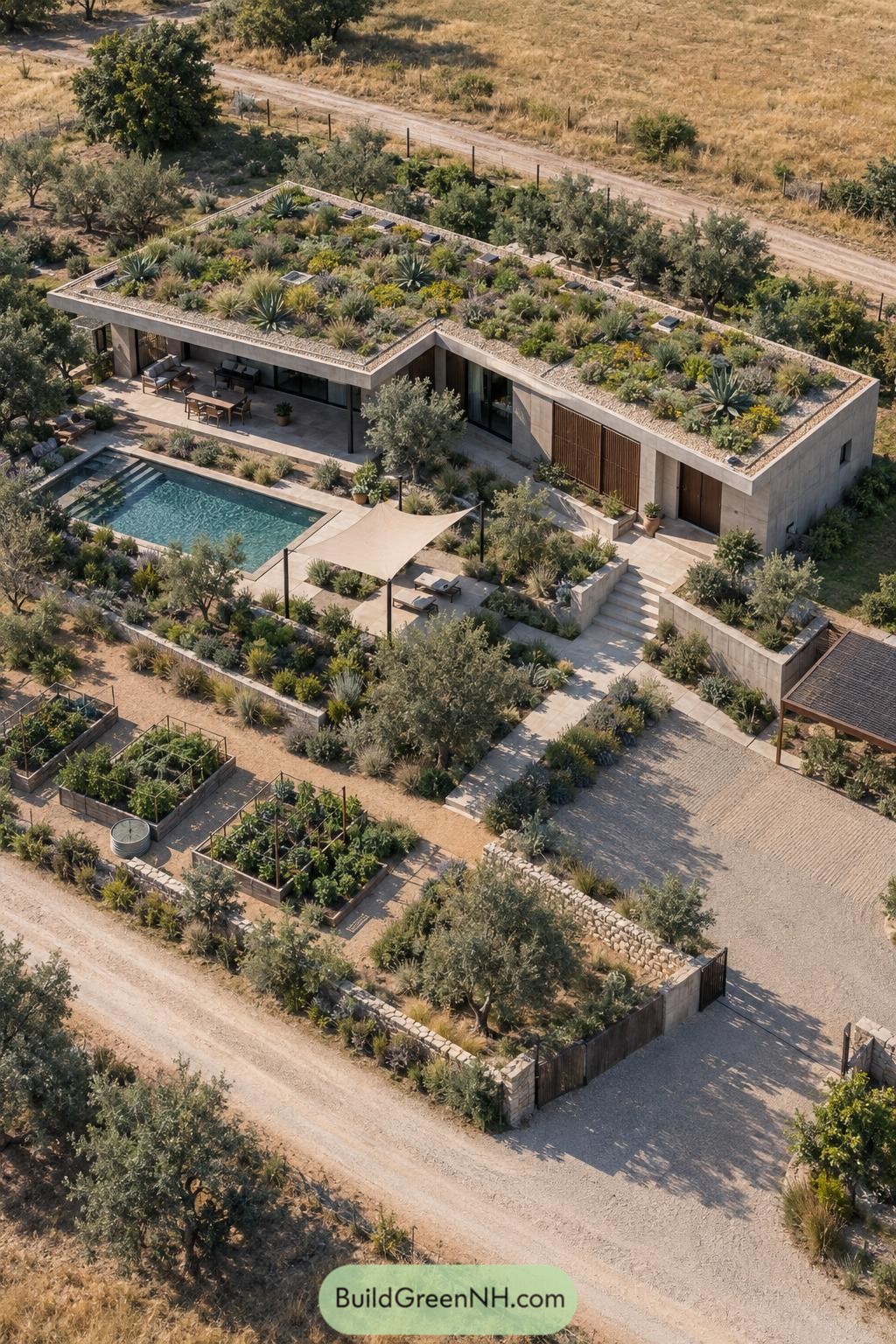

This low, angular villa settles into the olive grove with a densely planted roof of agaves, grasses, sedums, and flowering drought tolerant groundcover. Its muted stone walls and deep overhangs keep the home cool while letting the garden feel like it simply wandered uphill.
The roof planting echoes the dry countryside and softens the building’s crisp outline from above, which is a pretty smart trick for a flat roof. Below, raised vegetable beds, gravel paths, a shaded pool terrace, and native planting turn the grounds into an easygoing outdoor retreat.
Pollinator Pavilion Skyline Home
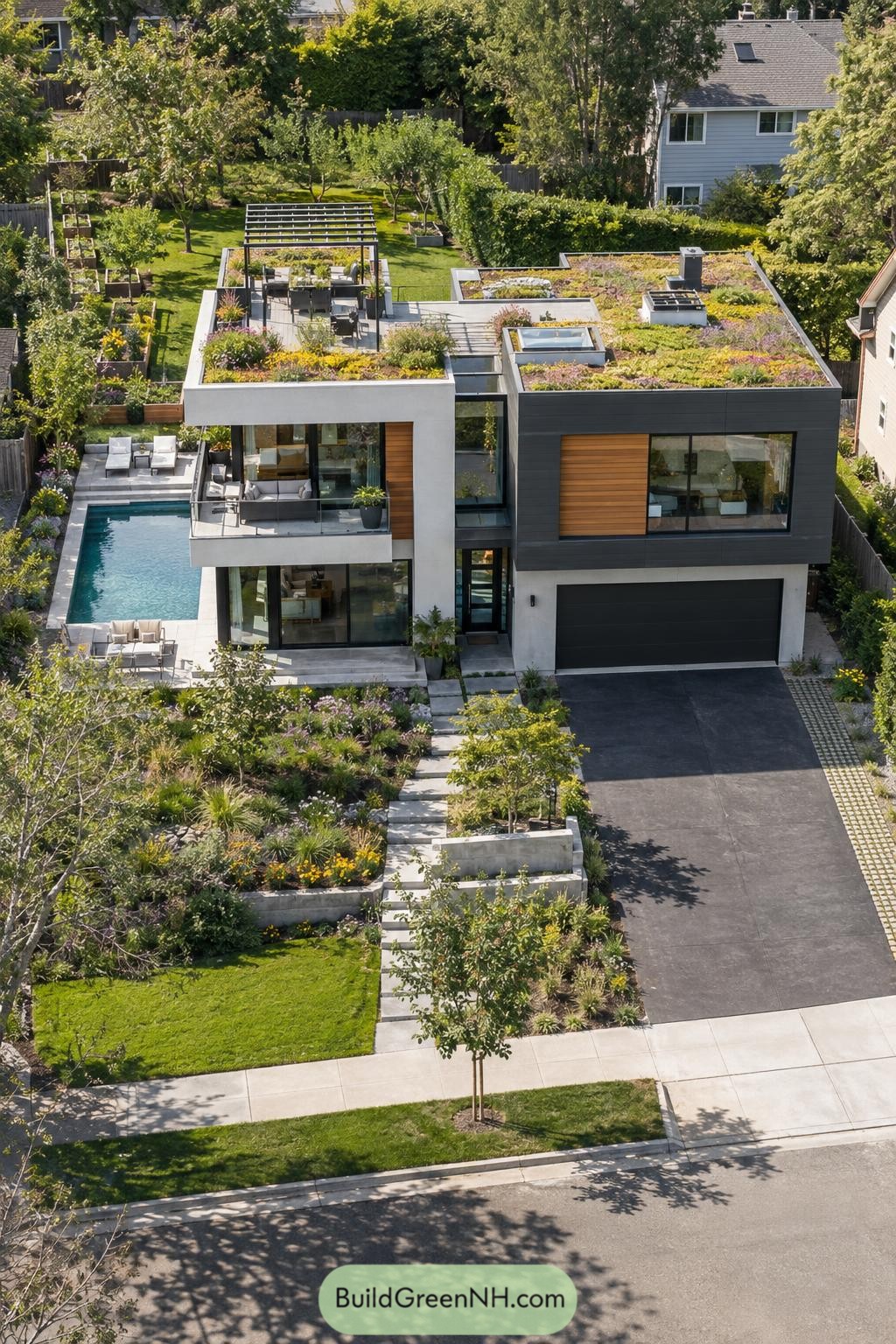

Flowering sedum roofs turn this crisp, boxy residence into a small urban habitat. Planted across multiple roof levels, they soften the charcoal cladding and white concrete without making the house feel fuzzy around the edges.
A pergola-covered terrace creates an easy outdoor room above the living spaces, while broad windows connect it all to the pool and garden below. The mix of roof planting, skylights, and clean lines was inspired by the idea that a city home can be practical, polished, and still let bees have a nice day.
Kitchen Garden Pond Retreat
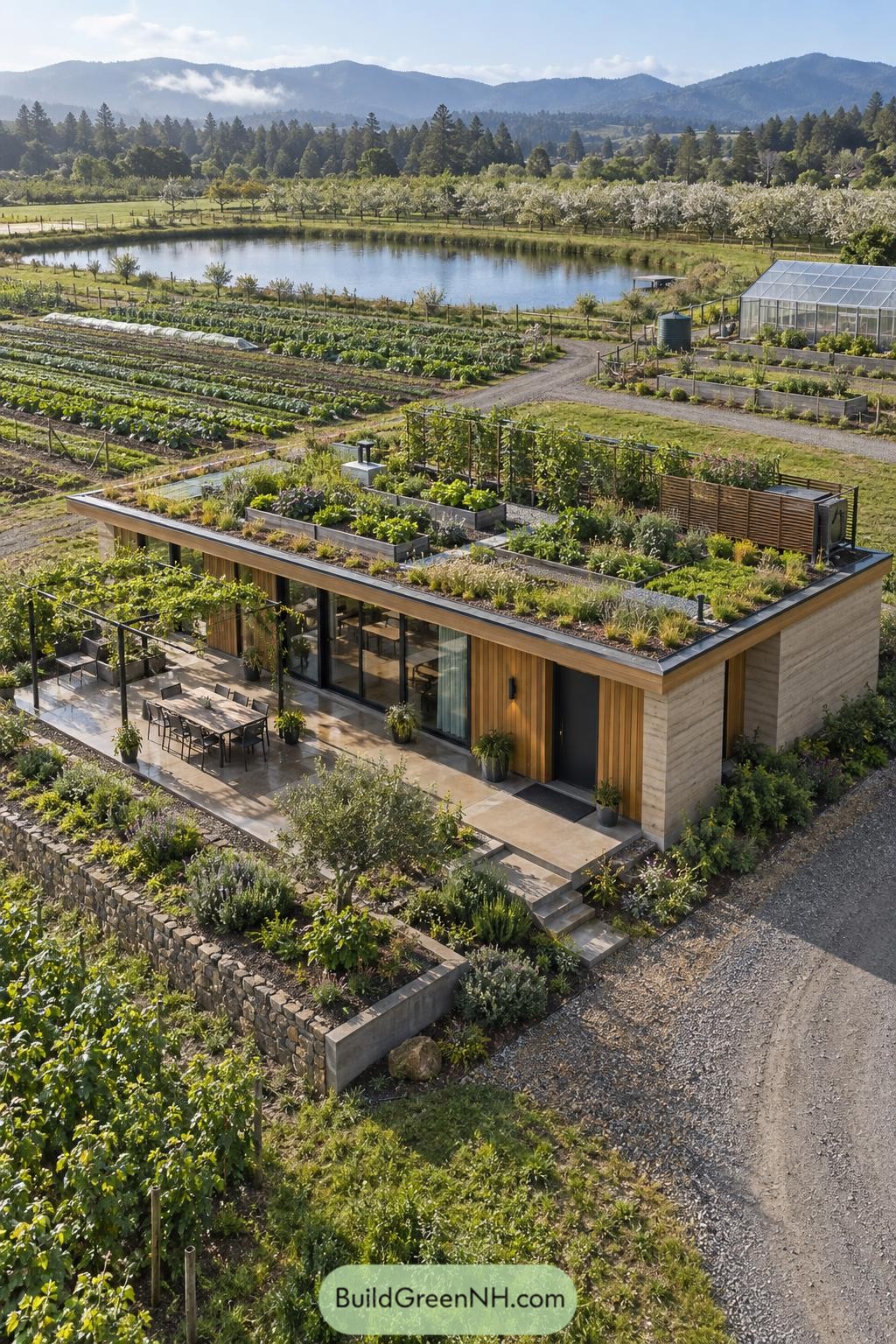

This compact timber home carries a planted roof that feels like an extension of the surrounding vegetable garden. Low grasses, herbs, and flowering perennials soften its clean roofline while helping manage rainwater naturally.
Wide glazing opens onto a sheltered dining terrace, linking everyday living with the productive landscape beyond. Raised beds, vines, and a small roof terrace make the place feel wonderfully useful, because a garden should not just sit there looking pretty.
Cascading Summit Garden Residence
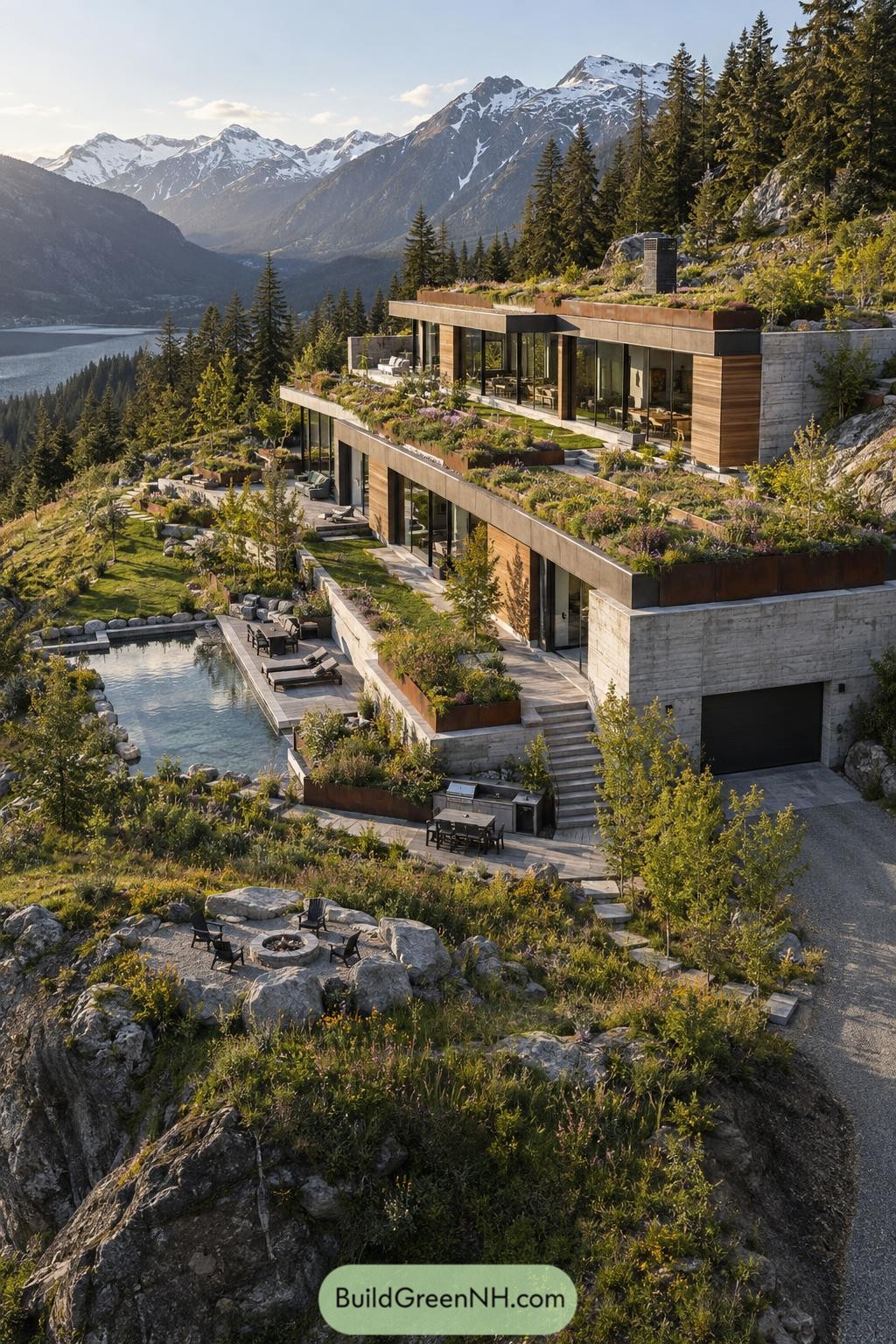

Stepped terraces follow the rocky slope, each capped with deep planting beds that soften the home’s crisp stone and timber lines. The alpine setting inspired a garden that feels tucked into the hillside, not plunked on top of it.
Wildflowers, grasses, and young trees spill across the roof levels, while broad glazing keeps every room tied to the lake and snowy peaks. A natural swimming pond and stone fire circle extend the living spaces outdoors, because a mountain view this good deserves company.
Prairie Pond Green Roof Estate
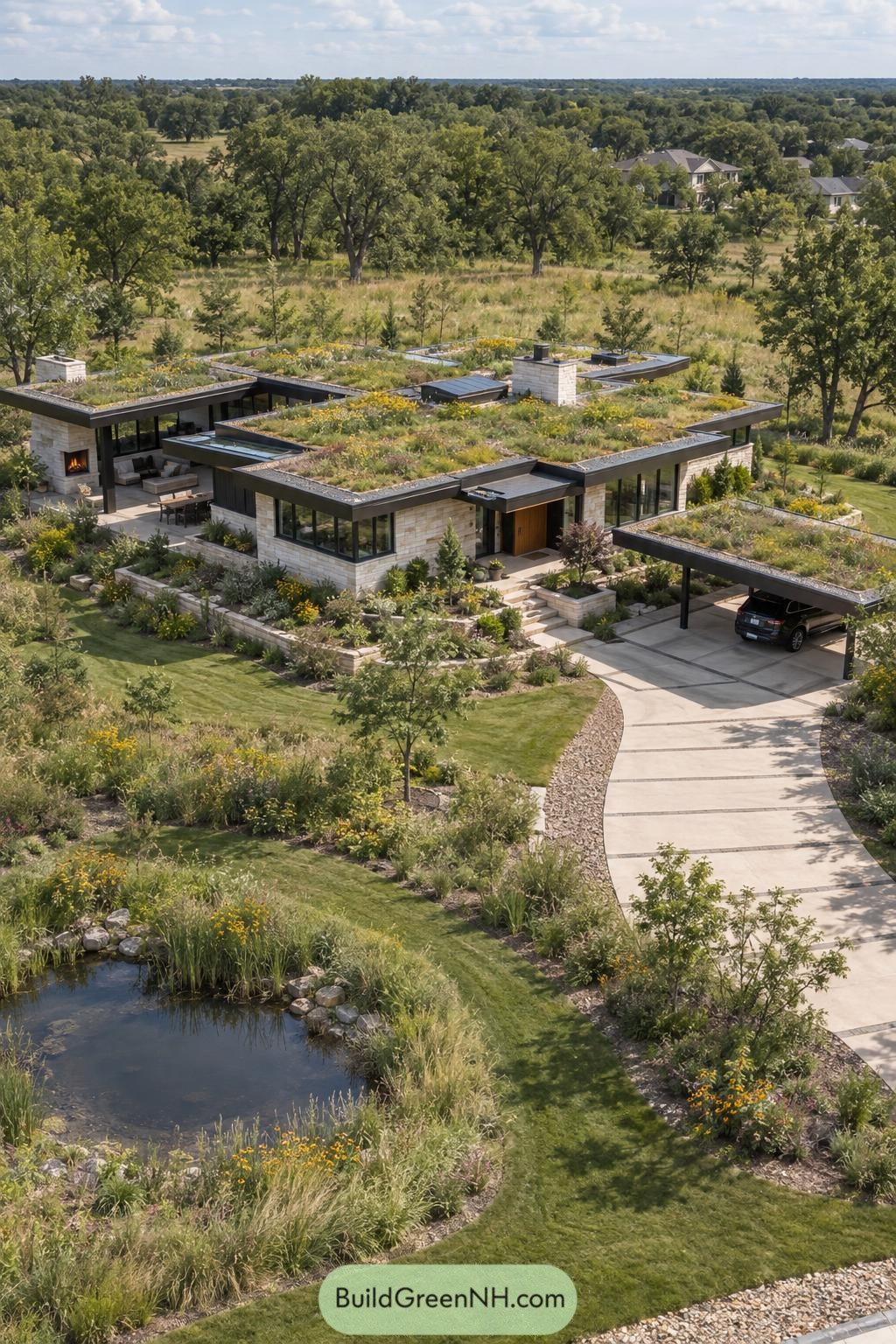

Native grasses and flowering plants spill across the low roof planes, giving this stone-clad home the feel of a prairie that simply decided to move upstairs. Broad glazing, deep overhangs, and sheltered patios keep the layout open to the surrounding trees without turning the house into a fishbowl.
A small pond and layered native planting beds extend that living landscape down to the driveway, softening the crisp concrete curves. The planted roofs help manage rainwater and cool the home, while also making the chimney look slightly less bossy.
Pondside Cedar Roof Compound
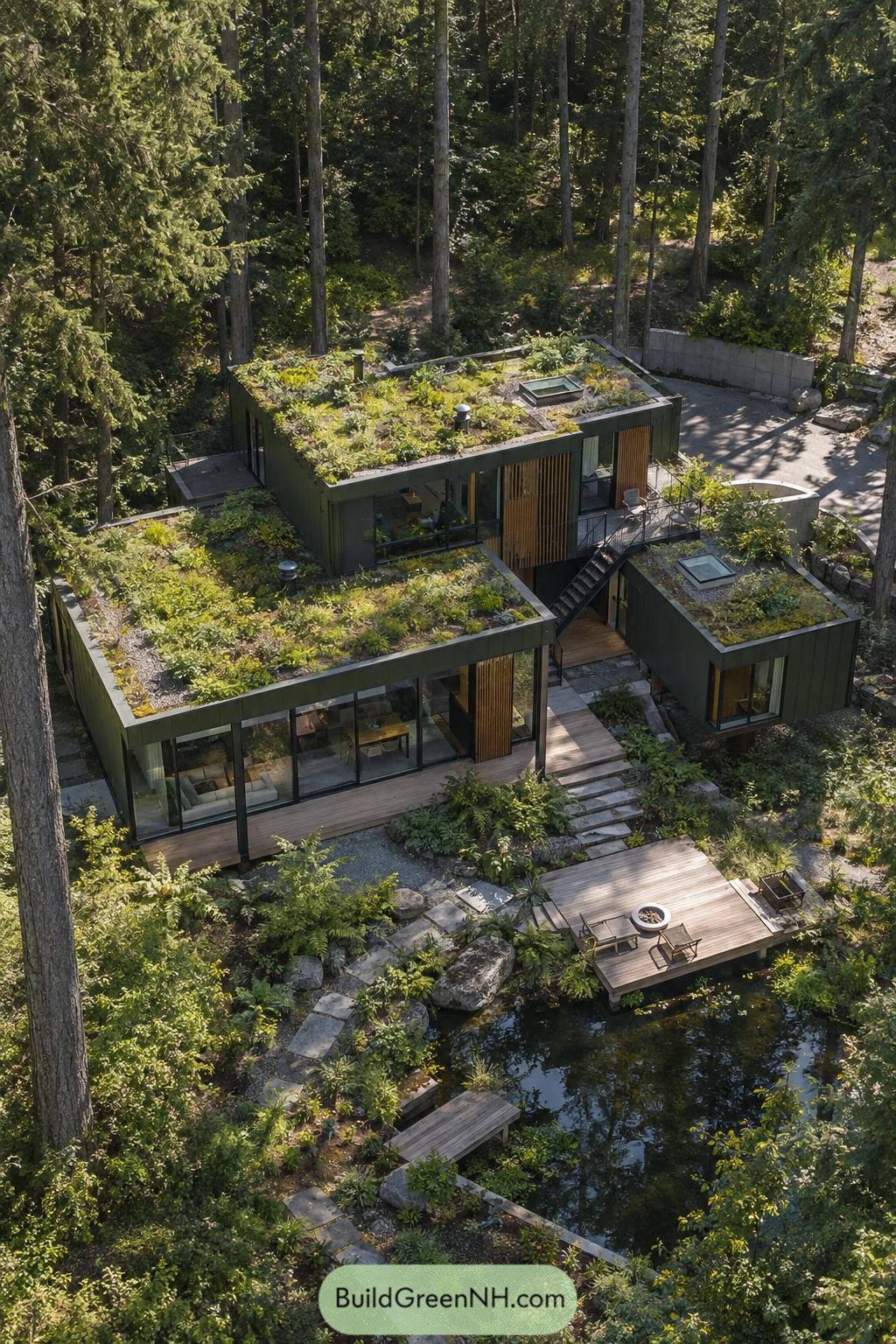

Three low modern volumes tuck into the trees, each capped with a richly planted roof that makes the house feel borrowed from the forest floor. Dark cladding, wide glazing, and cedar screens keep the look quiet and a little secretive, in a good way.
The design takes its cue from the surrounding evergreens and rocky pond edge, so native-style roof planting spills softly over crisp roof lines. Timber terraces and stepping-stone paths lead down to the water, making outdoor living feel close at hand without turning the garden into a theme park.
Sinuous Vineyard Pool Roof Villa
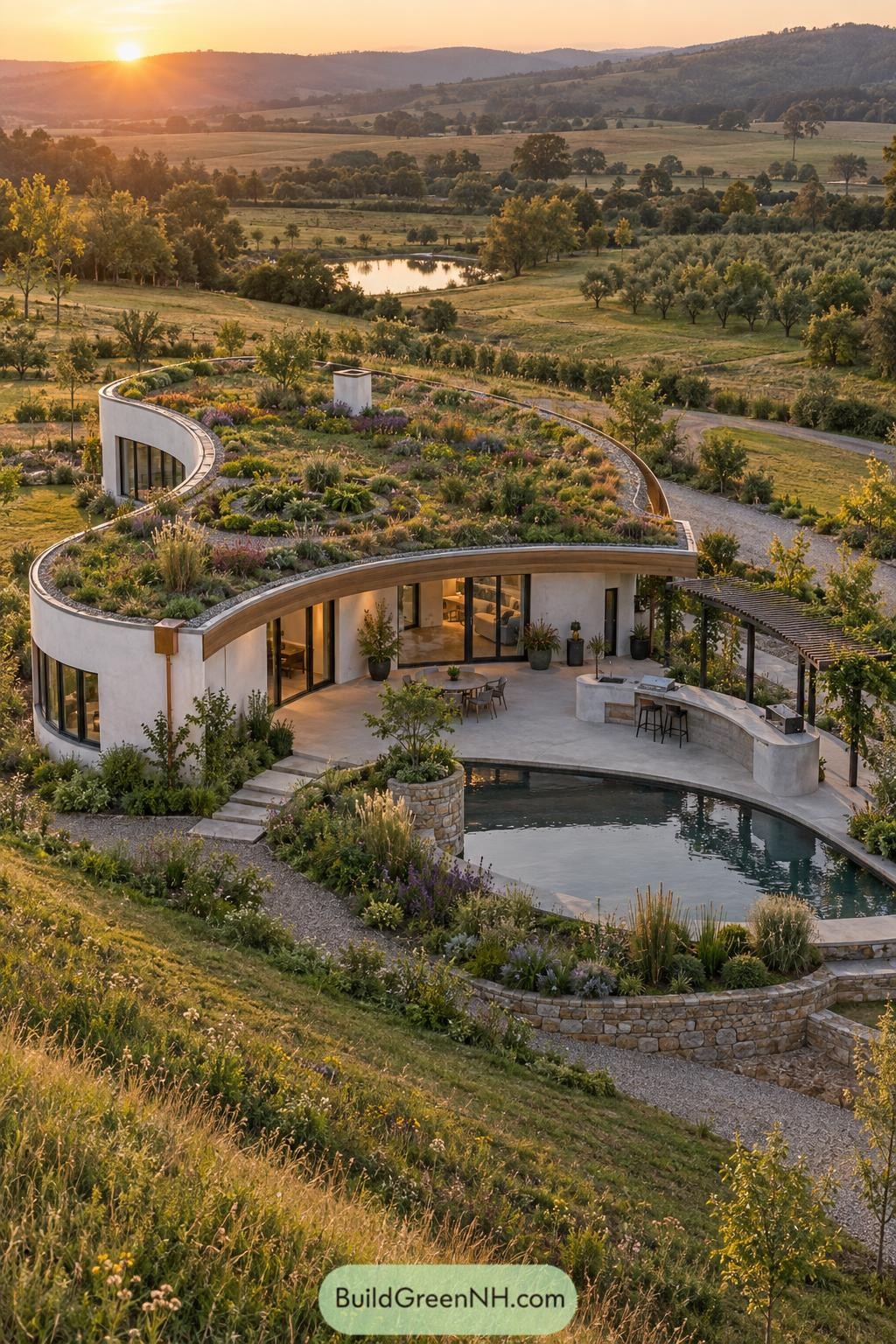

This low-slung villa follows the hillside in broad curves, with a planted roof spilling over its rounded edges. Wildflowers, grasses, and small shrubs make the structure feel tucked into the land rather than dropped onto it.
A sunken pool terrace wraps the home with a curved outdoor kitchen and pergola for easy summer dinners. Stone garden walls and winding paths soften the setting, while the roof garden gives local pollinators a pretty excellent address.
Harborstone Terrace Garden House
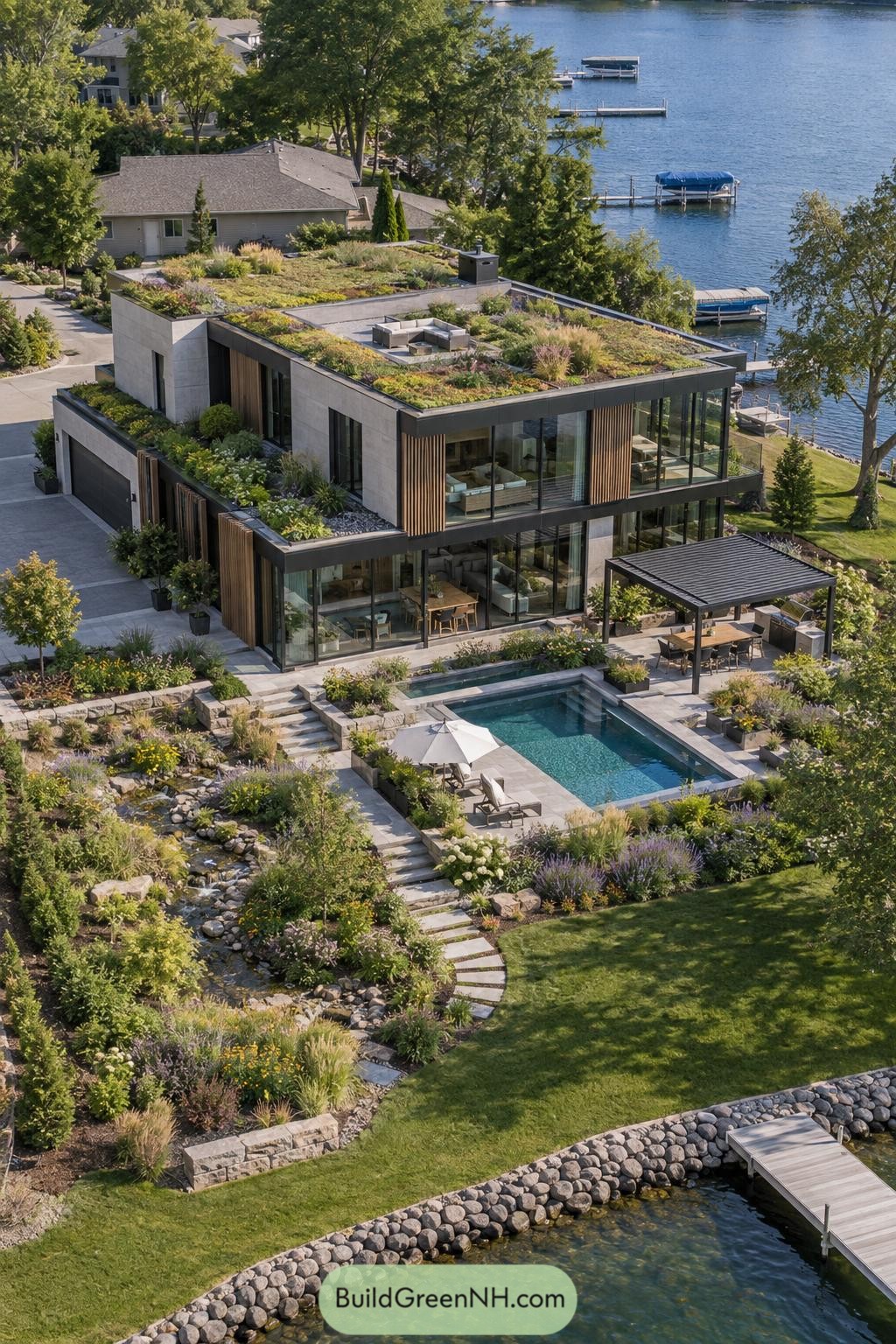

A lush planted roof crowns this crisp lakeside home, extending the surrounding garden right up over its upper level. Low meadow grasses, flowering perennials, and a small rooftop lounge make the roof feel less like a cap and more like an extra backyard.
Broad glass walls open toward the pool, stone-lined water garden, and lake beyond, while timber screens soften the clean geometric form. The layered planting helps settle the home into its leafy setting, and gives the whole place a pleasantly overachieving garden hat.
Summit Creek Gable Garden Cabin
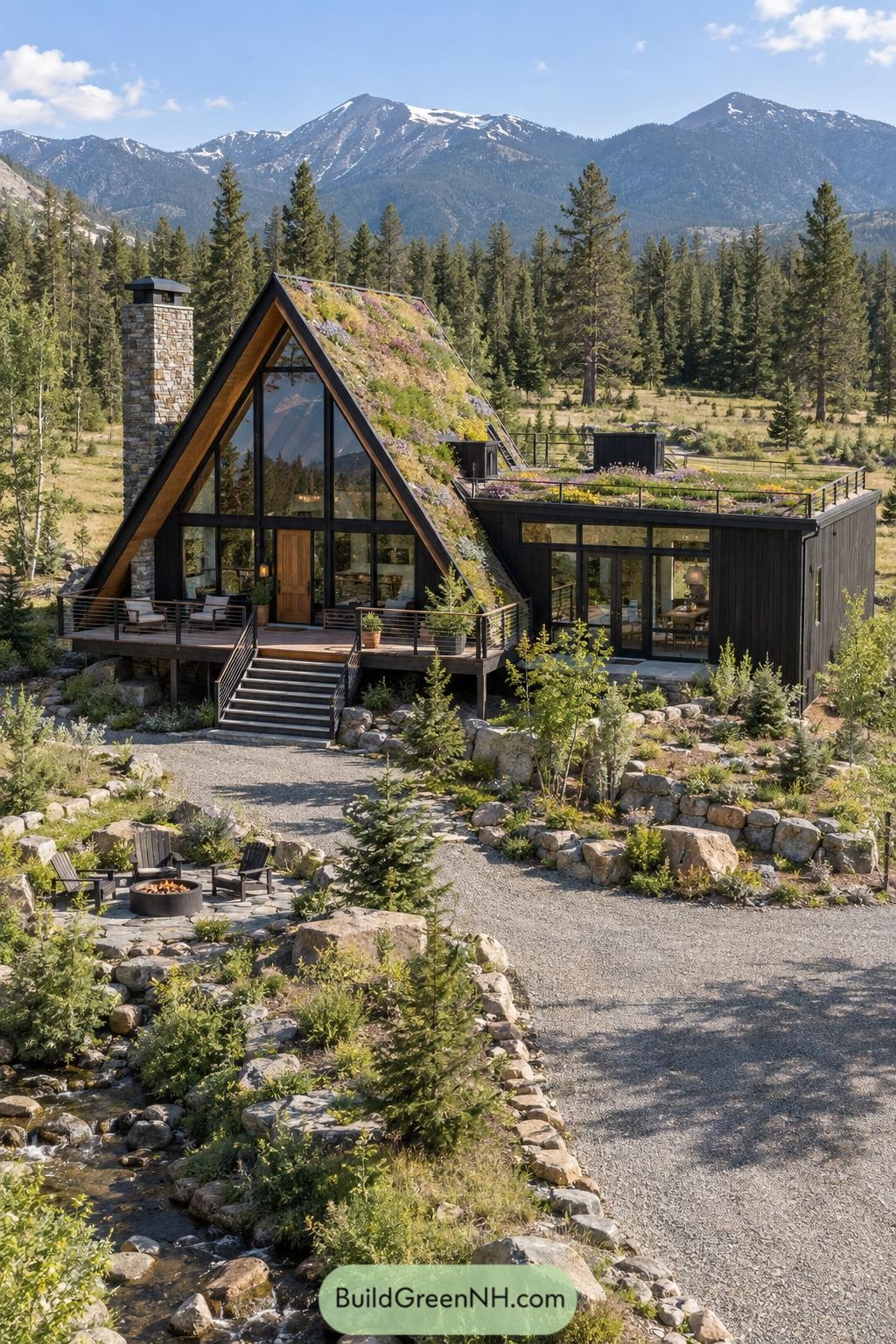

The steep planted roof wraps the A frame form in grasses and small blooms, giving the cabin a soft foothill finish. Its deep pitch sheds mountain weather neatly, which is handy when winter gets bossy.
A stone chimney and broad glass entry add warmth against the dark cladding, while the deck opens toward the creekside garden. Raised roof beds extend the planting across the lower wing, making the house feel settled into the rocky site.
Walled Citrus Courtyard Roof Villa
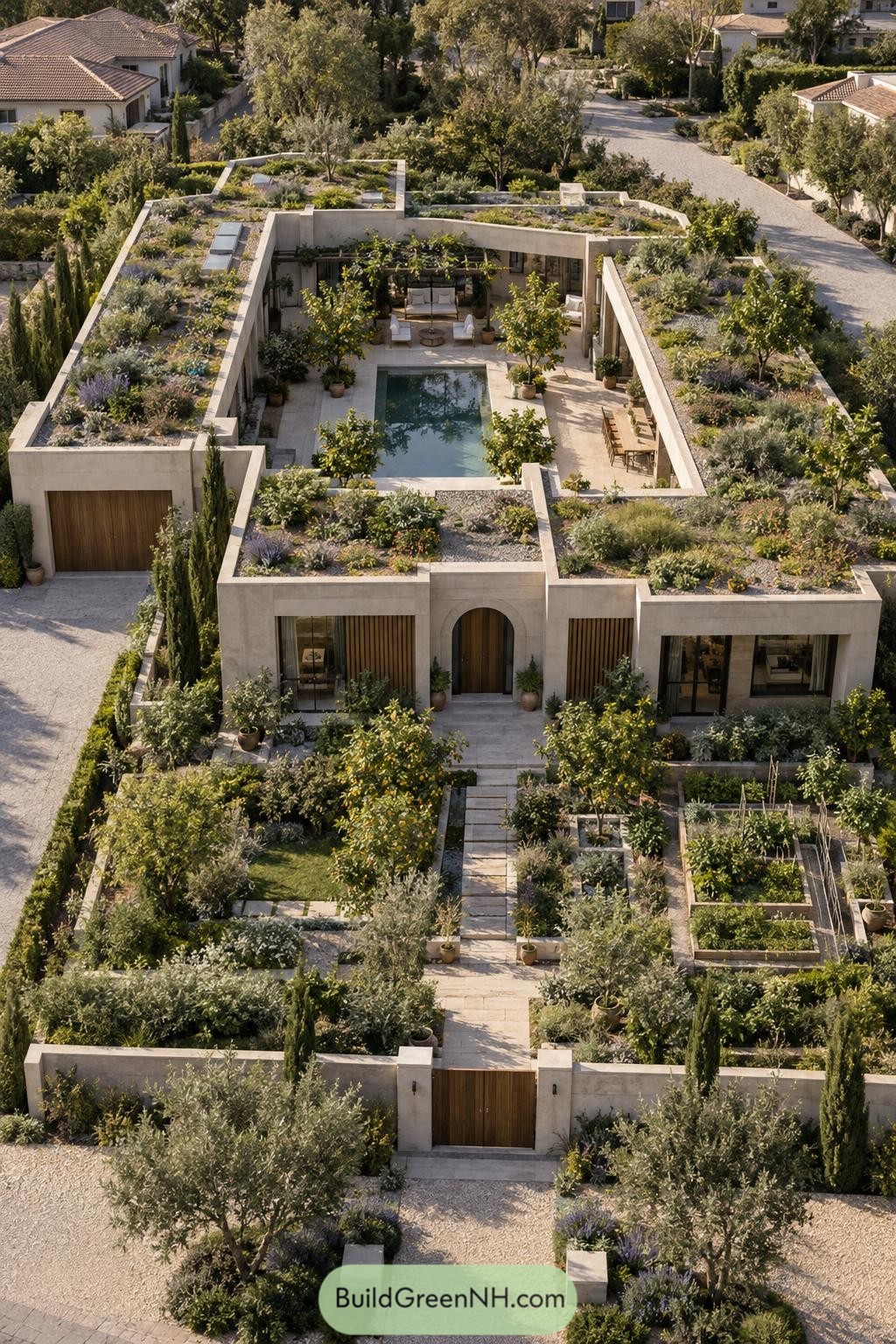

Low limestone volumes wrap a sheltered courtyard pool, with broad planted roofs that extend the garden upward. Citrus trees, lavender, olives, and silvery shrubs soften the crisp geometry, making the home feel tucked into its landscape rather than parked on it.
The roof gardens draw from Mediterranean orchards and dry-climate planting, using layered beds to cool the structure and manage rainwater naturally. An arched entry, timber screens, and a kitchen garden add warmth to the clean layout, because even a polished villa needs somewhere for tomatoes to show off.
Pin this for later:
Want More?
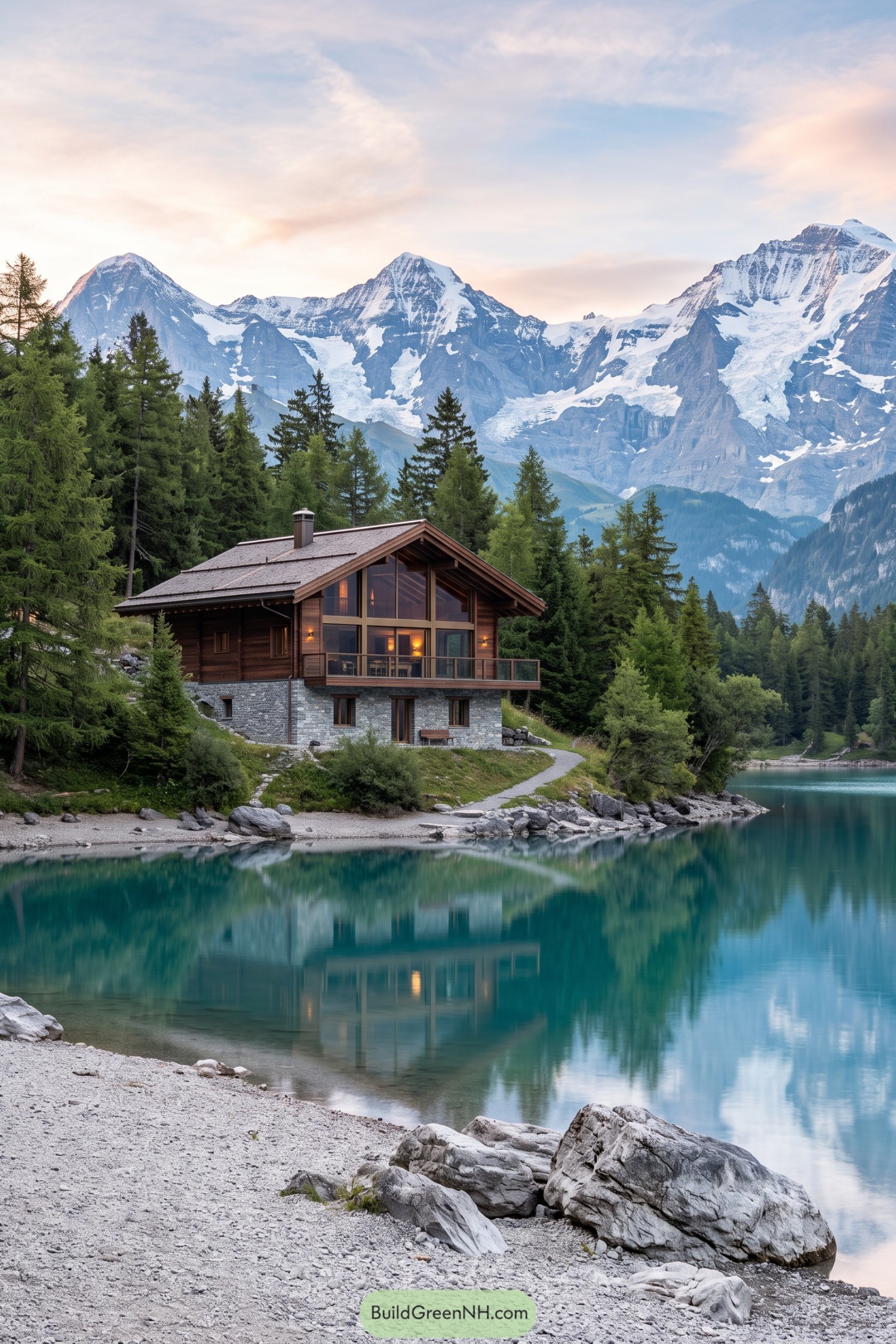 20 Swiss Chalet Homes That Turn Mountain Dreams Into Reality
 20 Spectacular Ski Chalets with Secret Alpine Escapes
 17 Modern Ski Chalets With Serious Alpine Soul
 20 Small Double Barn Houses That Make Small Living Feel Twice As Big
 20 Clever Double Barn Houses You’ll Love
Table of Contents