Last updated on
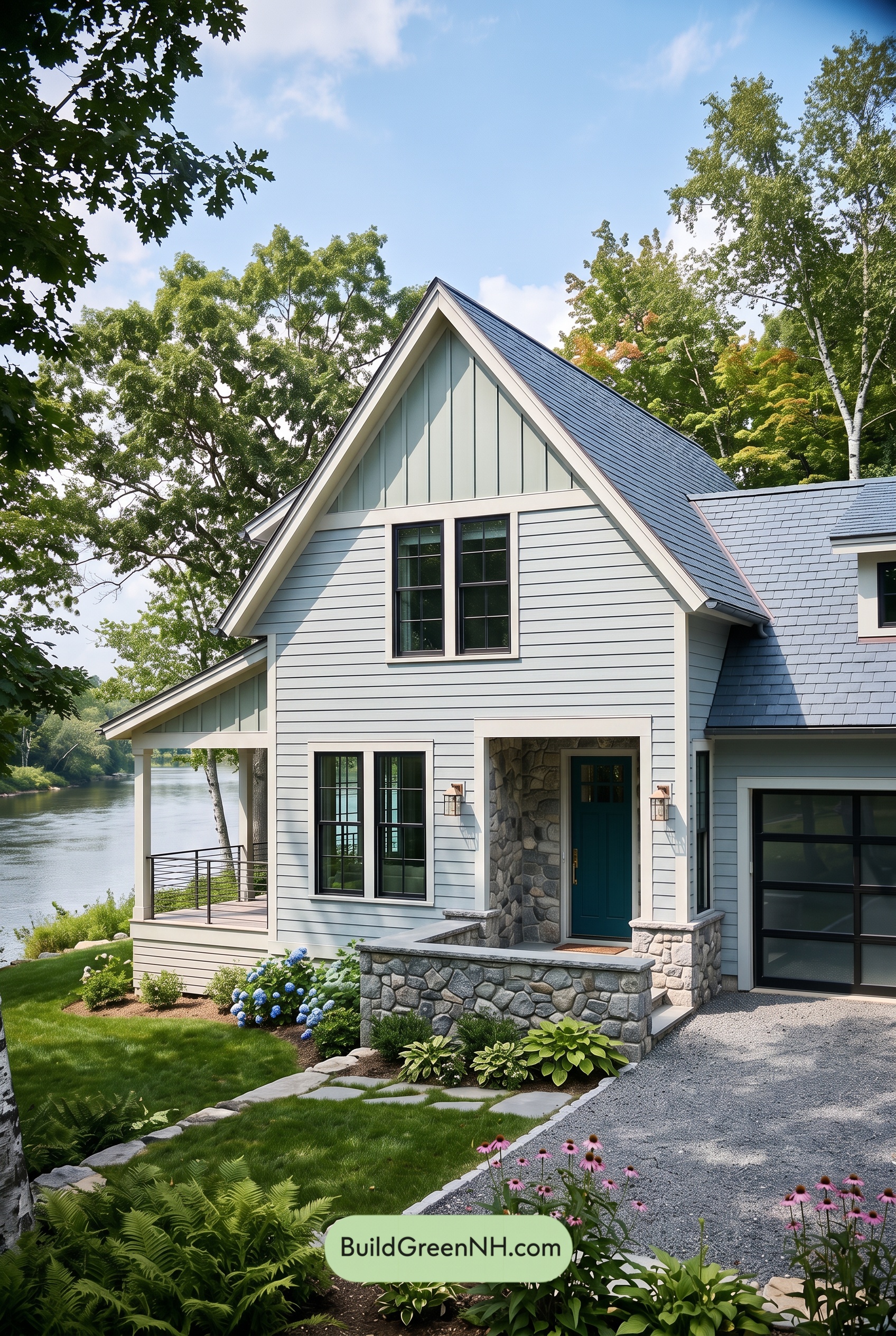

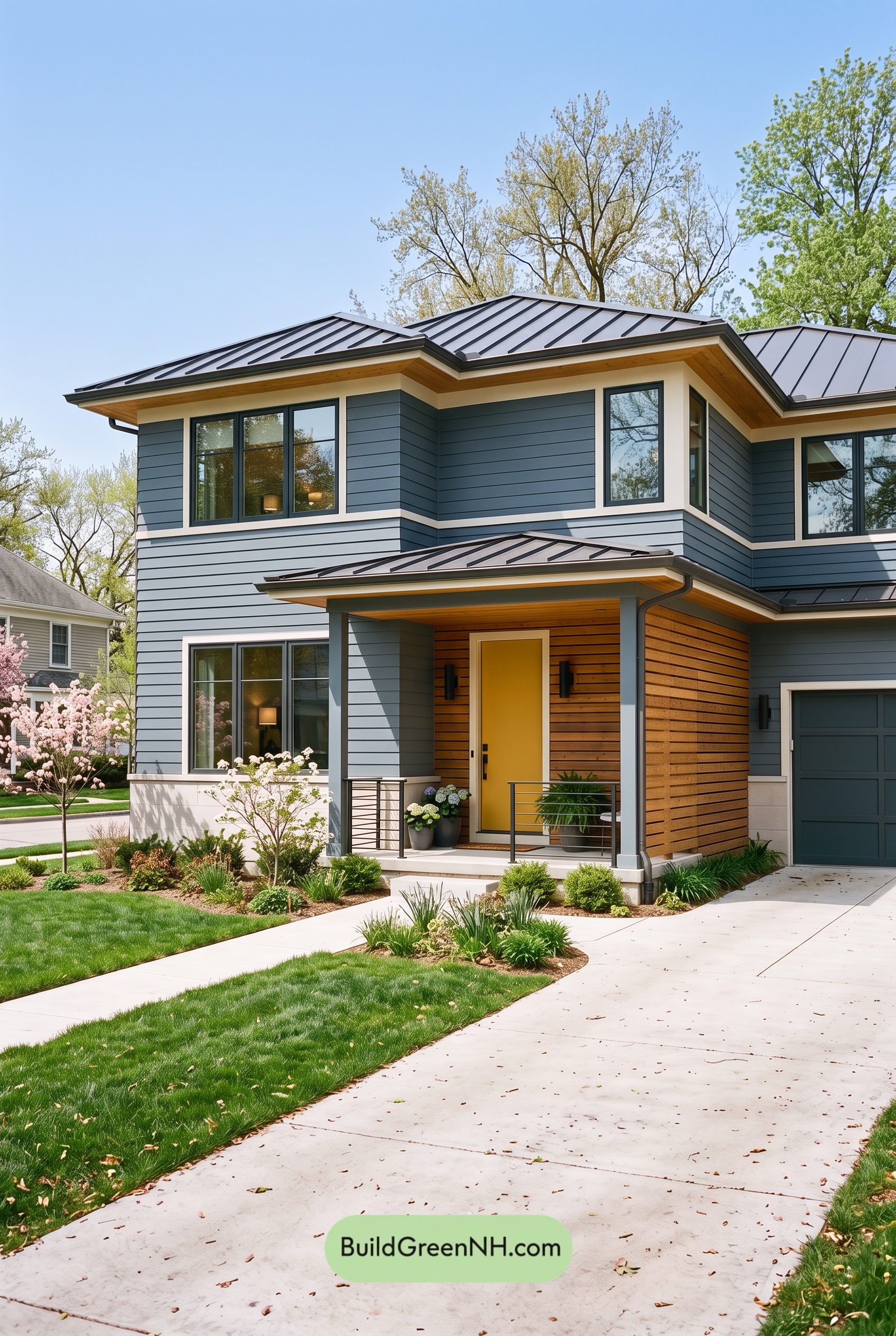
This layered blend of soft gray, crisp white, and deep blue creates a polished exterior that feels both serene and unmistakably inviting.
A Calm, Light-Filled Foundation
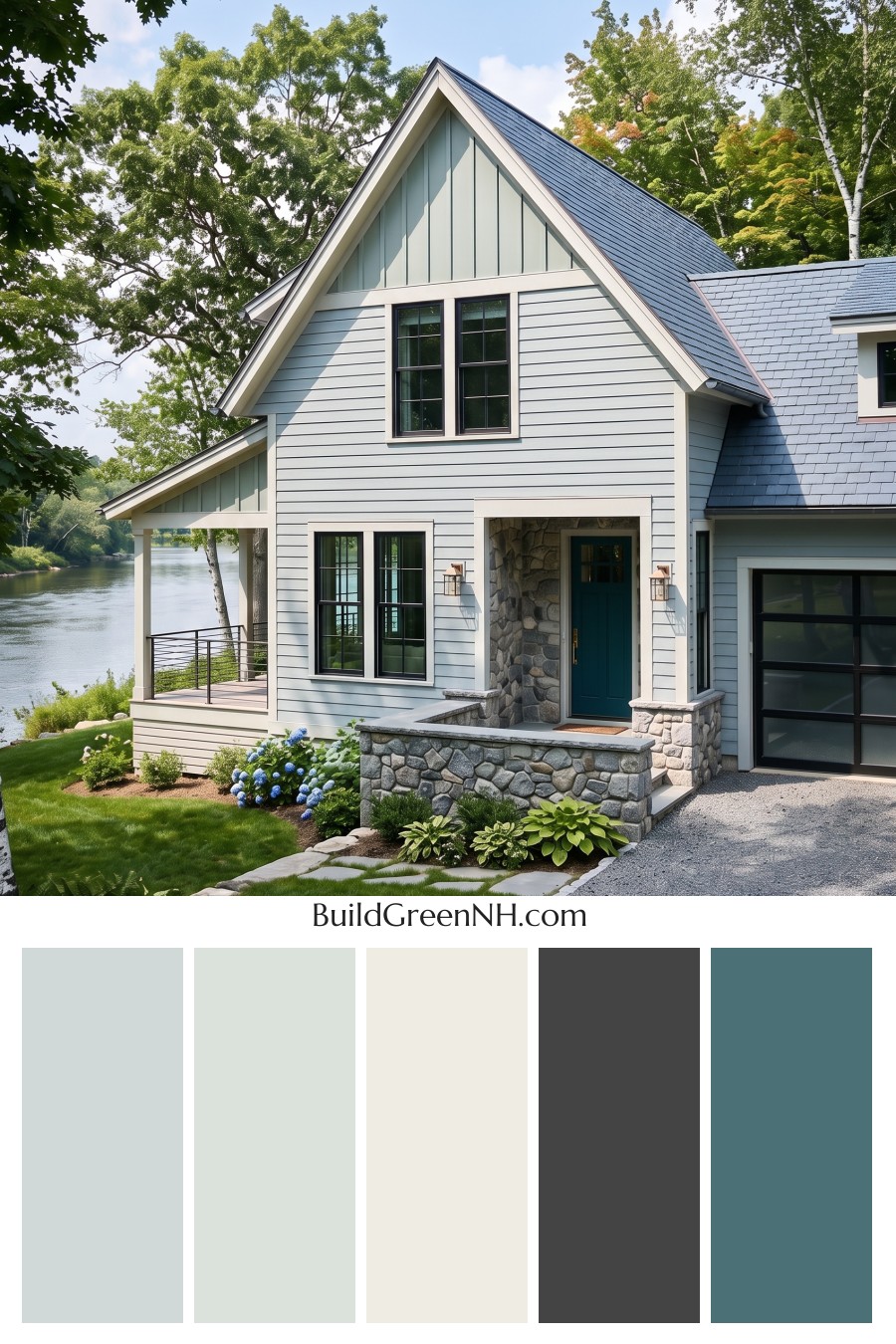
The main siding is finished in a pale, cool gray that gives the home an airy, refined presence. Its subtle blue undertone connects beautifully with the natural setting while keeping the tall gables and broad façade from feeling too heavy. The upper gable areas shift to a lighter white-based shade, adding gentle contrast and emphasizing the home’s vertical lines.
Crisp Trim Defines the Architecture
Bright white trim traces the rooflines, window surrounds, columns, and porch details with clean precision. This light framing sharpens the silhouette of the steep gables and brings a fresh, tailored finish to the horizontal siding. Against the soft gray walls, the trim feels classic without becoming overly formal.
Deep Accents Add Modern Definition
Dark charcoal-gray window frames and railings introduce a welcome layer of depth. They create strong visual anchors across the lighter exterior, giving the windows a crisp, contemporary presence and lending the porch a streamlined look. The dark gray roof continues this effect, grounding the home from above with a cool, durable-looking finish.
A Rich Blue Door Steals the Spotlight
The front door uses a deep blue shade to create an elegant focal point within the entry. Set beside the surrounding gray stone and pale siding, this saturated accent feels calm rather than flashy. It adds personality to the arrival experience and echoes the cool mood of the roof, windows, and exterior walls.
A Balanced Lakeside Mood
Together, these shades create a relaxed palette with a quietly upscale character. The soft gray siding keeps the house approachable, white trim brings brightness, and the deep blue and charcoal-gray details supply contrast. It is a beautifully balanced exterior scheme that feels especially at home among lush greenery, stonework, and water views.
Next, see how this color scheme looks under different lighting simulations throughout the day.
Overcast
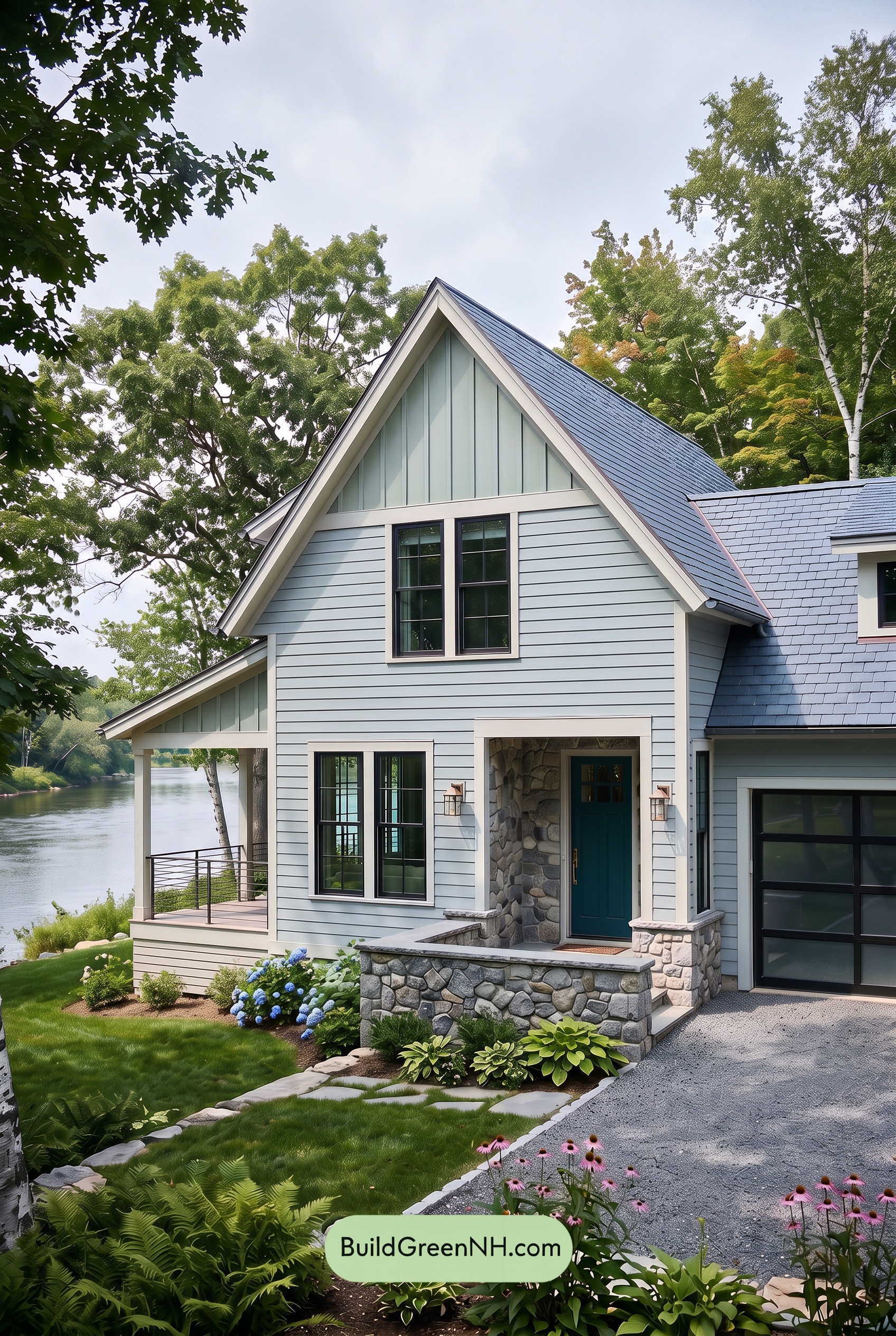
Under overcast skies, the pale gray siding takes on a softer, slightly cooler cast than it shows in neutral daylight, while the white upper wall and trim appear gentler and less bright. With direct sun removed, saturation eases across the facade, reducing sharp highlights and creating a more even, refined look from gable to porch.
The deep blue door and dark gray window frames become more visually prominent against the muted light neutrals, though their contrast feels calmer rather than stark. Shadows around the roofline, stone entry, and railings soften and spread, giving the exterior a quiet, polished mood with a distinctly cozy sense of depth.
Golden Hour
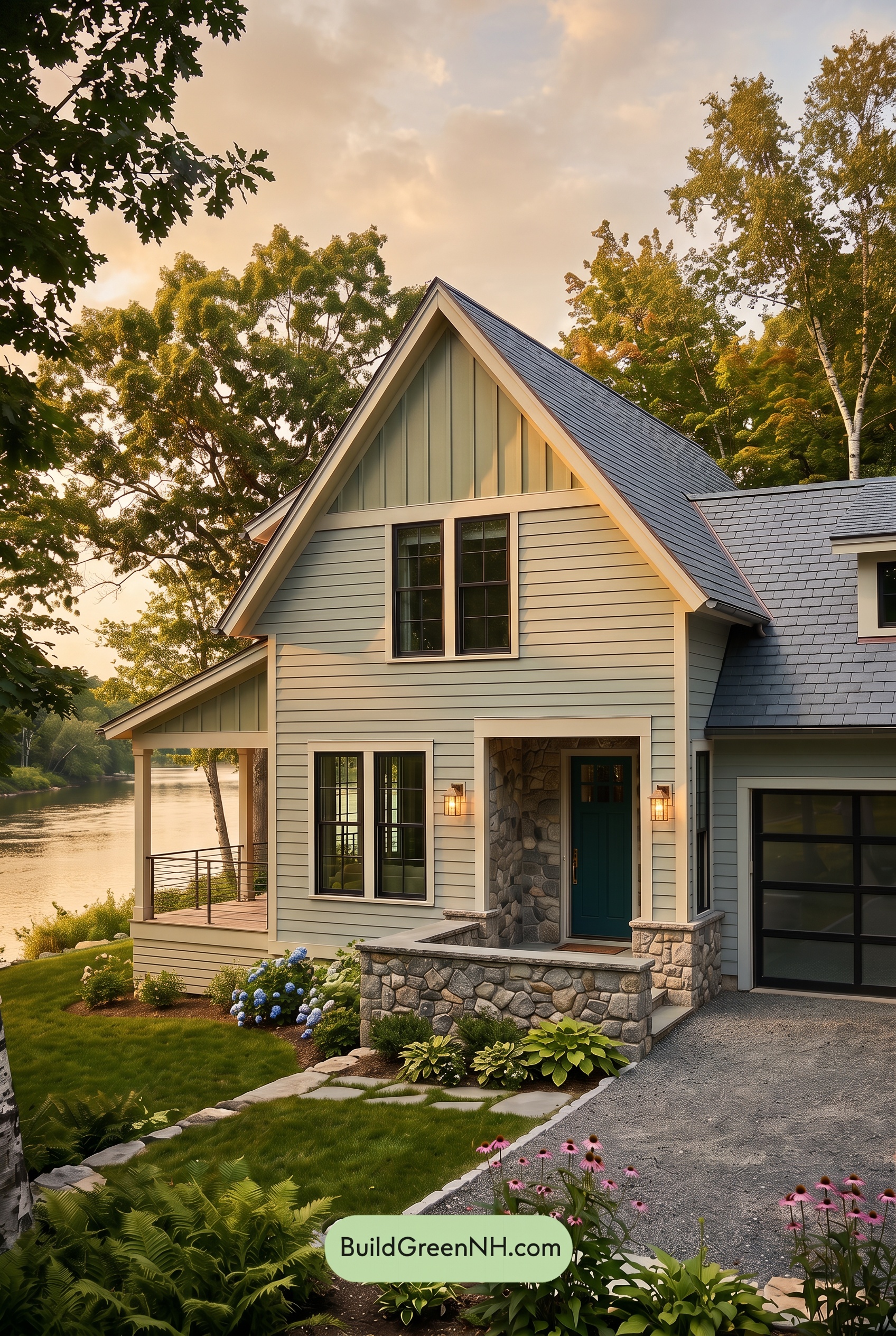
Under Golden Hour, the gray siding takes on a softer, warmer cast than it shows in neutral daylight, while the white upper wall and trim shift toward a gentle creamy glow. This low, angled light enriches the overall saturation just enough to make the facade feel more welcoming, with sunlit planes appearing luminous and shaded areas settling into deeper, moodier gray.
The blue front door becomes richer and more dramatic against the warmed neutrals, while the gray window frames and railings gain stronger definition in the lengthening shadows. Compared with the crisp, even contrast of neutral daylight, Golden Hour creates a layered balance of glowing highlights and deep recesses that gives the exterior a calm, inviting evening presence.
Shade
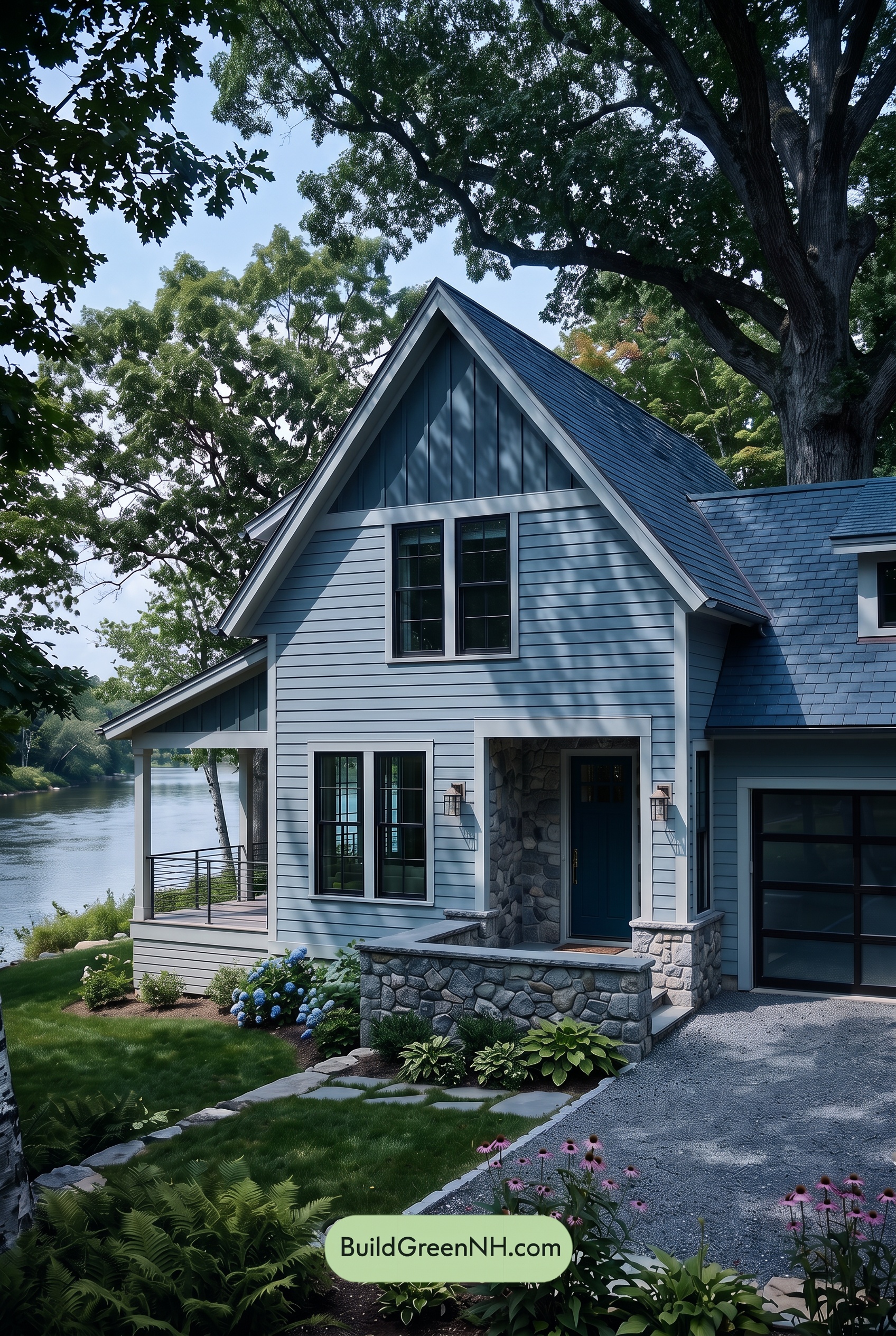
Under shade, the gray siding takes on a deeper, cooler cast than it would in neutral daylight, with its blue undertones becoming more noticeable and its overall saturation feeling slightly muted. Moving leaf shadows create a soft pattern across the façade, giving the layered siding and upper wall extra dimension while making the light white trim appear gentler rather than sharply bright.
The blue front door becomes richer and more reserved in the filtered light, creating a calm focal point against the softened neutrals. Dark gray window frames and railings recede into the shadows, while the contrast between trim, siding, and shaded recesses remains crisp enough to preserve the home’s tailored character. The overall mood shifts from bright and airy in neutral daylight to cool, restful, and quietly refined.
Nighttime
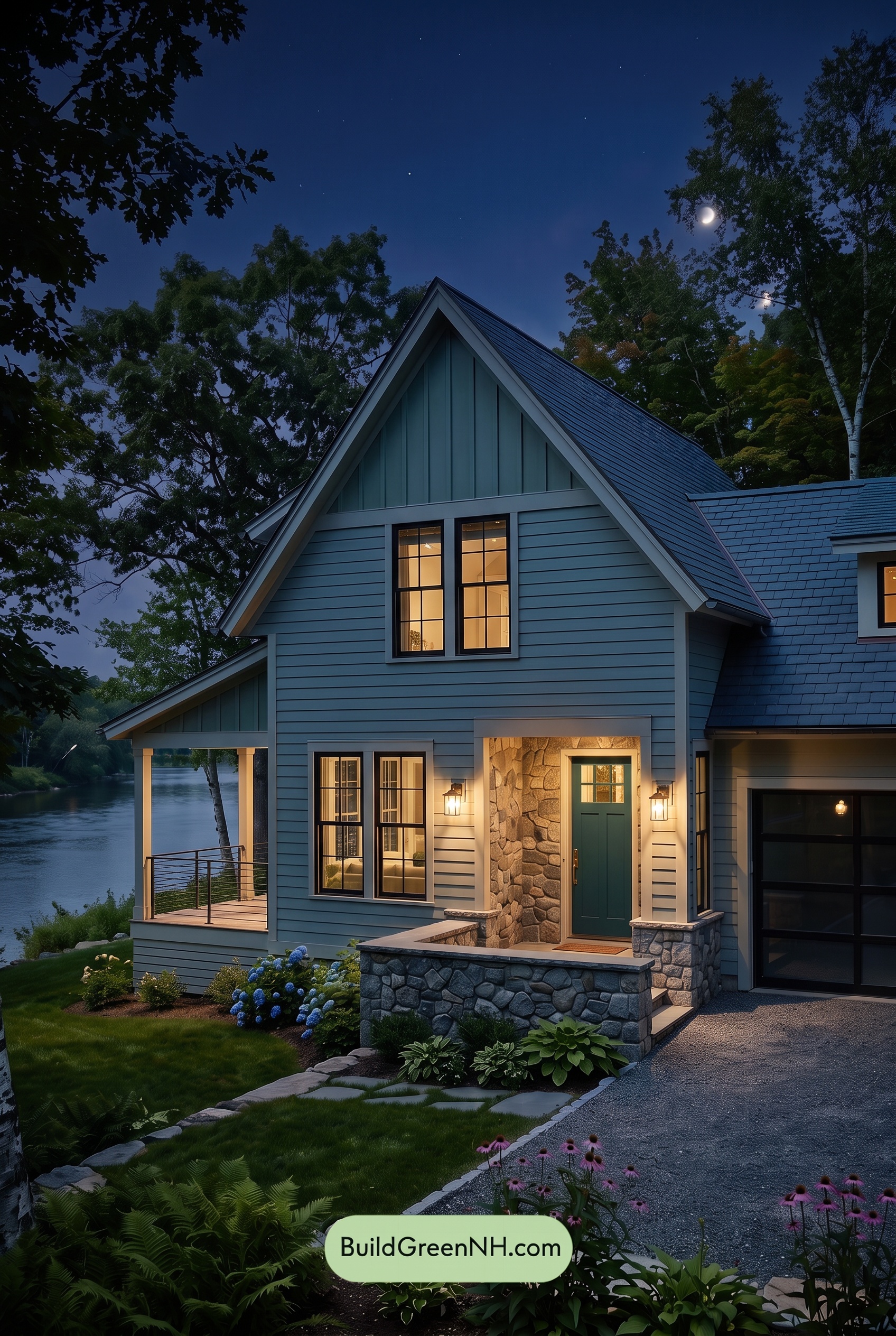
At night, the gray siding takes on a deeper, cooler cast, with its saturation appearing more restrained than it does in neutral daylight. The white upper wall and trim soften under the low light, while their contrast against the darker window frames becomes crisper along rooflines, corners, and porch details. Shadows gather in the recesses, giving the façade a more layered, sculptural look.
Warm light spilling from the windows and entry creates a welcoming counterpoint to the cool exterior shades. The blue door reads richer and more dramatic in this setting, becoming a subtle focal point amid the muted grays, while the overall palette shifts from daylight clarity to a calm, intimate evening mood.
Pin these for later:
Want More?
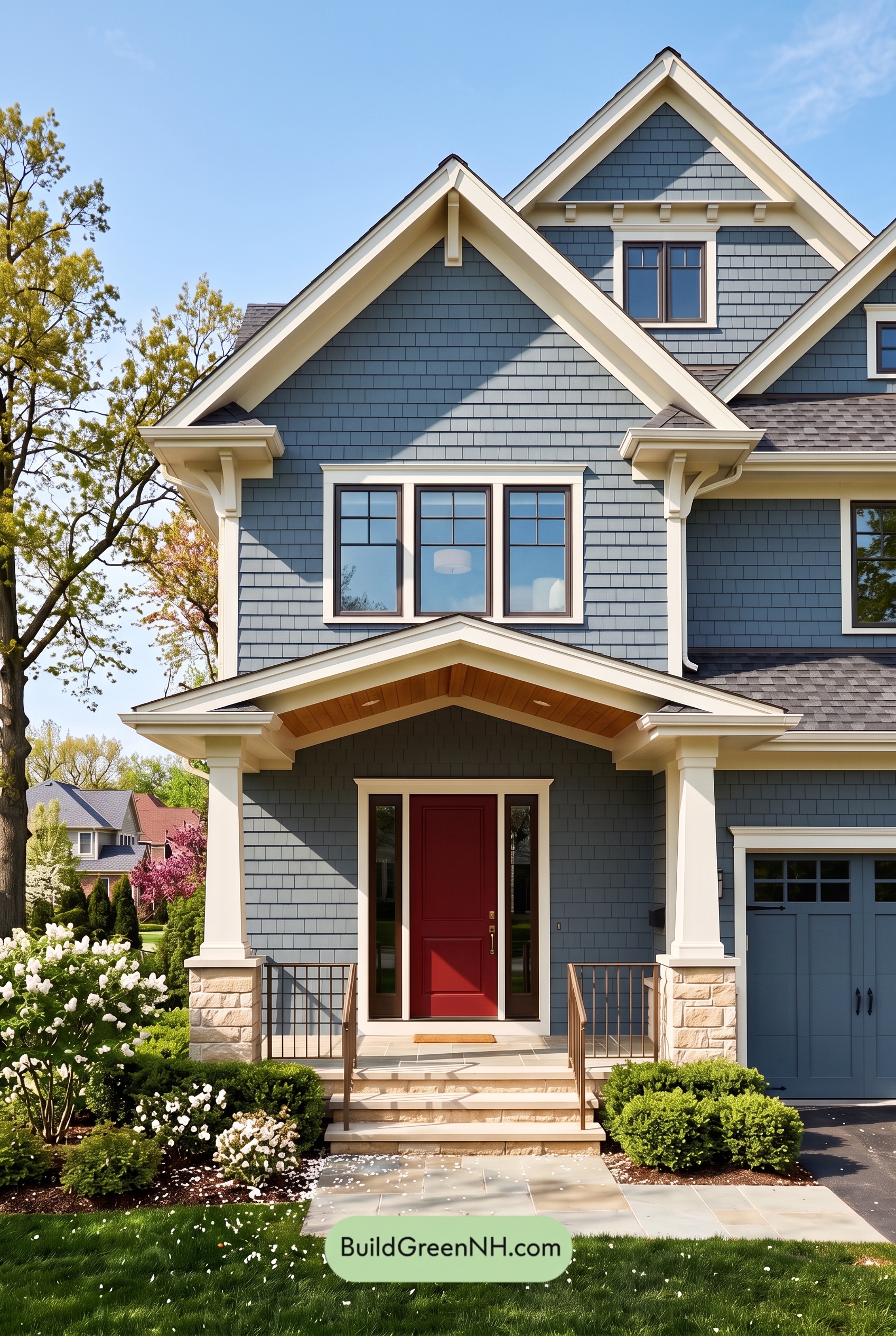 Red Front Door House Paint Color Scheme: Denim Blue Homecoming
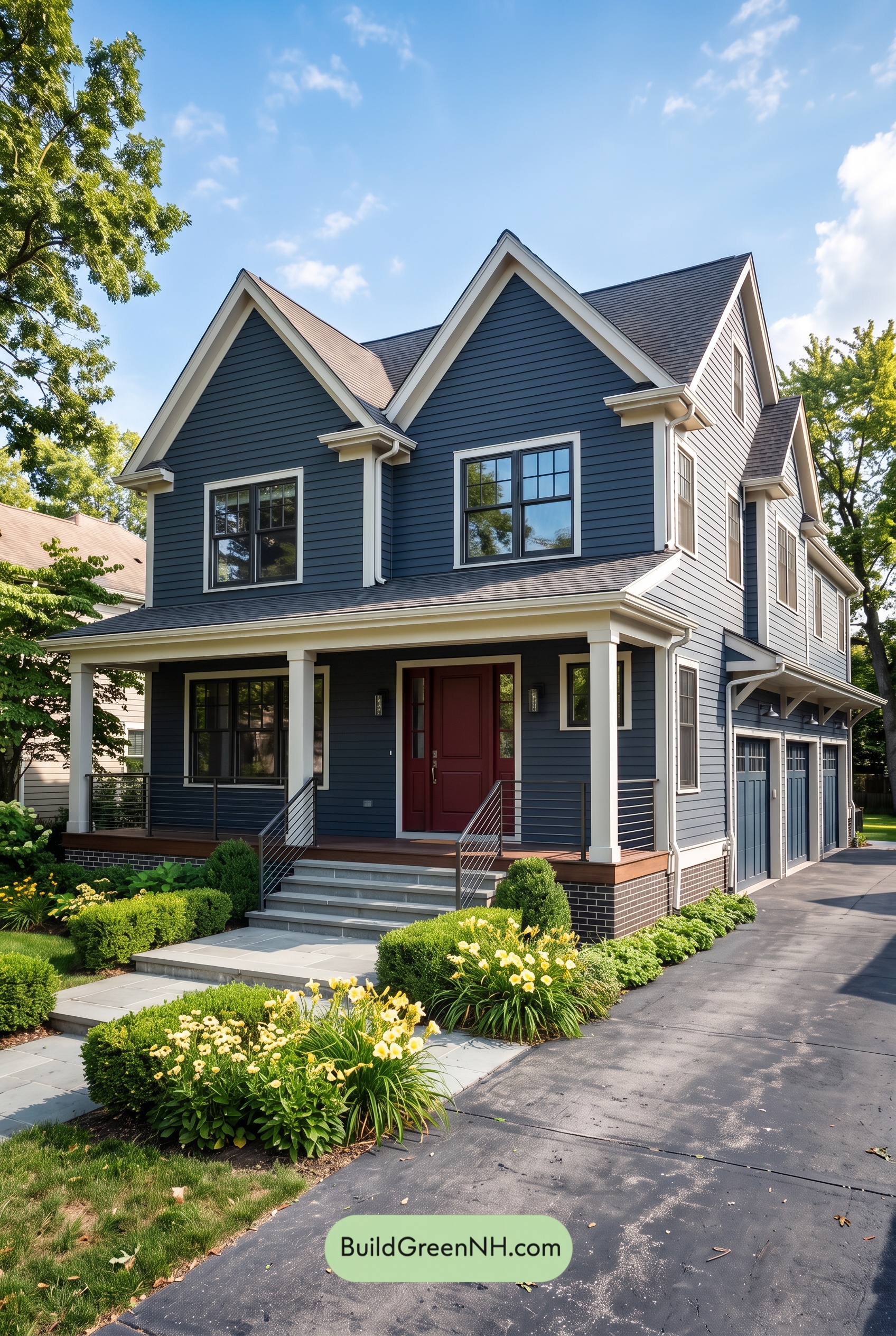 Red Front Door House Paint Color Scheme: Midnight Blue Assurance
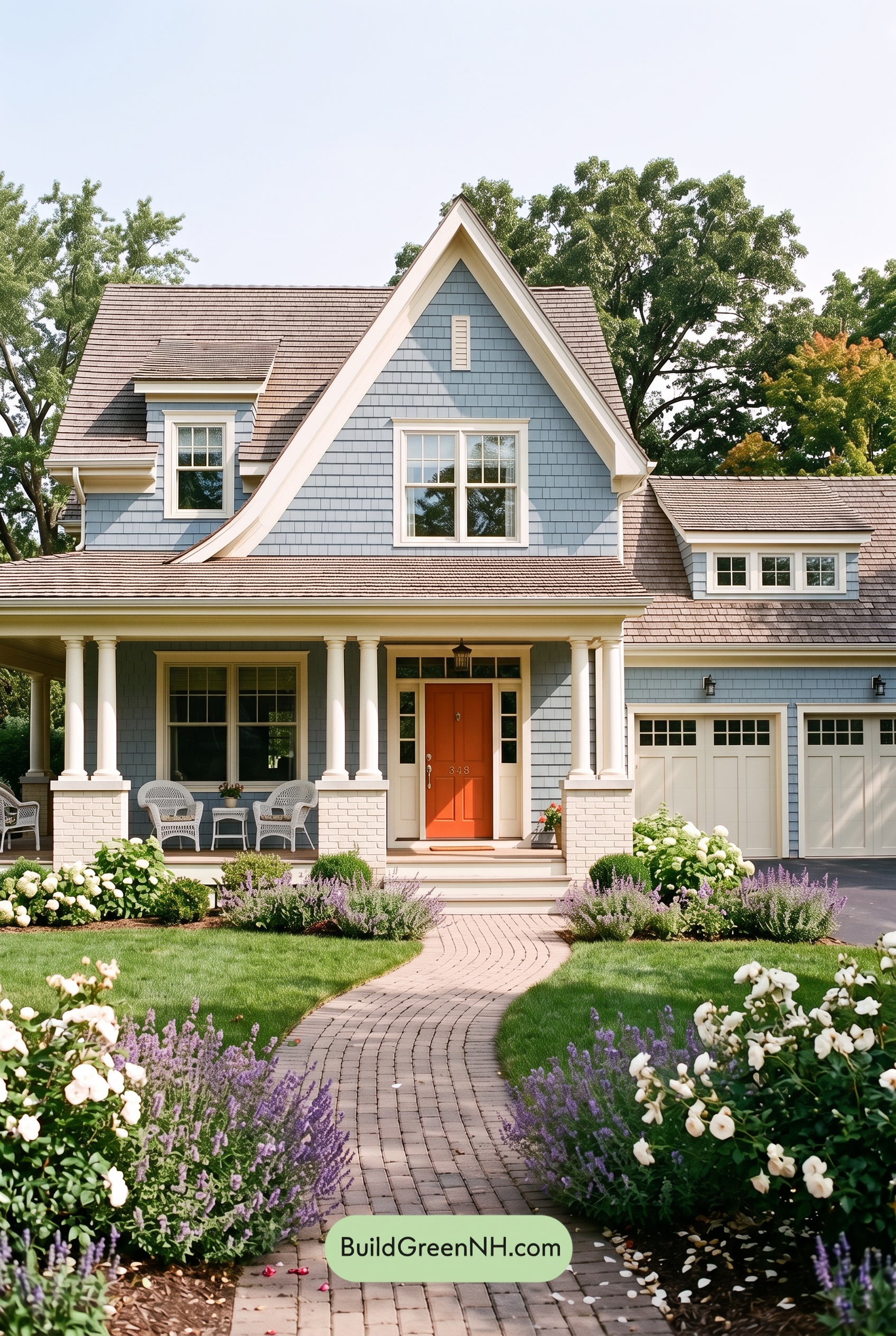 Red Front Door House Paint Color Scheme: Pale Blue Joy
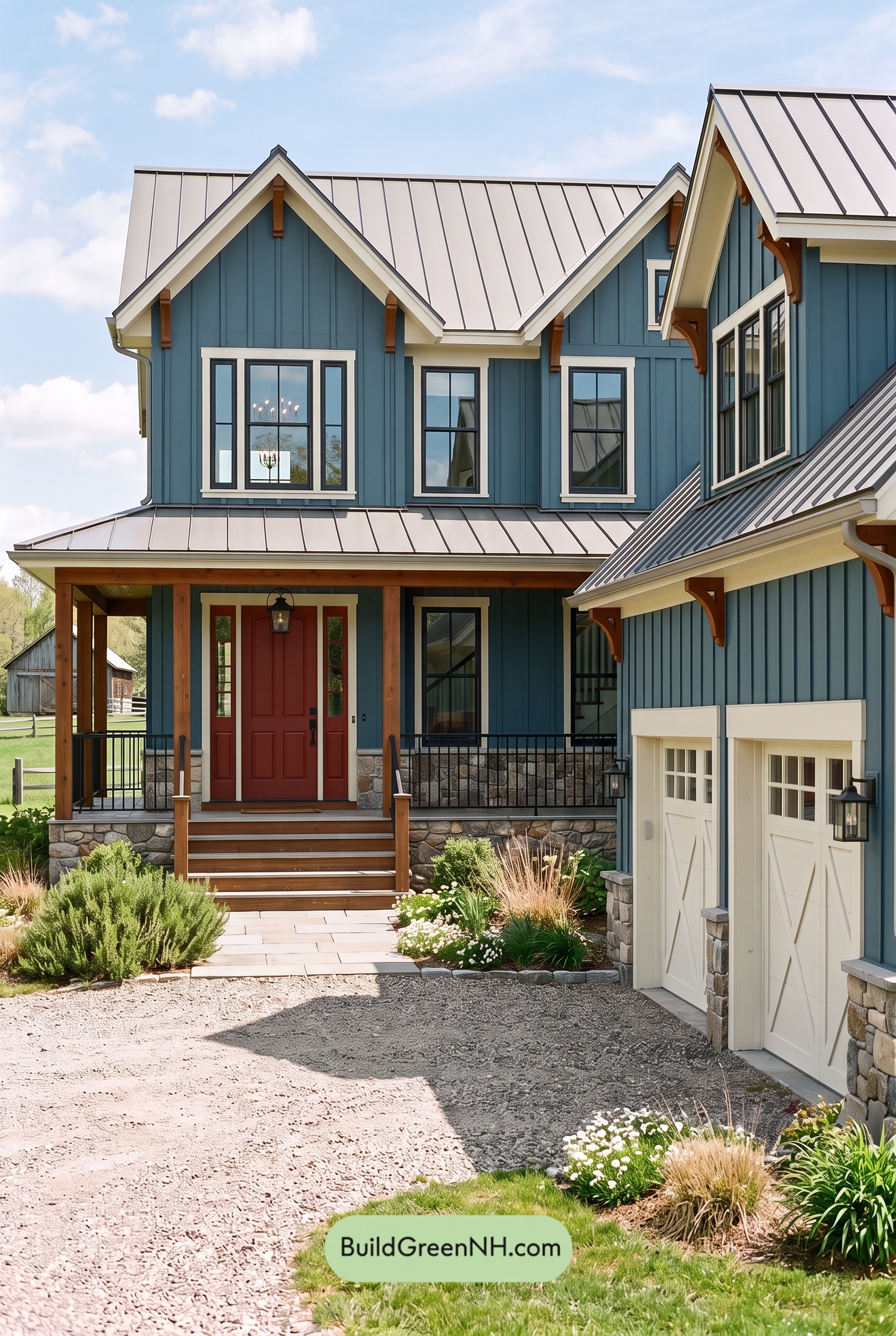 Red Front Door House Paint Color Scheme: Teal Blue Kinship
 Blue House Front Door Color Scheme: Harbor Saffron
Table of Contents