Last updated on
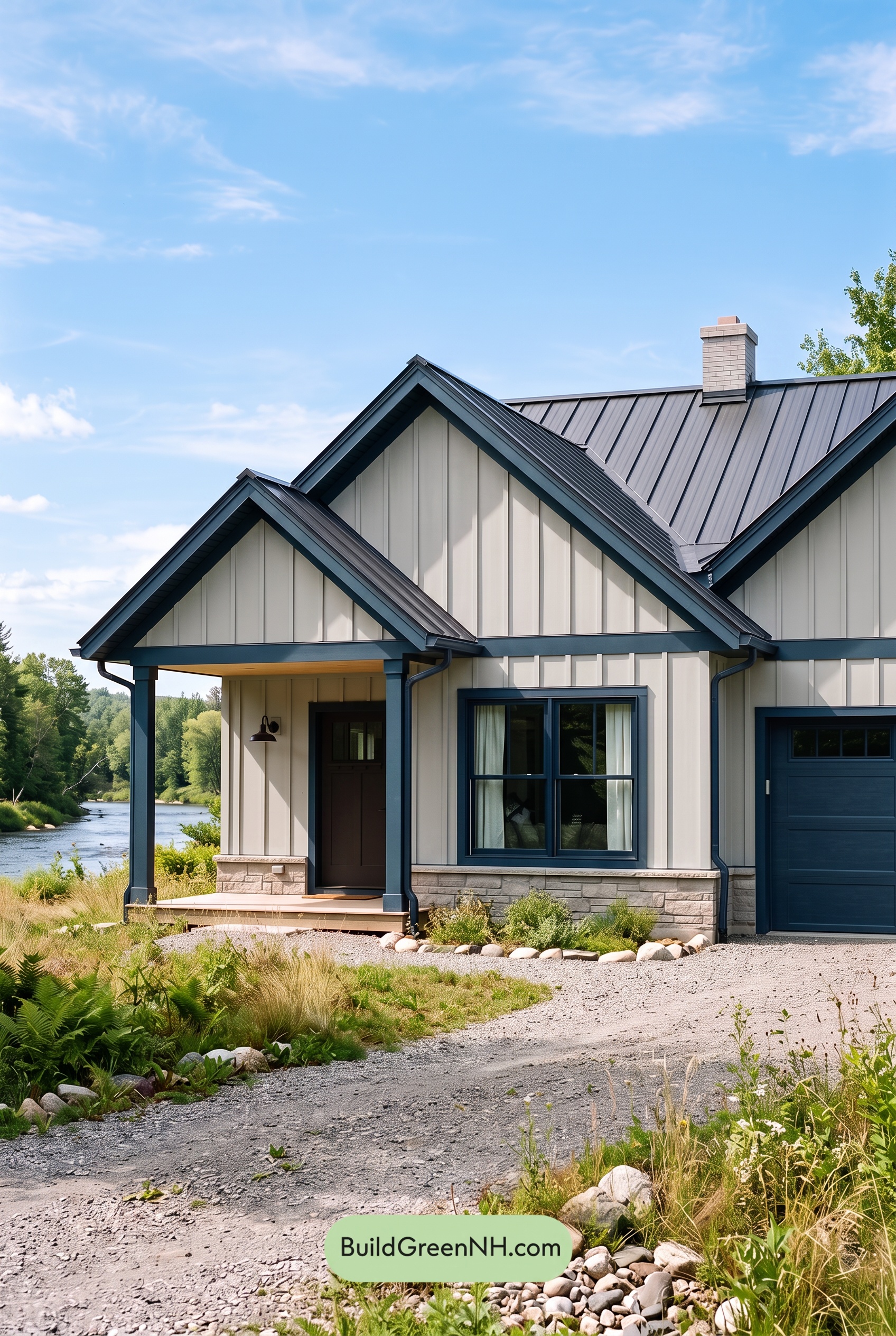

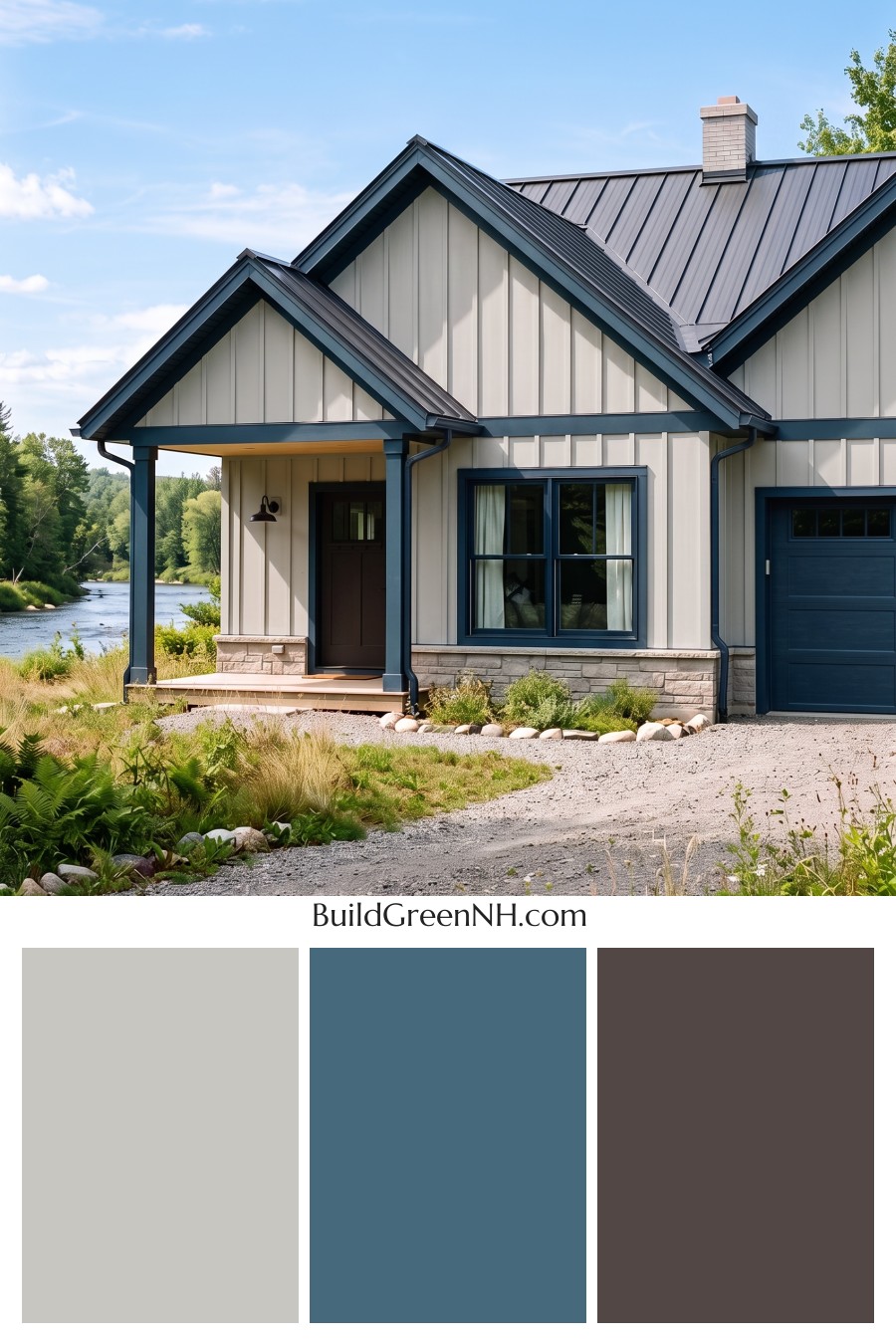
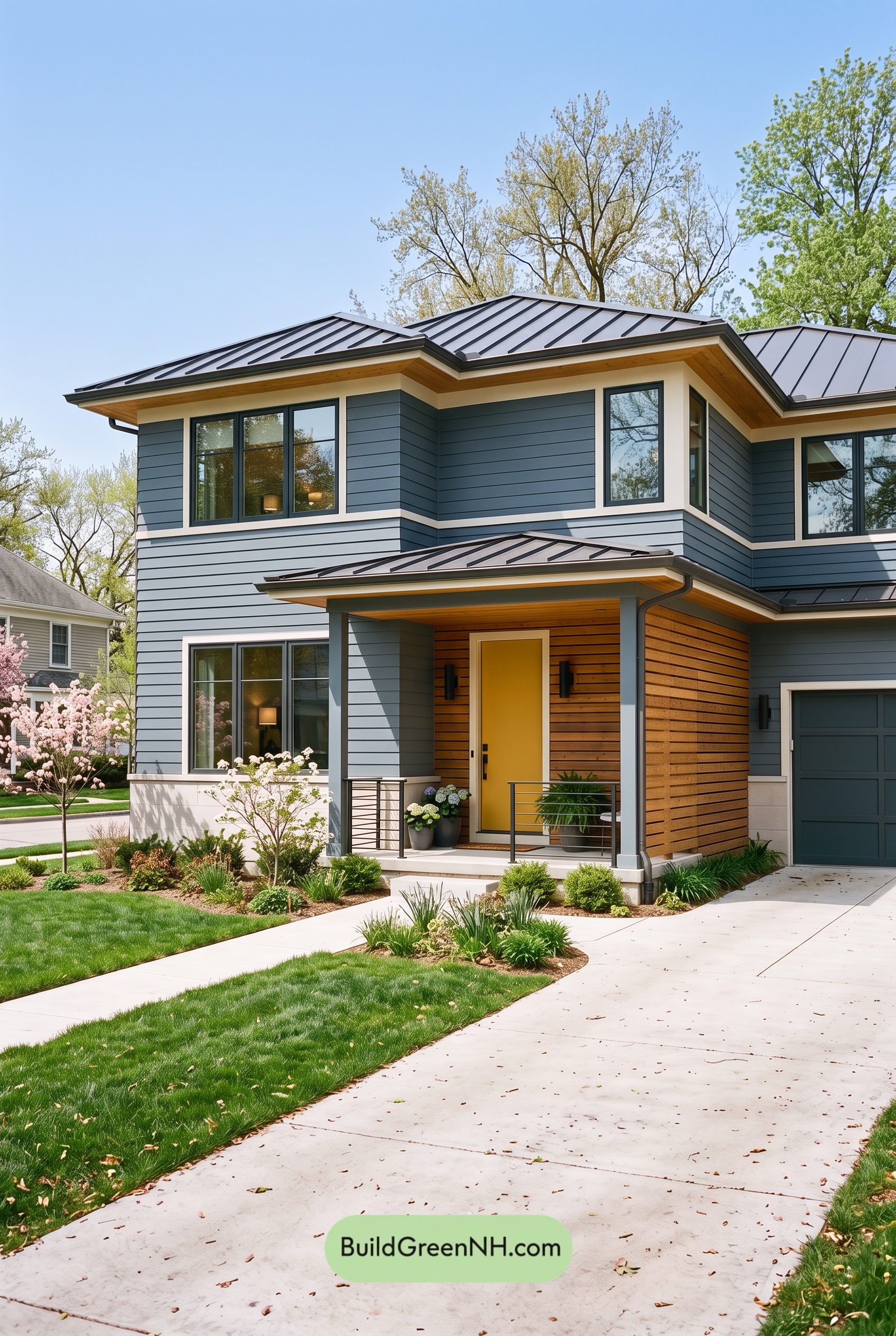
This soft gray, deep blue, and rich brown exterior palette gives the home a polished, welcoming presence with timeless curb appeal.
A Calm Gray Foundation
The main siding is finished in a light, softly muted gray that keeps the exterior bright without feeling stark. Its gentle undertone works beautifully with the home’s vertical paneling, allowing the architectural lines of the gables and walls to stand out in a subtle, refined way.
A pale gray-beige stone base adds another layer of natural texture near the ground. This shade helps the house settle comfortably into its landscaped setting while giving the façade a grounded, durable feel.
Deep Blue Defines the Architecture
The deep blue trim is the visual anchor of the scheme. It outlines the rooflines, frames the windows, wraps the garage door, and carries through to the porch columns, creating a crisp sense of structure against the lighter gray siding.
Using the same saturated blue shade across these details makes the design feel intentional and cohesive. The color gives each gable a sharp profile, adds depth around the windows, and turns practical elements like the garage door and gutters into handsome parts of the overall composition.
A Warm, Inviting Entry
At the front entrance, the dark brown door introduces a welcome touch of warmth. Set beneath the cool gray siding and blue trim, this earthy shade creates a natural focal point and makes the covered porch feel especially inviting.
The contrast is beautifully balanced: cool shades provide calm, while the brown door brings in a sense of comfort and warmth. It is a simple move that keeps the exterior from feeling overly formal.
Roof and Accent Balance
The roof’s dark charcoal-gray tone connects smoothly with the deep blue trim, giving the upper portion of the house a tailored, cohesive look. Its darker shade adds definition without overwhelming the lighter walls below.
Together, the gray siding, blue accents, charcoal-gray roof, and brown entry create a mood that feels modern, relaxed, and connected to the landscape. It is a confident palette with plenty of contrast, yet every shade still feels calm enough for a home surrounded by natural greenery.
Next, see how this color scheme looks under different lighting simulations throughout the day.
Overcast
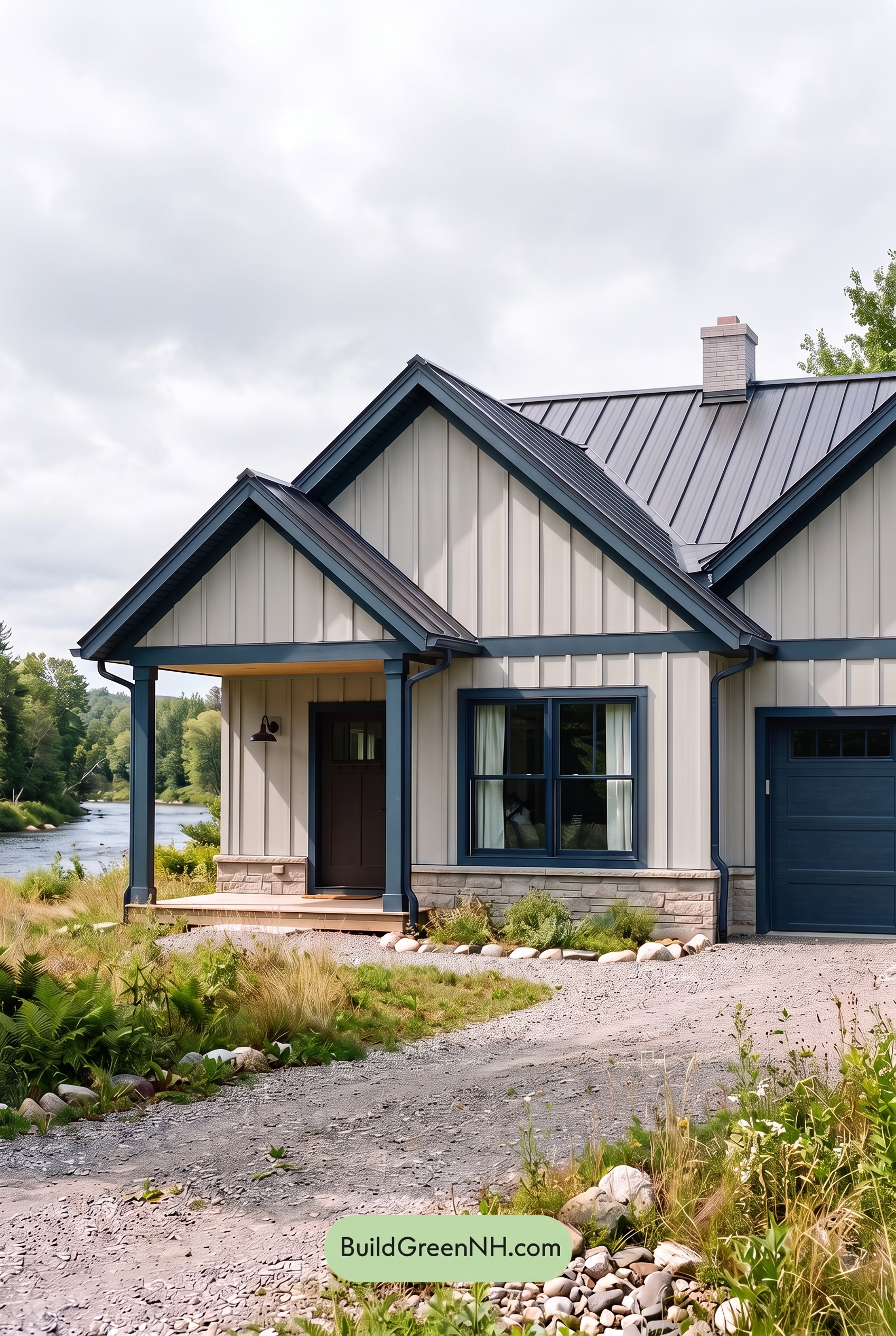
Under overcast skies, the gray siding loses some of its sunlit warmth and reads softer, calmer, and slightly cooler than it does in neutral daylight. Diffused light smooths out sharp shadows across the vertical panels, so the facade feels more even and quietly refined rather than bright and high-contrast.
The deep blue trim, frames, columns, and garage door take on a richer, more muted character, with less sheen and a stronger visual presence against the softened gray. The brown front door also appears deeper and less warm, creating a grounded focal point. Together, the reduced saturation and gentler contrast give the exterior a moody, polished atmosphere.
Golden Hour
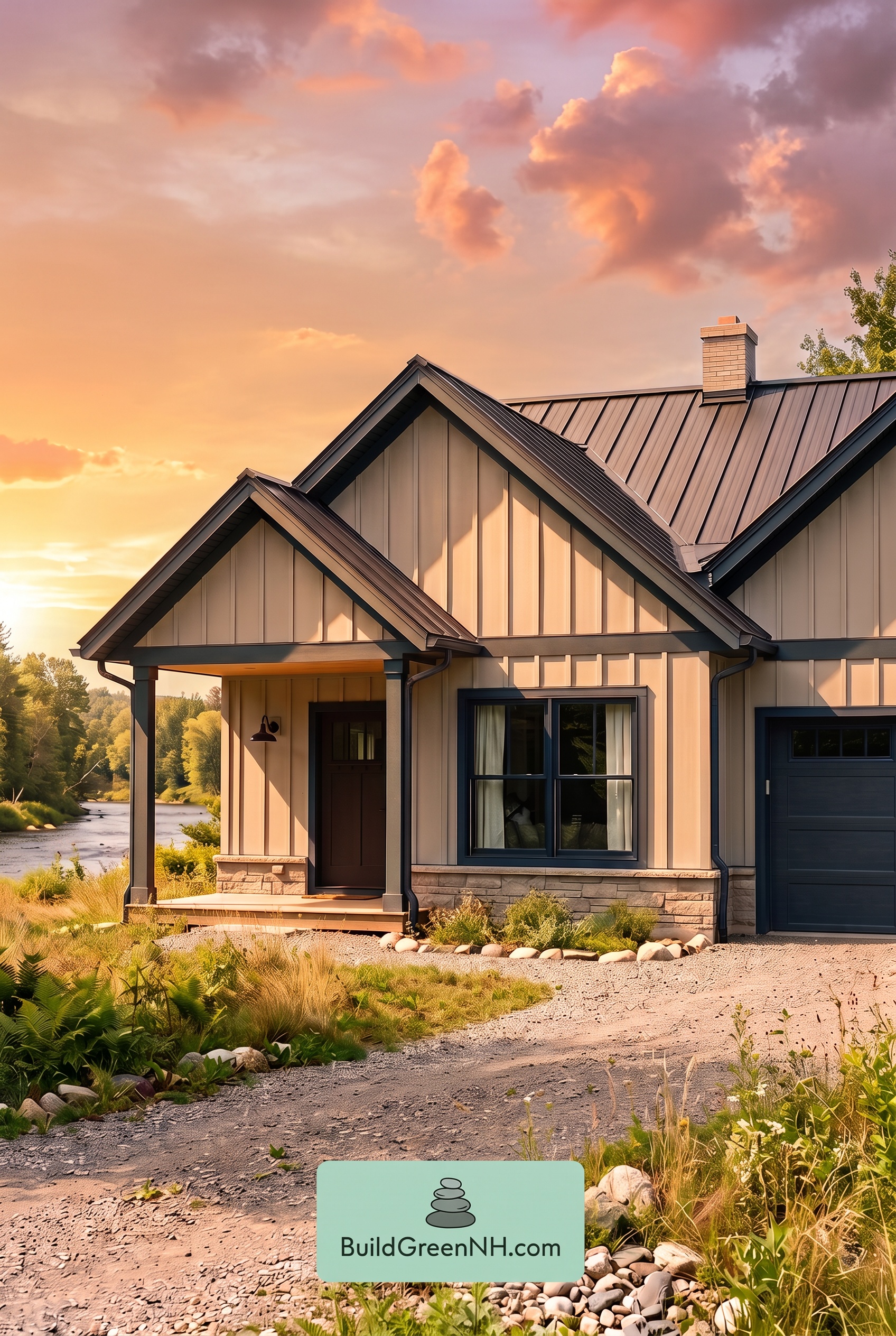
Golden Hour wraps the gray siding in a soft amber glow, making its neutral cast feel warmer and more inviting than it does in neutral daylight. The blue trim, window frames, columns, and garage door deepen into richer, more saturated blue-black shadows, creating a crisp, tailored contrast against the sunlit walls.
The brown front door gains a mellow, earthy richness, while the long evening shadows sharpen the home’s rooflines and vertical details. Compared with the balanced clarity of neutral daylight, this low, warm light gives the exterior a more dramatic, relaxed mood—cozy in the highlights and beautifully grounded in the shade.
Shade
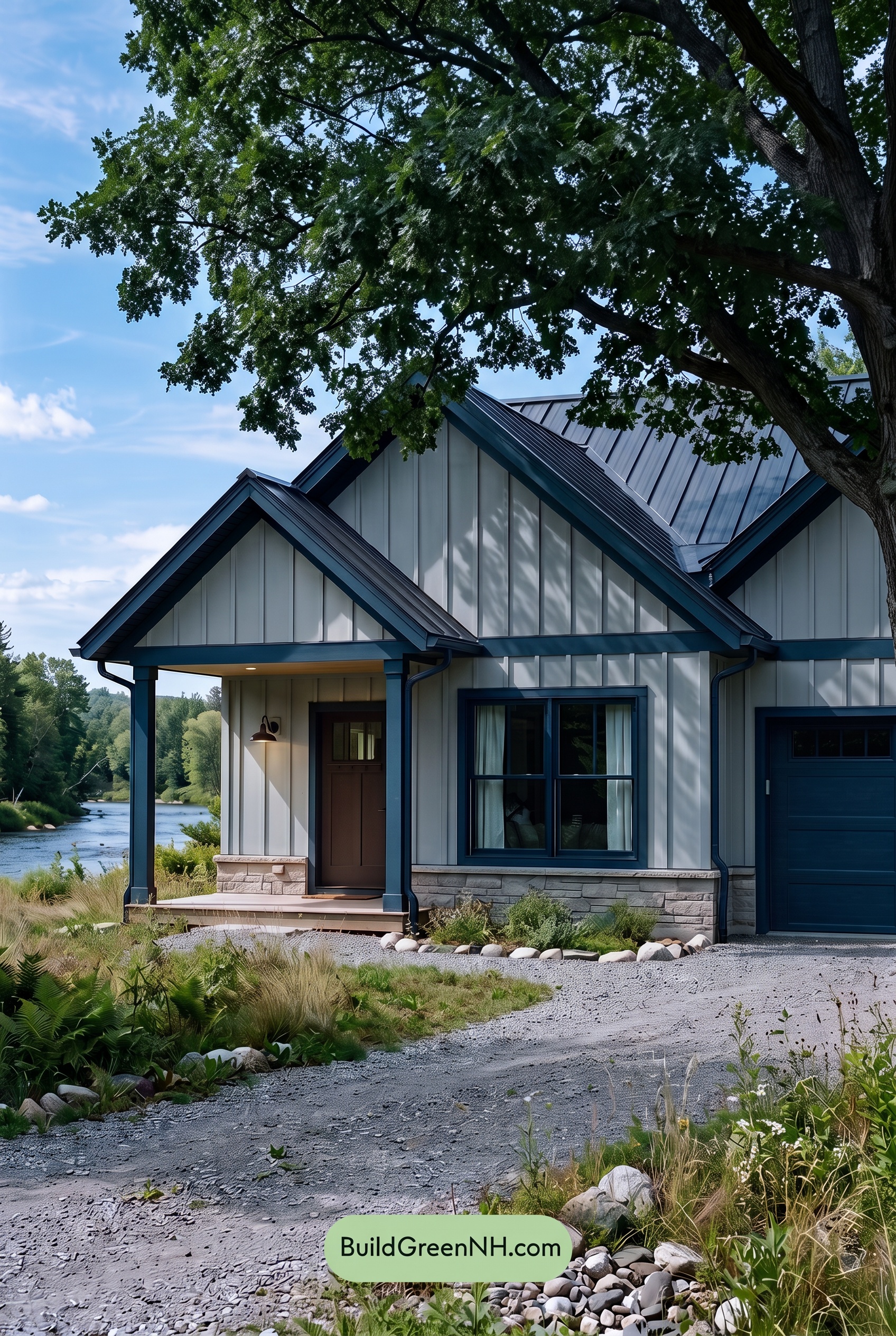
Under the tree’s shade, the gray siding takes on a cooler, softer cast than it would in neutral daylight, with its brightness gently muted by the layered canopy shadows. The blue trim, window frames, columns, and garage door deepen noticeably, appearing richer and less saturated in the darkest areas while retaining a crisp outline against the pale wall surfaces.
The brown front door becomes more subdued in shade, yet its warmth still provides a welcoming counterpoint to the cooler gray and blue families. This shifting contrast gives the exterior a calm, sheltered mood: shadowed details feel more dramatic, while dappled light across the façade adds depth and movement that neutral daylight would reveal more evenly.
Nighttime
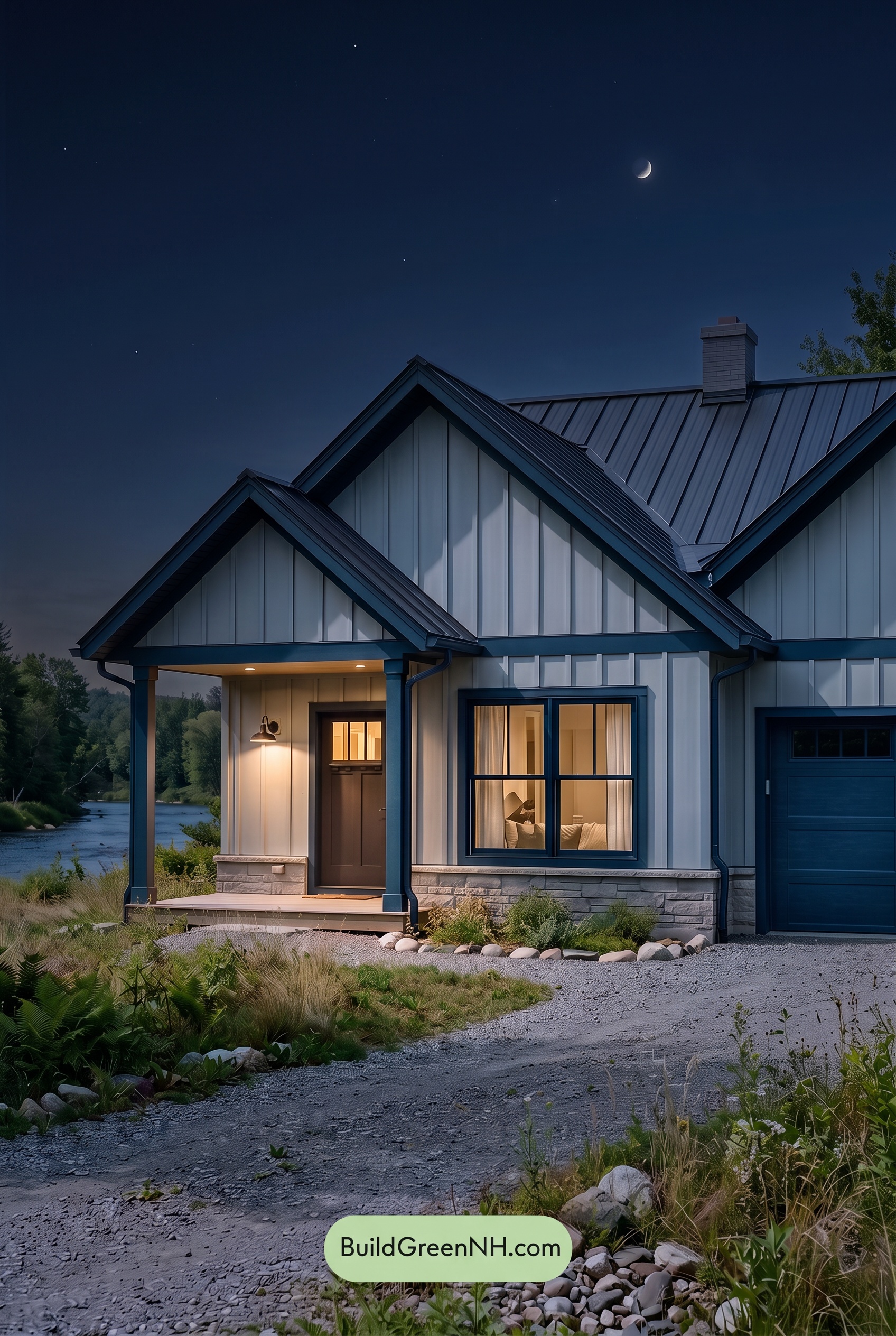
At night, the gray siding shifts cooler and more subdued than it appears in neutral daylight, allowing the deeper blue trim, window frames, columns, and garage door to read as rich architectural outlines. Shadows settle beneath the eaves and along the vertical siding, increasing contrast and giving the façade a crisp, tailored dimension.
Warm entry and window lighting changes the mood completely, softening the nearby gray shades and drawing out the welcoming warmth of the brown front door. Against the blue-black evening surroundings, these warm highlights create a calm, inviting glow while the blue accents feel darker, more saturated, and quietly dramatic.
Pin these for later:
Want More?
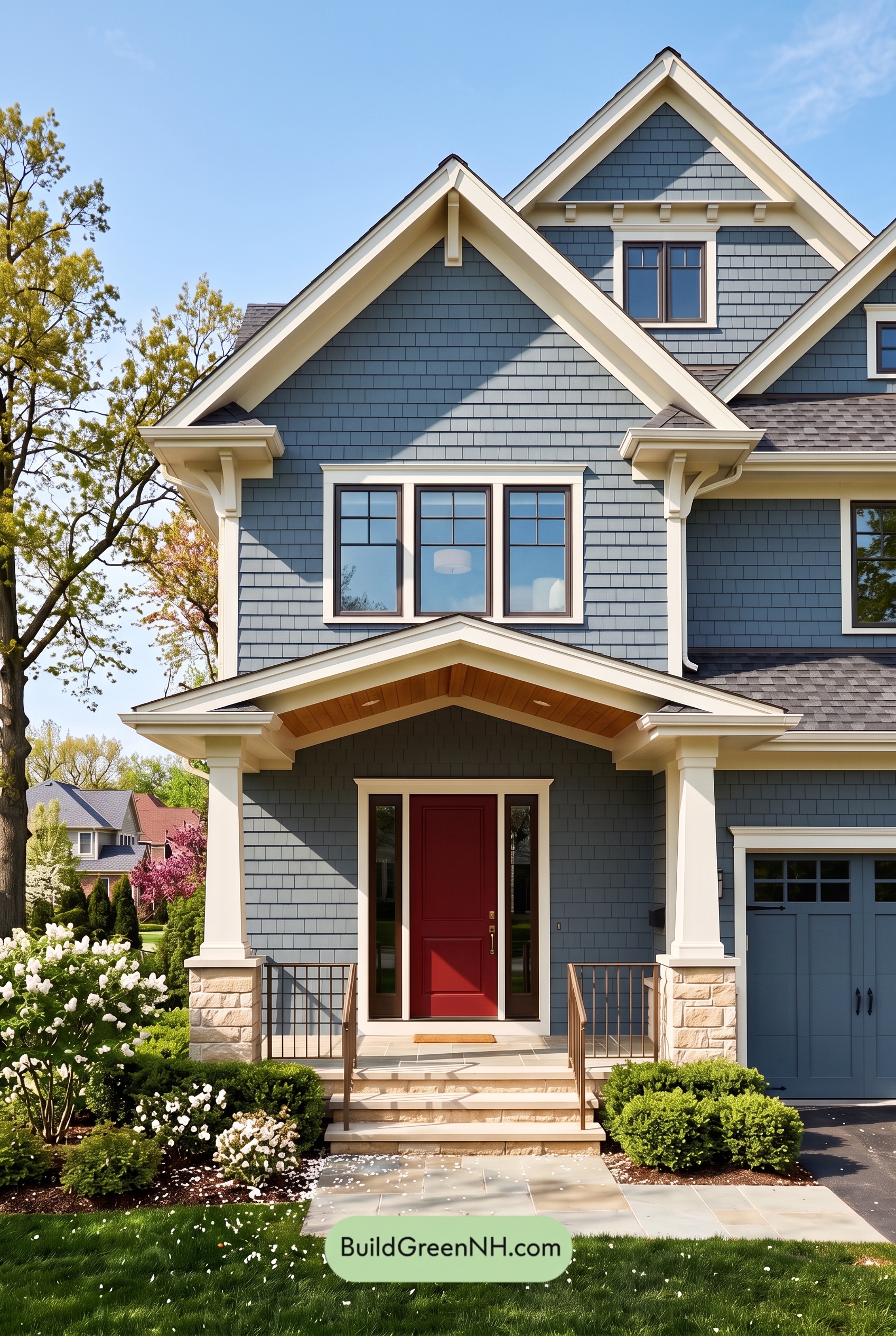 Red Front Door House Paint Color Scheme: Denim Blue Homecoming
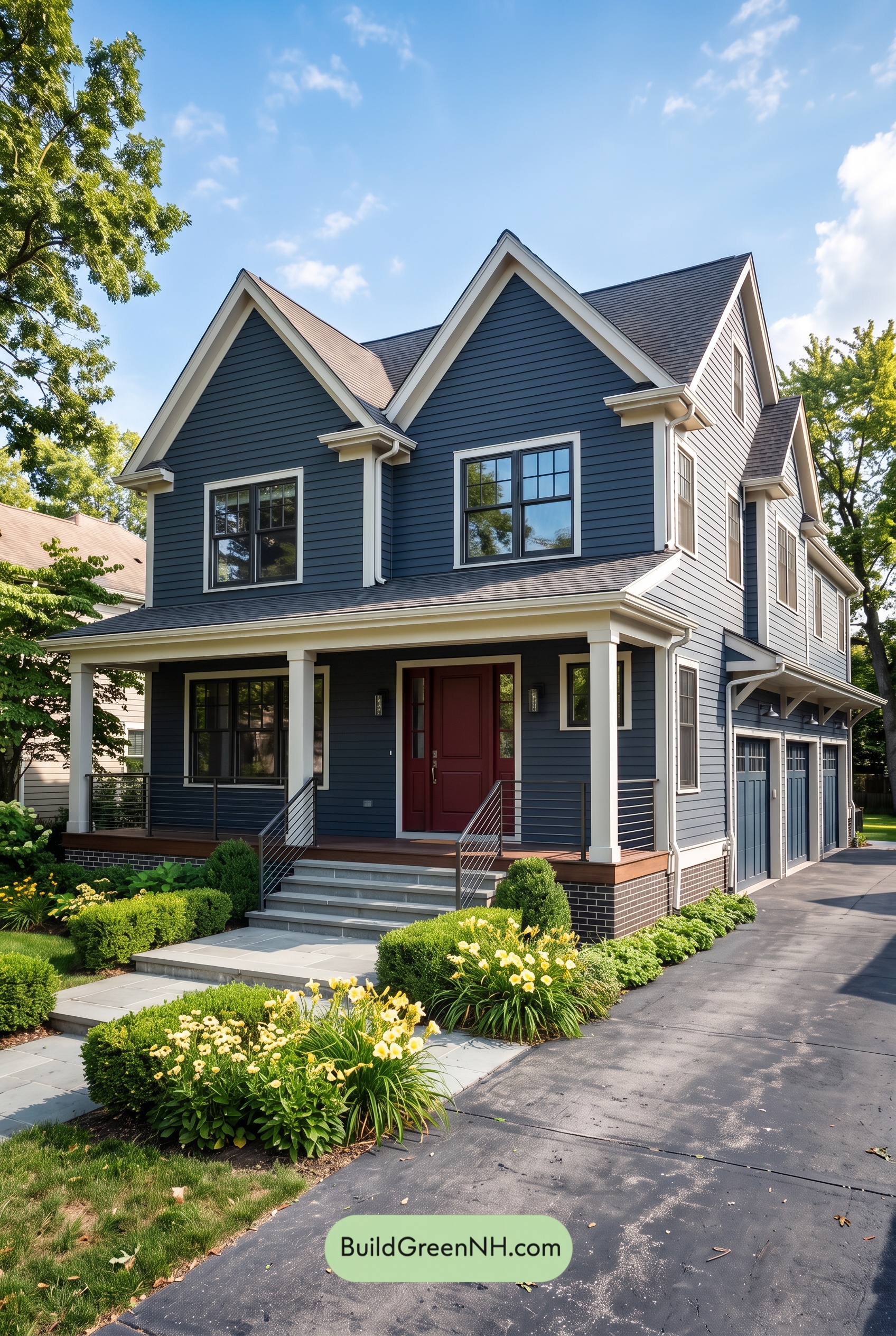 Red Front Door House Paint Color Scheme: Midnight Blue Assurance
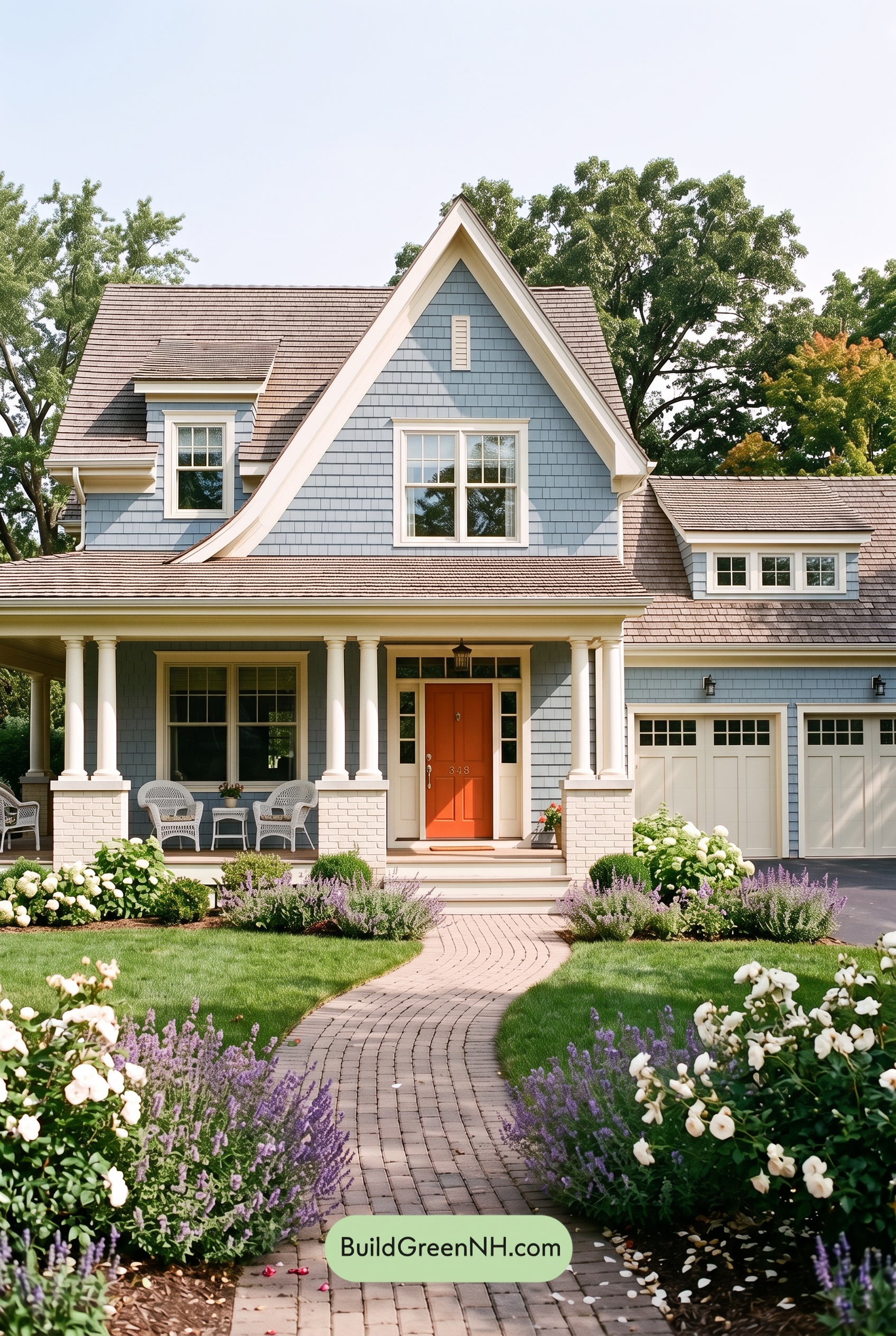 Red Front Door House Paint Color Scheme: Pale Blue Joy
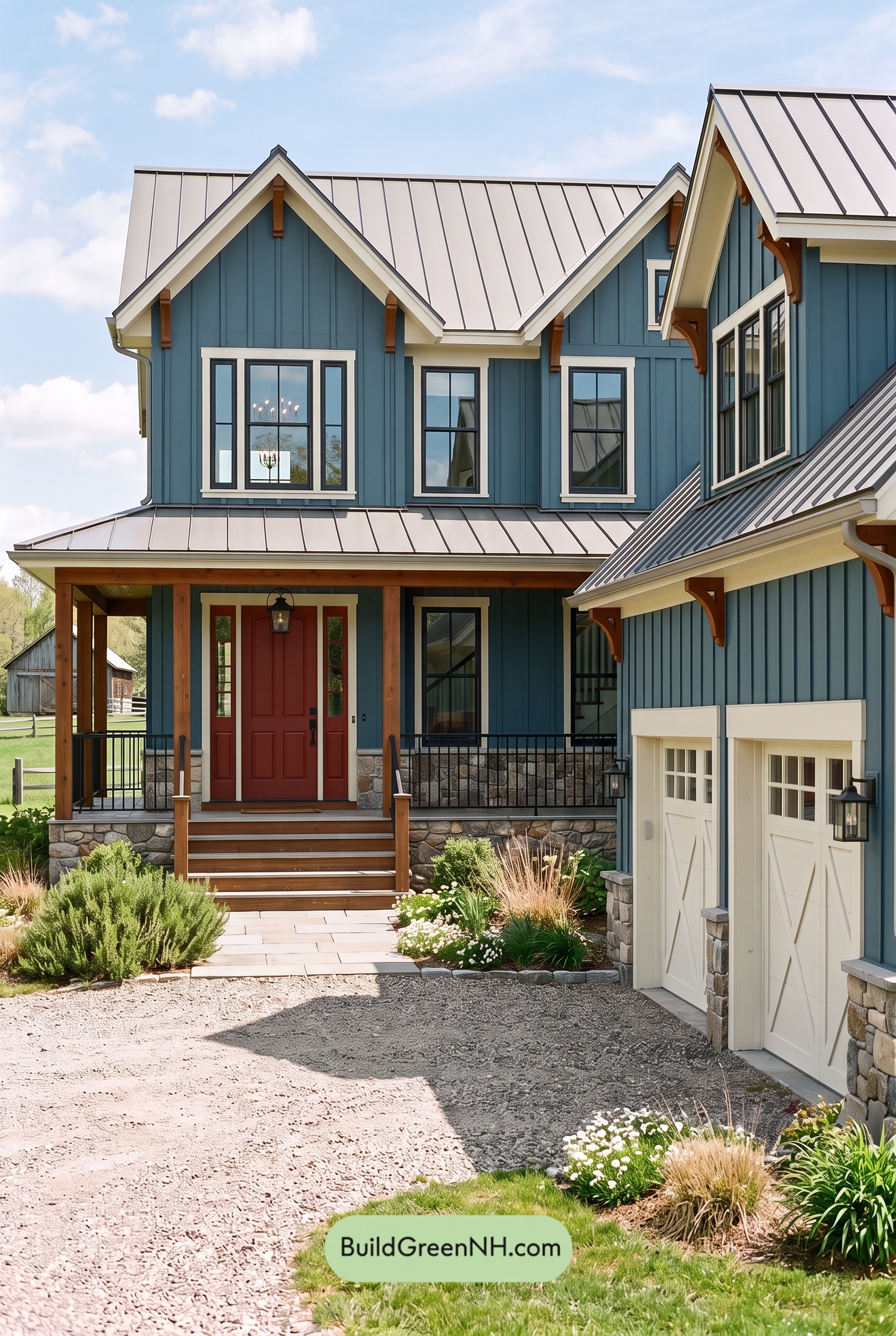 Red Front Door House Paint Color Scheme: Teal Blue Kinship
 Blue House Front Door Color Scheme: Harbor Saffron
Table of Contents