Last updated on
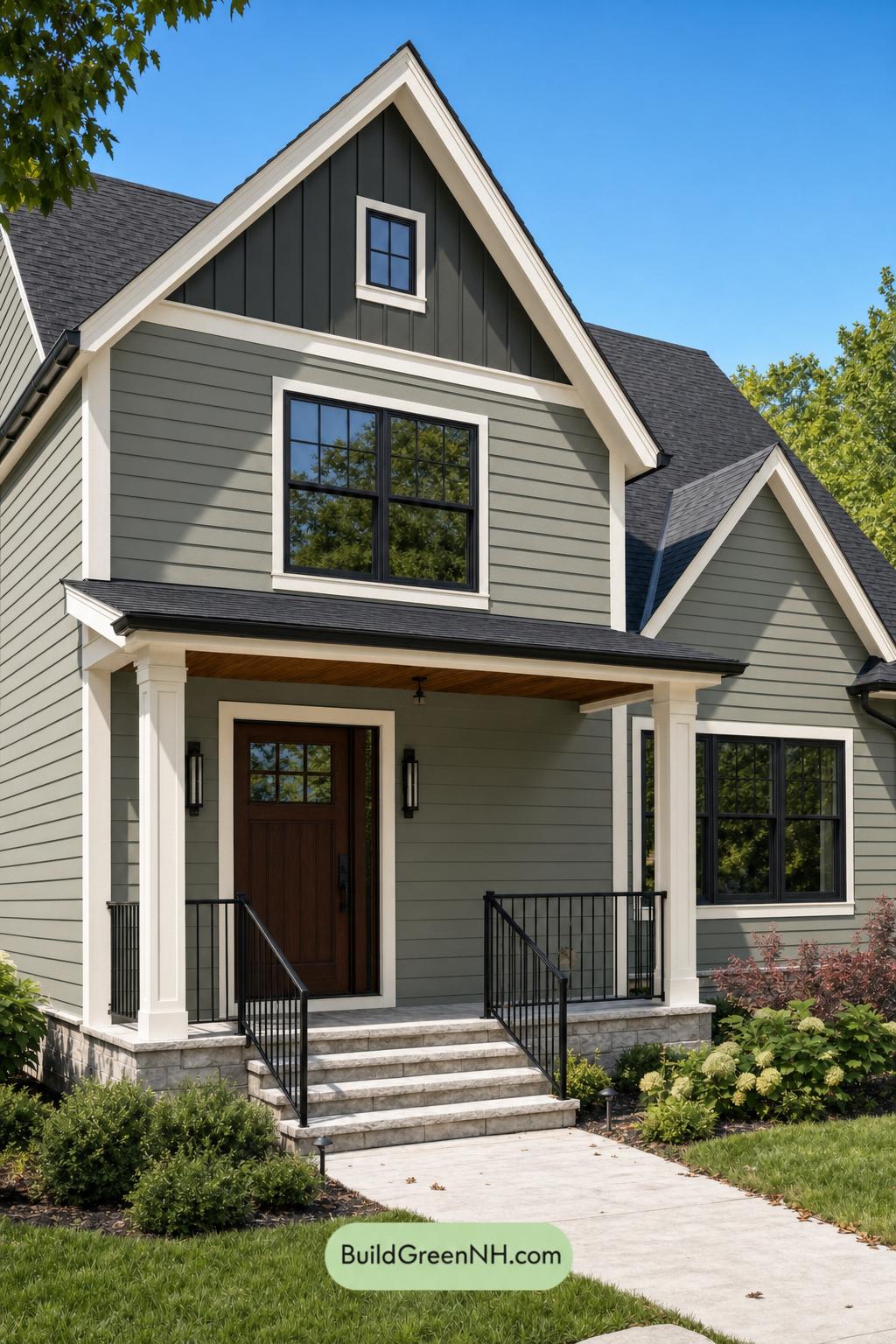

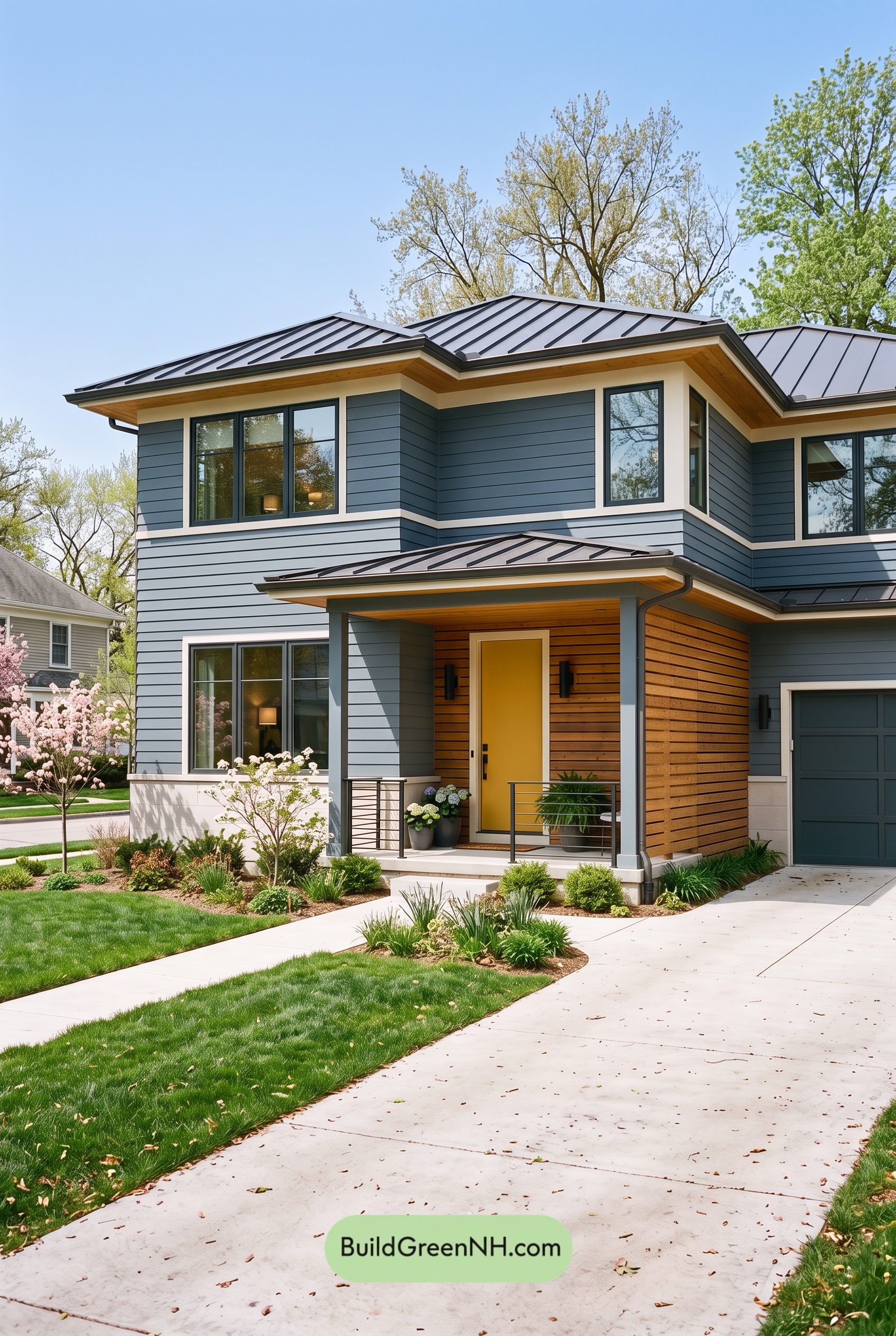
This layered gray-and-white exterior feels effortlessly polished because it balances crisp contrast, natural warmth, and timeless architectural detail.
A Soft Gray Foundation
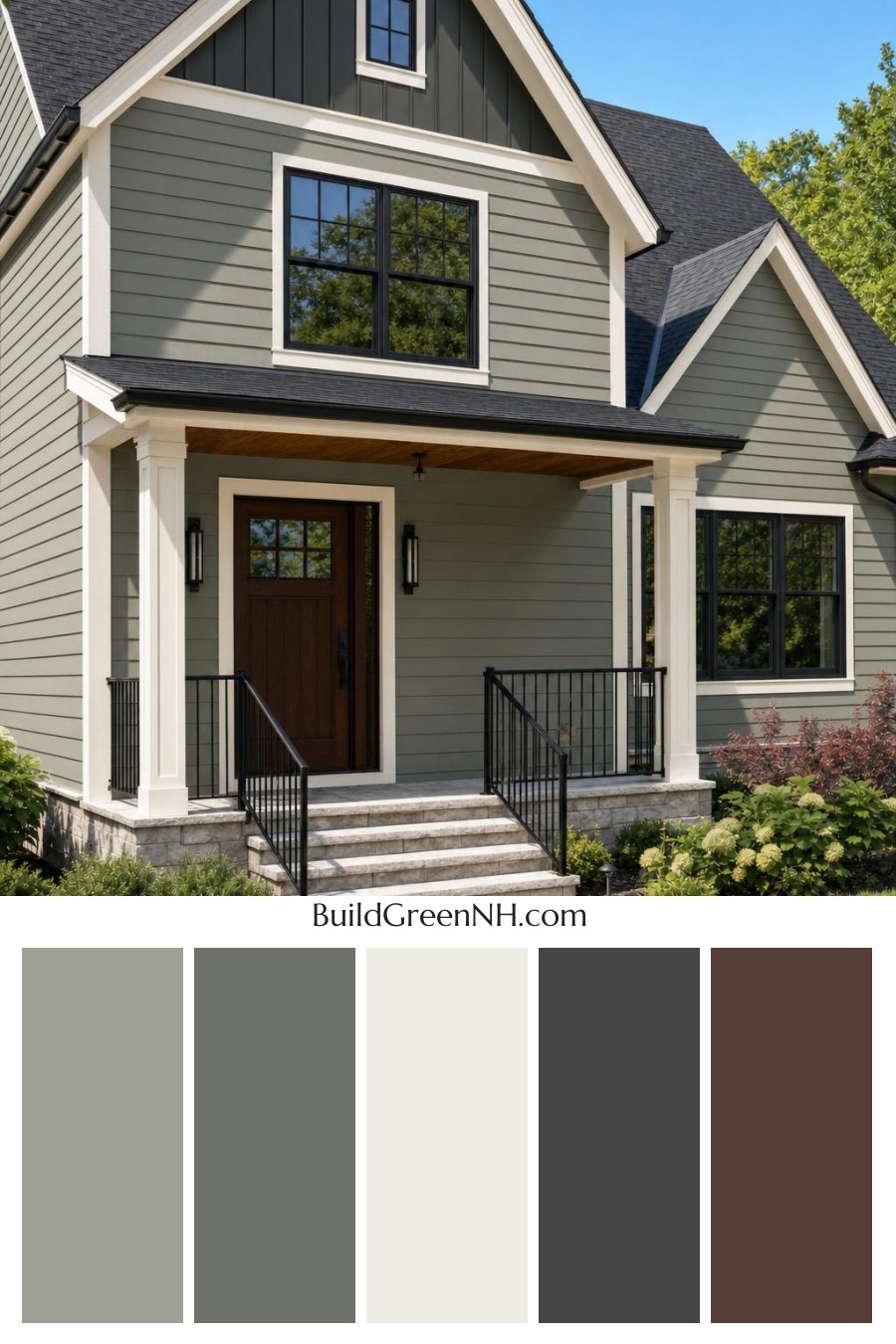
The main siding wears a gentle mid-tone gray that gives the home a calm, grounded presence. Its softened quality keeps the tall façade from feeling too stark, while the horizontal siding adds subtle texture and visual rhythm. The same gray family continues across the secondary wall areas, creating a unified appearance from the main gable to the side wing.
Above, a much deeper charcoal gray accent fills the prominent front gable. This darker shade draws the eye upward and makes the vertical cladding feel especially dramatic. It also gives the home a handsome, tailored contrast without disrupting the quiet character of the lighter gray siding below.
Crisp White Defines Every Detail
Bright white trim frames the rooflines, windows, porch posts, and entryway with clean precision. Against the layered grays, this light neutral acts like an outline, emphasizing the steep gables and making the home’s traditional proportions stand out.
The white trim also brings a sense of freshness to the covered porch. It highlights the columns and door surround, turning the entry into a welcoming focal point while keeping the overall palette airy and refined.
Deep Accents and a Warm Welcome
Dark charcoal gray window frames introduce another level of contrast, echoing the deep accent gable and the nearly black-gray roof. Their strong, simple lines sharpen the windows and lend the exterior a modern edge. Matching dark gray railings continue that tailored look along the front steps, giving the pale stone base a clean visual anchor.
The front door brings in the scheme’s most inviting note: a rich, deep brown. Its warm tone softens the cool gray palette and creates a natural sense of arrival beneath the porch. Together, the soft gray siding, charcoal gray accents, crisp white trim, and warm brown entry create a balanced exterior that feels both classic and current.
Next, see how this color scheme looks under different lighting simulations throughout the day.
Overcast
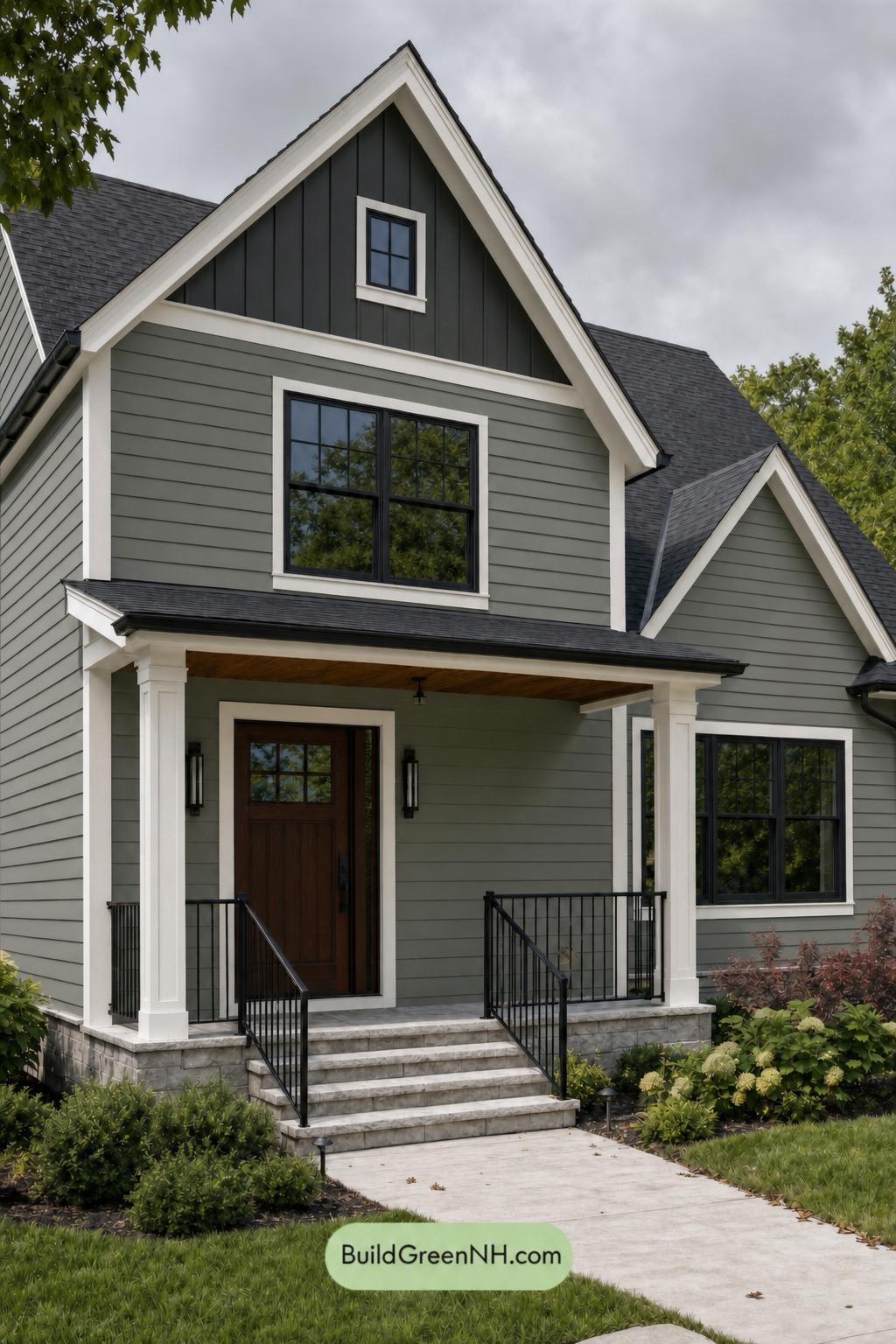
Under overcast skies, the soft gray siding appears more even and slightly deeper than it does in neutral daylight, with less reflected brightness and reduced saturation. The darker gray gable, window frames, and railings settle into a richer, more unified presence, while the pale trim looks gentler rather than sharply bright.
With direct sun removed, shadows around the porch, siding lines, and roof edges become softer, lowering contrast but enhancing the home’s calm, tailored mood. The brown entry door gains a warmer, more inviting note against the cool gray shades, creating a welcoming focal point without overpowering the subdued exterior palette.
Golden Hour
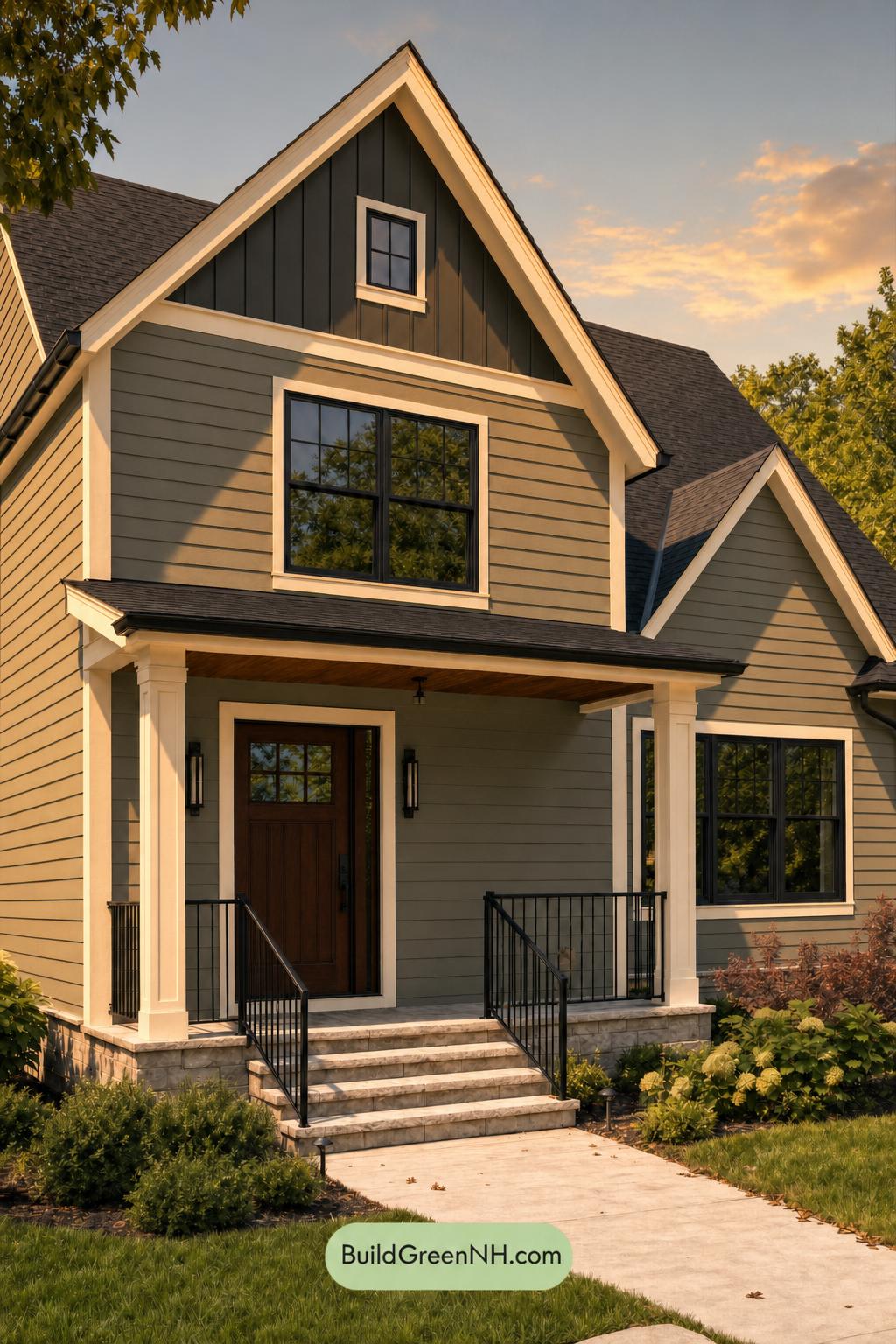
Under Golden Hour light, the gray siding takes on a noticeably warmer, softer cast than it shows in neutral daylight, with its muted depth feeling richer and more inviting. The white trim shifts toward a creamy glow, while the brown front door gains extra warmth and appears more saturated, creating a welcoming focal point beneath the porch.
Low-angle sunlight also sharpens the contrast between illuminated planes and shadowed gables. Dark gray window frames and railings become more defined against the glowing lighter surfaces, while recessed areas deepen into dramatic charcoal-like shadows. The overall effect is cozy and dimensional—less crisp and cool than daylight, but full of evening warmth and architectural character.
Shade
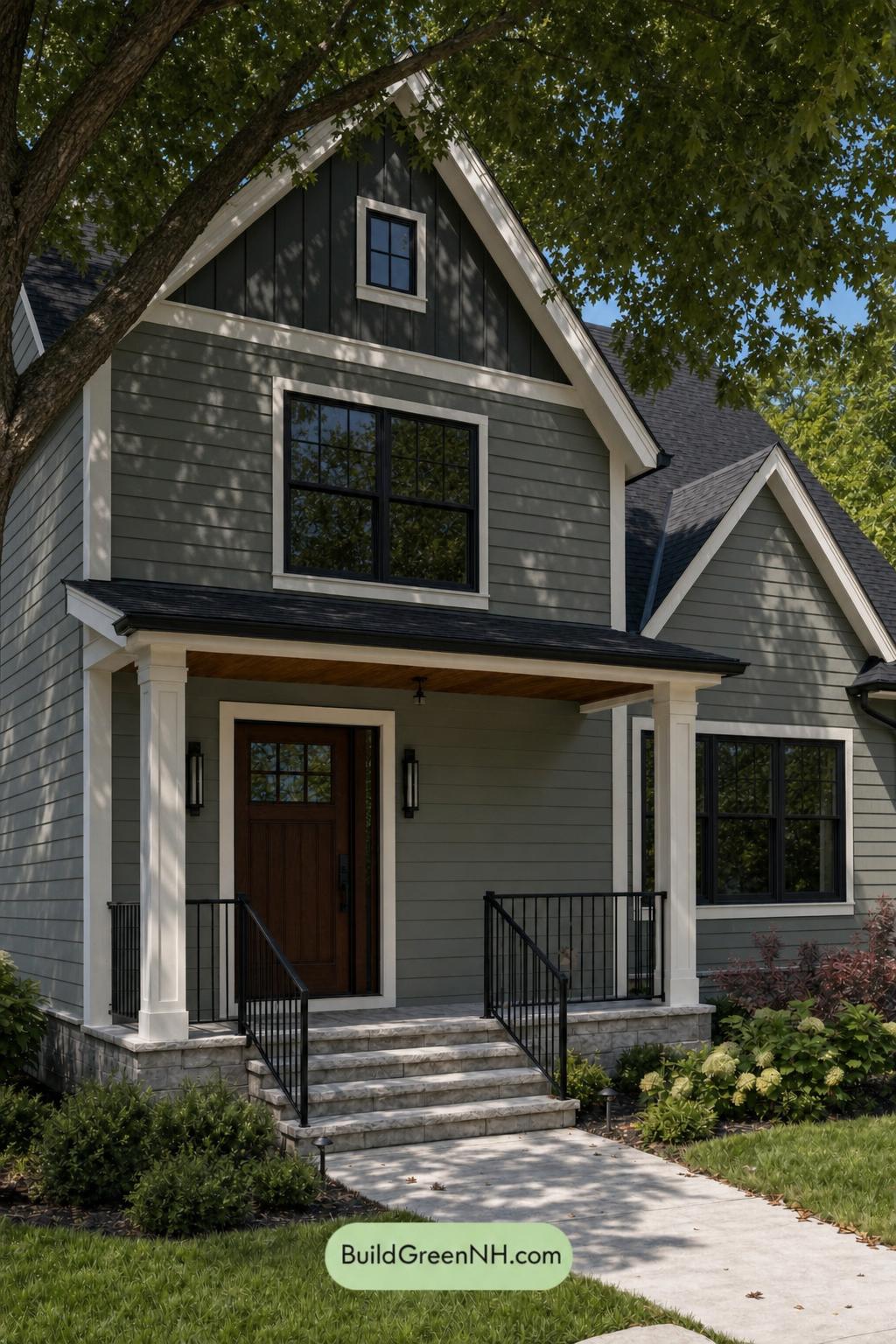
In shade, the gray siding takes on a deeper, quieter character than it would in neutral daylight, with its cool undertones appearing more pronounced and its saturation feeling slightly softened. Dappled tree shadows create shifting bands of depth across the façade, giving the layered gray surfaces a more textured, dimensional look.
The white trim reads gentler and less brilliant under the canopy, while still creating crisp contrast around the rooflines and windows. Dark gray frames and railings recede into the shadows for a grounded effect, and the brown front door gains a richer, warmer presence—bringing a welcoming note to the home’s calm, sheltered mood.
Nighttime
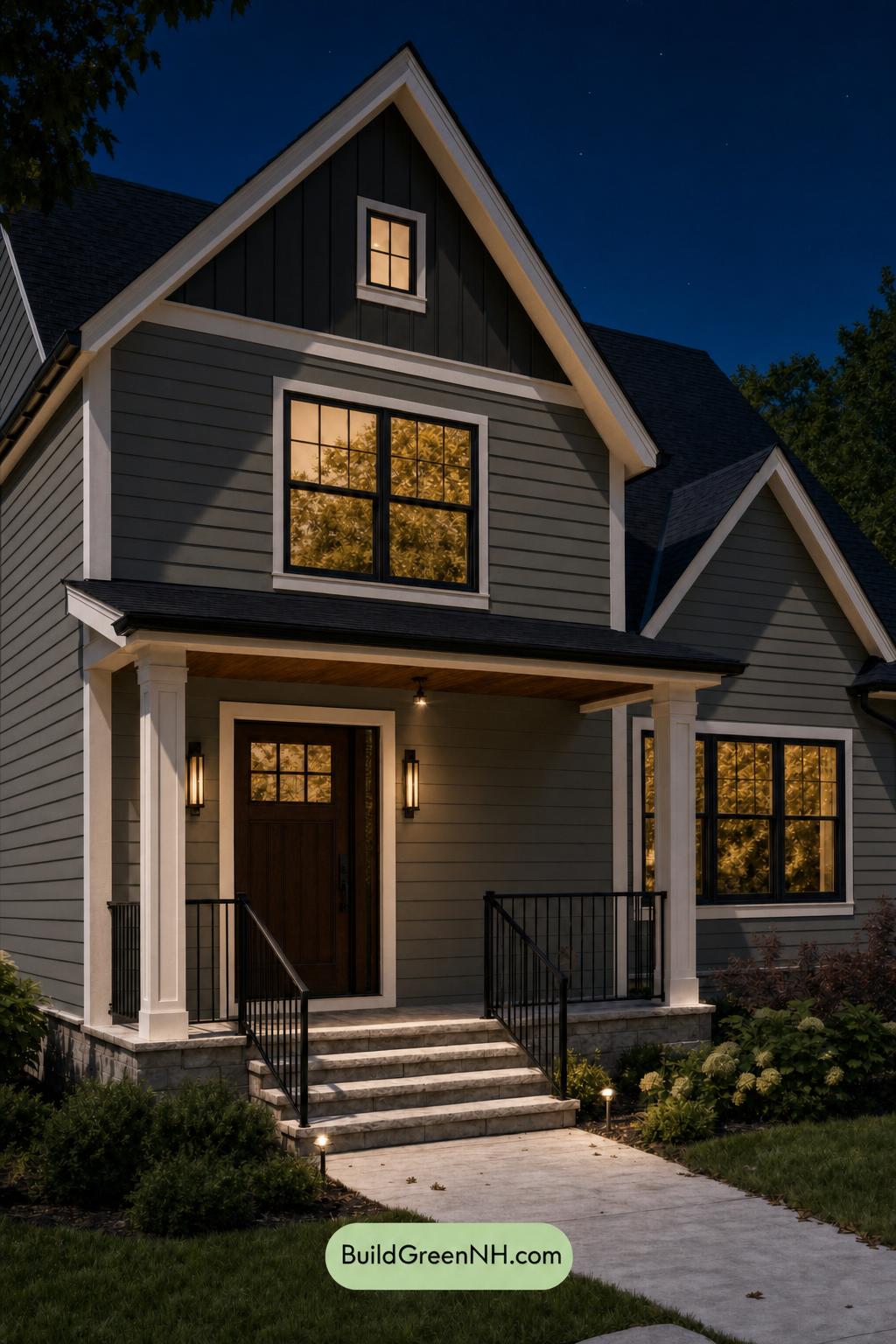
At night, the gray siding settles into a deeper, more muted shade, with shadows emphasizing the clean lines of the siding and gables. The white trim appears softer and warmer near the exterior fixtures, while fading into a gentle contrast against the darker roofline and window frames.
Warm interior and porch lighting enriches the brown entry door and gives the façade an inviting glow. Compared with neutral daylight, nighttime creates stronger pockets of contrast and a more dramatic, sheltered mood, balancing cool gray surfaces with cozy warm highlights.
Pin these for later:
Want More?
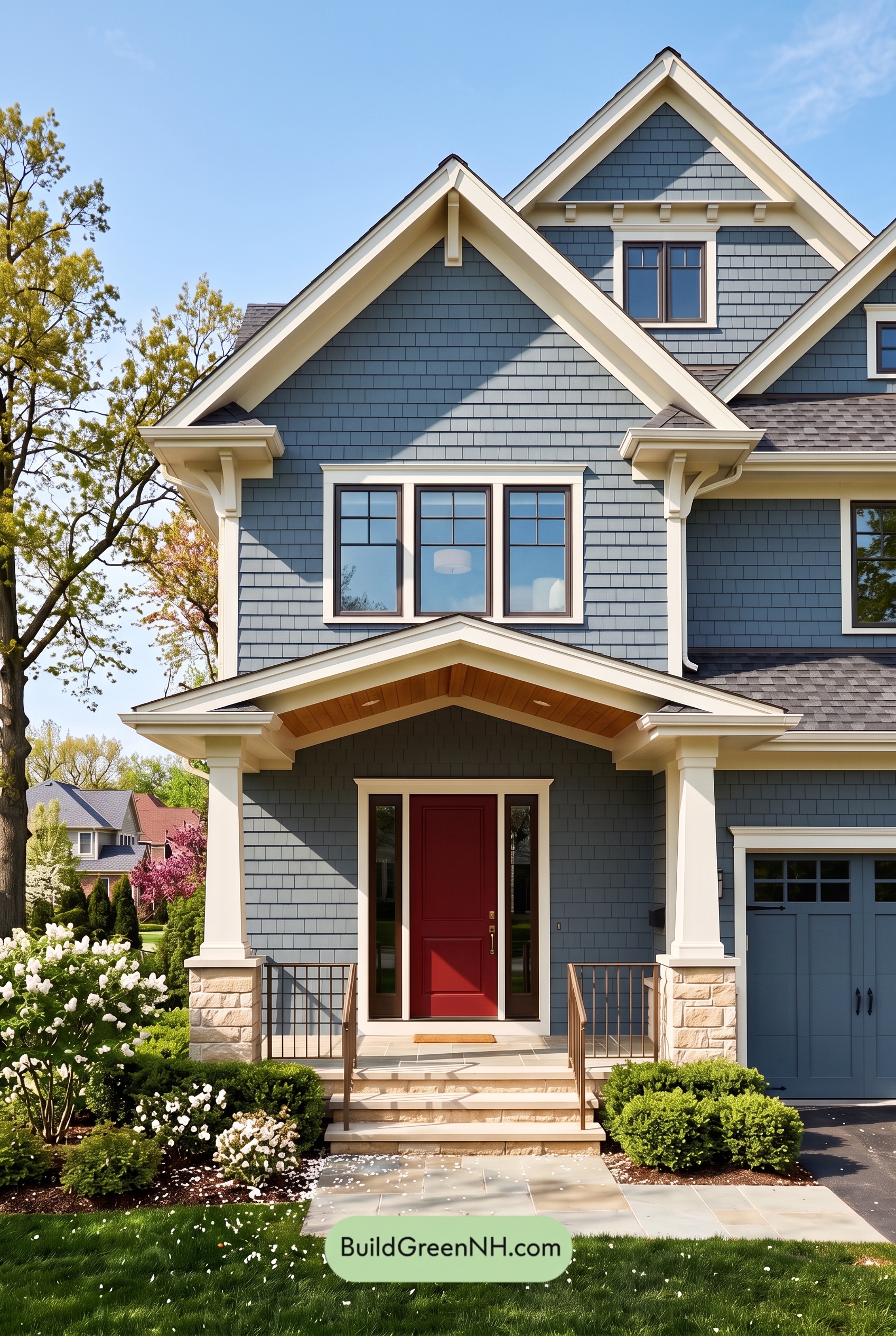 Red Front Door House Paint Color Scheme: Denim Blue Homecoming
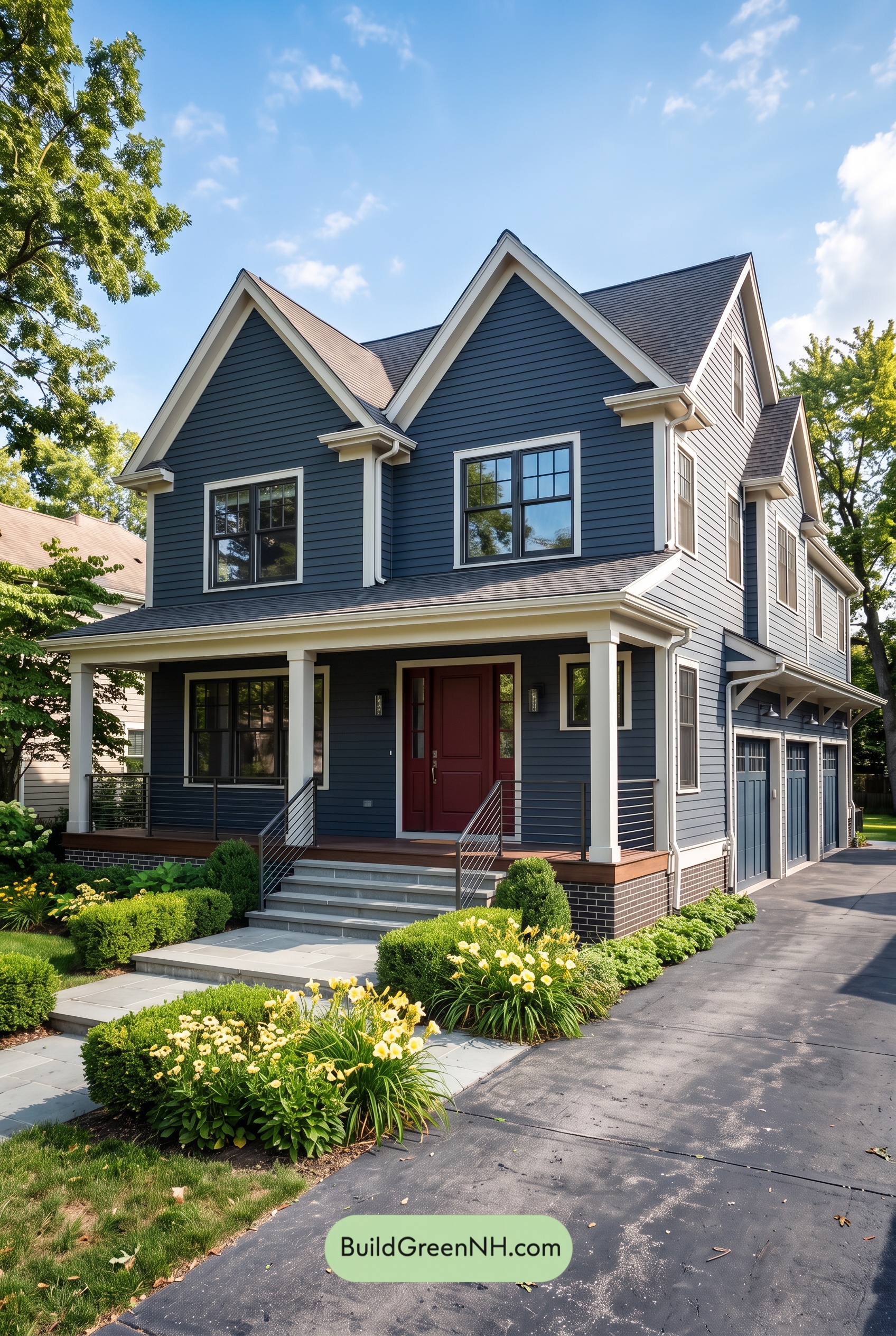 Red Front Door House Paint Color Scheme: Midnight Blue Assurance
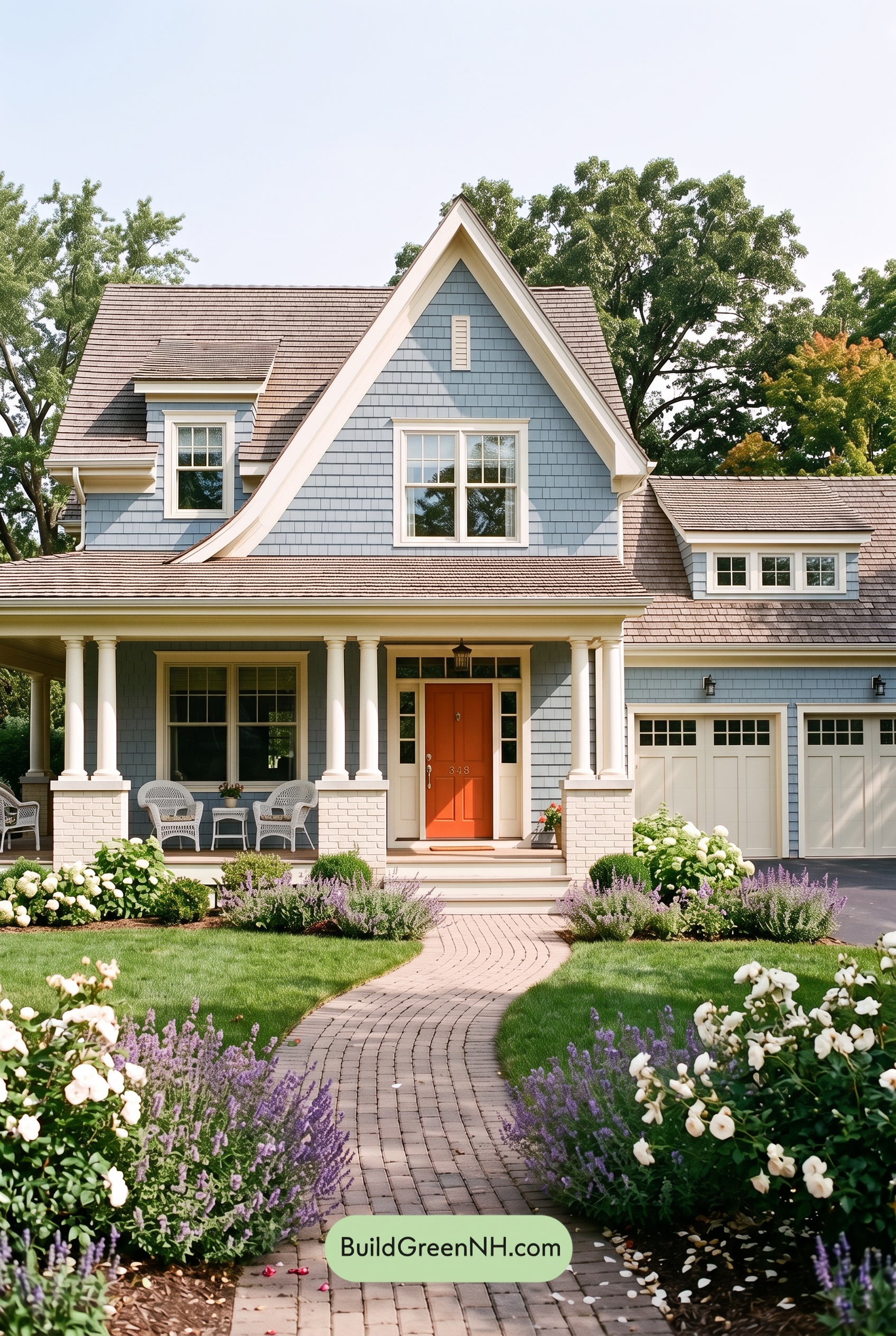 Red Front Door House Paint Color Scheme: Pale Blue Joy
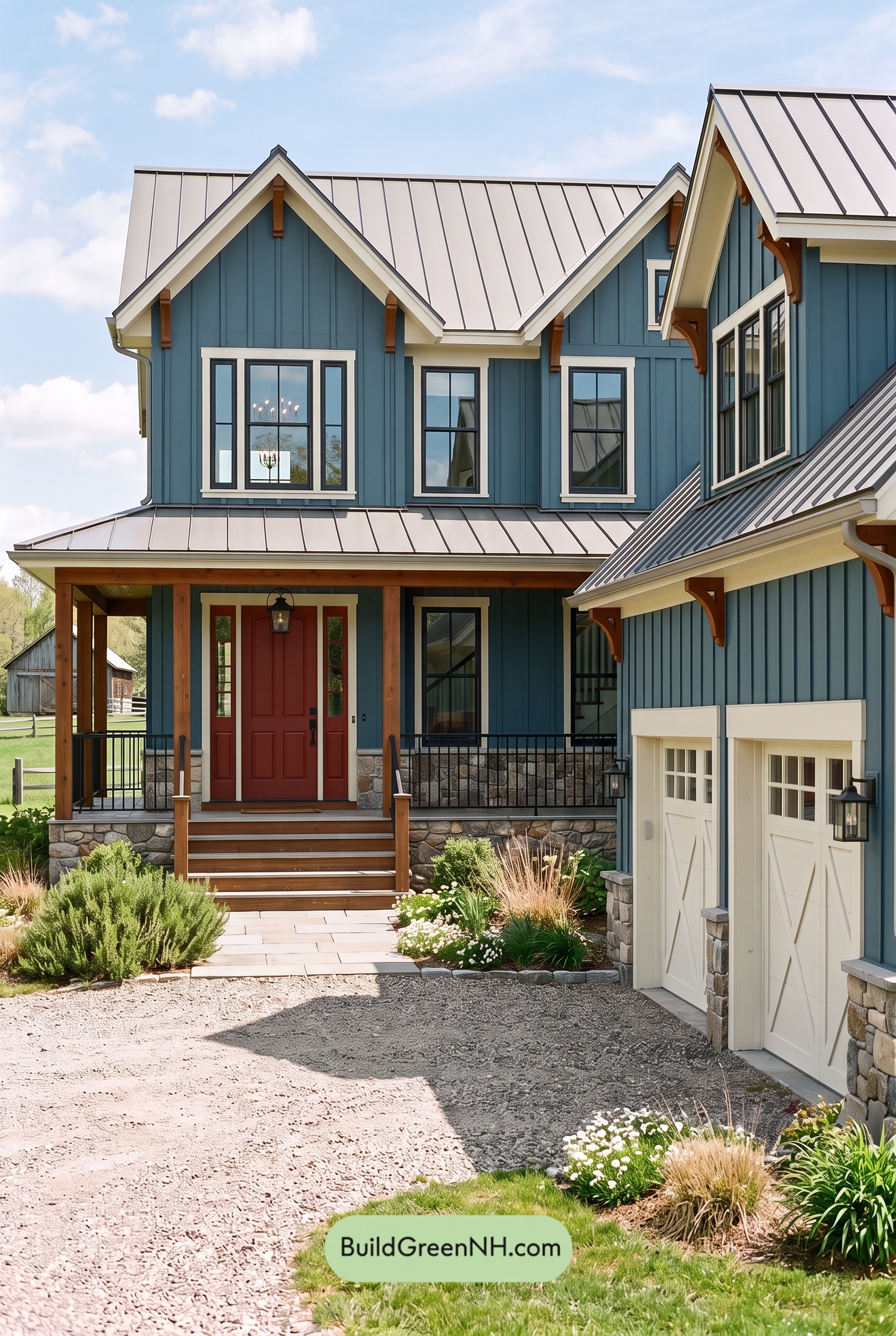 Red Front Door House Paint Color Scheme: Teal Blue Kinship
 Blue House Front Door Color Scheme: Harbor Saffron
Table of Contents