Last updated on
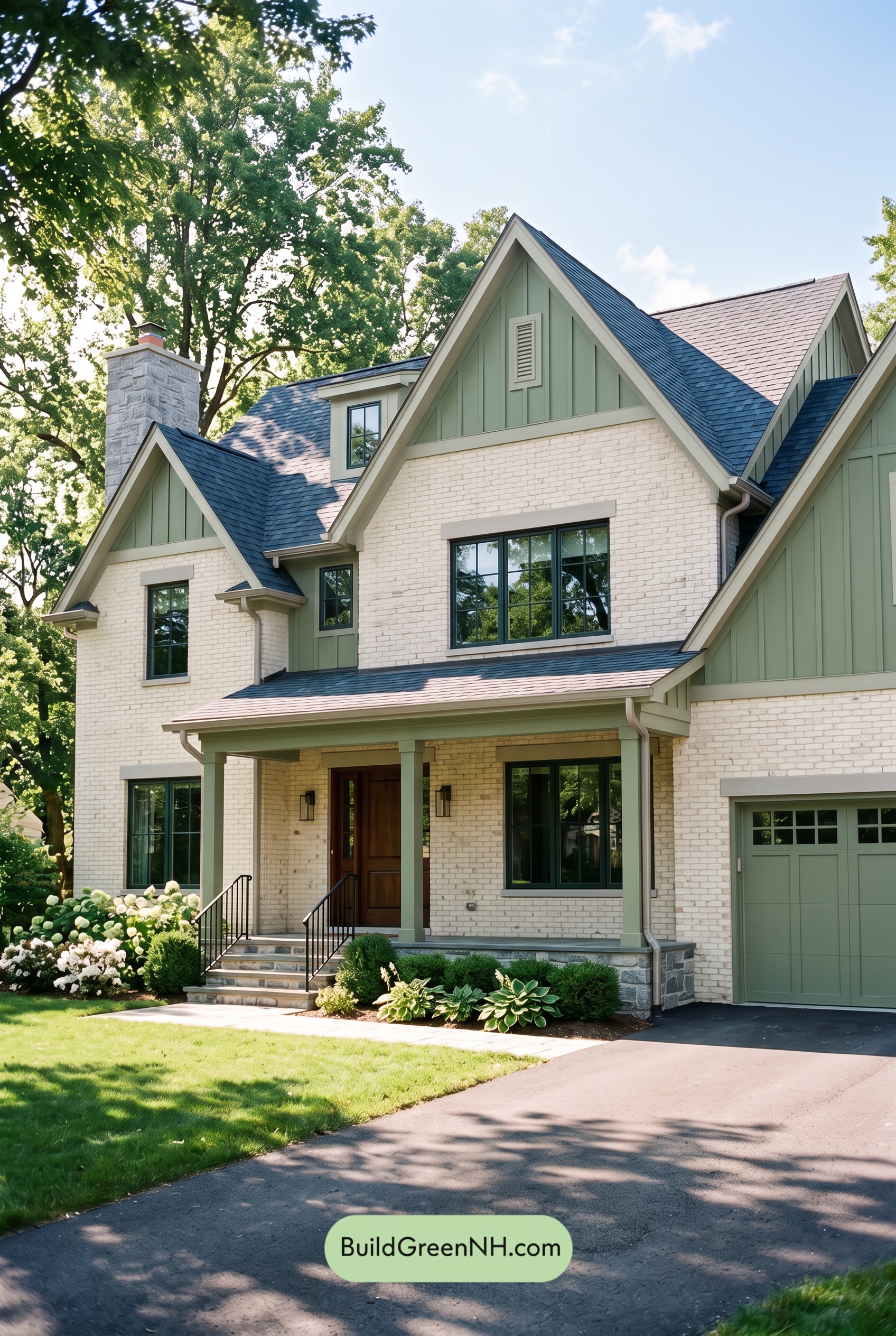

This inviting exterior color scheme feels timeless because its soft natural shades create contrast, warmth, and instant curb appeal without overwhelming the home’s detailed architecture.
A Soft, Layered Foundation
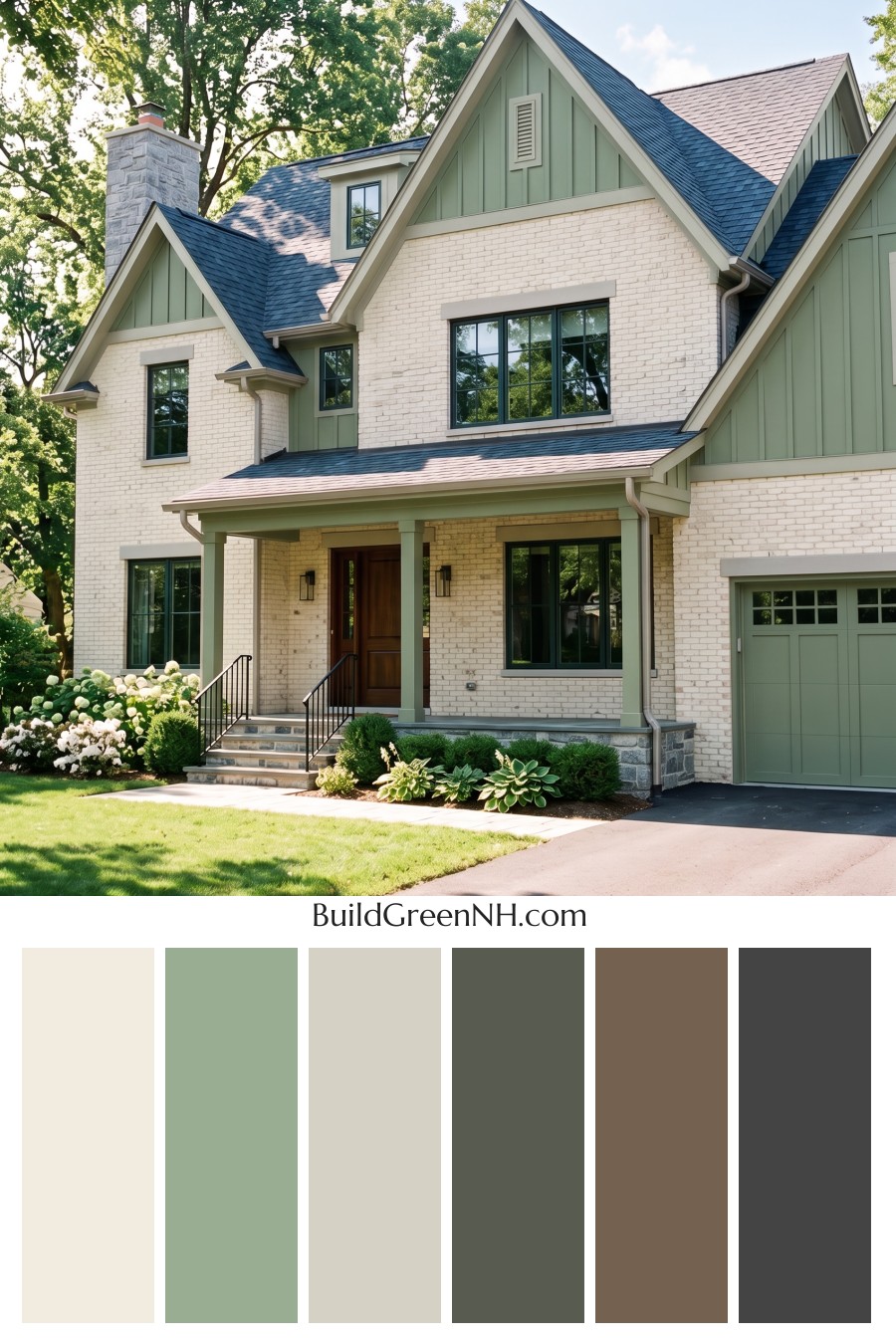
The main exterior is wrapped in a light beige shade that gives the home an airy, welcoming presence. Across the brickwork, this gentle neutral brightens the façade while allowing the steep gables, varied rooflines, and substantial windows to remain the stars. Its warm undertone also keeps the overall look from feeling stark.
A slightly deeper beige-gray shade appears on the trim around the windows and along select architectural edges. This subtle change adds definition without breaking up the calm, cohesive backdrop. It is a smart way to highlight the home’s craftsmanship while preserving a relaxed, elegant finish.
Green Accents That Connect to the Landscape
The muted green used on the upper gable siding brings a refreshing, garden-inspired character to the exterior. It is soft enough to complement the pale beige walls, yet distinct enough to give the peaks and vertical siding real visual presence. Repeating this green on the porch columns and garage door creates a deliberate, balanced rhythm from one side of the house to the other.
Deep green window frames provide the strongest contrast in the palette. Their darker shade crisply outlines the windows, drawing attention to the generous panes and adding a tailored finish against the lighter walls. Together, the soft green siding and deeper green accents make the home feel beautifully rooted in its leafy setting.
A Warm Entry Point
The front door introduces a rich brown shade that immediately warms the entry. Set beneath the soft green porch structure and surrounded by pale neutral walls, the door becomes a natural focal point without looking too bold. This brown element adds a sense of depth and traditional charm, making the entrance feel personal and inviting.
Dark gray railings lend a clean, understated edge to the front steps. Their darker neutral tone quietly echoes the roof while providing just enough contrast to frame the pathway and porch.
Grounded by a Deep Roof Tone
A deep charcoal roof anchors the lighter wall colors and green details. Its strong, cool presence gives the home structure, especially across the many angled gables. The roof keeps the palette from becoming overly soft, lending the entire exterior a polished, enduring look.
Overall, the mix of creamy beige, muted green, deep green, warm brown, and charcoal gray feels classic but far from ordinary. It is a balanced exterior scheme that looks refined in every season, especially when paired with lush greenery and natural stone details.
Next, see how this color scheme looks under different lighting simulations throughout the day.
Overcast
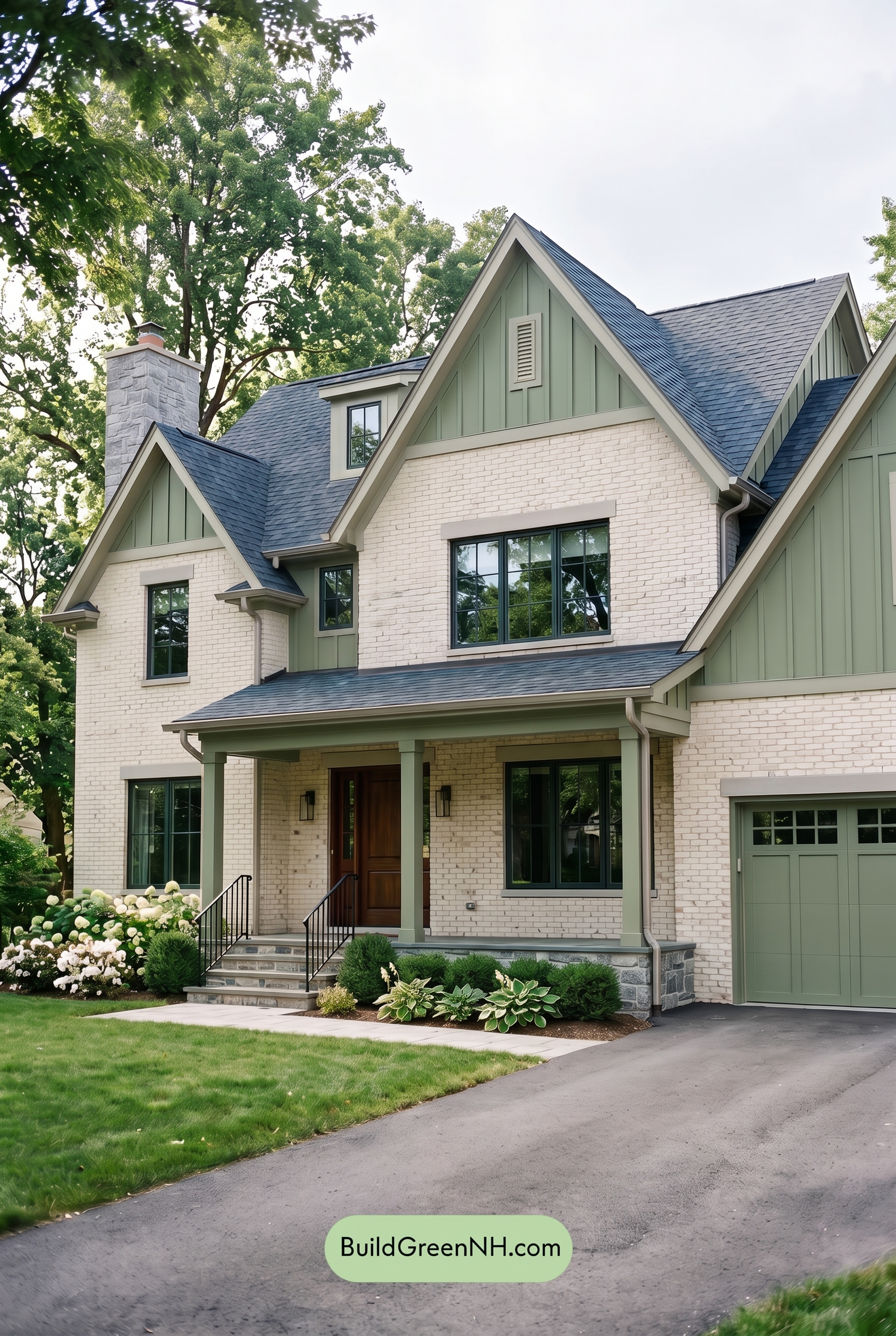
Under overcast skies, the light beige masonry and trim lose some of their sunny warmth, reading softer and slightly cooler than they do in neutral daylight. The muted green siding, columns, window frames, and garage door appear deeper and more even, with reduced saturation and fewer bright highlights across the façade.
Because cloud cover softens direct shadows, the home’s gables, porch, and architectural details feel less sharply contrasted but more cohesive. The dark green accents and rich brown entry door still provide grounding definition, while the gray railings settle into the scene for a calm, polished mood with a quiet, welcoming character.
Golden Hour
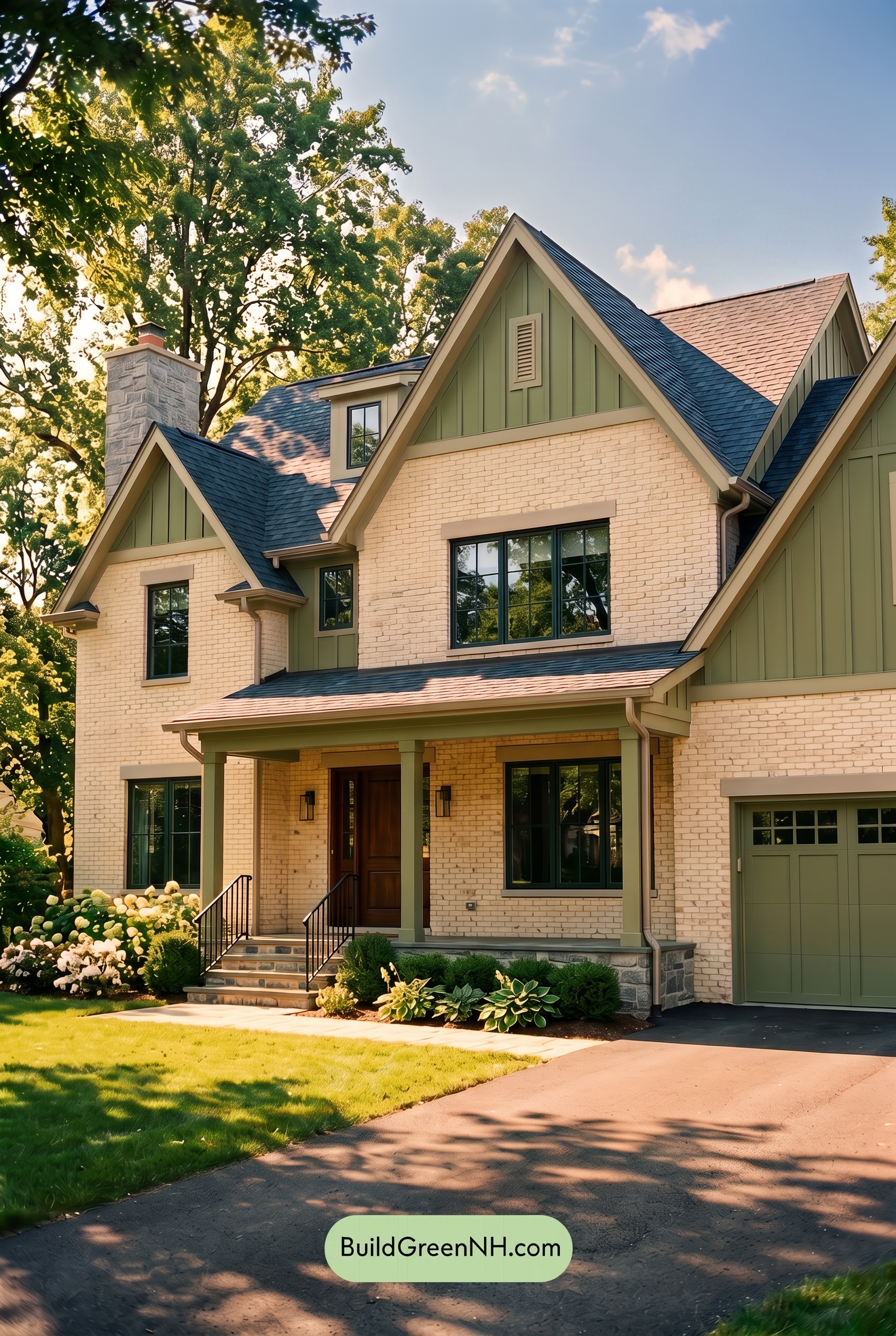
Under Golden Hour, the beige exterior shifts from a balanced neutral in daylight to a softer, honeyed shade, making the façade feel richer and more welcoming. The muted green details take on a warmer cast and appear slightly deeper in the shaded planes, while the brown entry becomes more pronounced and inviting.
Long, low shadows strengthen the contrast between the sunlit walls and recessed trim, windows, and porch areas. Darker green and gray accents read crisper against the glowing warm neutrals, creating a layered, relaxed mood that feels more intimate than the cleaner, flatter look of neutral daylight.
Shade
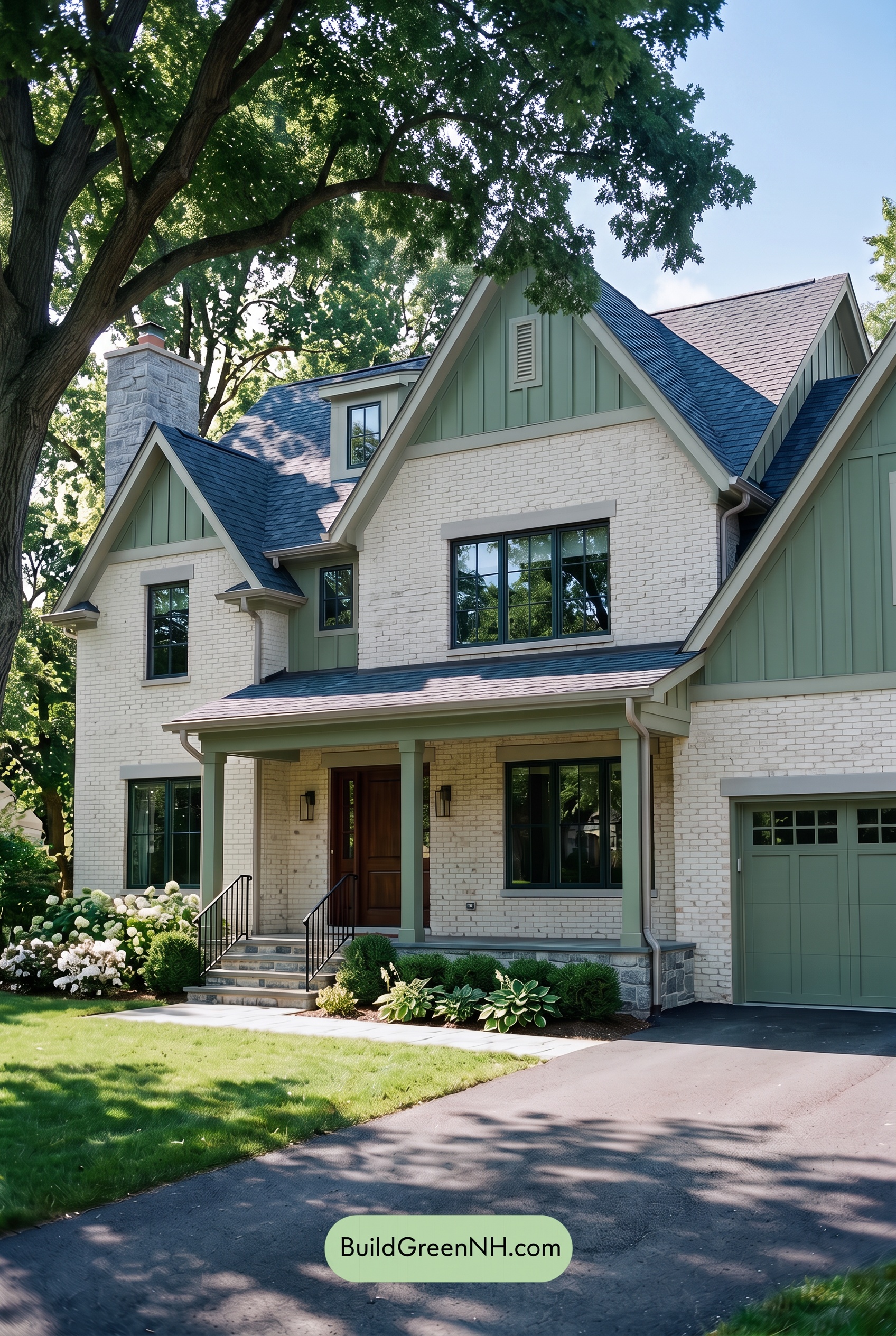
Under the tree-filtered shade, the light beige masonry softens and reads a touch cooler than it would in neutral daylight, while its texture becomes more pronounced through the shifting shadows. The muted green siding and garage door deepen slightly, appearing less saturated but richer and more grounded against the pale walls.
Shade also strengthens the contrast around the dark green window frames and warm brown entry door, giving the façade a more tailored, layered look. The gray railings recede quietly into the shadows, while the overall palette feels calm, sheltered, and inviting rather than bright and sunlit.
Nighttime
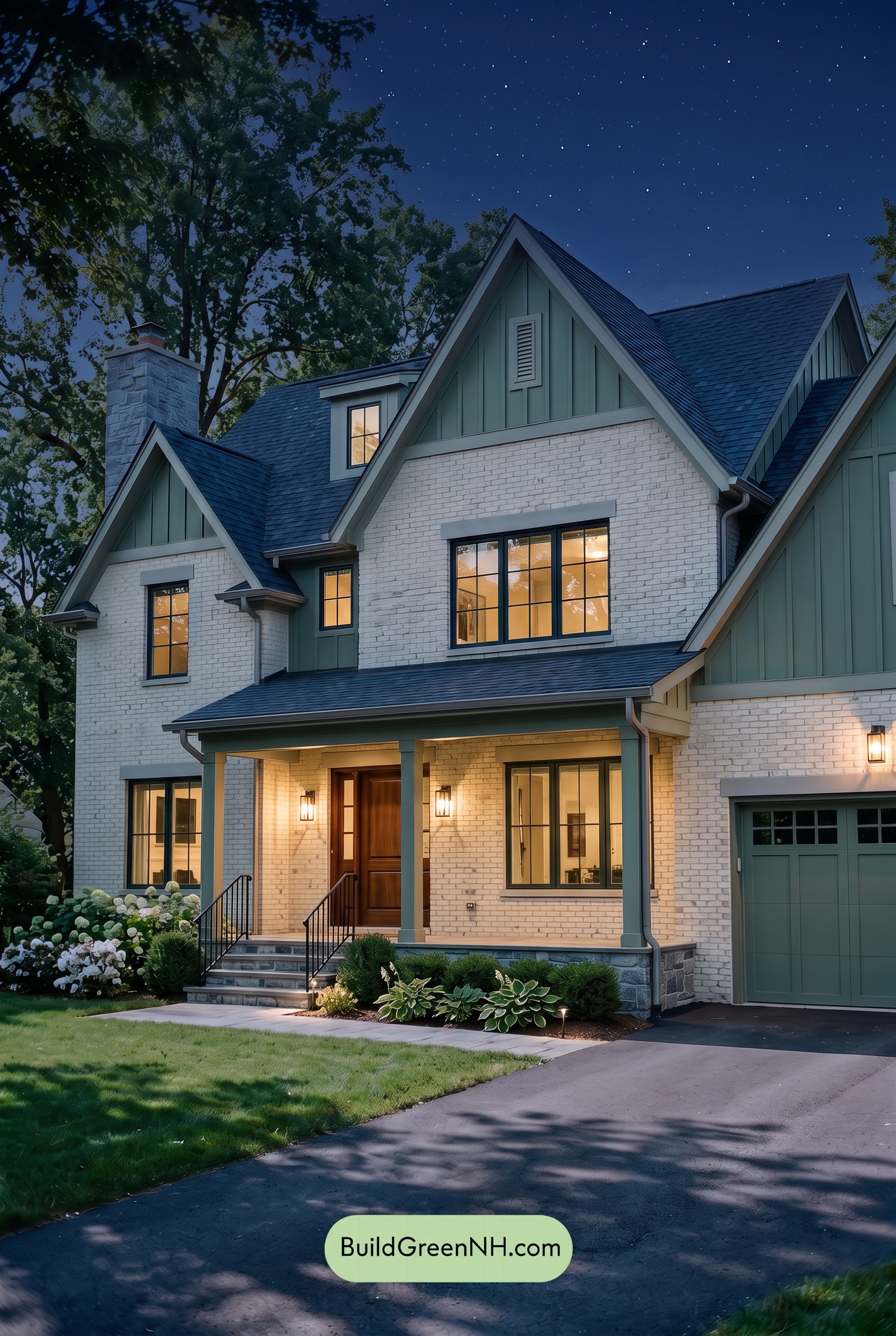
At night, the cool green shades on the upper walls, frames, columns, and garage door deepen and become more subdued than they appear in neutral daylight. Blue-leaning shadows soften their saturation, while the pale beige walls take on a quieter, slightly cooler cast away from the porch and window glow.
Warm lighting brings the entry into focus, enriching the brown door and lending the surrounding beige shades a welcoming golden softness. Dark gray railings and shaded rooflines recede into sharper silhouettes, creating stronger contrast and a calm, layered mood that makes the illuminated facade feel especially inviting.
Pin these for later:
Want More?
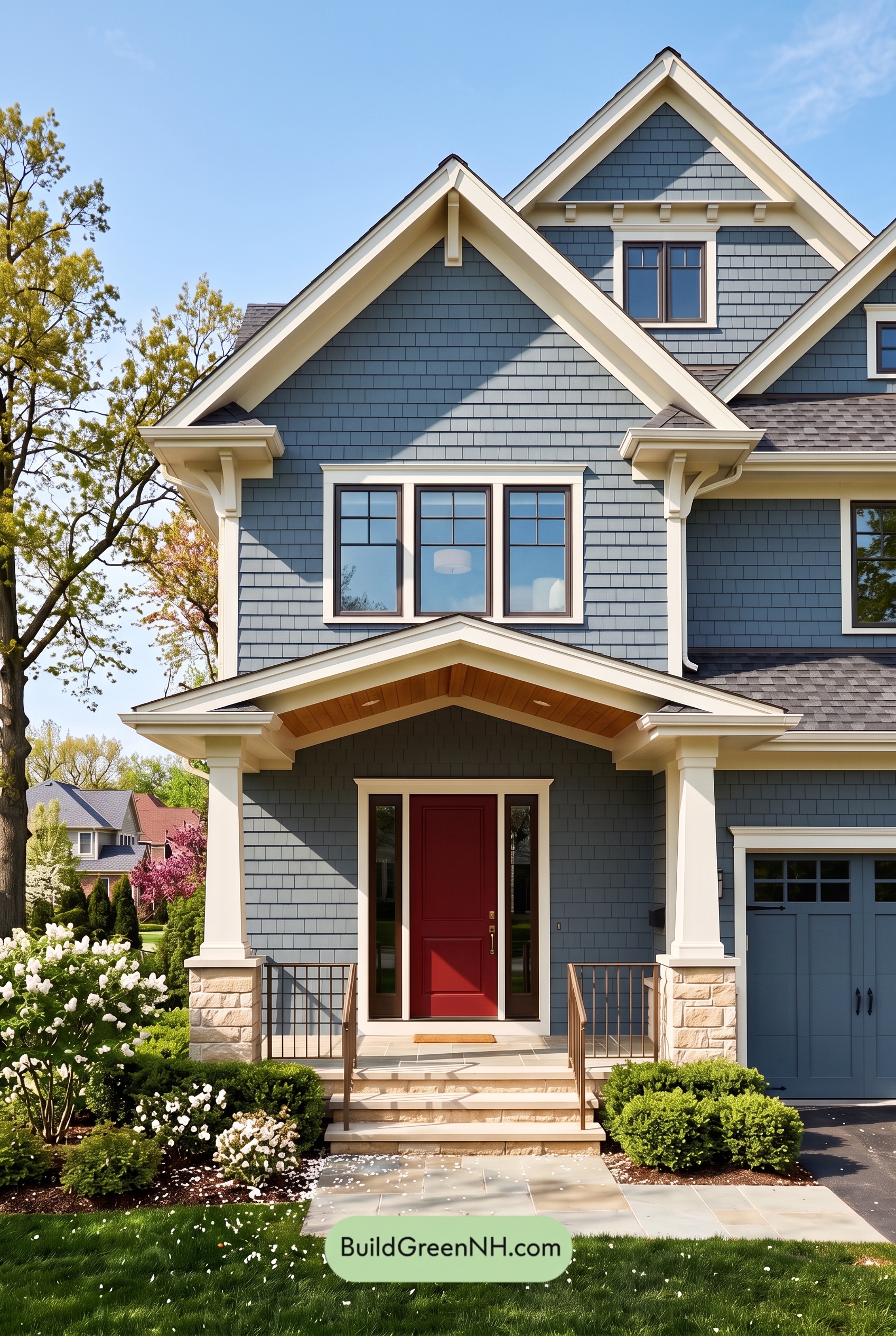 Red Front Door House Paint Color Scheme: Denim Blue Homecoming
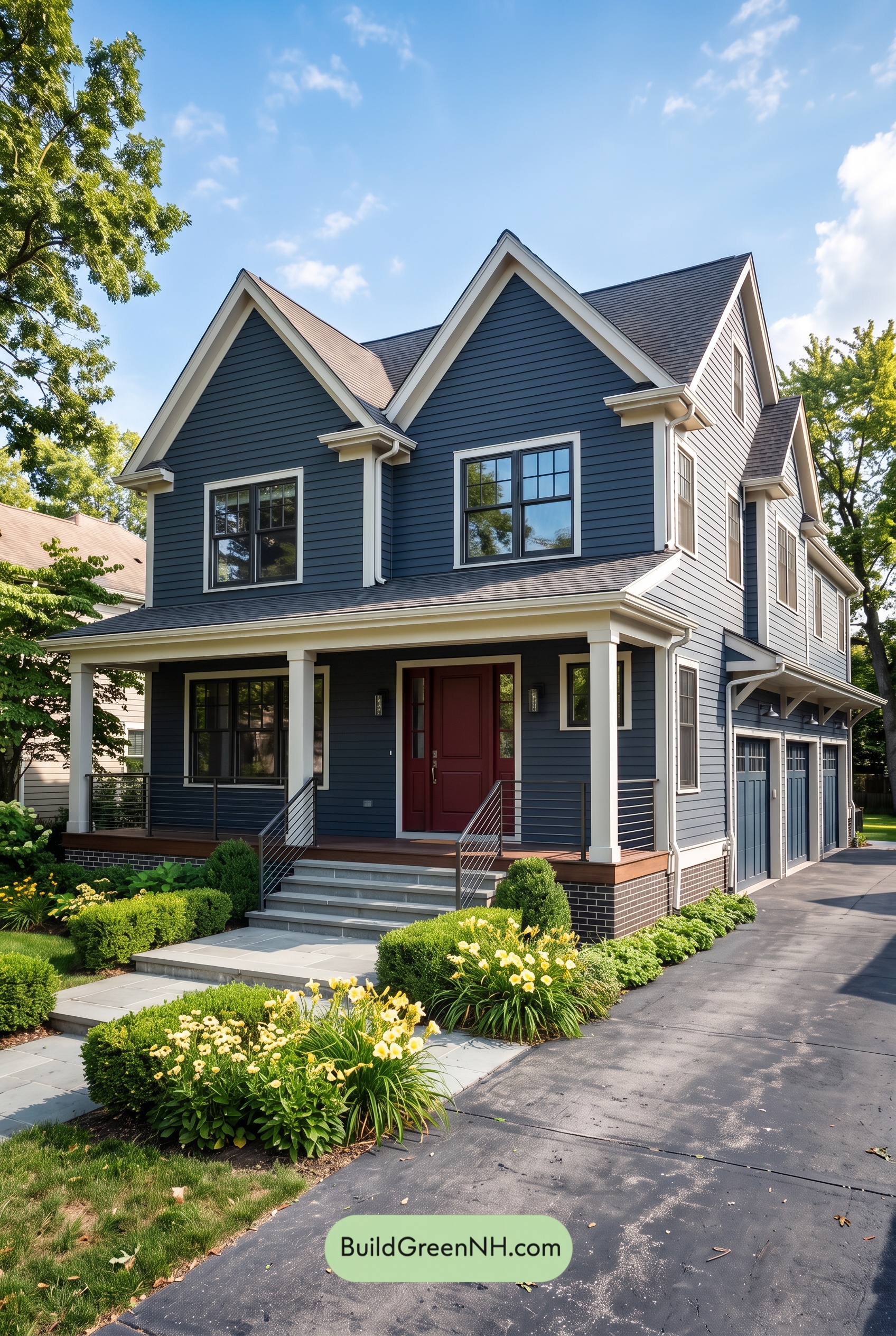 Red Front Door House Paint Color Scheme: Midnight Blue Assurance
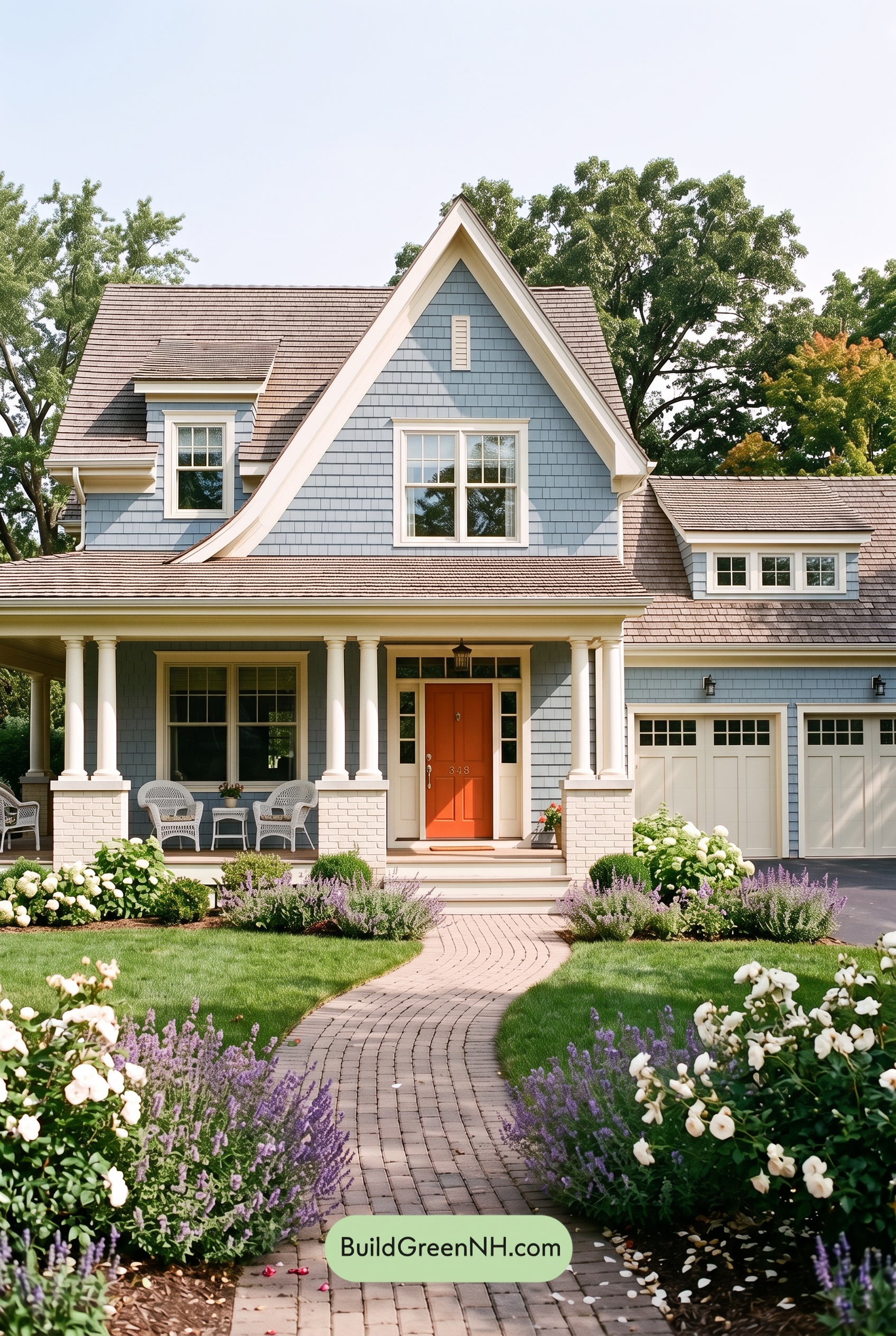 Red Front Door House Paint Color Scheme: Pale Blue Joy
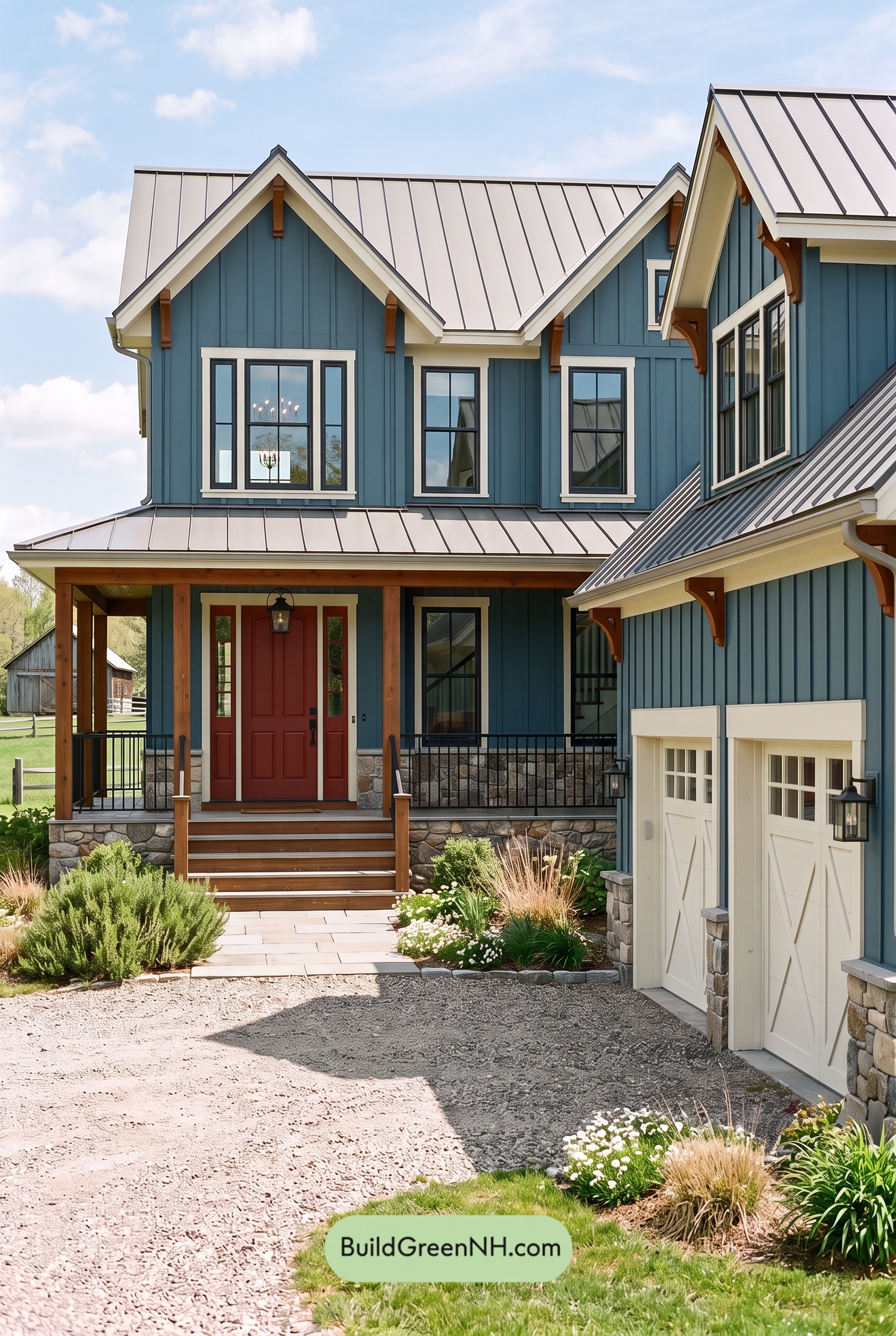 Red Front Door House Paint Color Scheme: Teal Blue Kinship
 Blue House Front Door Color Scheme: Harbor Saffron
Table of Contents