Last updated on
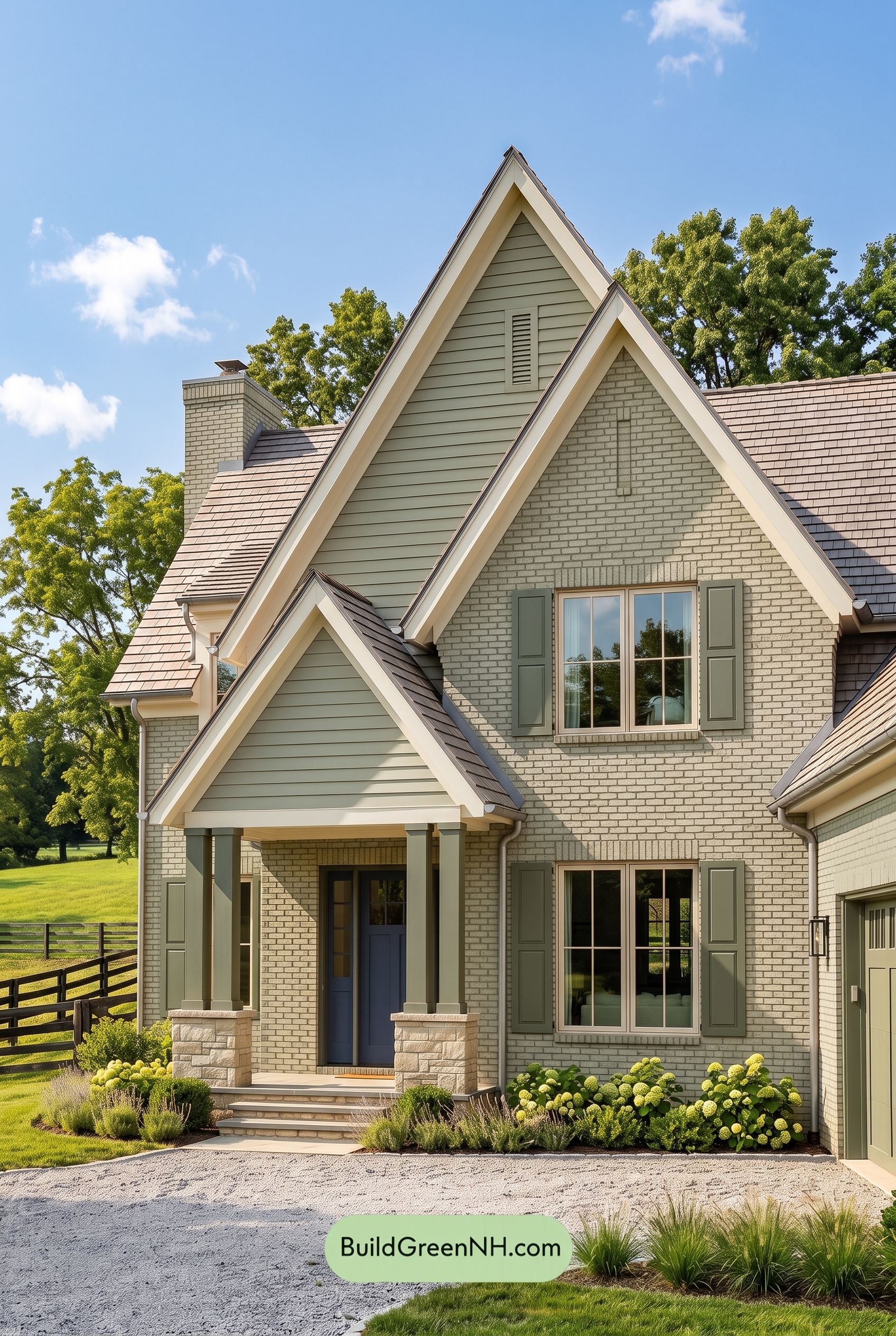

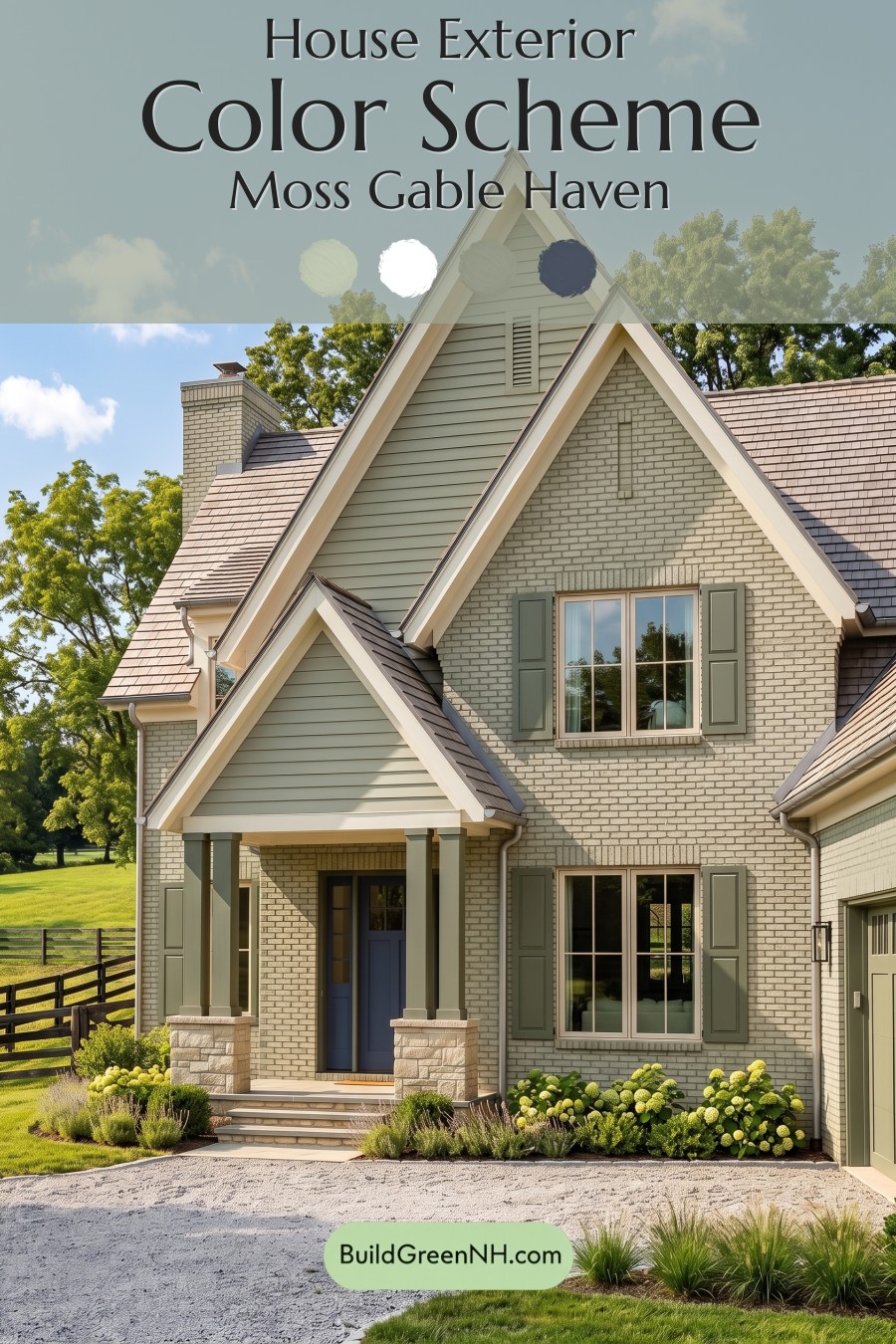
This calm green-and-gray exterior feels timeless because its layered neutrals create contrast without sacrificing a welcoming, natural warmth.
A Soft, Grounded Main Color
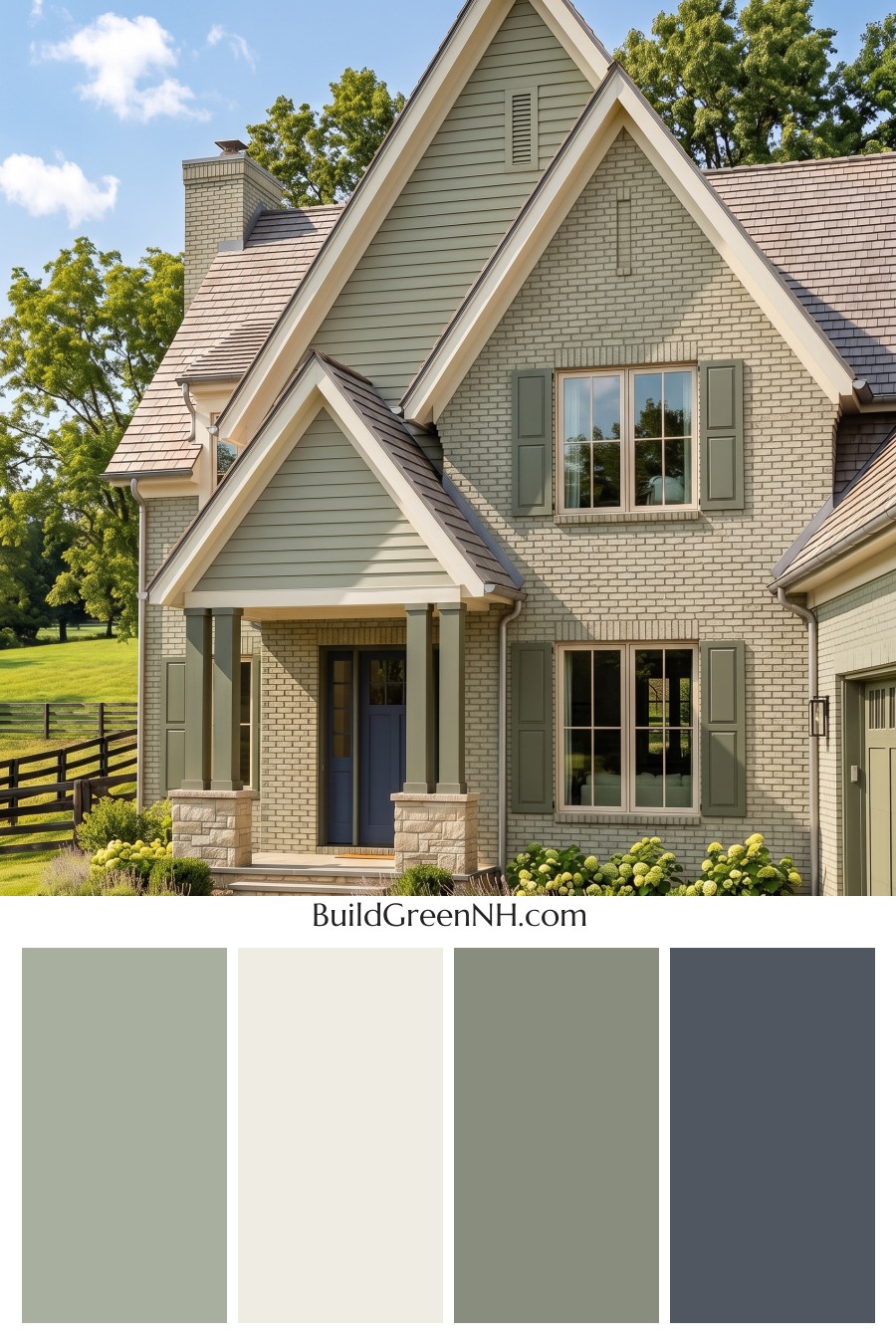
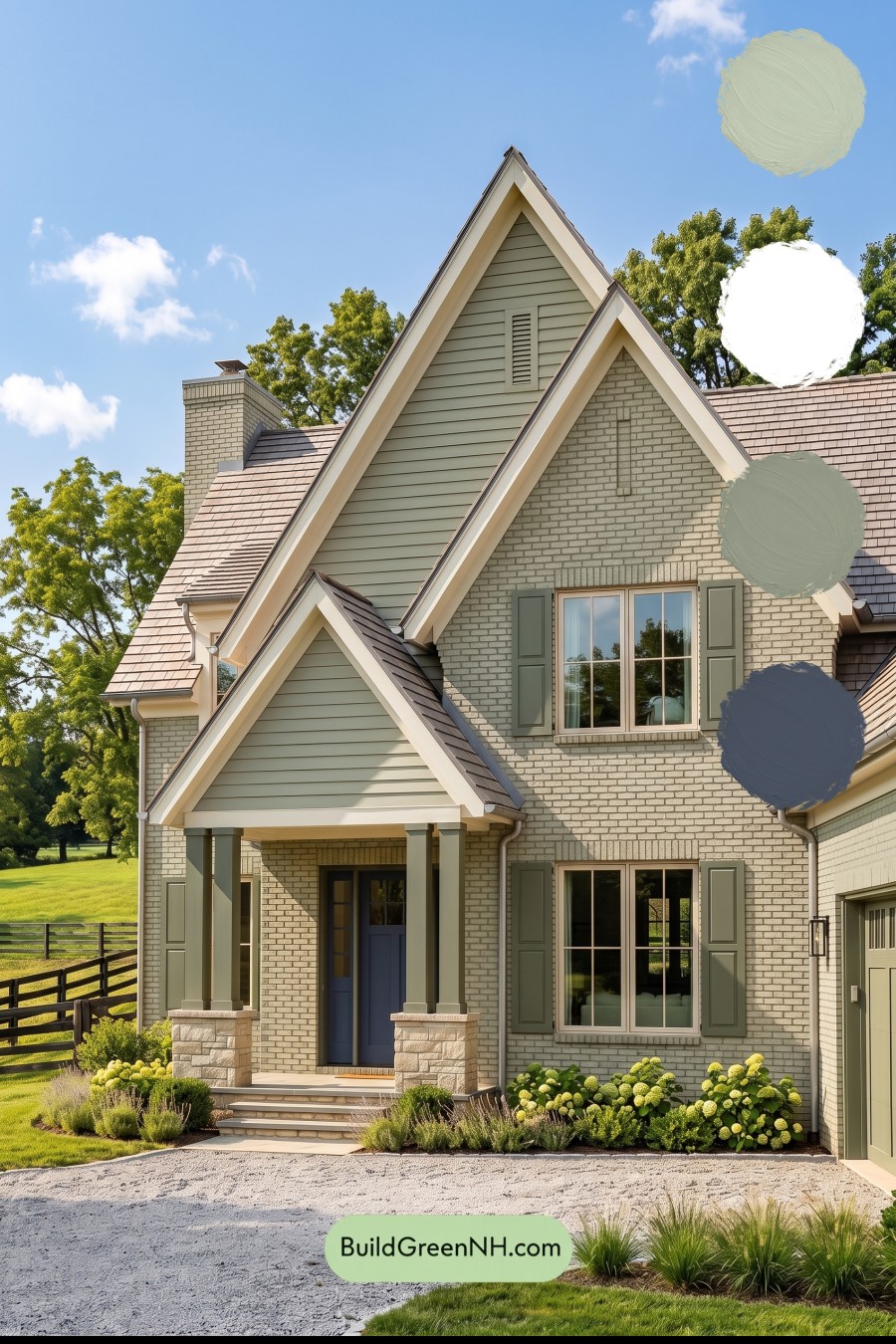
The house is anchored by muted green siding with a softly weathered undertone. Used across the prominent gables and porch roofline, this understated green gives the architecture a relaxed, nature-inspired presence. It also blends beautifully with the surrounding landscape, helping the tall roof peaks feel connected to the property rather than overly formal.
A pale gray-green brick exterior adds another quiet layer of interest. Its subtle variation brings texture to the facade while staying within the same restrained, earthy palette as the siding.
Bright Trim That Defines the Architecture
Crisp white trim traces every steep gable, window, and roof edge, bringing definition to the home’s dramatic lines. Against the soft green siding and pale masonry, the bright trim keeps the exterior looking fresh and tailored.
This light contrast is especially effective around the layered roof forms. It draws the eye upward, highlights the craftsmanship of the facade, and prevents the many architectural details from blending together.
Gray Accents with Depth
The shutters and porch columns introduce a deeper gray-green shade that gives the exterior a grounded, cohesive finish. These accents are noticeably darker than the main siding, yet their muted quality keeps them from feeling harsh. They frame the windows with gentle contrast and lend the front porch a substantial, welcoming look.
The front door takes the scheme a step deeper with a dark blue-gray tone. This richer shade creates a clear focal point at the entry, offering an elegant sense of arrival beneath the lighter porch details.
At the side of the home, the garage door carries a coordinating muted gray-green shade. Repeating this accent color helps the garage feel like an intentional part of the design rather than a separate visual element.
Roof and Stonework Complete the Palette
A medium warm gray roof adds a durable, classic finish overhead. Its restrained depth pairs easily with the pale masonry and dark accent details, while its warm undertone keeps the overall palette from feeling too cool.
The light natural stone at the porch bases reinforces the home’s earthy character. Together with the green siding, gray-green accents, white trim, and warm gray roof, it creates a polished exterior that feels both refined and comfortably at home in a leafy setting.
Next, see how this color scheme looks under different lighting simulations throughout the day.
Overcast
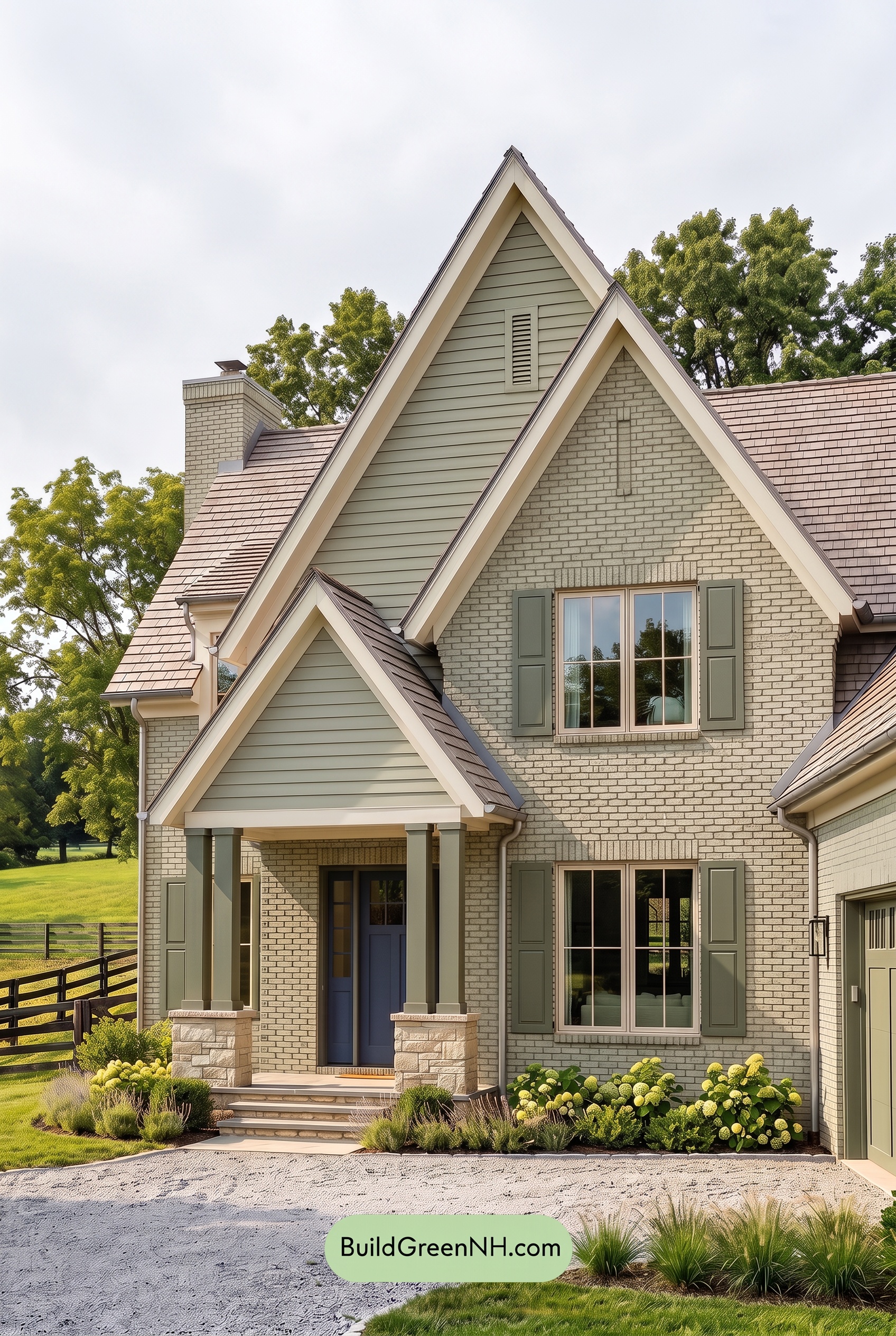
Under overcast skies, the soft green siding appears quieter and slightly deeper than it does in neutral daylight, with its natural warmth gently muted. The pale trim loses some of its sunny brightness, reading as a softer, creamier light neutral rather than a crisp highlight.
Cloud-filtered light also smooths the sharp shadows around the gables, porch, and brickwork, reducing contrast while making the gray shutters, columns, door, and garage feel more grounded. The overall palette becomes calm and cohesive, creating a refined, welcoming mood with less glare and more subtle depth.
Golden Hour
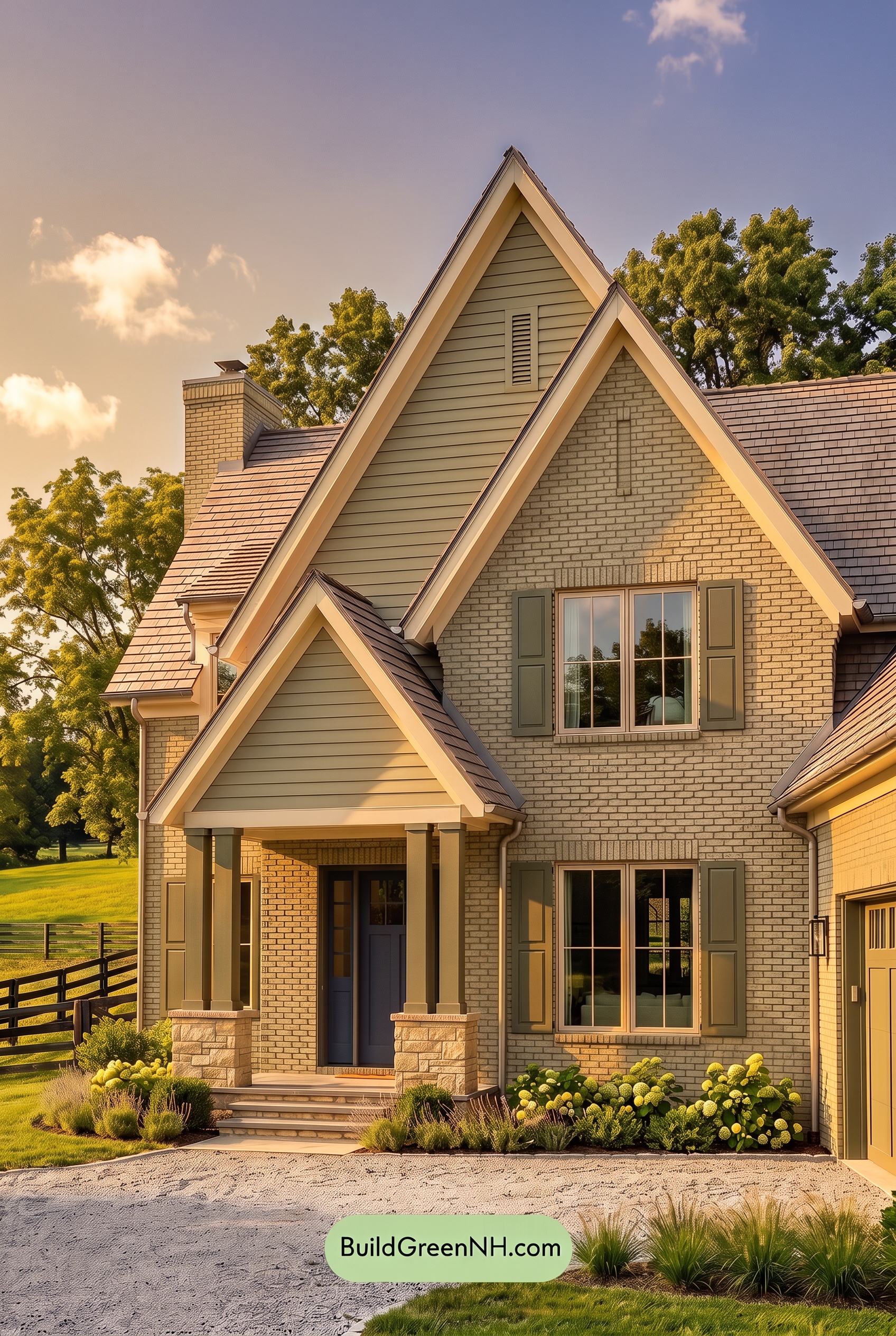
Golden Hour lends the green siding a softer, more earthy warmth than it carries in neutral daylight, while its saturation appears gently enriched across the sunlit gables. The light trim takes on a creamy glow, creating a welcoming brightness rather than the crisp, cooler contrast it shows at midday.
Gray shutters, columns, doors, and garage details shift warmer in the low sun, while shaded recesses deepen into moodier charcoal-like tones. This blend of glowing highlights and long, defined shadows gives the exterior stronger dimension, richer contrast, and a relaxed, inviting evening character.
Shade
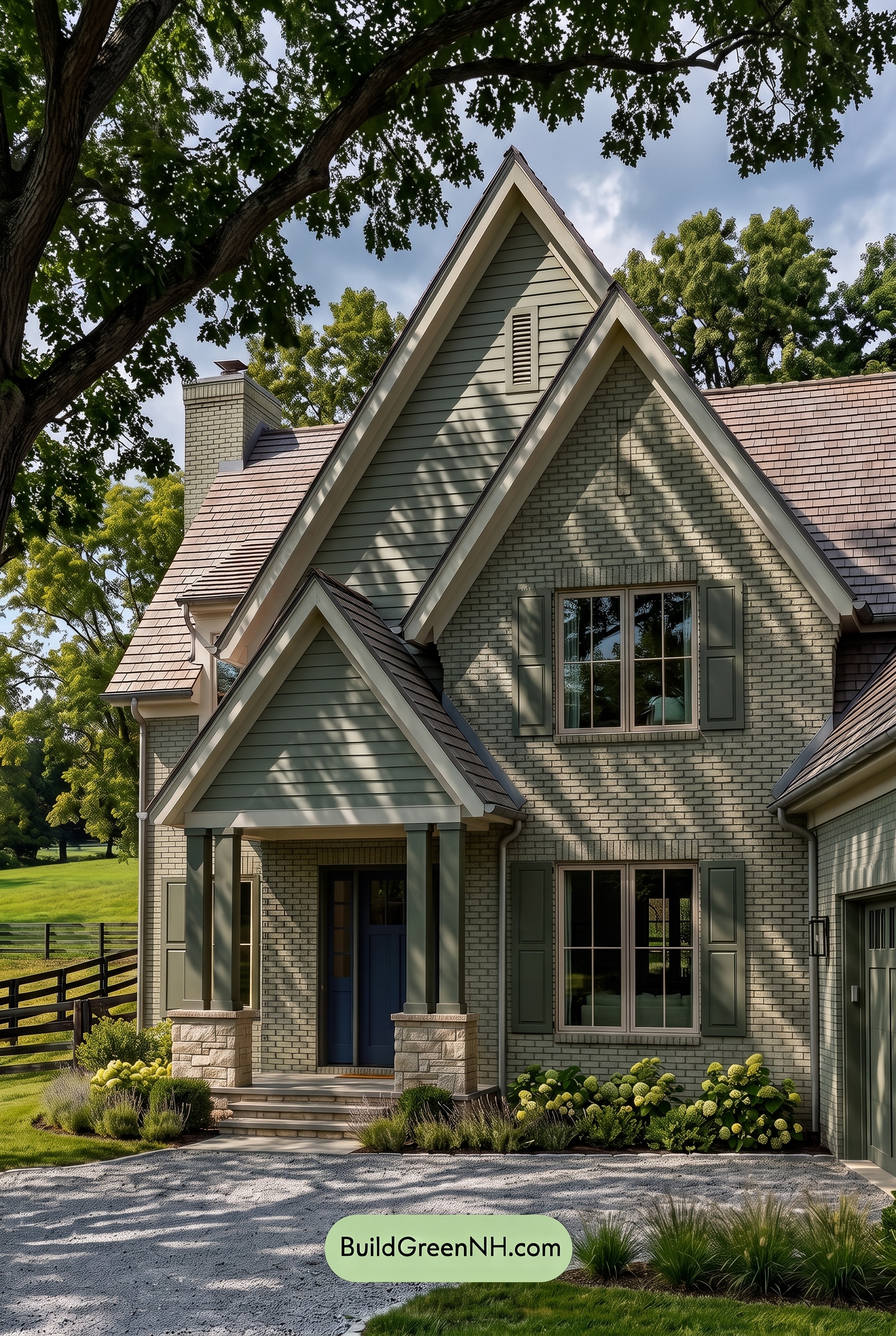
In shade, the muted green siding takes on a deeper, quieter character than it shows in neutral daylight, with its saturation appearing more restrained and its undertones reading cooler. The light trim softens from crisp brightness to a creamy-looking pale neutral, while the gray shutters, columns, and garage details become richer and more grounded.
Leaf-cast shadows create shifting bands of contrast across the façade, emphasizing the siding lines and architectural peaks without making the palette feel harsh. Compared with neutral daylight, the shaded exterior feels calmer and more intimate, with the cool green and gray shades settling into a layered, welcoming mood.
Nighttime
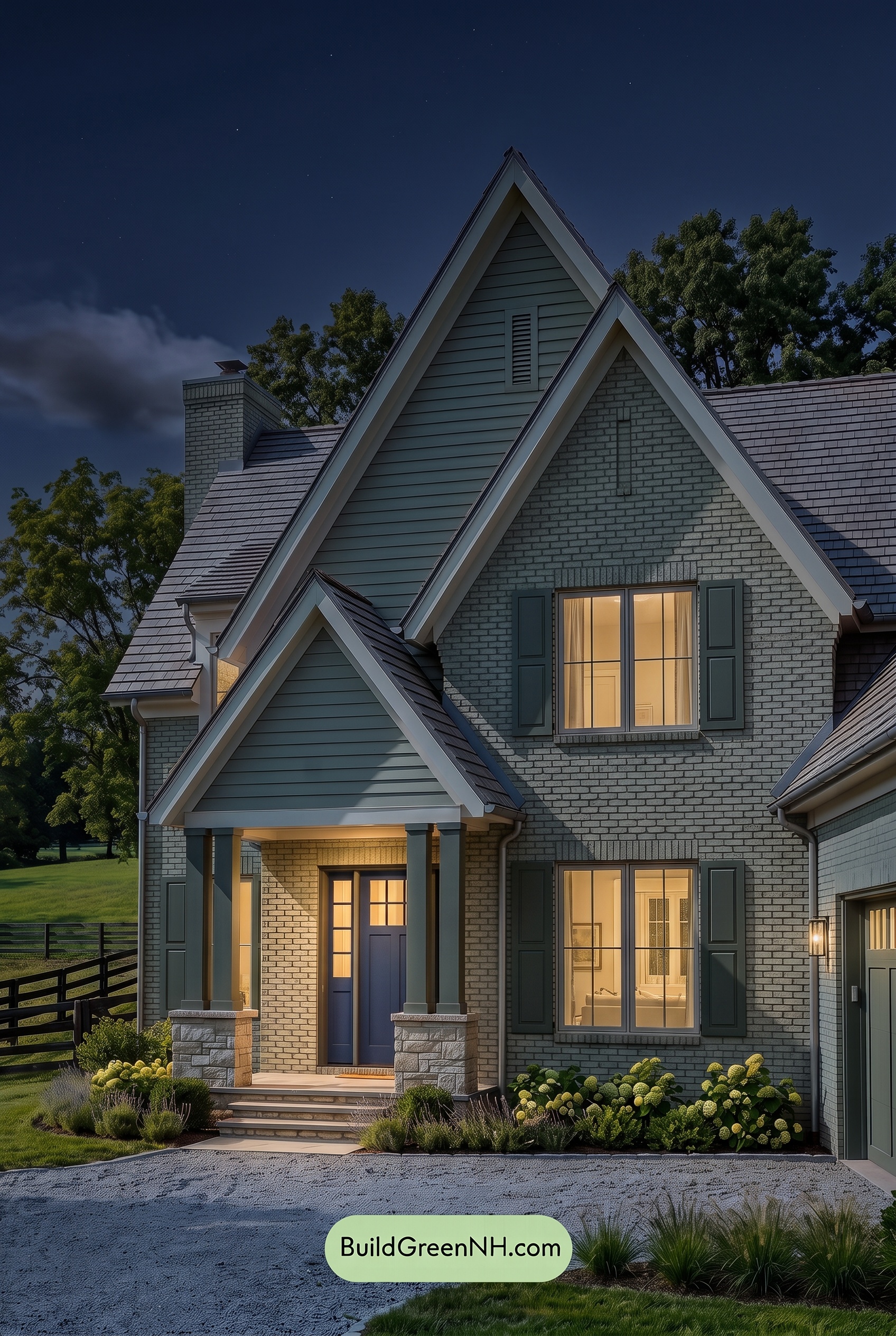
At night, the green exterior shifts toward a deeper, more muted shade than it shows in neutral daylight, giving the façade a calm, grounded presence. The gray shutters, columns, and doors appear richer and slightly cooler in the surrounding shadows, while the white trim softens from crisp bright white to a gentler pale neutral.
Warm interior and entry lighting creates a welcoming counterpoint to the cool nighttime palette, heightening contrast around the windows and porch. Shadows emphasize the steep rooflines and layered architectural details, creating a more dramatic, intimate mood than the even, open look of daylight.
Pin these for later:
Want More?
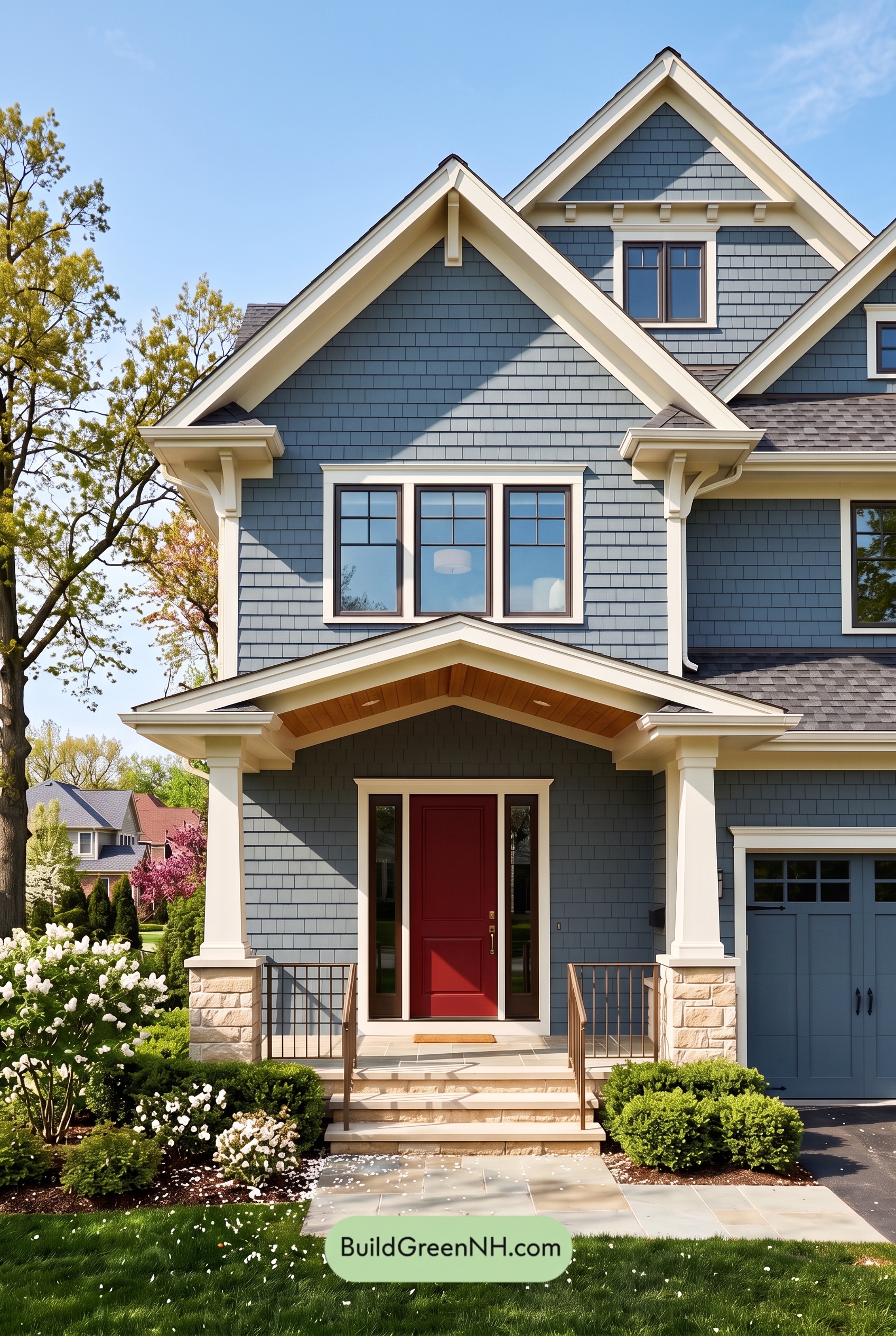 Red Front Door House Paint Color Scheme: Denim Blue Homecoming
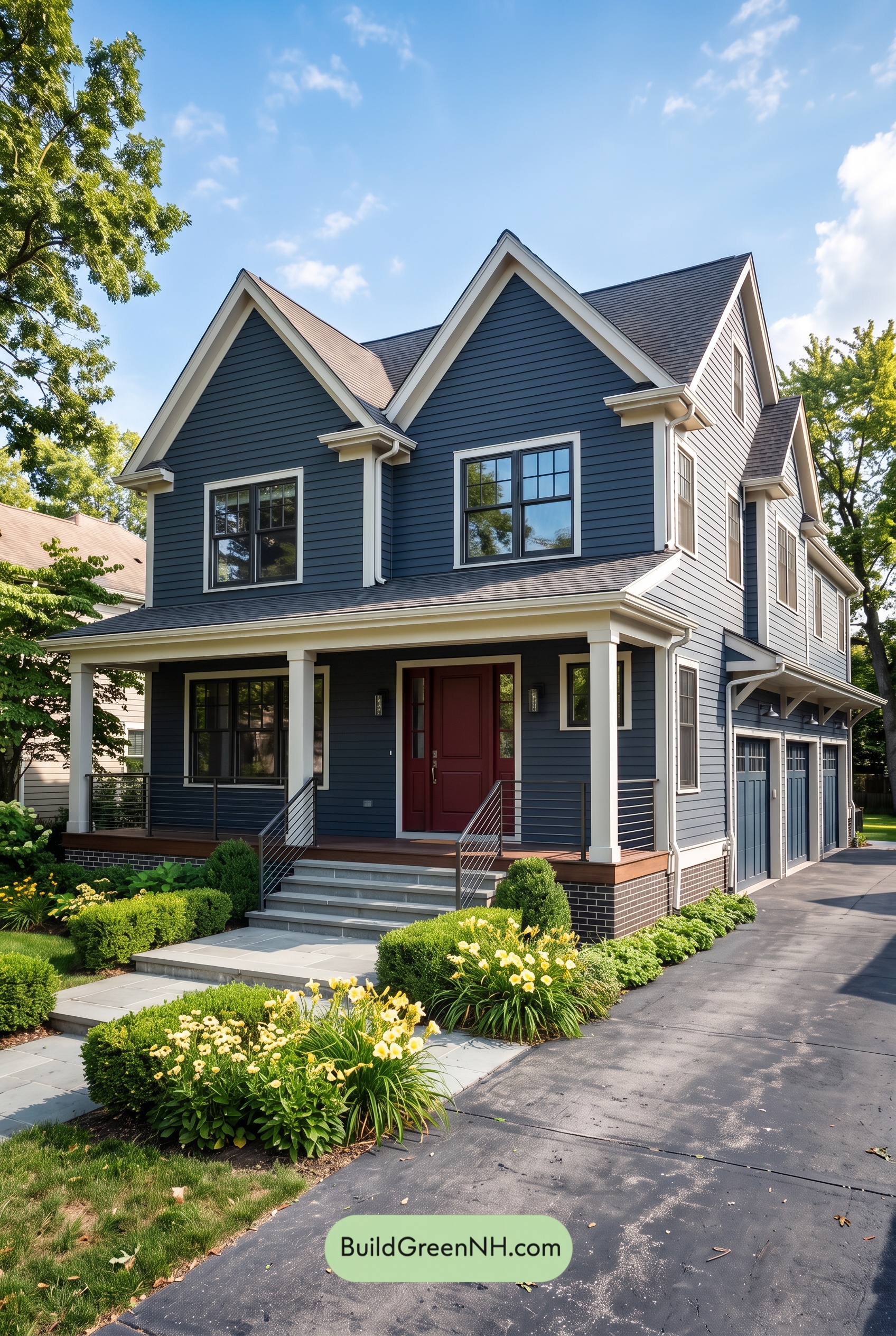 Red Front Door House Paint Color Scheme: Midnight Blue Assurance
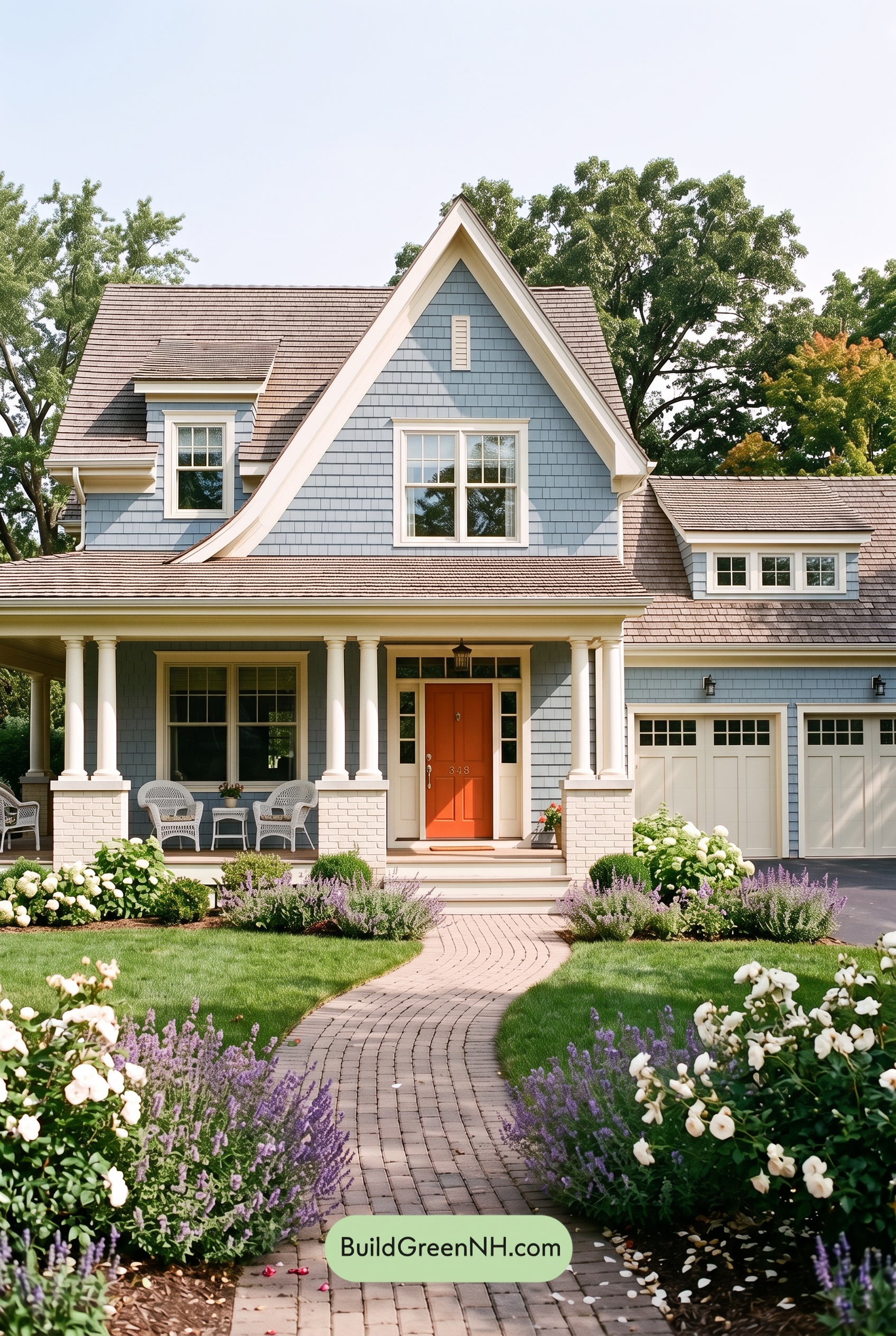 Red Front Door House Paint Color Scheme: Pale Blue Joy
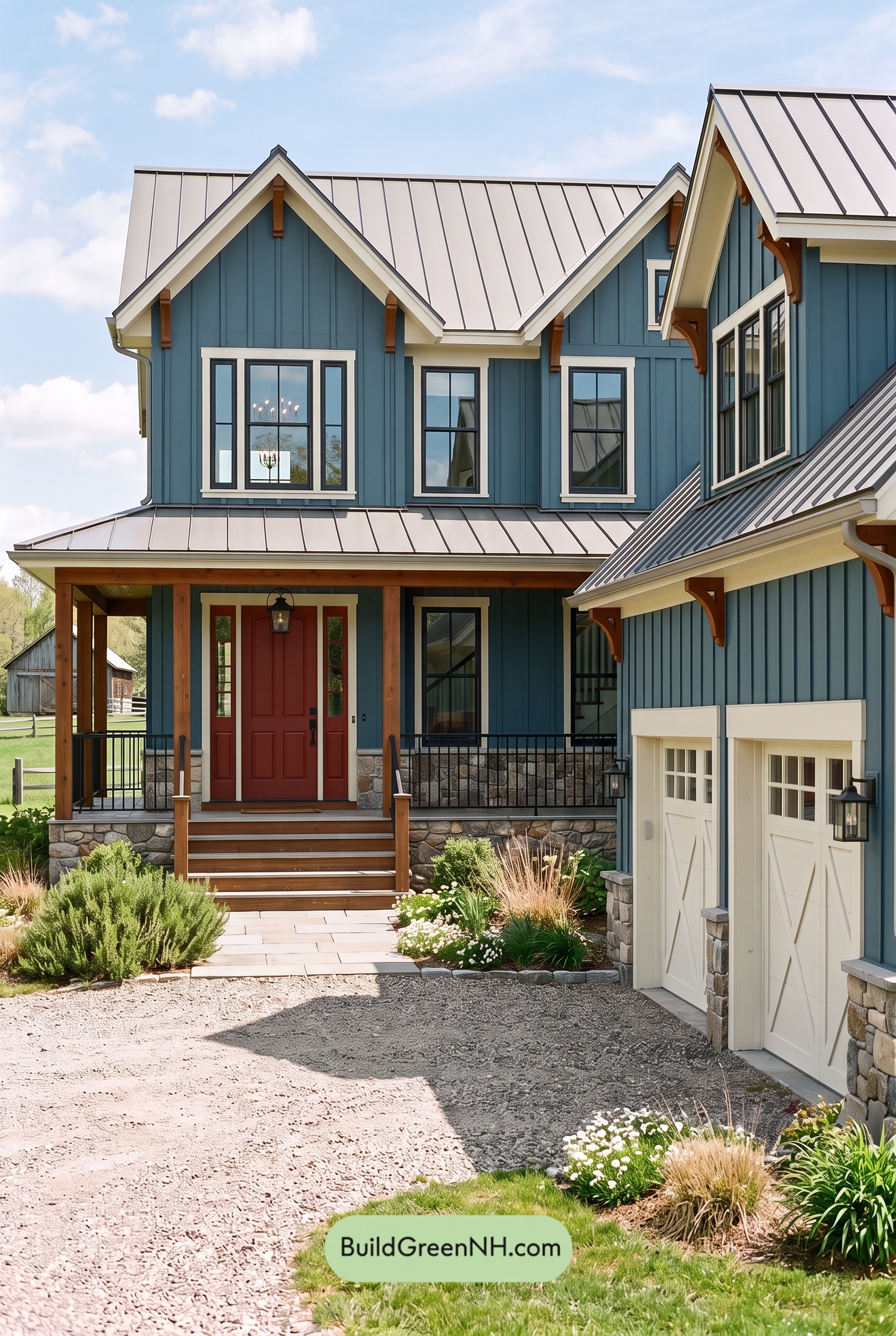 Red Front Door House Paint Color Scheme: Teal Blue Kinship
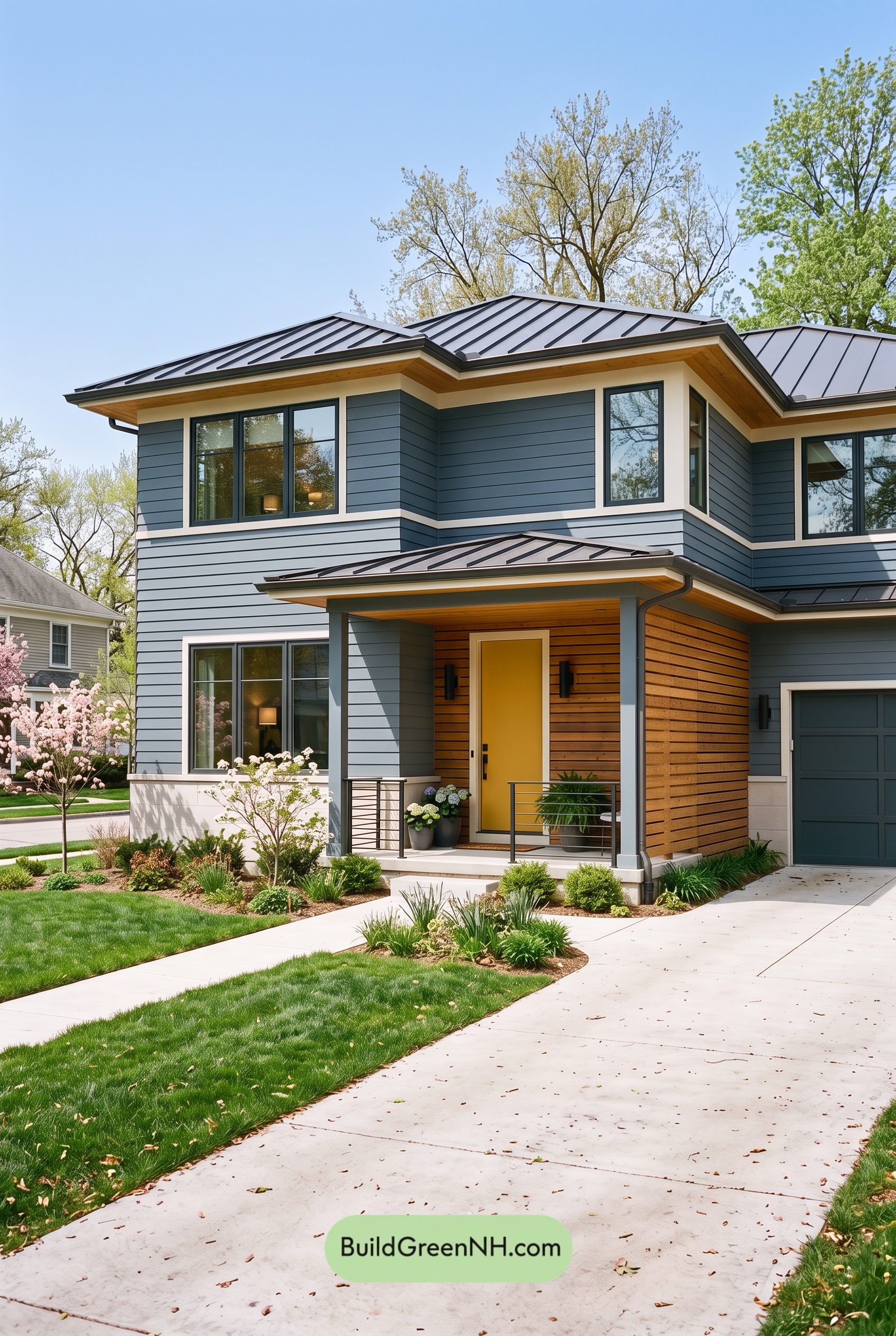 Blue House Front Door Color Scheme: Harbor Saffron
Table of Contents