Last updated on
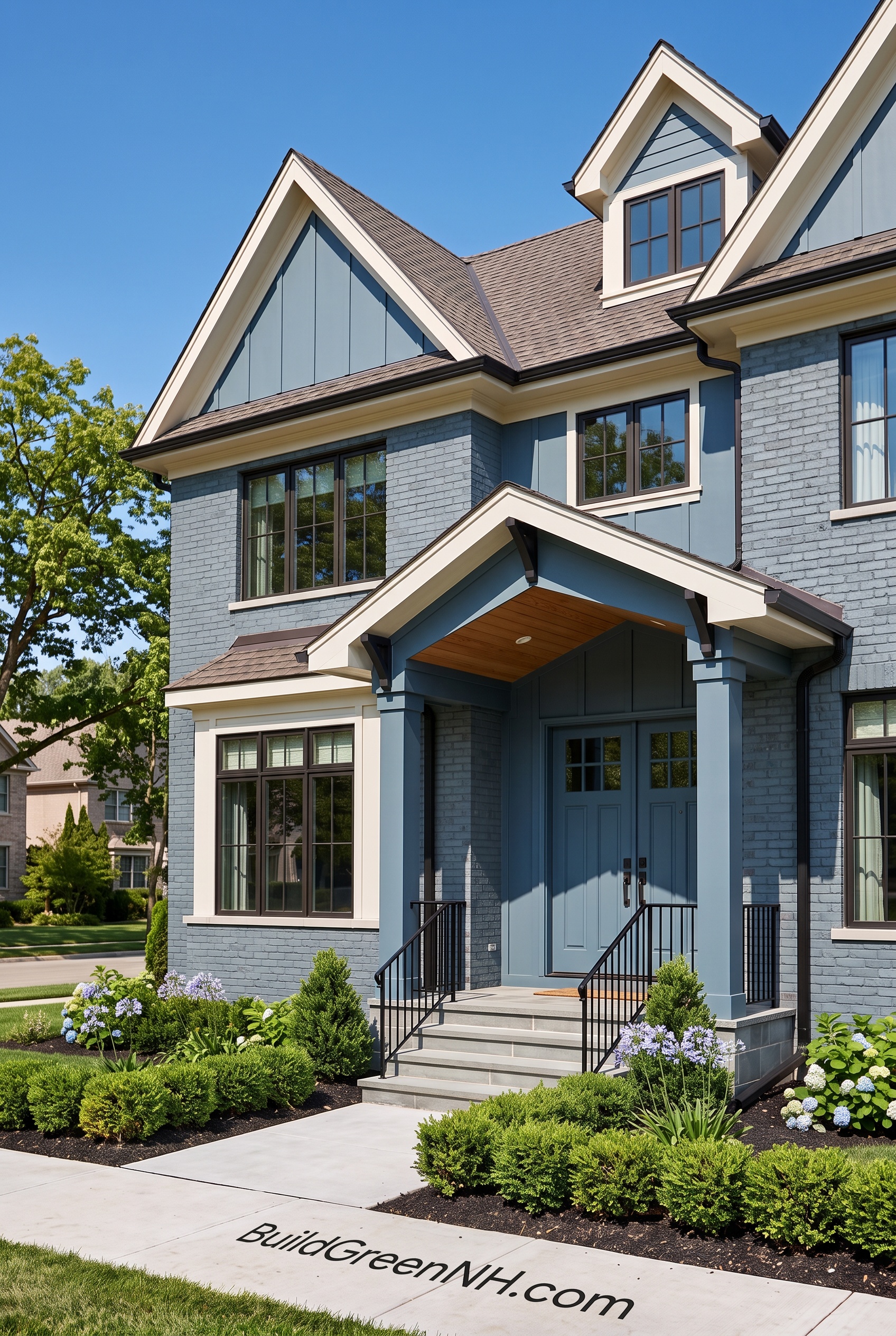

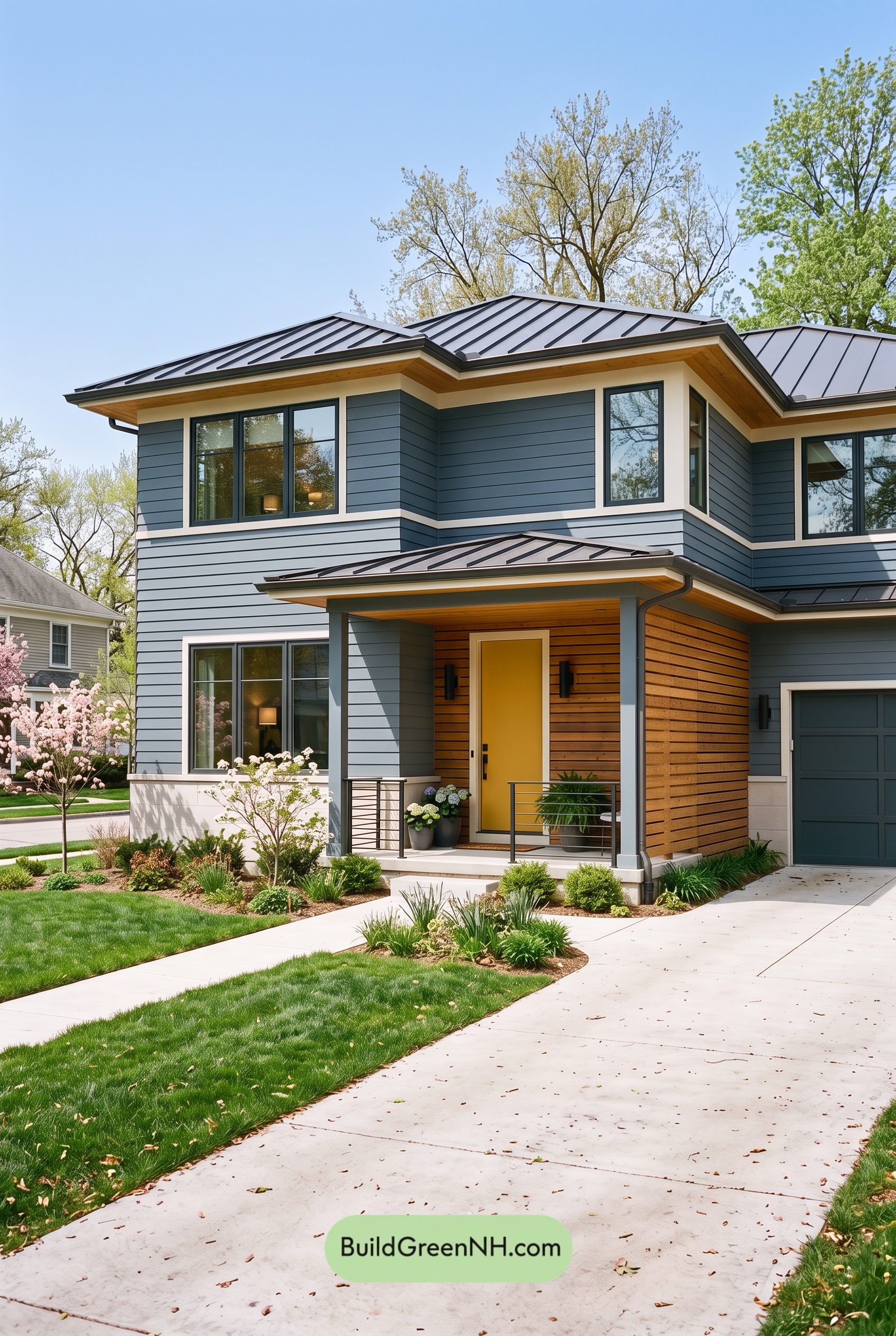
This layered blue-and-white exterior scheme feels crisp, welcoming, and beautifully tailored from the curb.
A Calm Blue Foundation
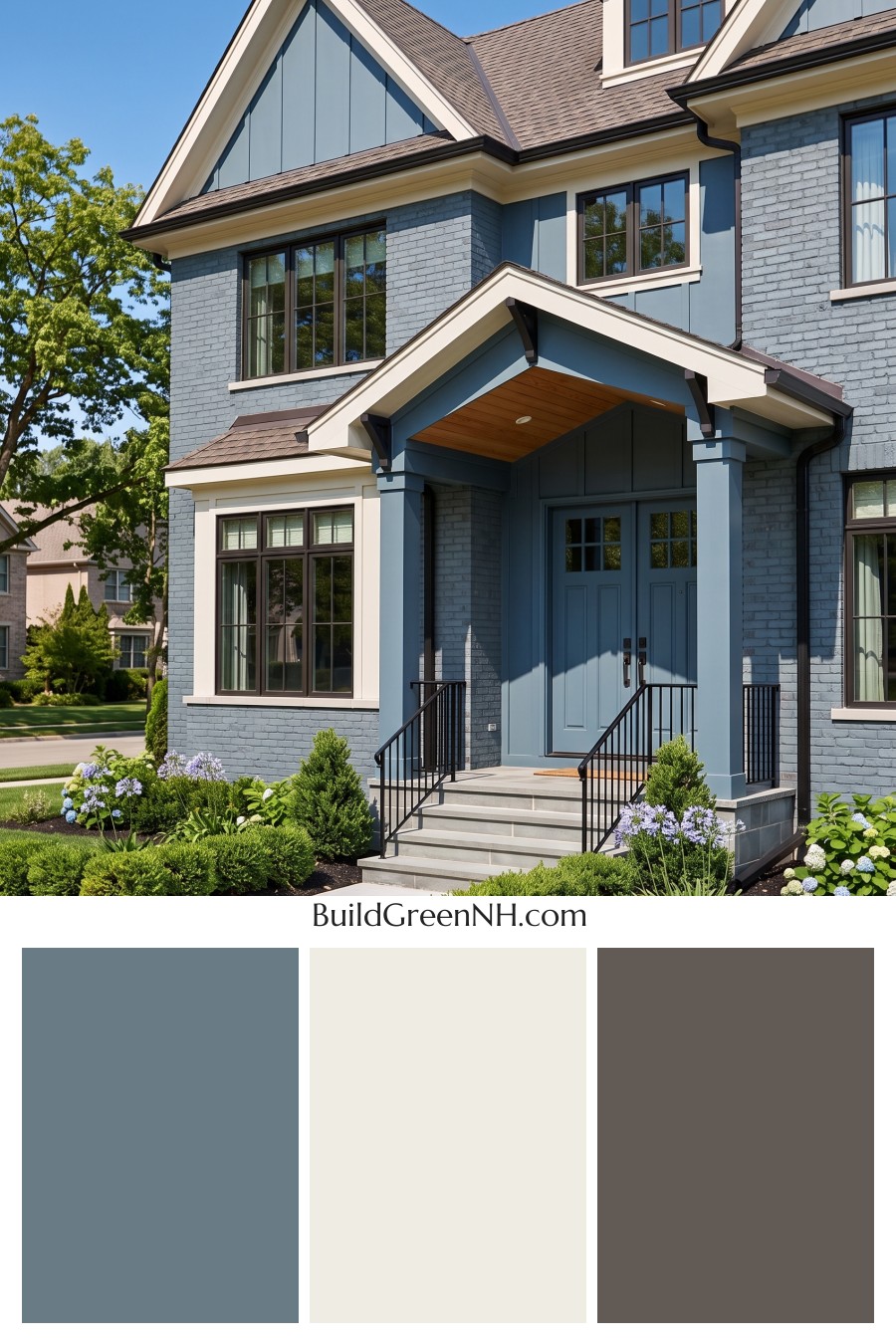
The home’s exterior is anchored by a soft, muted blue that appears across the main siding and painted masonry. This blue-gray shade gives the façade a serene, polished character while adding more depth than a simple neutral would. It works especially well on the tall gables and broad wall surfaces, where the color highlights the home’s vertical lines and classic architectural details.
The same blue family continues onto the front porch columns and entry door, creating a cohesive visual path from the street to the entrance. Using a slightly deeper blue at the front door gives the entry a quiet sense of importance without interrupting the restful overall palette.
Bright Trim Defines the Architecture
Soft white trim provides the perfect contrast around the rooflines, windows, gables, and porch structure. Its light, clean presence outlines every peak and overhang, making the layered roofline feel sharp and intentional. Against the blue exterior, the white trim has a fresh, airy effect that keeps the house from feeling too dark or heavy.
The generous trim also adds a traditional touch to the home’s more contemporary color arrangement. It frames the windows with precision and gives the porch a welcoming, finished appearance.
Warm Dark Accents Add Balance
Deep brown window frames introduce warmth and definition to the cool blue-and-white foundation. Their darker shade creates crisp window outlines while adding a grounded, natural note to the façade. The brown railings repeat this effect near the front steps, helping the entry feel substantial and visually connected to the rest of the home.
Above, the muted brown-gray roof continues the warmer dark accent family. It settles the brighter trim and softer blue walls, giving the house a balanced composition from top to bottom.
A Refined, Welcoming Mood
Overall, this color scheme feels calm, elegant, and inviting. The cool blue shades bring a breezy, relaxed quality, while the warm brown details prevent the palette from becoming overly formal. Bright white trim supplies the final lift, making every architectural edge stand out with confidence.
It is an excellent example of how a restrained mix of soft blue, warm brown, and clean white can make a large home feel both stately and approachable.
Next, see how this color scheme looks under different lighting simulations throughout the day.
Overcast
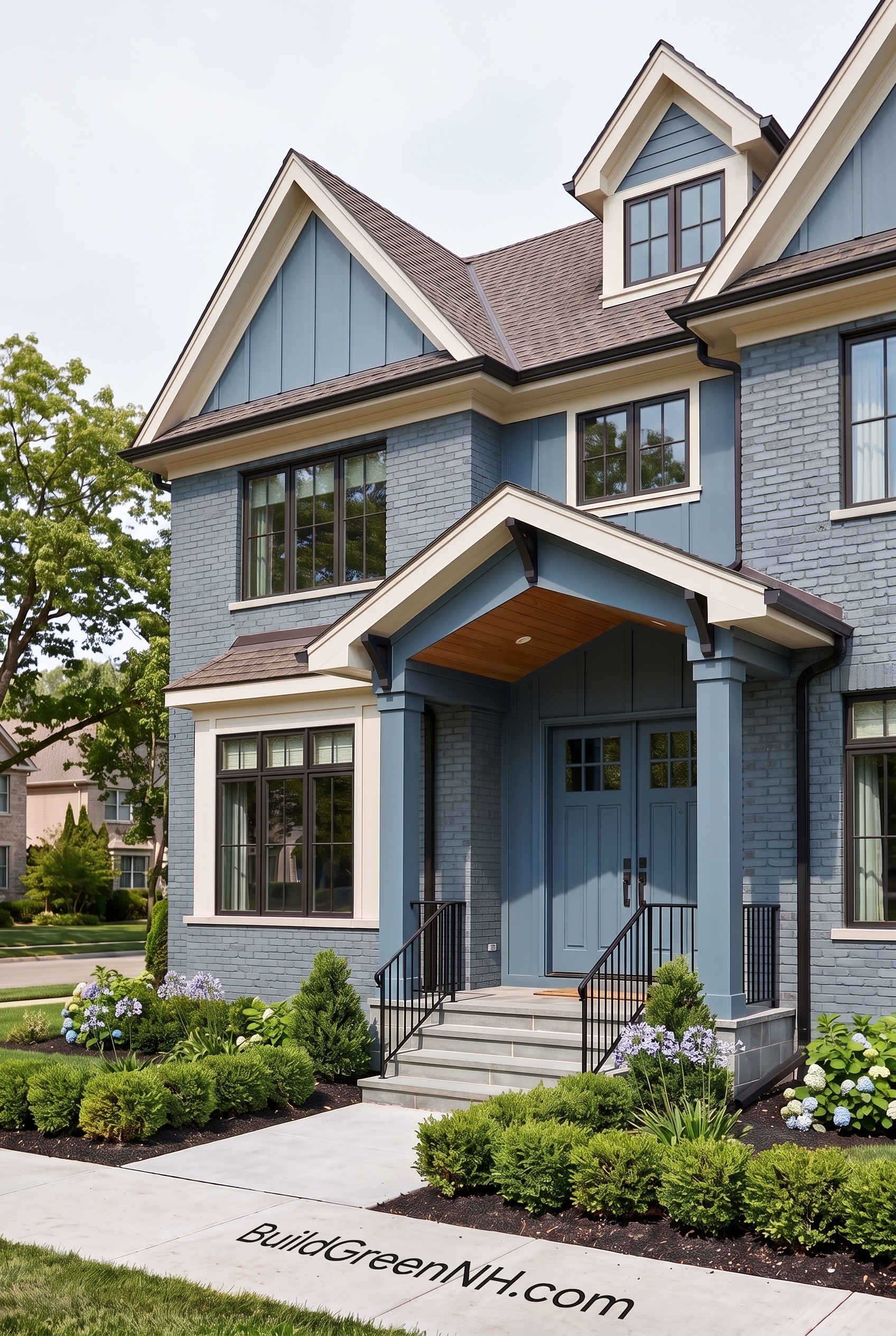
Under overcast skies, the blue exterior reads calmer and slightly deeper than it does in neutral daylight, with its saturation appearing more restrained and its cool character more pronounced. The blue front door and columns take on a quieter, more uniform presence as the softened light reduces the bright highlights that normally bring out their variation.
The white trim shifts from crisp and luminous to a gentler, softened white, while the brown window frames and railings lose some warmth and appear more subdued. With direct shadows largely erased, contrast between the blue, white, and brown elements becomes smoother and more cohesive, giving the façade a polished, serene mood rather than a sunlit, high-definition look.
Golden Hour
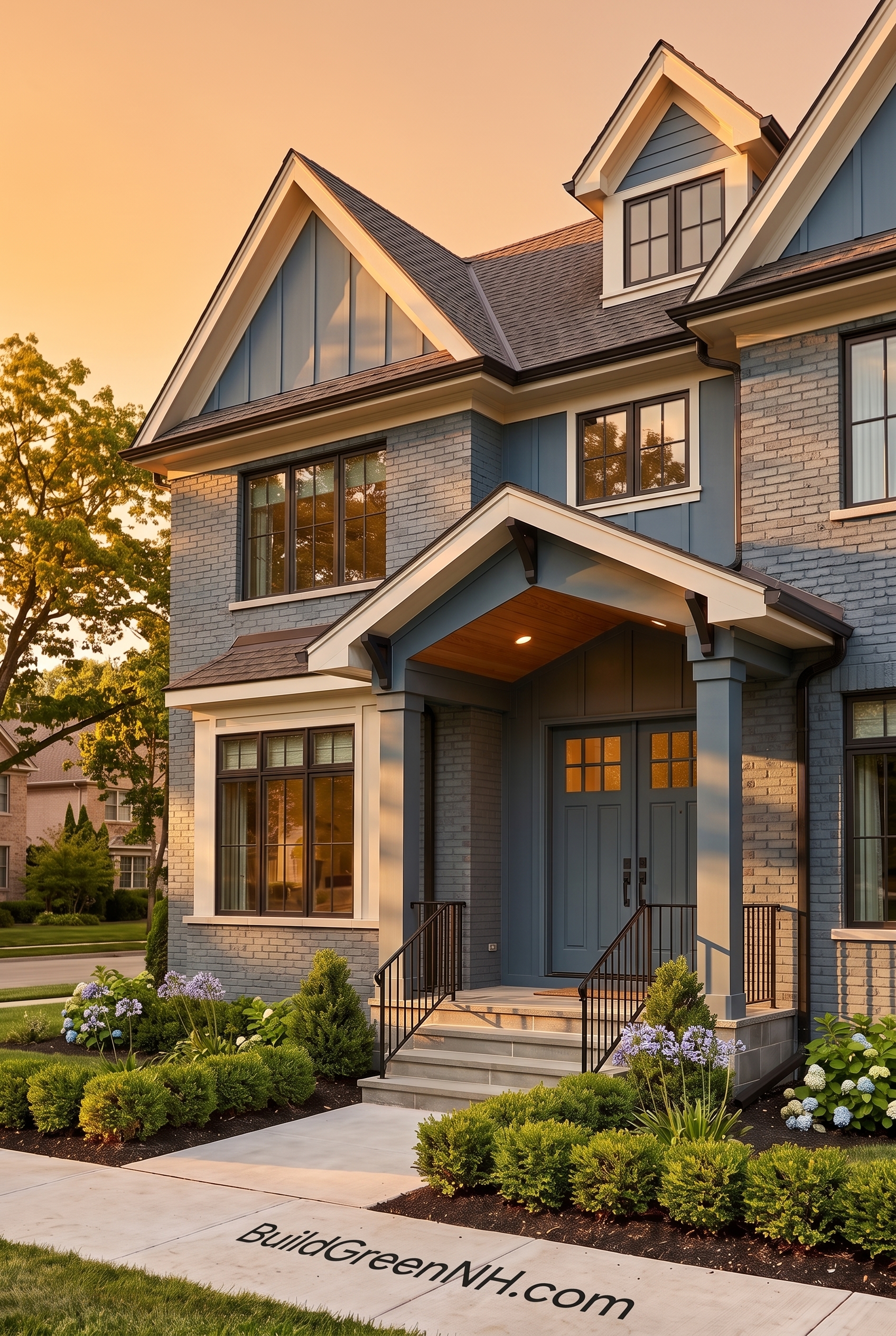
Under Golden Hour, the blue siding and matching entry details take on a softer, more muted cast than they show in neutral daylight, while still holding enough depth to feel rich in the lengthening shadows. The white trim shifts toward a creamy warmth, making rooflines, windows, and porch edges feel gently illuminated rather than sharply bright.
The brown window frames and railings become deeper and more pronounced against the sunlit surfaces, increasing contrast around the facade’s crisp architectural lines. As warm light meets cool blue shades and shaded recesses, the home gains a welcoming, layered mood—more relaxed and inviting than its cleaner, more balanced daytime appearance.
Shade
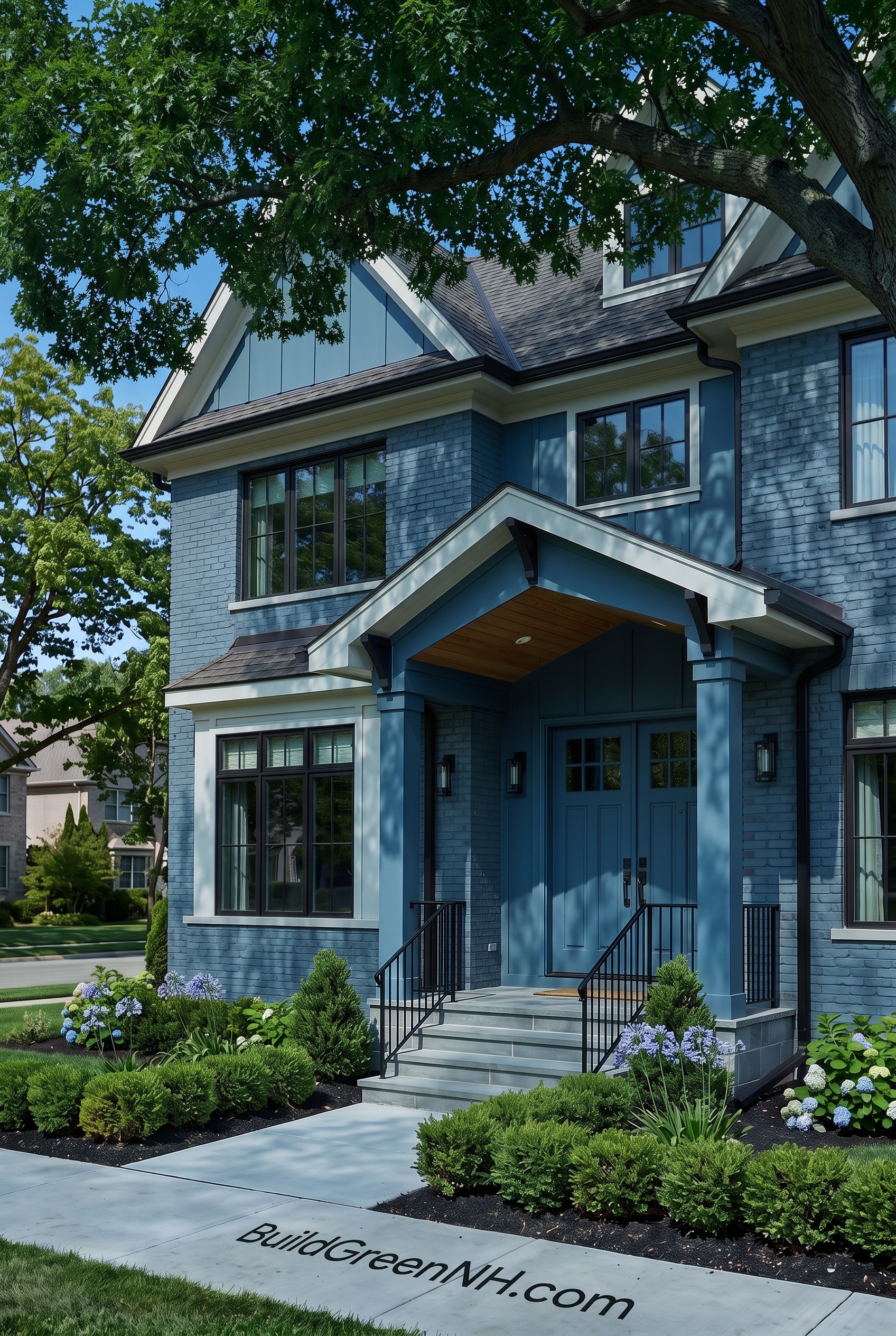
Under shade, the blue exterior shifts away from the crisp clarity it has in neutral daylight, appearing deeper, cooler, and slightly less saturated. Leaf-cast shadows add layers of blue-gray across the walls and columns, giving the façade a calm, tailored mood while making the recessed entry feel especially rich and inviting.
The light trim softens from bright contrast to a gentler, cooler outline, while the dark brown window frames and railings become more pronounced against the muted blue surroundings. This lower-light setting heightens depth and shadow, creating an elegant contrast that feels quieter and more architectural than the same palette in open daylight.
Nighttime
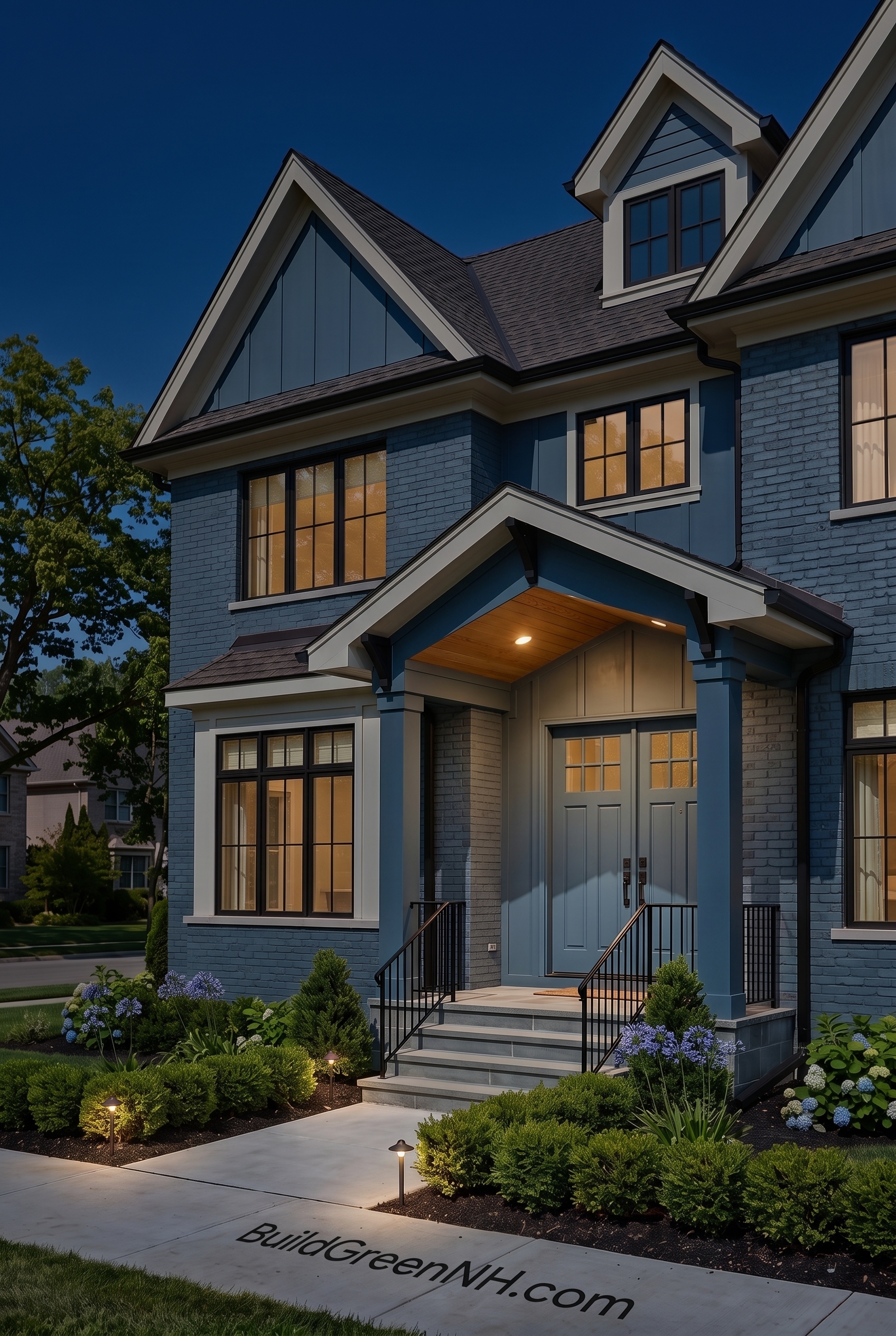
At nighttime, the blue exterior shifts into a deeper, more saturated shade, especially across recessed walls and under the eaves. Cool ambient light enhances its crisp, tailored character, while the bright white trim reads softer and slightly warmer beside the darkened rooflines and pronounced shadows.
Warm lighting near the entry and windows brings a welcoming glow that gently warms the nearby blue surfaces and draws attention to the front door. The brown window frames and railings become richer, darker accents, increasing contrast against the illuminated trim and creating a polished, inviting nighttime mood.
Pin these for later:
Want More?
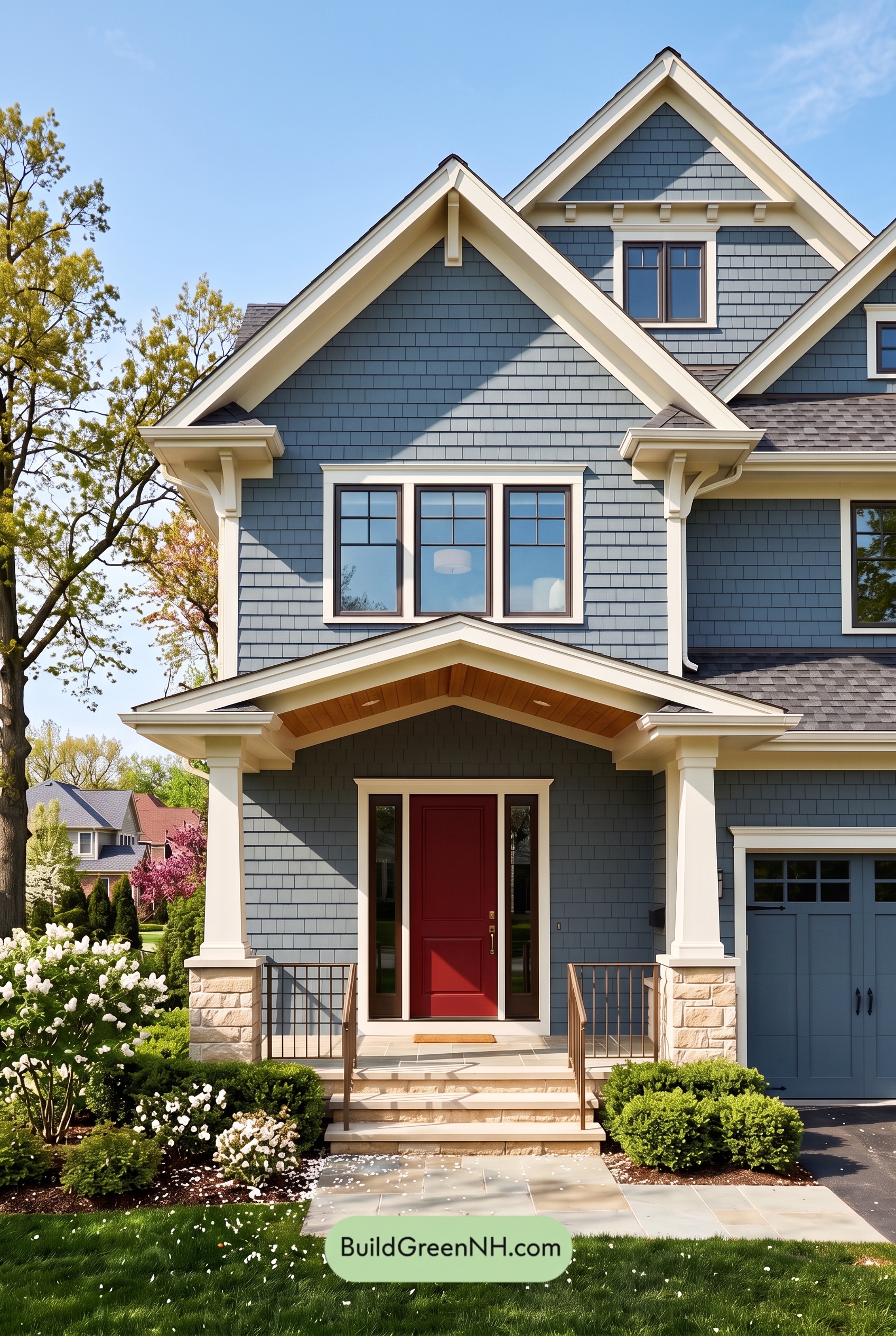 Red Front Door House Paint Color Scheme: Denim Blue Homecoming
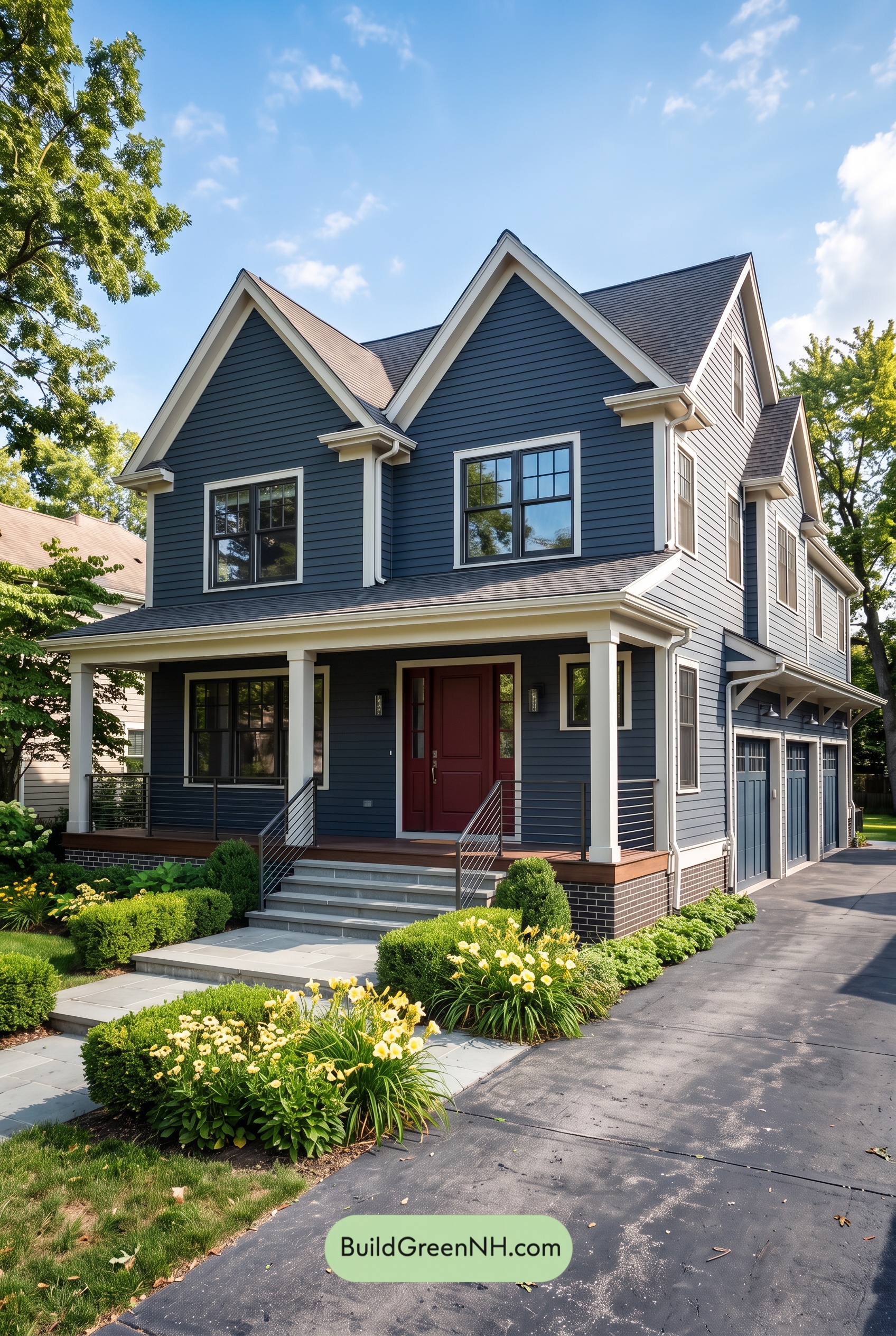 Red Front Door House Paint Color Scheme: Midnight Blue Assurance
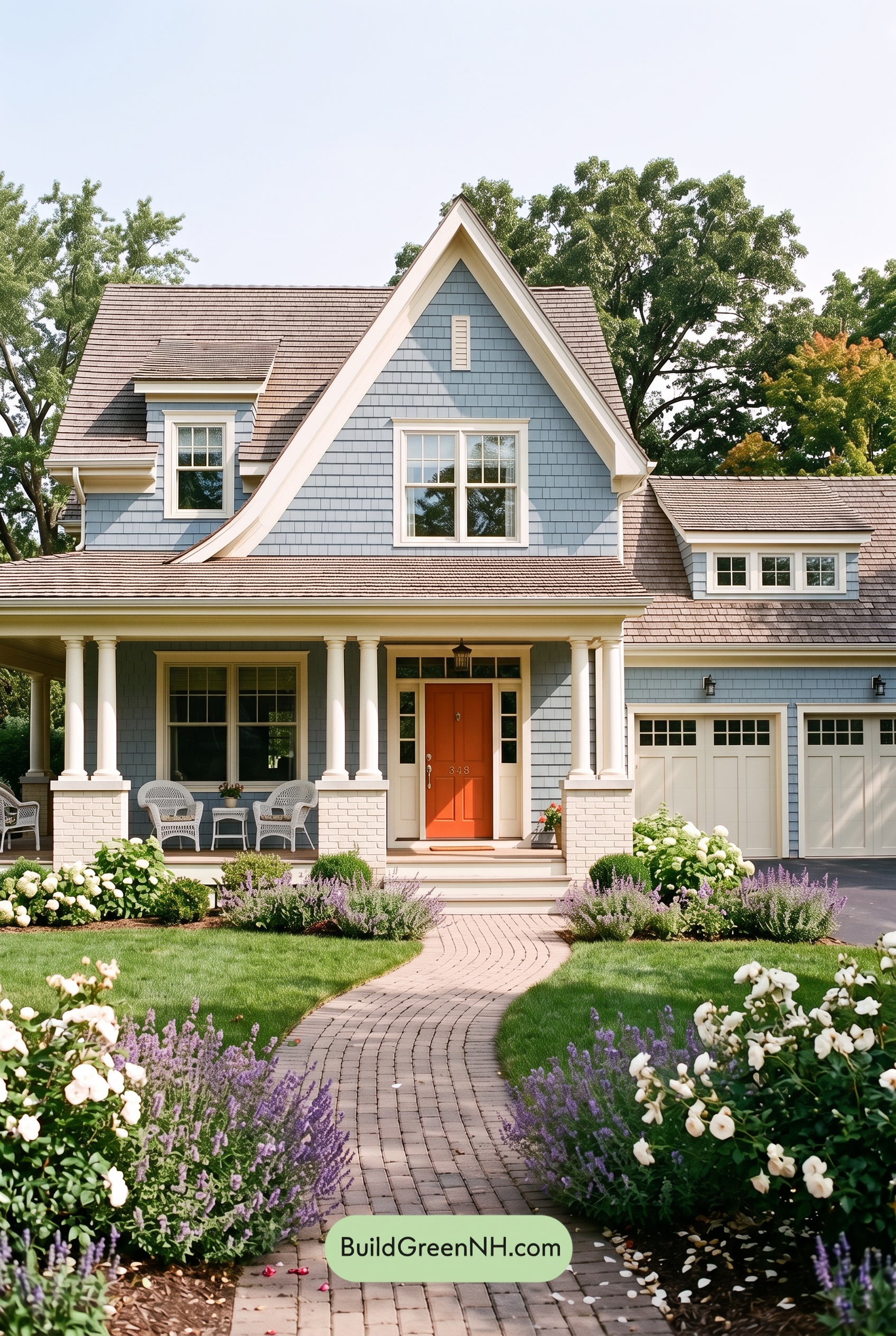 Red Front Door House Paint Color Scheme: Pale Blue Joy
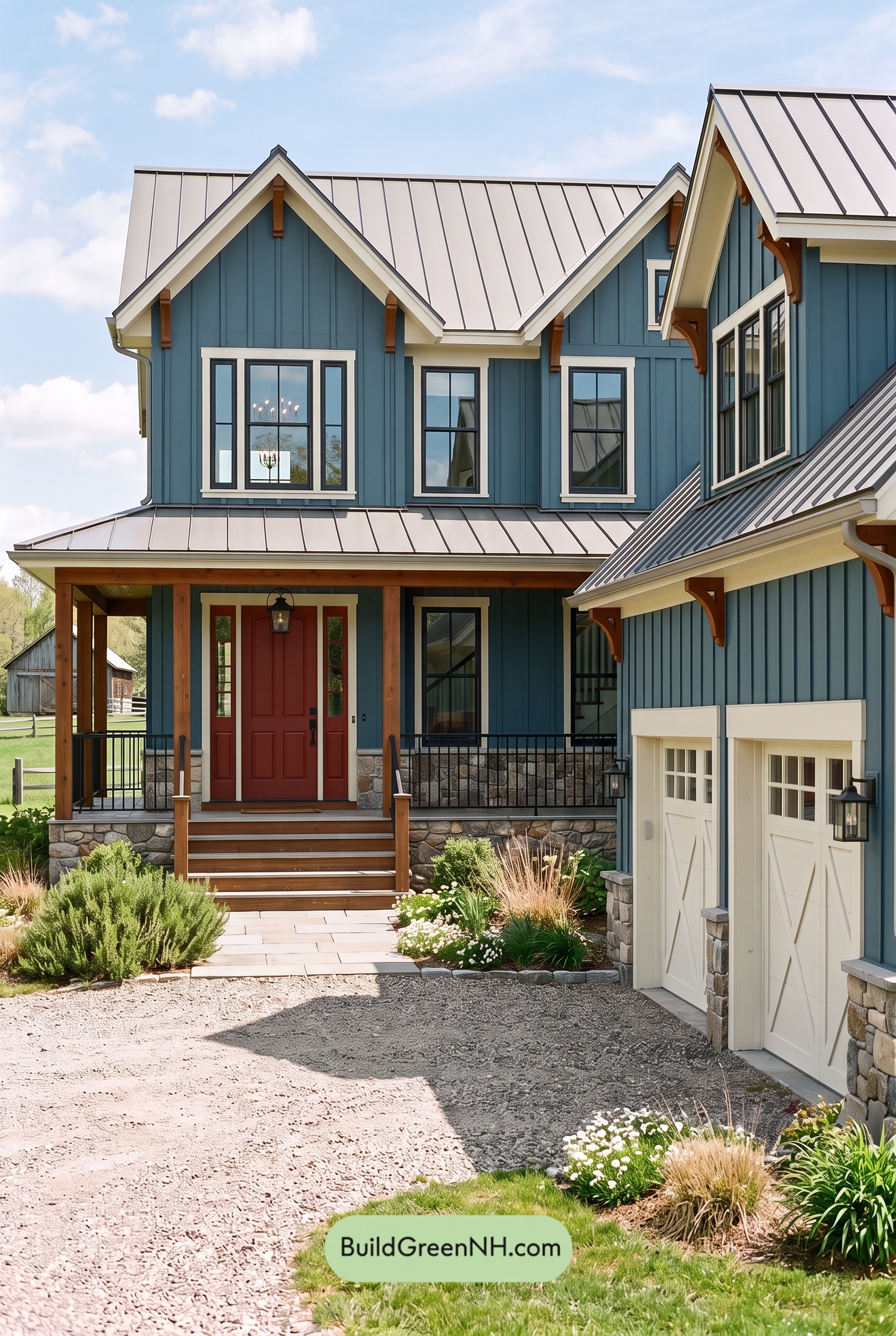 Red Front Door House Paint Color Scheme: Teal Blue Kinship
 Blue House Front Door Color Scheme: Harbor Saffron
Table of Contents