Last updated on
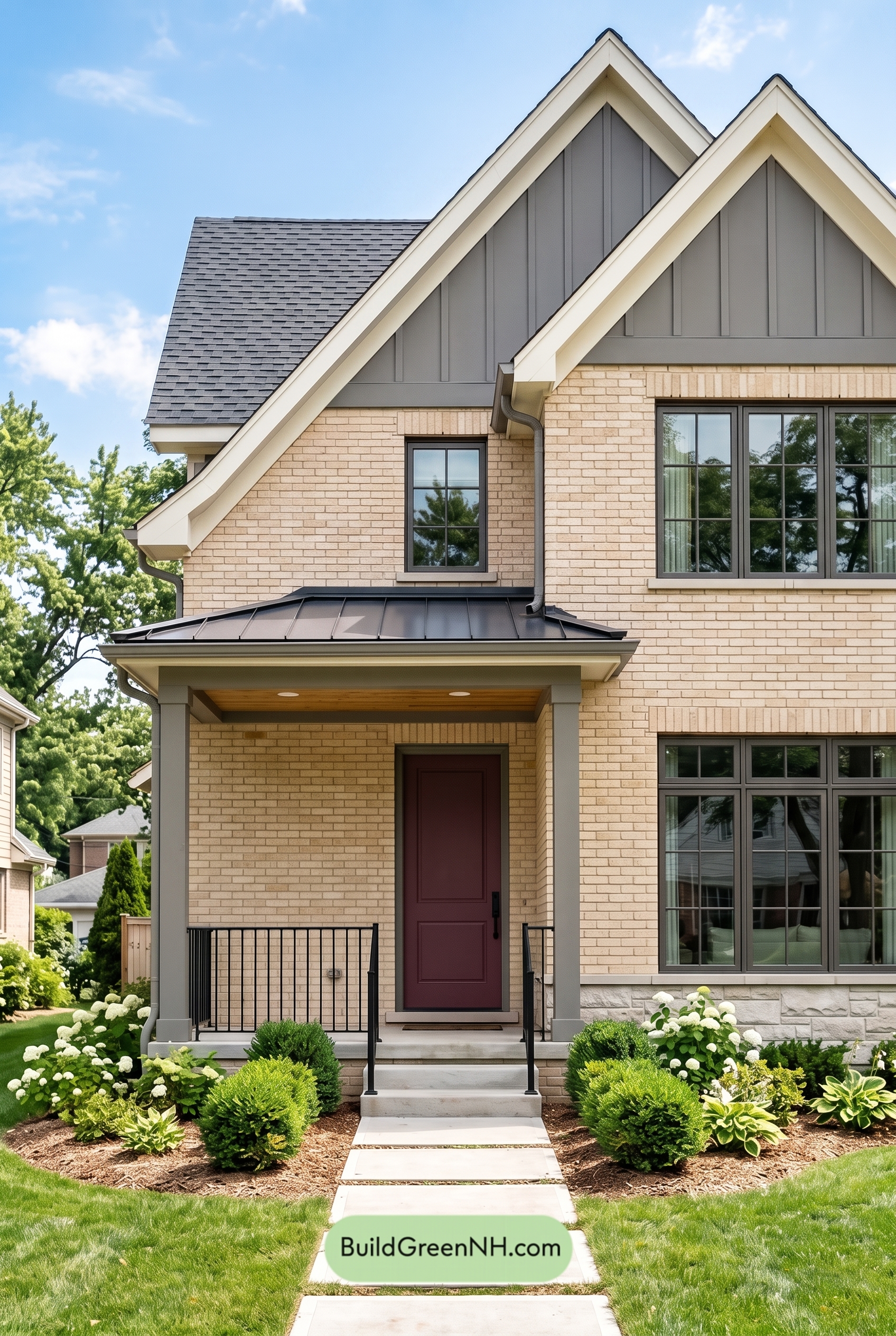

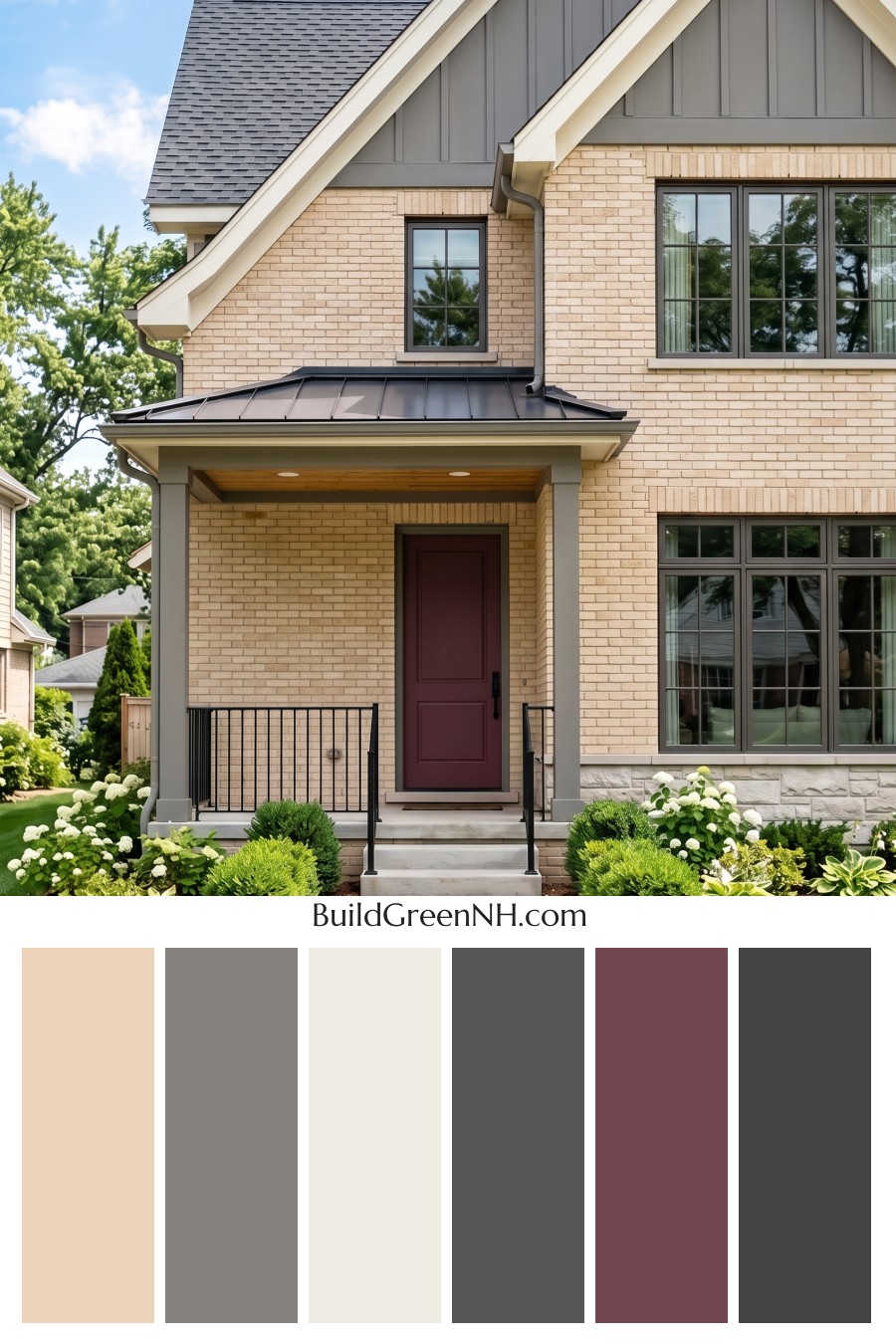
This exterior color scheme succeeds because warm neutrals, crisp light trim, and moody gray accents create a polished look with instant curb appeal.
A Warm, Grounding Main Exterior
The main wall color is a soft, light beige that gives the brick exterior an inviting, sunlit quality. Its gentle warmth keeps the substantial facade from feeling severe, while the subtle variation in the masonry adds texture without introducing visual clutter. This beige family also connects beautifully to the natural landscape, making the home feel settled and welcoming.
Gray Accents Add Modern Definition
Medium-to-deep gray siding in the upper gables brings striking contrast to the lighter brick below. The vertical panels emphasize the steep rooflines and give the traditional architecture a tailored, contemporary edge. Dark gray window frames repeat that definition across the facade, creating clean outlines that make each window feel intentional and refined.
The gray columns, railings, gutters, and lower accents continue the same cool, grounded note. Using related gray shades across these details creates cohesion, even as the materials and textures change from siding to metal to masonry.
Light Trim Keeps the Look Fresh
Soft white trim frames the roof peaks, eaves, and windows with a bright, crisp finish. This lighter shade is especially effective against the gray gables, where it highlights the dramatic lines without feeling stark. It also lifts the beige brick, adding a fresh contrast that keeps the full exterior looking clean and balanced.
The result is a thoughtful rhythm: warm beige for the broad foundation of the home, gray for architectural depth, and light trim for clarity.
A Rich Door Color Creates a Welcoming Focal Point
The front door introduces a deep brown shade with a subtle red undertone, bringing a sense of warmth and personality to the sheltered entry. It stands apart from the cooler gray columns and railings while still harmonizing with the beige brick surrounding it. This richer accent naturally draws the eye toward the front entrance, giving the home a welcoming focal point without overpowering the rest of the palette.
Dark Roofing Completes the Composition
A deep charcoal-gray roof anchors the entire color scheme from above. Its nearly black depth echoes the darker window frames and railings, helping the multiple rooflines feel connected rather than busy. Paired with the light trim, the roof gains a sharp, finished edge that adds to the home’s elegant, tailored character.
The Overall Mood
This combination feels warm, confident, and quietly sophisticated. The beige tones offer softness, the gray shades contribute modern structure, and the light trim delivers a clean finishing touch. With the deep brown entry door adding just enough richness, the palette strikes an appealing balance between classic comfort and contemporary curb appeal.
Next, see how this color scheme looks under different lighting simulations throughout the day.
Overcast
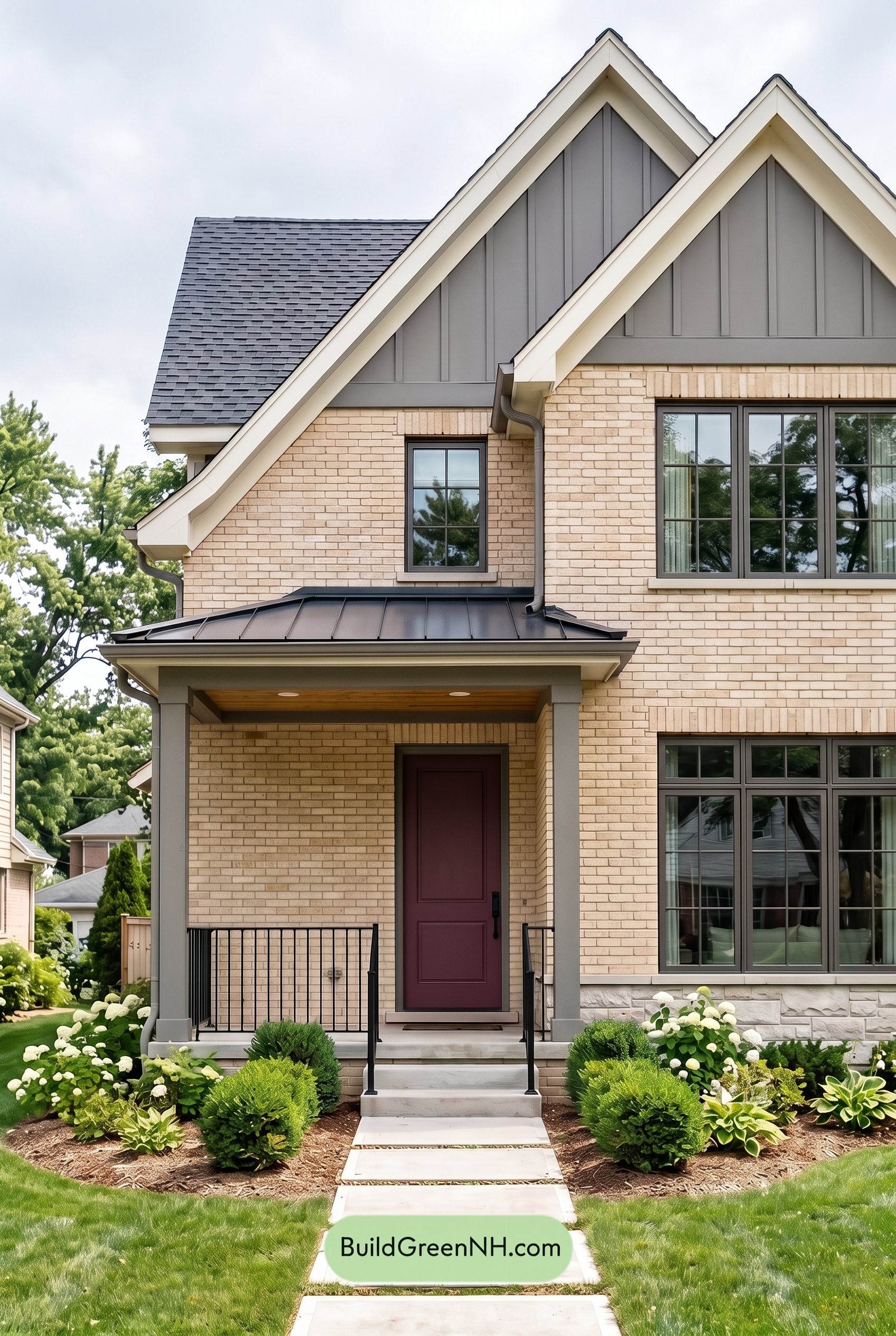
Under overcast skies, the warm beige exterior reads softer and slightly more muted than it does in neutral daylight, with its warmth settling into a calm, welcoming backdrop. The white trim loses some of its crisp brightness, while the gray gables, columns, window frames, and railings appear smoother and a touch deeper, giving the facade a more cohesive, low-contrast look.
Because cloud cover diffuses direct sun, sharp shadows beneath the rooflines and porch become gentler, allowing the layered architecture to feel less dramatic but more refined. The deep brown front door takes on a richer, moodier presence against the softened neutrals, creating a grounded focal point in an overall quiet, polished exterior palette.
Golden Hour
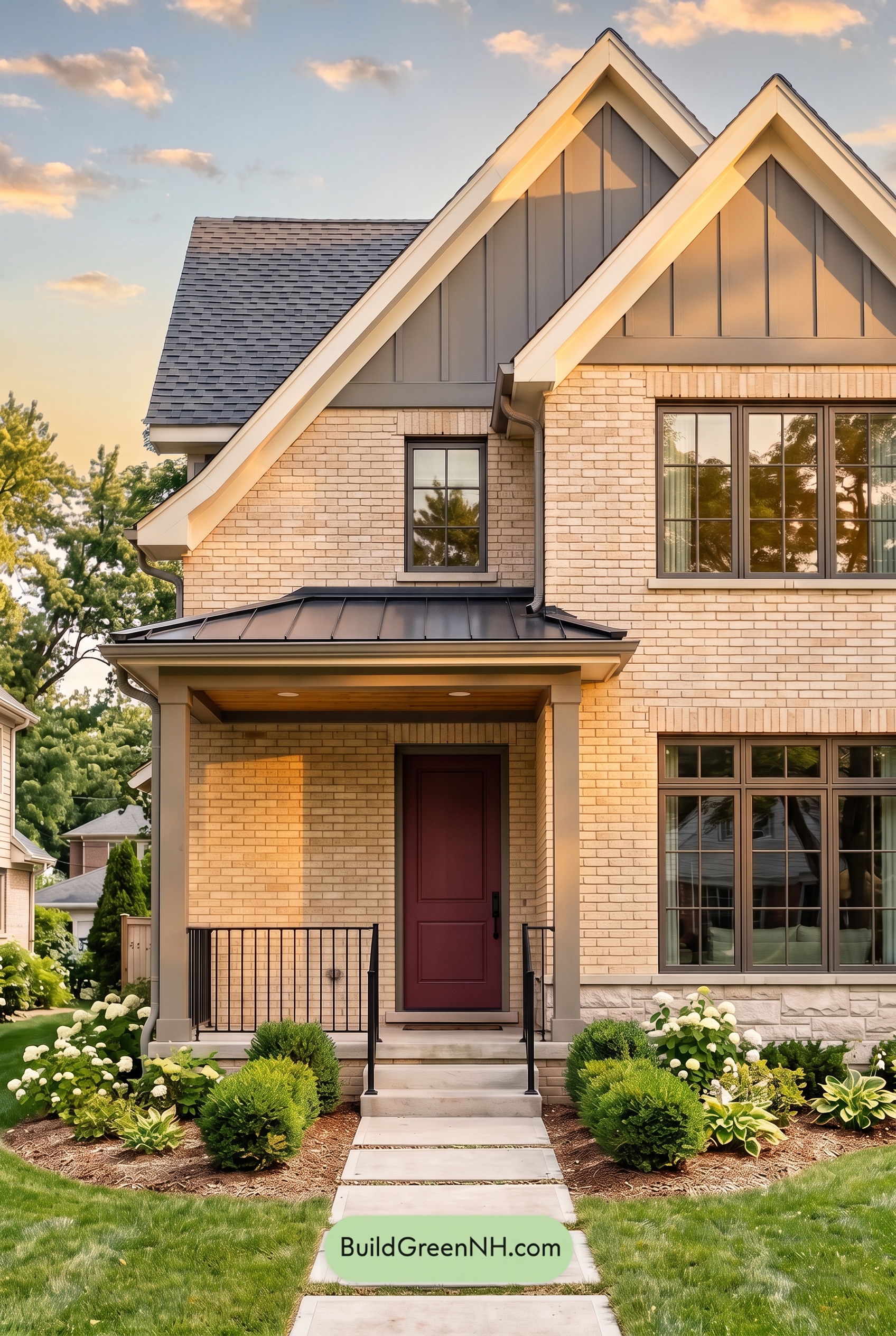
Under Golden Hour, the beige exterior takes on a richer, honeyed warmth than it shows in neutral daylight, making the facade feel softer and more inviting. The white trim shifts from crisp and bright to a gentle creamy highlight, while the brown front door appears deeper and more saturated against the glowing walls.
The gray siding, frames, columns, and railings gain a subtle warmth on sunlit surfaces, but deepen into dramatic charcoal-like shadows beneath the rooflines and porch. This low-angle light heightens contrast across the architectural details, creating a layered, cozy mood that feels more intimate and dimensional than the even clarity of neutral daylight.
Shade
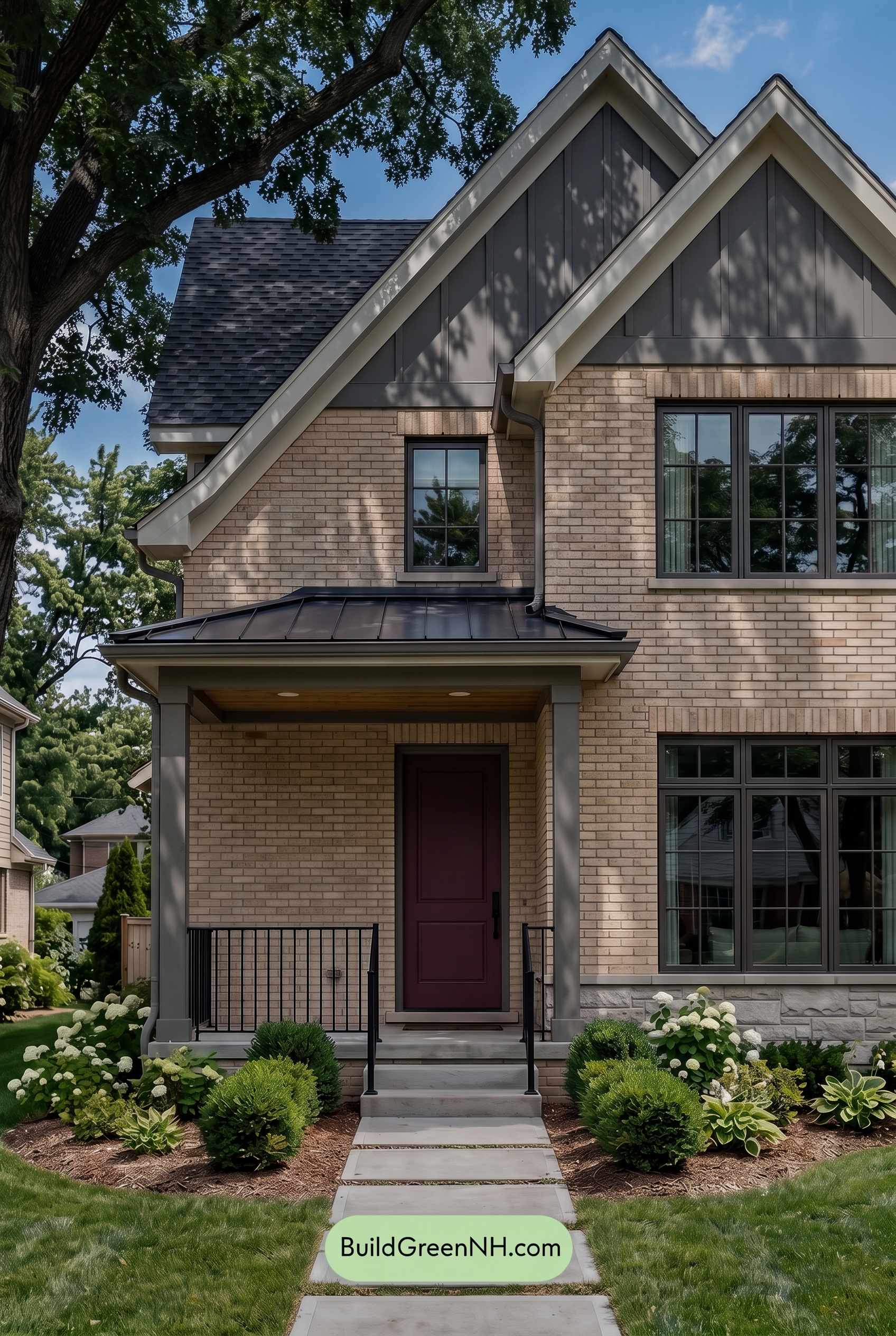
In shade, the beige exterior takes on a quieter, slightly cooler cast than it shows in neutral daylight, with its warmth softened and its saturation gently muted. The gray gables, columns, and window framing deepen noticeably, while the white trim reads less bright and more softly creamy where dappled shadows cross it.
This lower, filtered light strengthens the contrast between the pale walls and the darker gray details, giving the rooflines and window grids extra definition. The deep brown door becomes richer and more dramatic, anchoring the entry with a calm, sheltered mood that feels more refined and intimate than the same palette in open daylight.
Nighttime
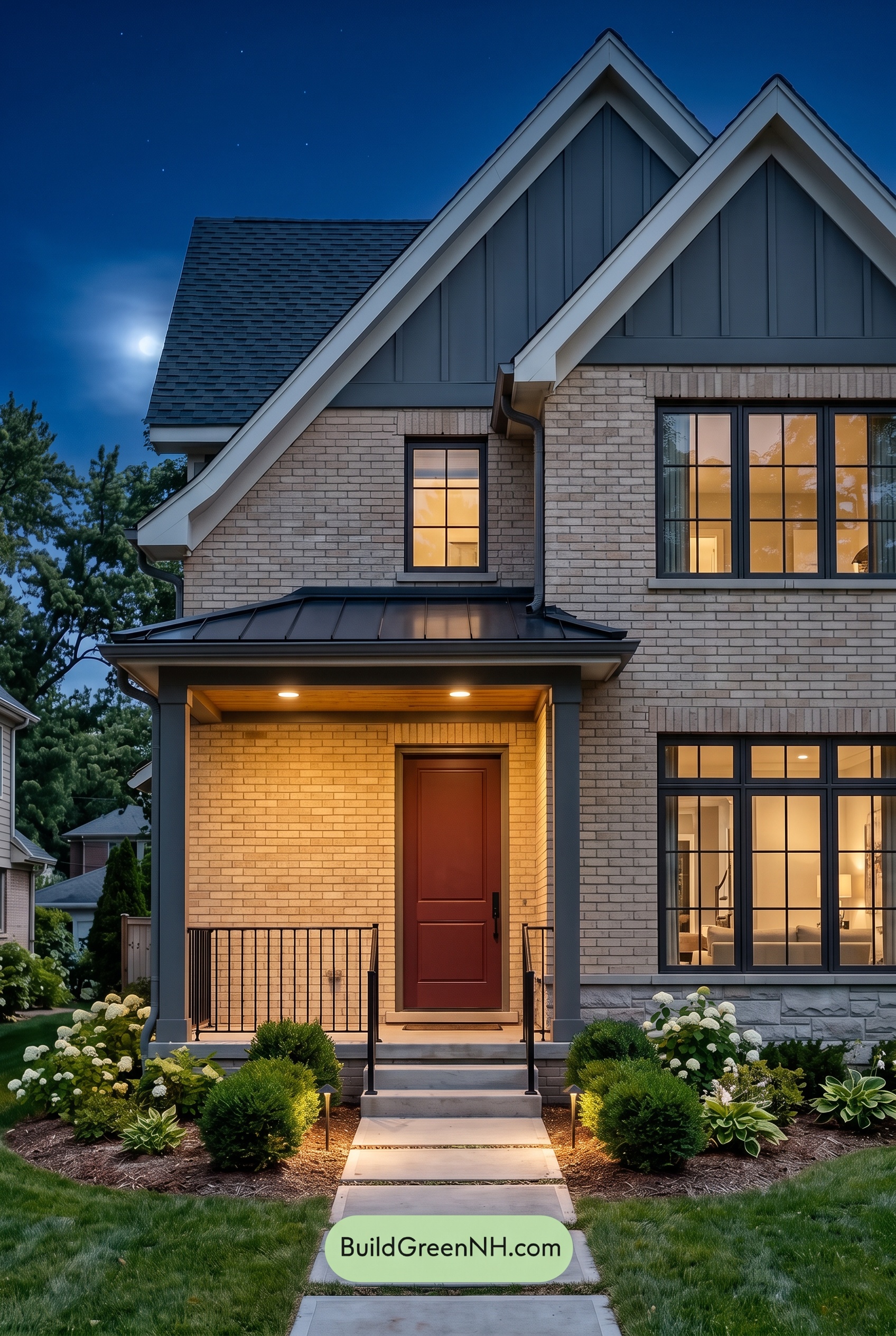
At nighttime, the beige exterior shifts warmer and softer under the porch and window light, while areas beyond the glow settle into muted, shadowed neutrals. The brown front door gains a richer, deeper presence, becoming a welcoming focal point against the gently illuminated wall.
Compared with neutral daylight, the gray siding, columns, frames, and railings appear cooler and more saturated in the blue-toned evening shadows. Bright white trim holds the strongest contrast along the rooflines, giving the façade crisp definition and creating a polished, cozy mood.
Pin these for later:
Want More?
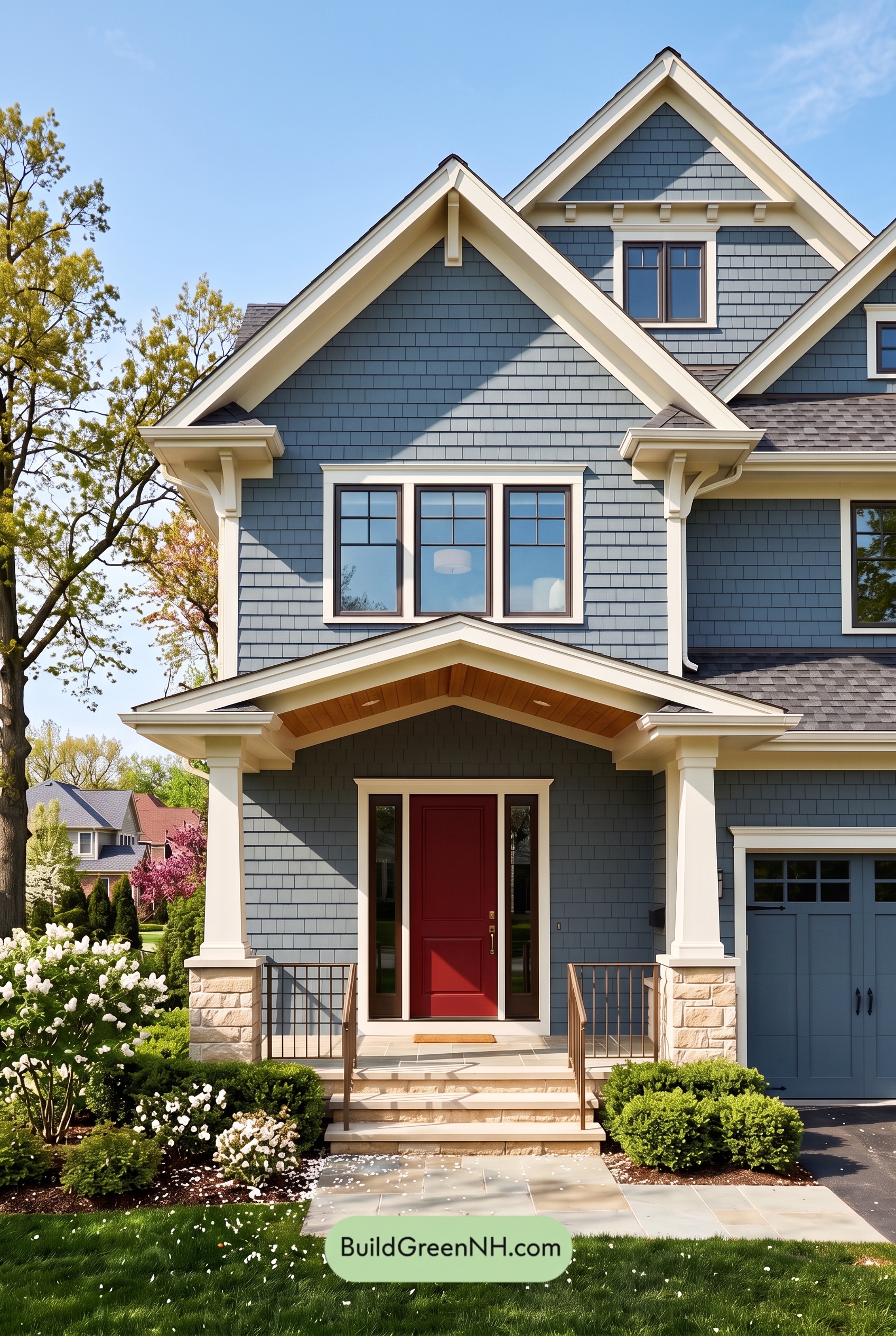 Red Front Door House Paint Color Scheme: Denim Blue Homecoming
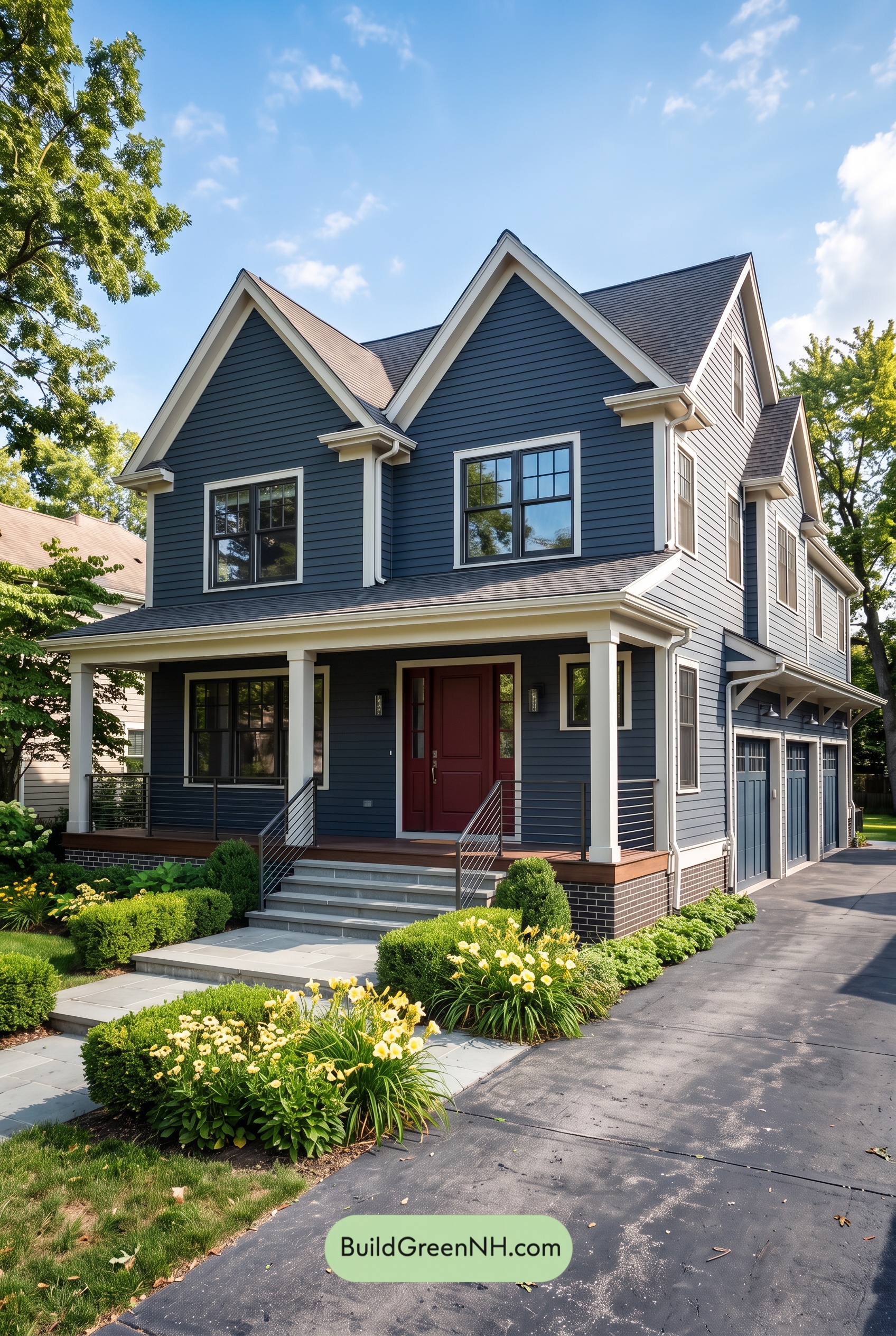 Red Front Door House Paint Color Scheme: Midnight Blue Assurance
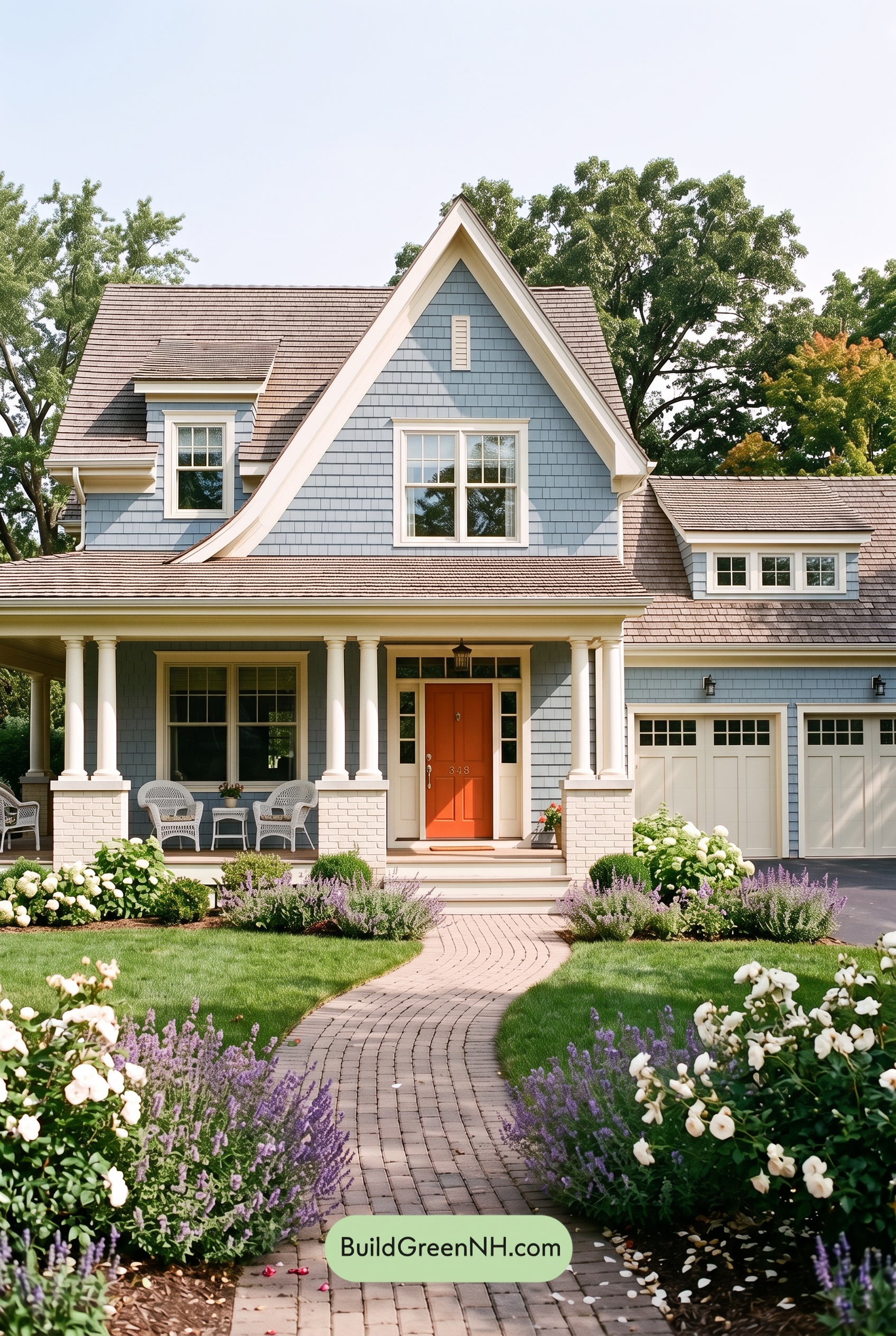 Red Front Door House Paint Color Scheme: Pale Blue Joy
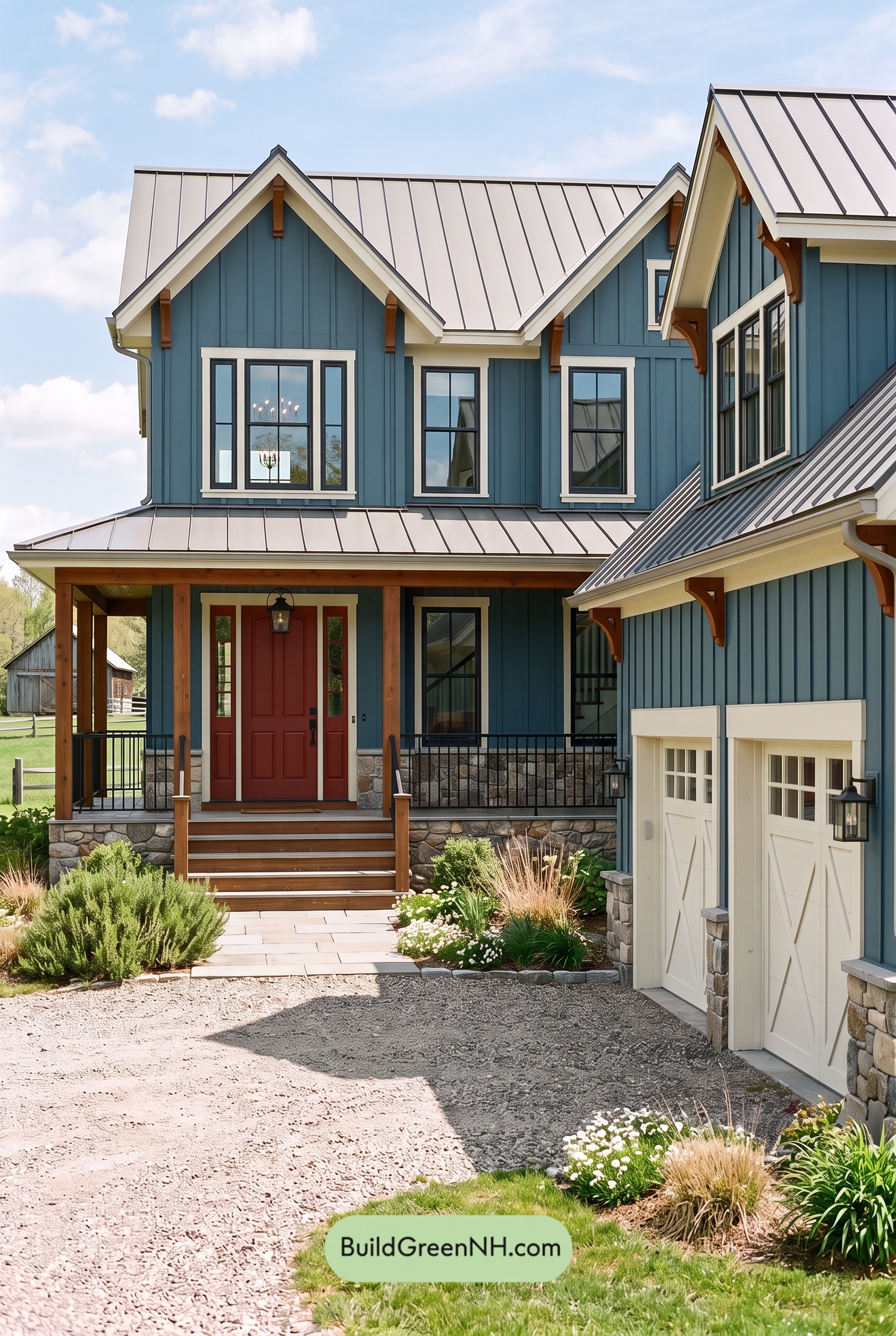 Red Front Door House Paint Color Scheme: Teal Blue Kinship
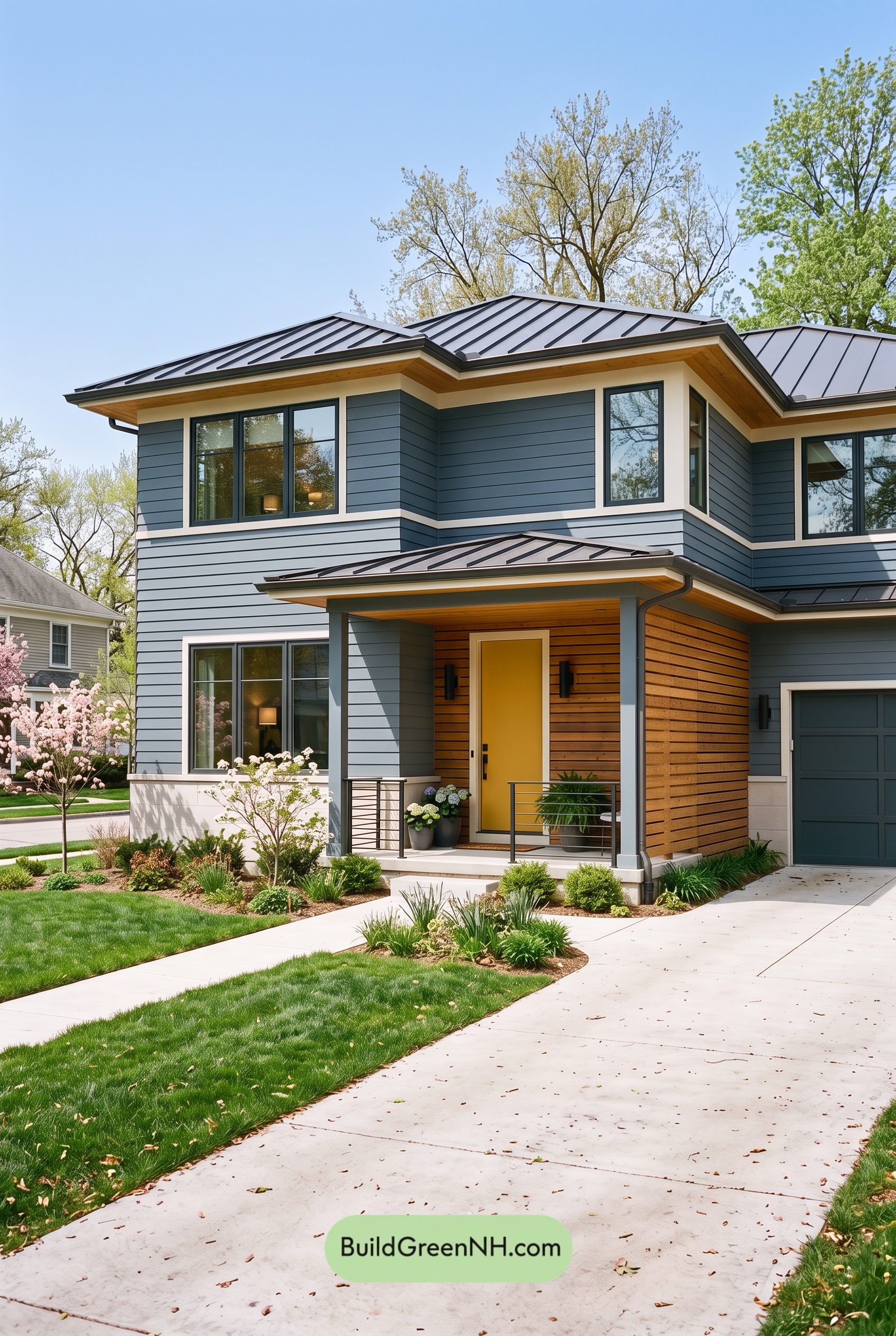 Blue House Front Door Color Scheme: Harbor Saffron
Table of Contents