Last updated on
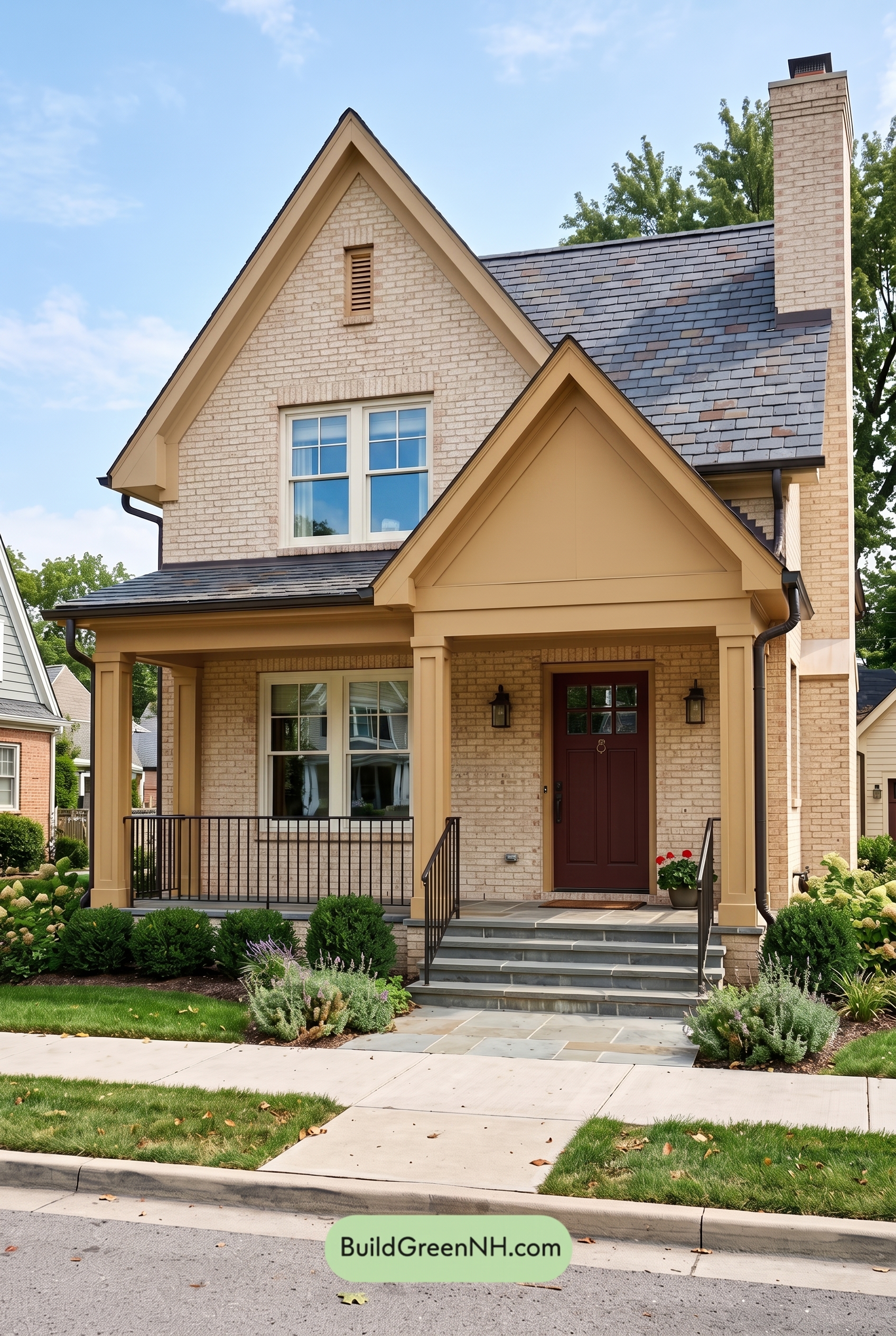

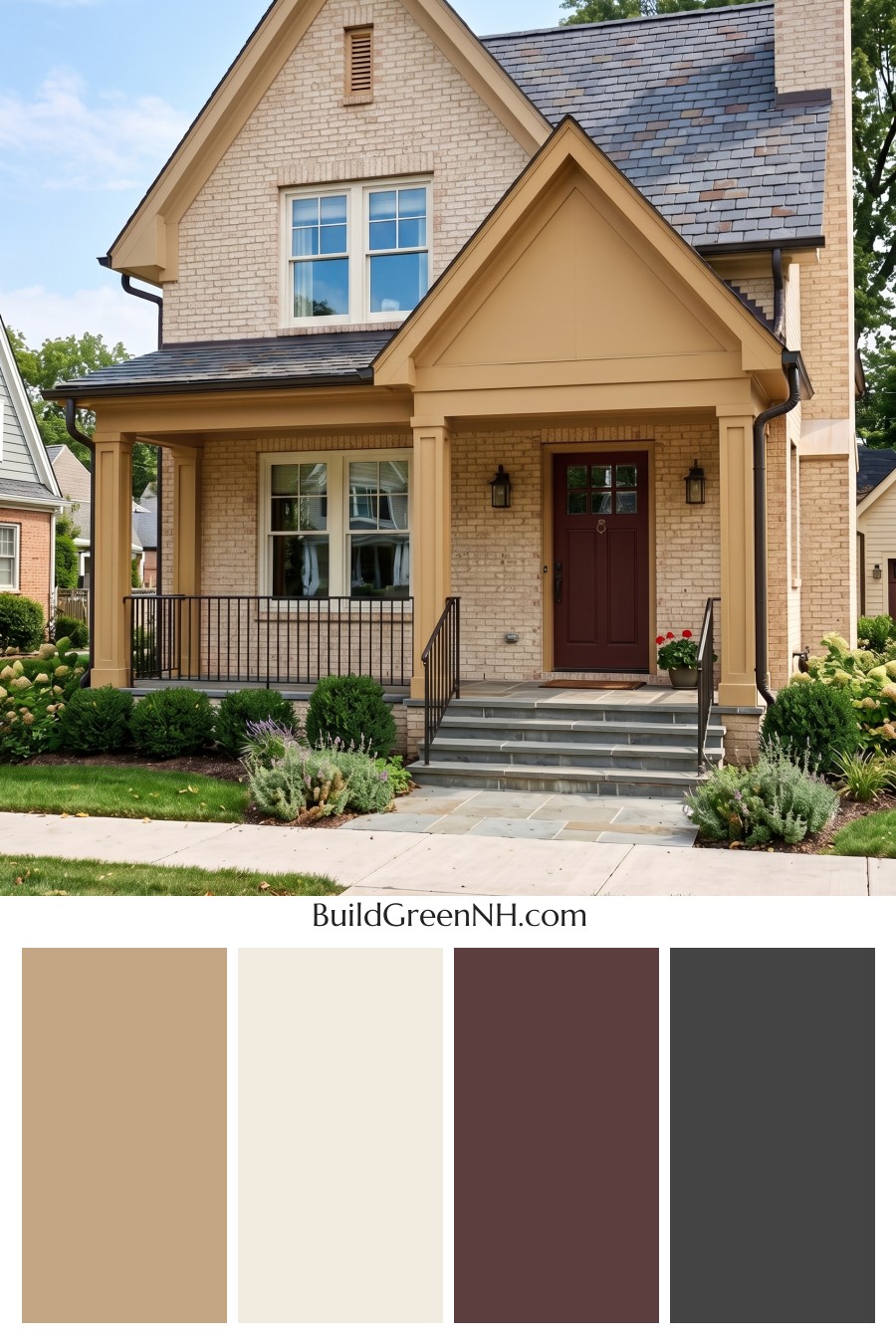
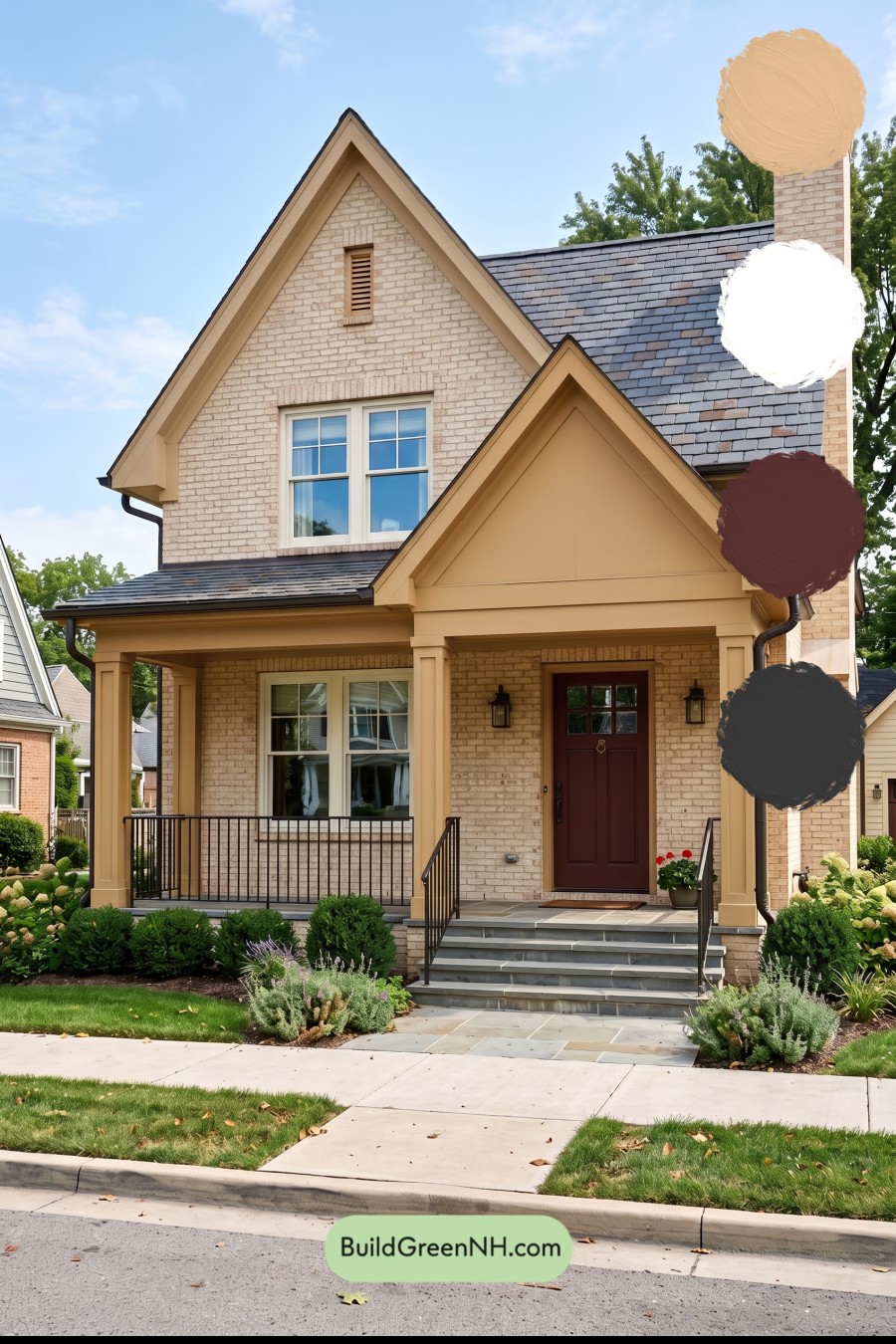
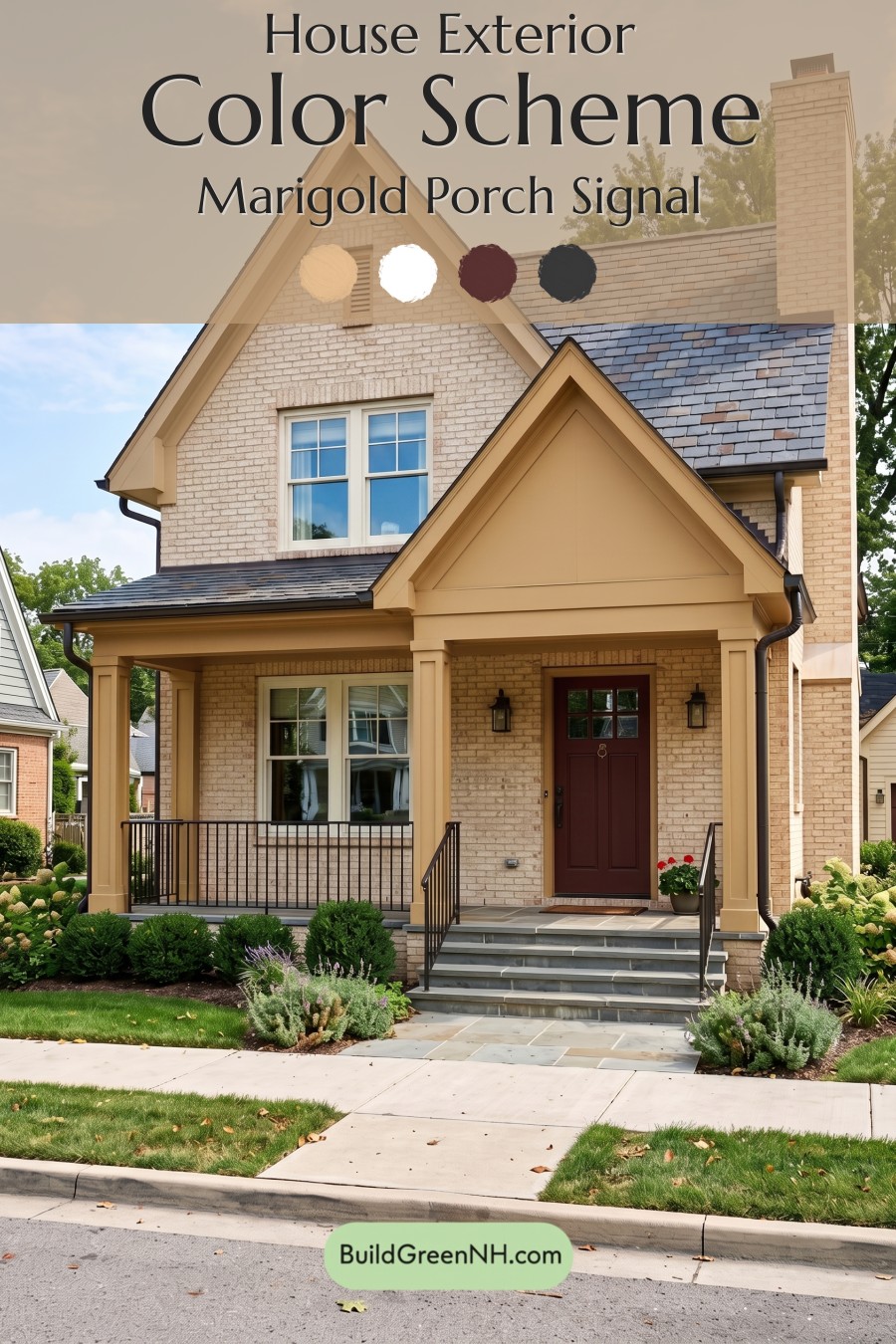
This inviting exterior succeeds because its layered warm neutrals, deep roof tones, and rich entry accent create a polished look with lasting curb appeal.
A Warm, Layered Foundation
The home’s light creamy beige brick establishes a soft, welcoming base across the main façade and tall chimney. Its subtle variation keeps the exterior from feeling flat, adding texture and visual warmth while complementing the traditional architecture.
Above the porch, the gable sections are finished in a deeper golden beige that brings definition to the roofline. This richer shade creates a gentle contrast against the pale brick without interrupting the calm, unified palette.
Trim That Frames Every Detail
Warm beige trim is used generously around the gables, porch structure, columns, soffits, and windows. The consistent trim color gives the home a tailored, cohesive appearance, drawing attention to the steep roof peaks and beautifully proportioned front porch.
The light beige window frames blend smoothly with the surrounding brick while still providing enough contrast to make the windows feel crisp and intentional. Their soft tone also helps reflect light, giving the front elevation an airy quality.
Deep Accents Add Definition
A dark charcoal-gray roof introduces the strongest contrast in the scheme. Its cool, nearly black depth grounds the lighter warm shades below and gives the home a refined, substantial presence. Dark gutters and exterior fixtures continue that shade around the edges, creating a clean visual outline.
The front door brings in a deep brown-red accent that feels warm, classic, and quietly dramatic. Positioned beneath the beige porch surround, it becomes an immediate focal point without overpowering the rest of the façade.
Dark gray railings echo the roof and hardware, adding a streamlined note to the porch and steps. Their slender profile keeps the entry open while delivering just enough definition against the pale masonry and gray stone surfaces.
A Timeless, Welcoming Mood
Warm beige, creamy brick, charcoal gray, and deep brown work together to create a look that feels both elegant and approachable. The lighter shades soften the home’s height and architectural angles, while the dark accents provide balance and sophistication.
This is a beautifully grounded exterior palette: warm enough to feel inviting, dark enough to feel distinctive, and neutral enough to remain timeless through changing seasons and landscaping.
Next, see how this color scheme looks under different lighting simulations throughout the day.
Overcast
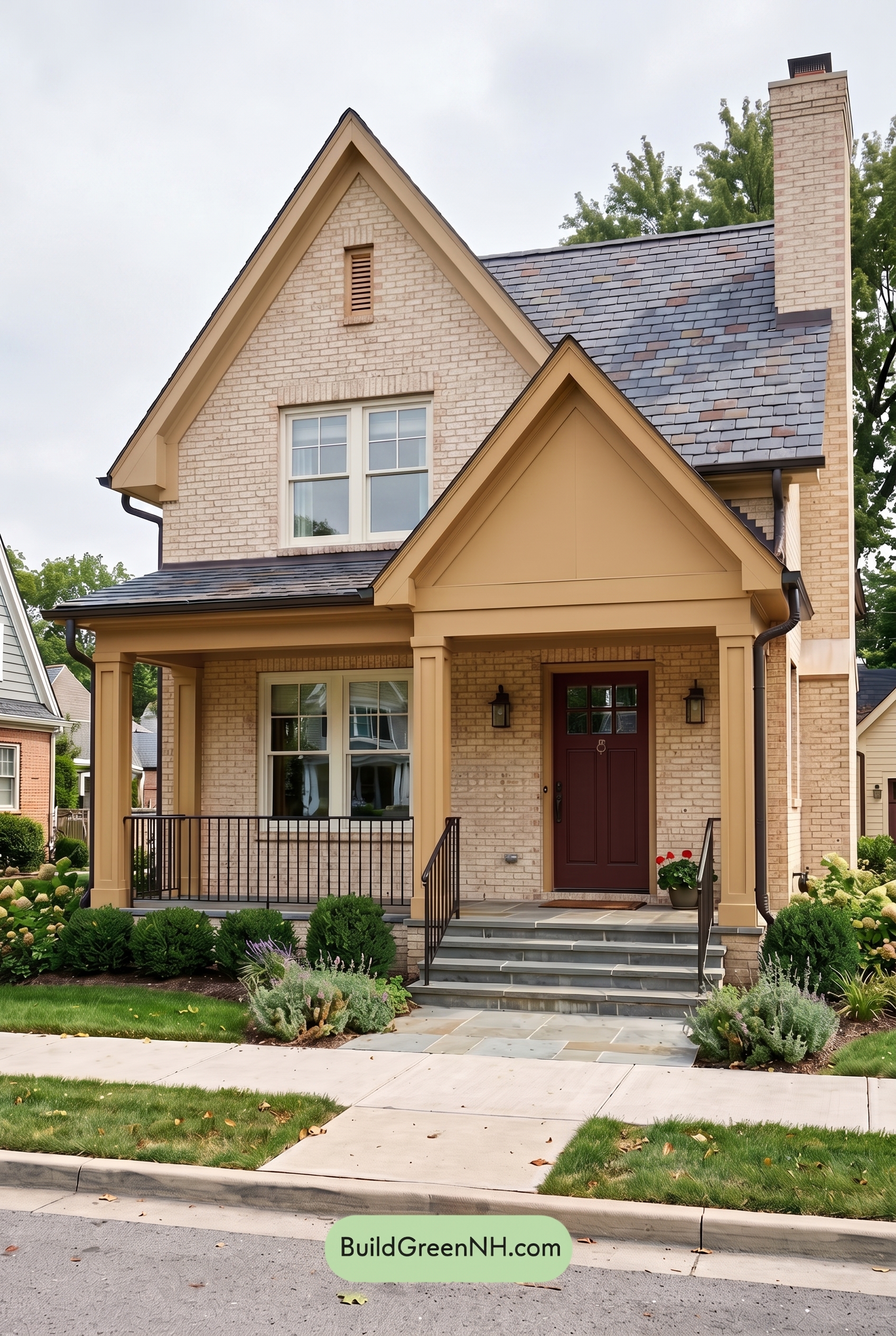
Under overcast skies, the warm beige trim and window surrounds appear softer and slightly more muted than they do in neutral daylight. Without direct sun, their golden warmth is gentler, while the light neutral brick reads more even and refined across the facade. Shadows under the porch and rooflines diffuse, reducing sharp contrast and letting the layered architectural details feel calmer.
The deep brown front door takes on a richer, more grounded presence against the softened warm neutrals, while the gray railings appear cooler and more charcoal-leaning. Overall saturation eases under cloud cover, creating a balanced, welcoming mood with subtle contrast rather than dramatic highlights and shadows.
Golden Hour
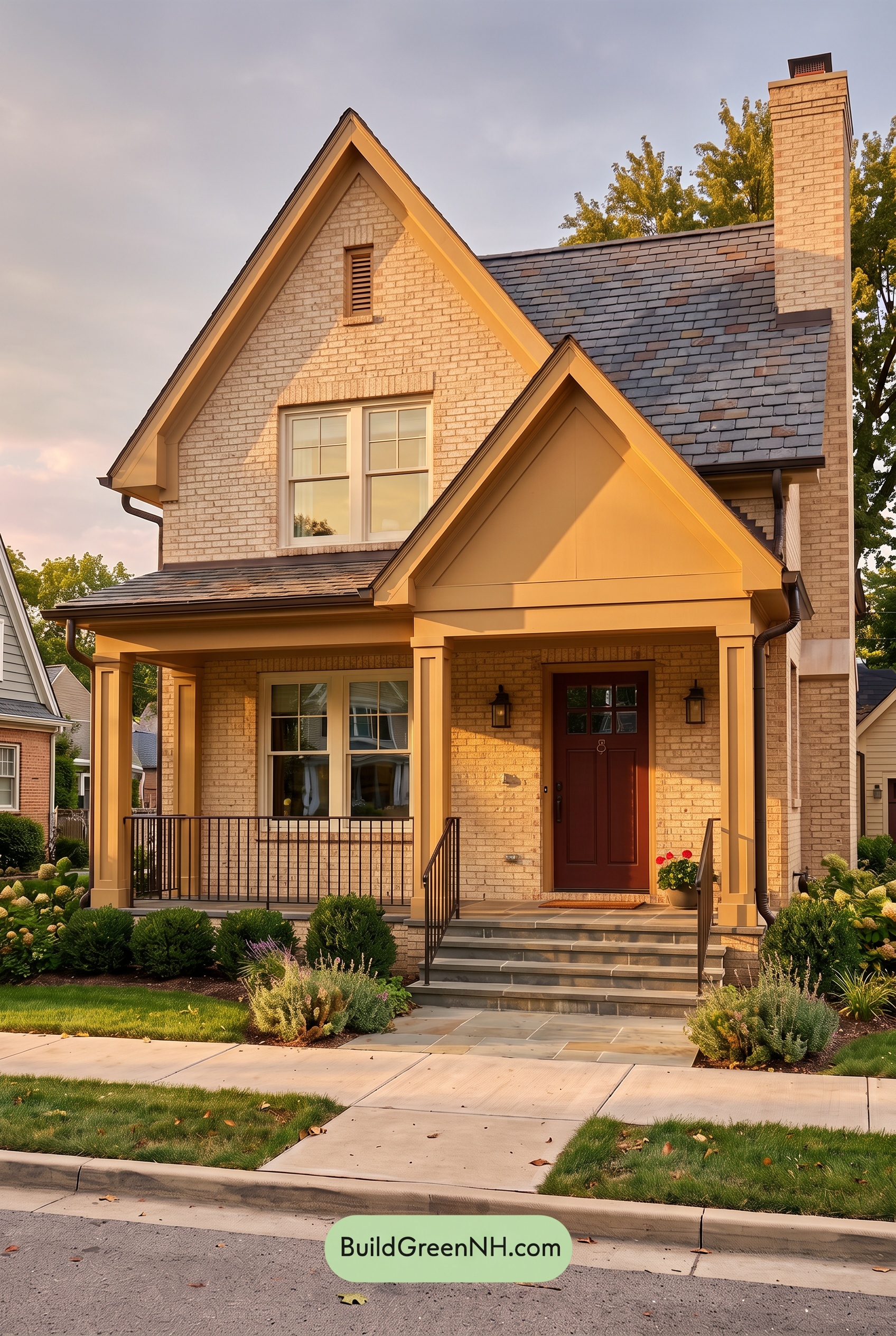
Golden Hour gives this exterior a rich, welcoming glow that neutral daylight cannot quite replicate. The beige trim and window frames take on a softer, more golden cast, while the brown front door appears deeper and more saturated, creating a warm focal point beneath the porch.
As the low sun stretches shadows across the facade, the gray railings read darker and more defined, sharpening the contrast against the sunlit warm neutrals. This blend of luminous highlights and lengthened shadow brings out the home’s architectural layers and gives the entry a relaxed, inviting evening mood.
Shade
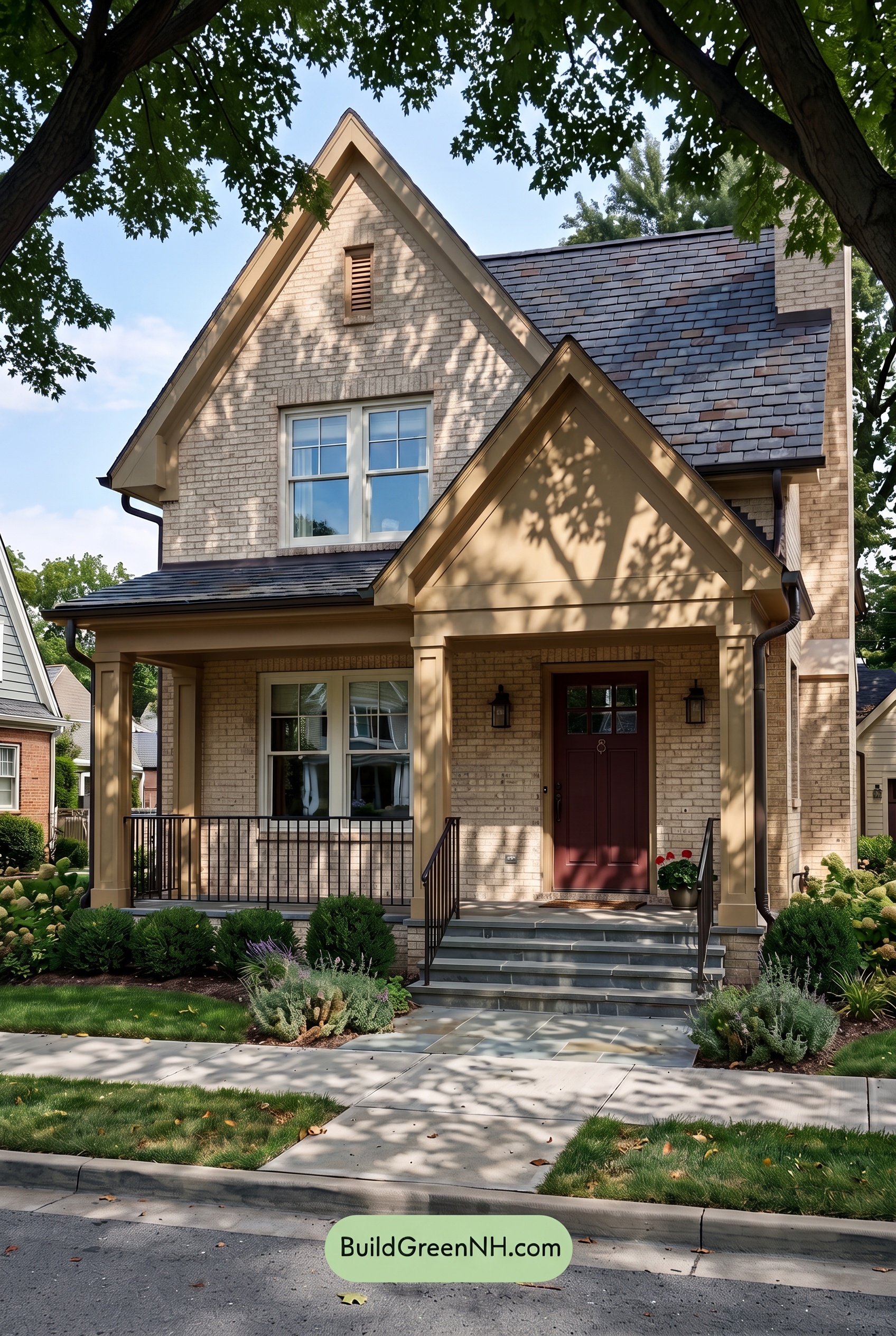
In shade, the beige trim and window frames lose some of their sunlit brightness, settling into softer, more muted warm neutrals. The shifting leaf shadows deepen the surrounding surfaces and lower overall saturation, so the home reads more layered and understated than it would in even, neutral daylight.
The brown front door becomes richer and more dramatic against those softened beige tones, while the gray railings appear deeper and slightly cooler. This stronger light-to-shadow contrast gives the entry a calm, sheltered mood, with the warm and dark accents feeling more intimate beneath the canopy of shade.
Nighttime
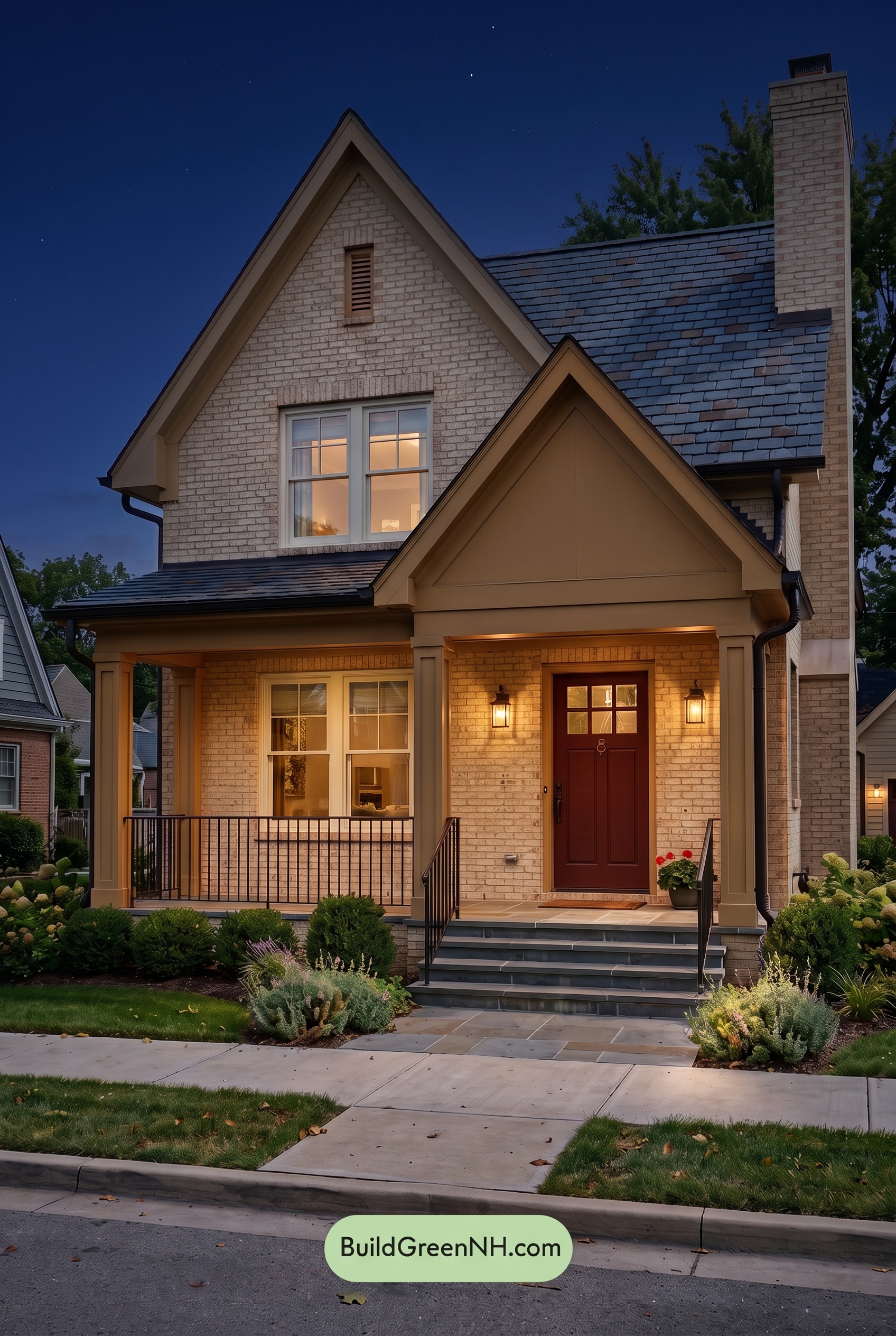
At night, the beige trim and window frames take on a softer, more golden warmth than they show in neutral daylight, especially near the porch lighting. Their saturation appears gentler in the surrounding darkness, while the brown front door deepens into a richer, more dramatic accent.
Gray railings recede into cool, near-black shadows, sharpening the contrast around the warmly lit entry. This mix of luminous warm neutrals, deeper brown, and shadowed gray gives the exterior a welcoming yet quietly sophisticated nighttime mood.
Pin these for later:
Want More?
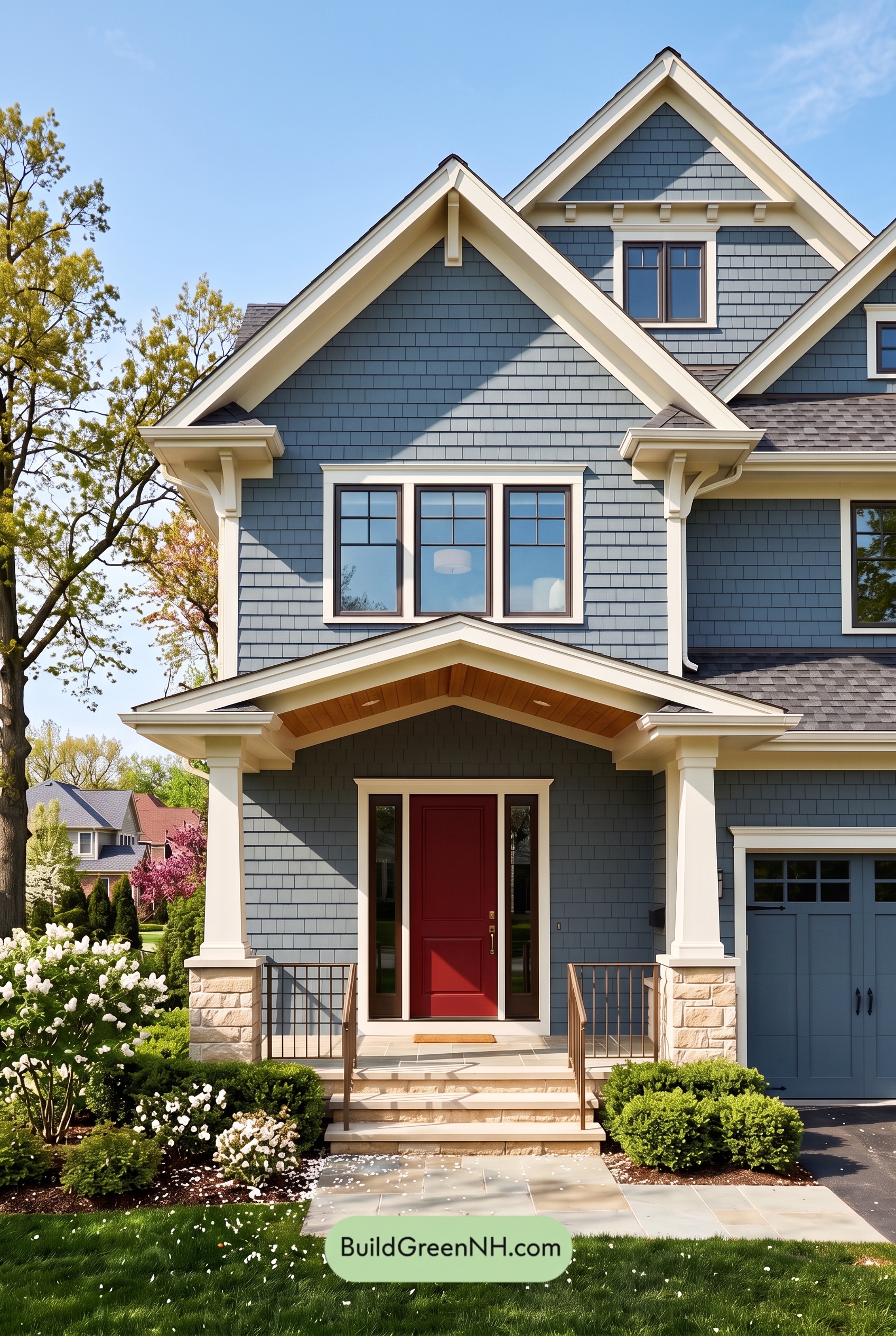 Red Front Door House Paint Color Scheme: Denim Blue Homecoming
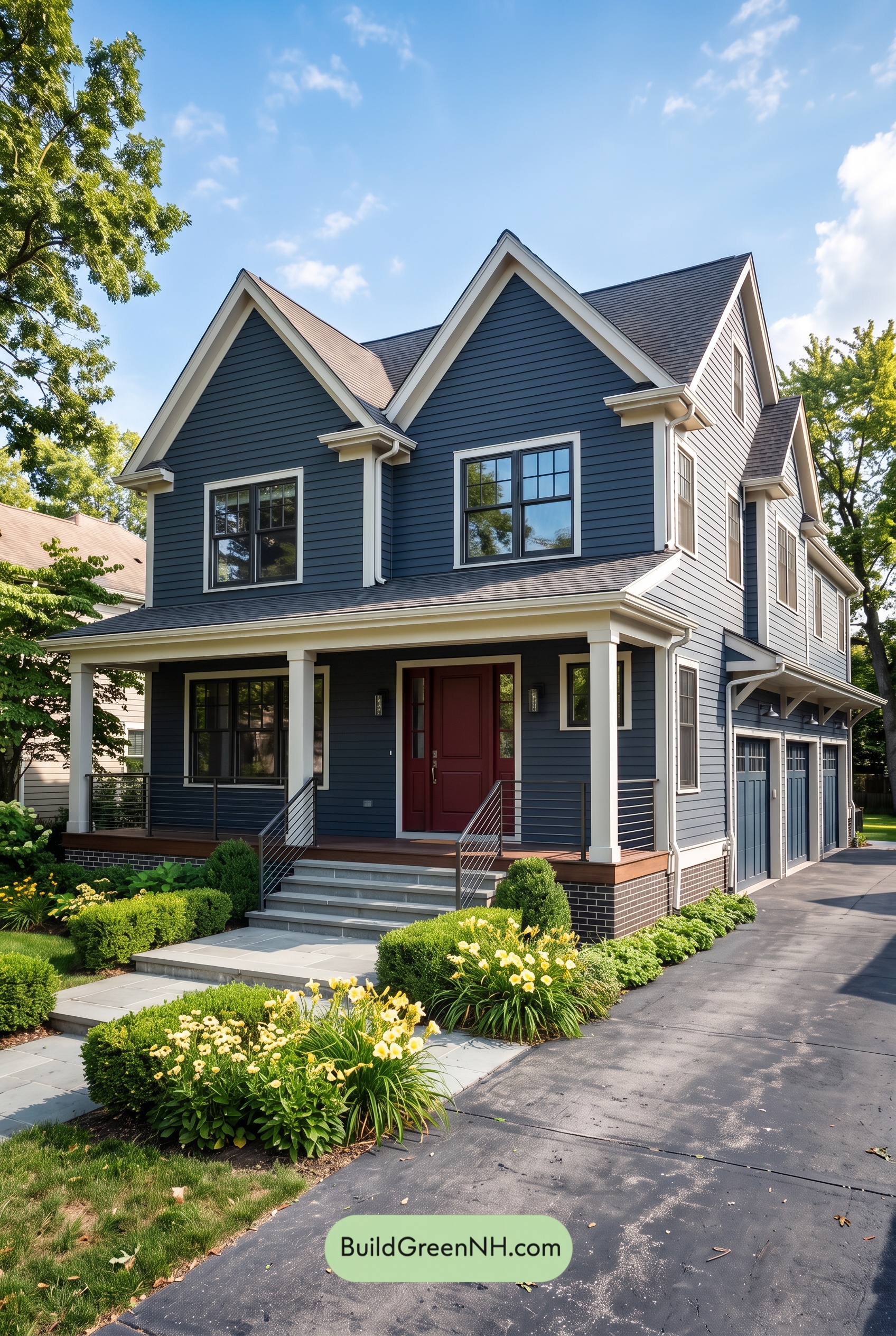 Red Front Door House Paint Color Scheme: Midnight Blue Assurance
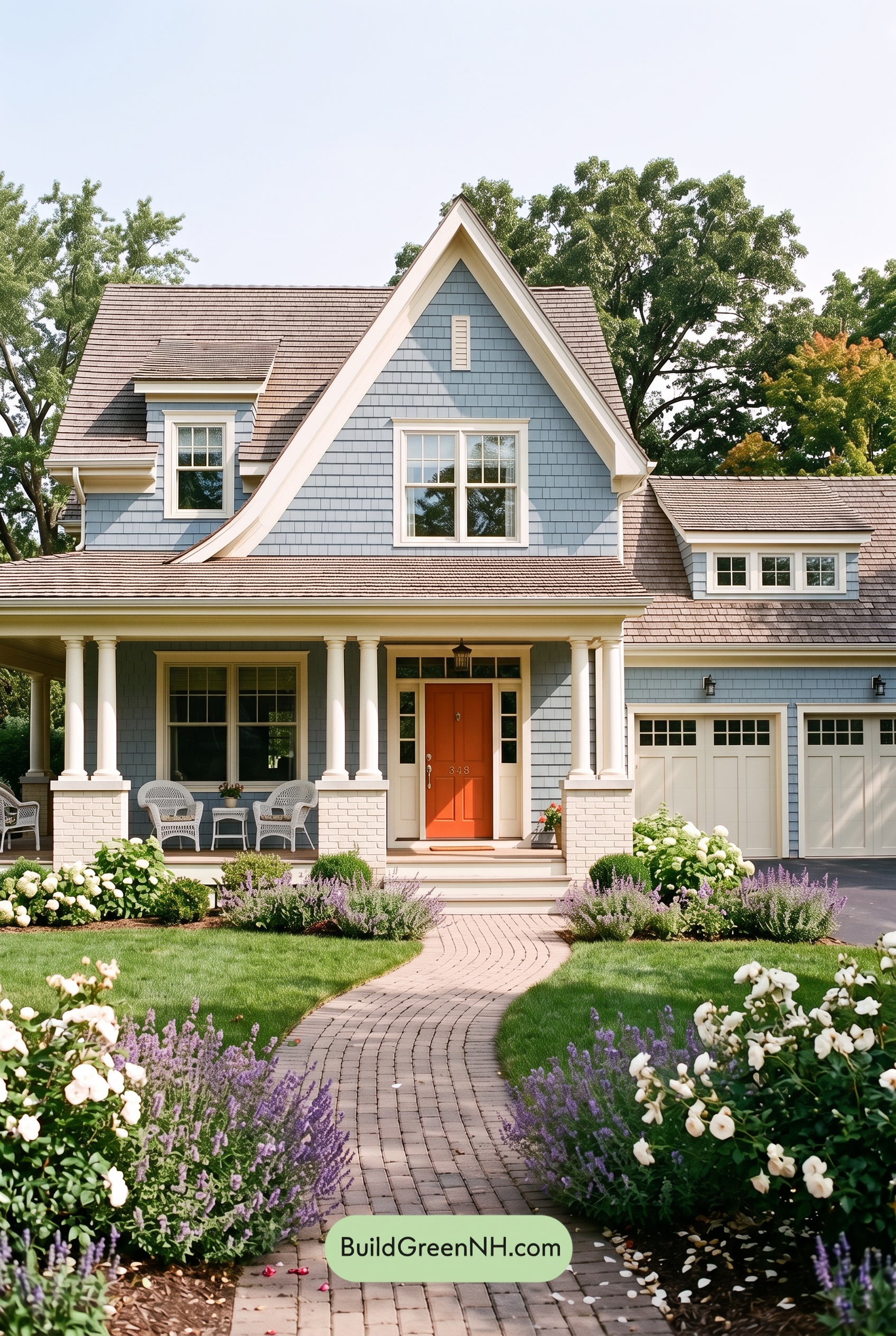 Red Front Door House Paint Color Scheme: Pale Blue Joy
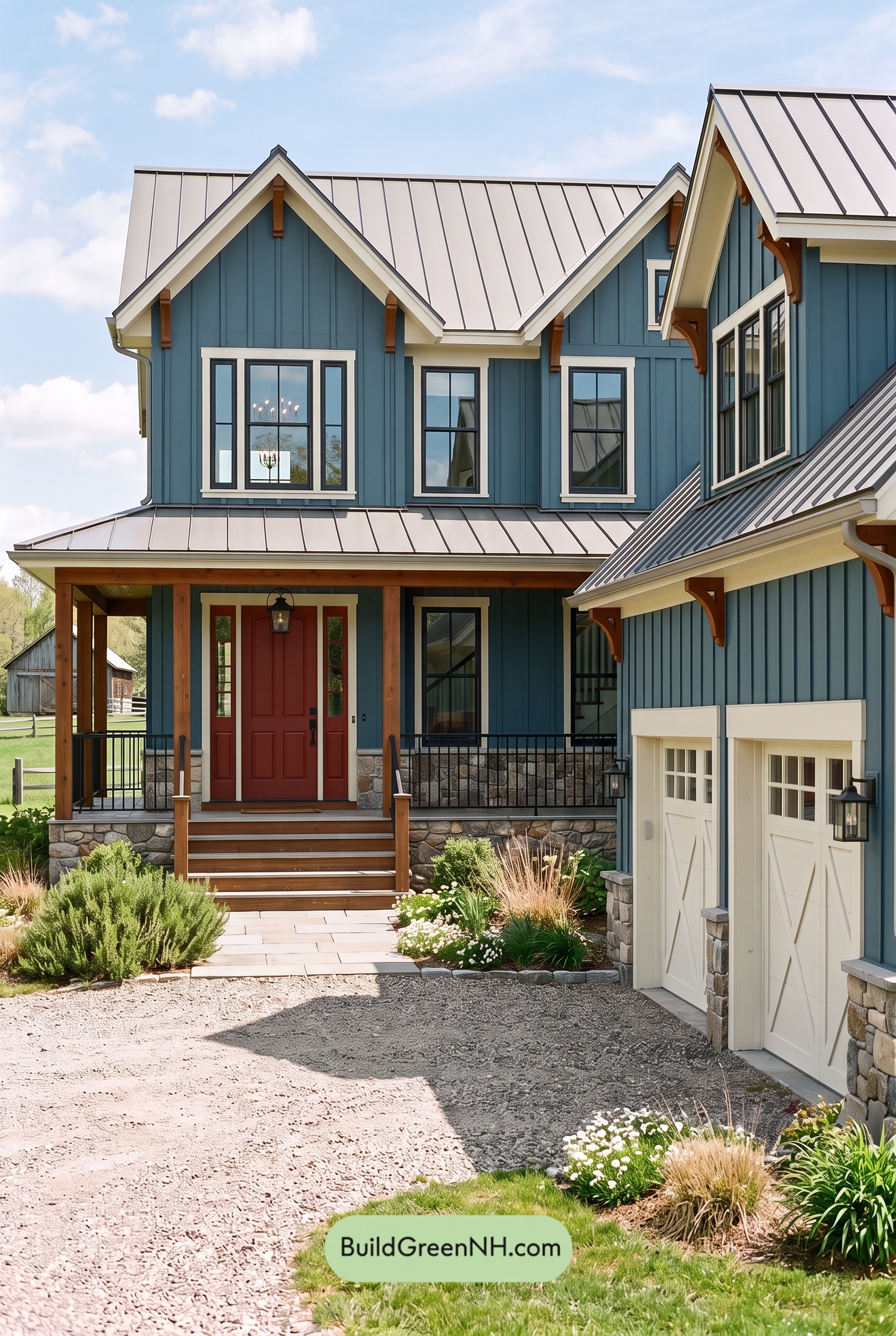 Red Front Door House Paint Color Scheme: Teal Blue Kinship
 Blue House Front Door Color Scheme: Harbor Saffron
Table of Contents