Last updated on
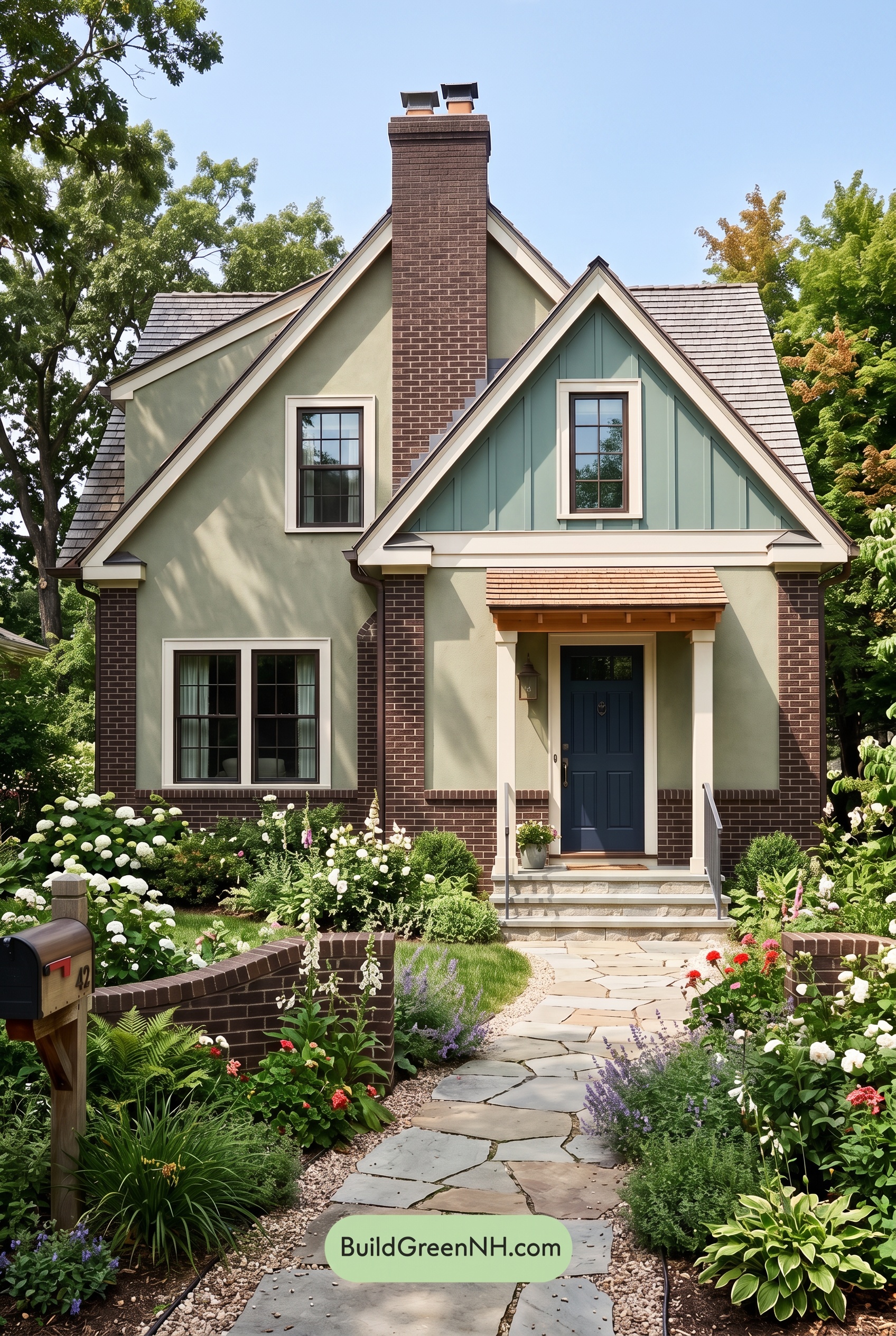

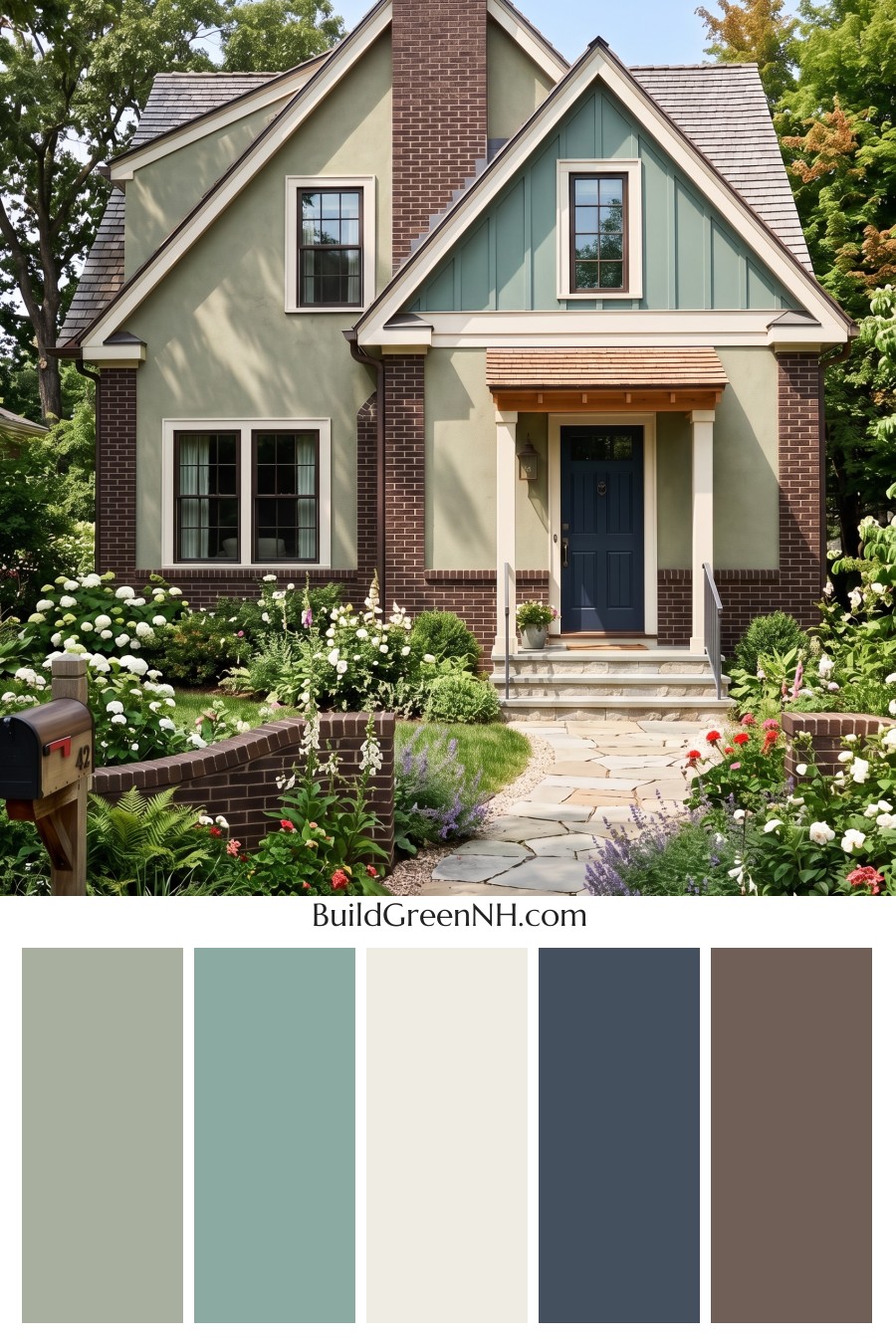
This layered blend of soft greens, crisp light trim, rich brown details, and a deep blue entry creates a welcoming exterior with timeless character.
A Nature-Inspired Foundation
The main siding is finished in a muted, gently gray-green shade that feels calm, established, and beautifully at home among the surrounding landscape. Rather than overwhelming the architecture, this softened green gives the tall gables and broad wall planes an inviting presence.
A slightly cooler blue-green accent appears in the front-facing gable, adding subtle distinction without breaking the overall harmony. The shift in shade helps this architectural feature stand forward, emphasizing the home’s vertical lines and giving the façade extra depth.
Light Trim That Defines Every Detail
Creamy white trim brightens the green siding and gives the home’s strong rooflines a clean, tailored outline. It is used generously around the windows, along the eaves, and across the porch structure, where it highlights the craftsmanship of the exterior.
The light columns at the entry continue that polished effect. They frame the front door with a sense of formality while keeping the porch open, fresh, and approachable. Against the deeper materials nearby, this light trim acts as a welcome visual pause.
Grounding Browns and a Classic Blue Door
Deep brown window frames, railings, and brickwork provide an earthy counterpoint to the cooler green and blue shades. These dark accents bring definition to the windows and anchor the lower portions of the house, while the brown brick chimney adds texture and a feeling of permanence.
The front door, finished in a deep navy blue, is the scheme’s most dramatic focal point. It offers a refined contrast against the soft green walls and light porch surround, drawing the eye naturally toward the entry. The result feels confident and classic rather than overly bold.
A Balanced, Welcoming Exterior
The medium gray roof ties the composition together with a neutral, weathered look that complements both the brown brick and the green siding. Its understated tone allows the gables, trim, and entry door to remain the stars of the design.
Overall, this palette feels peaceful, polished, and warmly traditional. The soft green family connects the house to its garden setting, the light trim keeps the architecture crisp, and the deep blue and brown details add just enough contrast for a memorable curb appeal.
Next, see how this color scheme looks under different lighting simulations throughout the day.
Overcast
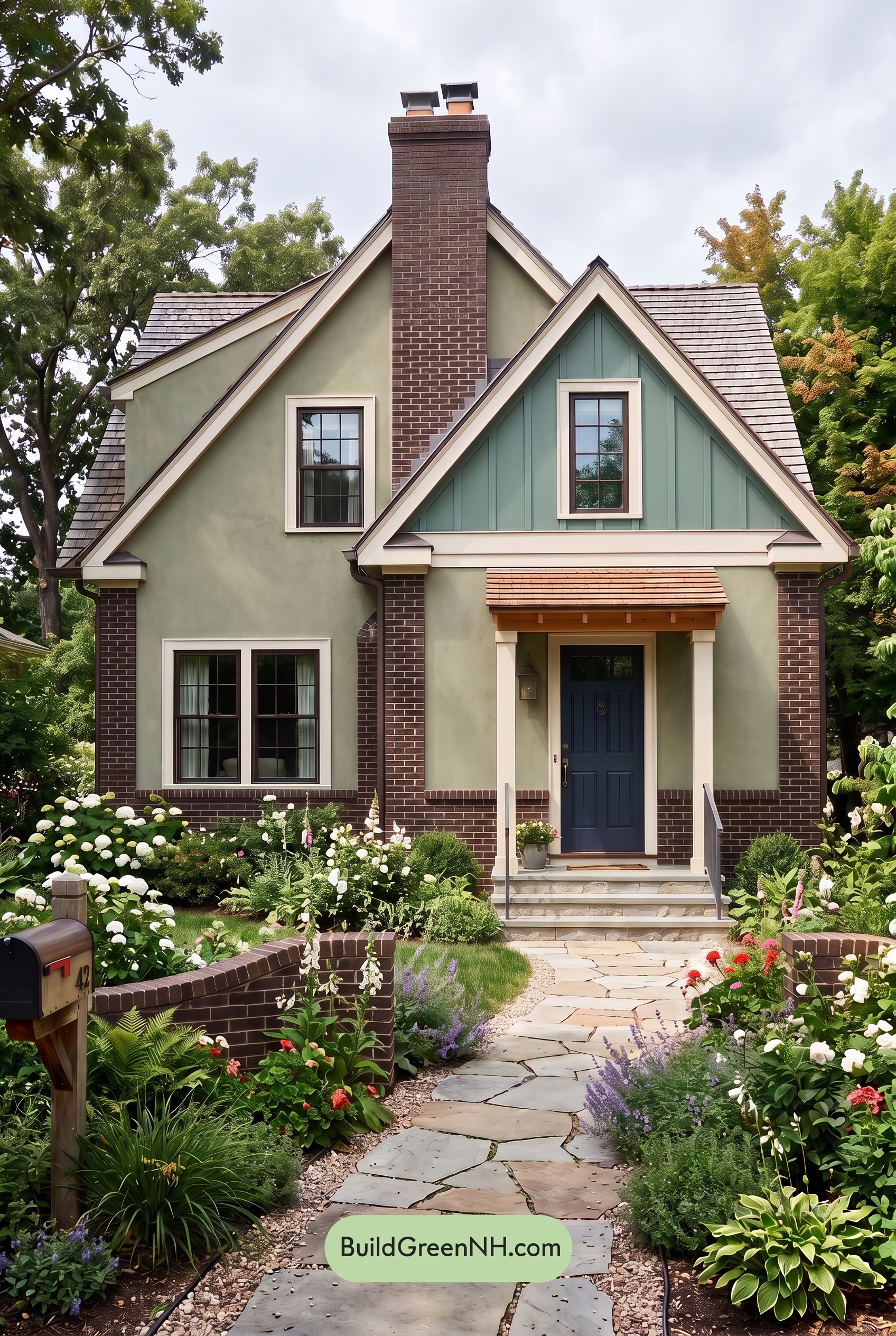
Under overcast skies, the soft green siding will appear calmer and slightly grayer than it does in neutral daylight, with less saturation and a more muted, refined warmth. The deeper green accent areas may take on a cooler, more grounded character, while the blue front door can look richer and more subdued rather than brightly crisp.
With direct sun removed, shadows soften across the gables and porch, reducing sharp contrast between the green walls and light trim. The white trim and columns will feel gentler and less brilliant, while the dark brown window frames and railings become more prominent, giving the exterior a quiet, balanced mood with an inviting, rain-washed depth.
Golden Hour
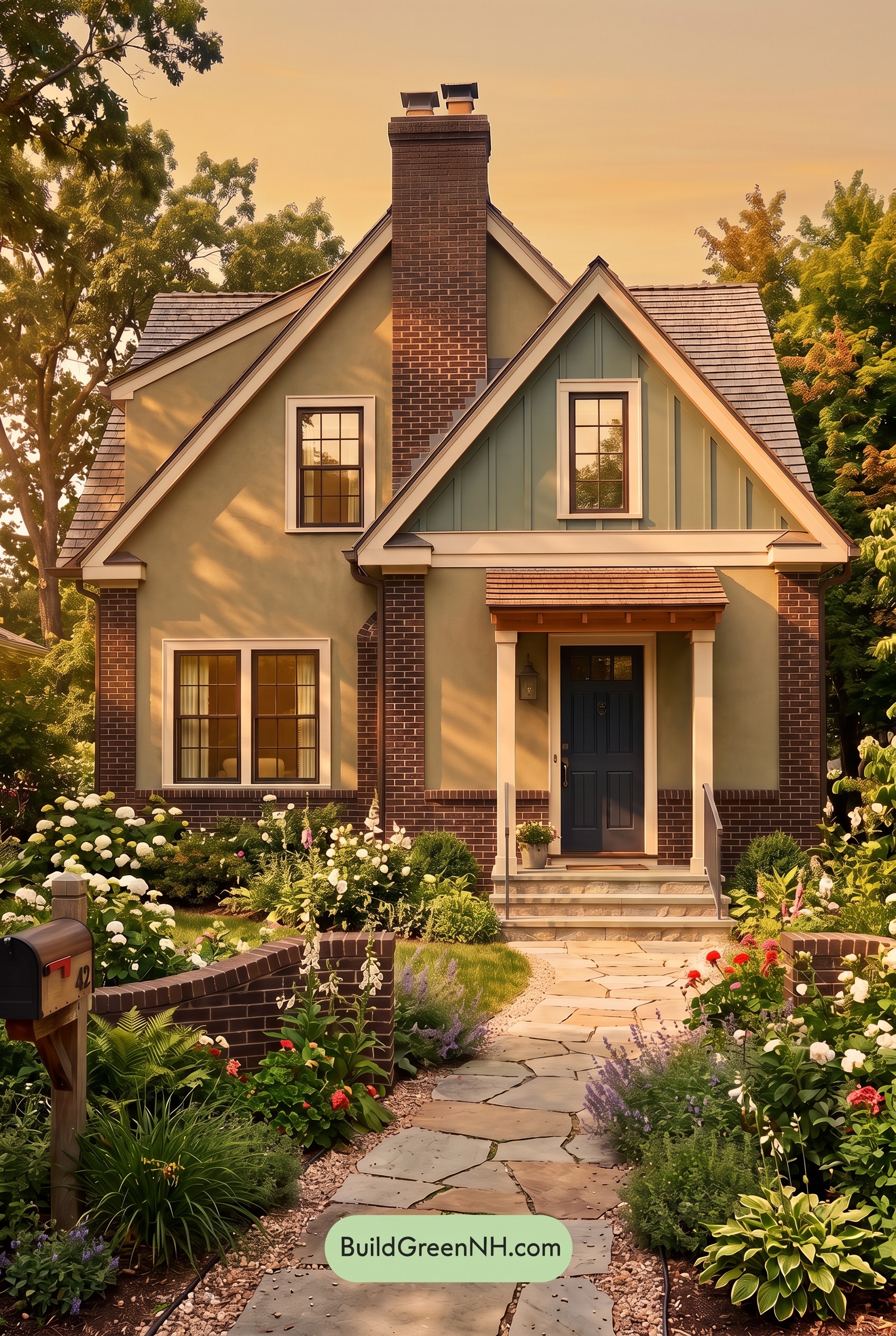
Under Golden Hour, the green siding takes on a softer, warmer cast than it shows in neutral daylight, with its muted character becoming richer and more inviting. The blue front door deepens toward a moodier shade, while the brown window frames and railings gain extra warmth and visual weight.
The white trim and columns glow with a creamy softness in the low sun, creating bright edges against the lengthening shadows. This directional light increases contrast across the gables and porch, giving the exterior a layered, welcoming mood that feels more intimate and dramatic than its balanced daytime appearance.
Shade
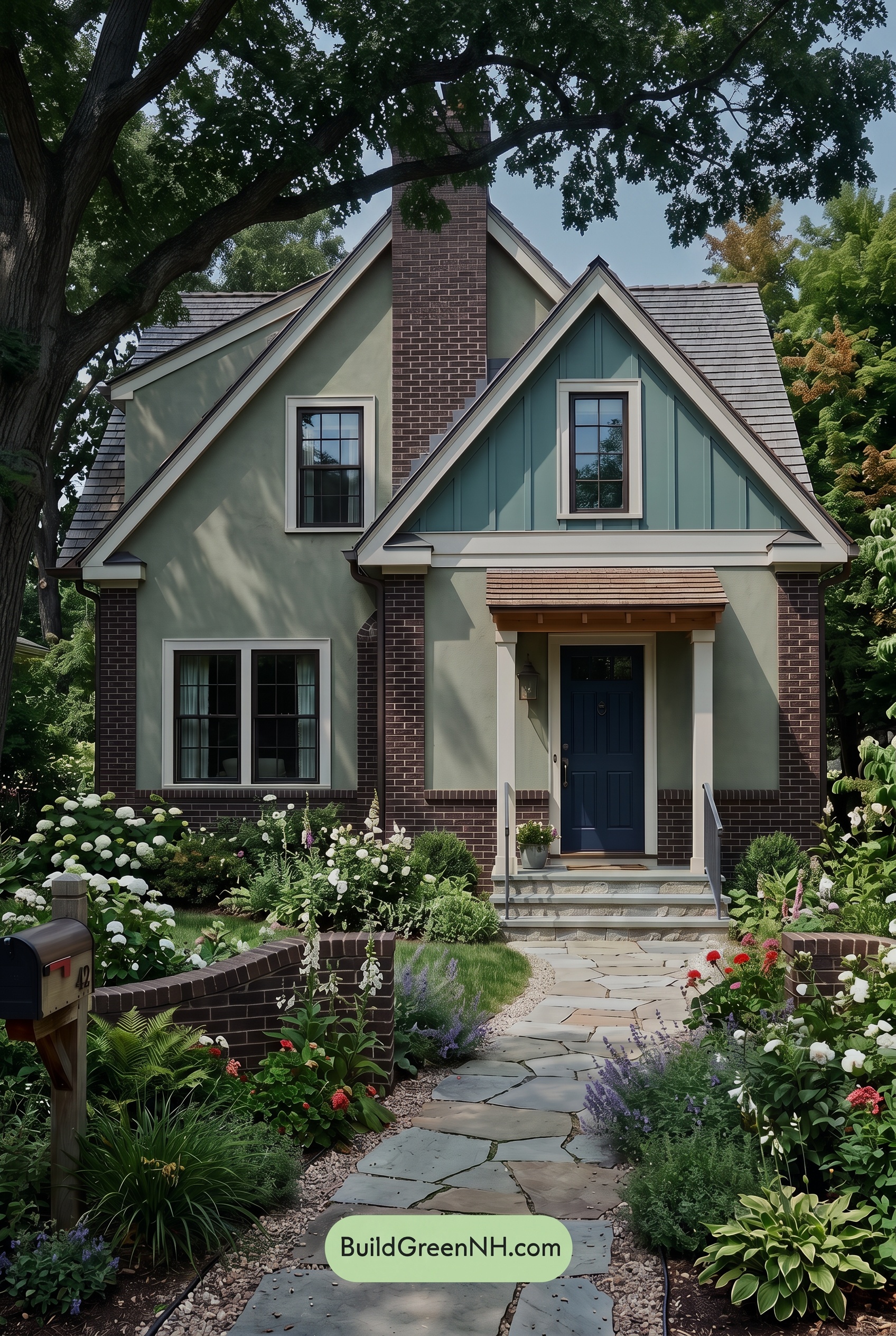
Under shade, the soft green siding appears more muted and slightly cooler than it would in neutral daylight, with dappled shadows creating gentle shifts in depth across the façade. The lighter trim and columns lose some crisp brightness, reading as softer pale neutrals that keep the architecture calm rather than stark.
The deep blue door becomes richer and more dramatic in the recessed entry, while the dark brown window frames and railings settle into the shadows for a quieter contrast. Together, the lowered saturation and layered shade give the exterior a peaceful, established mood with inviting depth.
Nighttime
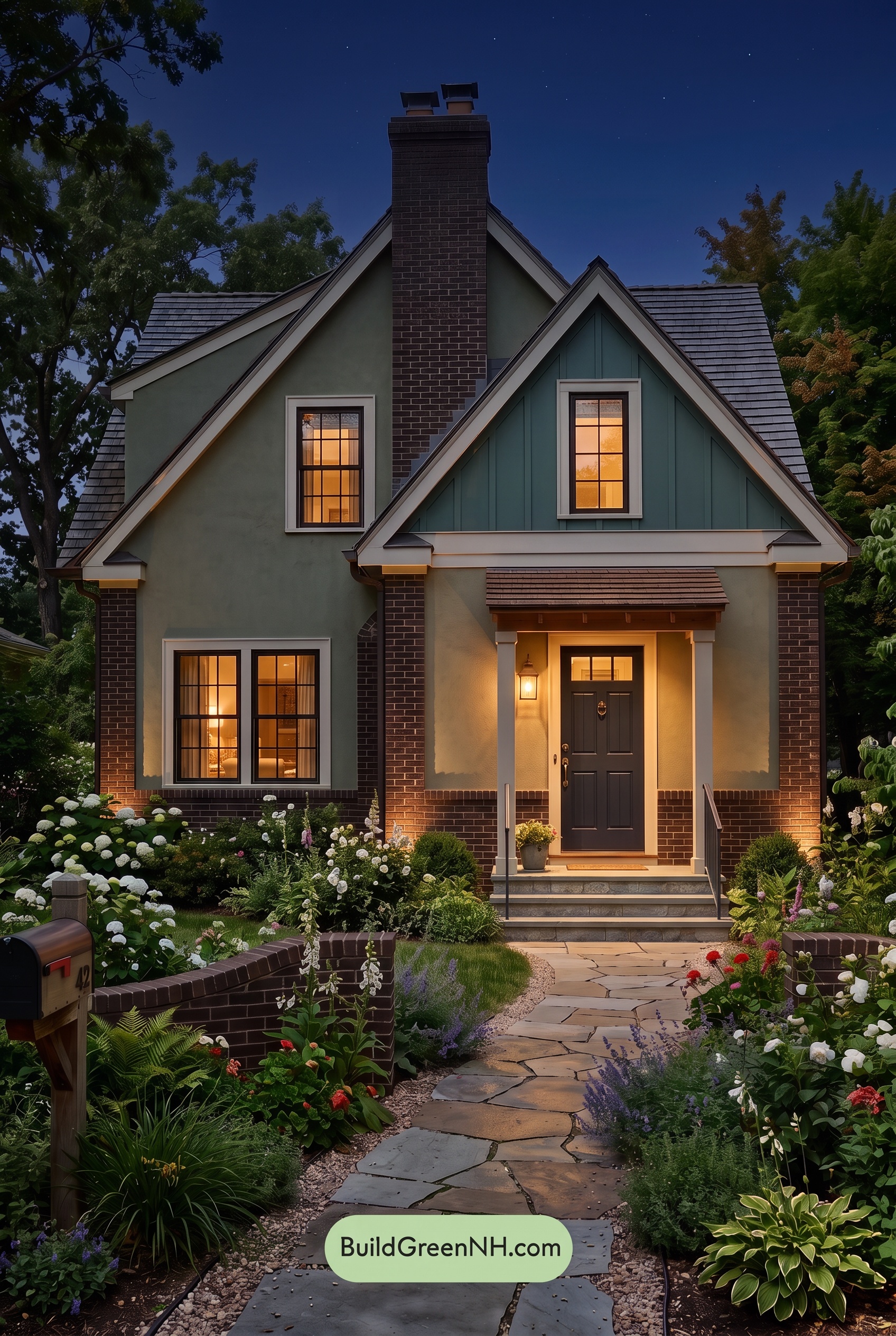
At night, the green exterior shades appear deeper and more muted than they do in neutral daylight, with the cooler blue-green accent taking on a richer, more dramatic character. Broad shadowed areas soften the distinction between the green planes, while the blue front door settles into a darker, more understated focal point.
Warm light from the windows and entry creates a welcoming counterpoint, making the white trim and columns feel creamier and gentler rather than crisp. The brown window frames and railings recede into the shadows, sharpening the contrast around illuminated openings and giving the home a calm, layered evening mood.
Pin these for later:
Want More?
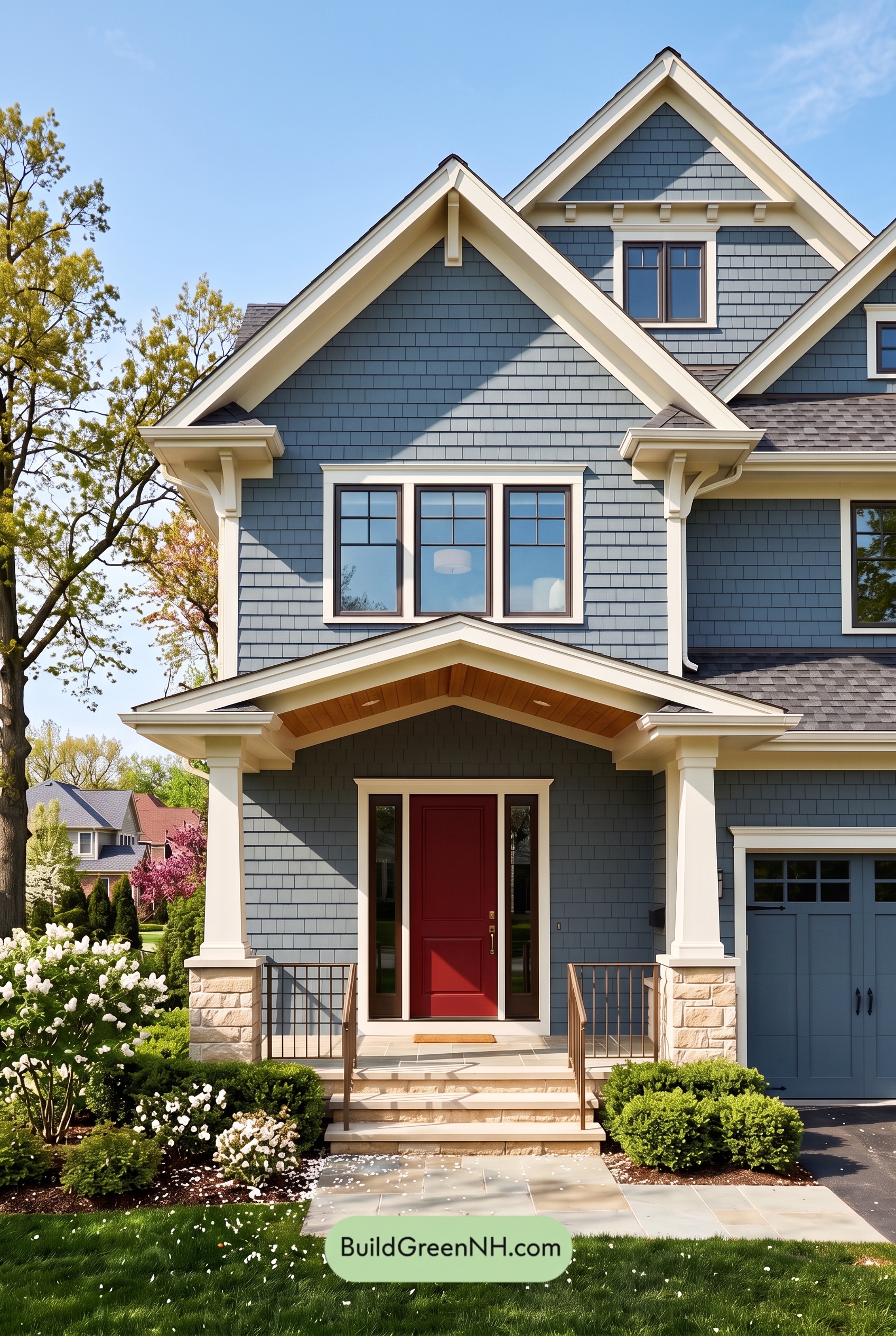 Red Front Door House Paint Color Scheme: Denim Blue Homecoming
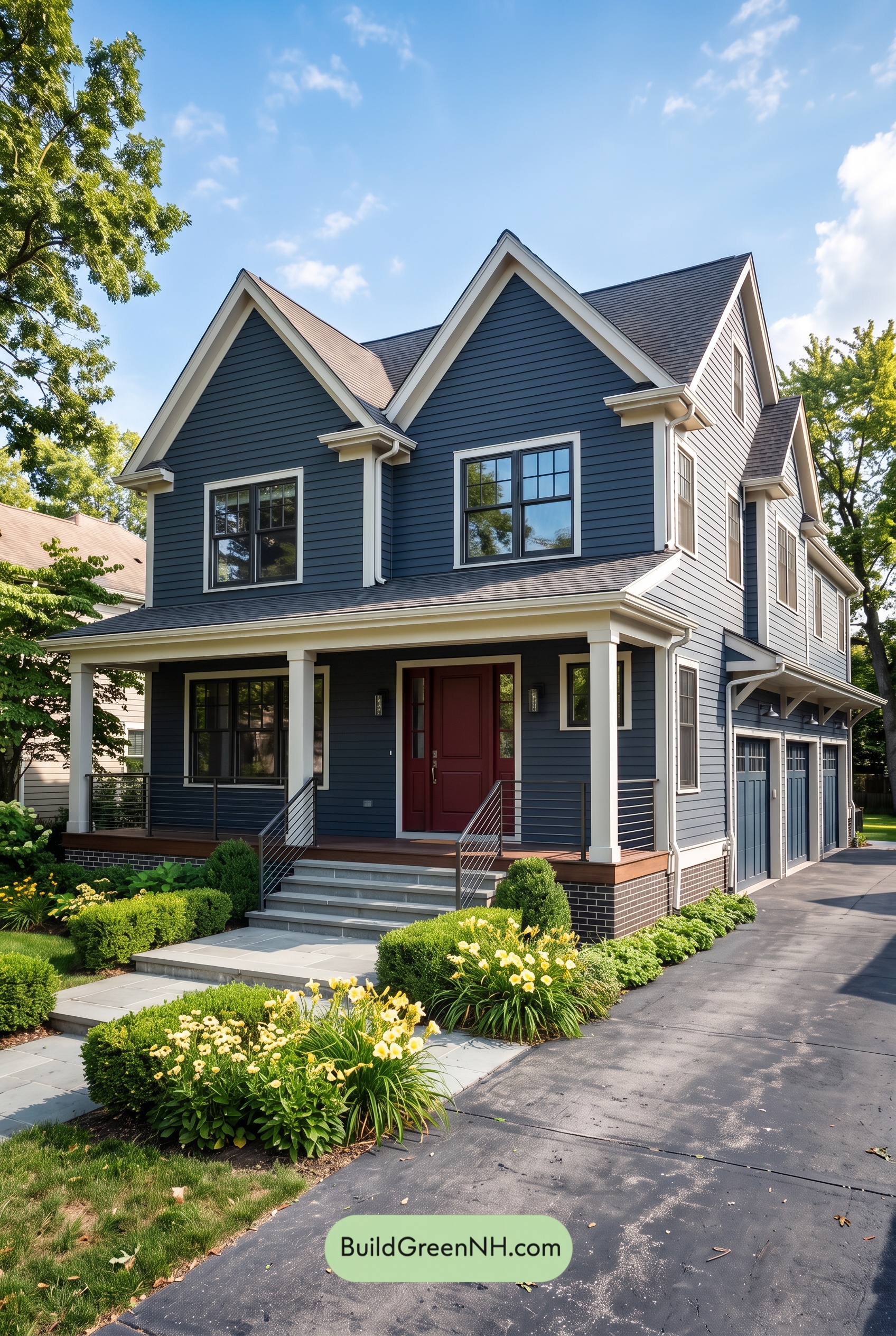 Red Front Door House Paint Color Scheme: Midnight Blue Assurance
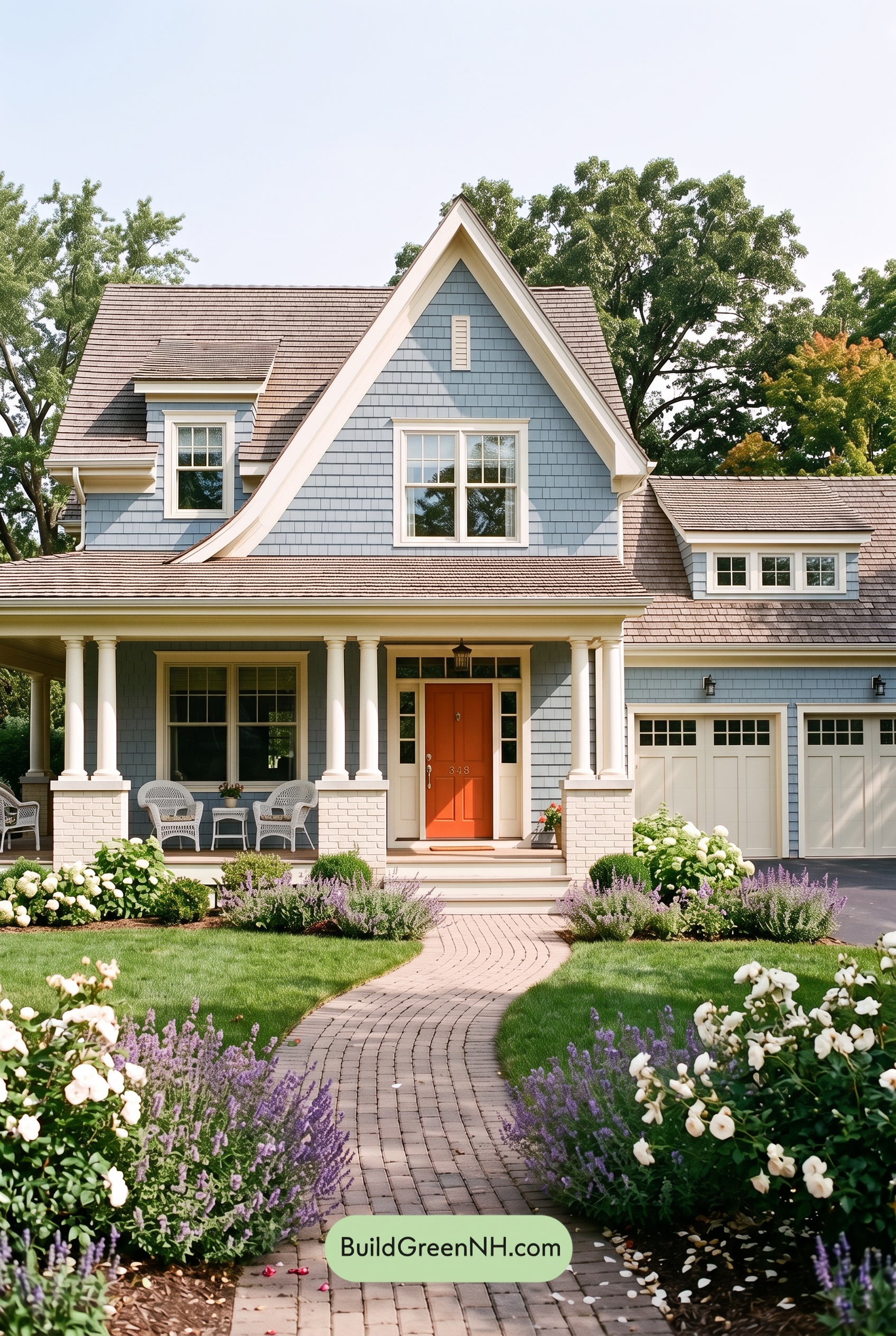 Red Front Door House Paint Color Scheme: Pale Blue Joy
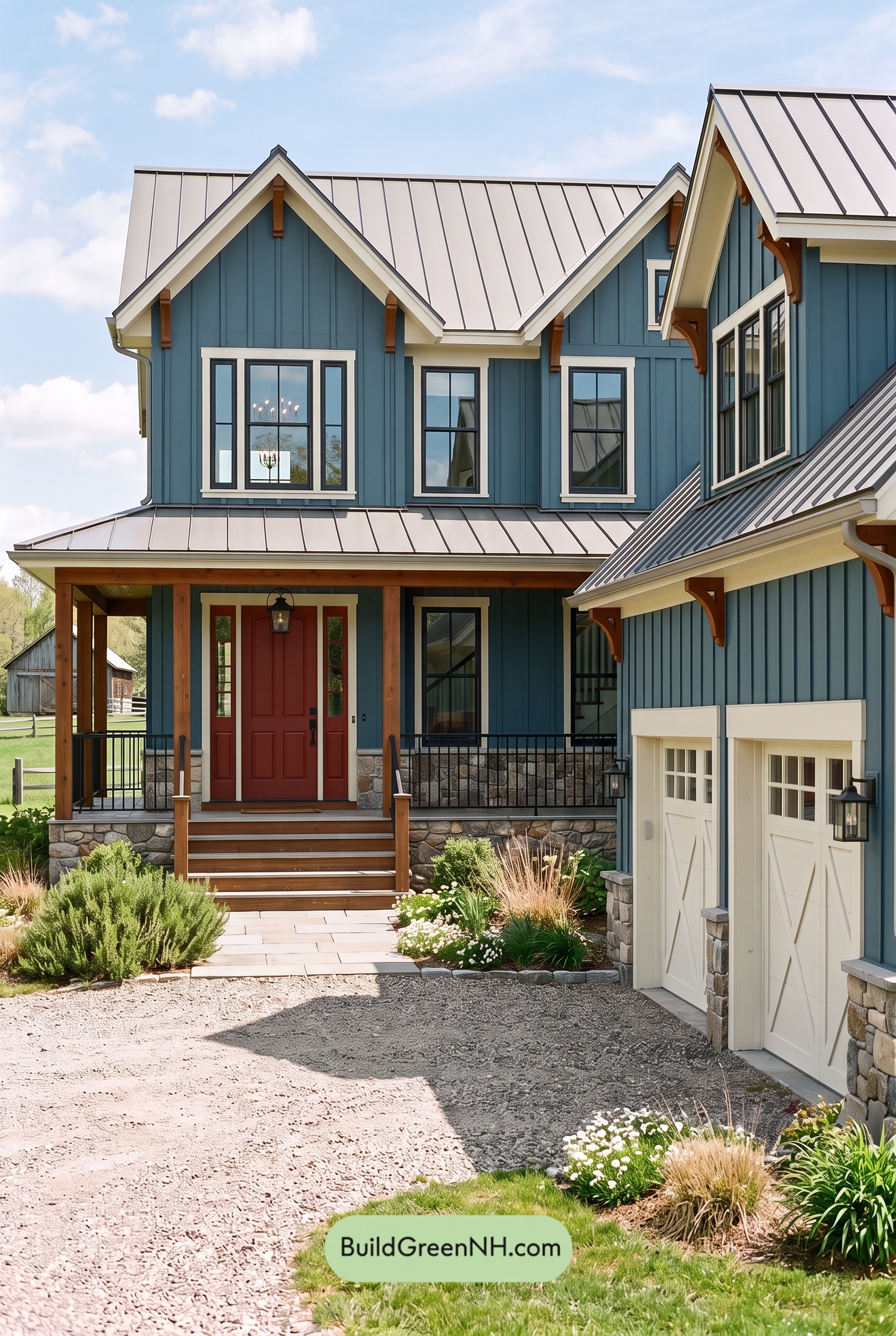 Red Front Door House Paint Color Scheme: Teal Blue Kinship
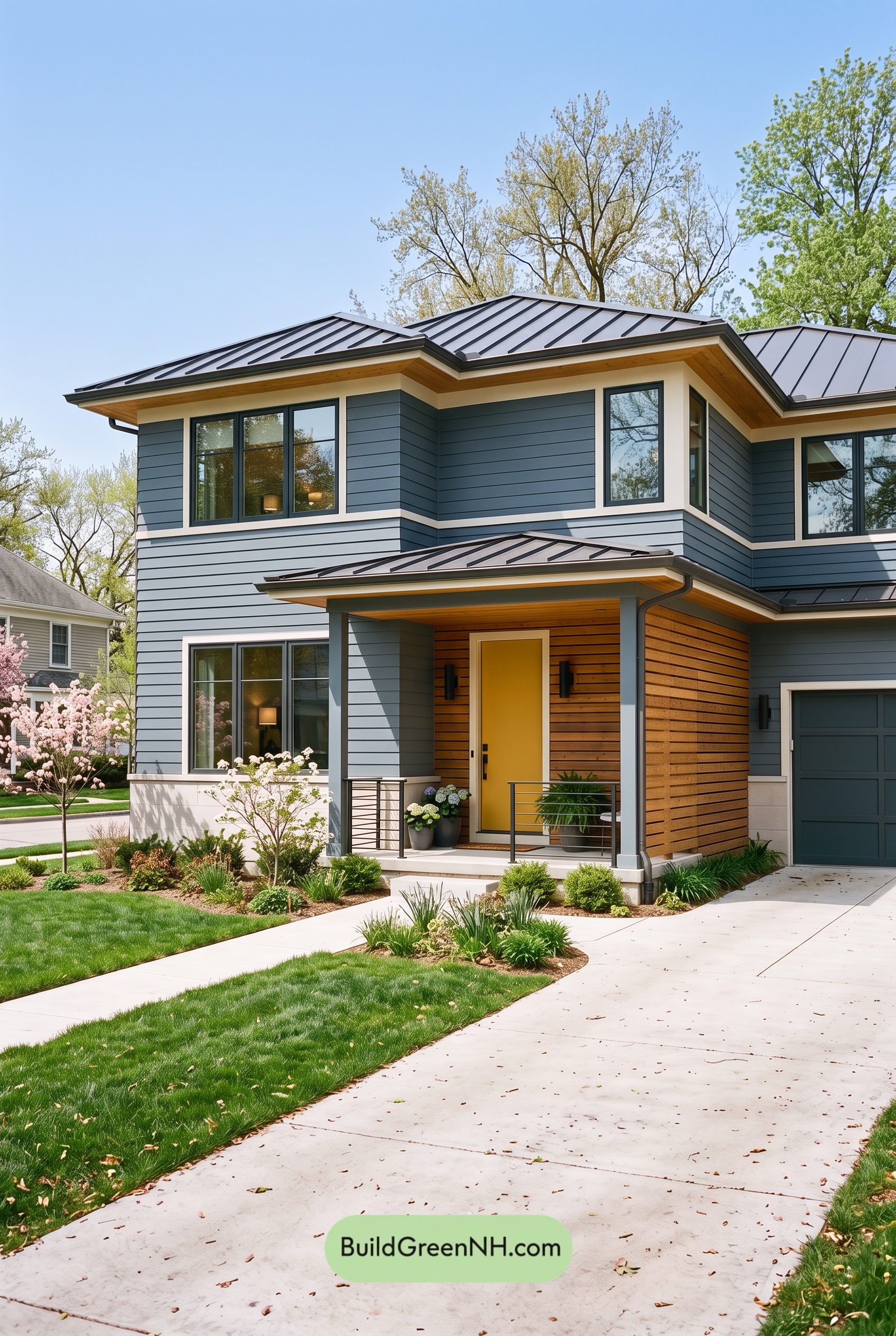 Blue House Front Door Color Scheme: Harbor Saffron
Table of Contents