Last updated on · ⓘ How we make our designs
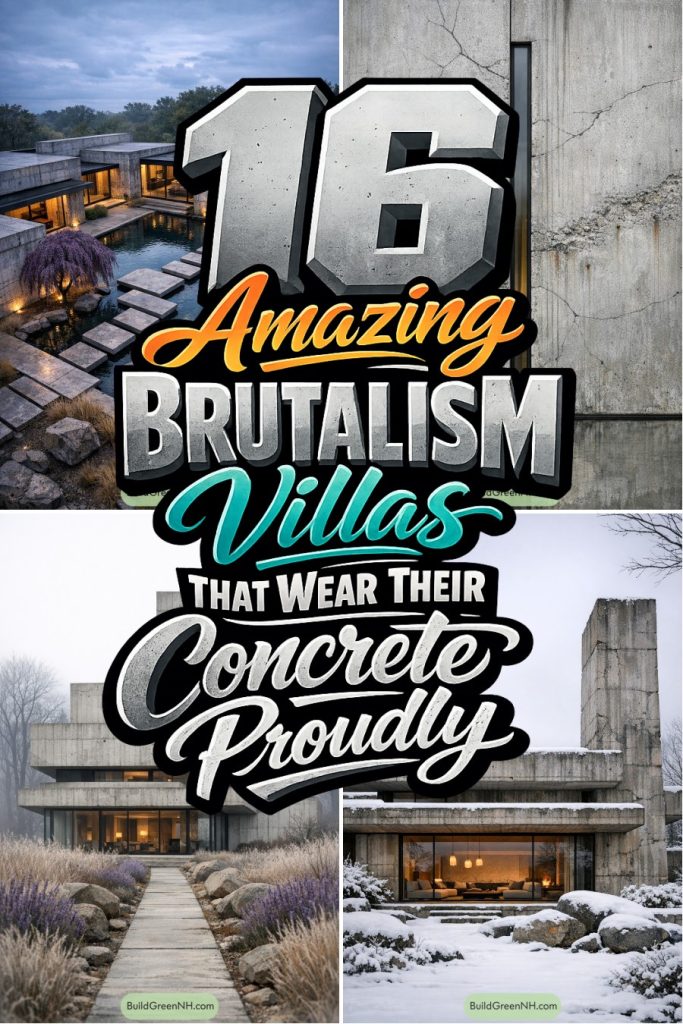
See how rough concrete villas turn cracks, rain stains, and bunker-like walls into warm homes with timber, glass, plants, and fire.
Old concrete has a face, and we like it with a few wrinkles. These brutalist villas take cues from mountain bunkers, quarry cuts, harbor walls, silos, and quiet ruins, then give them sofas, soup, and slightly better manners.
Notice the cracks, rain stains, deep overhangs, black frames, warm timber, and water courts. None of it is trying to look shiny and new, which is good because concrete with a fake baby face is a bit weird.
From snowy hideaways to pool houses wrapped in wisteria, each design uses rough mass to feel sheltered, not stern. Keep an eye on how glass, planting, fire, and soft interiors take the edge off, so the villas stay bold without scaring the socks away.
Snowbound Concrete Hideaway
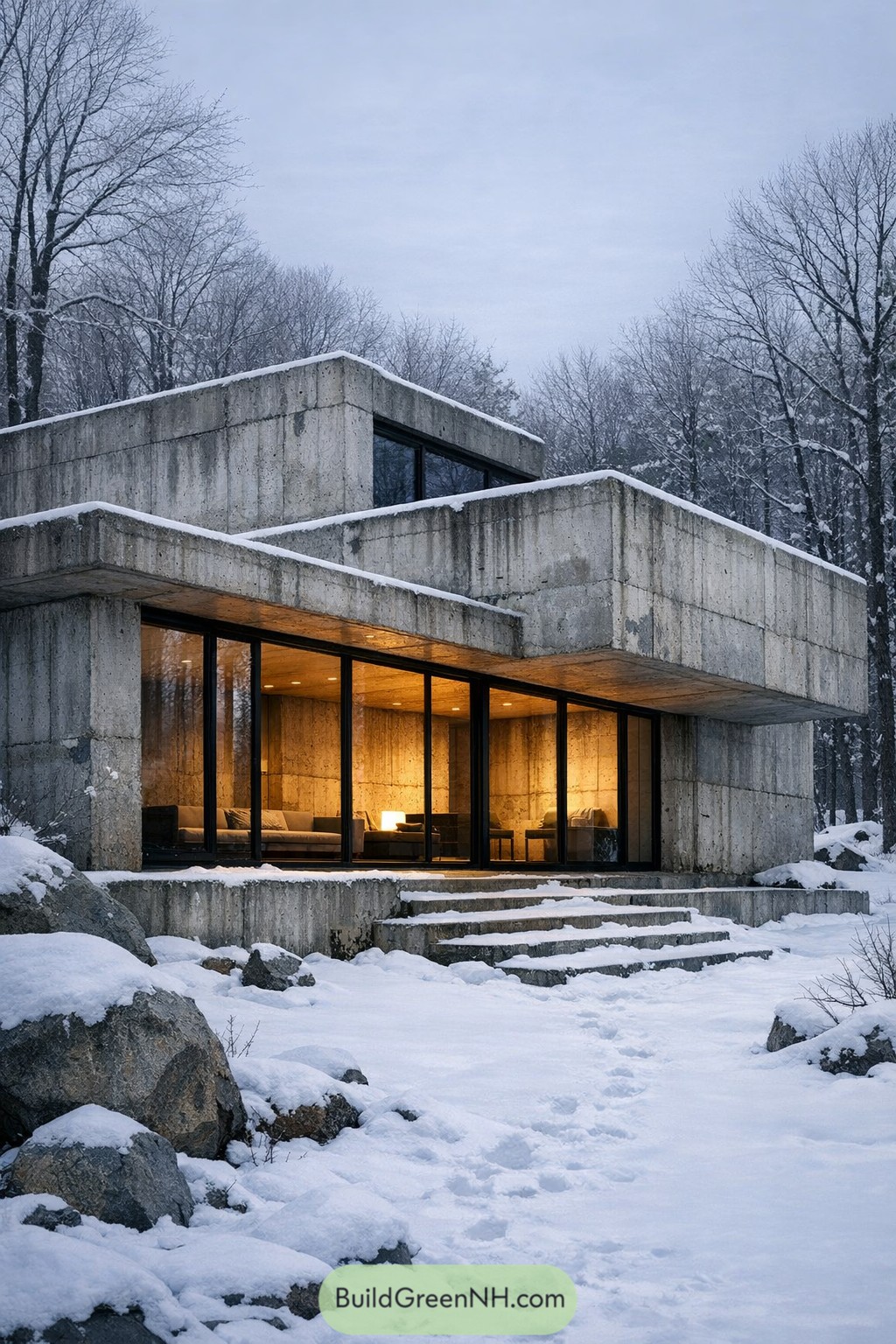



Stacked concrete volumes press into the snowy woodland like a quiet shelter, inspired by old mountain bunkers and cabin life that got a bit more stylish. The deep overhangs protect the glass frontage and make the living space feel tucked in, which is pretty handy when winter is being winter.
Inside, the warm timber ceiling and simple seating soften the rough cast walls without making them too polite. Broad steps, black window frames, and blunt edges keep the design grounded, giving the villa that solid old concrete charm with just enough comfort to not scare off your socks.
Reedside Concrete Citadel
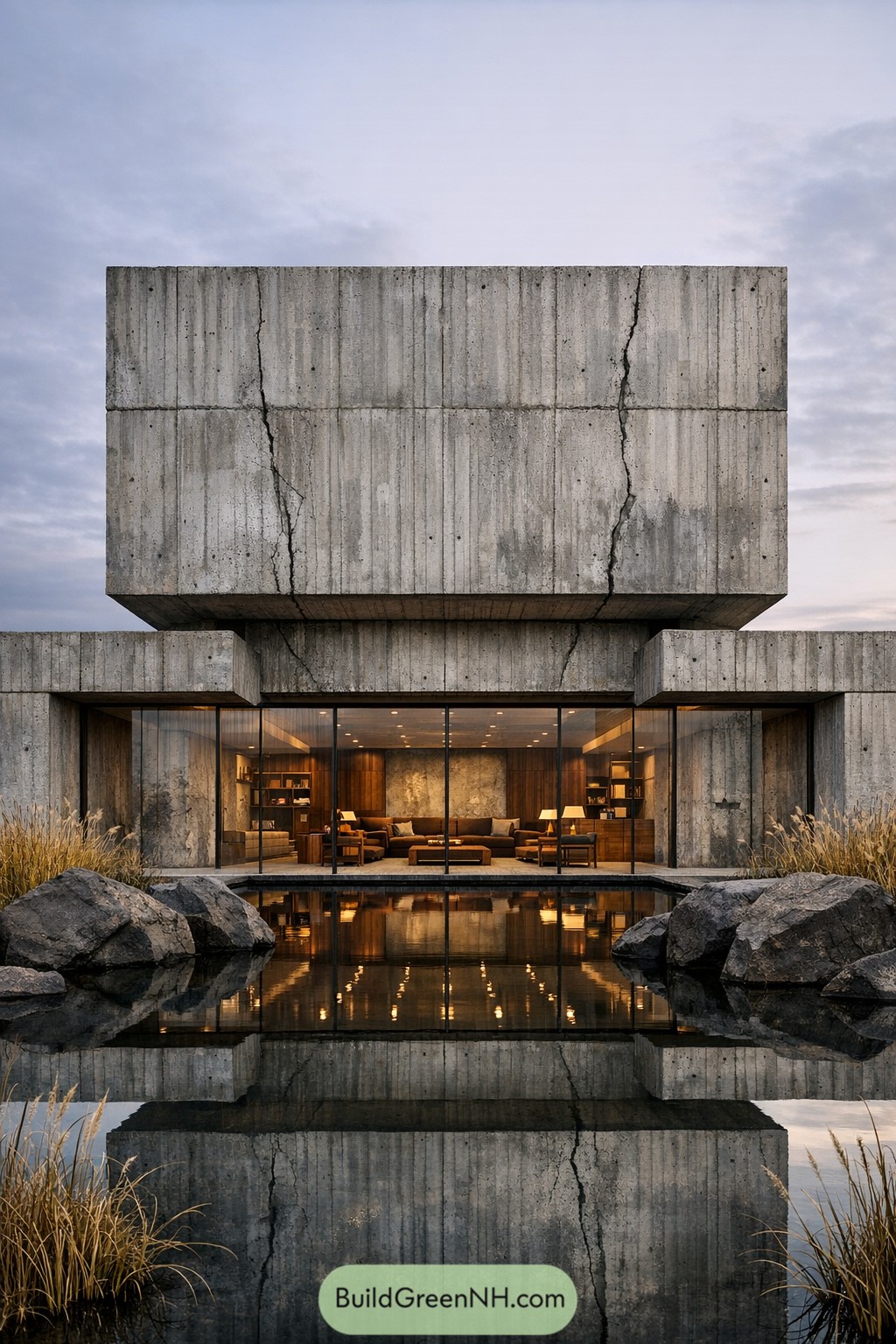

The villa is built like a quiet concrete citadel, with a huge upper block pushed forward over glass walls and a low base. Those cracks and rain marks were kept visible because they give the old concrete a lived in face, not too precious, not trying to look younger than it is.
Inside, warm timber and soft seating sit right behind the glazing, so the rough shell never feels cold or grumpy. The pond, boulders, and dry grasses borrow from quarry landscapes, making the whole place feel settled, like it parked there years ago and refused to leave.
Lavender Cantilever Villa
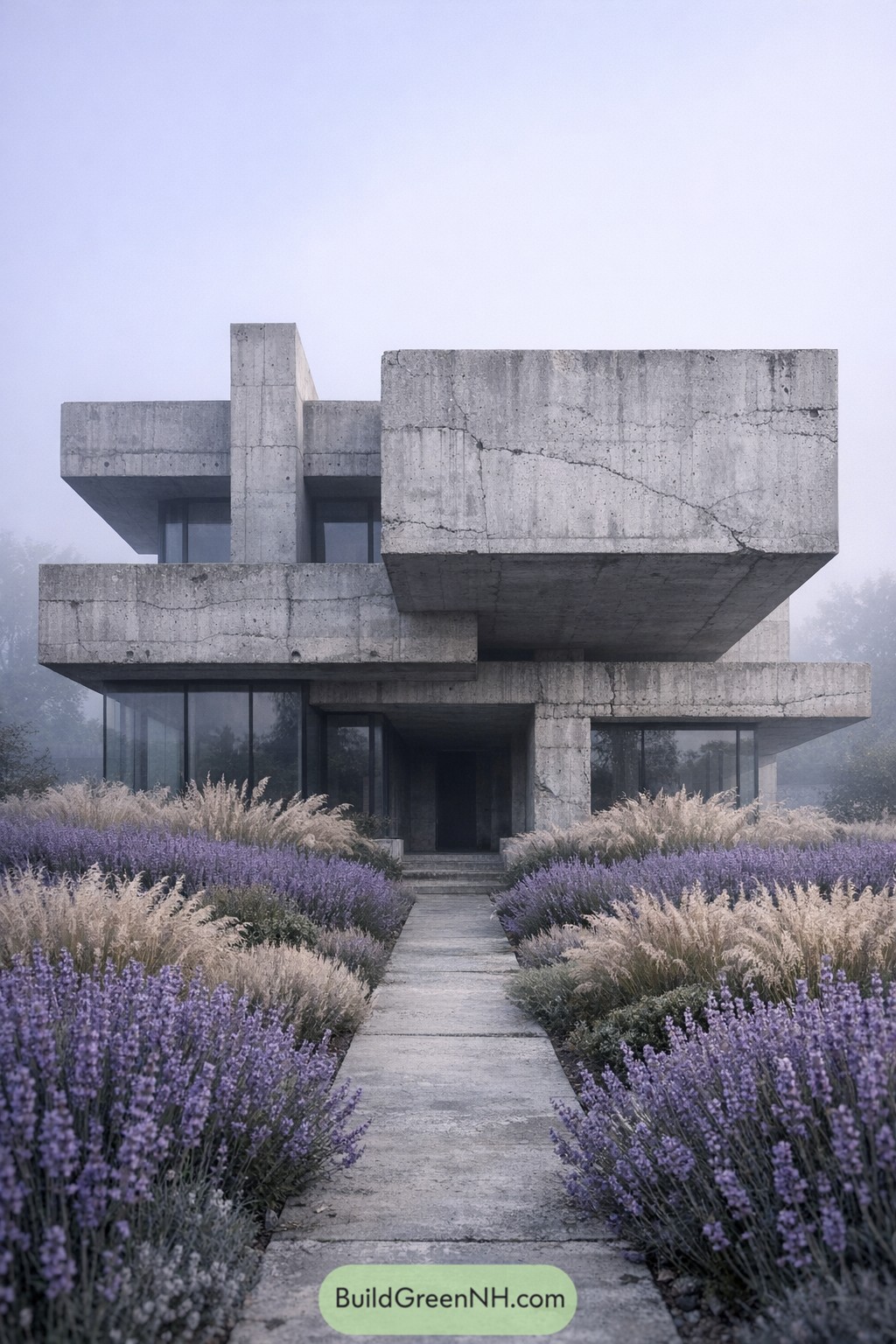

The stacked cantilevered volumes give this villa a calm, carved presence, like a small cliff that somehow got a very nice garden. Its weathered concrete was inspired by old retaining walls and coastal ruins, with stains and hairline cracks left visible for character.
Deep overhangs shade the glass walls and make the recessed entry feel tucked in, which matters because a house this bold still needs a little manners. Lavender and soft grasses soften the edges without hiding the structure, guiding you along a simple path toward the front door.
Cracked Monolith Water Court
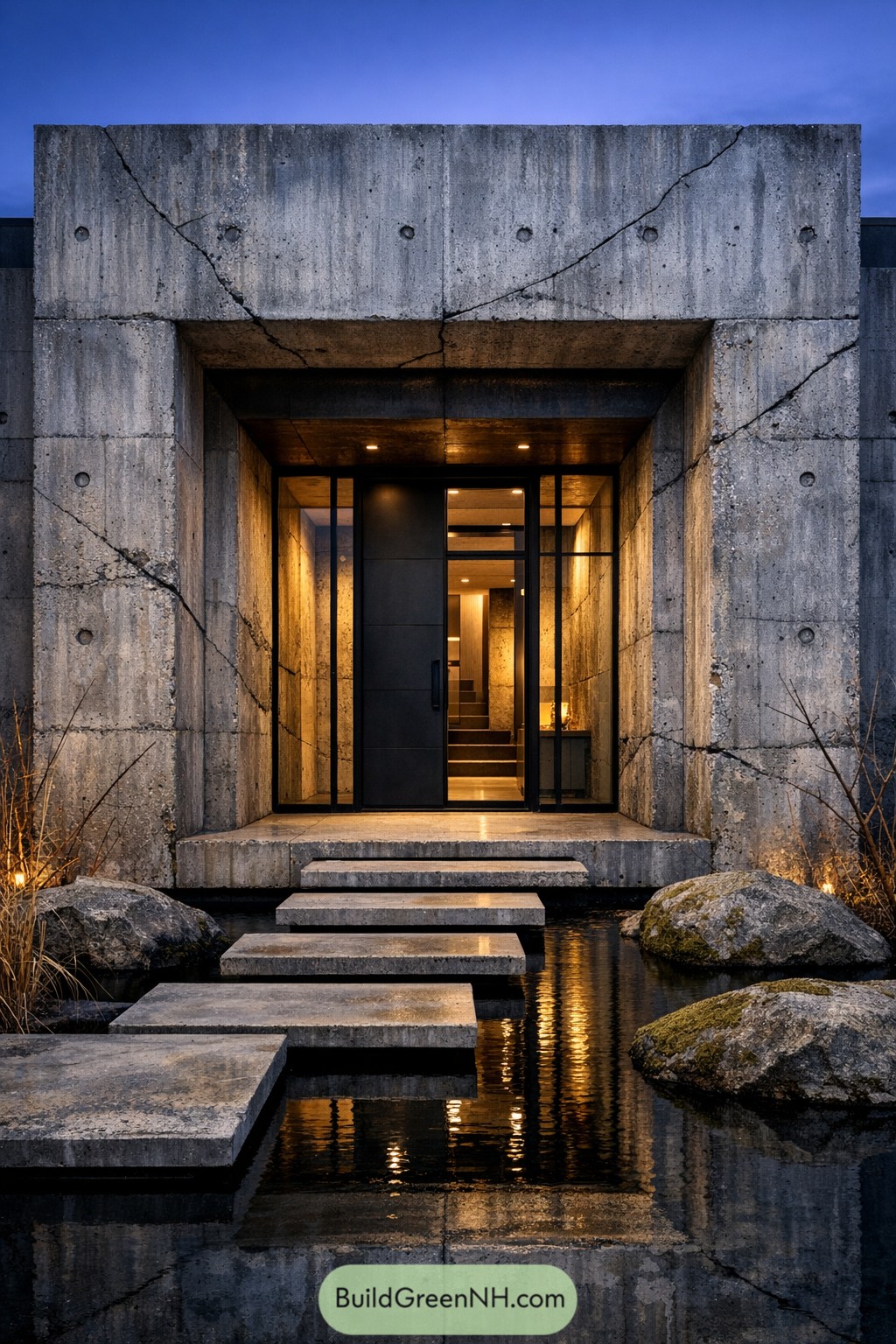

The deep concrete portal borrows from old harbor walls and rain worn ruins, with cracks left visible so the facade feels aged instead of polished. Its thick frame makes the entry feel protected, then the slim black door and glass panels pull it back from bunker mode, thankfully.
Floating slabs cross the reflecting pool like big stepping stones, slowing the arrival just enough to notice the rough walls and warm interior glow. The round tie holes, mossy boulders, and recessed ceiling spots keep the design grounded and a bit cheeky, because even brutalism can enjoy a pond moment.
Granite Fog Cliff Villa
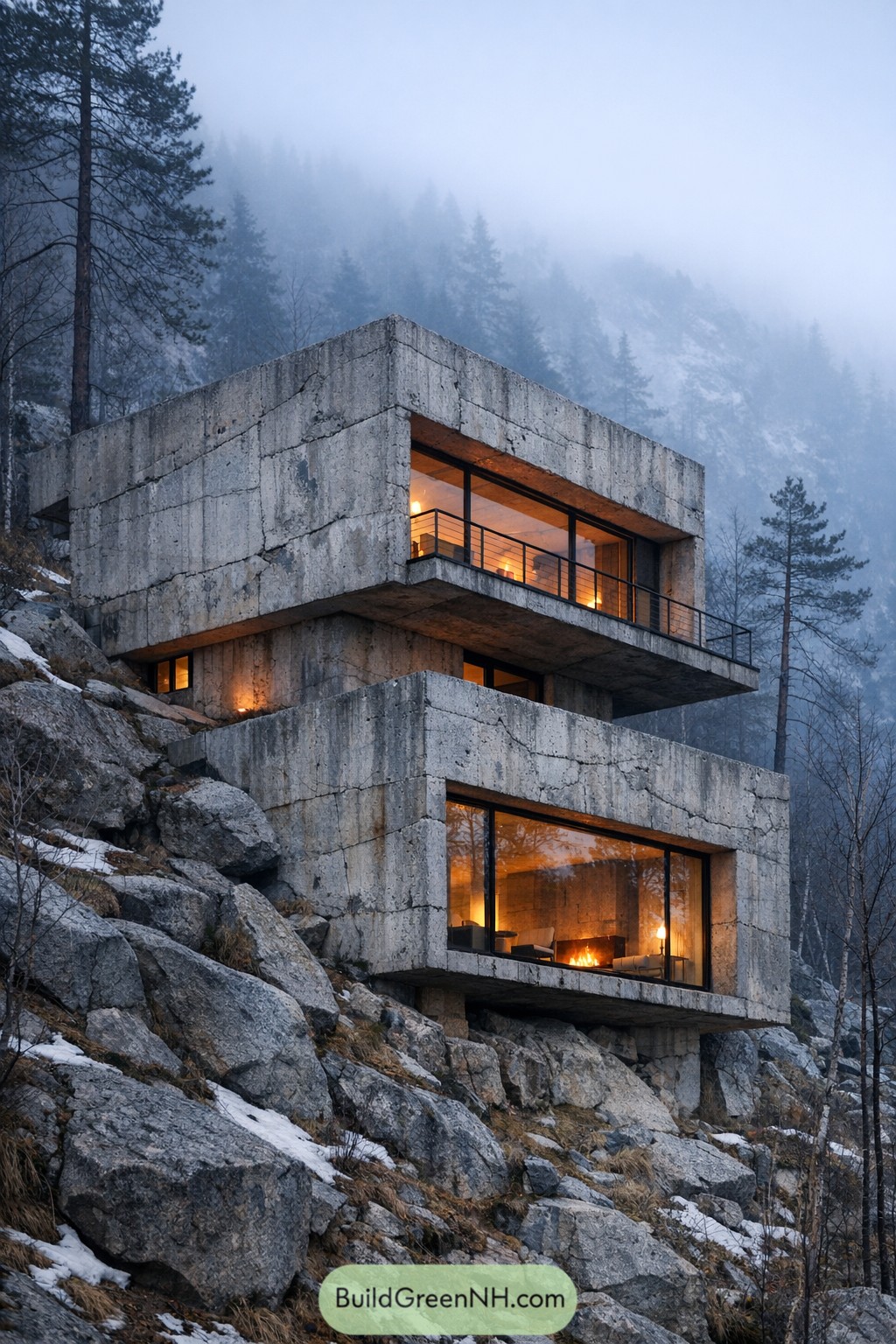

This cliffside villa stacks rough concrete volumes like boulders that got a bit ambitious, stepping with the slope instead of flattening it. The deep window cuts and black railings frame the forest while keeping the rooms tucked back and calm.
Inspiration came from the granite outcrop around it, so the poured walls keep their scars, seams, and weather stains rather than pretending to be polished. Broad glass bays bring the fireplace and living spaces right to the edge, which makes the cold mountain setting feel close, but not too close because frostbite is a poor guest.
Wisteria Rift Pool House
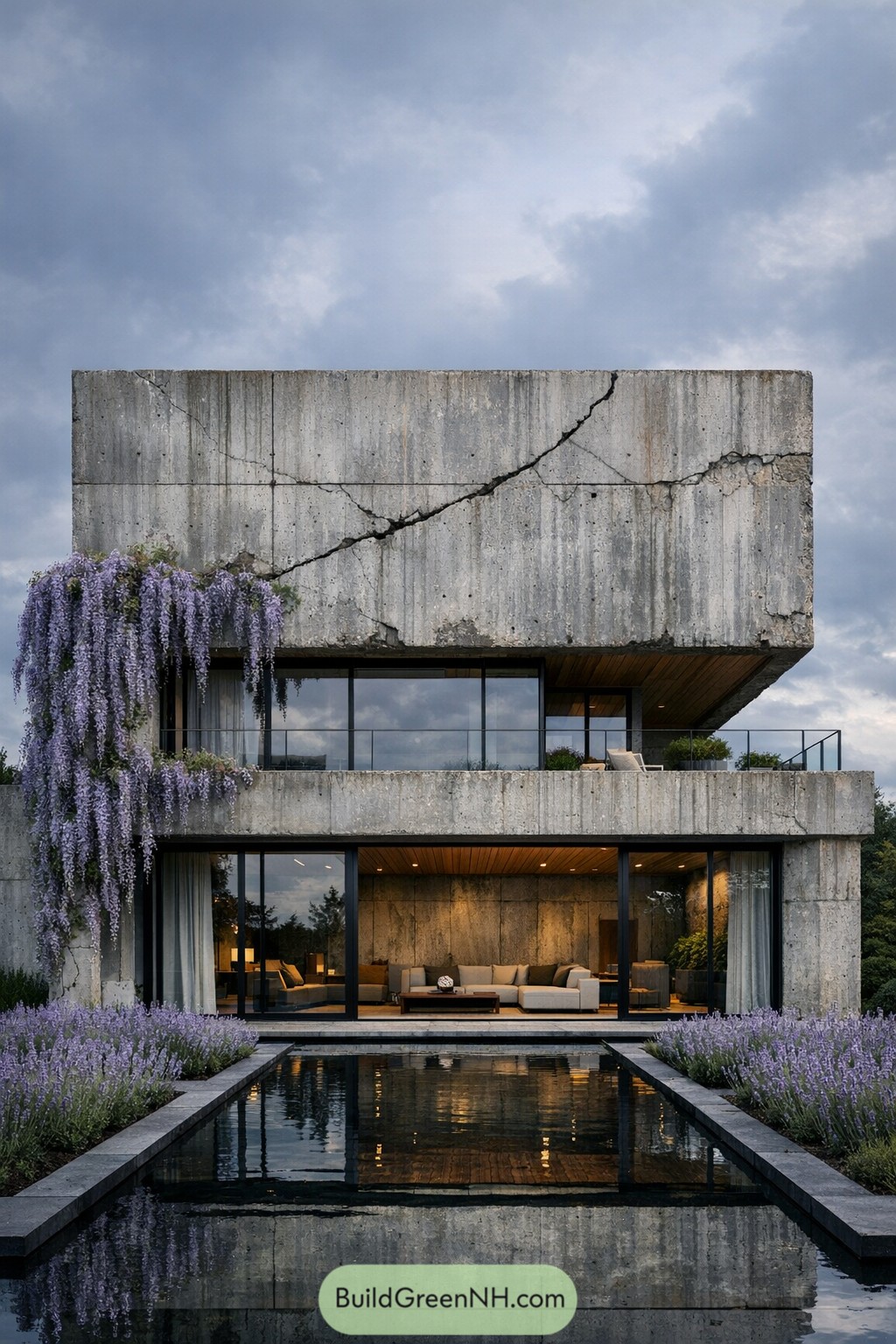

This villa stacks a weathered concrete crown over glassy living rooms, with a long reflecting pool pulling the facade right down into the garden. The large crack across the upper block is kept as a deliberate scar, giving the house age and a little attitude without making it feel too grumpy.
Wisteria spills over one corner to soften the concrete, because even brutalism can use a good haircut now and then. Warm timber ceilings and slim black frames keep the interior calm, while the deep overhangs make the terraces feel tucked in and easy to use.
Supper Glow Concrete Portal
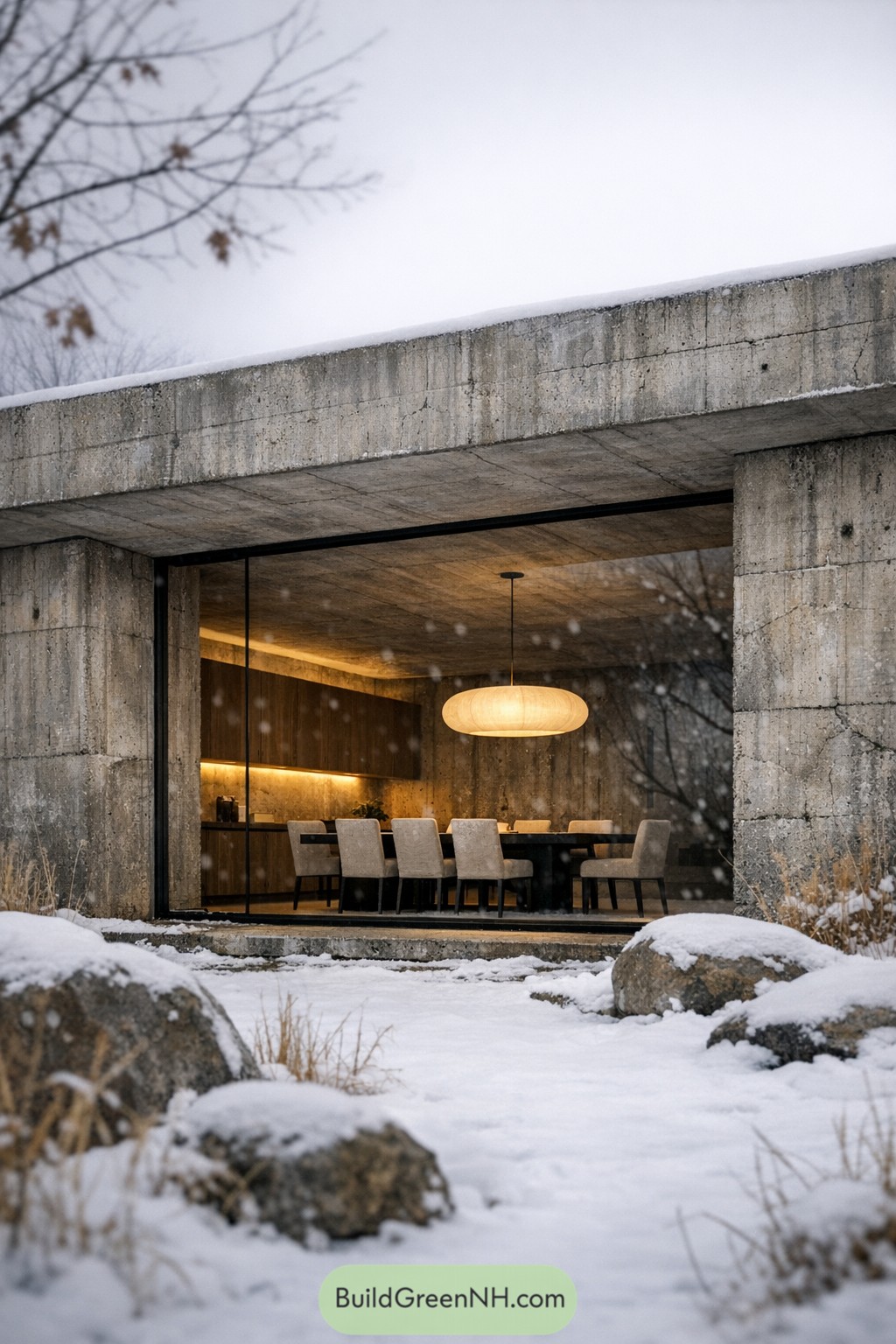

This villa wraps a dining room in a thick weathered concrete frame, opening it wide to the snow covered garden through a clean wall of glass. It was inspired by old retaining walls and rocky winter trails, the kind of places that look a bit grumpy but feel strangely comforting.
The low roof and deep side walls make the room feel tucked in, while the glowing oval pendant softens all that stone mood without getting too fancy about it. Inside, the long table, pale chairs, and slim kitchen line keep things calm, because even a brutalist villa needs a good spot for soup.
Splitwall Thermal Retreat
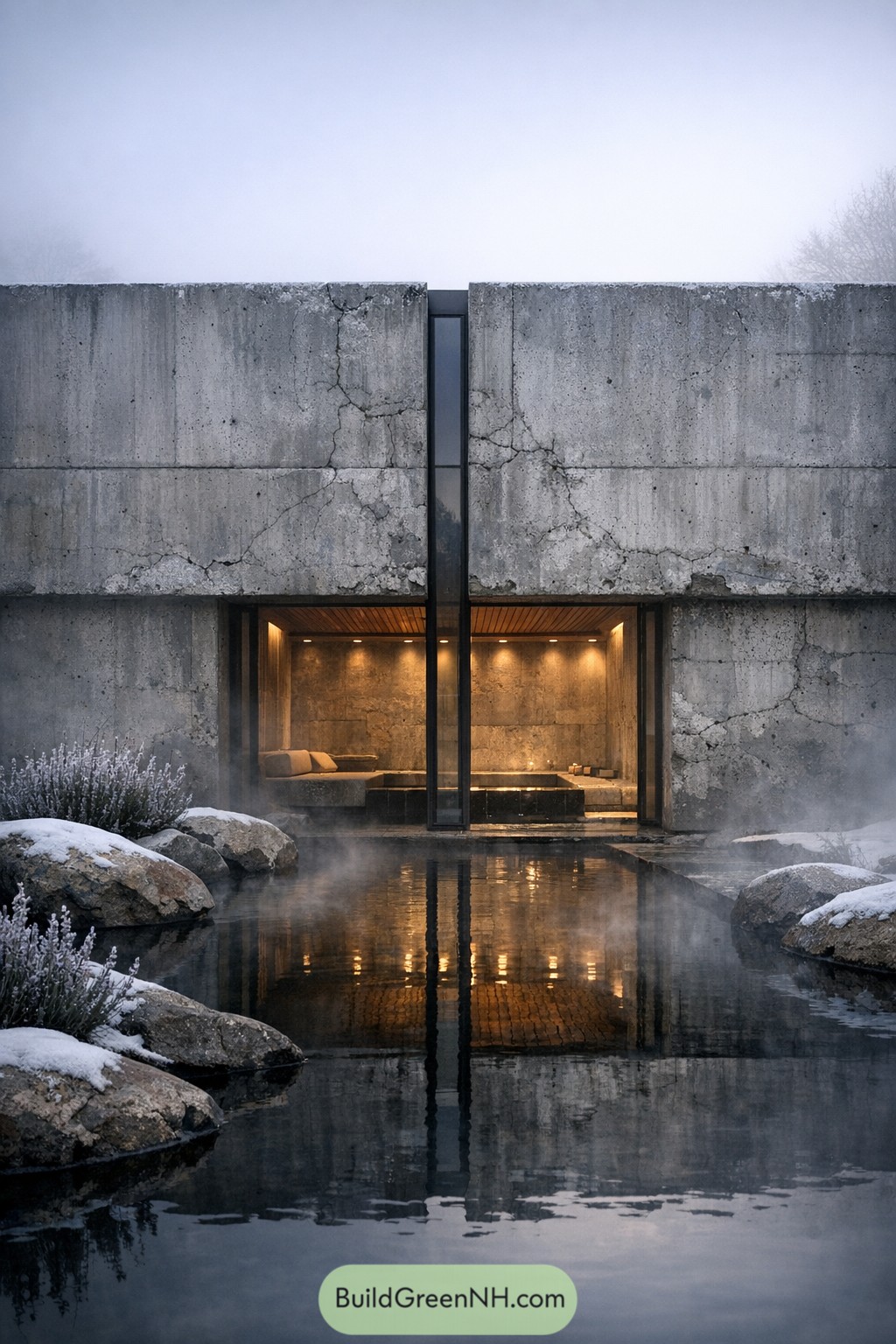

A cracked concrete wall wraps the villa like an old ruin, with a thin vertical glass slot splitting the facade and pulling the eye to the entry. The warm timber ceiling under the deep overhang softens the bunker mood, because even brutalism deserves a little sweater.
The steaming reflecting pool was inspired by winter hot springs, so the approach feels calm rather than showy. Boulders, snow dusted planting, and weathered surface stains make the house feel settled into the site, not freshly dropped there by a very confident crane.
Misty Stack Meadow House
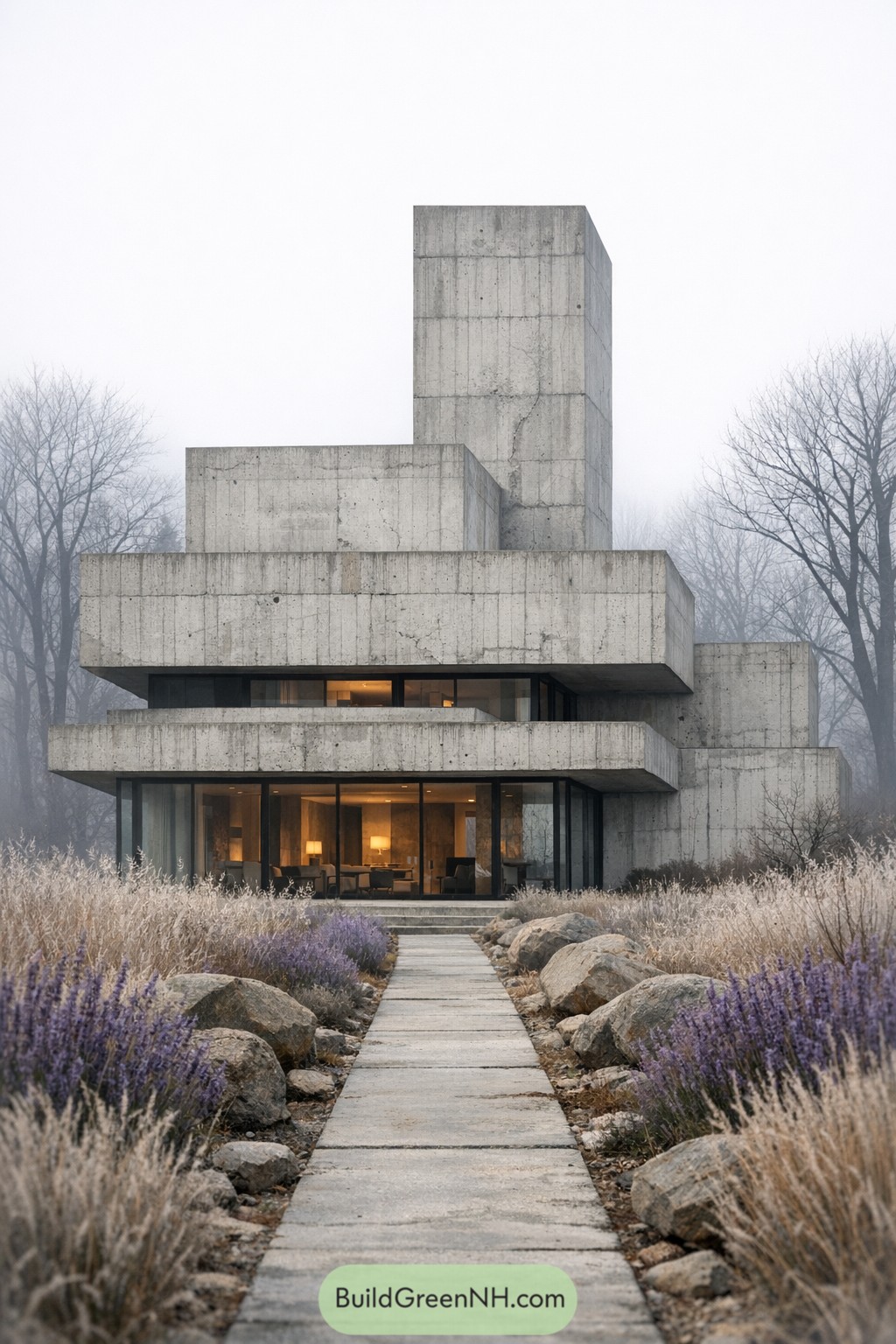

The villa is built from stacked concrete volumes, with a tall rear tower rising over lower terraces like a quiet lookout. We shaped it around foggy woodland and rough meadow planting, so the tough shell sits among grasses, boulders, and lavender instead of trying to be too charming.
Long glass bands tuck under the slabs, giving the living areas a warm view out while the concrete overhangs add privacy and shelter. The straight path and rocky planting make the arrival feel calm but a bit cinematic, like the house is very serious until you notice the cozy lamps inside.
Ember Slab Snow Den
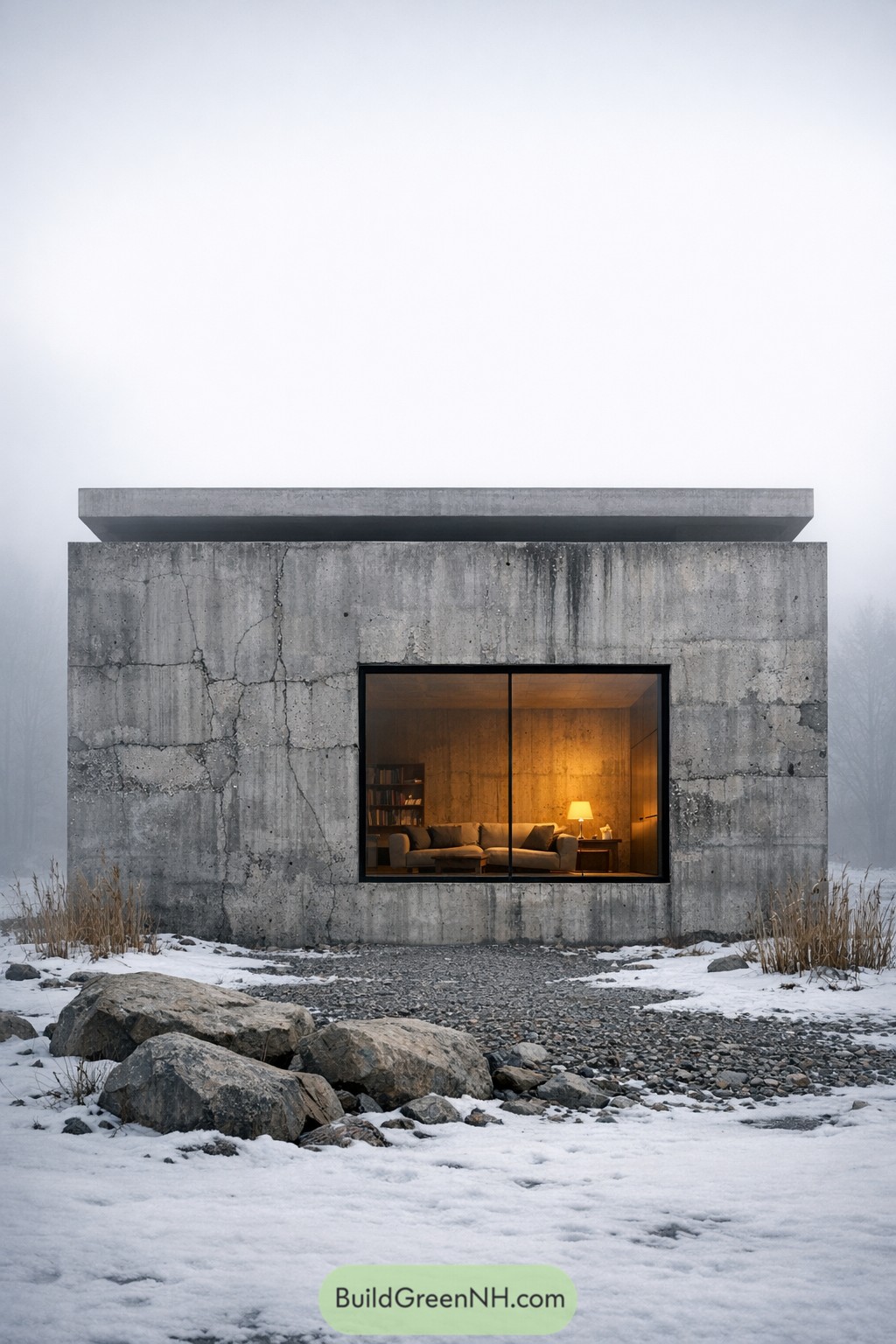

This compact villa takes its cue from old utility bunkers and winter field shelters, then softens the mood with one broad window and a cozy room tucked behind it. The cracked concrete skin is left rough on purpose, because those marks make the block feel settled into the snow instead of freshly dropped there by a very serious crane.
A thin roof slab floats just above the main volume, giving the little house a sharp cap and helping throw rain and meltwater clear of the walls. Inside, the low timber ceiling and deep black frame around the glass pull the eye toward the seating area, so the place feels sheltered without feeling like a concrete thermos.
Mosswell Boulder Atrium
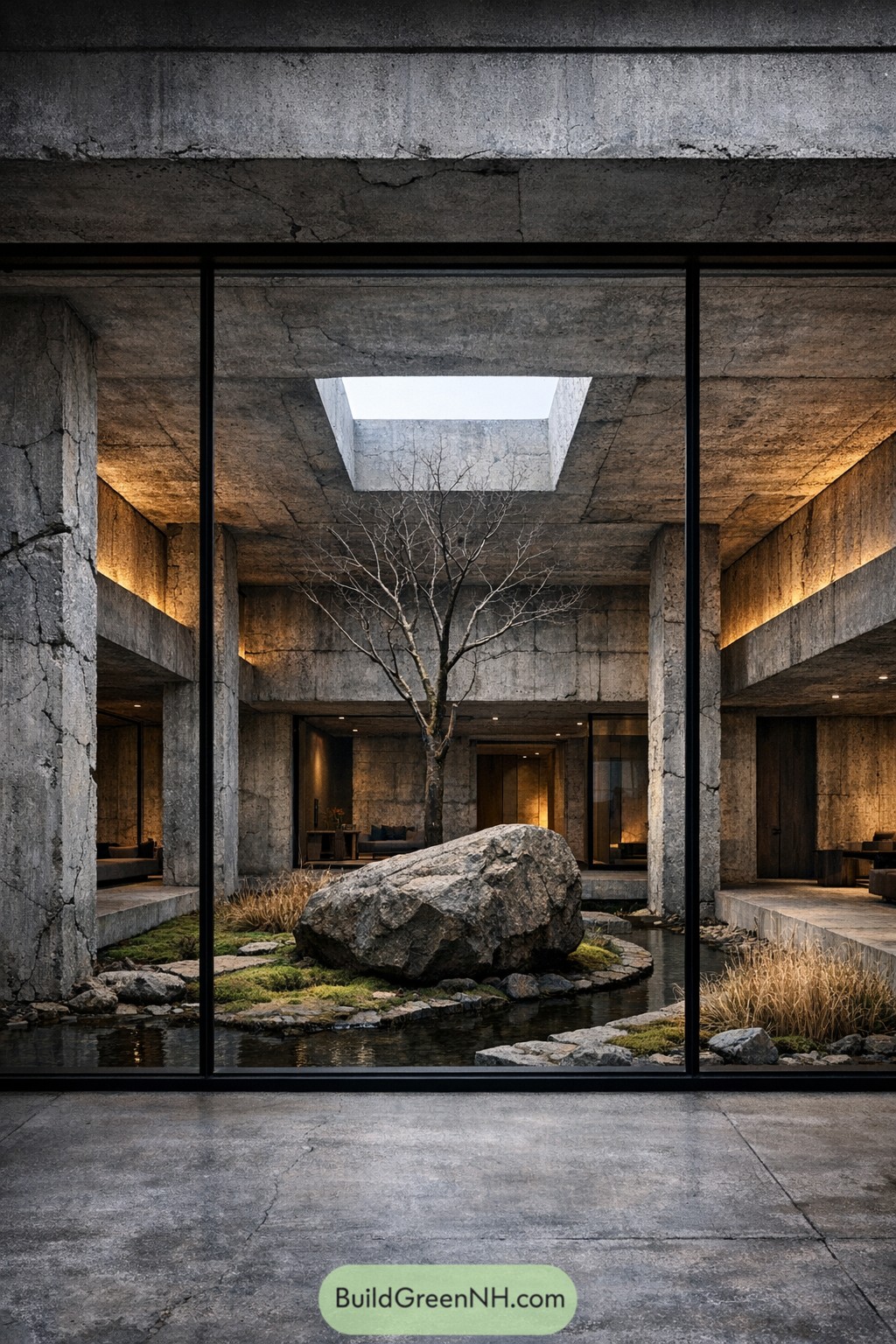

This villa pulls the courtyard inside, wrapping a small pond, mossy stones, and a stubborn little tree with rough concrete walls and wide glass. The big boulder is not pretending to be furniture, thank goodness, it anchors the room like a piece of the site that refused to leave.
We were inspired by old service structures and quiet garden ruins, the kind of places where cracks make the walls feel settled instead of fancy. Warm recessed strips soften the edges, while the black window frames keep the view crisp and make the courtyard feel calm without getting too precious.
Blackwater Slab Glass Retreat
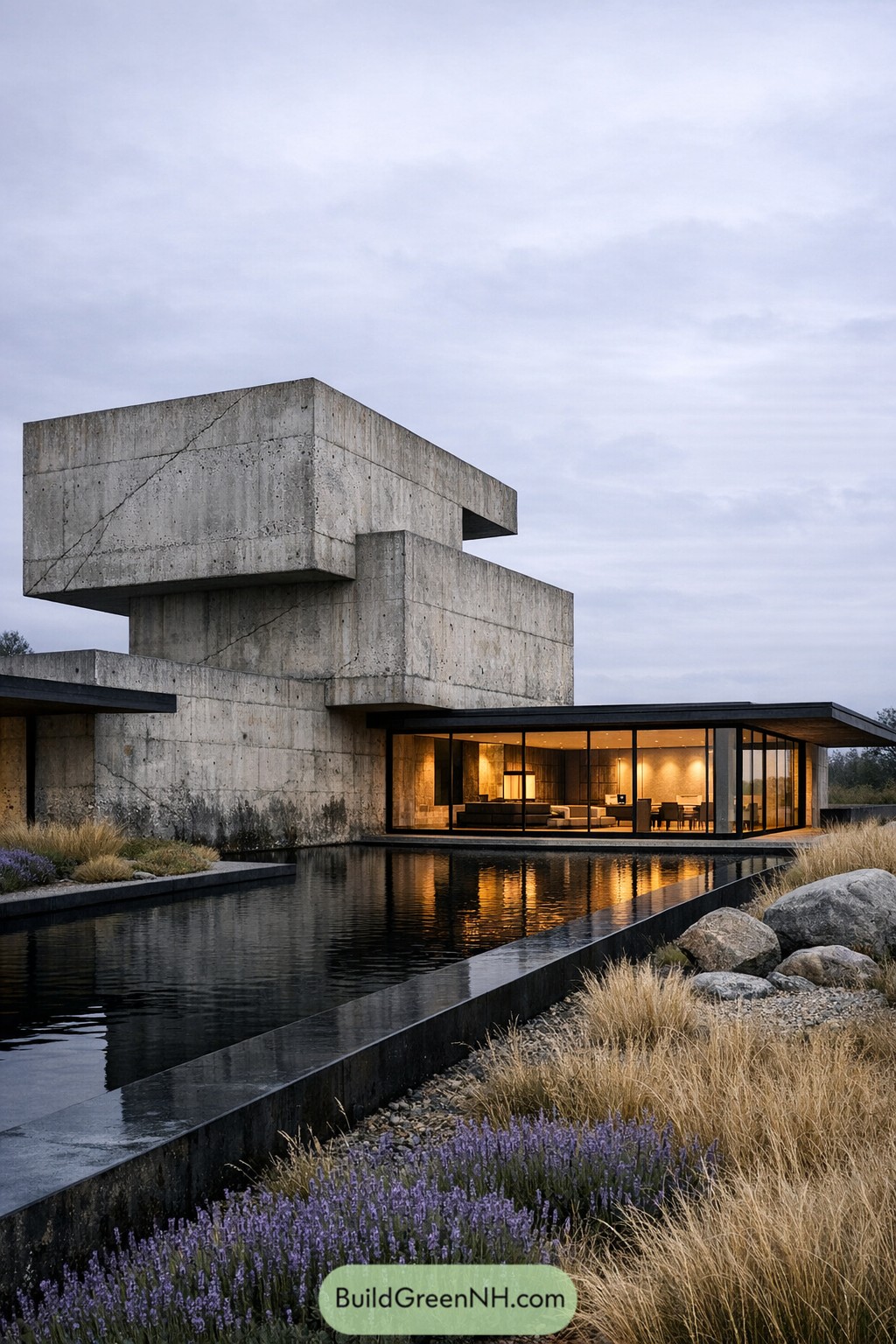

This villa stacks weathered concrete volumes over a low glass pavilion, with the upper block pushed out like it got curious about the pond. The idea came from old quarry walls and water courts, so the mass feels grounded while the living space stays open to the garden.
Inside, the black framed glazing wraps the lounge and dining area, giving clear views across the reflecting pool without making the room feel exposed. Warm interior finishes balance the rough concrete, and the grasses and boulders soften the edges just enough, not too polite.
Lichen Chimney Winter Lodge
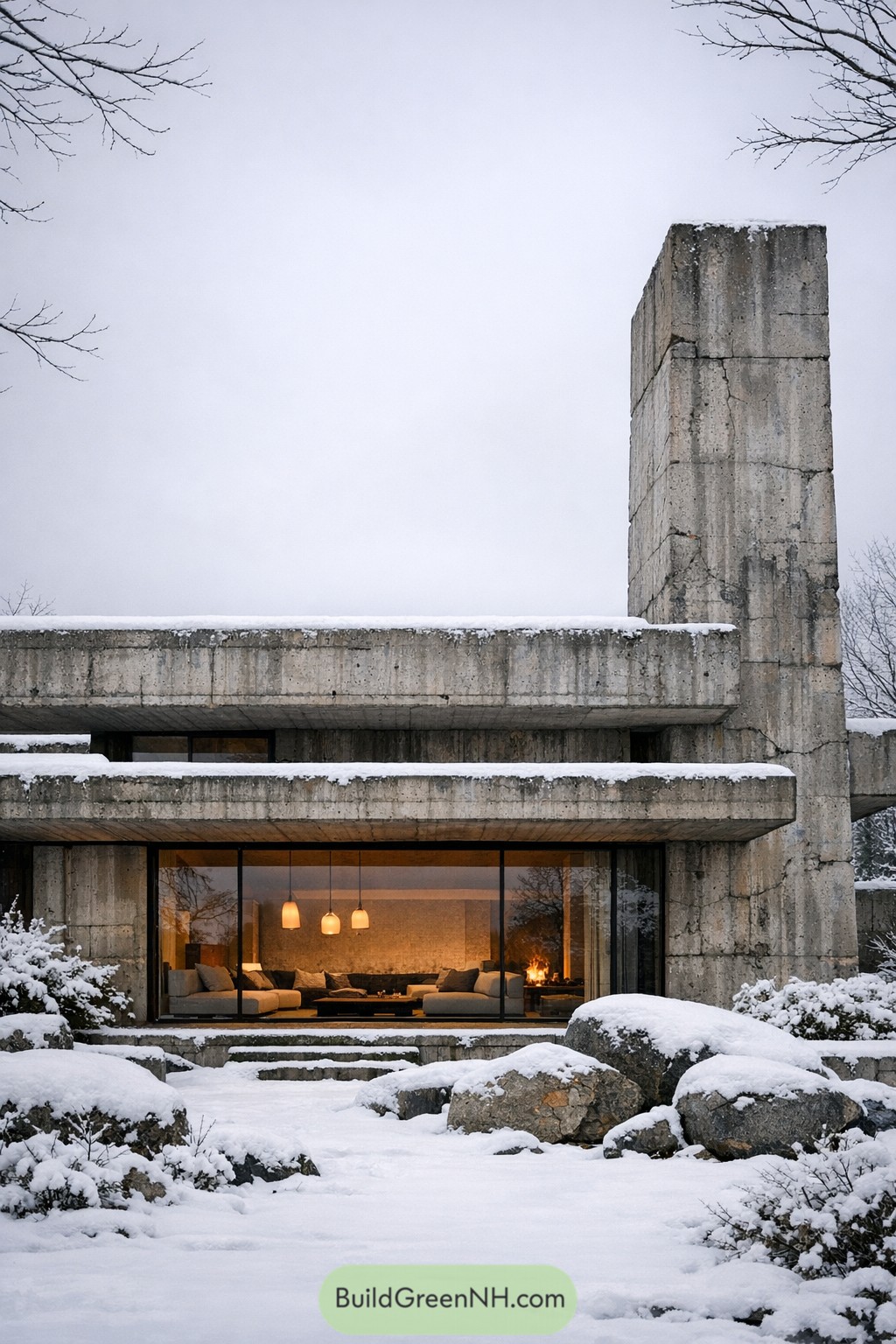

The villa pairs weathered concrete bands with a tall chimney block, giving the snowy garden a calm, tucked in kind of strength. Wide glass panels open the lounge to the rocks and bare trees, while the fire inside keeps the whole thing from feeling too museum serious.
We shaped the overhangs like protective brows so snow can settle on the edges without crowding the rooms, and the deep concrete texture lets age feel welcome instead of hidden. That vertical stack anchors the low floors, making the house feel grounded in the hillside and just a little stubborn, in the best way.
Violet Seam Water Wall
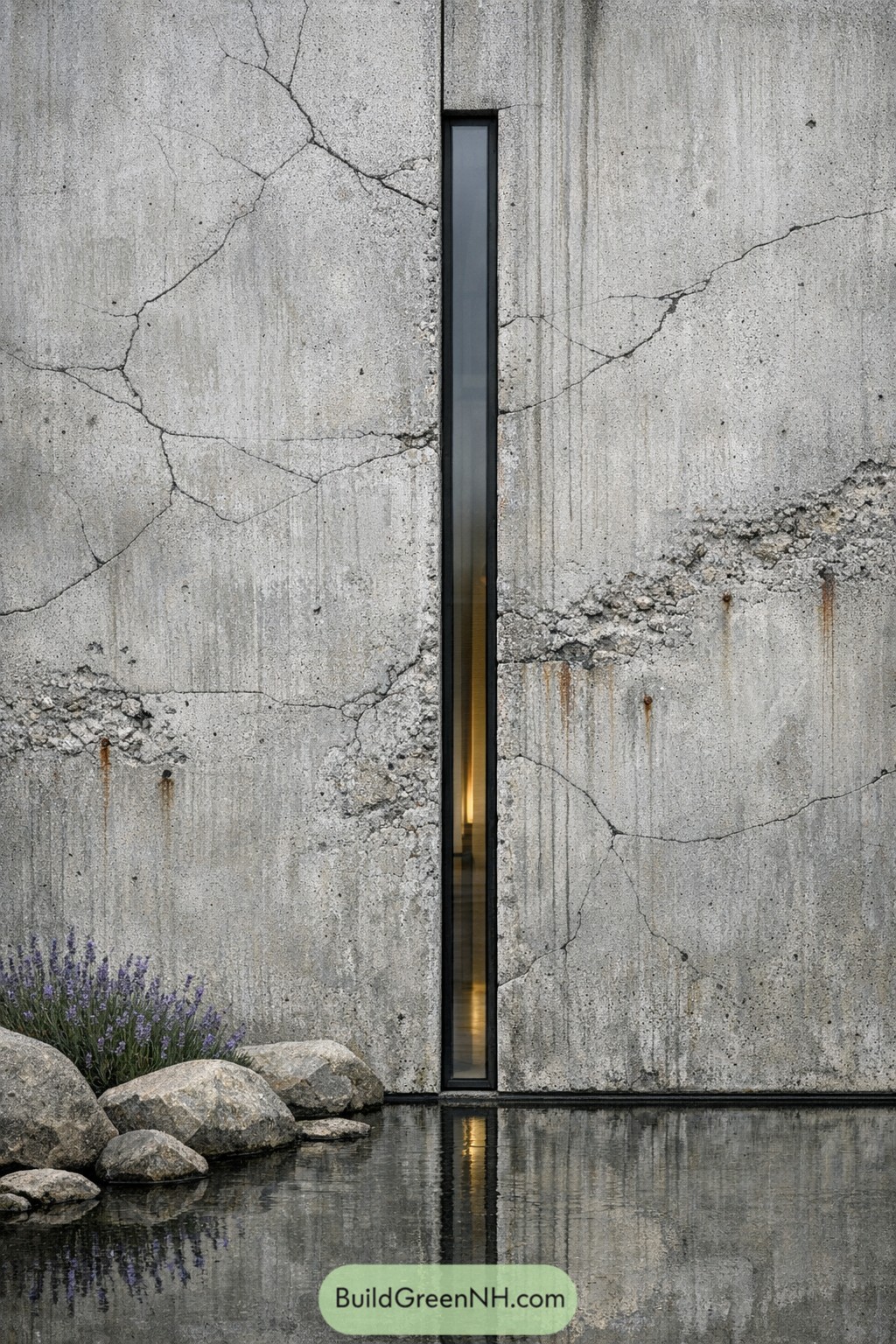

This villa facade borrows from old harbor walls and dry mountain cisterns, where concrete ages with a few wrinkles and no apology. The slim black framed window cuts through the cracked surface like a careful incision, giving the interior a private view while keeping the exterior wonderfully stubborn.
At the base, a shallow reflecting pool pulls the wall down into the water, so the whole composition feels calm without getting too precious. Rough stones and lavender soften the edge just enough, like the building remembered it has neighbors and decided to be polite.
Rainpool Quarry Court Villa
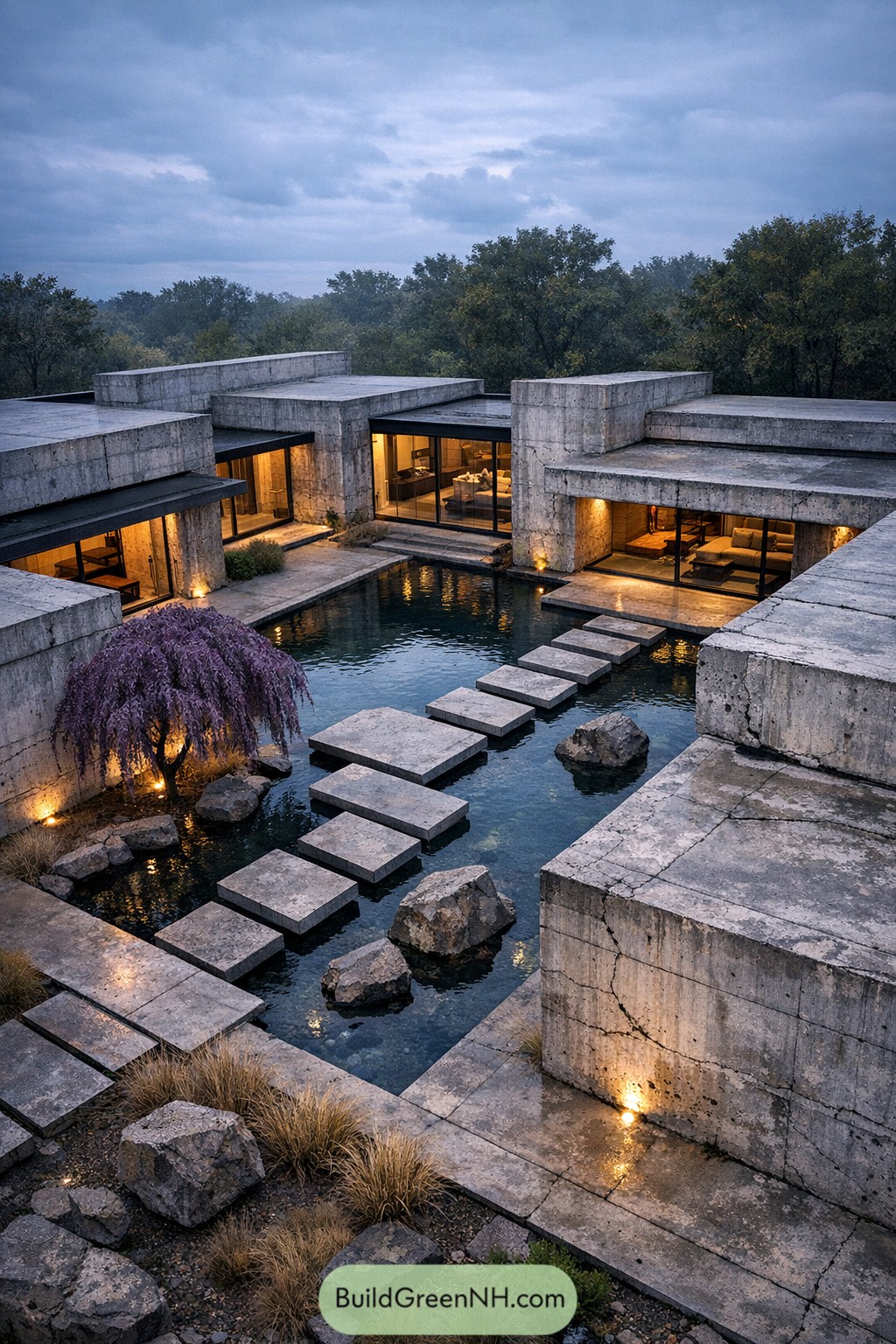

This villa folds chunky weathered concrete blocks around a calm water courtyard, with square stepping pads making the route feel a little ceremonial and a bit fun. The rough walls were inspired by old quarry cuts and rain darkened stone, which gives the place a lived in mood without pretending it is ancient.
Inside, wide glass openings keep the rooms connected to the pool and garden, so even the sofa gets a pretty good view, lucky sofa. Low plantings, scattered boulders, and the purple weeping tree soften the edges, because brutalism can still have manners.
Hushpine Fracture Villa
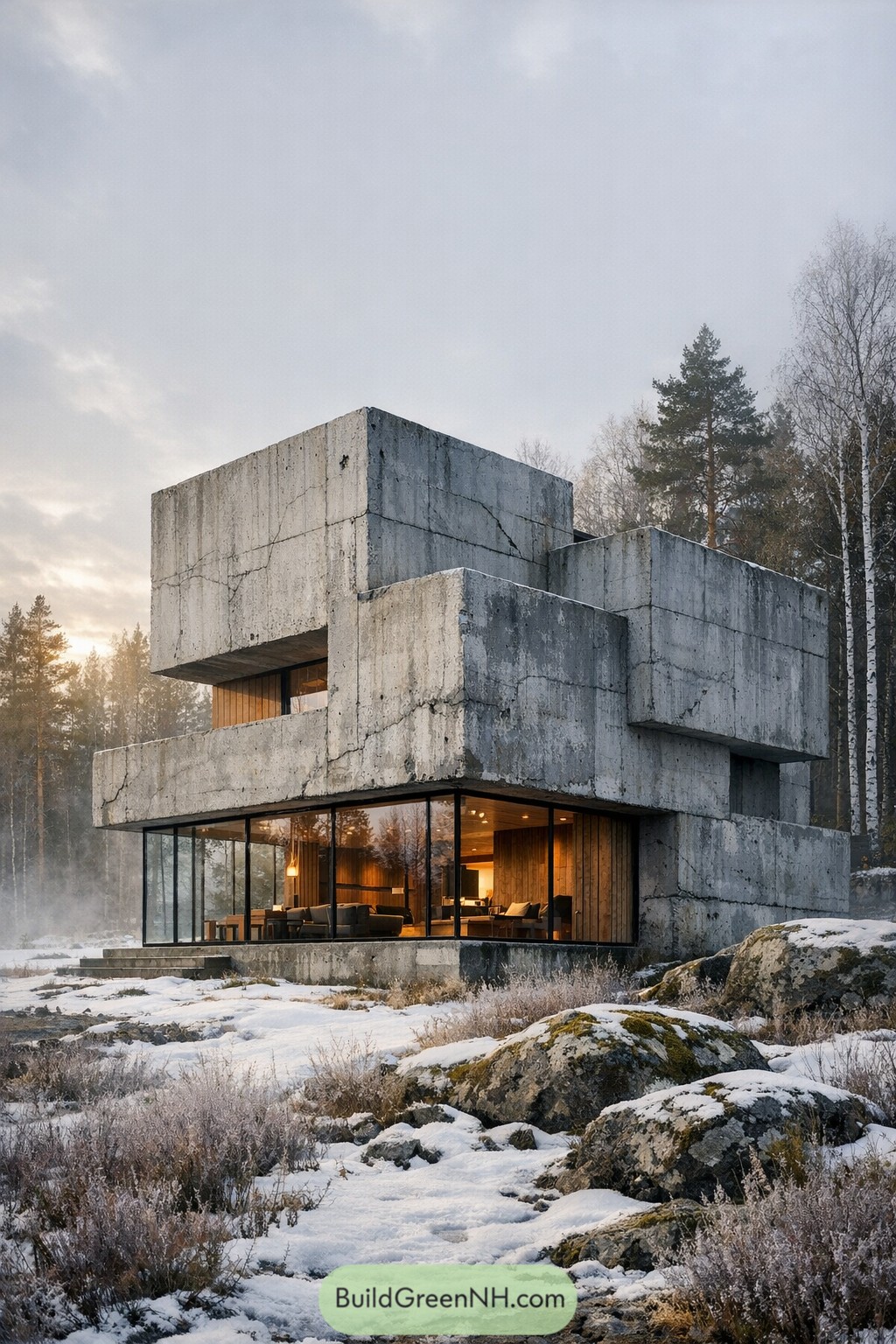

Stacked concrete volumes step over the snowy ground, with a glazed lower level keeping the living spaces open to the pines. The idea came from glacial boulders left in the forest, only these ones have sofas inside, which is a nice upgrade.
The weathered cracks and rough faces give the villa a settled feeling, like it has been there longer than the trees maybe. Warm timber lining the interior softens the concrete shell, so the place feels sheltered without turning into a cave.
Pin this for later:
Want More?
 20 Luxury Ski Chalets for Unforgettable Alpine Escapes
 21 Stunning Fall House Exteriors That Make Neighbors Stop And Stare
 19 Brilliant Family Village Designs You’ll Love
 21 Stunning Hill Villas for Cloud Level Escapes
 20 Swiss Chalet Homes That Turn Mountain Dreams Into Reality
Table of Contents