Last updated on · ⓘ How we make our designs
Check out the exteriors where modern glass and concrete stop competing with nature. Things like trees through the roof and vines on cantilevers make each house feel like it grew from the site.
These houses are what happens when ultra modern lines stop trying to win an argument with the landscape and simply settle in. We took cues from forest canopies, mossy cliffs, desert ledges, jungle ridges, and windy coasts, so the concrete, glass, pools, and planted roofs feel rooted instead of flashy.
As you look through them, pay attention to how the terraces step with the slopes, how trees pass through roof openings, and how water keeps showing up in pools, courts, and reflecting edges. A big cantilever is nice, sure, but it gets even better when vines crawl over it and make it behave.
What ties these exteriors together is that in between feeling of being grounded and airy at once, polished but still a little wild. Honestly, a giant box parked on a hill just cannot compete with a house that seems to have grown there.
Terraced Forest Canopy House
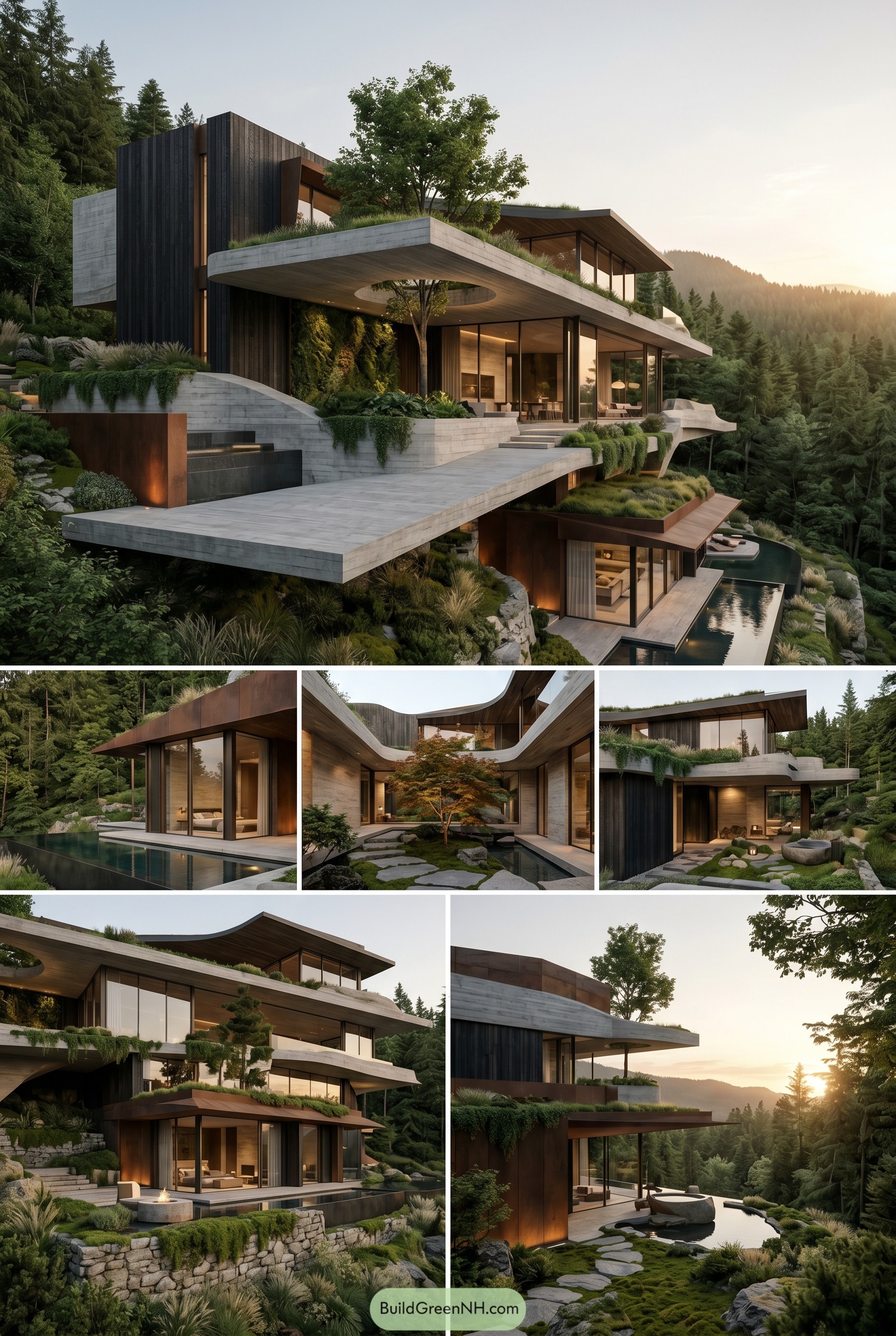

This hillside residence steps out over the forest in long concrete planes, with planted roofs and trailing greenery softening every sharp edge. We shaped it to feel tucked into the slope instead of parked on it, which is a much better look for a house this confident.
Dark vertical cladding, bronze toned volumes, and full height glass give the exterior a calm layered feel, while the terrace tree opening and courtyard garden pull nature right into the center. The cantilevered decks, stone retaining walls, and lower pool edge make the whole composition feel grounded and airy at once, which is a pretty slick move for a mountain home.
Glacial Moss Cliff Villa
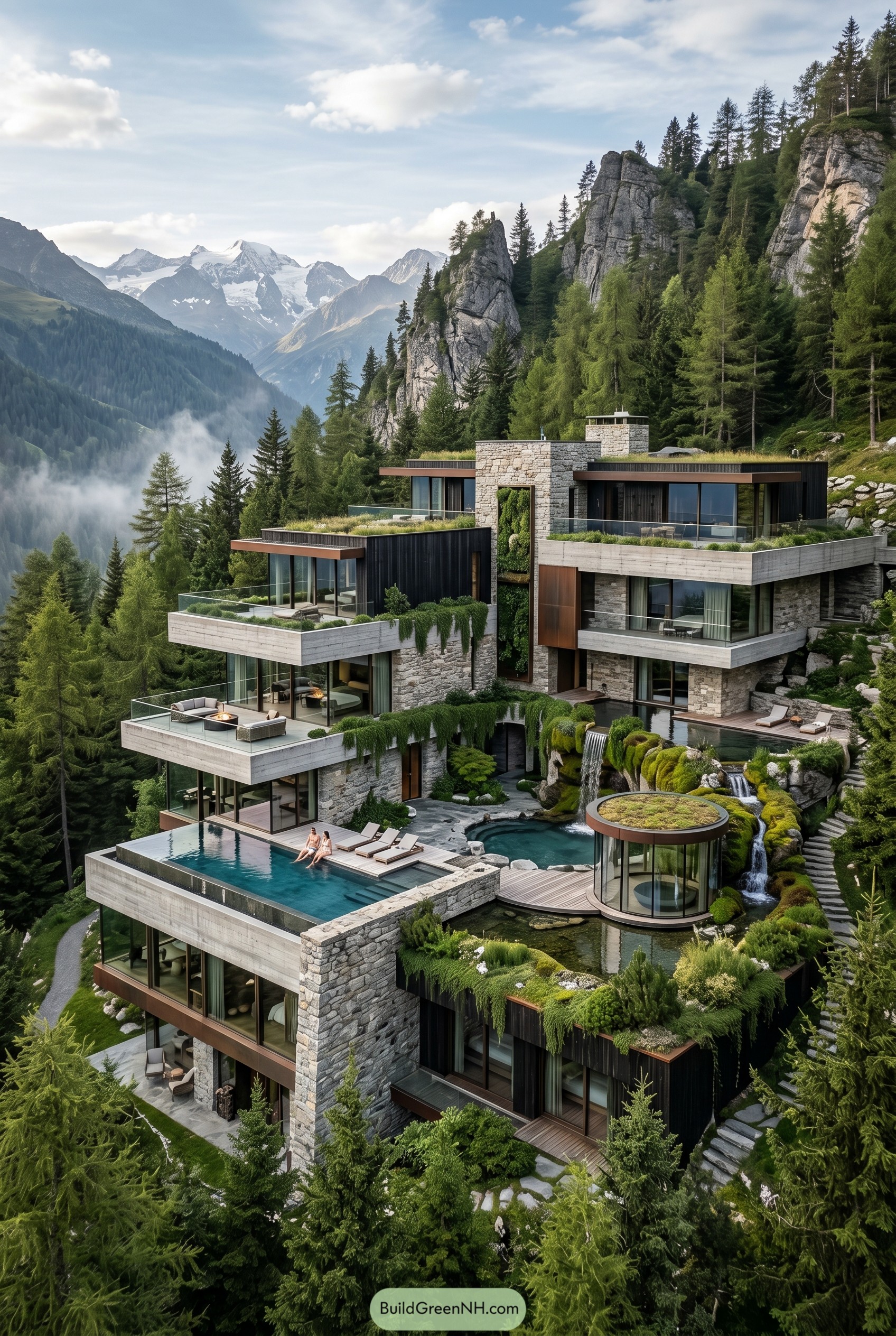

This villa stacks bold concrete frames stone walls and dark metal volumes down the mountainside so the whole place feels carved into the cliff instead of dropped on it. It was inspired by alpine crags and mossy ravines which is why every roof terrace and planted edge looks like the hillside quietly wandered onto the architecture.
Glass wrapped living spaces open to long balconies an infinity pool and a round spa pavilion set among rills and small falls so the exterior never feels stiff or showroom neat. Those water gardens and layered green roofs soften the scale in a big way and honestly they keep this ultra modern home from acting too fancy for the forest.
Emerald Cascade Horizon House
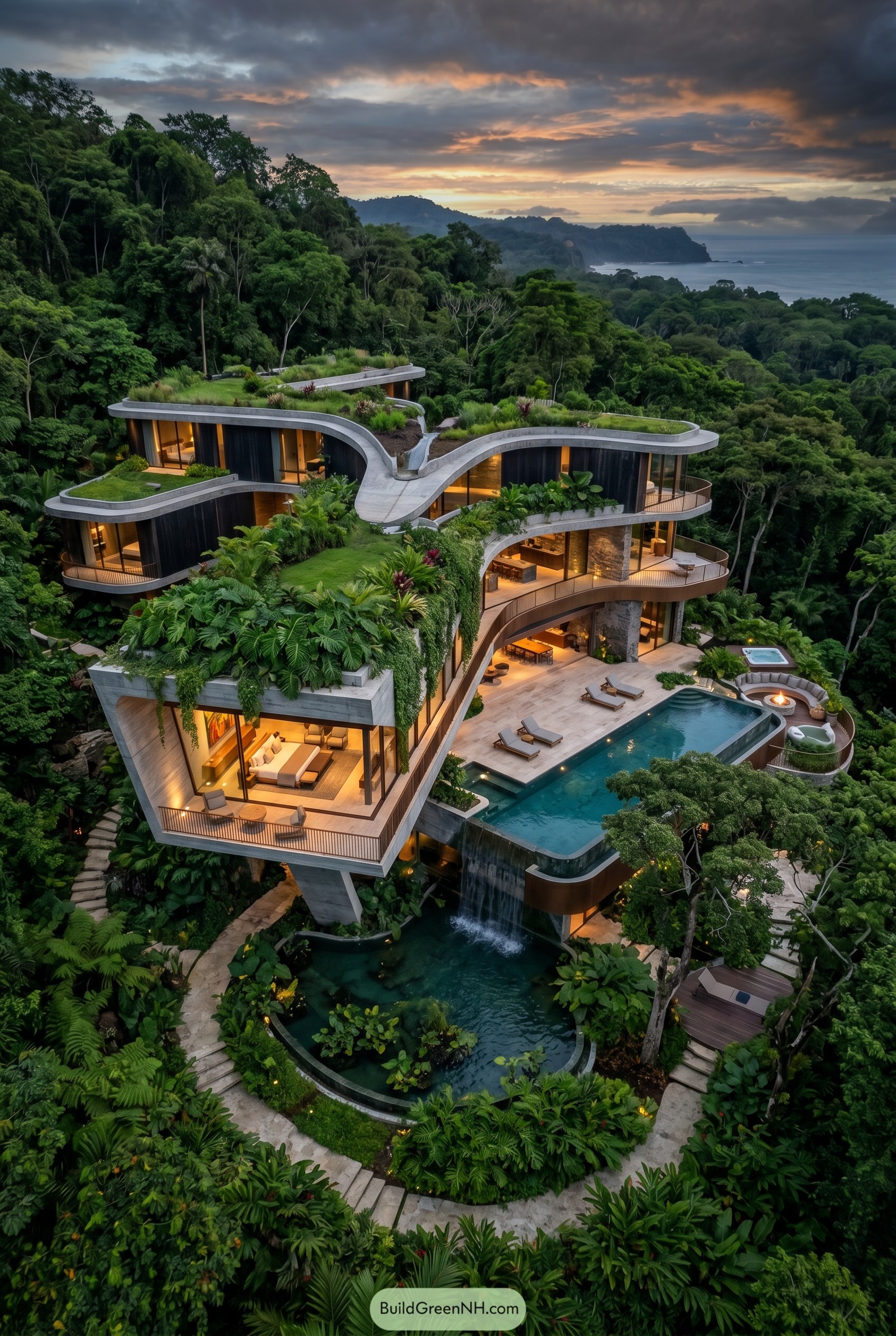

Soft concrete bands sweep across the hillside, shaping stacked living levels that feel tucked into the jungle instead of dropped on top of it. Roof gardens spill over the edges and the whole place kind of looks like the ridge decided to grow a villa.
Wide glass walls, rounded terraces, and a long infinity pool pull the rooms outward toward the sea, while the lower water court cools the base and adds that resort calm everyone pretends is effortless. We drew the curves to follow the land and keep the house feeling easy and fluid, because a box here would be a bit rude.
Skygarden Precipice Retreat
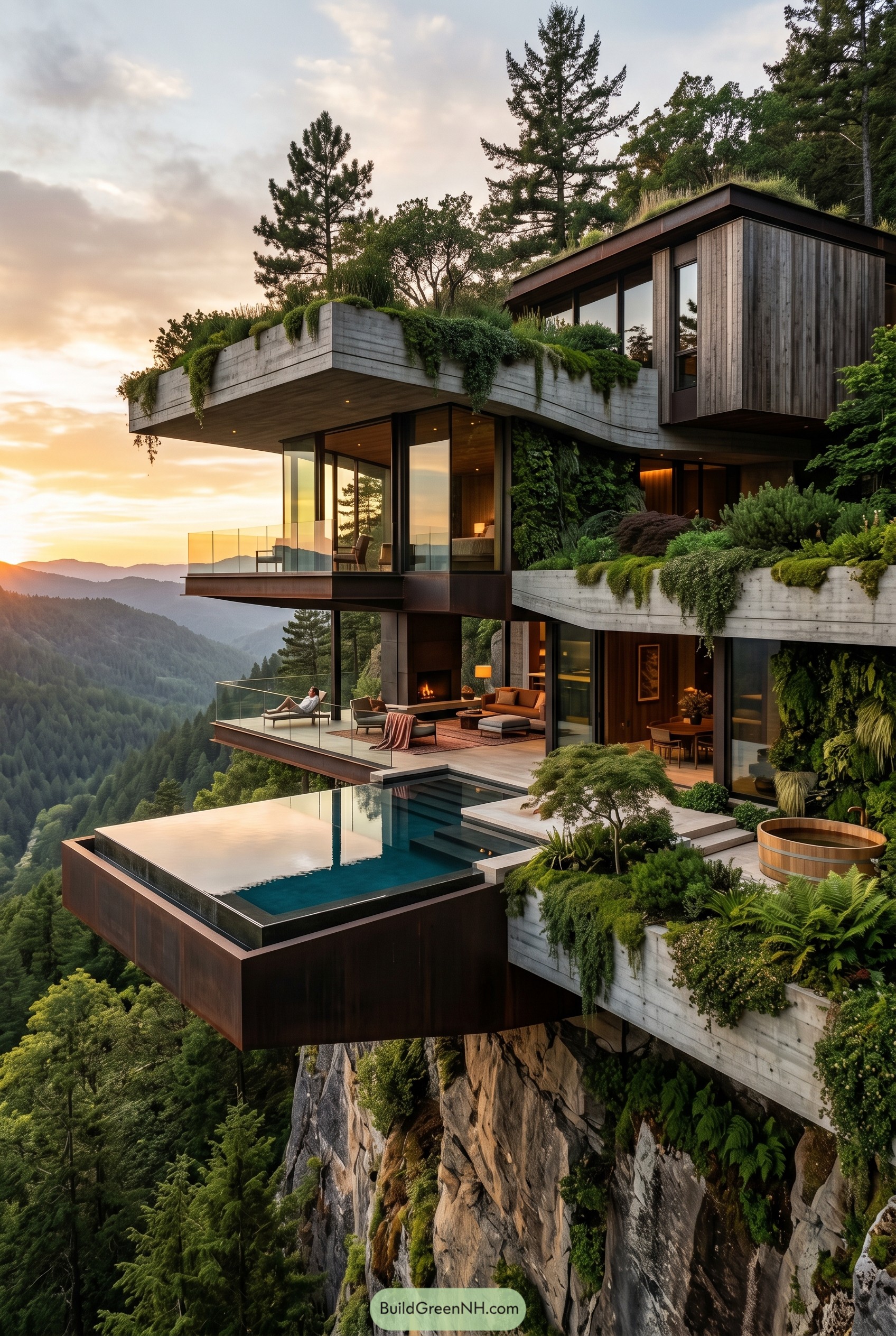

This cliffside residence was shaped like a stack of planted ledges, with deep cantilevers that push the living spaces out over the valley and make the view feel almost unfair. Concrete terraces, dark metal framing, and warm timber volumes keep it sleek, while green roofs and trailing vines soften every edge.
The design clearly takes its cues from the mountain, so the home steps with the rock instead of trying to boss it around. Glass railings, tucked outdoor lounges, and that suspended infinity pool turn each level into its own lookout, which is a pretty wild flex for a house.
Pinewater Cantilever Haven
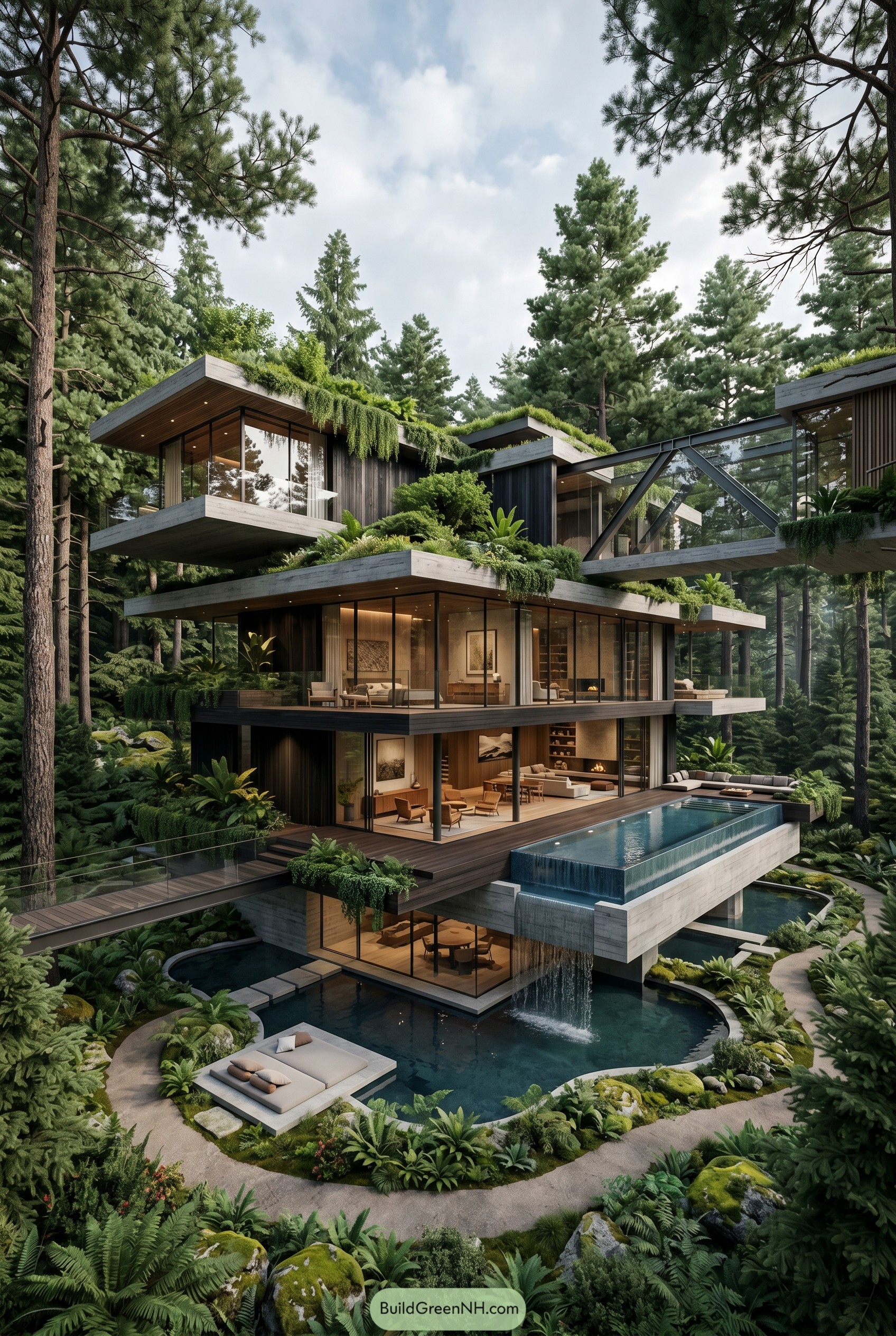

This house stacks broad concrete planes and glassy living boxes right into the pines, with planted roofs and trailing greenery softening every edge. The idea came from forest ledges and quiet woodland ponds, so the whole composition feels tucked in rather than dropped on top like a show off spaceship.
The bridge link and deep overhangs stretch the plan outward, giving each level its own perch while keeping the interiors open to the trees. Water is threaded through the design with an infinity pool and a lower reflecting basin, which cools the mood nicely and looks a bit like the house decided it needed its own private lake.
Canyon Oasis Citadel
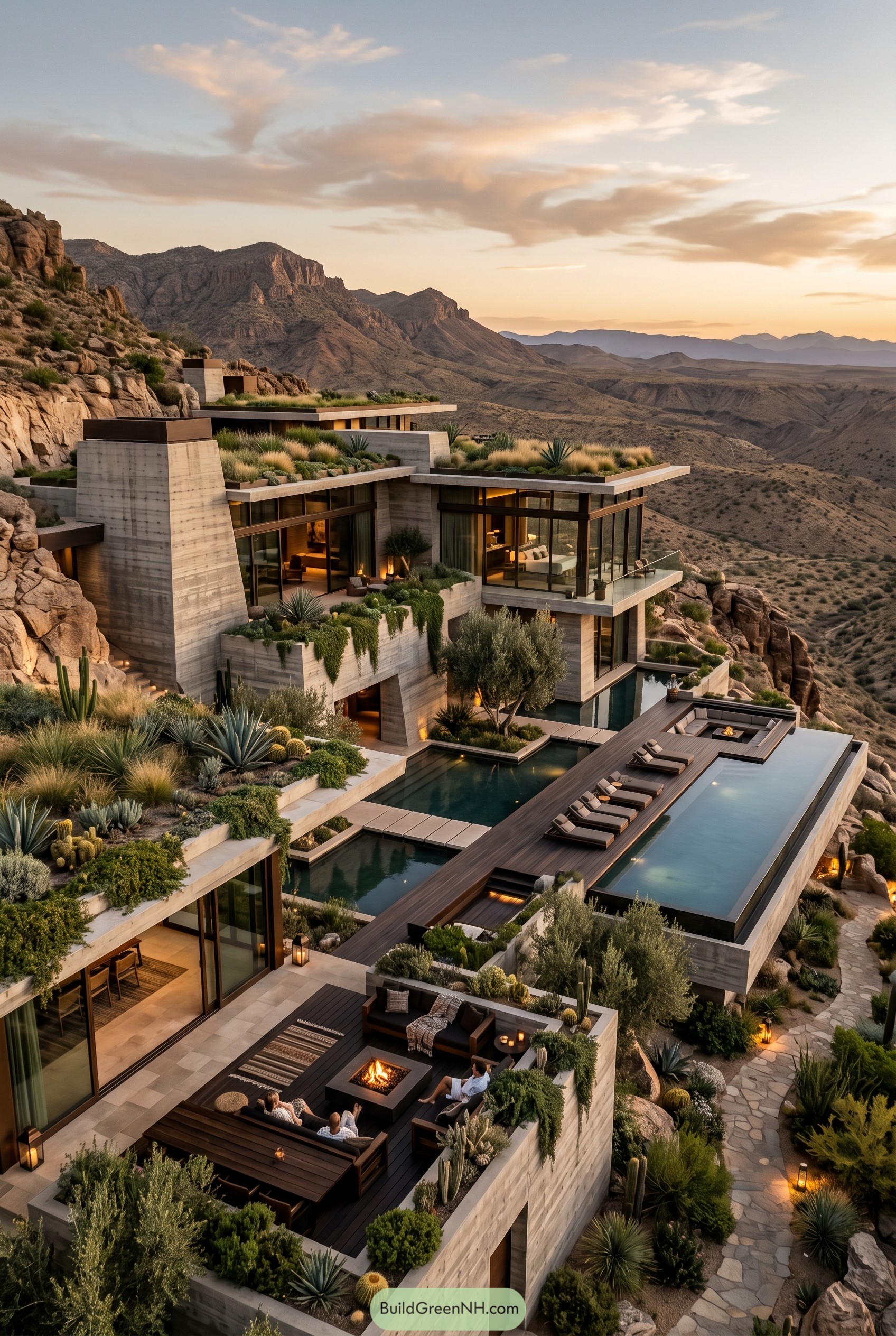



Stacked into the mountainside, this desert retreat borrows its shape from the rock ledges around it, with broad concrete slabs, deep glass corners, and planted roofs that feel almost native. We wanted it to read like an oasis that learned some manners, so every terrace softens the strong geometry with agave, trailing greenery, and low grasses.
The long pool deck reaches toward the canyon and turns the whole exterior into a sequence of outdoor rooms, from quiet lounge pockets to the fire terrace tucked in front. Those thick retaining walls are important too, not just for structure but for making the house feel grounded instead of perched up there like it had a wild idea.
Tidecoil Grove Residence
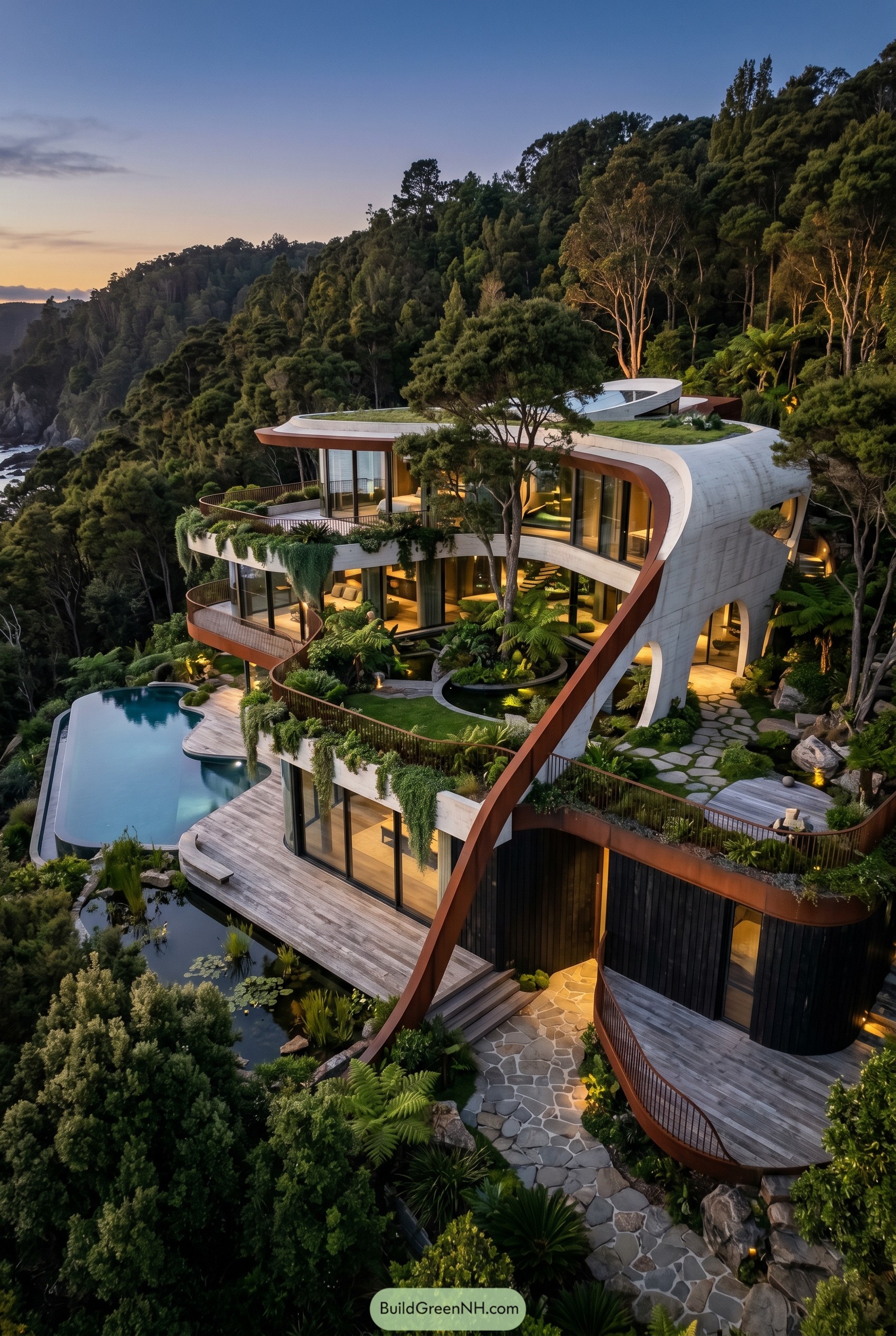

Wrapped around the hillside, this coastal residence follows the land with soft concrete curves, planted roofs, and terraces that spill into the trees. The sweeping bronze toned bands tie each level together and keep the whole place from feeling boxy, which lets the house sit in the forest like it actually wants to be there.
Glass walls open the rooms to garden decks, a pond edge, and that long pool that seems to sneak toward the sea, because subtlety was clearly not invited. Mature trees are threaded right into the composition, and those lush pockets of ferns and vines cool the terraces, soften the structure, and make the exterior feel calm instead of flashy.
Boreal Swimlane Lookout
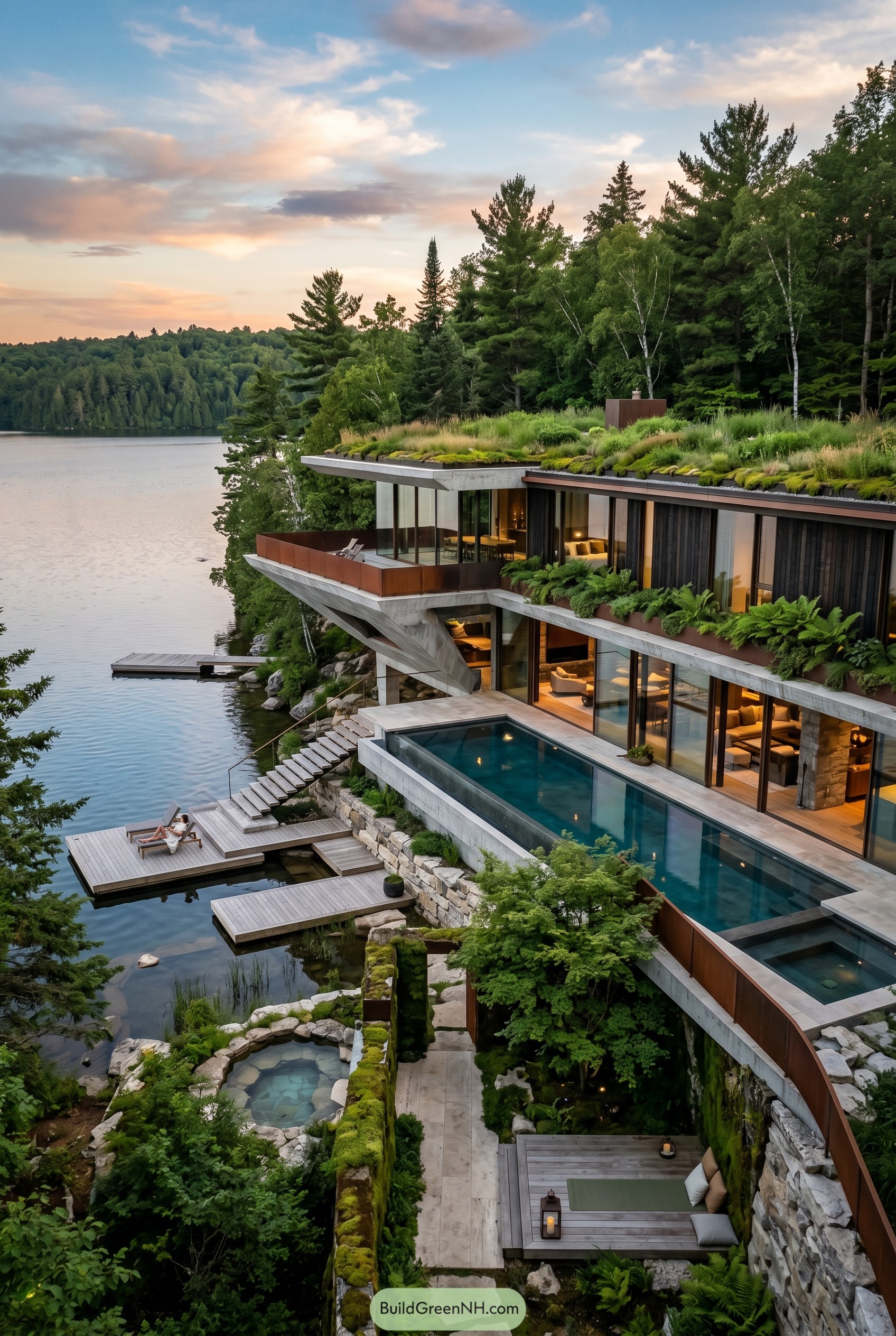

This lakeside residence stretches out in crisp concrete planes and warm metal bands, with deep glass walls that keep the forest and water close at every turn. The planted roof softens the long profile nicely, so the whole place feels tucked into the pines instead of plopped on top of them.
We shaped the terraces to step from the infinity pool down to floating decks and a quiet soaking nook carved into the rocks, because a good view should come with options. The cantilevered corner and stone retaining walls were inspired by the rugged shoreline, and they give the house that cool hovering feel without getting too showy about it.
Fernbridge Reflection House
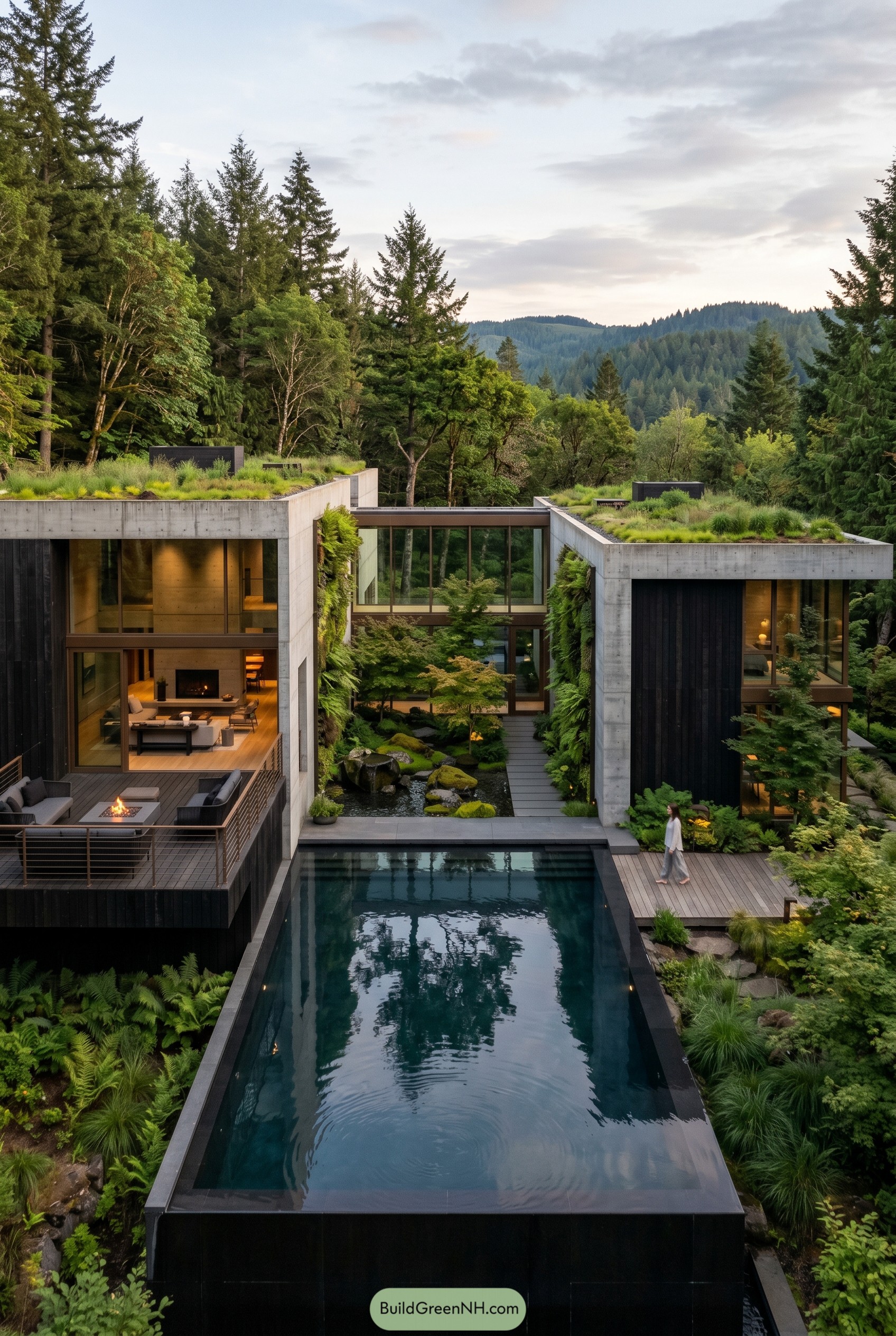

Two concrete wings frame a long dark pool and a mossy courtyard, while planted roofs help the whole house settle into the hillside instead of trying to win an argument with the forest. A glass bridge links the upper level across the center, which gives the design a neat floating feel and keeps the trees close from every angle.
The inspiration came from a quiet woodland clearing, so the exterior leans into water, ferns, stone, and broad panes of glass without getting fussy about it. Deep overhangs, warm interior glow, and tucked terraces make it feel protected and serene, and the rooftop meadows are clearly a bit of a show off.
Canopy Torrent Glass Retreat
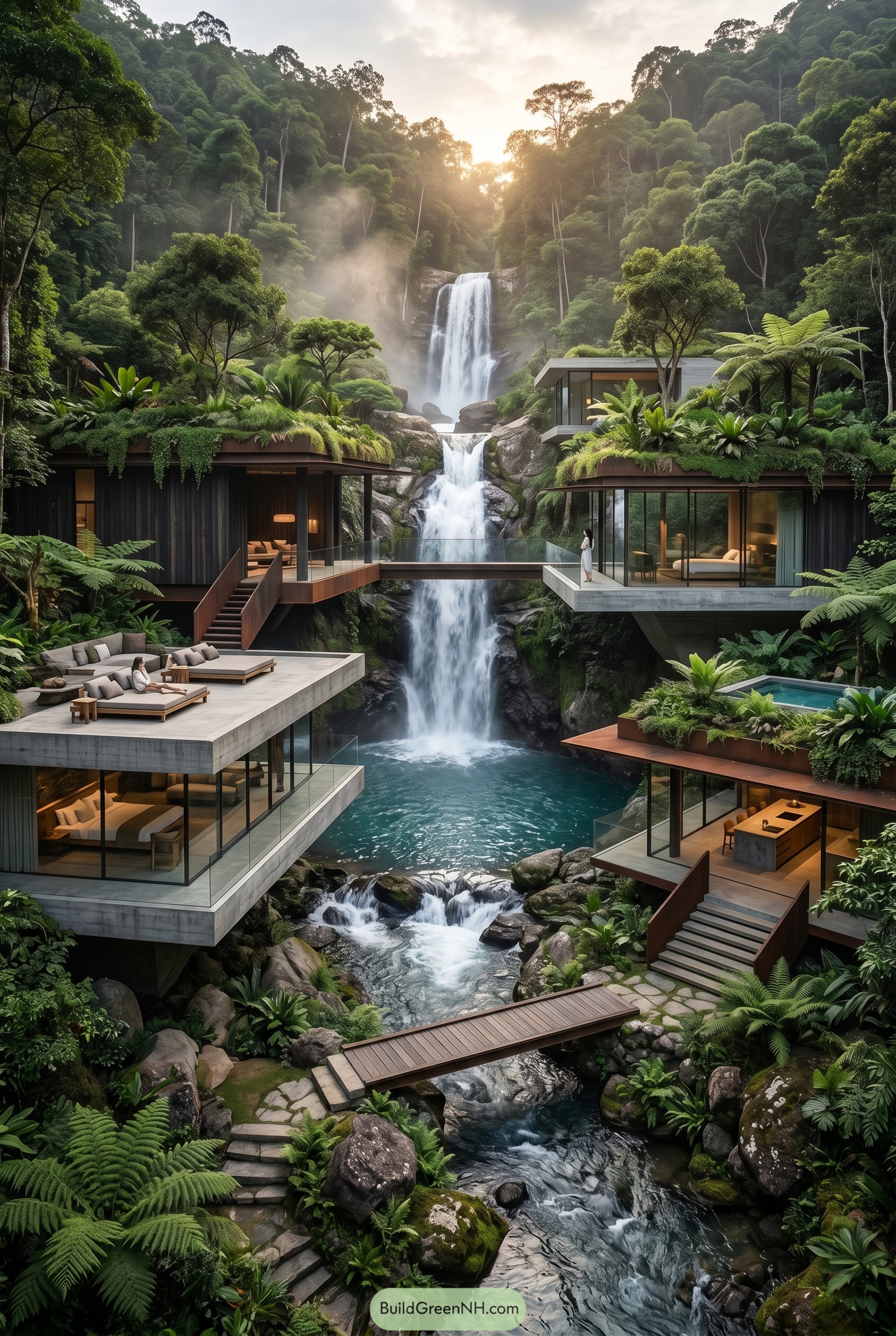

This retreat is arranged like a small village hugging a waterfall, with glass pavilions perched on concrete trays and roof gardens spilling over the edges. We shaped each volume to frame the falls and the emerald pool, so every room gets that rare front row seat nature usually keeps for itself.
The planted roofs soften the strong horizontal lines and help the architecture fade into the hillside, which is exactly the trick here. Bridges, terraces, and open corners keep the whole place tied to the stream below, and yes, the house basically comes with its own soundtrack.
Sagefall Cliffside Aerie
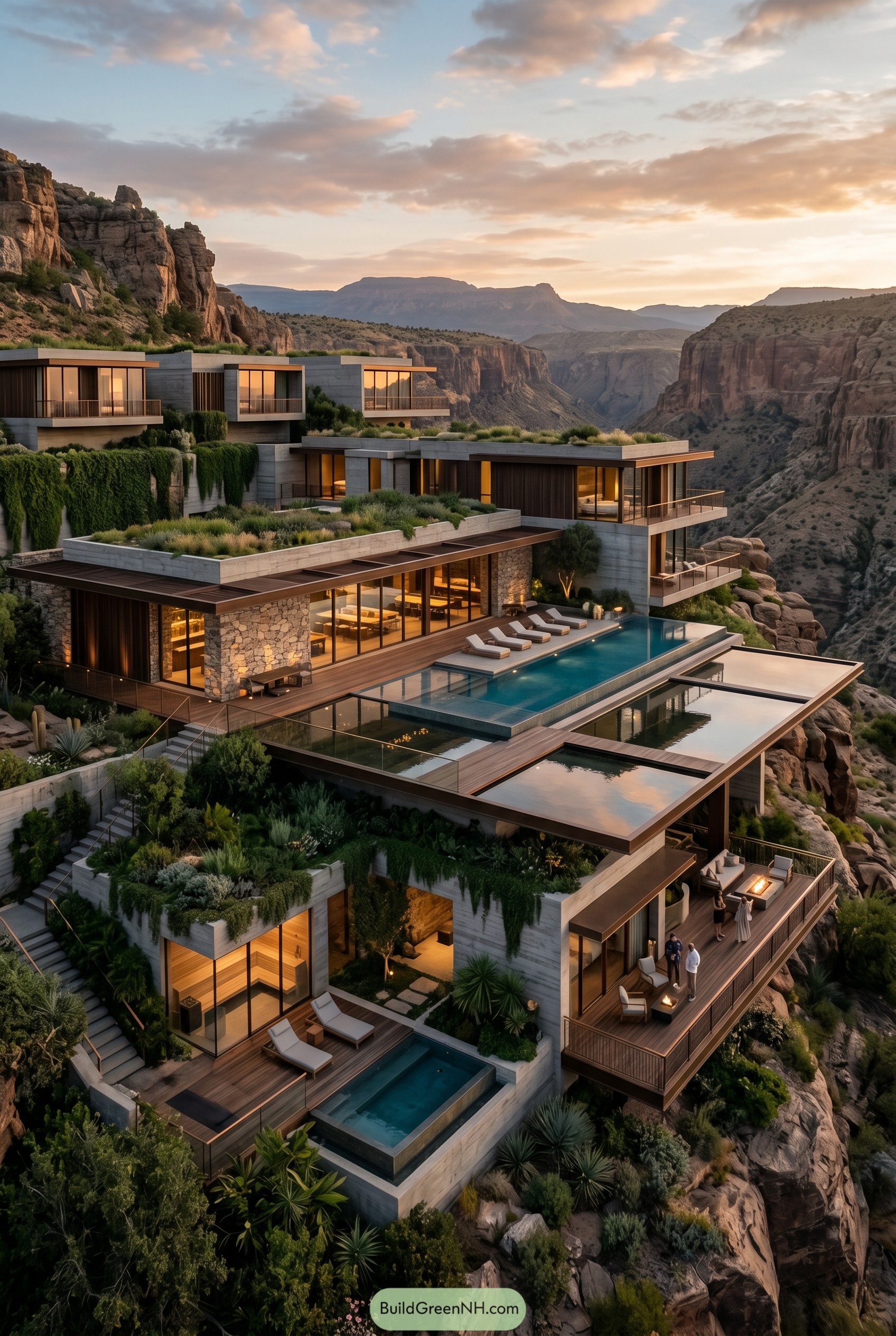

Set right into the canyon wall, this residence stacks broad concrete planes, warm timber soffits, and stone volumes into a series of planted terraces that seem to hover over the drop. The design borrows from desert mesas and hanging gardens, so every level grabs a view and sneaks in a patch of green because apparently one pool was not enough.
Deep overhangs, glass corners, and long outdoor decks keep the rooms tied to the landscape, while roof gardens help the house settle into the rock instead of fighting it. The layered water features and stepped massing break down the scale nicely, which matters on a site this huge or the whole thing would feel a bit overdressed.
Sylvan Skyfoot Residence
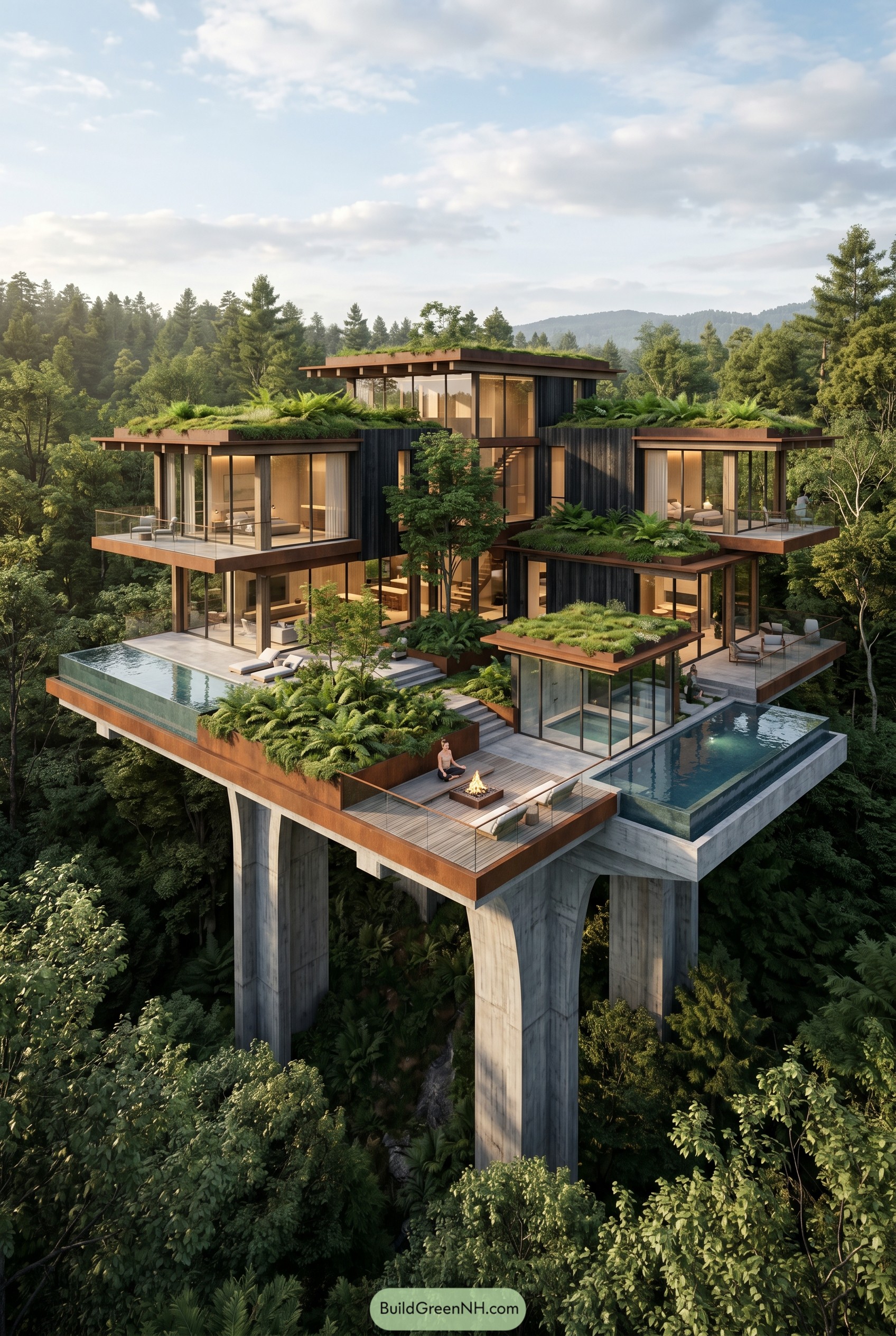

Perched high above the trees, this residence stacks warm timber bands, dark vertical cladding, and glass wrapped rooms into a hillside retreat that feels half treehouse, half private resort. The design borrows from the forest canopy, so every level pushes outward with planted terraces that soften the edges and make the whole place look like it grew there after a very expensive rain.
Those long concrete piers do more than show off, they lift the living spaces toward the views while letting the ground below stay lush and undisturbed. Twin infinity pools, deep overhangs, and rooftop gardens turn each floor into its own outdoor room, which is why the whole place feels so calm even while it’s basically hovering.
Crescent Coast Rooted Villa
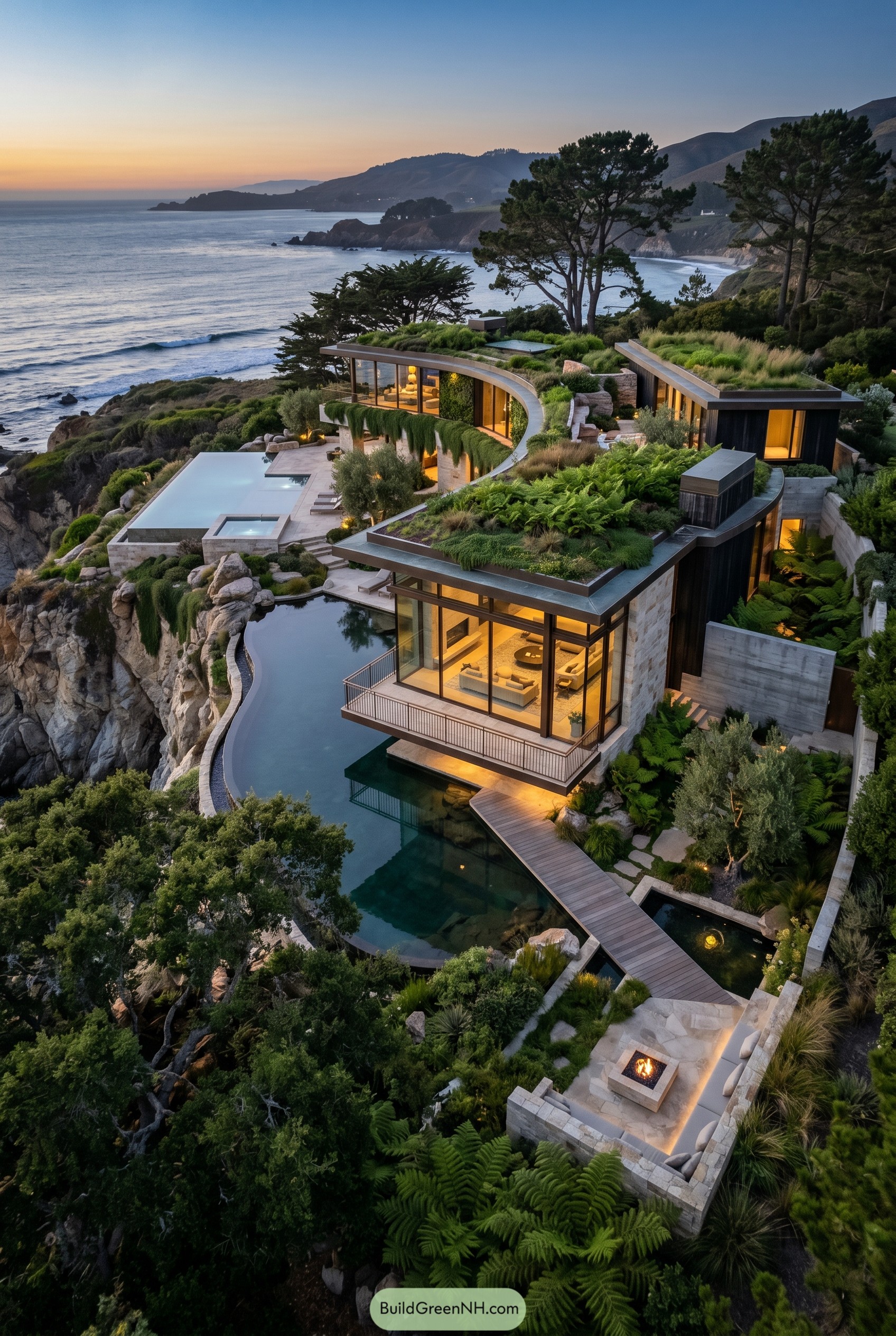

This cliffside villa curls along the shoreline in a soft crescent, with planted roofs and trailing greenery that make the architecture feel tucked into the bluff instead of dropped on top of it. Broad glass corners open the living spaces to the water, which is exactly the point when your nearest companion is the sea.
Layered reflecting pools, an infinity edge, and stone terraces step with the terrain, so every level feels tied to the coast and buffered from the wind. We kept the forms low and stretched out to echo the headlands, and that choice gives the whole place a calm confidence, a bit showy maybe, but it earns it.
Rainfern Infinity Ledge Estate
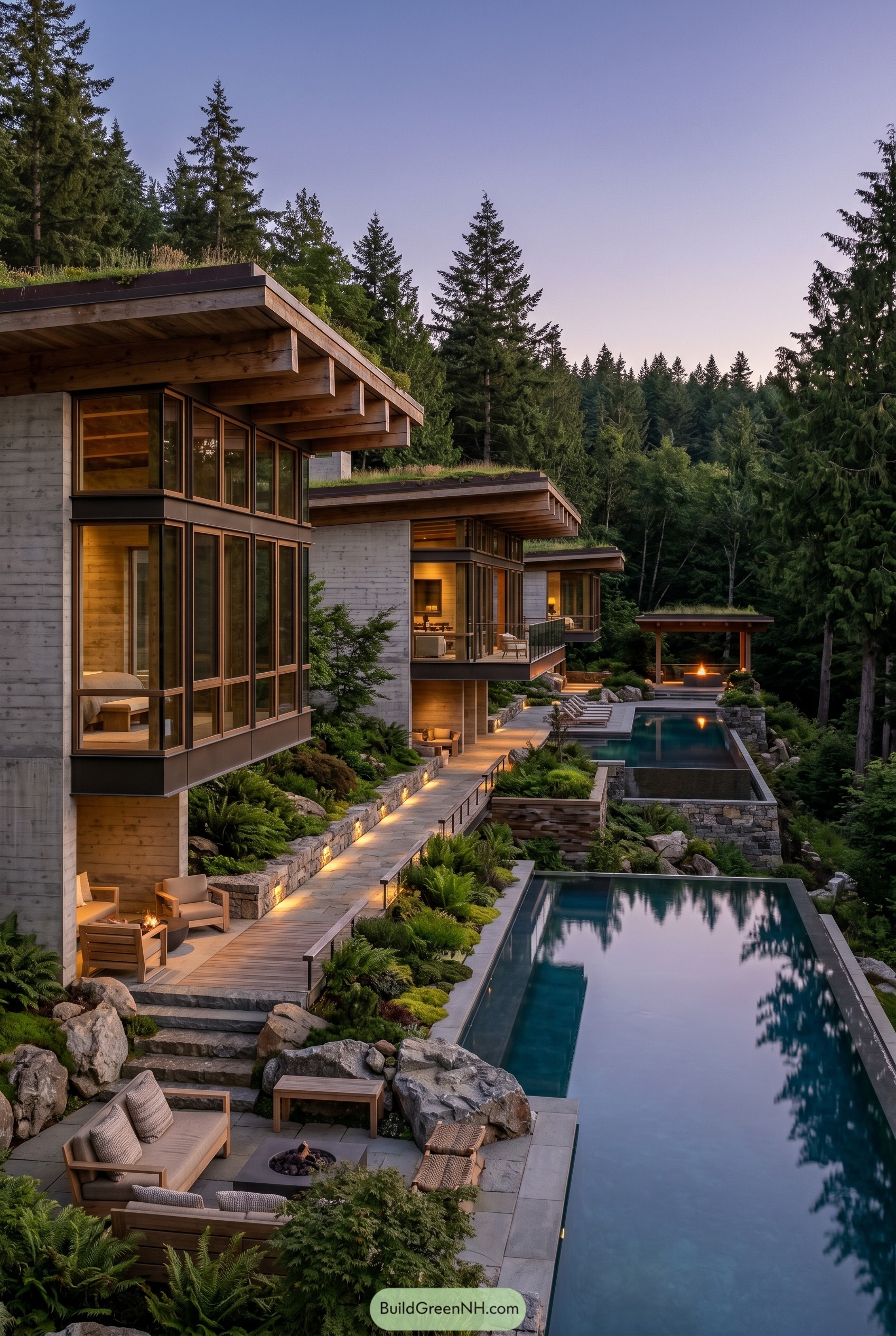

Stepped into the hillside, the home stretches out in low cedar framed volumes with planted roofs that almost disappear into the firs. Those deep overhangs and full height glass keep the profile calm and shelter the rooms, which is nice because the weather up here can be a bit moody.
A chain of terraces, stone retaining walls, and long reflecting pools turns the slope into a slow outdoor journey instead of one big drop. We shaped the landscape to feel native and slightly wild, so the architecture never looks like it landed from a spaceship, even though it kind of could have.
Pin this for later:
Want More?
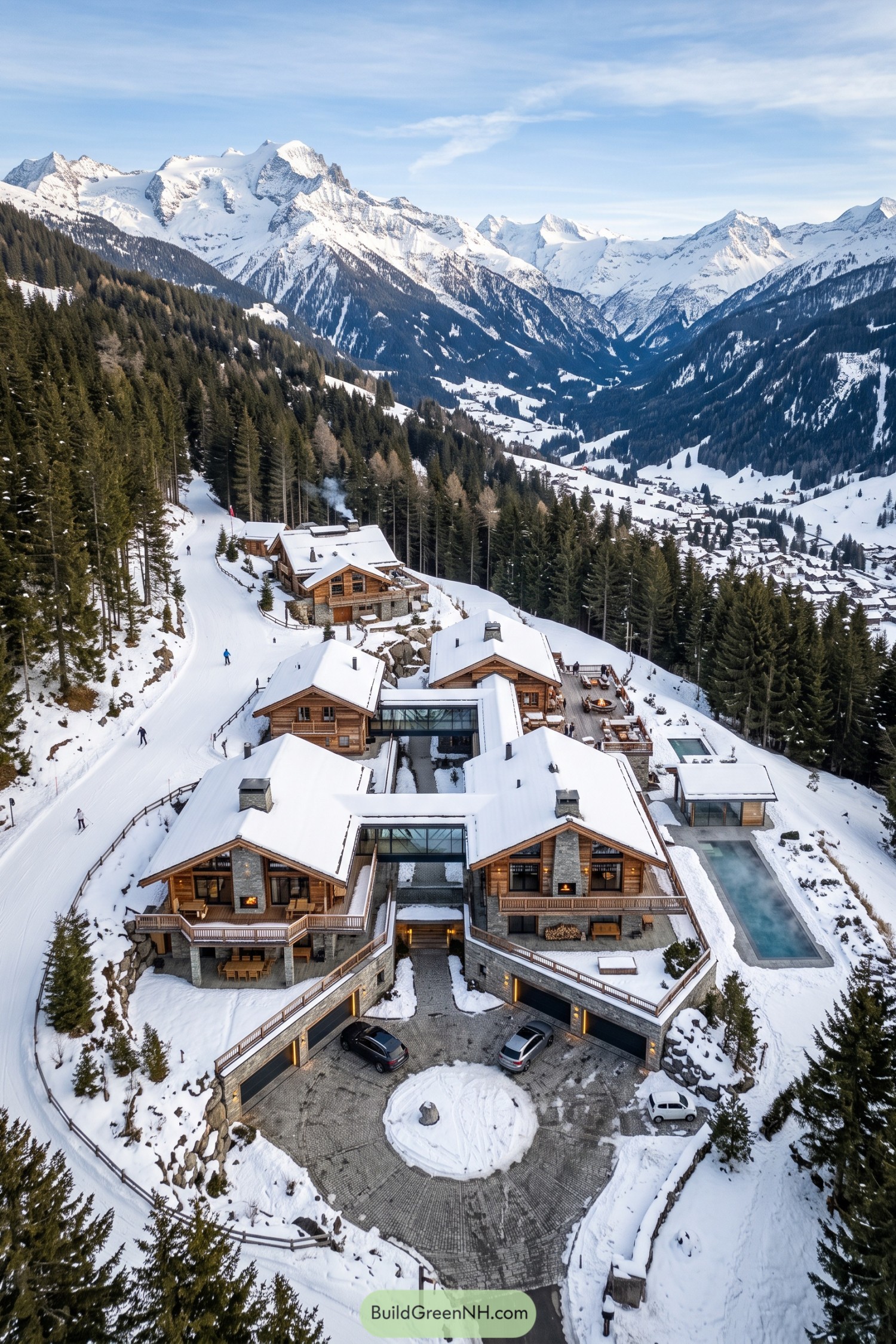 20 Luxury Ski Chalets for Unforgettable Alpine Escapes
 21 Stunning Fall House Exteriors That Make Neighbors Stop And Stare
 19 Brilliant Family Village Designs You’ll Love
 21 Stunning Hill Villas for Cloud Level Escapes
 20 Swiss Chalet Homes That Turn Mountain Dreams Into Reality
Table of Contents