Last updated on
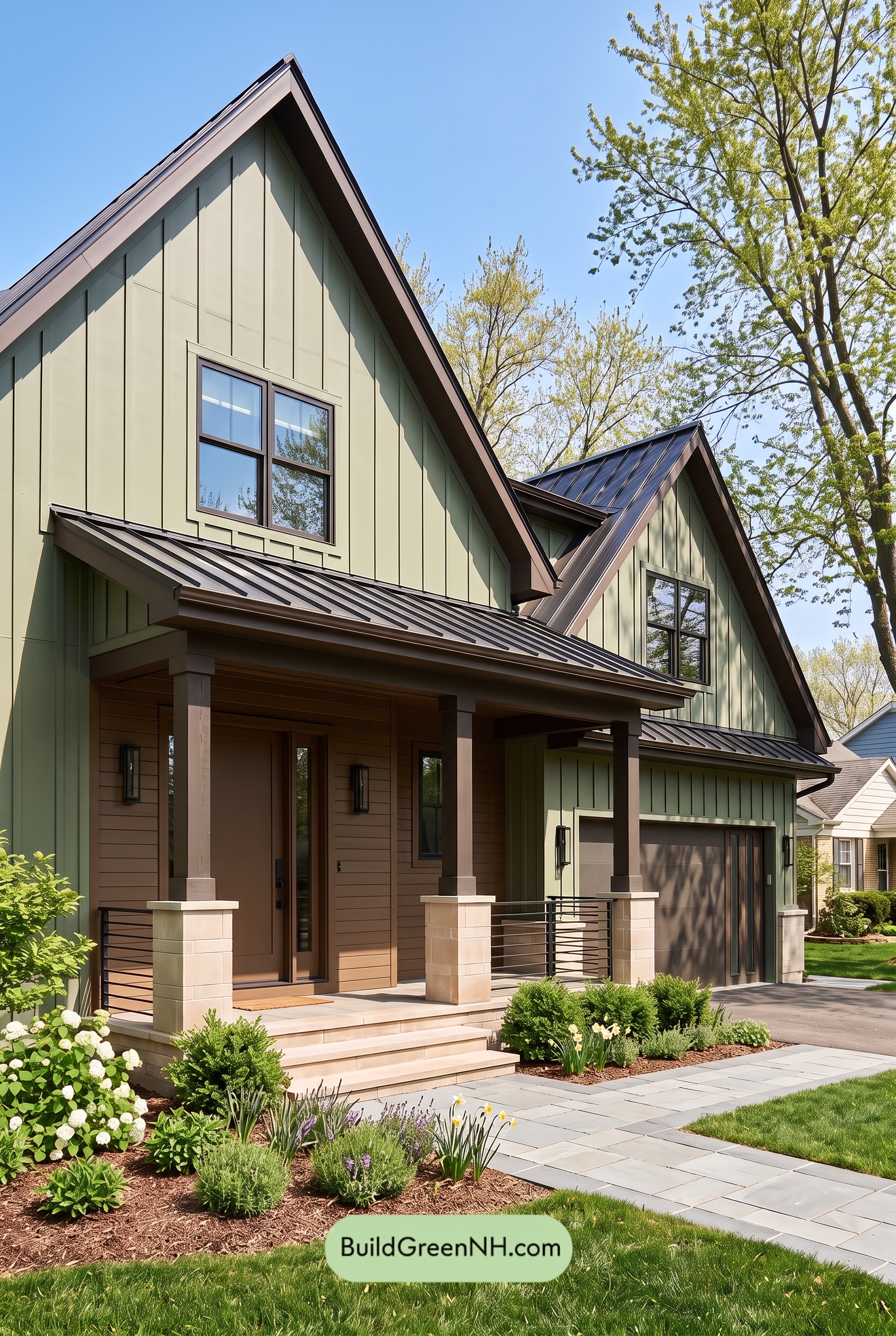

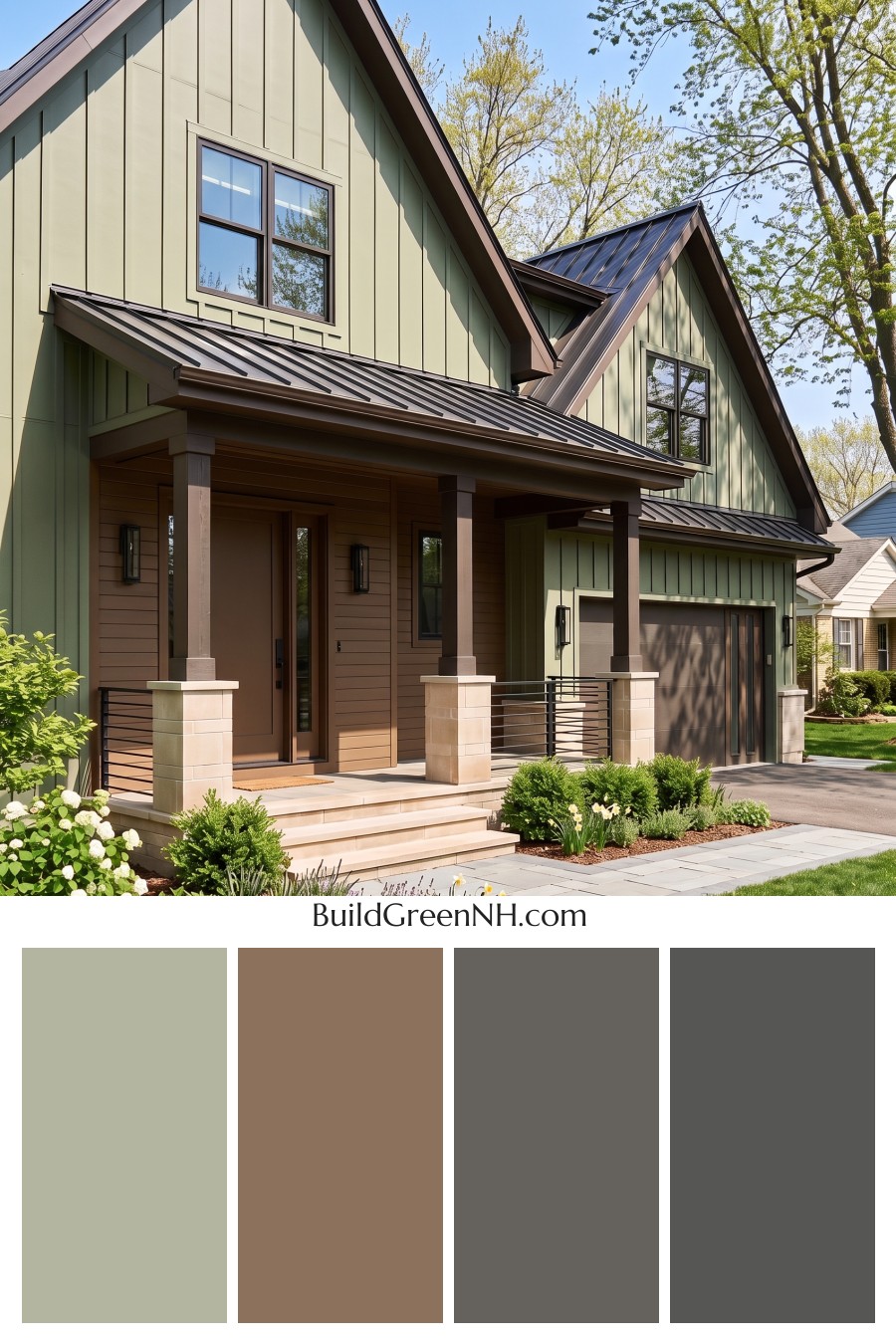
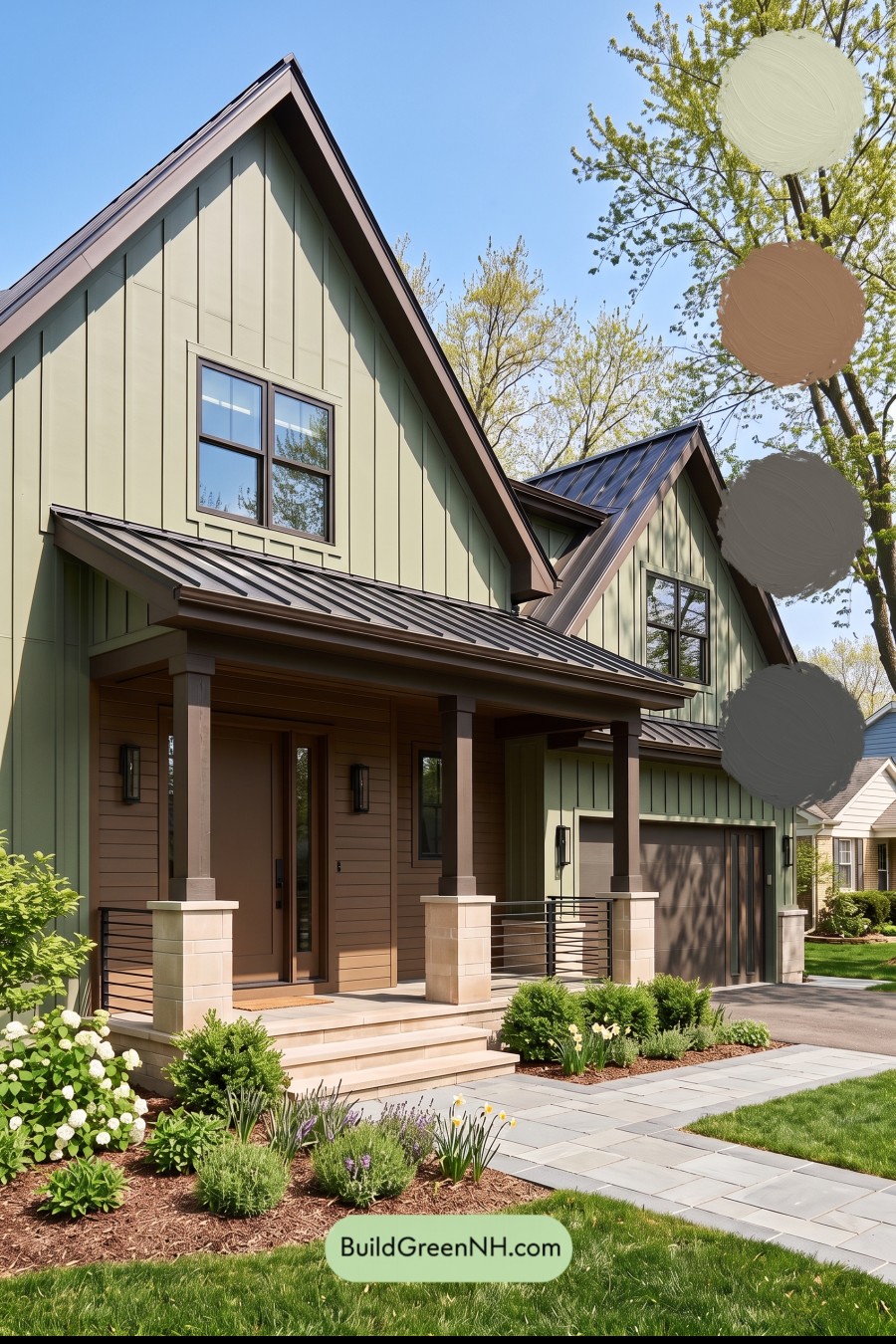
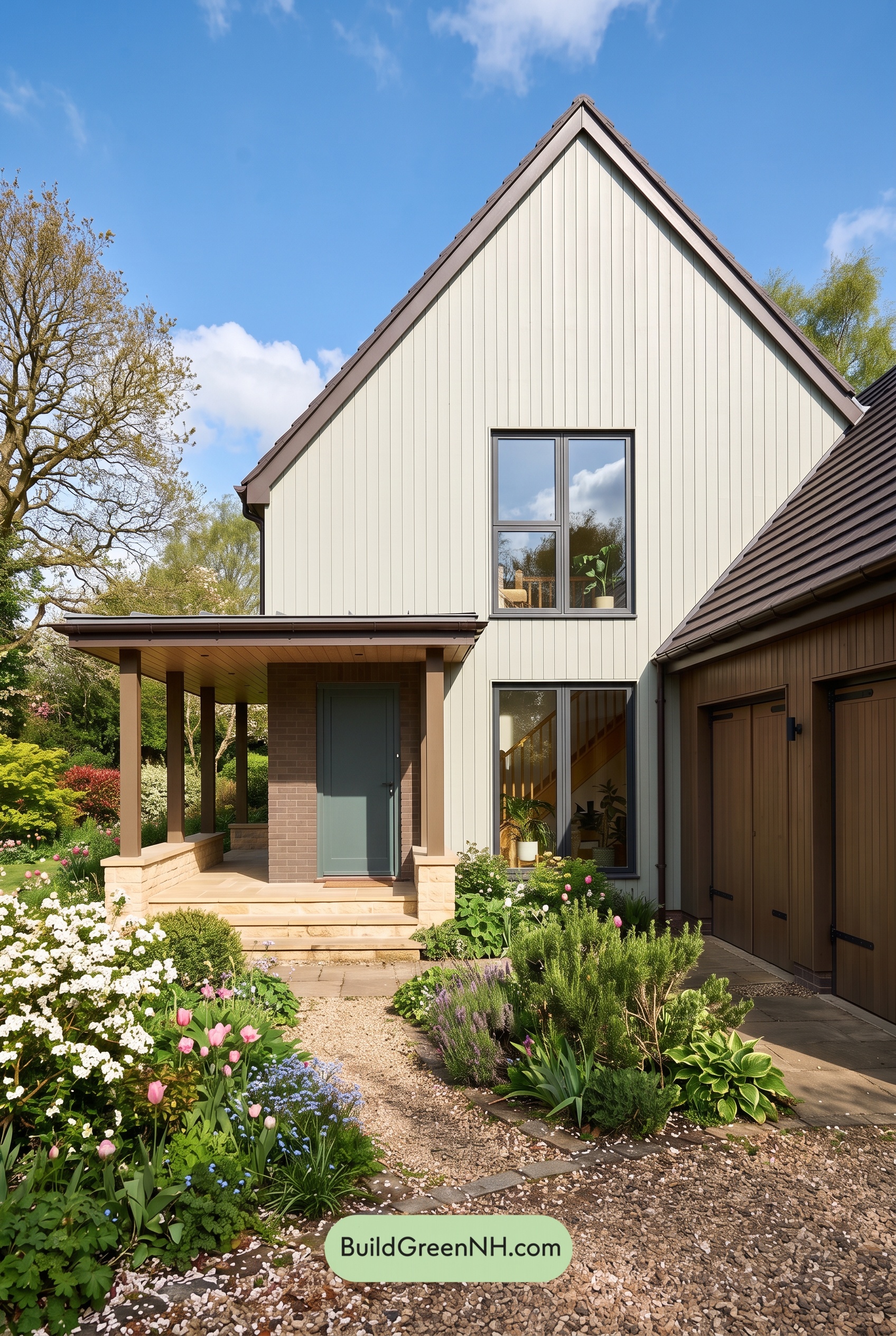
Soft sage green, earthy brown, and warm gray give this home a beautiful balance of natural warmth and crisp architectural definition.
Soft Green Siding Sets a Peaceful Tone
A muted sage green covers the main siding, extending across the tall front gables and the wall surrounding the garage. Its gentle gray undertone keeps the green understated, while a hint of olive warmth connects it to the surrounding trees and garden.
The vertical siding adds texture without needing another color. Sunlight brightens the green into a softer, lighter shade, while the sheltered areas reveal its deeper, earthier side. That subtle variation gives the large exterior surfaces depth without making them feel busy.
Earthy Browns Make the Entrance Inviting
Across the recessed porch, a warm medium brown shifts the mood from airy to cozy. This shade highlights the horizontal siding and creates a welcoming backdrop for the front door, which continues the brown family in a slightly richer tone.
The change from green to brown also helps organize the façade. The green emphasizes the home’s height and gabled silhouette; the brown draws attention back to the entrance. Because both shades have a muted, earthy quality, the transition feels easy rather than abrupt.
Warm Gray Connects the Architectural Details
The trim and porch columns introduce warm gray shades with soft brown undertones. These tones define the roof edges and frame the porch without the sharper contrast of a very pale trim. Against the sage siding, they feel substantial but not heavy.
Deeper gray window frames give the glass a clean outline. The garage door uses a similarly grounded gray, allowing its broad surface to sit comfortably within the green siding rather than dominate the front elevation. Slim charcoal-gray railings add definition while keeping the porch visually open.
A Dark Roof Grounds the Palette
The metal roof brings in deep charcoal gray, creating a strong finish above the softer wall colors. Its dark shade accentuates the intersecting rooflines, while reflected daylight picks out the raised seams.
Below, pale beige-gray masonry at the column bases and steps provides a lighter counterpoint. These softer neutrals keep the porch from feeling too dark and link the house to the gray paving.
Natural, Welcoming, and Nicely Balanced
What makes this scheme work is its measured contrast. The green feels calm, the brown adds warmth, and the grays sharpen the architecture. No single accent overwhelms the others. Together, they create an exterior that feels polished enough to show off the home’s strong lines and relaxed enough to belong beside a leafy garden.
Next, see how this color scheme looks under different lighting simulations throughout the day.
Overcast
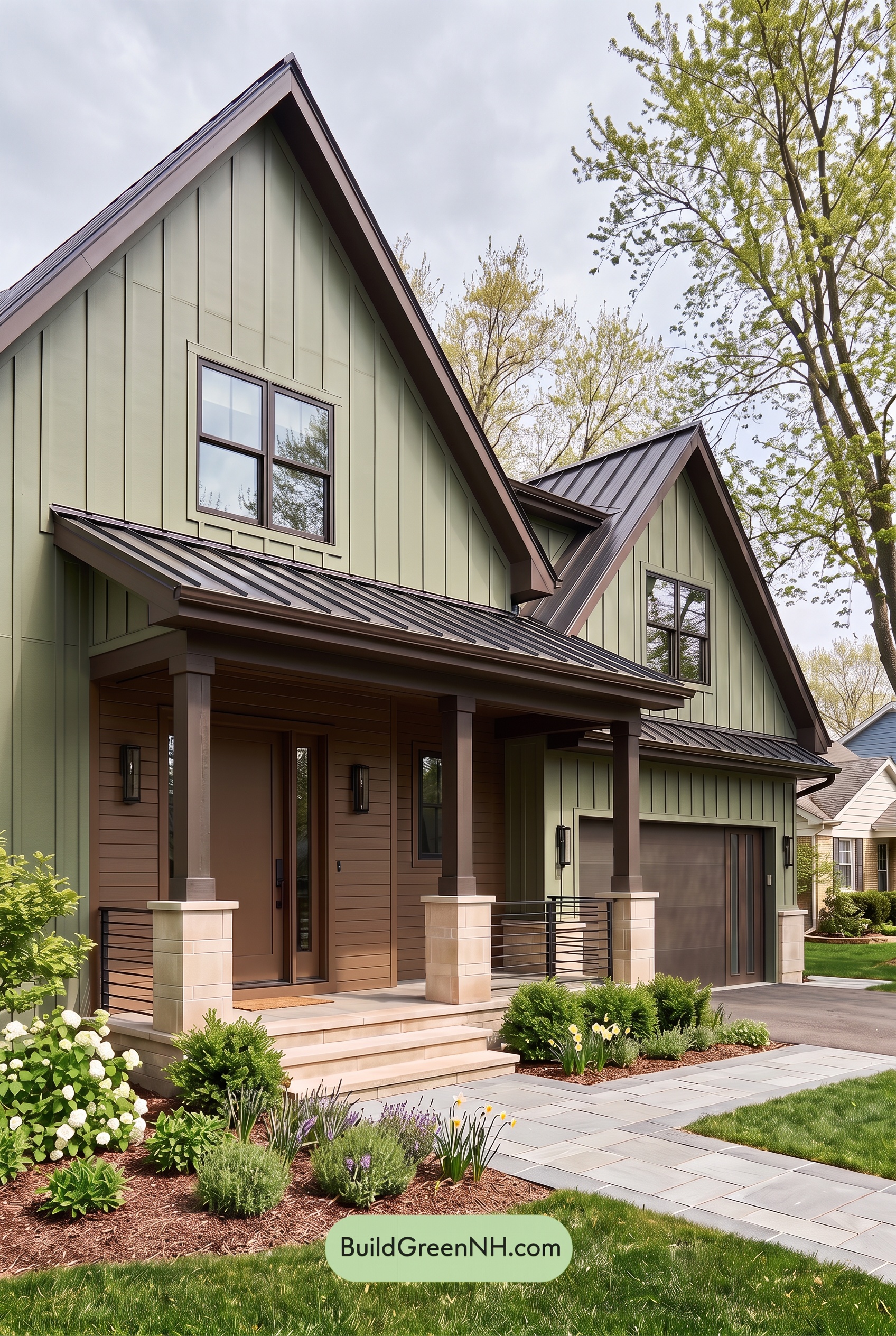
Under overcast skies, this muted shade of green tends to look grayer and less saturated than it does in neutral daylight, with its yellow warmth gently dialed back. The earthy browns feel quieter and less golden, while the gray details can take on a cooler cast. Together, these shifts give the exterior a softer, more restrained character.
Diffused light softens the shadows beneath the gables and porch, making the green and brown shades appear more even across the facade. Deep gray accents still define the windows and edges, but with less dramatic light-to-dark contrast. The overall mood shifts from crisp and lively in neutral daylight to calm, grounded, and understated.
Golden Hour
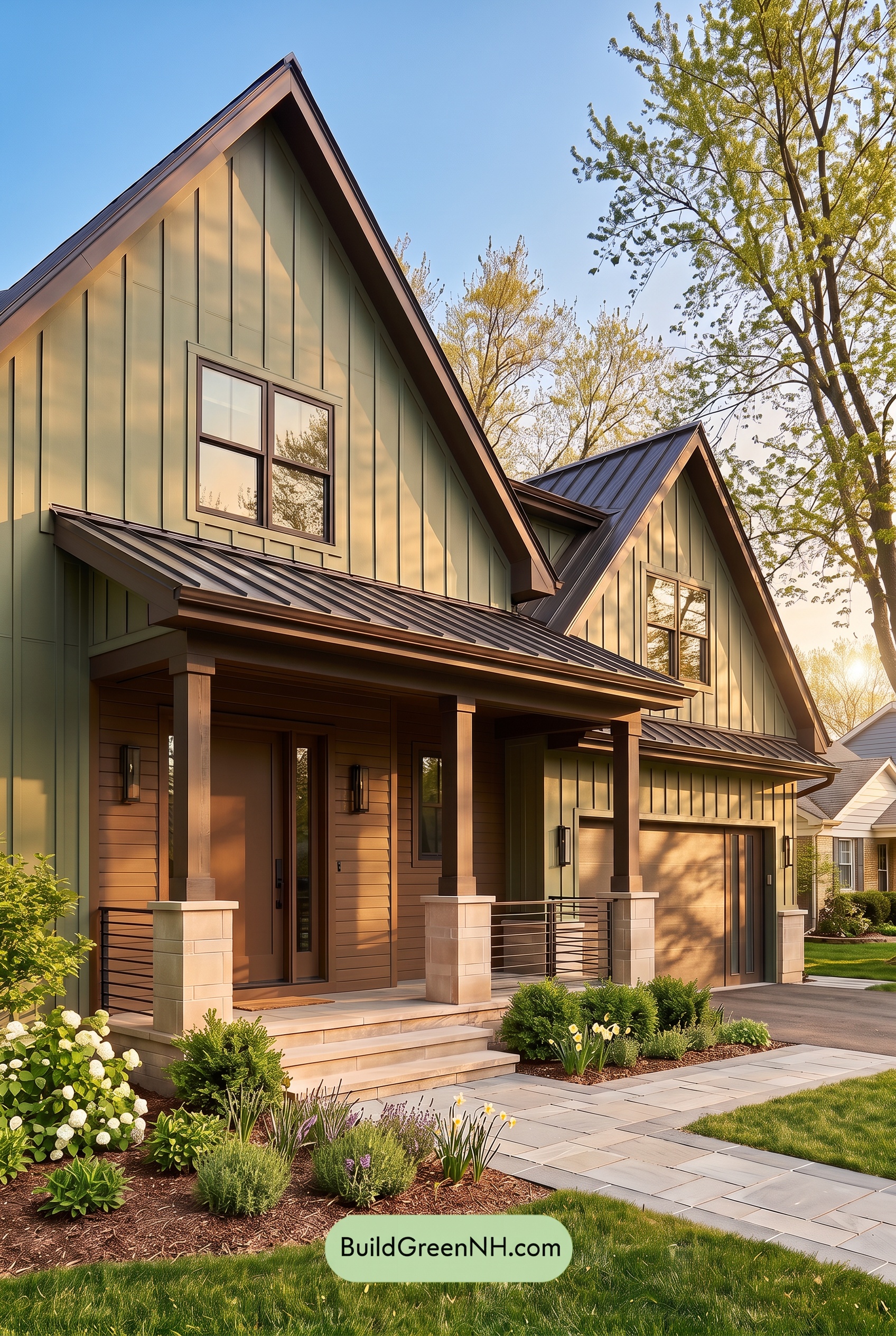
Golden Hour gives the muted green siding a warmer, more yellow-leaning glow than it would show in neutral daylight. Sunlit areas feel softer and less distinctly green, while shaded sections deepen into cooler, richer greens. The brown shades around the entry take on a warmer, more saturated appearance, and the grays pick up a gentle warmth that softens their normally cooler character.
Long shadows beneath the gables and porch heighten the contrast between glowing surfaces and deep recesses, bringing extra definition to the siding and trim. While neutral daylight would make the color families feel more separate and evenly balanced, Golden Hour draws them together into an earthy palette. The result feels cozy and welcoming, with dramatic shadows adding depth without losing that softness.
Shade
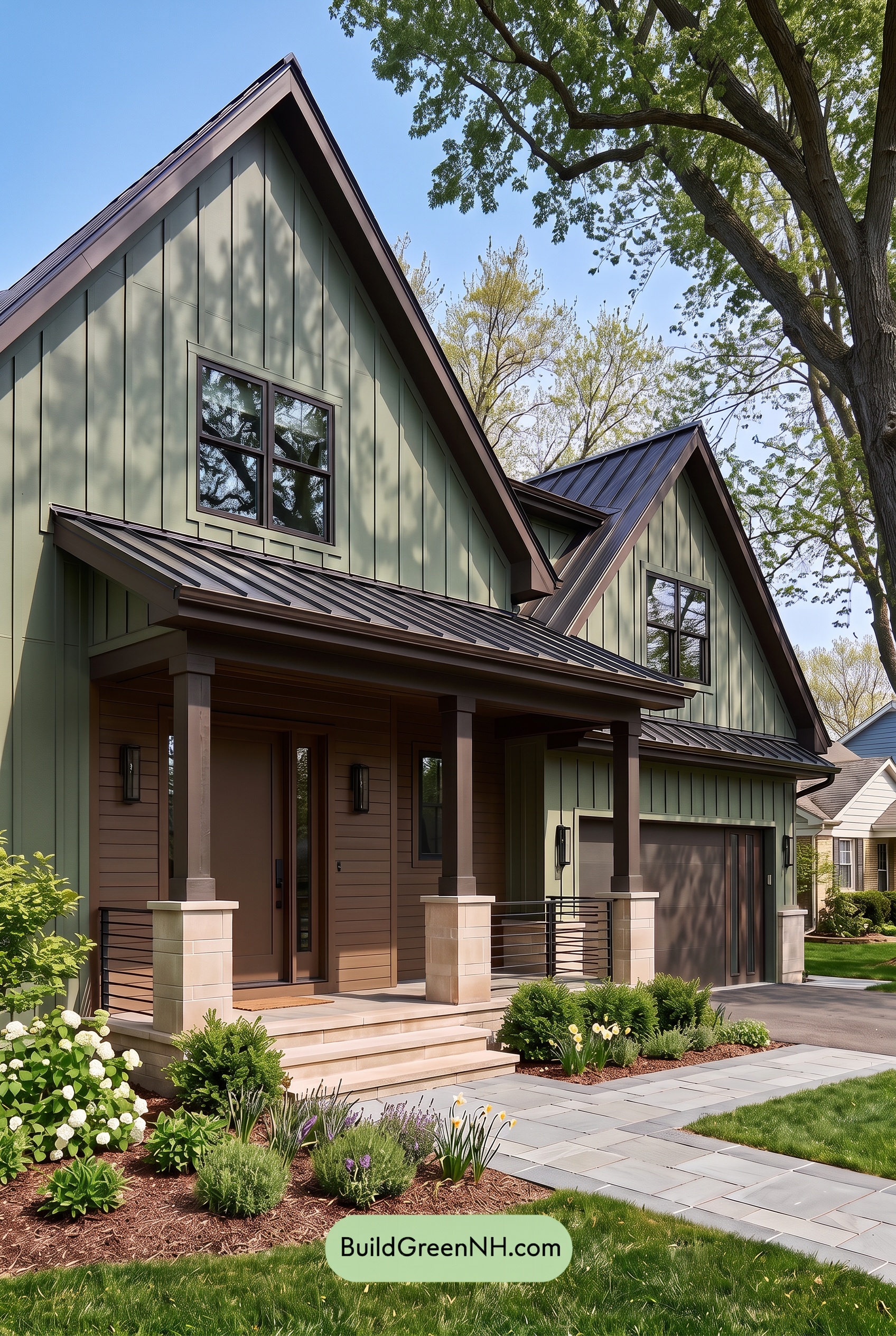
In shade, this muted green deepens and leans a little grayer than it would in neutral daylight, making its saturation feel more restrained. The warm browns become quieter, with less golden warmth, while the gray shades can pick up a cooler cast. Together, these shifts give the exterior a calm, earthy mood.
Leaf shadows add gentle variations across the green, while deeper shade beneath the porch draws the browns and darker grays closer together. Compared with neutral daylight, color-to-color contrast feels softer in these sheltered areas, though the darkest recesses still stand out against lighter surfaces. The result feels intimate and settled rather than bright and crisp.
Nighttime
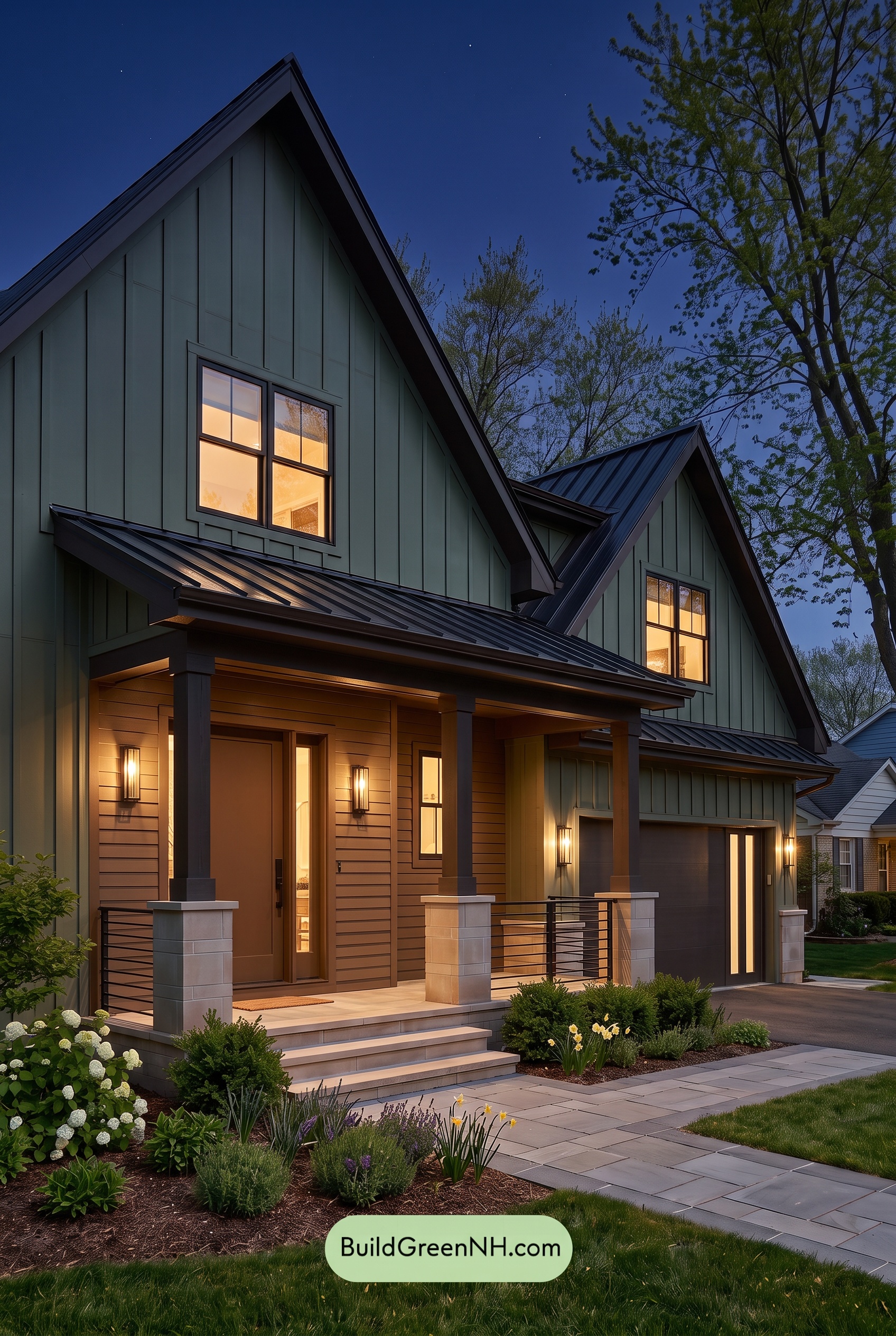
At night, the muted green siding looks deeper, cooler, and less saturated than it would in neutral daylight. Shadows beneath the gables soften its green character toward gray, while the warm porch lighting brings out richer, golden undertones in the brown siding and front door. The result feels more intimate and sheltered than the clearer, more evenly balanced daytime palette.
The gray trim, columns, and garage door also shift with the light: shaded areas appear darker and cooler, while illuminated edges take on a gentle warmth. Subtle differences between the darker shades become less distinct, but contrast between glowing surfaces and deep shadows grows stronger, giving the exterior a cozy, quietly dramatic nighttime presence.
Pin these for later:
Want More?
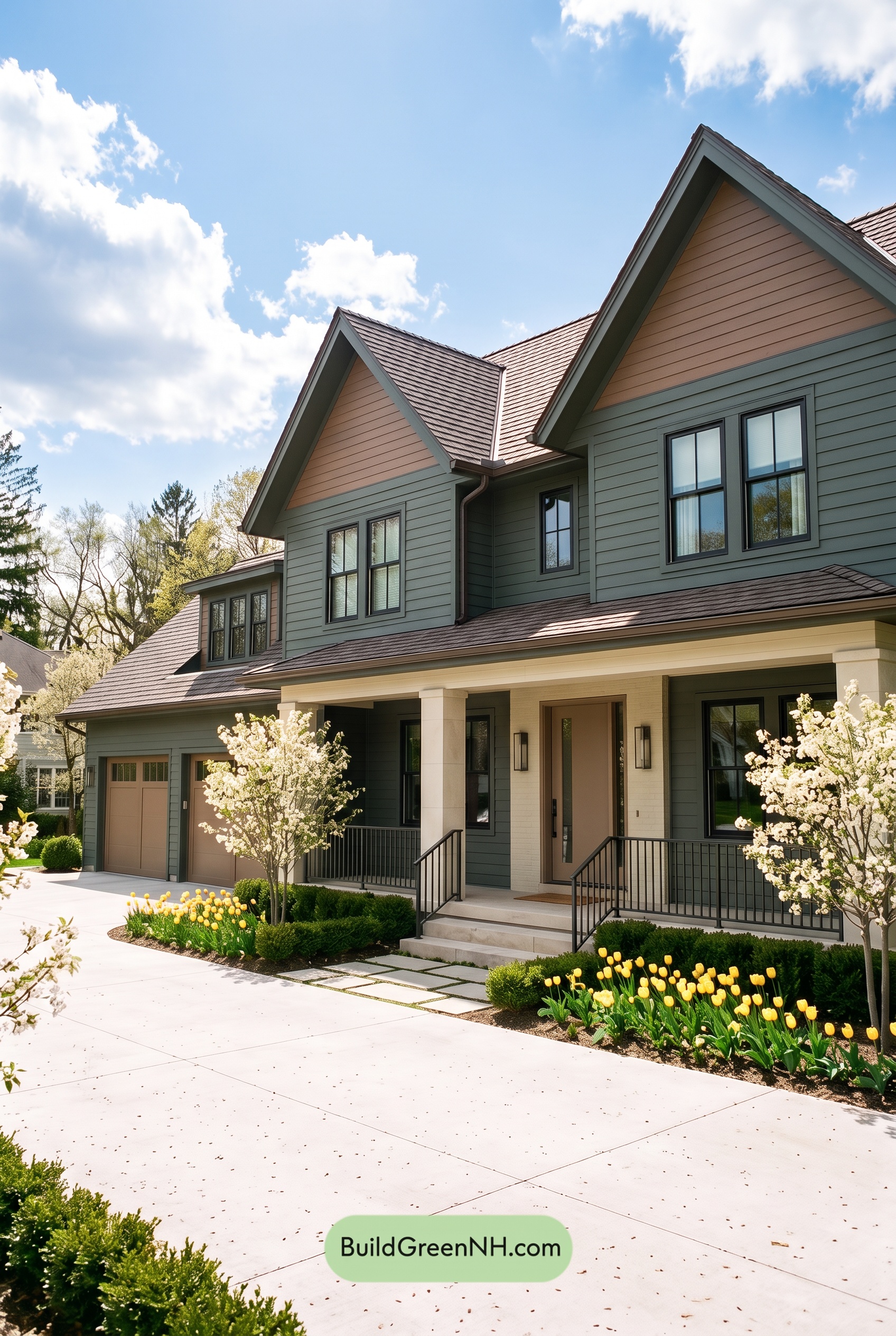 Earthy Green House Exterior Color Scheme: Brown Green Comfort
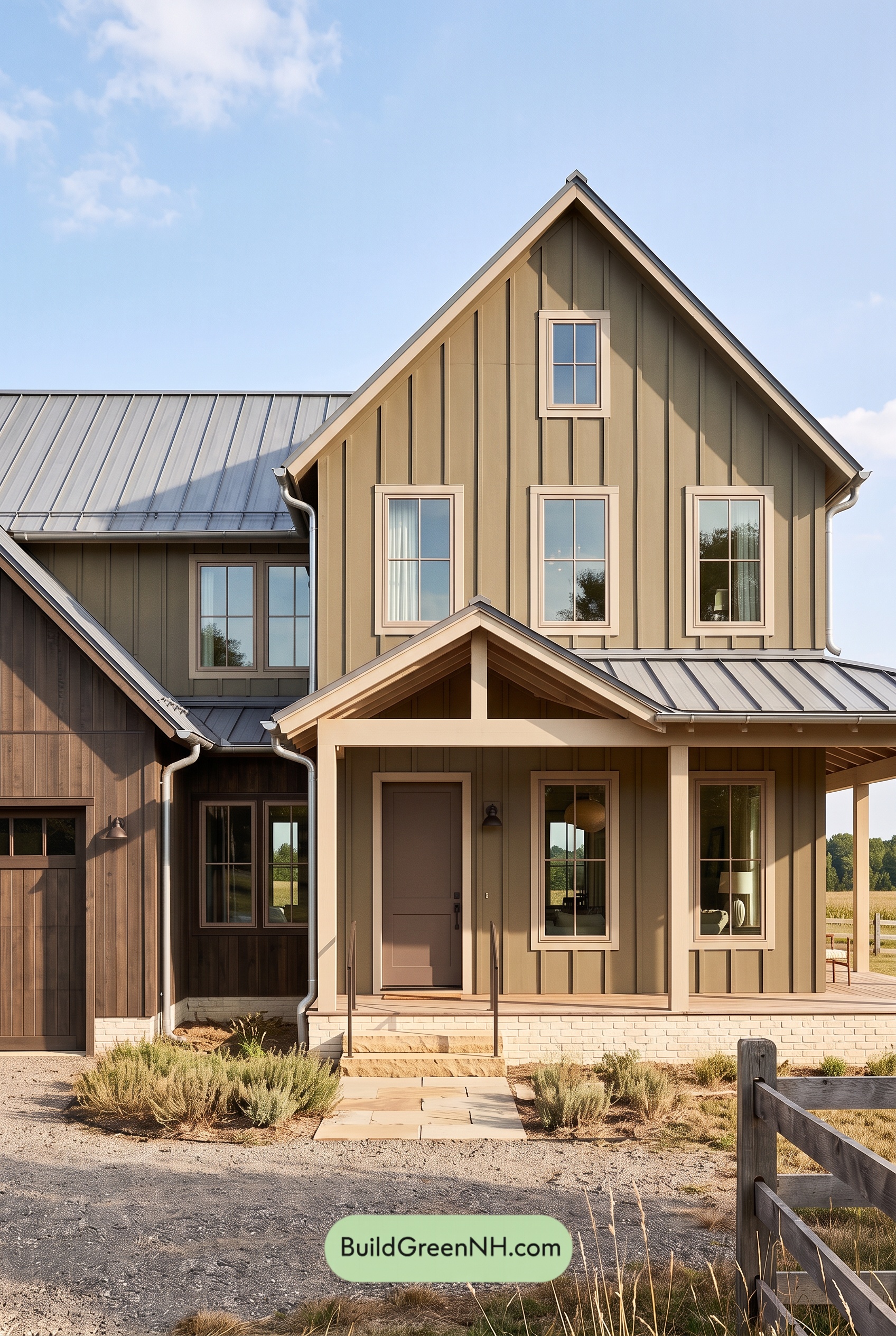 Earthy Green House Exterior Color Scheme: Green and Beige Sanctuary
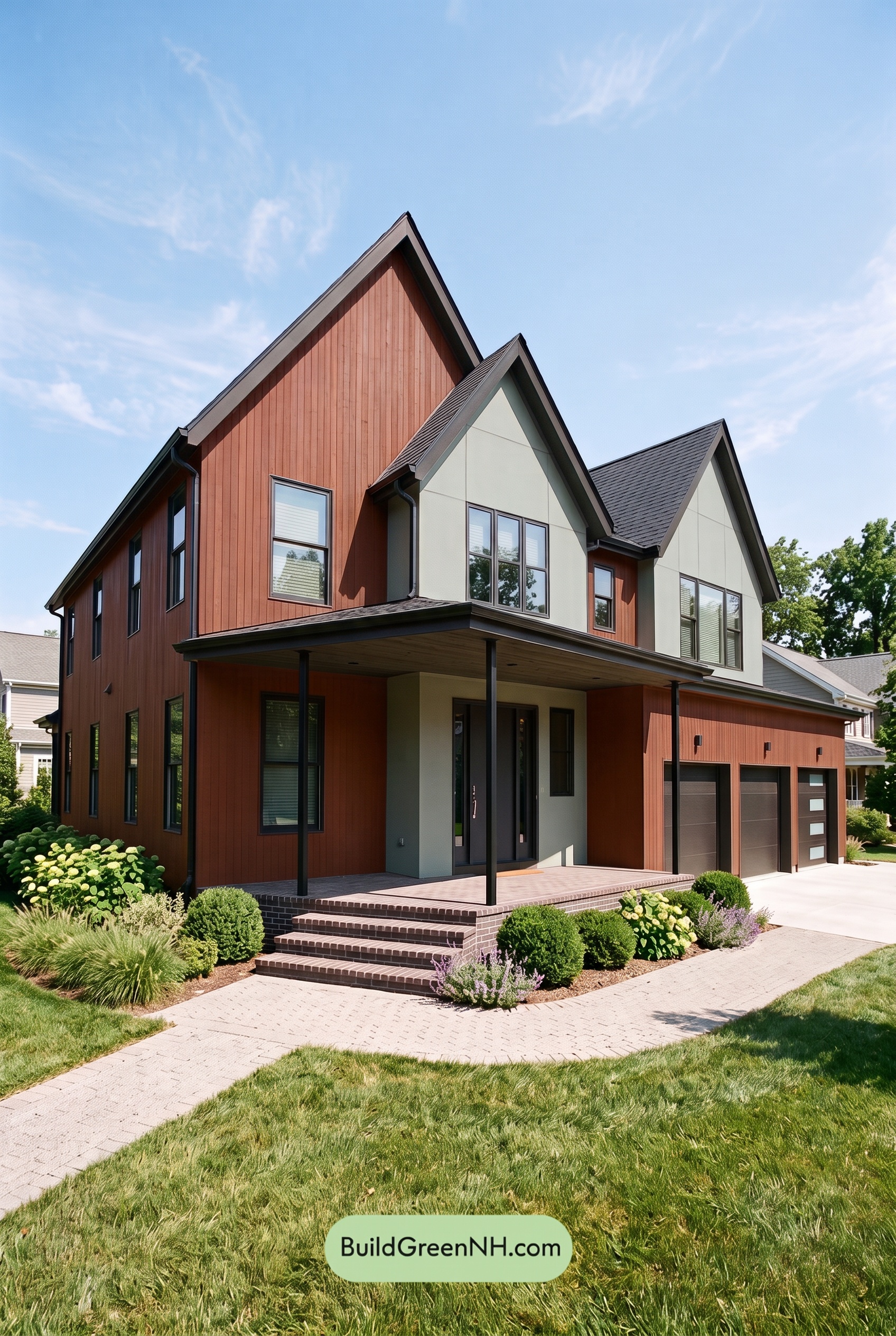 Earthy Green House Exterior Color Scheme: Brown Silken Calm
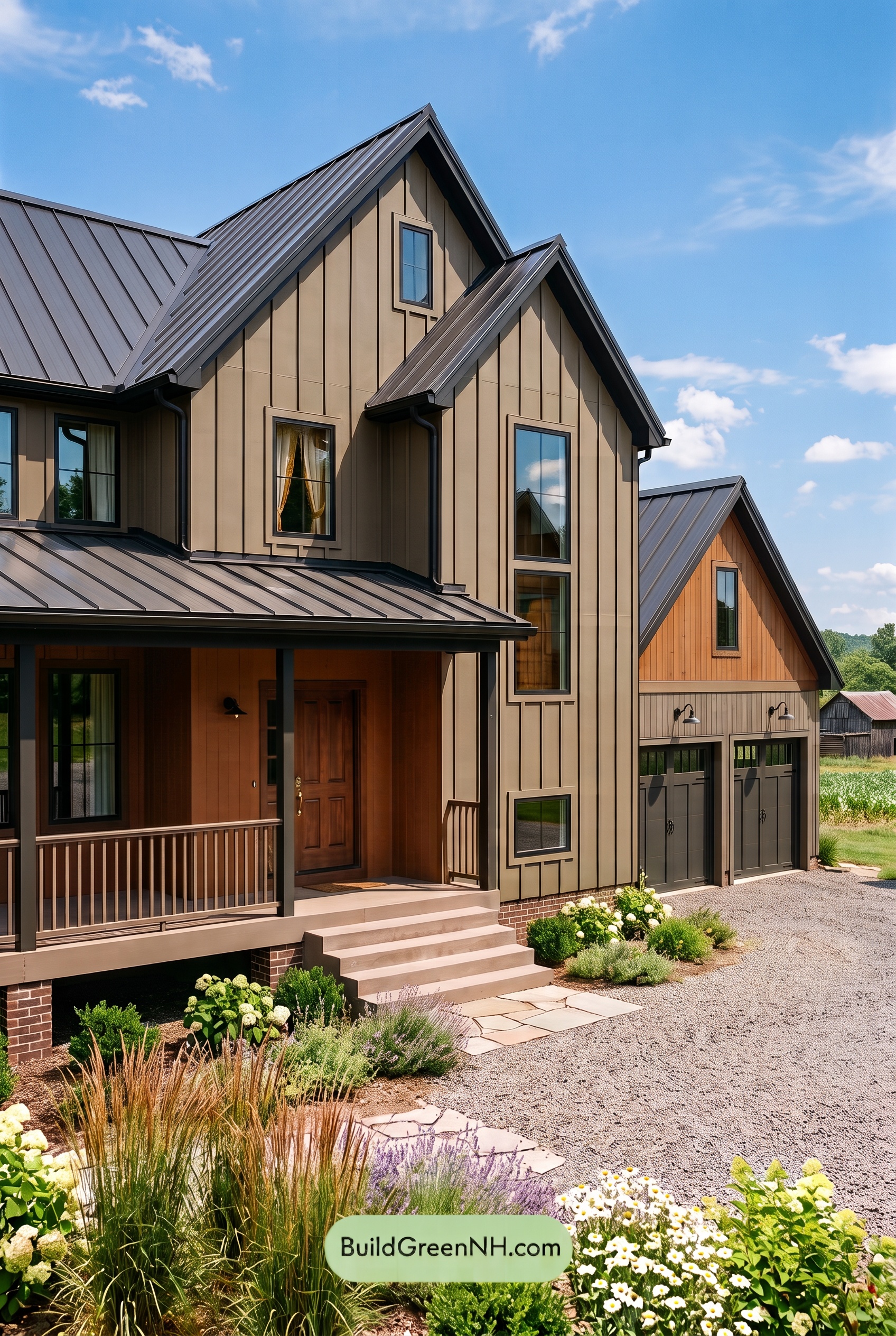 Earthy Green House Exterior Color Scheme: Green Amber Contentment
 Earthy Green House Exterior Color Scheme: Green Quiet Delight
Table of Contents