Last updated on
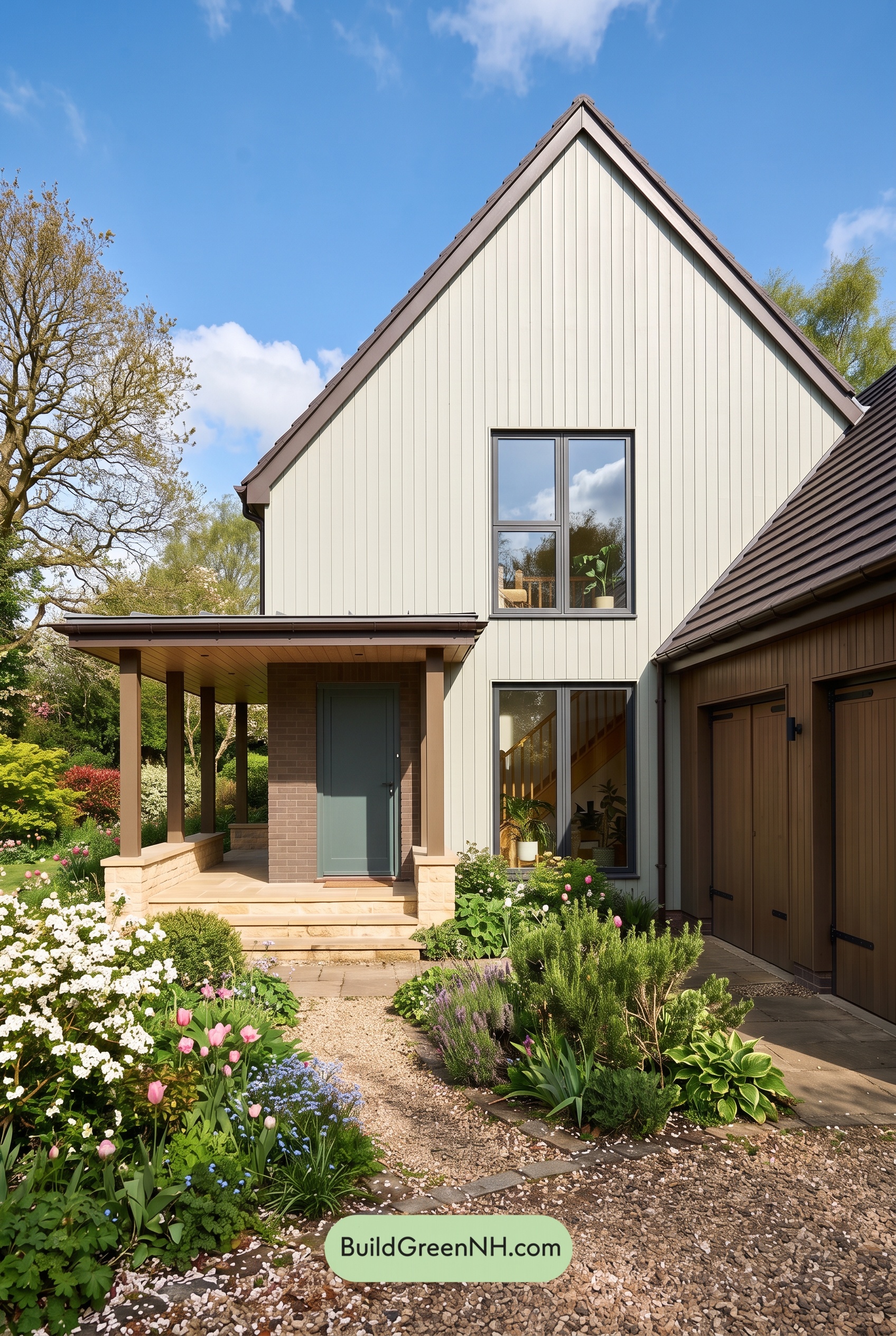

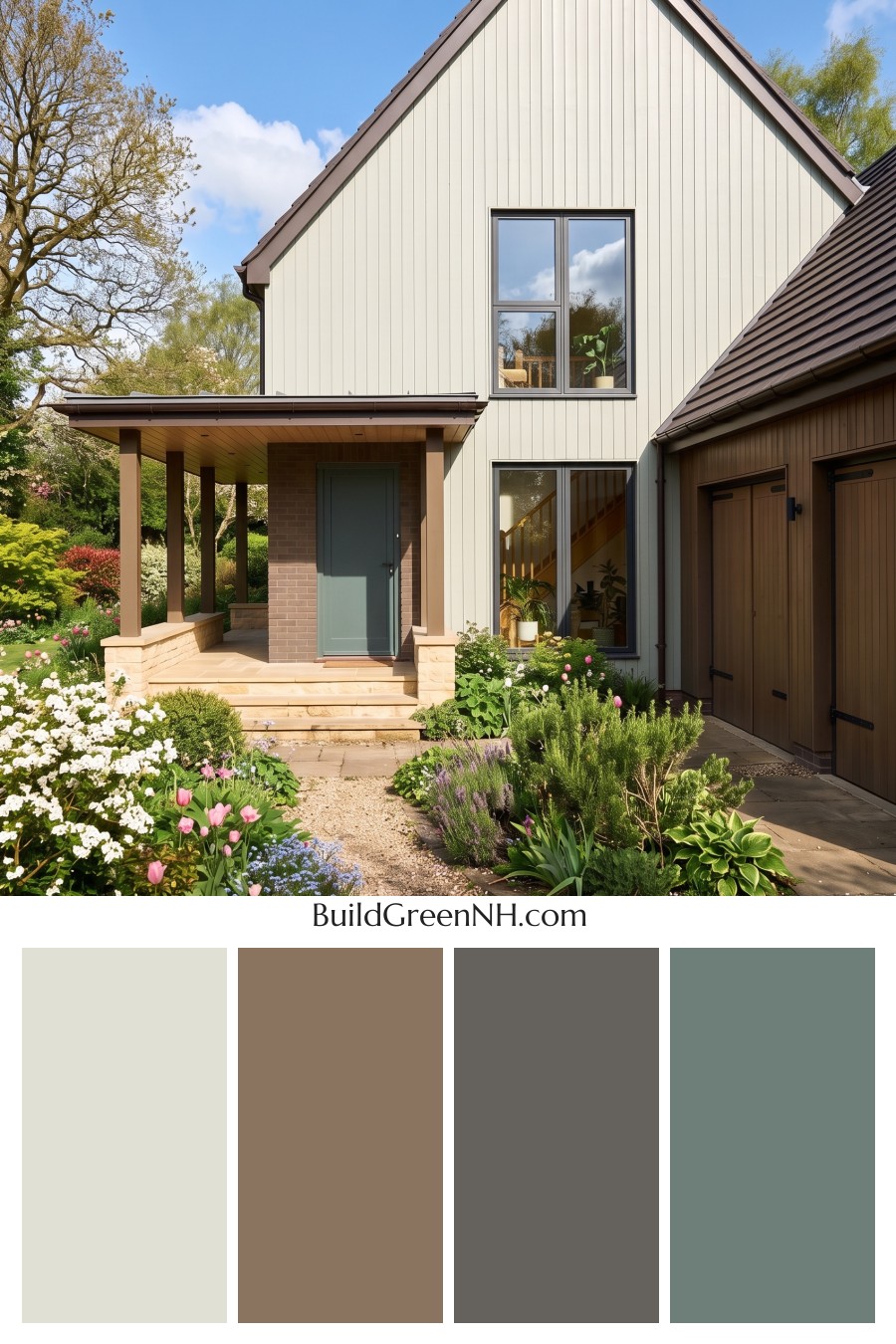
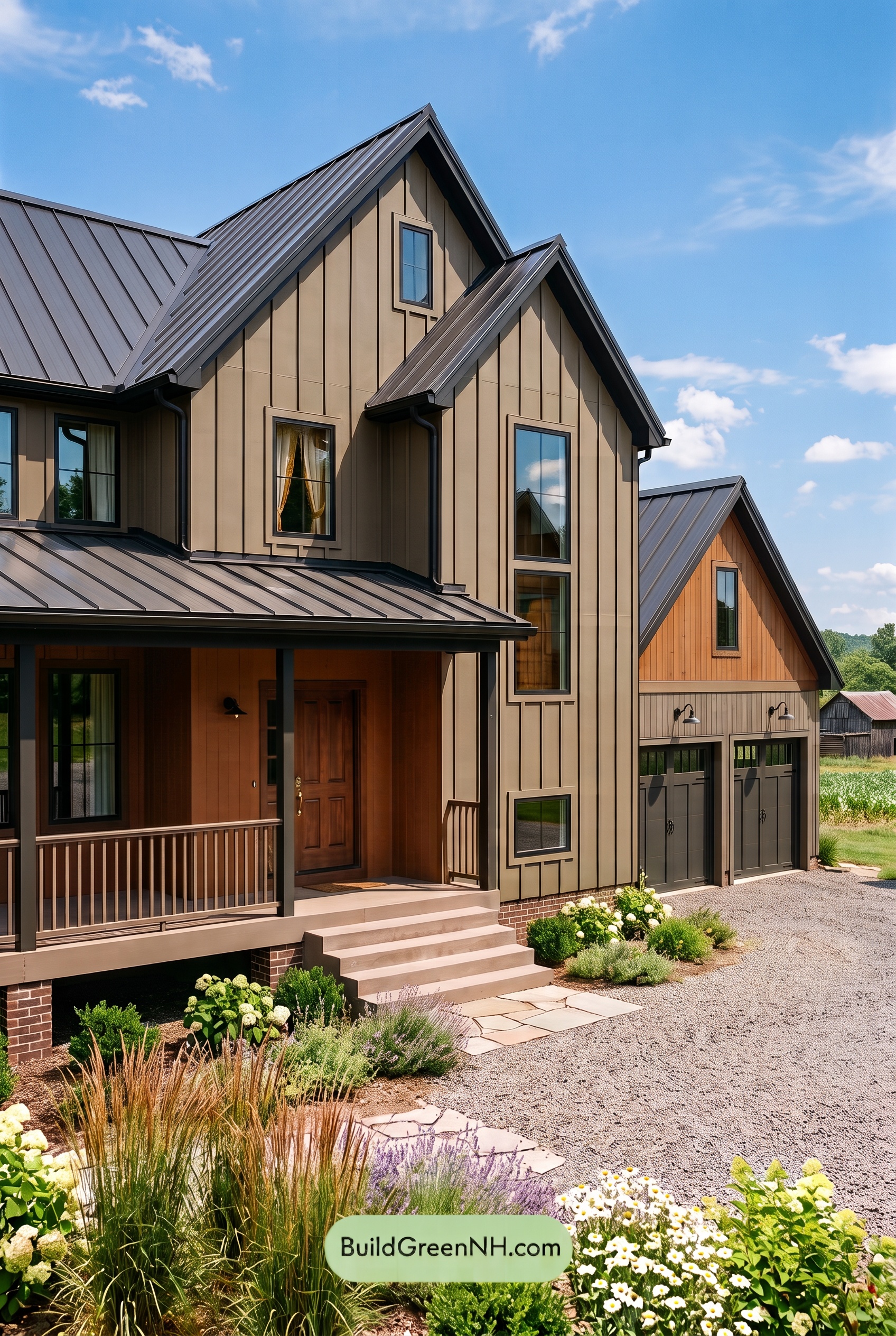
Soft beige, earthy browns, and a muted green front door give this home a welcoming warmth, while gray detailing keeps the whole exterior crisp and beautifully balanced.
A Light, Warm Backdrop
A pale, creamy beige covers the main siding, bringing a gentle brightness to the tall, steeply peaked facade. It feels softer than a stark white and allows the vertical siding to add texture without making the exterior look busy.
This warm shade also connects naturally with the light beige stone around the porch and steps. Together, these surfaces create an inviting approach that feels right at home among the lush garden beds.
Earthy Browns Add Depth
A muted medium brown defines the brick wall around the entrance, giving the front door a distinct setting against the lighter siding. The brick’s subtle variations add richness while staying comfortably within the home’s restrained palette.
Brown porch columns repeat that warmth, linking the entry to the deeper brown siding and garage doors on the right. This repetition matters: it helps the garage feel like part of the design rather than a separate feature. Above, the roof’s dark brown-gray tones provide a grounding finish.
Gray Details Sharpen the Architecture
The gray window frames bring clean definition to the large panes of glass. Their deeper shade stands out against the pale beige walls, emphasizing the windows’ simple shapes without overwhelming the facade.
Warm gray trim continues that understated contrast along the roofline. Because these grays have a softened character, they sit comfortably beside the browns rather than creating a sharp divide between warm and cool colors.
A Quiet Green Focal Point
The front door offers the scheme’s most distinctive accent: a muted green with gray undertones. It is enough of a departure from the surrounding neutrals to draw attention, yet subdued enough to preserve the home’s peaceful mood.
That green also echoes the planting around the entrance, creating an easy connection between house and garden. The overall effect is relaxed but polished—light beige keeps things airy, brown adds warmth, and gray gives the architecture definition. The green door supplies just the right touch of personality.
Next, see how this color scheme looks under different lighting simulations throughout the day.
Overcast
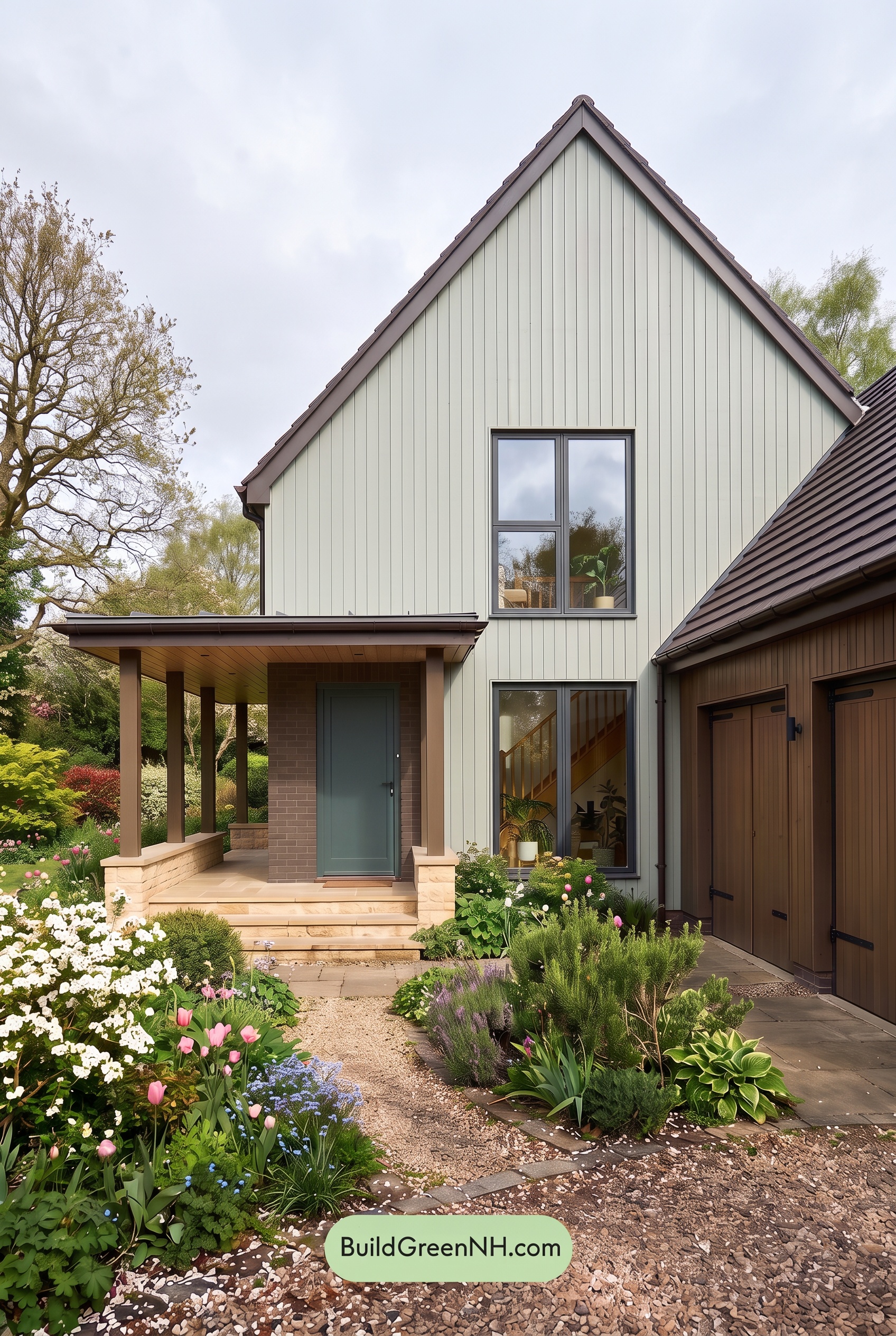
Under overcast skies, the pale beige siding takes on a cooler, grayer cast, with less of the gentle warmth it shows in neutral daylight. The brown sections and columns feel softer and less saturated, while the gray trim and window frames blend more quietly into the palette. Diffused light softens shadows beneath the rooflines, making the contrast between light and dark areas less dramatic.
The muted green front door can read deeper and grayer in the sheltered entry, offering a subtle focal point rather than a bright accent. The brown garage doors also appear more subdued, their warmth still visible but less pronounced. Together, these shifts give the house a calm, understated mood—less crisp than in neutral daylight, yet comfortably cohesive.
Golden Hour
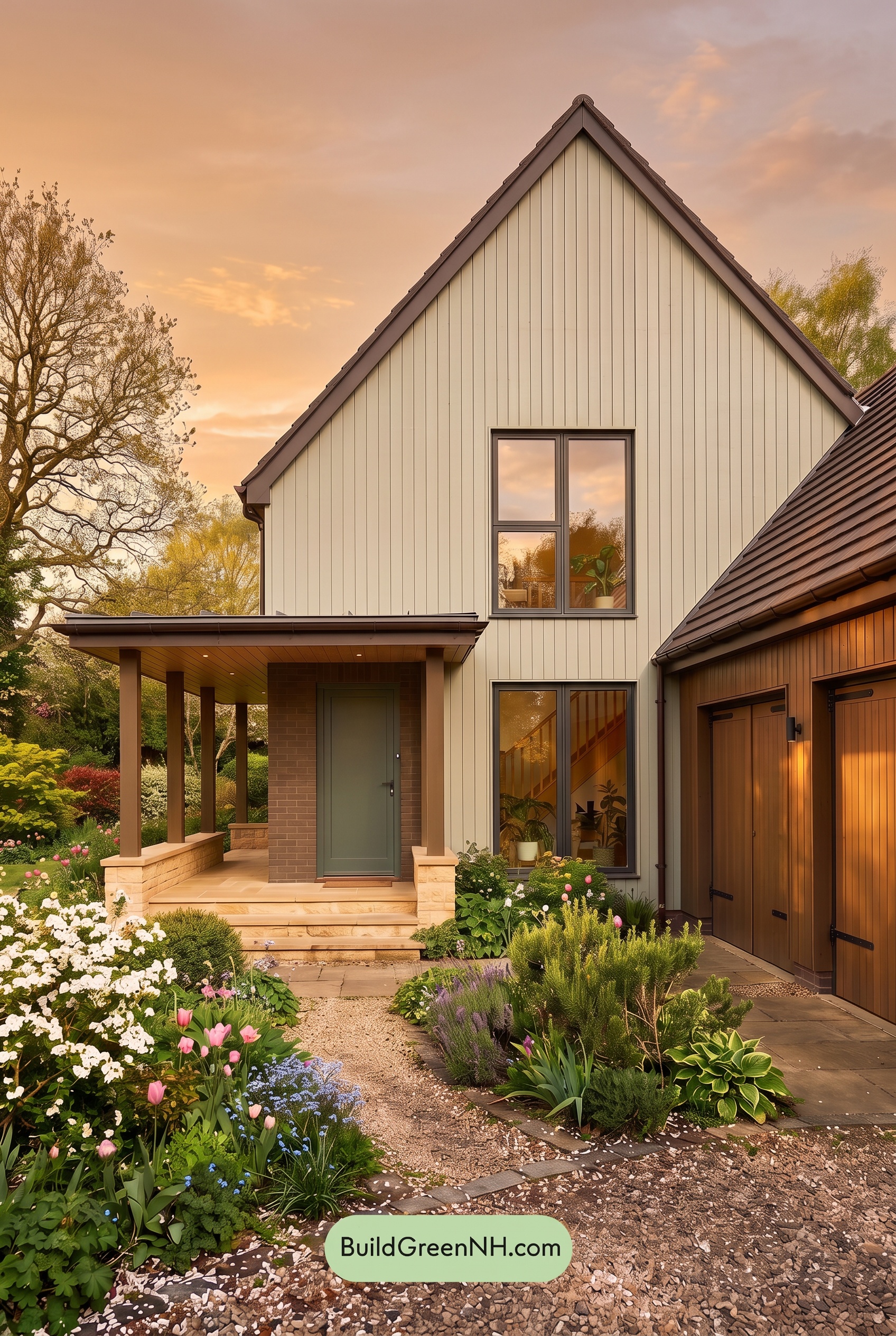
Golden Hour gives the light beige siding a warmer, creamier glow than it would have in neutral daylight. The brown shades appear richer and more saturated where the low sunlight catches them, bringing out reddish undertones. Gray trim and window frames lose some of their coolness, taking on a softer, warmer cast while still defining the pale walls.
Under the porch, deeper shadows make the muted green door feel darker and more subdued against the sunlit neutrals. Those shaded browns look deeper, too, strengthening the contrast between the sheltered entrance and the glowing facade. Compared with the clearer, more even color balance of neutral daylight, the overall mood feels cozier and more intimate.
Shade
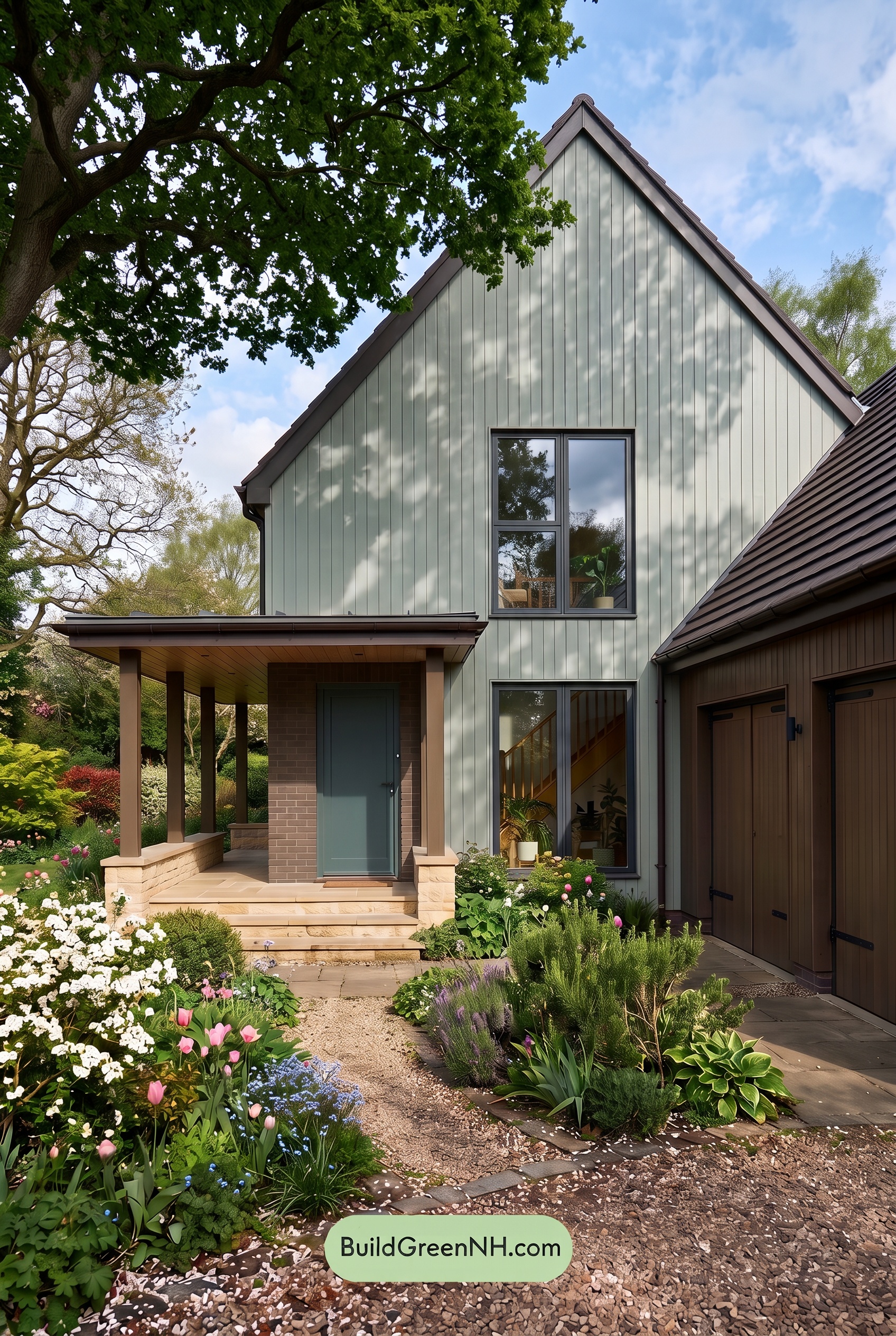
In shade, the light beige reads cooler and grayer than it would in neutral daylight, with its warmth softened and saturation more subdued. Dappled leaf shadows create shifting patches of depth across the pale surface, while the darker gray accents feel slightly cooler and more pronounced against it.
The brown shades deepen beneath the porch and along the garage, their warm undertones becoming less noticeable. The green at the entrance also appears darker and more muted, lending a quiet, sheltered feel. Compared with neutral daylight’s clearer color separation, shade brings these earthy families closer together, creating a calm, understated mood while preserving contrast between the pale walls and deeper accents.
Nighttime
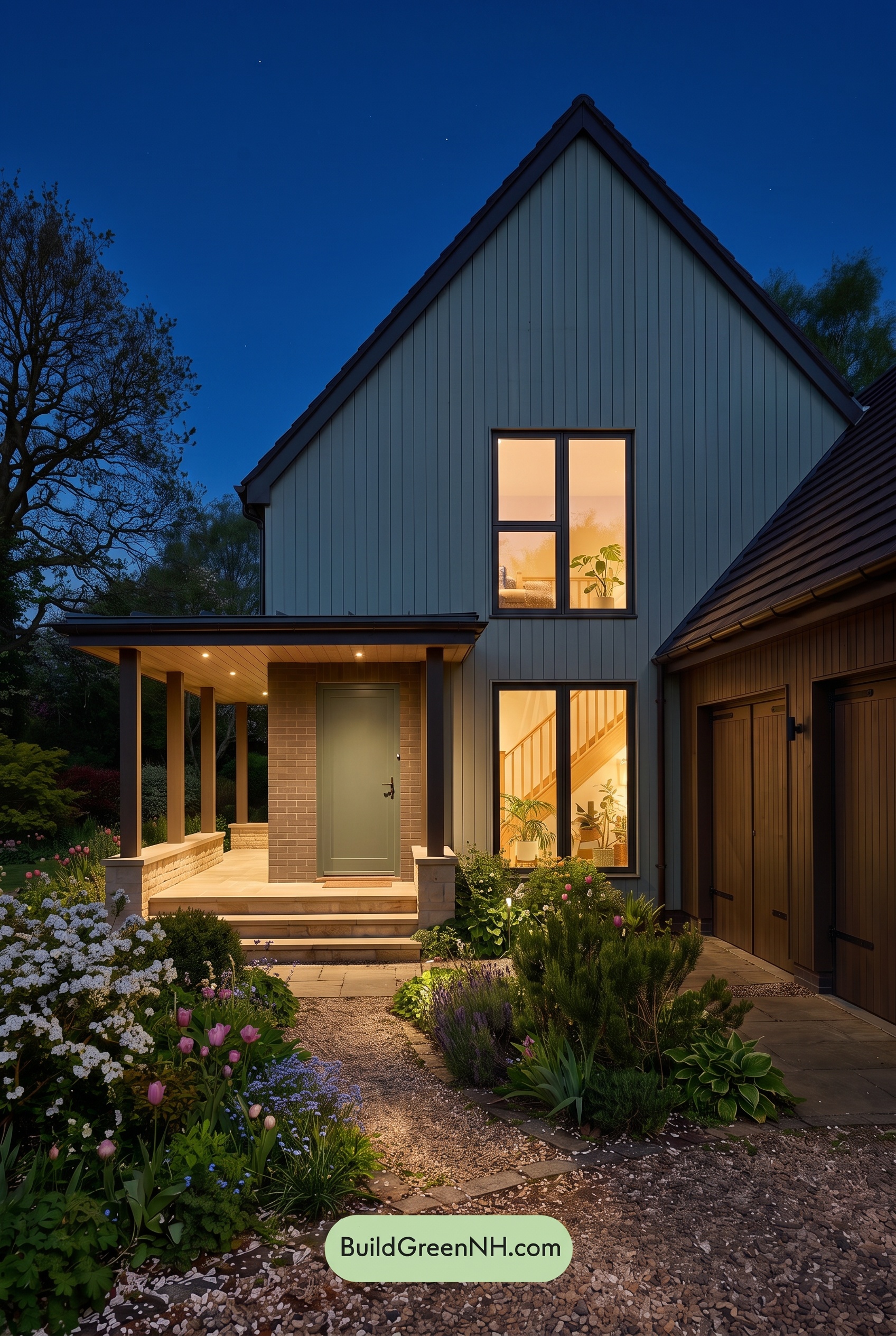
At night, the light neutral siding takes on a cooler, blue-gray cast, losing some of the warmth it would show in neutral daylight. Warm porch lighting brings out golden undertones in the nearby browns, making them feel richer, while the muted green entry appears softer and less saturated. The same palette shifts from airy and understated to cozy and intimate.
Deep shadows beneath the eaves and along the garage draw the darker browns and grays closer together, softening their color differences. Meanwhile, illuminated areas stand out more sharply against the shaded walls. That stronger light-to-dark contrast gives the exterior depth and drama, with the warmly lit entrance becoming an inviting focal point.
Pin these for later:
Want More?
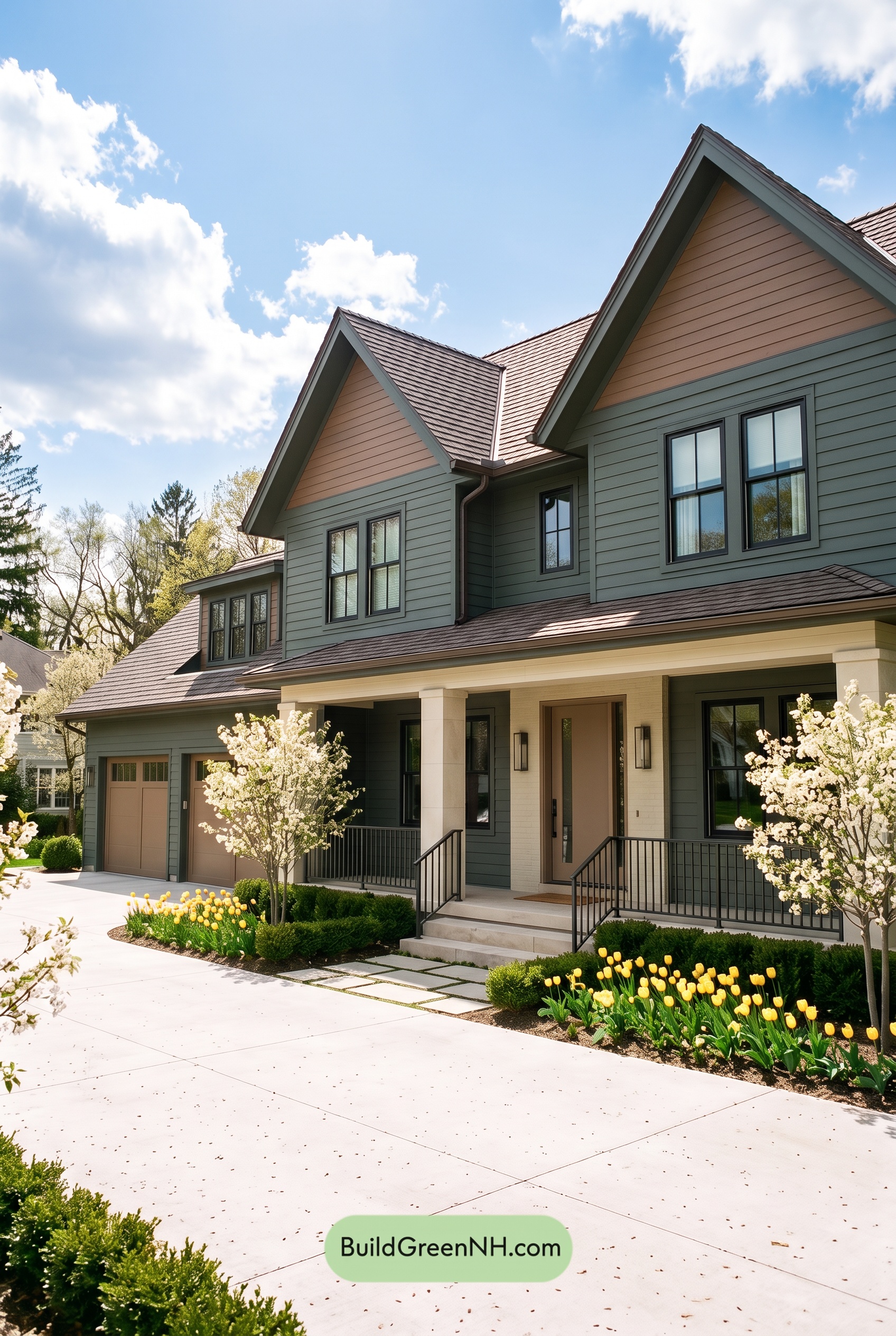 Earthy Green House Exterior Color Scheme: Brown Green Comfort
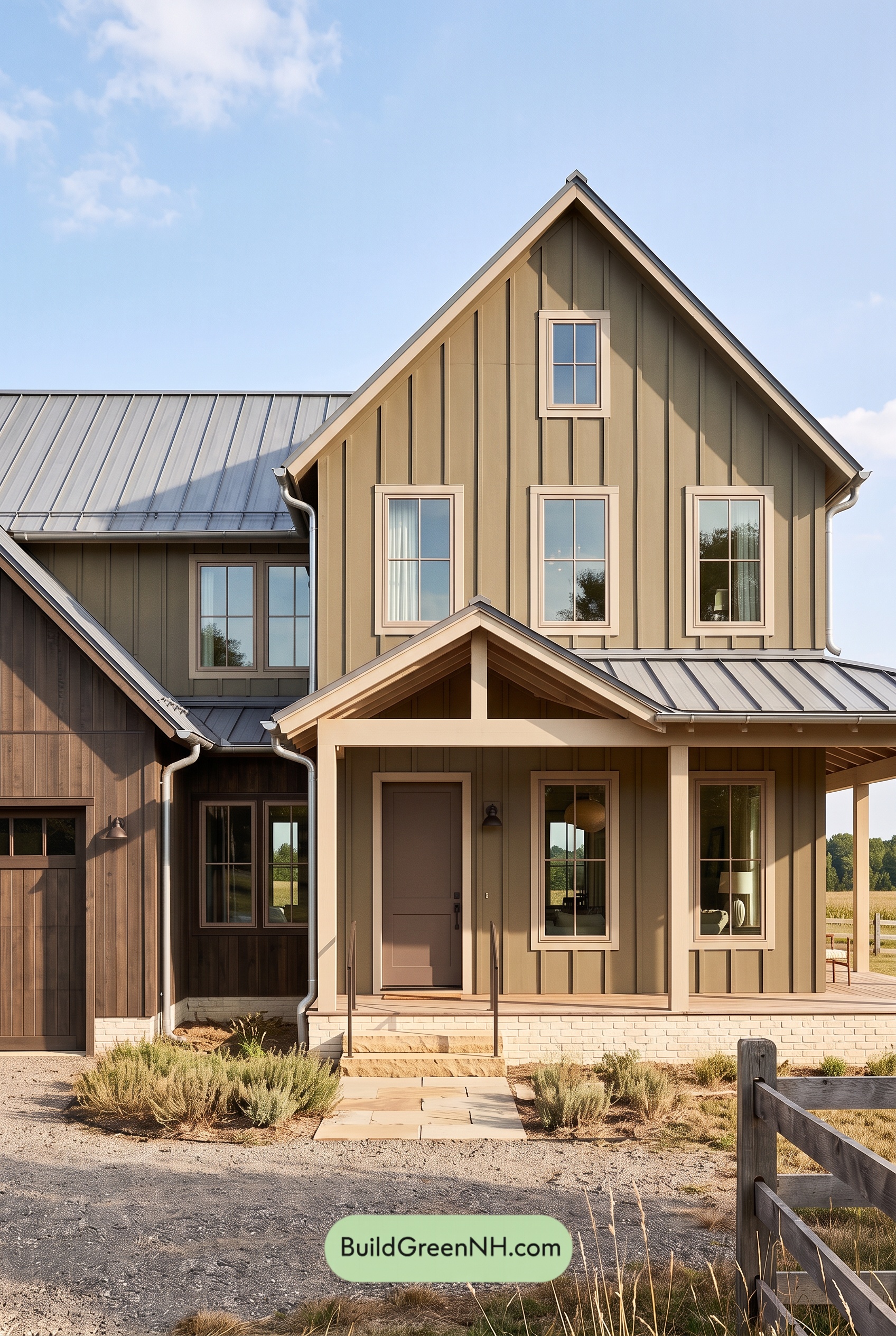 Earthy Green House Exterior Color Scheme: Green and Beige Sanctuary
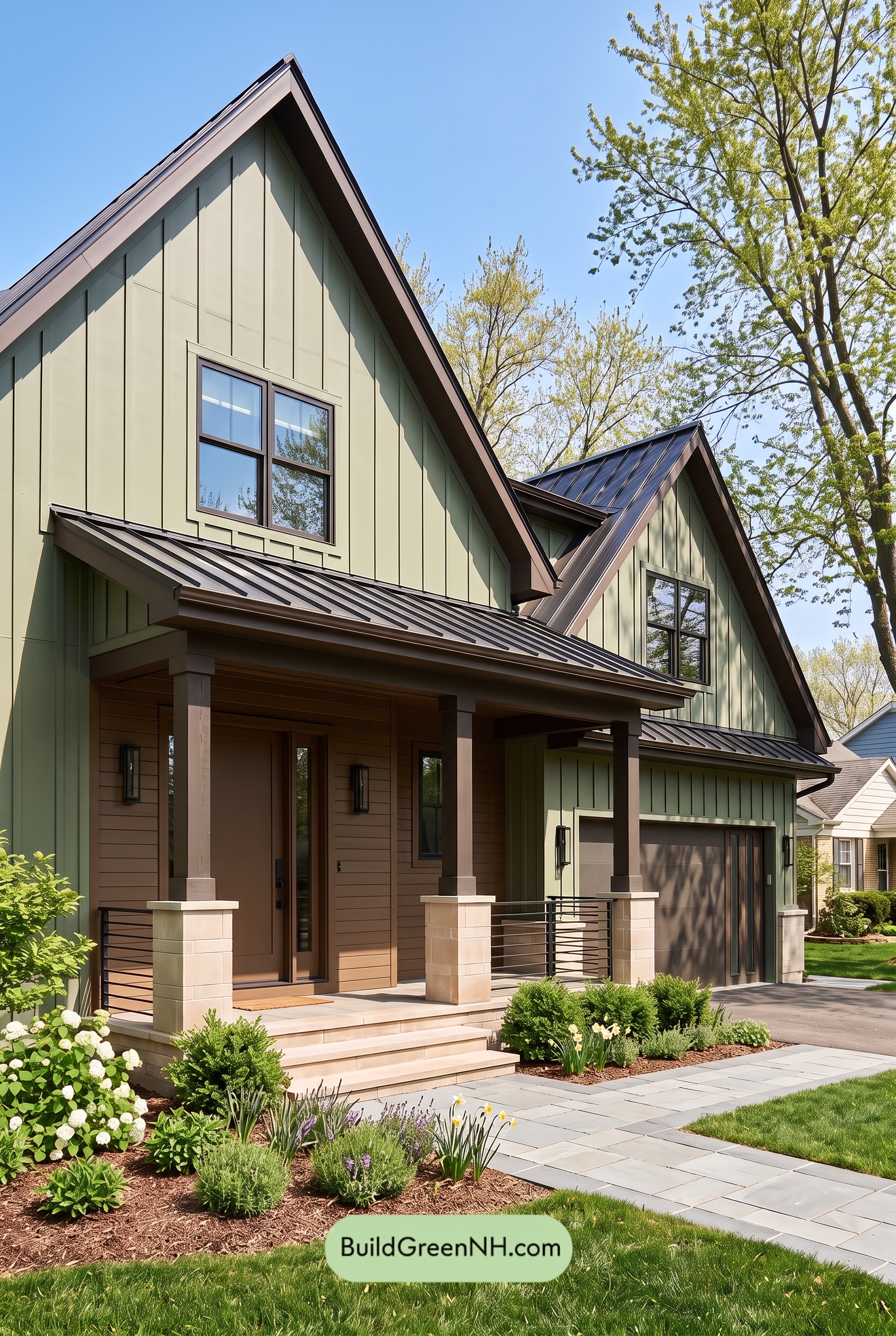 Earthy Green House Exterior Color Scheme: Green Velvet Assurance
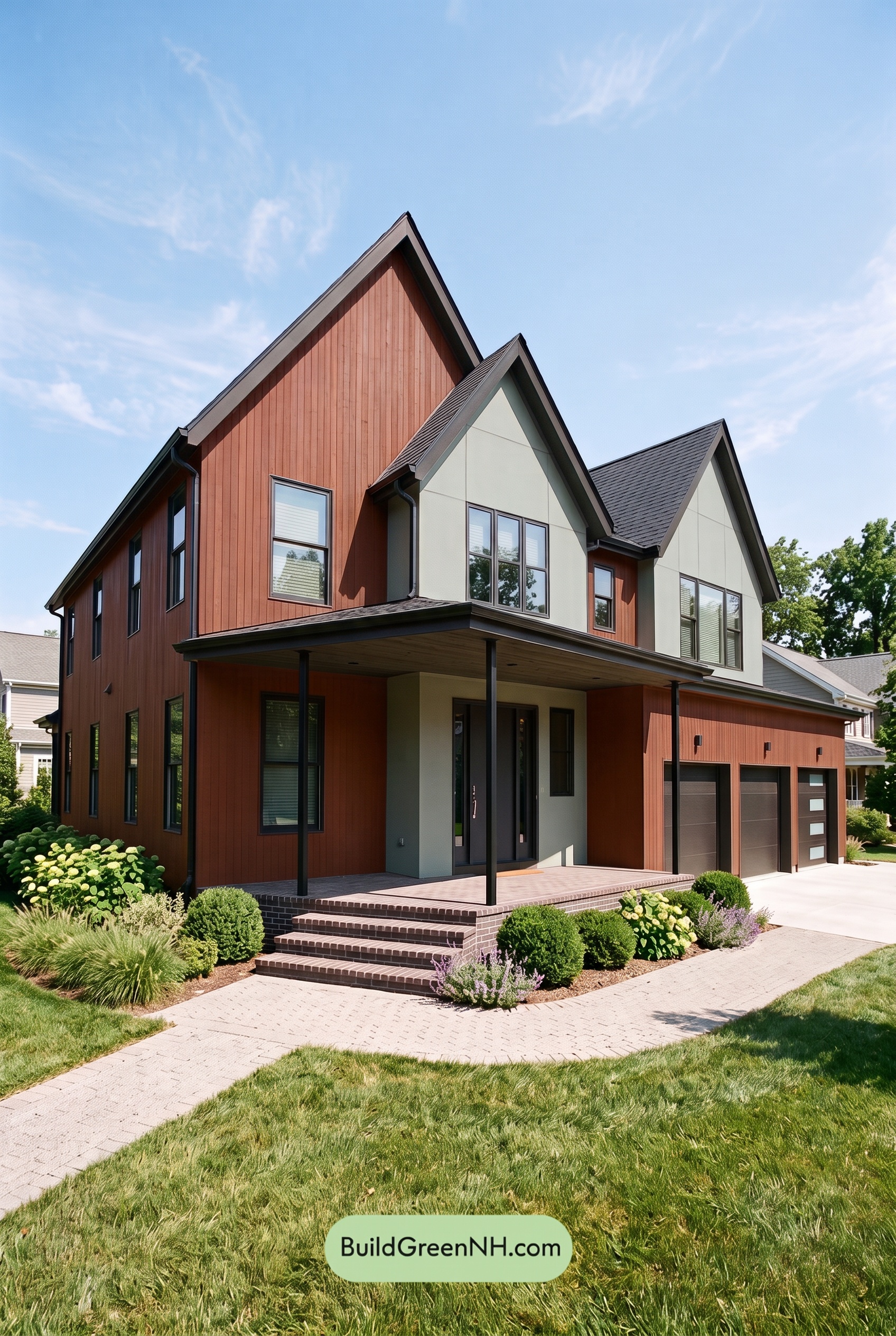 Earthy Green House Exterior Color Scheme: Brown Silken Calm
 Earthy Green House Exterior Color Scheme: Green Amber Contentment
Table of Contents