Last updated on
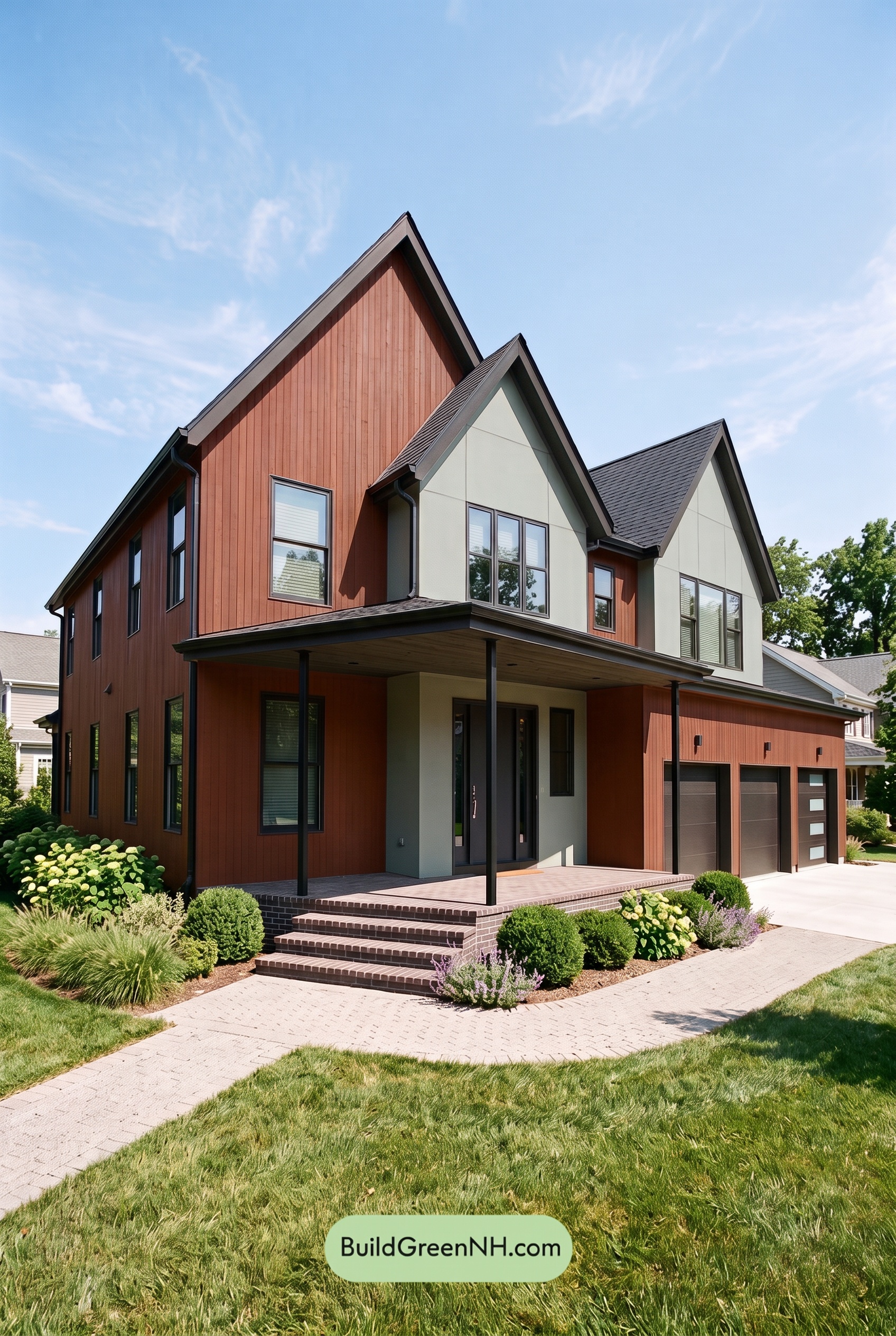

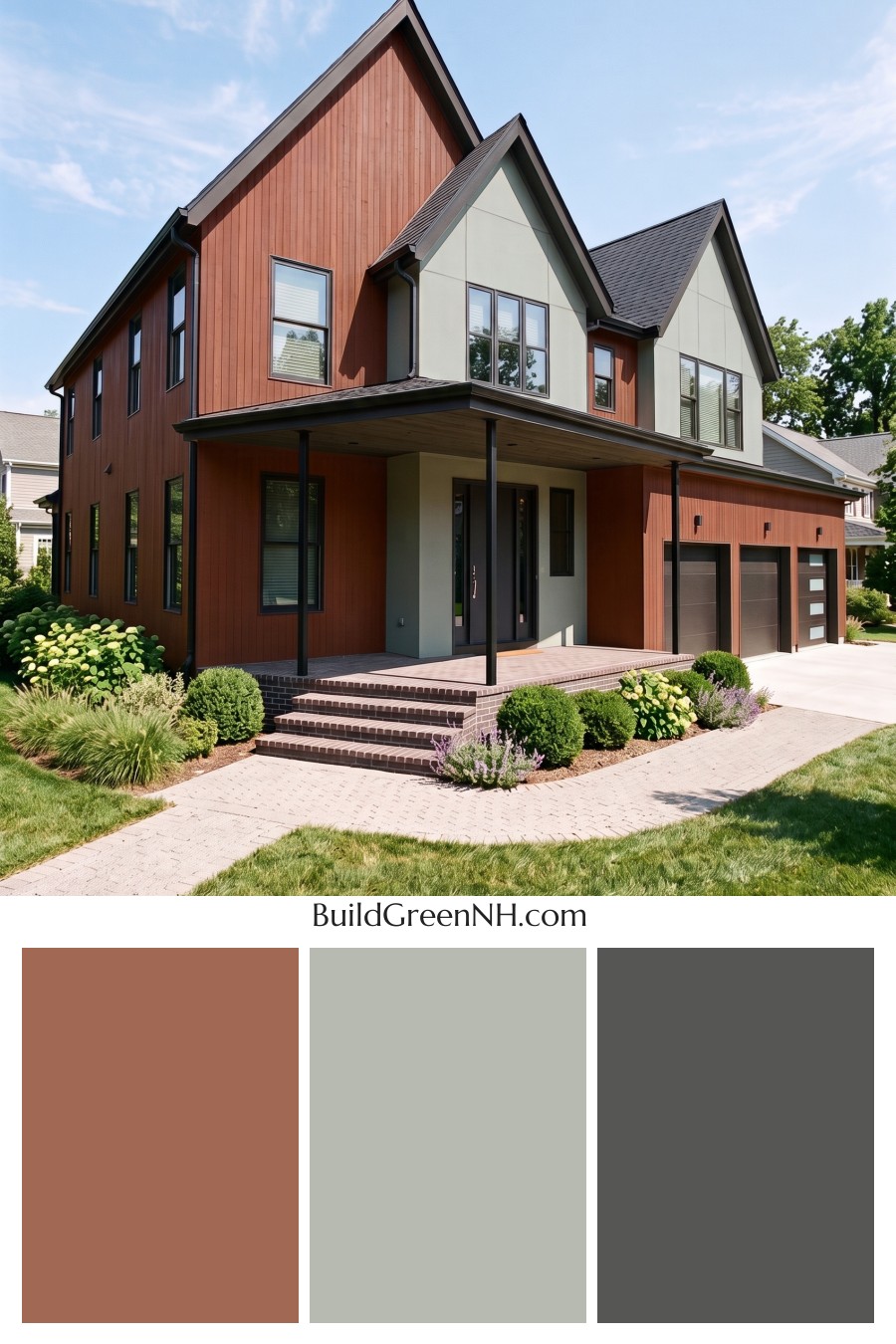
Warm reddish-brown siding, soft gray accents, and deep charcoal details give this home a striking balance of earthy warmth and crisp, modern definition.
Rich Brown Siding Sets a Welcoming Tone
The main siding wears a warm, medium reddish-brown shade that brings depth to the home’s tall walls and prominent gable. Its muted red undertones add character without feeling overly bright, while the vertical siding gives the color a subtle rhythm of light and shadow.
This warm brown continues across the garage wing, connecting the different sections of the exterior. It makes the substantial house feel cohesive and inviting rather than imposing.
Soft Gray Gives the Gables Breathing Room
The two smaller front-facing gables introduce a pale gray with a gentle green undertone. Against the richer brown siding, these lighter surfaces create a refreshing pause and draw attention to the layered rooflines.
A similar soft gray surrounds the recessed entry, visually linking the front door with the upper facade. That repetition matters: the accent shade feels woven into the architecture rather than confined to a single decorative feature.
Dark Details Bring Everything into Focus
Deep gray trim traces the roof edges, sharpening the steep gables without the starkness of a light border. Charcoal-gray window frames repeat that definition throughout the exterior, giving the windows a clean, consistent outline against both siding shades.
The slender porch columns and front door carry the darker gray down to ground level. Across the garage, deep gray doors with warm brown undertones sit comfortably beside the reddish-brown walls. They provide contrast without turning the broad garage frontage into the main attraction.
Overhead, the dark gray roof anchors the palette. Its textured surface adds variation while staying within the same restrained family as the trim and frames.
A Palette That Feels Grounded and Modern
The appeal comes from a clear balance: warm brown supplies richness, pale gray creates relief, and charcoal adds structure. Muted reddish-brown porch masonry reinforces the warmth at the entrance, while the surrounding greens make the siding feel especially natural.
The result is modern but not cold. Each shade has a distinct role, yet their softened undertones keep the contrasts comfortable—a thoughtful combination that lets the home’s strong architectural lines shine.
Next, see how this color scheme looks under different lighting simulations throughout the day.
Overcast
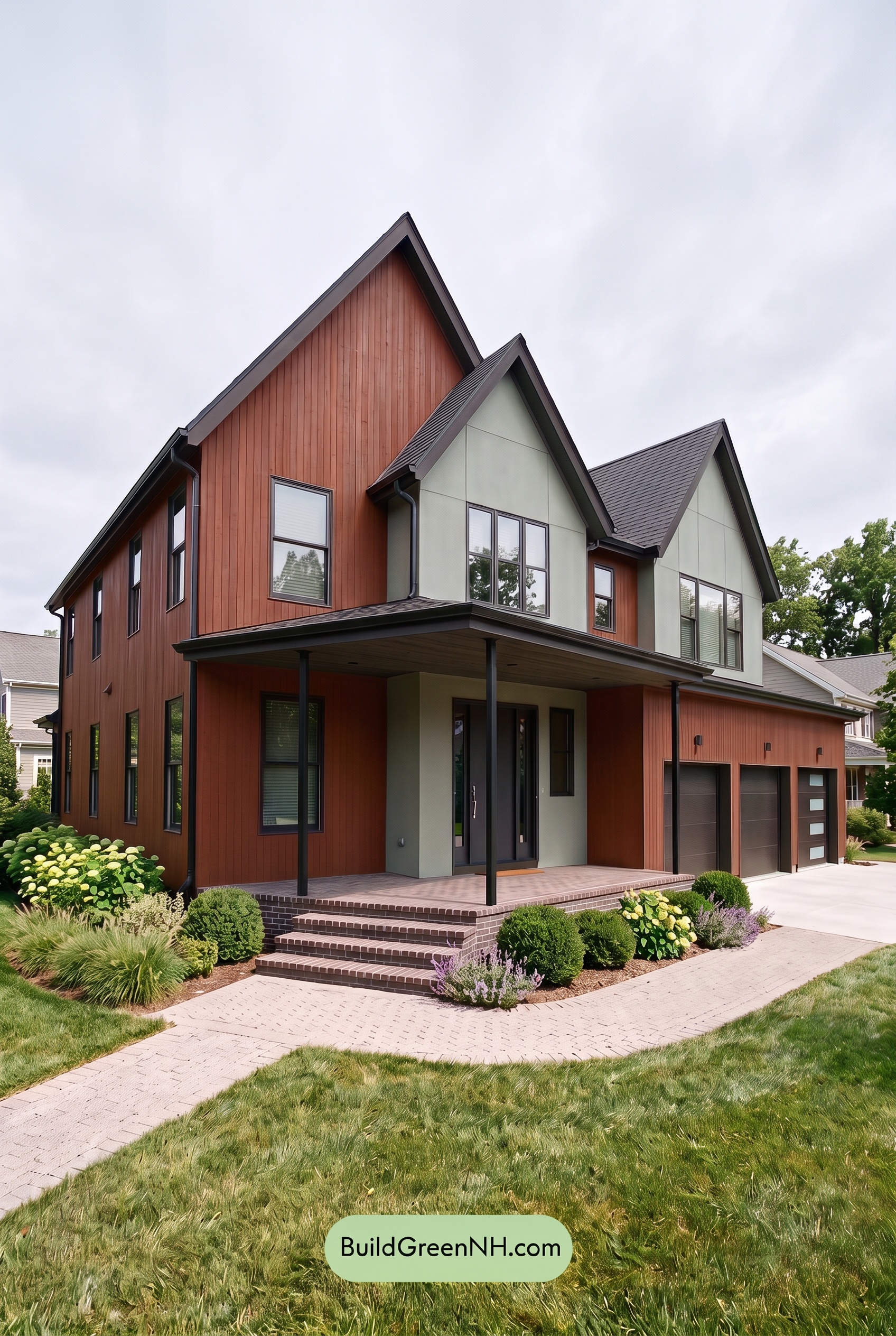
Under overcast skies, the reddish-brown siding appears more muted than in neutral daylight, with its warm undertones softened rather than lost. The pale gray accents read a little cooler, while the deep gray trim and window frames feel less stark without bright highlights. This gives the warm-and-cool pairing a quieter, more balanced presence.
Diffused light softens shadows beneath the gables and across the siding, reducing sharp light-to-dark contrast. The sheltered porch still holds deeper tones, and the dark gray details remain distinct against the lighter gray surfaces. Compared with neutral daylight, the overall mood feels calmer and more subdued, while the brown shades keep the exterior welcoming.
Golden Hour
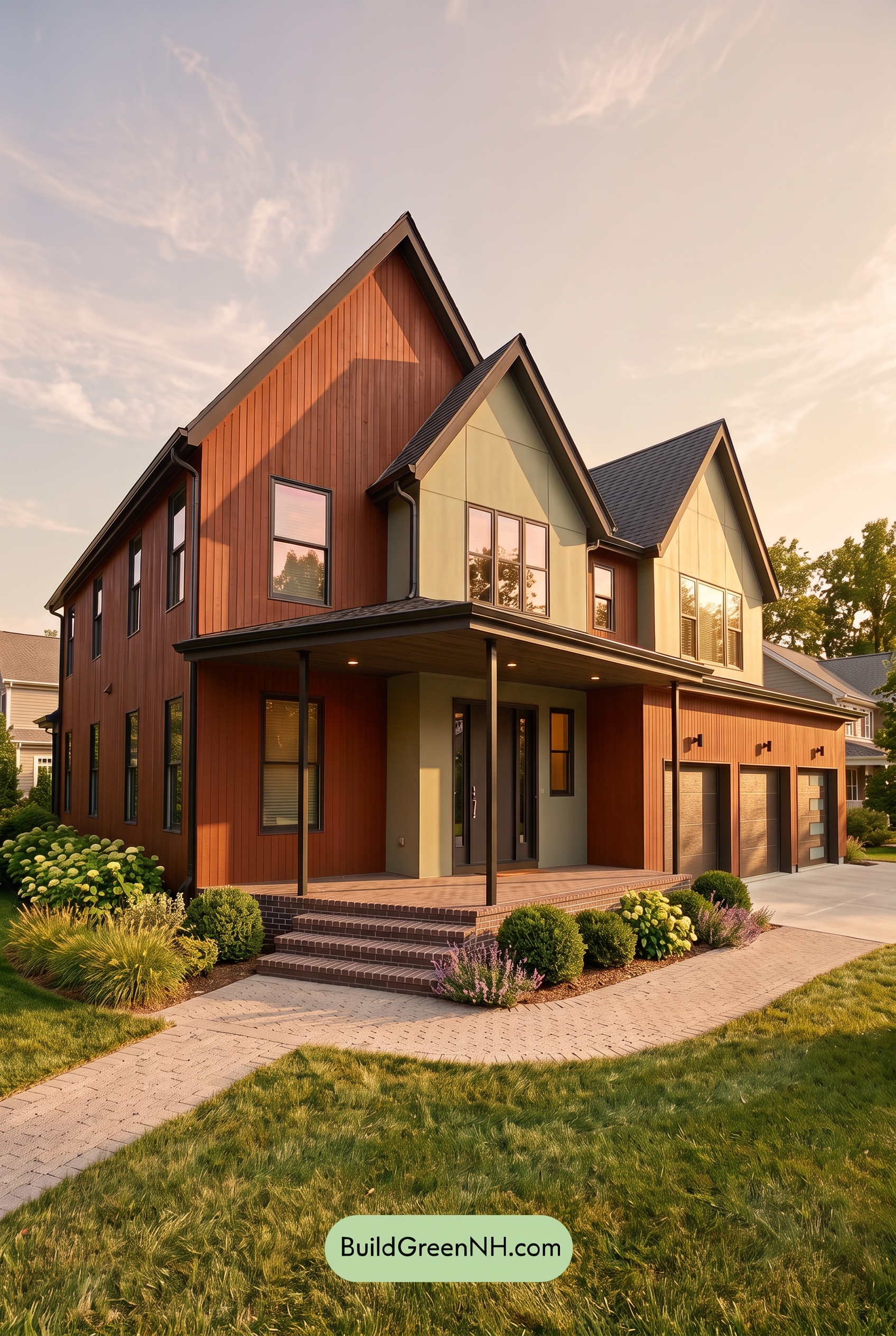
Golden Hour brings out the red-orange undertones in this brown siding, making it appear richer and more saturated than it would in neutral daylight. The lighter grays take on a soft yellow-beige cast, trading their cooler daytime character for a warmer glow. Together, these shifts make the exterior feel earthier and more inviting.
Long shadows beneath the gables and porch deepen the browns and dark grays, creating stronger light-to-dark contrast across the facade. Sunlit edges feel softer and warmer, while shaded areas stay muted and comparatively cool. Where neutral daylight would show the color differences more evenly, Golden Hour adds depth and a cozy, quietly dramatic mood.
Shade
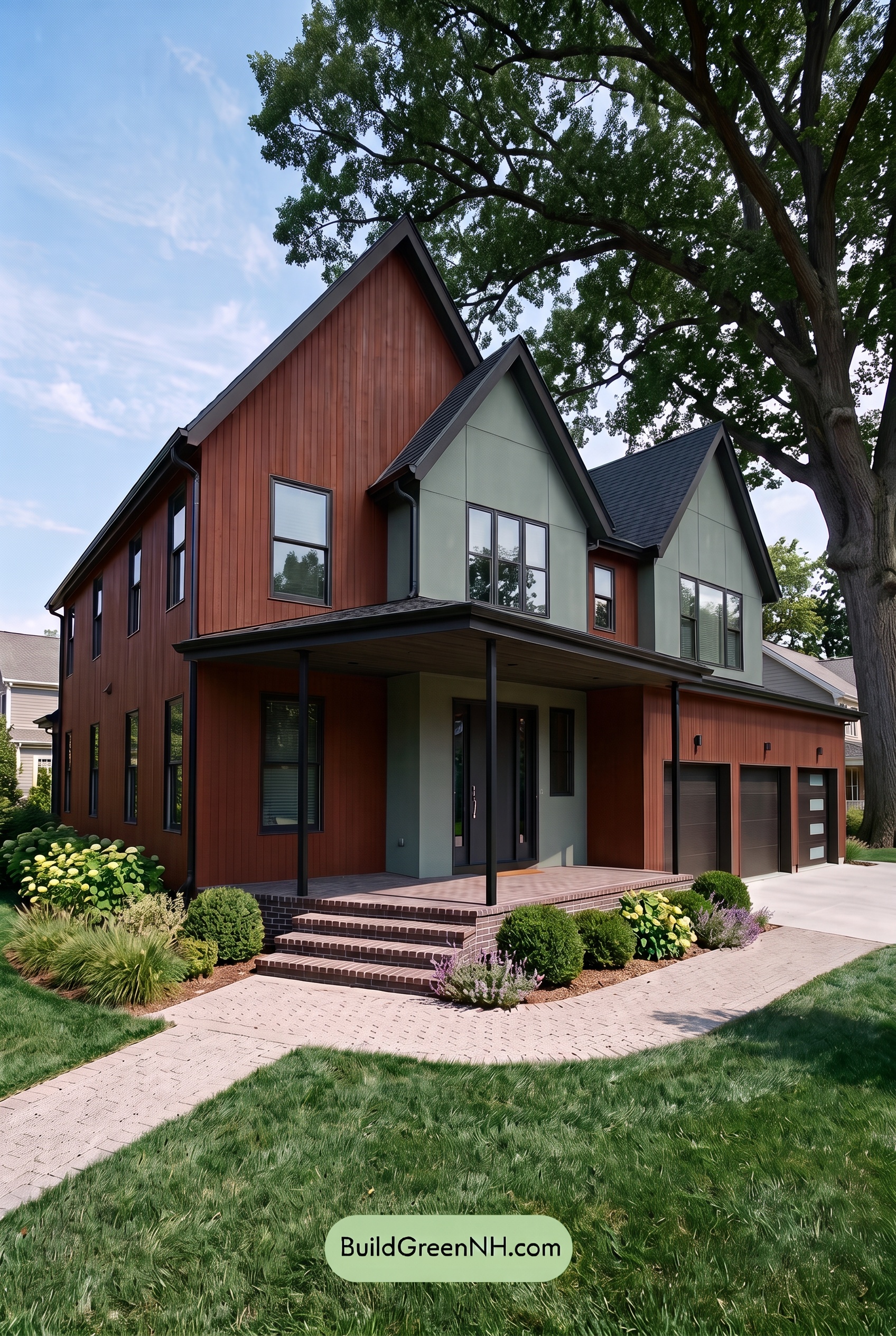
In shade, the reddish-brown siding reads deeper and less saturated than it would in neutral daylight, trading some of its warmth for a quieter, earthier feel. The lighter grays appear cooler, with a subtle greenish cast that becomes more noticeable as the warm tones soften.
Beneath the porch and eaves, shadows draw the darkest grays toward near-black, allowing frames and columns to blend into the shaded recesses. Across the broader walls, gentler light softens contrasts, while the pale gray gables still stand out against their dark edges. Compared with neutral daylight, the overall mood feels calmer, more subdued, and sheltered.
Nighttime
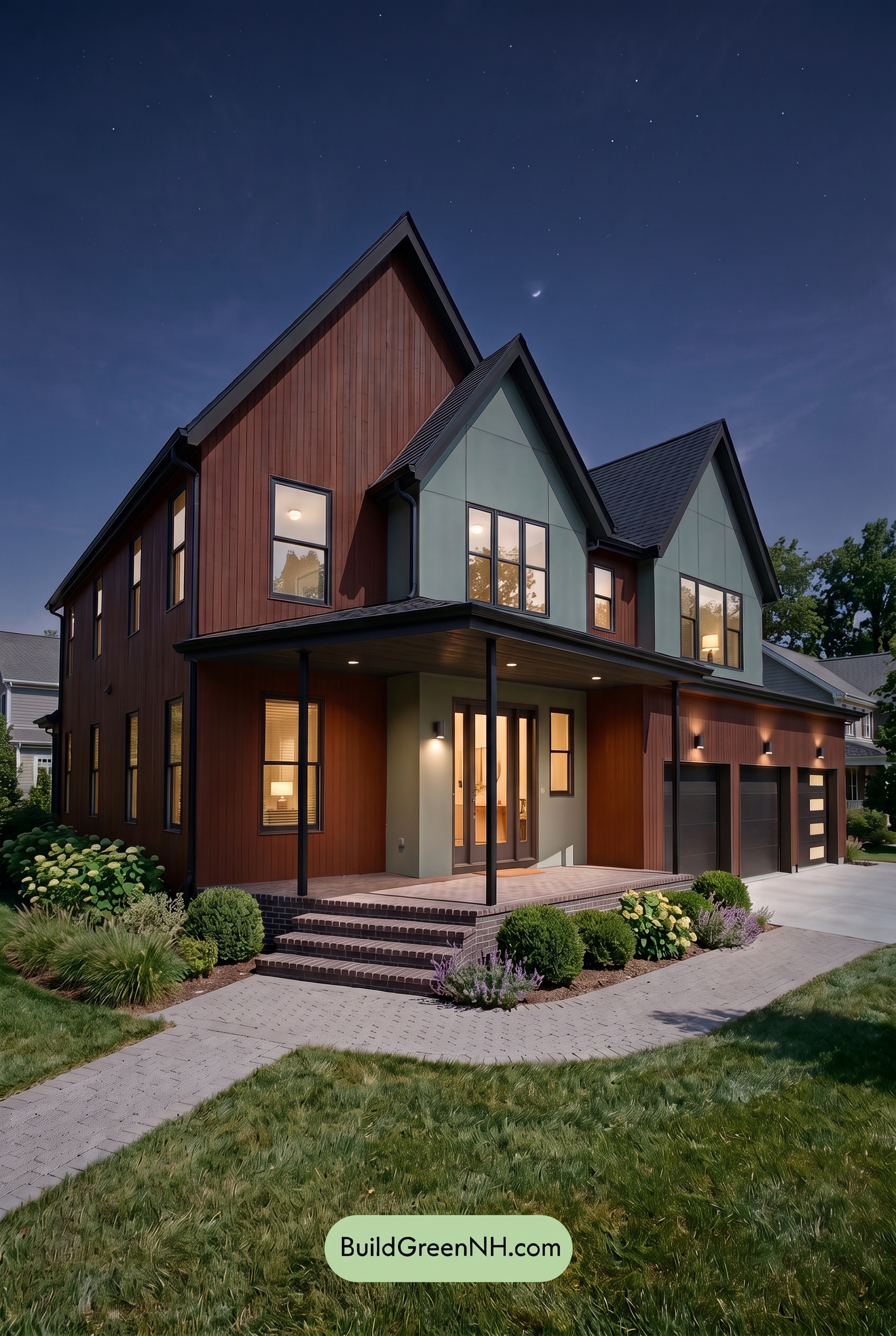
At night, the brown siding deepens, appearing less saturated in shadow while its reddish warmth becomes richer near the exterior lights. Compared with neutral daylight, the lighter grays take on a cooler, slightly blue-green cast away from the fixtures, while illuminated areas feel softer and warmer. These shifts give the exterior a more layered, intimate character.
Deep shadows beneath the gables and porch draw the darkest grays toward nearly black, allowing trim, window frames, and columns to blend together. Meanwhile, pools of warm light sharpen the contrast around the entry and garage. The overall mood moves from daylight clarity to a cozy, dramatic balance of glowing warm neutrals and cool, shadowed shades.
Pin these for later:
Want More?
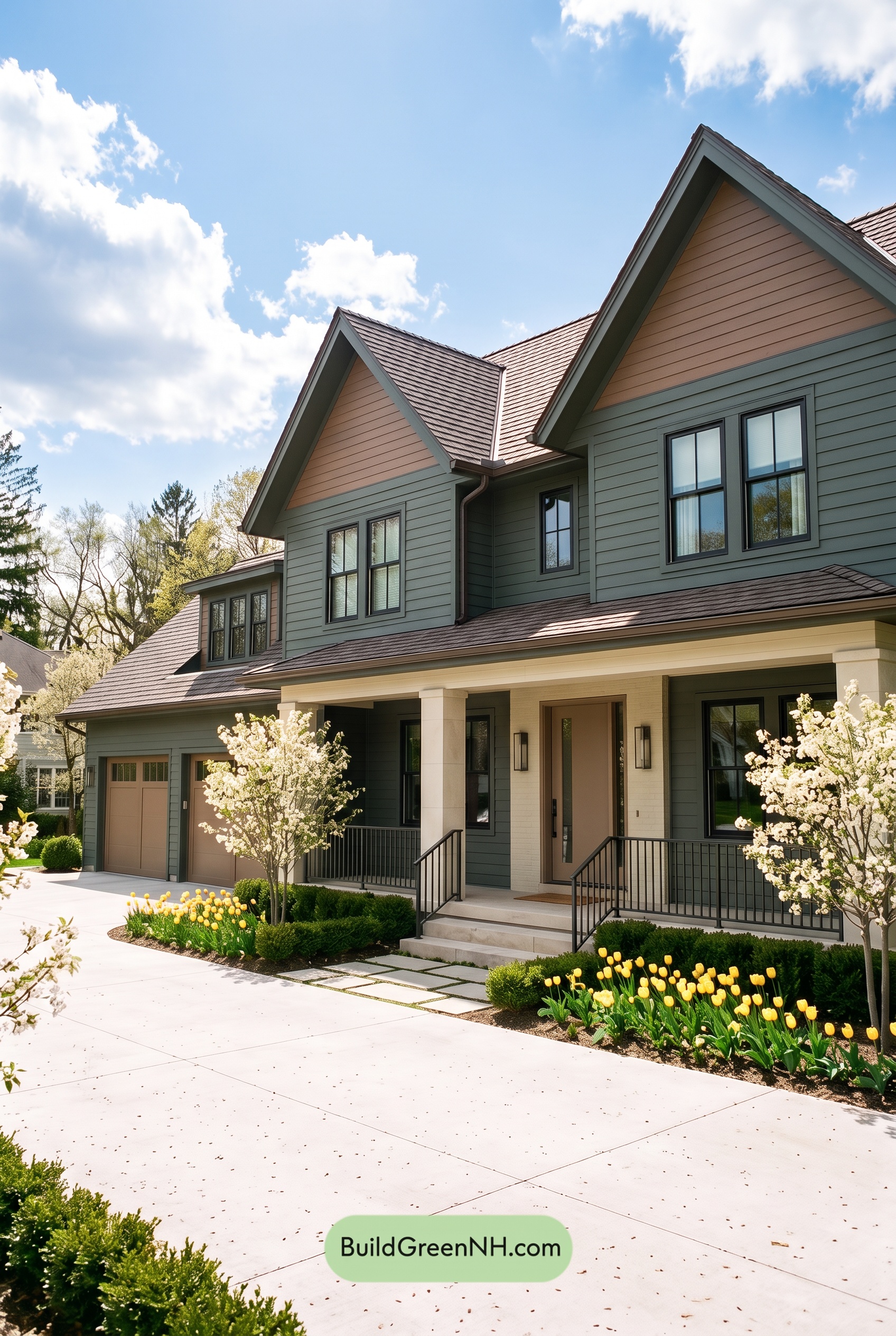 Earthy Green House Exterior Color Scheme: Brown Green Comfort
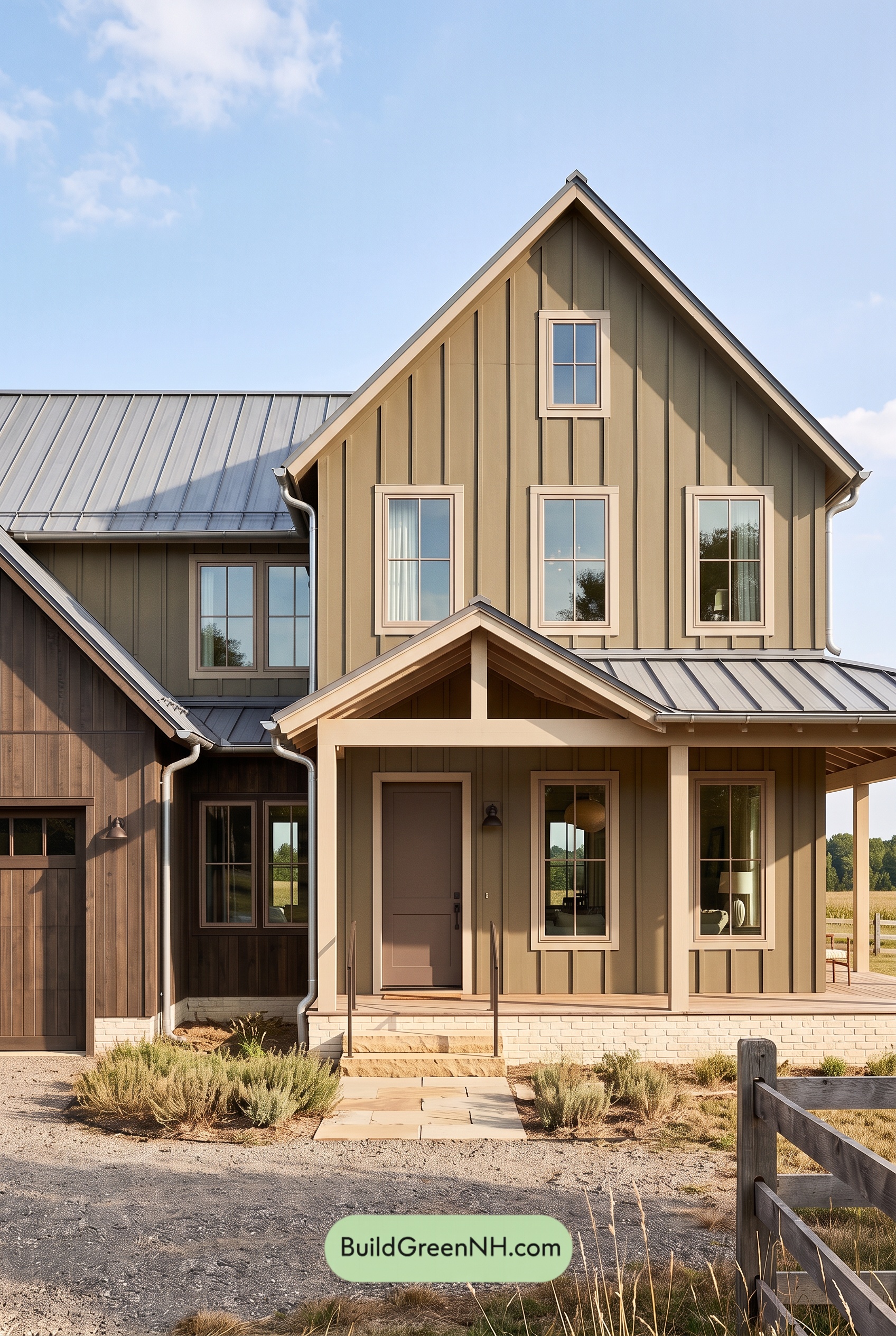 Earthy Green House Exterior Color Scheme: Green and Beige Sanctuary
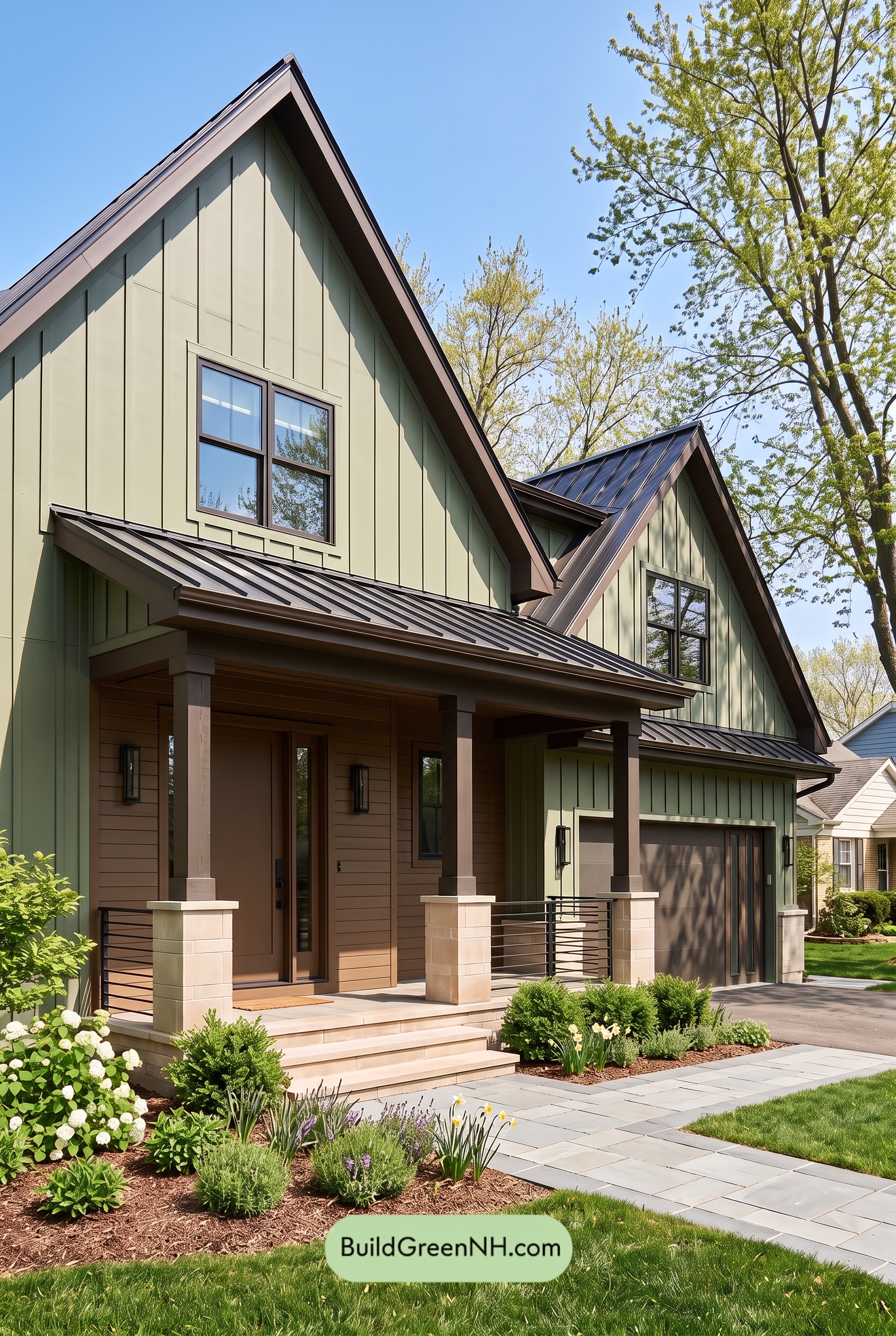 Earthy Green House Exterior Color Scheme: Green Velvet Assurance
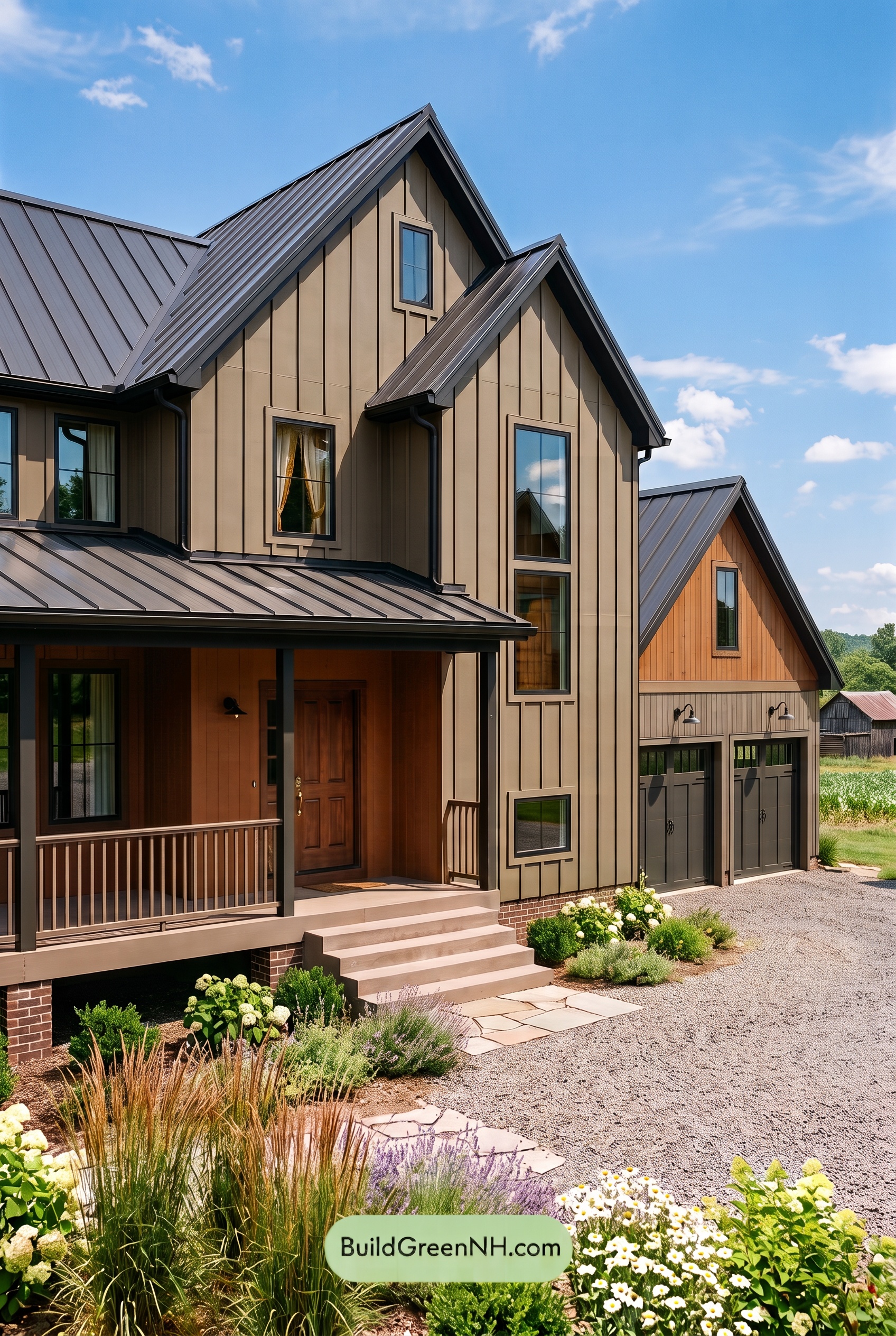 Earthy Green House Exterior Color Scheme: Green Amber Contentment
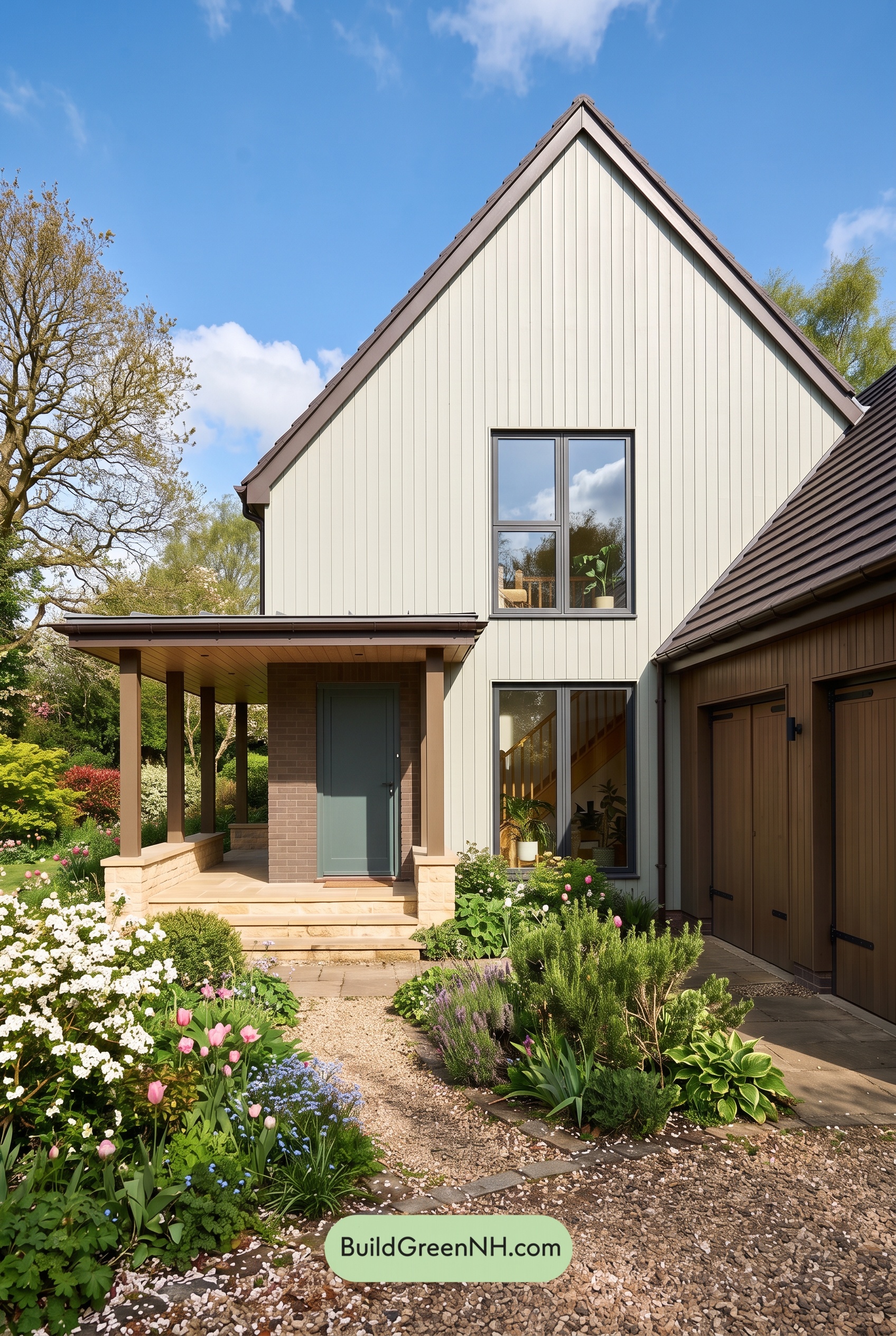 Earthy Green House Exterior Color Scheme: Green Quiet Delight
Table of Contents