Last updated on
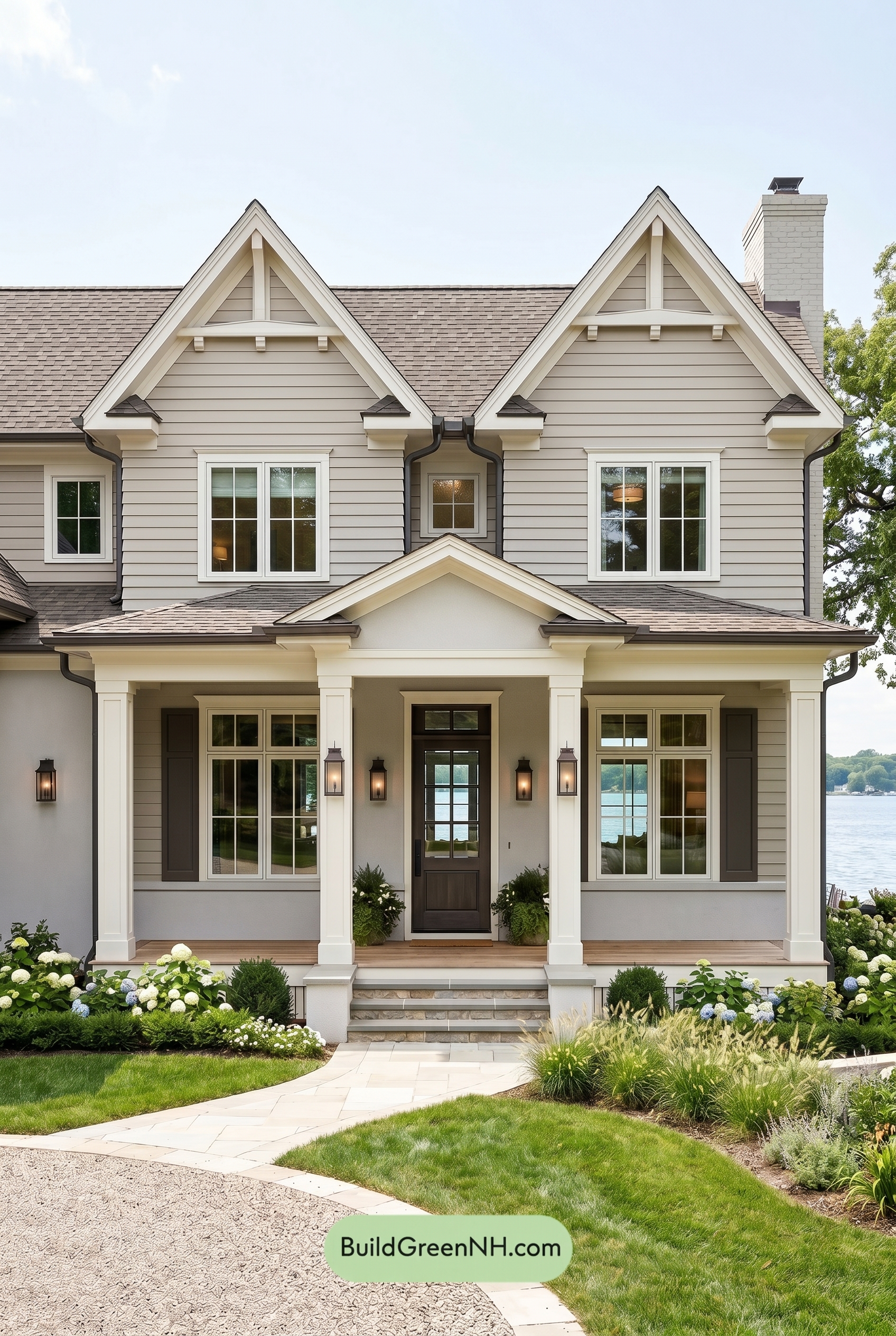

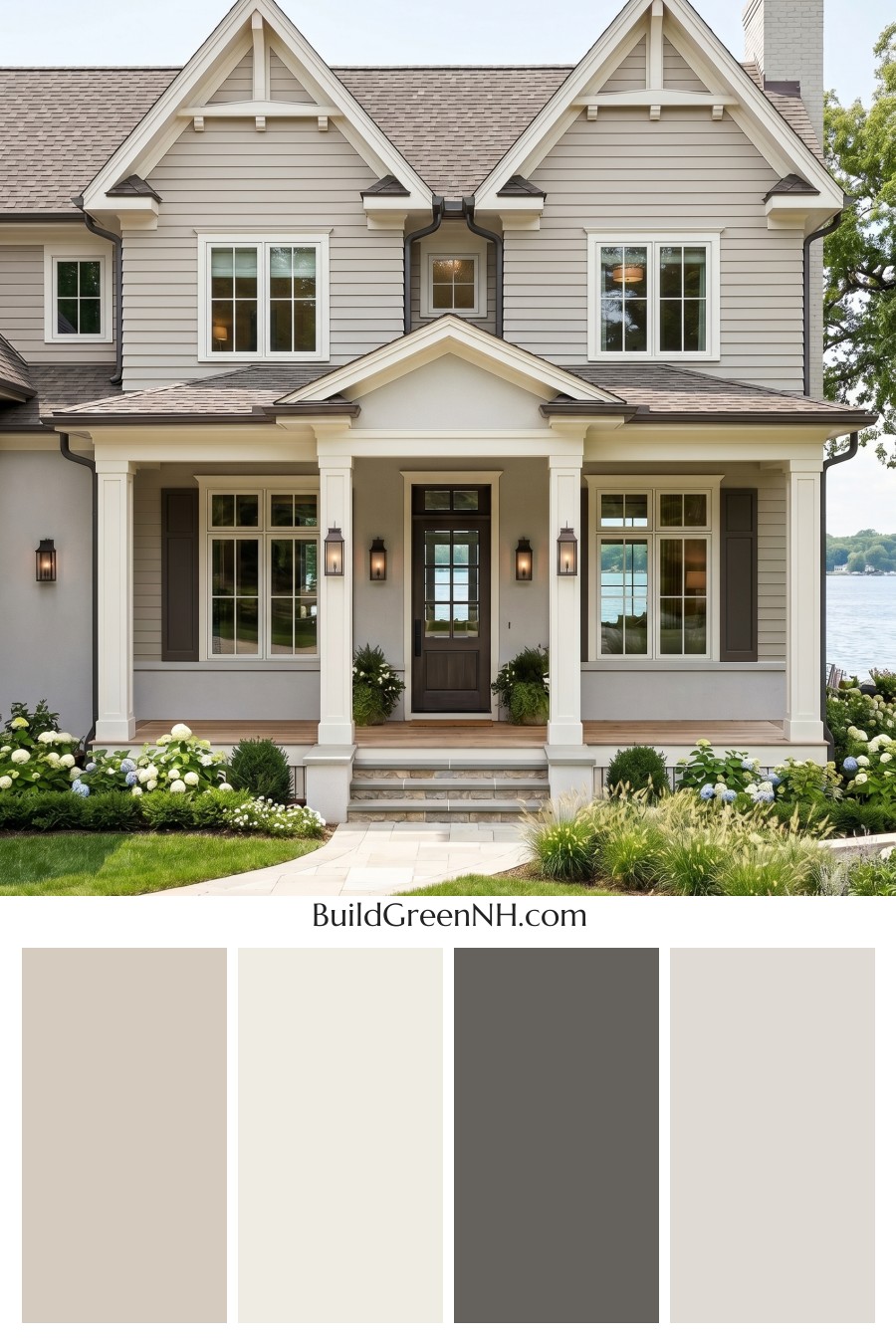
This exterior works beautifully because its warm beige body, crisp white trim, and deep gray accents create a polished look that feels timeless, welcoming, and fresh.
A Warm Beige Foundation
The main siding is wrapped in a warm shade of beige that gives the home an inviting, relaxed presence. It feels soft rather than stark, which is especially lovely on a house with so much architectural detail. The horizontal siding benefits from this calm neutral because it lets the shape of the gables, porch, and windows stand out without making the exterior feel busy.
A slightly muted beige wall section around the lower porch area adds gentle depth while staying in the same color family. This keeps the palette cohesive from top to bottom and gives the home a layered, custom look without relying on high contrast everywhere.
Crisp White Trim for Definition
The trim is one of the strongest features of this color scheme. A clean white shade outlines the windows, gables, fascia, columns, and porch details, giving the entire exterior a bright, tailored finish. Against the beige siding, the white feels fresh and classic rather than overly sharp.
The white window frames also help the glass feel larger and more refined. Because the home has many vertical and horizontal lines, this lighter trim color brings order to the design and highlights the craftsmanship beautifully.
Gray Accents That Ground the Look
The shutters and front door use a deep gray shade that adds just the right amount of contrast. This darker accent color grounds the softer beige and white palette, giving the home a more sophisticated edge. It also draws attention to the entry, making the front door feel intentional and welcoming.
The gray shutters work especially well beside the white window trim. They frame the windows without overwhelming them, creating a balanced rhythm across the facade. The result is elegant, calm, and very easy to live with.
A Roof That Ties Everything Together
The roof appears in a layered gray shade with subtle warm undertones, which makes it a natural bridge between the beige siding and the darker gray accents. It does not compete with the exterior palette. Instead, it quietly reinforces the home’s soft neutral character.
Darker gray gutters and roofline details add slim lines of definition around the edges of the home. These accents help sharpen the overall silhouette while keeping the palette restrained and tasteful.
The Overall Mood
This color scheme feels refined, comfortable, and quietly coastal. The warm beige keeps the house approachable, the white trim brings brightness and polish, and the gray accents add depth. Together, they create a balanced exterior that feels upscale without being formal.
It is a great example of how a neutral palette can still have personality. Nothing feels flat because each color family plays a clear role: beige for warmth, white for structure, and gray for contrast. The surrounding greenery makes the palette feel even more inviting, allowing the house to sit naturally in its landscape while still looking crisp and well designed.
Next, see how this color scheme looks under different lighting simulations throughout the day.
Overcast
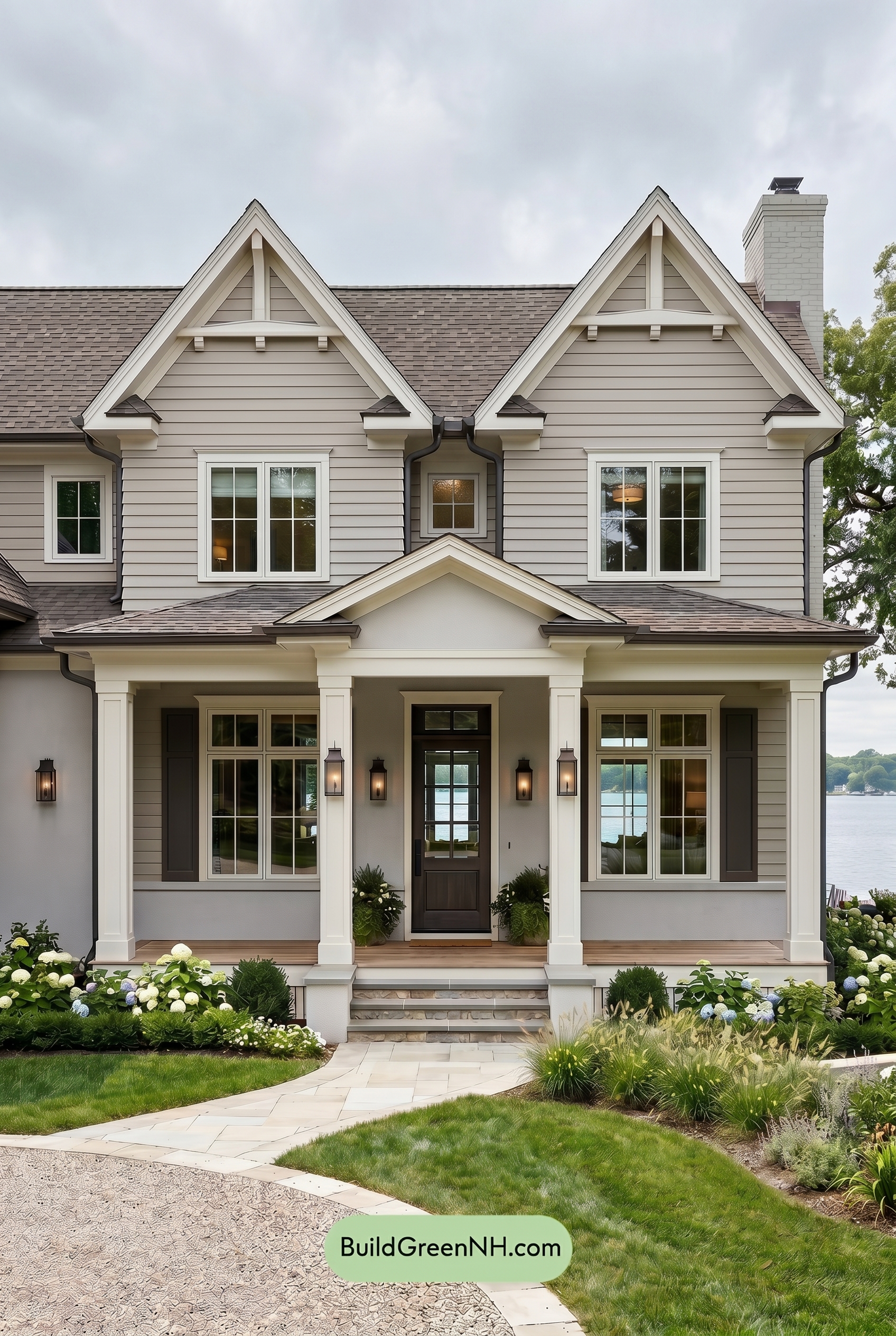
Under overcast light, the beige siding loses a bit of saturation and warmth compared to neutral daylight, reading softer and slightly cooler. The white trim and columns appear less crisp, with their brightness gently muted rather than sparkling, which gives the exterior a calmer, more blended look.
The gray shutters and front door deepen subtly in the diffused light, while shadows under the eaves and porch become softer and less defined. With lower contrast overall, the house feels more relaxed and quiet, shifting from bright and polished to cozy, understated, and serene.
Golden Hour
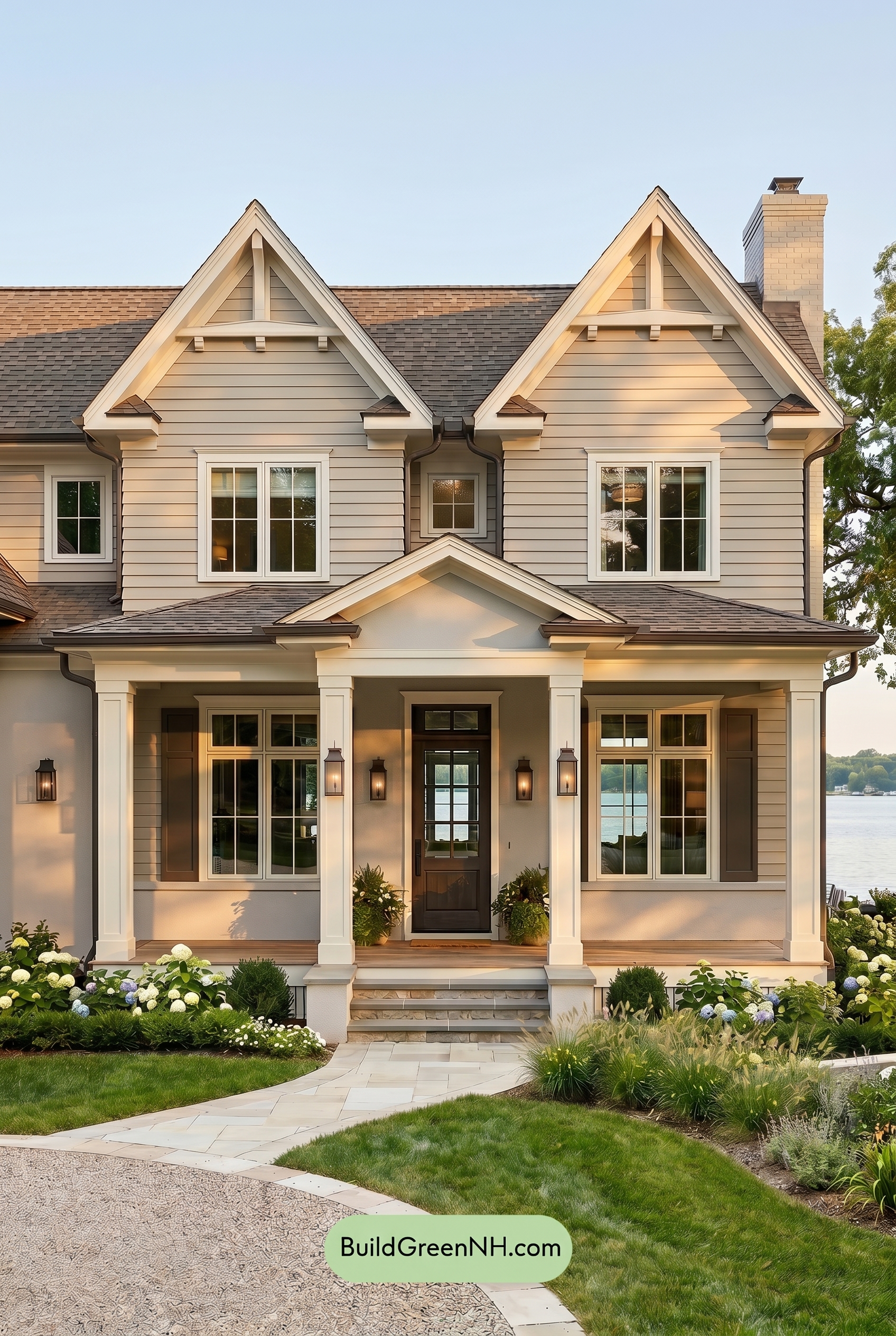
Under Golden Hour light, the beige siding takes on a richer, warmer glow than it would in neutral daylight, with its saturation gently lifted and its undertones feeling softer and more sun-washed. The white trim and columns shift from crisp and clean to creamy and luminous, creating a welcoming edge around the windows, rooflines, and porch.
The gray shutters and front door appear deeper in the lengthening shadows, adding stronger contrast against the warmed neutrals. Compared with the flatter balance of neutral daylight, the angled light carves out the gables and siding lines, giving the whole exterior a calmer, cozier, more romantic mood.
Shade
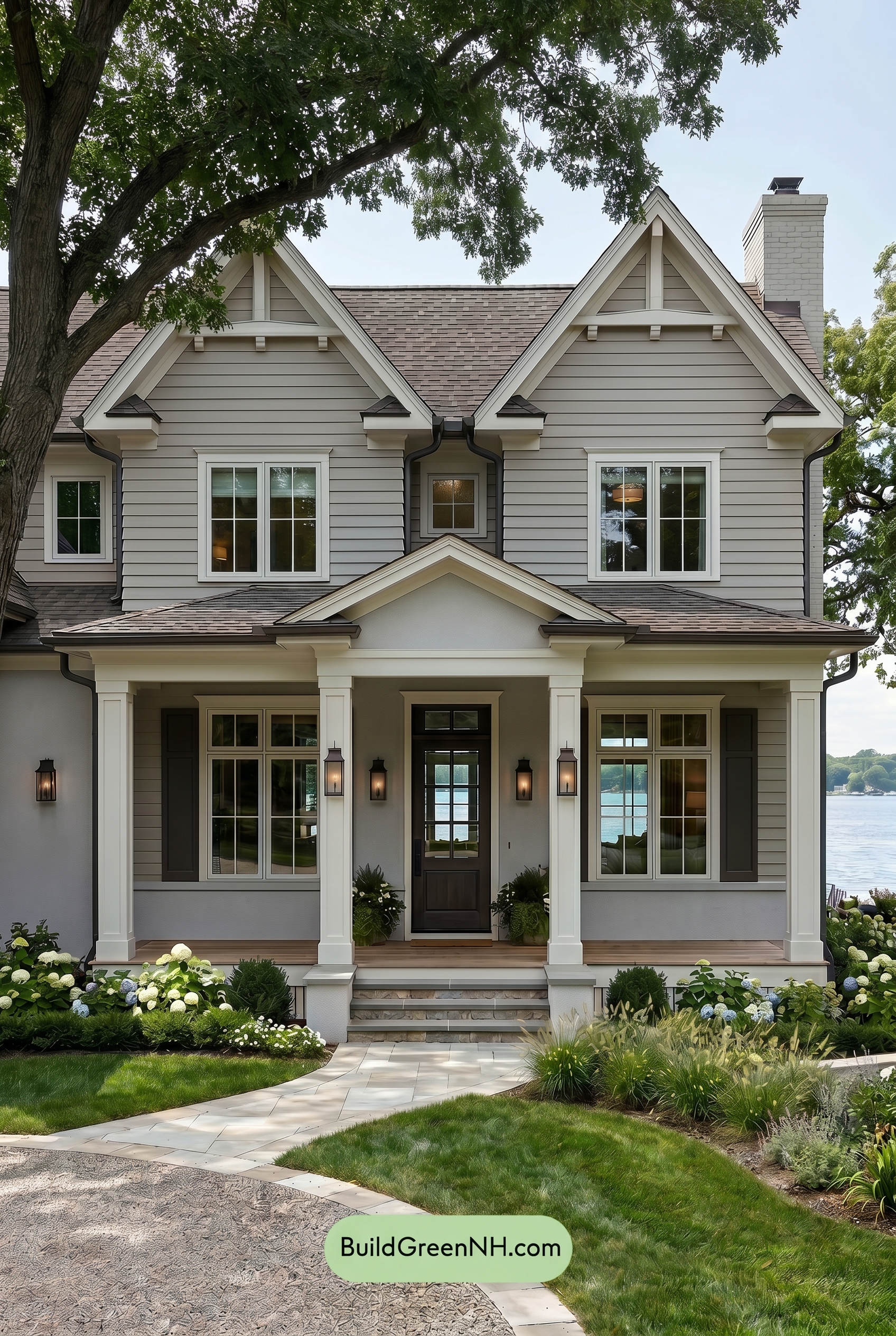
In shade, the beige siding appears cooler and slightly more muted than it would in neutral daylight, with its warmth softened by the overhead tree cover. The white trim and columns lose a bit of crisp brightness, shifting toward a gentler, creamier read while still outlining the gables and windows clearly.
The gray shutters and front door deepen under shadow, gaining saturation and a steadier, more grounded presence. Contrast becomes softer overall, but the darker gray accents and layered rooflines add depth, giving the exterior a calm, sheltered, and quietly elegant mood.
Nighttime
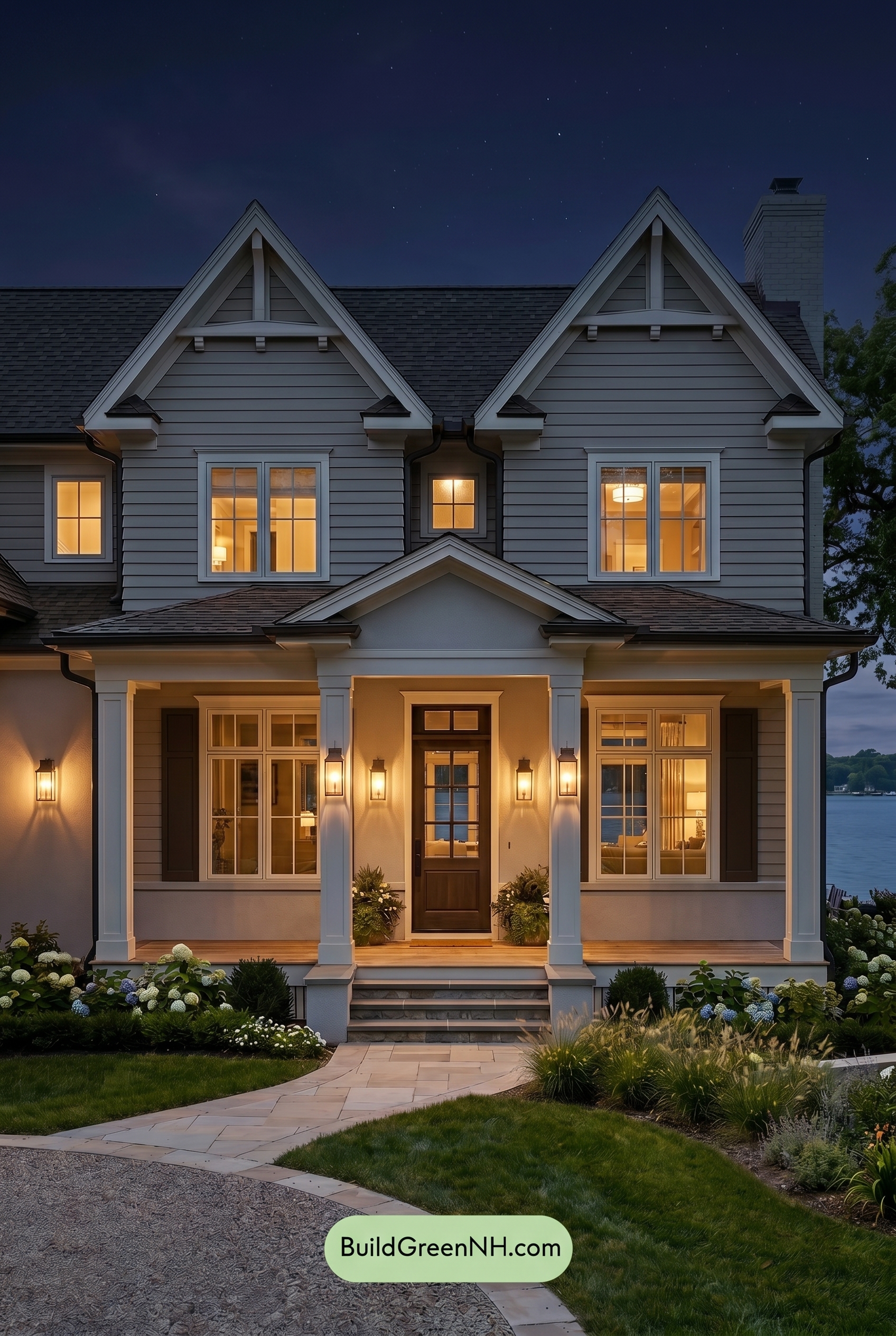
At nighttime, the beige family shifts away from the balanced softness it would show in neutral daylight, becoming warmer and more saturated where the porch lights touch it, while the upper wall areas cool down and deepen in shadow. The white trim and columns take on a gentle glow near the lighting, creating stronger contrast against the darker rooflines and recessed areas.
The gray family on the shutters and front door appears richer and moodier after dark, with shadows increasing depth and making the details feel more defined. Compared to daylight, the whole palette feels less crisp and more atmospheric—warm, welcoming, and softly dramatic.
Pin these for later
Want More?
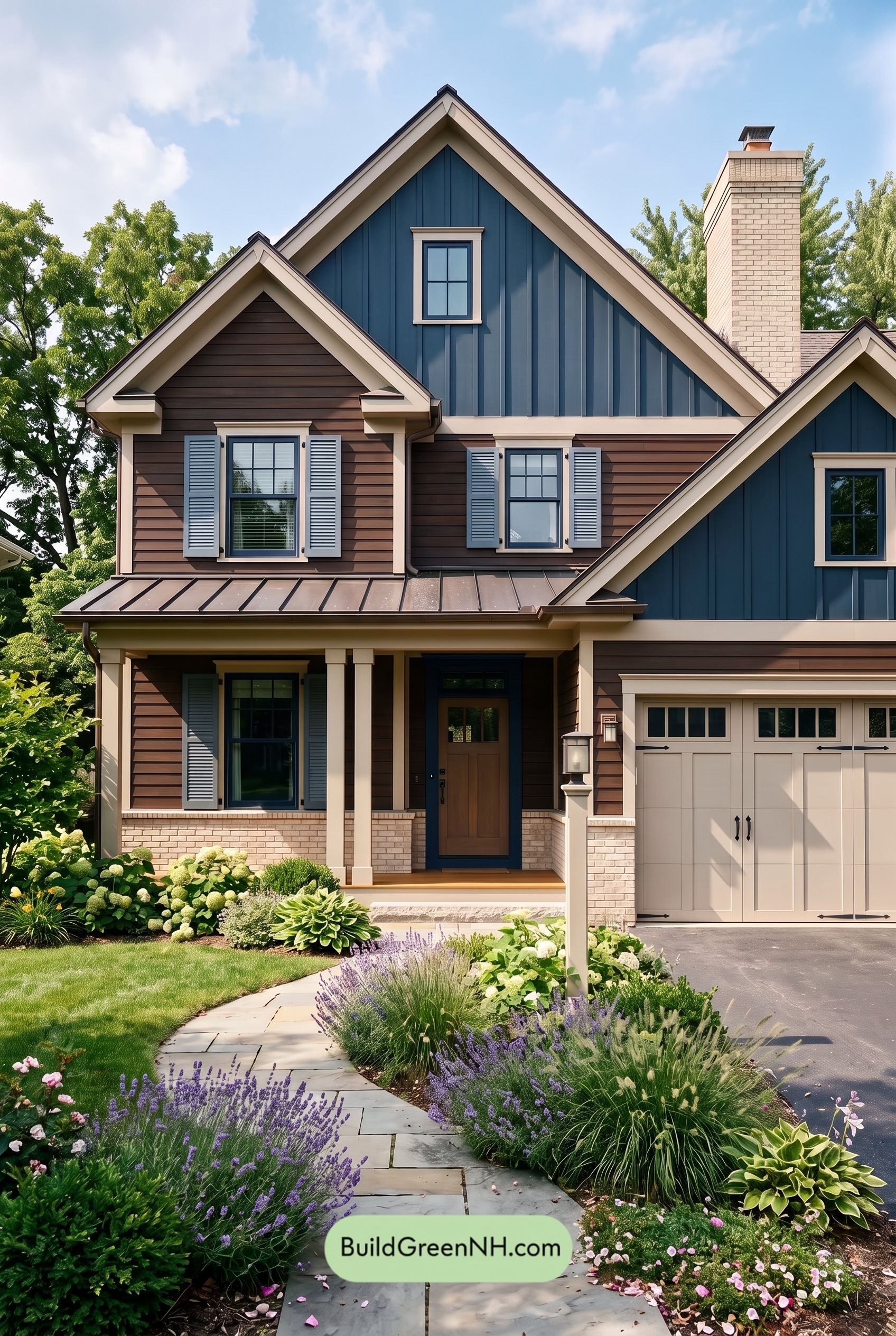 Dark Brown House Exterior Color Scheme: Inkwood Lantern
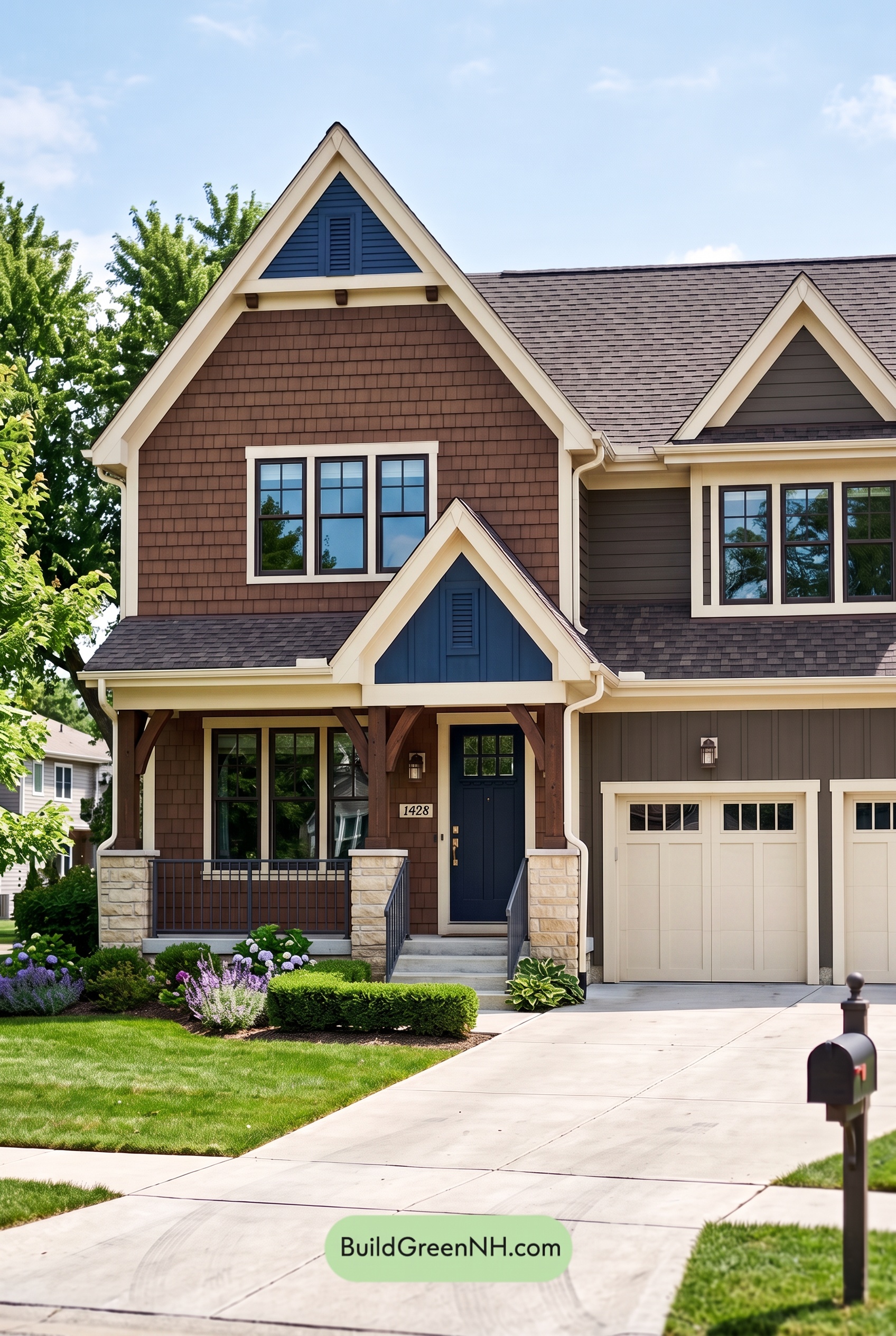 Dark Brown House Exterior Color Scheme: Bluebell Timberline
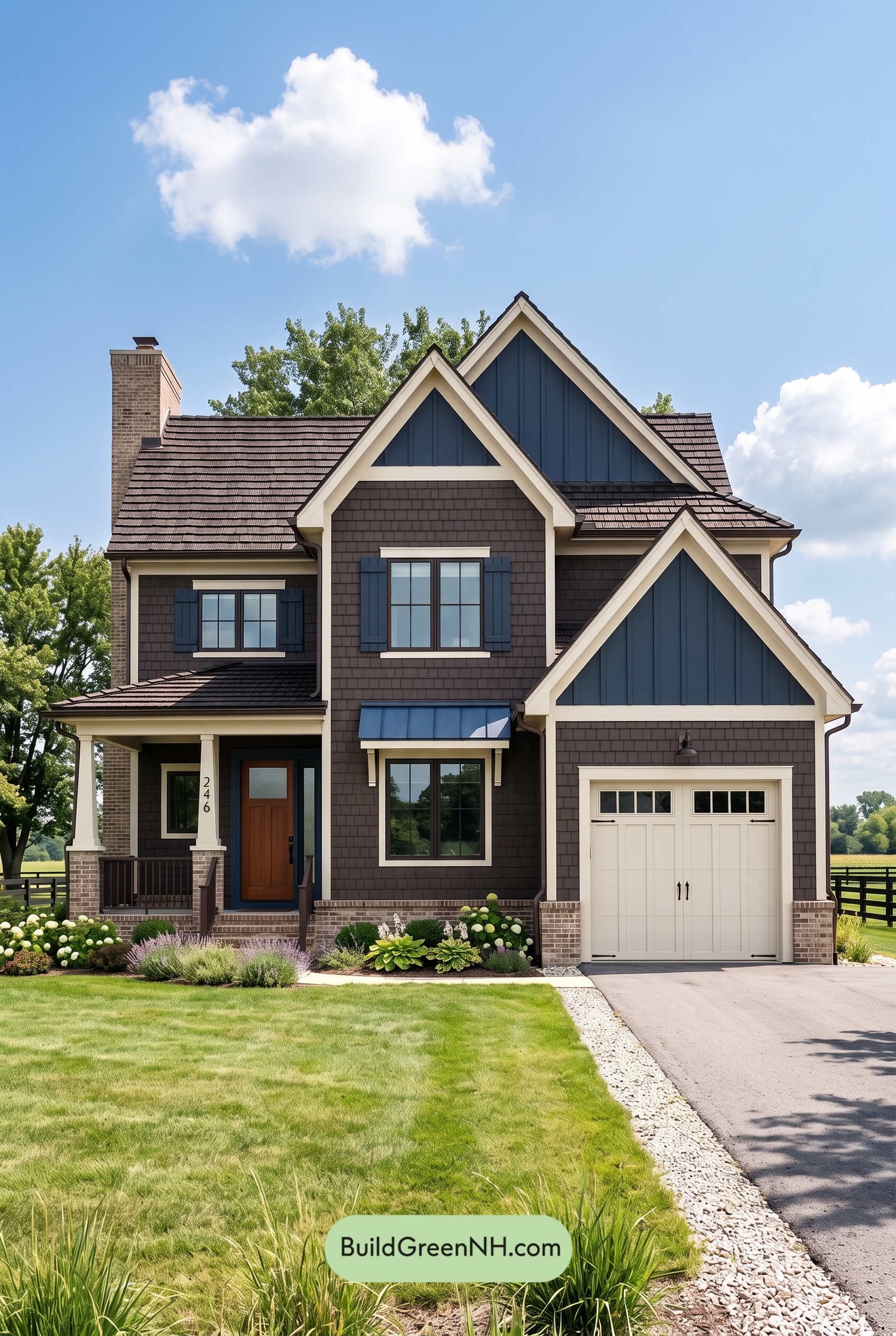 Dark Brown House Exterior Color Scheme: Sapphire Homestead
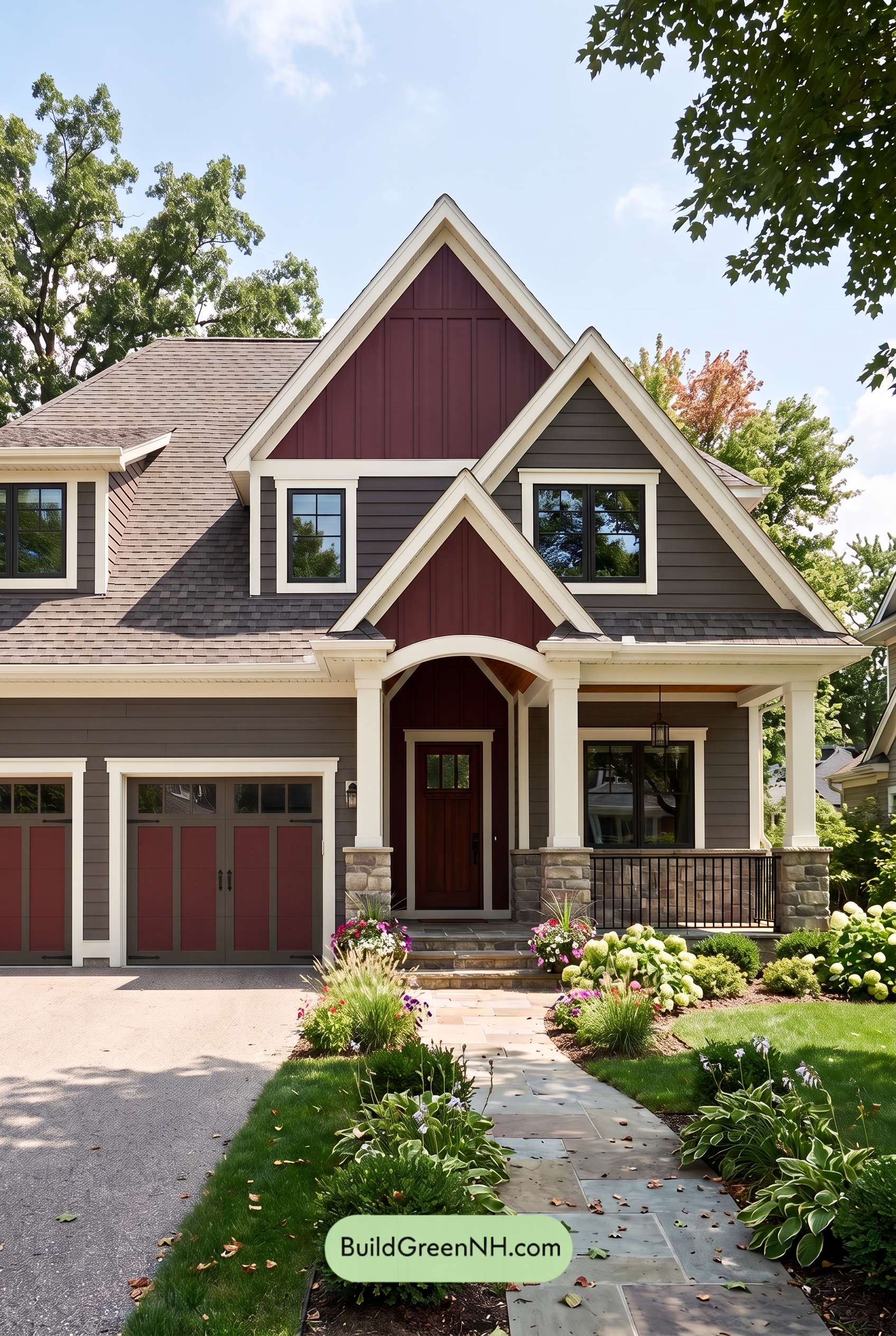 Dark Brown House Exterior Color Scheme: Hearthglow Arrival
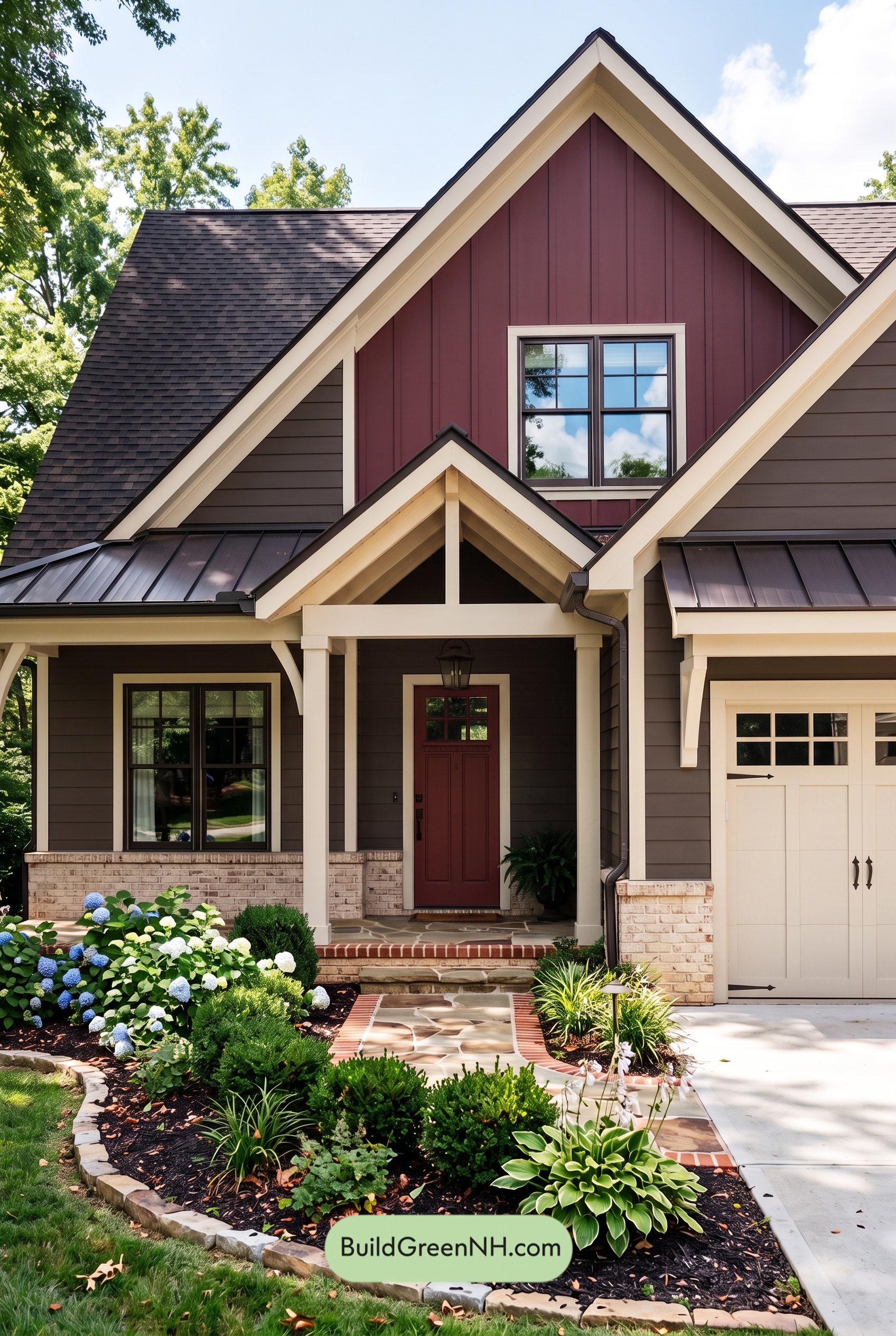 Dark Brown House Exterior Color Scheme: Embercrest Welcome
Table of Contents