Last updated on
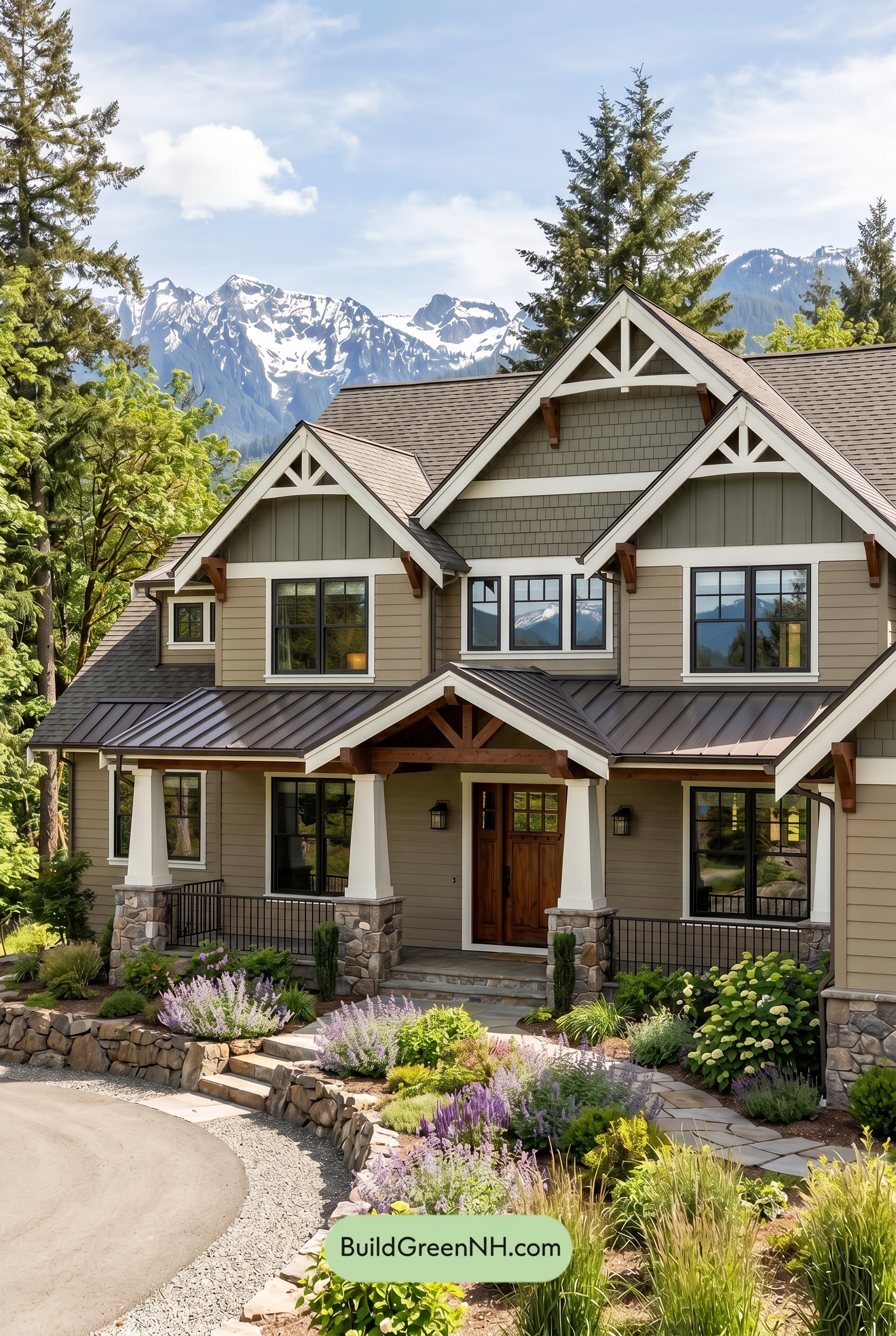

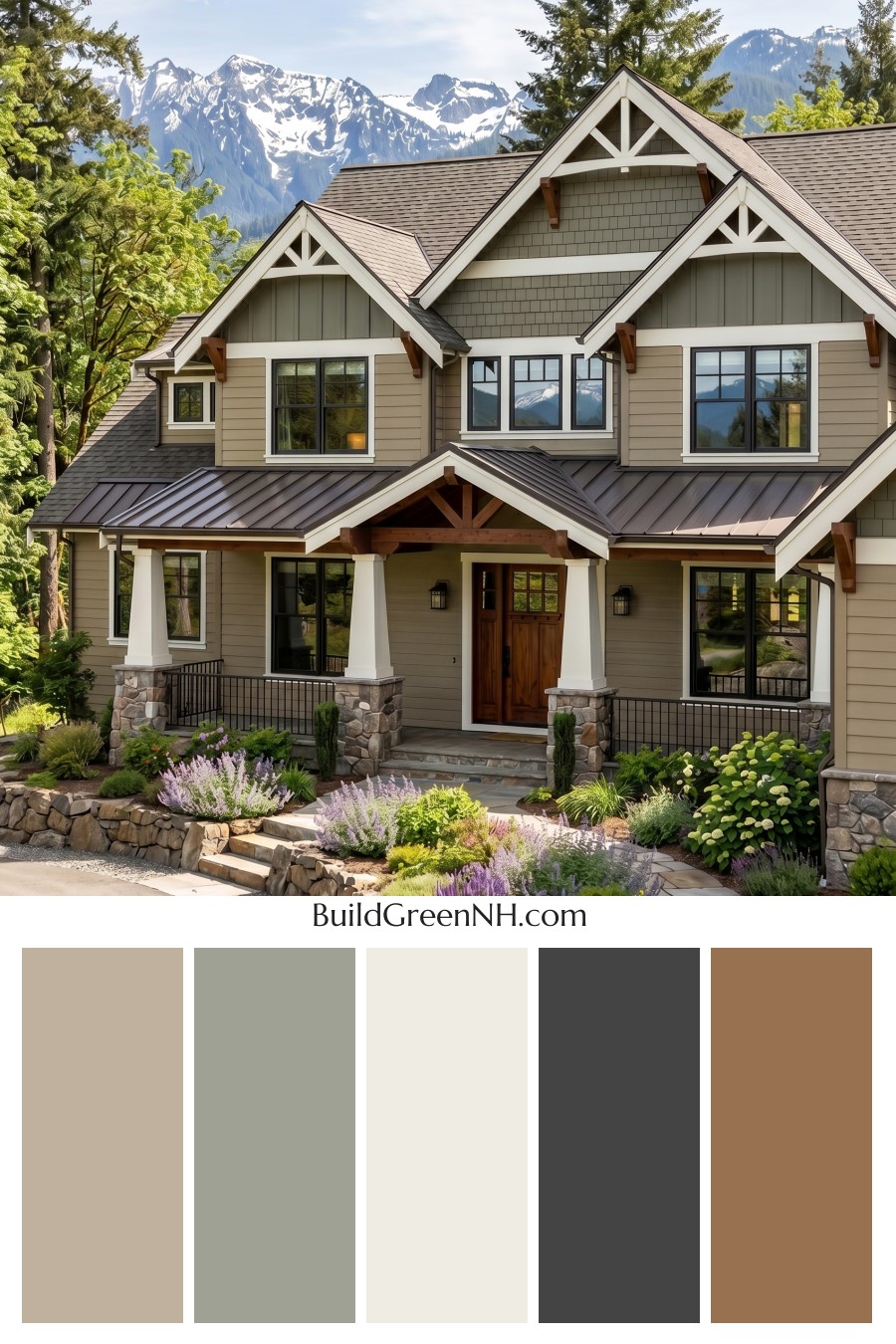
This warm beige, layered gray, crisp white, and rich brown palette makes the home feel both mountain-ready and gracefully polished.
A Warm Neutral Base with Natural Ease
The main siding is anchored in a warm beige family, giving the house a grounded, welcoming presence. It feels soft rather than stark, which works beautifully with the surrounding trees, stonework, and mountain backdrop. This shade has enough depth to hold its own against the scale of the home, but it still reads calm and approachable.
Across the lower walls, the beige siding creates a cozy foundation for the entire exterior. It pairs especially well with the natural stone at the porch bases and garden walls, echoing the earthy tones already present in the landscape.
Layered Grays Add Structure and Sophistication
The upper gables shift into a muted gray family, adding dimension without making the palette feel busy. These gray sections are used on the shingle-style areas and vertical panels, helping the rooflines and peaks stand out in a subtle, architectural way.
The gray window frames and railings continue that crisp, structured look. Their deeper shade gives the windows definition and makes the glass feel sharp and intentional. Against the warm beige siding, the gray accents bring a tailored contrast that keeps the exterior from feeling too soft.
Crisp White Trim Brightens Every Detail
The white trim is one of the most important parts of this scheme. It outlines the gables, fascia, window surrounds, porch columns, and decorative cross beams, creating a clean frame around the warmer and cooler body colors.
Because the home has so many beautiful roof angles and layered architectural details, the white trim helps each shape read clearly. It brightens the façade and gives the whole exterior a fresh, refined finish. The white columns also make the porch feel open and inviting, adding a classic touch to the more rustic materials.
Rich Brown Accents Bring Warmth
The front door and exposed wood brackets introduce a rich brown family that instantly warms up the palette. This is a smart accent choice because it connects the home to the natural setting while adding depth near the entry.
The brown door feels welcoming and substantial, especially beneath the porch roof. Matching brown accents under the gables and along the porch structure create rhythm across the façade, so the warm wood tones feel intentional rather than isolated.
A Deep Roof Color Grounds the Palette
The roof sits in a deep gray-brown shade, giving the home a strong visual cap. It balances the lighter trim and beige siding while complementing the gray upper walls. This darker roof color also works beautifully in a wooded or mountainous setting, where deeper neutrals feel natural and enduring.
On the porch roof, the darker shade adds a handsome contrast to the white trim and columns. It gives the entry area a sense of weight and shelter, making the front porch feel cozy and protected.
Why the Scheme Works So Well
This exterior succeeds because it balances warmth and coolness with ease. The beige siding keeps the home friendly and earthy, while the gray upper walls, window frames, and railings provide structure. White trim adds brightness, and brown accents bring the warmth back in at just the right moments.
The result is a polished neutral palette that feels timeless, natural, and perfectly suited to its scenic surroundings. It is elegant without feeling formal, rustic without feeling heavy, and detailed without becoming overwhelming.
Next, see how this color scheme looks under different lighting simulations throughout the day.
Overcast
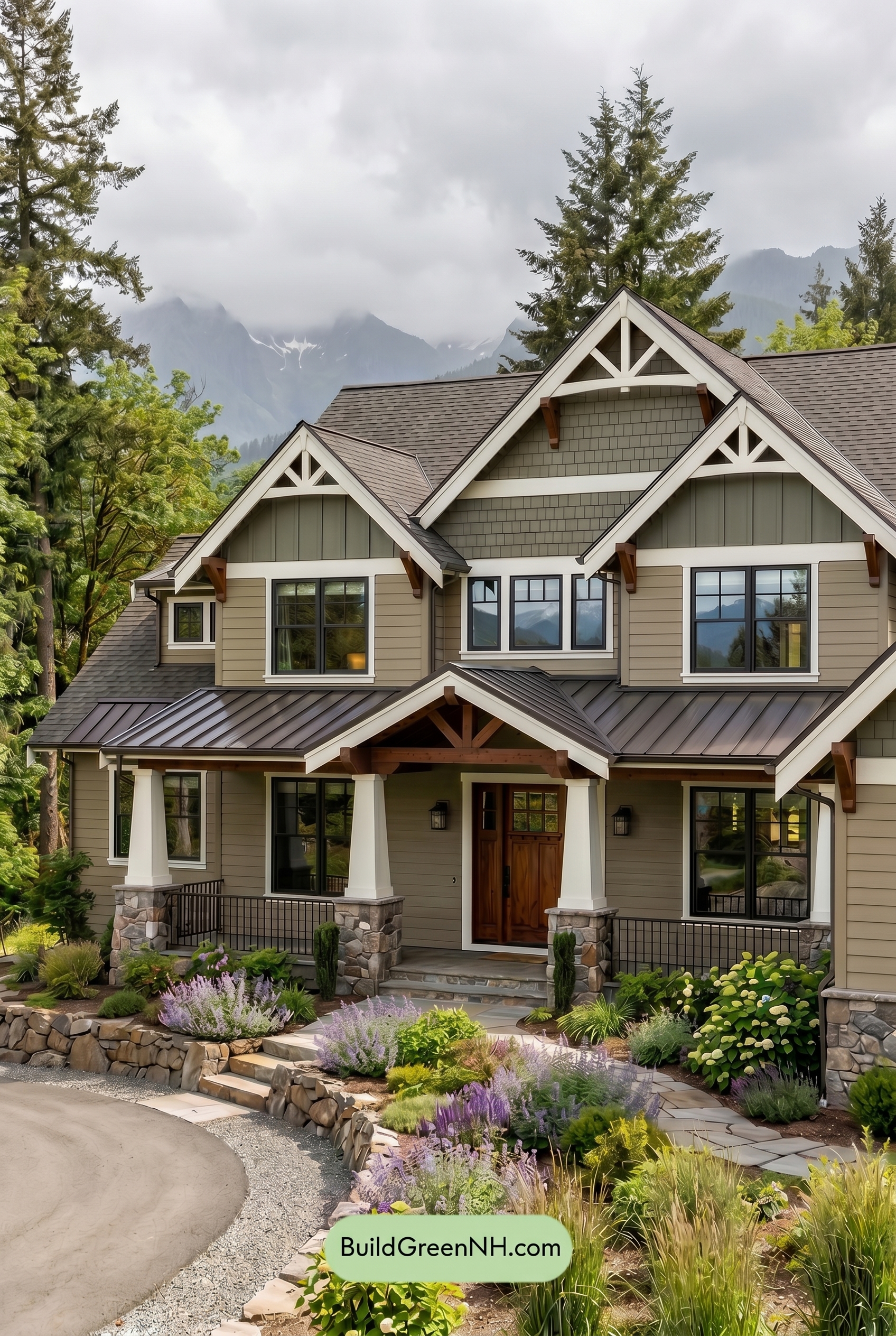
Under overcast light, the beige family on the main walls loses a bit of warmth and saturation, reading softer and more muted than it would in neutral daylight. The gray family on the upper walls and window frames feels slightly deeper and cooler, while the white family trim and columns appear gentler rather than bright and crisp.
Because cloud cover spreads light evenly, shadows become broad and subdued, reducing contrast between the trim, railings, and siding. The brown family at the front door takes on a richer, quieter depth, giving the whole exterior a calm, cozy, mountain-lodge mood instead of the clearer, more defined look of neutral daylight.
Golden Hour
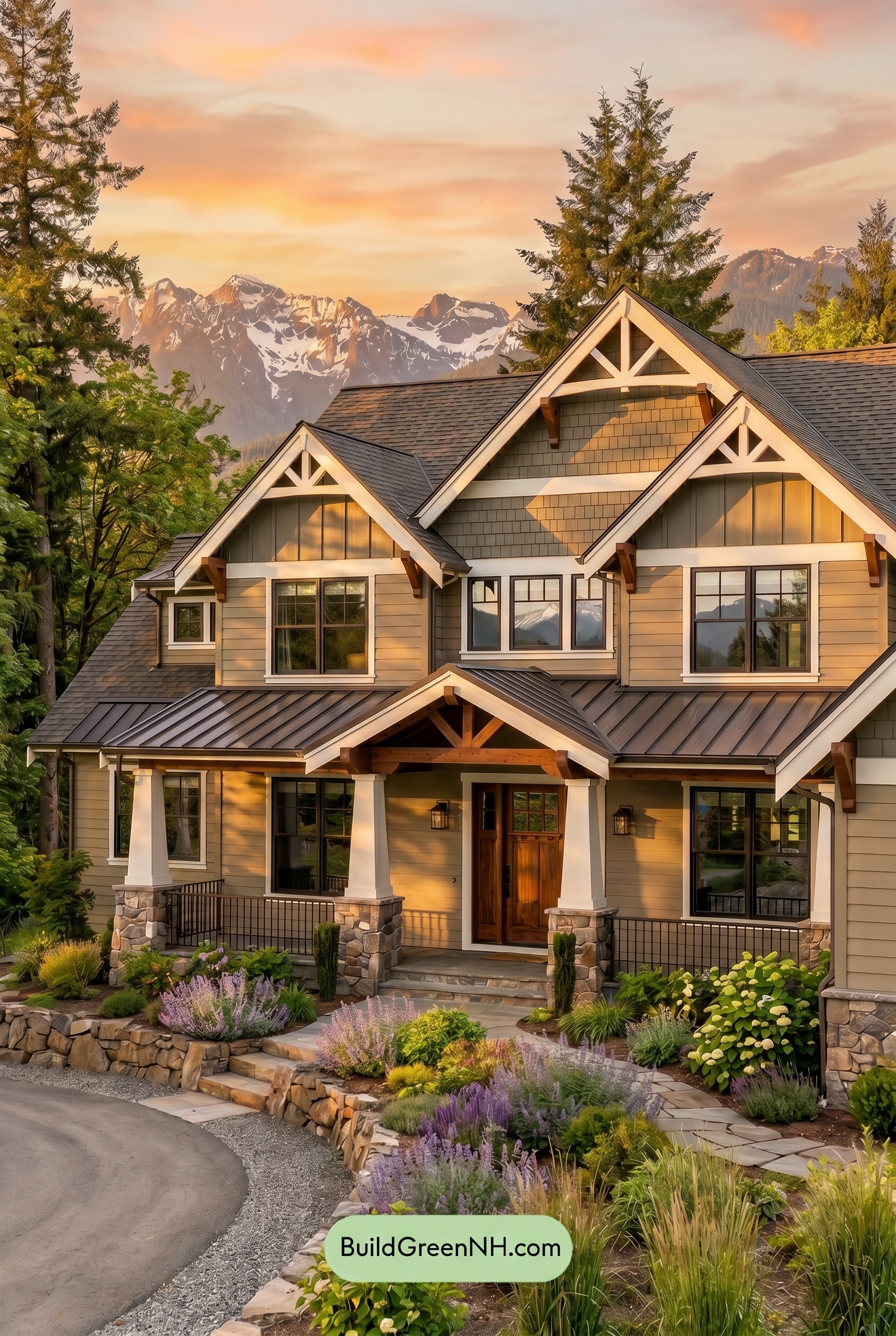
Under Golden Hour light, the beige family on the main walls shifts warmer and more saturated, taking on a soft honeyed glow that would feel calmer and flatter in neutral daylight. The gray family on the upper walls and window frames also warms slightly, losing some of its cooler edge while still giving the façade structure and balance.
The white family trim and columns catch the low sun beautifully, appearing creamier and brighter against the deeper shadows beneath the rooflines and porch. Those longer shadows increase contrast, making the brown family front door feel richer and the gray railings more defined, creating an inviting, cozy mood compared to the cleaner, more even look of neutral daylight.
Shade
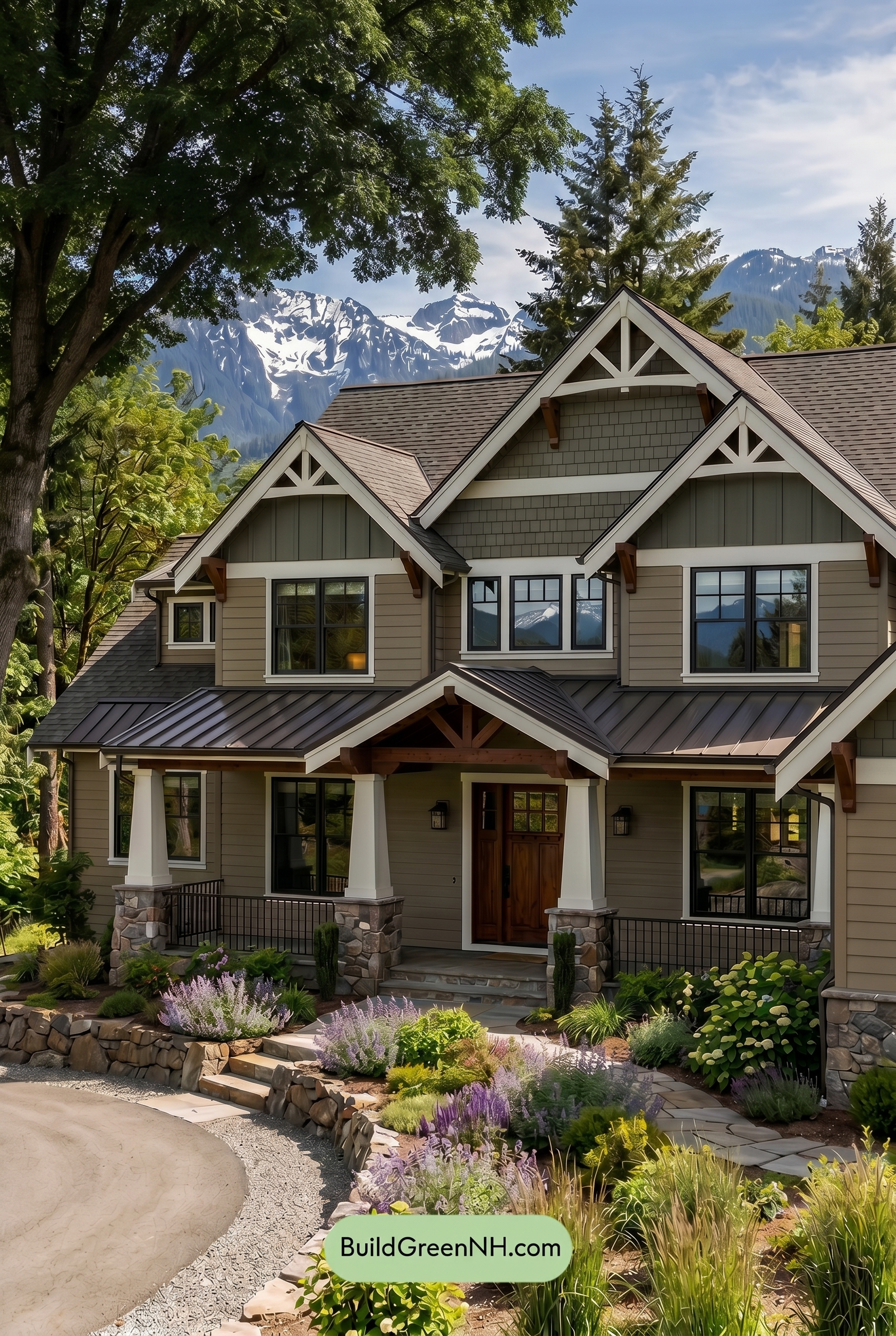
In Shade, the beige siding reads quieter and slightly cooler than it would in neutral daylight, with its saturation softening and its warmth gently pulled back. The gray upper sections deepen under the gables, making the shadowed planes feel more layered and grounded.
The white trim and columns lose some crisp brightness in Shade, shifting to a softer warm-white presence while still outlining the rooflines clearly. Against the deeper gray window frames, railings, and rich brown door, the contrast becomes moodier and more relaxed, giving the exterior a calm, sheltered feel compared with neutral daylight.
Nighttime
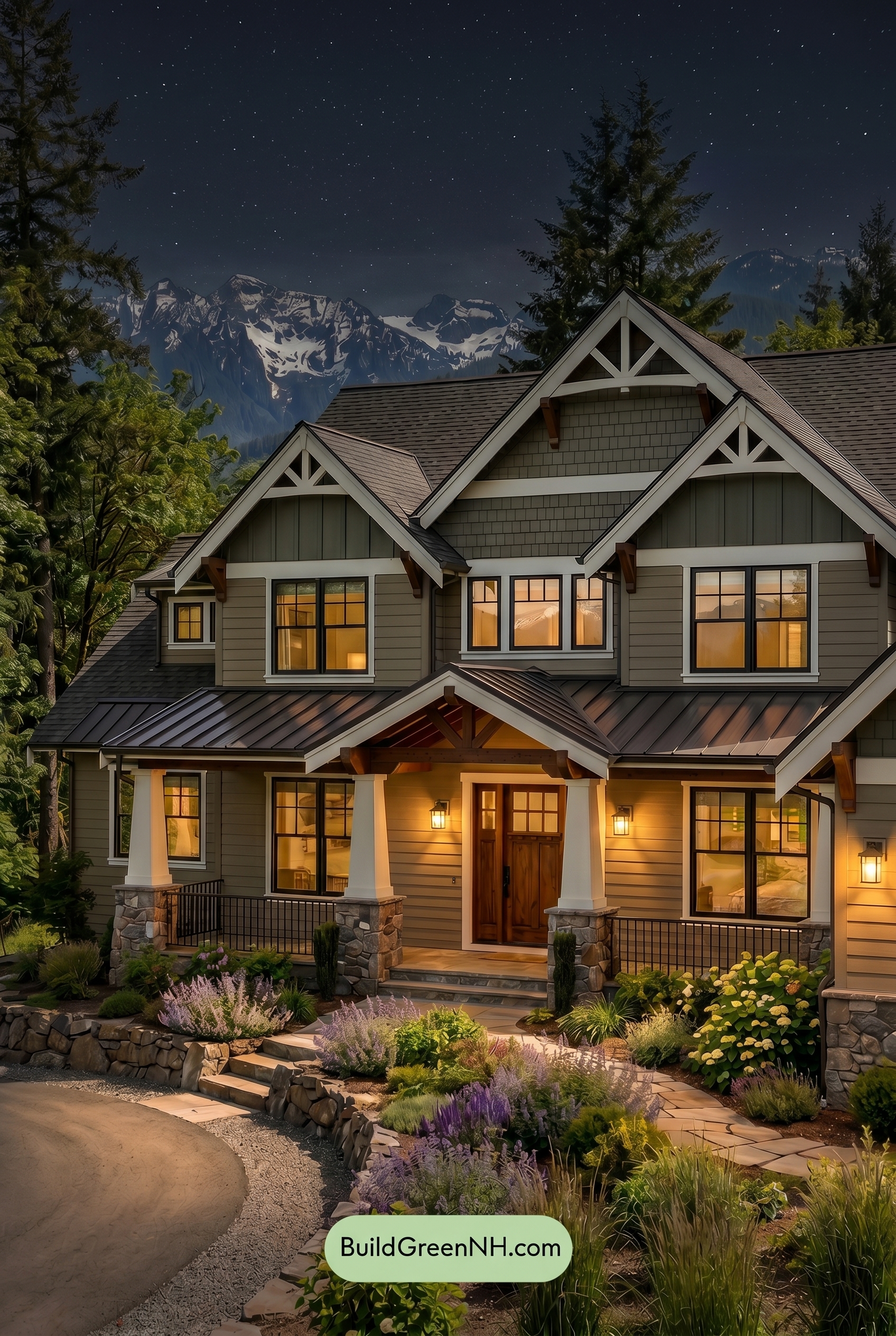
At nighttime, the beige siding takes on a richer, warmer cast than it would in neutral daylight, especially where the porch and window glow wash across the walls. The gray upper sections deepen and feel more saturated, while the white trim and columns shift from crisp and clean to softly luminous against the darker rooflines.
Shadows collect under the gables, railings, and eaves, increasing contrast and making the gray window frames read bolder and more defined. The brown front door feels warmer and more inviting under the golden light, giving the whole exterior a cozy, dramatic mood compared with its calmer daylight appearance.
Pin these for later
Want More?
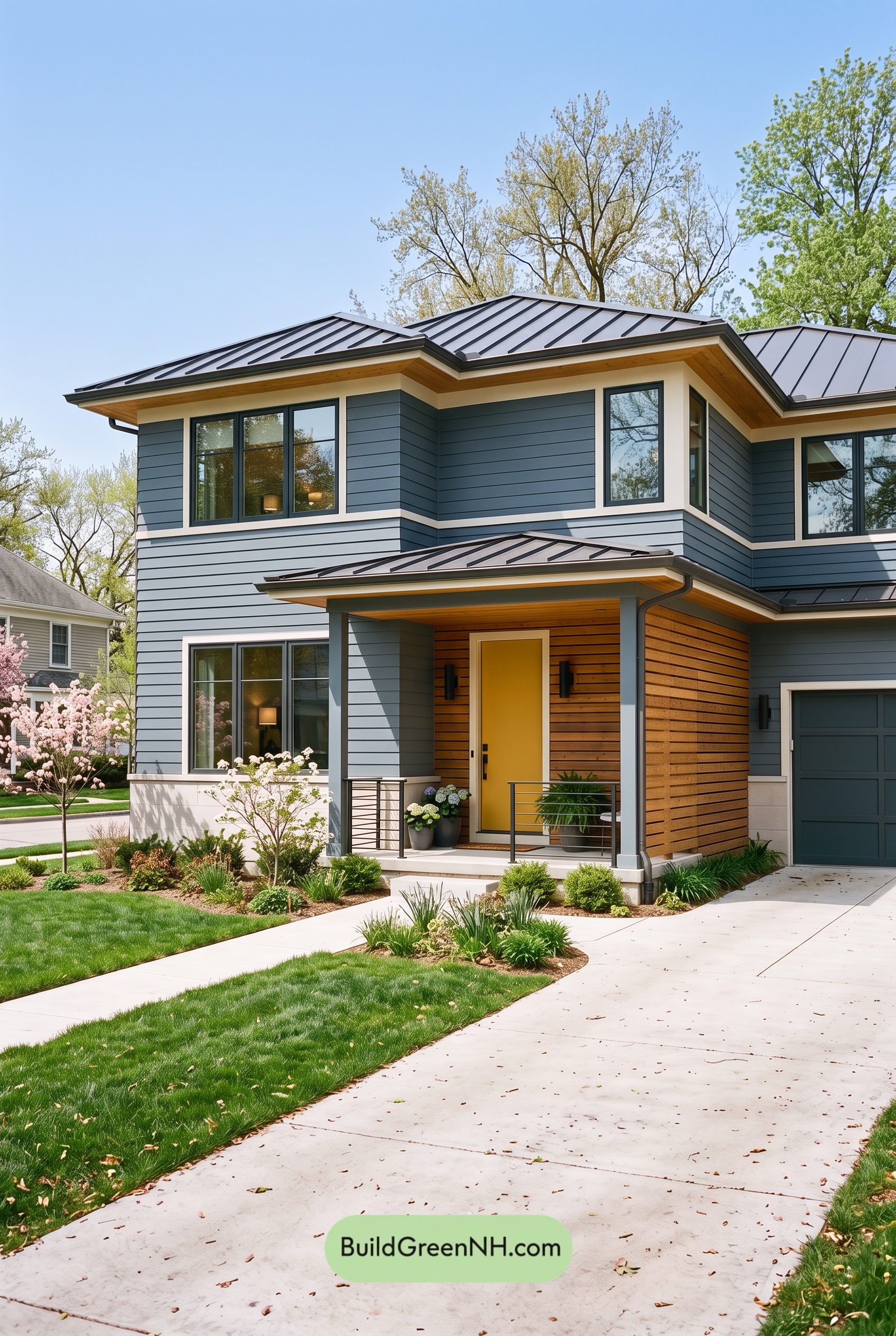 Blue House Front Door Color Scheme: Harbor Saffron
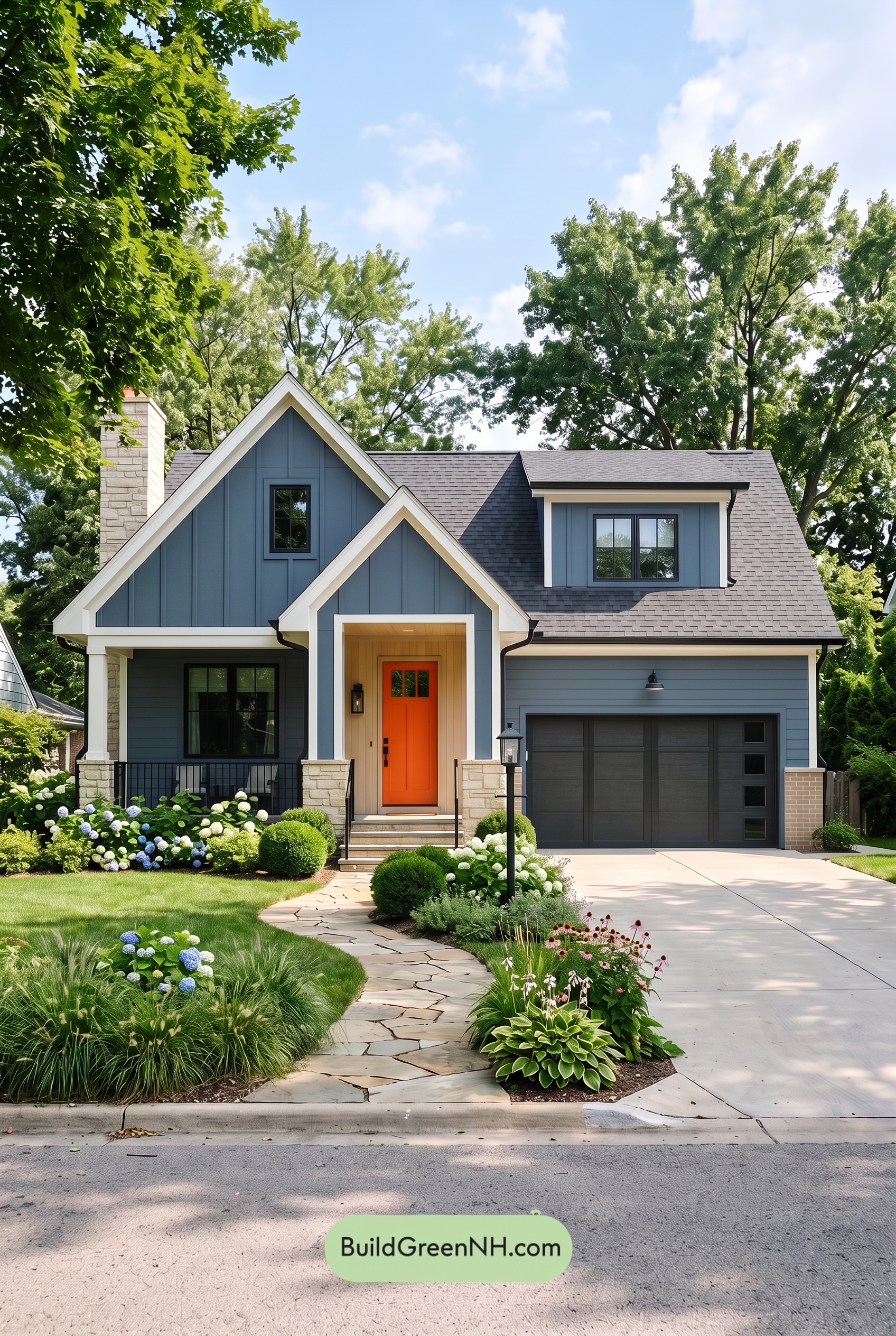 Blue House Front Door Color Scheme: Cobalt Persimmon
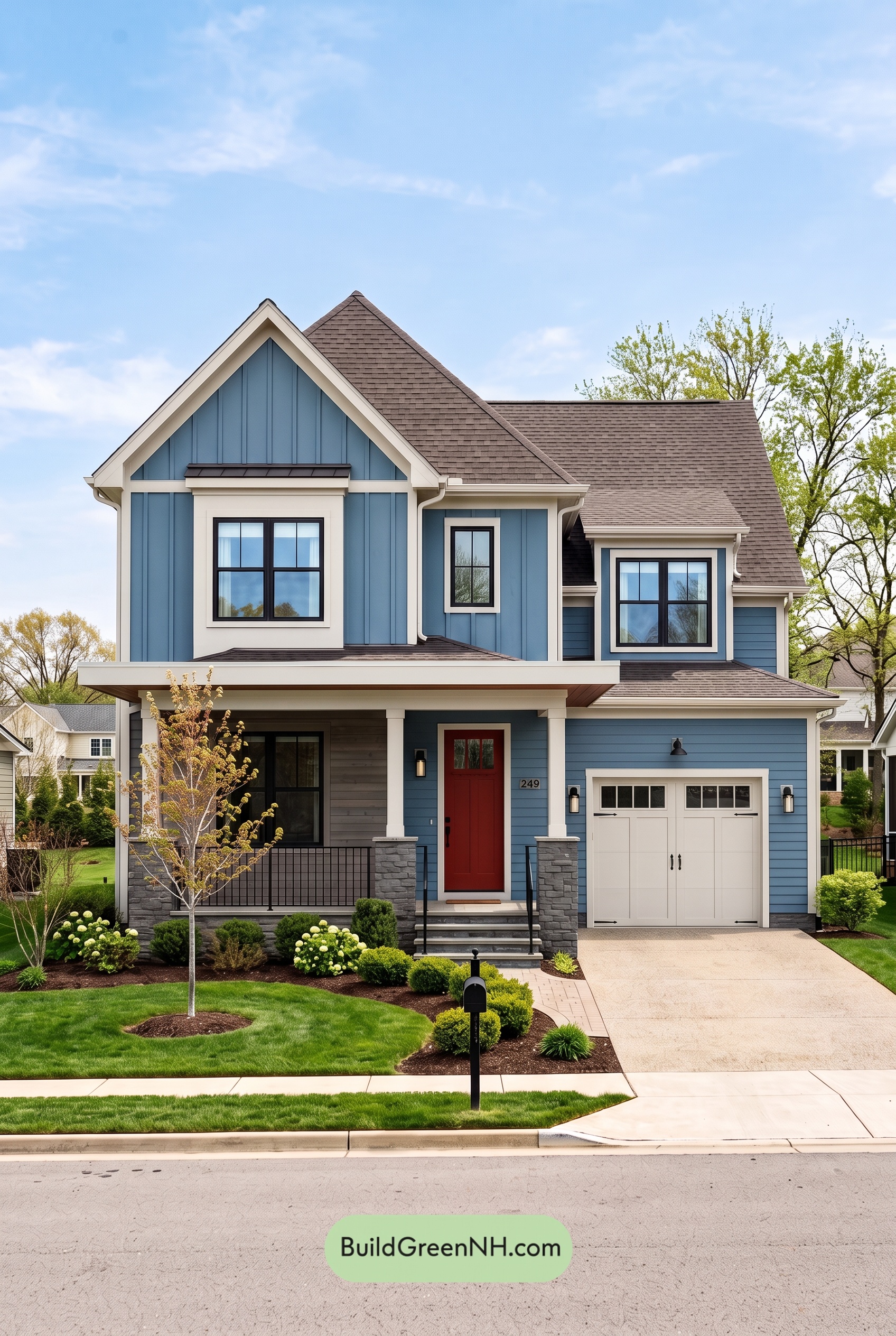 Blue House Front Door Color Scheme: Denim Poppy
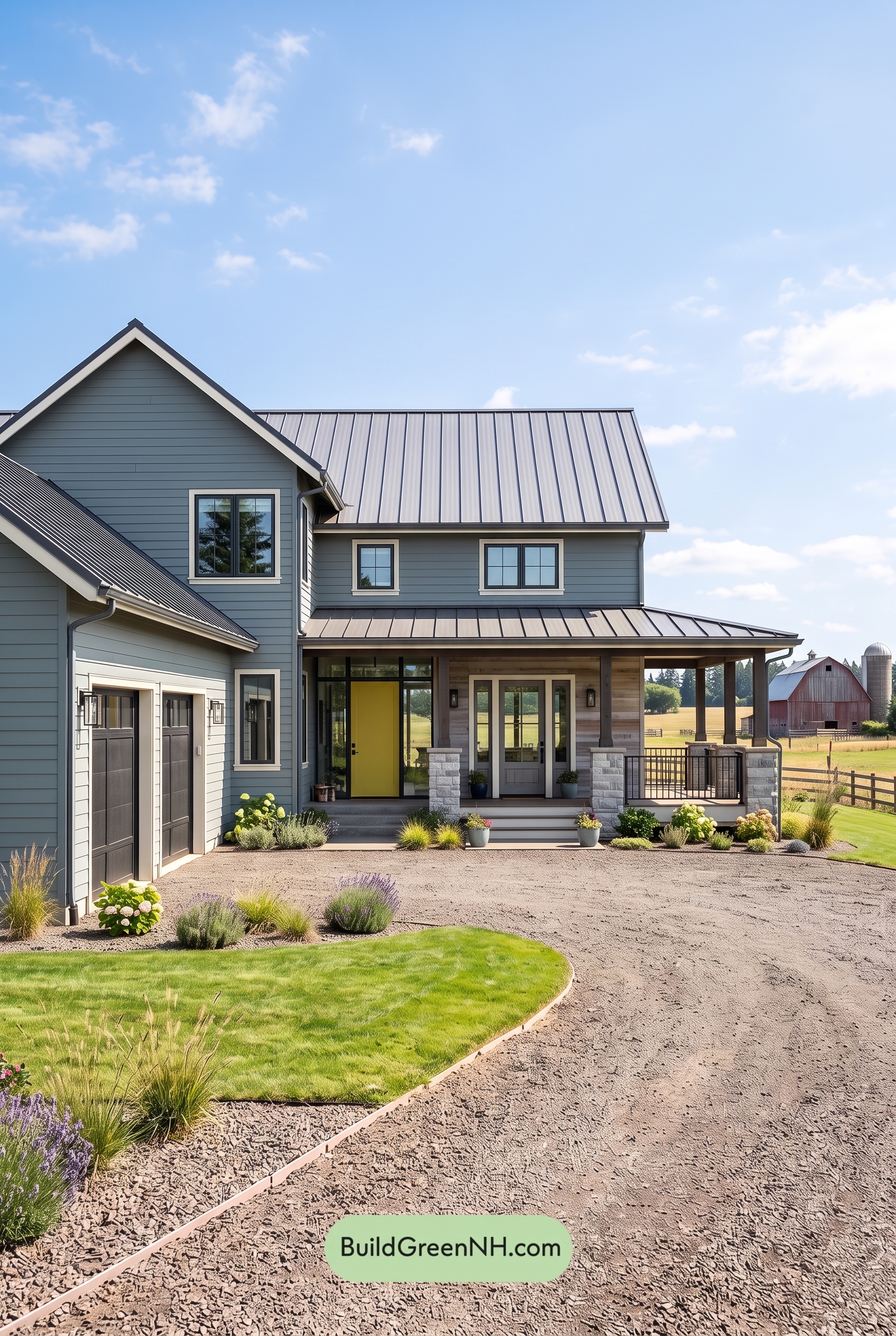 Blue House Front Door Color Scheme: Slate Citron
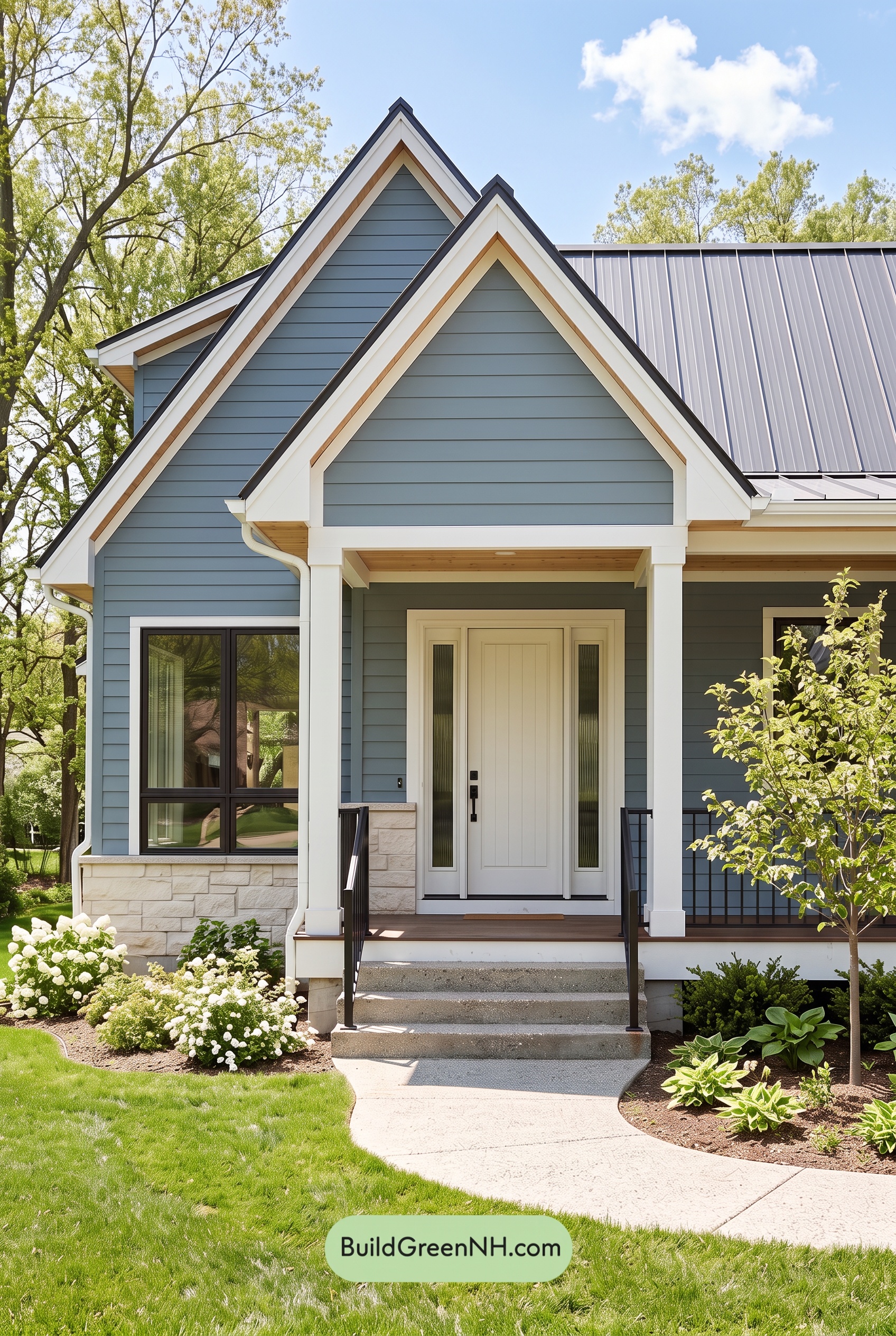 Blue House Front Door Color Scheme: Mist Blue Haven
Table of Contents