Last updated on
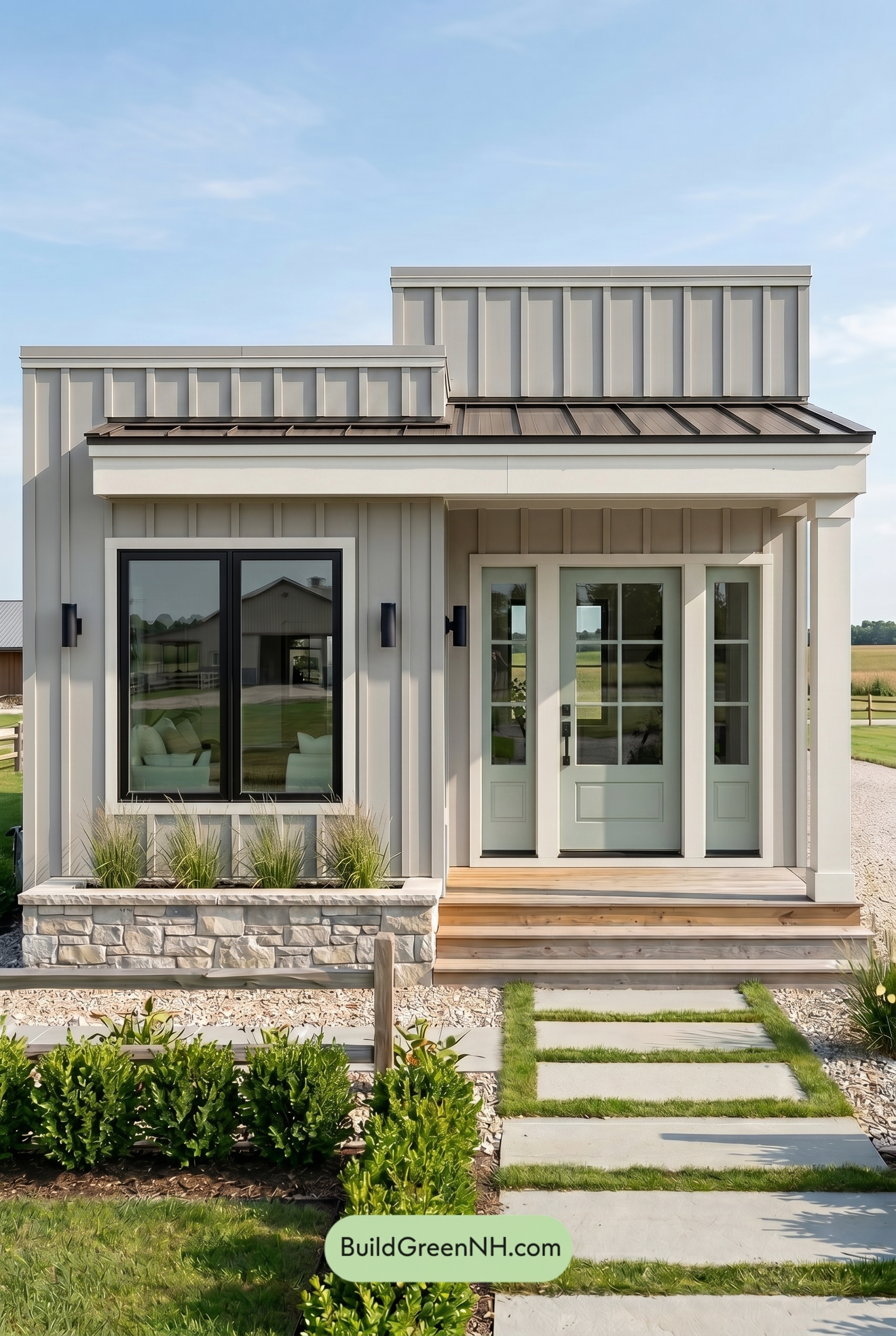

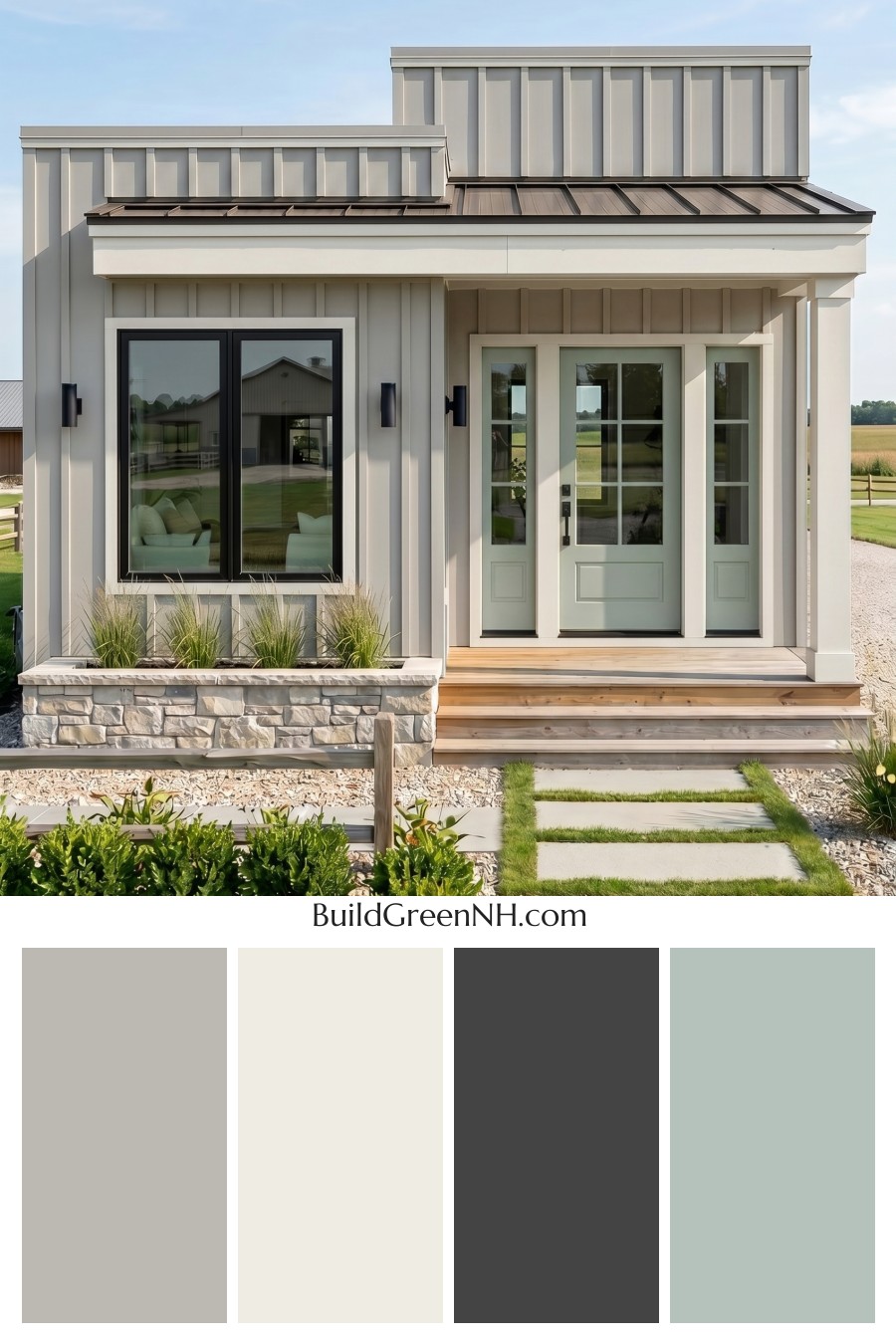
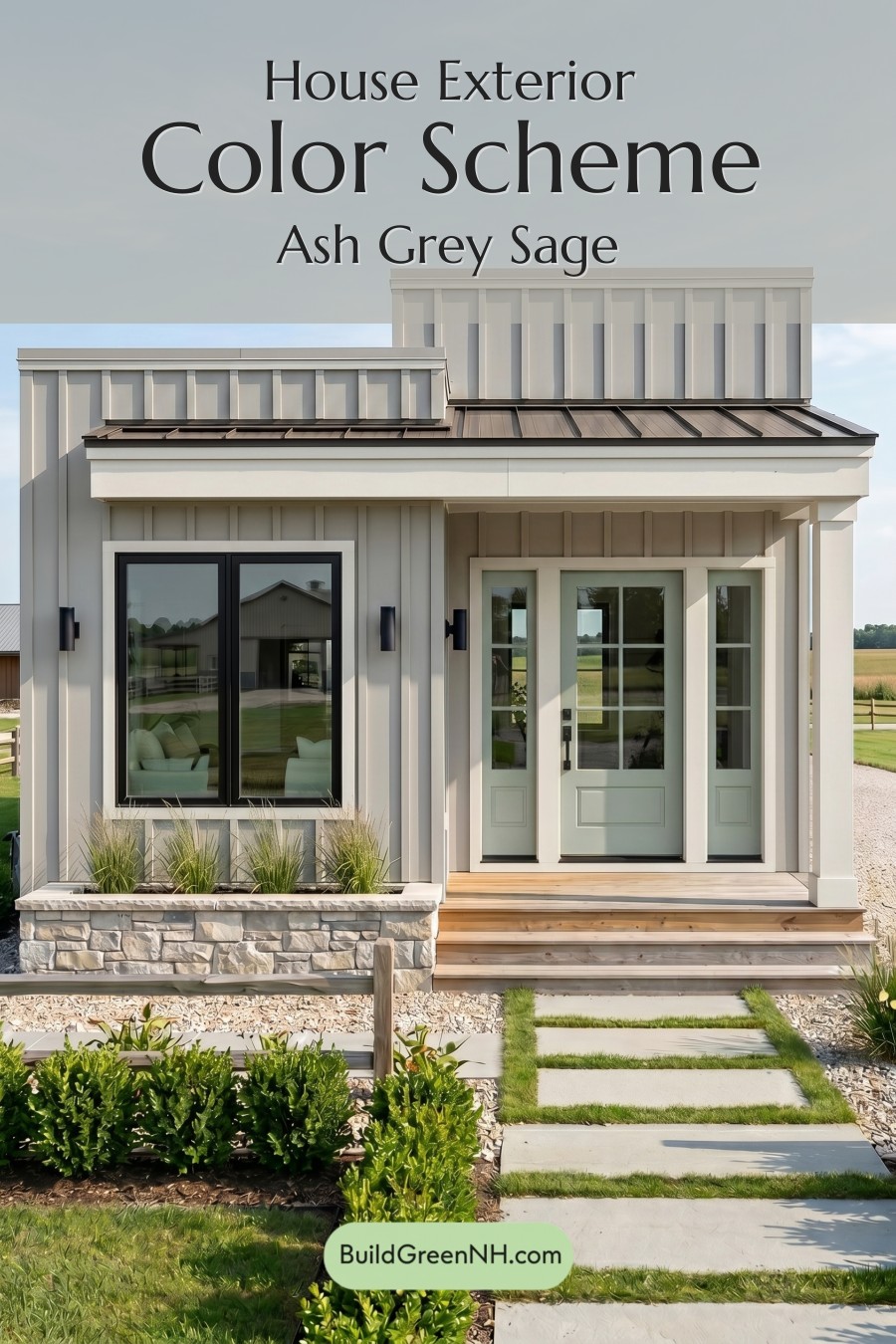
This exterior works beautifully because its layered grays, crisp whites, and gentle green entry feel modern, calm, and instantly welcoming.
A Soft Gray Foundation
The main siding is wrapped in a soft gray shade that gives the house a clean, contemporary presence without feeling cold. Because the gray has a quiet, natural quality, it pairs easily with the surrounding lawn, stonework, gravel, and open sky.
The vertical siding adds dimension, and the gray shifts subtly with the light. In brighter areas, it feels airy and refined. In the recessed sections, it deepens just enough to emphasize the architecture.
Crisp White Trim for Structure
Crisp white trim outlines the windows, roofline, porch, and entry, giving the exterior a fresh, tailored finish. The white columns also help frame the front porch, making the entry feel open and inviting.
This white shade is especially effective against the gray siding because it creates contrast without looking harsh. It highlights the clean lines of the home and gives the whole facade a polished, well-balanced look.
A Muted Green Front Door
The front door brings in a soft muted green that feels calm, organic, and welcoming. It is a gentle accent rather than a loud statement, which suits the modern farmhouse-inspired architecture beautifully.
This green shade connects naturally to the landscaping and grassy walkway. It adds personality while still staying within the peaceful, nature-inspired palette.
Deeper Gray Accents and Roof Details
The window frames introduce a deeper charcoal-gray note, adding definition to the lighter exterior. This darker gray keeps the design grounded and gives the larger windows a sleek, modern edge.
The roof reads as a deeper weathered gray with warm undertones, which works nicely with both the siding and the natural wood steps. It adds depth overhead and prevents the lighter colors from feeling too flat.
The Overall Mood
This color scheme feels fresh, relaxed, and quietly sophisticated. The gray siding provides softness, the white trim adds crispness, and the green door offers a subtle touch of charm.
What makes the palette so successful is its restraint. Every color has a purpose. The neutrals create a calm architectural backdrop, while the green entry and natural landscape bring warmth and life to the front elevation.
Next, see how this color scheme looks under different lighting simulations throughout the day.
Overcast
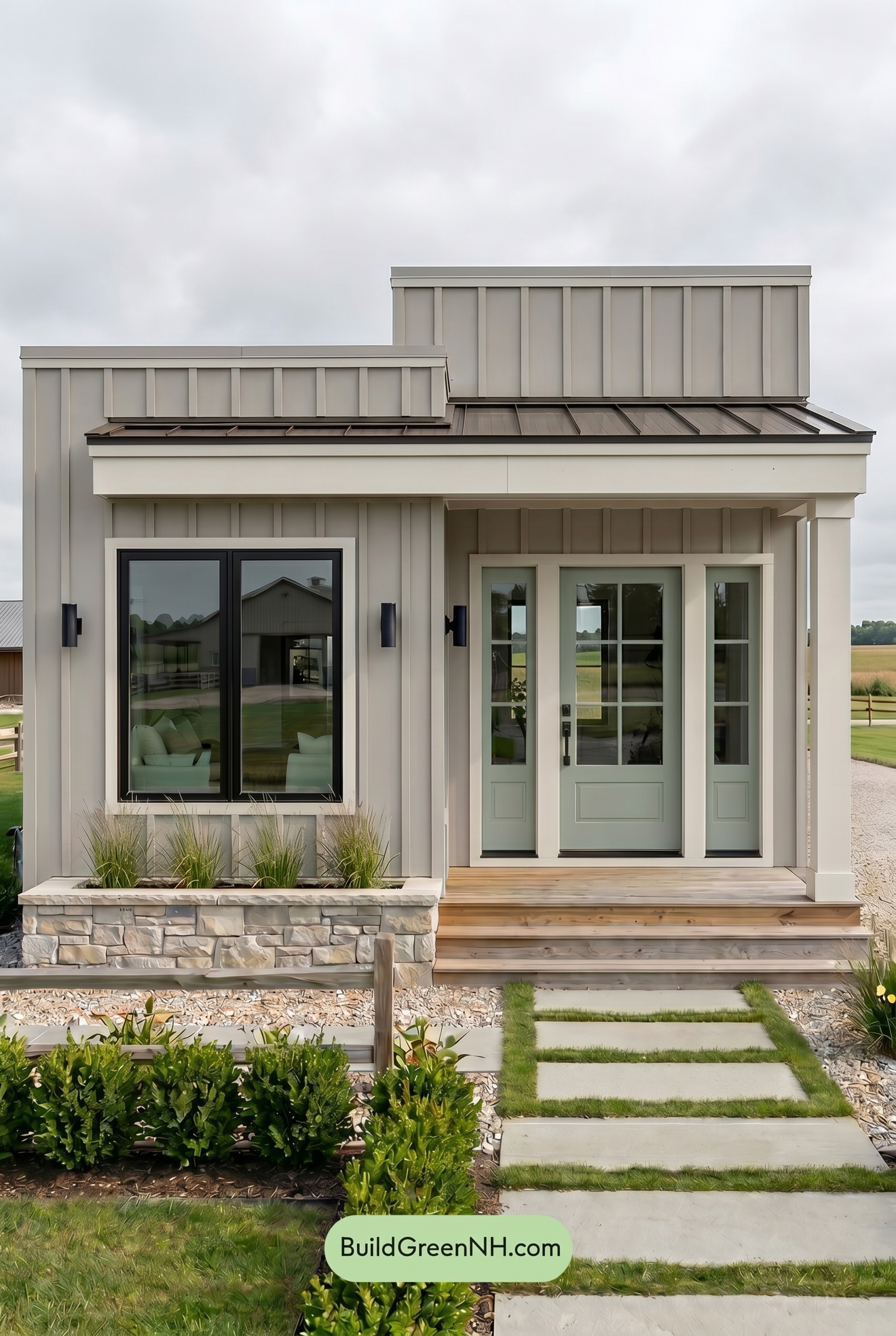
Under overcast lighting, the gray siding appears a touch cooler and more muted than it would in neutral daylight, with less visible warmth and a softer sense of saturation. The white trim and columns lose some of their crisp brightness, shifting toward a gentler, creamier white that feels calm rather than high-contrast.
Because the cloud cover diffuses shadows, the board-and-batten texture reads more evenly, with fewer sharp dark lines and a smoother overall look. The green front door feels quieter and slightly grayer, giving the exterior a relaxed, understated mood compared with the cleaner contrast and livelier color balance of neutral daylight.
Golden Hour
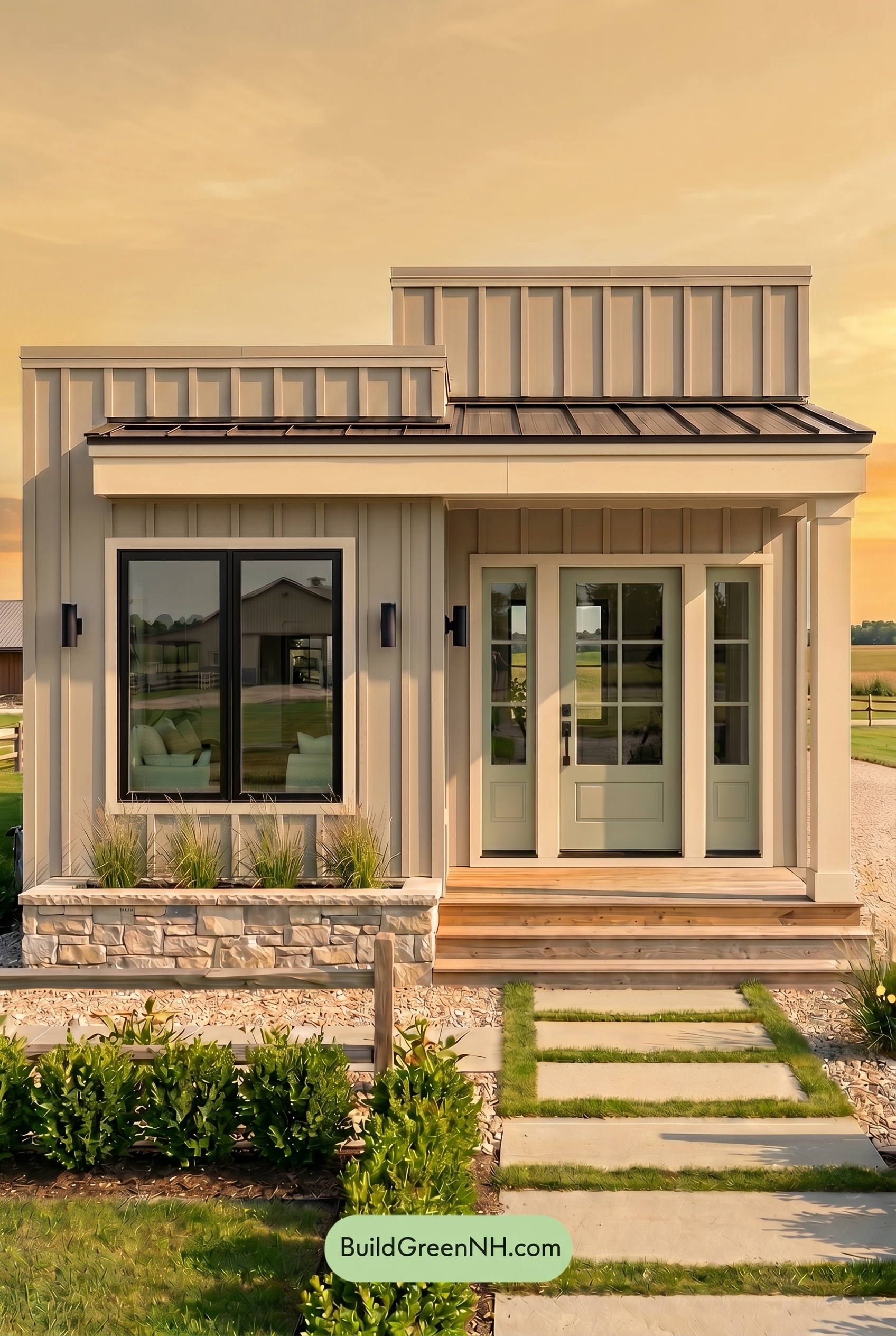
Under Golden Hour, the gray siding shifts from crisp and neutral to a softer, warmer shade, picking up a gentle sunlit glow that makes the exterior feel more inviting. The white trim and columns lose some of their cool brightness and take on a creamy warmth, creating a smoother, less stark contrast than they would in neutral daylight.
The deeper shadows along the vertical siding and roofline add definition, making the gray window frames feel richer and more saturated. The green front door appears earthier and calmer in the warm light, while the overall mood becomes relaxed, cozy, and quietly dramatic compared to the clearer, more balanced look of midday light.
Shade
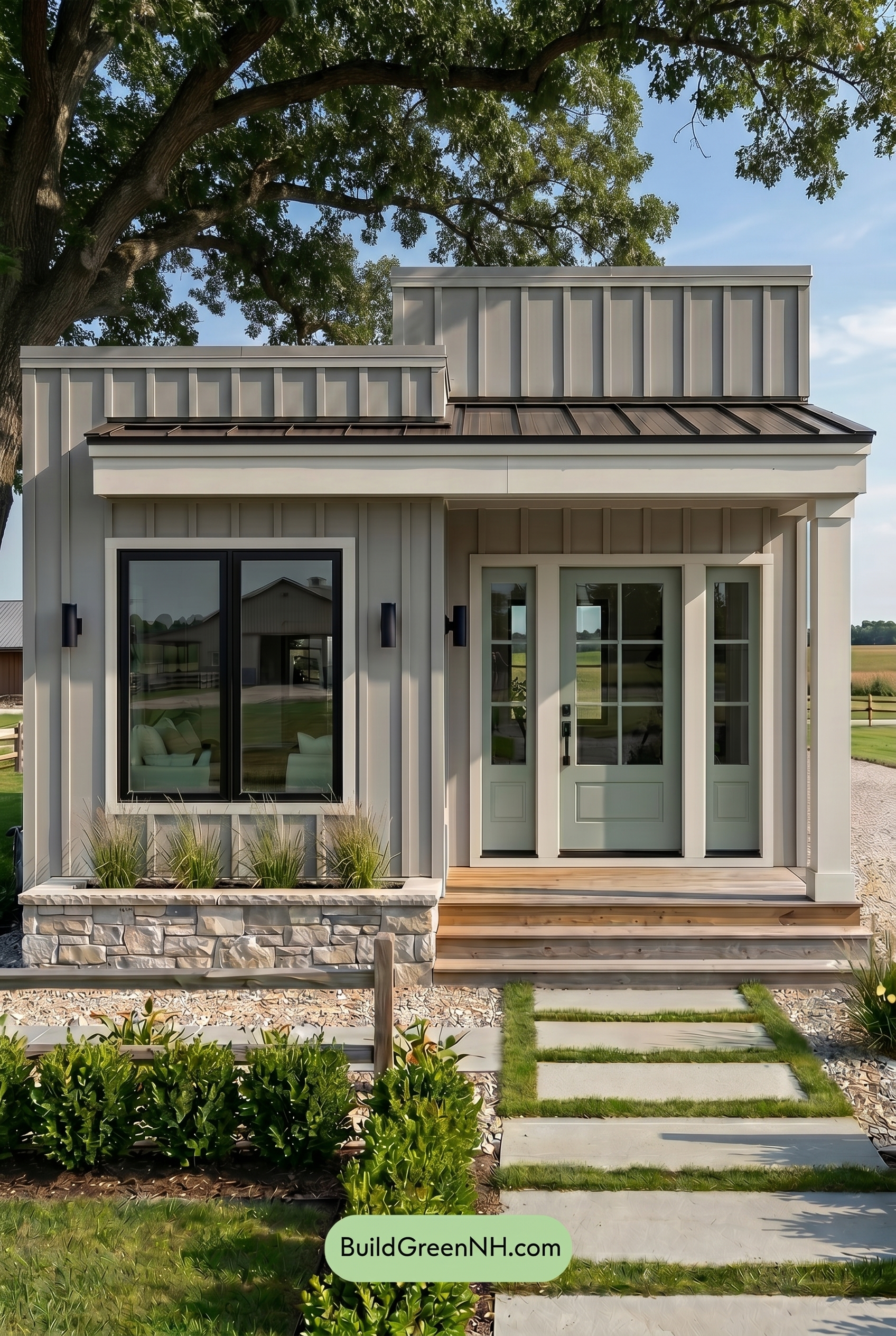
In shade, the gray siding takes on a cooler, slightly deeper cast than it would in neutral daylight, with its saturation feeling more muted and refined. The white trim and columns lose some of their crisp brightness, softening into gentler light shades that reduce glare and make the vertical details feel calm and architectural.
The green front door appears quieter and more grounded in shaded light, with less warmth and a more subdued mood. Shadows from the porch and tree canopy increase contrast along the trim, frames, and paneling, giving the exterior a layered, serene look compared to the cleaner, brighter balance of neutral daylight.
Nighttime
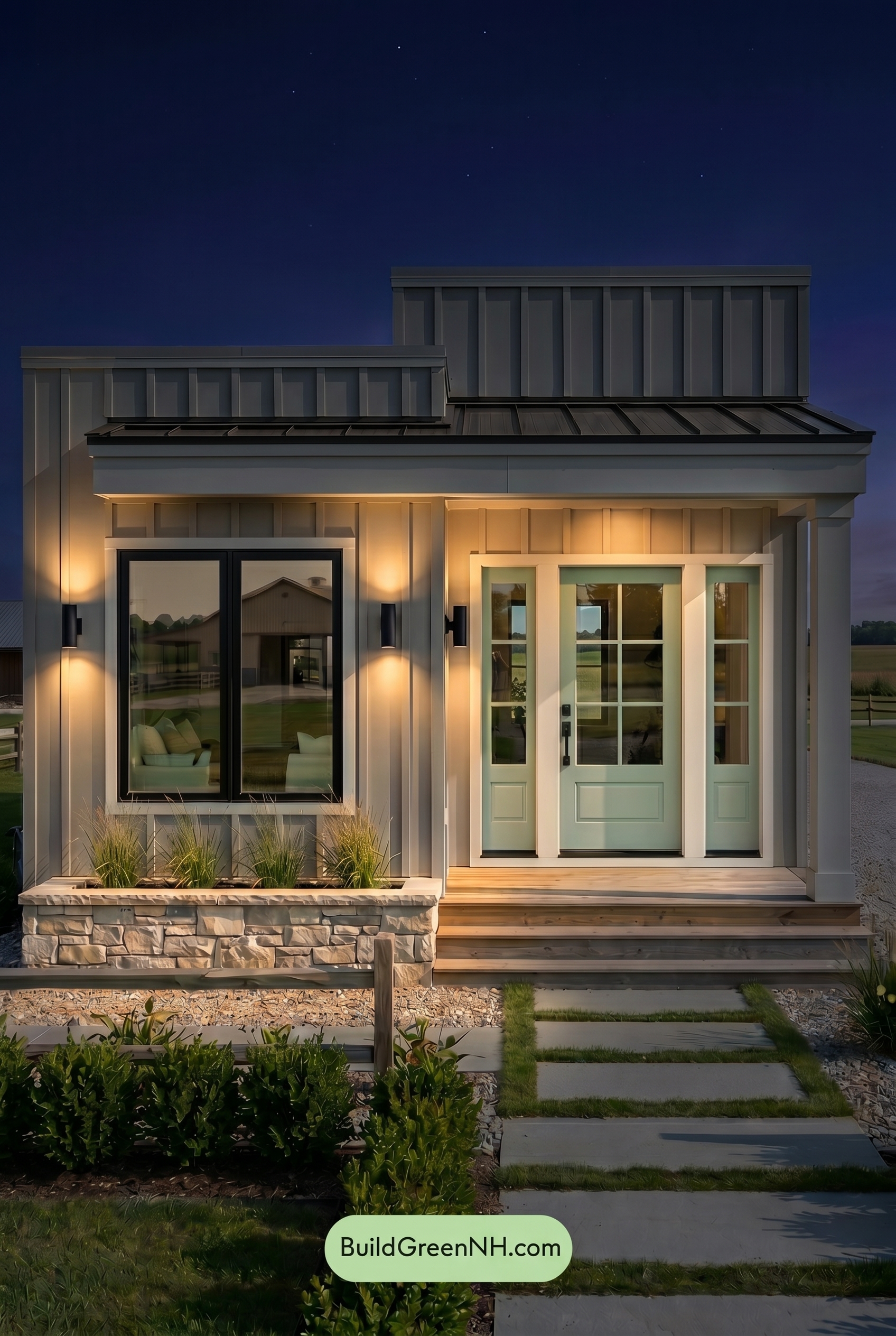
At night, the gray siding loses some of the even clarity it would have in neutral daylight and settles into deeper, moodier shades. Warm exterior lighting adds a soft golden cast, making the lighter trim and columns feel creamier while creating stronger contrast against the shadowed gray panels and darker window framing.
The green front door appears more muted and atmospheric after dark, with its saturation softened by the warm glow and surrounding shadows. Overall, the palette shifts from crisp and balanced in daylight to cozy, dramatic, and more dimensional, with highlights and shadows giving the exterior a welcoming evening presence.
Pin these for later
Want More?
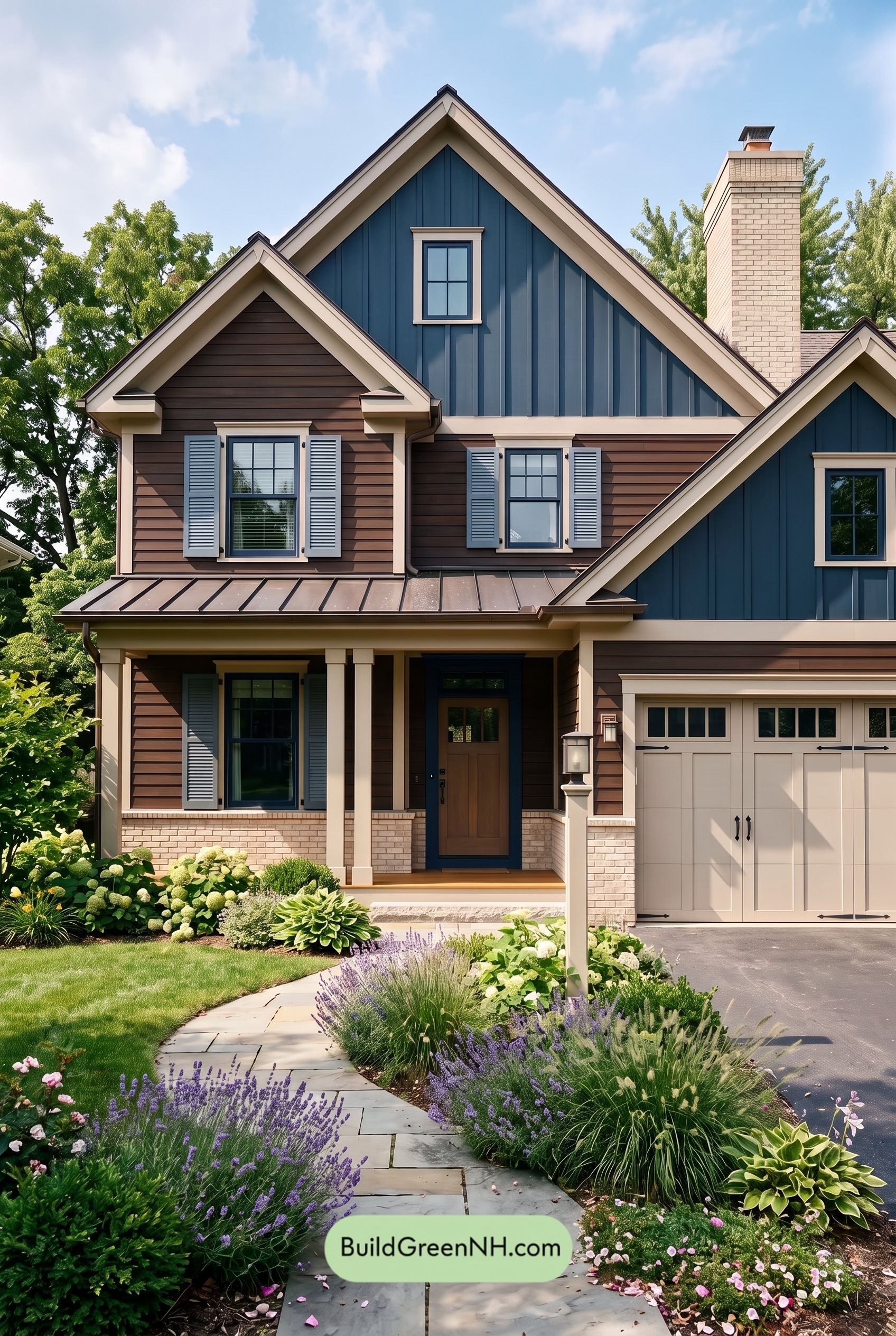 Dark Brown House Exterior Color Scheme: Inkwood Lantern
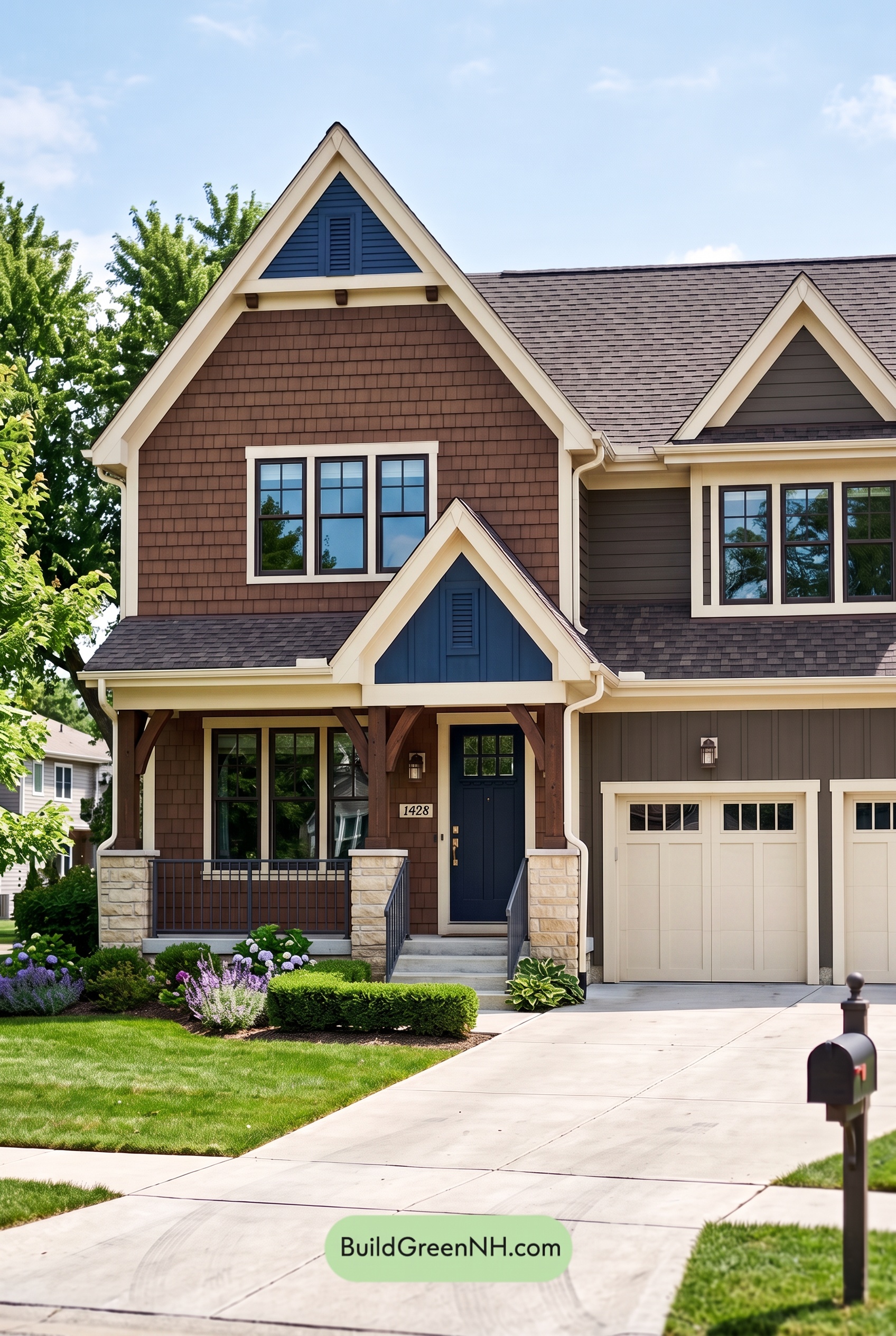 Dark Brown House Exterior Color Scheme: Bluebell Timberline
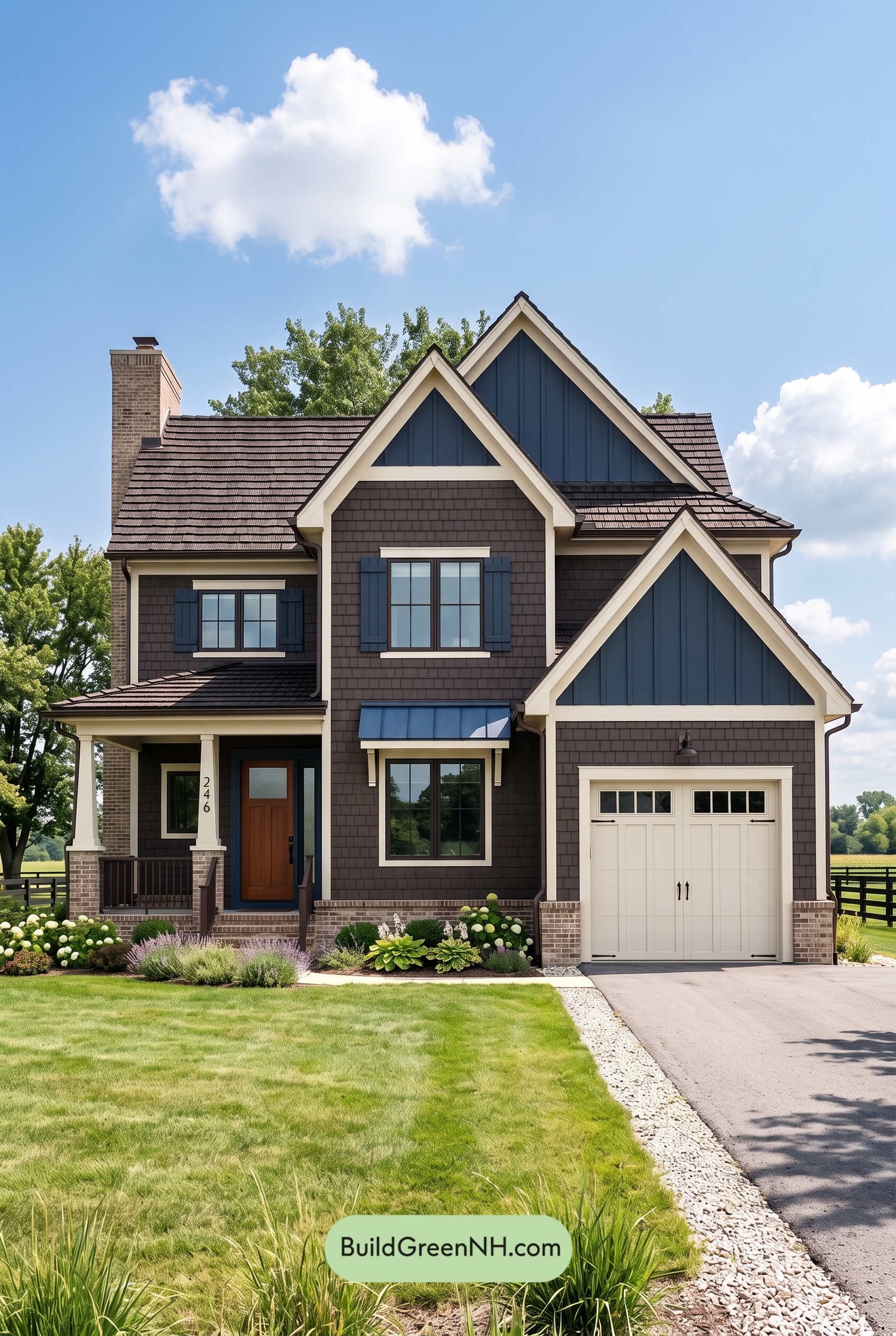 Dark Brown House Exterior Color Scheme: Sapphire Homestead
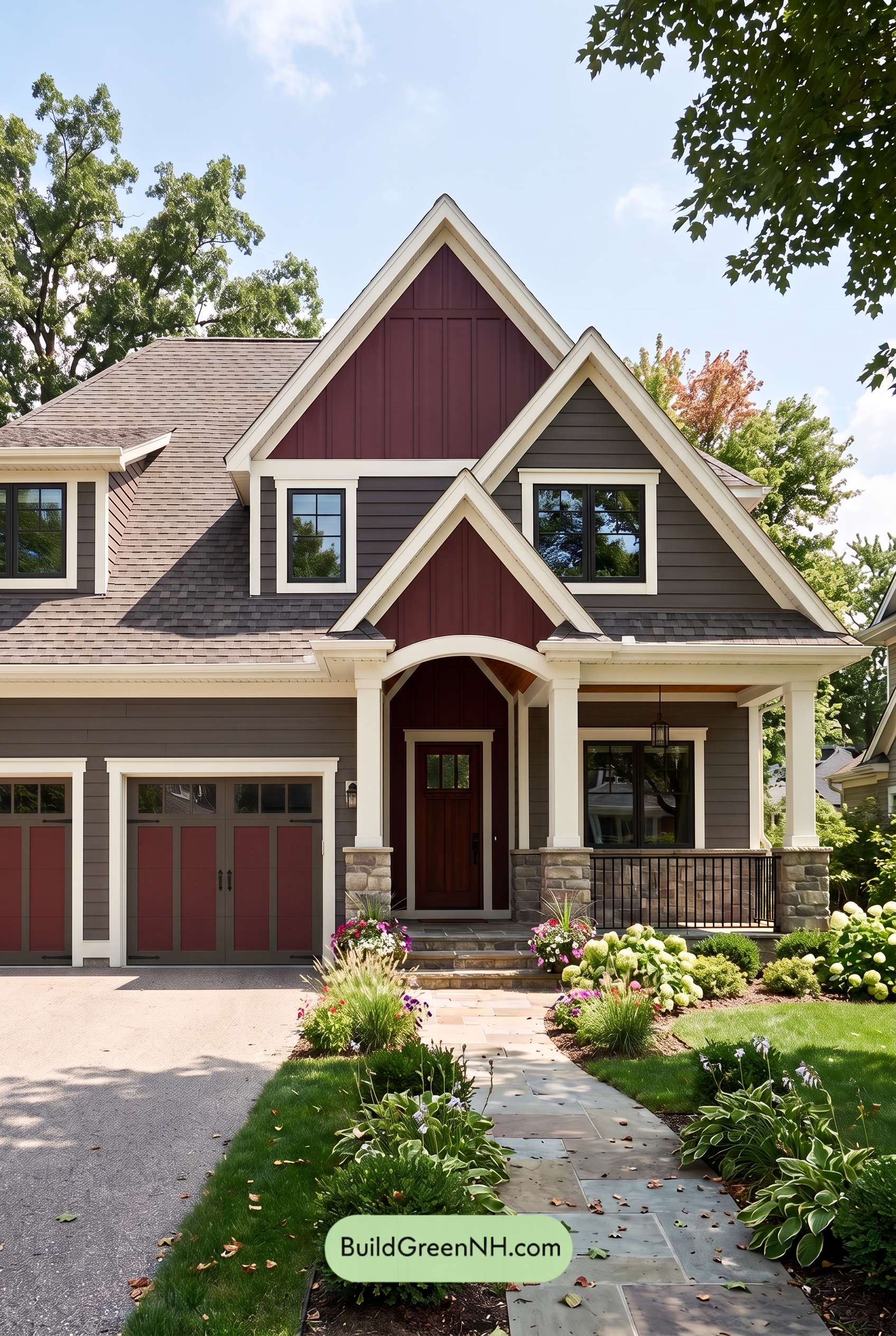 Dark Brown House Exterior Color Scheme: Hearthglow Arrival
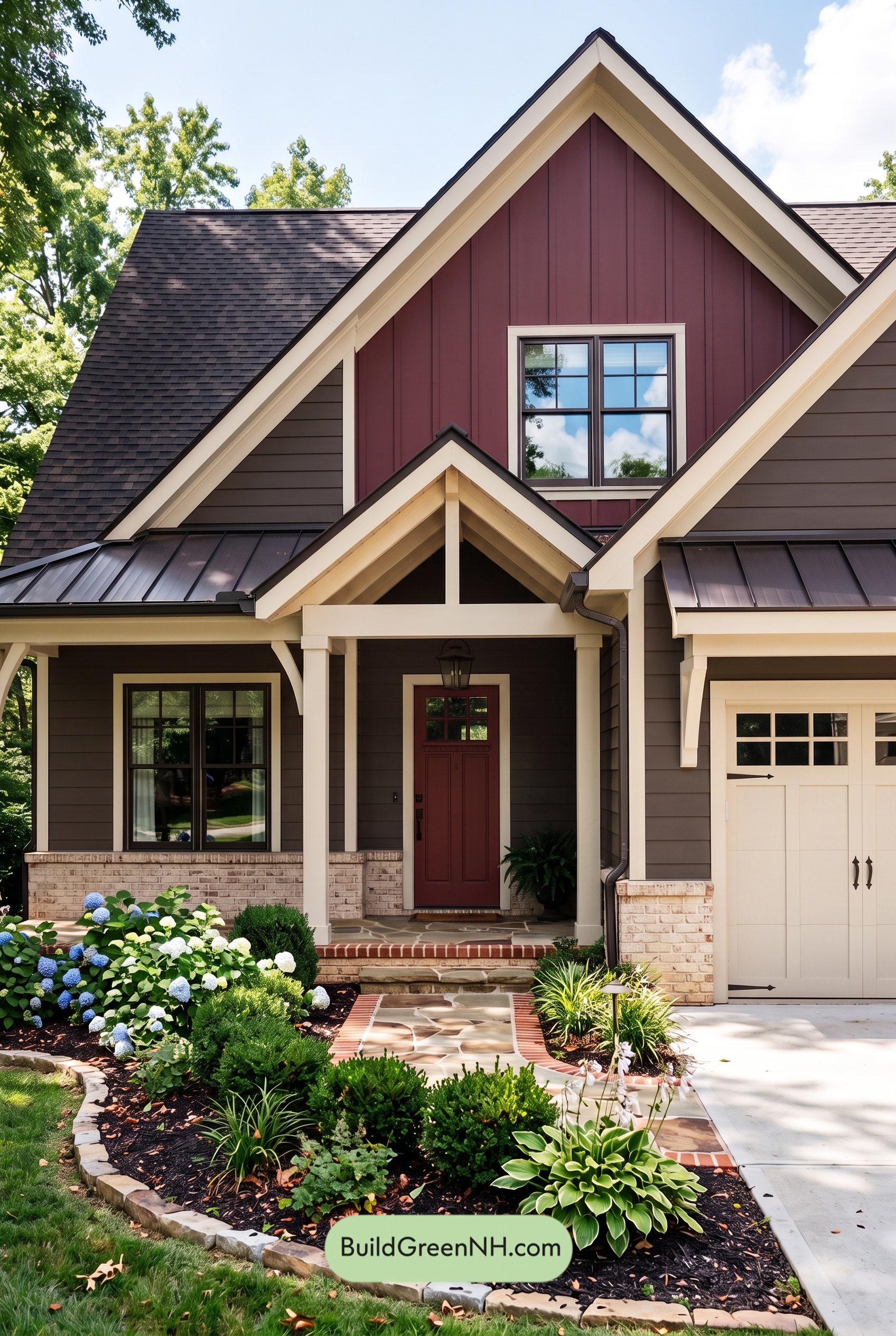 Dark Brown House Exterior Color Scheme: Embercrest Welcome
Table of Contents