Last updated on
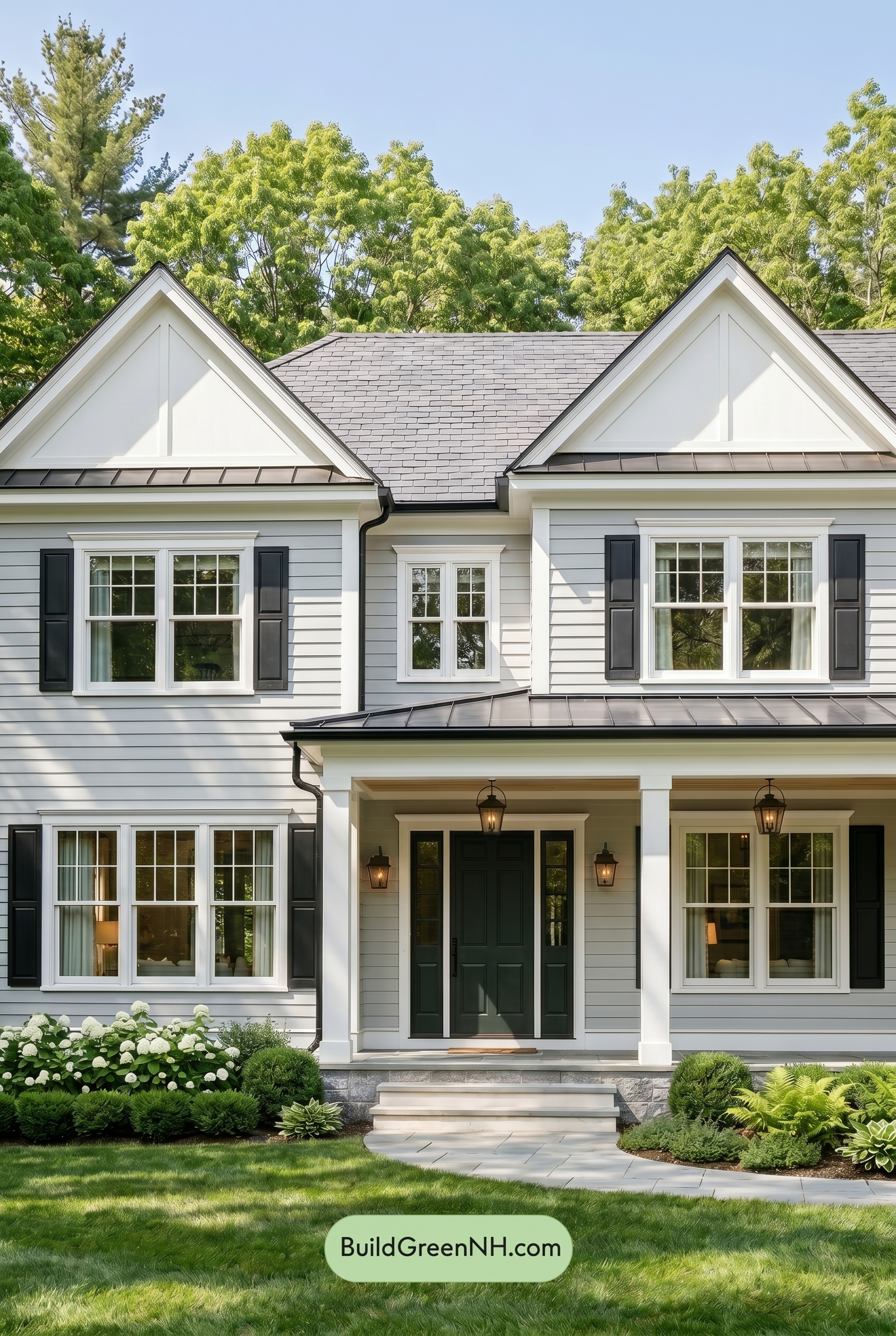

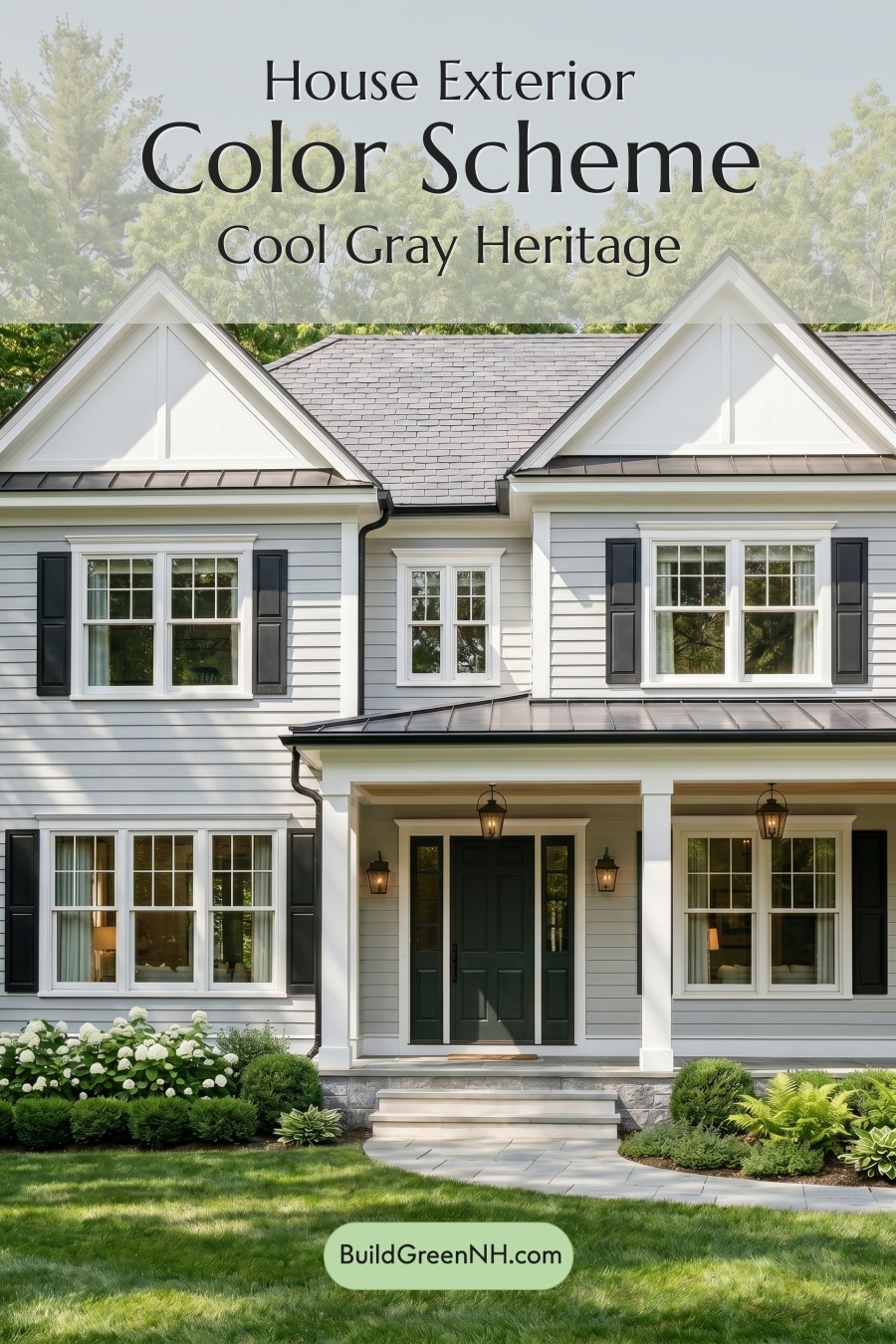
This gray-and-green exterior works beautifully because it feels classic, fresh, and deeply connected to the leafy landscape around it.
A Soft Gray Foundation
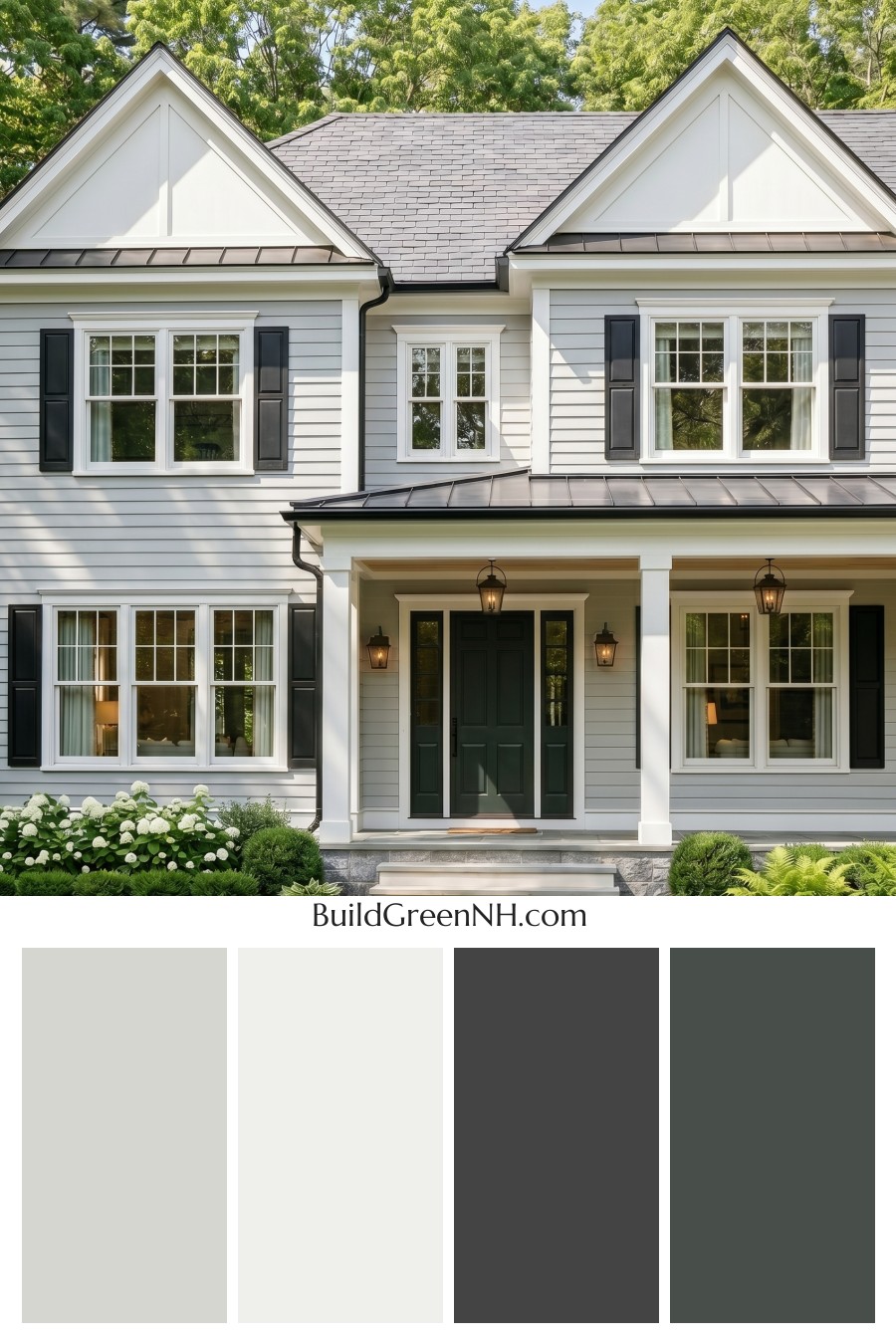
The main siding is wrapped in a light, gentle shade of gray that gives the house an elegant and approachable base. It has enough depth to define the horizontal lines of the siding, but it stays soft enough to keep the overall look bright and welcoming.
This gray family backdrop is especially effective on a traditional home with layered rooflines, tall windows, and a generous front porch. It lets the architecture shine without feeling busy or heavy.
Green-Tinted Trim and Architectural Details
The trim, window frames, porch columns, and upper gable areas bring in a pale green shade that feels fresh and natural. Rather than creating sharp contrast, this green family color gently lifts the gray siding and adds a subtle garden-inspired softness.
Using the same green shade across the columns, window surrounds, and dormer walls creates a beautifully connected look. The result is polished, calm, and cohesive, with just enough color to feel distinctive.
Deep Gray Accents for Contrast
The shutters add drama in a deep charcoal gray, framing the windows with crisp definition. This darker shade anchors the softer siding and trim, giving the exterior a more tailored, timeless presence.
The front door follows the same gray family in a rich, dark shade, which helps the entry feel grounded and intentional. It draws the eye to the porch without overpowering the rest of the palette.
A Roof That Ties It All Together
The roof continues the gray story with layered medium and darker gray tones. Its textured appearance adds depth above the smoother siding, while the darker porch roof and gutters sharpen the edges of the home in a refined way.
Together, the gray roof, deep gray shutters, and darker front door create balance against the softer gray siding and pale green trim. Nothing feels random; every shade has a clear role.
The Overall Mood
This exterior feels peaceful, sophisticated, and rooted in nature. The gray shades bring structure and classic charm, while the green shades soften the home and echo the surrounding trees and landscaping.
It is a wonderful example of a color scheme that feels traditional without being plain. Calm neutrals, leafy undertones, and strong dark accents work together to create a home that feels fresh, graceful, and welcoming from the curb.
Next, see how this color scheme looks under different lighting simulations throughout the day.
Overcast
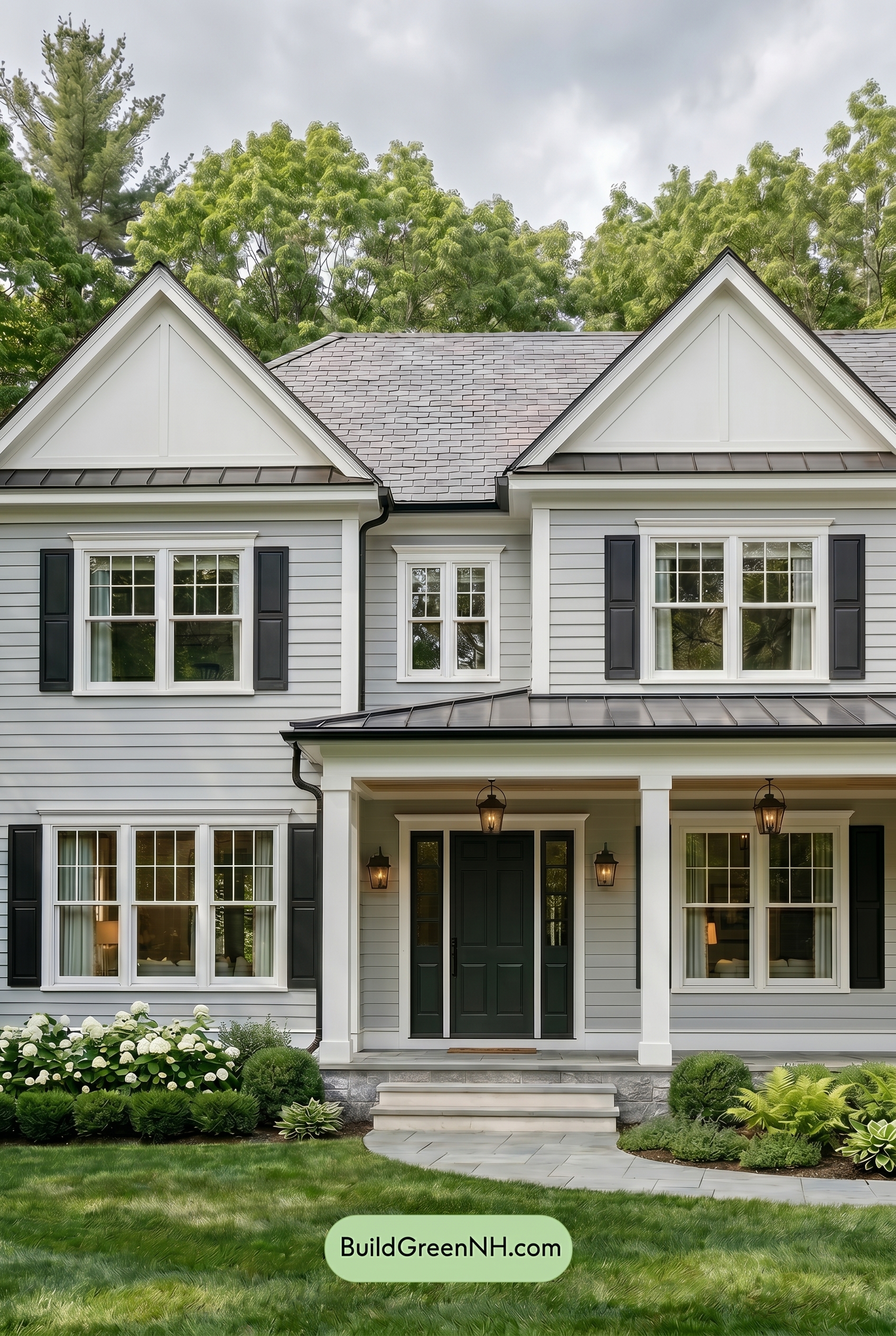
Under overcast lighting, the gray siding reads cooler and more muted than it would in neutral daylight, with less warmth and a softer, almost misty quality. The green family on the trim, window frames, columns, and dormer areas feels deeper and less saturated, shifting toward a quieter, more grounded shade.
Because the cloud cover diffuses the light, shadows become gentler and the contrast between the pale gray walls and darker gray shutters and door softens. The overall mood turns calm and refined, with the exterior feeling less crisp and sunny, but more serene, cohesive, and understated.
Golden Hour
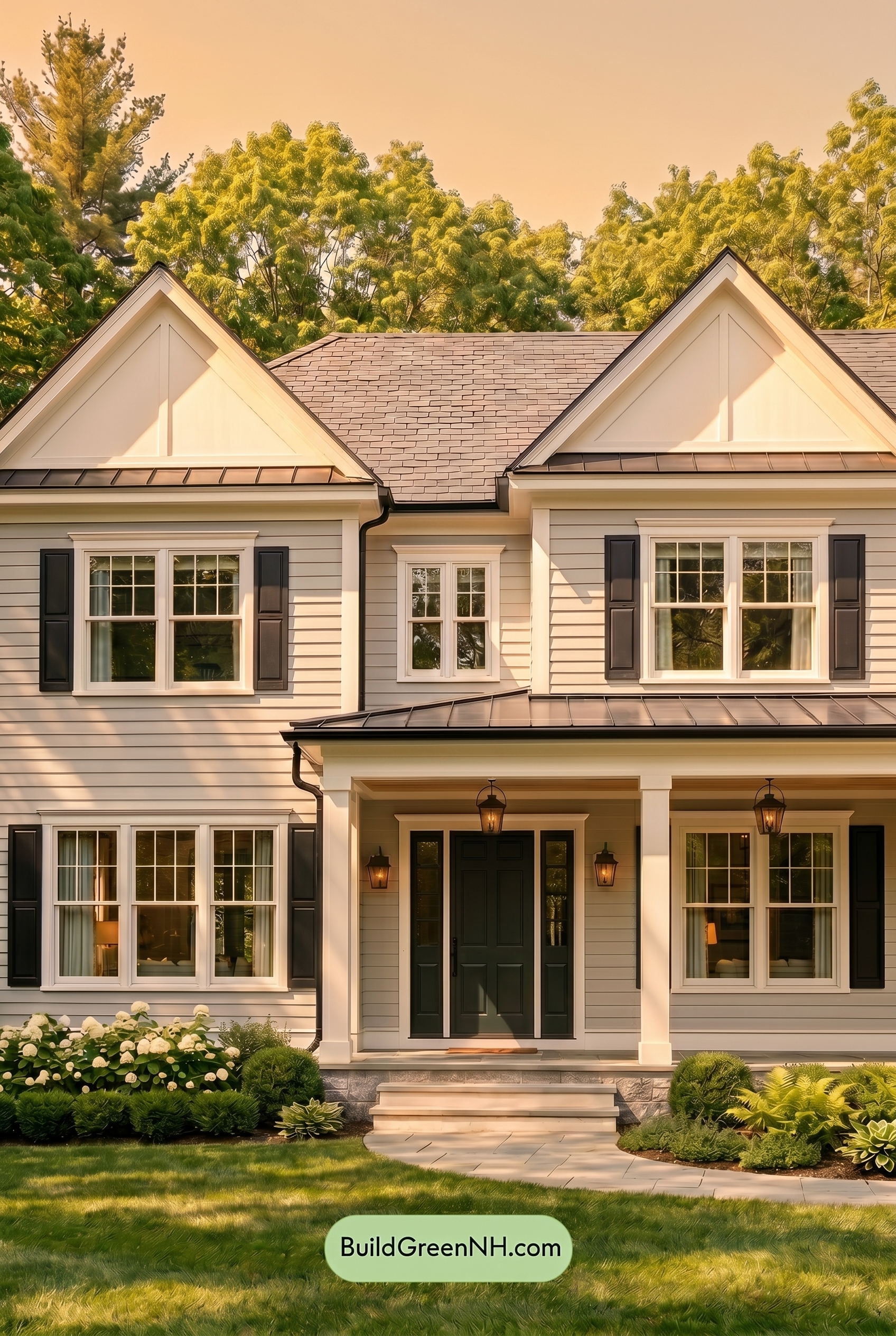
Under Golden Hour light, the gray siding takes on a warmer, softer cast than it would in neutral daylight, with a touch more saturation that makes the surface feel inviting rather than crisp. The green trim, columns, and window frames appear richer and more mellow, as the low warm light gently rounds off any cooler undertones.
Shadows stretch across the facade with deeper contrast, causing the gray shutters and front door to read darker and more dramatic. Compared to the cleaner balance of daylight, the whole palette feels cozier, warmer, and more dimensional, with highlights glowing softly against the shaded areas.
Shade
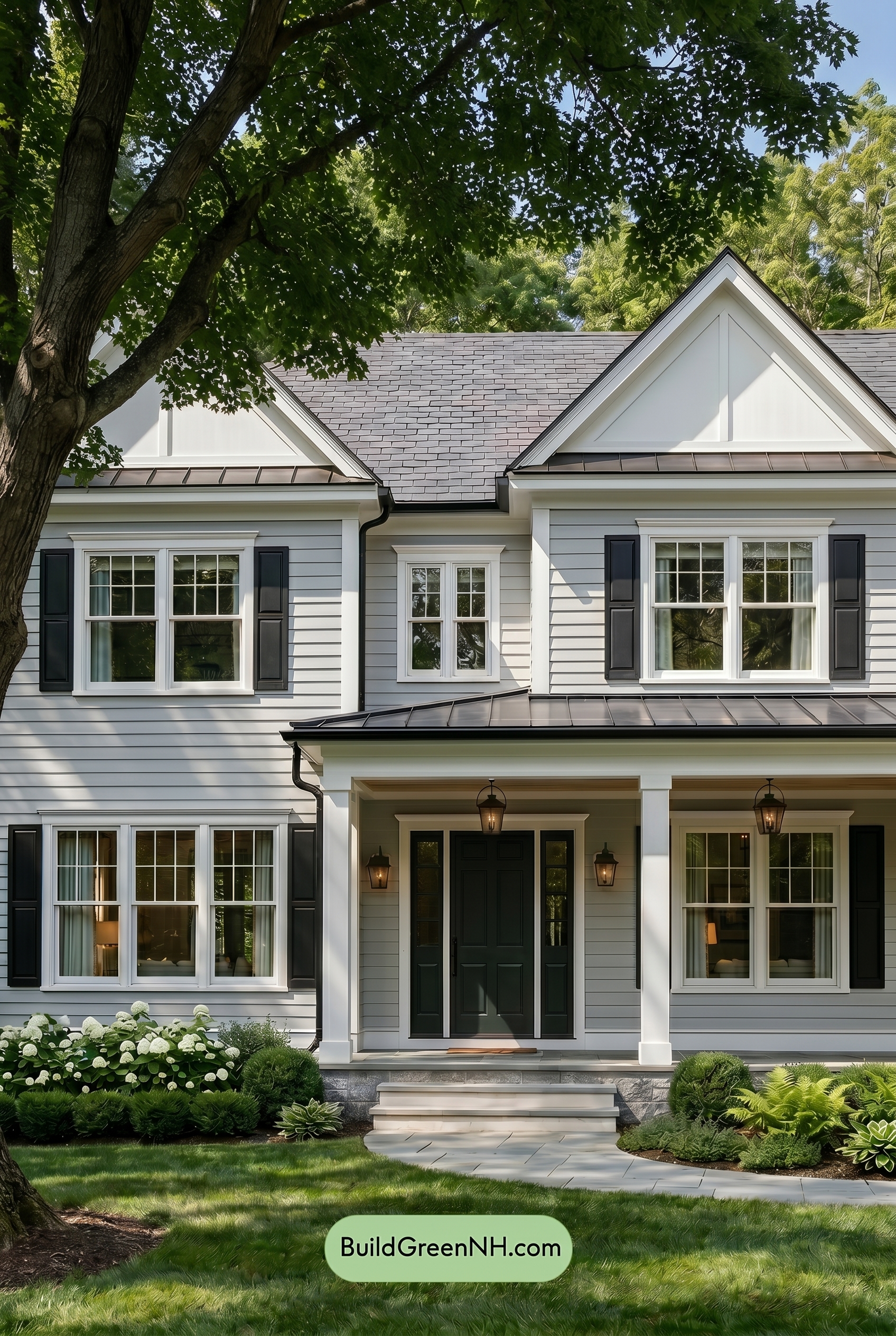
In shade, the gray siding reads cooler and a touch deeper than it would in neutral daylight, with its saturation softened and any warmth pulled back. The green family on the trim, window frames, columns, and dormer areas becomes more muted and earthy, giving the exterior a quieter, more settled character.
Tree shadows add stronger depth across the façade, making the darker gray shutters and front door feel richer while the lighter trim areas appear less crisp but more relaxed. Overall, the contrast shifts from bright and clean in neutral daylight to layered, calm, and slightly moodier under shade.
Nighttime
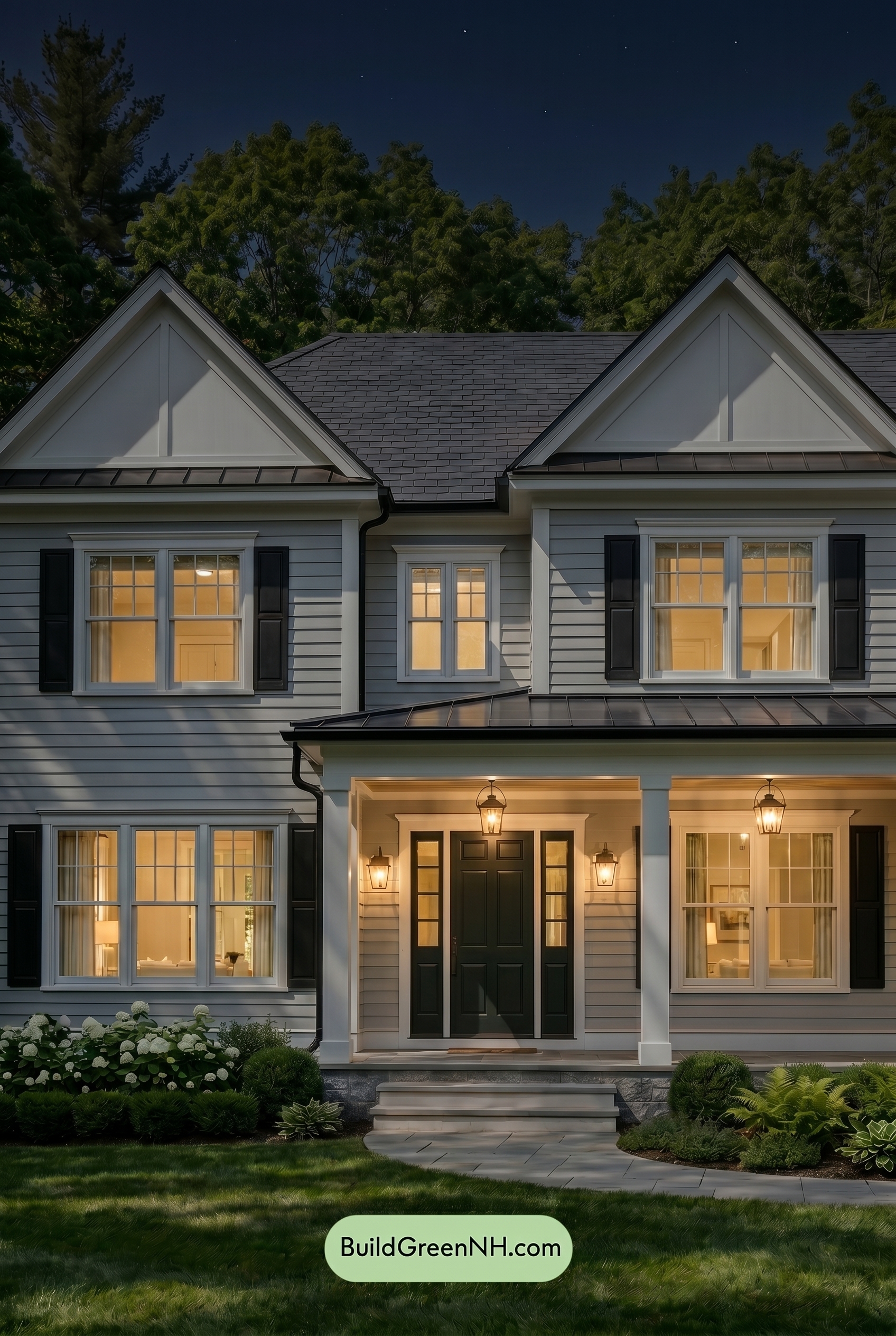
Nighttime pushes the gray family on the main walls into a deeper, cooler shade than it would show in neutral daylight, with shadows increasing saturation along the siding lines and under the roof edges. The darker gray accents on the shutters and front door become more dramatic, reading close to charcoal in the deepest shade, so the contrast feels sharper and more architectural.
The green family on the trim, window frames, columns, and dormer areas softens under the warm porch and window lighting, picking up a gentler warmth while shaded areas turn muted and subdued. Compared with daylight’s balanced clarity, the palette feels cozier and moodier at night, with warm highlights against cool grays creating a welcoming sense of depth.
Pin these for later
Want More?
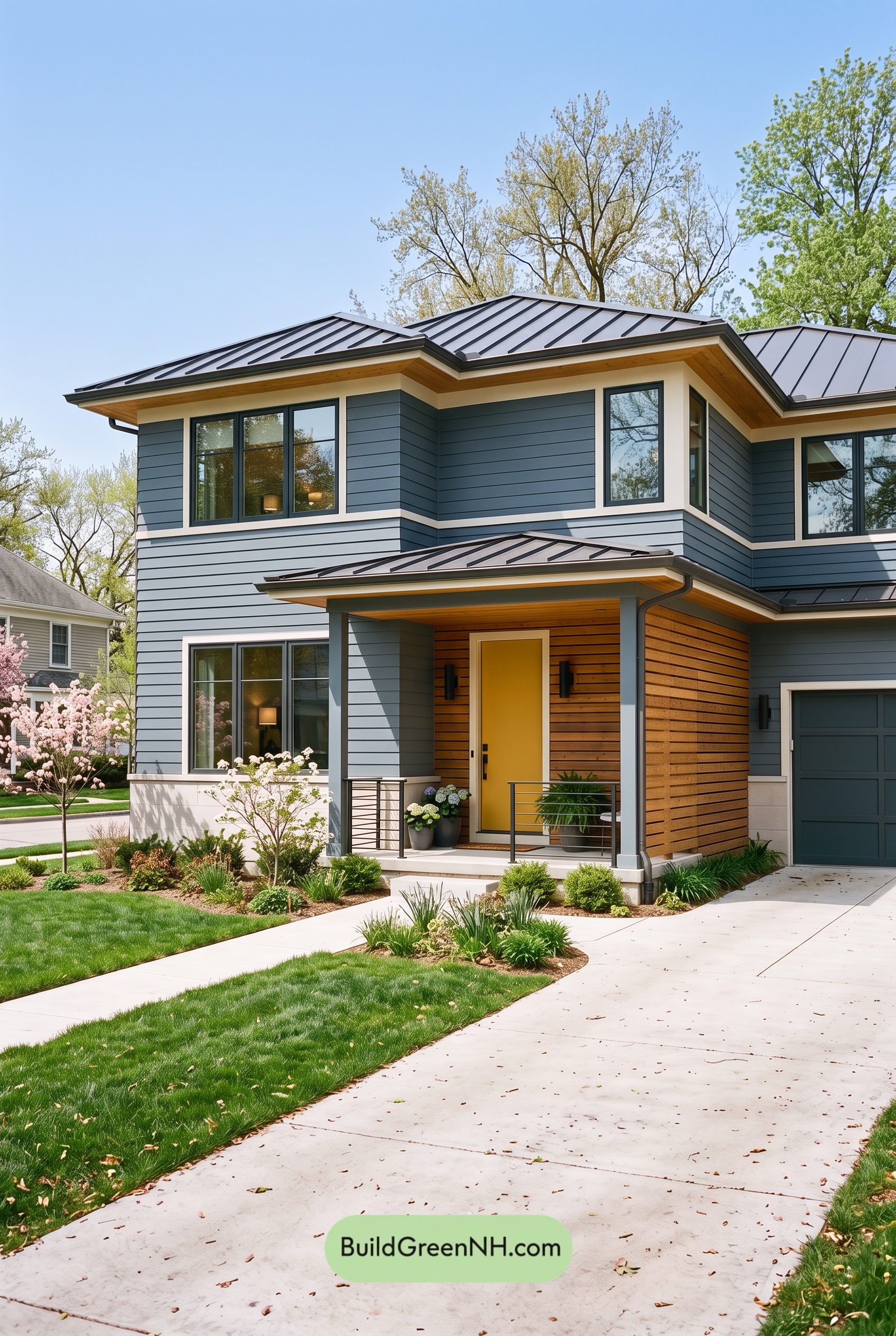 Blue House Front Door Color Scheme: Harbor Saffron
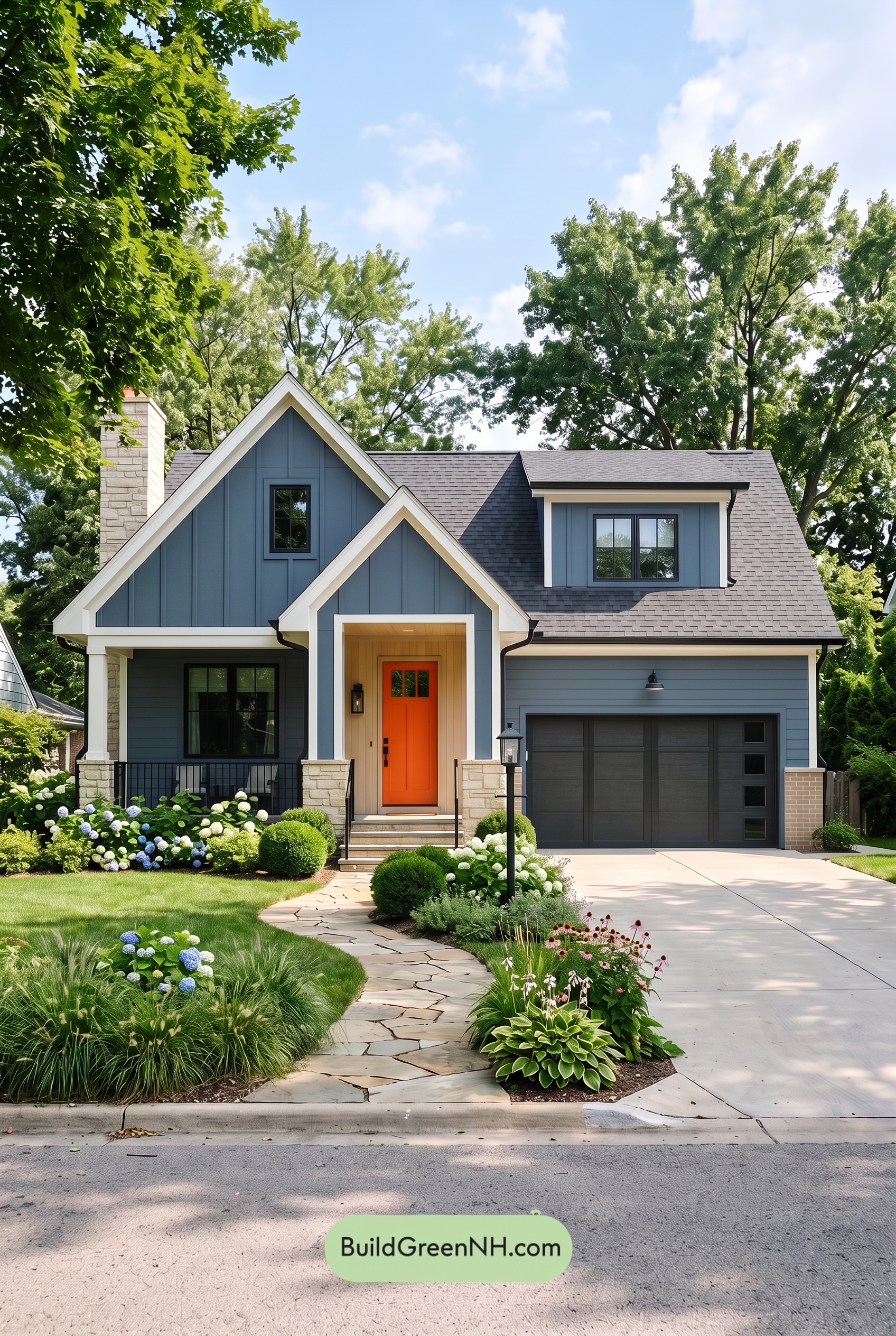 Blue House Front Door Color Scheme: Cobalt Persimmon
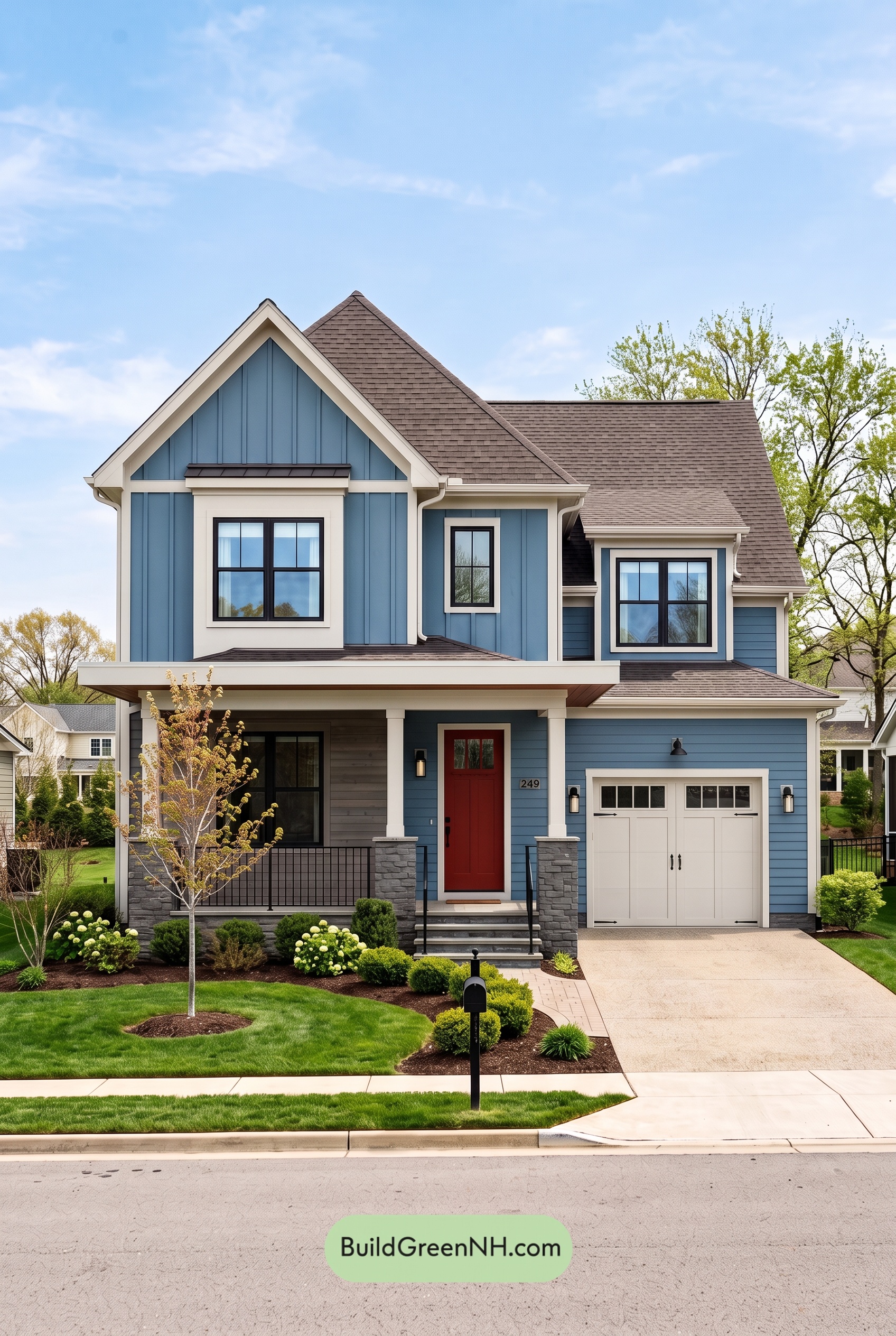 Blue House Front Door Color Scheme: Denim Poppy
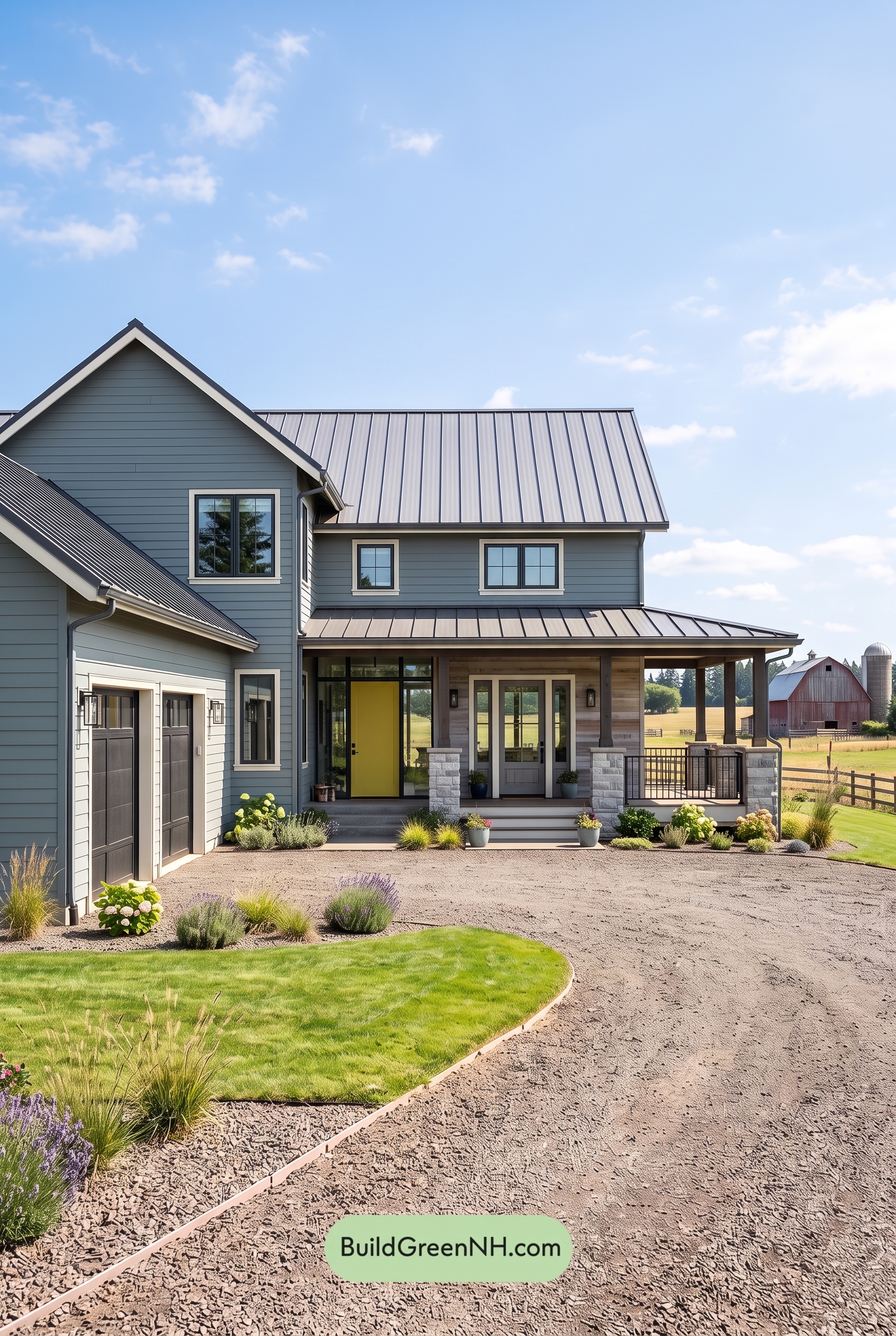 Blue House Front Door Color Scheme: Slate Citron
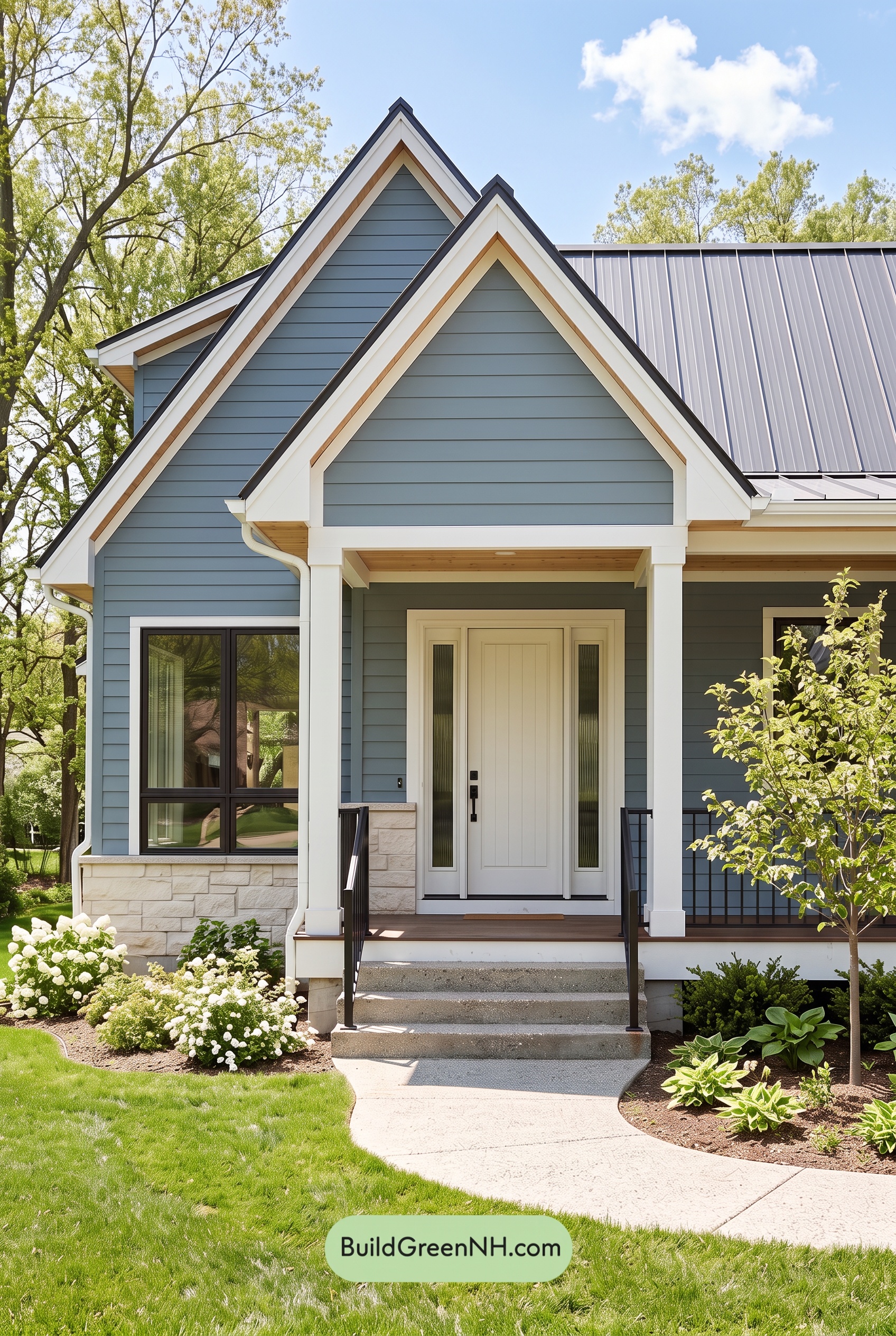 Blue House Front Door Color Scheme: Mist Blue Haven
Table of Contents