Last updated on
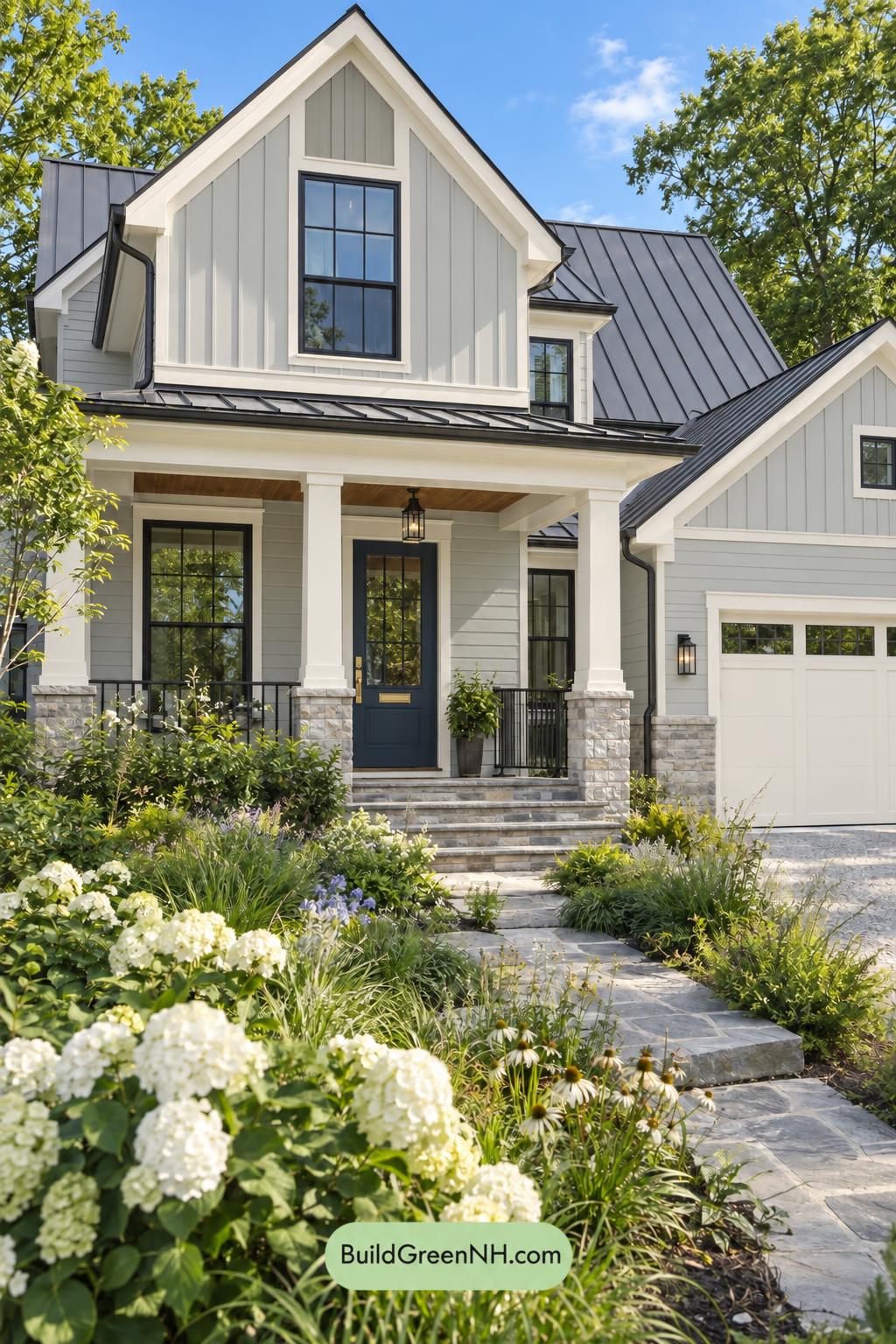

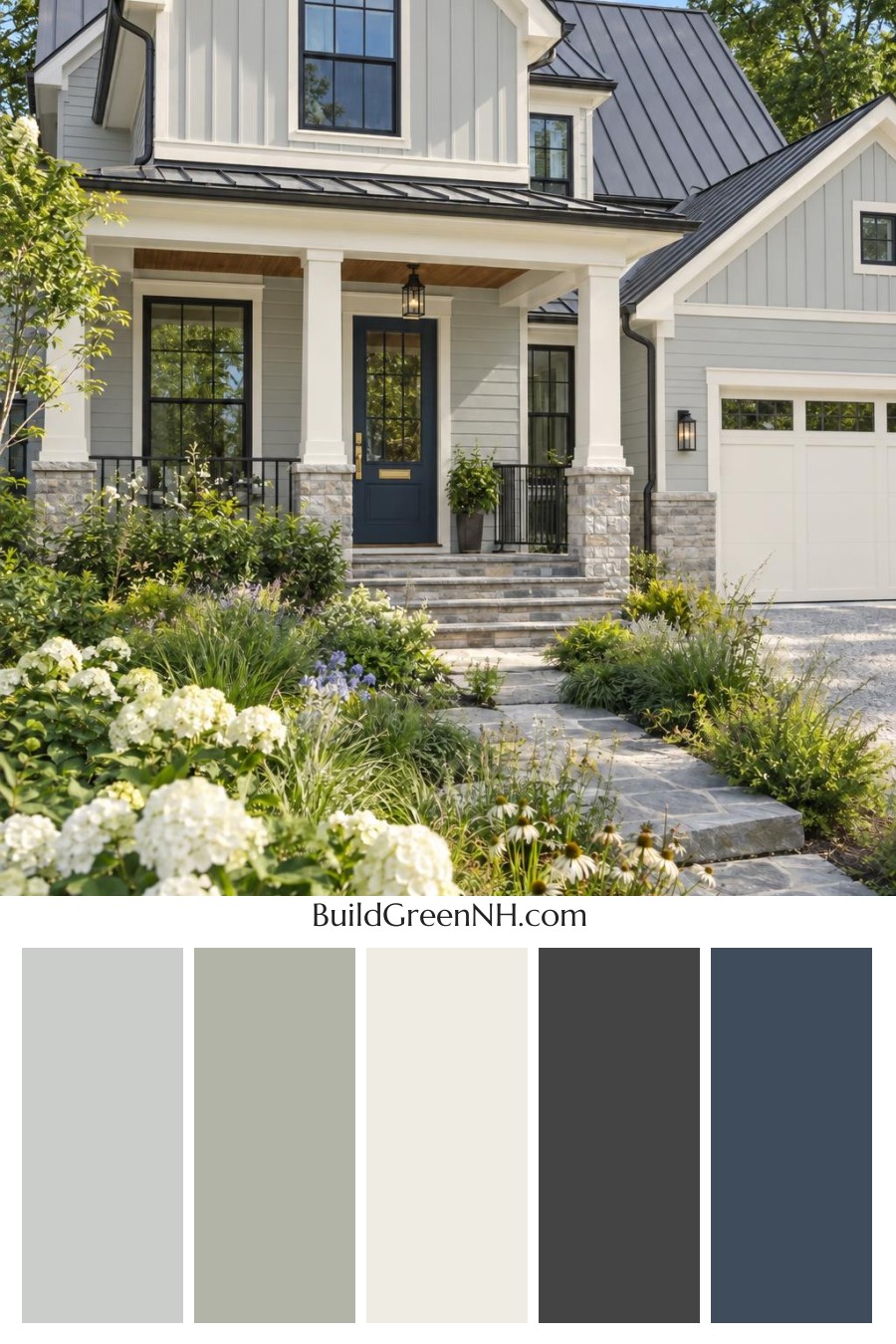
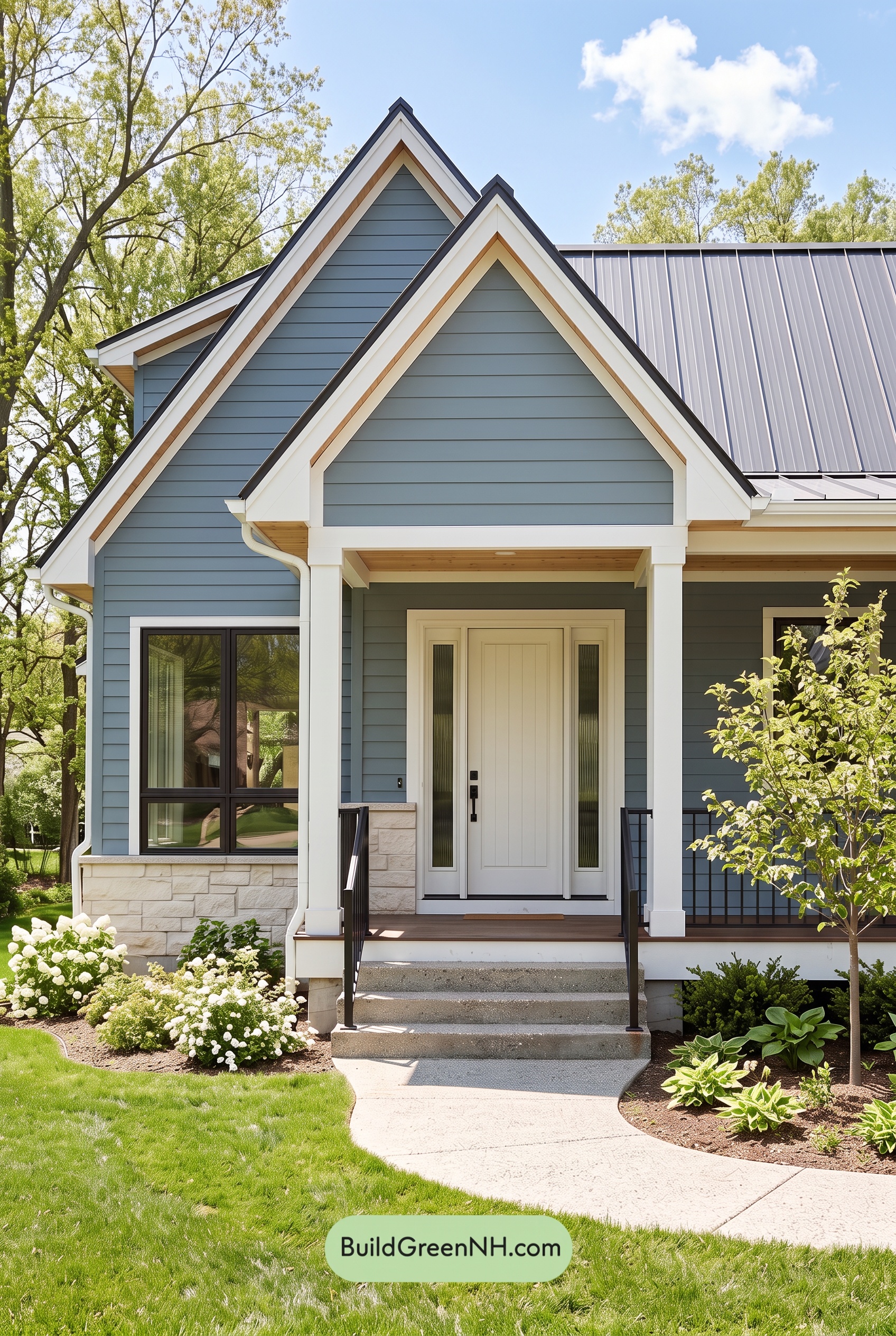
This layered palette feels fresh and timeless because soft gray siding, crisp white detailing, and a deep blue entry create instant curb appeal without overwhelming the home’s classic architecture.
A Soft Gray Foundation with Architectural Depth
The exterior begins with a light, gently muted gray across the main horizontal siding, giving the house a calm and welcoming base. A slightly deeper gray on the upper vertical siding introduces subtle contrast, allowing the gables and varied wall planes to feel more defined. Because both shades belong to the same restrained gray family, the result is cohesive rather than busy.
This tonal approach is especially effective on a home with strong rooflines and layered elevations. The pale gray siding keeps the facade bright, while the deeper gray accents add enough visual separation to celebrate the craftsmanship of the board-and-batten details.
Crisp White Trim That Frames Every Detail
Clean white trim provides the bright finishing touch throughout the exterior. It outlines the windows, emphasizes the steep gables, and gives the porch beams and columns a tailored, substantial presence. The white garage door continues that same polished rhythm on the right side of the home, tying the attached structure neatly into the main facade.
Against the soft gray walls, this bright trim feels sharp but not stark. It lifts the entire color scheme, highlighting the home’s traditional character while keeping the look airy and current.
Deep Accents for a Grounded, Welcoming Entrance
The front door introduces a rich, deep blue that gives the entry a memorable focal point. It is a confident shade, yet its cool undertone works beautifully with the surrounding grays. Dark gray window frames, porch railings, gutters, and roof surfaces echo that depth, creating a strong visual outline across the house.
These darker accents prevent the lighter siding and trim from feeling too delicate. Instead, they lend the exterior a sense of structure and permanence, from the tall windows to the dark roof planes above.
A Balanced Mood from Street to Front Door
Overall, the palette feels refined, peaceful, and quietly dramatic. The soft gray siding blends naturally with the pale gray stone at the porch bases and steps, while the white trim brings brightness to the architecture. Deep blue and dark gray details add contrast in all the right places.
The finished effect is a home that feels both elegant and approachable: light enough to feel inviting in the landscape, yet grounded enough to make every architectural feature stand out.
Next, see how this color scheme looks under different lighting simulations throughout the day.
Overcast
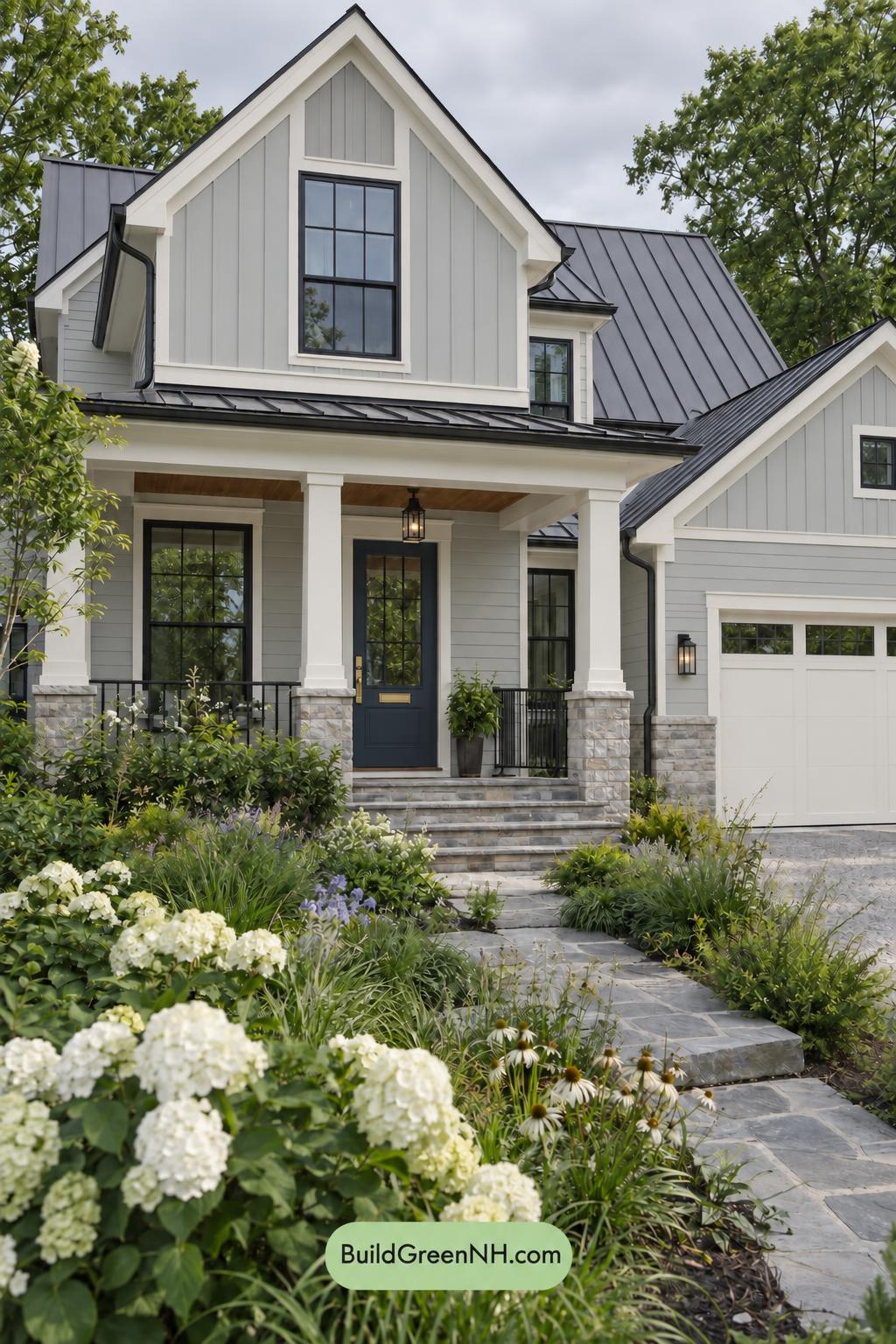
Under overcast skies, the layered gray siding appears softer and slightly deeper than it does in neutral daylight, with less visible warmth and a more even, misty cast. The white trim, columns, and garage door lose some of their crisp sunlit brightness, reading as gentler off-white shades instead of sharp highlights.
With direct shadows muted, contrast shifts from dramatic to refined: the darkest gray details and deep blue door still anchor the façade, but their saturation feels calmer and more sophisticated. This flatter, diffused light gives the exterior a quiet, welcoming mood while allowing the subtle difference between the gray shades to feel especially cohesive.
Golden Hour
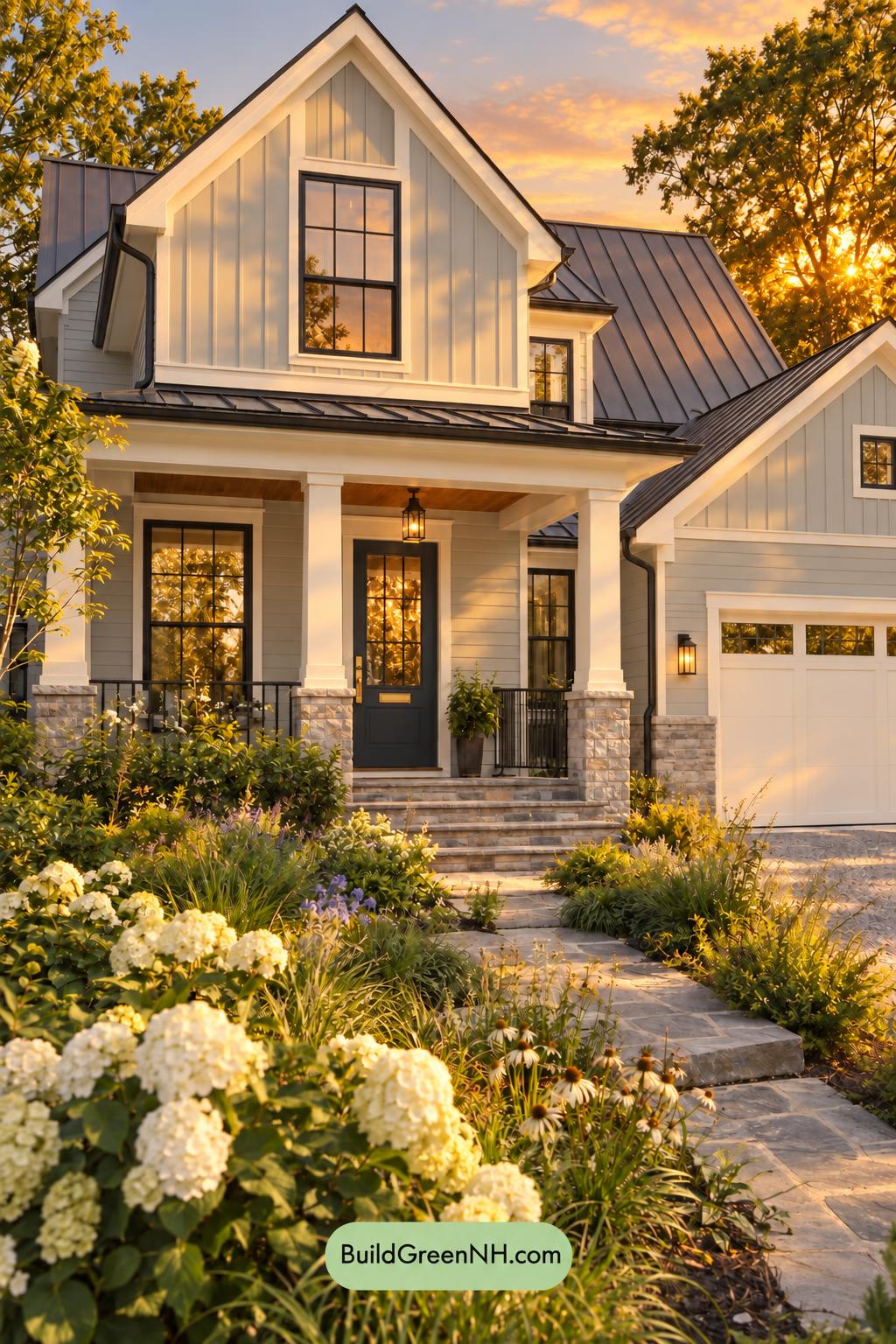
Under neutral daylight, the layered gray exterior reads crisp and balanced, with the white trim creating clean definition around the facade. At Golden Hour, low amber light warms those gray shades, softening their cool character and giving the lighter surfaces a gently creamy glow. The blue front door deepens against the sunlit siding, becoming a more saturated focal point without overpowering the palette.
Longer shadows enrich the darker gray details and sharpen the contrast beneath the rooflines, porch, and window frames. Meanwhile, the white columns and garage door catch the last light, appearing warmer and brighter beside the shaded areas. The overall mood shifts from tailored and airy in daylight to inviting, dimensional, and quietly dramatic as evening approaches.
Shade
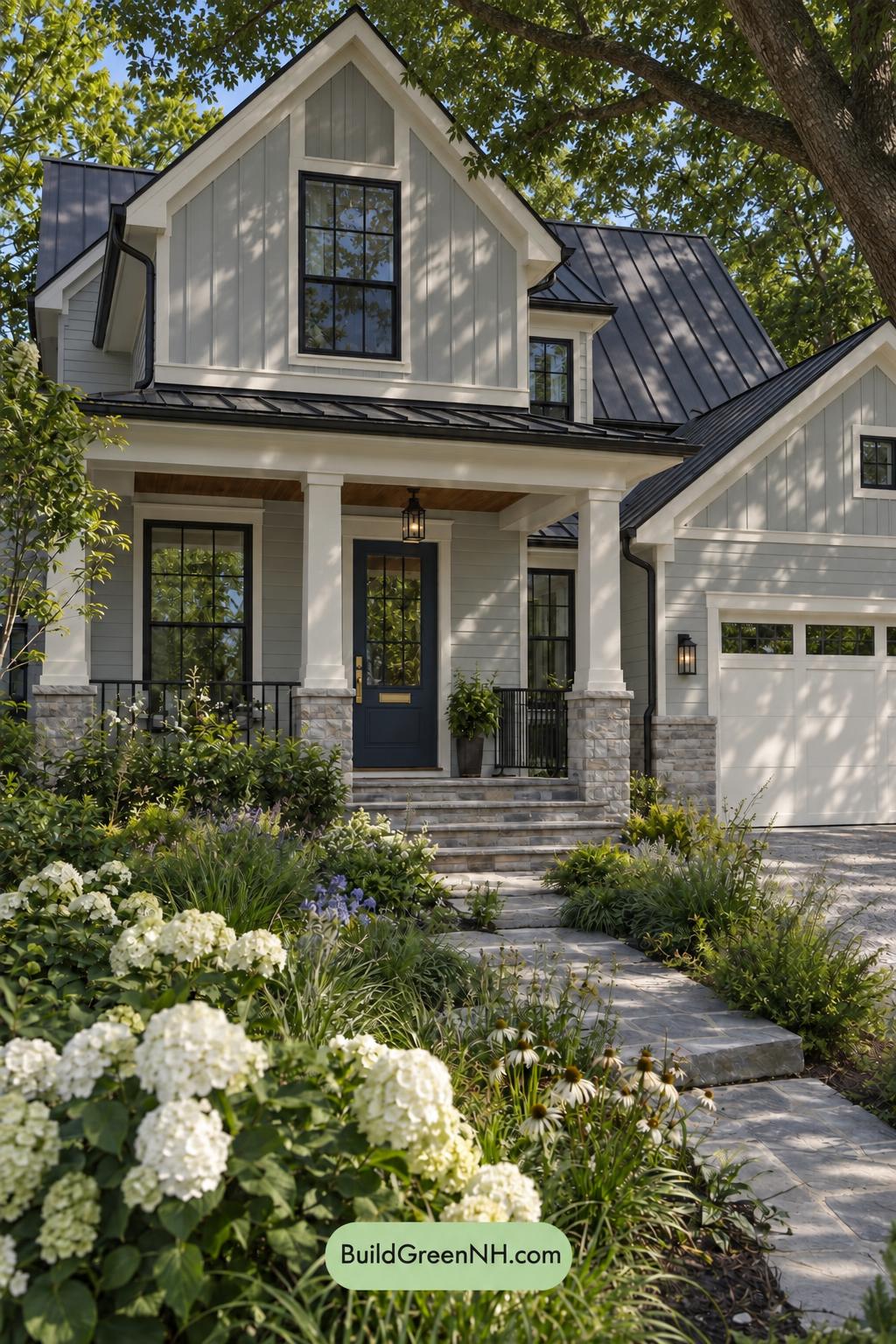
In shade, the layered gray exterior takes on a quieter, more nuanced character than it has in neutral daylight. The lighter gray siding can read slightly cooler and softer, while the deeper gray details settle into the shadows, making the vertical boards, window frames, and railings feel more defined without appearing harsh. White trim and columns lose a touch of brightness in the filtered light, shifting from crisp contrast to a gentler, more inviting outline.
The blue front door becomes richer and more saturated under the tree canopy, creating a handsome focal point against the subdued gray backdrop. Dappled shadows add movement across the façade, deepening the overall contrast in some areas while softening it in others. The result is a calm, sheltered mood with a refined balance of cool shades, softened warm light, and architectural depth.
Nighttime
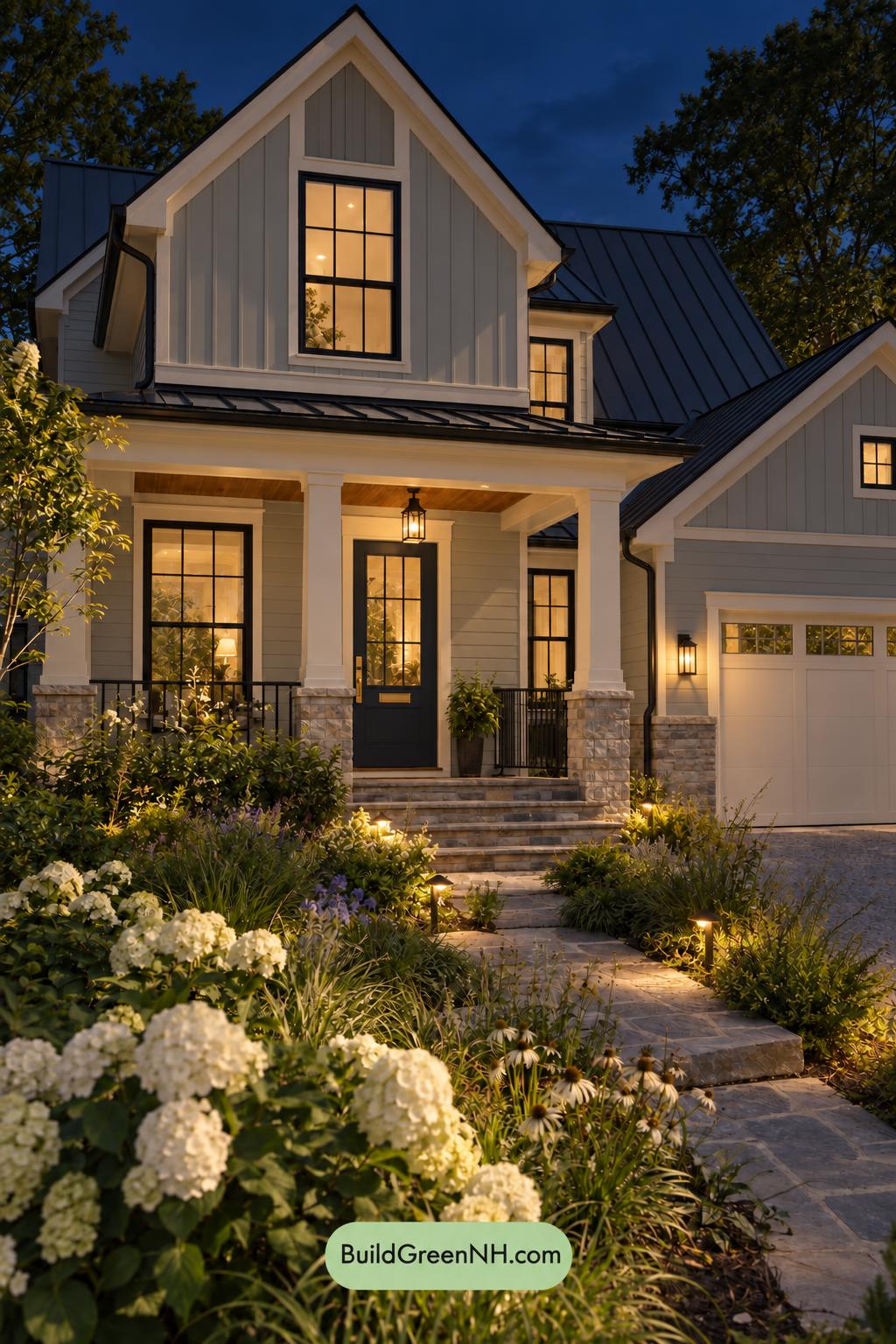
At night, the gray exterior shades take on a deeper, more muted character than they show in neutral daylight, with shadowed planes appearing richer and more dramatic. Warm exterior and window lighting softens the cooler cast of the gray siding, while the white trim and columns glow gently, giving the façade crisp definition without feeling stark.
The blue front door deepens into a sophisticated focal point against the illuminated entry, and the darker gray details around the windows and railings gain stronger contrast. Pools of warm light and broad blue-black shadows create an inviting, layered mood that makes the home feel both polished and welcoming.
Pin these for later:
Want More?
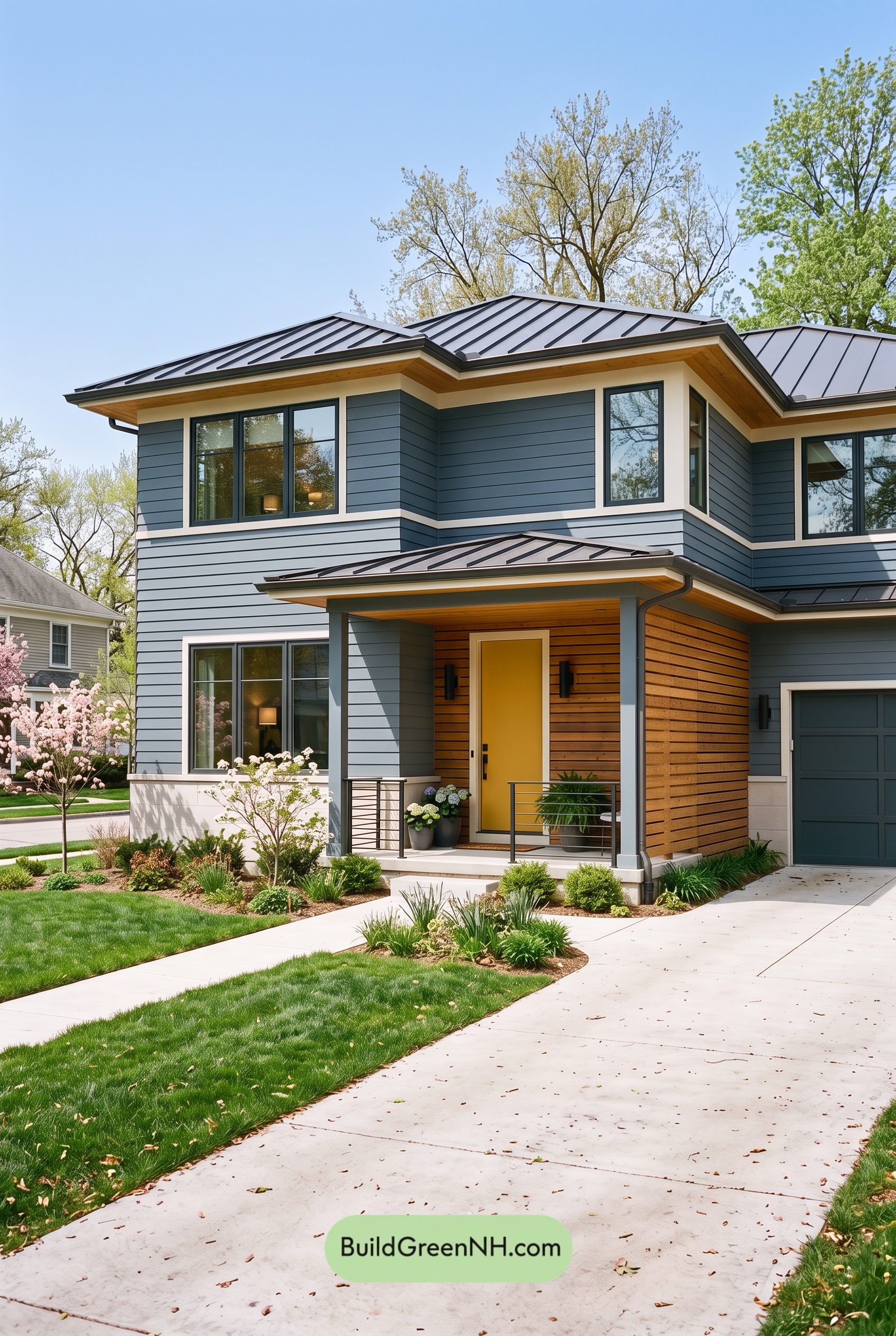 Blue House Front Door Color Scheme: Harbor Saffron
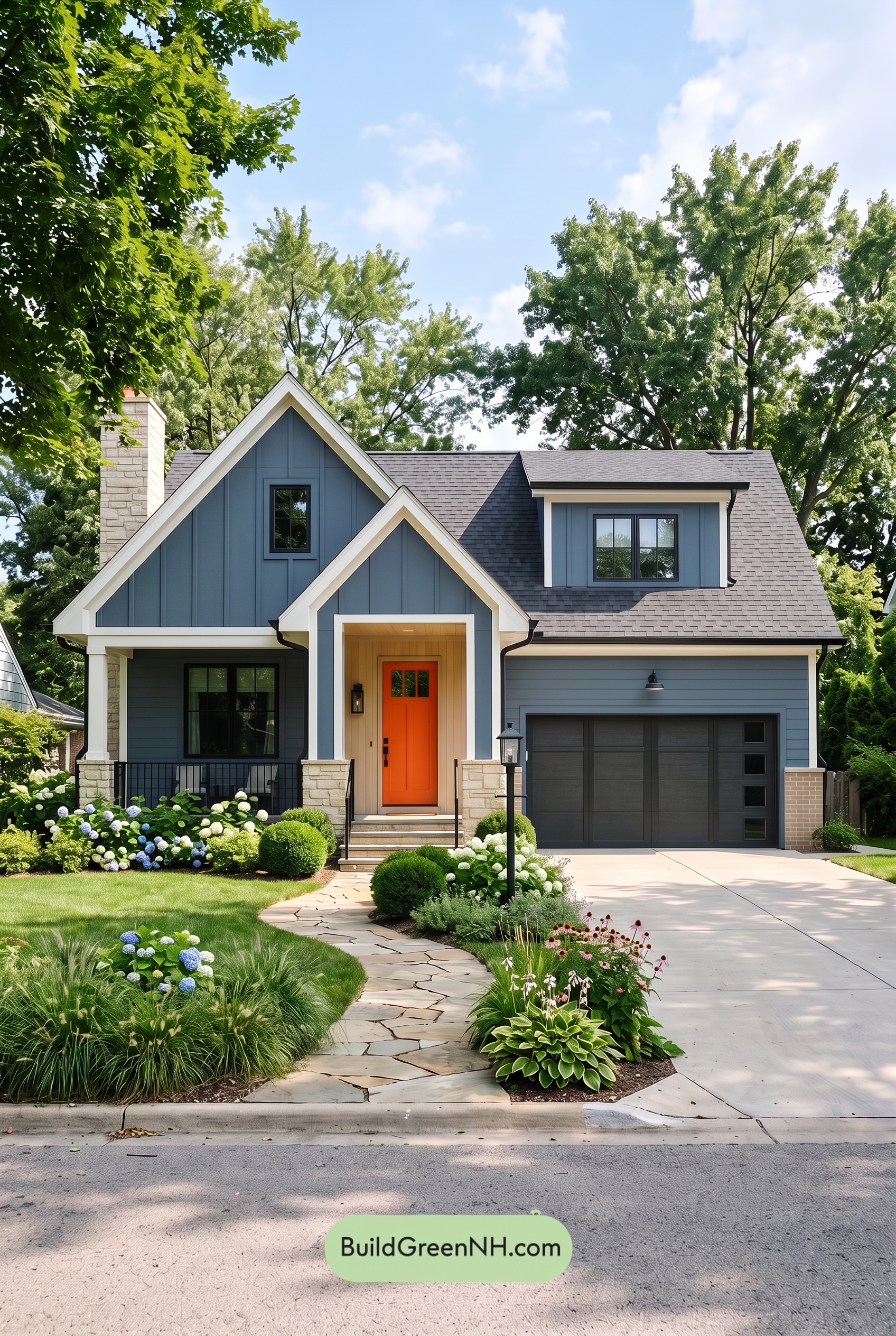 Blue House Front Door Color Scheme: Cobalt Persimmon
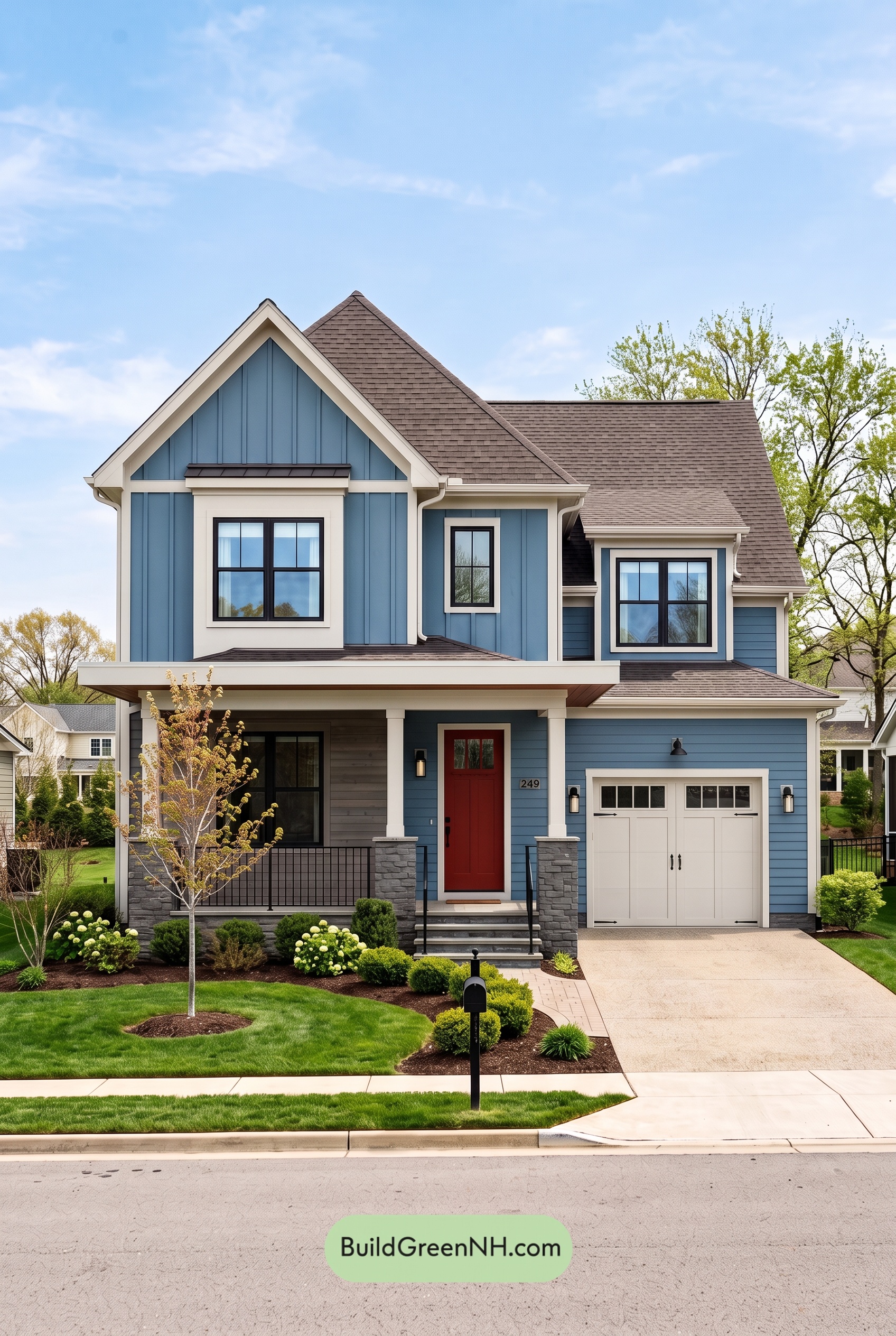 Blue House Front Door Color Scheme: Denim Poppy
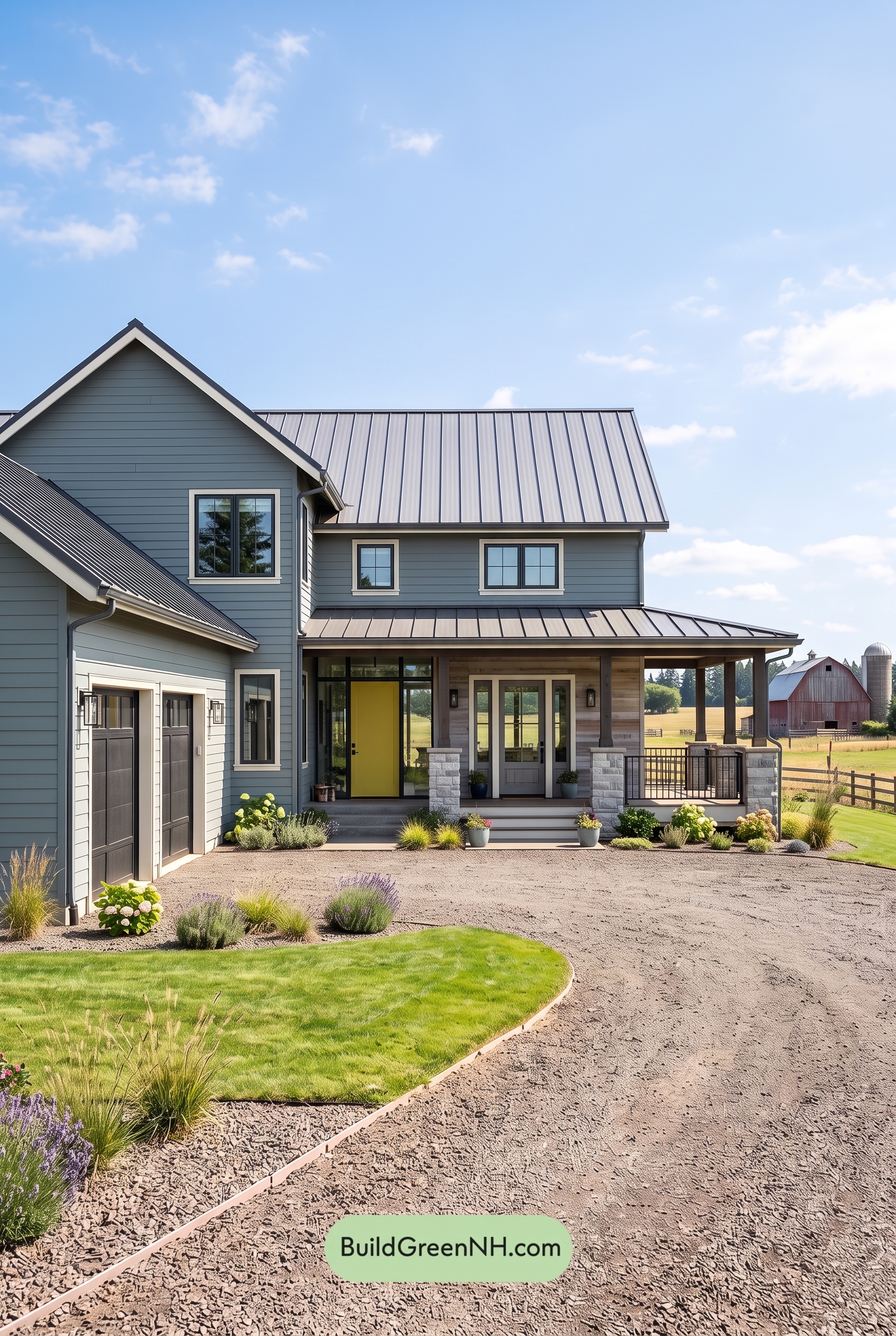 Blue House Front Door Color Scheme: Slate Citron
 Blue House Front Door Color Scheme: Mist Blue Haven
Table of Contents