Last updated on
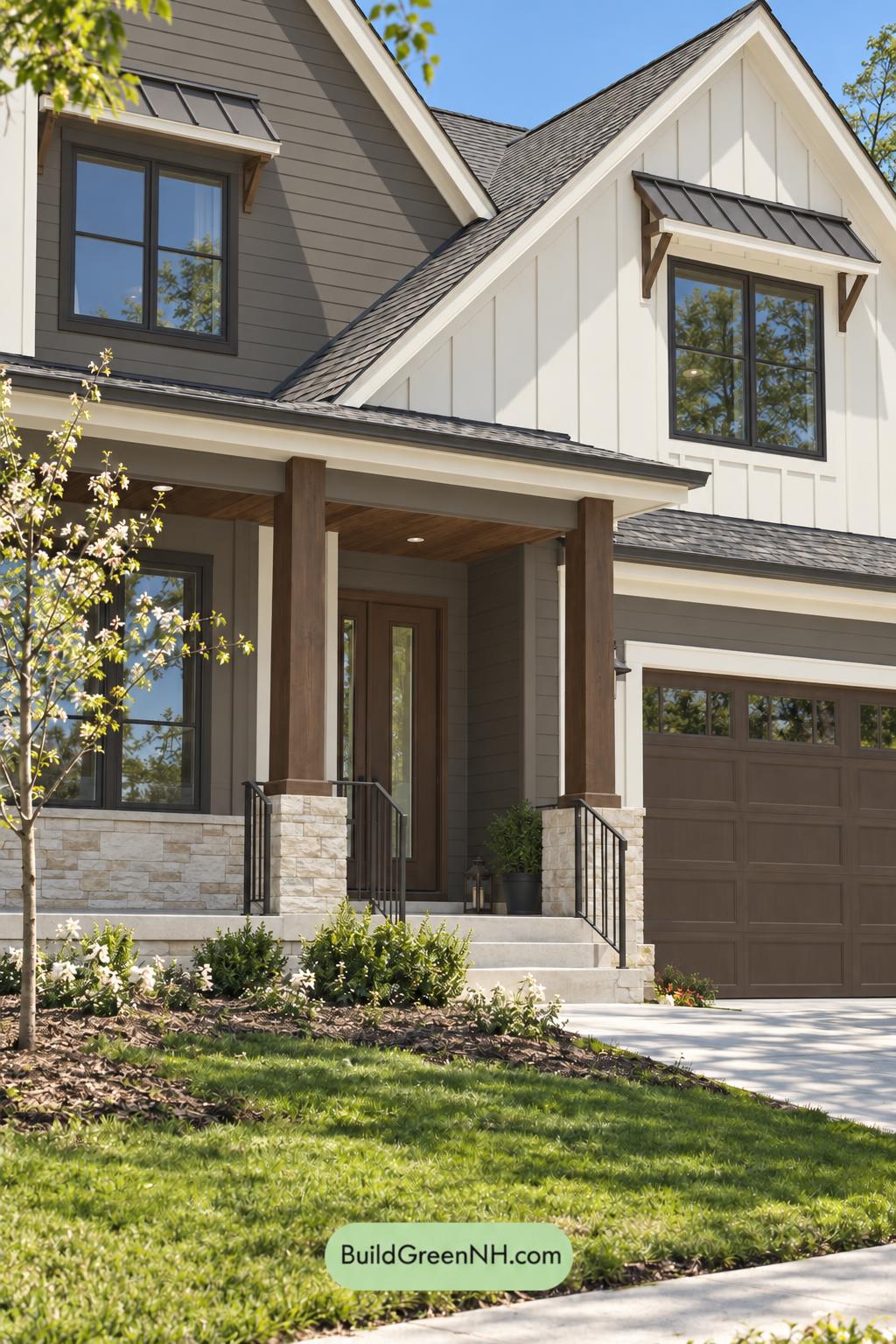

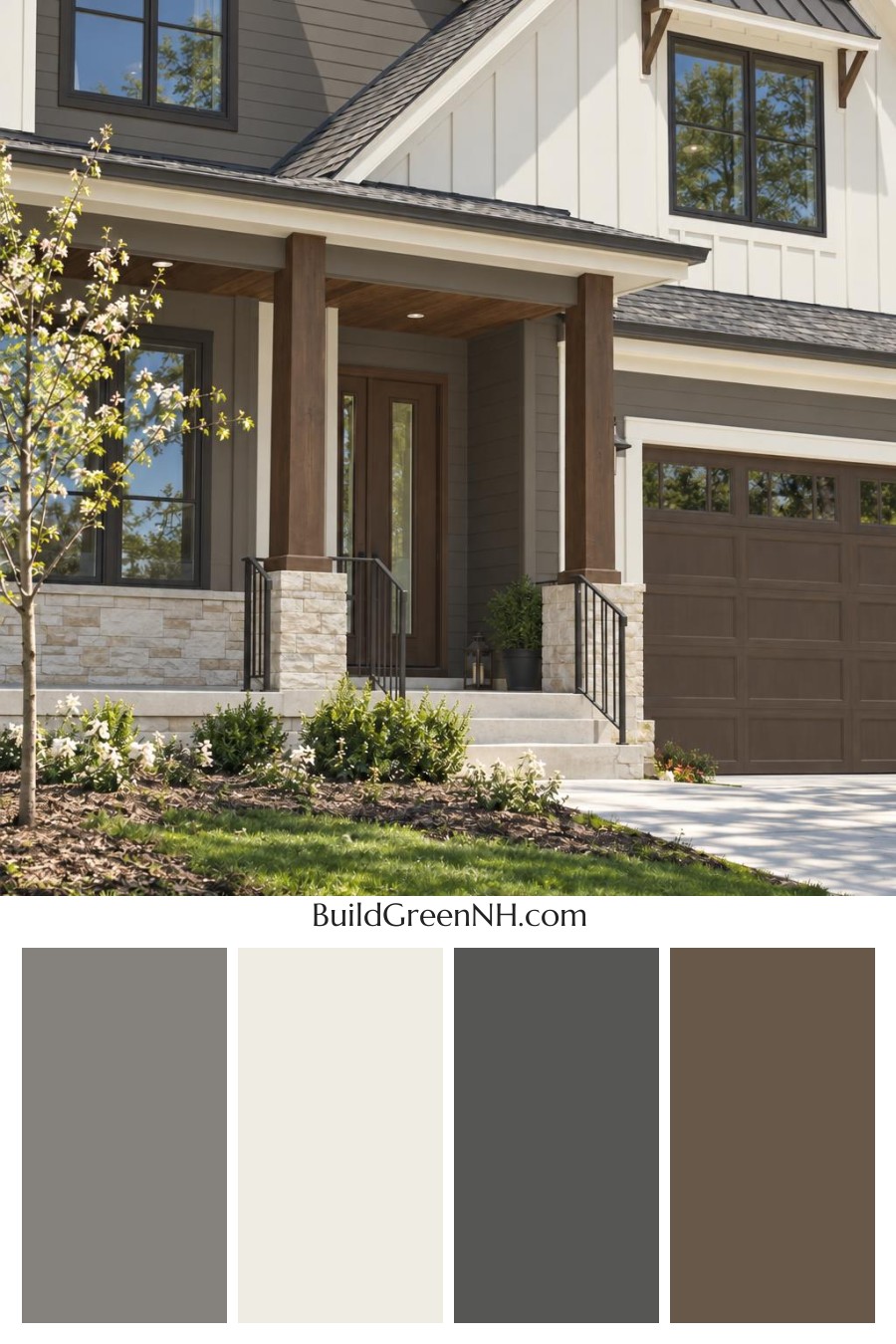
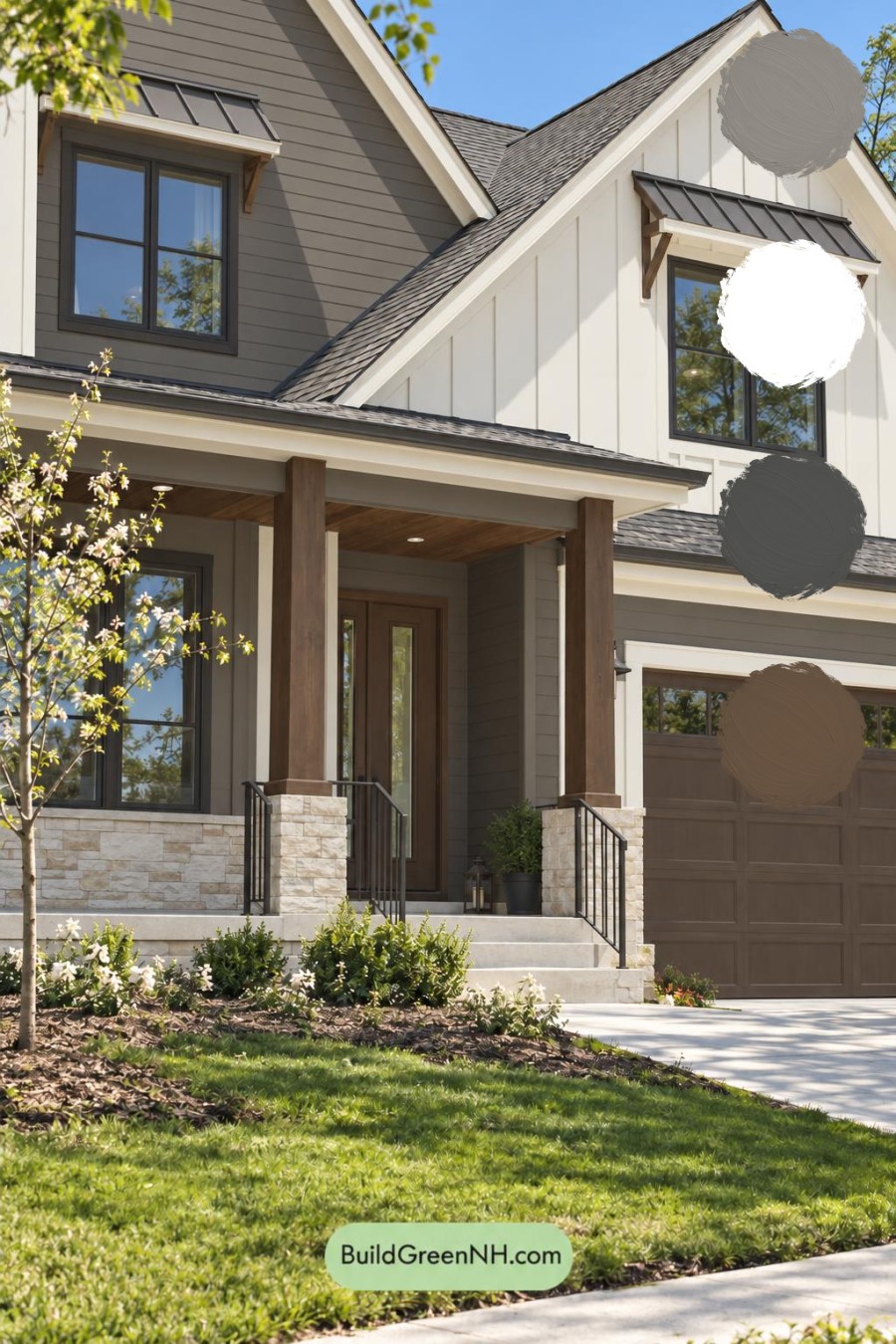
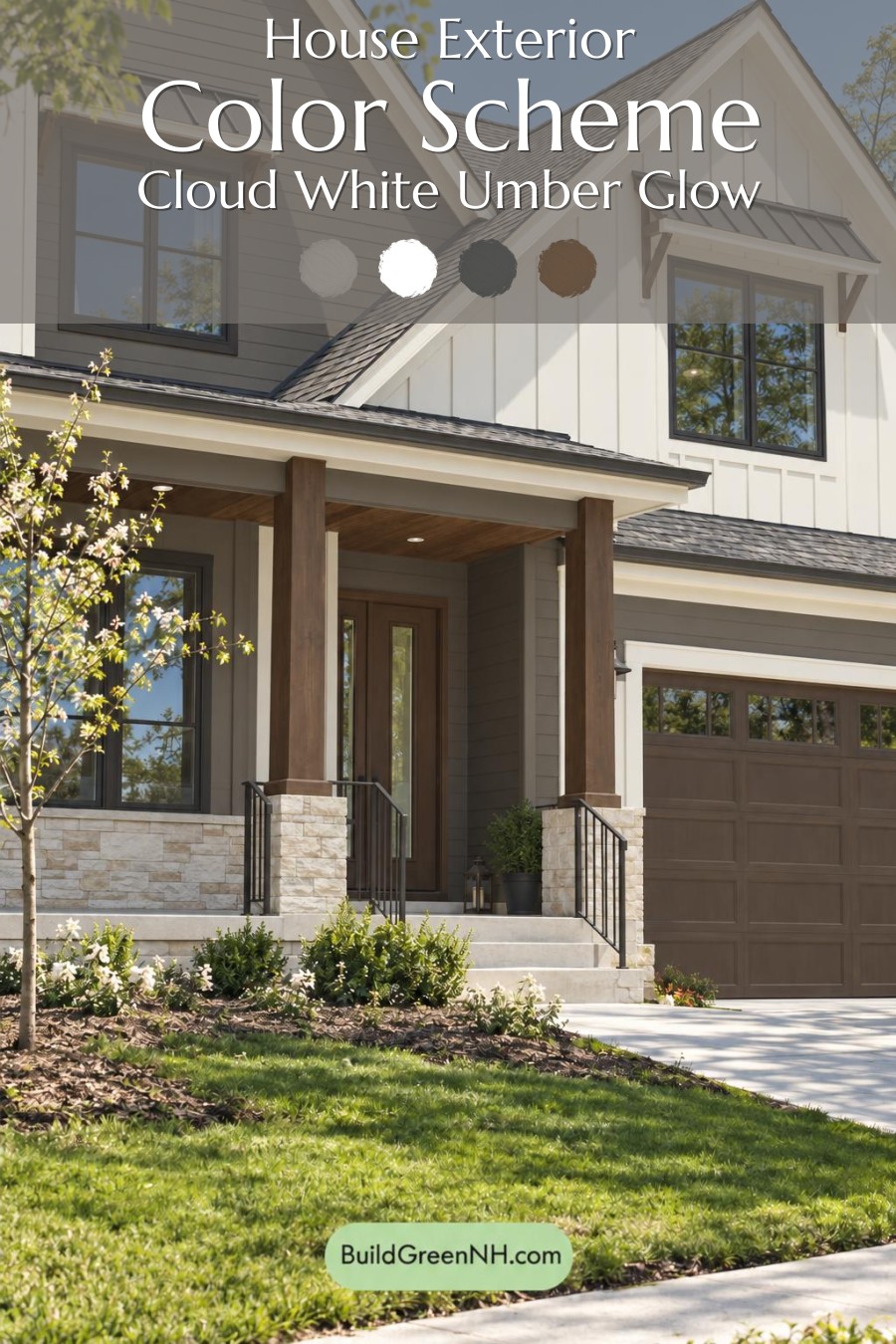
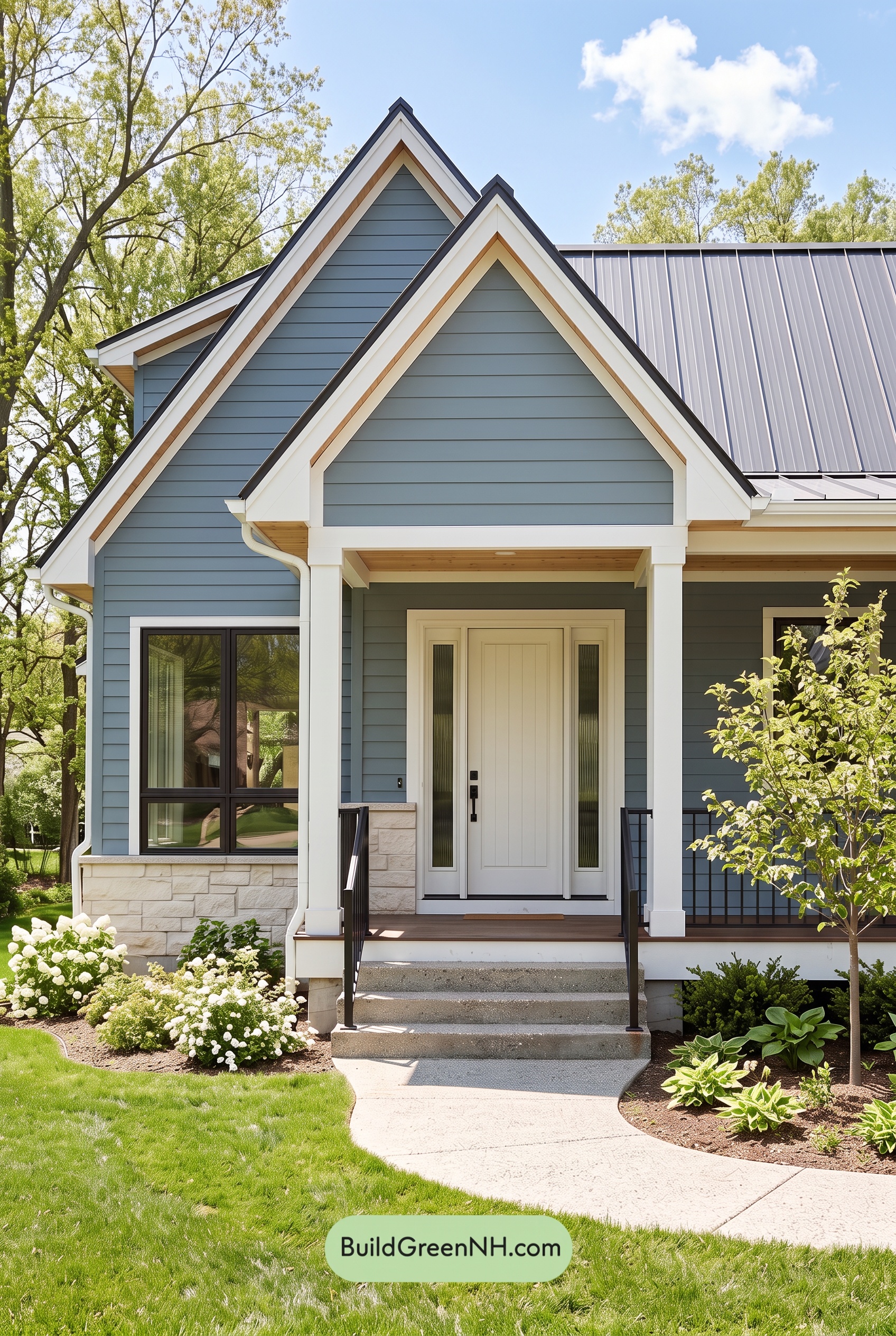
This layered mix of soft gray, crisp white, deep brown, and charcoal creates a polished exterior that feels both welcoming and enduring.
A Balanced Mix of Light and Dark
The main siding wears a warm mid-tone gray that gives the home a grounded, contemporary presence without feeling cold. Its horizontal lines bring subtle texture across the larger wall areas, while the bright white upper gables add a fresh contrast and highlight the home’s steep rooflines.
The white trim is used with a confident, clean touch around the roof edges, porch ceiling, and garage detailing. This lighter shade sharpens the architecture, separating the gray siding from the dark roof and giving every transition a finished appearance.
Rich Brown Details Add Warmth
Deep brown columns make the entry porch feel substantial and inviting. Their warm, natural character is echoed by the brown front door and garage door, creating a cohesive path from the street to the entrance. These darker brown elements keep the cool gray and white palette from becoming too formal.
The pale neutral stone at the porch base adds another welcoming layer. Its soft variation connects beautifully with the brown wood-toned details while lending the façade a durable, crafted feel.
Charcoal Accents Define the Architecture
Dark charcoal window frames, railings, roof shingles, and small metal awnings provide crisp definition throughout the exterior. This nearly black gray shade outlines the windows, emphasizes the gables, and brings a tailored edge to the lighter siding and trim.
Because these dark accents repeat across multiple areas, the design feels intentional rather than busy. They also give the home visual depth, especially against the bright white upper sections and sunlit gray walls.
An Inviting Modern-Traditional Mood
Together, the gray, white, brown, and charcoal shades create a refined modern-traditional look. Cool neutrals establish calm, bright white brings lift, and deep brown adds warmth at the places visitors notice most. The result is a home exterior that feels elegant, approachable, and beautifully connected to its green landscape.
Next, see how this color scheme looks under different lighting simulations throughout the day.
Overcast
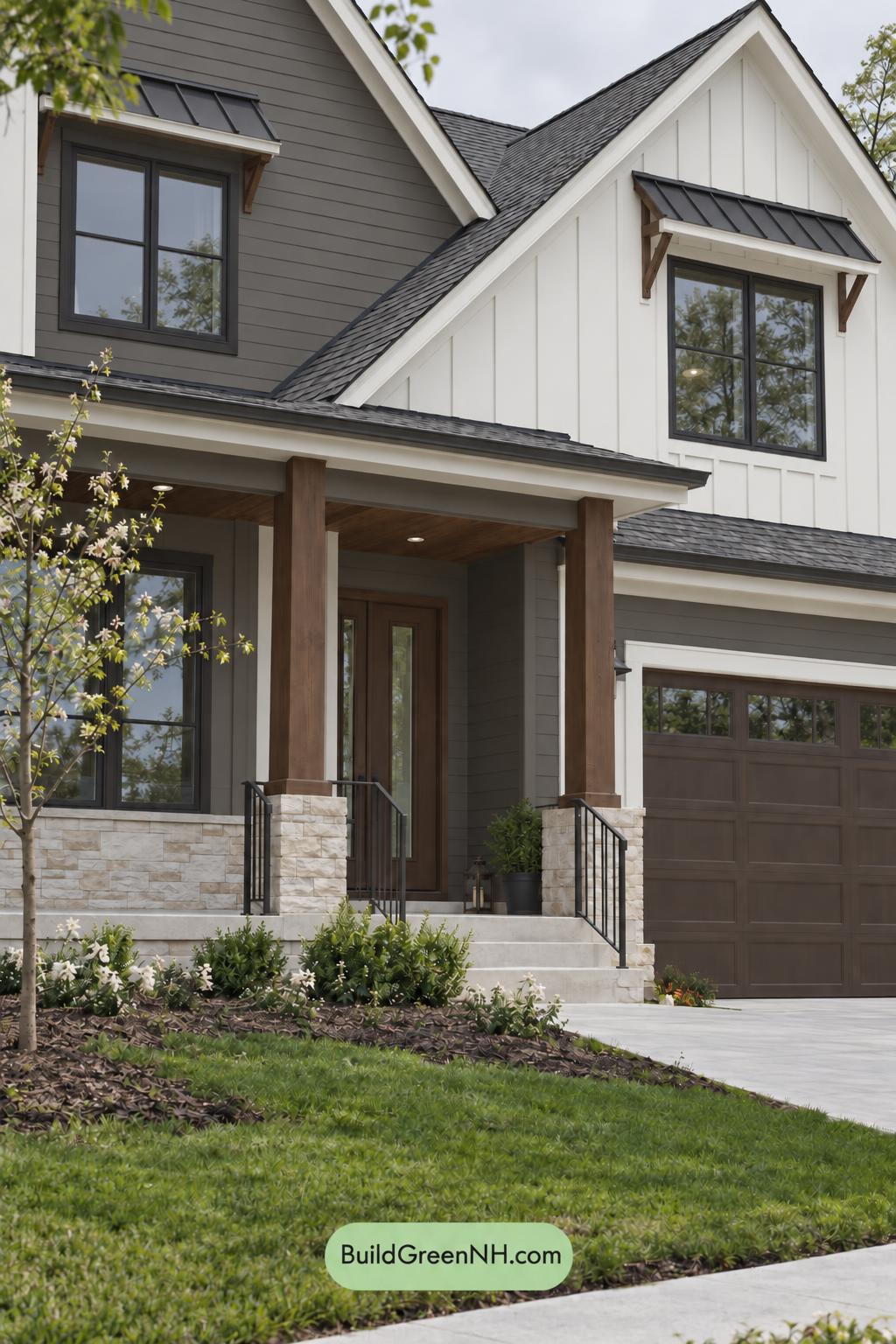
Under overcast skies, the gray siding takes on a deeper, quieter cast than it shows in neutral daylight, while the white gables and trim feel softer and less brilliant. With direct sun removed, saturation eases across the facade and the warm brown columns, door, and garage appear more muted, lending the exterior a balanced, grounded warmth.
Shadows become broad and gentle rather than sharp, so the contrast between the light and dark areas is more refined. The dark gray window frames and railings still provide definition, but the overall mood shifts from crisp and energetic to calm, polished, and welcoming.
Golden Hour
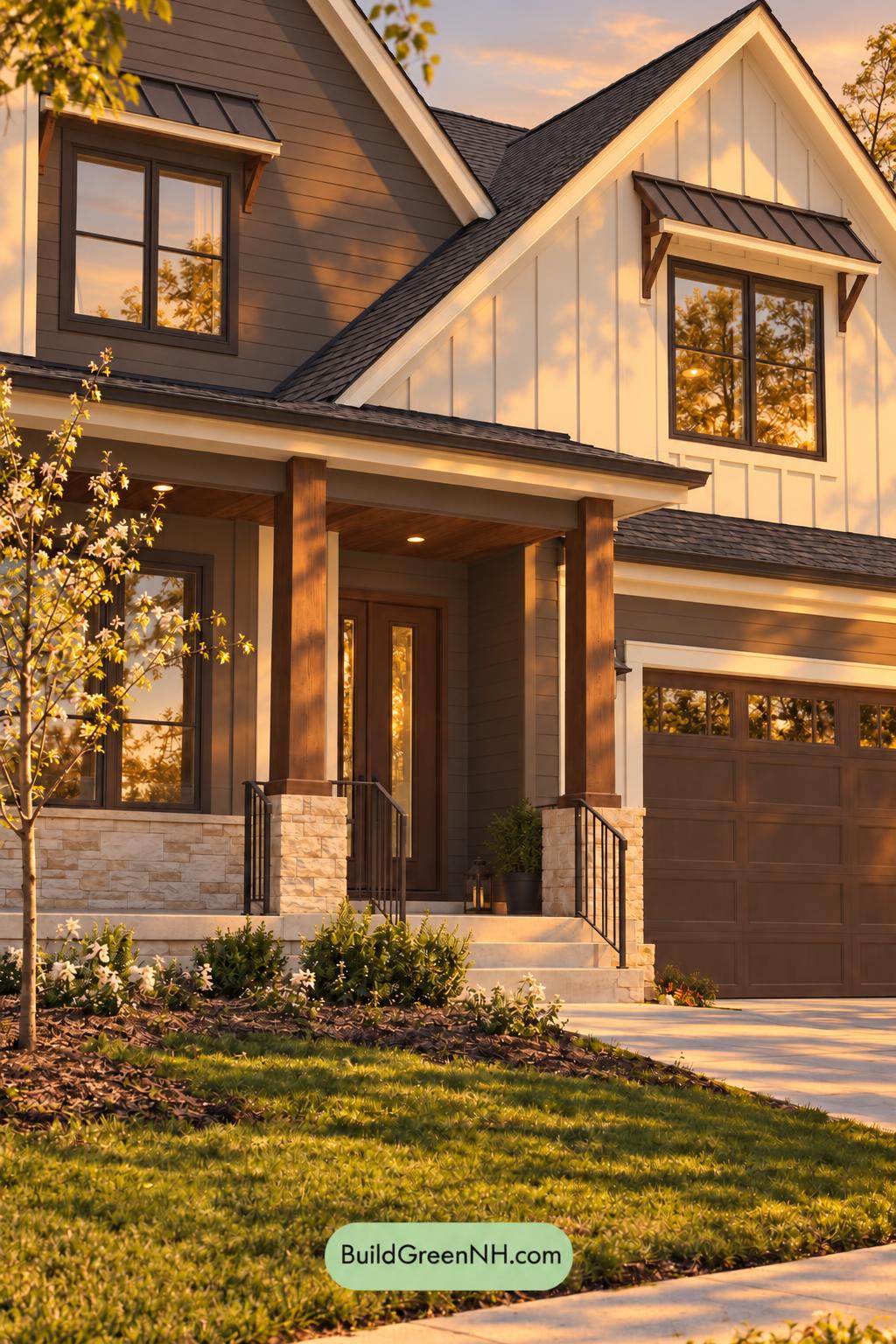
Golden Hour wraps the gray siding in a gentle amber cast, making its cool neutrality feel warmer, richer, and slightly deeper than it does in neutral daylight. The white siding and trim shift from crisp and clean to a soft, creamy-looking light shade, while the brown doors and columns gain extra glow and a more pronounced wood-toned warmth.
As the low sun creates longer shadows, the dark gray frames and railings appear bolder against the illuminated light areas, sharpening the home’s architectural contrast. This blend of glowing warm highlights and deep, dimensional shade gives the exterior a welcoming, relaxed mood that feels more intimate than its balanced daytime appearance.
Shade
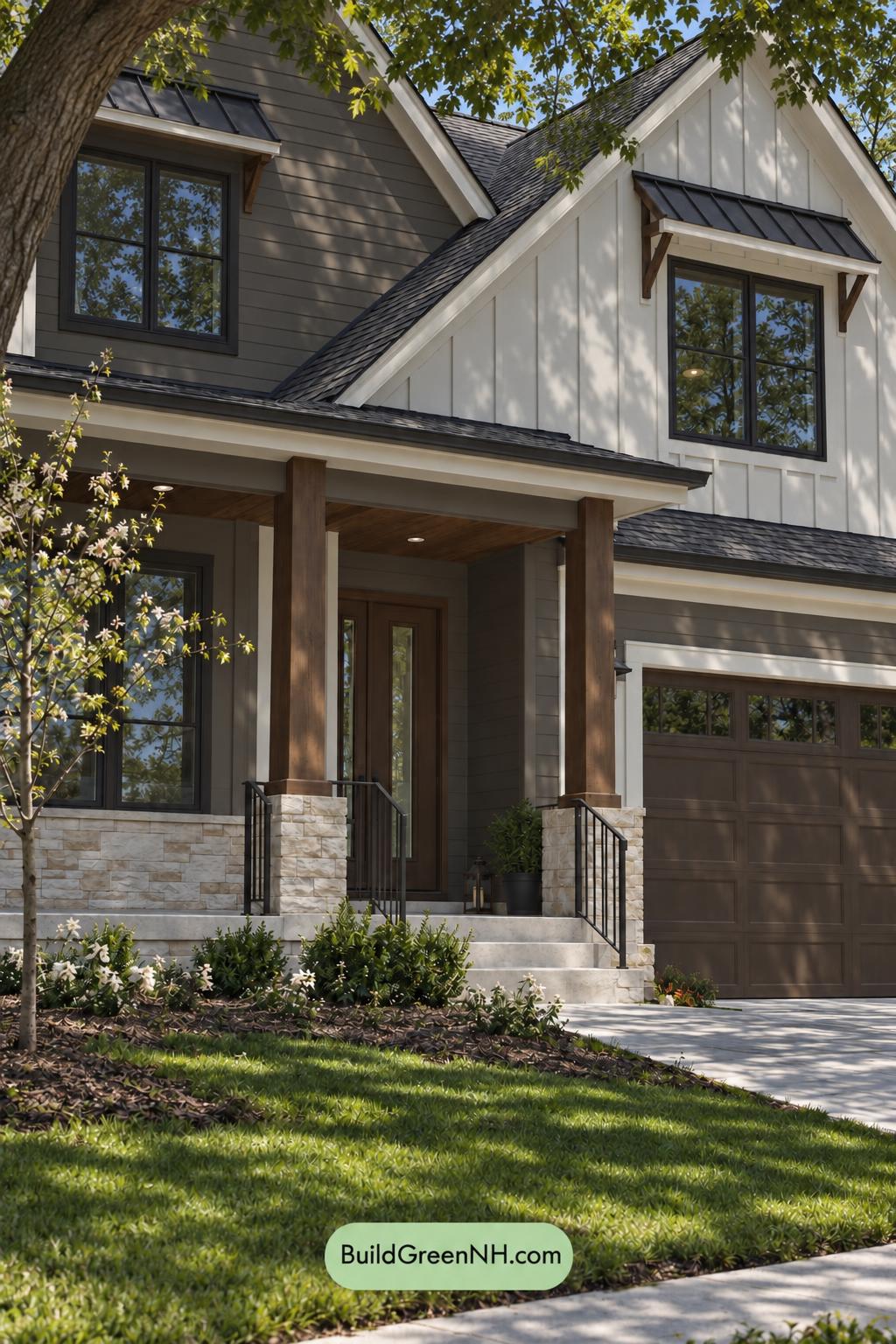
Under shifting shade, the medium gray siding takes on a deeper, slightly cooler character than it would in neutral daylight, while the white gables and trim soften from crisp bright white to a gentler, quieter light neutral. Leaf-cast shadows lower overall saturation and create a layered pattern across the facade, making the contrast between the pale upper walls and dark gray framing feel more dramatic in some areas and more subdued in others.
The brown columns, front entry, and garage door gain extra richness in the shaded portions, reading warmer and more grounded against the cool gray surfaces. Rather than the clean brightness of neutral daylight, this filtered light gives the exterior a relaxed, sheltered mood, with dark gray details receding into the shadows and the light neutrals softly guiding the eye around the architecture.
Nighttime
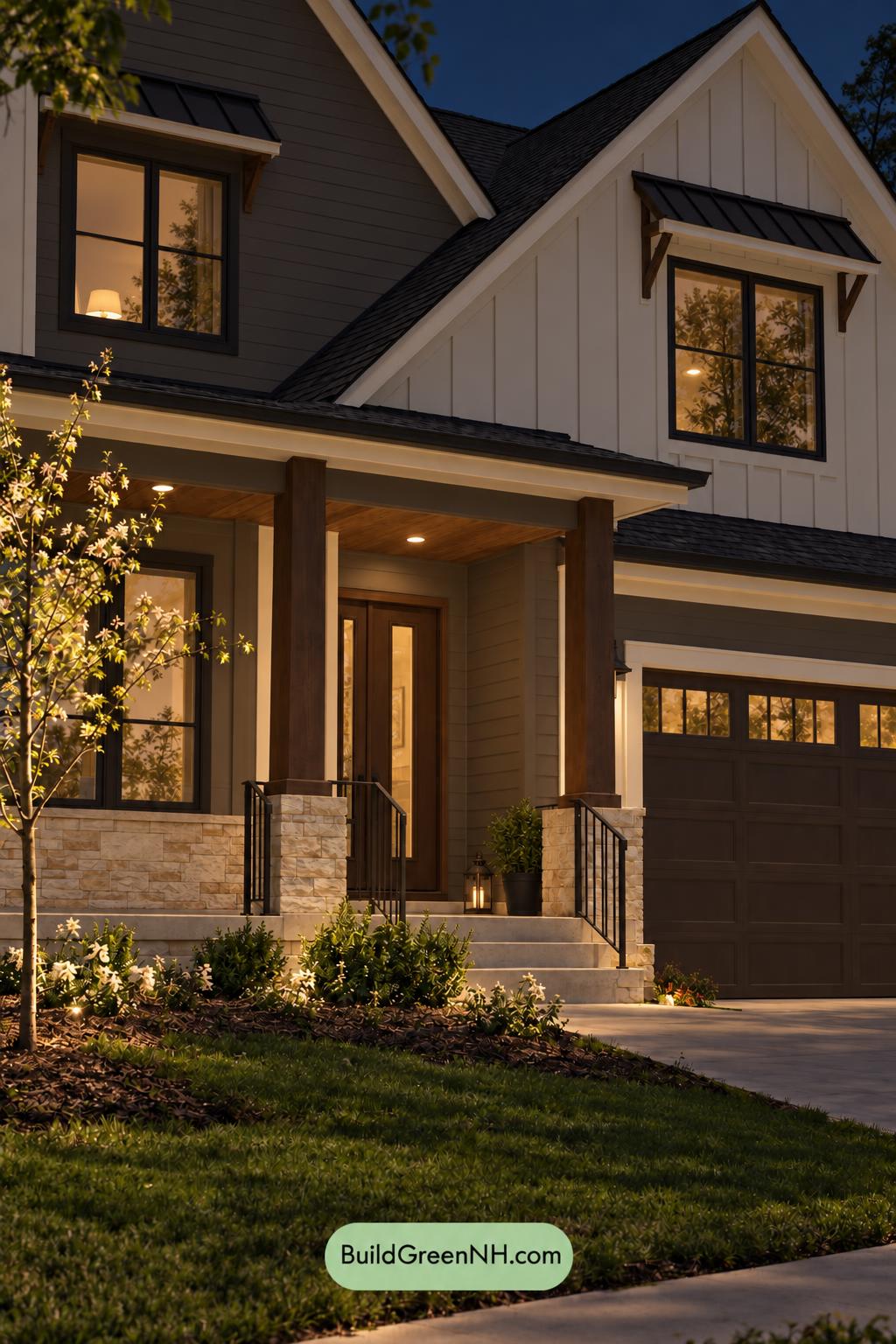
At night, the gray siding settles into a deeper, more subdued shade, while the white areas take on a soft, creamy warmth beneath the exterior lights. The brown elements become richer and more pronounced, creating a welcoming anchor around the entry and garage as daylight’s even brightness gives way to a more selective glow.
Shadows strengthen along the rooflines, window frames, and railings, sharpening the contrast between light and dark surfaces. The result is a calm, tailored mood: warm pools of light draw attention to the entrance, while the darker gray and brown shades recede gracefully into the evening.
Pin these for later:
Want More?
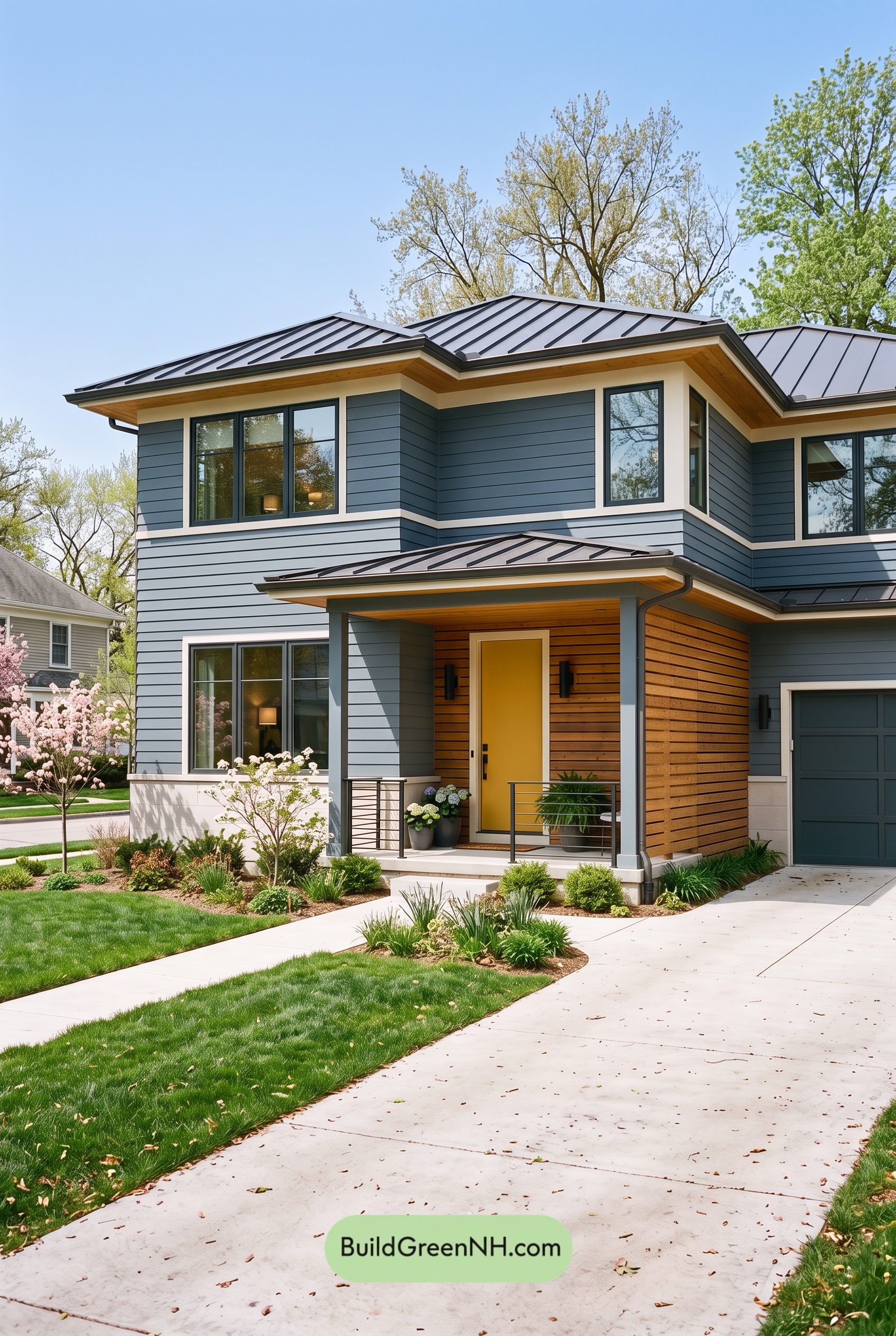 Blue House Front Door Color Scheme: Harbor Saffron
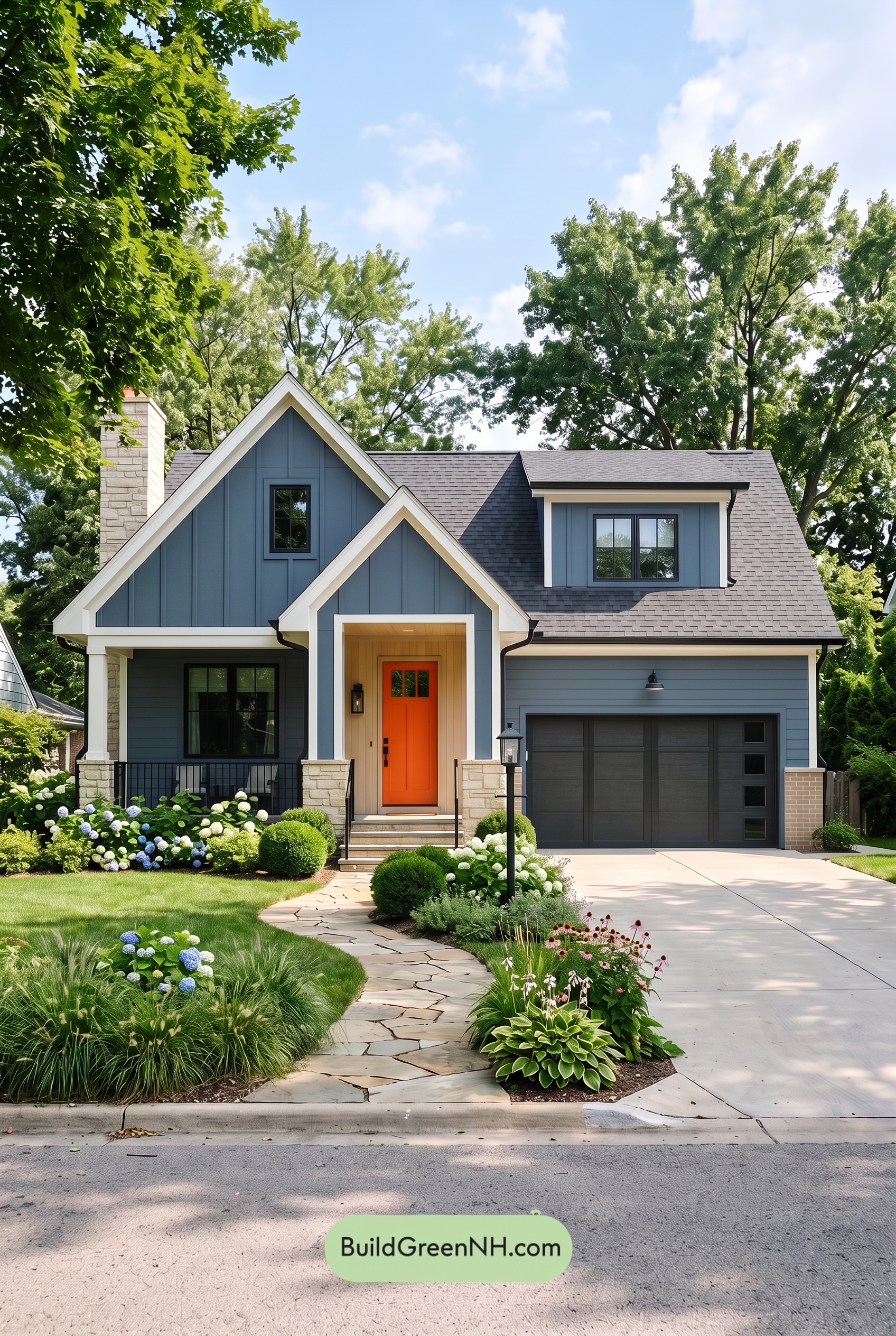 Blue House Front Door Color Scheme: Cobalt Persimmon
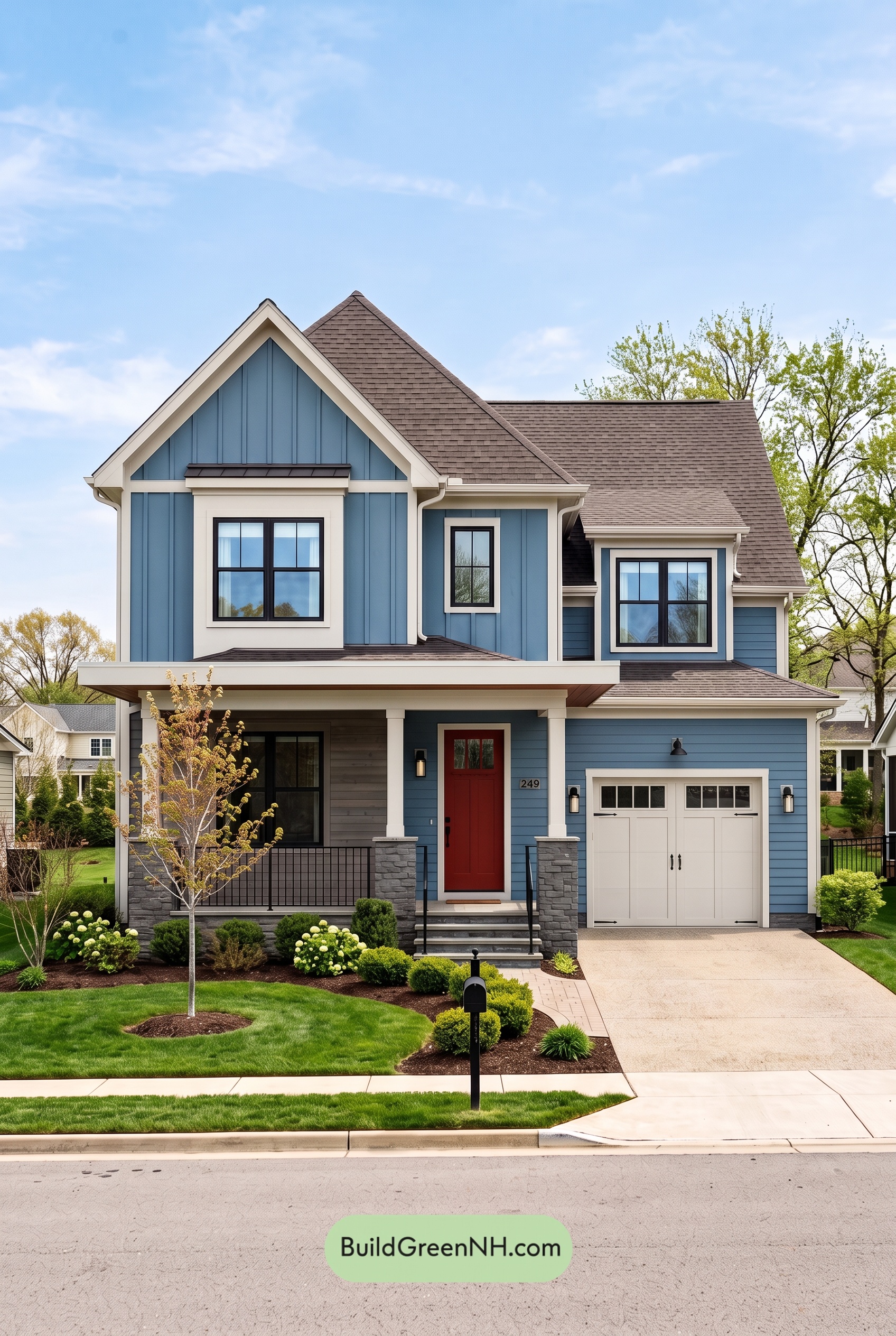 Blue House Front Door Color Scheme: Denim Poppy
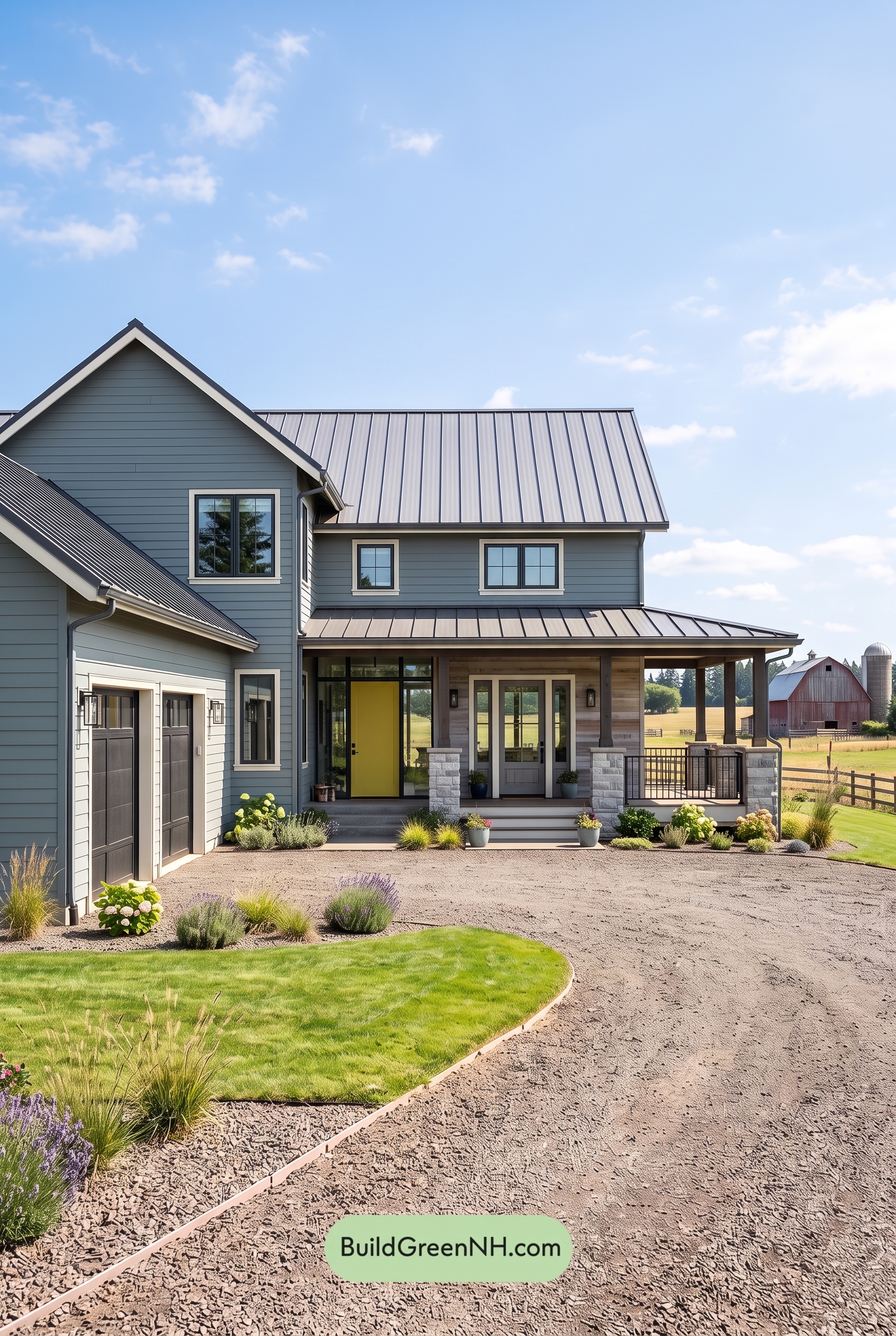 Blue House Front Door Color Scheme: Slate Citron
 Blue House Front Door Color Scheme: Mist Blue Haven
Table of Contents