Last updated on · ⓘ How we make our designs
See our underground house designs that trade bunker gloom for meadow roofs, sunken courtyards, and rooms surprisingly full of sea, sky, and mountain views.
These underground homes are not really about hiding, not in a gloomy way anyway. We shaped them to feel settled, sheltered, and oddly calm, like the land finally decided to be useful.
A lot of the ideas came from dunes, rock basins, old bunkers, courtyard houses, turf shelters, farm terraces, and those rough little field ruins that already know how to handle weather. We kept that old common sense, then softened it with glass, timber, stone, and roofs that grow right back into the site.
As you move through the designs, pay attention to the planted tops, the sunken paths and courts, and the way big openings and roof windows keep these homes open to sea, sky, meadow, and mountain. That part matters, because an underground house should feel cozy, not like a very fancy hole.
Buried Shore Haven
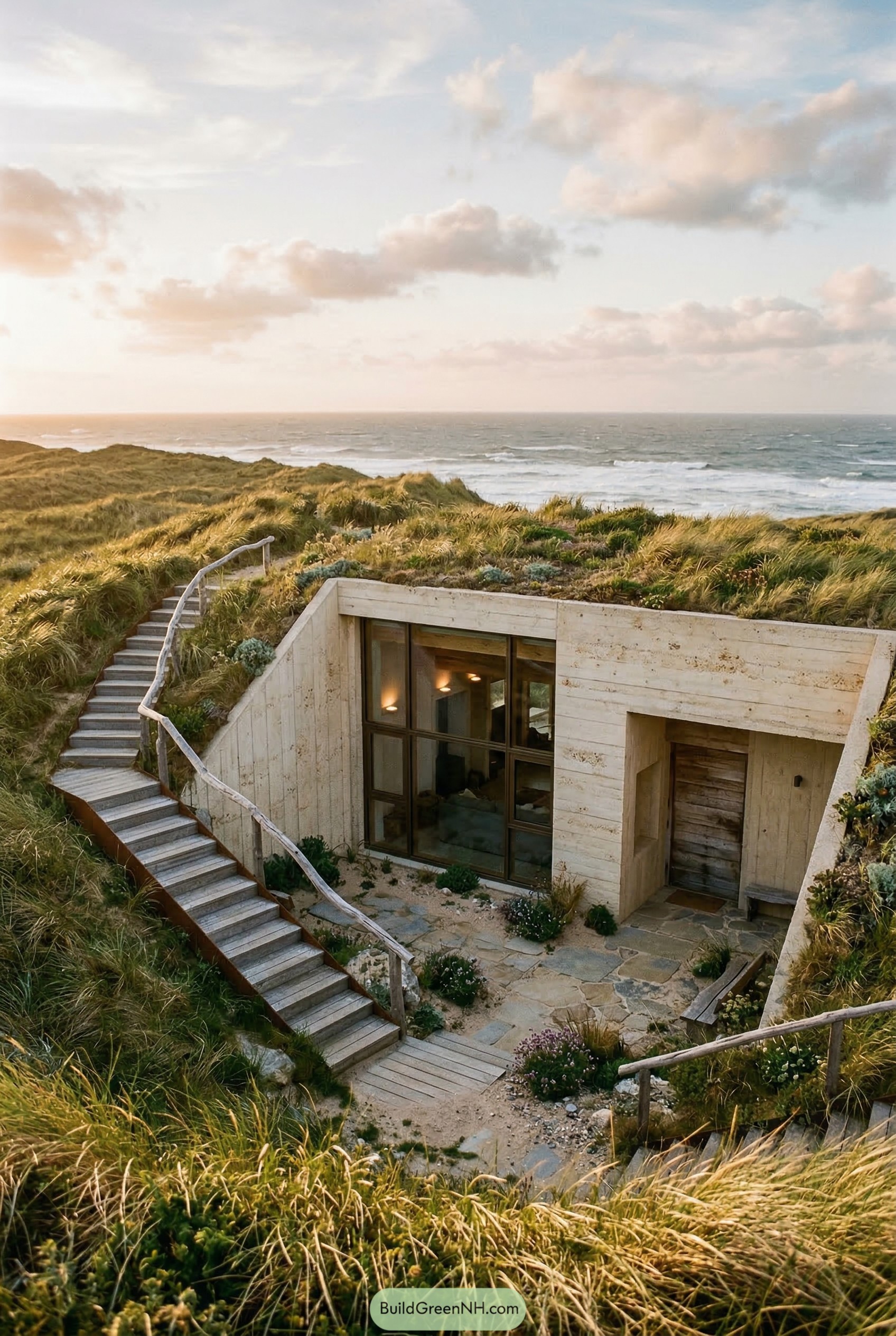

Tucked into the dunes, this coastal hideaway uses the land as its roof, with a planted top and a sunken entry court that makes the whole place feel sheltered from wind and weather. The idea borrows a bit from old bunkers and humble beach cabins, then loosens up with pale concrete, weathered timber, and a broad glass wall that keeps the sea close.
The long stair down is part of the magic, easing you into a protected pocket where stone paving and native planting make the entrance feel calm and grounded. Those thick earth wrapped walls matter on a rough coastline, because they guard the home beautifully, and honestly, the whole place feels like the dunes are keeping a very chic little secret.
Rock Basin Residence
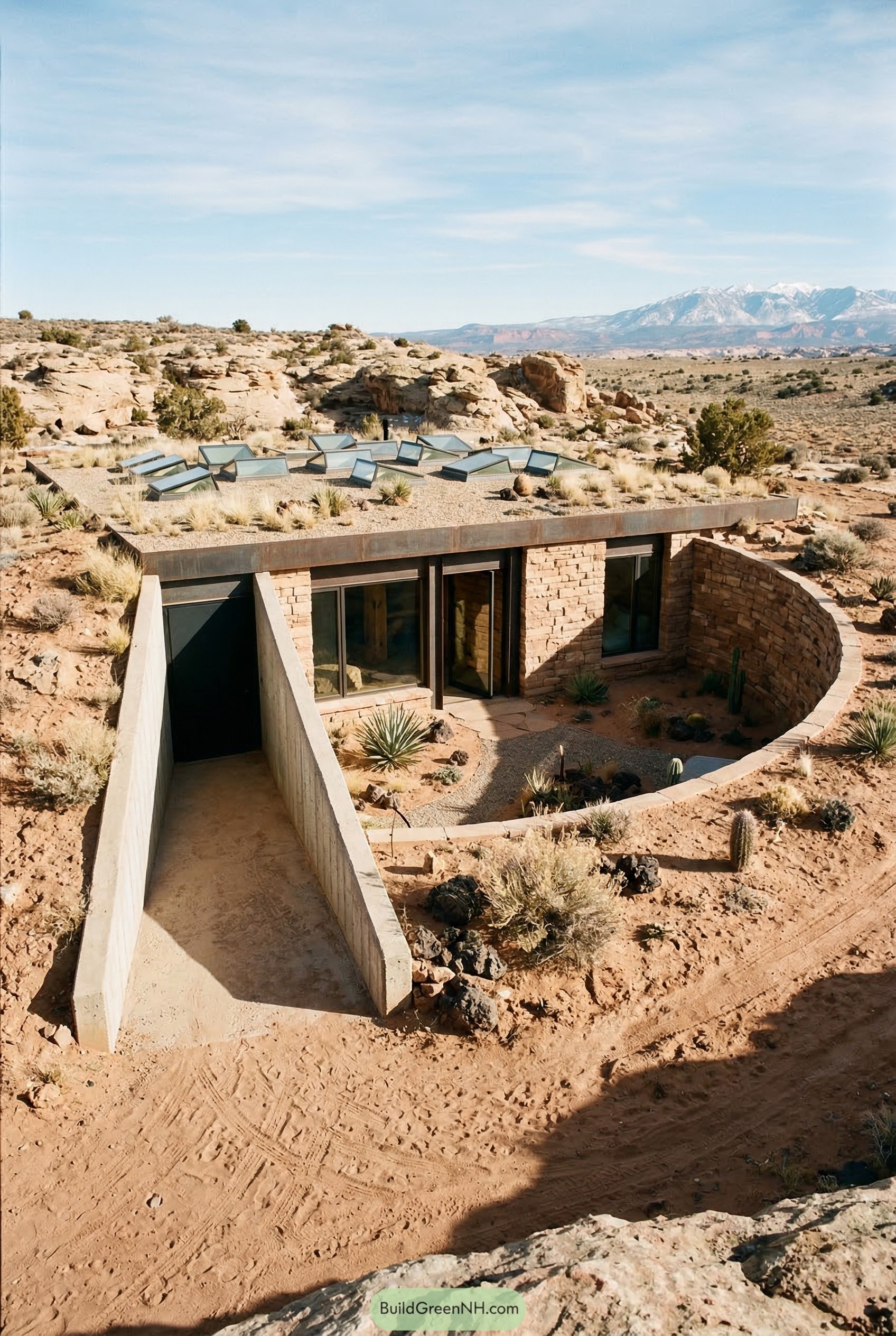

Carved into the desert floor, this home takes its cues from the surrounding rock and from old courtyard dwellings that knew how to tuck themselves away from wind and heat. The long sunken entry makes the approach feel calm, then the curved cactus court opens up and gives the rooms a protected outdoor heart.
Stone walls, board formed concrete, and a roof seeded with native grasses make the house read like part shelter and part landform, which is why it sits so comfortably out here. The angular glass roof monitors pull in sky and keep the buried rooms from feeling bunker like, which is a neat trick for a home that is mostly hiding in the dirt.
Alpine Turf Cocoon
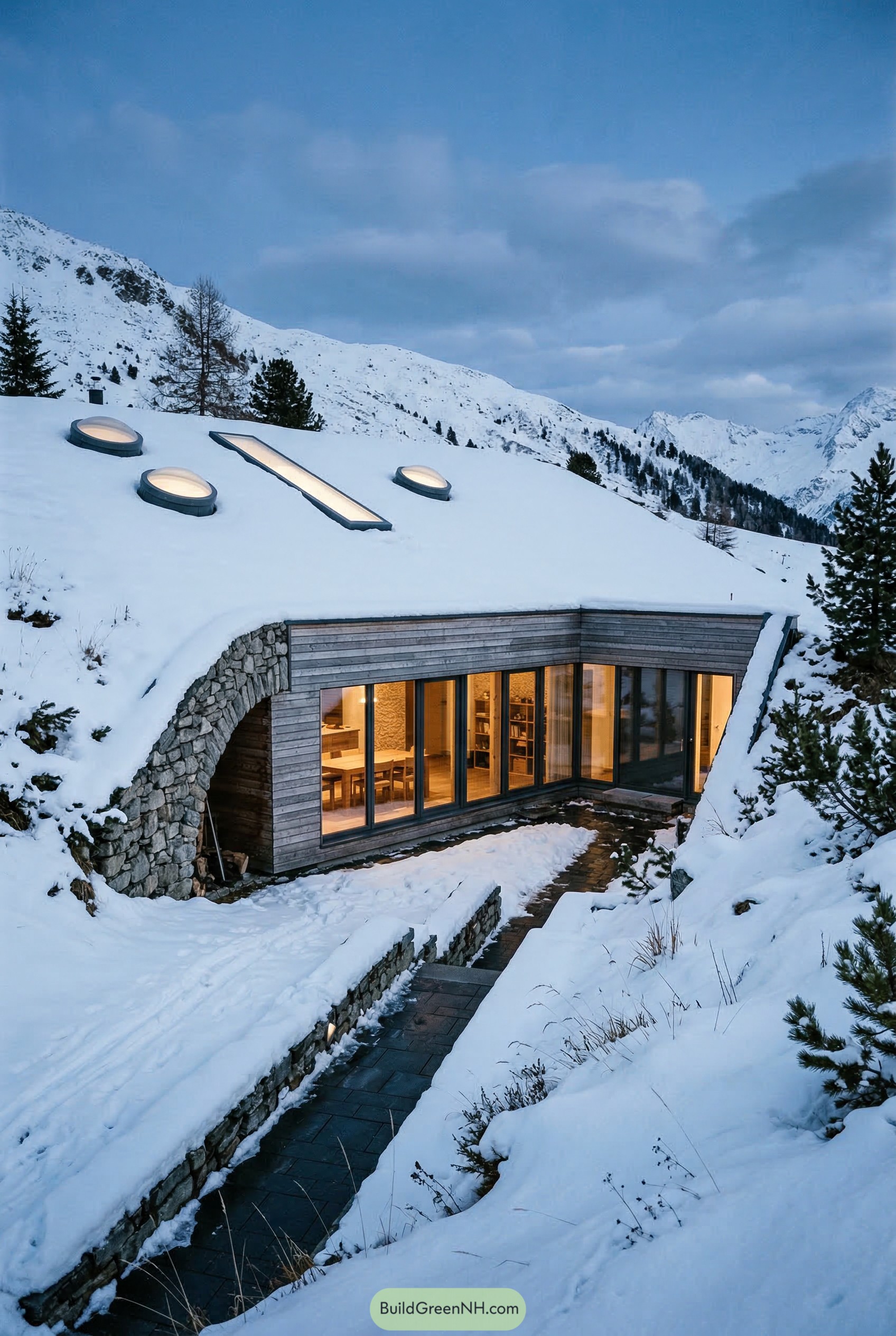

Tucked into the mountain, this home curves under a thick blanket of snow and nearly vanishes, which is sort of the magic. Its form feels borrowed from the hillside, with an earth wrapped roof and a rounded stone edge that help it sit low and calm in the alpine ground.
A long glazed corner opens the buried volume to the view, and the roof windows pull the sky deep into the rooms so it never feels bunkerish. Timber cladding softens the front facade, while the sunken path and stone retaining walls make the approach snug and practical when winter gets a bit bossy.
Cloistered Fern Earthhouse
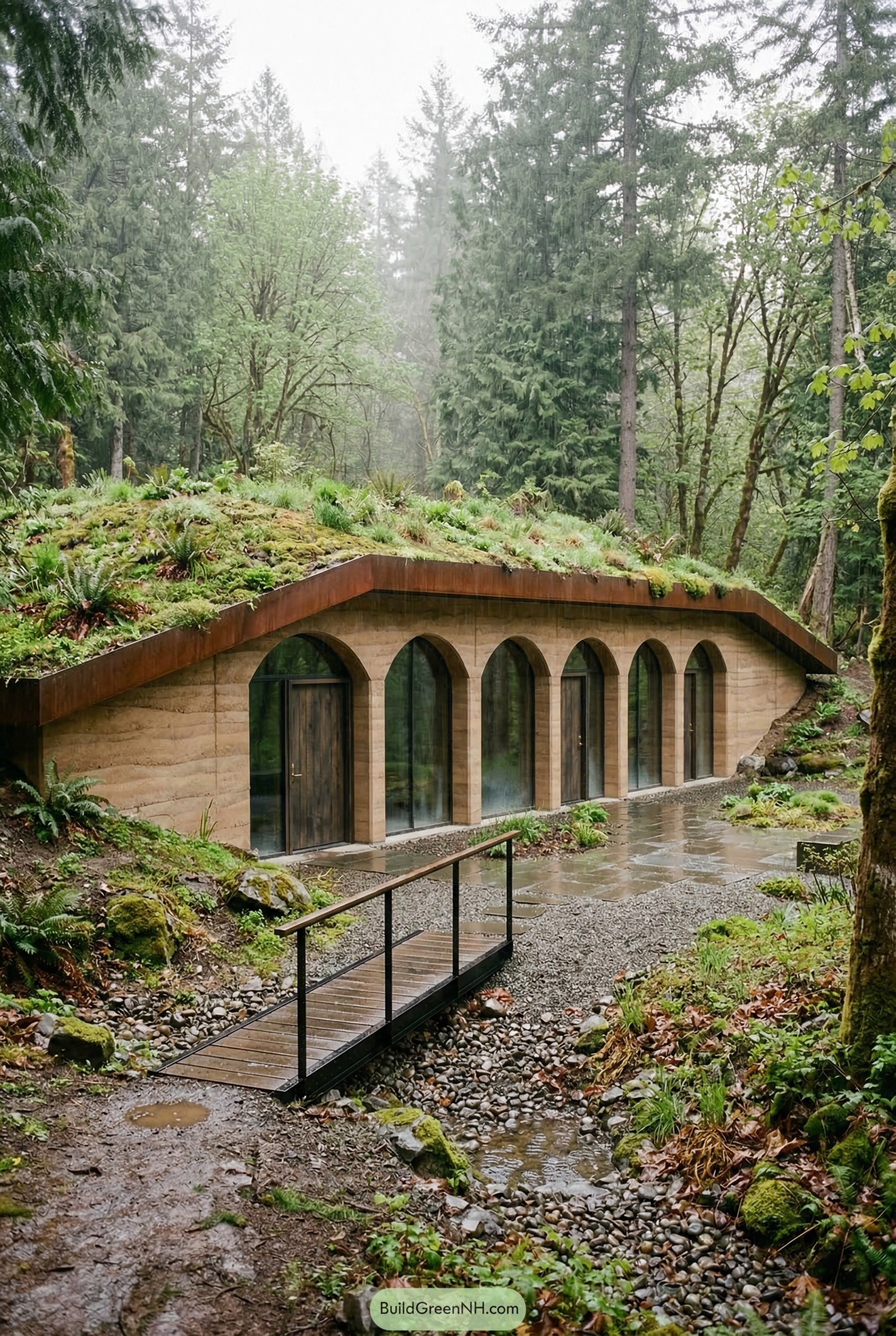

Set into the hillside, this earthy retreat feels like the forest sketched a monastery and then covered it in moss. The long row of arched openings gives the front a calm, sheltered look, and that repetition makes the home feel tucked in rather than shut away.
The planted roof pulls the ground right over the structure, which helps it disappear into the slope and keeps the whole thing wonderfully low key. We love the little bridge and rain washed approach too, because arriving here should feel a bit like finding a secret, not parking beside a box.
Olive Grove Courtyard House
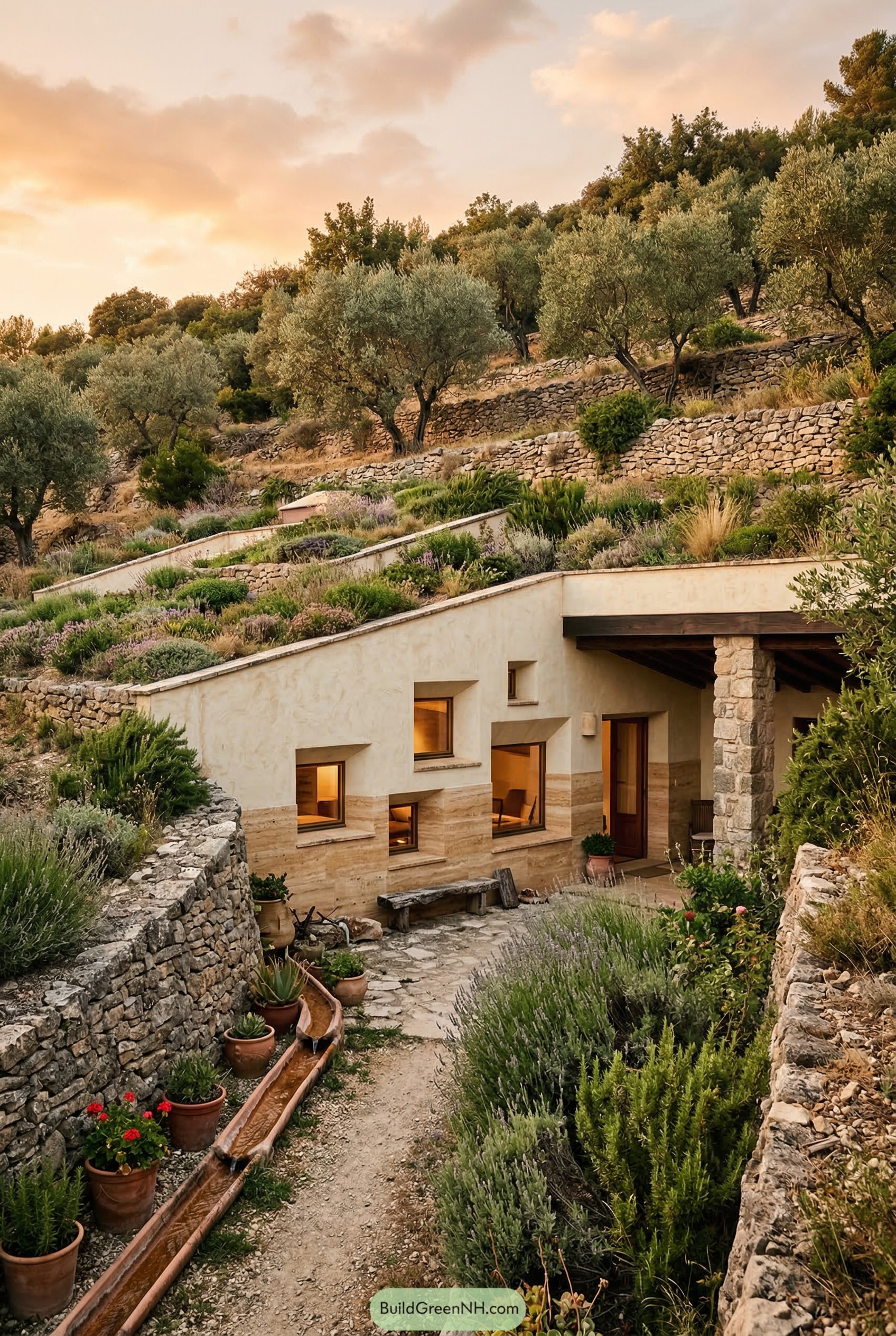

Tucked into a stepped olive hillside, this house turns the slope into a planted roof and a sheltered stone courtyard. The soft plaster walls, chunky stone supports, and deep-set windows were inspired by old Mediterranean farm buildings, so it feels settled in from day one.
We let the roof follow the existing terraces and covered it with lavender, rosemary, and scrub, which helps the home nearly vanish from above. That move trims the visual bulk, improves insulation, and makes the entry court feel cool and protected, like the hill decided to be a very polite host.
Stormwatch Stepwell Home
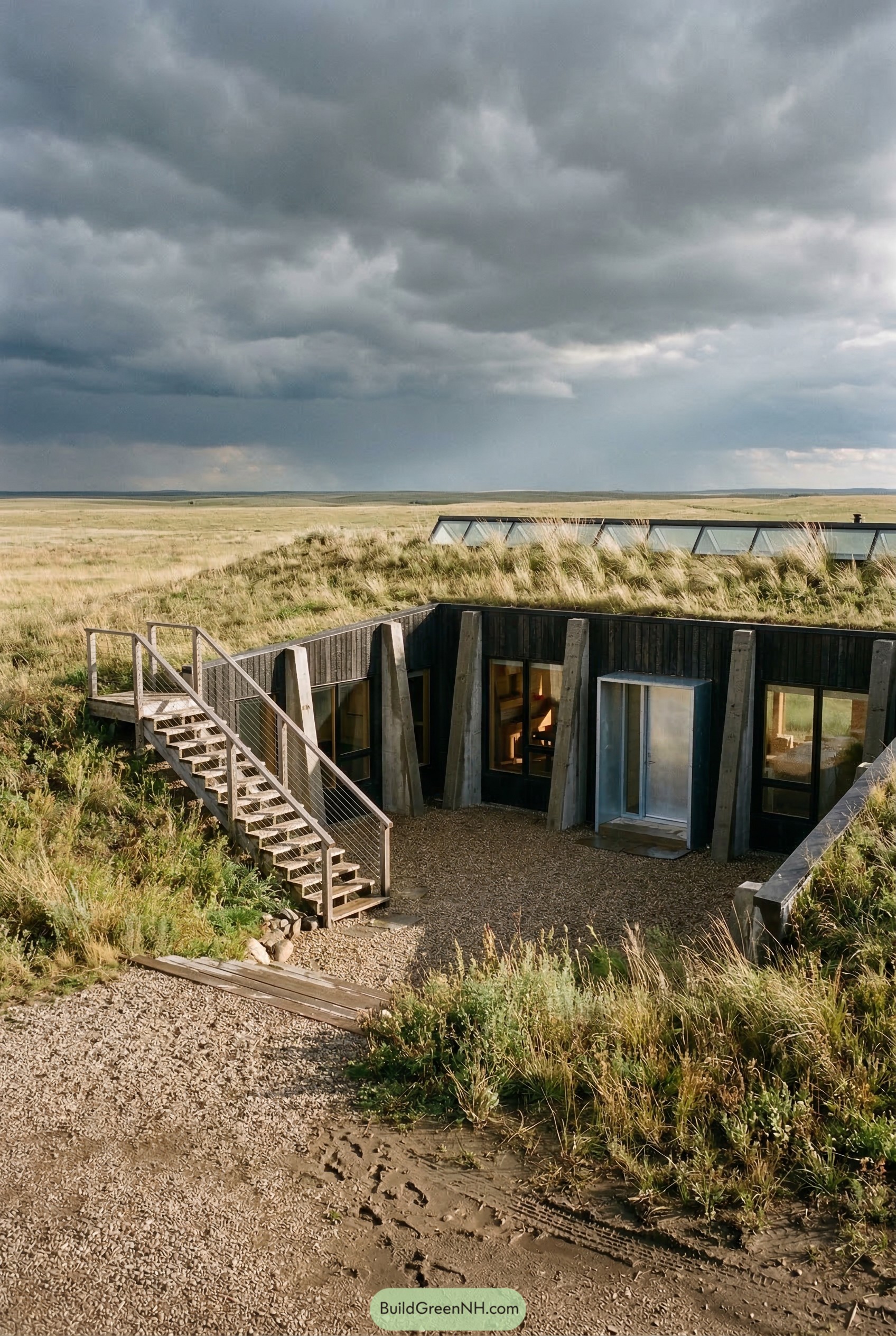

Sunk deep into the prairie, this home opens around a sheltered courtyard that makes the whole design feel calm and tucked away, even with that big moody sky hovering above. The planted roof lets the house melt into the grassland so neatly it almost plays hide and seek.
The angled concrete supports and dark timber walls give the facade a sturdy, carved look, while the stair bridge turns the descent into a little arrival moment. A long band of glazing at the roofline pulls the outdoors in and keeps the buried rooms from feeling cave-ish, which is always a nice trick.
Lakeside Lichen Fold
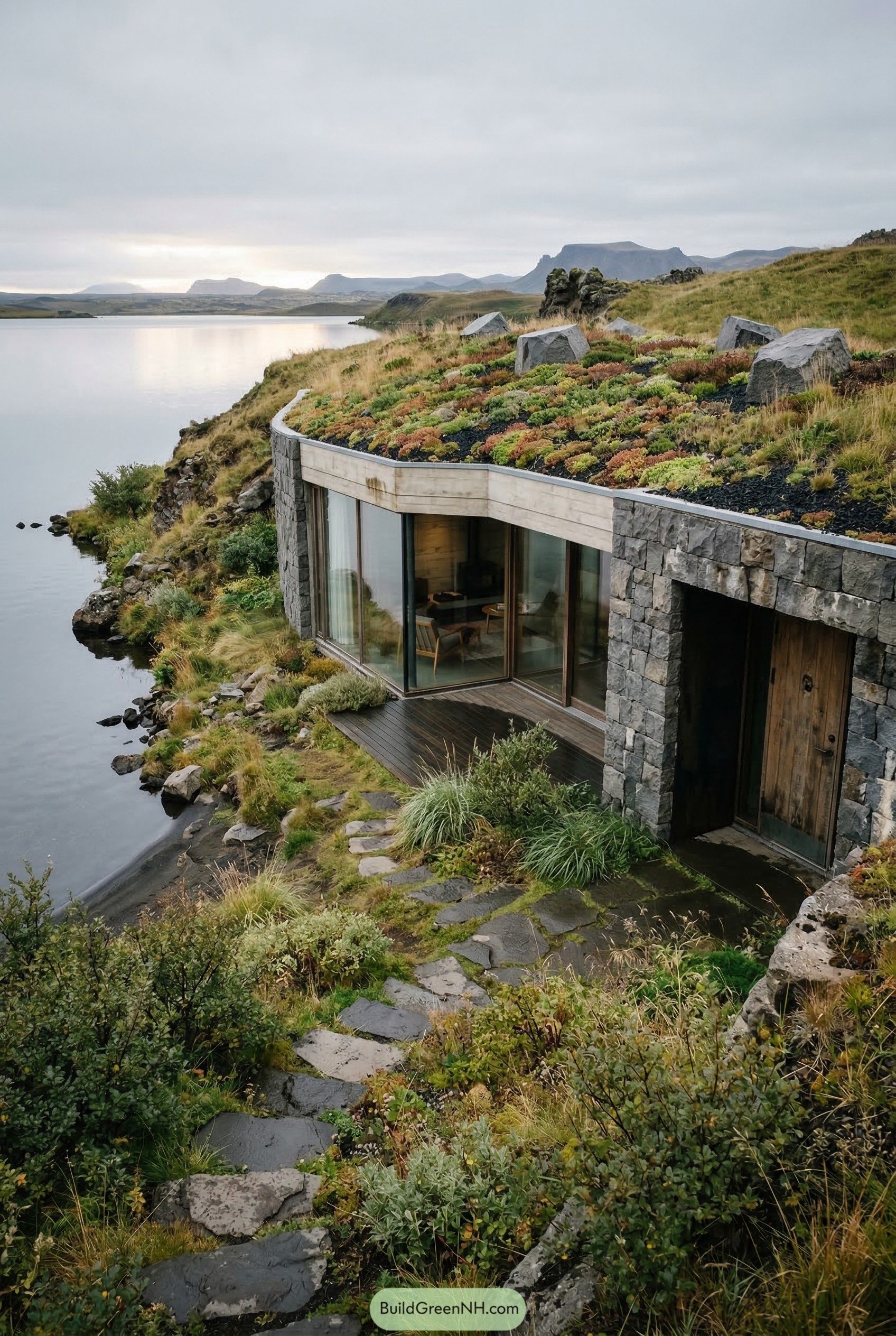



Set into the lakeside slope, this retreat pulls the hillside right over its roof, with concrete bands and chunky basalt walls keeping the whole thing low and nearly hidden. It was inspired by old turf shelters and the rocky shoreline, so it feels less like a building placed there and more like a natural ledge that got clever.
The broad corner glazing gives the living space a straight shot to the water, while the recessed timber entry stays tucked back from the weather like a polite little cave. That mix is important because the house feels sheltered without turning gloomy, and the planted roof helps it settle into the land instead of sitting on it like a tourist.
Mistfall Vineyard Burrow
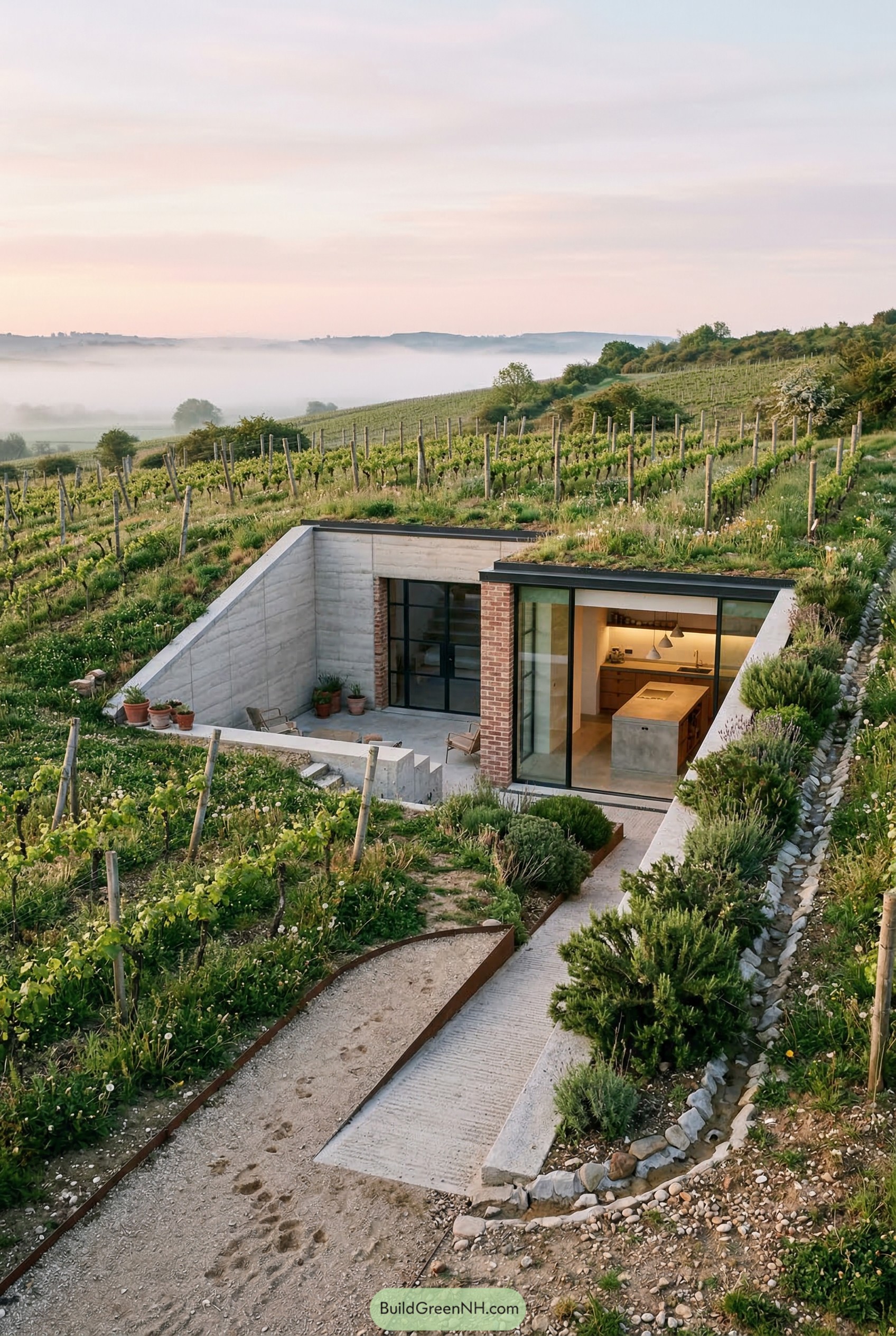

Set right into the vineyard slope, this sunken retreat feels carved from the land rather than dropped on top of it. The planted roof, angled concrete walls, and low profile borrow from old terraced fields, which is smart because a flashy roof here would look a bit silly.
A recessed patio creates a sheltered outdoor room, while the brick framed glass front gives the interior a crisp edge without picking a fight with the landscape. That cut into the hill matters more than it first seems, since it softens wind, keeps the rooms steady through the seasons, and makes the whole place feel calm in a very no fuss way.
Fogbound Headland Crescent
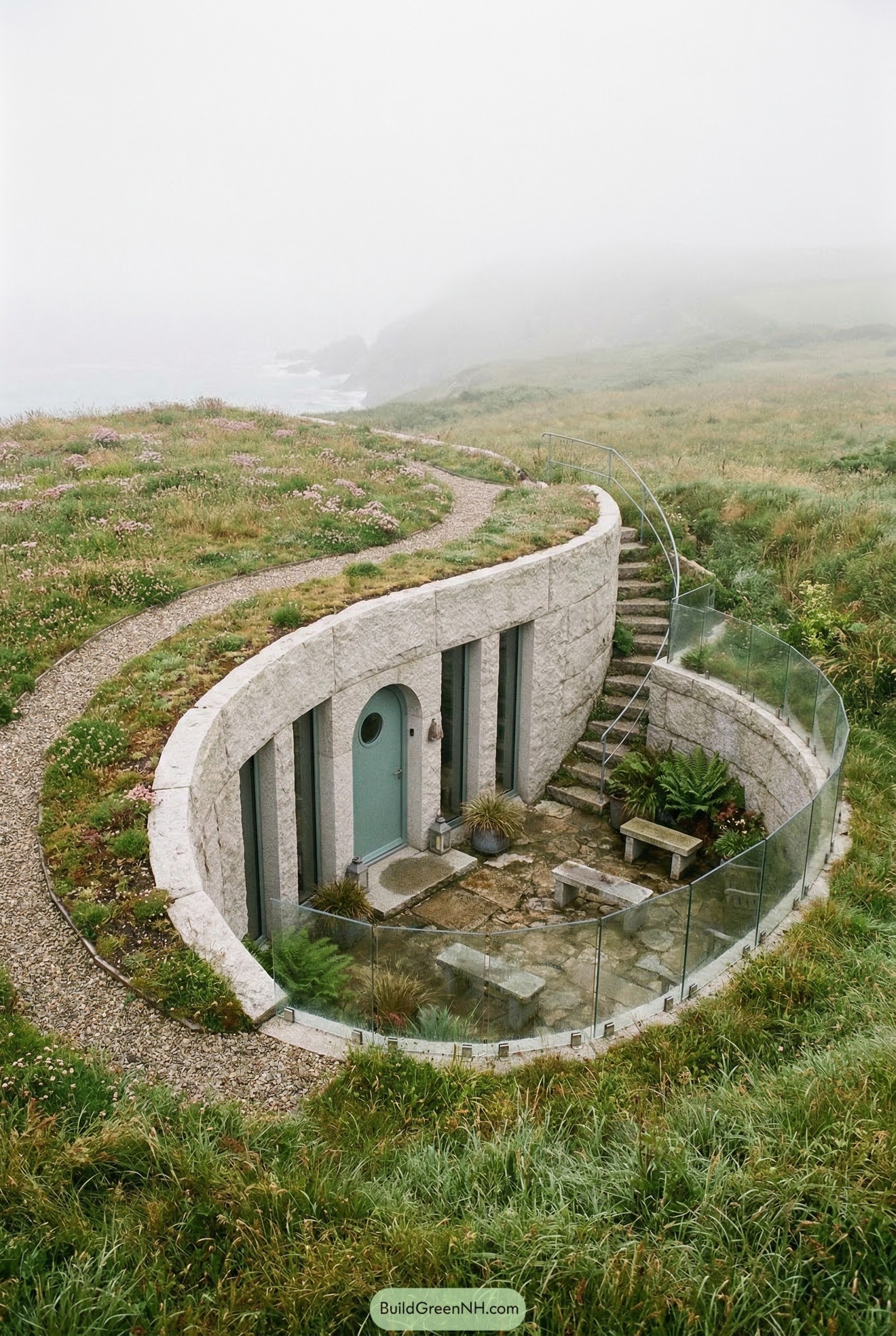

Curving into the hillside like a quiet stone ribbon, this coastal hideaway keeps a very low profile and still feels a bit grand. The sweeping wall cradles a sunken terrace behind clear glass, so the entry stays sheltered from the wind, which clearly never takes a day off.
We shaped the roof as a planted meadow with a winding path, letting the dwelling disappear into the headland instead of perching on it. Tall narrow openings, a round porthole door, and the stair that curls upward give it a subtle nautical wink, and that little touch really ties the whole thing together.
Suburban Greenroof Hollow
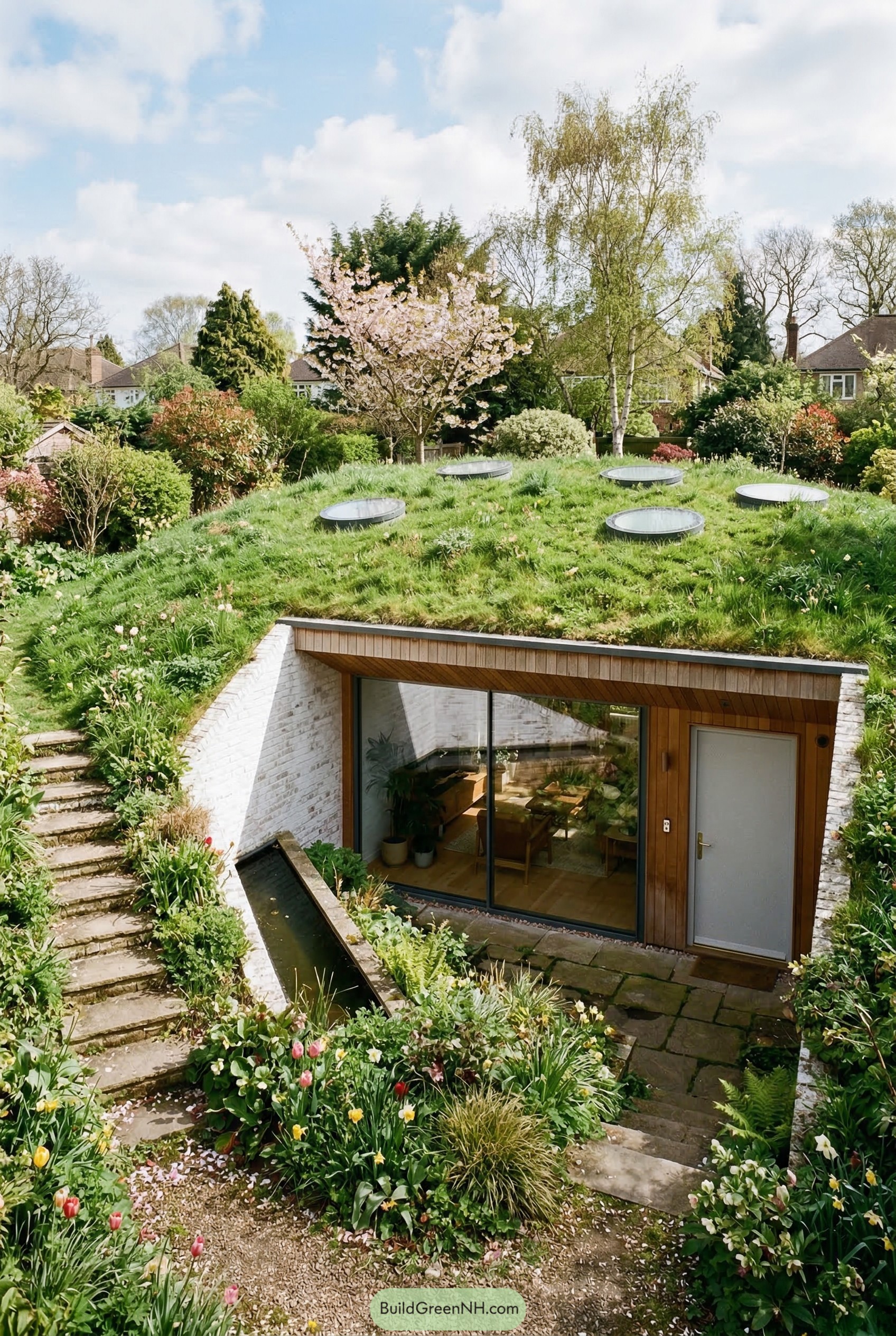

Set into a garden slope, this retreat feels tucked away in the nicest possible way, like the lawn got clever and made room for a living room. The planted roof and circular roof windows keep the profile low and private, while the broad glass opening gives the buried plan a surprisingly open feel.
It was inspired by old garden terraces and the idea that a home can become part of the landscape instead of sitting on it like a stubborn hat. Angled white brick walls, warm timber lining, and the recessed court make the entry calm and sheltered, which really helps the whole place feel easy, soft, and welcoming.
Heather Ridge Shelter
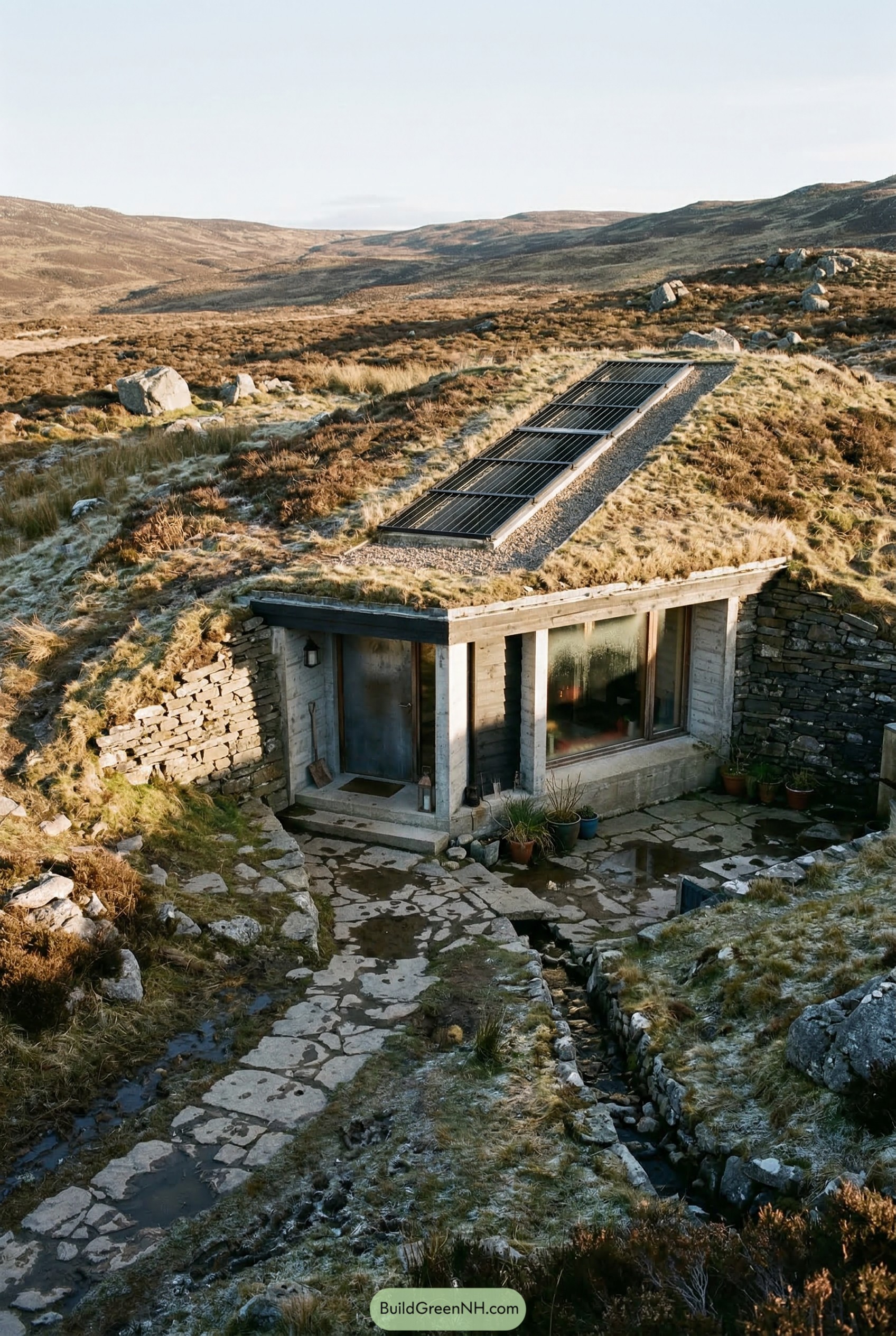

Set low into the moor, this house keeps a tiny profile and lets the hillside wrap right over the roof. The planted top, stone retaining walls, and narrow recessed entry make it feel tucked away on purpose, which is exactly the charm.
The design seems inspired by old field shelters and dry stone ruins, only sharpened up with a crisp concrete frame and a long band of solar panels. That mix matters because it gives the place real weather sense and a calm sturdy look, plus it hides so neatly in the landscape it almost feels politely borrowed.
Reedbank Berm Studio
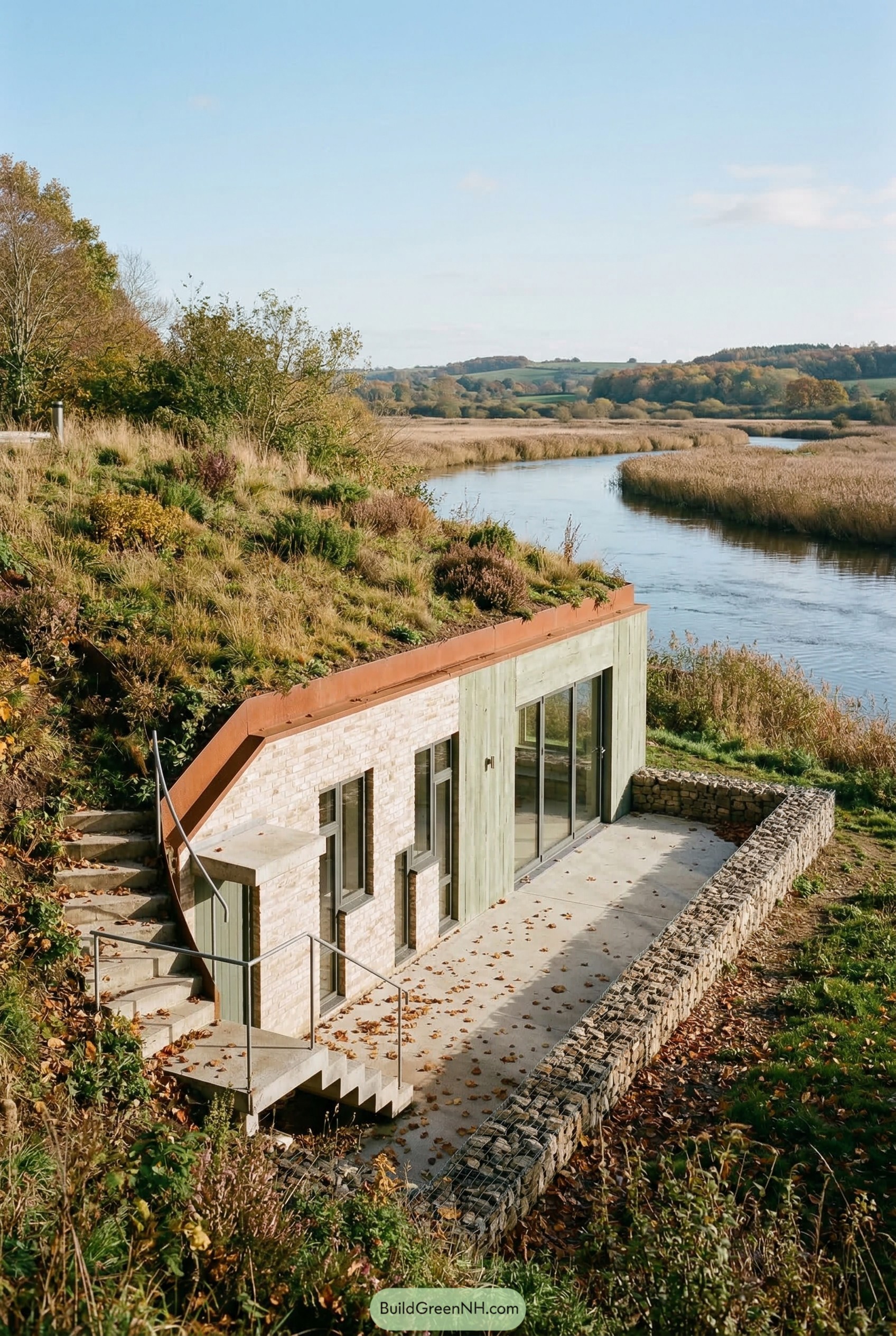

Tucked into the slope, this design borrows its shape from the riverbank itself, with a planted roof that simply keeps the hillside going and nearly hides the home in plain sight. That move matters because it softens the building against the landscape and gives it that quiet, almost sneaky charm underground homes do so well.
The sunken terrace, gabion retaining walls, and stepped entry create a sheltered outdoor room that feels secure without getting fussy. Pale brick, weathering steel edging, and tall glazed openings keep the front crisp and contemporary, and the big doors pull the living spaces right up to the water, which is a pretty nice trick for a house that is mostly tucked away.
Bamboo Garden Undercroft
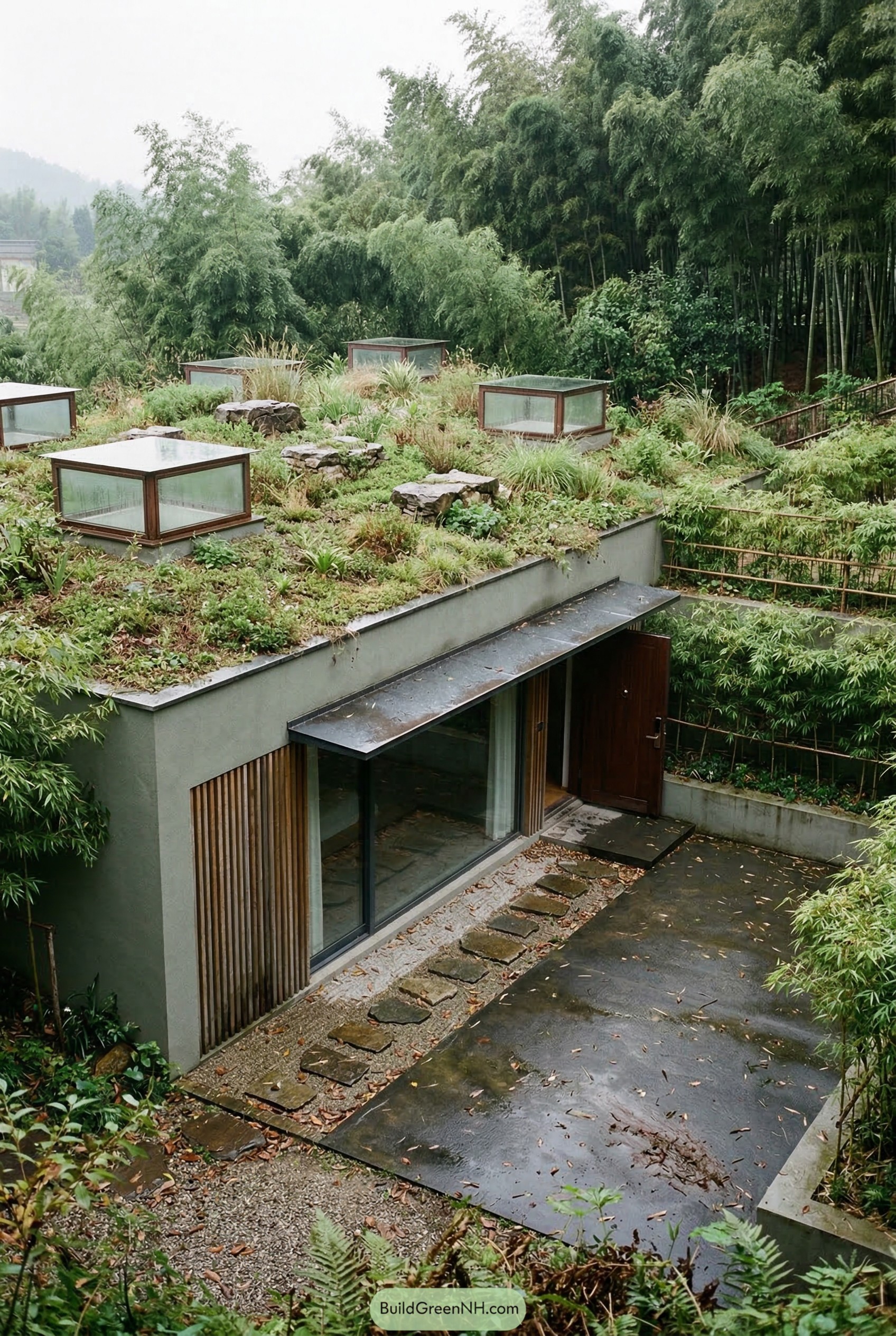

Tucked into the slope, the home hides under a planted roof that reads more like a garden terrace than a house. Those glass roof boxes are the clever bit, bringing the sky into the rooms while the earth around them keeps everything calm and tucked away.
The design was inspired by the hush of the bamboo grove, so the concrete walls stay low, the timber slats soften the facade, and the entry court feels nicely protected from the world. It is understated in the best way, almost like the landscape swallowed a modern pavilion and left the good parts sticking out.
Red Clay Orchard Grotto
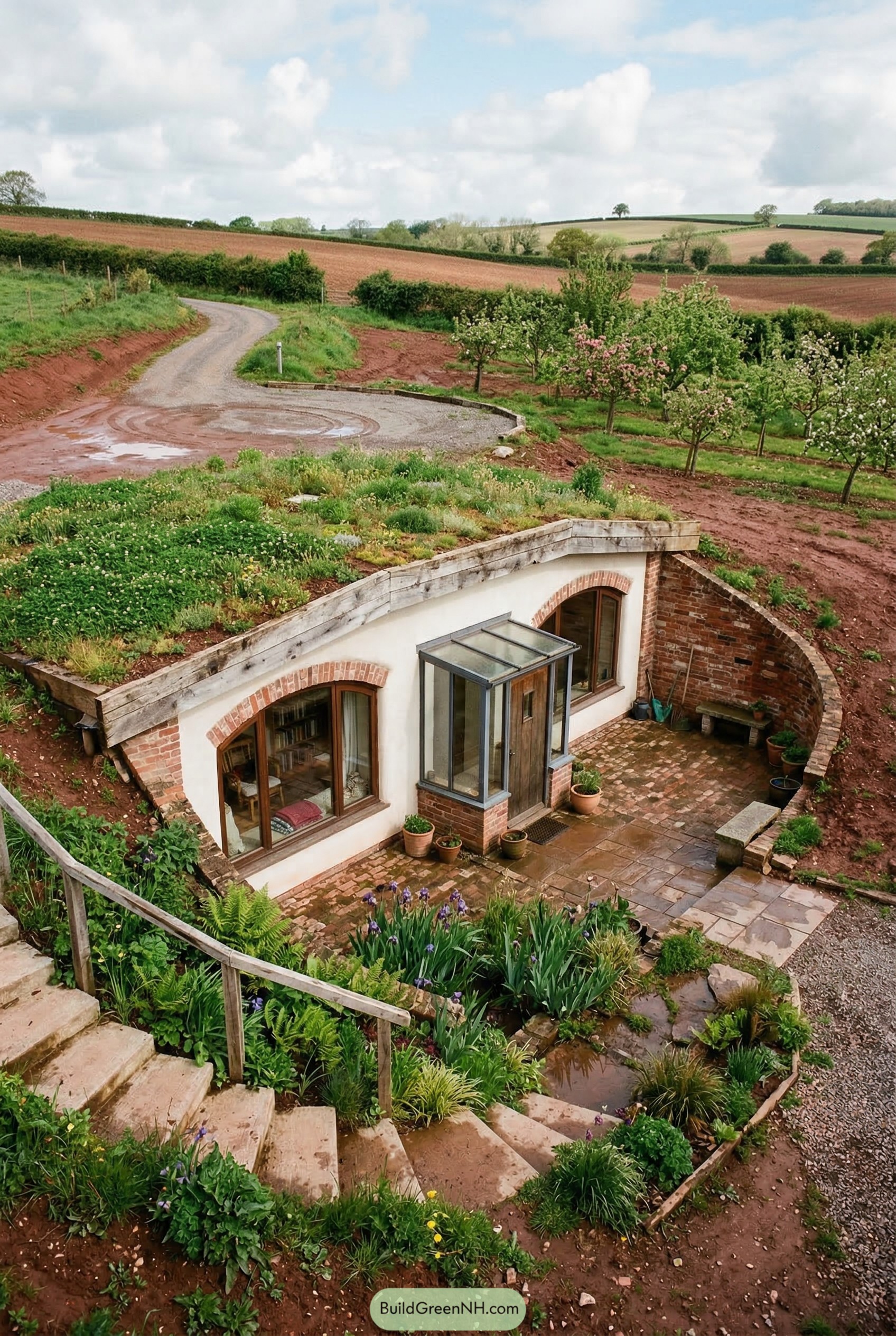

Tucked into a red clay slope, this earth sheltered cottage borrows its shape from the land and the neat orchard beside it. The planted roof keeps the profile low and soft, so from afar it feels less like a building and more like the hill having a pretty clever idea.
A brick lined sunken courtyard opens the front of the home, while the arched windows and weathered timber edge bring in that grounded farmhouse warmth we love. Those curved retaining walls are doing a lot, really, holding the earth back, guiding rain away, and making the patio feel sheltered without slipping into cave weird.
Stargazer Slope Refuge
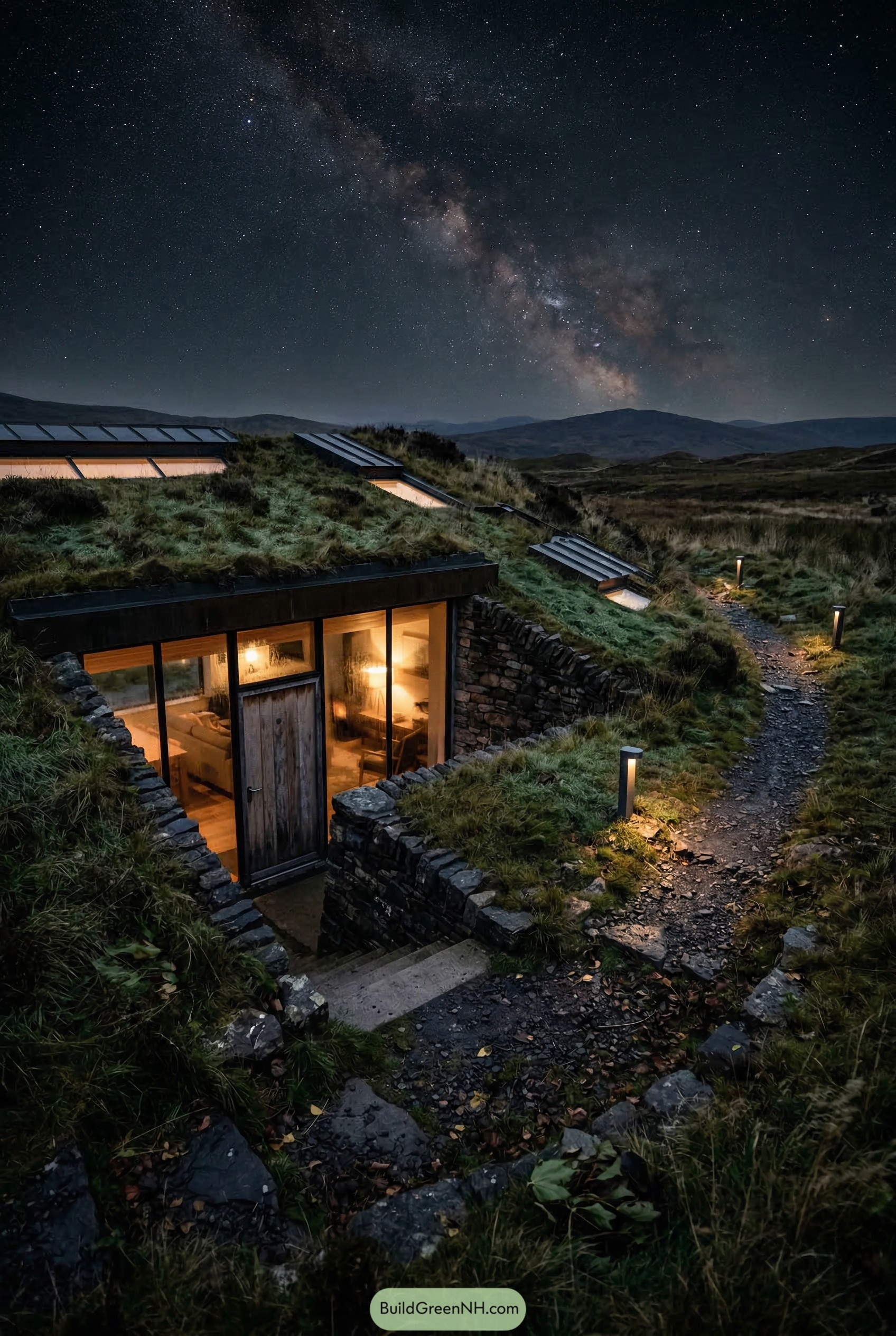

Set low into the moor, this hillside retreat almost disappears until the glazed front and warm interior give it away. The planted roof, stone retaining walls, and narrow roof slots let the house borrow the shape of the land, which is smart and a little sneaky.
It feels inspired by old field shelters and rough hillside ruins, then refined with crisp glazing and a cleaner footprint. The sunken entry helps tame the weather, the roof windows pull the sky deep inside, and the whole place stays quiet instead of showing off.
Granite Gorse Hideout
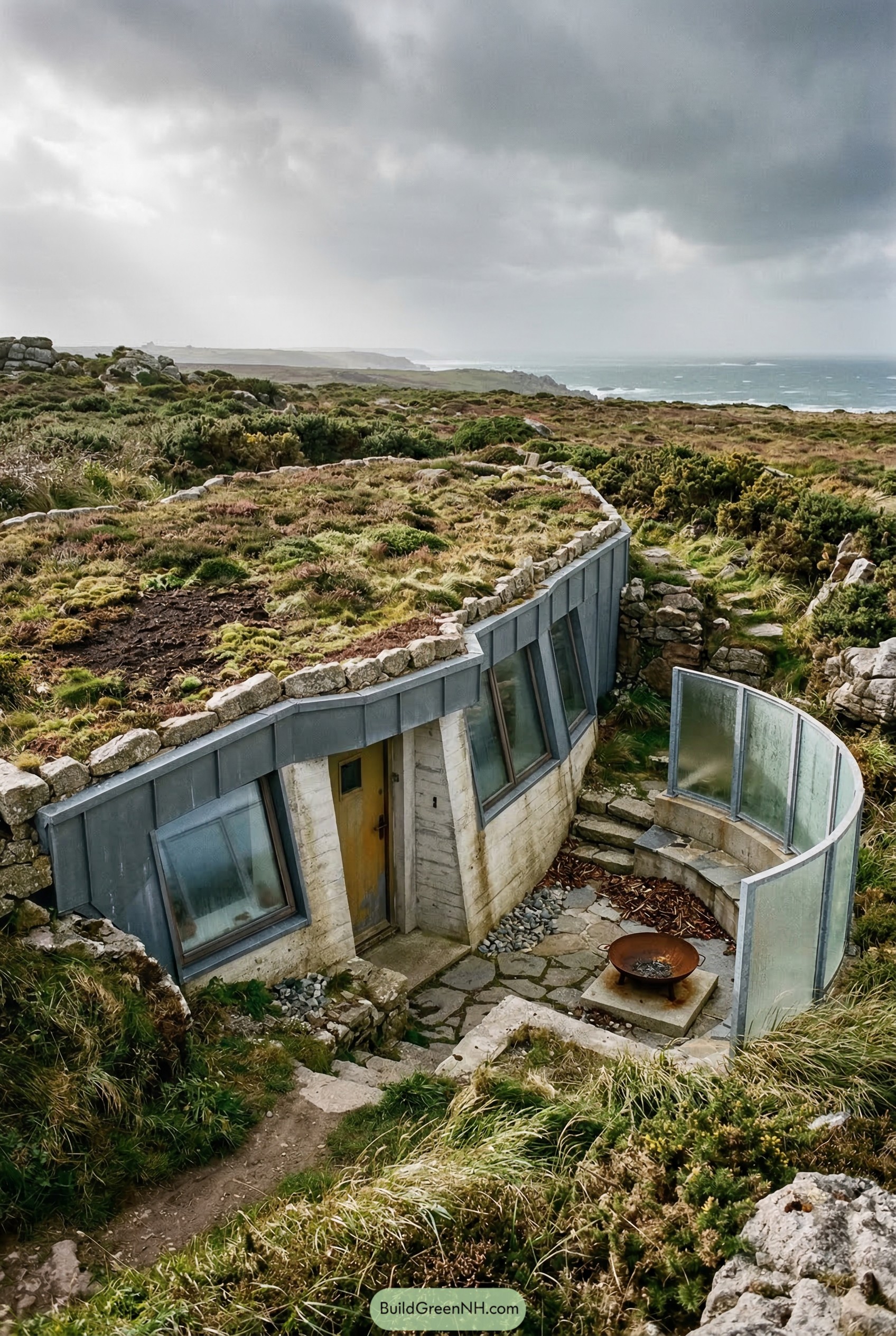

It nestles into the moor with a planted roof and rough stone edging, borrowing its cues from old field walls and the scrubby coast. We curved the front facade and tipped the windows outward so the rooms stay tucked in while the sea still sneaks into view.
The little sunken court is wrapped by a frosted glass screen, which makes sitting outside possible even when the wind is in a bad mood. Concrete walls, stone steps, and that nearly hidden entry give the whole place a calm grounded feel, like it knew exactly where to land.
Glass Spine Earthfold
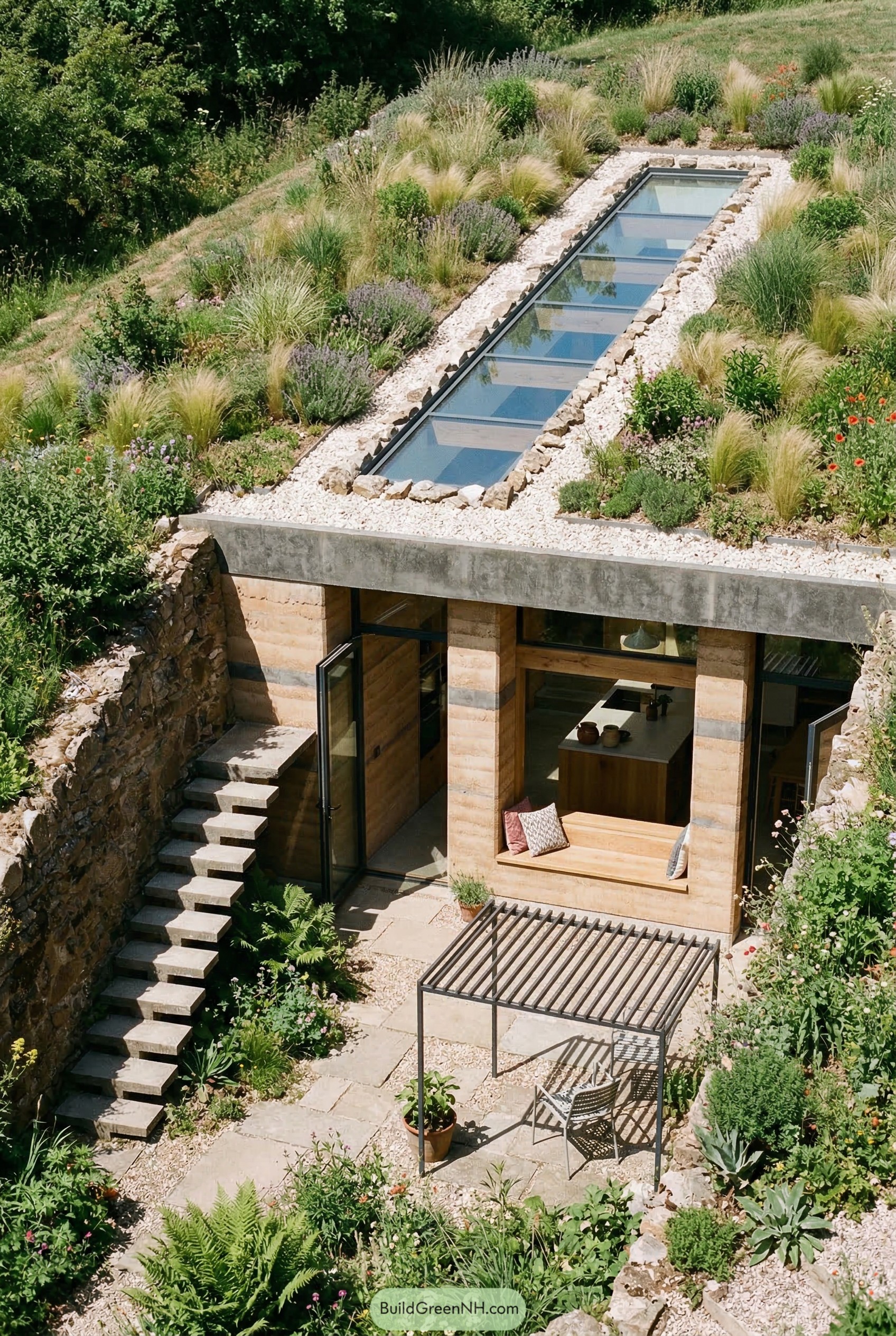

Tucked into a sloping garden, this house borrows its shape from old stone terraces and the soft rise of the hillside. The planted roof almost disappears into the meadow, which keeps the profile low and makes the whole place feel like the hill is keeping a stylish secret.
The long glazed roof slot draws the sky deep into the plan, while rammed earth walls and rugged stone edges make the courtyard feel calm and protected. Wide openings, a built in bench, and those simple stepping stairs keep it connected to the garden, so it feels snug rather than bunkerish.
Meadow Oculus Court
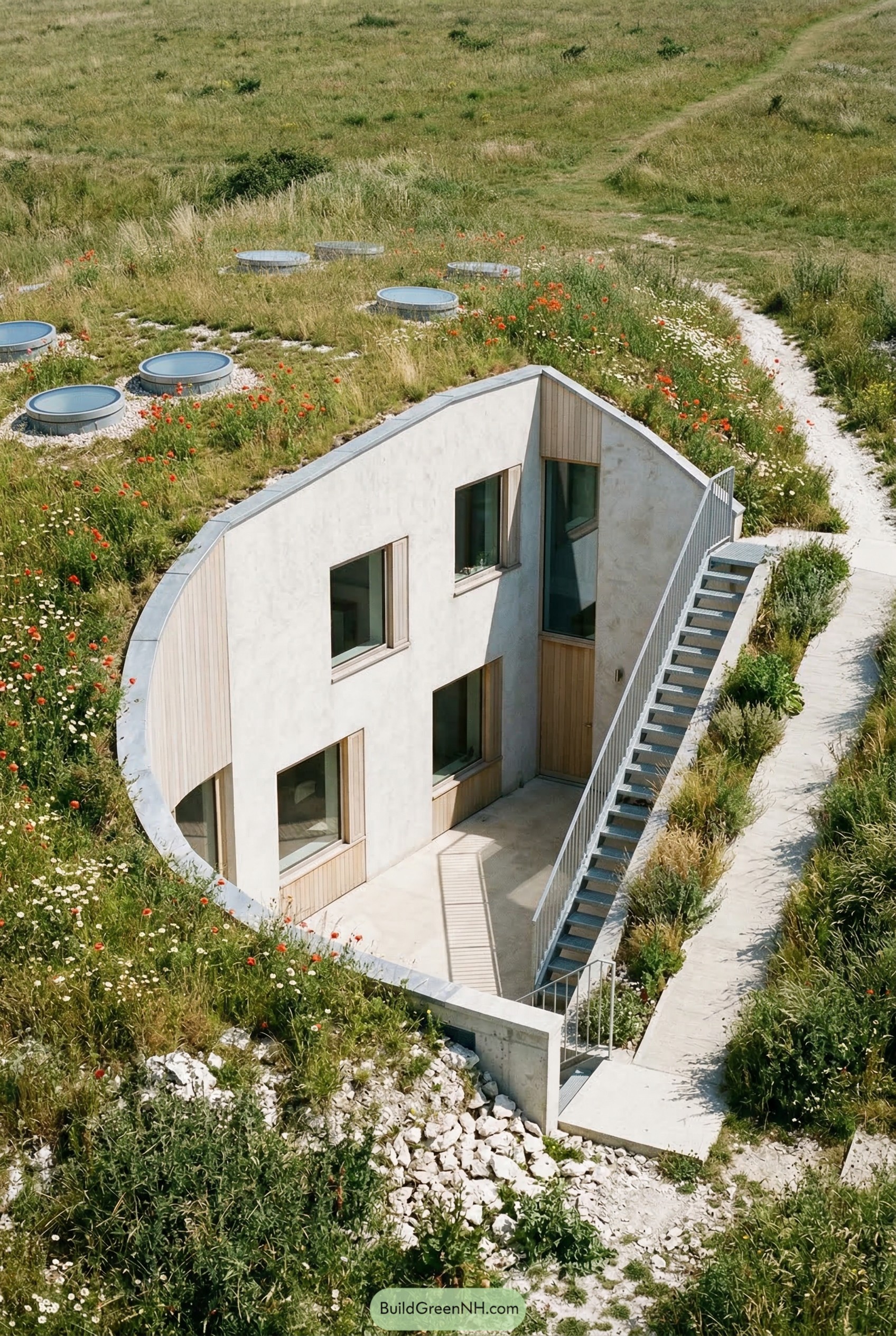

Nestled into a wildflower meadow, this sunken home is shaped around a carved courtyard that gives every room a quiet face to the outdoors. That deep cut in the ground keeps the profile low and protected, while the planted roof lets the house almost disappear from the path.
We paired soft plaster walls with pale timber reveals and a gently curved roof edge, which takes the edge off the geometry and makes the whole place feel calm, not cavey. The stair drops neatly along the facade and those round roof openings add little sky moments above, which is a nice trick for a home tucked under the grass.
Pin this for later:
Want More?
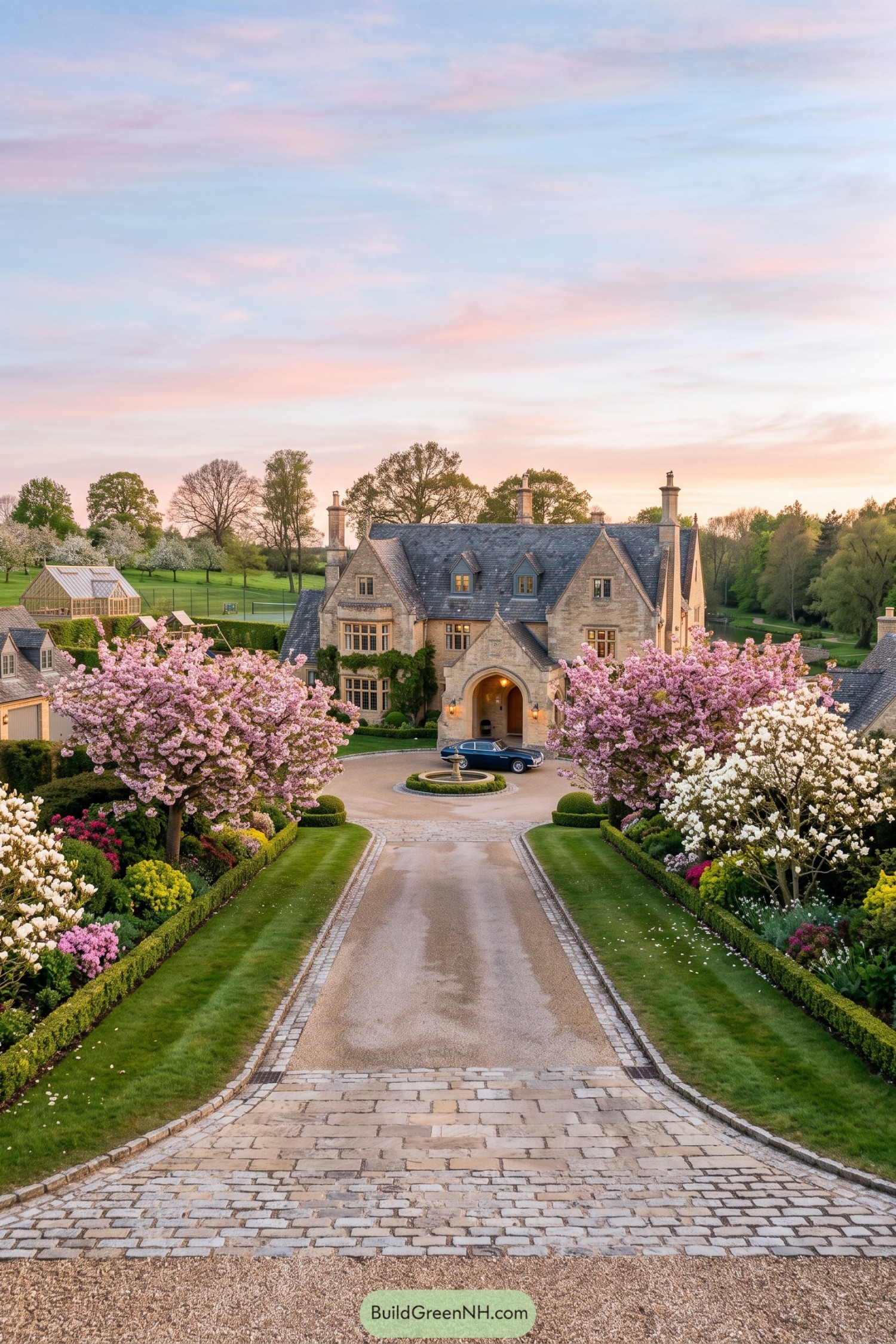 21 Luxury Family Compounds Where Generations Thrive
 20 Luxury Ski Chalets for Unforgettable Alpine Escapes
 21 Stunning Fall House Exteriors That Make Neighbors Stop And Stare
 19 Brilliant Family Village Designs You’ll Love
 21 Stunning Hill Villas for Cloud Level Escapes
Table of Contents