Last updated on · ⓘ How we make our floor plans
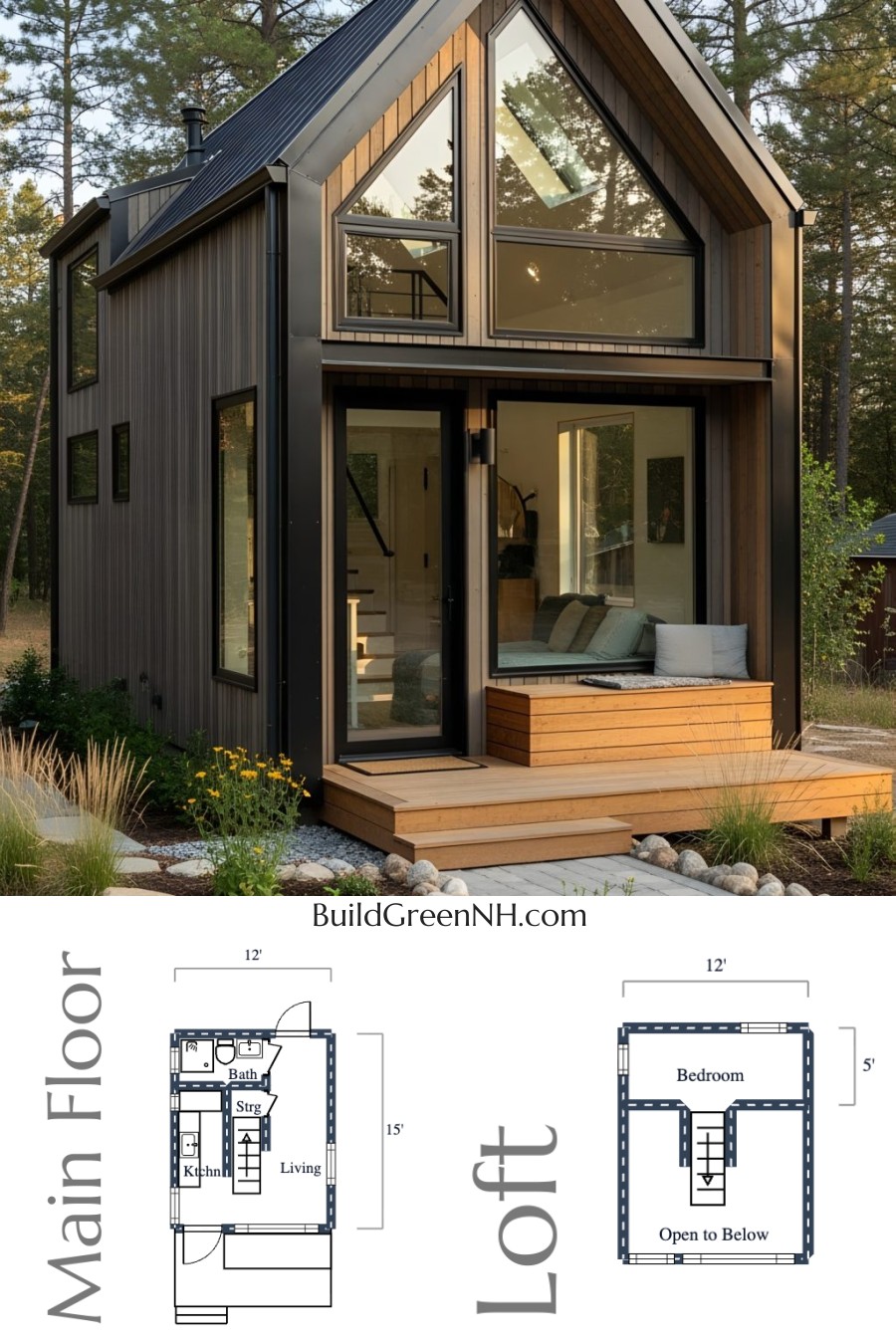
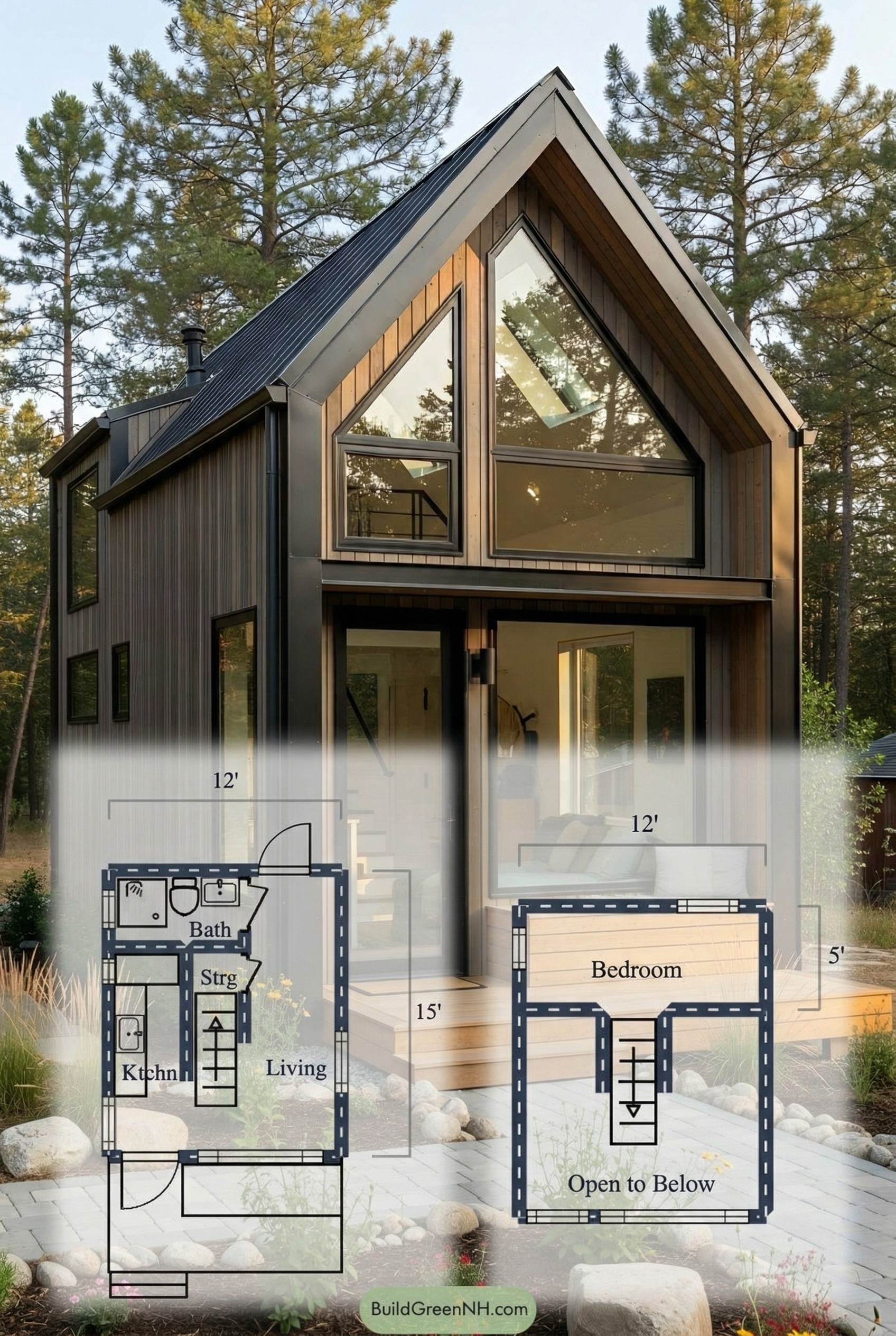
This is a compact modern tiny house with a loft bedroom and a clean two-level layout. It is shaped for efficient living, simple movement, and a bright central interior.
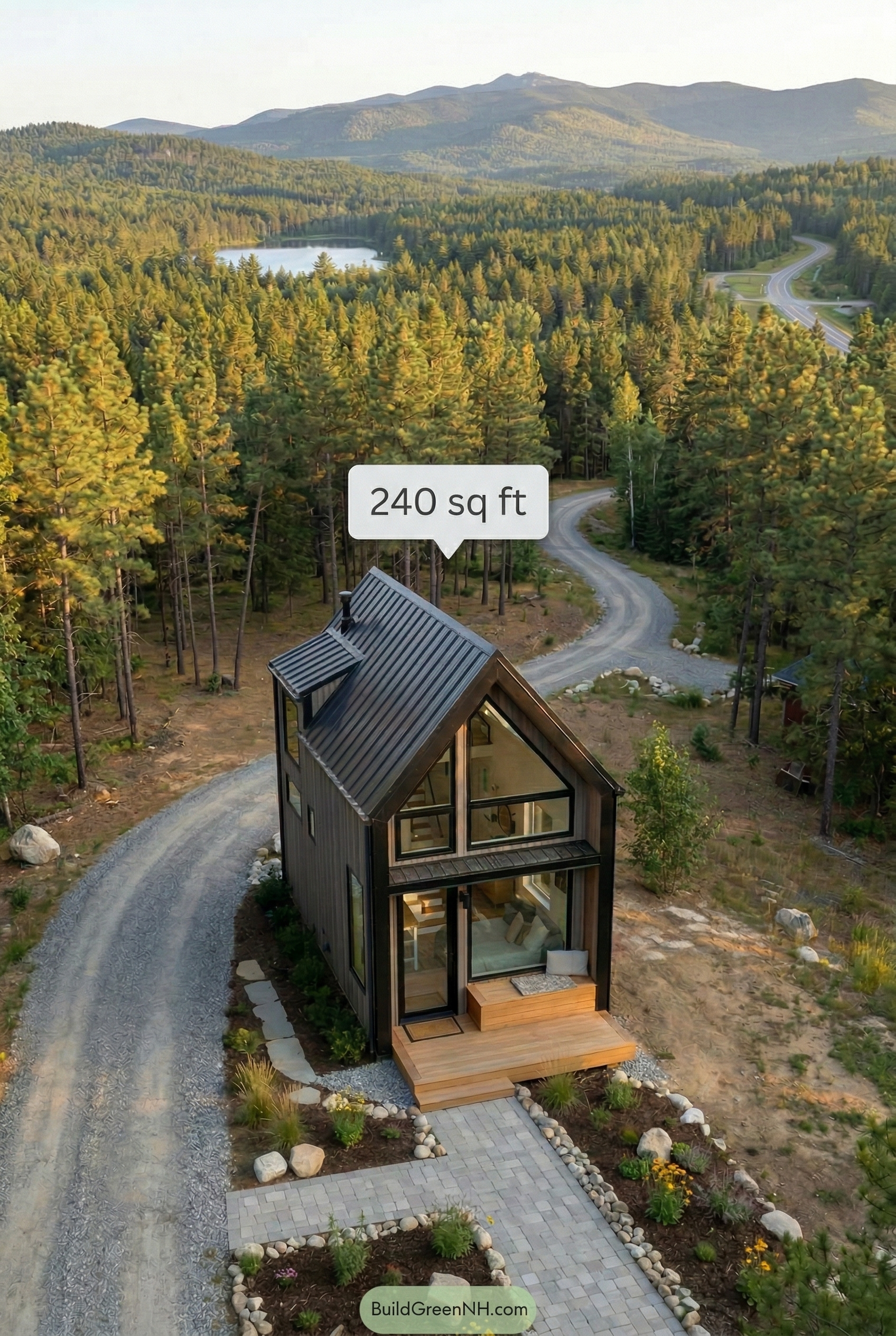
The facade is tall and sharply gabled. Its architecture blends modern cabin character with Nordic restraint. Large angular front windows give the elevation a bold, crisp face. Dark vertical siding is paired with warm natural wood accents at the front gable. The roof is a steep standing-seam metal gable, durable and handsome. Small frame, big presence.
These floor plan drafts are available for download as a printable PDF. They are easy to print, easy to mark up, and ready for the usual tiny-house calculations and cheerful second-guessing.
- Total area: 240 sq ft
- Bedrooms: 1
- Bathrooms: 1
- Floors: 1.5
Main Floor
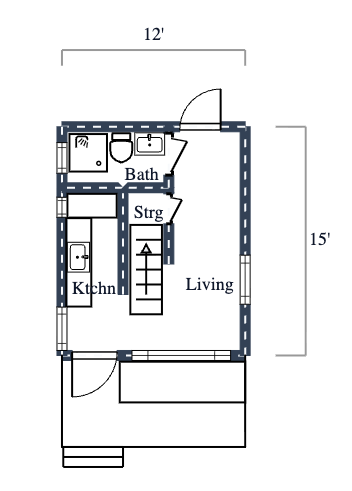
The main floor measures 12 by 15 feet, for about 180 square feet. The layout is compact and direct. The living area fills the right side. The kitchen runs along the left. The bath and storage sit at the back. A central stair leads to the loft. Very little space is wasted. The plan works hard.
- Living: Main gathering space on the right side of the floor.
- Kitchen: Compact kitchen along the left wall.
- Bath: Full bathroom with shower, toilet, and sink.
- Storage: Small storage closet beside the bath.
- Stair: Central stair rising to the loft.
Loft
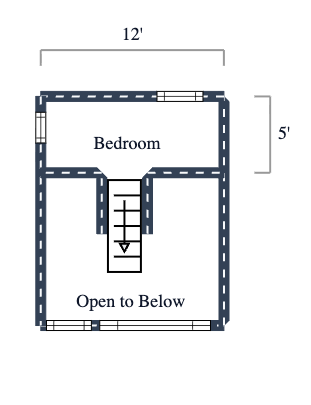
The loft is 12 feet wide, with a 5-foot-deep enclosed bedroom zone, for about 60 square feet of usable upper-floor area. The arrangement is simple and airy. The bedroom spans the upper end. The front portion is open to below, which gives the small house a welcome sense of volume. A neat little spatial trick.
- Bedroom: Loft sleeping area across the width of the house.
- Stair Landing: Central access point at the loft entry.
Pin this for later:
We have more facade options of this design:
White Color Siding
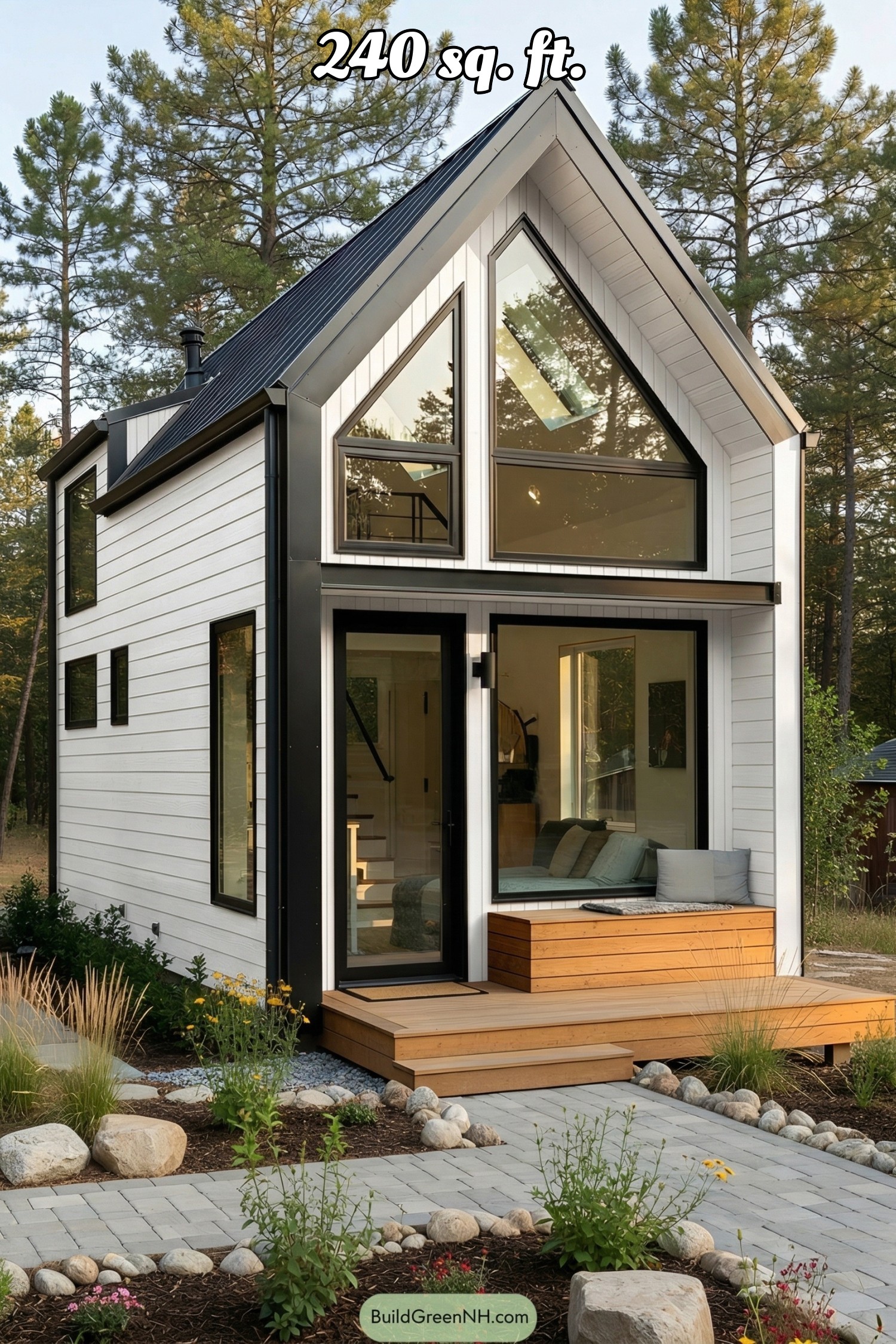
The siding has gone bright white, flipping the facade into high-contrast mode; black metal trim and window frames now pop like ink lines, sharpening the steep gable and the triangular clerestory above. The horizontal lap reads cleaner and more linear, making the compact volume look taut and well-tailored.
With the paler skin, the large panes feel deeper and the recessed entry box becomes a crisp cutout; even the eaves and roof seamwork read razor-fine. Warm cedar at the steps and bench now glows against the white, a little wink of color that keeps this tiny modern cottage from taking itself too seriously.
Forest Green Siding
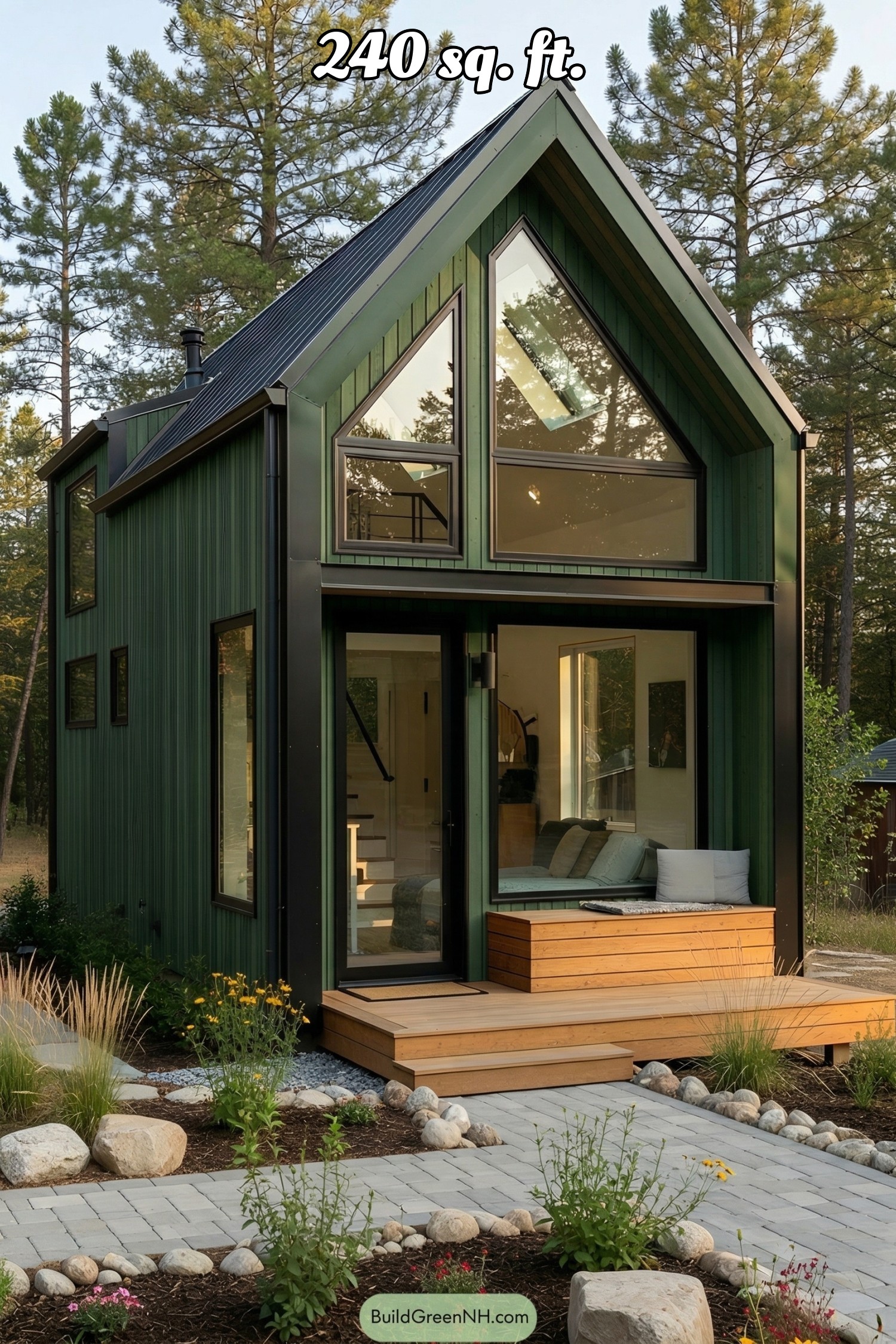
The siding switched to a deep forest green, sending the front gable into stealth-cabin mode. Vertical boards now snap against the black trims and standing-seam roof, so the tall triangle of glazing reads bolder and more sculpted.
Dark window frames pop like picture rails around the big panes.
That richer tone also spotlights the warm cedar entry steps and built-in bench, which now glow like a tiny campfire at the threshold.
Sharper shadow lines under the eaves and along the corner returns give the compact volume extra stature without adding an inch. Same tidy form, far more swagger.
Deep Blue Siding
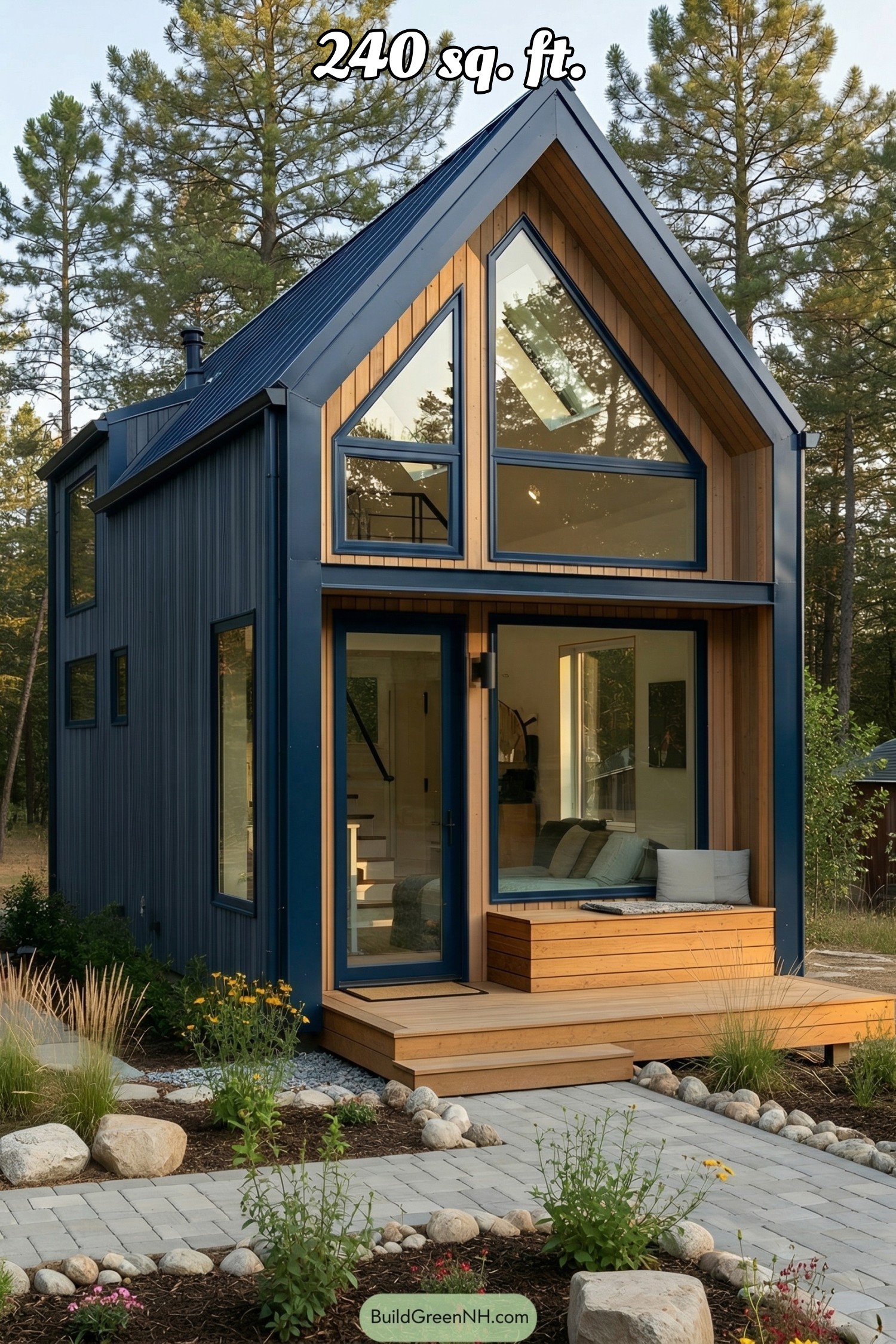
The siding switched to a deep blue, instantly tightening the facade. Vertical panels now carve cleaner lines, while the warm cedar in the gable recess glows brighter by contrast.
Matching trim outlines the tall glazed triangles like subtle eyeliner. The roof, pulled into the same hue, reads as one crisp plane.
With the darker skin, the compact volume feels taller and leaner. Mullions fade into the cladding, so the big triangular and rectangular panes read like cutouts.
The porch steps and built-in bench pop as the lone light element—stage and spotlight in one. Tiny house, big swagger.
Black Color Siding
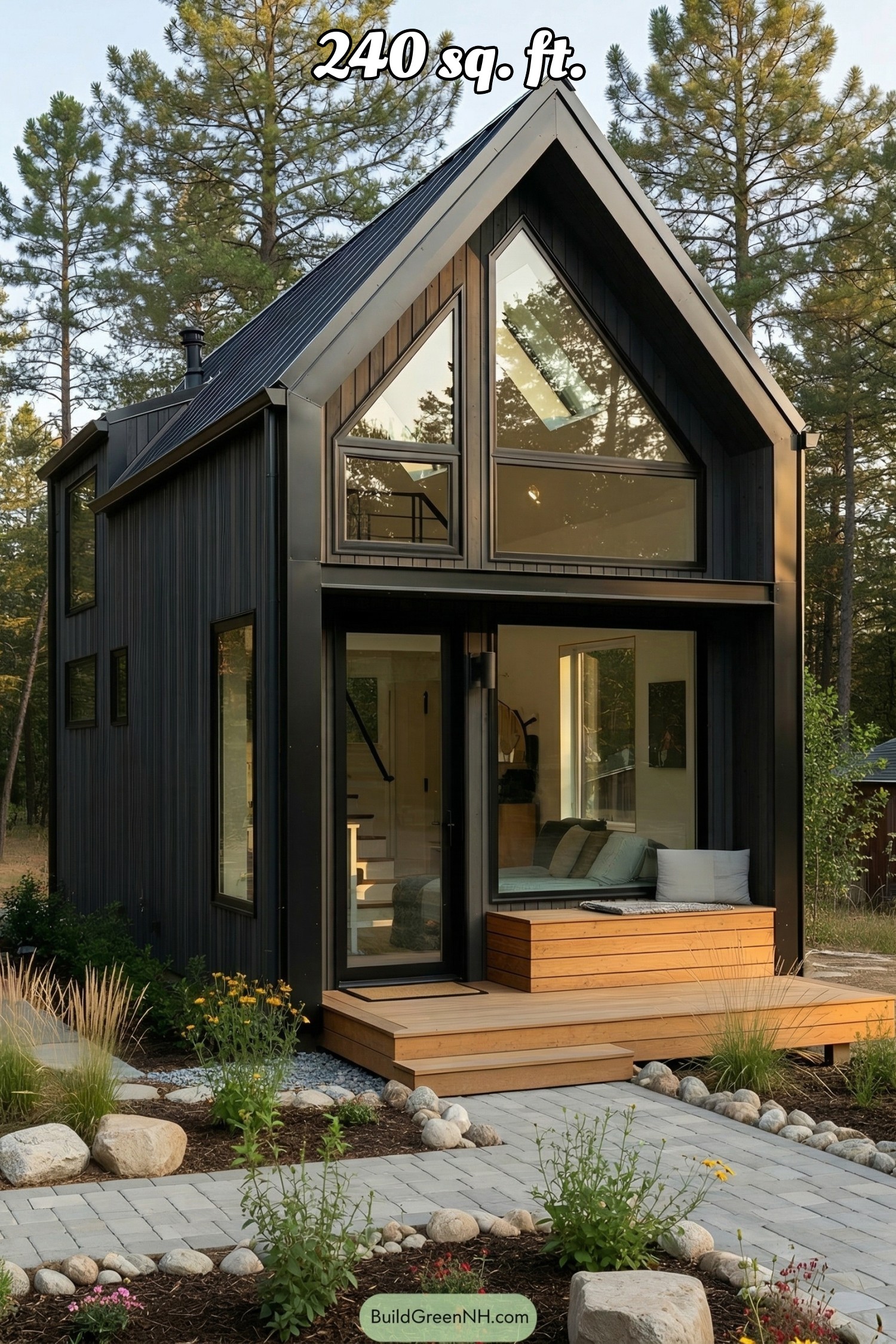
The big switch is the siding: now a deep black skin wraps the gabled form, turning the house into a sleek little monolith.
Vertical panels read crisper, and the dark tone visually stitches roof and walls into one clean wedge. The geometric glazing—triangle up top, broad panes below—pops harder against the inky frame, like exclamation points made of glass.
That black cladding also turns supporting bits into ninjas: trim, gutters, and fasteners practically vanish. Warm cedar at the porch and bench jumps forward, a friendly grin on a serious face.
With the shadows intensified, the façade’s lines feel tighter, the entry more theatrical, and the whole tiny volume looks extra confident—small house, big swagger.
Want More?
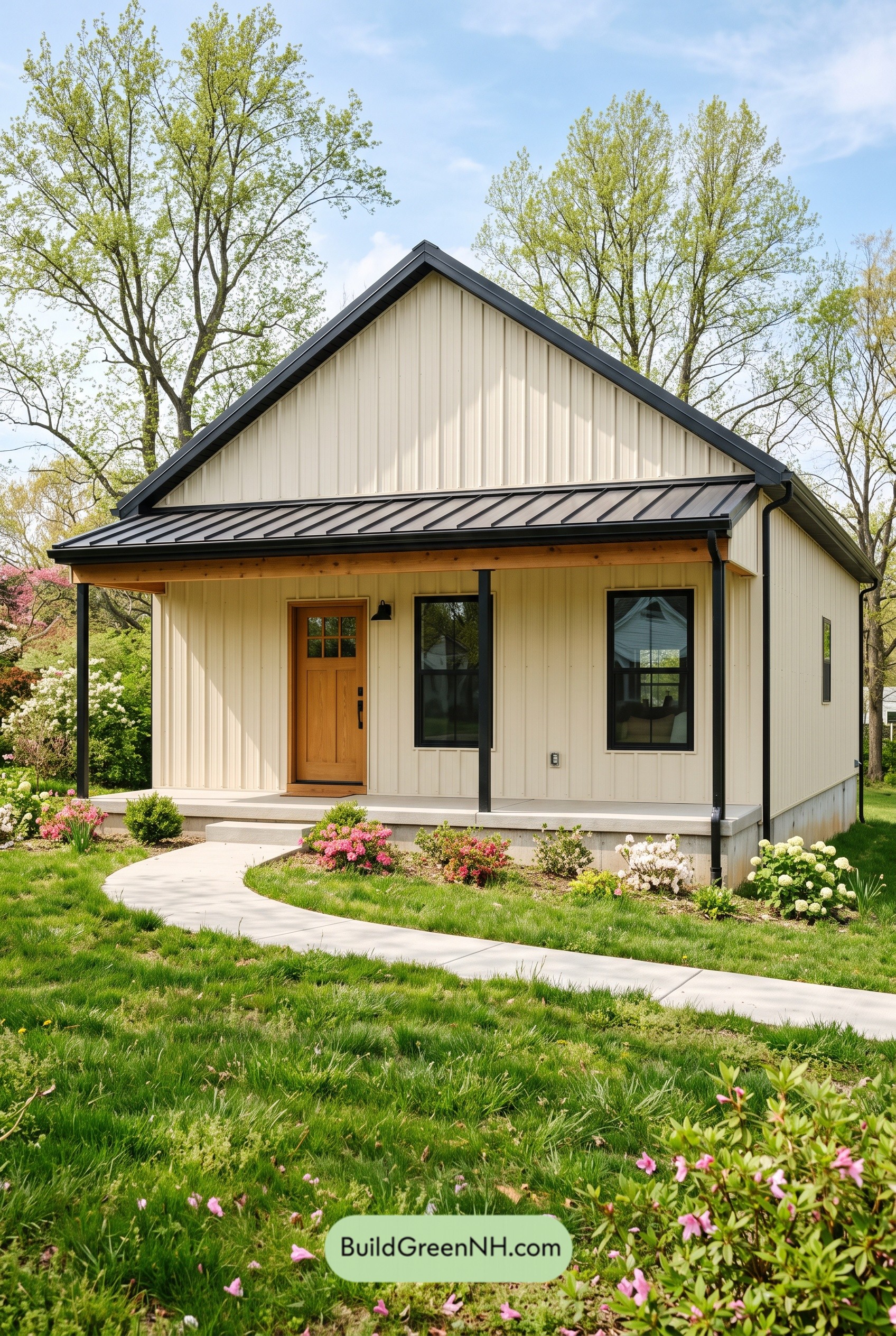 24×28 ft 672 sqft 1-Bed 1-Bath Small Barndominium Floor Plans: Ivory Fold Porch House
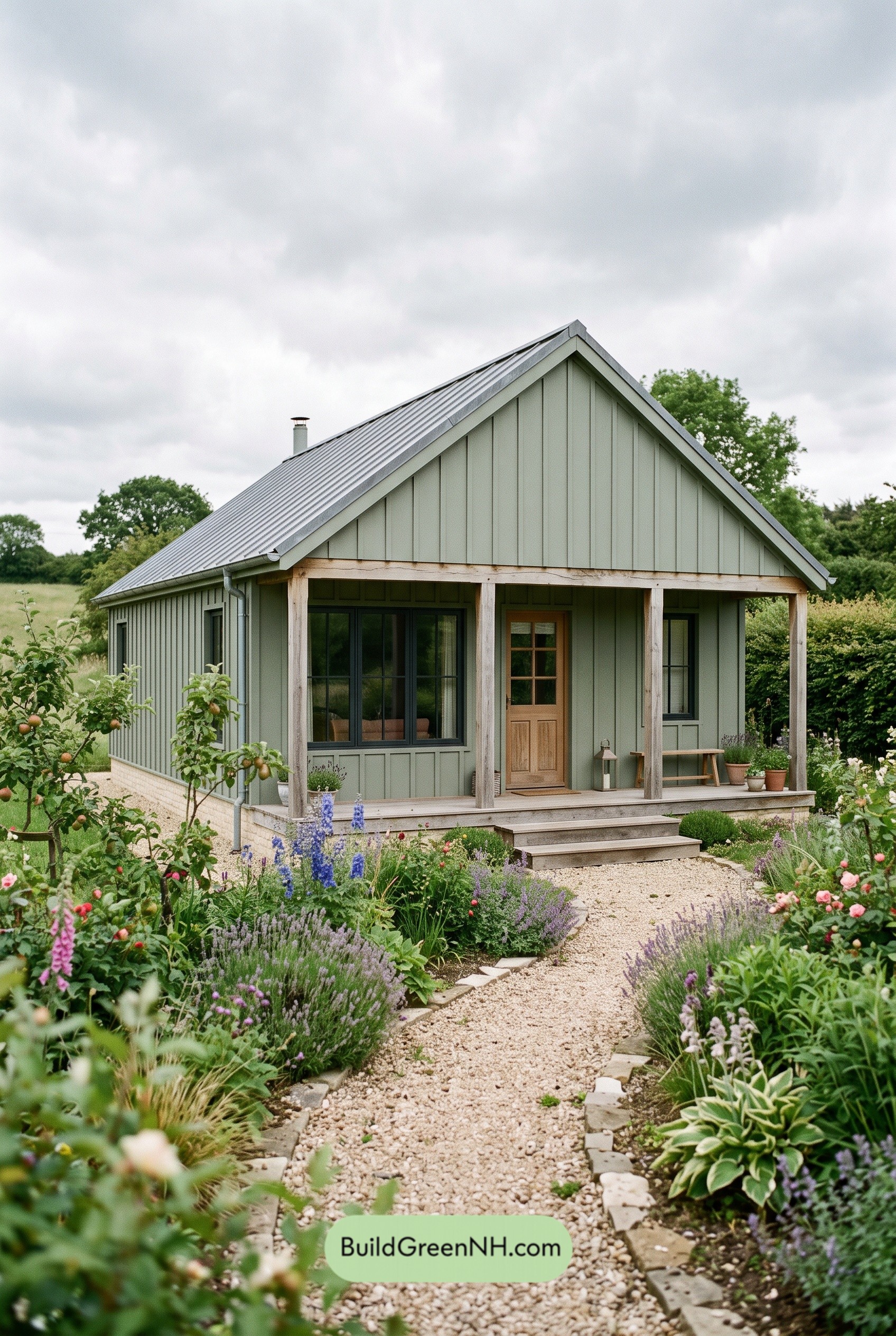 24×28 ft 673 sqft 1-Bed 1-Bath Small Barndominium Floor Plans: Sage Gable Cottage Barn
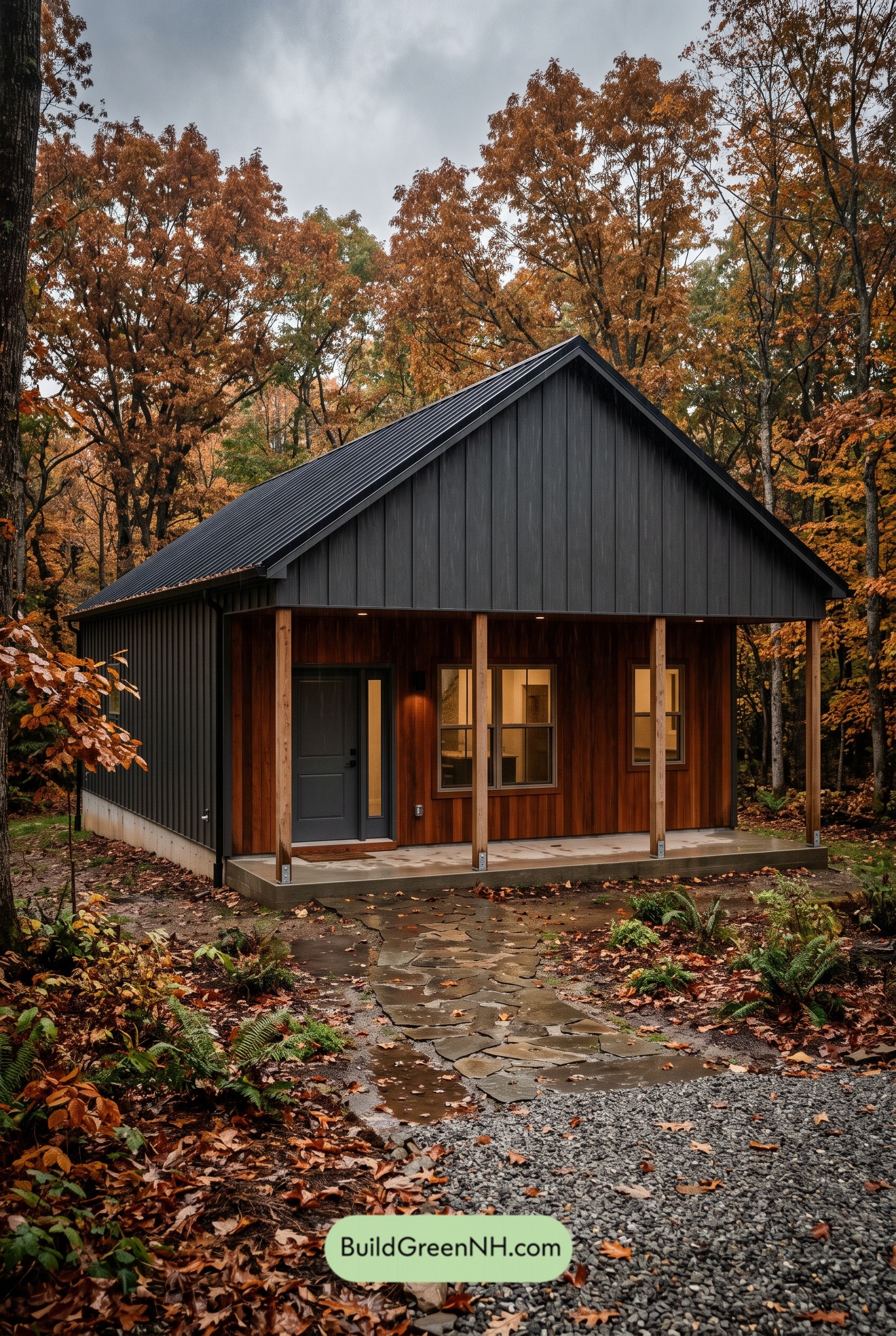 22×30 ft 661 sqft 1-Bed 1-Bath Small Barndominium Floor Plans: Carbon Cedar Threshold
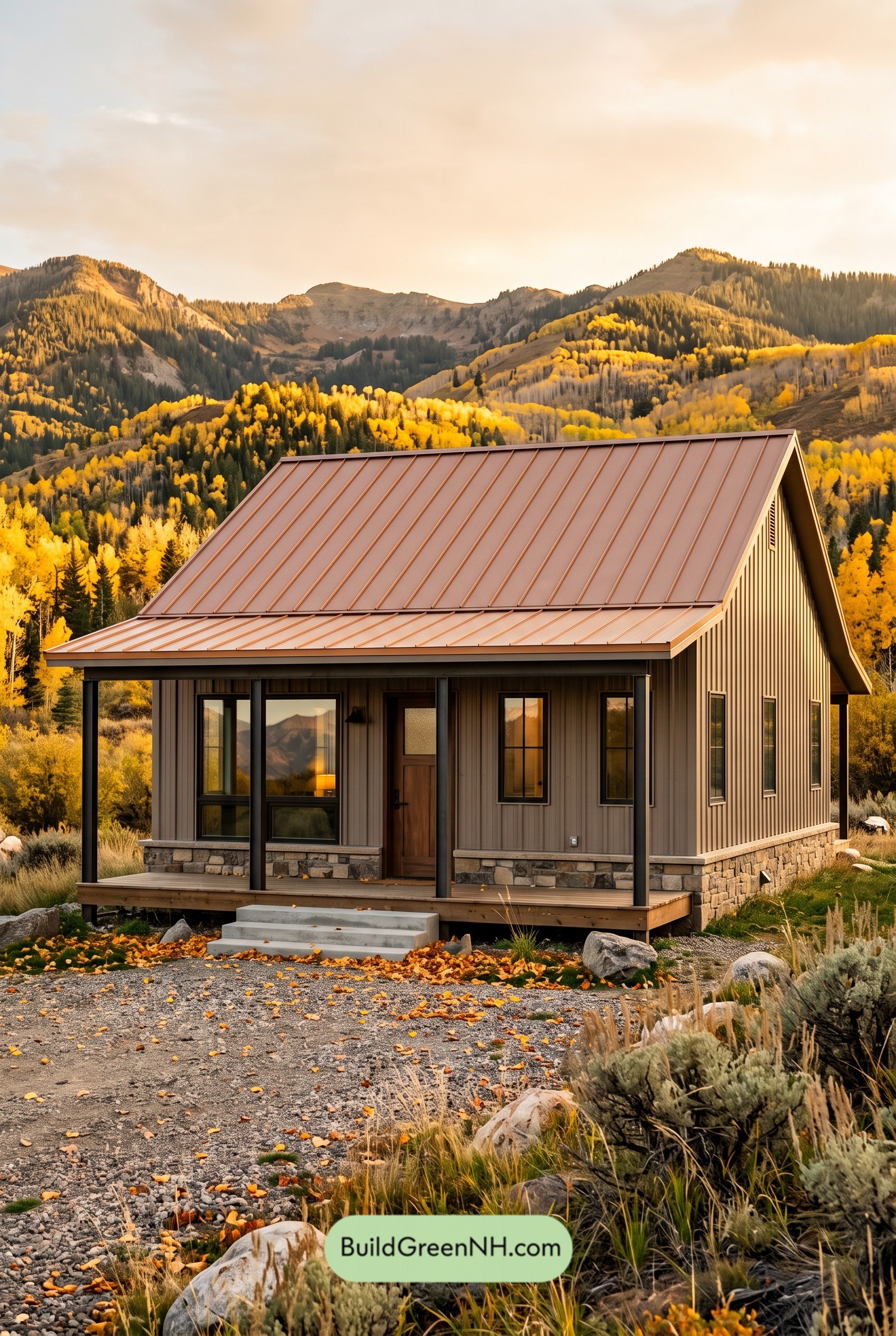 28×24 ft 672 sqft 1-Bed 1-Bath Small Barndominium Floor Plans: Copper Ridge Mountain Barn
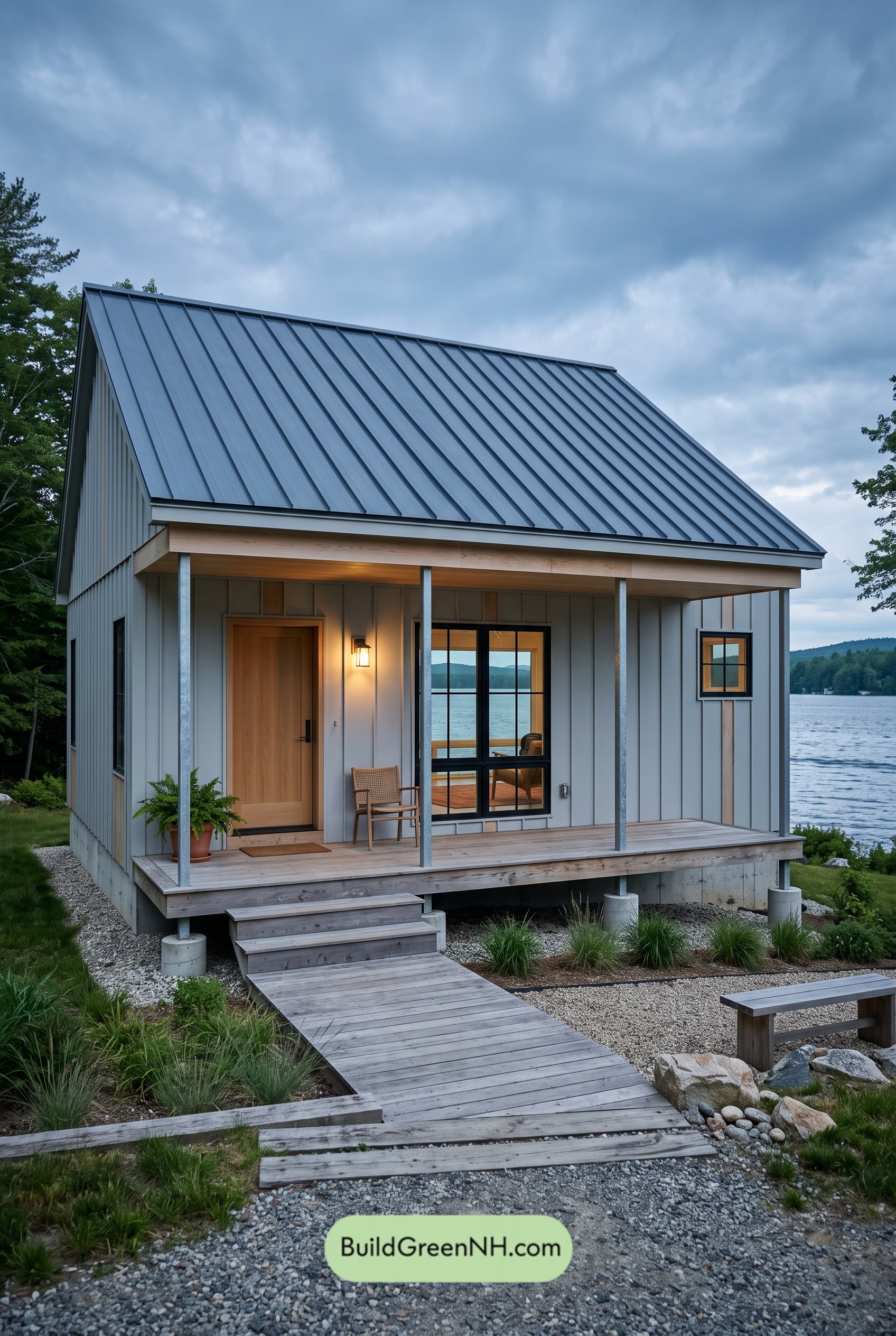 24×26 ft 624 sqft 1-Bed 1-Bath Small Barndominium Floor Plans: Pearlwater Porch Pavilion
Table of Contents