Last updated on
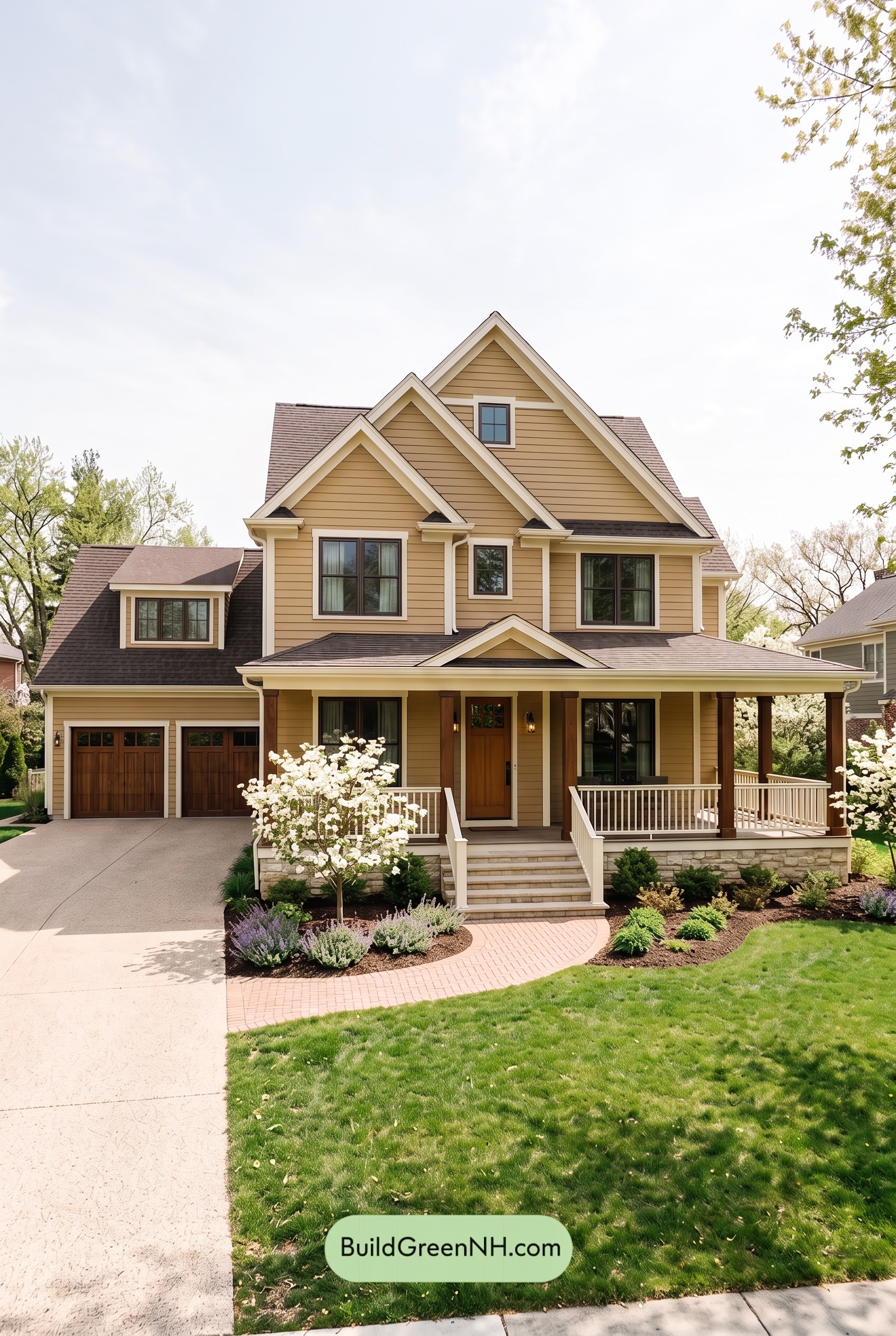

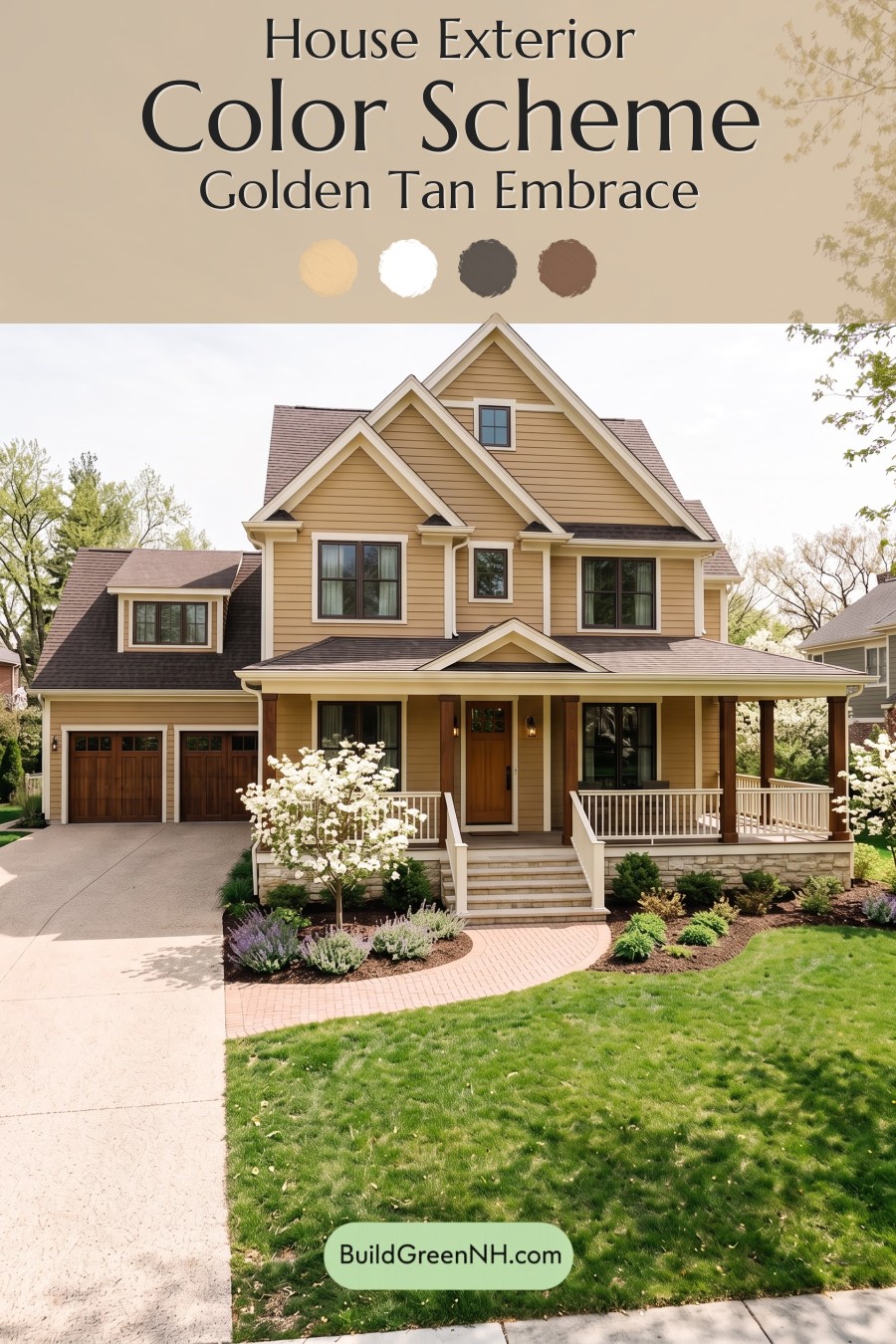
Warm beige, creamy trim, and rich brown accents give this home its inviting character, bringing definition to every gable without sacrificing a soft, welcoming feel.
Warm Beige Sets the Scene
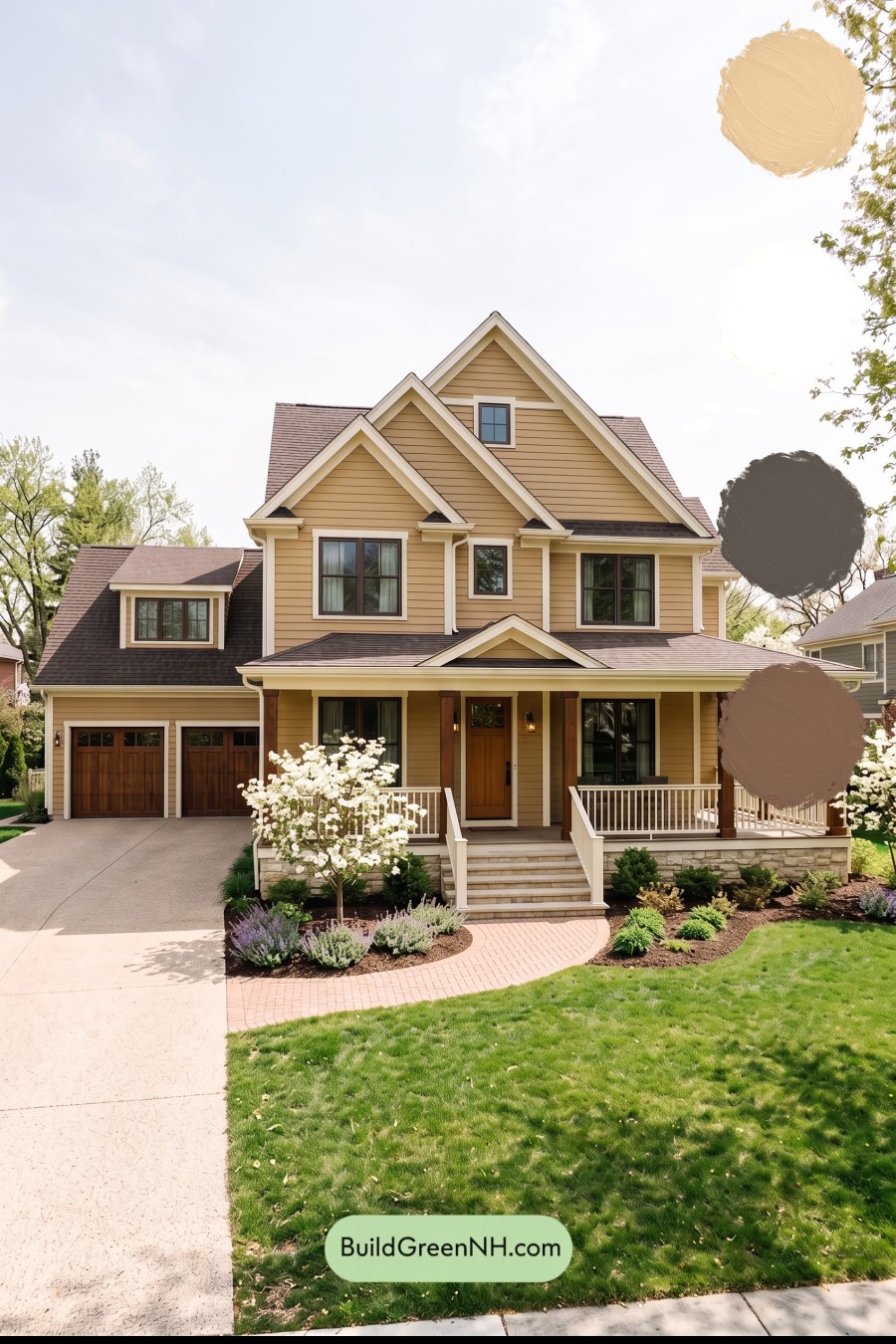
A golden shade of beige wraps the horizontal siding, creating a gentle backdrop for the home’s layered rooflines and broad front porch. It has enough warmth to feel sunny, yet remains understated enough to let the architecture lead.
The same beige family continues across the upper gables and garage dormer. That repetition matters: it connects the different sections of the house, so the attached garage feels like part of the composition rather than a separate addition.
Creamy Trim Highlights the Details
A much lighter, creamy shade of beige outlines the windows, follows the steep gable edges, and stretches along the porch fascia. Against the deeper siding, these pale borders make the architectural details easy to appreciate without creating a harsh contrast.
The porch railings and stair rails repeat that light shade. They brighten the shaded entrance and give the lower facade an airy quality, balancing the substantial columns and darker window frames above.
Rich Browns Add Depth and Welcome
Deep brown window frames provide crisp definition within the pale surrounds. Their darker outlines give the windows visual weight and keep the warm siding from feeling too uniform.
Across the porch, reddish-brown columns introduce a richer note. The front door’s golden-brown tone feels especially welcoming, while the garage doors carry a deeper brown that complements the columns. These related shades connect the entry and garage without making every accent identical.
Overhead, muted brown shingles with charcoal undertones anchor the roof. Their subdued coloring balances the lighter walls and emphasizes the rhythm of the overlapping gables.
A Natural, Easygoing Balance
The foundation stone brings together pale beige and soft gray, easing the transition between the house and its setting. Nearby greenery adds a fresh contrast to the warm exterior without competing for attention.
What makes this scheme work is its measured range of light and dark. Beige unifies the broad surfaces, creamy trim clarifies the edges, and brown accents add depth where it counts. The result feels classic, comfortable, and thoughtfully coordinated.
Next, see how this color scheme looks under different lighting simulations throughout the day.
Overcast
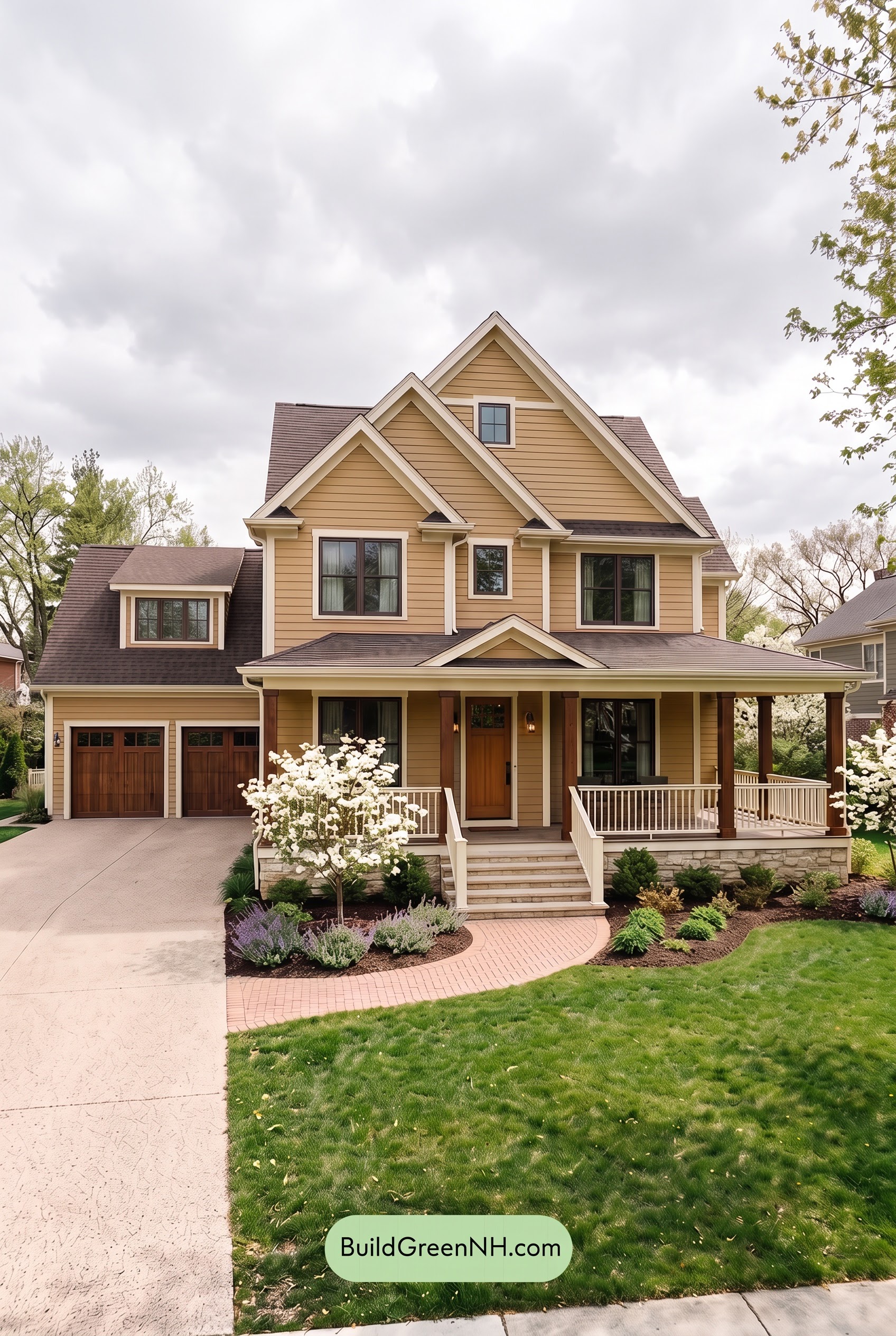
Under overcast skies, the warm beige shades appear more muted than in neutral daylight, with their golden undertones softened by the cooler light. The pale beige accents feel less creamy, while the deeper browns look quieter and less reddish. The palette keeps its warmth, but trades some richness for a softer, more restrained appearance.
Diffused light softens shadows beneath the gables and porch, reducing sharp light-to-dark contrasts and making the beige surfaces read more evenly. The dark browns still stand out against the lighter neutrals, keeping the windows and entry well defined. Overall, the house feels calmer and more understated, without losing its welcoming character.
Golden Hour
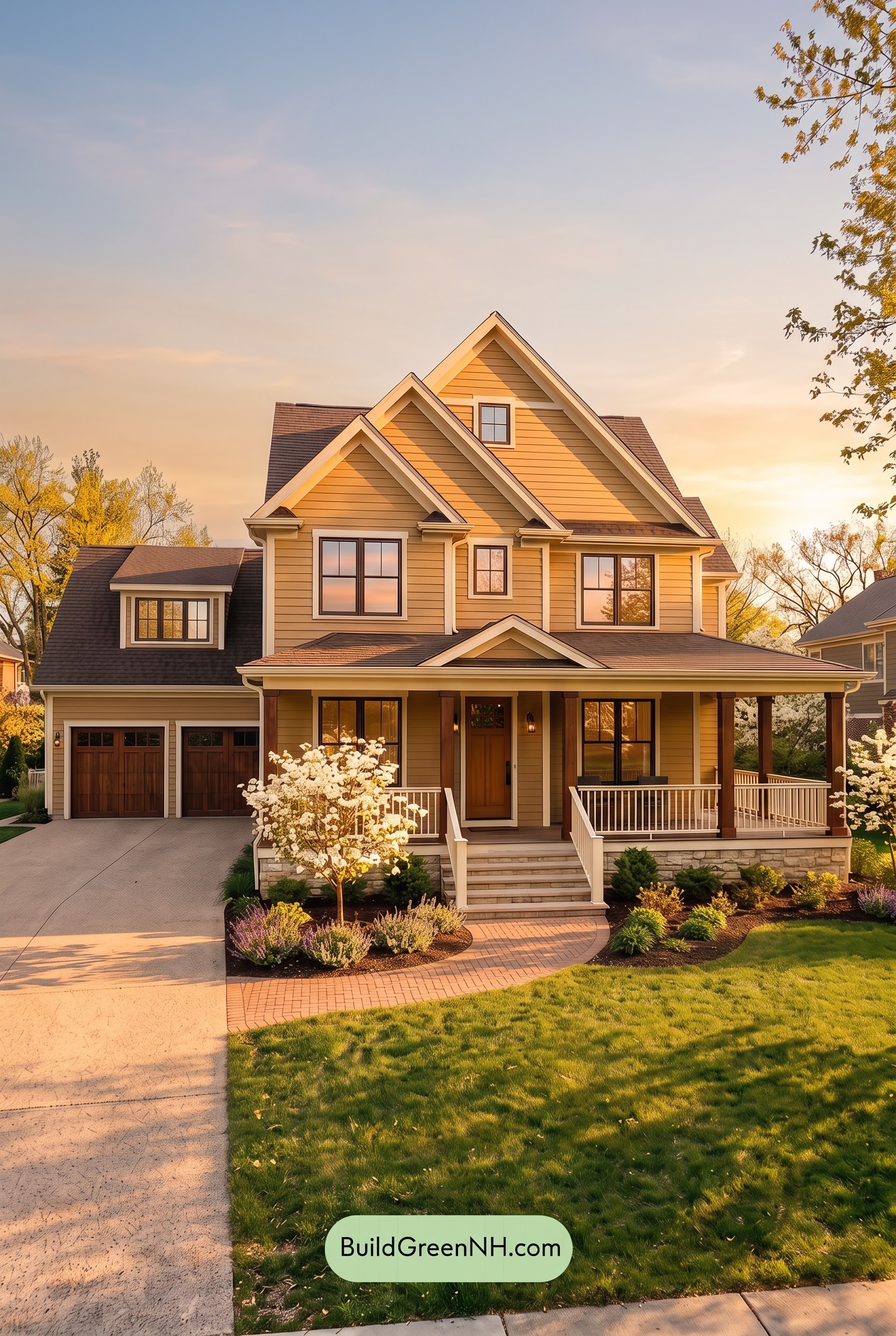
Golden Hour gives the beige siding a warmer, more saturated appearance, drawing out yellow and soft orange undertones that feel subtler in neutral daylight. The lighter beige trim takes on a gentle, creamy glow, keeping the palette harmonious while making the sunlit gables feel especially luminous.
Long, angled shadows beneath the rooflines turn those same beige shades deeper and more muted, creating stronger contrast across the façade. The brown accents look richer where sunlight catches their reddish undertones, while shaded browns appear darker against the glowing neutrals. Compared with the more balanced appearance of neutral daylight, the overall mood becomes softer, cozier, and more inviting—even as the shadows give the house greater depth.
Shade
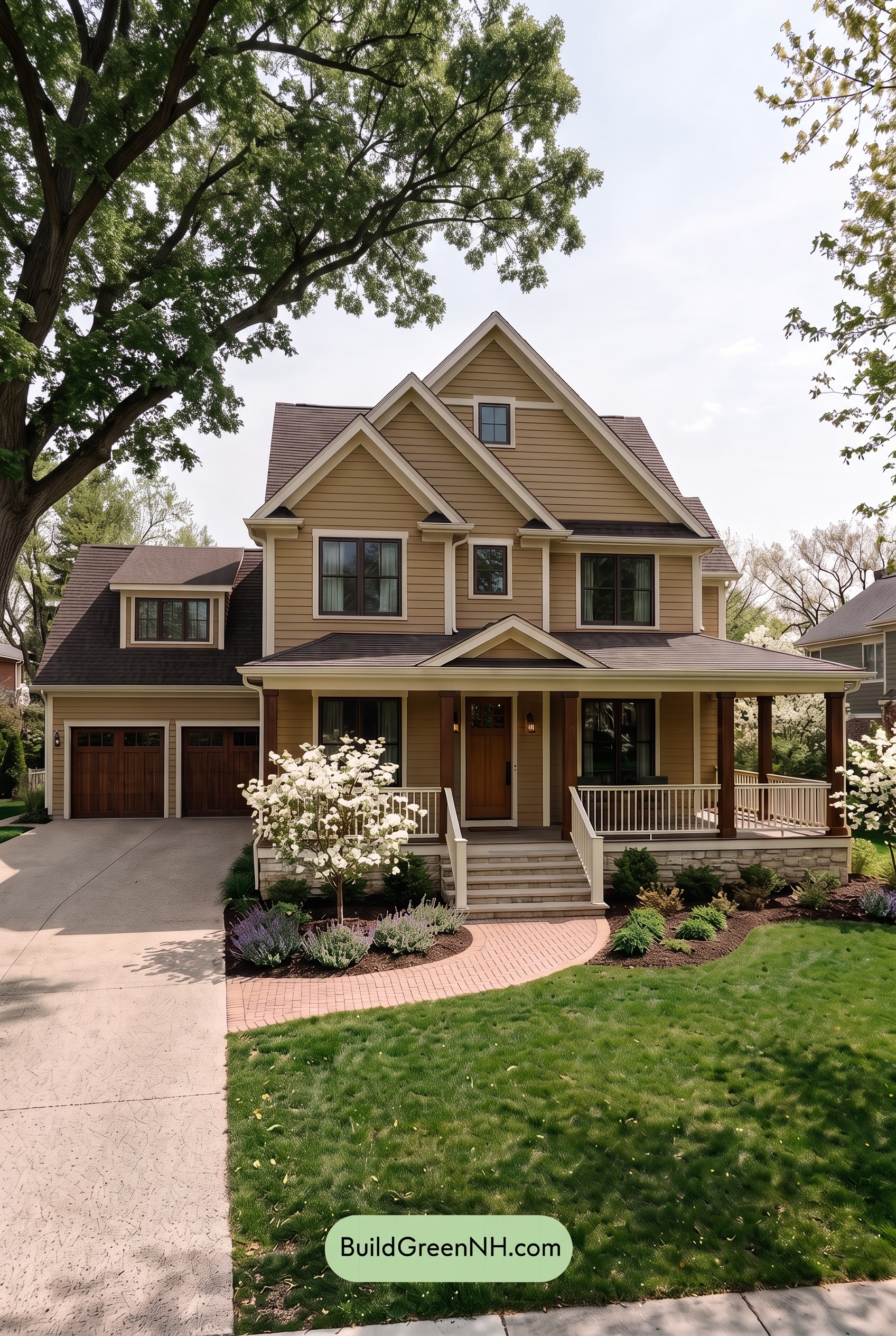
In shade, the beige siding looks deeper and less saturated than it would in neutral daylight, with its yellow warmth softened by a cooler, slightly gray cast. The lighter beige trim and railings feel gentler rather than bright, letting the layered gables stand out through subtle shifts in tone.
The darker browns around the windows, doors, and columns become more subdued, with their reddish warmth less pronounced. Beneath the porch roof, deeper shadows bring these shades closer together, while the pale beige edges preserve definition. The overall contrast feels quieter, shifting the house from a warm, open presence in neutral daylight to a calm, sheltered retreat.
Nighttime
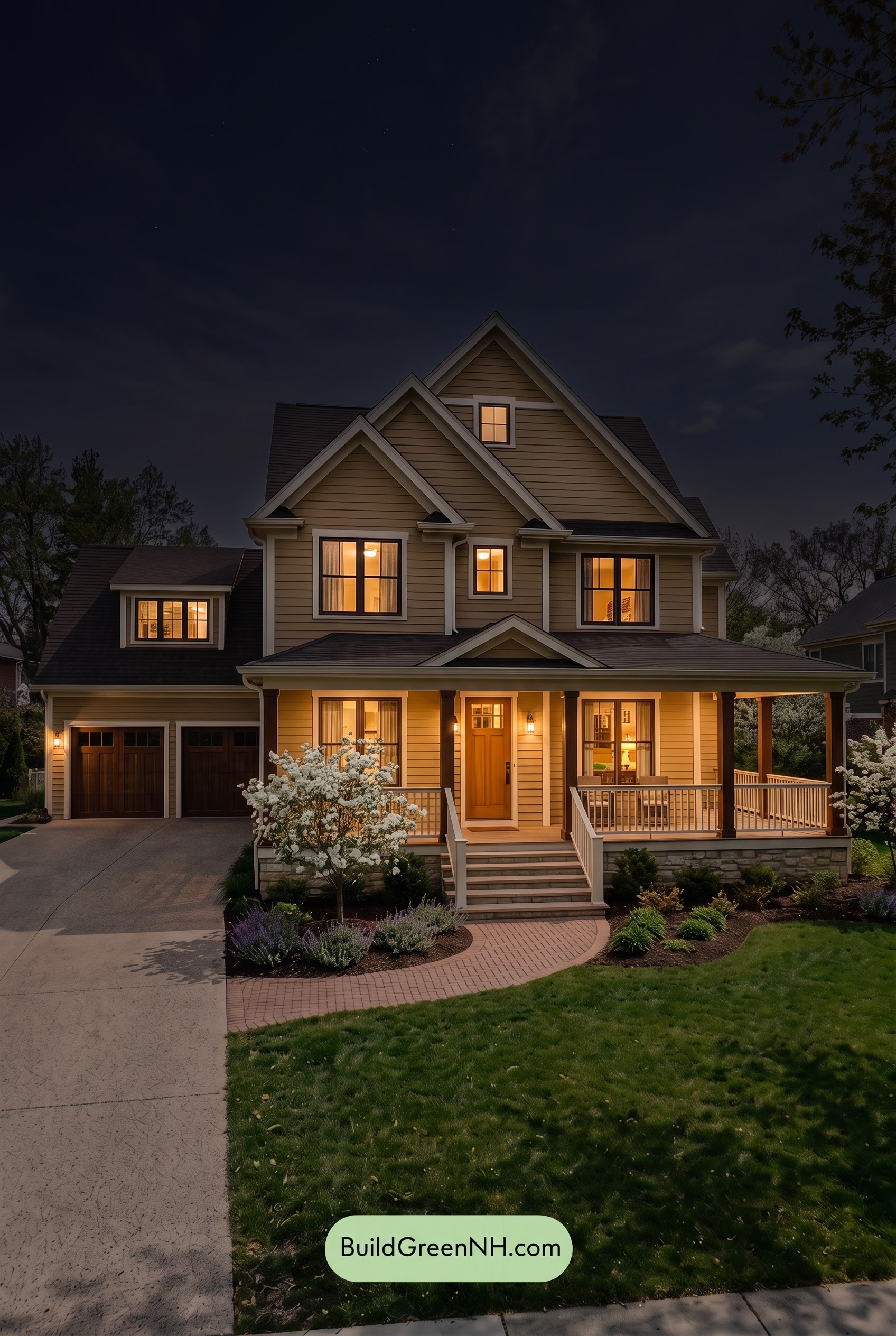
At night, the light beige shades lose their even, neutral-daylight appearance and take on a warmer, softer character. Near the porch lights, they lean toward golden beige and appear more saturated; farther from the glow, they become muted and slightly grayer. Shadows beneath the rooflines deepen these shifts, giving the exterior more depth than it would have in daylight.
The brown shades grow deeper and less distinct in shadow, while illuminated areas reveal richer, warmer undertones. Pale beige edges remain visible against those darker browns, but the strongest contrast now comes from pools of light beside shaded surfaces. The overall mood shifts from airy and understated to cozy, intimate, and quietly dramatic.
Pin these for later:
Want More?
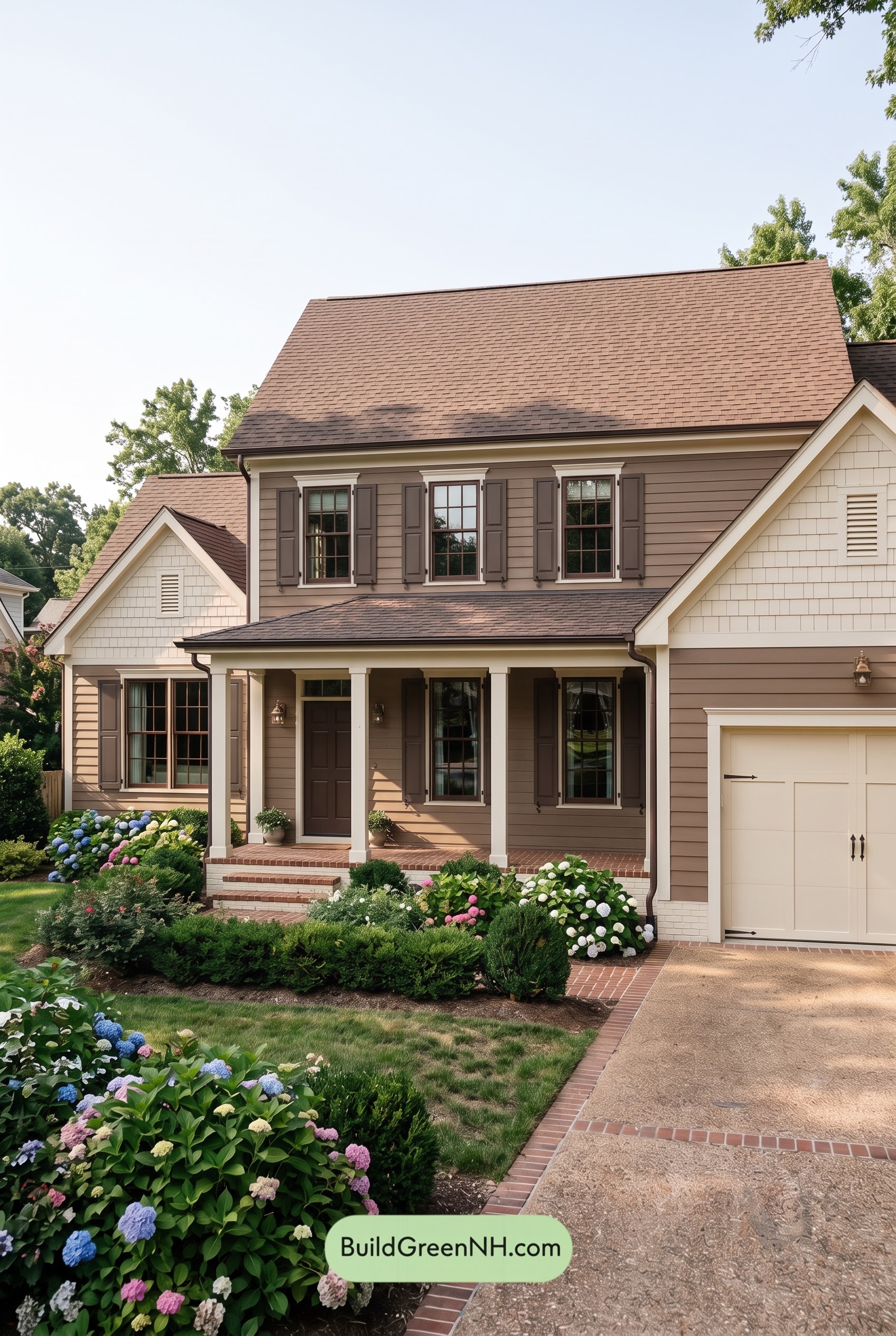
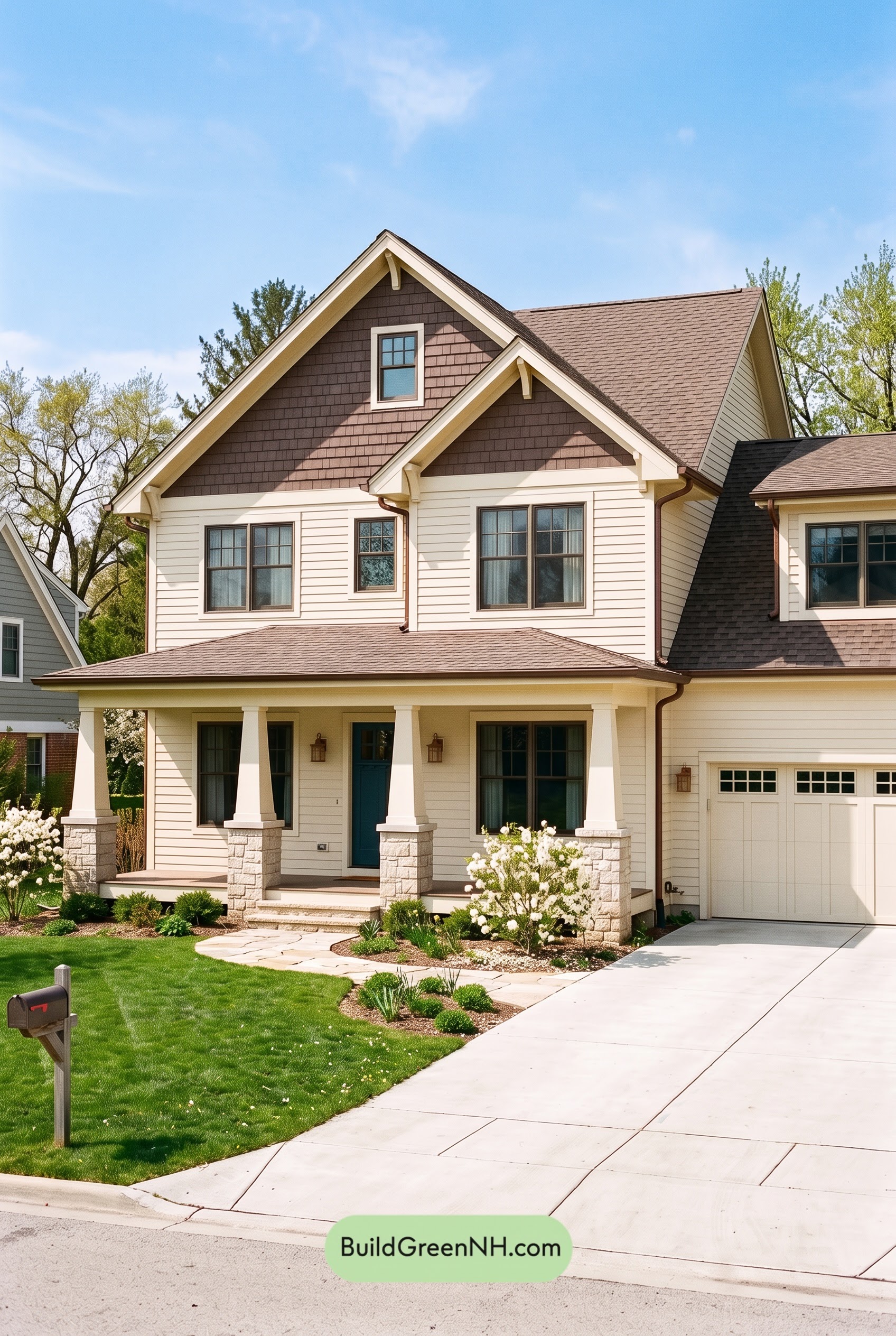 Cream Exterior Paint Color Schemes With a Brown Roof: Cream and Teal Welcome
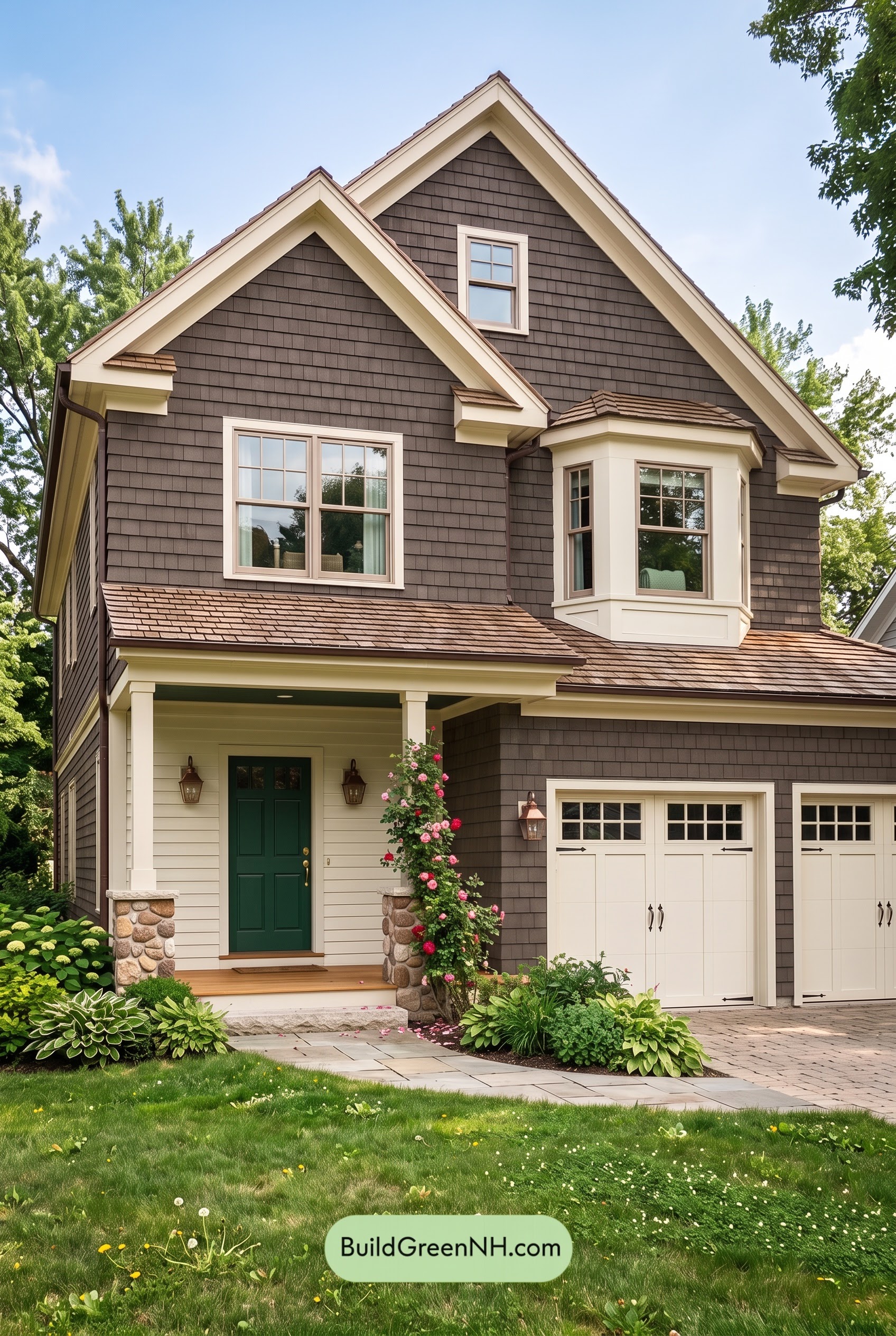
 Cream Exterior Paint Color Schemes With a Brown Roof: Cocoa and Burgundy Embrace
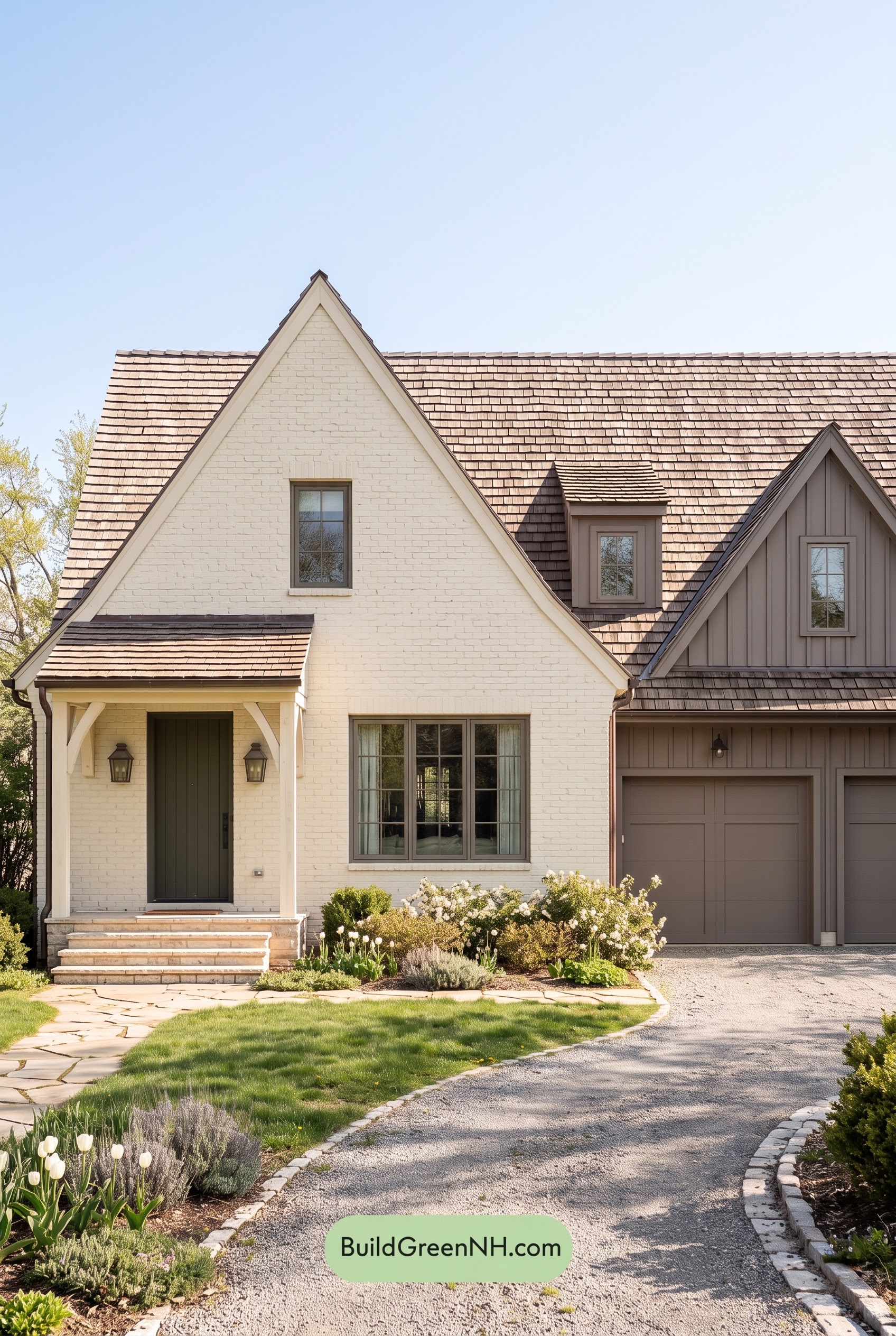
 Cream Exterior Paint Color Schemes With a Brown Roof: Cocoa and Green Grace
 Cream Exterior Paint Color Schemes With a Brown Roof: Cream and Sage Serenity
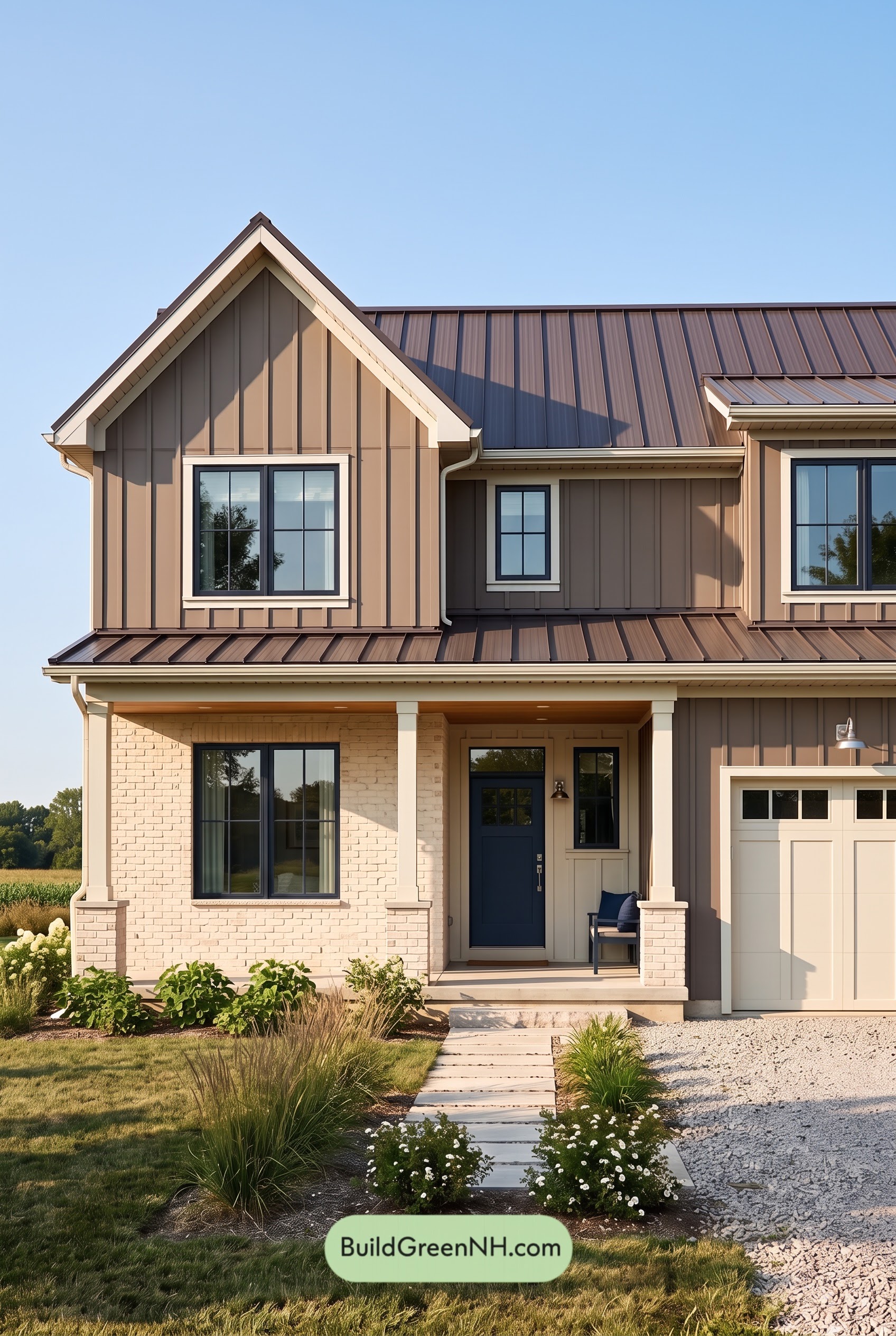 Cream Exterior Paint Color Schemes With a Brown Roof: Cocoa and Navy Assurance
Table of Contents