Last updated on
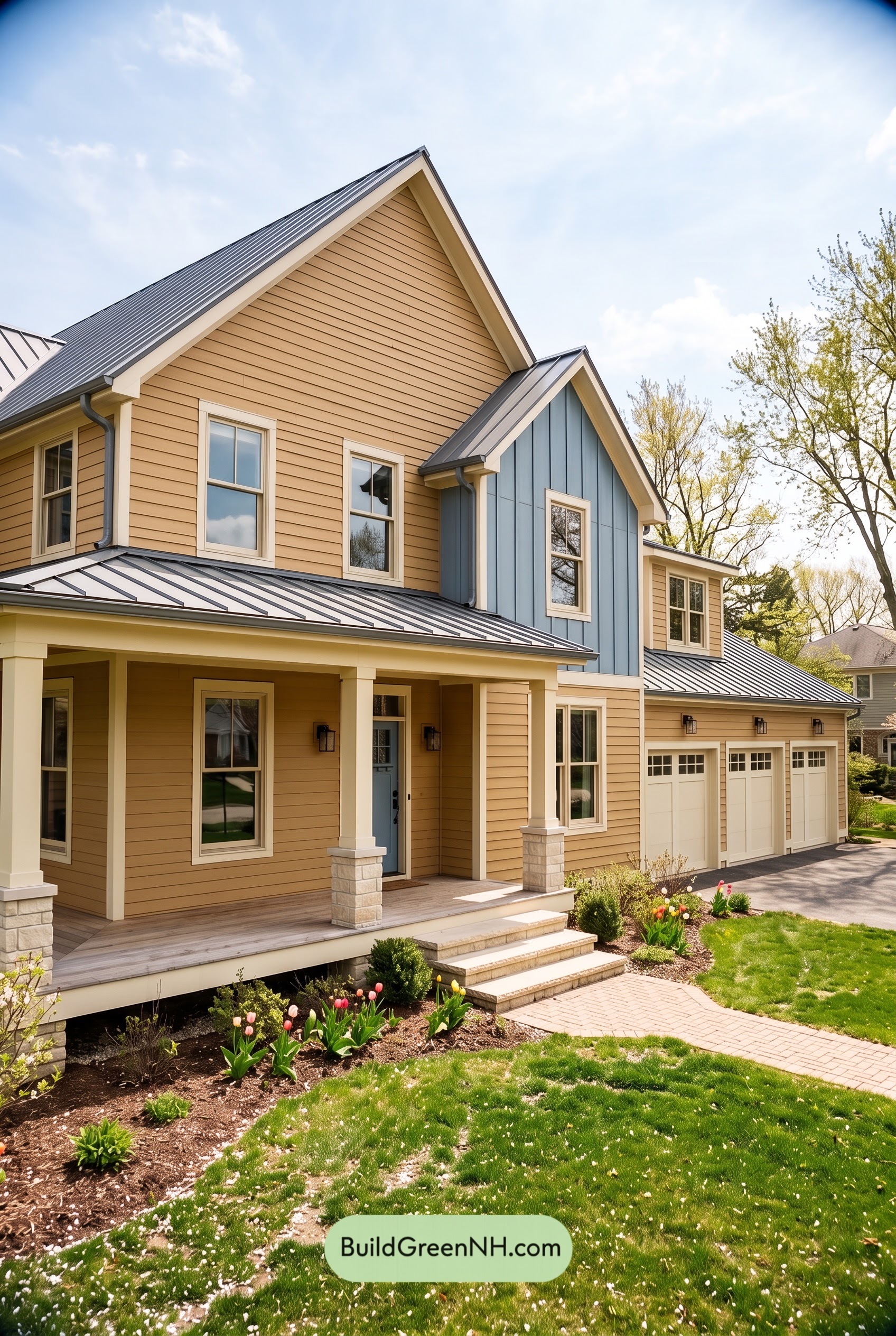

Warm beige siding, soft blue accents, and creamy trim give this home its inviting charm, balancing sunny warmth with just enough cool contrast to make the architecture shine.
Warm Beige Sets a Welcoming Tone
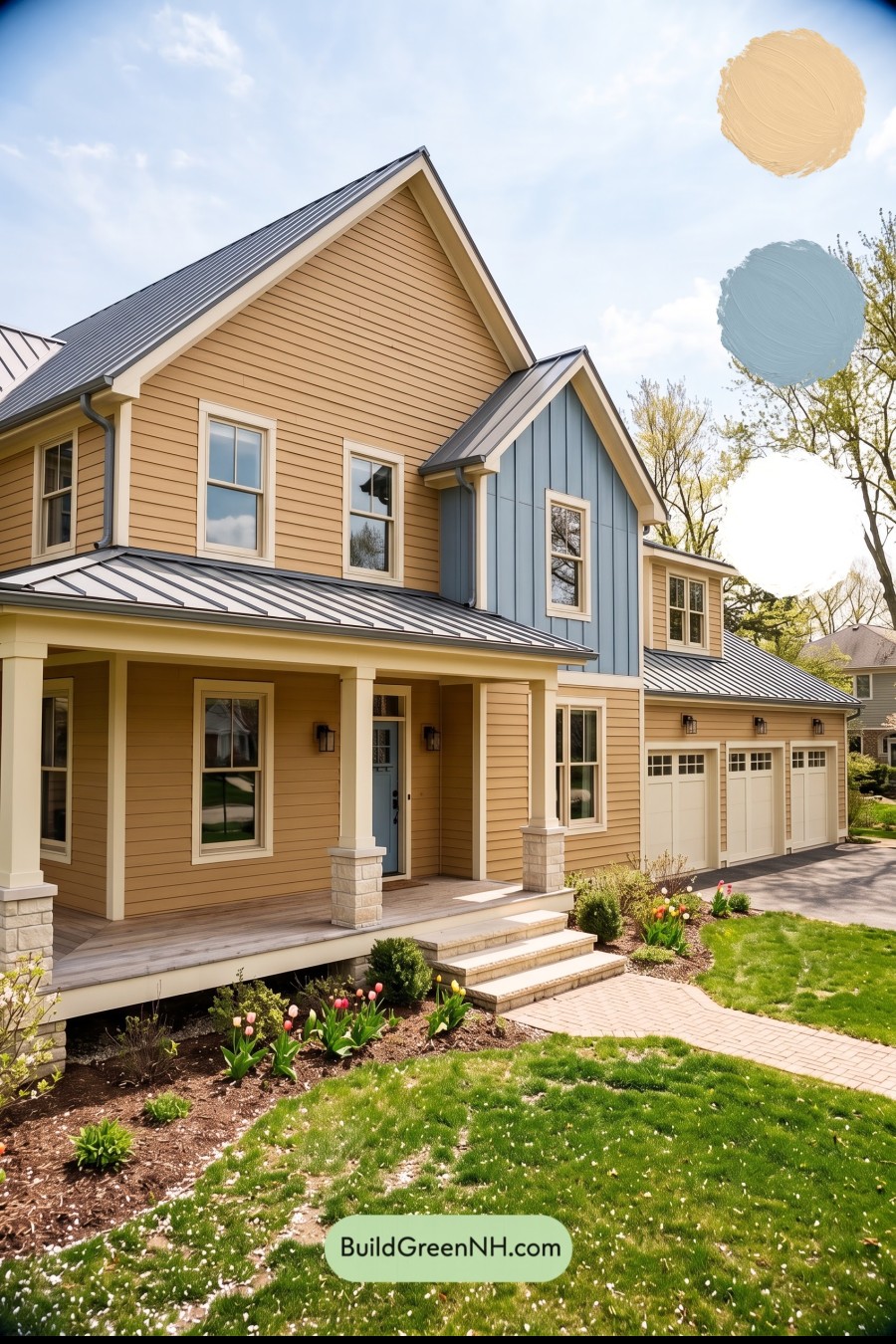
A golden-leaning shade of beige covers most of the horizontal siding, wrapping the main gable, porch walls, and garage wing in a cohesive backdrop. It feels warm without becoming overly rich, allowing the home’s generous proportions and layered rooflines to stand out.
This shade also has a lovely relationship with the landscaping. Against the surrounding greens, the beige exterior feels settled and natural, while its gentle warmth keeps the broad facade from looking stark.
A Soft Blue Accent Adds Personality
The projecting front gable introduces a muted, gray-tinged blue through vertical siding. It is a thoughtful focal point: cooler than the main walls, but soft enough to sit comfortably beside them. The change in siding direction adds texture, giving this section extra definition without requiring a stronger color.
The front door repeats that blue family in a slightly deeper-looking shade beneath the porch. This repetition connects the upper accent to the entrance and draws attention toward the doorway. It is a small detail that makes the whole scheme feel intentional.
Creamy Trim Keeps the Details Connected
Pale, creamy beige outlines the windows, traces the gables, and highlights the porch columns. Rather than creating a sharp contrast, these lighter edges gently separate the architectural details from the warmer siding.
The garage doors carry a similarly light beige, helping their large surfaces blend with the rest of the exterior. Repeating this shade across the window frames, porch structure, and garage creates a consistent rhythm from one end of the house to the other.
Deep Gray Grounds the Palette
The metal roof brings a deep charcoal gray into the composition. Its darker tone defines the rooflines and provides a crisp counterpoint to the soft walls and trim. Gray gutters and dark exterior fixtures reinforce that grounding effect in smaller touches.
At porch level, pale beige and soft gray masonry bridge the warm siding and cooler roof. Together, these shades create an exterior that feels relaxed, polished, and welcoming—proof that a restrained palette can still have plenty of personality.
Next, see how this color scheme looks under different lighting simulations throughout the day.
Overcast
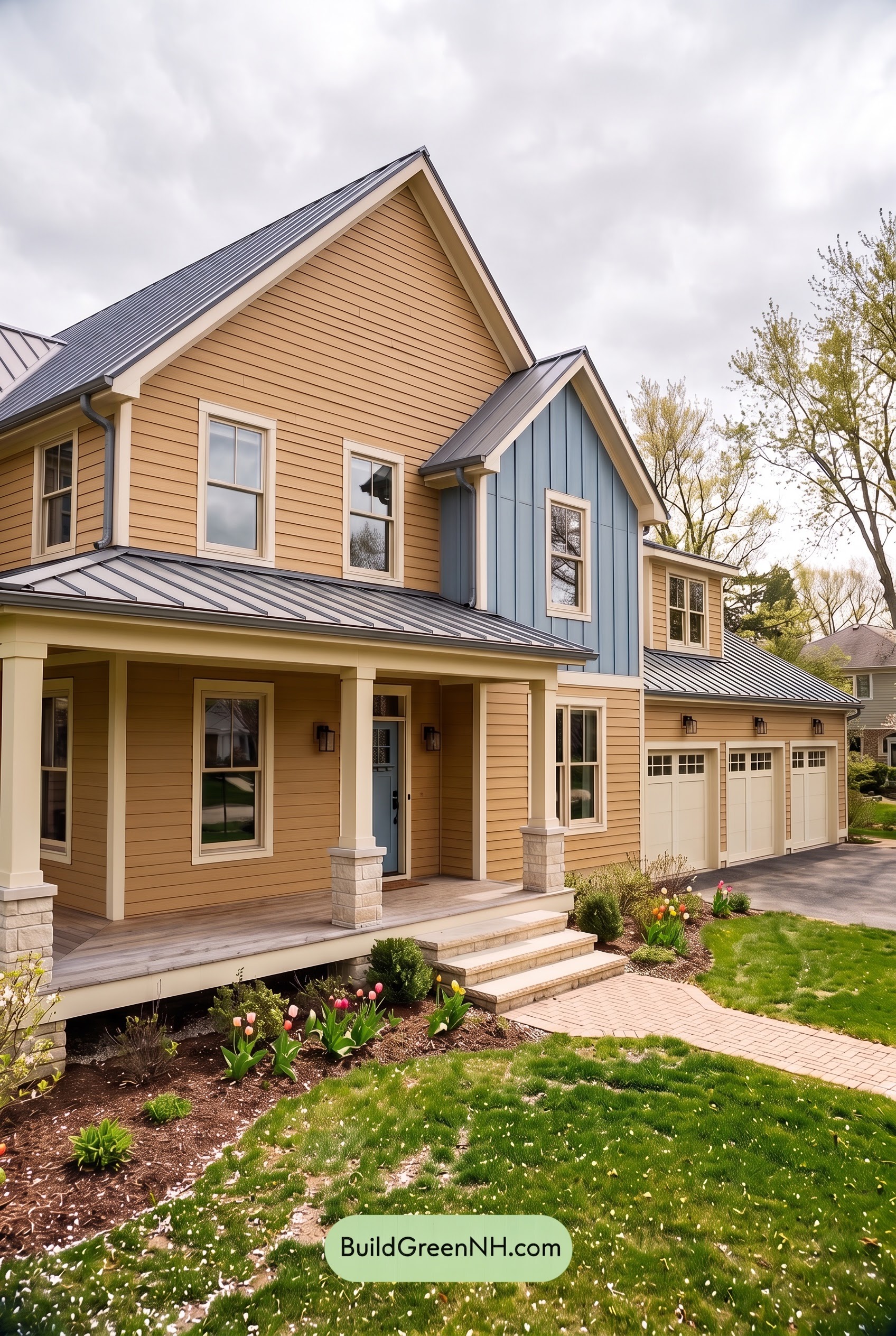
Compared with neutral daylight, overcast light softens the warm beige shades across this exterior, making their yellow undertones less pronounced and their saturation more subdued. The blue on the projecting gable and front door reads cooler and slightly grayer, with a quiet depth rather than a bright pop. The pale beige details remain gently warm without looking as creamy.
Diffused light softens the shadows beneath the rooflines and around the columns, reducing sharp light-to-dark contrast while leaving the sheltered porch noticeably deeper in tone. The blue still stands apart from the warm neutrals, but the transition feels gentler. Together, these shifts give the house a calmer, more understated mood than it has in neutral daylight.
Golden Hour
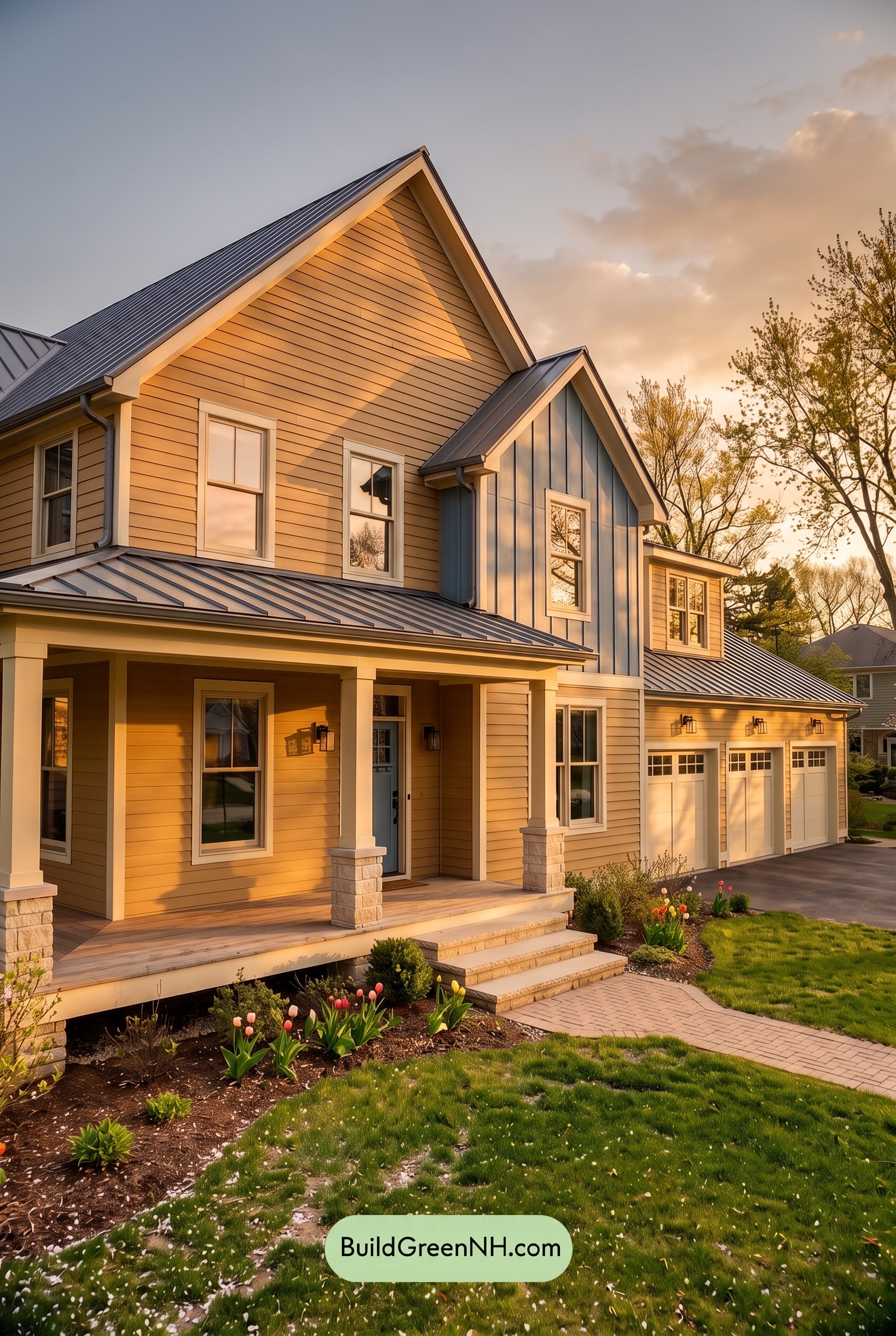
Golden Hour gives the beige siding a richer, more saturated warmth, drawing out yellow and soft orange undertones that would feel quieter in neutral daylight. The pale beige trim takes on a creamy glow, softening its contrast with the walls. Meanwhile, the blue shade on the projecting gable appears grayer and less saturated where warm sunlight washes across it.
In the porch recesses and beneath the eaves, shadows deepen the beige toward brown and make the blue feel darker and cooler. Those shaded areas contrast with the glowing sunlit surfaces, adding depth to the facade. Compared with the more balanced appearance of neutral daylight, the palette feels softer, cozier, and more dramatic.
Shade
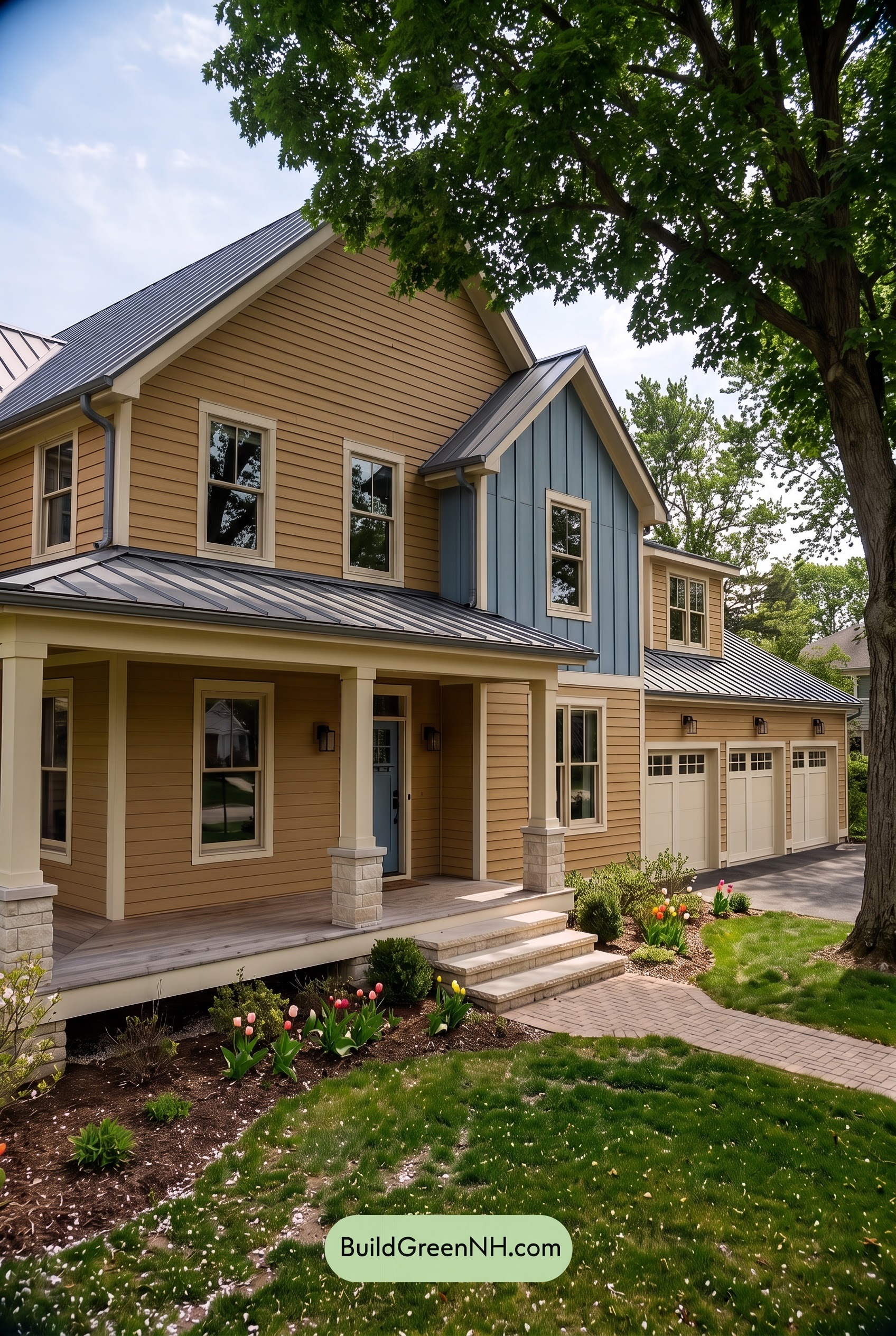
In shade, the warm beige siding feels softer and less golden than it would in neutral daylight, settling into a quieter, slightly cooler shade. The blue accent deepens while appearing less saturated, with gray undertones becoming more noticeable. Together, these muted shades give the exterior a calm, understated character.
Beneath the porch roof and eaves, deeper shadows make the beige appear richer and the blue more subdued. The pale beige trim still provides a gentle outline against both, especially around the blue accent. Compared with neutral daylight’s clearer color separation, shade softens the overall contrast and creates a cozy, sheltered mood.
Nighttime
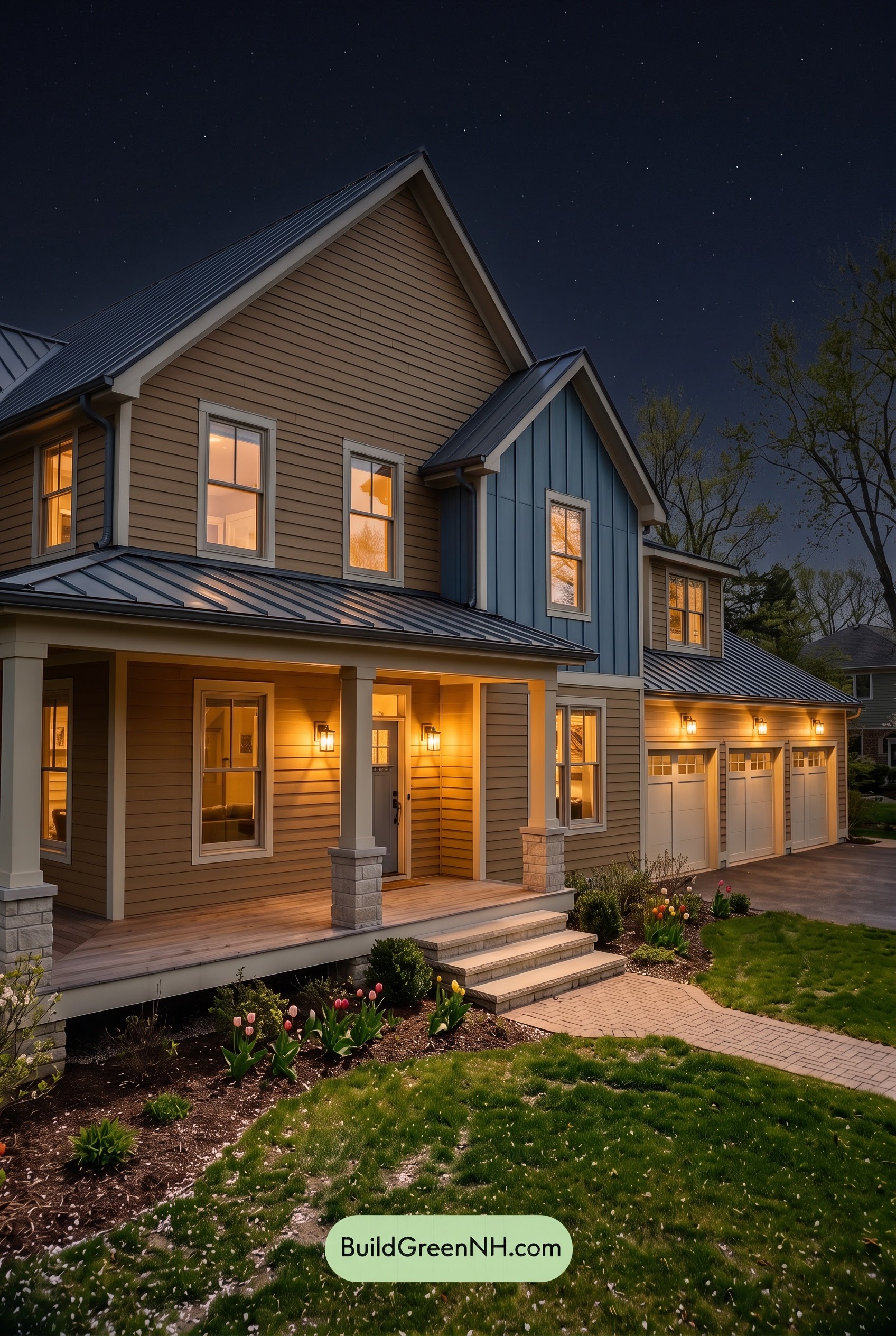
At night, the beige siding trades its balanced daylight appearance for a softer, warmer glow. Near the porch and garage lights, yellow undertones become more pronounced, while unlit areas settle into muted brown-gray shades. Pale beige trim catches enough light to frame the house gently, with deeper shadows beneath the eaves adding definition.
The blue accent deepens and appears less saturated than it would in neutral daylight, giving the upper facade a quieter presence. Against the warmly lit beige, though, its cool character feels more distinct. That contrast between glowing neutrals and shadowed blue shifts the mood from fresh and open to cozy, calm, and inviting.
Pin these for later:
Want More?
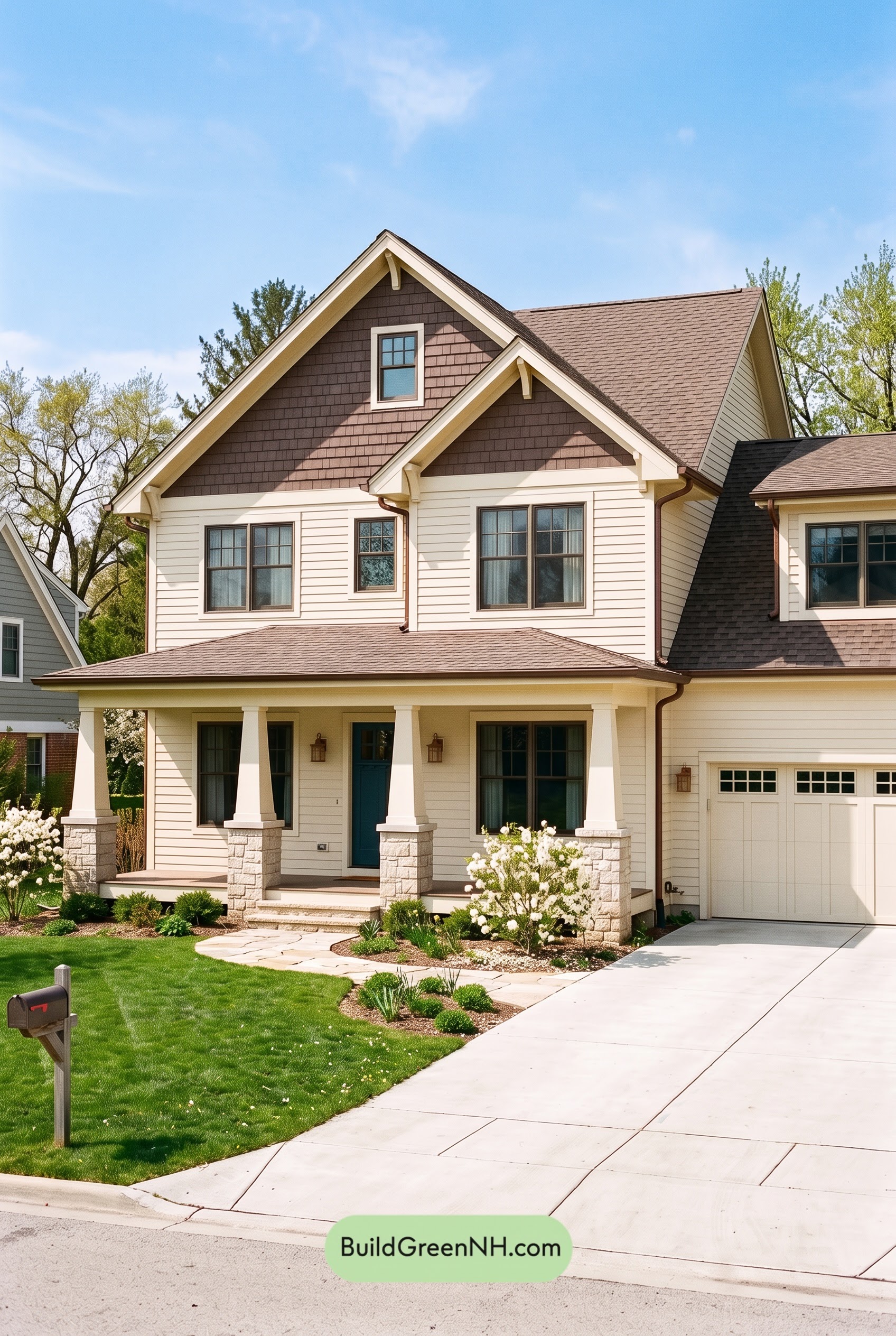 Cream Exterior Paint Color Schemes With a Brown Roof: Cream and Teal Welcome
 Cream Exterior Paint Color Schemes With a Brown Roof: Cocoa and Burgundy Embrace
 Cream Exterior Paint Color Schemes With a Brown Roof: Cocoa and Green Grace
 Cream Exterior Paint Color Schemes With a Brown Roof: Cream and Sage Serenity
 Cream Exterior Paint Color Schemes With a Brown Roof: Cocoa and Navy Assurance
Table of Contents