Last updated on
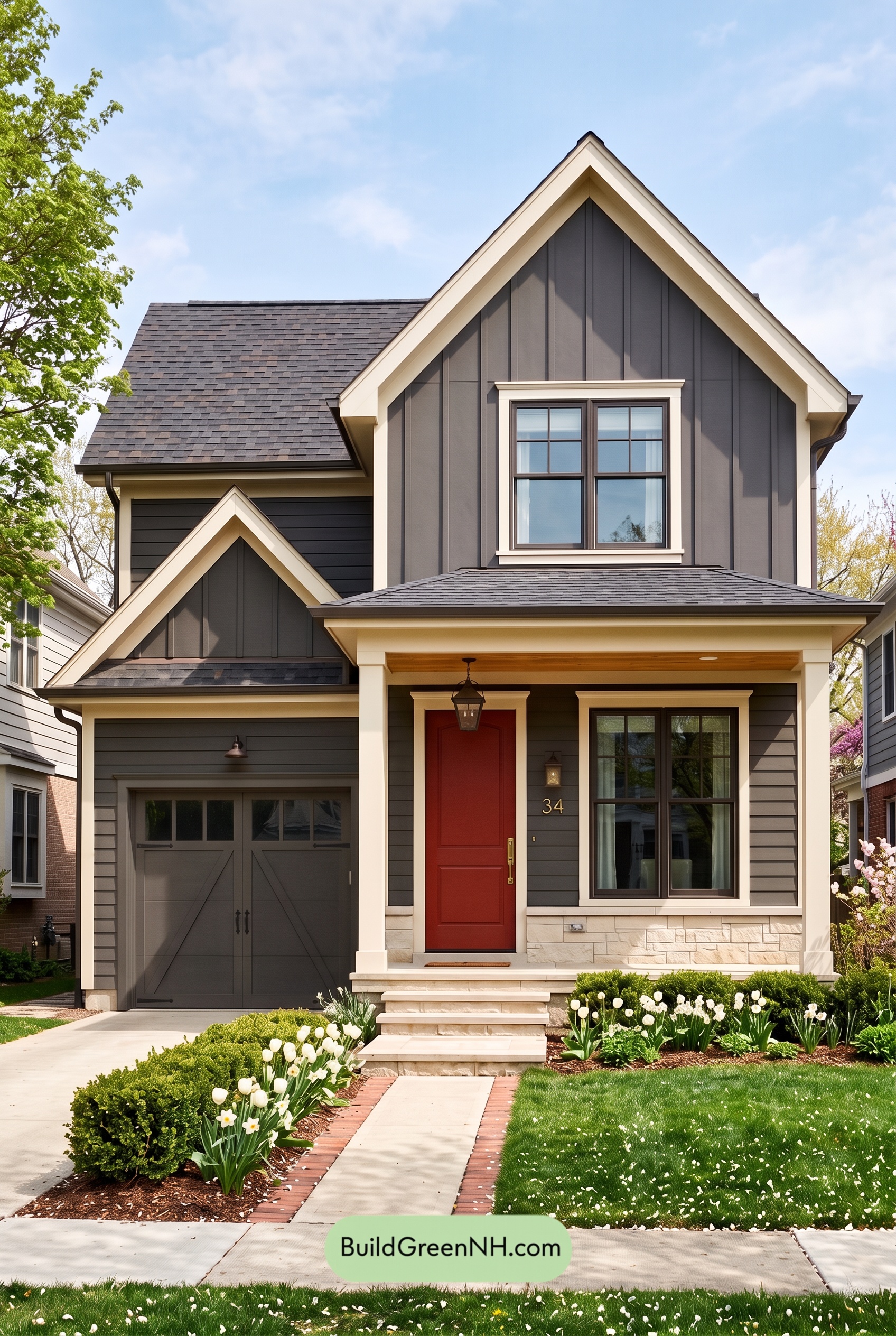

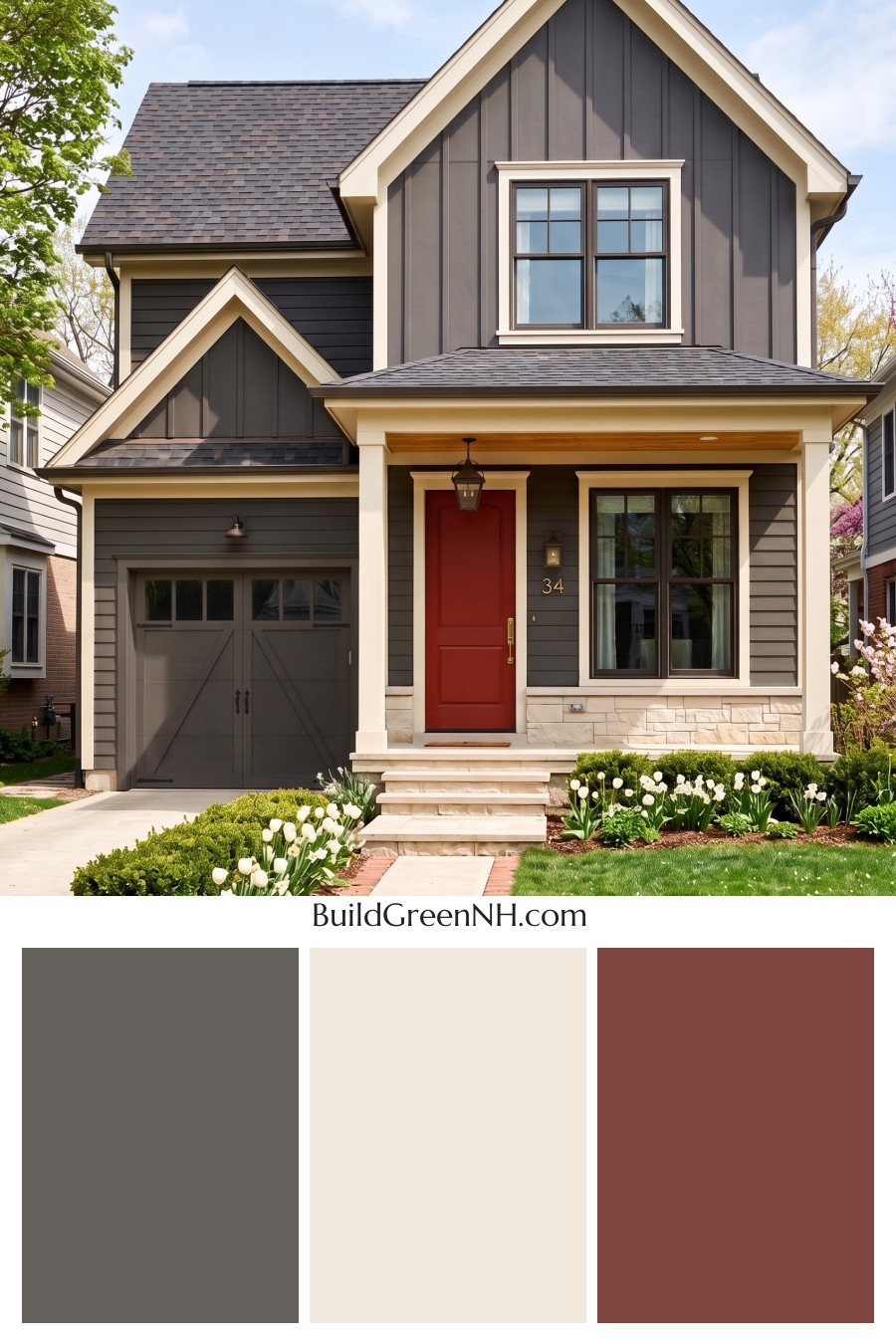
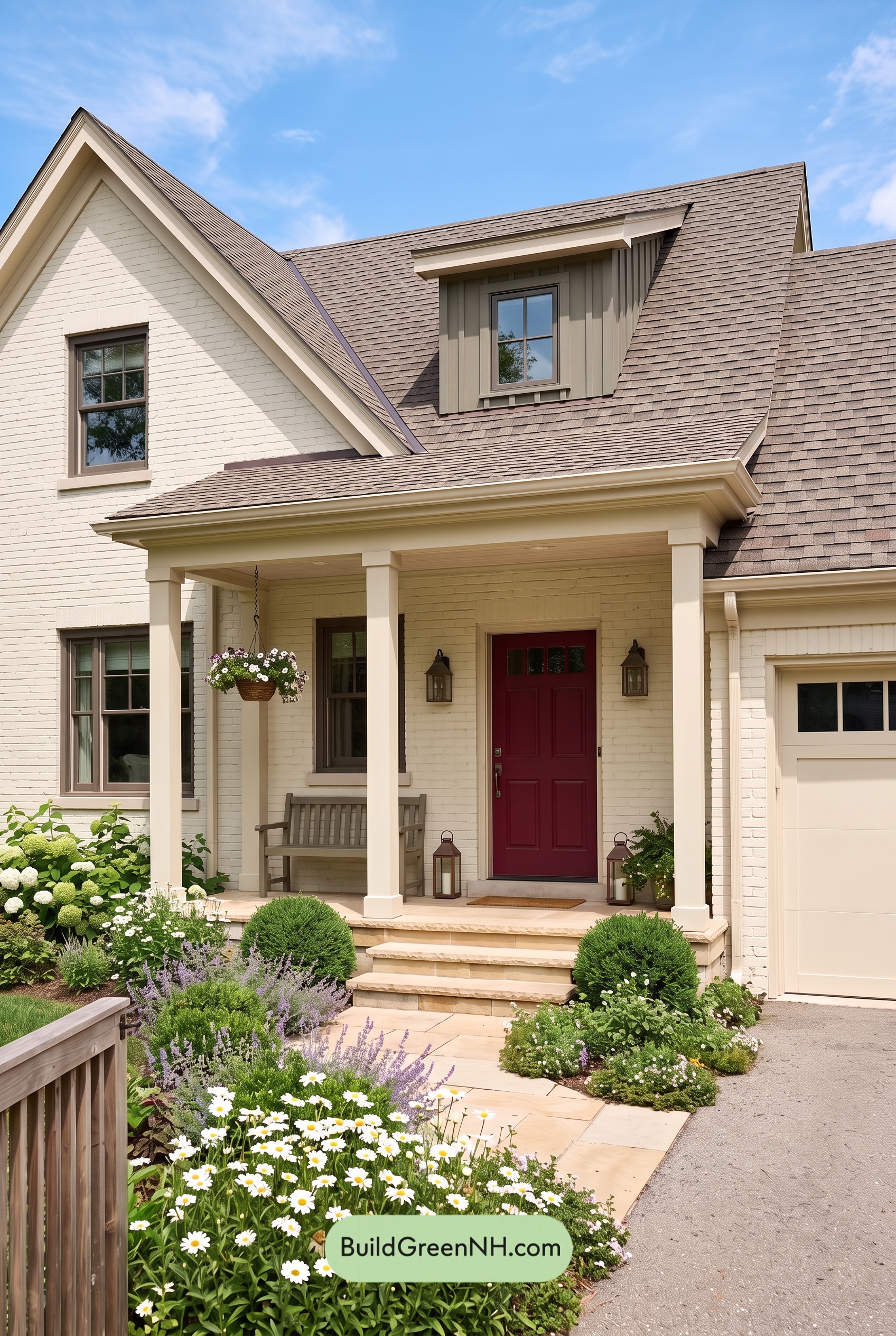
Deep gray siding, soft beige trim, and a rich reddish-brown front door give this home a beautiful balance of bold definition and welcoming warmth.
Deep Gray Gives the Architecture Presence
A warm, deep shade of gray anchors the exterior, bringing together the vertical siding in the gables and the horizontal siding below. Using a closely coordinated shade across both textures keeps the house cohesive while letting the changes in direction add interest.
Sunlight brings out the gray’s softer, earthy qualities, while shaded areas appear deeper and more dramatic. That subtle variation gives the facade depth without requiring a busier palette.
Soft Beige Highlights Every Angle
Pale, creamy beige trim traces the steep rooflines, outlines the windows, and defines the porch. Against the darker siding, these lighter edges make the home’s architectural details easy to appreciate.
The porch columns repeat that warm beige, creating a bright frame around the entrance. Light beige stonework and steps carry the warmth down to ground level, so the contrast feels connected rather than confined to the upper facade. The effect is crisp, but never stark.
A Warm Entrance and Understated Accents
The front door introduces a saturated reddish-brown shade that draws the eye straight to the entry. It is a small area of stronger color with a big impact, adding personality without competing with the prominent gables.
Above it, the porch ceiling’s golden-brown tones add another welcoming layer. These warm accents complement the beige trim and soften the deeper gray surrounding them.
Meanwhile, the dark gray window frames give the glazing a clean outline. The garage door stays within the warm gray family, allowing its panels and diagonal detailing to provide interest without making the garage the main focal point.
A Roof That Ties the Palette Together
The roof’s layered dark gray shades echo the siding, with muted brown notes helping bridge the cooler and warmer parts of the scheme. Deep gray-brown gutters and roof edges finish the silhouette quietly.
What makes this palette work so well is its clear balance: gray provides depth, beige brings light, and reddish brown supplies a welcoming focal point. Paired with the surrounding greenery, the result feels grounded, polished, and comfortably inviting.
Next, see how this color scheme looks under different lighting simulations throughout the day.
Overcast
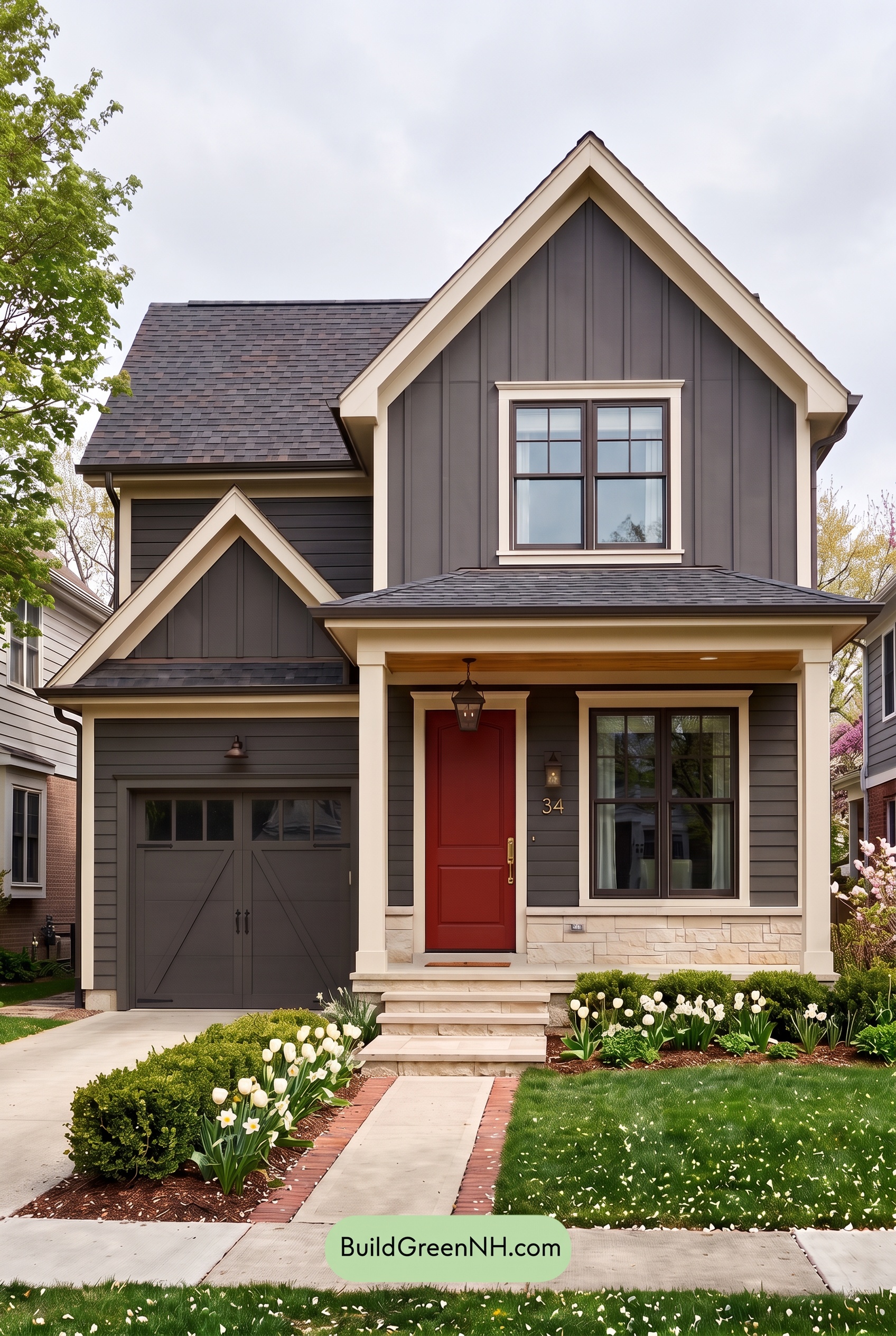
Under overcast skies, the gray siding and garage door can read deeper and cooler than in neutral daylight, while their subtle undertones feel less pronounced. The pale beige trim and columns lose some golden warmth, looking softer and more subdued. Warm, earthy shades around the entry also appear less saturated, creating a quieter focal point.
Diffused light softens shadows beneath the gables and porch roof, making the transitions between surfaces gentler. The light trim still clearly outlines the darker gray walls and window frames, but without such crisp highlight-to-shadow contrast. Compared with neutral daylight, the overall mood feels calmer, more muted, and quietly inviting.
Golden Hour
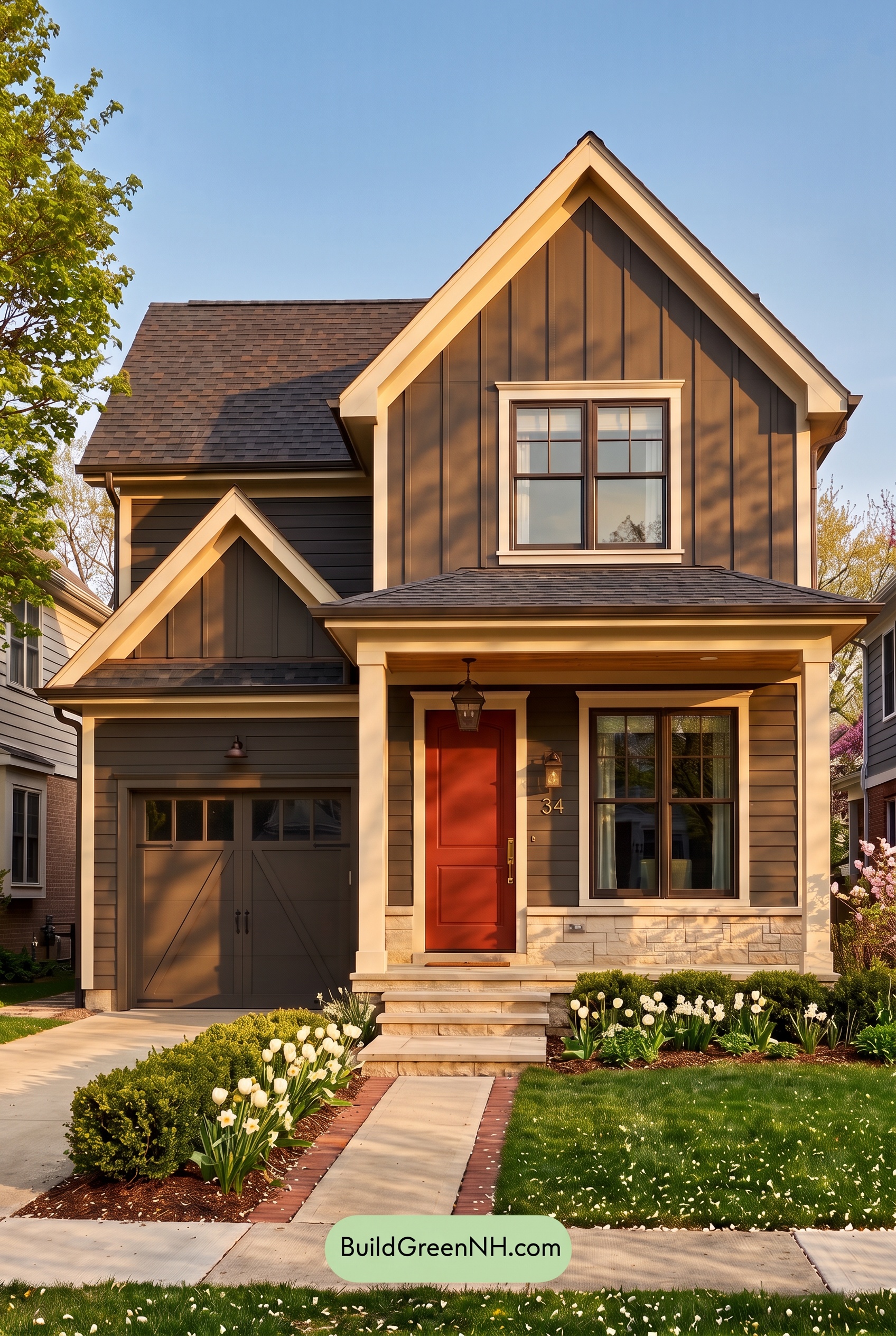
Golden Hour gives this home’s gray shades a warmer, earthier cast than they would have in neutral daylight, bringing soft brown undertones forward. The pale beige shades feel creamier and more luminous, while the reddish-brown accent at the entry appears richer and more saturated. Together, these shifts make the palette feel less crisp and reserved, and more inviting.
Long, angled shadows deepen the grays beneath the eaves and across the garage, creating stronger contrast with the sunlit warm neutrals. Across the upper facade, patches of light and shade give the otherwise muted colors extra depth. The result is a cozier, more dramatic mood than the steadier, more balanced appearance these shades would have under neutral daylight.
Shade
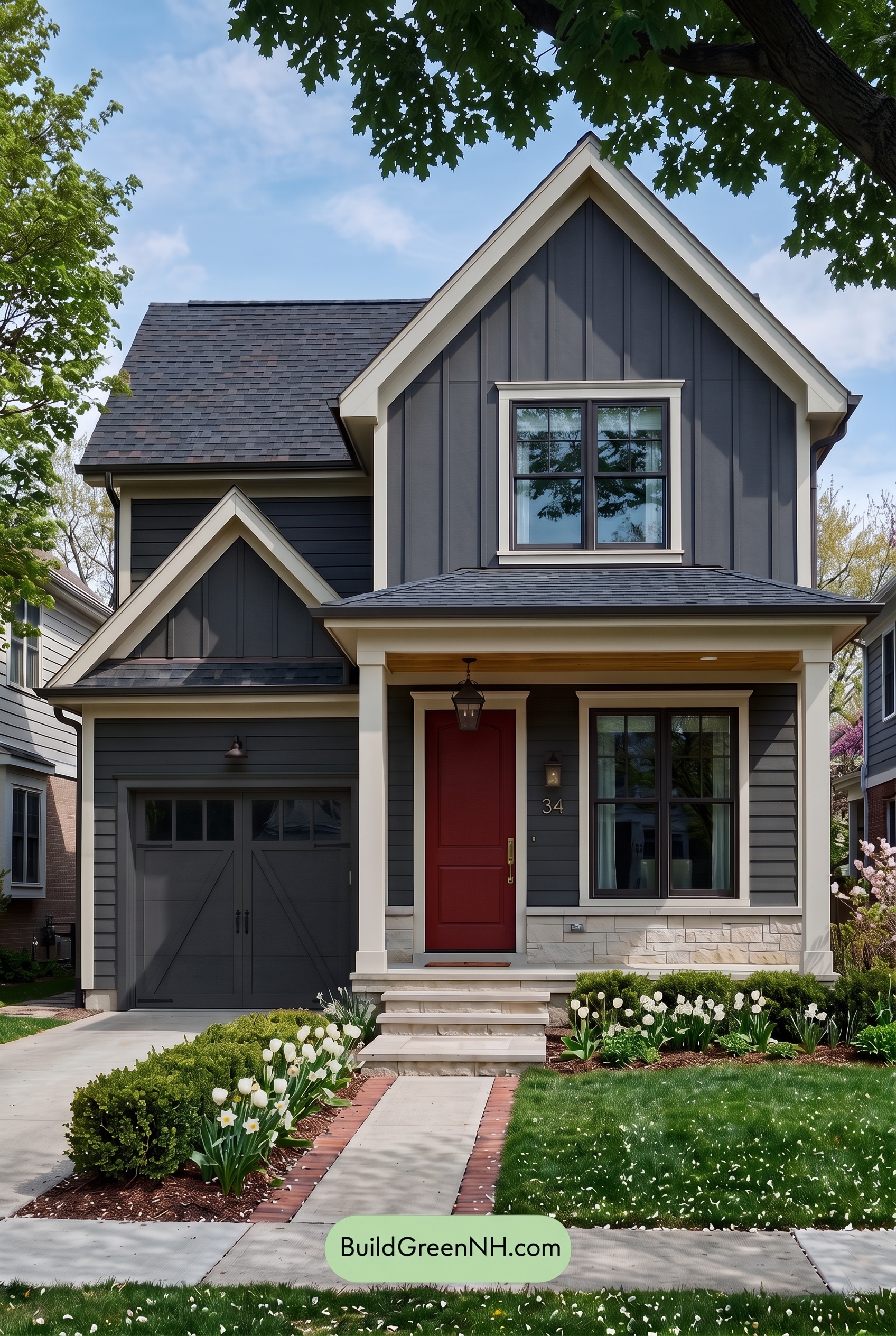
In shade, the gray siding appears deeper and slightly cooler than it would in neutral daylight, allowing subtle blue undertones to become more noticeable. Saturation feels subdued, giving the exterior a quieter presence. The pale beige trim and columns look less golden, though their gentle warmth still balances the cooler grays.
Deeper shadows beneath the gables and porch make the darker shades feel richer, while the gray window frames and garage door blend more closely with the siding. The light trim maintains a clear contrast, outlining the house without looking quite as bright. Warm, earthy shades at the entrance become more muted, shifting the overall mood from crisp and airy toward calm, sheltered, and inviting.
Nighttime
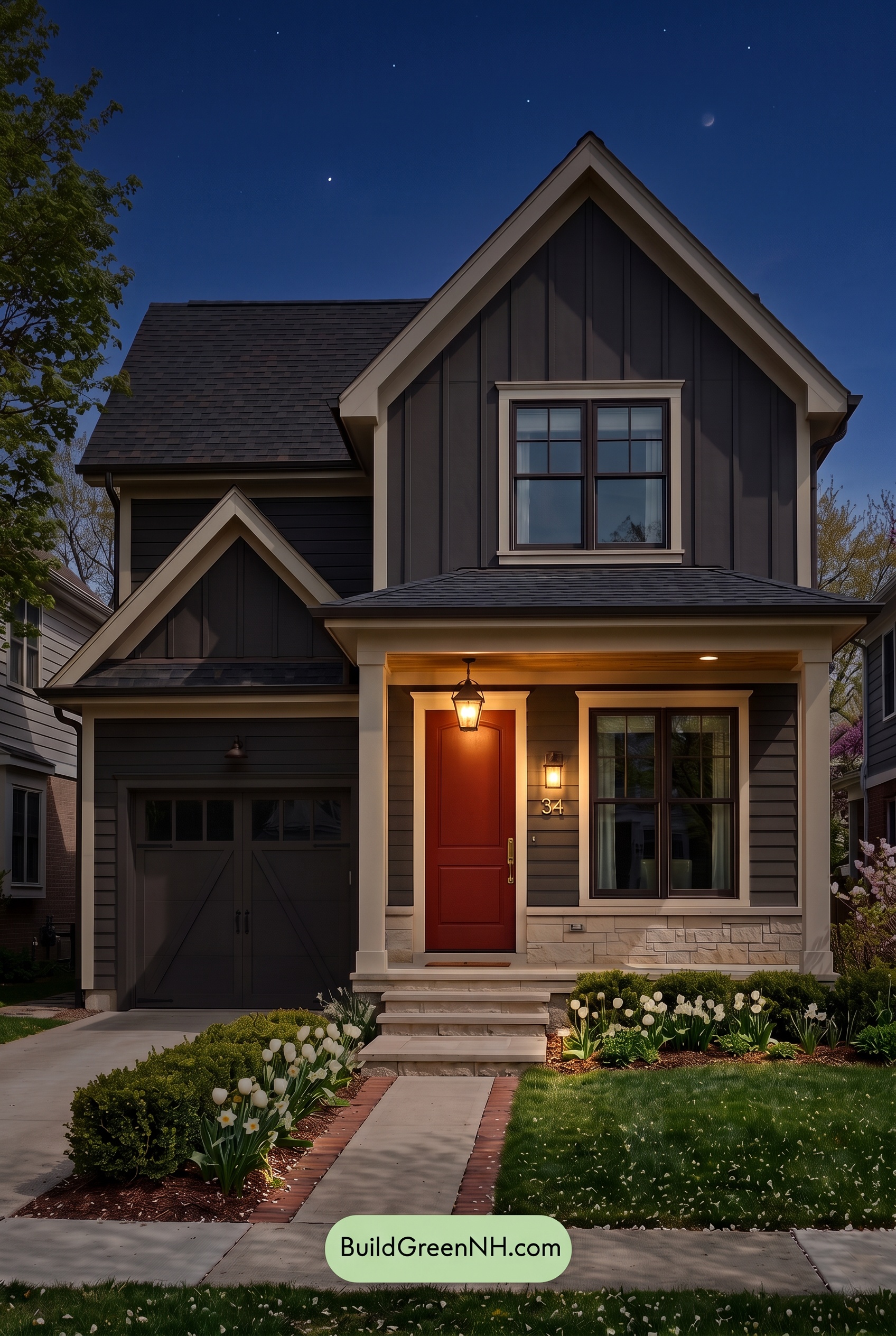
At night, the gray siding deepens toward charcoal, with subtle undertones becoming less distinct than in neutral daylight. Cool shadows beneath the gables give the upper walls a quieter, more muted appearance, while warm porch lighting lends nearby grays a softer brown cast. The pale beige trim and columns take on a golden warmth, standing out against the darkened facade.
Around the entrance, the reddish-brown door appears richer and more saturated under the warm light, drawing attention away from the shadowed gray garage and window frames. Compared with daylight’s more even color balance, nighttime creates stronger light-and-dark contrasts: the upper story feels dramatic and subdued, while the glowing entry makes the house feel cozy and welcoming.
Pin these for later:
Want More?
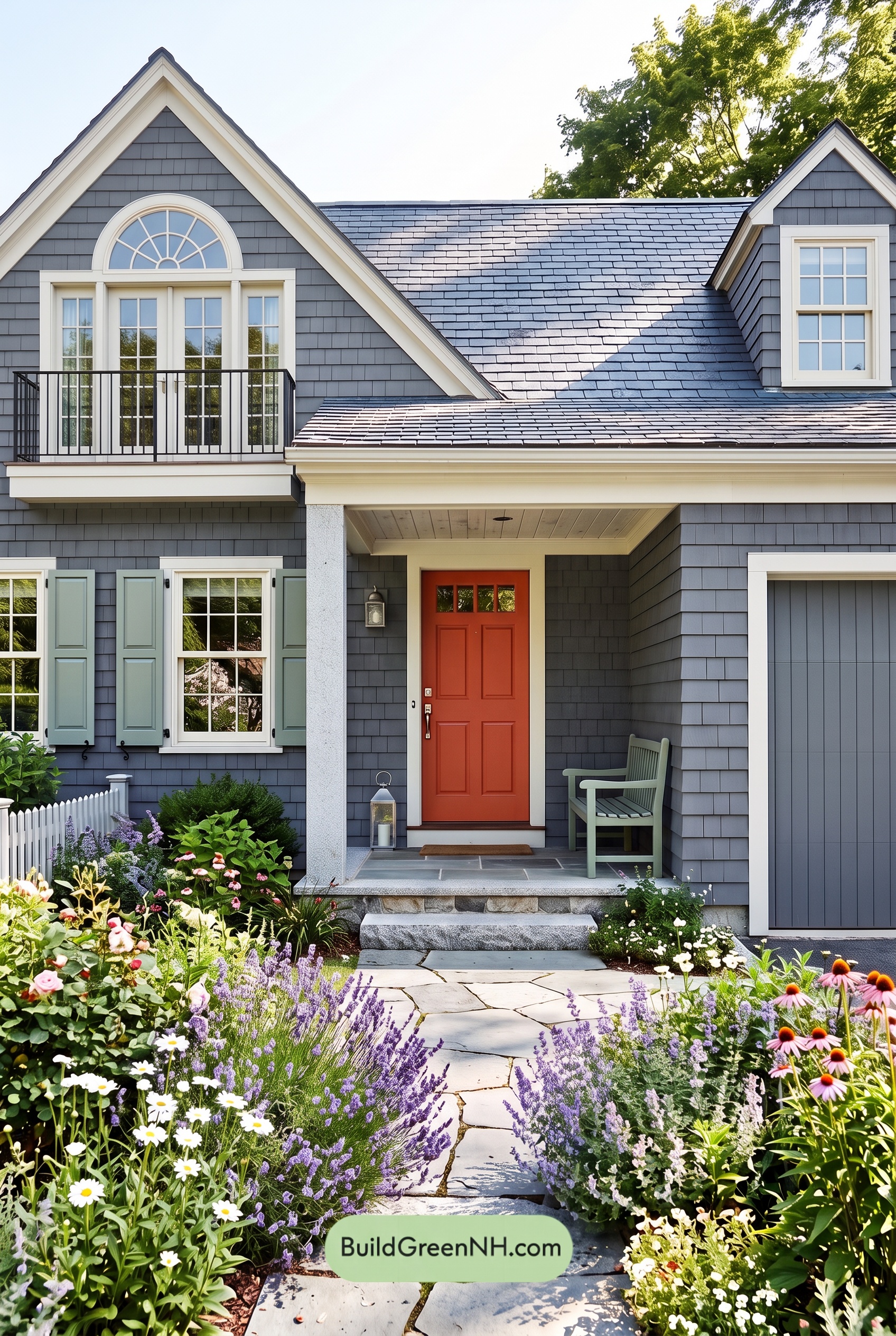 Red Front Door House Paint Color Scheme: Charcoal Sage Reverie
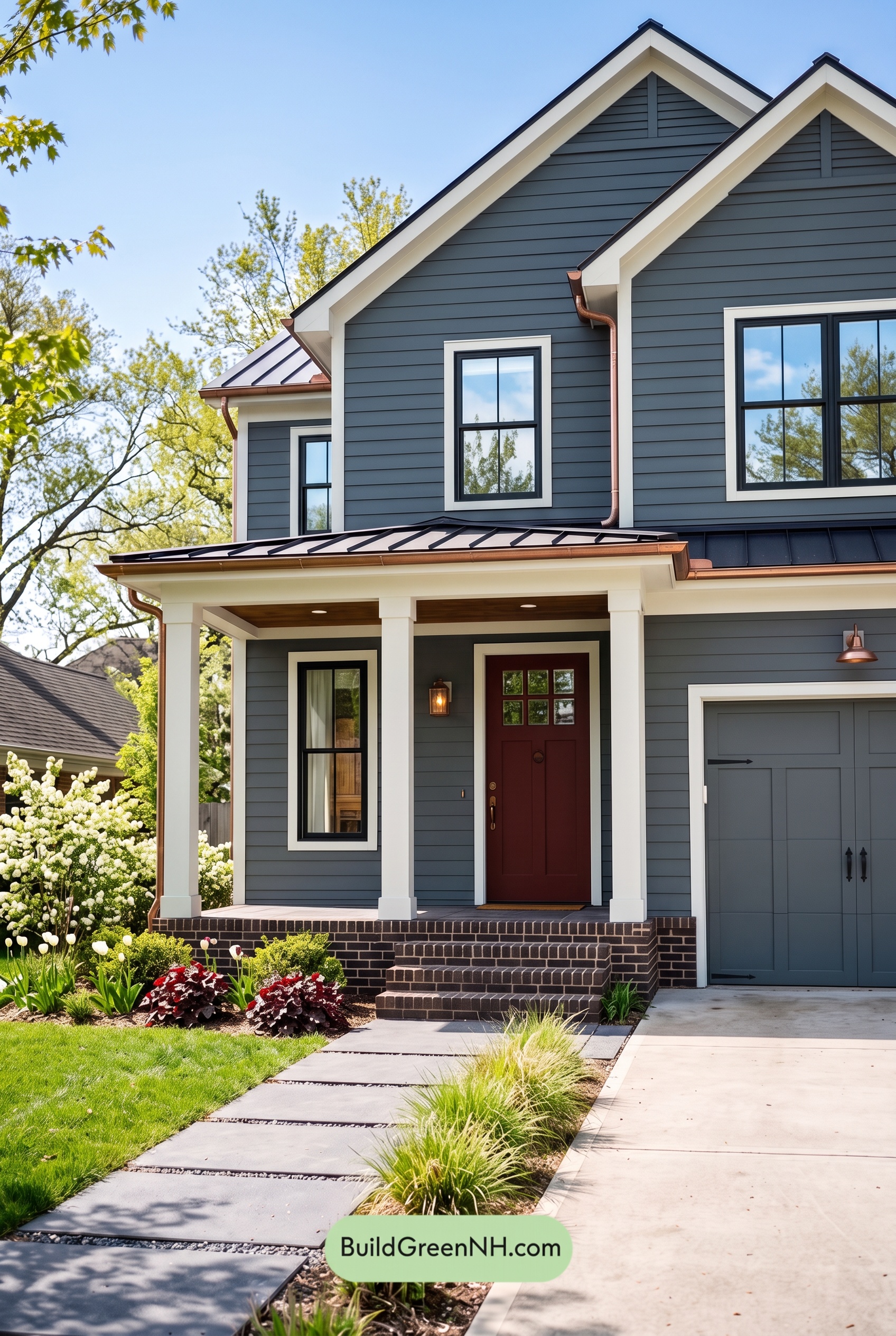 Red Front Door House Paint Color Scheme: Charcoal Copper Confidence
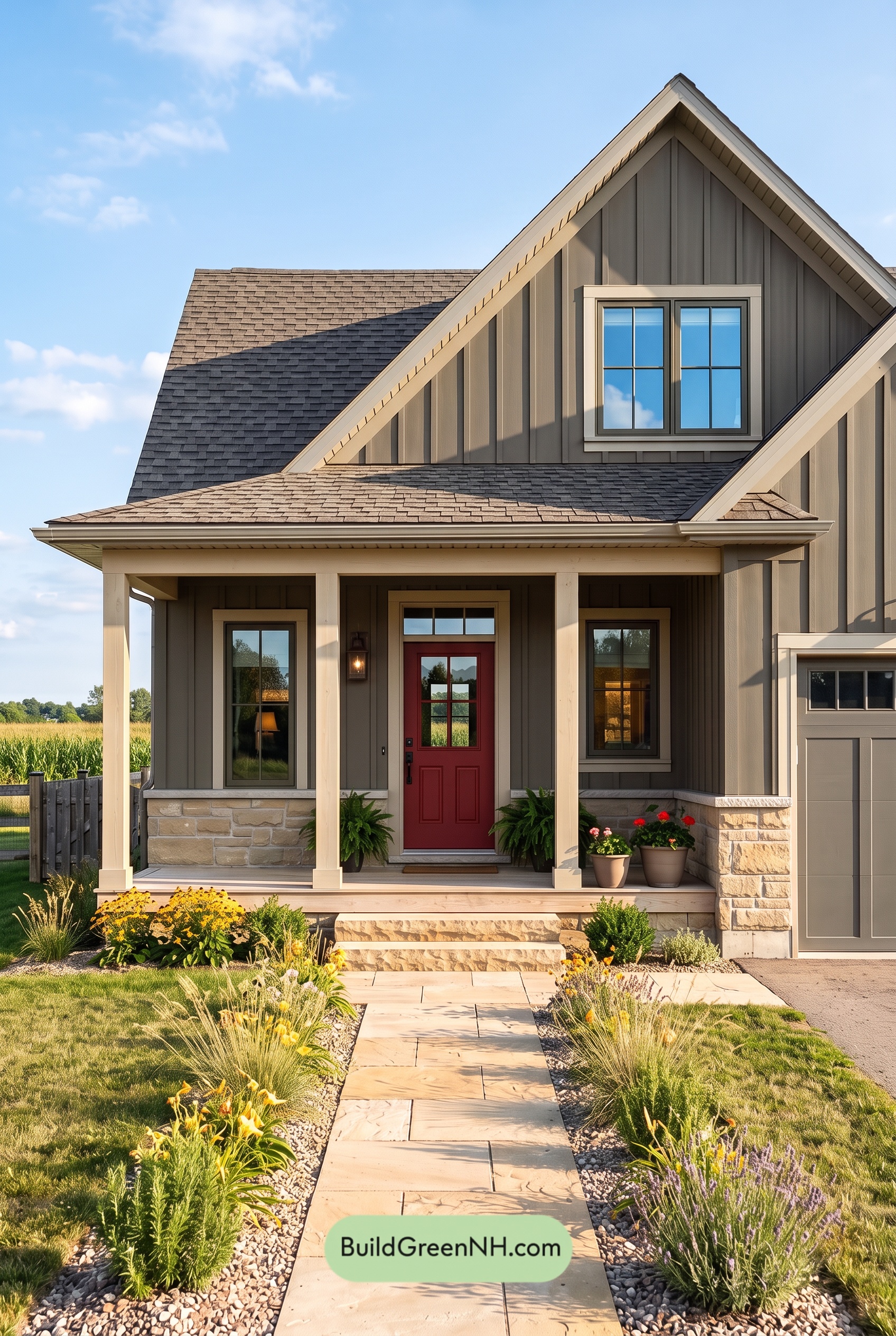 Red Front Door House Paint Color Scheme: Charcoal Sand Serenity
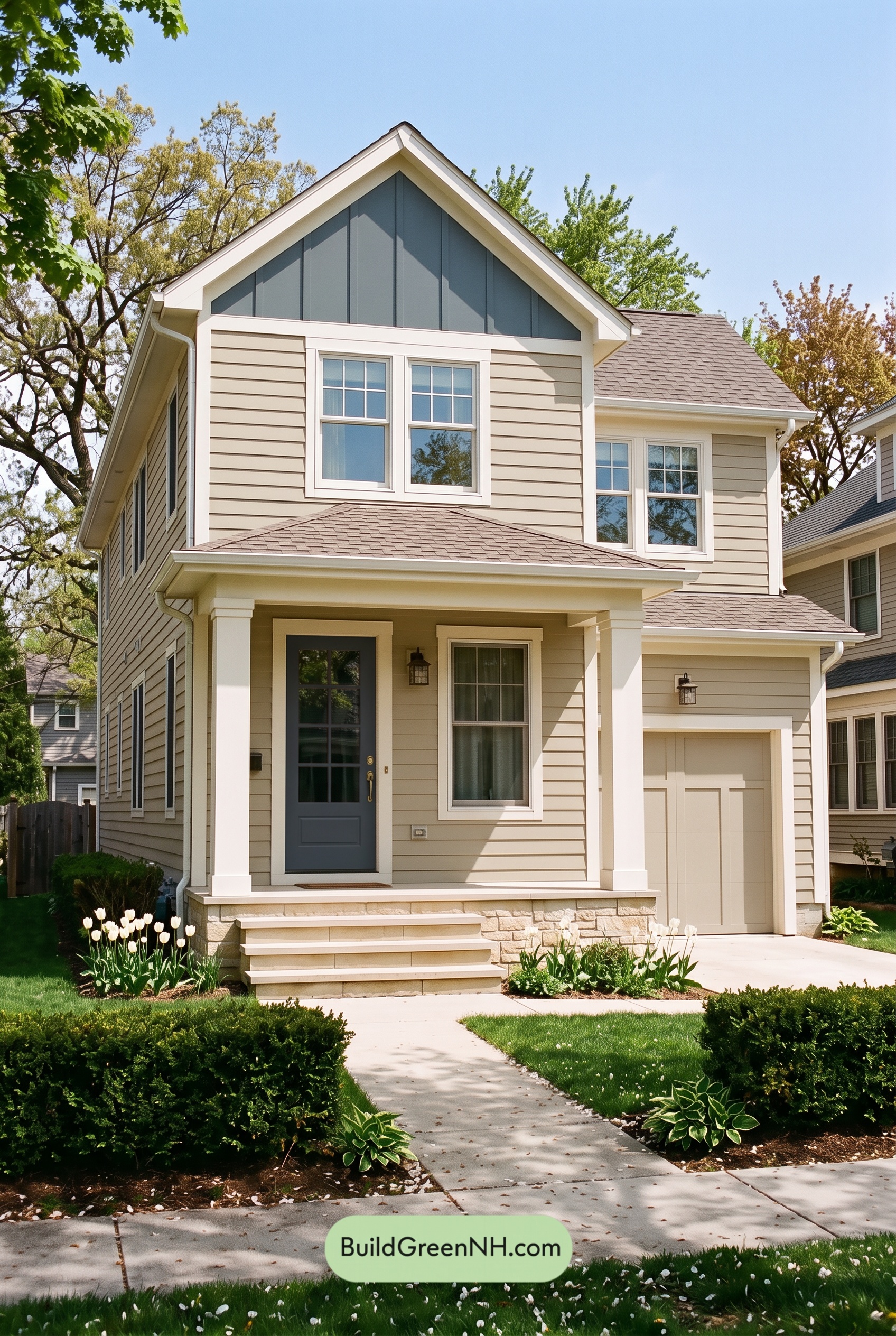 Red Front Door House Paint Color Scheme: Ivory Crimson Poise
 Red Front Door House Paint Color Scheme: Cream Ruby Hush
Table of Contents