Last updated on
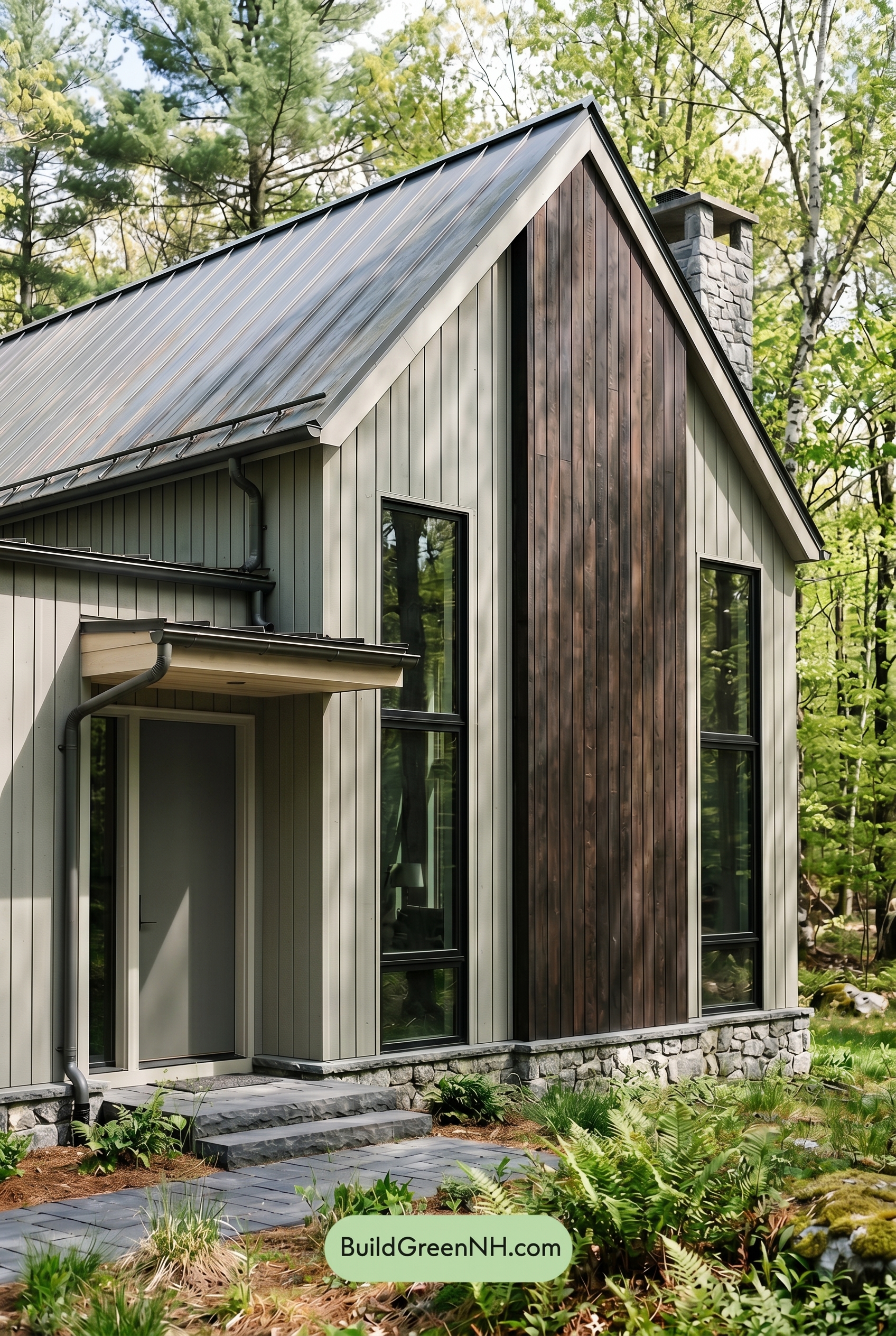

This exterior works beautifully because its soft green siding, rich brown accent, and layered grays feel grounded, modern, and completely at home in the trees.
A Nature-Led Main Color
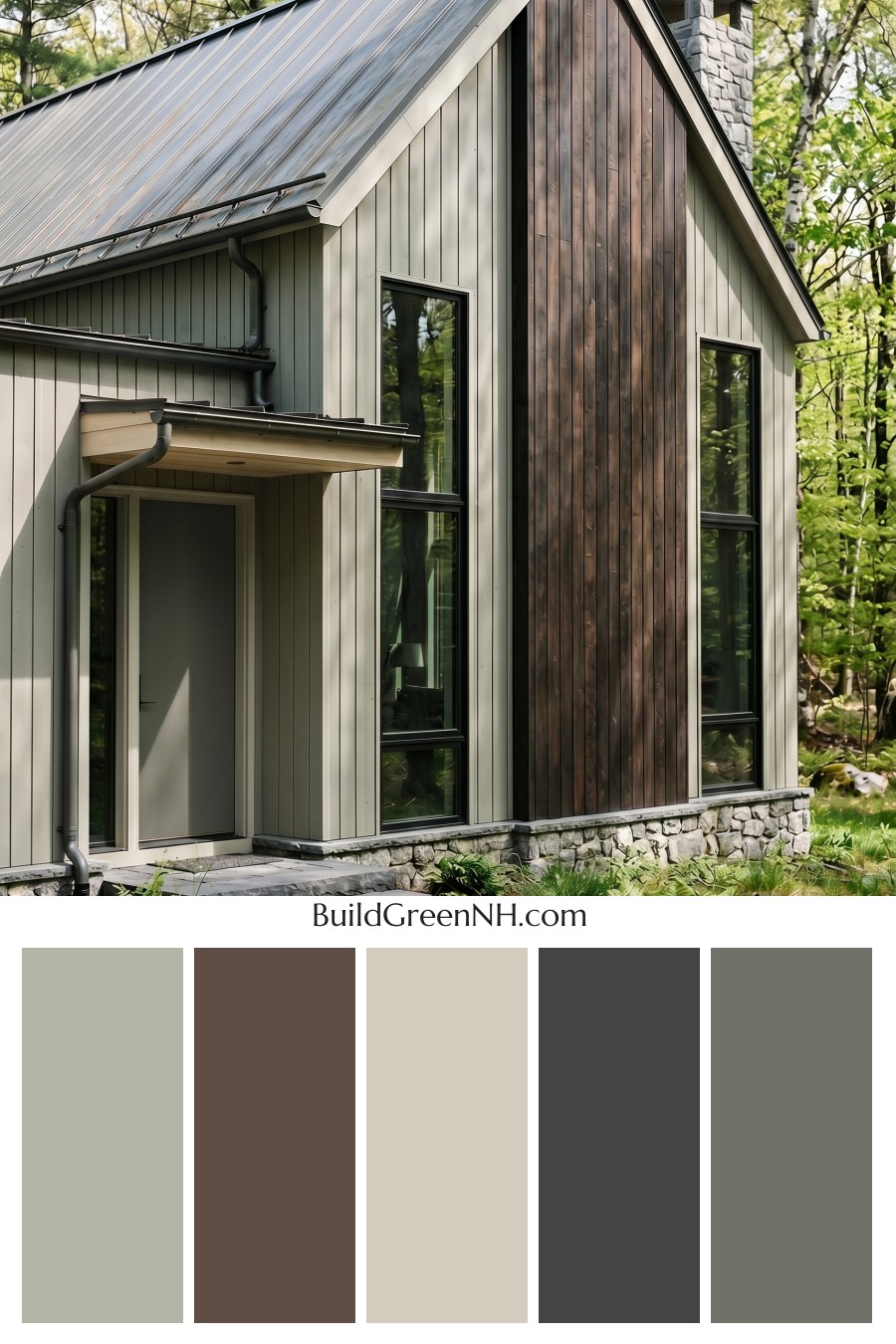
The main siding is finished in a muted green shade that gives the house a calm, organic presence. It is gentle rather than bright, which helps the home settle into the wooded setting instead of competing with it. On the vertical siding, this soft green feels clean and contemporary while still carrying a natural, cabin-like warmth.
Because the green is slightly subdued, it also works as a flexible backdrop. Sunlight brings out its freshness, while shaded areas make it feel quieter and more refined. That shifting quality gives the exterior depth throughout the day.
A Rich Brown Accent for Warmth
The tall gable accent introduces a deep brown shade that adds instant character. Used vertically, the brown draws the eye upward and highlights the home’s modern roofline. It also gives the facade a beautiful sense of contrast without feeling harsh.
This brown accent is especially effective because it connects visually with the surrounding trunks, mulch, and natural landscape. Against the softer green siding, it feels earthy, intentional, and inviting.
Layered Gray Details Keep It Crisp
The trim, window frames, and front door all stay within the gray family, creating a polished and cohesive finish. A lighter warm gray trim outlines the roof edges, corners, and openings, giving the architecture a clean frame. It separates the green and brown sections just enough to make each color stand out.
The window frames lean into a deeper gray shade, adding sharp definition around the glass. This darker gray gives the exterior a modern edge and helps the windows feel grounded rather than delicate. The front door follows the same quiet gray direction, keeping the entry understated and sophisticated.
The Roof Completes the Palette
The roof brings in a cool gray tone with a sleek, reflective quality. It pairs beautifully with the gray trim and window details, while its slightly darker depth balances the lighter siding below. The gutters and downspouts also sit comfortably in the gray family, blending into the roofline and giving the whole exterior a streamlined look.
Nearby stonework adds even more gray variation, from pale gray to deeper weathered shades. This makes the palette feel layered and natural rather than flat.
The Overall Mood
This color scheme feels peaceful, modern, and quietly rustic. The soft green siding brings calm, the deep brown accent adds warmth, and the gray details provide structure. Together, they create a home that feels both designed and effortless.
It is a great example of how earthy color families can look fresh when they are balanced with crisp architectural lines. Nothing feels too loud. Nothing feels too plain. The result is a refined woodland exterior with warmth, depth, and plenty of curb appeal.
Next, see how this color scheme looks under different lighting simulations throughout the day.
Overcast
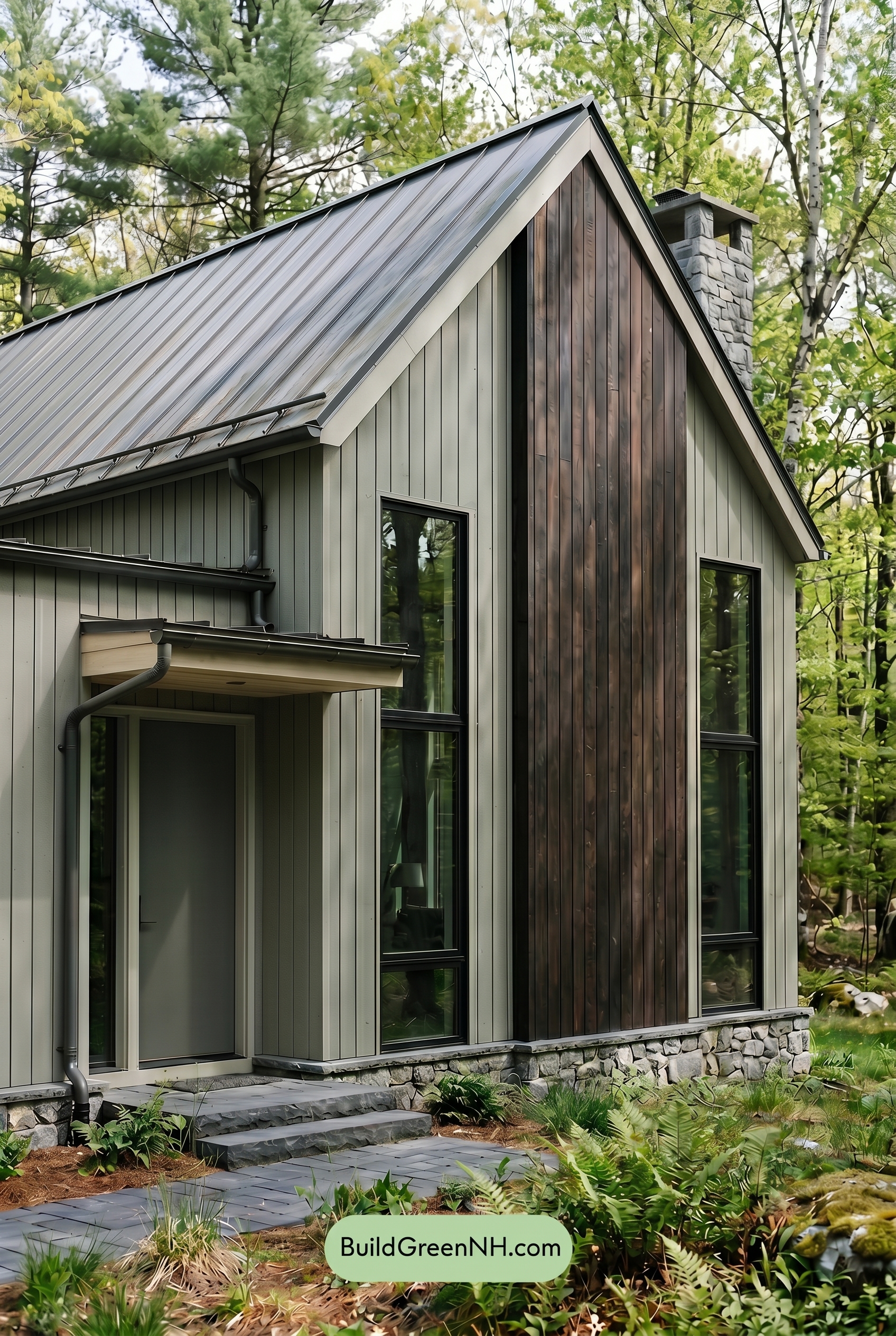
Under overcast light, the green family siding appears more muted and grounded than it would in neutral daylight, with its saturation gently dialed back and its warmth softened. The brown accent wall loses some of its sunlit richness, shifting into a deeper, quieter shade that feels more natural and woodsy.
The gray family trim, window frames, and front door read cooler and smoother, while shadows become softer and less defined. With less sharp contrast across the vertical siding and rooflines, the whole exterior takes on a calm, understated mood that feels serene and tucked into the surrounding trees.
Golden Hour
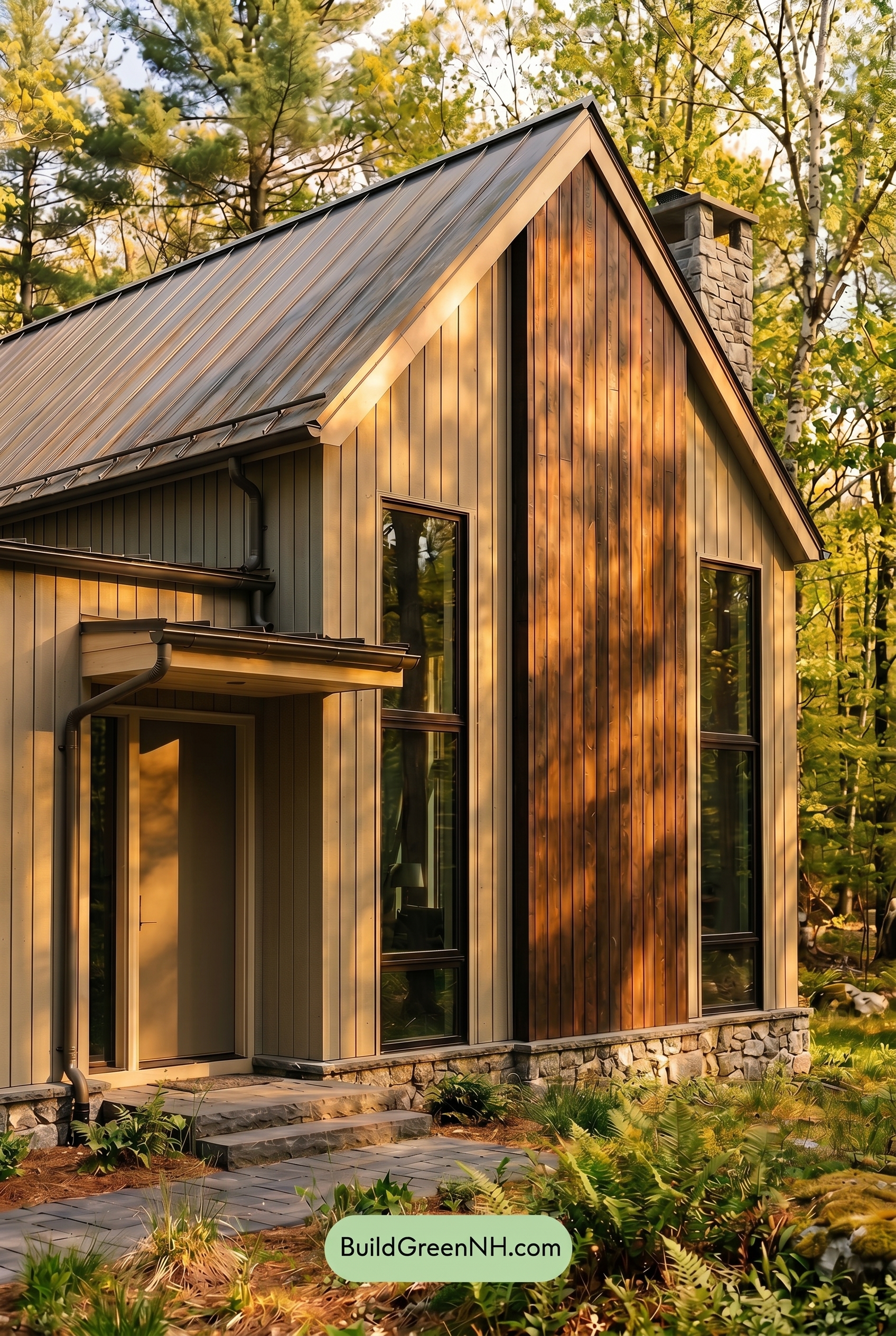
Under Golden Hour light, the green family siding shifts warmer and softer than it would in neutral daylight, taking on a muted, sun-washed quality. The brown accent wall becomes richer and more saturated, with deeper warm undertones that make the vertical boards feel especially dimensional.
The gray family trim, window frames, and front door lose some of their cooler crispness and pick up a gentle warmth, while long shadows deepen the darker gray edges and recesses. Compared with neutral daylight, the contrast feels more dramatic yet inviting, giving the whole exterior a calm, cozy, woodland mood.
Shade
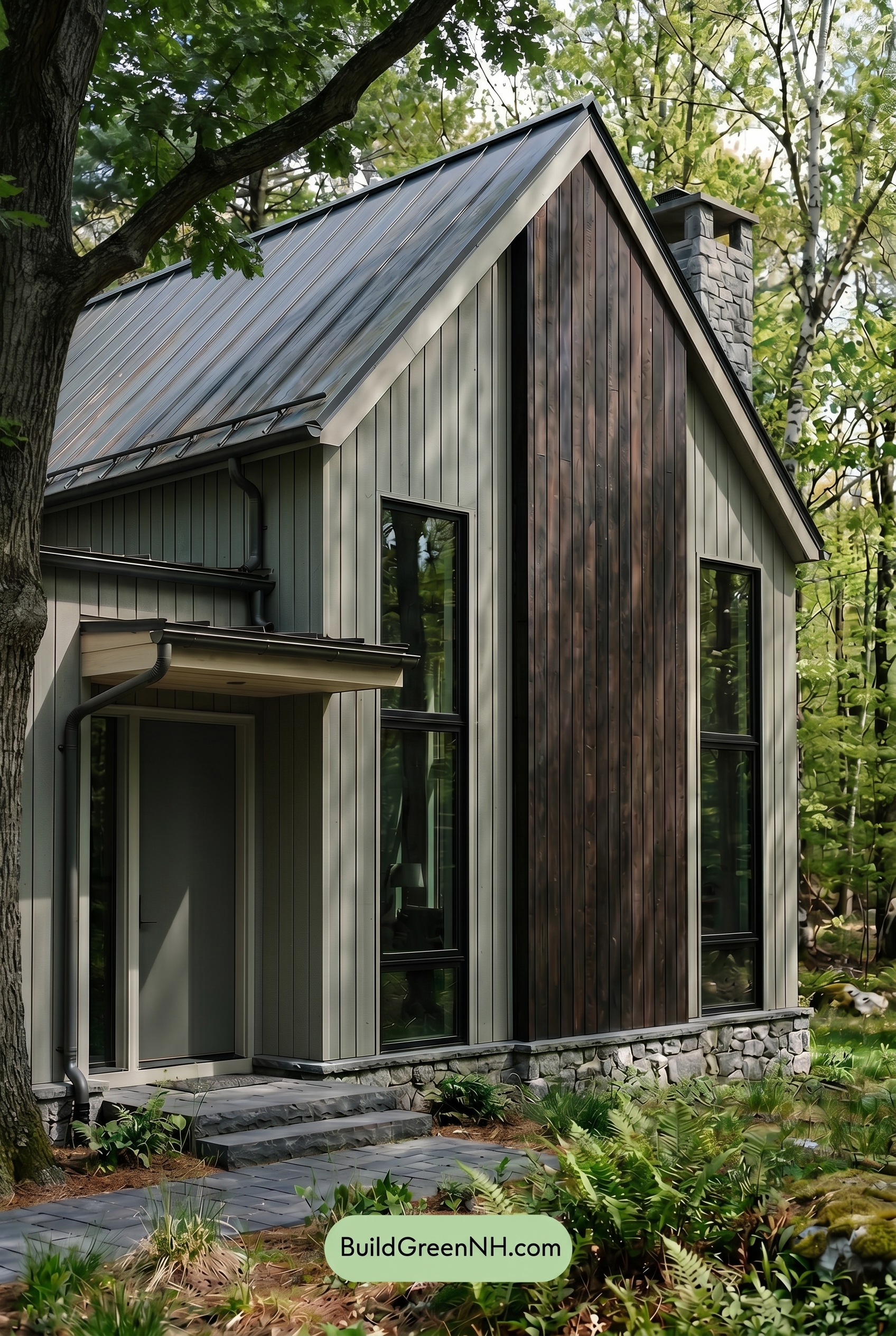
In shade, the green siding deepens and feels more saturated than it would in neutral daylight, shifting from a clearer green toward a quieter, woodland shade. The brown accent wall loses a bit of sunlit warmth, but gains richness and depth, while the gray trim, window frames, and door read cooler and more grounded.
Shadows soften the overall contrast, yet they make the darker gray details feel sharper against the muted green and brown surfaces. The mood becomes calmer and more sheltered, with less brightness and warmth than neutral daylight, but a stronger sense of depth and natural coziness.
Nighttime
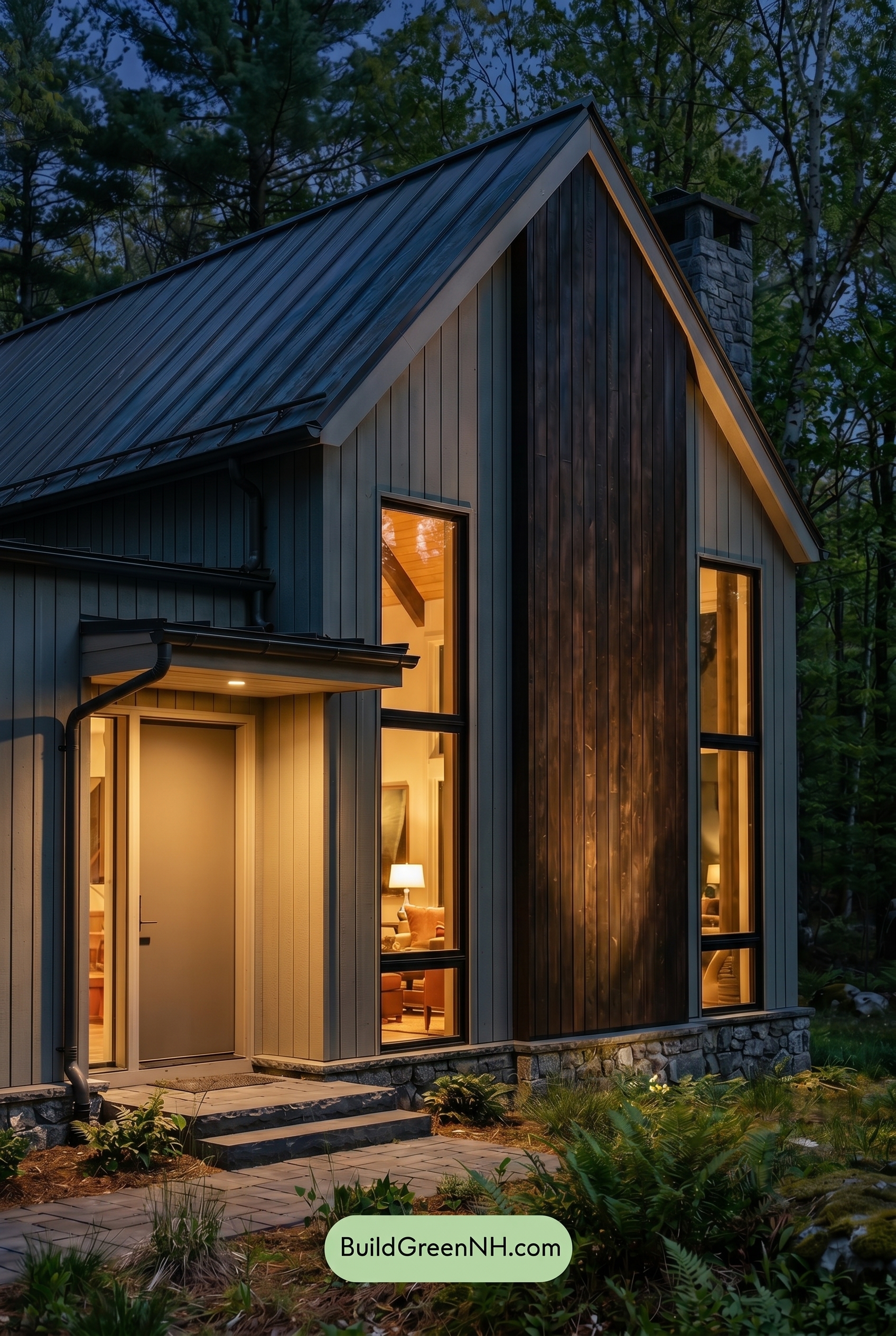
At nighttime, the green siding becomes quieter and more saturated, shifting from a clearer daylight shade into a deeper, moodier green. Shadows gather between the vertical lines, making the surface feel richer and more dimensional, while the gray trim and window frames pick up a cooler cast in the darker areas.
The warm interior lighting softens the contrast where it spills onto the exterior, giving the brown accent a richer, cozier glow and warming nearby gray shades. Compared to neutral daylight, the overall palette feels more dramatic and intimate, with stronger dark-light contrast and a welcoming warmth around the windows and entry.
Pin these for later
Want More?
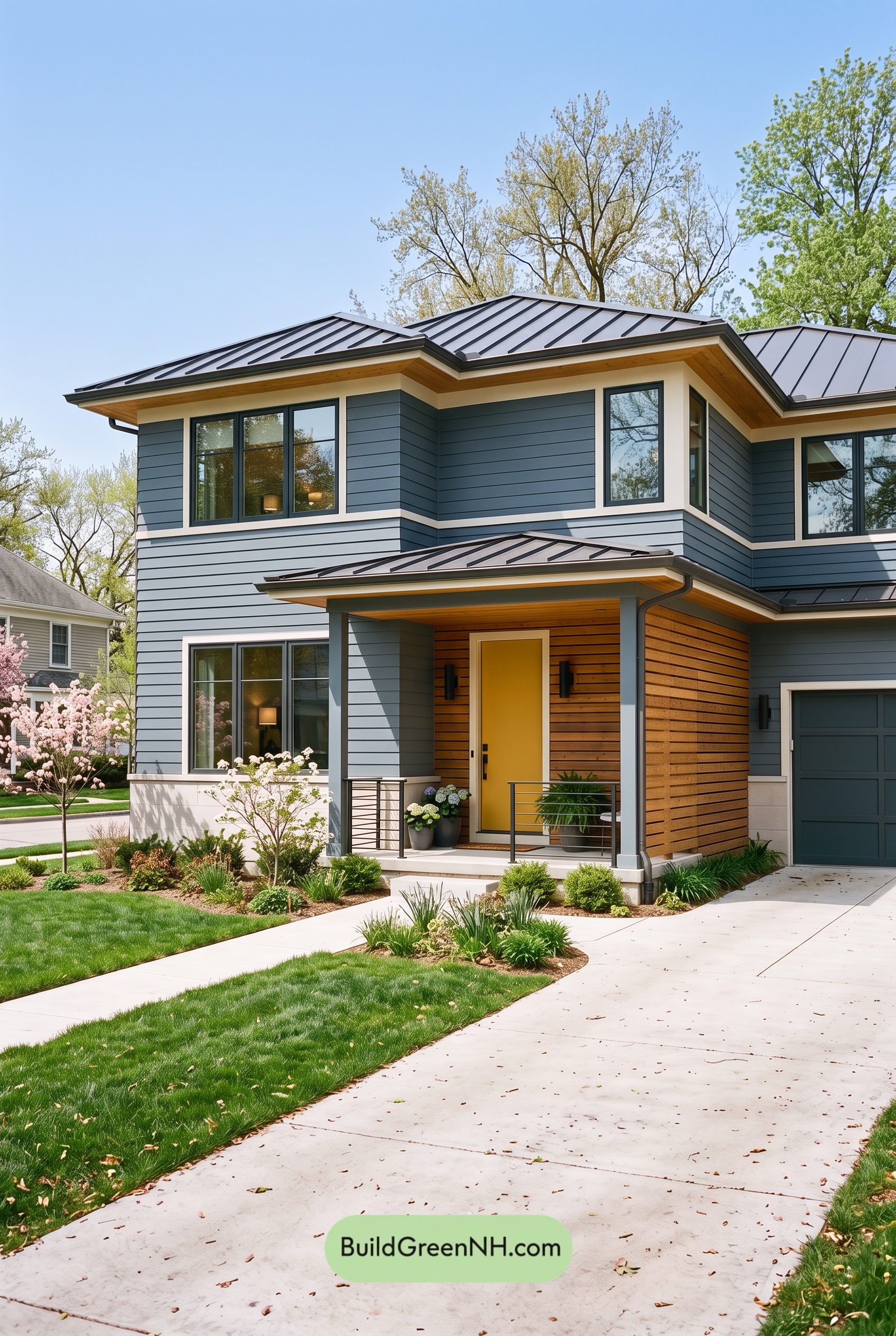 Blue House Front Door Color Scheme: Harbor Saffron
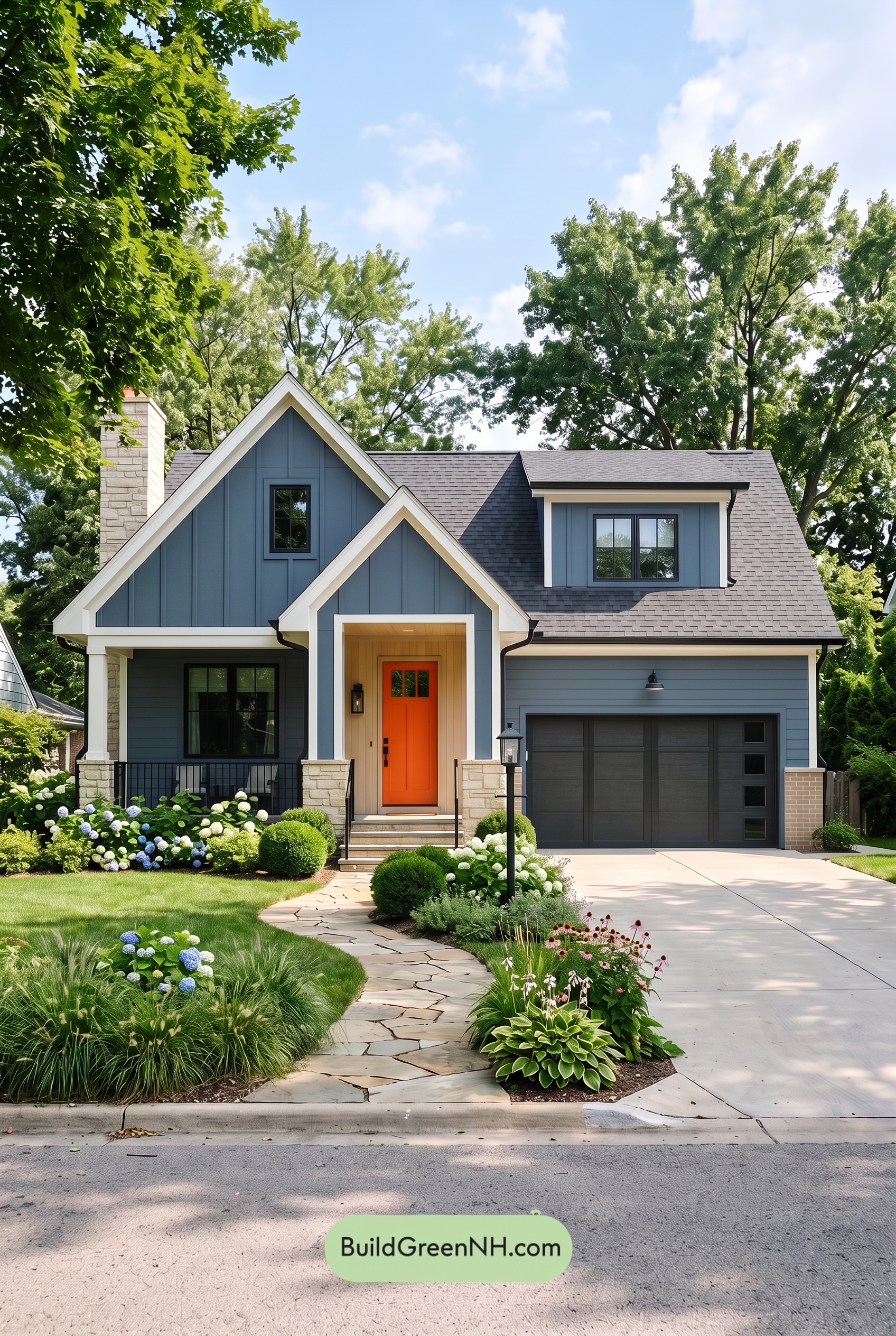 Blue House Front Door Color Scheme: Cobalt Persimmon
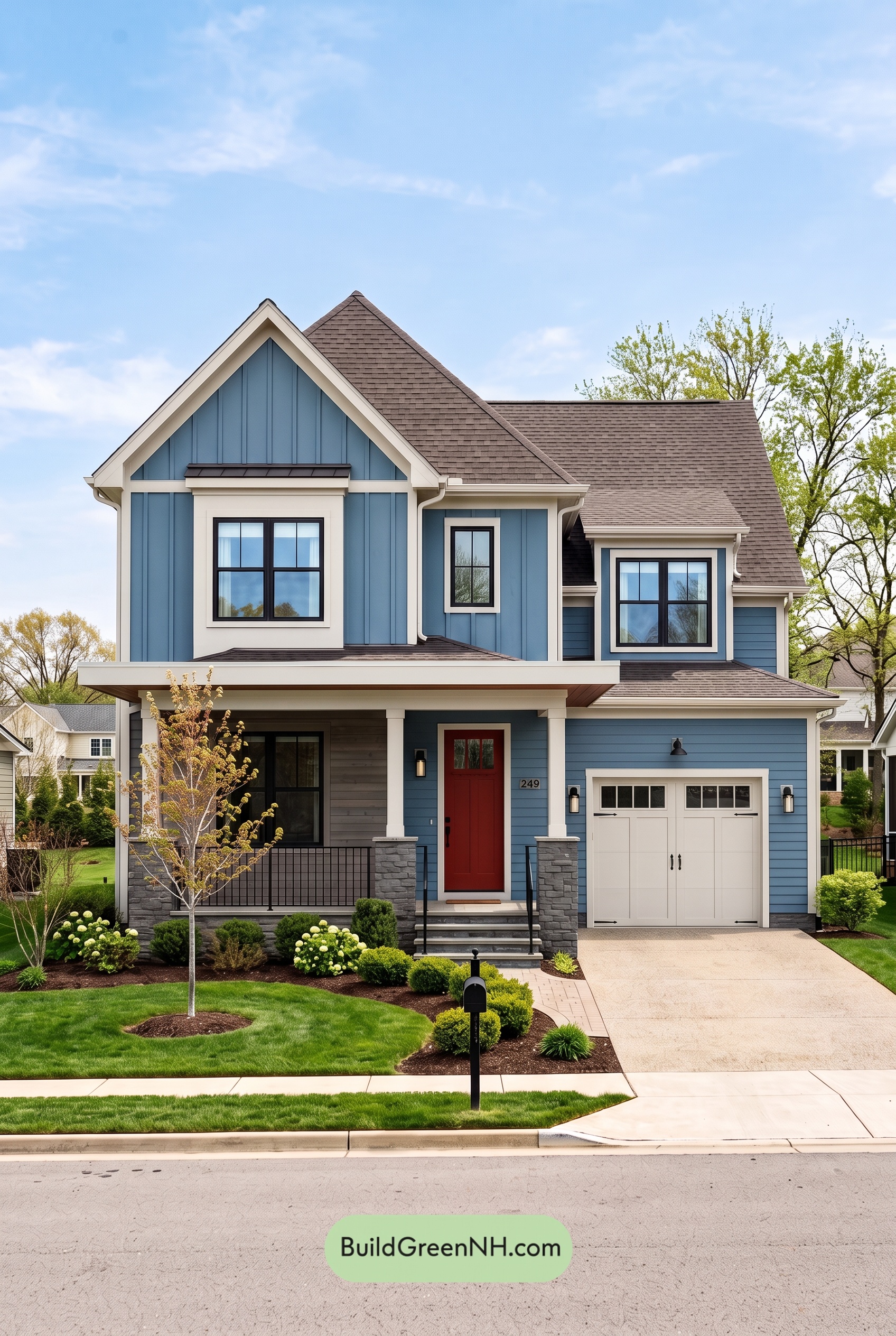 Blue House Front Door Color Scheme: Denim Poppy
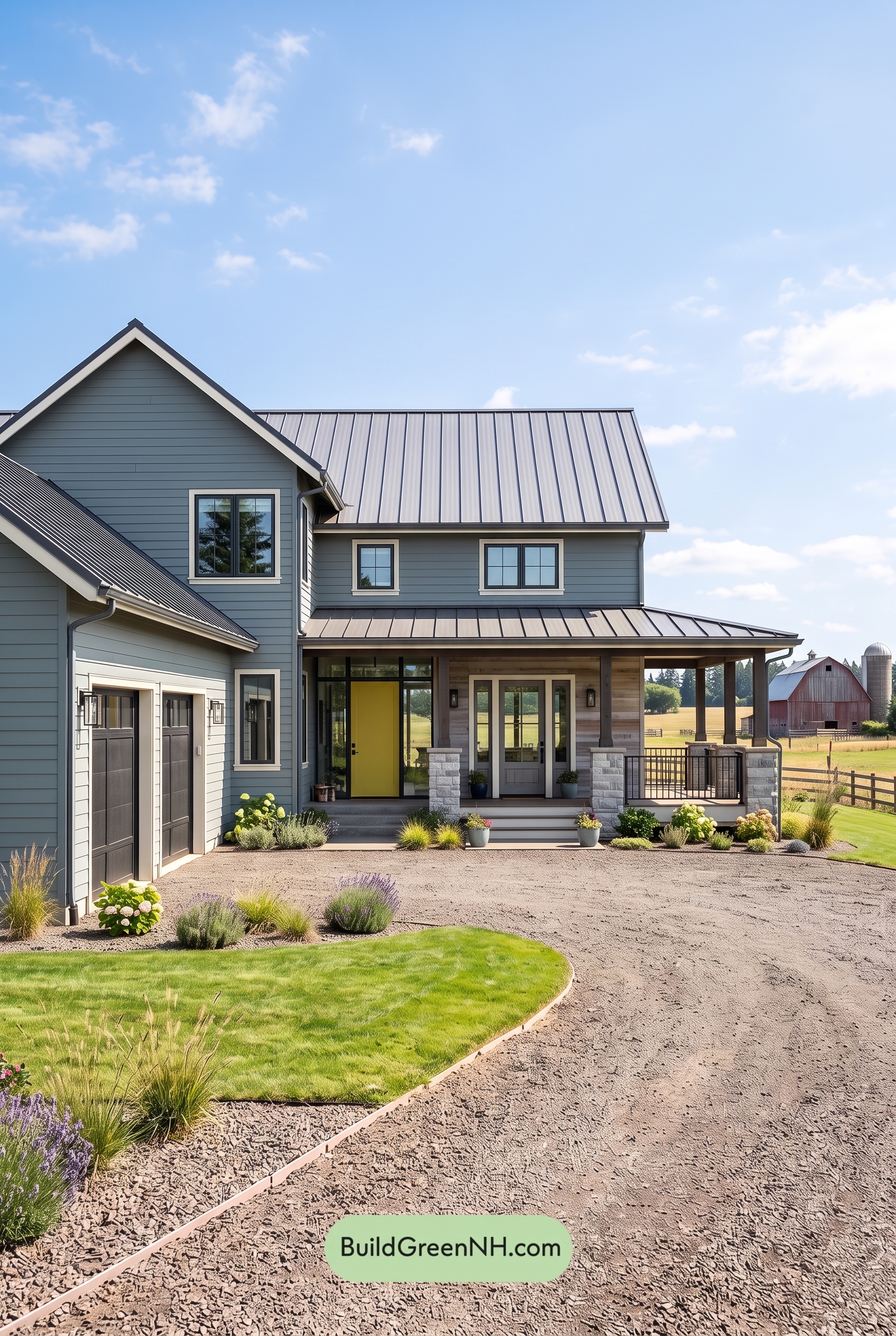 Blue House Front Door Color Scheme: Slate Citron
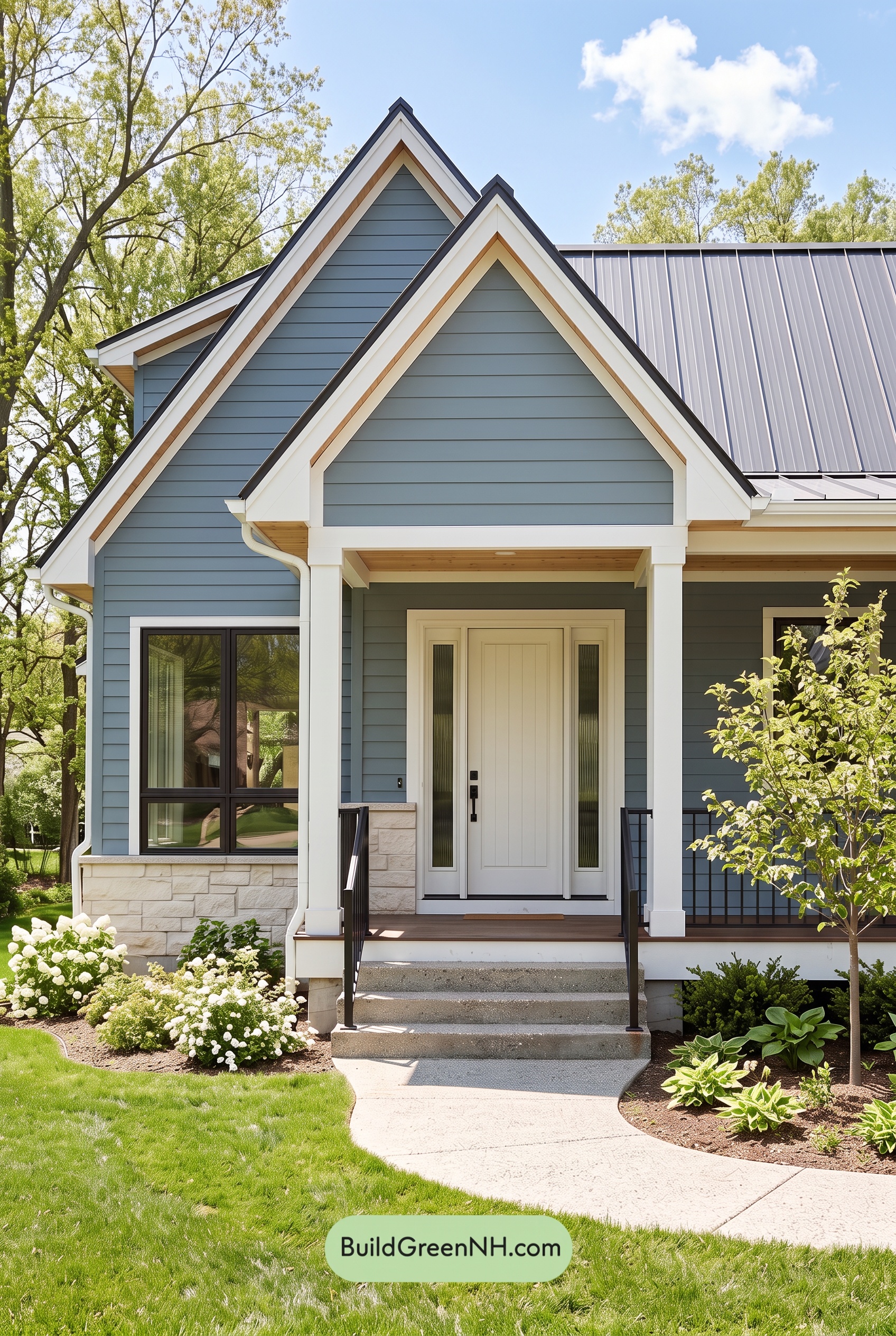 Blue House Front Door Color Scheme: Mist Blue Haven
Table of Contents