Last updated on
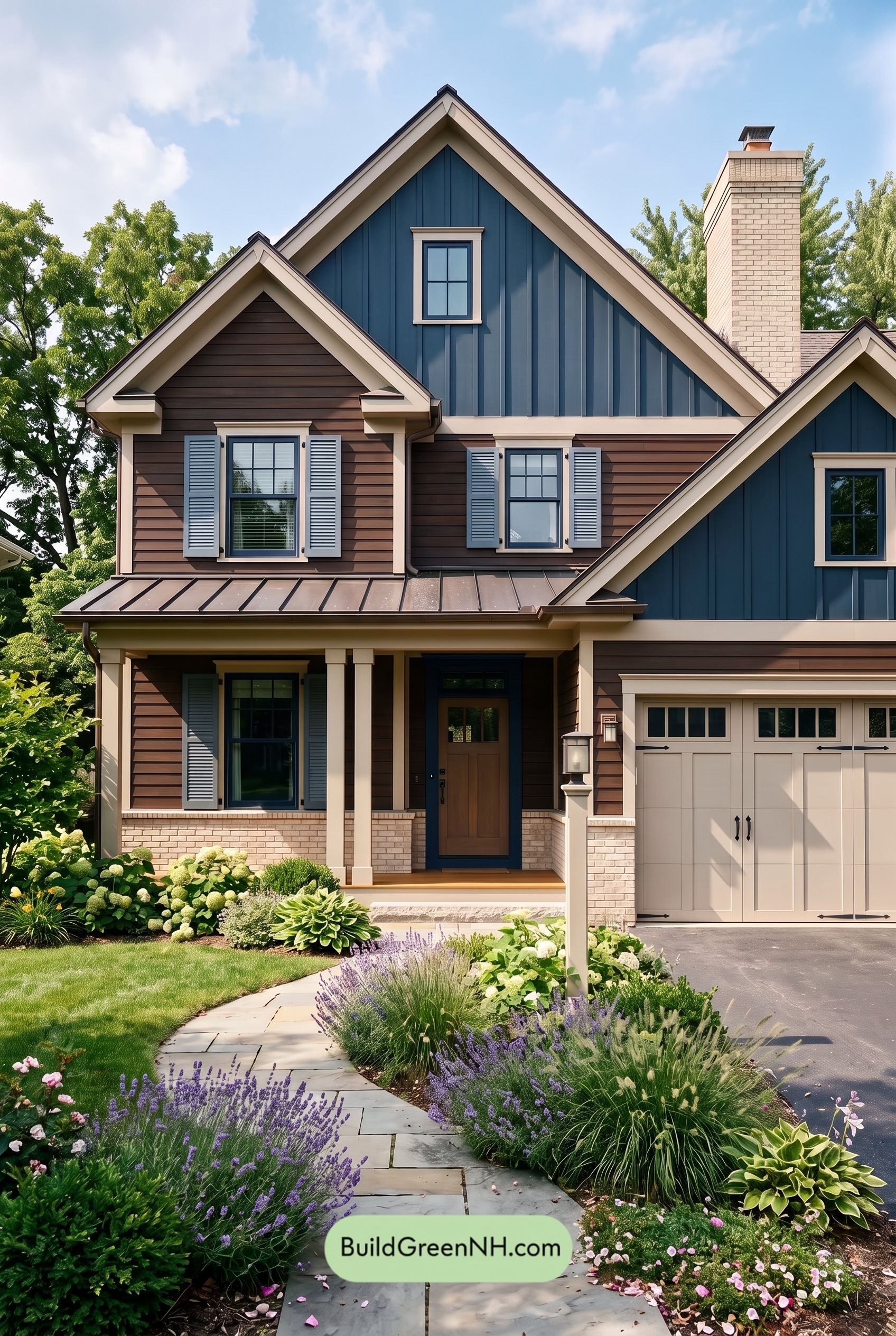

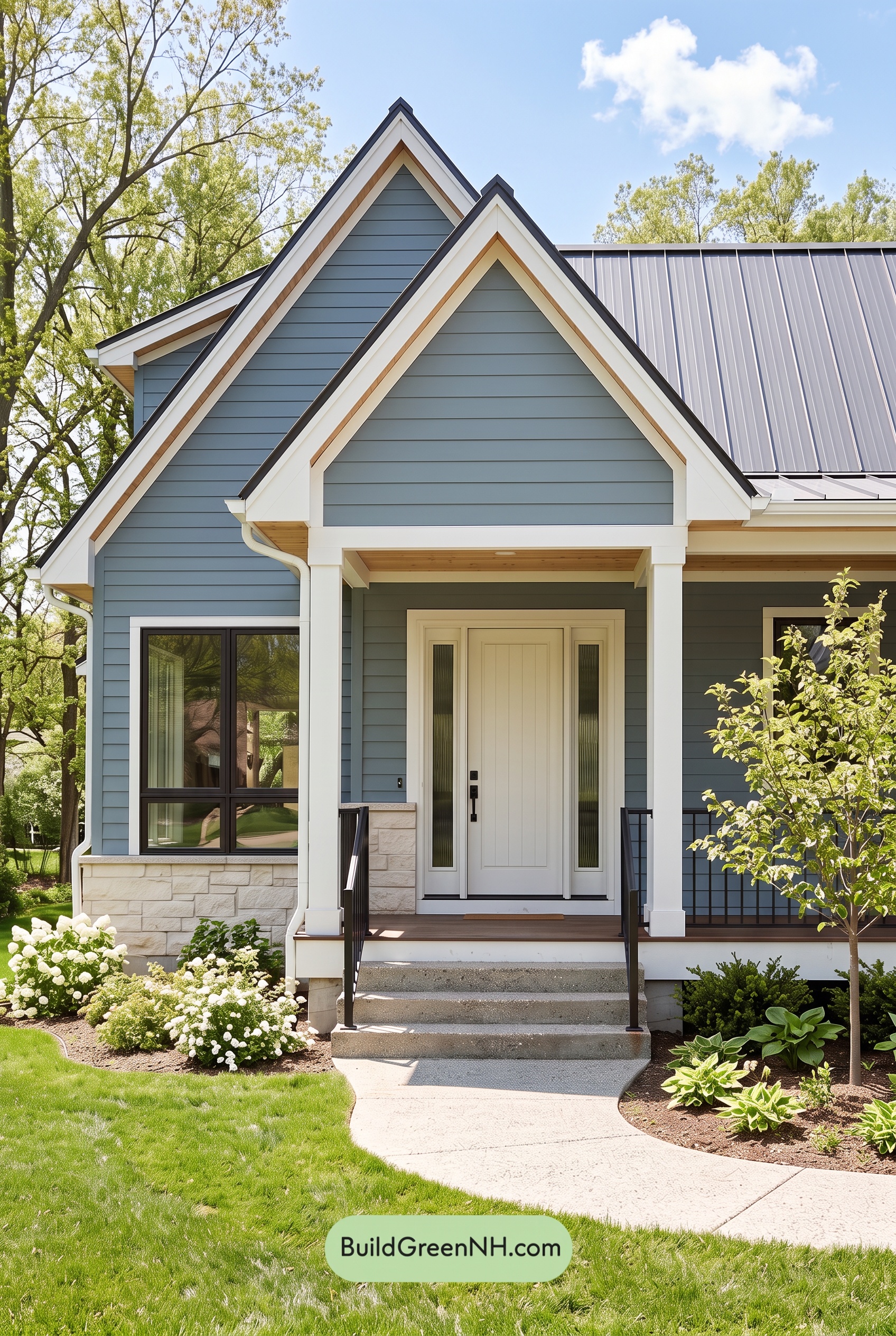
This inviting exterior succeeds because its rich earthy base, crisp light trim, and deep blue accents create a timeless look with striking architectural depth.
A Grounded Blend of Warm and Cool
The main body of the home is finished in a deep, warm brown shade that gives the facade a cozy, established presence. Across the lower walls and front-facing gables, this earthy siding color brings out the home’s traditional character while providing a substantial visual anchor.
Above it, the upper gables introduce a saturated deep blue. This cool contrast instantly draws the eye upward, emphasizing the steep rooflines and vertical panel detailing. The pairing feels balanced rather than busy: the brown adds warmth, while the blue supplies polish and dimension.
Light Trim That Defines Every Detail
A soft beige trim wraps the roof edges, windows, porch structure, and garage, creating a clean outline around the darker siding colors. Its warm undertone keeps the contrast gentle and welcoming instead of stark. The trim also highlights the home’s layered gables, making each section of the facade feel intentional and beautifully framed.
The matching light beige columns give the front porch an elegant, sturdy appearance. Repeating this shade on the garage door ties the right side of the home back to the entry, creating a smooth visual flow across the entire elevation.
Blue Accents with Cohesive Character
Deep blue window frames echo the color used on the upper gables, adding definition to the glass without competing with the larger architectural forms. The lighter blue-gray shutters introduce another layer of cool color, softening the windows and lending the exterior a classic, tailored charm.
This mix of blue shades is especially effective because it feels coordinated rather than perfectly matched. The darker blue has depth and drama, while the softer shutter color keeps the composition approachable.
A Welcoming Entry and Strong Roofline
The front door returns to the warm brown family, creating a natural connection with the main siding. Set within its deep blue surround, it becomes a welcoming focal point that feels grounded and refined. The dark roof and metal porch canopy reinforce the home’s strongest tones, adding a final layer of contrast and helping the lighter trim stand out.
Overall, this exterior palette feels warm, polished, and confidently traditional. Earthy brown siding delivers comfort, deep blue gables bring sophistication, and creamy beige trim adds brightness at every edge. Together, the shades make the home feel substantial, inviting, and full of curb appeal.
Next, see how this color scheme looks under different lighting simulations throughout the day.
Overcast
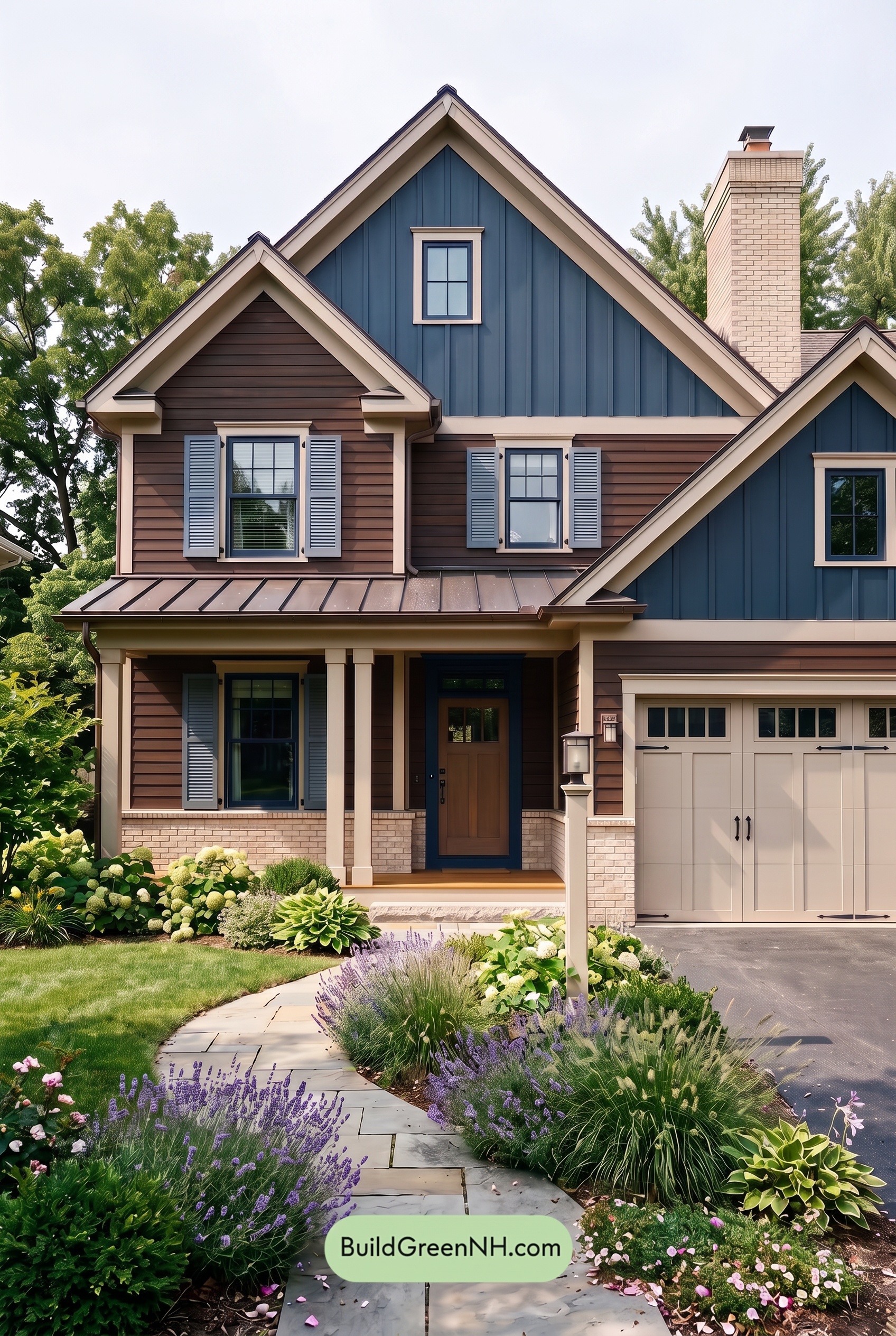
Under overcast skies, the blue upper siding, window frames, and shutters take on a deeper, quieter cast than they show in neutral daylight. With direct sun removed, their saturation appears more restrained and the cool undertones become clearer, while the brown siding and front door lose some of their golden warmth and settle into softer, more muted earthy shades.
The beige trim, columns, and garage door look less bright but more even in cloudy light, creating a gentler contrast against the darker blue and brown areas. Shadows around the gables, porch, and siding soften rather than sharpen, giving the whole exterior a calm, cohesive mood with a slightly more refined and understated presence.
Golden Hour
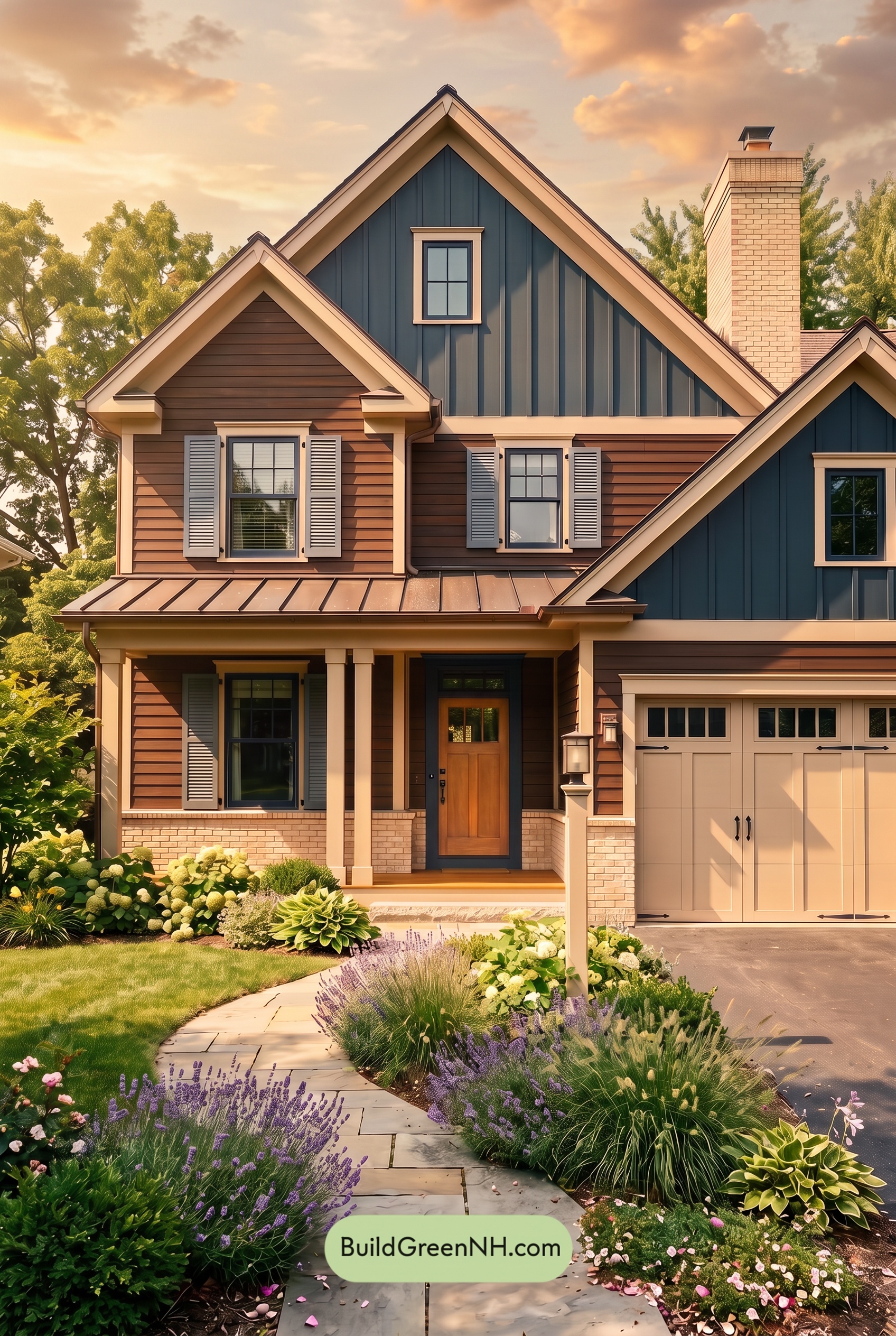
Under neutral daylight, the brown siding and blue upper walls read as balanced and clearly distinct, while the beige trim provides a crisp, light contrast. At Golden Hour, the low amber light enriches the brown shades and gives the beige details a softer, creamier glow. The blue areas appear deeper and slightly more muted by comparison, creating a more dramatic interplay between cool shaded planes and sunlit warm surfaces.
Longer shadows settle into the siding grooves, beneath the eaves, and around the windows, increasing contrast and emphasizing the home’s layered architecture. This warm, directional light reduces the daylight sharpness of the palette and replaces it with a welcoming, relaxed mood—where glowing warm neutrals frame richer brown tones and the blue accents feel quietly sophisticated.
Shade
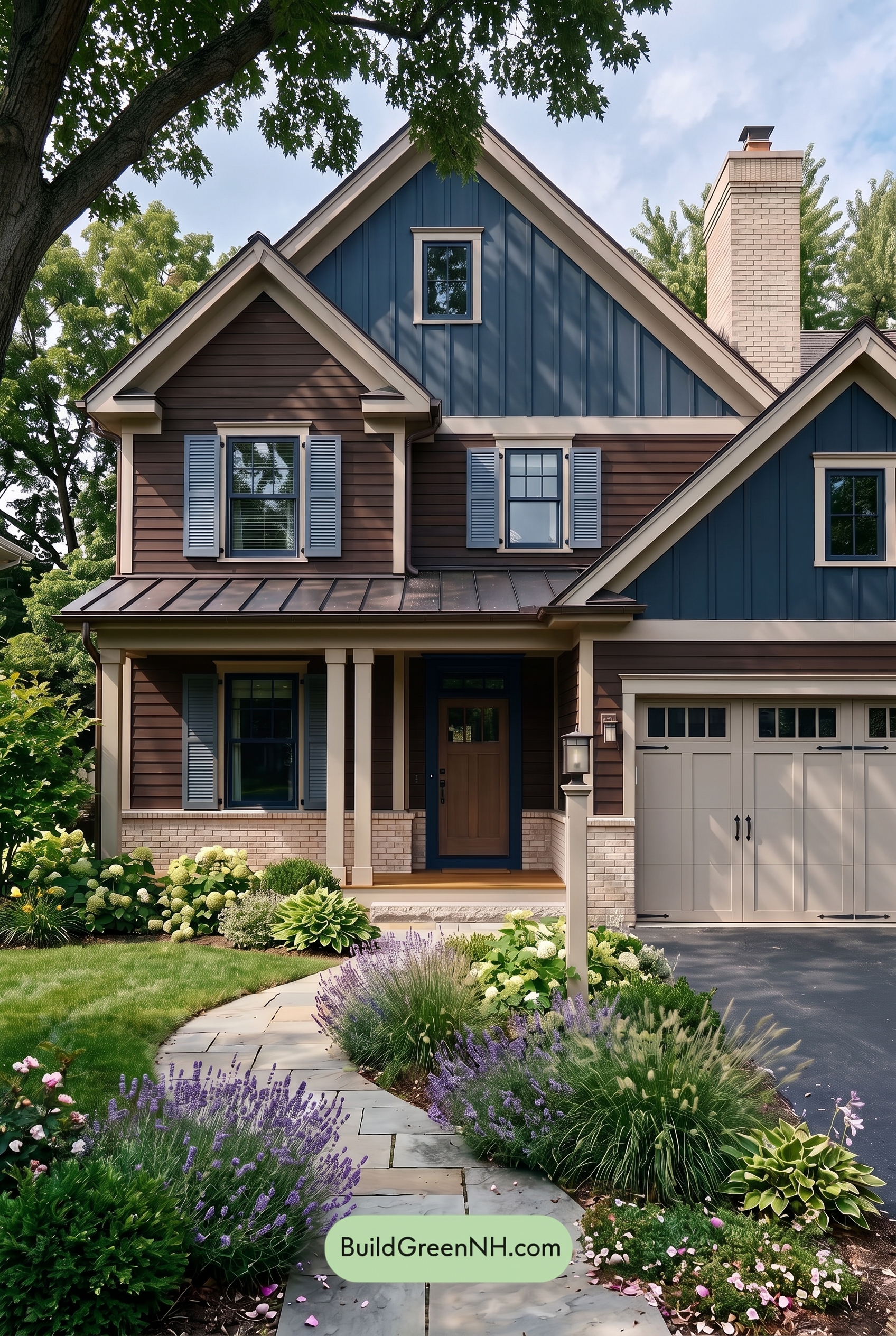
Under shade, the blue sections of the exterior deepen and look slightly less saturated than they do in neutral daylight, giving the upper façade a calmer, more tailored presence. The brown siding also reads richer and more muted, while leaf-cast shadows bring out the texture and layering of the siding and rooflines.
The light beige trim, columns, and garage door lose some of their sunny brightness in shade, appearing softer and gently warmer against the darker blue and brown areas. This reduced contrast creates a quieter, more inviting mood, although the pale details still crisply outline the architecture where filtered light reaches them.
Nighttime
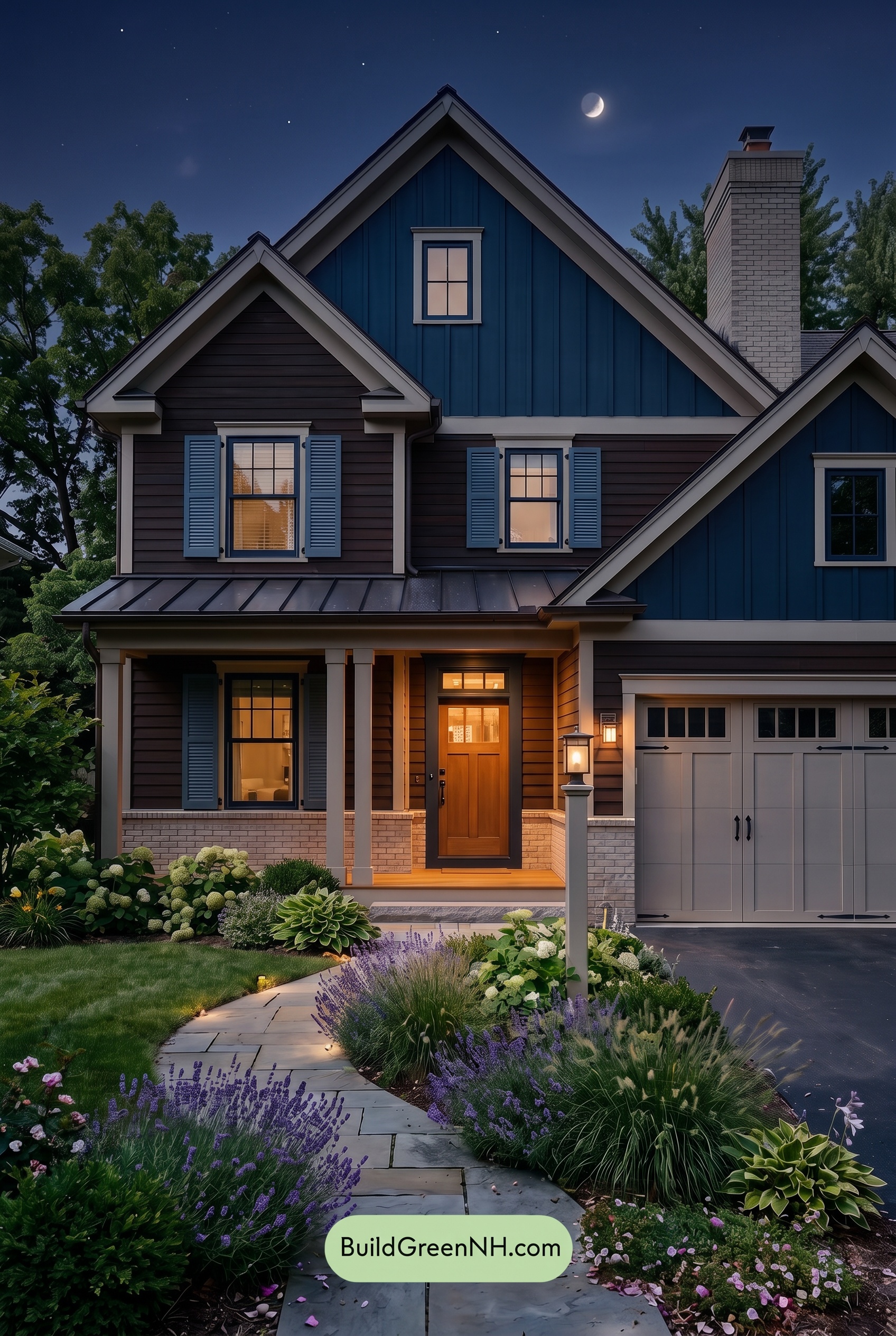
At night, the blue upper walls, shutters, and window frames deepen into a richer, more dramatic shade, while the brown siding recedes into soft, near-charcoal shadows. Compared with neutral daylight, saturation feels more selective: cool tones become moodier and more pronounced around illuminated windows, while the darker surfaces merge into a calm, layered backdrop.
Warm light at the entry gives the beige trim, columns, and garage details a gentler glow, shifting these neutrals toward a creamier, more welcoming appearance. The contrast between warm highlights and cool blue-black shadows sharpens the rooflines and entry, creating a cozy, tailored nighttime mood.
Pin these for later:
Want More?
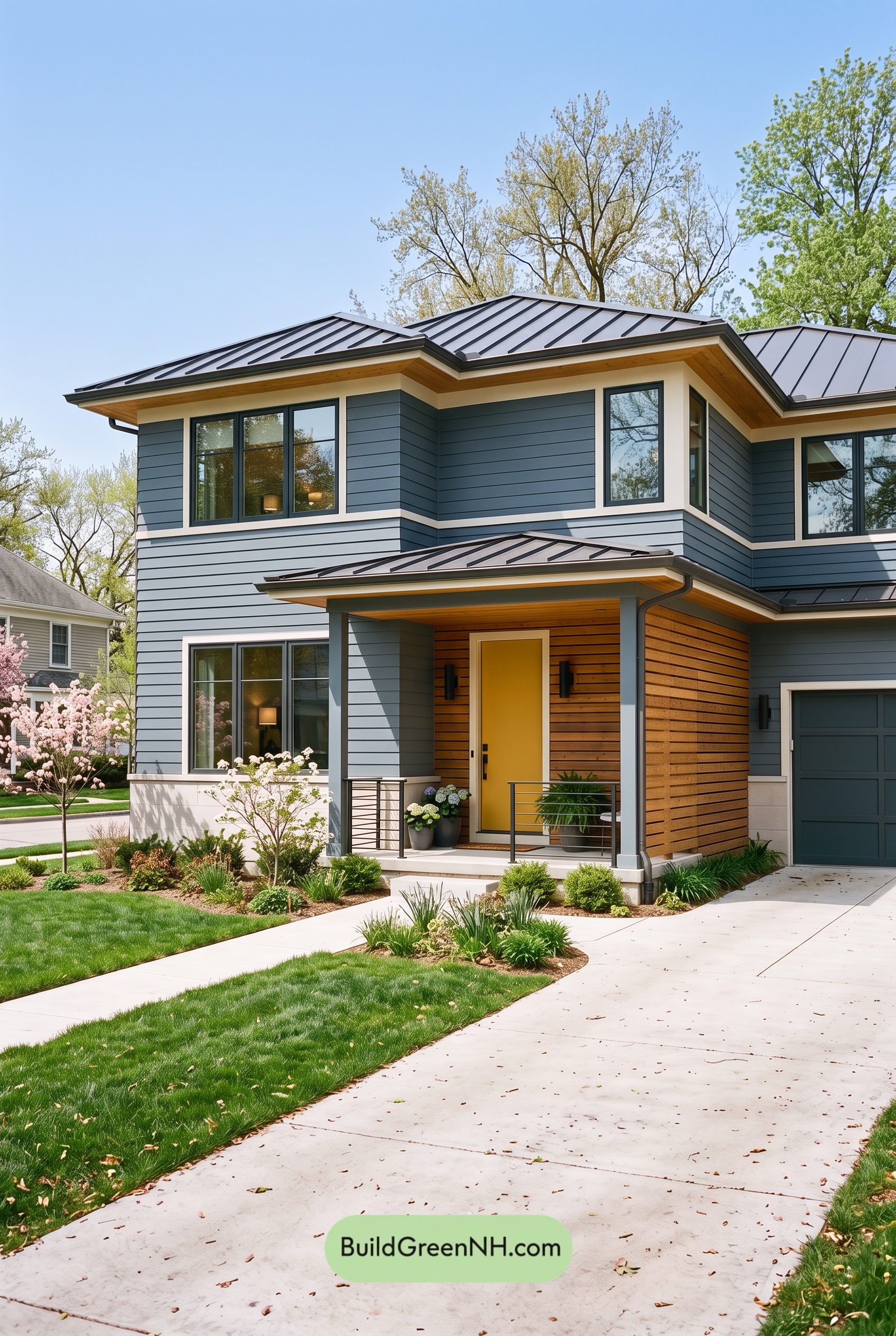 Blue House Front Door Color Scheme: Harbor Saffron
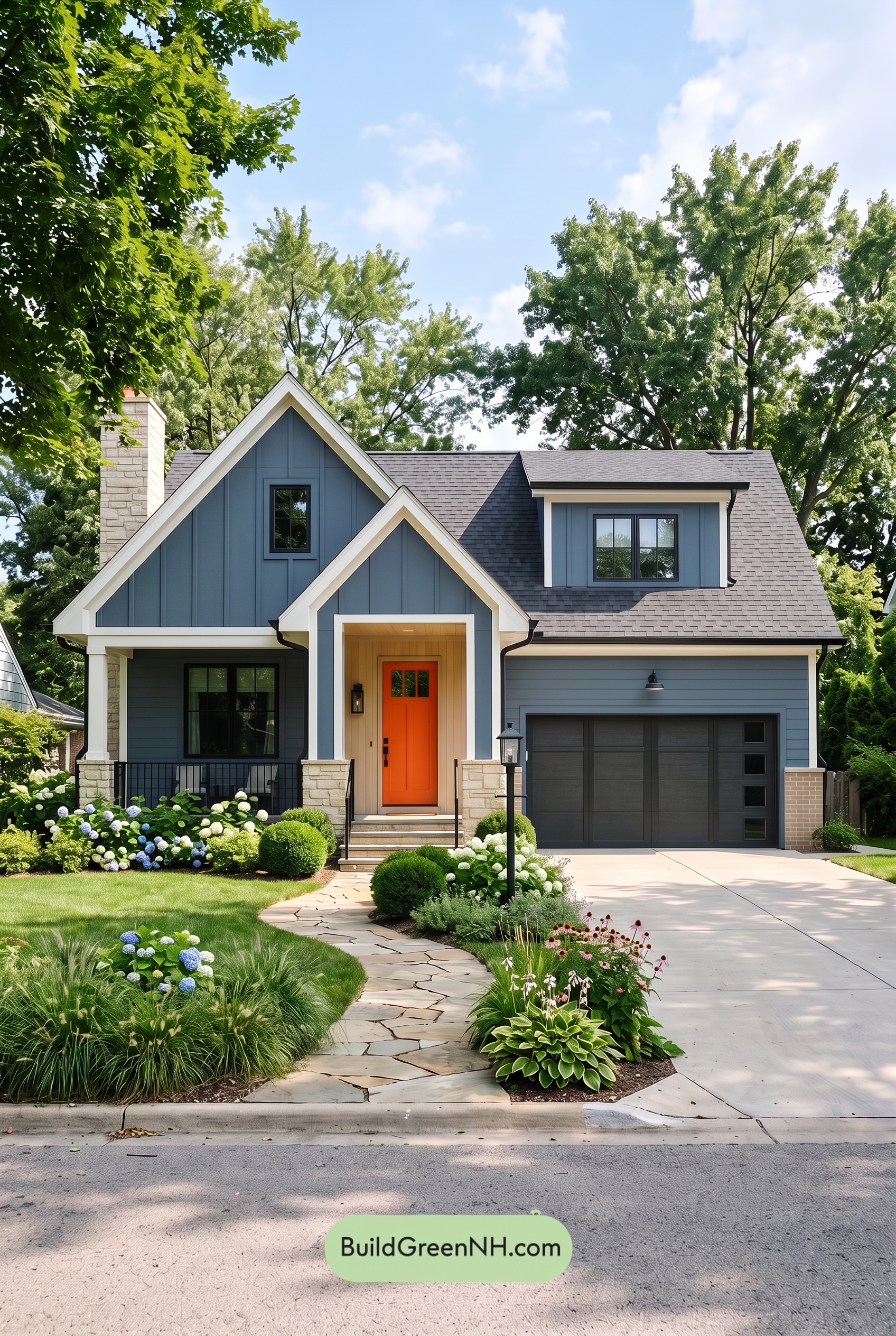 Blue House Front Door Color Scheme: Cobalt Persimmon
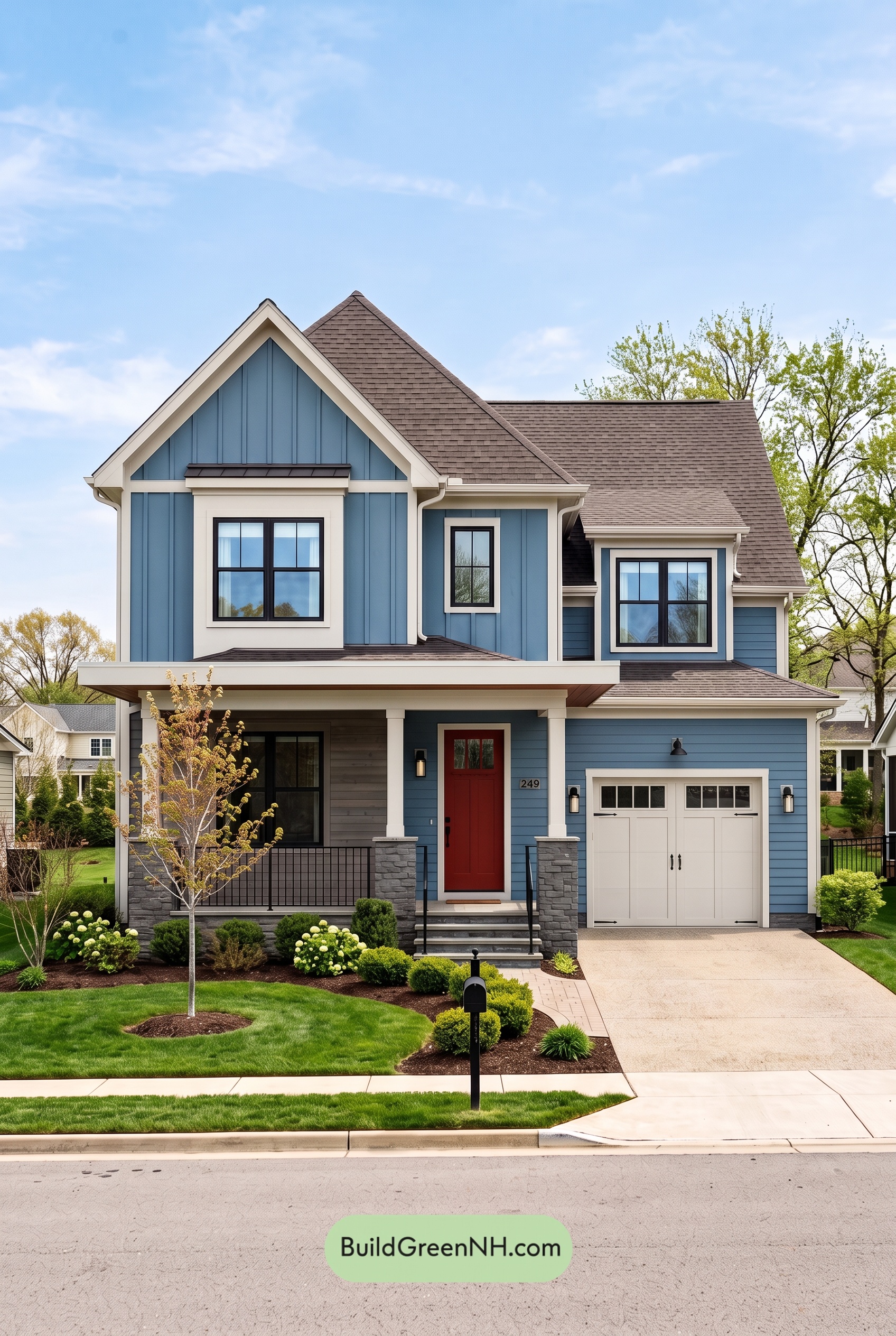 Blue House Front Door Color Scheme: Denim Poppy
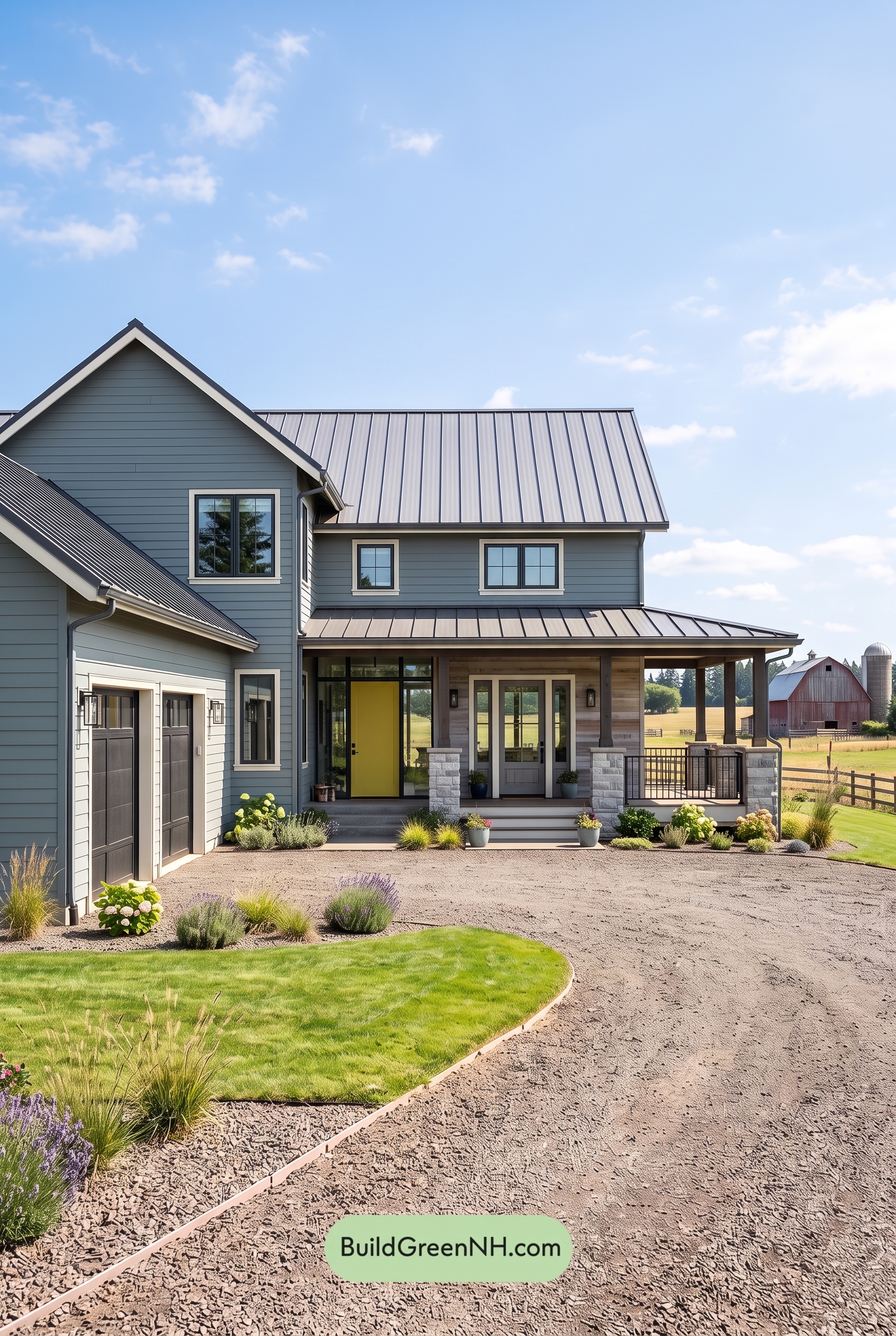 Blue House Front Door Color Scheme: Slate Citron
 Blue House Front Door Color Scheme: Mist Blue Haven
Table of Contents