Last updated on · ⓘ How we make our floor plans
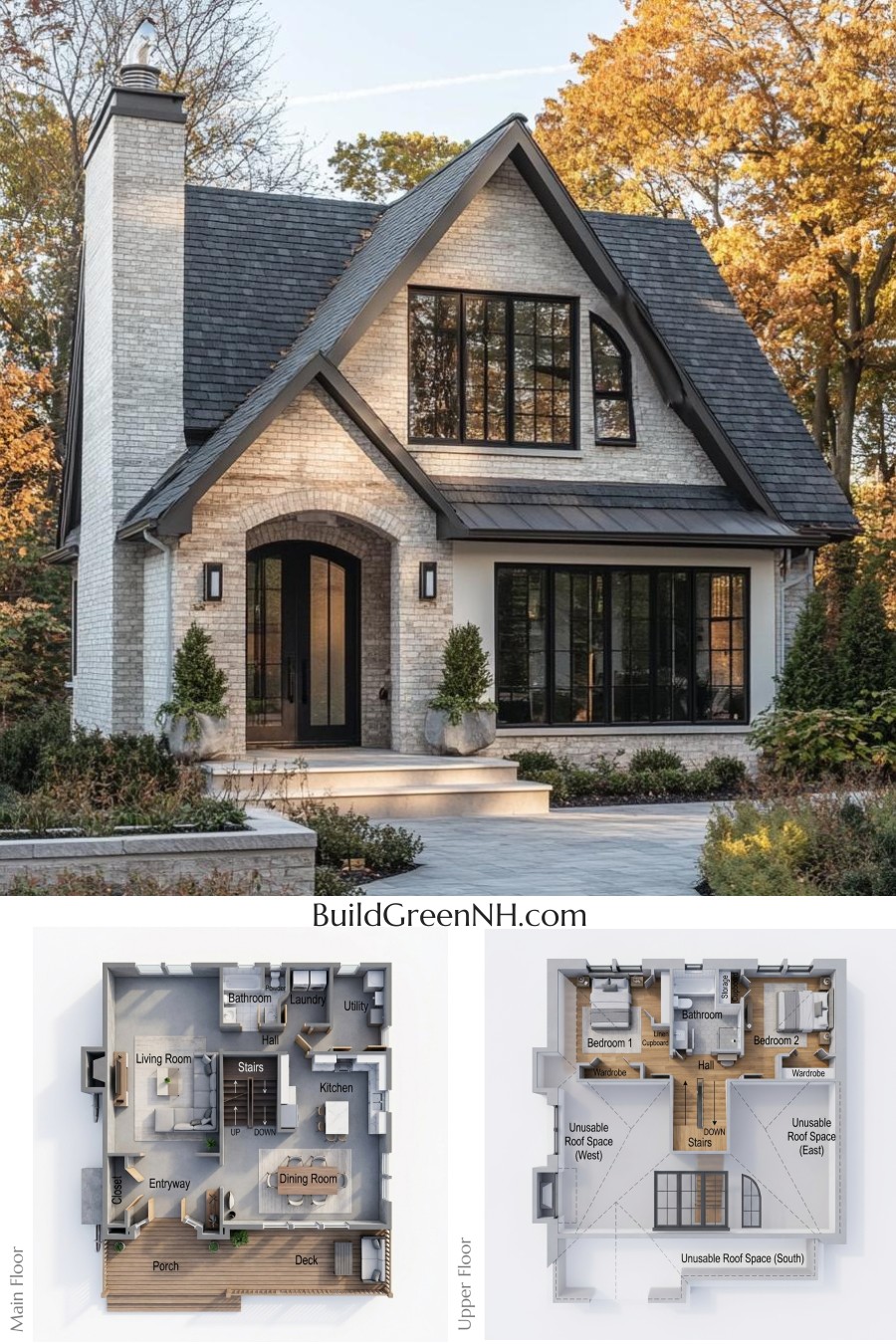
This design is a compact two-storey gabled home with a crisp, efficient plan and a bright core for everyday living.
The façade reads as modern cottage with a European wink. A steep front gable anchors the composition. Light-toned masonry/brick cladding is paired with dark, high-contrast trim and black-framed glazing. The entry is expressed with an arched opening and substantial door presence. Roofing is a dark shingle finish with clean eaves and tidy flashing lines; a small metal canopy element sharpens the front elevation.
These drawings are floor plan drafts. They are available for download as printable PDF, ready for plotting, redlining, and the occasional proud refrigerator display.
- Total area: 1,692 sq ft (Main: 34’ × 30’ = 1,020 sq ft; Upper: 28’ × 24’ = 672 sq ft)
- Bedrooms: 2
- Bathrooms: 2.5 (2 full + 1 powder)
- Floors: 2
Main Floor (34’ × 30’)
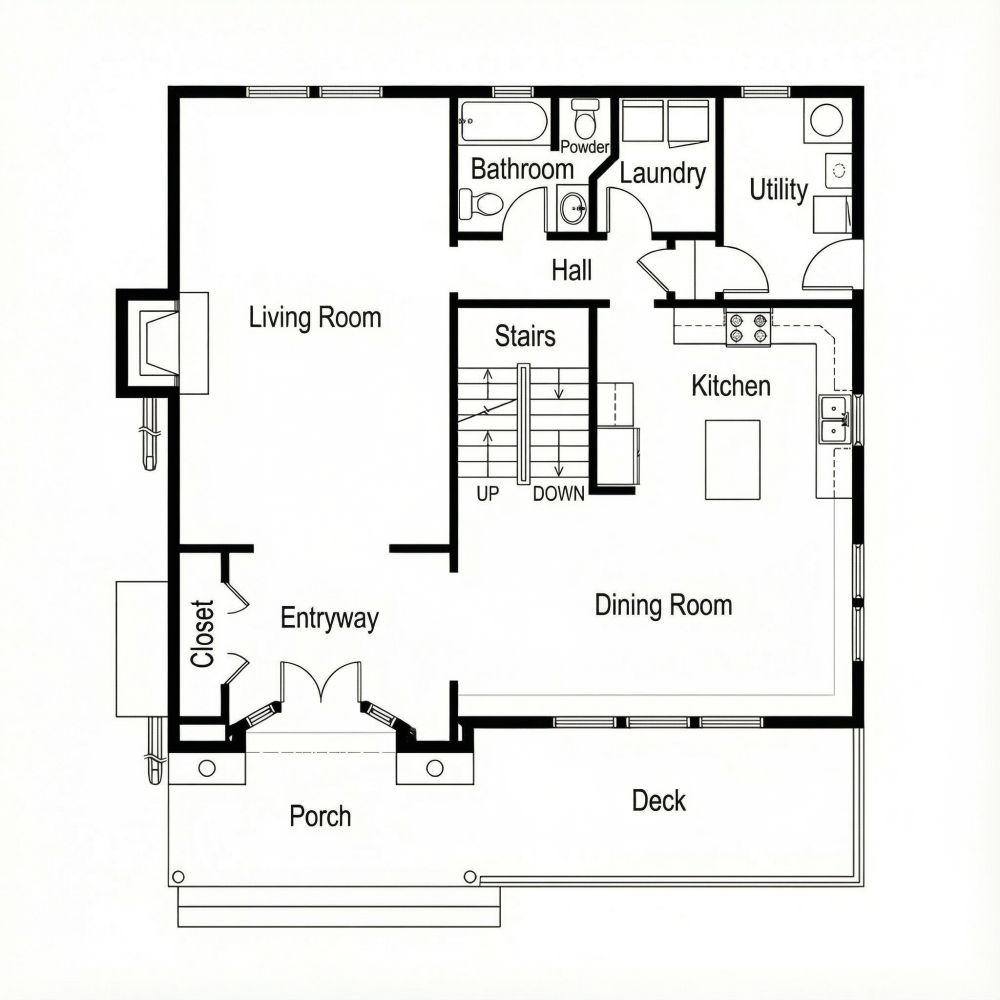
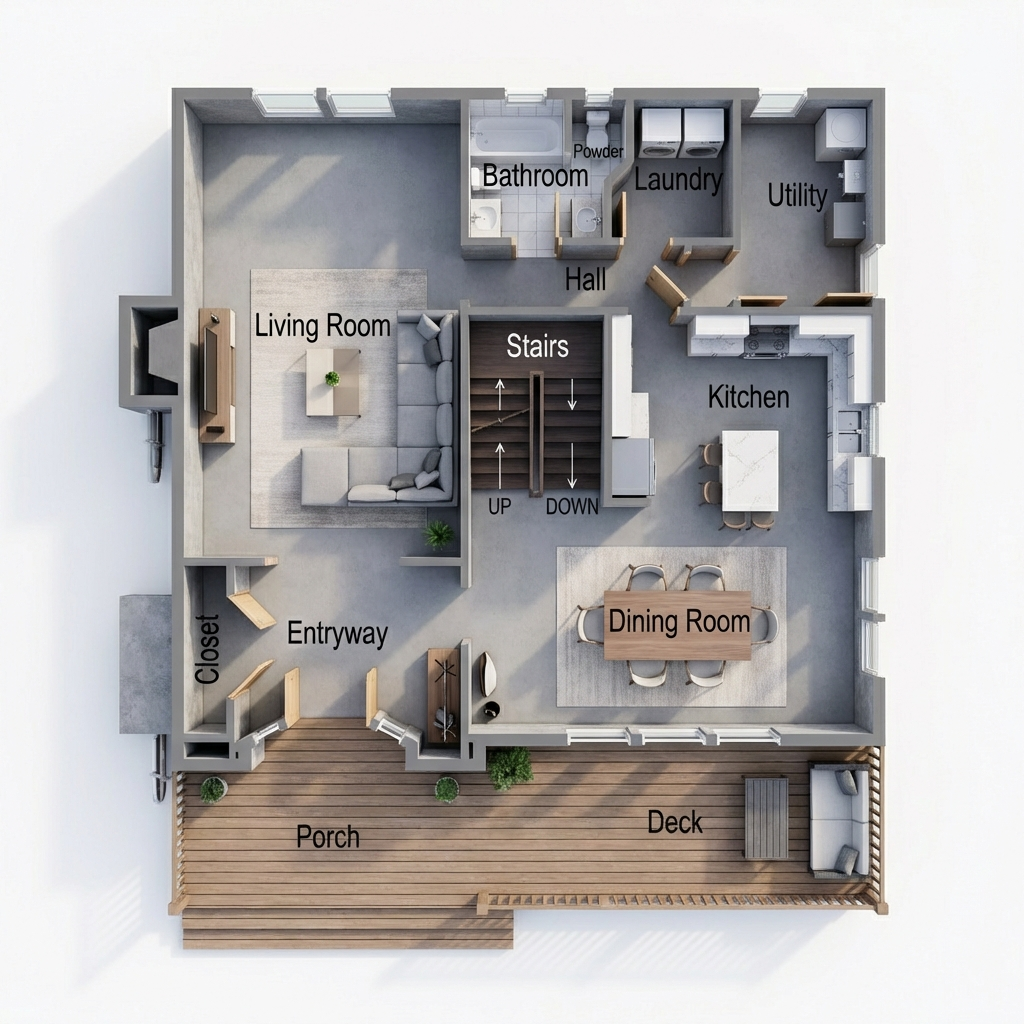
Approx. area: 1,020 sq ft. The plan is organized around a central stair and hall, with living to one side and the kitchen/dining to the other. Outdoor living is pushed to the rear via a generous deck, because fresh air deserves square footage too.
- Porch
- Entryway with closet
- Living Room
- Central stairs (up/down) and hall
- Kitchen with island
- Dining Room
- Bathroom (full)
- Powder room
- Laundry
- Utility room
- Deck
Upper Floor (28’ × 24’)
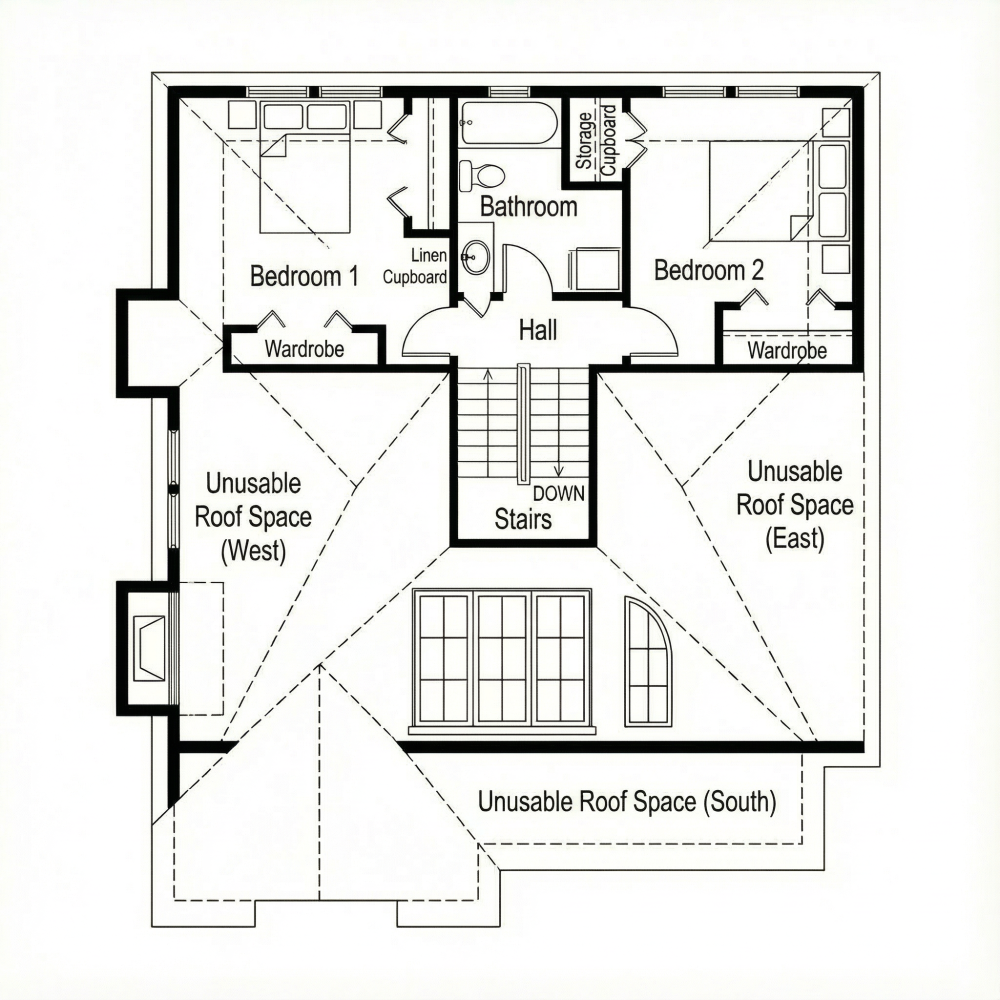
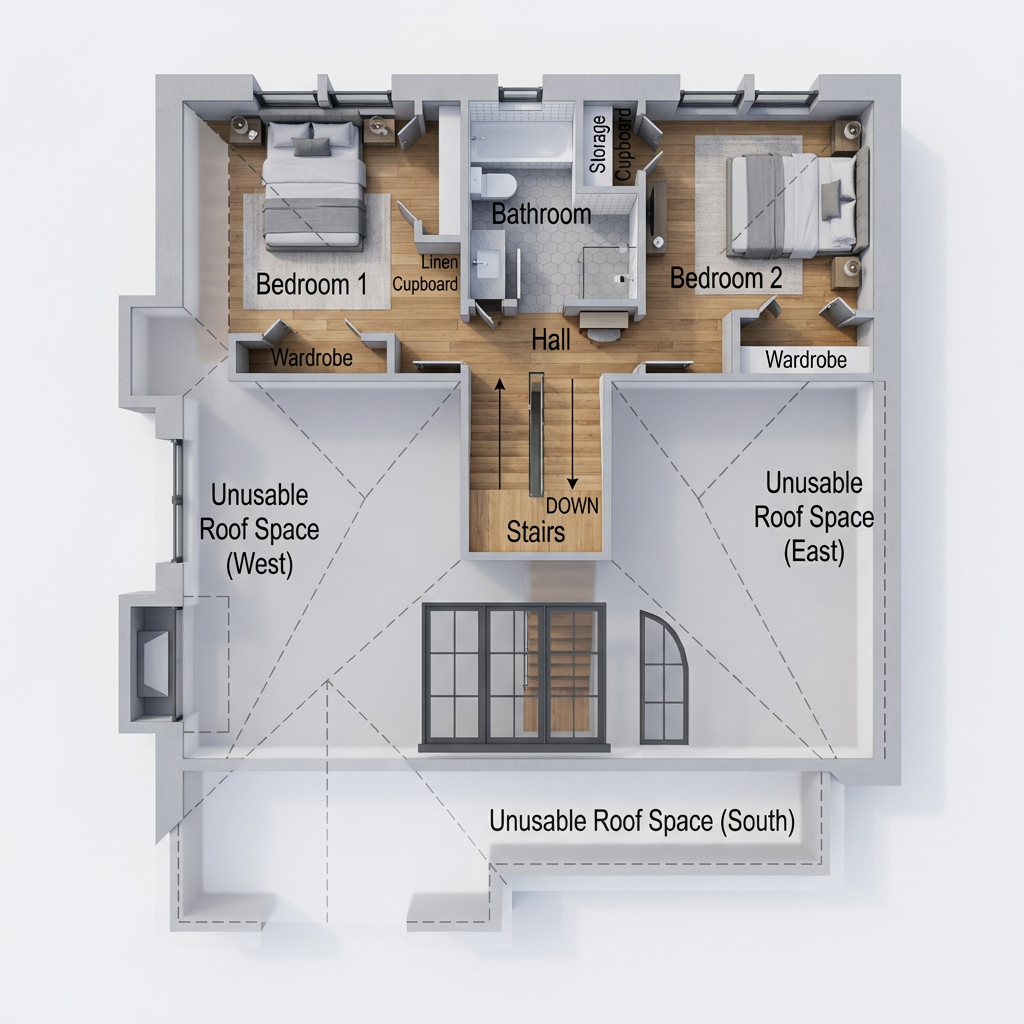
Approx. area: 672 sq ft. The stair lands in a compact hall that cleanly splits two bedrooms. Sloped roof zones create “unusable roof space” areas—excellent for insulation, less excellent for basketball.
- Bedroom 1 with wardrobe
- Bedroom 2 with wardrobe
- Bathroom (full)
- Hall
- Stairs (down)
- Linen cupboard
- Storage cupboard
We have more facade options of this design:
White Shiplap Siding
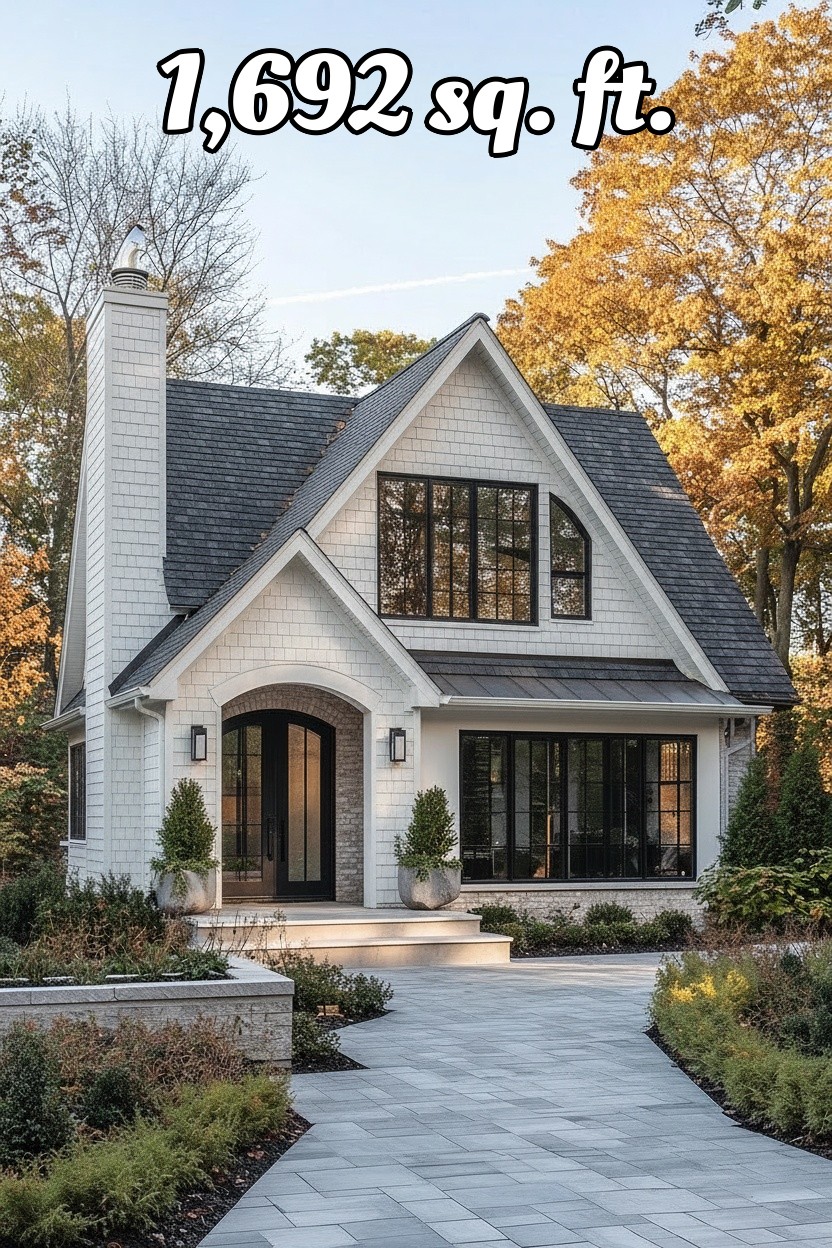
Swapping the facade to white shiplap tightens everything up. The horizontal boards pull the eye across the gables and bay, making the black grid windows pop like eyeliner.
The arched entry reads crisper against the linear cladding, and the tall chimney becomes a clean, modern blade. Even the metal awning now looks a bit nautical—in a good, “captain of curb appeal” way.
With texture toned down, the trim and eaves take center stage. The layered gables cut sharper silhouettes, while the brick entry arch and stone base gain contrast instead of fighting shingles.
The result leans modern farmhouse—like the cottage ironed its shirt and stood a little taller. Less fuss, more finesse.
Grey Shiplap Siding
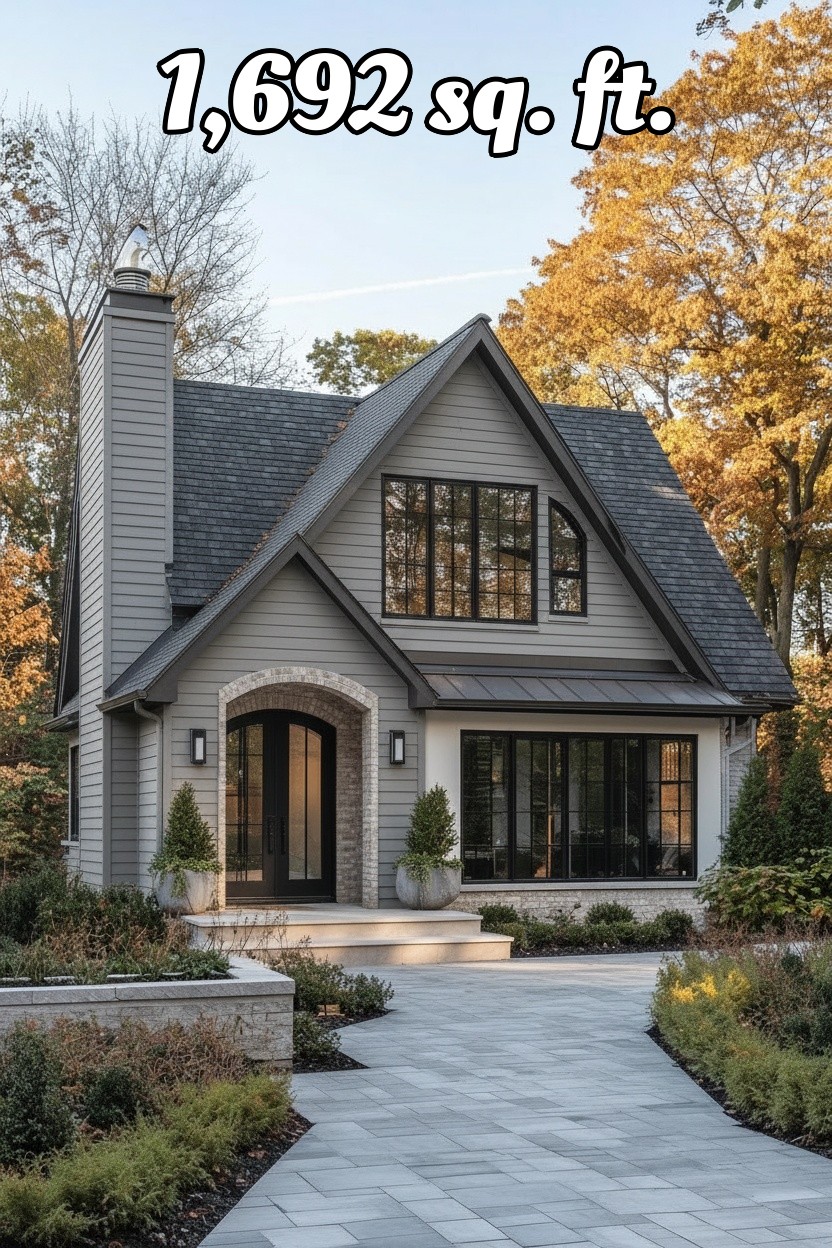
The facade now wears grey shiplap, trading any warmer past life for cool, precise horizontals. That single switch sharpens the steep gables and tall chimney, pairs neatly with the charcoal shingles, and makes the black steel windows look freshly inked.
The brick arch at the entry glows warmer by contrast—like a courteous nod at the door.
The grey skin also unifies the pieces: trim, eaves, and the slim standing‑seam awning read as one line. The big upper window grid pops, the arched door takes center stage, and the bay window feels purpose‑built.
Less fairy tale, more modern wink.
Black Siding with White Trim
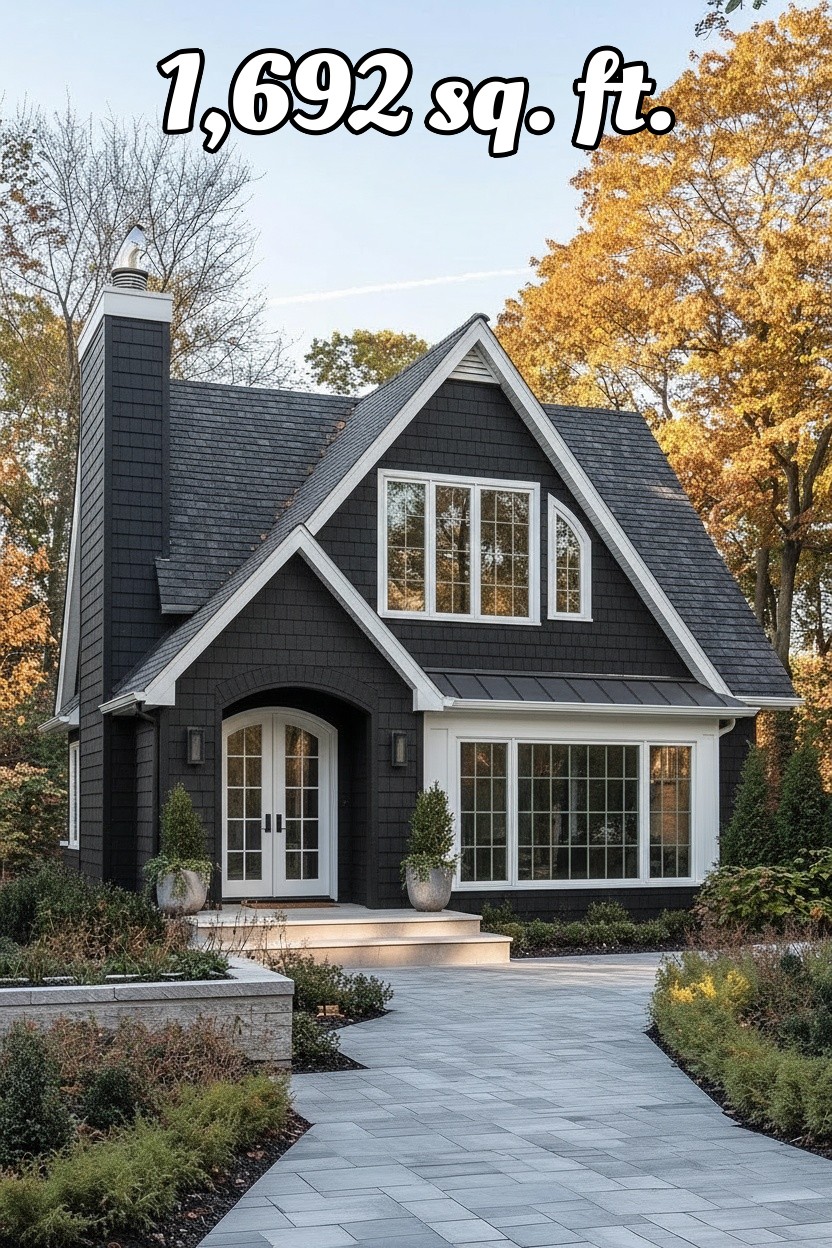
Switched to inky black shingles with crisp white trim, the facade suddenly goes high-contrast. The steep twin gables and bargeboards read like clean geometry, the arched entry pops, and the chimney becomes a bold exclamation mark.
White casings sharpen the tall mullioned windows and the metal awning over the bay looks sleeker against the dark field.
The trims trace every edge—eaves, returns, and sills—making the cottage lines punchier. It’s basically a tuxedo for a storybook house, all dressed up and still welcoming.
Natural Oak Wood Shiplap Siding
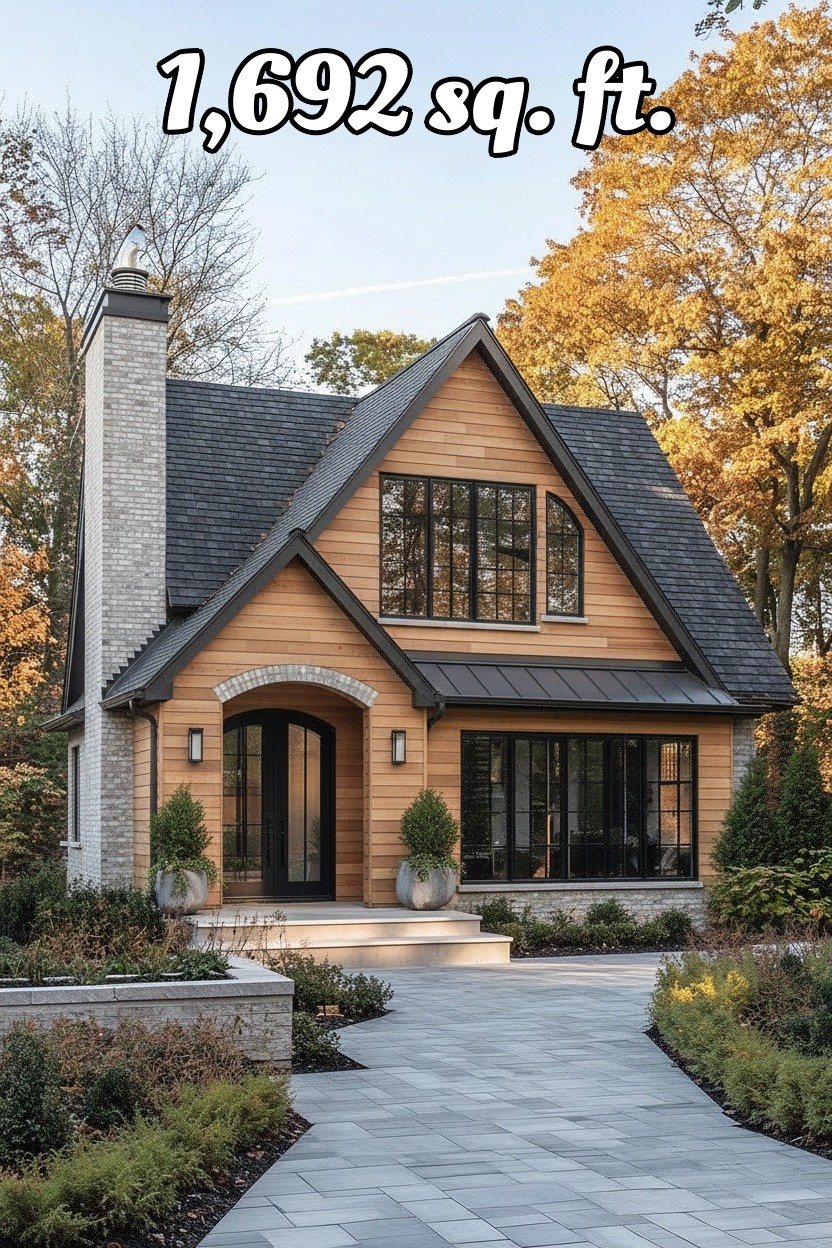
The facade now trades its old skin for natural oak wood shiplap, warming the whole face in one swoop. Horizontal boards sharpen the steep gables and make the black, gridded windows pop like ink on fresh paper.
The standing‑seam metal awning looks sleeker against the honeyed wood, while the arched entry reads friendlier. Same bones, cozier swagger.
Where the new siding meets the pale brick chimney and base, the contrast turns textural and thoughtful—not a material blind date. Deep eaves and stout gable trim throw crisp shadow lines across the wood, adding relief without noise.
Charcoal shingles and dark mullions frame the oak like a gallery, so the geometry sings: tall gables, big panes, clean edges. One change, big mood swing.
Want More?
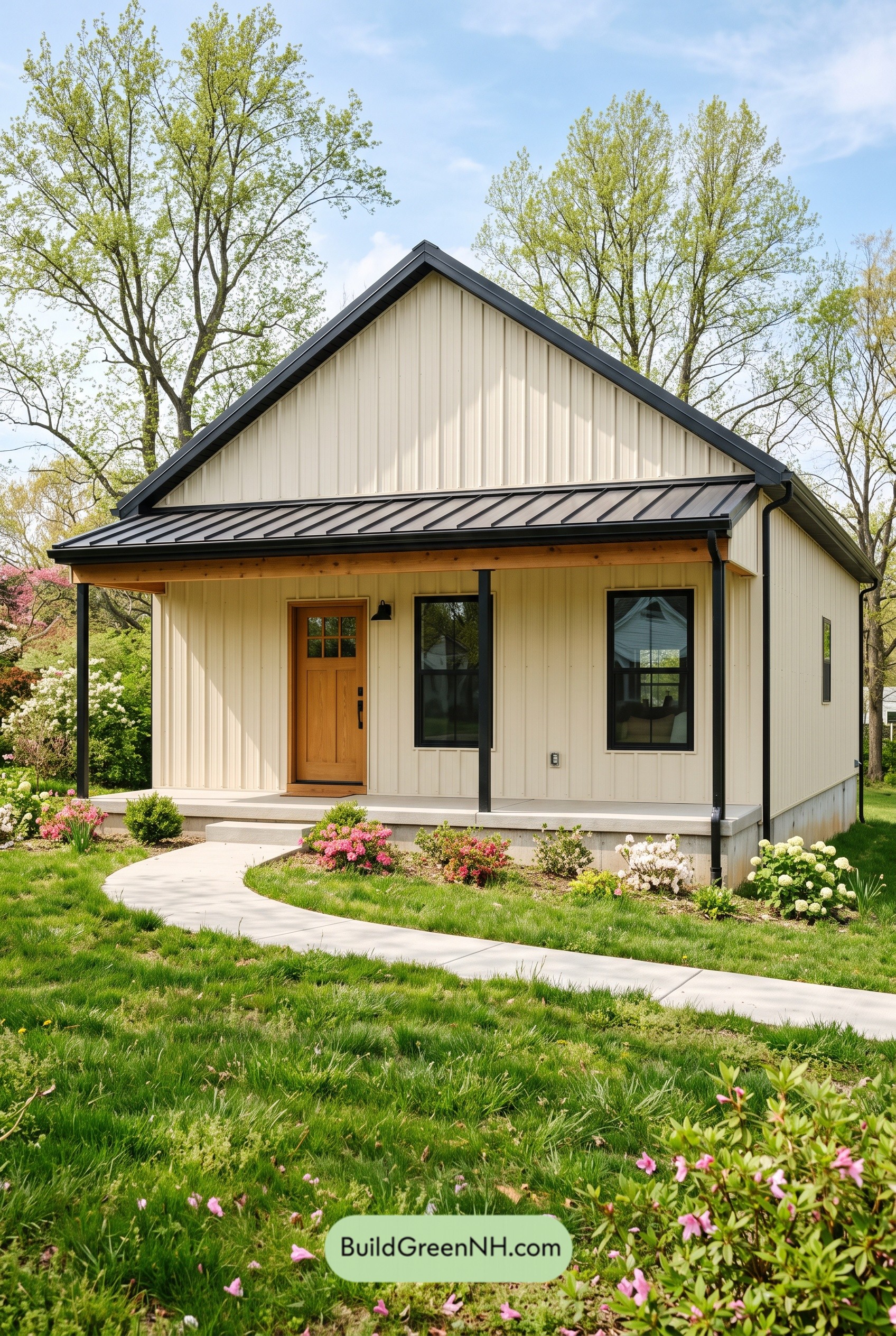 24×28 ft 672 sqft 1-Bed 1-Bath Small Barndominium Floor Plans: Ivory Fold Porch House
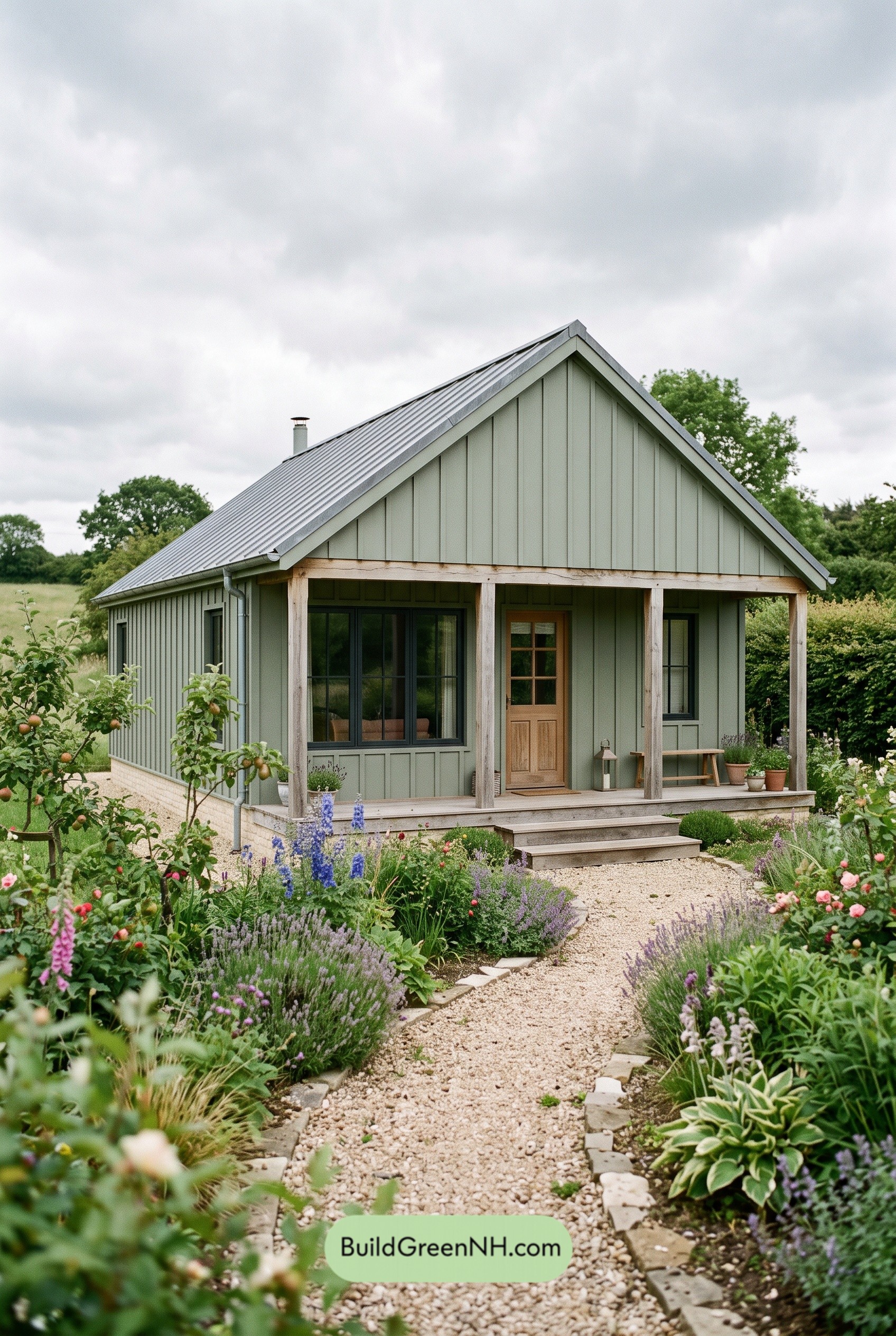 24×28 ft 673 sqft 1-Bed 1-Bath Small Barndominium Floor Plans: Sage Gable Cottage Barn
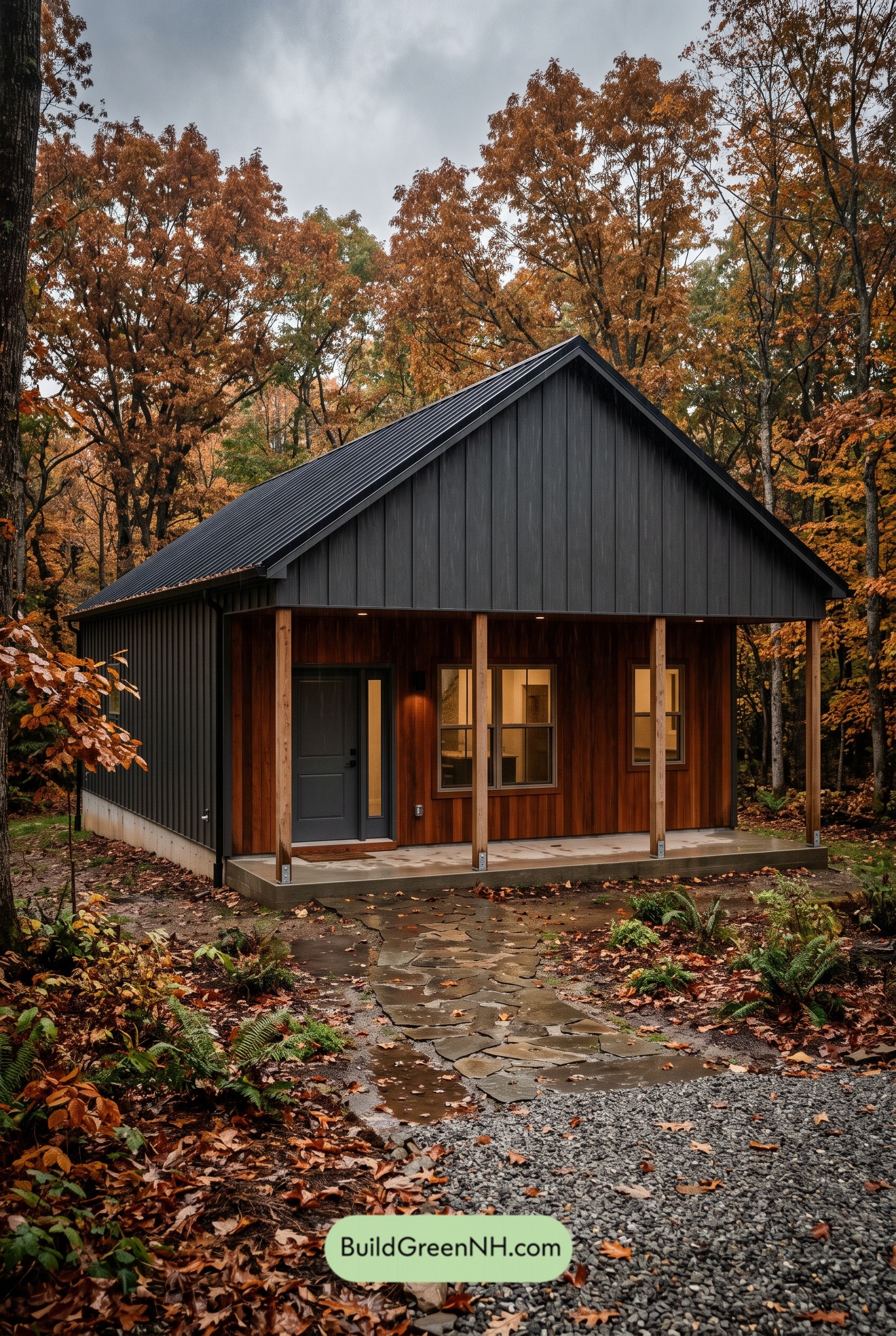 22×30 ft 661 sqft 1-Bed 1-Bath Small Barndominium Floor Plans: Carbon Cedar Threshold
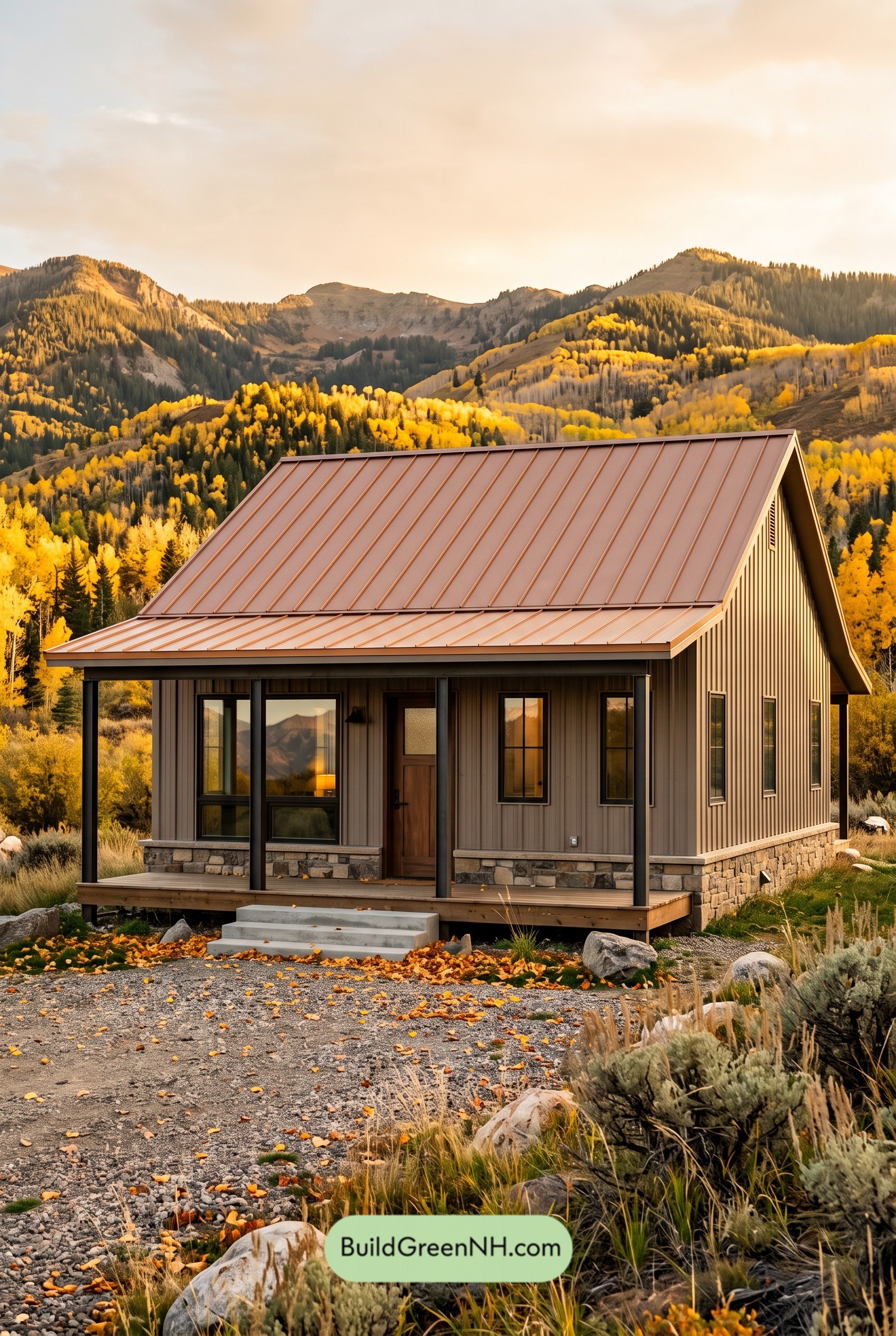 28×24 ft 672 sqft 1-Bed 1-Bath Small Barndominium Floor Plans: Copper Ridge Mountain Barn
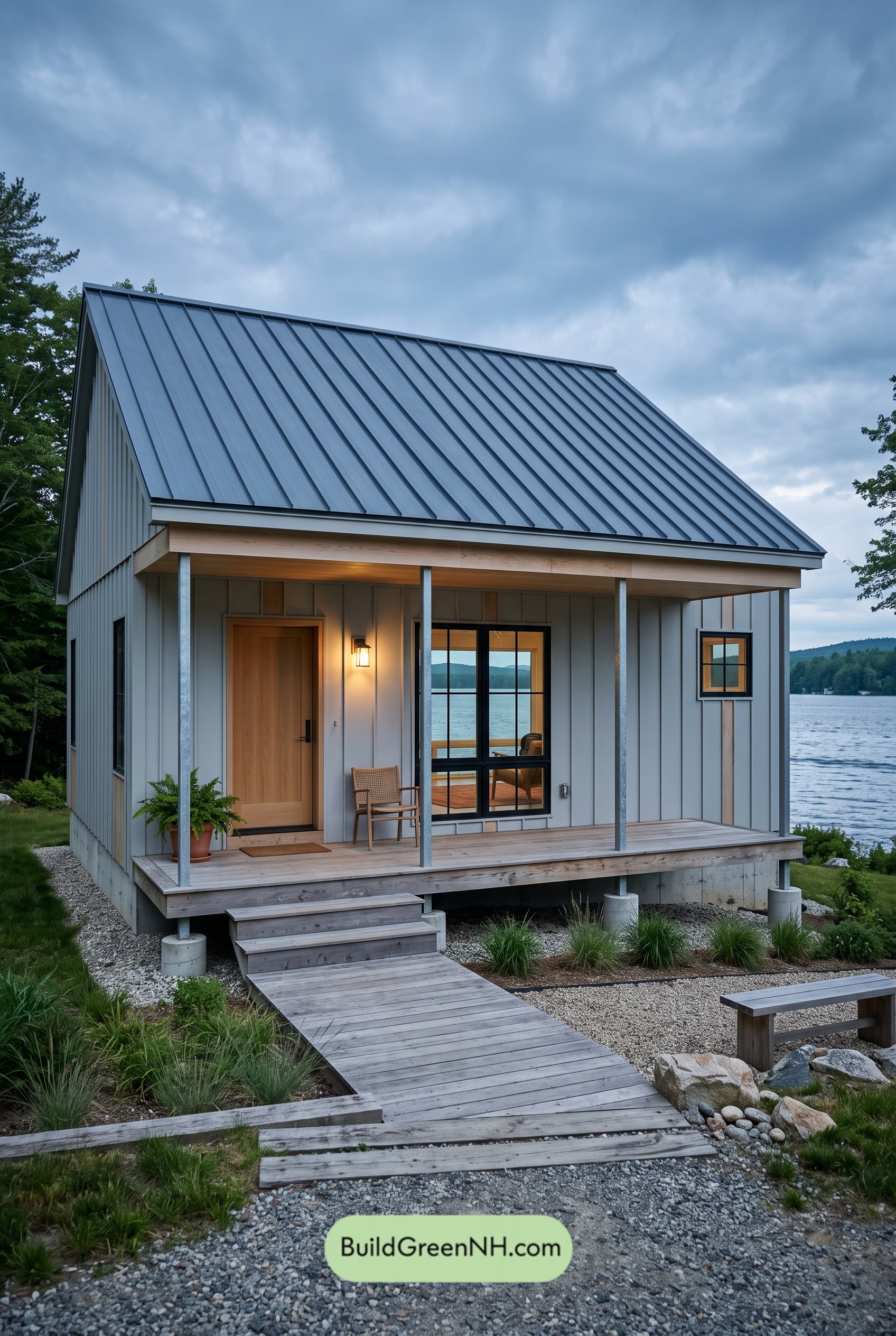 24×26 ft 624 sqft 1-Bed 1-Bath Small Barndominium Floor Plans: Pearlwater Porch Pavilion
Table of Contents