Last updated on · ⓘ How we make our designs
See how Japanese mansions turn coasts, tea fields, and city plots into calm, private homes where courtyards, timber screens, and even stepping stones make grand spaces feel surprisingly cozy.
These Japanese mansion designs are really about calm, privacy, and knowing exactly where they sit. We wanted each one to belong to its coast, cliff, mountain, lake, tea field, or city plot, not strut around like a resort peacock.
We took cues from temple compounds, ryokan inns, Kyoto estates, garden paths, and old seaside pavilions, then gave them a cleaner, more current edge. So you will see low tiled roofs, deep eaves, timber screens, verandas, and inward looking plans again and again, because honestly they still outsmart the weather.
As you go, pay attention to the courtyards, pond gardens, stepping stones, soaking pools, and those quiet links between wings. That is where these homes soften their scale, frame the water and trees, and get surprisingly cozy for places this grand.
Sea Cliff Zen Villa
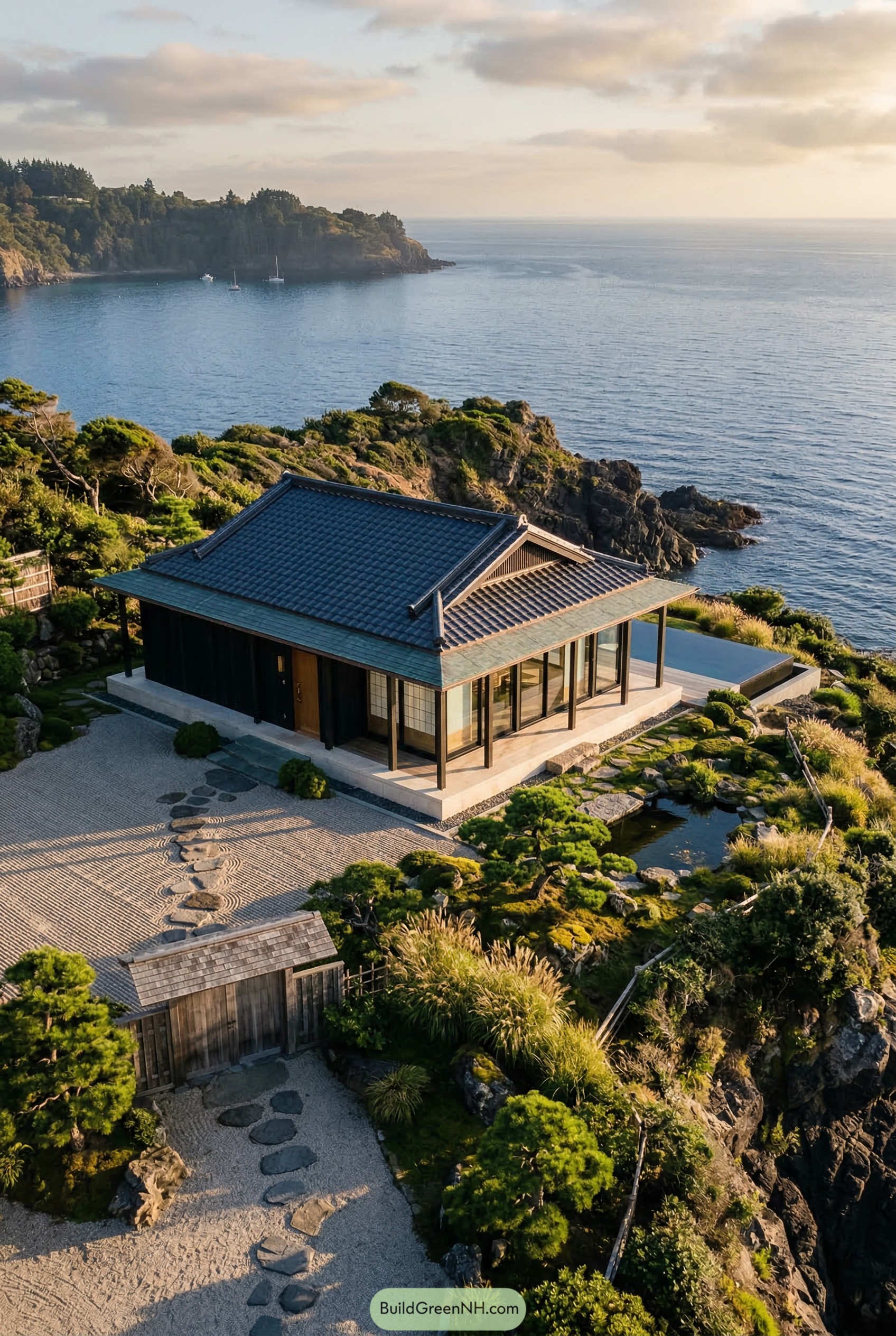



The low tiled roof and deep wraparound veranda borrow from traditional coastal pavilions, while the long glass wall opens the living spaces straight to the horizon. That mix is important because it keeps the house sheltered from salt air and wind, yet still lets the sea feel weirdly close in the best way.
We love how the raked gravel court, stepping stones, clipped pines, and pond turn the arrival into a calm little sequence instead of just a front yard. Even the pool sits so near the cliff it almost feels like the ocean requested a custom edge, and that makes the whole retreat feel beautifully tied to its setting.
Snowbound Onsen Courtyard House
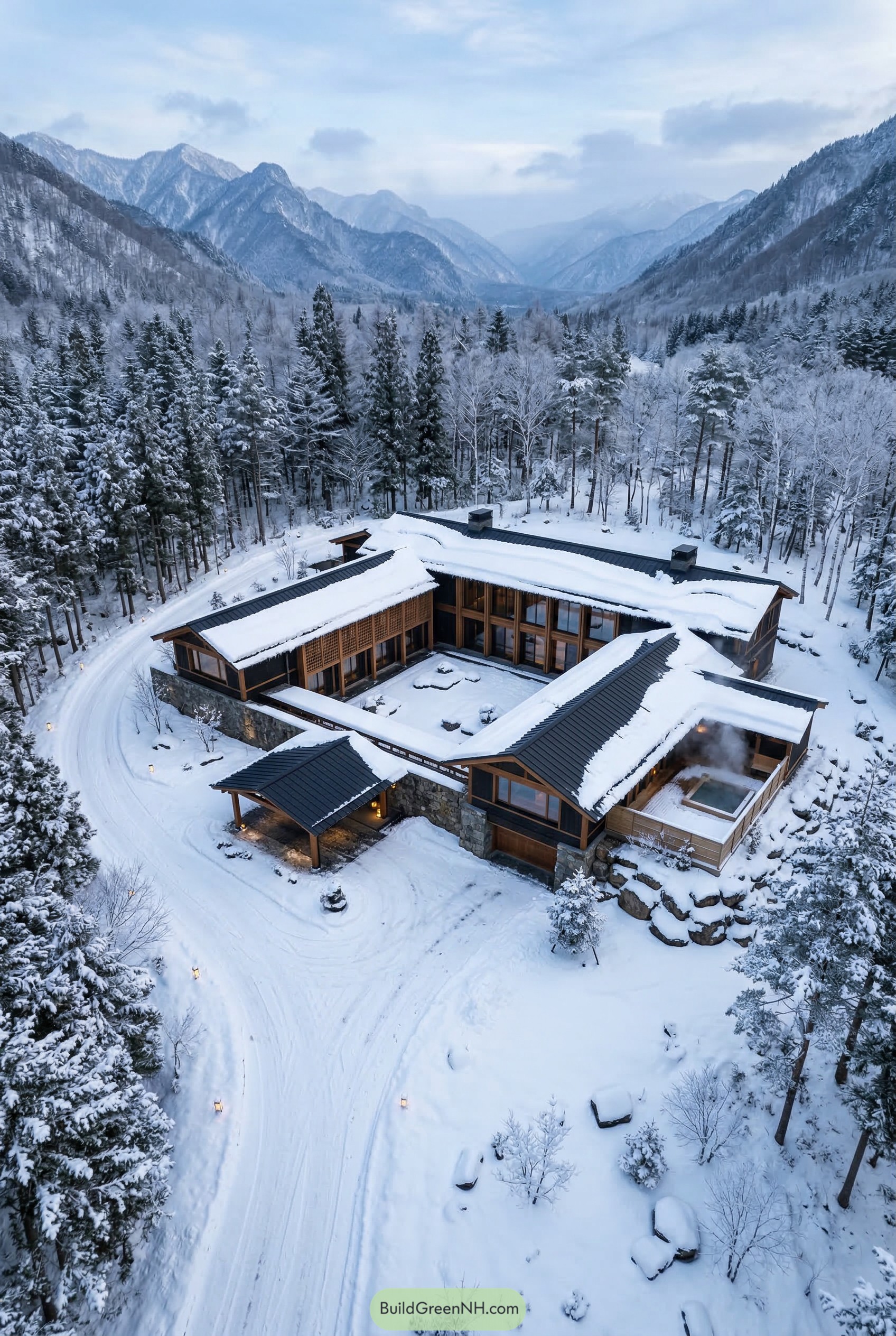

This mountain retreat folds around a quiet inner court, with long black gabled roofs and warm timber framing that nods to classic ryokan architecture. We pulled inspiration from alpine temple compounds and old forest inns, so the house feels tucked into the valley instead of planted on top of it.
That broad low profile matters up here, since deep eaves, stone base walls, and covered links keep snow where it belongs and make every wing easy to reach. Even the outdoor onsen is slipped into a protected corner, which is a smart move and, honestly, a pretty great excuse to sit in hot water while the world freezes around you.
Rainwashed Walled Garden Manor
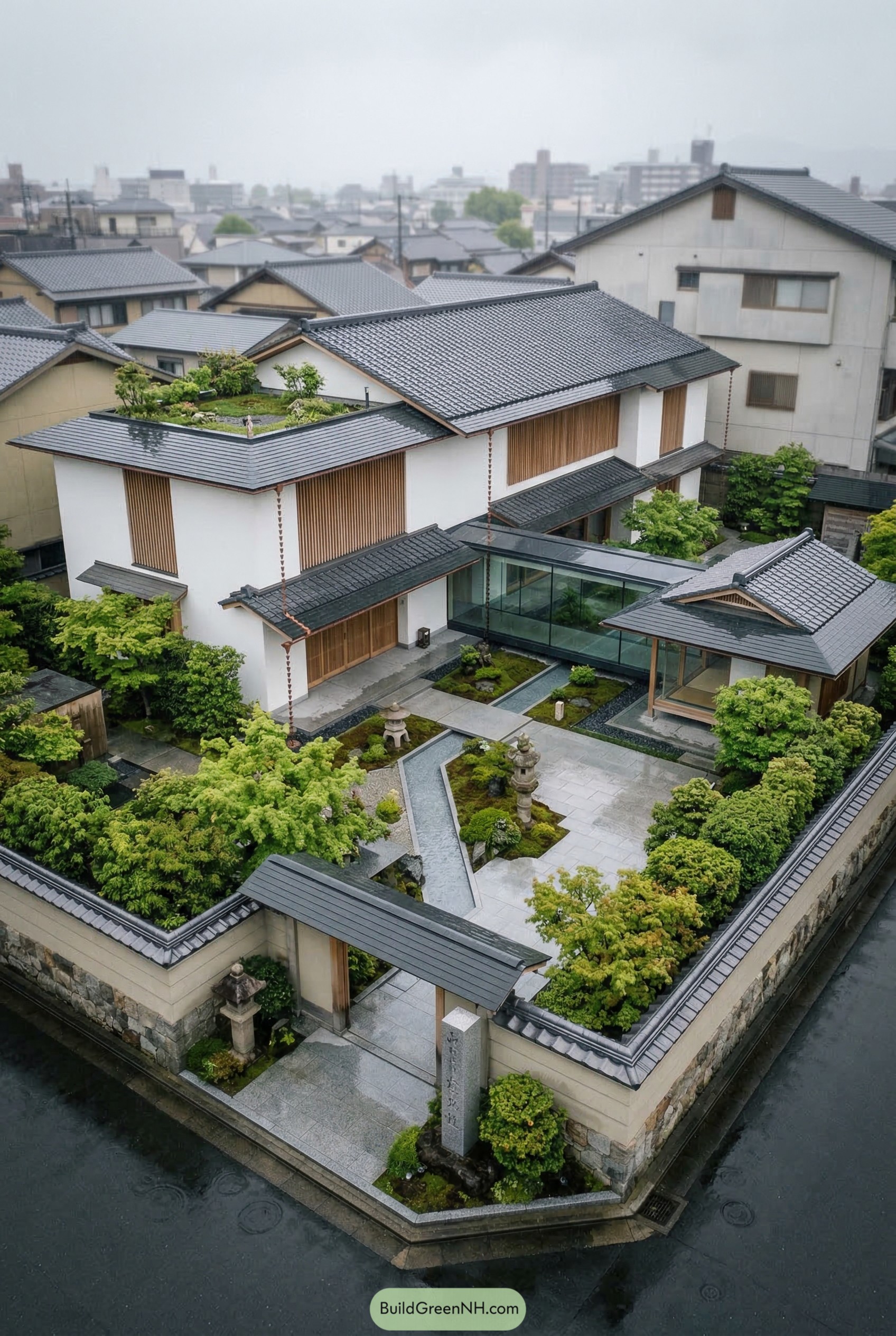

White plaster volumes, dark kawara tile roofs, and crisp timber screens give this residence a calm, grounded presence that feels pulled from old Kyoto town estates. The enclosed garden and stone edged water channels soften the geometry nicely, because a mansion this polished still needs a little green around its ankles.
We shaped it as a private compound, with a glazed connector and a small pavilion that make the whole plan feel layered instead of stiff. Even the planted roof gets in on the act, echoing the courtyard below and giving the upper mass a surprisingly gentle finish, which is a neat trick for a home with walls this sharp.
Summit Reflection Waterside Estate
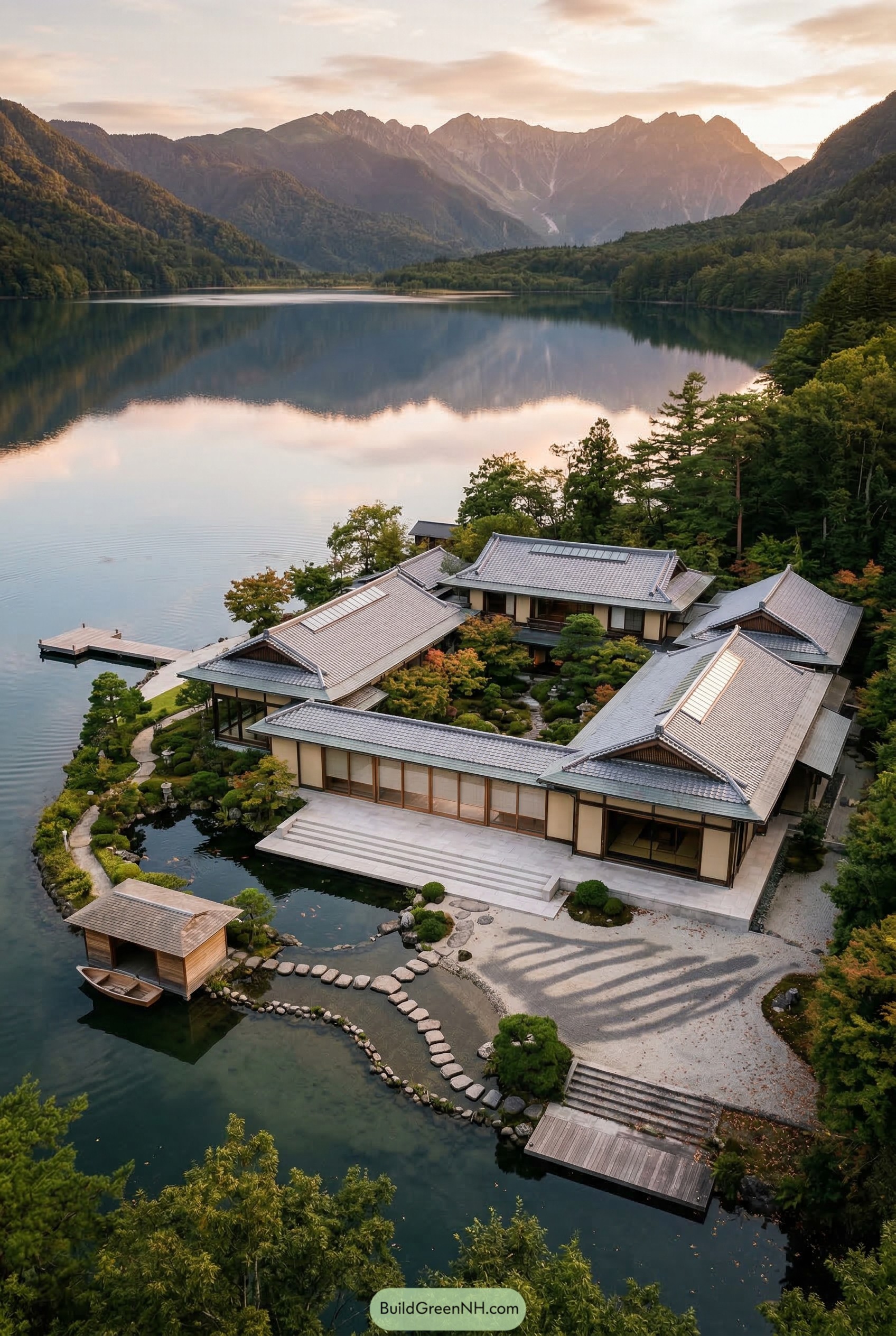

Clustered rooflines and broad eaves give this lakeside mansion a calm, settled feel, like it has been sitting here forever and knew the view would be good. The layout draws from classic temple compounds and garden residences, with connected wings wrapping a quiet inner court instead of showing off too much.
Stone steps, sliding screens, and long verandas keep the design close to the water, while the pond garden and tiny boat house add a little charm without getting cute about it. That layered edge between house, garden, and lake matters a lot, because it turns a big scenic setting into something personal, peaceful, and very easy to sink into.
Bamboo Veil Gabled Haven
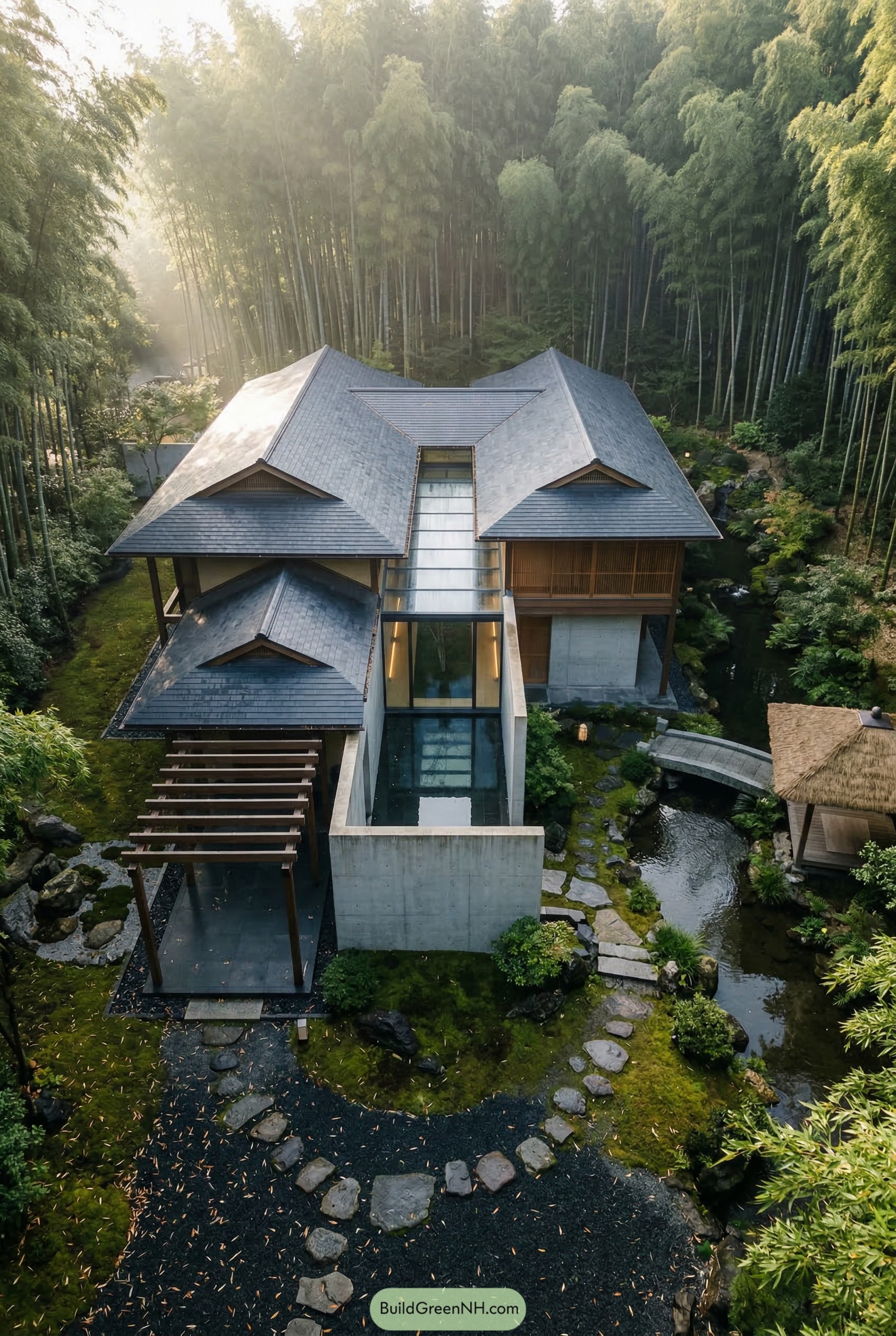

Clustered roof forms give this residence a calm, tucked away presence, almost like it wandered into the bamboo and decided to stay. We shaped the plan around a glazed central spine and still water courts, a move inspired by old garden paths where every turn reveals something quiet and lovely.
Timber screens soften the upper volumes while concrete walls anchor the lower level, so the whole composition feels balanced instead of fussy. The stepping stones, narrow bridge, and mossy edges matter more than they first let on, because they slow you down a little, which is rare and honestly pretty nice for a house with this much style.
Paddy Mosaic Ringhouse
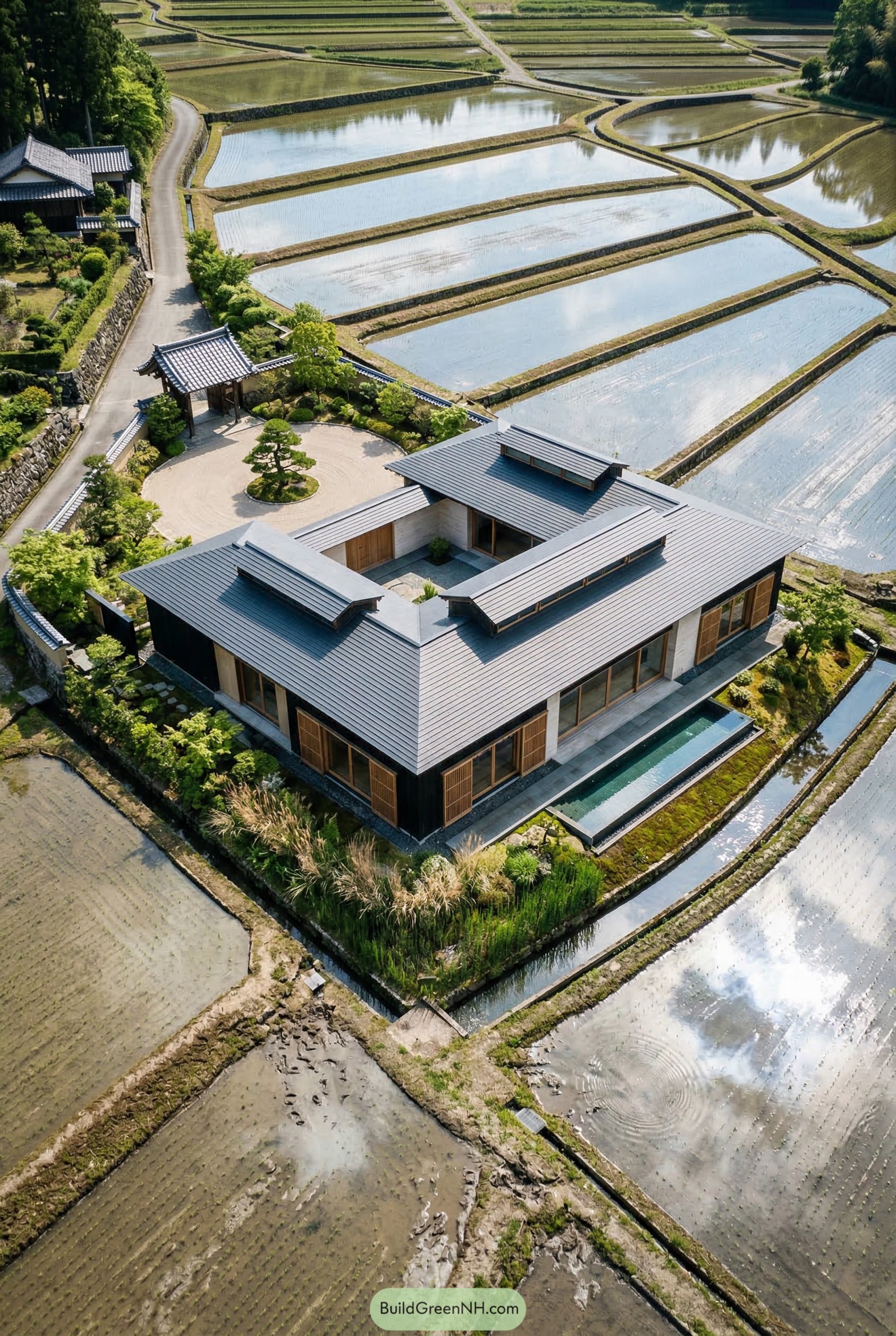

Set in a patchwork of flooded paddies, this low slung residence folds around an open inner court and stays beautifully grounded. The layered roof pulls the plan inward, so every wing feels protected while the center stays calm and almost temple quiet.
We took cues from the field geometry all around it, which is why the long edges, stone borders, and narrow water channel feel so natural here. Sliding timber screens and broad eaves keep the exterior refined but not fussy, and that raked forecourt with the sculpted pine is basically the house clearing its throat before it speaks.
Basalt Furo Residence
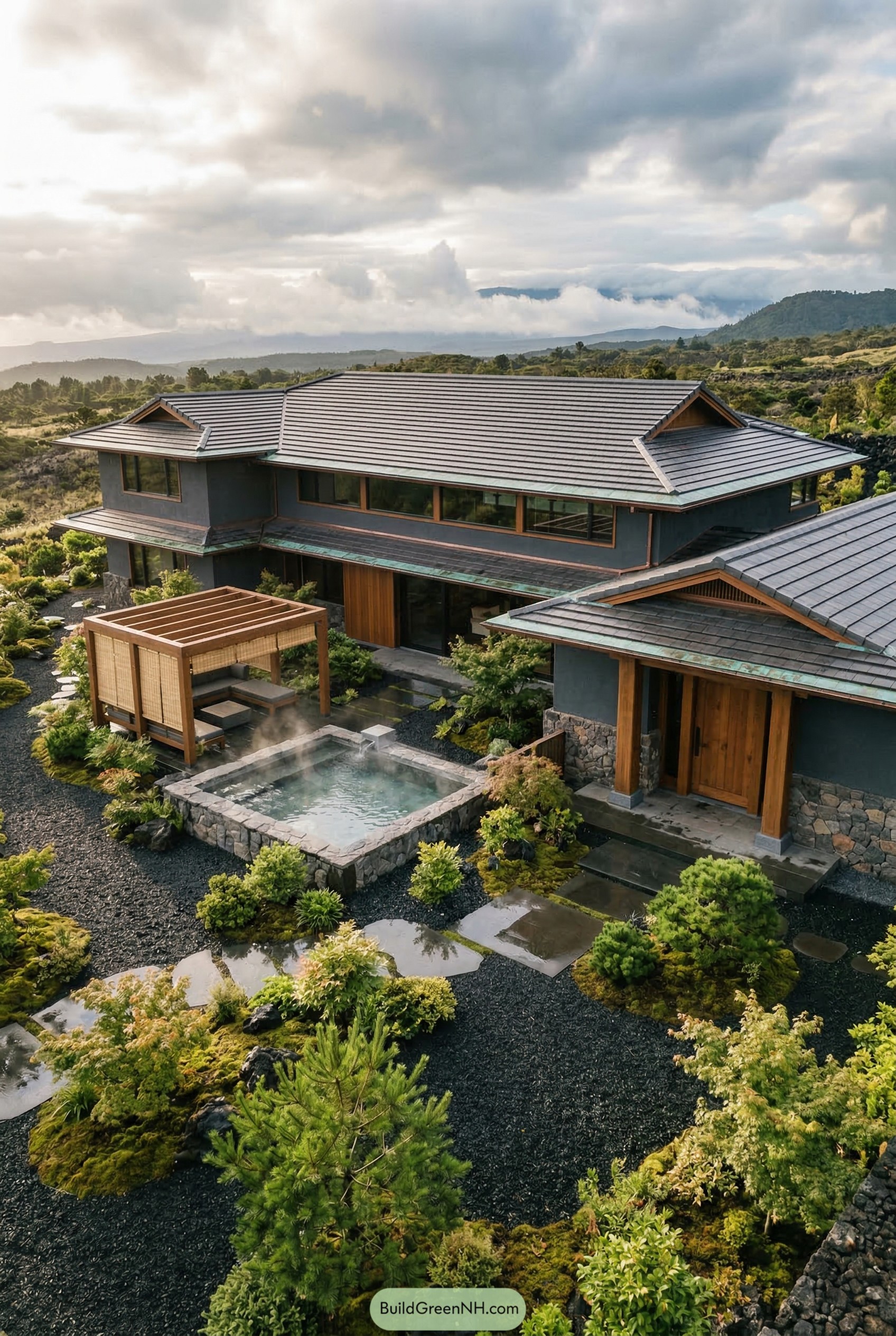

The wide eaves and stacked hip roofs give this mountain residence a grounded calm, while the deep charcoal walls and cedar trim keep it crisp without feeling fussy. We shaped it with cues from old ryokan and the rough volcanic landscape, so the house settles into the site instead of puffing its chest out like a resort peacock.
At the center, the square stone soaking pool and simple timber pergola carve out a quiet ritual spot, and the dark gravel with mossy planting makes every path feel considered. That contrast matters because it stops the big home from feeling bulky, and the low stone base pulls the whole thing back to the rugged ground, which just feels right.
Tidemark Crescent Compound
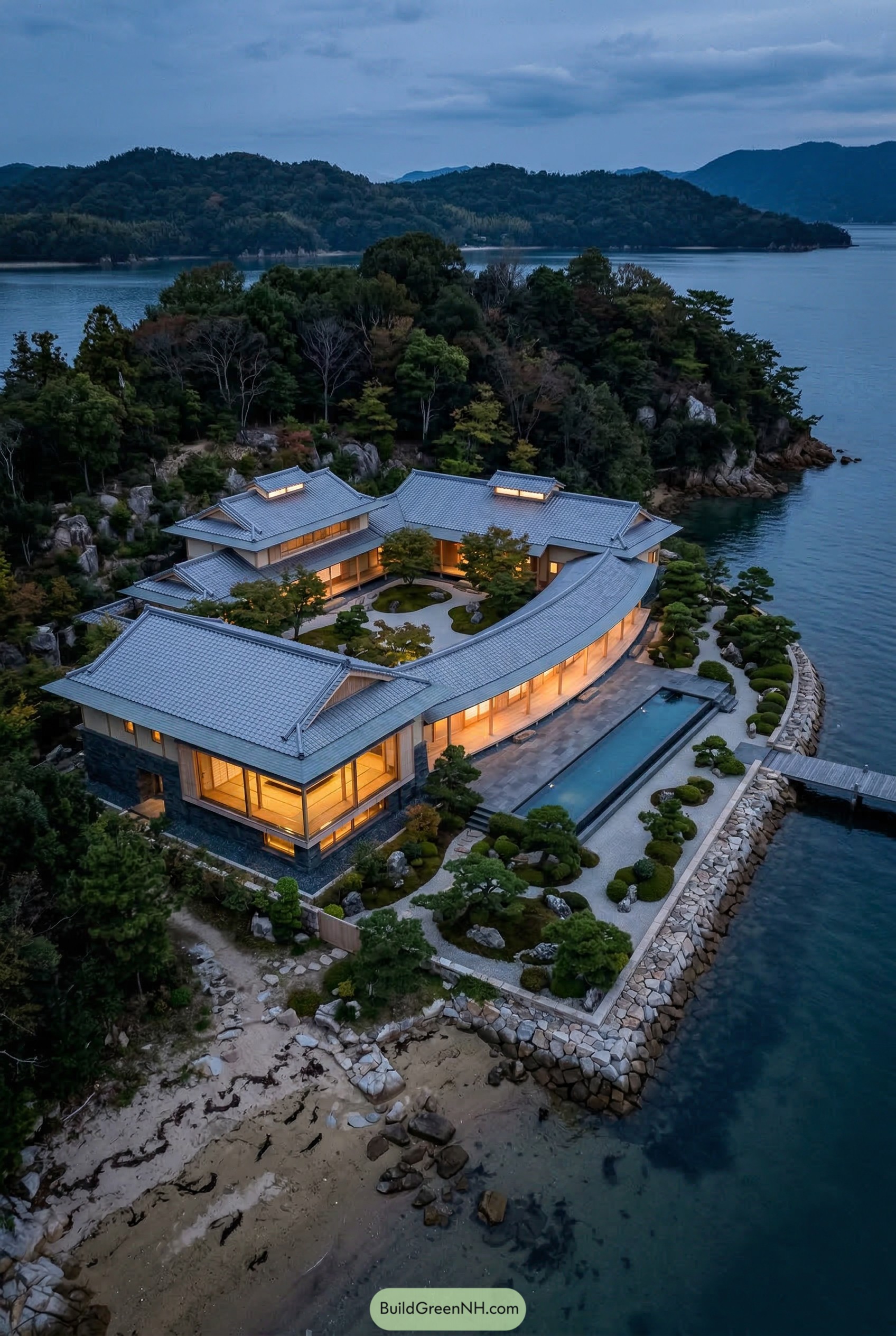

Set on a rocky point, this residence bends into a gentle crescent, pairing temple style rooflines with a long waterside wing that almost hugs the bay back. We centered the plan on a quiet courtyard garden so every main room has somewhere calm to rest its gaze, which feels smart because the view outside is a bit of a show off.
The tiled roofs, broad eaves, stone plinth, and clipped pines pull from coastal shrine towns and refined sukiya homes, though the overall footprint is far more expansive. That curve matters because it softens the scale, tucks outdoor spaces away from sea wind, and gives the pool terrace a sheltered edge right above the water.
Lacquered Eaves Hillside Sanctuary
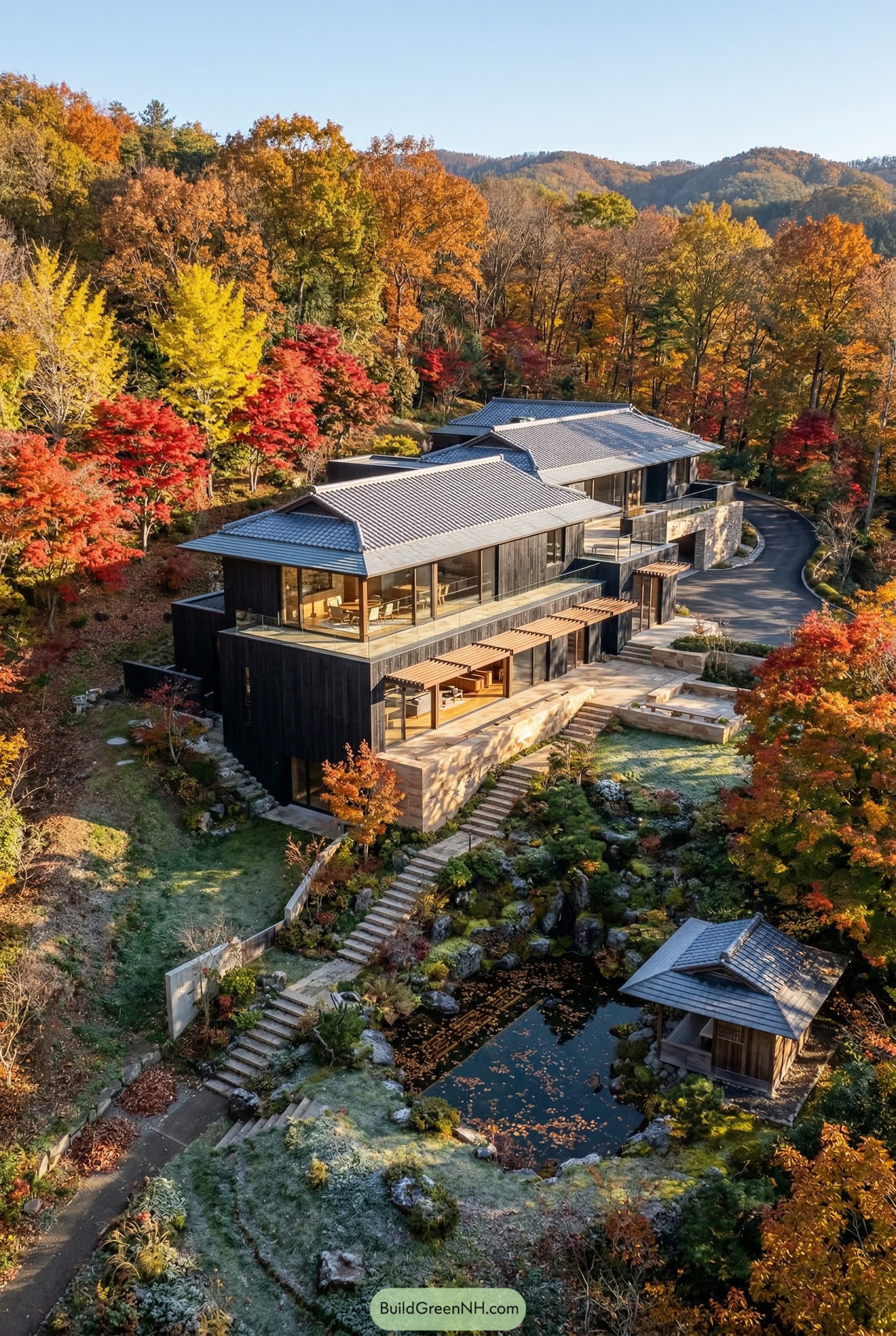

Spread across a wooded slope, the mansion is composed as a series of long pavilions with tiled roofs, deep eaves, and glass wrapped terraces that keep every room tied to the hillside. It borrows from mountain ryokan and old strolling garden estates, so the whole plan settles into the terrain rather than puffing its chest out.
Stone retaining walls, broad stairs, and a pond garden guide you downhill to a small pavilion, which makes the grounds feel calm and a bit ceremonial without getting fussy. Dark timber cladding anchors the upper levels against the riot of autumn color, and the covered outdoor rooms matter because they stretch daily living outside even when the weather gets a little grumpy.
Skyline Karesansui Enclave
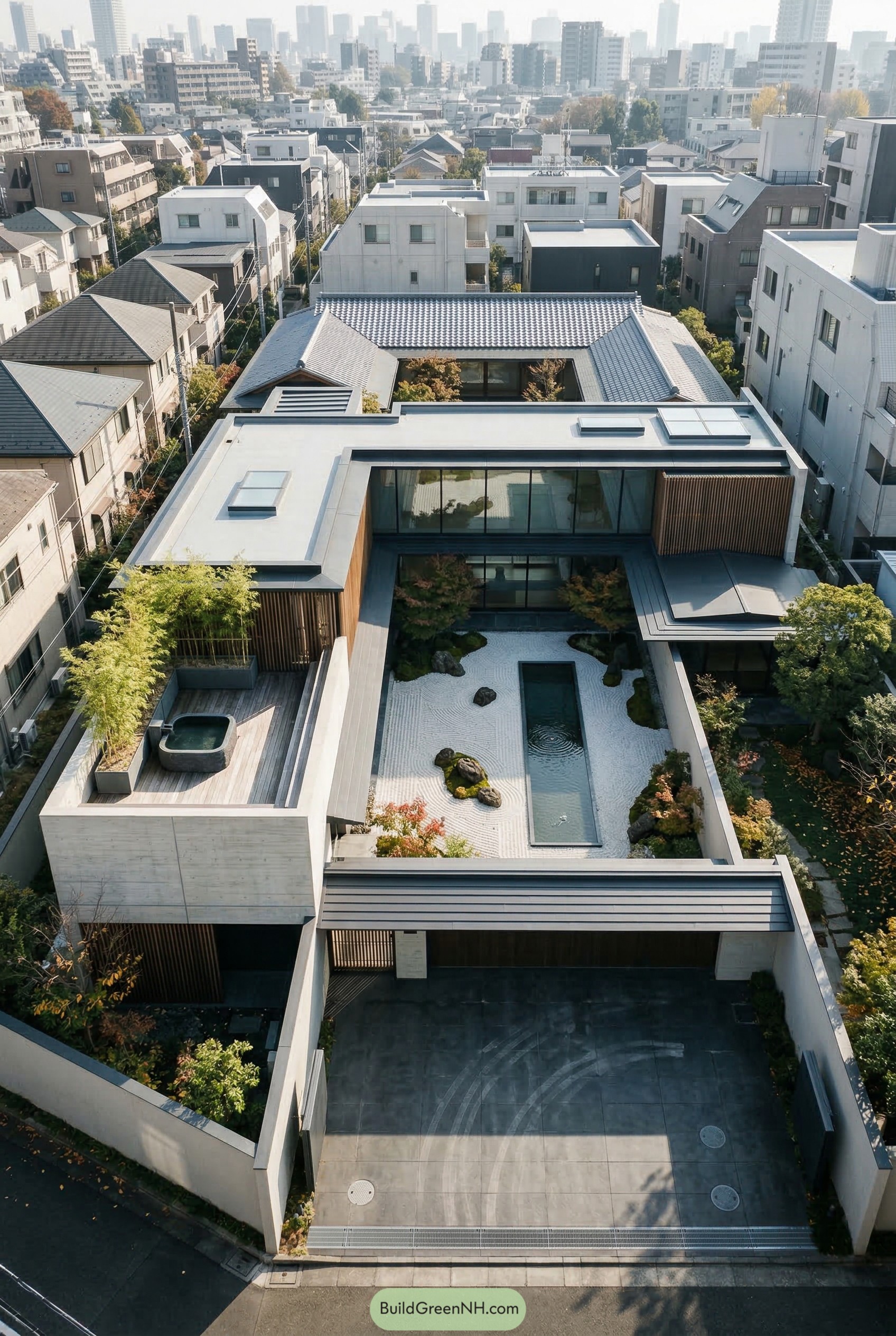

Set behind tall concrete walls, this city mansion wraps around a raked white courtyard and a slim reflecting pool, turning a tight urban plot into a calm pocket that feels almost suspiciously quiet. Flat roof planes, cedar screens, and one tucked tiled volume nod to traditional Japanese houses without going full history lesson.
We planned the rooms to face gravel, water, stone, and planting at every turn, so privacy comes easy and the garden never feels like an afterthought. An outdoor soaking terrace hides off to the side like a neat little secret, which is frankly a very nice trick in the middle of the city.
Sencha Furrow Engawa Manor
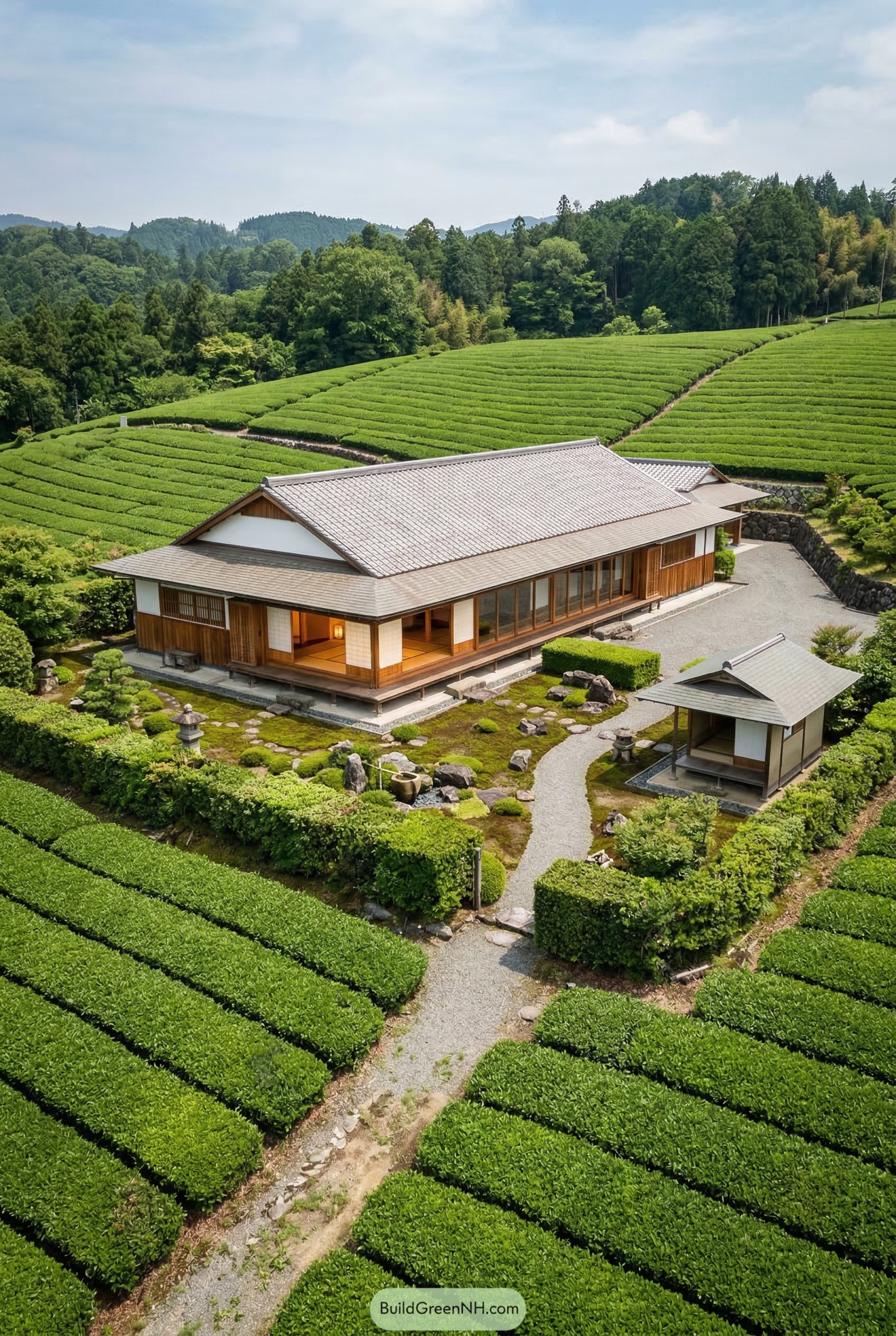

The long, low layout settles into the tea terraces like it grew there, with a broad tiled roof, timber cladding, and a deep engawa that wraps daily life right to the edge of the garden. Sliding screens keep the rooms calm and private, while the extended veranda makes the whole house feel open without being too on display.
We took cues from old tea country estates, so the stone path, clipped hedges, and small detached pavilion feel purposeful rather than fancy for the sake of it. That little garden court softens the step from plantation to home, and honestly, it gives the place a quiet confidence that does not need to show off.
Kawa Gorge Aerie
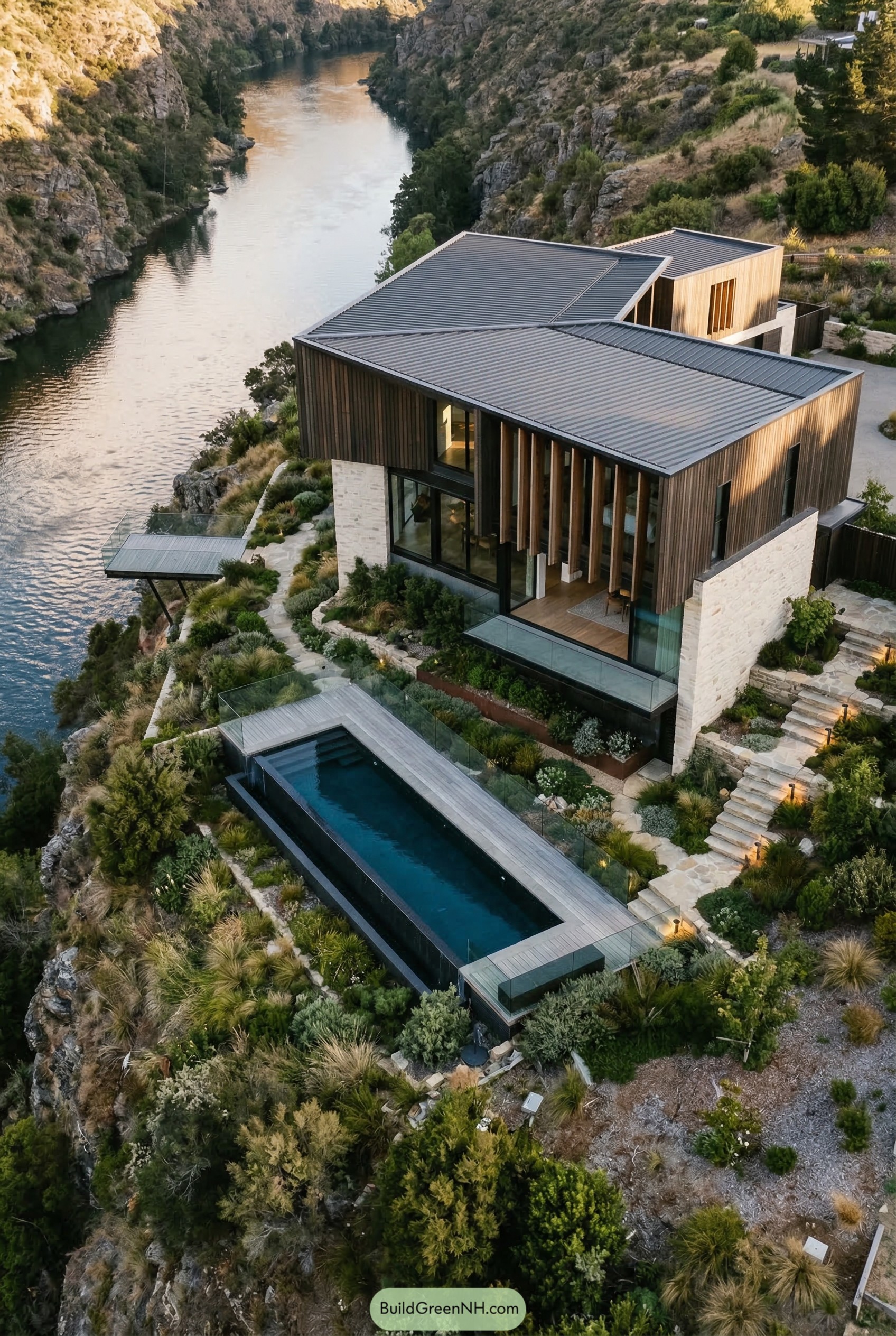

We shaped this retreat as a set of offset volumes that step with the cliff, so nearly every room reaches toward the river without getting too flashy about it. Deep charcoal roofs, cedar screening, and pale stone walls pull from Japanese mountain houses, then sharpen the whole silhouette into something crisp and current.
The lap pool sits like a calm water blade along the edge, echoing the gorge below and giving the terraces a very collected mood, which is a fancy way of saying it looks ridiculously good. Glass balustrades, native planting, and a slender path to the landing keep the descent layered and quiet, so the house settles into the slope instead of wrestling it.
Windcarved Sand Court
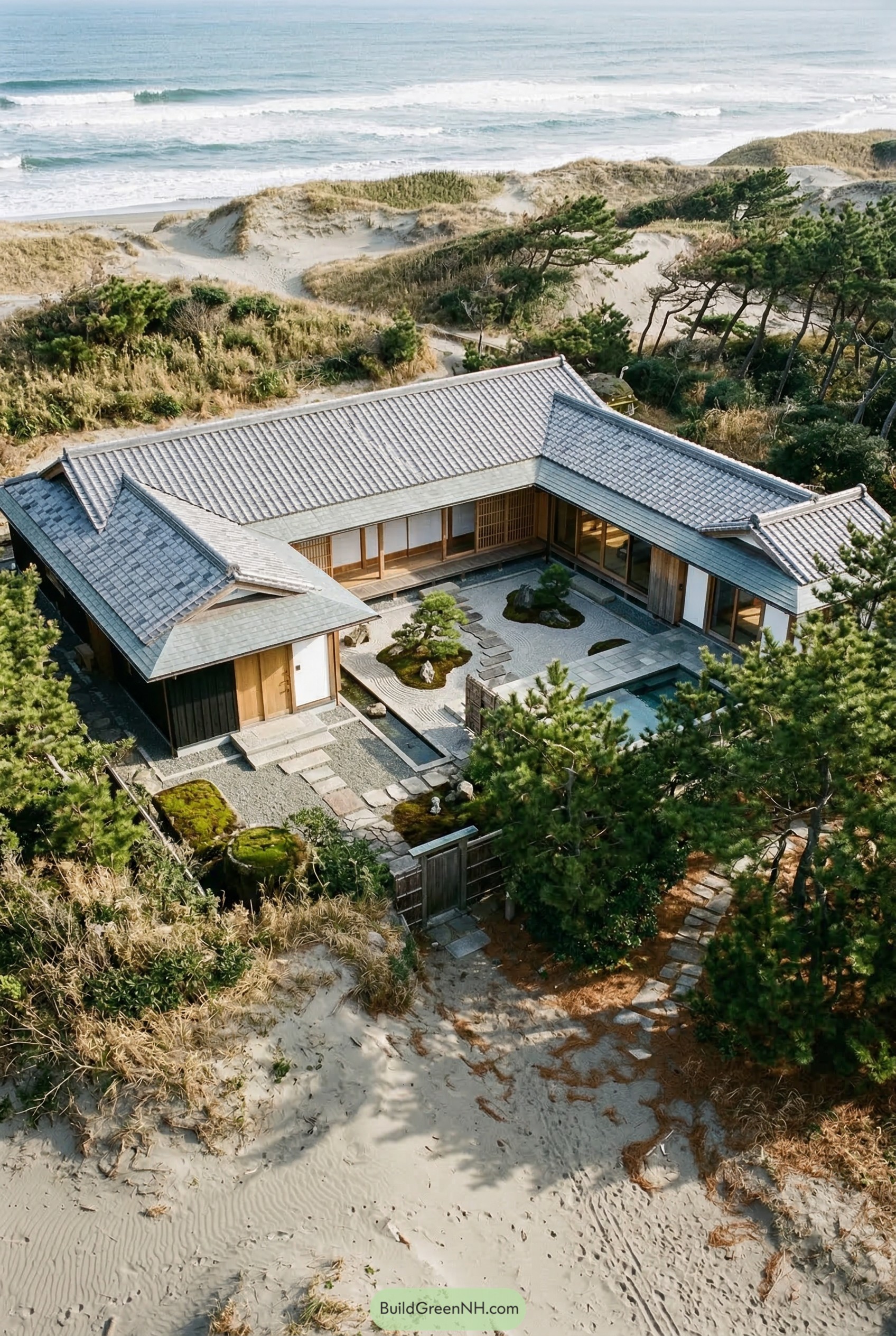

Set low into the dunes, the house wraps a quiet gravel court with crisp tiled roofs and deep timber overhangs, so the ocean feels close but the gusts do not get to be bossy. That inward plan borrows from older seaside compounds, and it matters here because the garden becomes the calm center while pines and sand take care of the wild perimeter.
Sliding screens, white plaster walls, and a stepping stone path keep the composition spare, while the small soaking pool slips in a touch of comfort without getting flashy. We love how the sculpted rocks and bent pines make the whole place feel settled into the shore, like it has been politely arguing with the wind for years.
Lantern Pond Cloister
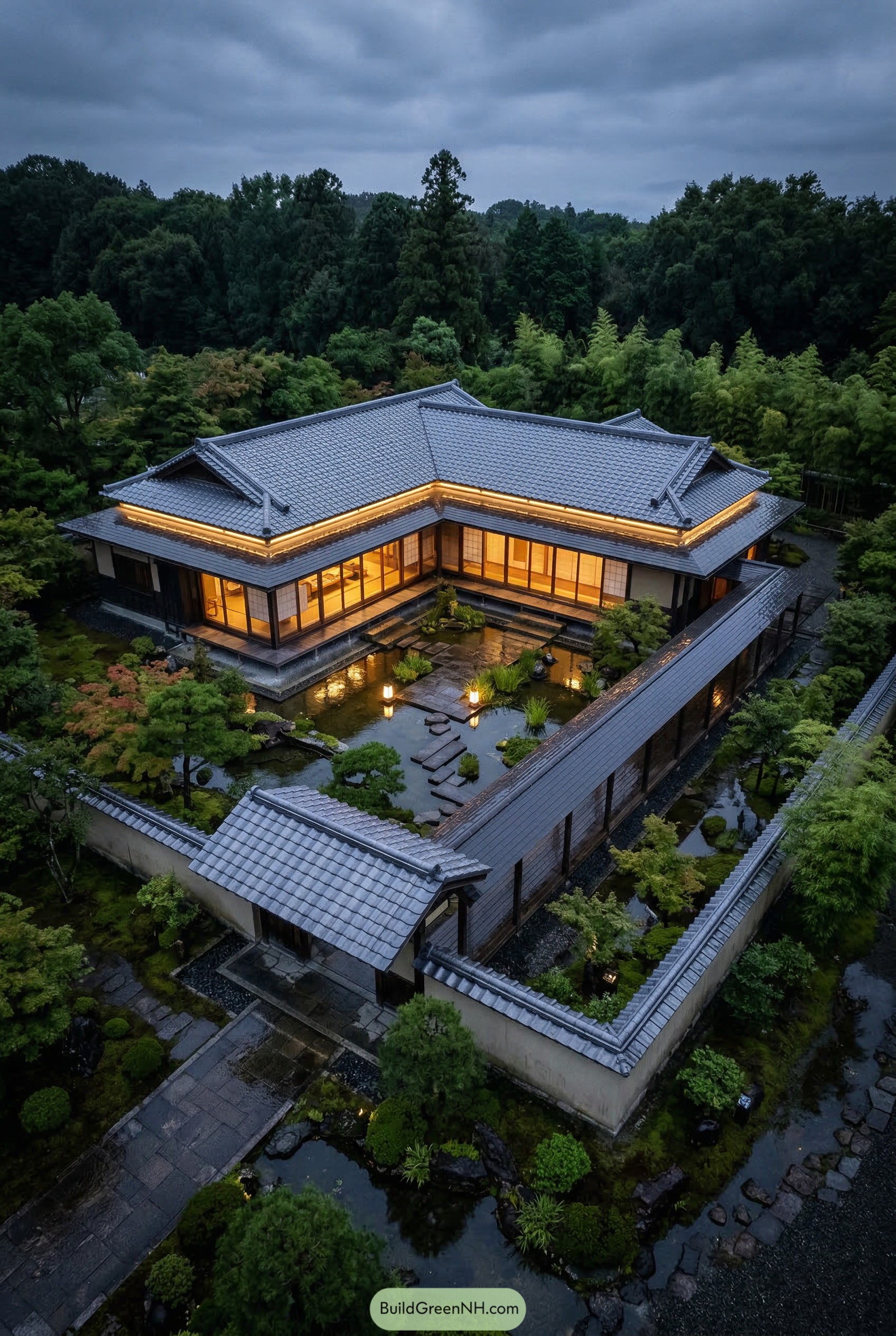

The house wraps around a pond garden, so the courtyard becomes the quiet center instead of a leftover patch of landscaping. That inward plan gives nearly every room a green outlook and makes the long engawa feel tucked in from the weather.
Layered tile roofs, shoji walls, and the covered perimeter walk pull from temple compounds and old Kyoto villas, though this one feels a touch more serene and a little less formal. Stepping stones, mossy edges, and shallow water soften the whole composition, and honestly, the rain only makes it look more expensive.
Sakura Bridge Quadrangle
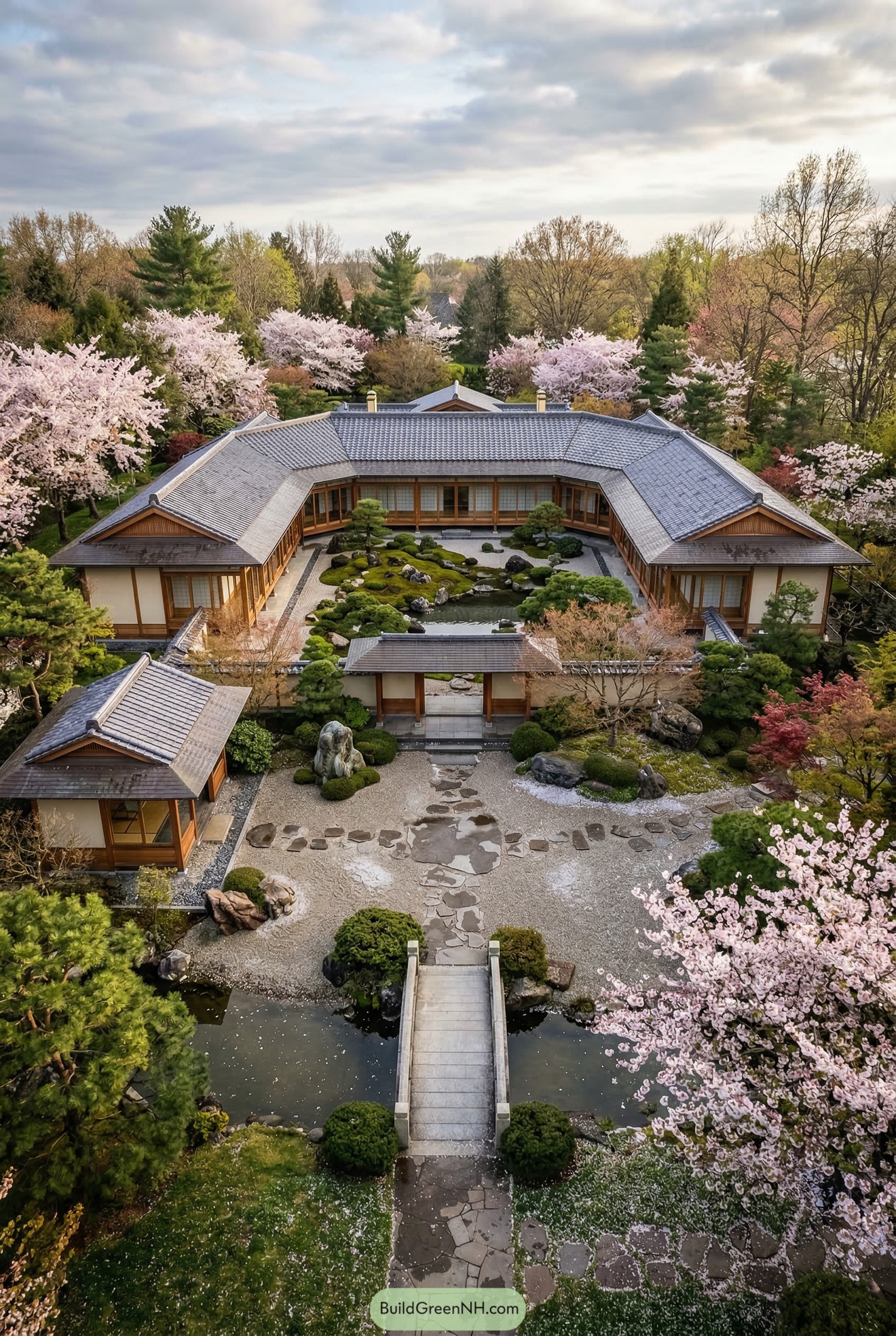

The plan folds into a near square around a mossy inner garden, with deep tiled roofs and timber galleries pulling every room toward the center. That inward layout keeps the place calm and private, which is handy when the cherry trees outside are showing off again.
A stone bridge, gate pavilion, and pond set up an arrival inspired by temple precincts, then clipped pines and rock islands soften it for daily life. We love how the engawa and shoji lined edges keep the garden close at every turn, so even a quick walk across the house feels a bit ceremonial, but not fussy.
Palm Grove Inkstone Residence
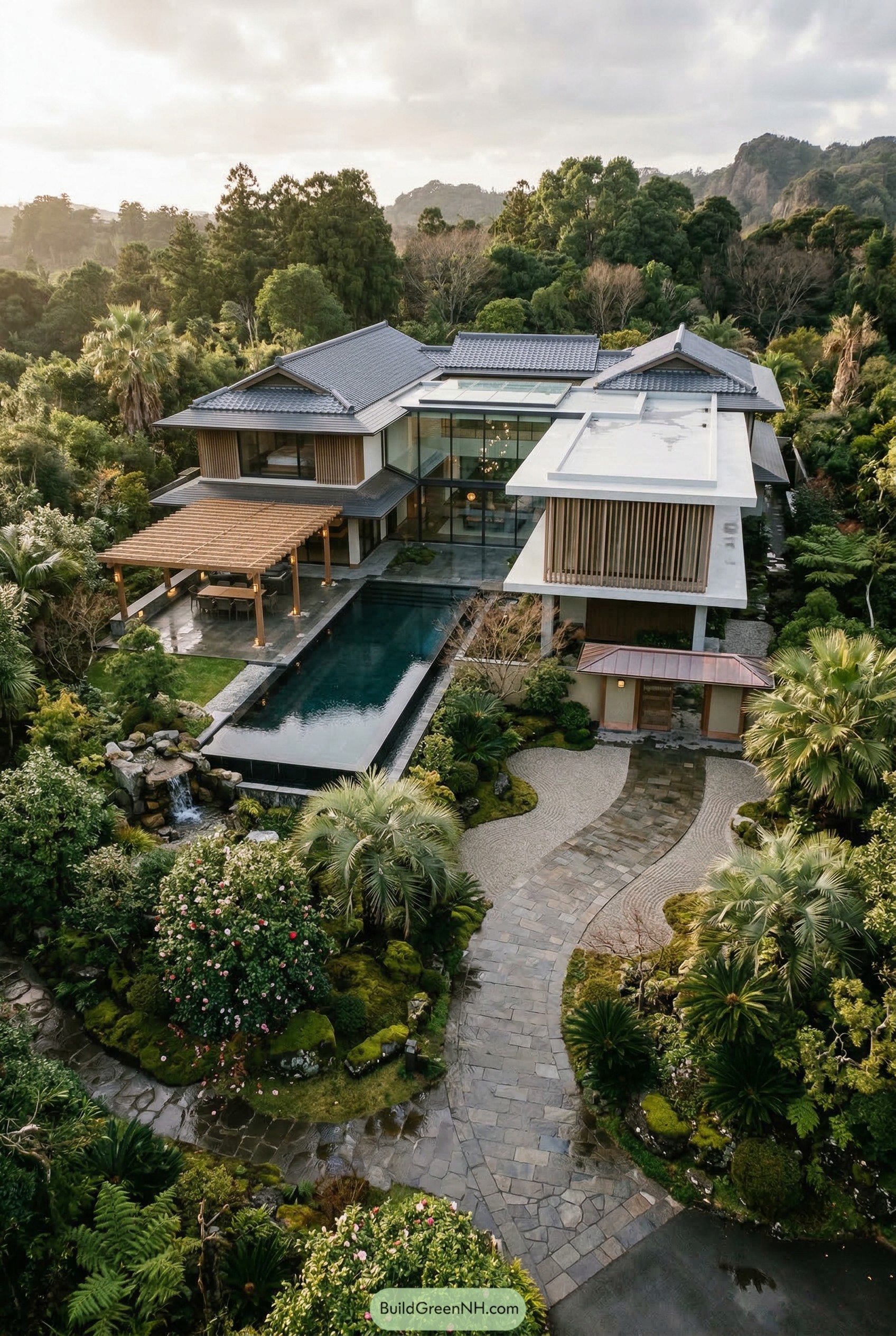

Set low beneath layered tiled roofs, the residence blends crisp modern volumes with the calm posture of a traditional villa. The long black pool slices through the plan like an inkstone groove, which sounds fancy, but it really just makes the whole place feel grounded and very serene.
Timber screens, deep eaves, and the pergola terrace soften the glassy edges and give every room a gentle connection to the garden. We shaped the entry path to wander past moss, stone, and a small cascade first, because arriving should feel like a slow exhale, not a sprint to the front door.
Pin this for later:

Want More?
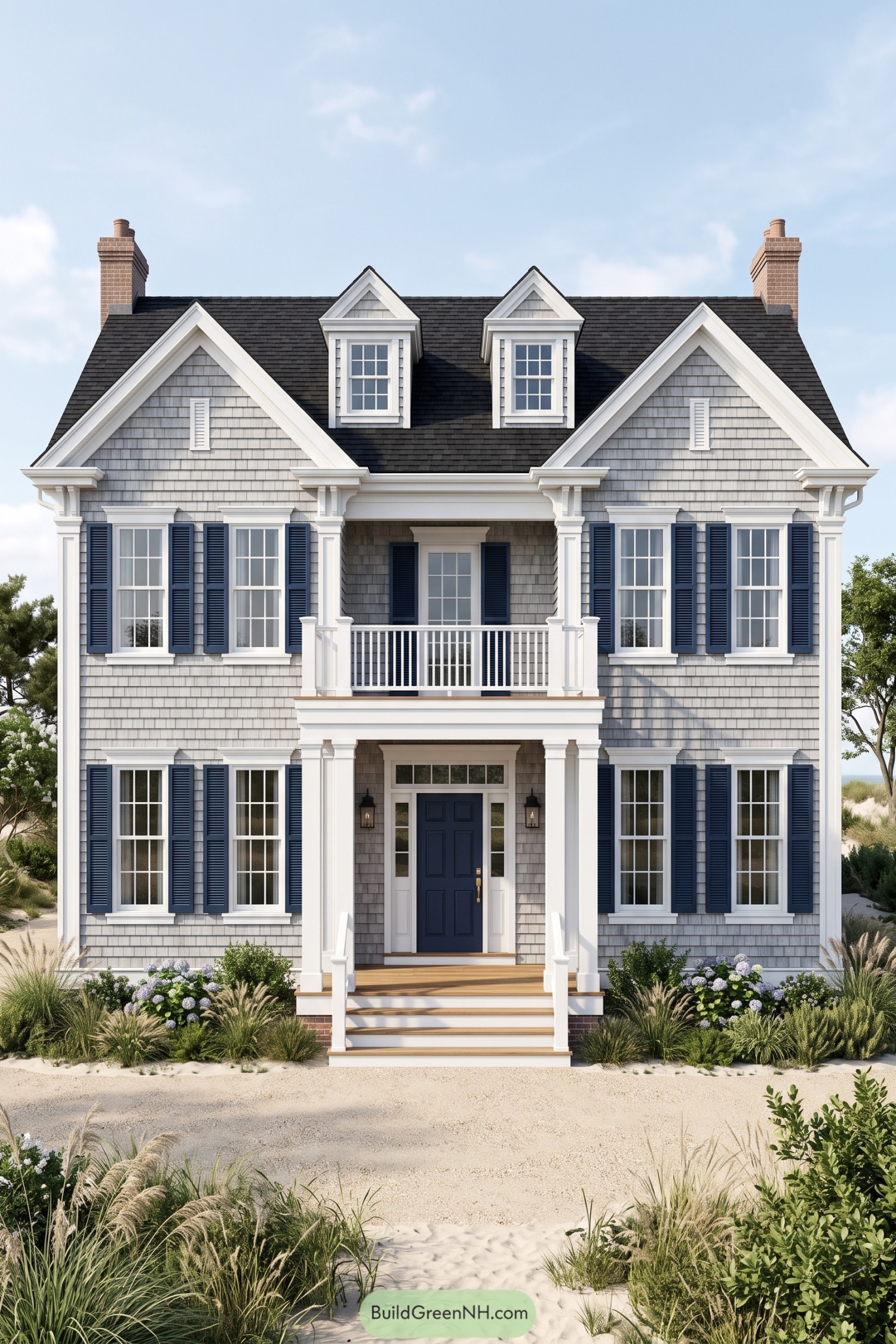 20 Coastal House Front Elevations To Make Your Home The Star Of The Shore
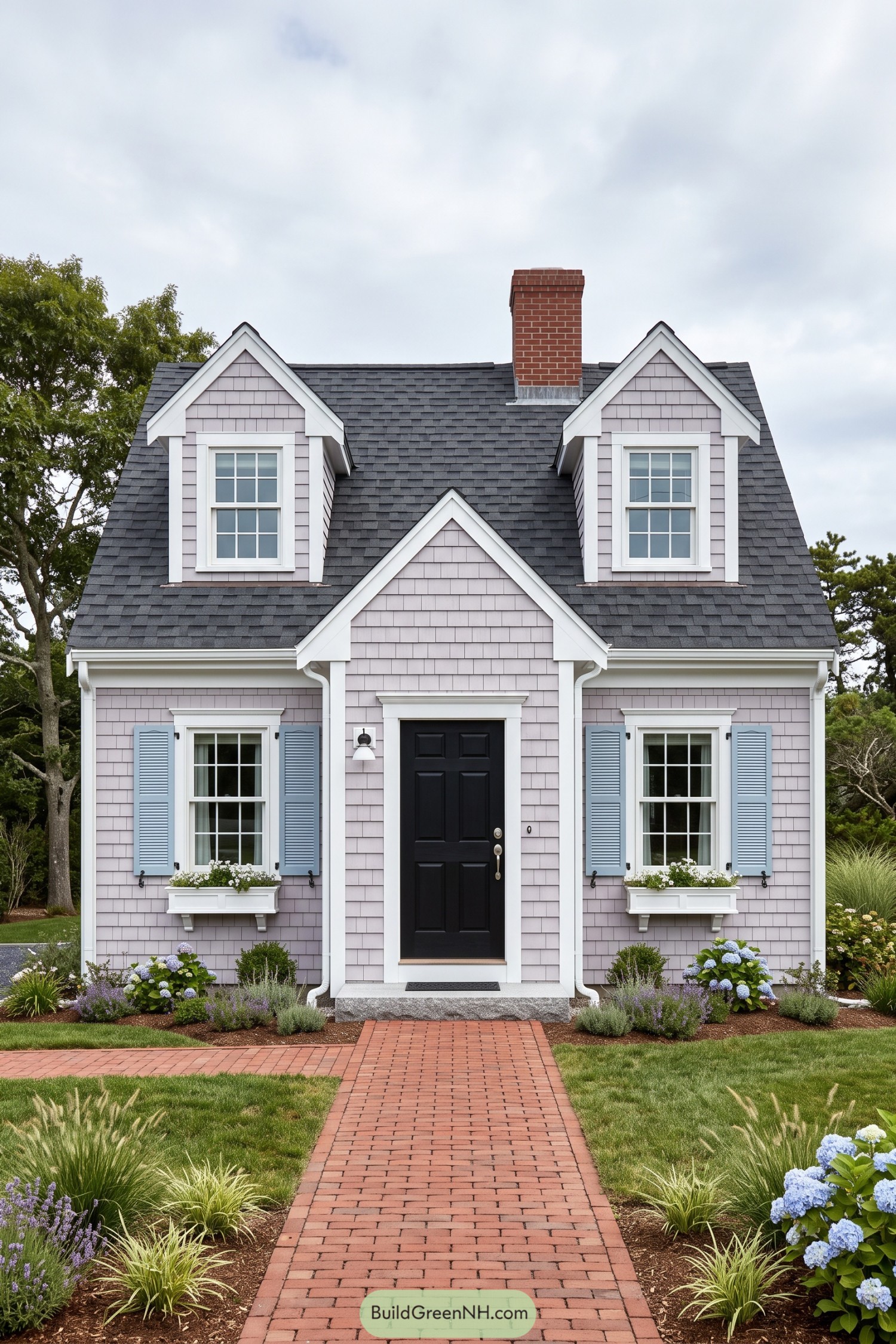 20 Cape Cod House Front Elevations to Bring Storybook Magic to Your Street
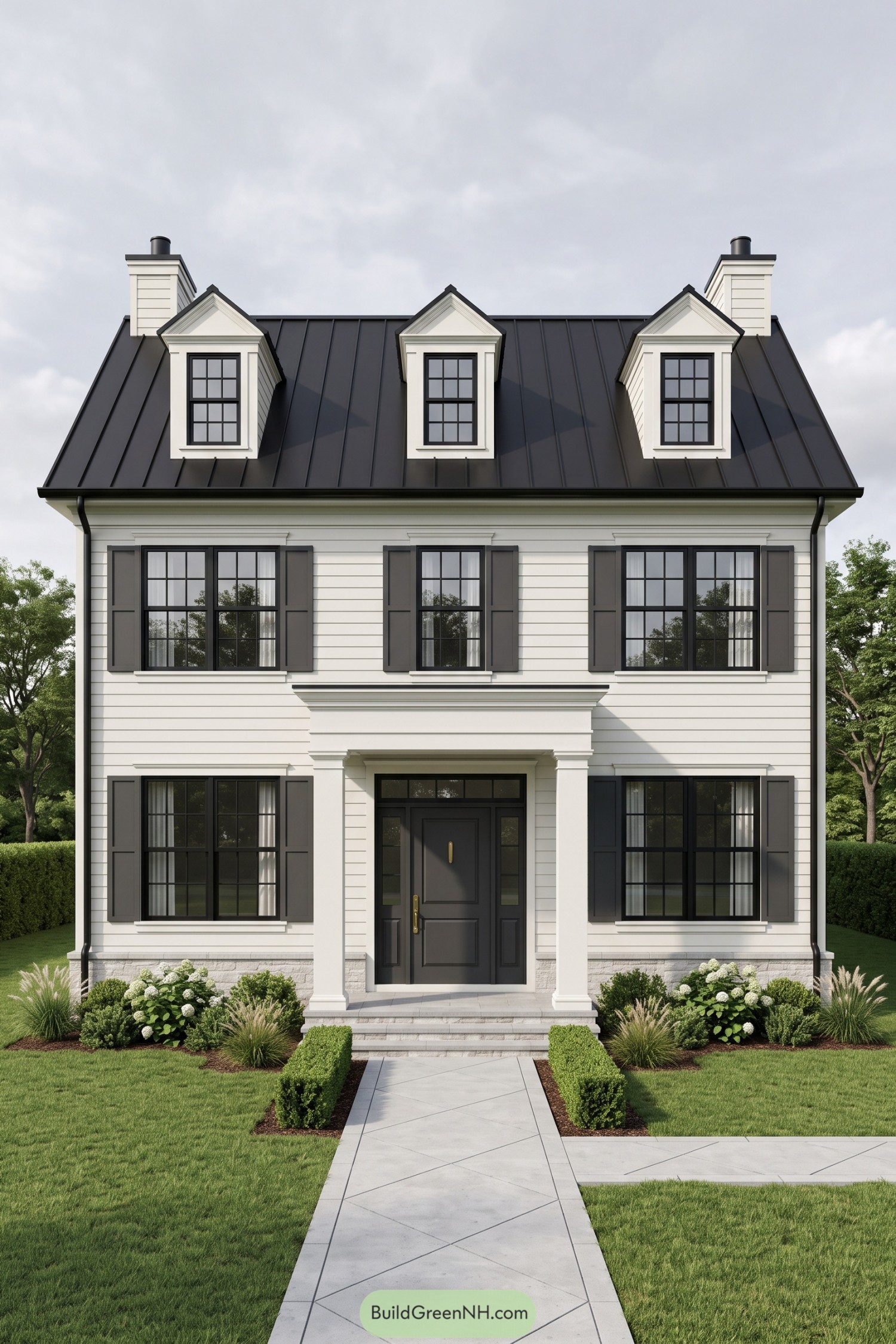 20 Stunning Colonial House Front Elevations to Turn Your Home Into a Neighborhood Legend
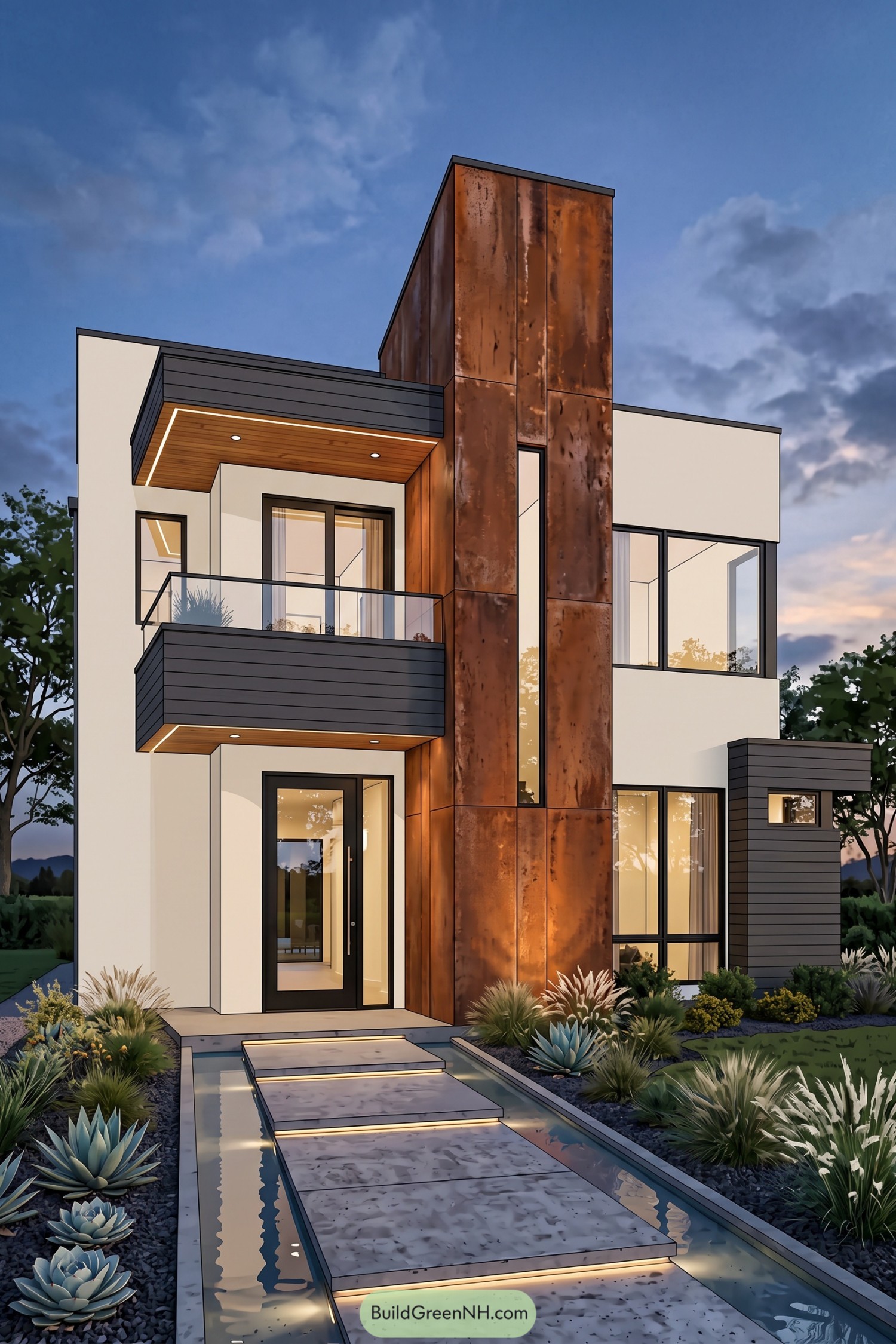 20 Stunning Modern Facade Elevation Designs That Turn Everyday Homes Into Living Art
 20 Daring Folded Roof Houses That Turn Rain Into Art
Table of Contents