Last updated on · ⓘ How we make our designs
You’ll see how calm Japanese-inspired houses use deep eaves, quiet in-between spaces, and even a very smug pine to make sea, snow, lava, and rain feel like part of home.
These houses show what Japanese inspired design can be when it stays calm and really pays attention to place. We took cues from minka, teahouses, temple compounds, ryokan, and old coastal homes, then let cliffs, snow, rice fields, lava, dunes, and rainy gardens push each one into its own mood.
As you go through them, keep an eye on the roofs, the deep eaves, the courtyards, and those little in between spaces where the house meets water, stone, moss, or a very smug pine. A lot of the magic sits there, not in flashy moves, which is nice because buildings that shout are usually a bit exhausting.
You will see homes that open wide to the sea, fold inward around quiet courts, climb onto planted rooftops, or stretch out like small villages by the water. And yes, there are reflecting pools, sliding screens, and garden paths that make arriving home feel just a little more important than dumping your keys on a counter.
Cliffside Zen Retreat
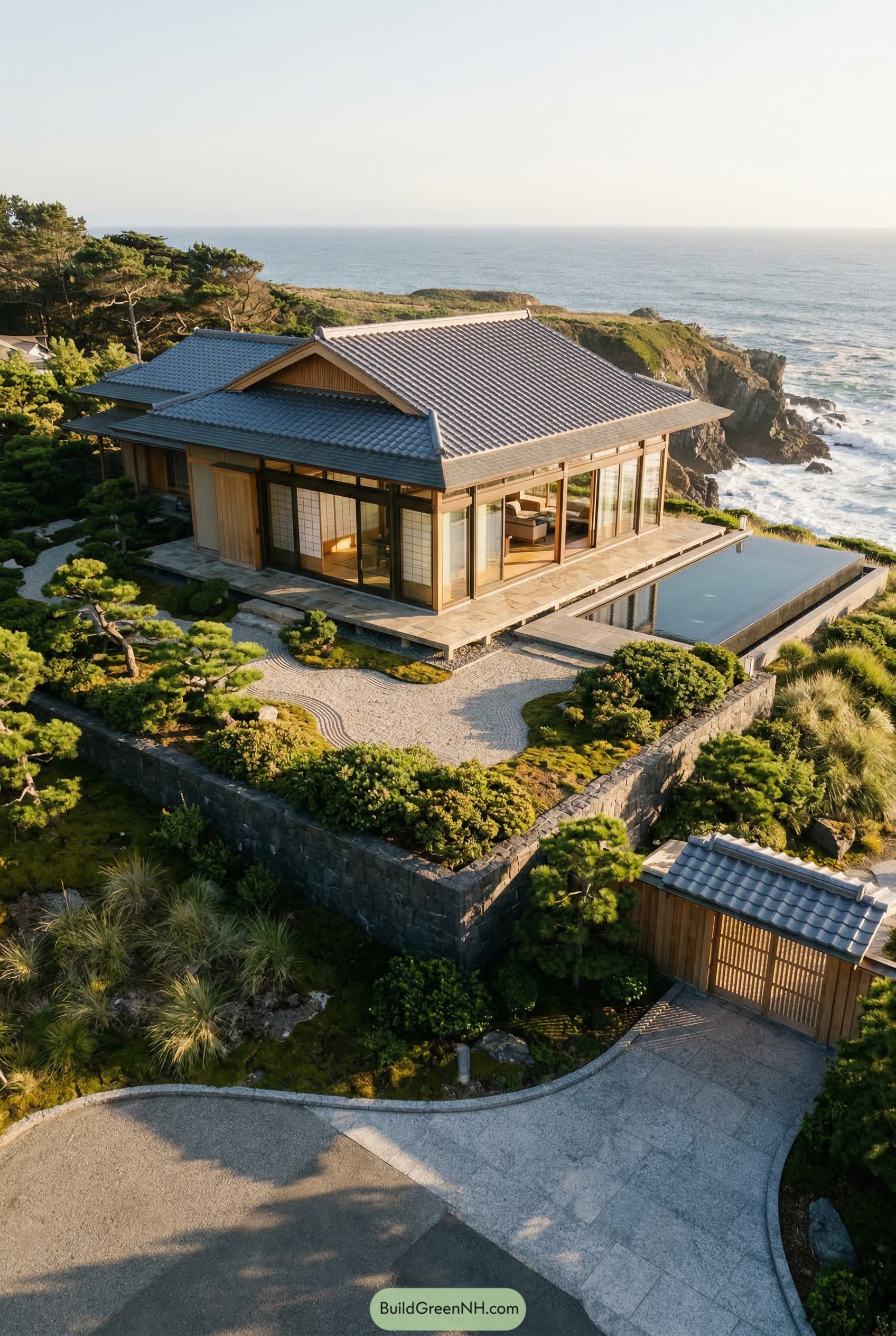

Set right above the surf, the house keeps a calm, grounded profile with a broad tiled roof, timber framing, and deep overhangs that tuck it neatly into the coast. The idea borrows from traditional Japanese homes and seaside inns, so it stays low and composed while opening wide to the ocean, which is honestly the only sensible move here.
Sliding shoji panels, full height glazing, and the stone terrace soften the boundary between indoors and garden, while the reflecting pool pulls the horizon right up to the house. The raked gravel court, clipped pines, and dark stone walls bring order to the site and make the approach feel serene, with just a tiny bit of movie set energy.
Snow Crowned Forest Minka
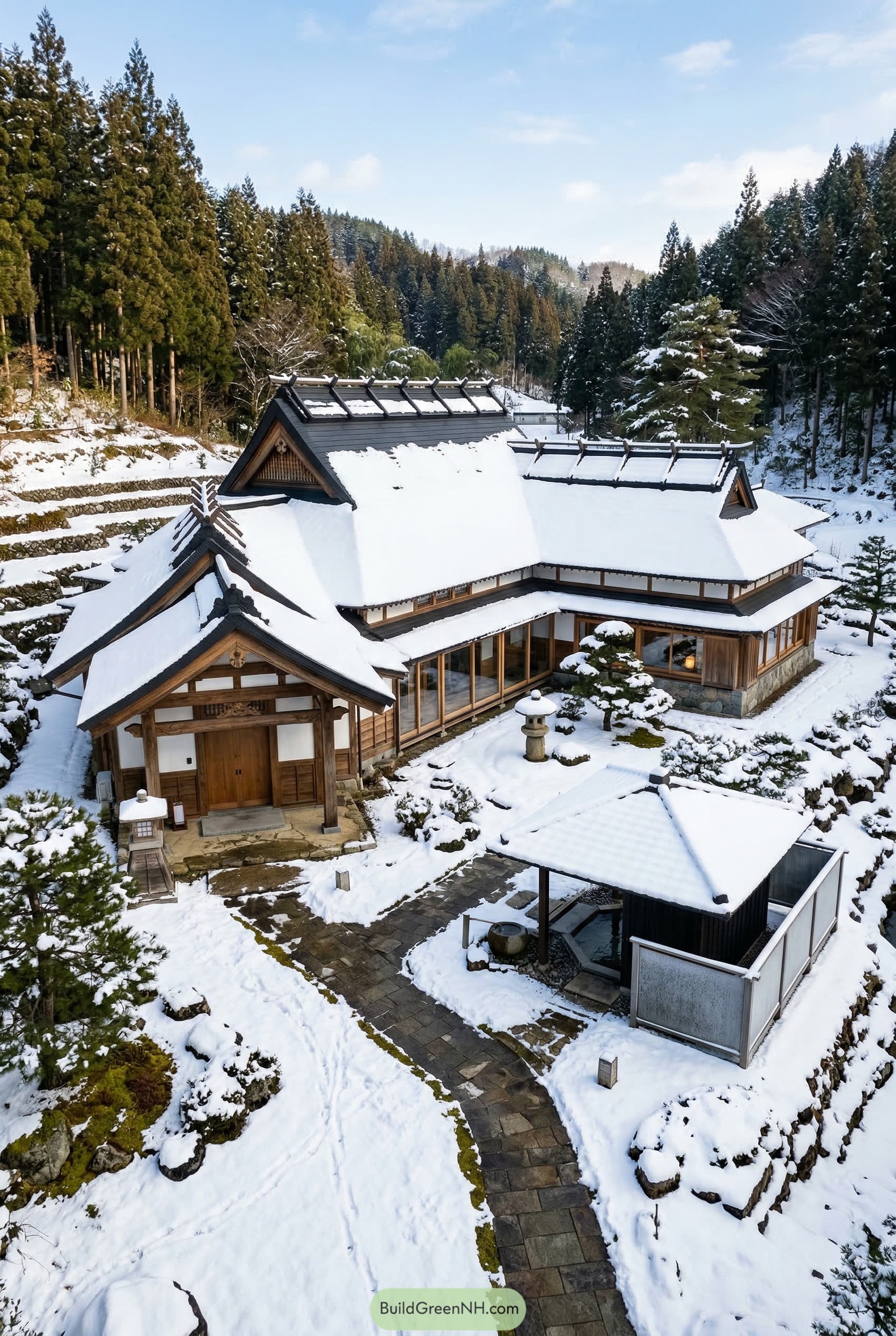



Borrowing from old mountain minka the design leans into steep layered roofs and deep eaves so winter snow does not get too comfortable. The formal front gable gives the house a quiet sense of arrival while the long low wings settle naturally into the hillside.
Timber framing, white infill walls, and a stone plinth keep the composition warm and grounded against the dark cedar backdrop. A glass lined passage and the tucked away bath pavilion turn the walk through the house into part of the experience, which is not a bad trick for a place wrapped in snow.
Paddy Ringed Courtyard House
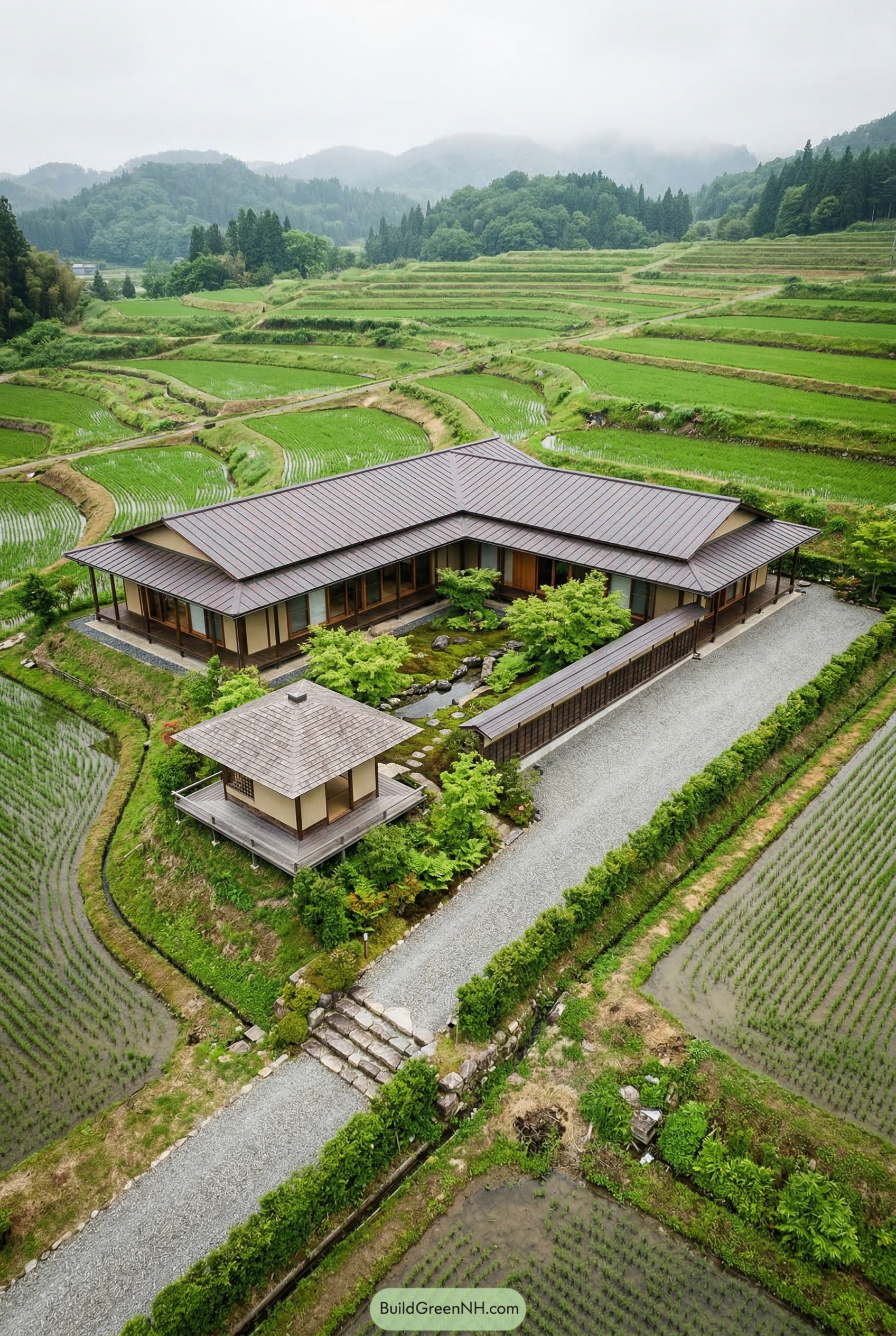

Set low among the rice terraces, this courtyard home borrows from rural farm compounds and tea pavilions, with a broad hipped roof pulling the whole plan together like one very calm umbrella. The inward facing rooms and deep covered edges keep the garden at the center, which makes the house feel private and open at the same time.
A small detached pavilion near the entry adds a lovely sense of arrival, because coming home should feel a bit special and not like parking behind a store. Gravel paths, clipped hedges, sliding screens, and the pond court soften the geometry, so the design settles into the landscape instead of barging in.
Rooftop Grove Monolith
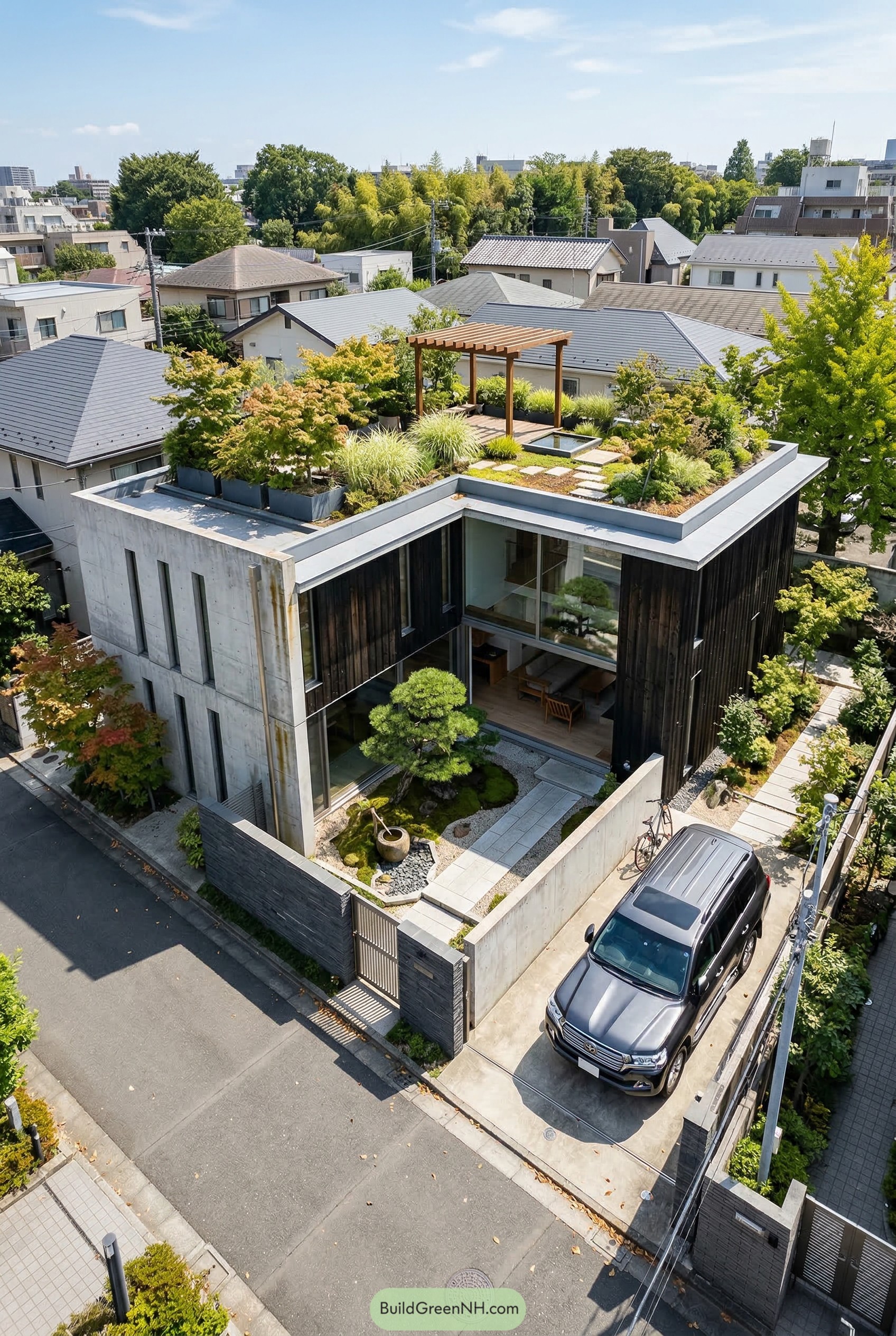

Concrete walls and dark timber cladding give the home a calm, private edge, while the roof turns into a planted terrace with a pergola, stepping stones, and a slim reflecting pool. It borrows from the Japanese idea of living close to a garden, only here the garden got promoted upstairs, which feels pretty clever.
At ground level, a small mossy court and sculpted pine soften the entry and keep the big glass openings tied to something green. That balance matters in a dense neighborhood, because the house can feel tucked away and open at the same time, not easy, but this one pulls it off.
House of the Quiet Inlet
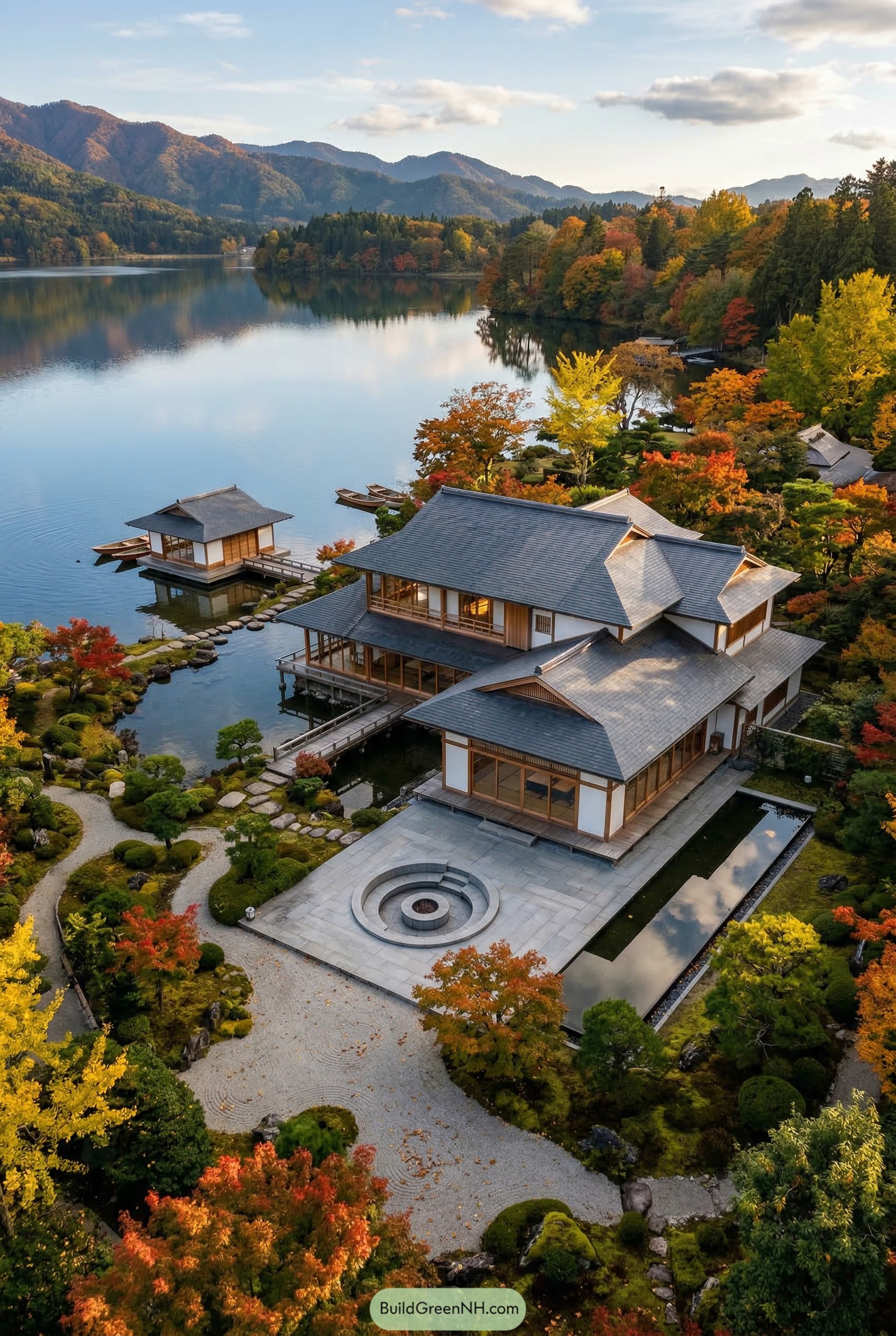

Layered rooflines step down toward the water, turning a large residence into a calm little village of connected wings and verandas. It borrows from temple compounds and teahouses, which is why the whole place feels ceremonial without getting fussy.
Stone courts, raked gravel, reflecting pools, and the small dockside pavilion stretch the home into the landscape instead of parking it on top of it. Those edges really matter, because every walkway and deep overhang slows things down a bit, and the lake stays part of daily life without being all look at me.
Moss Lantern Enclave
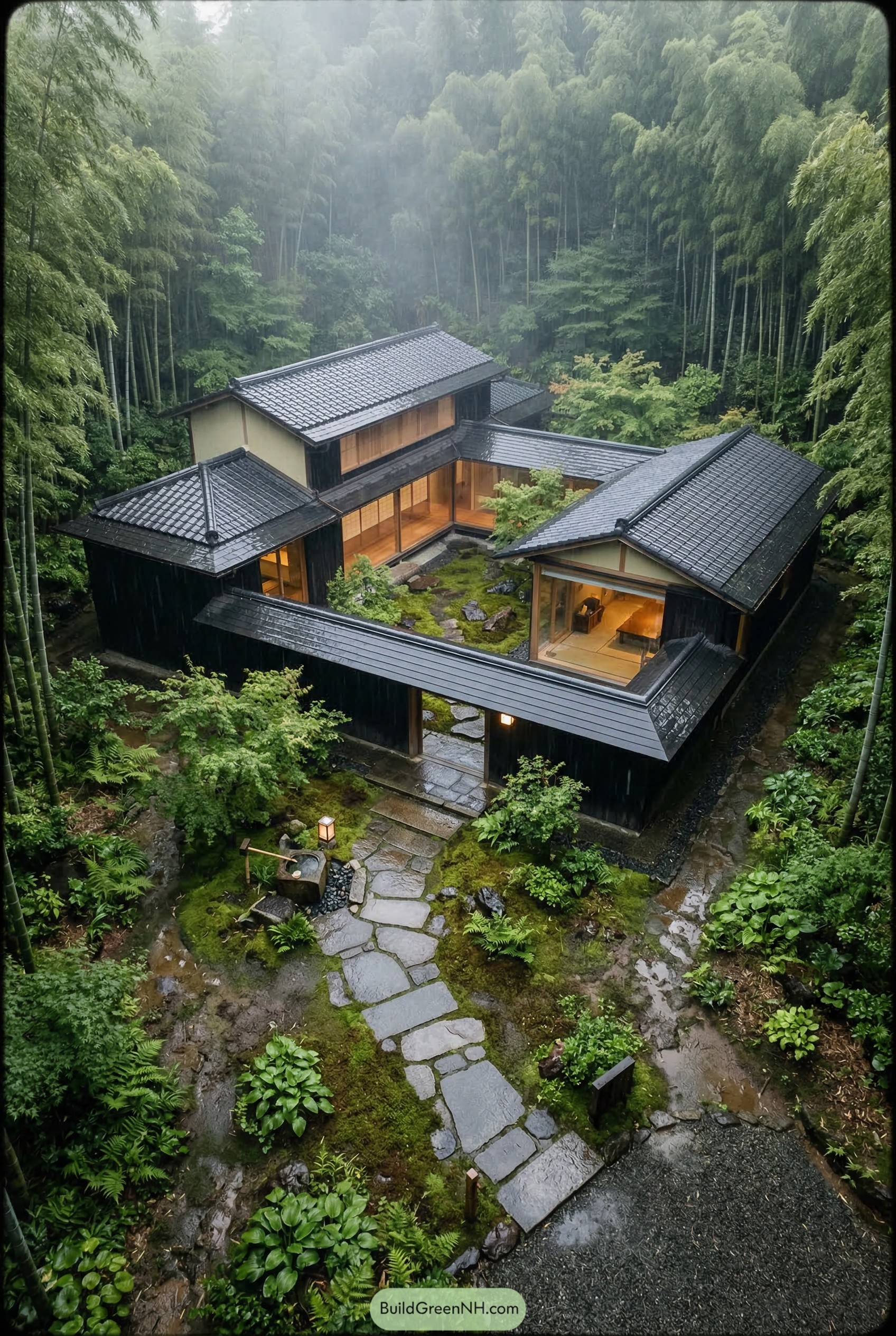

Wrapped around a mossy inner garden, this house turns a simple courtyard plan into something deeply calming and a little magical. The inspiration came from tea gardens and mountain farmhouses, so every wing feels sheltered while the center stays soft, green, and just a bit smug about it.
Dark timber walls and glossy tiled roofs give the whole composition a grounded presence, especially against all that bamboo. Wide glazing opens the rooms to the courtyard and the stone approach slows you down on purpose, which is smart because nobody should sprint into a house this serene.
Lava Plain Pavilion
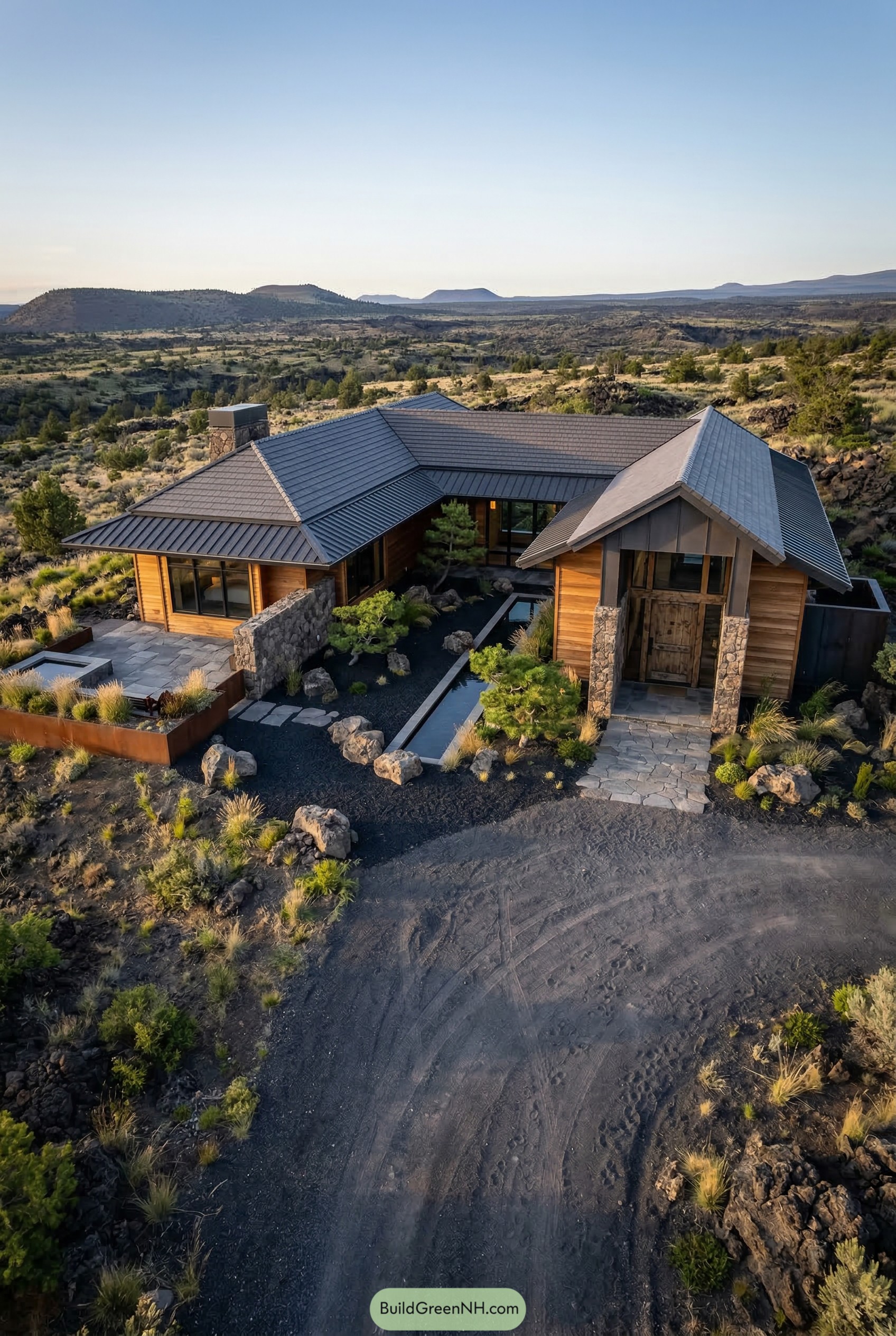

We shaped this low cedar residence as a calm pocket inside a rugged lava plain, borrowing the quiet feel of a ryokan and the spare mood of a rock garden. The clustered rooflines keep the house close to the ground, which feels right when the horizon is already showing off.
A slim reflecting pool and black gravel court pull the entry inward, so arriving here feels slower and a bit more intentional. Stone piers, deep eaves, and warm timber soften the volcanic setting, and yeah, that contrast is exactly what makes it stick with you.
Tidepool Promontory Villa
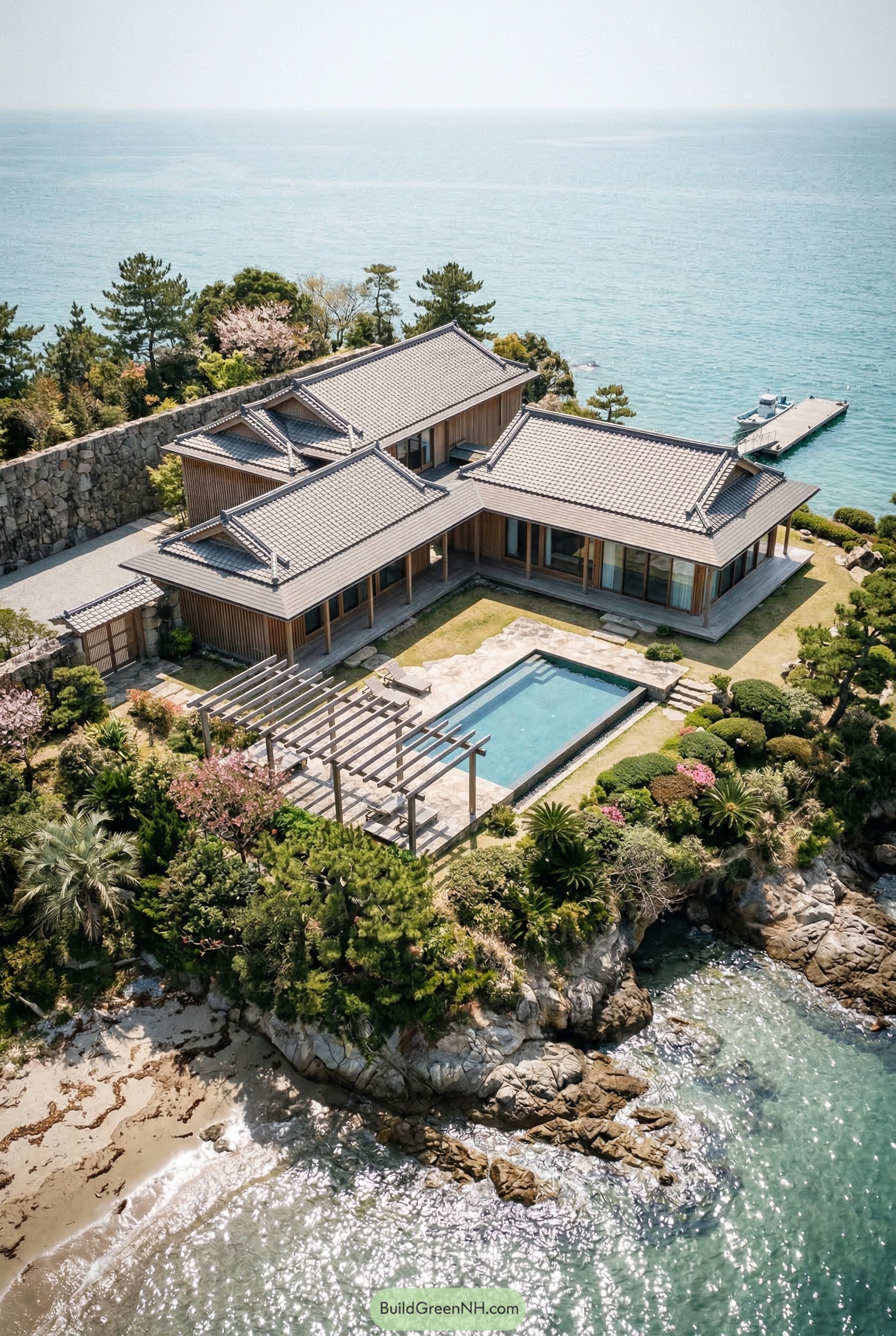

Set on a rocky point above the water, this house spreads out in calm timber wings around a crisp courtyard pool, with deep eaves and gray tile roofs keeping the whole composition nicely grounded. We gave it the feel of a small compound instead of one big block, so each room catches a bit of sea, garden, or terrace without the plan getting too bossy.
The design borrows from old coastal homes and refined garden estates, then loosens up with a pergola lounge, broad sliding glass walls, and a dock tucked quietly off to the side. Stone paving, clipped pines, and the rectangular pool soften the craggy shoreline in a really satisfying way, and yes, the house knows it has a great view.
Cloudbank Tea Slope Compound
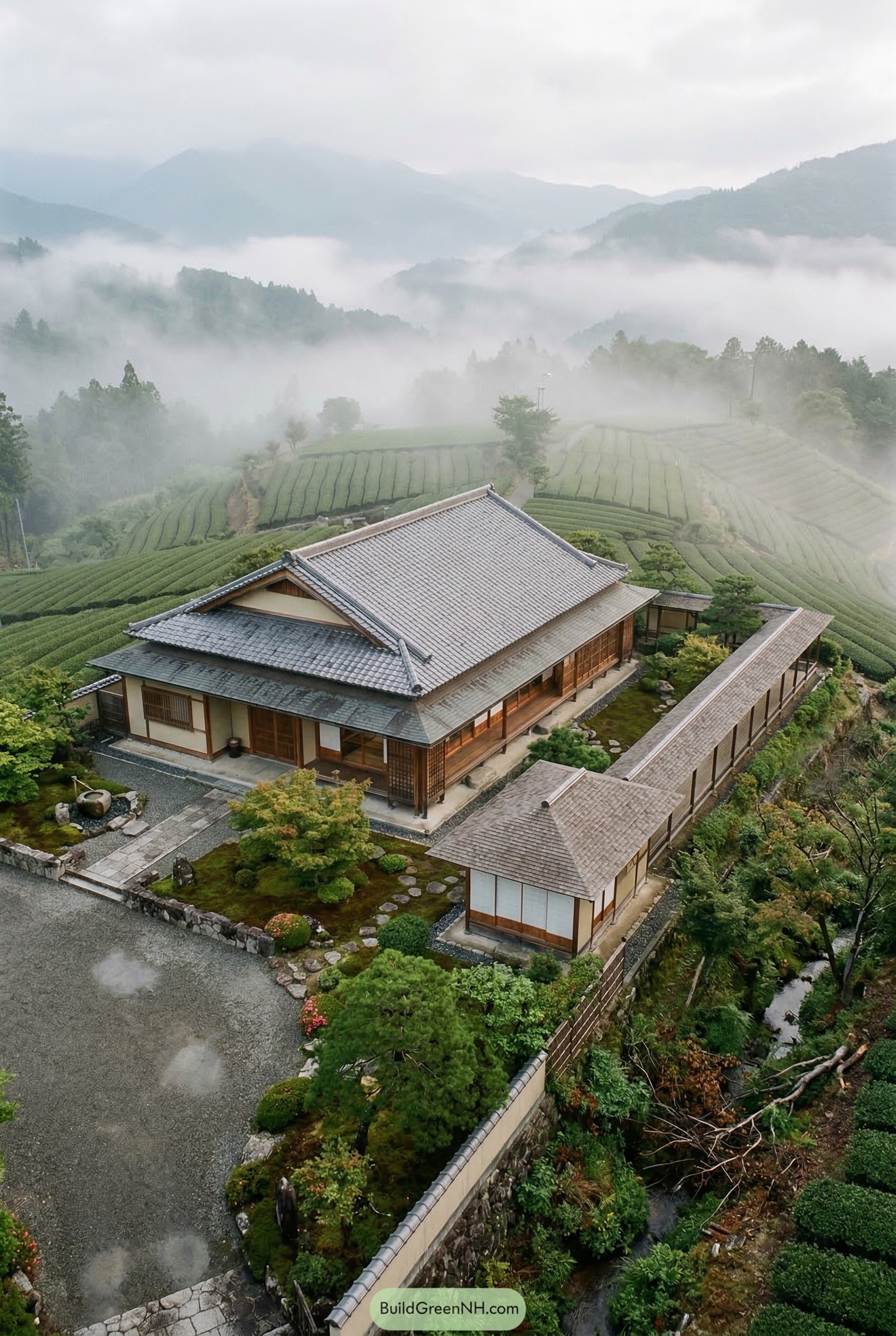

Set high above tea terraces, this compound spreads low and calm with a broad tiled roof, timber verandas, and a walled garden that keeps the whole plan feeling tucked in rather than cut off. The design feels pulled from the hillside itself, with long horizontal lines that echo the planted rows and eaves deep enough for weather when it gets a bit moody.
Sliding screens, covered walkways, and a small detached pavilion break the home into gentle layers, so the rooms stay private without turning the place into a maze. We love how the gravel court, mossy planting, and stepping stones slow your pace on arrival, because a house this composed really shouldn’t be in any rush.
Saltwind Dune Court
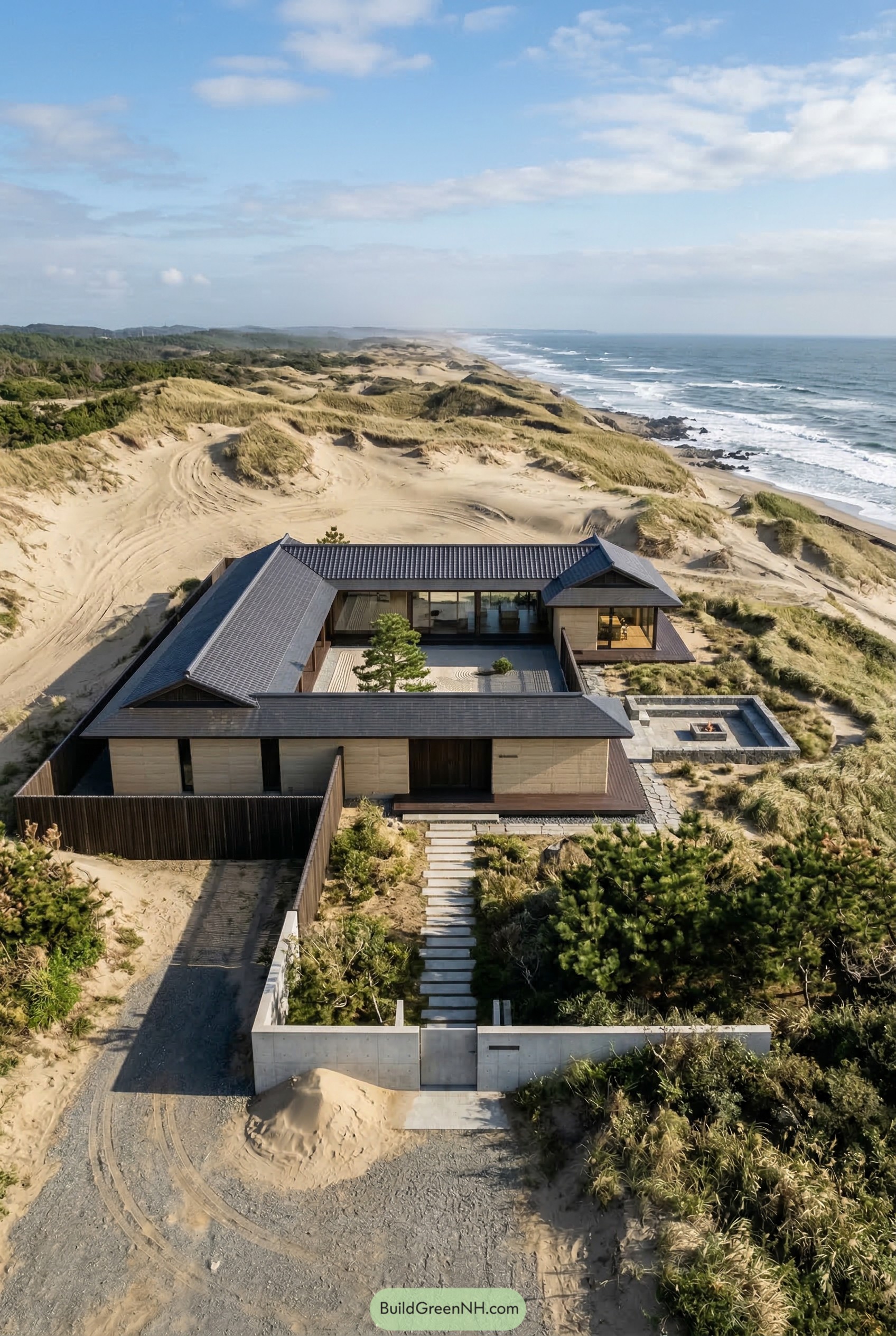

Tucked into the dunes, this seaside residence folds around a quiet courtyard, with low tiled roofs and deep eaves giving it a calm, settled presence against all that open coast. The inward plan draws from traditional Japanese compounds, and it is a clever answer to salty wind and sand that never really knows when to stop.
Pale timber walls, sliding glass, and a raked stone court pick up the colors of the beach, while the sunken fire terrace stretches the living space outward without exposing everything. We love how the design gives you ocean at the edges and refuge at the center, which sounds simple, but wow it is not easy to pull off.
Cherrywater Quadrangle House
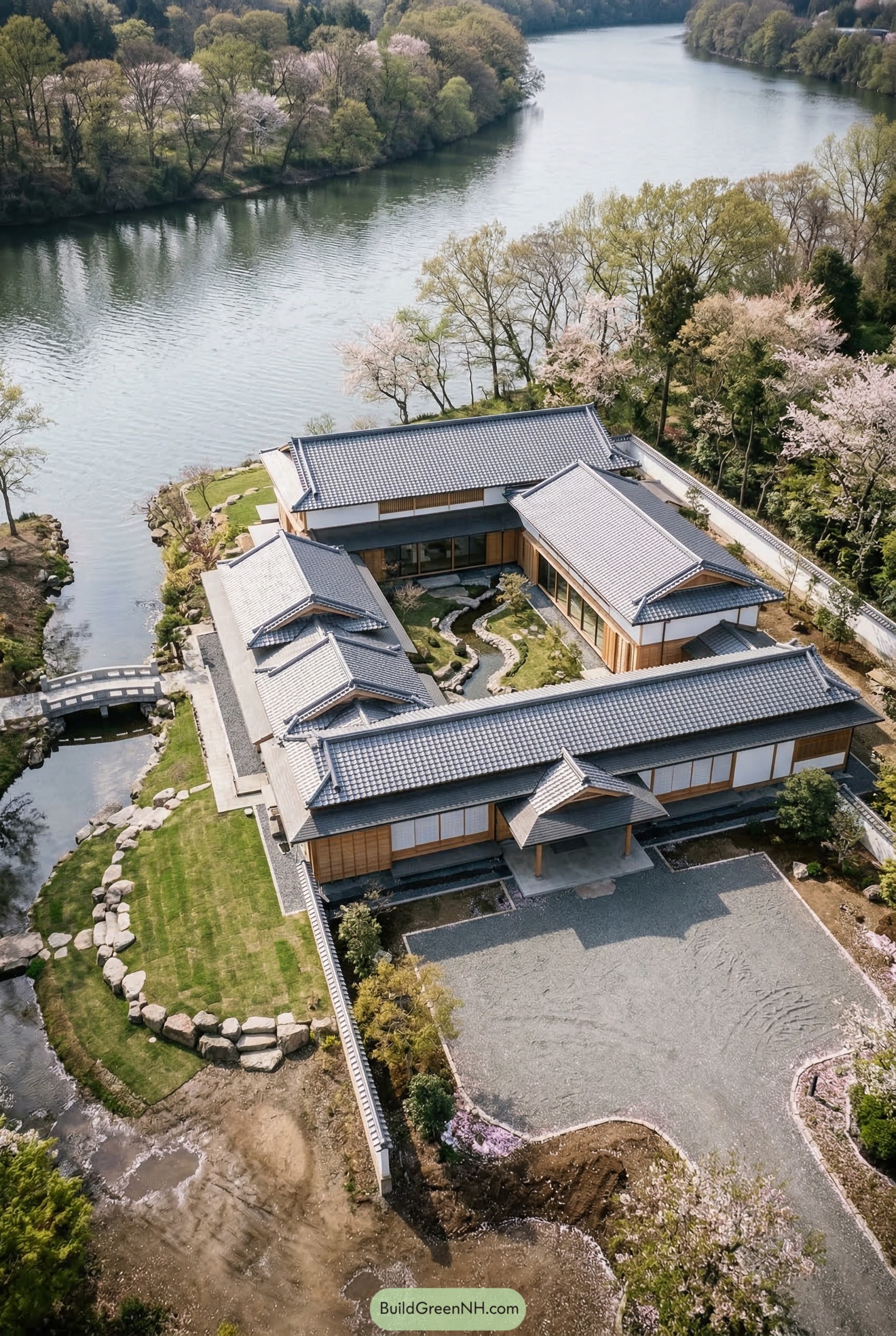

Set on a river bend, the compound wraps four low tiled wings around a garden court with a winding water feature that feels borrowed from the shoreline nearby. That enclosed plan matters because it gives every room a calm inward view, while the long rooflines keep the whole place grounded and wonderfully unshowy.
The design pulls from traditional estate layouts, with white plaster walls, timber facades, and deep eaves that make the buildings look crisp even from above. A small bridge and broad gravel forecourt add a little ceremony to the arrival, which is fancy in the best way and not at all trying too hard.
Rainwashed Engawa Residence
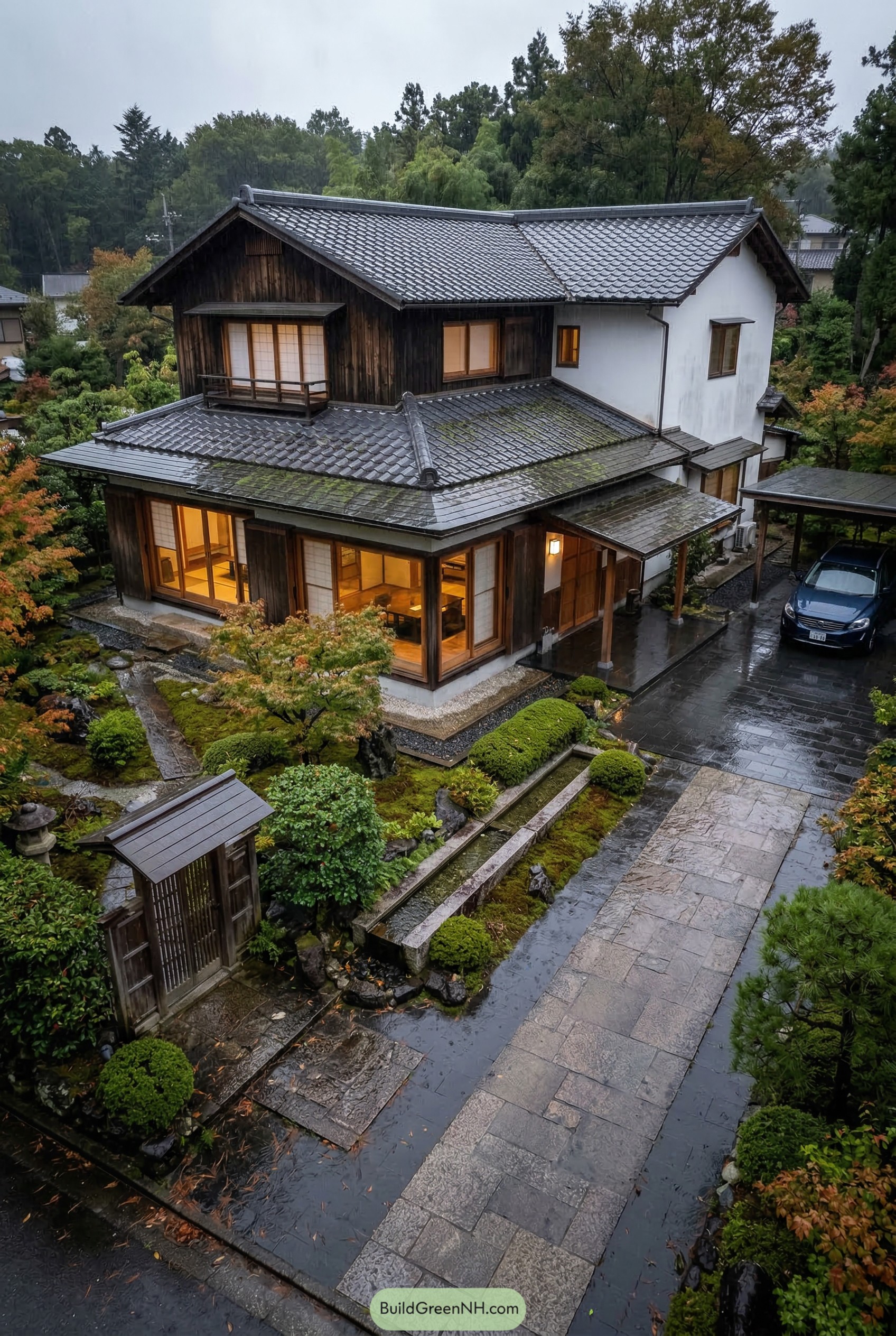

The layered rooflines, dark cedar siding, and crisp plaster wing give the house a calm, settled presence that feels tied to its garden. It feels shaped for rainy seasons and quiet arrivals, with deep eaves and a broad engawa that keep the threshold usable when the weather gets moody.
We love how the stone walk, narrow water rill, and clipped moss planting pull you toward the entry without making a big show of it. Shoji screens and low windows keep the rooms close to the landscape, so the whole place feels cozy, composed, and maybe a little too good at wearing rain.
Mistveil Stone Garden Manor
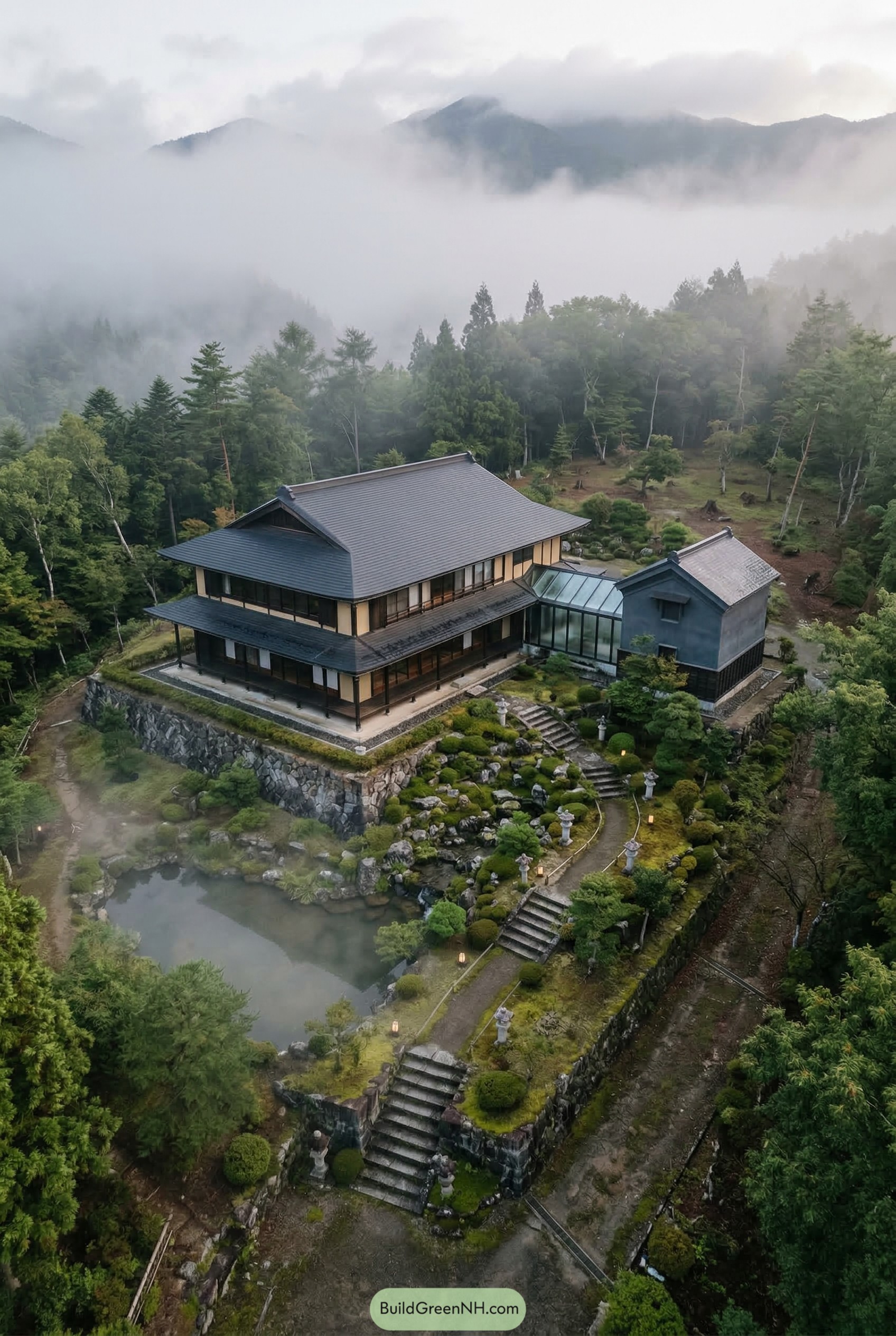

The broad tiled roof and long wraparound galleries borrow from old mountain temple lodgings, while the tall stone base makes the house feel rooted instead of perched. We paired the main volume with a smaller annex through a glass link, which keeps the plan flexible and stops the whole thing from feeling like one giant box in fancy clothes.
The garden is built as a slow descent of steps, lanterns, clipped shrubs, and a quiet pond, so arriving here feels a bit ceremonial without getting too precious about it. Those terraces really matter on a steep site like this, because they hold the ground, stretch the views, and give the mist something gorgeous to curl around.
Frostline Courtyard Foldhouse
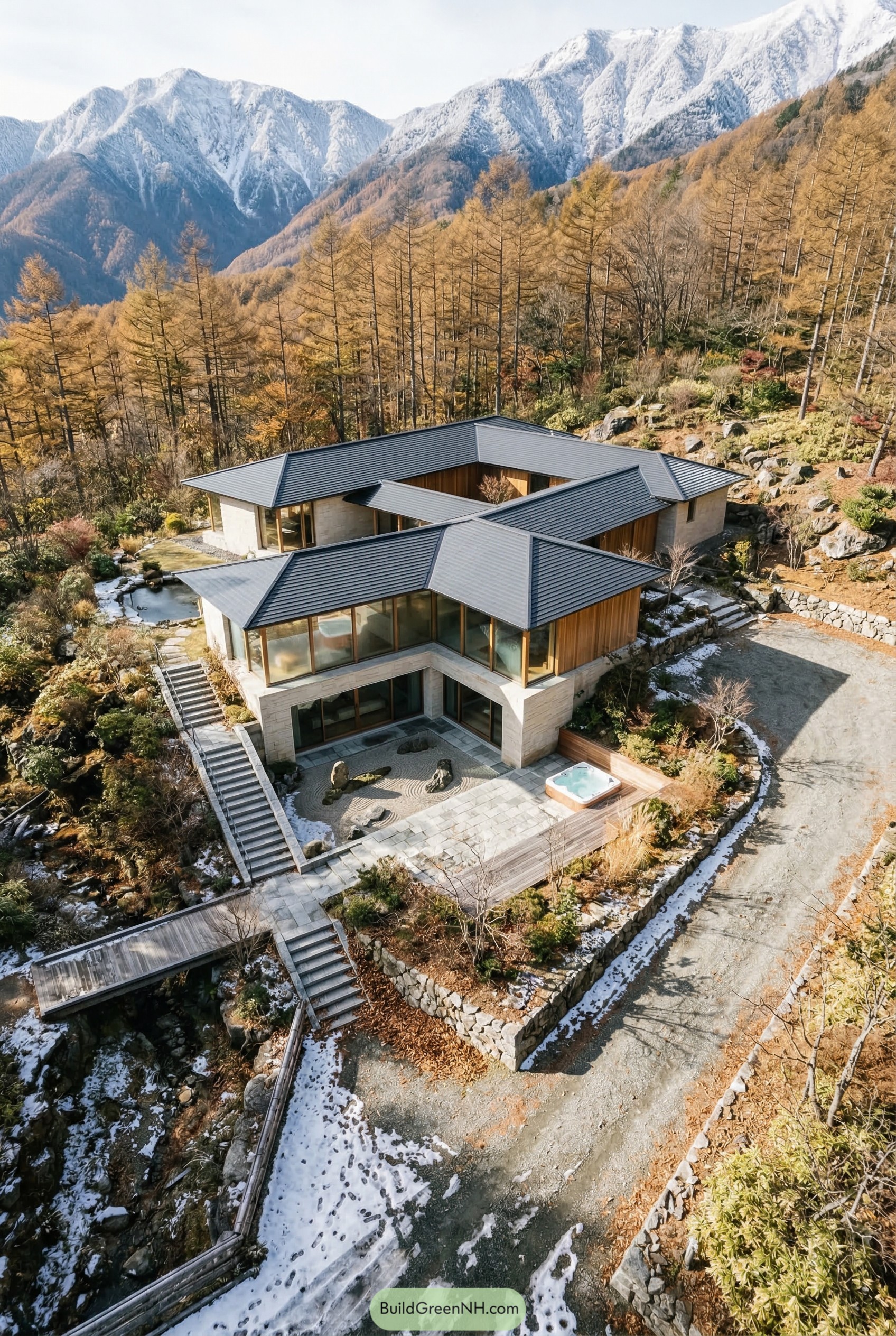

The plan folds into a quiet pinwheel of low dark roofs, creating a sheltered inner court while still opening wide to the snowy peaks beyond. It was inspired by mountain temples and alpine lodges, so the house feels tucked in and expansive at the same time, which is a neat trick.
Terraced stairs, stone plinths, and planted edges let the whole composition settle into the slope instead of perching awkwardly on it. Cedar-lined corners, broad glazing, a raked gravel garden, and a tucked outdoor soak make everyday life feel a bit ceremonial, in the best not too precious way.
Walled Brook Garden Dwelling
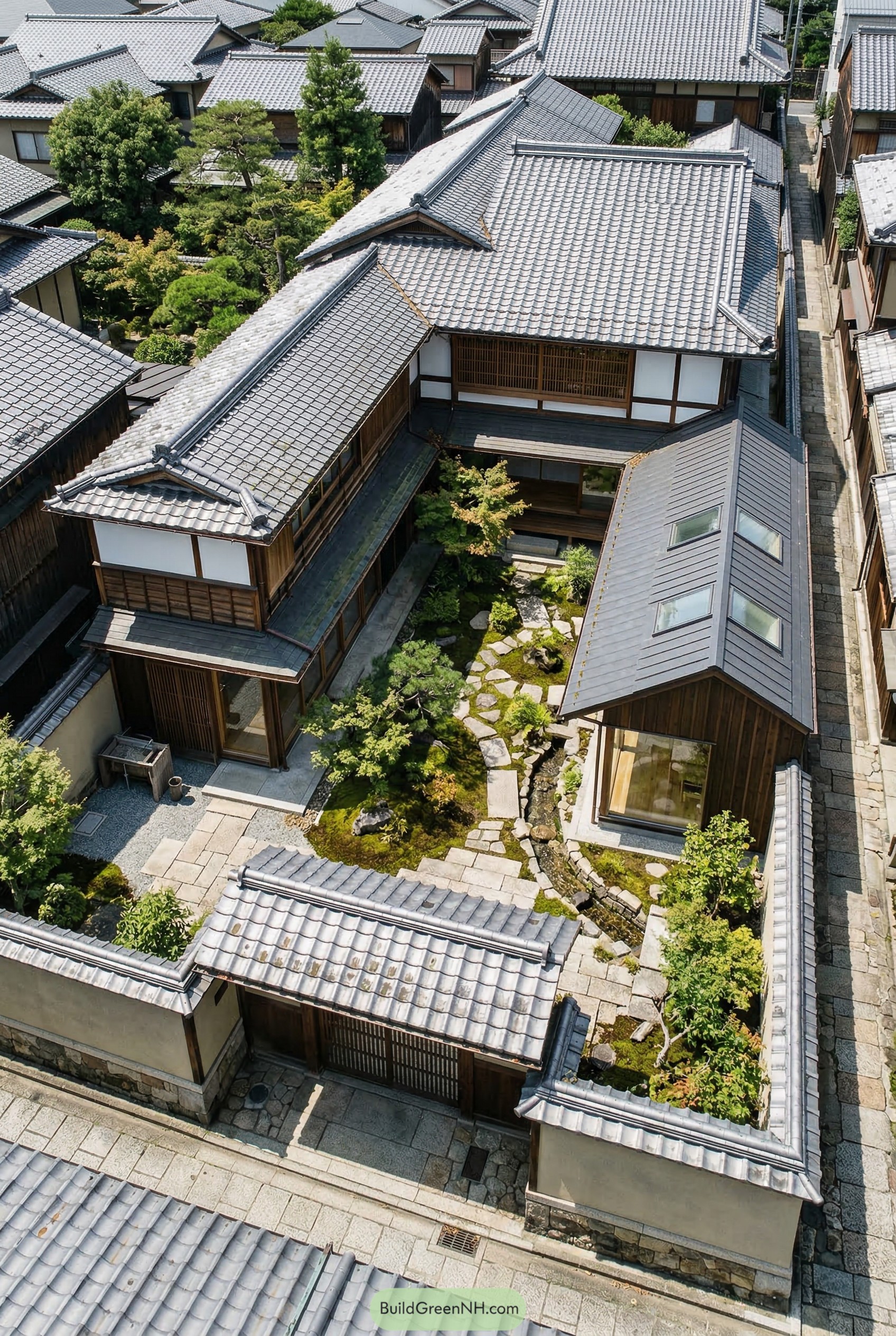

Set behind a low wall, the house wraps around a mossy courtyard with a stone path and a slim water runnel that sneaks through like a quiet guest. The plan feels borrowed from old townhouses and garden villas at once, giving every wing a reason to face inward and settle down a bit.
Layered tile roofs, deep eaves, timber screens, and a tucked in entry gate make the whole composition feel calm without getting too precious about it. That newer pavilion on the right sharpens things up with clean lines and roof windows, which keeps the design from turning into a history lesson in a very nice outfit.
Mirror Pool Tsuboniwa
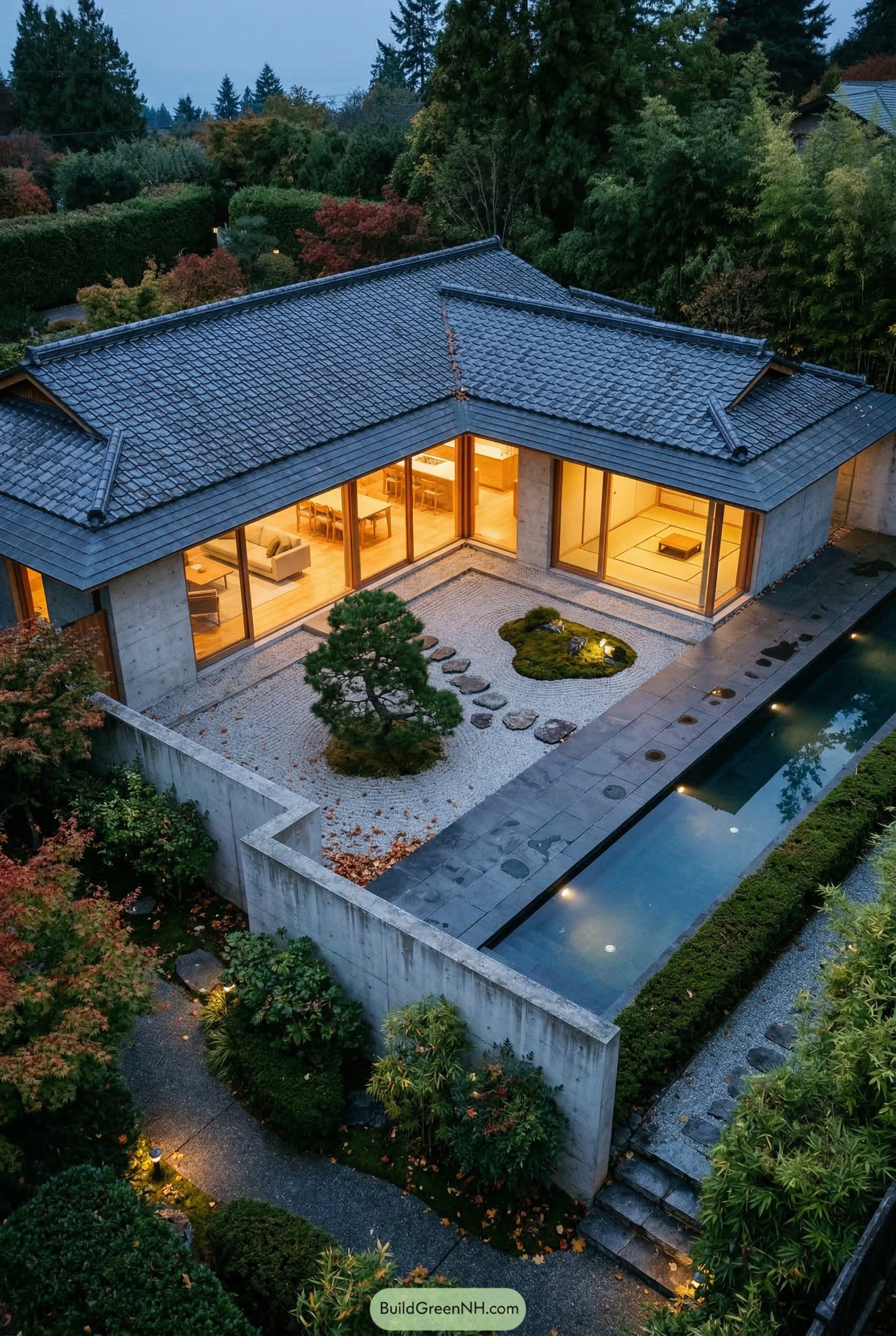

This home wraps around a raked gravel court, where a pine, a moss island, and stepping stones make the center feel calm without turning into theme park Zen. It borrows from the tsuboniwa and tea house tradition, so the plan faces inward and gives every room a quiet little view.
The dark tiled roof and deep eaves keep the silhouette low and settled, while concrete walls and warm timber frames add a crisp edge that feels private but not shut off. A slim reflecting pool sharpens the courtyard and cools the whole composition, and those big glass openings pull the tatami room and living spaces right up to the garden, which is a pretty neat move.
Orchard Verge Sukiya
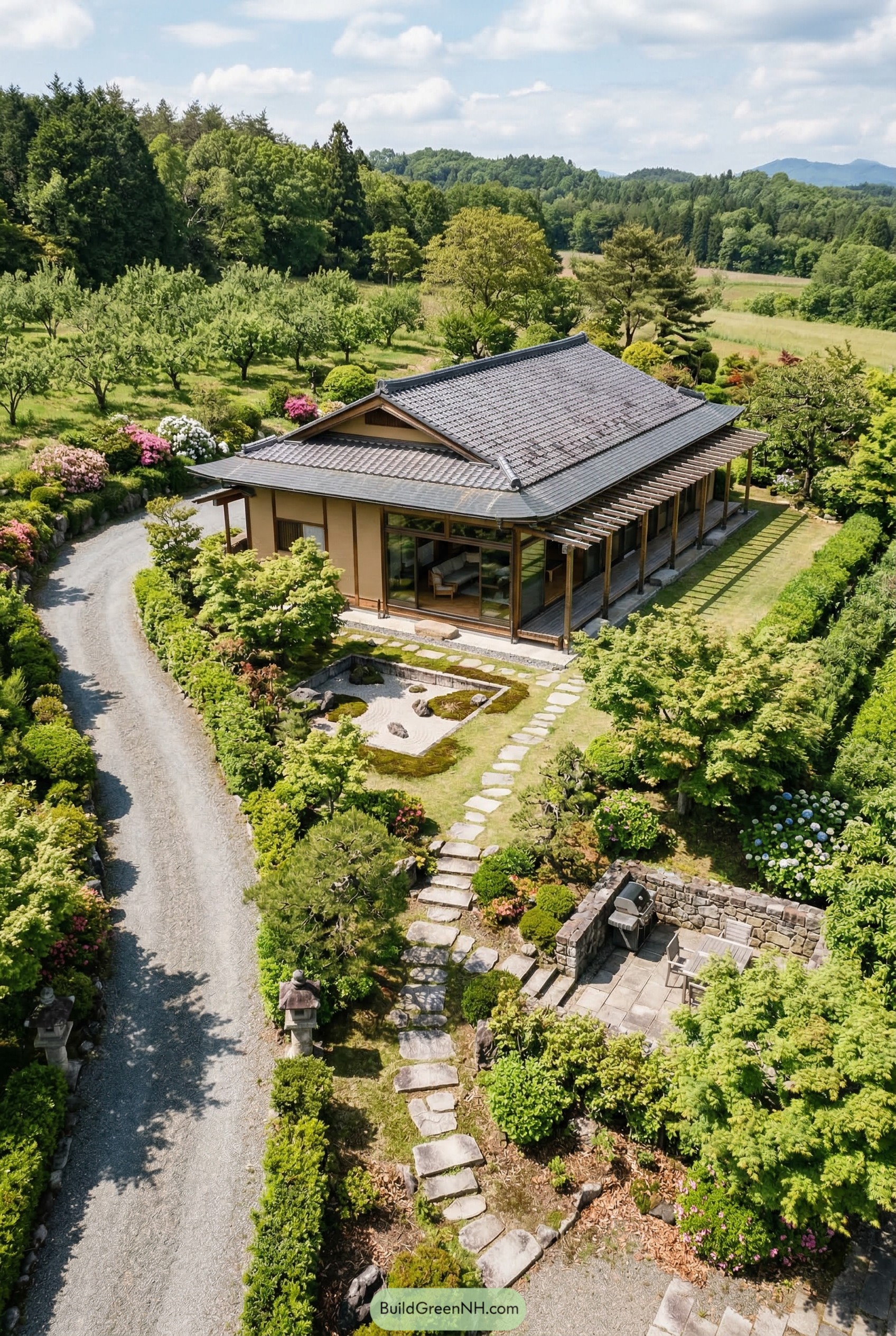

Set low in the landscape, the house pairs a broad tiled roof with deep eaves and a long timber veranda that keeps every room close to the garden. The composition feels calm and grounded, like it knew exactly where to sit the minute it arrived.
The design borrows from rural Japanese homes and tea garden planning, with stepping stones, a small raked court, and clipped greenery guiding the approach without making a big fuss about it. Glass along the main facade opens the interior to the orchard and distant trees, which is a smart move because that view is frankly showing off.
Pin this for later:
Want More?
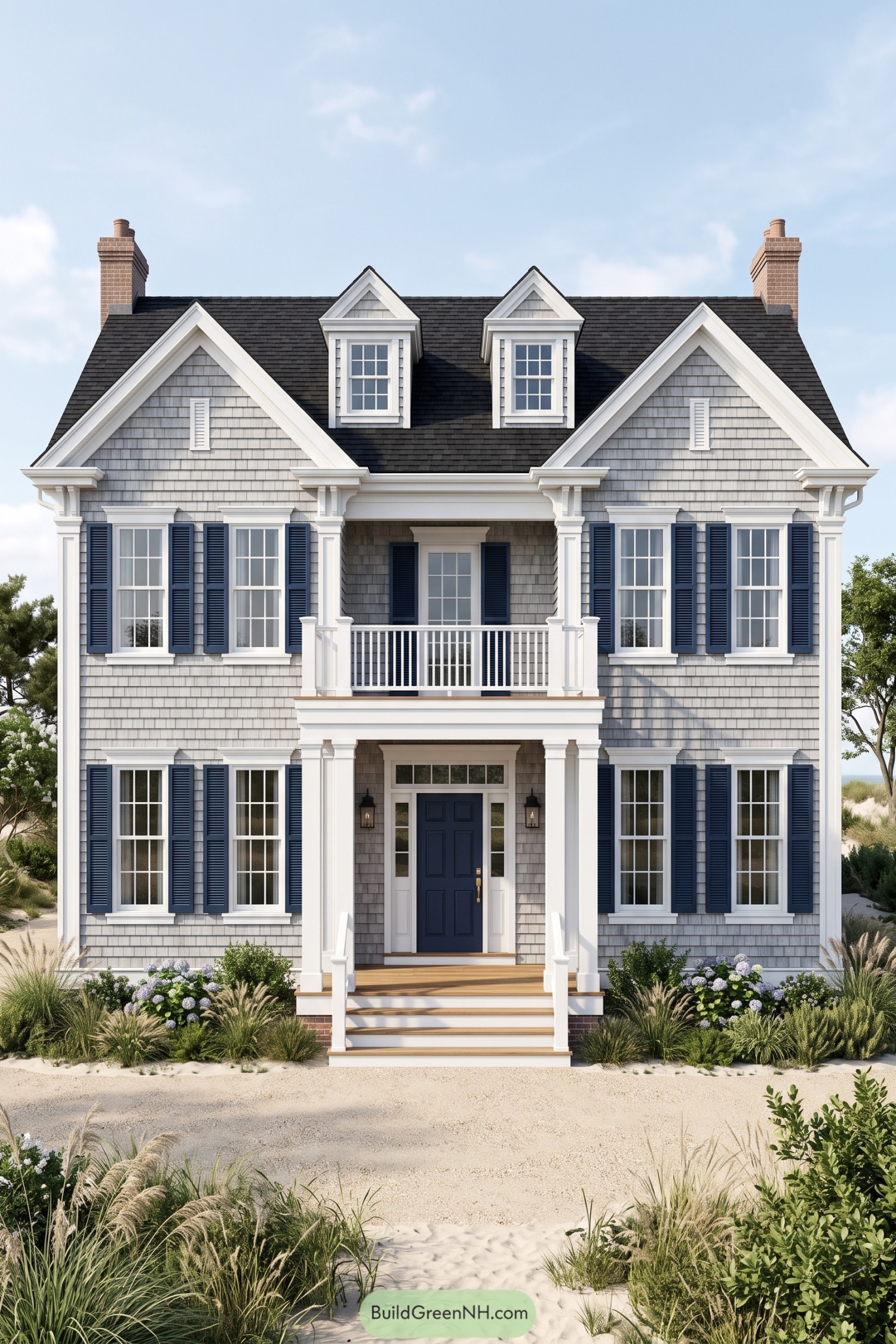 20 Coastal House Front Elevations To Make Your Home The Star Of The Shore
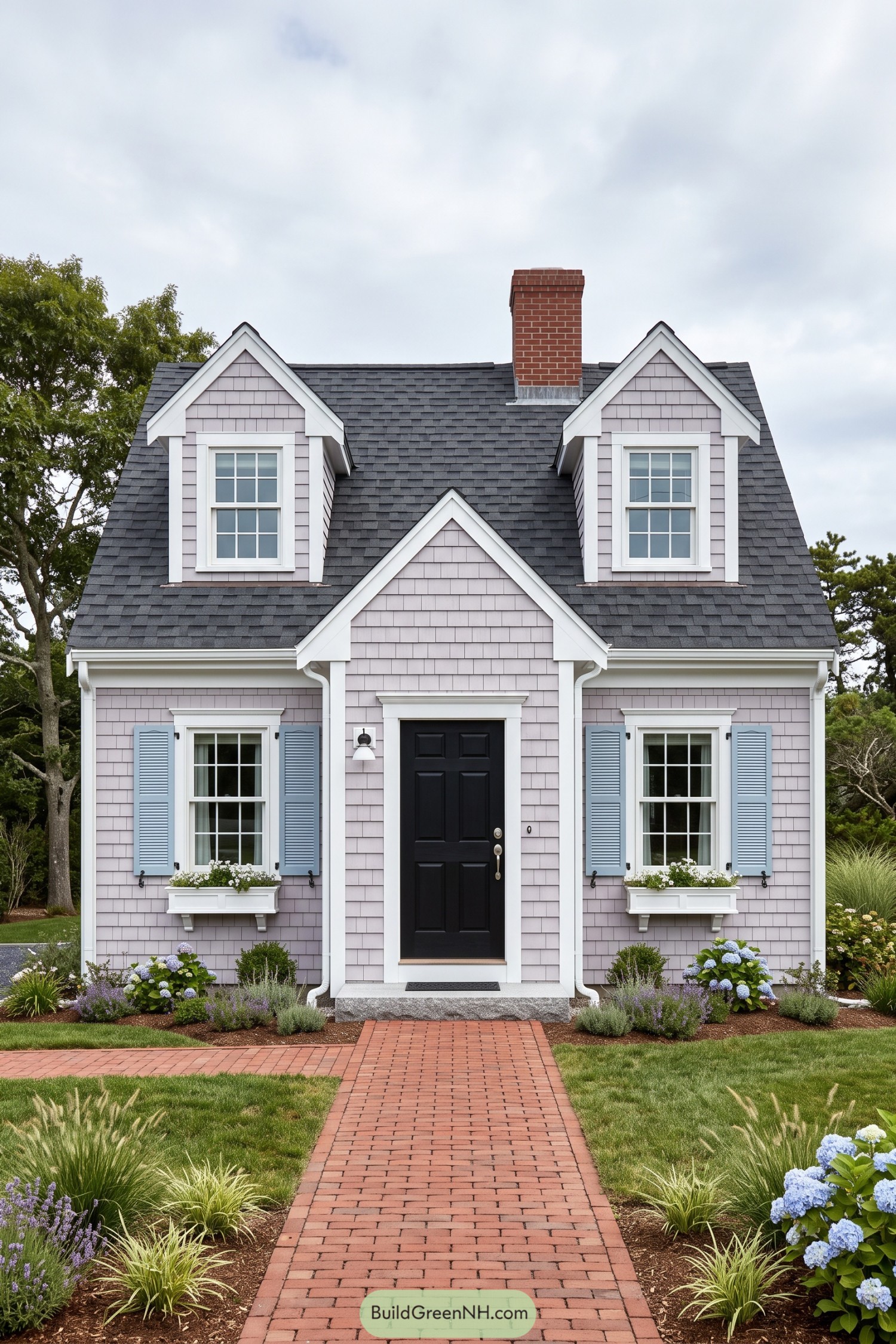 20 Cape Cod House Front Elevations to Bring Storybook Magic to Your Street
 20 Stunning Colonial House Front Elevations to Turn Your Home Into a Neighborhood Legend
 20 Stunning Modern Facade Elevation Designs That Turn Everyday Homes Into Living Art
 20 Daring Folded Roof Houses That Turn Rain Into Art
Table of Contents