Last updated on
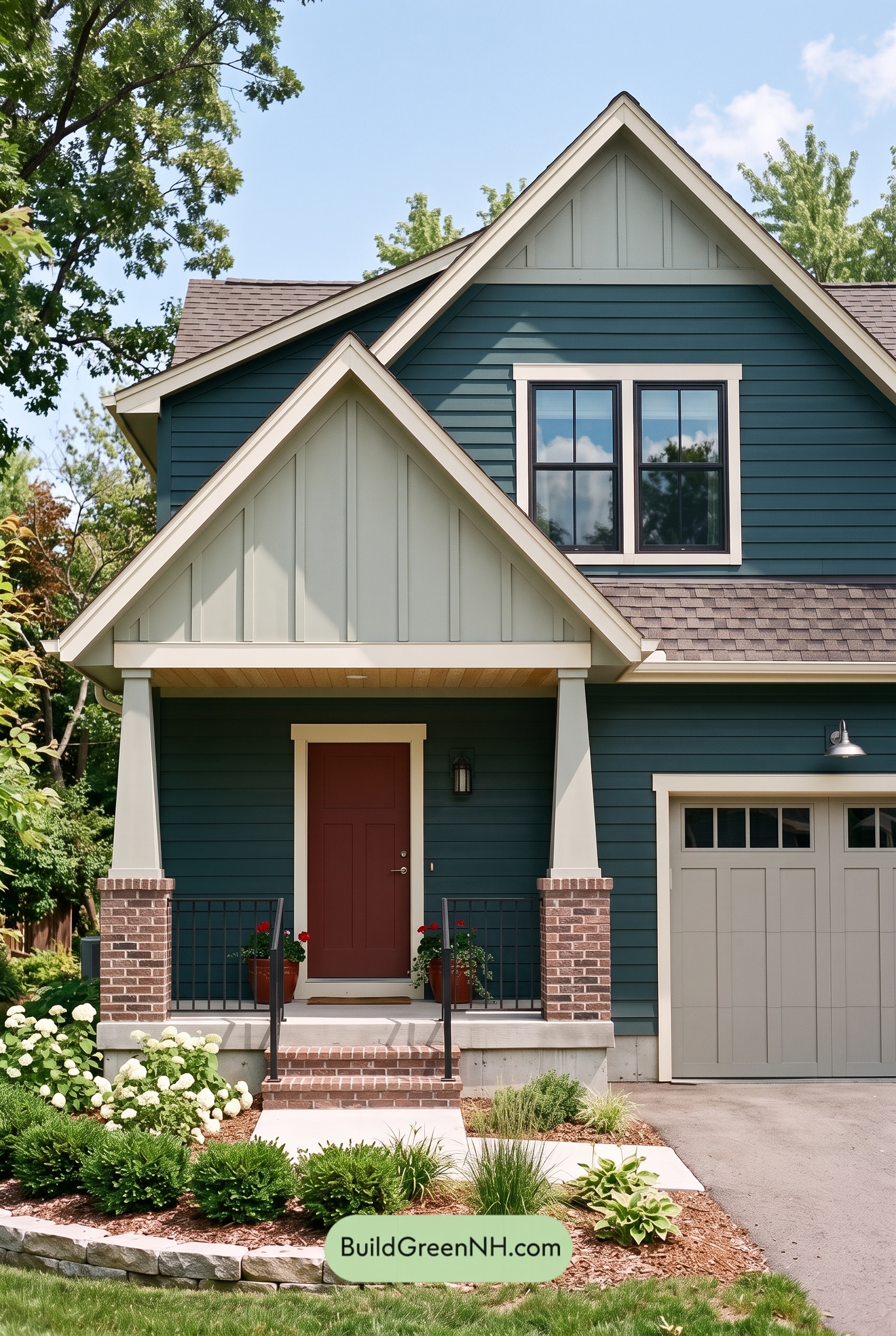

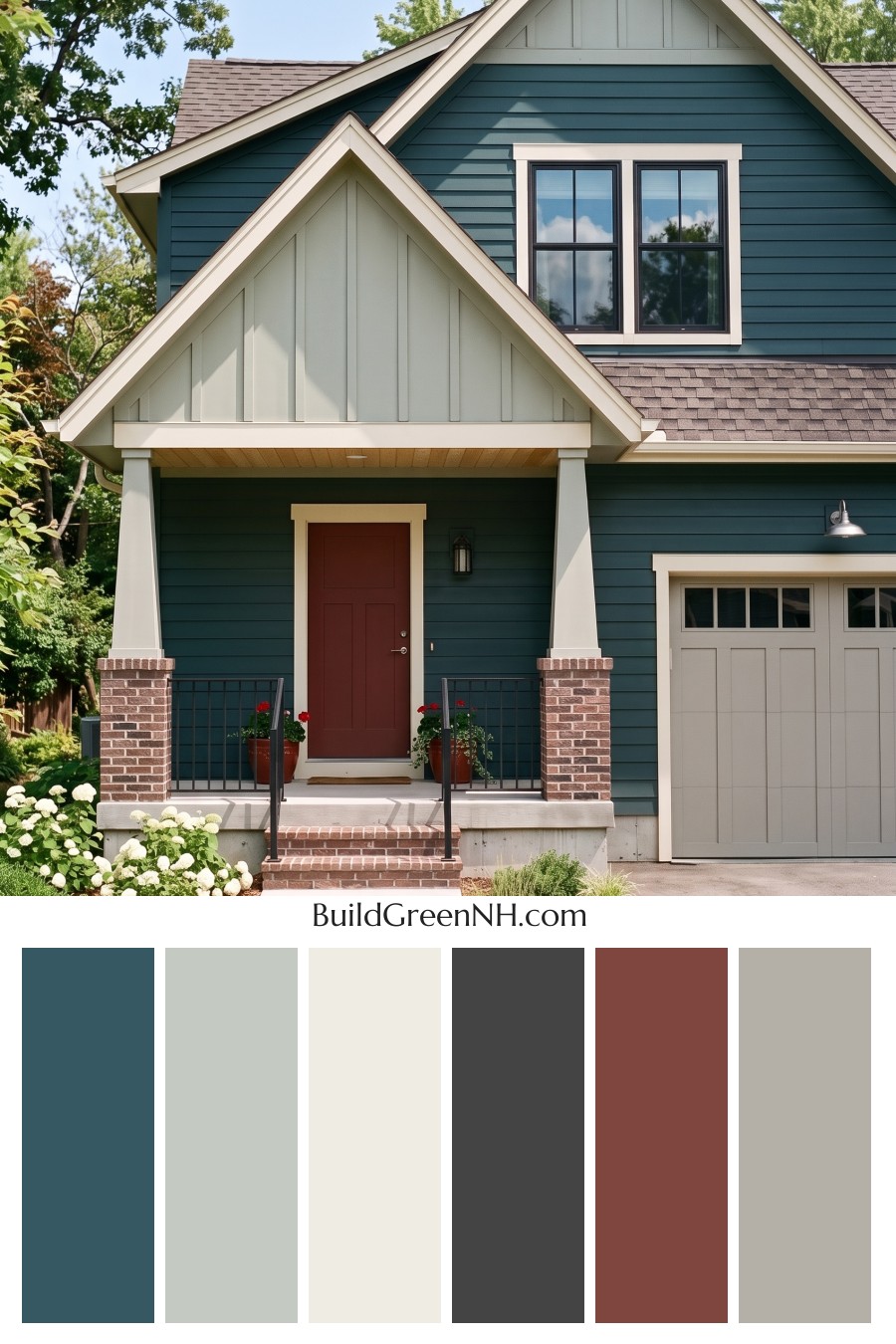
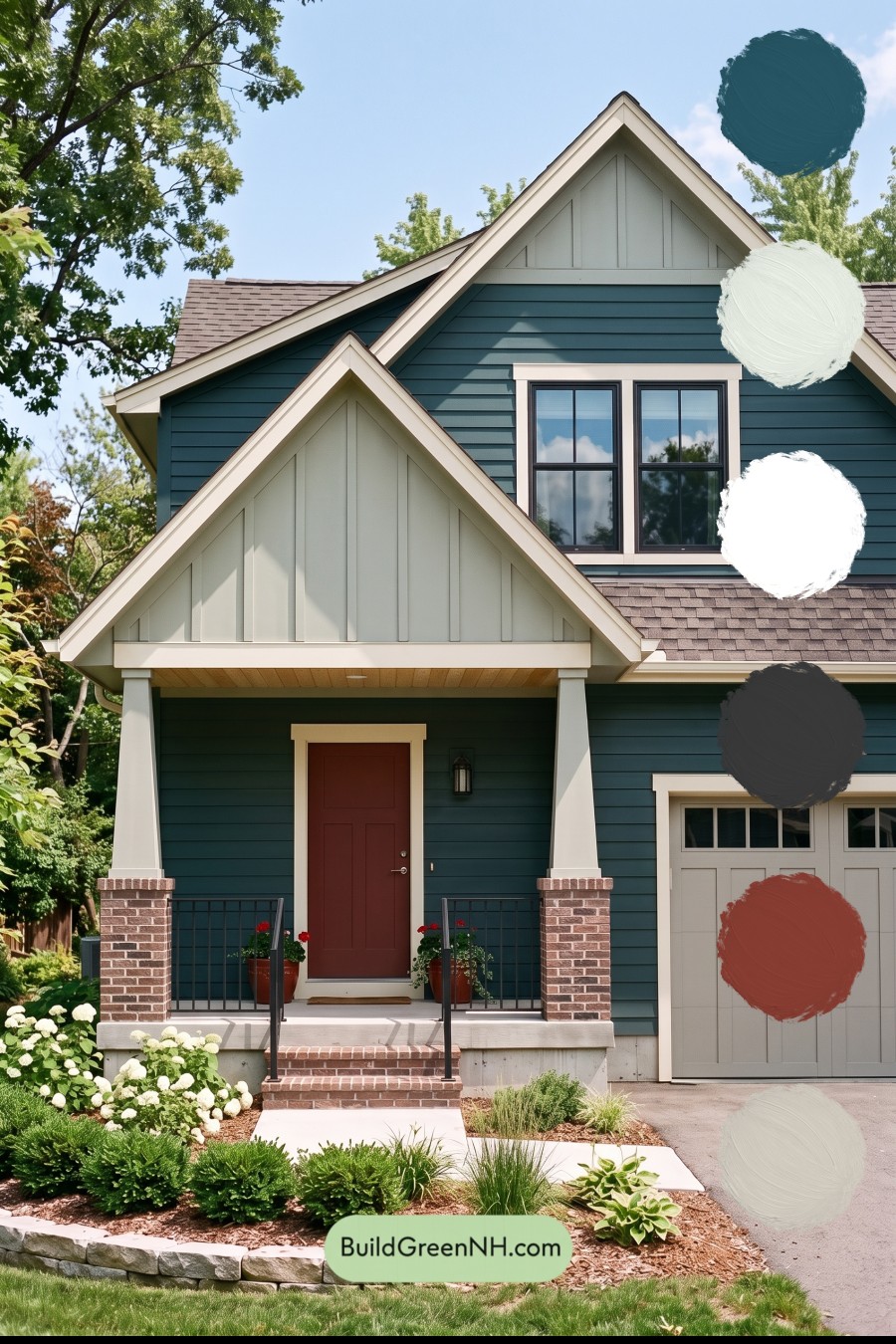
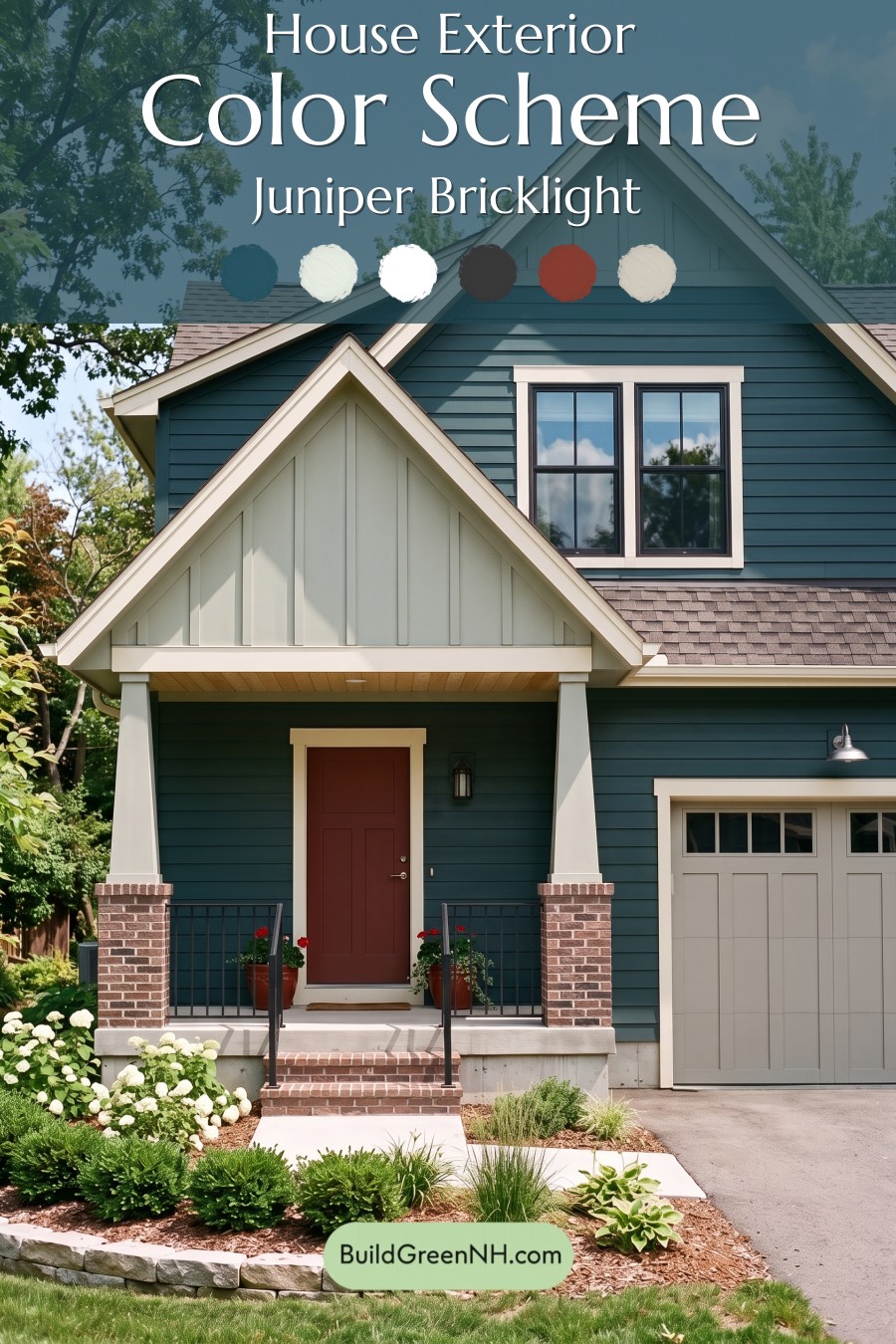
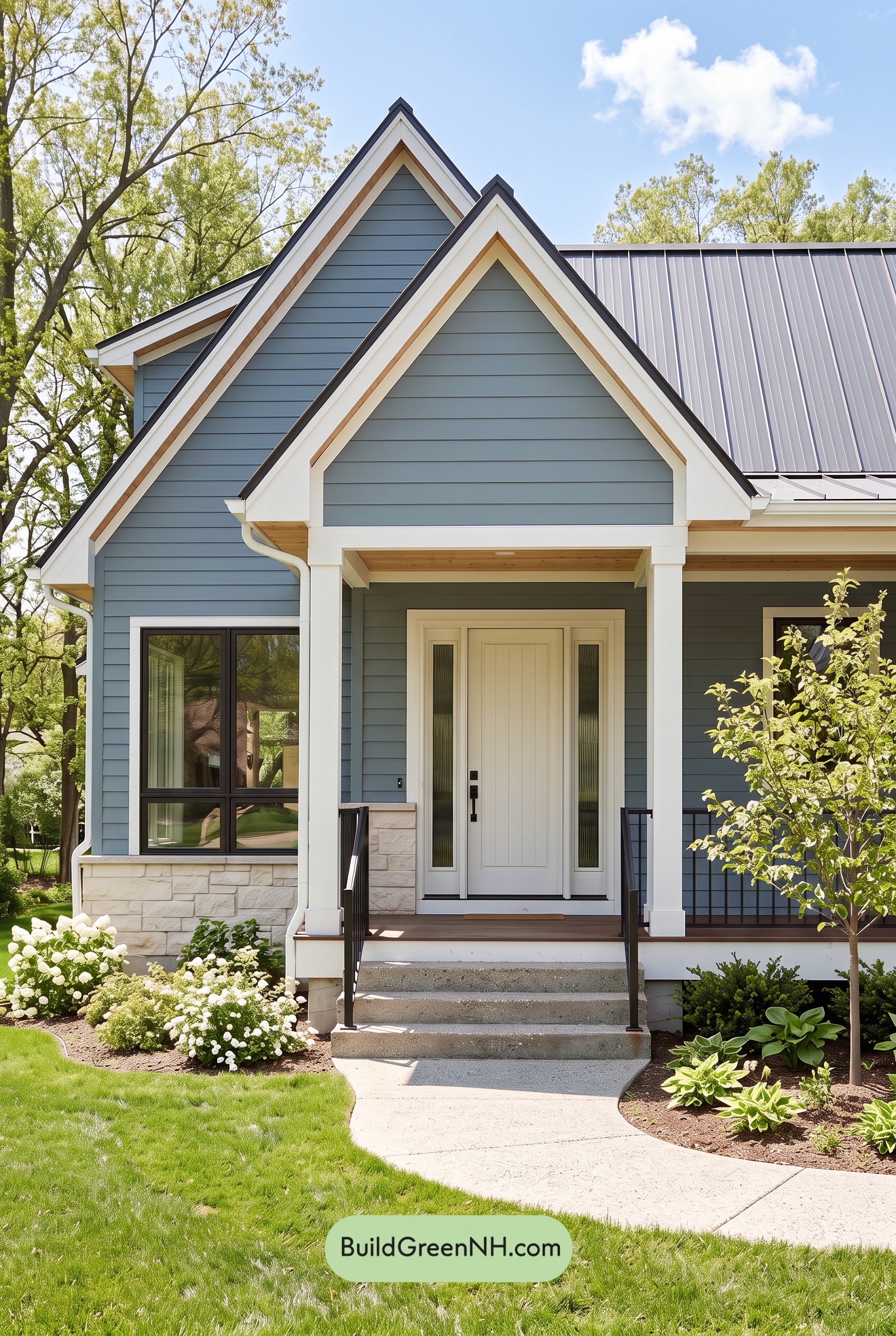
This exterior color scheme feels instantly polished because its deep, dramatic foundation is lifted by crisp light accents and a warm, welcoming entry.
A Strong, Grounded Exterior Palette
The home’s main siding is finished in a deep black shade that gives the facade a tailored, modern presence. Rather than feeling stark, this dark backdrop makes the home’s layered gables, porch, and architectural lines feel more defined. It also creates a handsome contrast against the surrounding greenery.
Above, the upper gable areas shift to a soft, pale gray. This lighter shade brings visual relief to the taller rooflines and adds dimension without interrupting the calm, cohesive look. The subtle contrast between the black lower siding and gray upper details keeps the exterior from feeling too heavy.
Light Trim That Sharpens Every Detail
Bright white trim outlines the roof edges, gables, windows, porch structure, and garage door. These clean borders give the home a fresh, finished appearance while emphasizing its classic roof peaks and balanced symmetry. The light trim also makes the darker siding appear richer and more intentional.
Gray window frames and garage door panels introduce another quiet layer of depth. Their mid-tone presence bridges the dark siding and bright trim beautifully, keeping the palette refined rather than overly high contrast.
A Welcoming Entry Accent
The front door brings in a deep brown shade that softens the cooler black, gray, and white exterior. It is a small color moment with a big effect: warm, grounded, and easy to spot from the street. Framed by light trim and flanked by gray porch elements, the door becomes an inviting focal point without overwhelming the rest of the design.
Gray columns and railings continue the home’s balanced, understated rhythm. Their neutral shade coordinates naturally with the window frames and garage door while allowing the architecture and front entry to remain the stars.
Classic Contrast With a Modern Mood
The dark roof settles comfortably into the palette, echoing the depth of the siding and reinforcing the home’s grounded character. Together, the black, gray, white, and brown shades create a look that is sophisticated yet approachable—crisp enough for a contemporary setting, but timeless enough to feel at home among traditional details.
This is a color scheme that proves dark exteriors can feel warm and welcoming when they are balanced with soft gray surfaces, bright trim, and one rich natural accent at the entry.
Next, see how this color scheme looks under different lighting simulations throughout the day.
Overcast
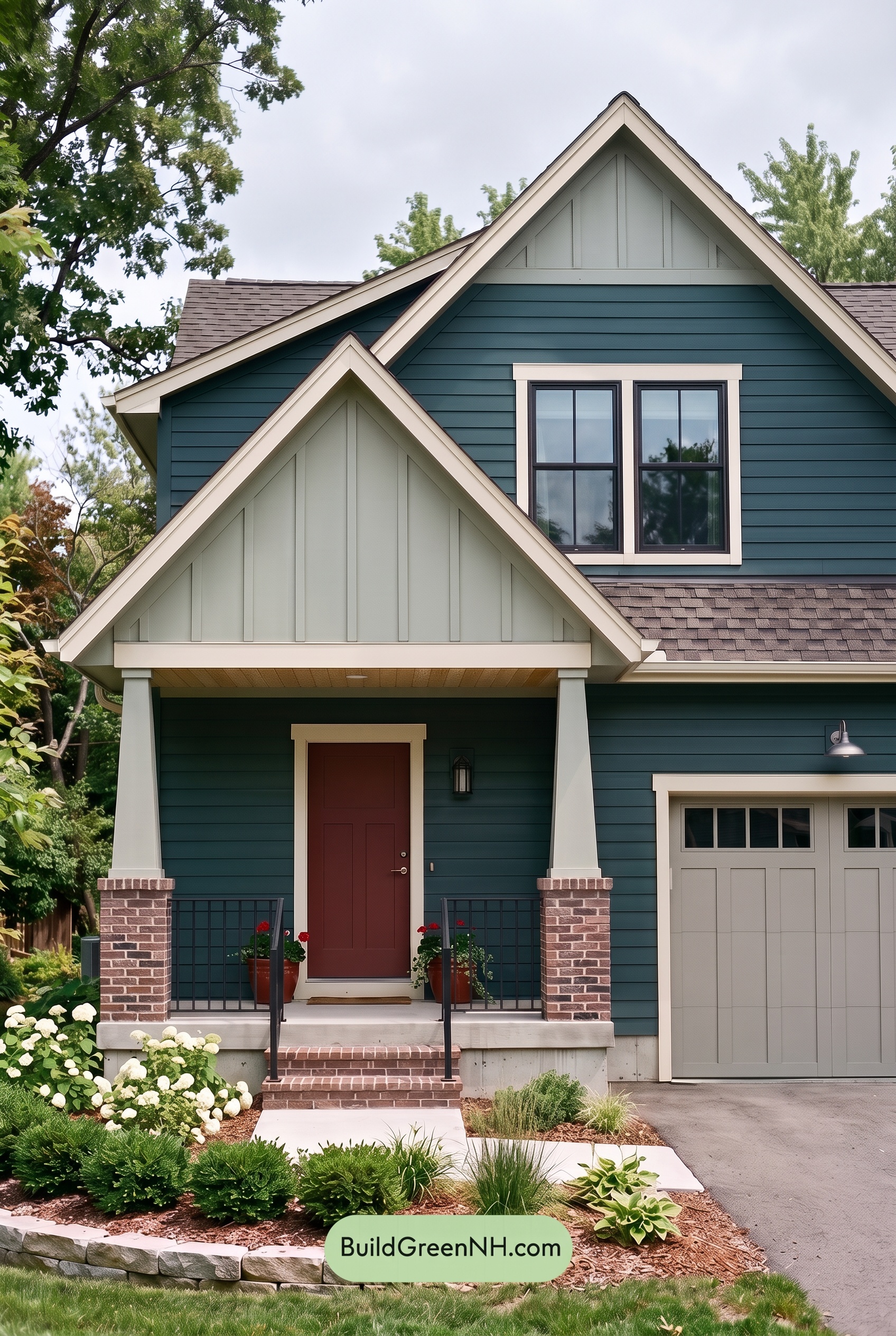
Under overcast skies, the deep black-toned siding takes on a softer, more even character than it has in neutral daylight, with fewer sharp highlights and less dramatic variation across the facade. The cool gray upper walls, columns, and garage door can appear slightly more subdued and muted, while the light trim looks gentler rather than brilliantly bright. Diffused light also reduces harsh shadows beneath the gables and porch, allowing the architectural lines to feel calm and clearly defined.
The brown front door retains its welcoming warmth, though its richness becomes more restrained against the softened exterior palette. With saturation lowered and contrast moderated, the dark window frames and railings blend more quietly into the design, creating a polished, moody look that feels especially refined and inviting.
Golden Hour
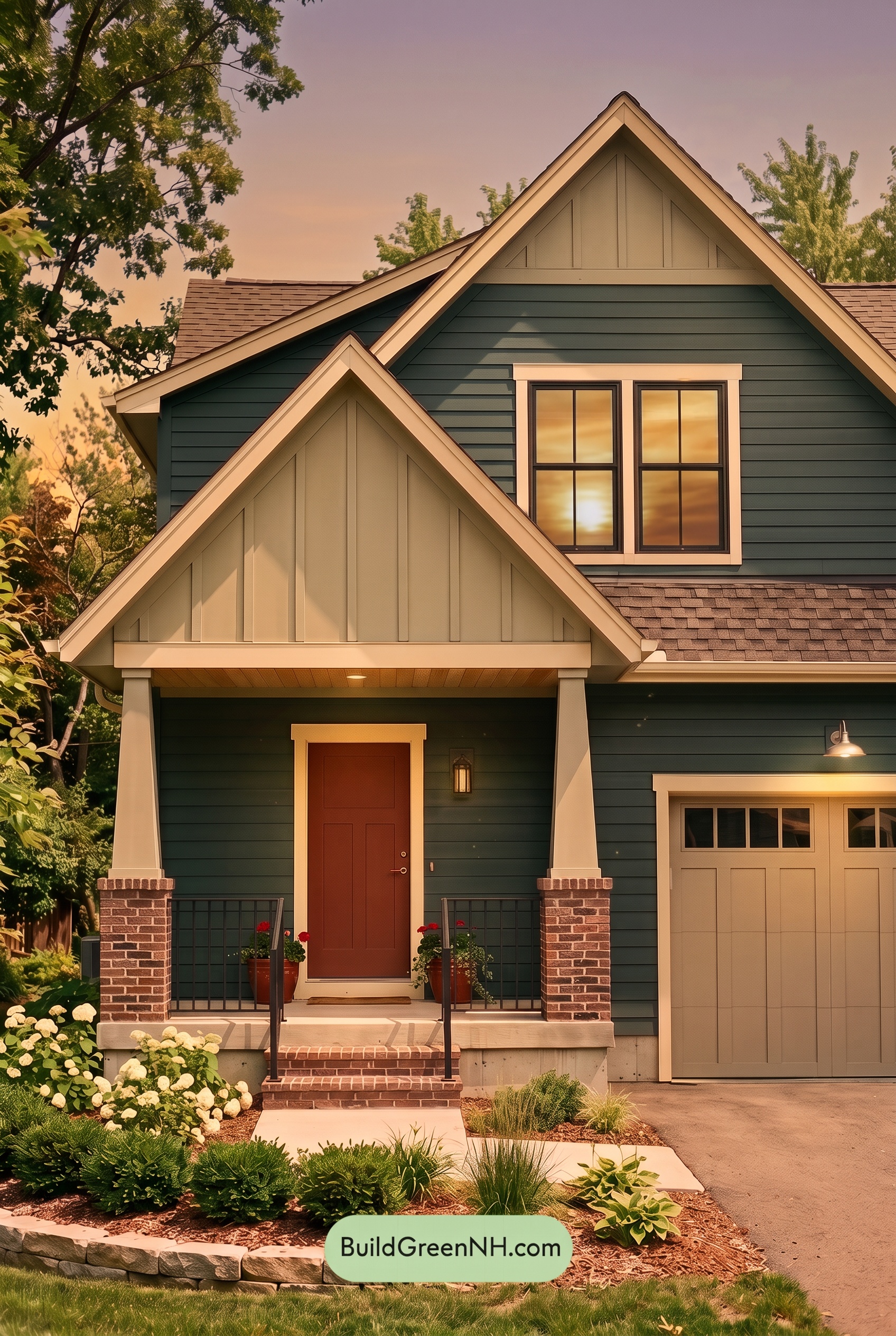
In neutral daylight, the deep main walls read crisp and grounded against the cool gray upper areas and bright white trim. At Golden Hour, the low amber light softens that contrast: the dark siding takes on a richer, warmer cast, while the gray surfaces shift toward gentle, muted warmth.
The white trim glows with a creamy softness, making rooflines and window details feel more pronounced against lengthening shadows. The brown entry becomes especially inviting and more saturated, while darker window frames and railings recede into the shade, giving the whole exterior a cozy, dramatic evening mood.
Shade
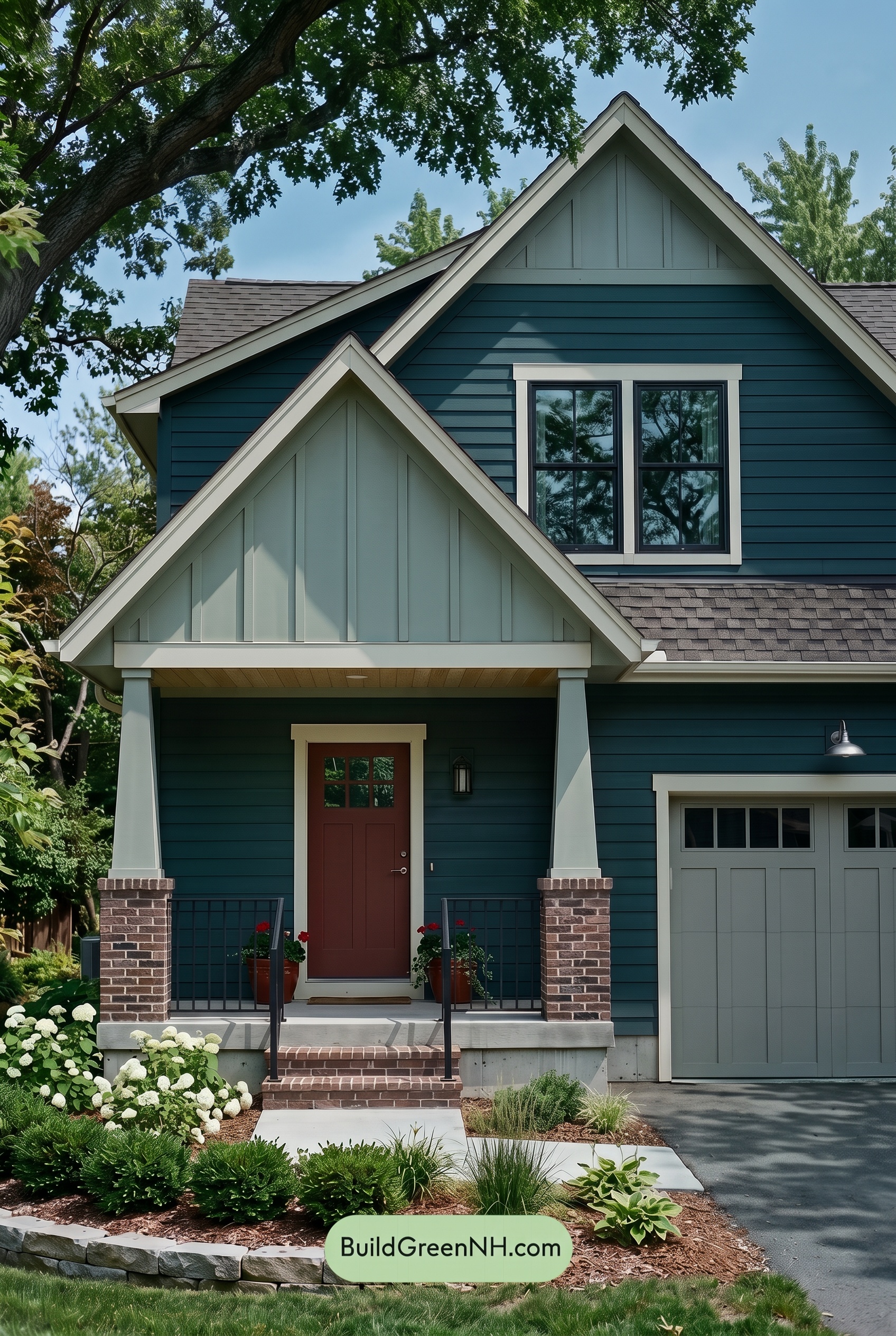
Under shade, the black main wall reads deeper and less saturated than it would in neutral daylight, creating a more refined, almost velvety backdrop. The gray upper wall, garage, columns, and window frames take on a cooler, softer cast, while the white trim loses a little brilliance and feels gentler against the darker surfaces.
Shadows beneath the porch and rooflines strengthen the contrast between the dark siding and pale trim, giving the façade added depth and definition. The brown front door appears warmer by comparison, bringing a welcoming focal point to an overall mood that feels calm, tailored, and quietly dramatic.
Nighttime
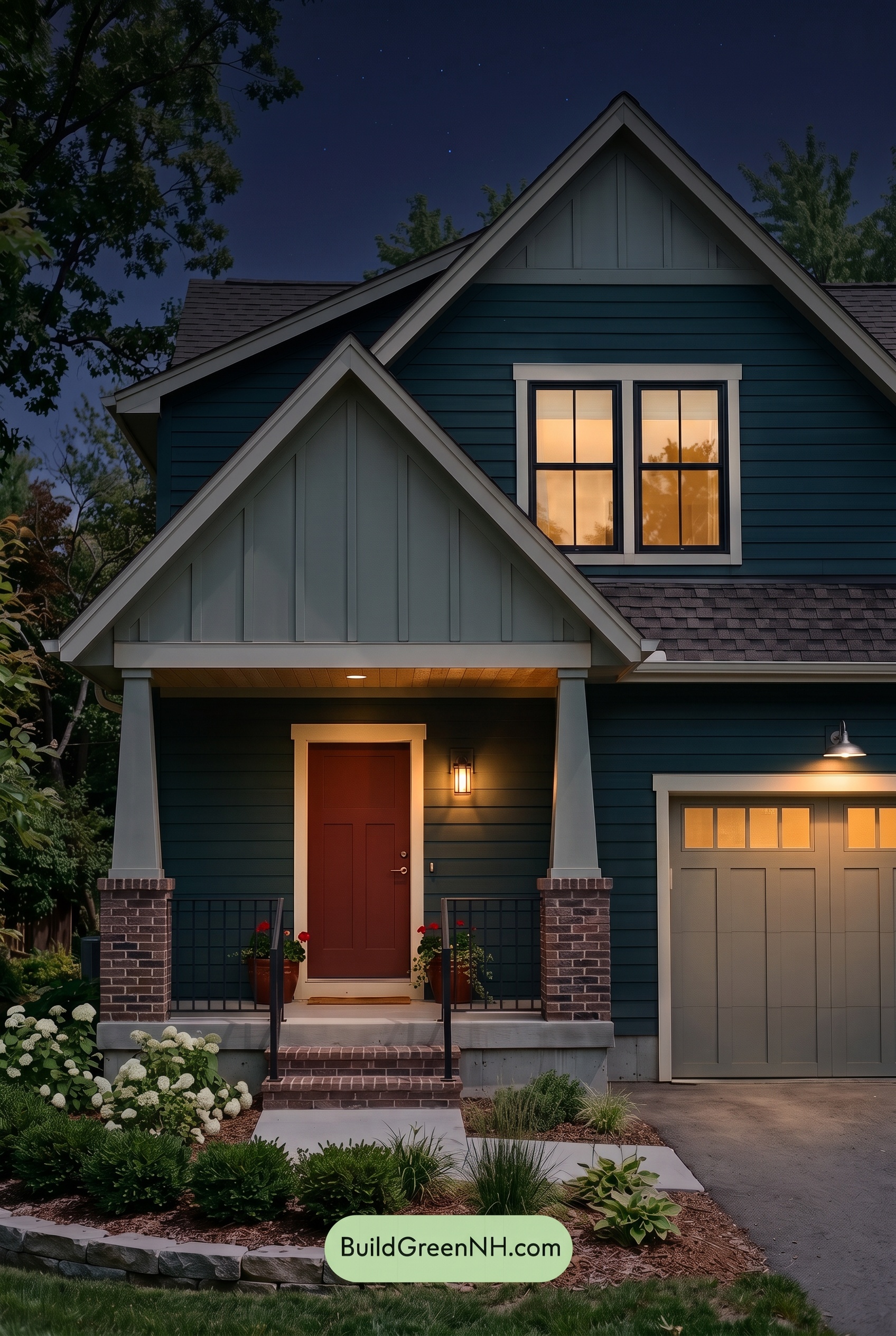
Under nighttime lighting, the deep main wall shade becomes richer and more enveloping, with its saturation appearing slightly muted in the surrounding shadows. The gray upper areas, columns, and garage soften toward cooler, smokier shades, while the light trim holds a crisp outline that keeps the rooflines and windows defined against the darkened facade.
Warm light around the entry and windows shifts the mood dramatically from neutral daylight, lending the brown door and nearby gray surfaces a gentle amber cast. This localized warmth heightens contrast with the cool, shadowed exterior, creating an inviting focal point and a calm, layered evening presence.
Pin these for later:
Want More?
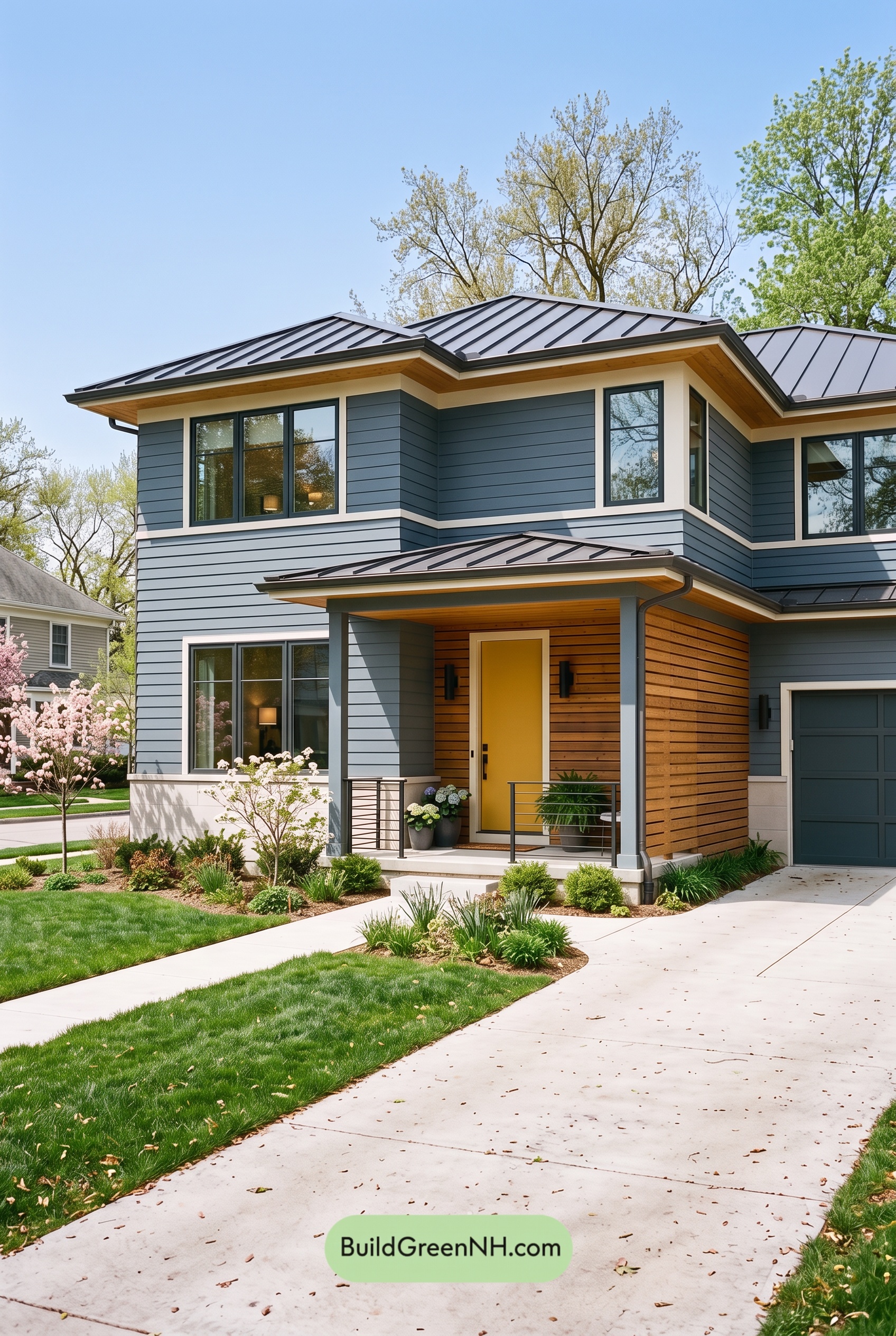 Blue House Front Door Color Scheme: Harbor Saffron
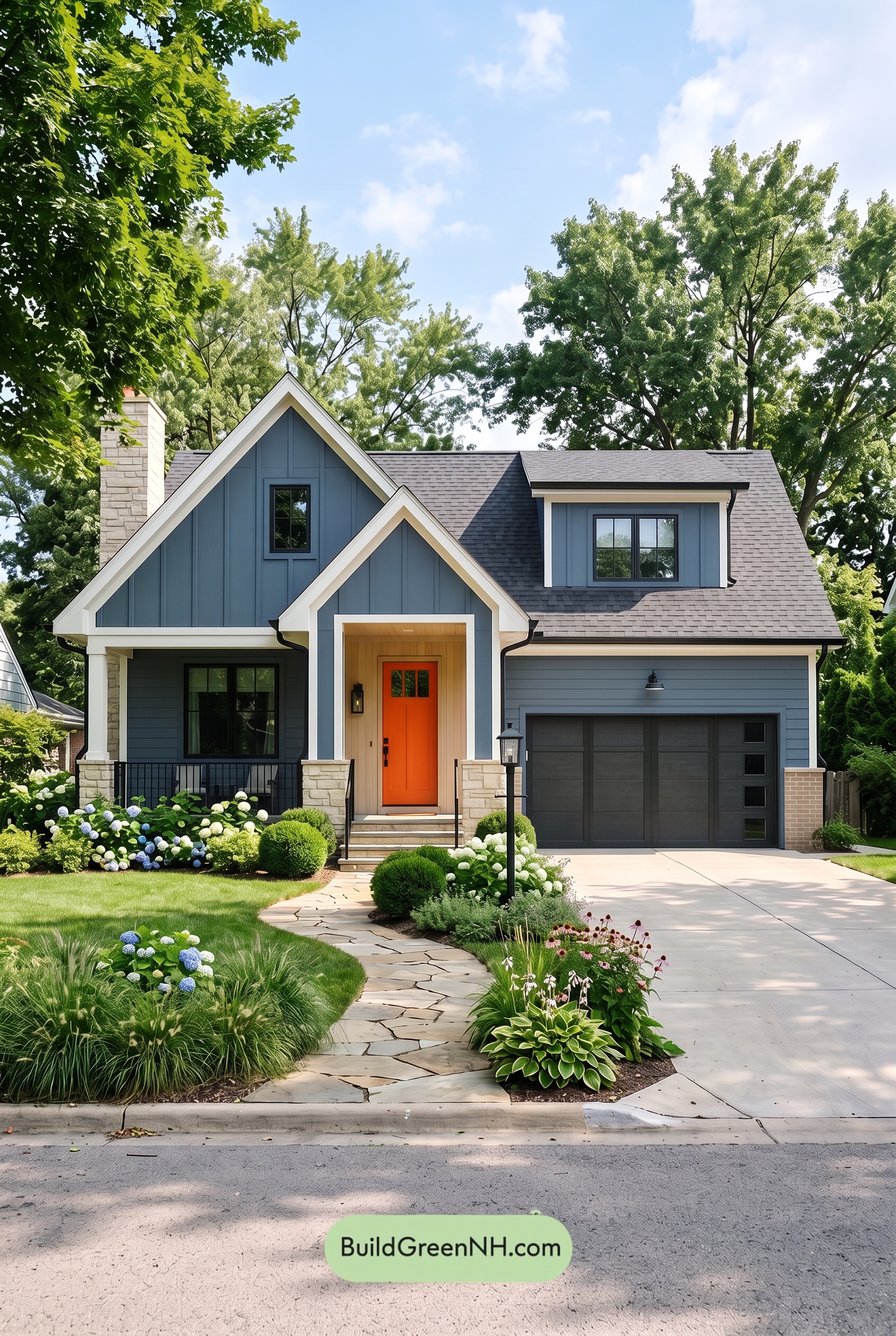 Blue House Front Door Color Scheme: Cobalt Persimmon
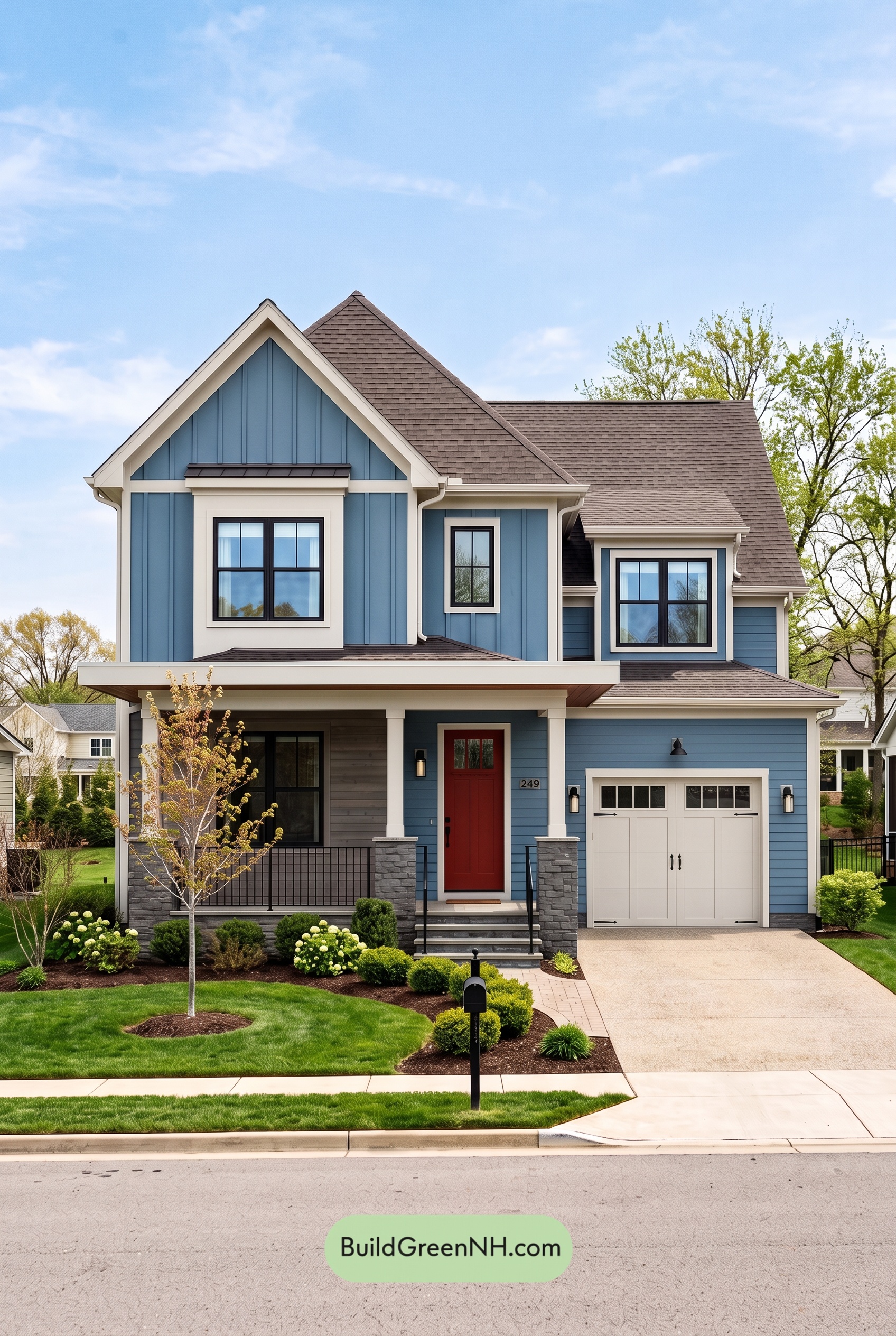 Blue House Front Door Color Scheme: Denim Poppy
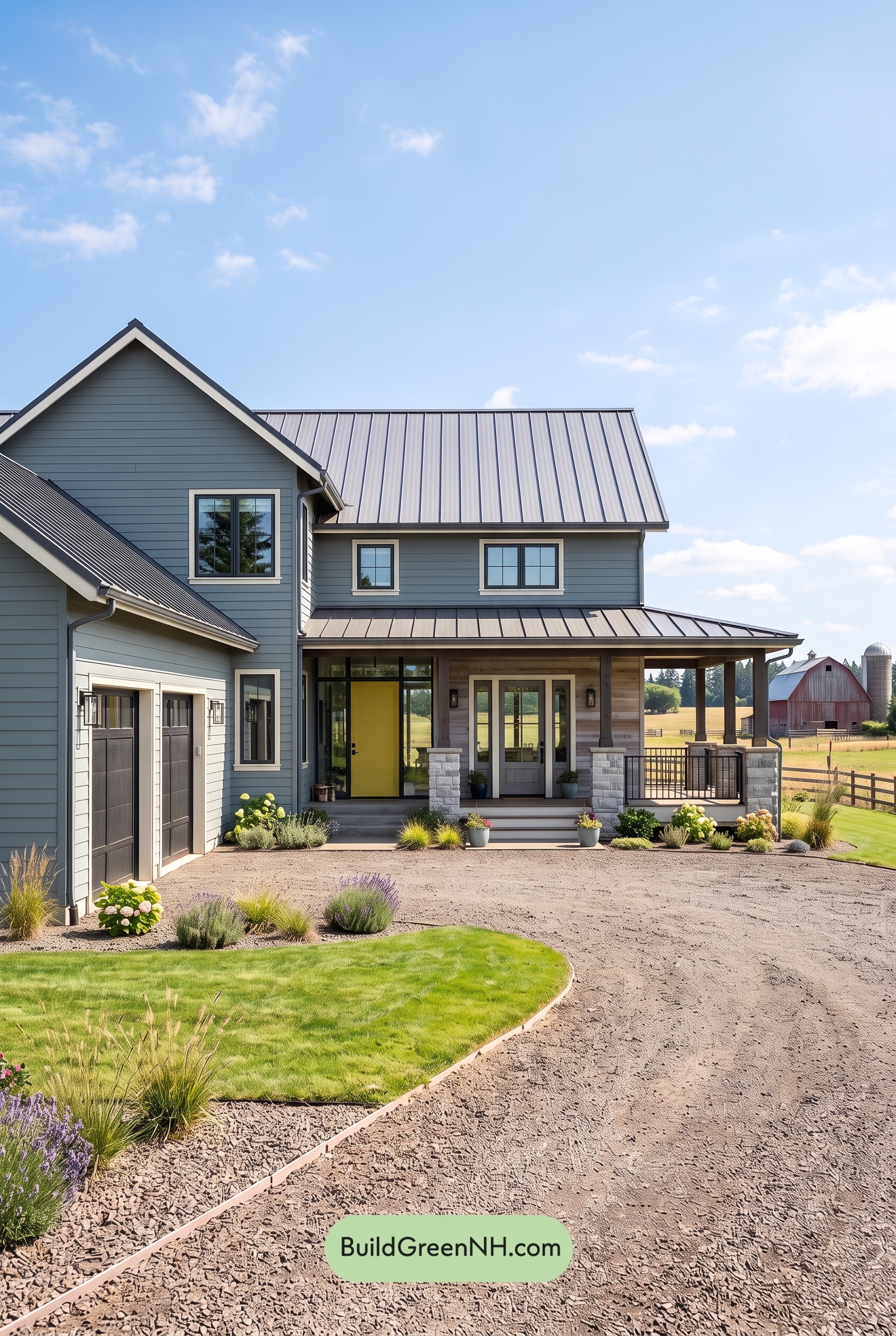 Blue House Front Door Color Scheme: Slate Citron
 Blue House Front Door Color Scheme: Mist Blue Haven
Table of Contents