Last updated on
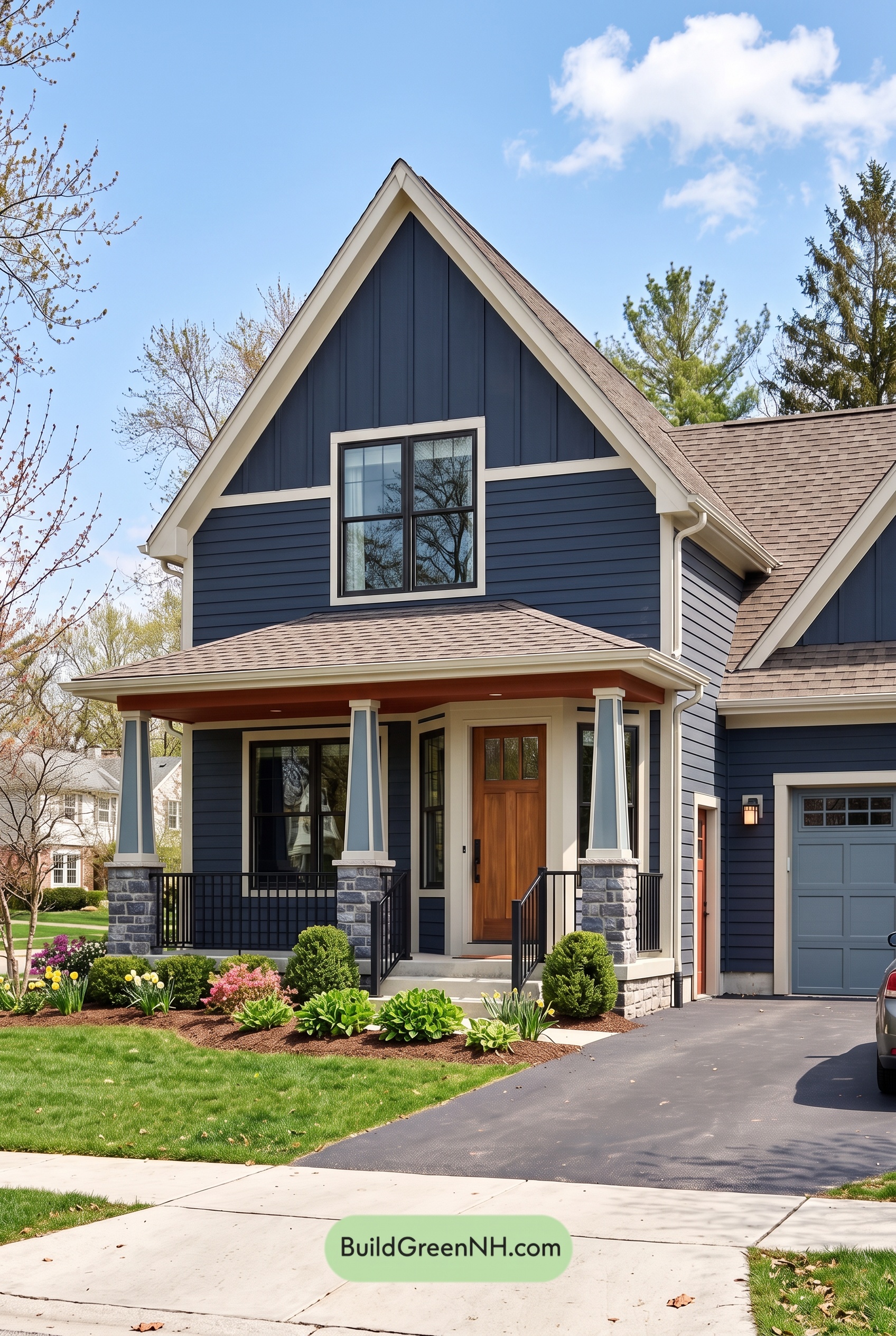

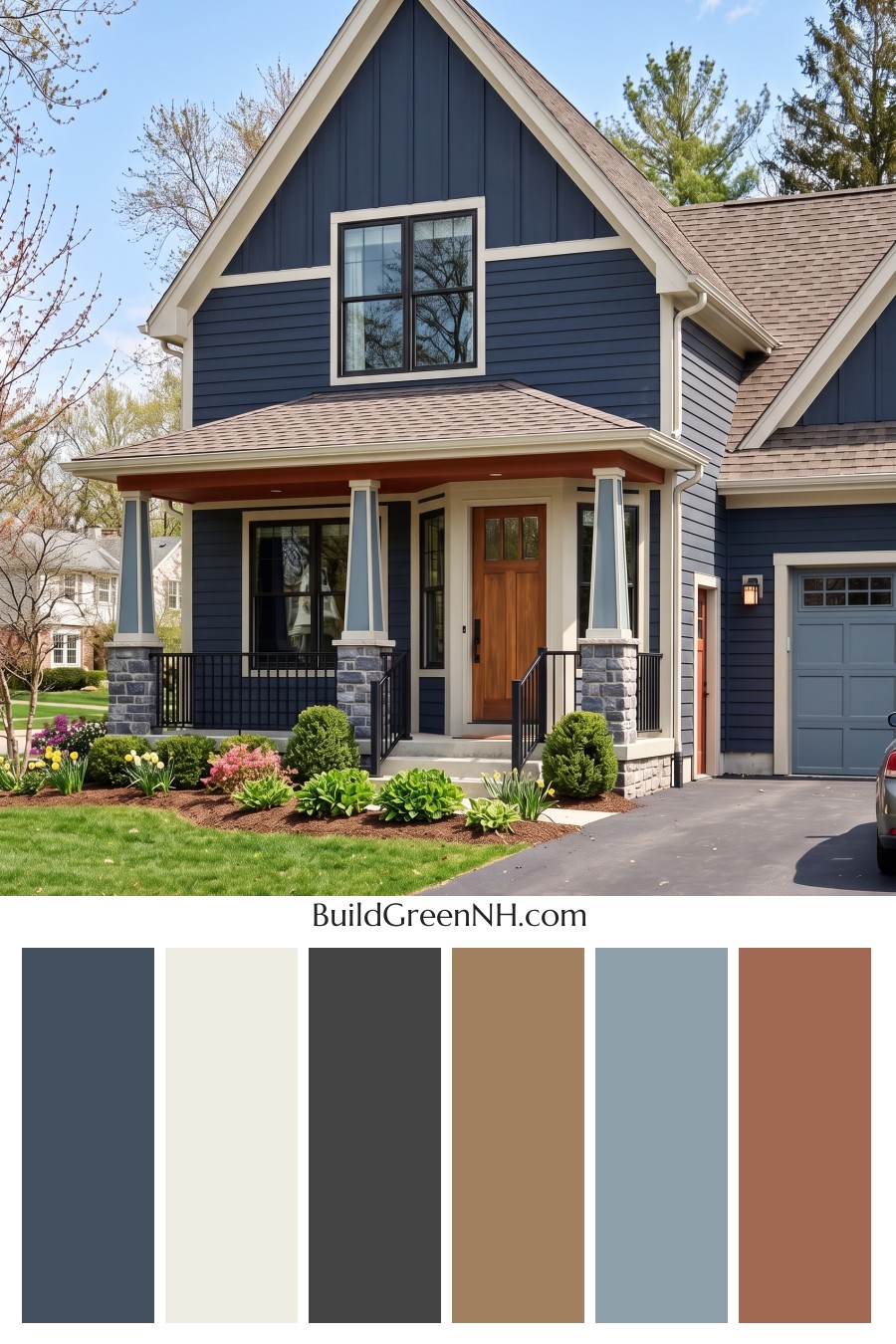
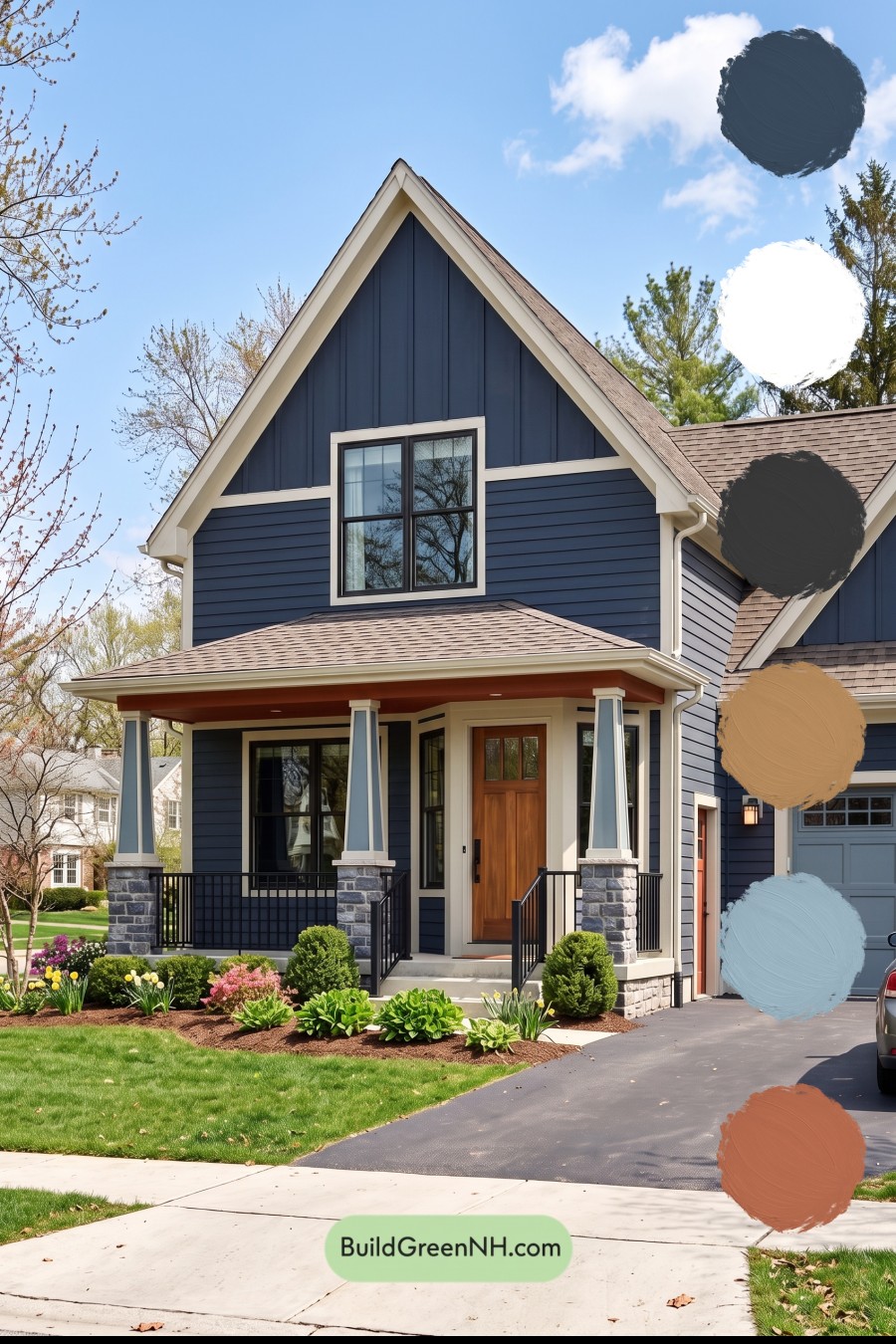
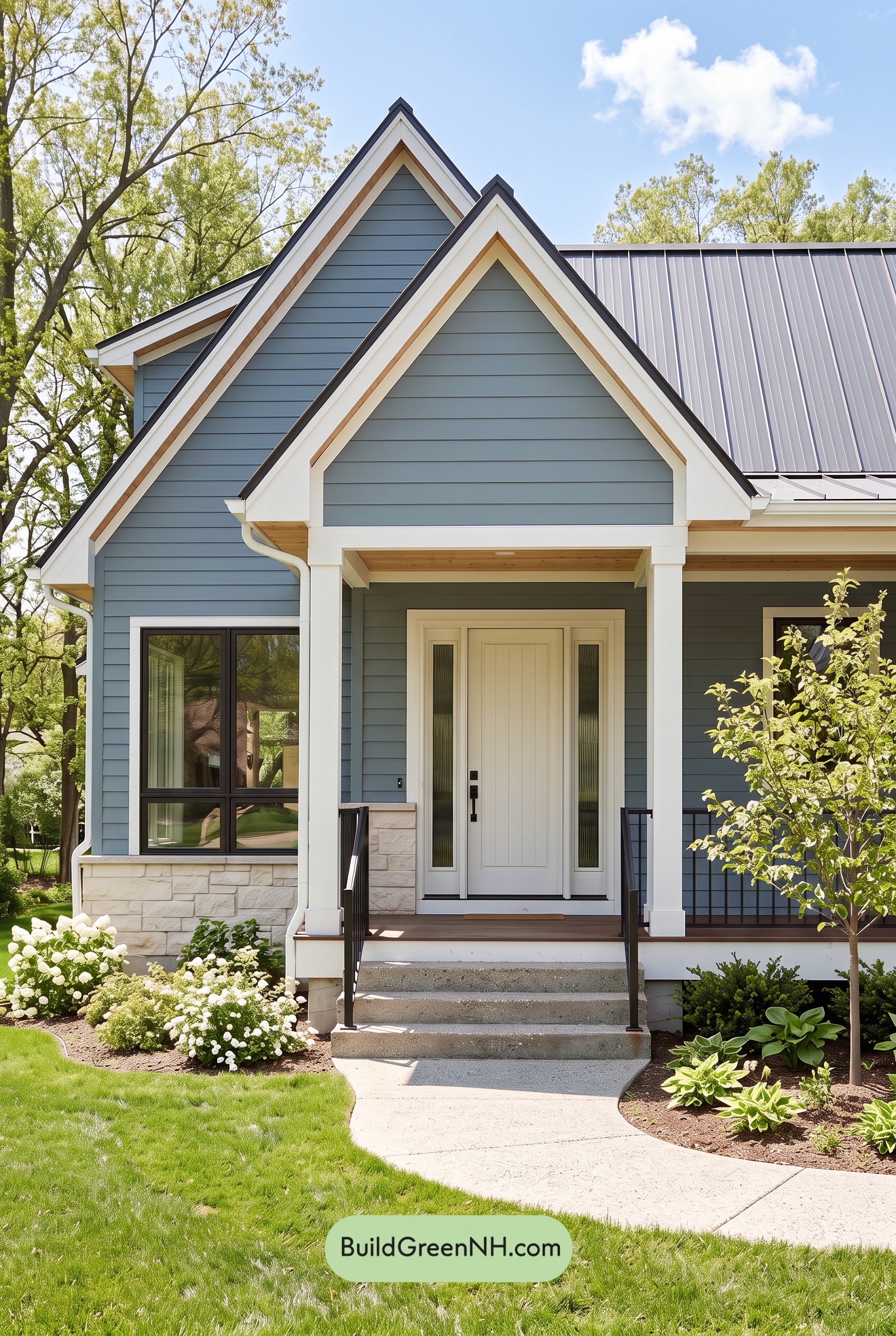
This layered blend of deep blue, crisp white, soft gray, and warm brown gives the home a polished presence that feels both welcoming and confidently modern.
A Deep Blue Foundation
The exterior is anchored by deep blue siding that brings rich contrast to the home’s tall gables and clean-lined architecture. The darker blue shade feels sophisticated without becoming severe, and it gives the facade a strong, settled look against the surrounding greenery and bright sky.
The blue continues across the garage door and porch columns, though these elements shift toward softer blue-gray shades. This variation adds depth while keeping the overall scheme cohesive. Repeating related blue tones from the main walls to the garage creates a thoughtful visual rhythm across the front elevation.
Crisp White Definition
Bright white trim is used generously around the rooflines, gables, windows, porch structure, and entry. It outlines every architectural feature with precision, making the deep siding look even more dimensional. Along the steep gables, the white trim creates a sharp, classic frame that keeps the bold blue from feeling too heavy.
The same light shade around the front door and garage opening adds a clean transition between the darker exterior surfaces. It is a simple choice, but it makes the entire facade feel fresh and carefully finished.
Warm Brown at the Entry
The front door introduces a warm medium brown that immediately softens the cooler blues and grays. Positioned beneath the porch, this rich accent becomes a natural focal point and gives the entry a distinctly inviting feel. A related brown shade along the porch ceiling and accent wall reinforces that warmth, creating a sheltered, welcoming moment before guests even reach the door.
The roof’s weathered brown-gray tone helps bridge these warm accents with the cooler exterior palette. Rather than competing with the siding, it provides an earthy, understated cap that makes the color scheme feel grounded.
Charcoal Gray Details for Contrast
Deep charcoal-gray window frames and railings bring a modern edge to the design. Their dark finish adds definition without interrupting the blue-and-white balance, especially around the tall windows and open porch. The gray stone bases at the columns add another layer of texture in similarly cool, muted shades.
Together, these darker details lend the home a tailored, architectural character. They also keep the brighter trim and warmer entry accents from feeling overly traditional.
A Balanced, Welcoming Exterior
This exterior color scheme succeeds because it balances cool and warm tones with purpose. The deep blue siding delivers drama, white trim supplies brightness, gray details add refinement, and warm brown accents create an approachable focal point at the entrance.
The result is a home that feels classic yet current: crisp in daylight, cozy around the porch, and strong from the street. It is an excellent example of how a dark exterior can still feel open, friendly, and beautifully composed.
Next, see how this color scheme looks under different lighting simulations throughout the day.
Overcast
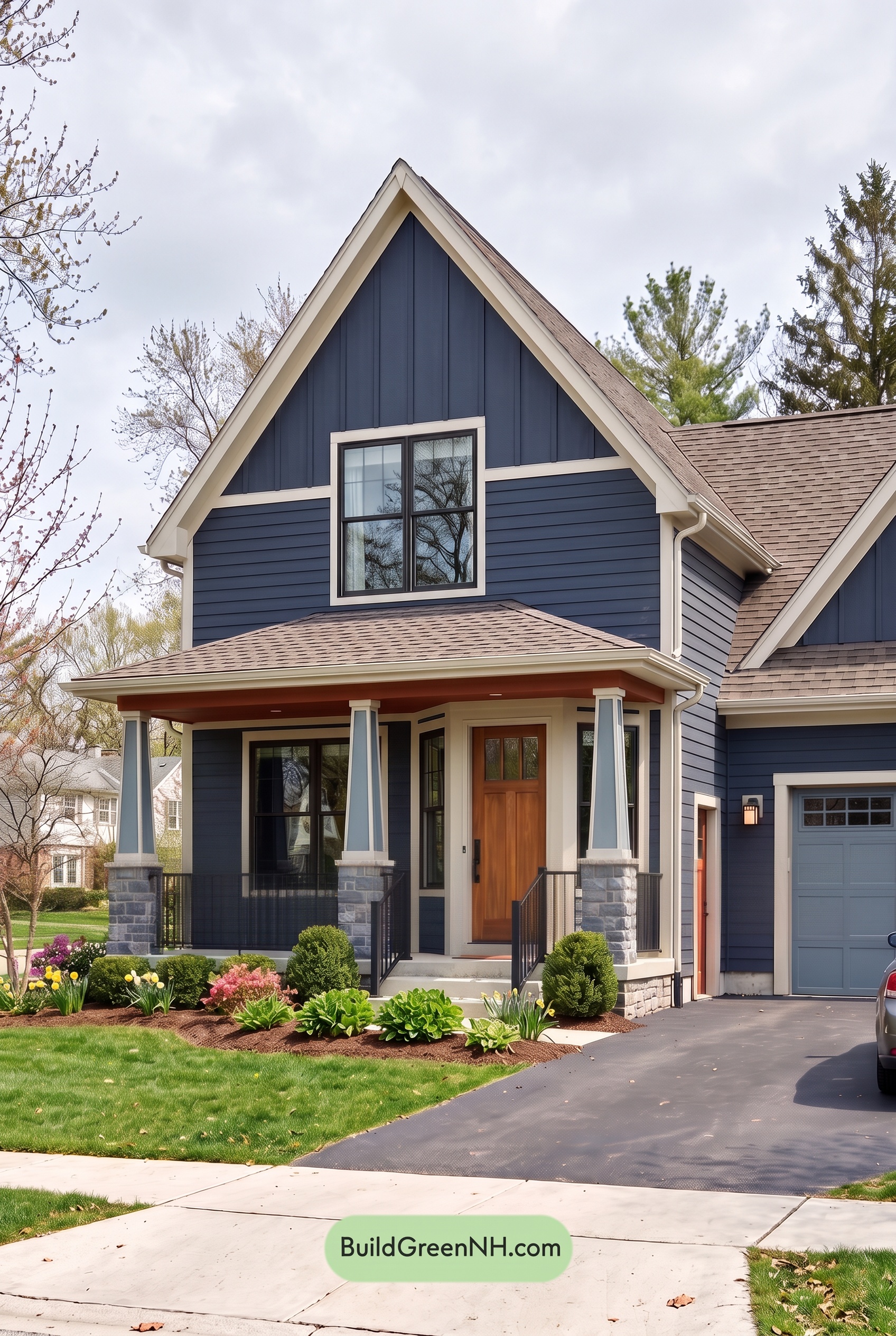
Under overcast skies, the deep blue siding takes on a quieter, slightly grayer cast than it shows in neutral daylight, with its saturation feeling more restrained and refined. The pale trim appears softer rather than bright, while the cool gray details settle into the facade with less sharp visual contrast.
With direct shadows diffused, the porch recesses and siding texture read more evenly, giving the house a calm, composed mood. The warm brown accents lose a little of their sunlit glow but become richer and more grounding, creating a gentle warmth against the cooler blue and gray shades.
Golden Hour
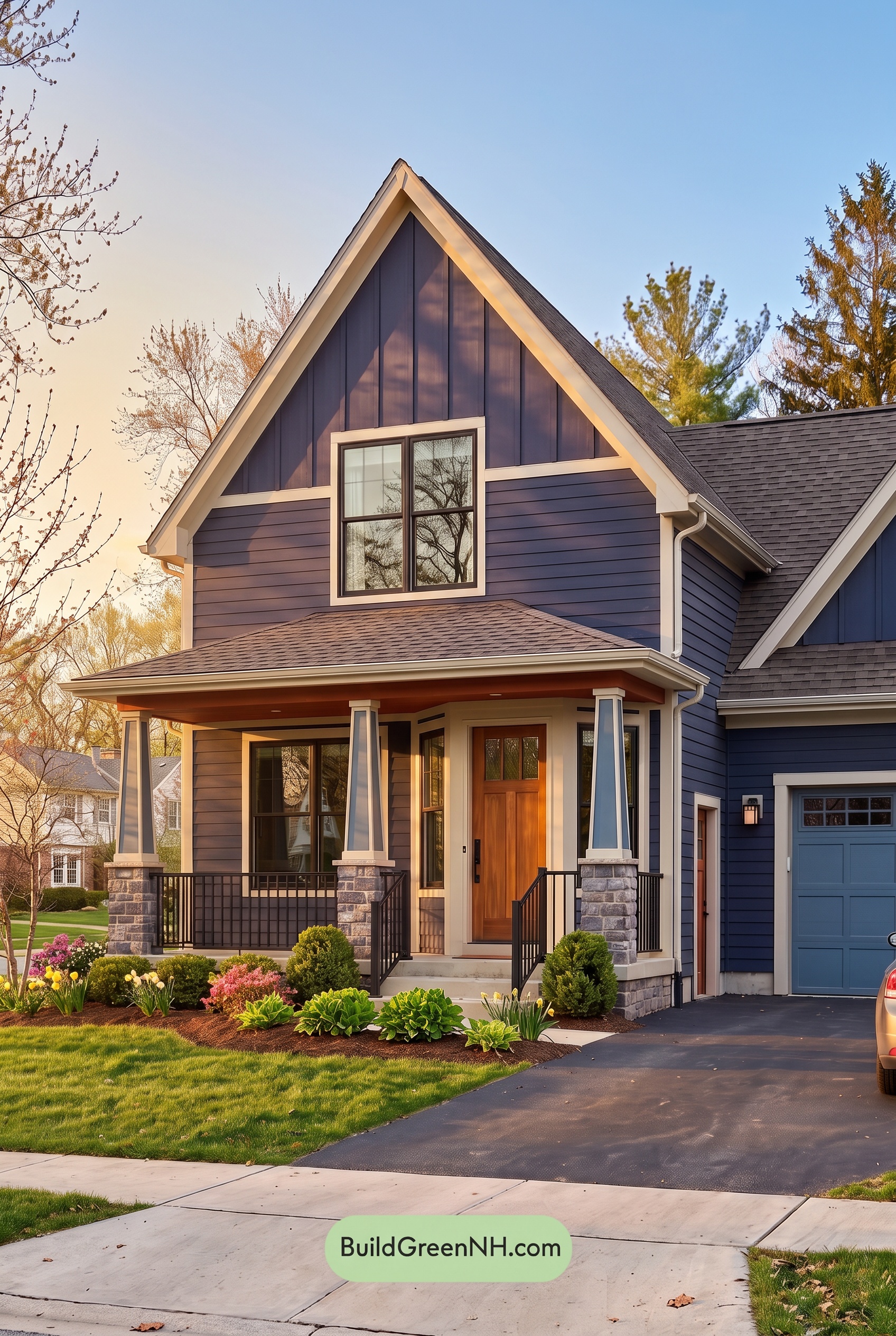
Under Golden Hour light, the blue siding takes on a deeper, slightly warmer character than it shows in neutral daylight, while its saturation feels richer along the sunlit planes. White trim softens from crisp and bright to a creamy-looking pale neutral, creating a gentler contrast around the rooflines and windows.
Longer shadows intensify the blue and gray details, giving the façade more depth and definition. The brown entry and accent areas become especially inviting as the warm light enhances their natural warmth, shifting the overall mood from clean and tailored in daylight to cozy, dimensional, and welcoming at sunset.
Shade
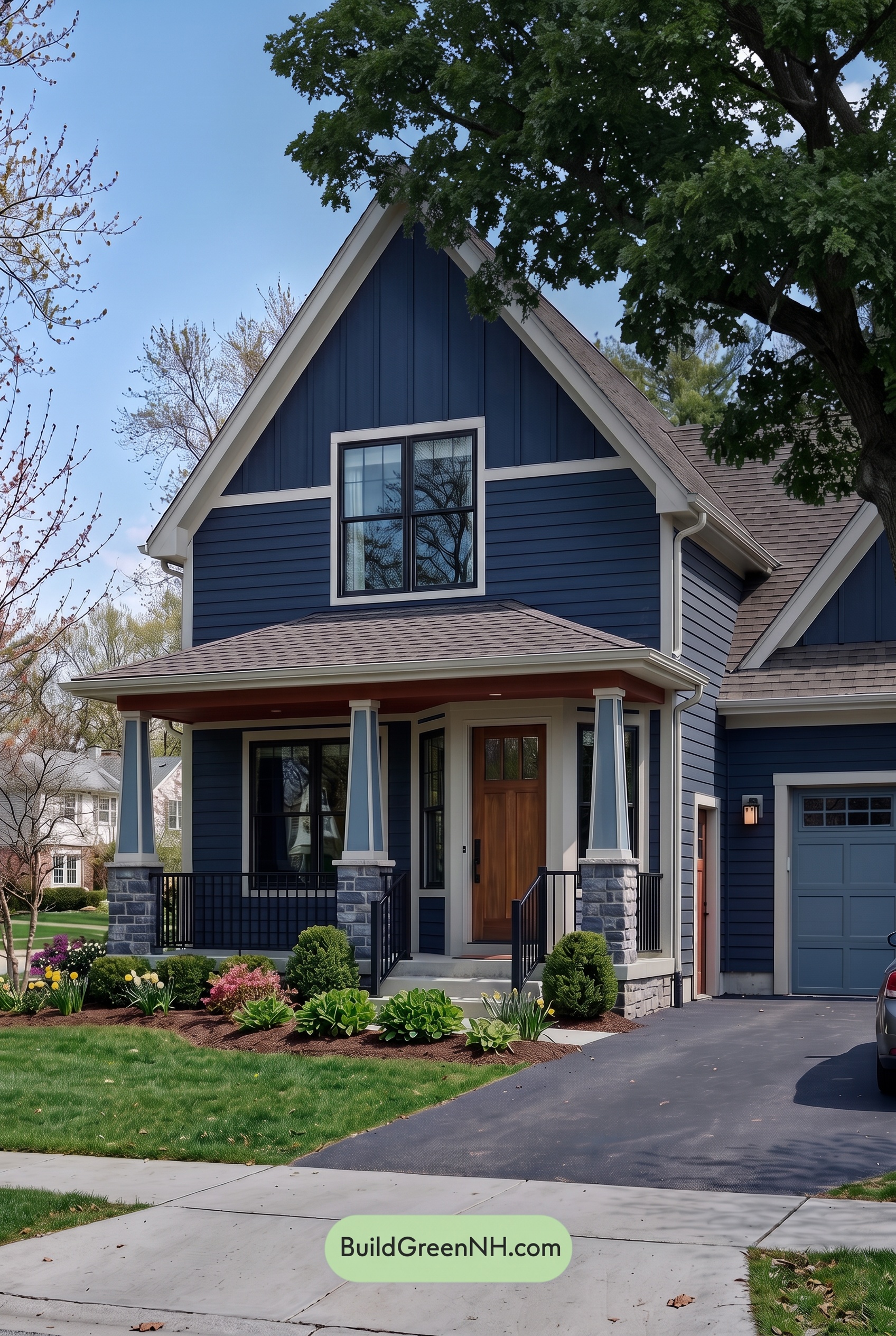
In shade, the deep blue siding appears slightly cooler and more saturated than it does in neutral daylight, giving the facade a calm, tailored presence. The white trim softens toward a muted off-white, while the gray details settle into deeper, quieter tones that reduce glare and make the architectural lines feel more refined.
Shadows beneath the porch and rooflines enrich the brown accents, drawing out their warmth against the cool blue exterior. This lower, gentler light increases the contrast around the bright trim and dark window frames, creating a layered, welcoming mood with more depth than the same palette shows in open daylight.
Nighttime
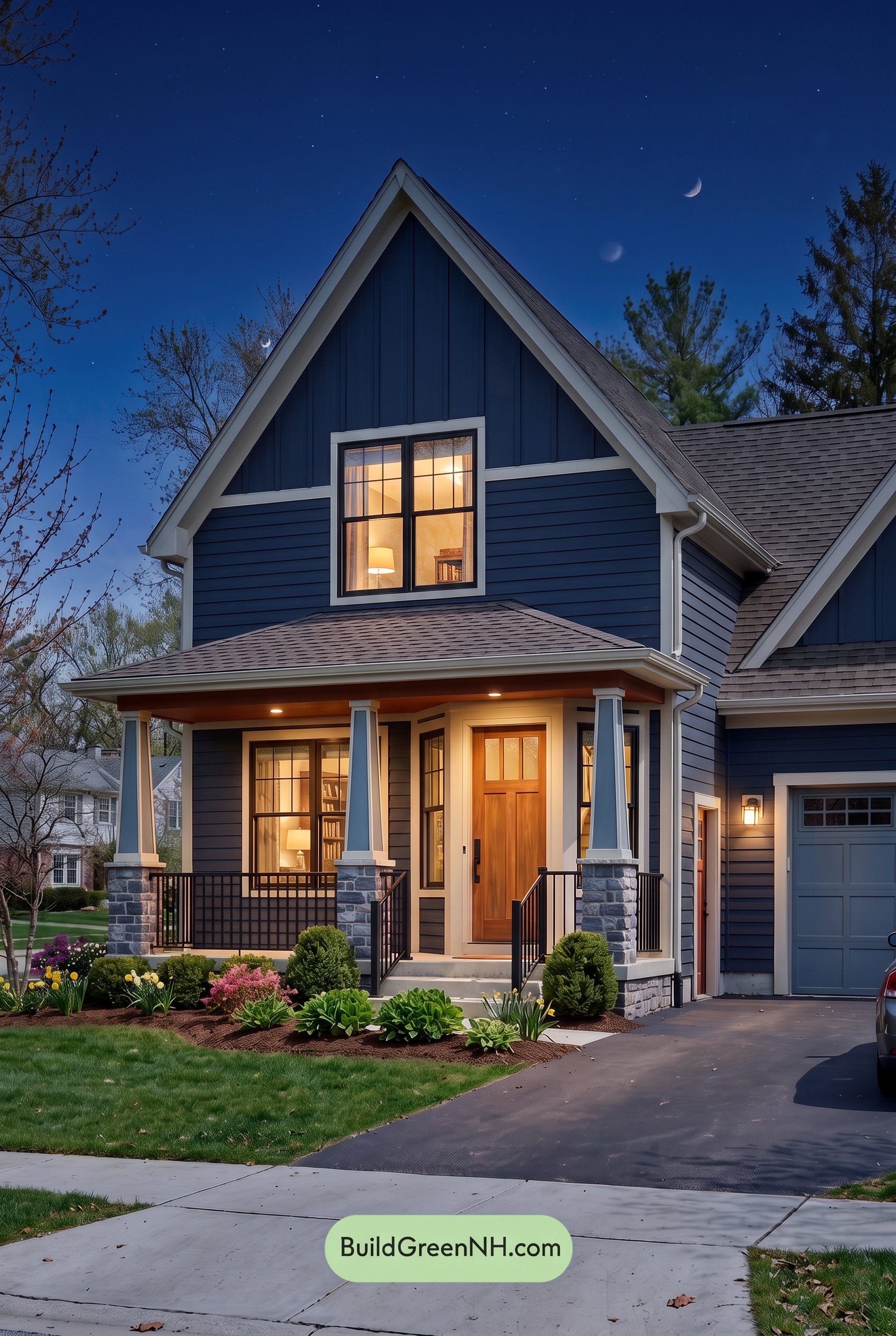
At night, the blue siding and matching architectural details deepen into a more saturated, inky presence, while shaded areas blur into rich layers of cool tone. Compared with neutral daylight, the gray elements recede more quietly, allowing the pale trim to read as a crisp outline around the roofline, windows, and porch.
Warm lighting at the entry and through the windows transforms the brown accents into a welcoming focal point, softening their depth with a golden glow. This warm-and-cool contrast makes the façade feel more dramatic and dimensional after dark, with pronounced shadows and an inviting, sheltered mood.
Pin these for later:
Want More?
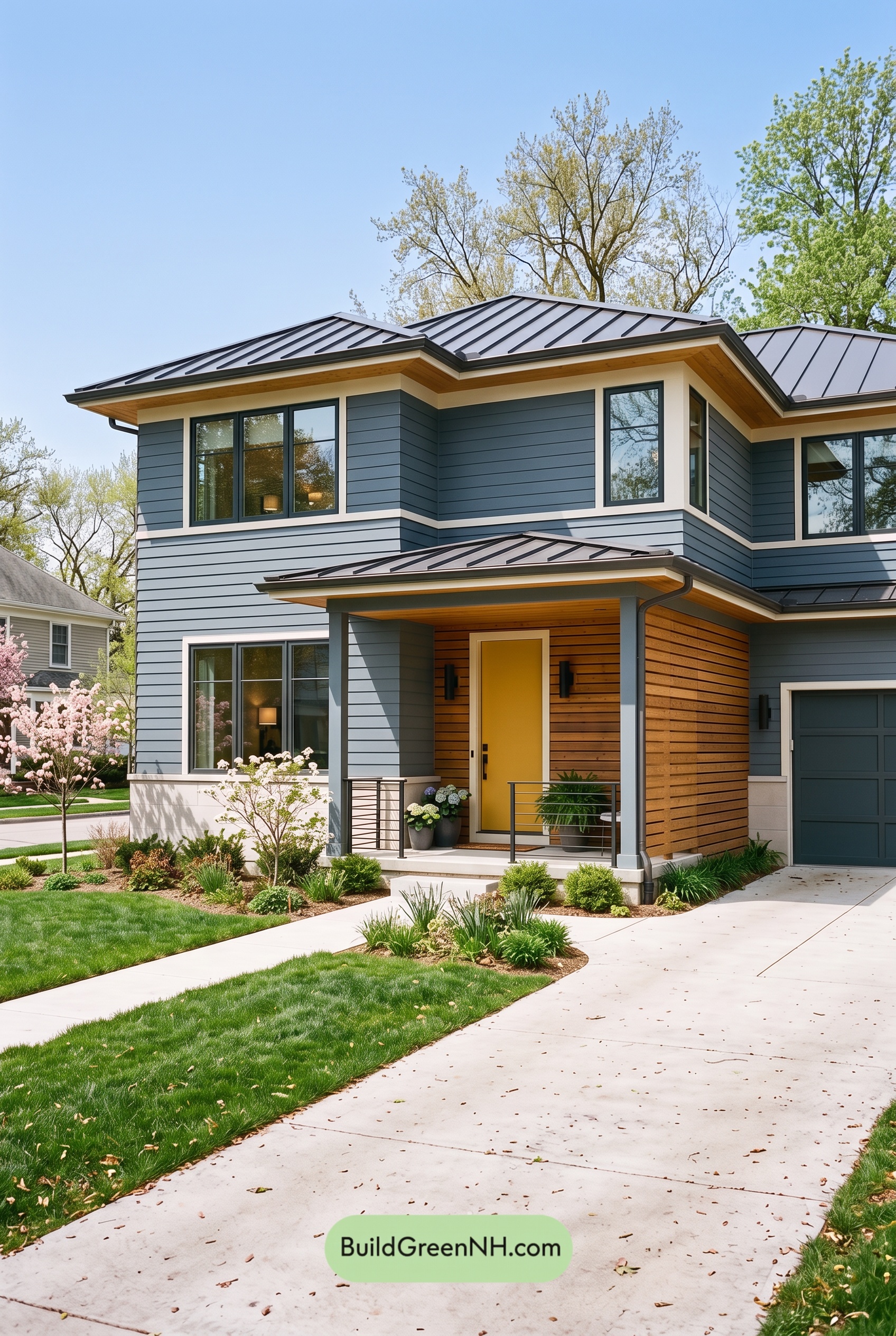 Blue House Front Door Color Scheme: Harbor Saffron
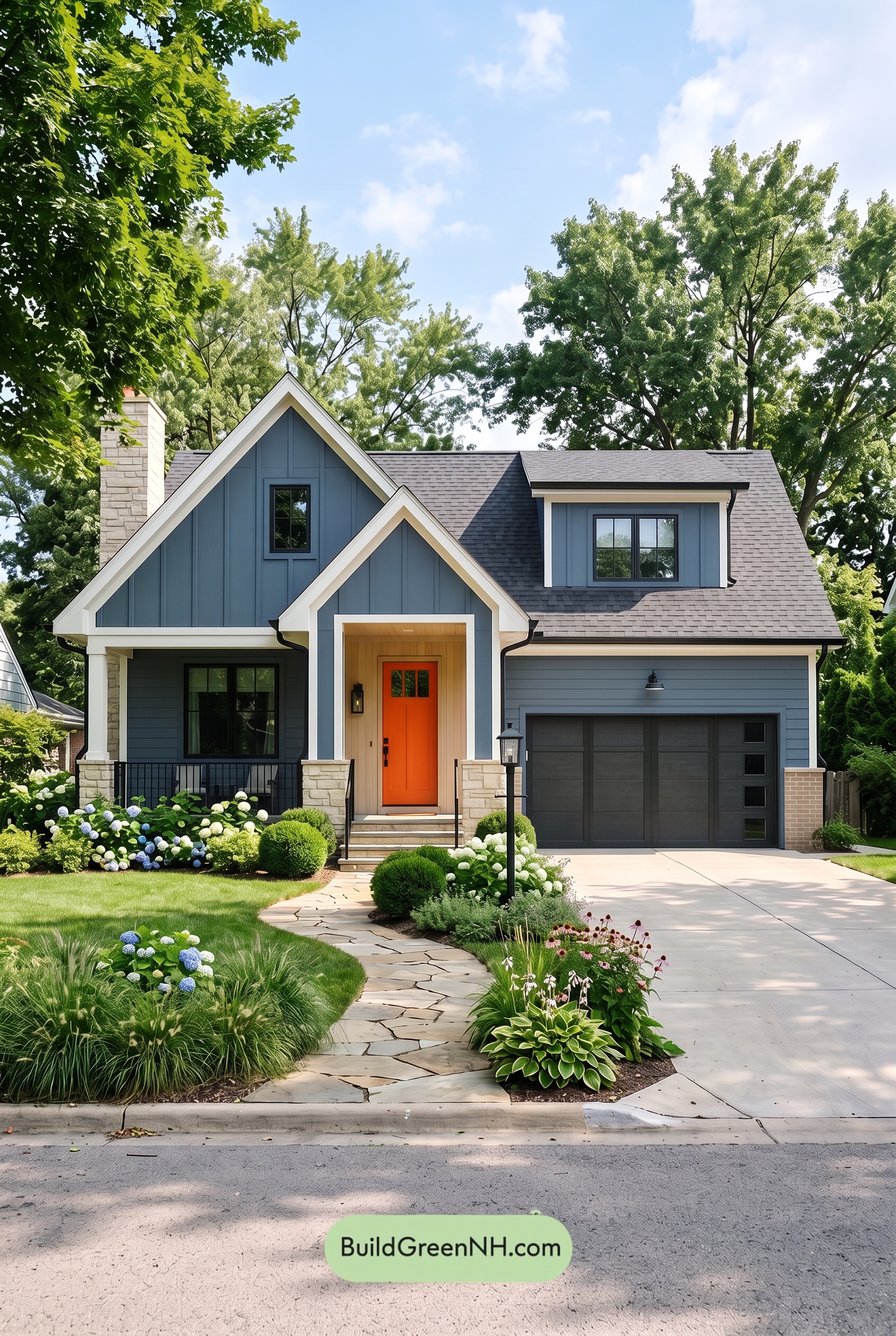 Blue House Front Door Color Scheme: Cobalt Persimmon
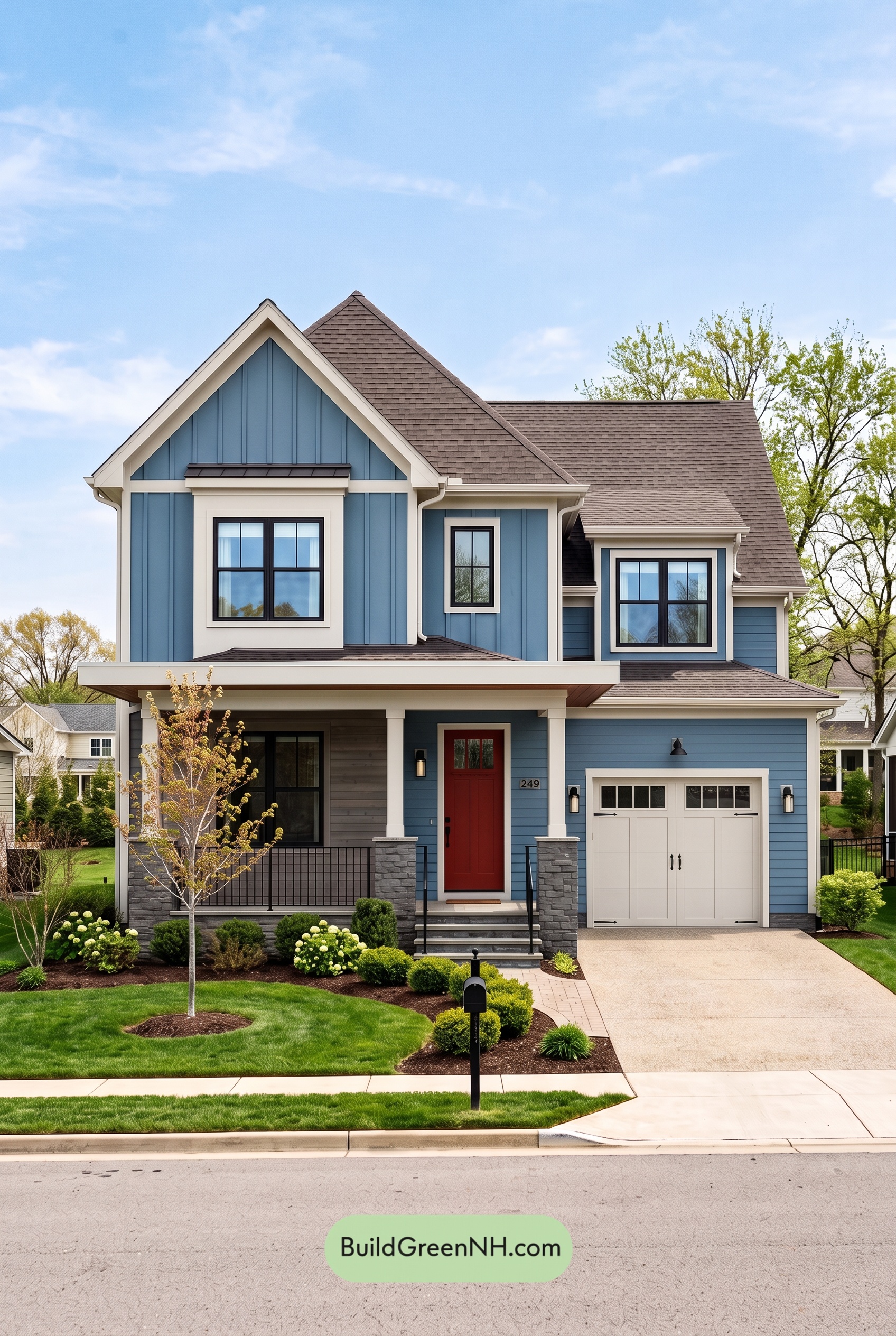 Blue House Front Door Color Scheme: Denim Poppy
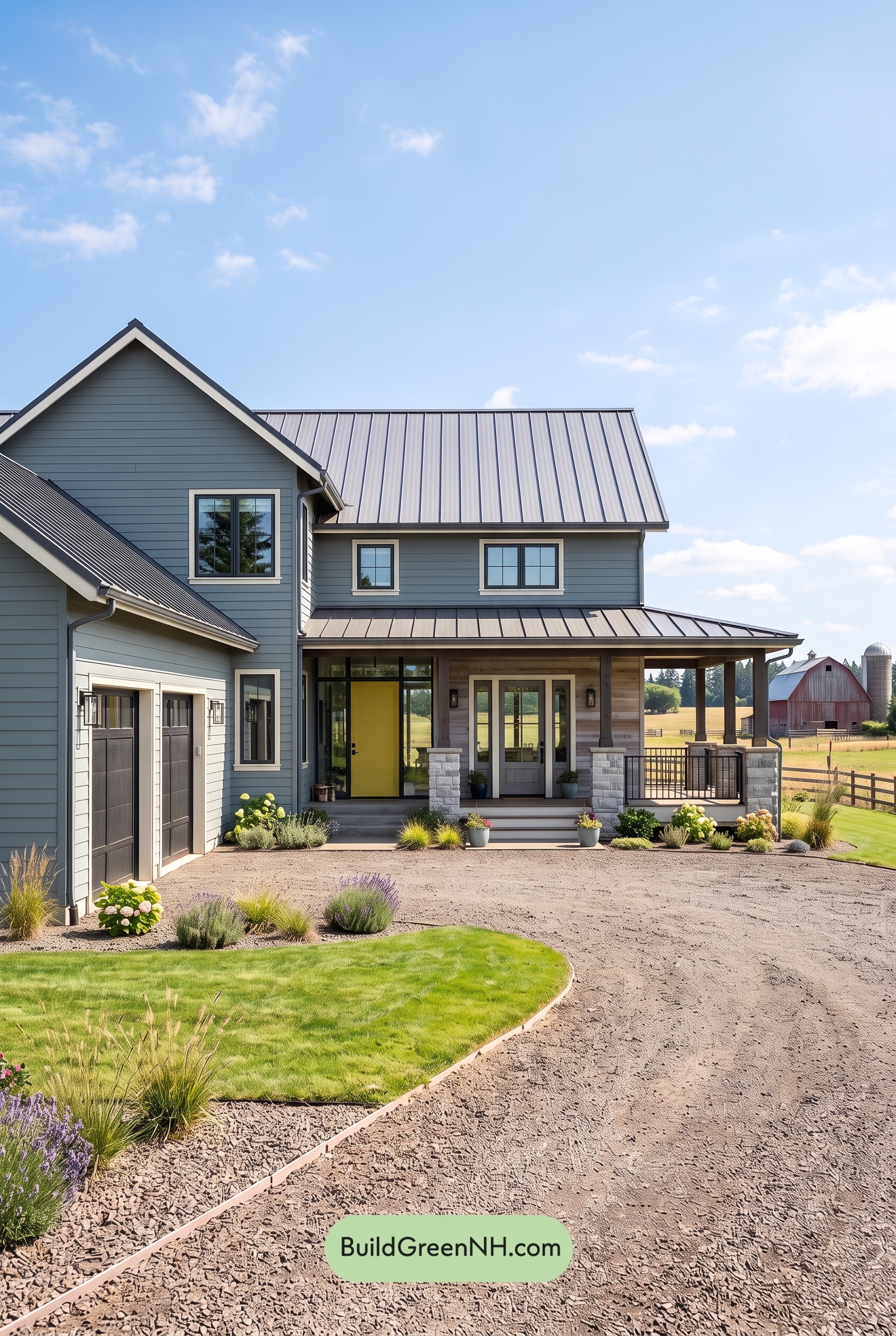 Blue House Front Door Color Scheme: Slate Citron
 Blue House Front Door Color Scheme: Mist Blue Haven
Table of Contents