Last updated on
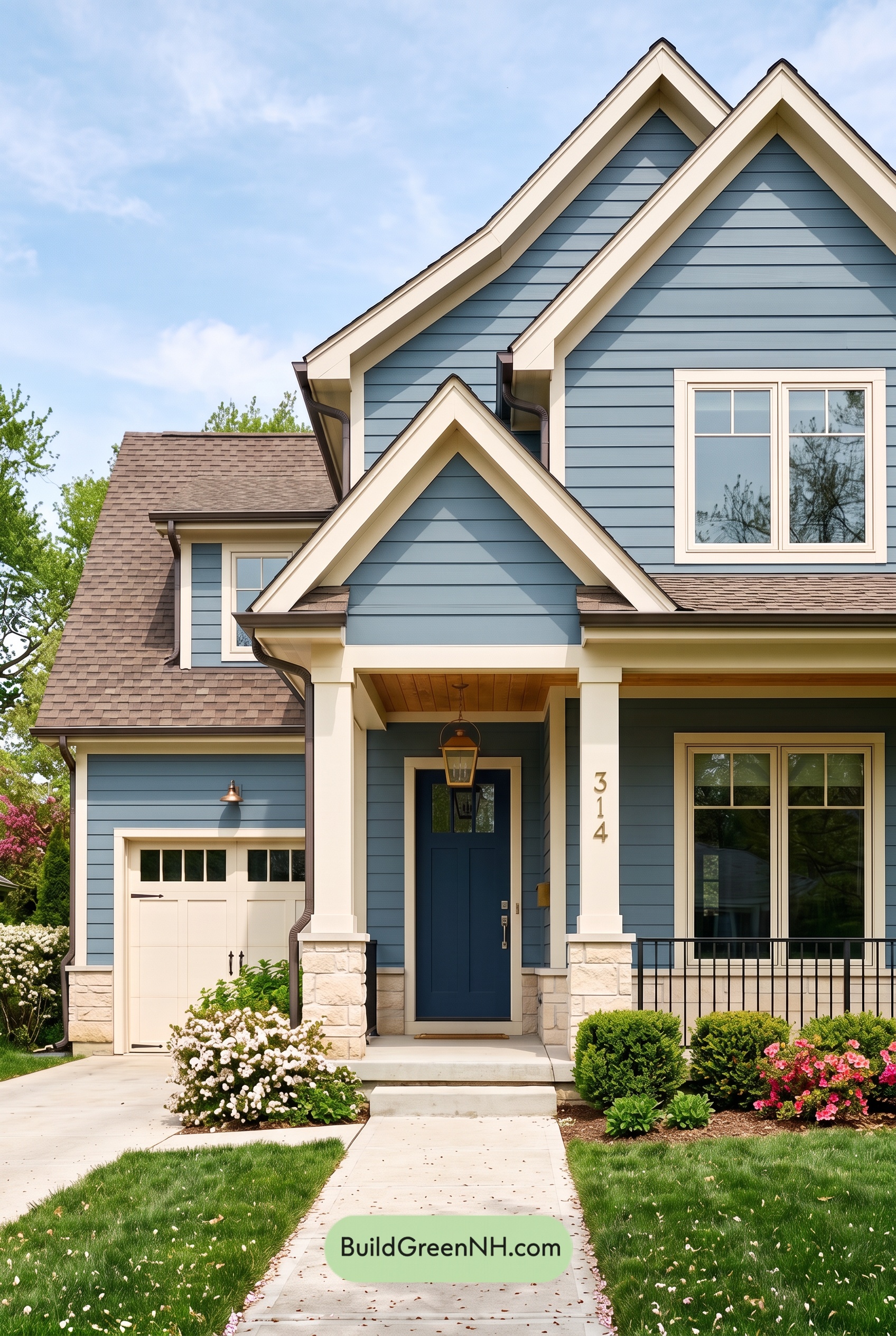

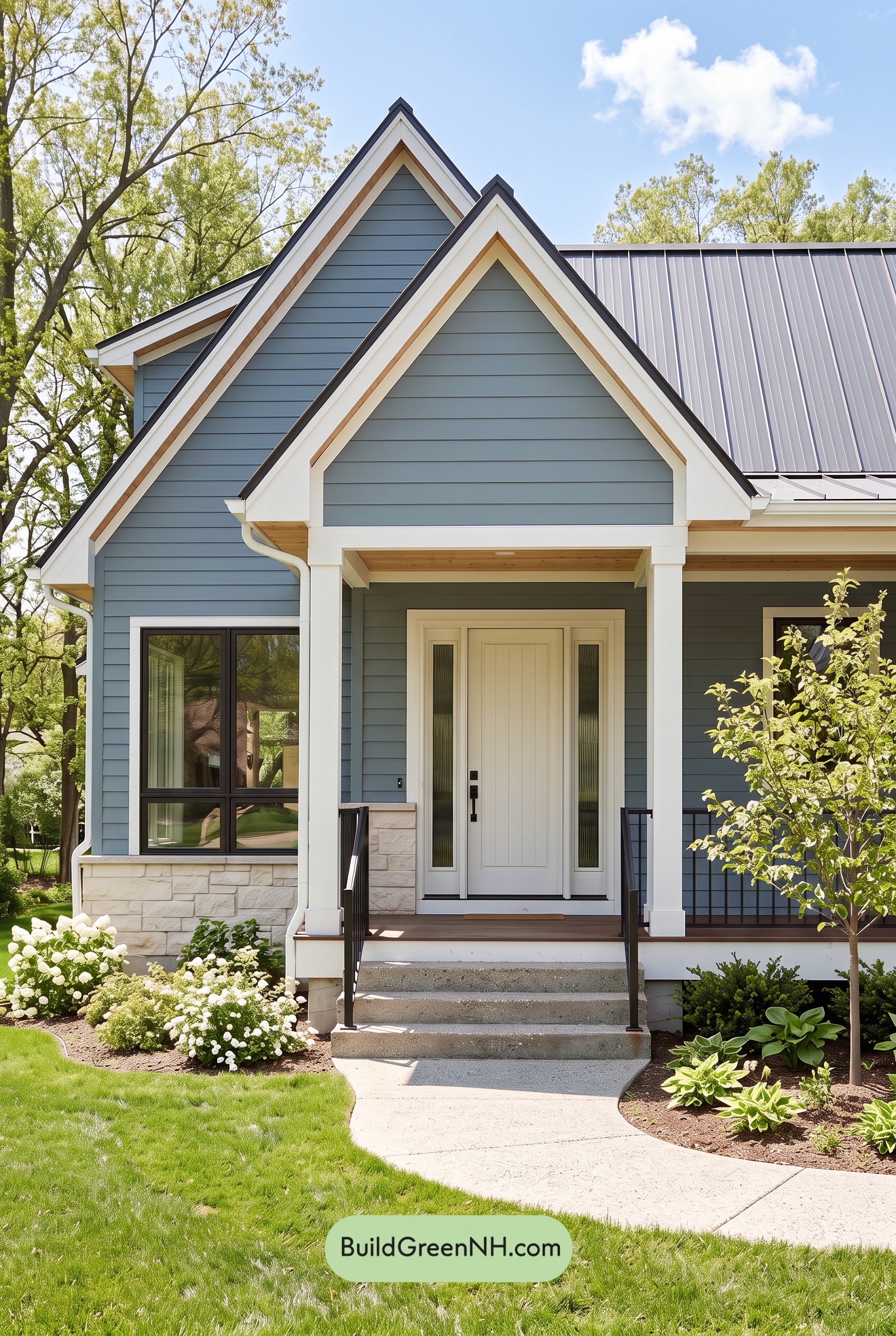
This blue-and-white exterior scheme feels instantly welcoming because it balances timeless contrast with a calm, tailored sense of character.
A Soft Blue Foundation
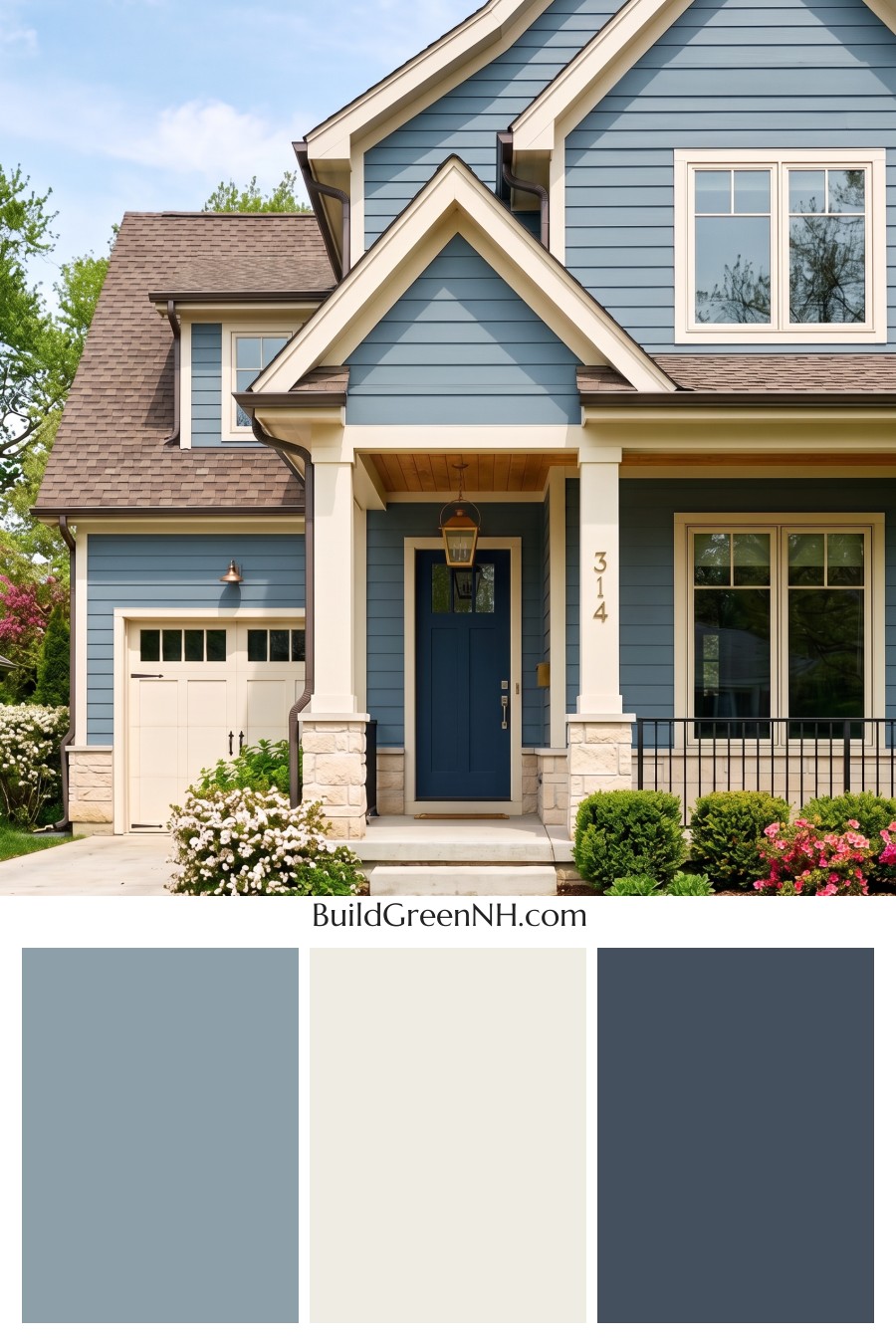
The siding is finished in a muted blue-gray shade that gives the home a relaxed, polished presence. Its gentle coolness suits the layered gables beautifully, allowing the detailed architecture to feel substantial without becoming visually heavy. The blue carries across the facade in a consistent way, creating a unified backdrop from the garage wing to the front porch.
Bright Trim That Defines Every Detail
Crisp warm white trim provides the perfect counterpoint to the blue-gray siding. It outlines the steep rooflines, frames the windows, highlights the porch structure, and emphasizes the distinctive gable shapes. This bright shade also appears on the columns and garage door, bringing a clean, classic rhythm to the front elevation.
The window frames benefit especially from this contrast. Their light borders stand out clearly against the cooler wall color, making the windows feel larger and giving the facade a fresh, carefully finished look.
A Deeper Blue Welcome
The front door shifts into a deeper navy-blue shade, adding richness and a natural focal point at the entry. Because it stays within the same blue family as the siding, the door feels coordinated rather than separate. Yet its darker value creates enough contrast to draw the eye toward the porch and make the arrival feel intentional.
Deep blue railings continue that accent tone along the porch, grounding the lighter columns and helping the entry feel more structured. This darker detail gives the palette a little extra depth without disrupting its serene overall character.
Warm Neutrals Complete the Palette
A medium taupe-brown roof introduces welcome warmth above the cool blue walls, while the pale creamy-beige stone at the column bases adds texture near the ground. Together, these neutral shades prevent the blue-and-white pairing from feeling stark. They make the exterior feel settled, inviting, and naturally connected to the surrounding landscape.
The result is a balanced scheme with lasting appeal: soft blue-gray for calmness, warm white for clarity, deep navy for definition, and earthy neutral shades for warmth. It is a charming combination that feels equally suited to sunny afternoons and softly lit evenings.
Next, see how this color scheme looks under different lighting simulations throughout the day.
Overcast
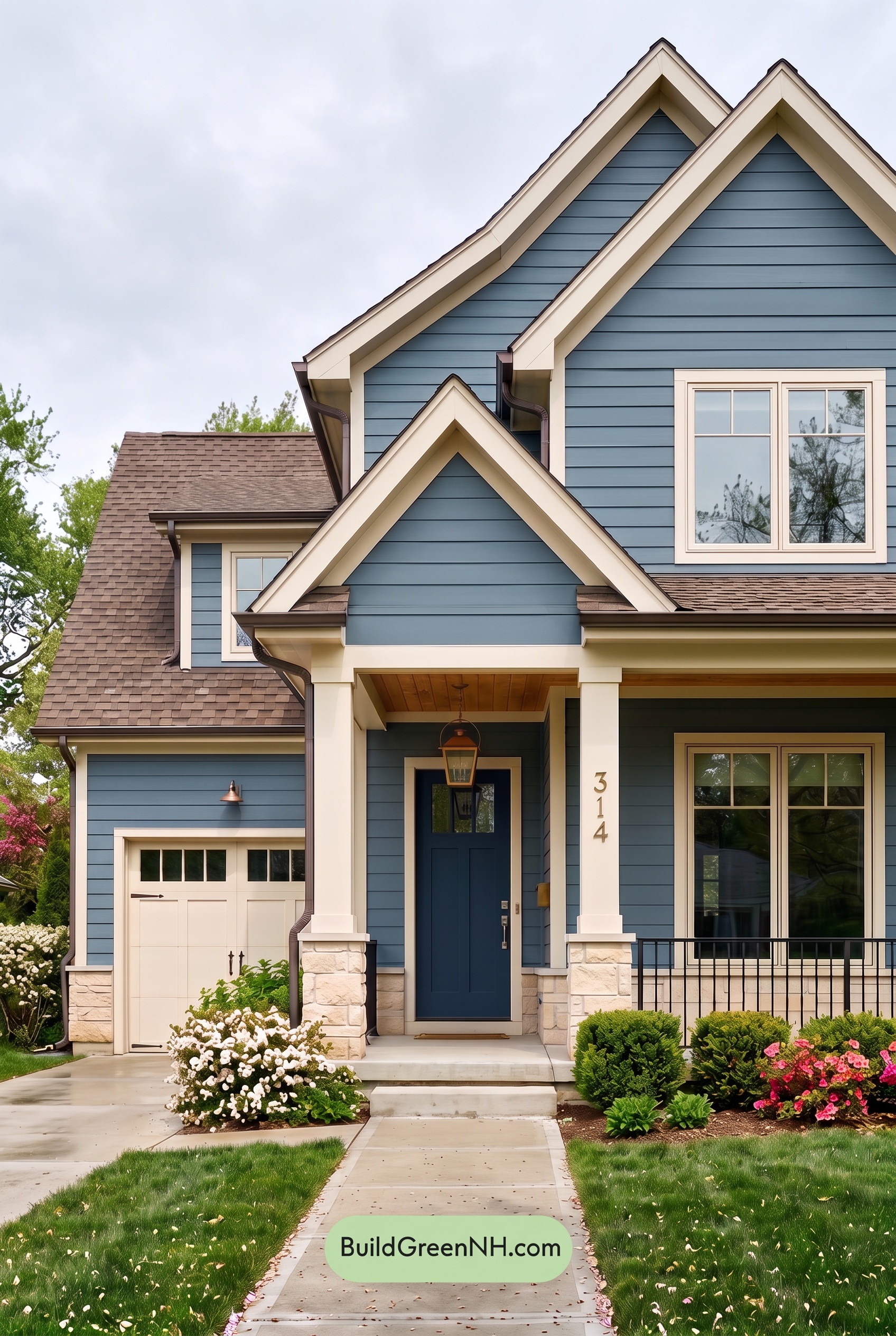
Under overcast skies, the blue siding takes on a quieter, slightly deeper cast than it shows in neutral daylight, with less sparkle and a more even, muted saturation. The darker blue accents read more grounded and refined, while the white trim and garage door soften toward a gentler, less crisp white as the cool ambient light reduces their warmth.
Because clouds diffuse the light, harsh shadows beneath the eaves and porch recede, allowing the siding, trim, and architectural lines to feel more balanced. Contrast is lower but still polished, creating a calm, tailored mood that emphasizes the home’s layered rooflines and clean blue-and-white palette.
Golden Hour
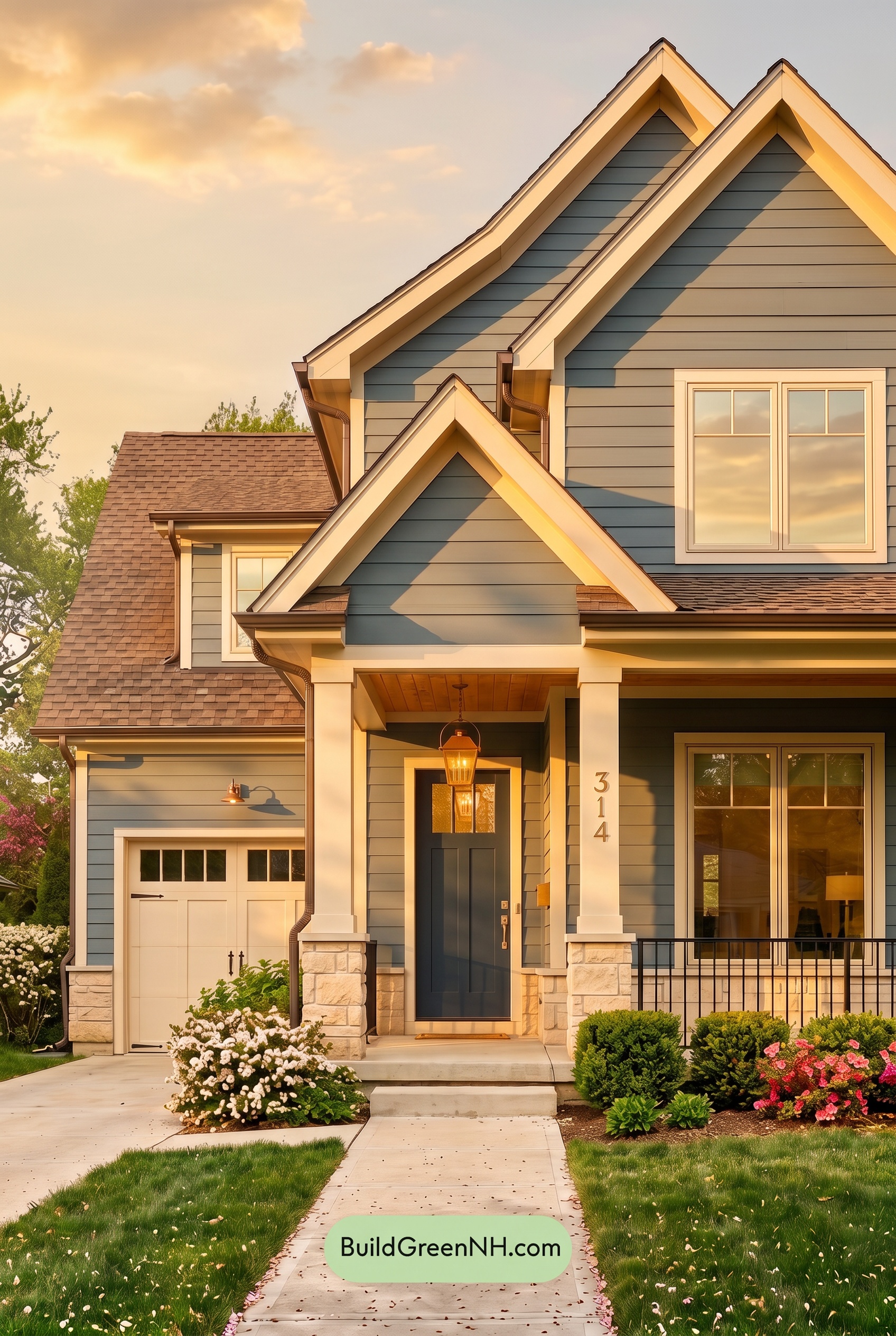
Under Golden Hour, the blue siding takes on a softer, slightly muted cast, while its shaded areas deepen into richer, moodier blue-gray tones. In neutral daylight, the same blue reads cleaner and more even; here, the low warm light creates a more layered look across the siding and emphasizes the depth of the architectural lines.
The white trim, columns, and garage door shift from crisp bright white to a creamy warm neutral, catching the sun with a gentle glow. Long, defined shadows increase the contrast between the sunlit trim and darker blue recesses, giving the exterior an inviting, cozy mood that feels more dramatic and dimensional than it does in balanced daylight.
Shade
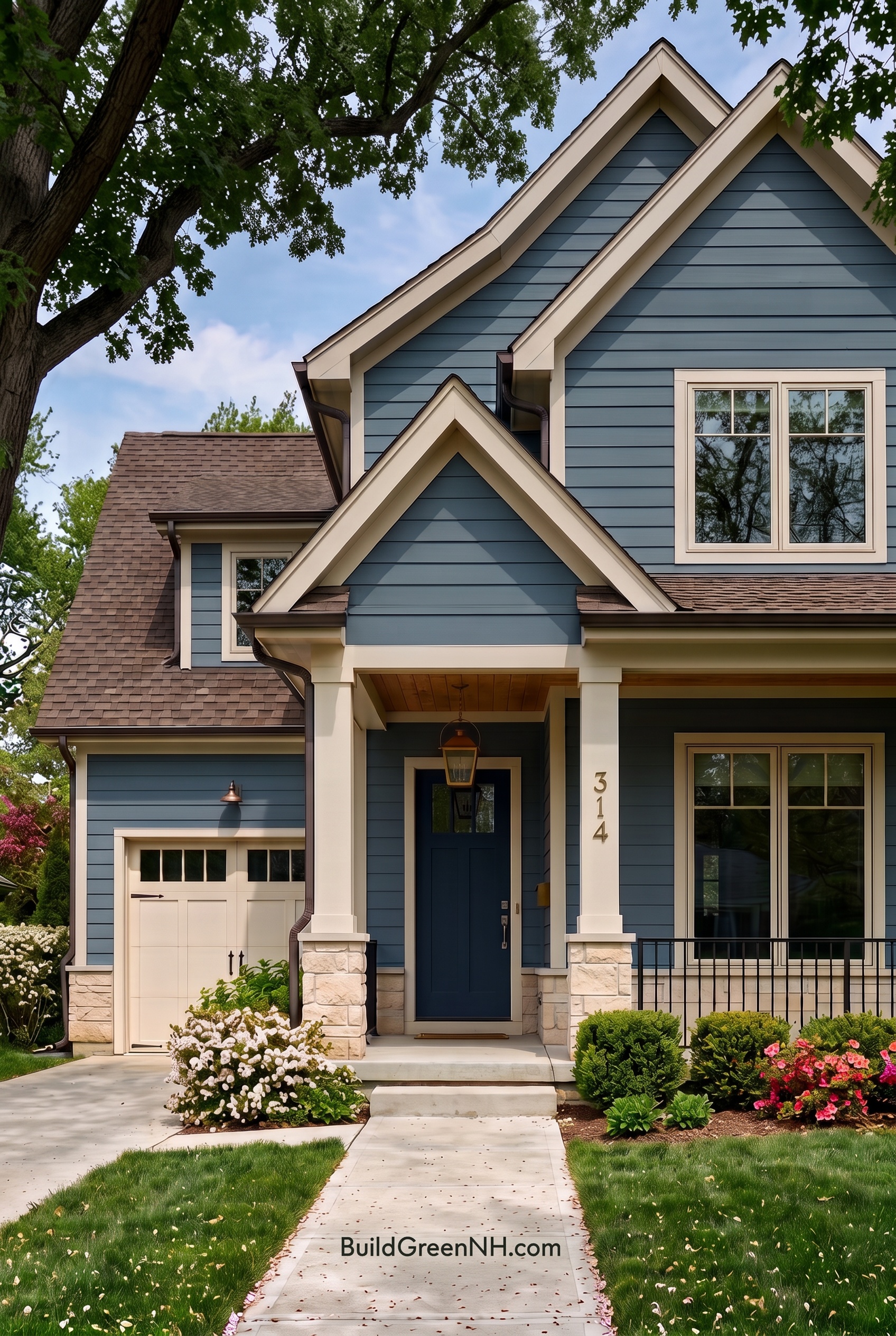
In shade, the blue exterior takes on a deeper, quieter character than it would in neutral daylight, with its saturation appearing more restrained and its cool undertones becoming more pronounced. The blue at the entry and railings reads especially rich against the softened facade, while shadowed siding creates subtle shifts from smoky mid-blue to near-navy depth.
The pale trim, columns, window frames, and garage door lose some of their crisp brightness in the filtered light, leaning warmer and creamier beside the cool blue. This gentler contrast enhances the layered rooflines and porch recesses, giving the home a calm, sheltered mood rather than the sharper, more energetic look it would have under even daylight.
Nighttime
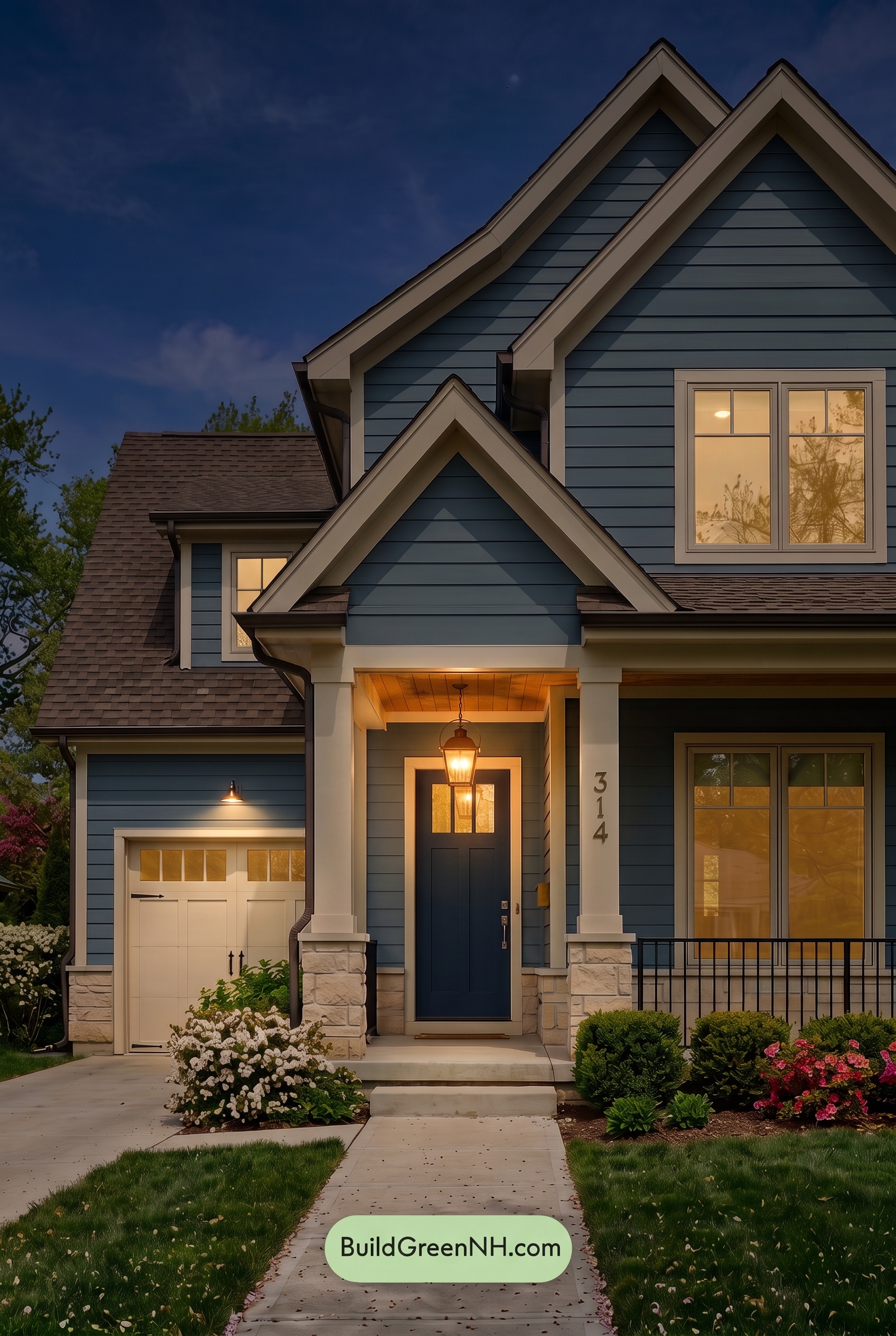
At nighttime, the blue exterior deepens into a more subdued, shadow-rich shade, with less visible saturation than it has in neutral daylight. The darker blue areas around the entry and railings become especially dramatic, while the white trim, columns, and garage door soften toward a creamy warmth under the glow from the windows and porch light.
Shadows strengthen the contrast along the gables, siding, and architectural edges, giving the facade greater depth and definition. Warm illumination creates inviting pools of light near the entry, balancing the cool blue backdrop and shifting the overall mood from crisp and airy in daylight to cozy, polished, and quietly elegant after dark.
Pin these for later:
Want More?
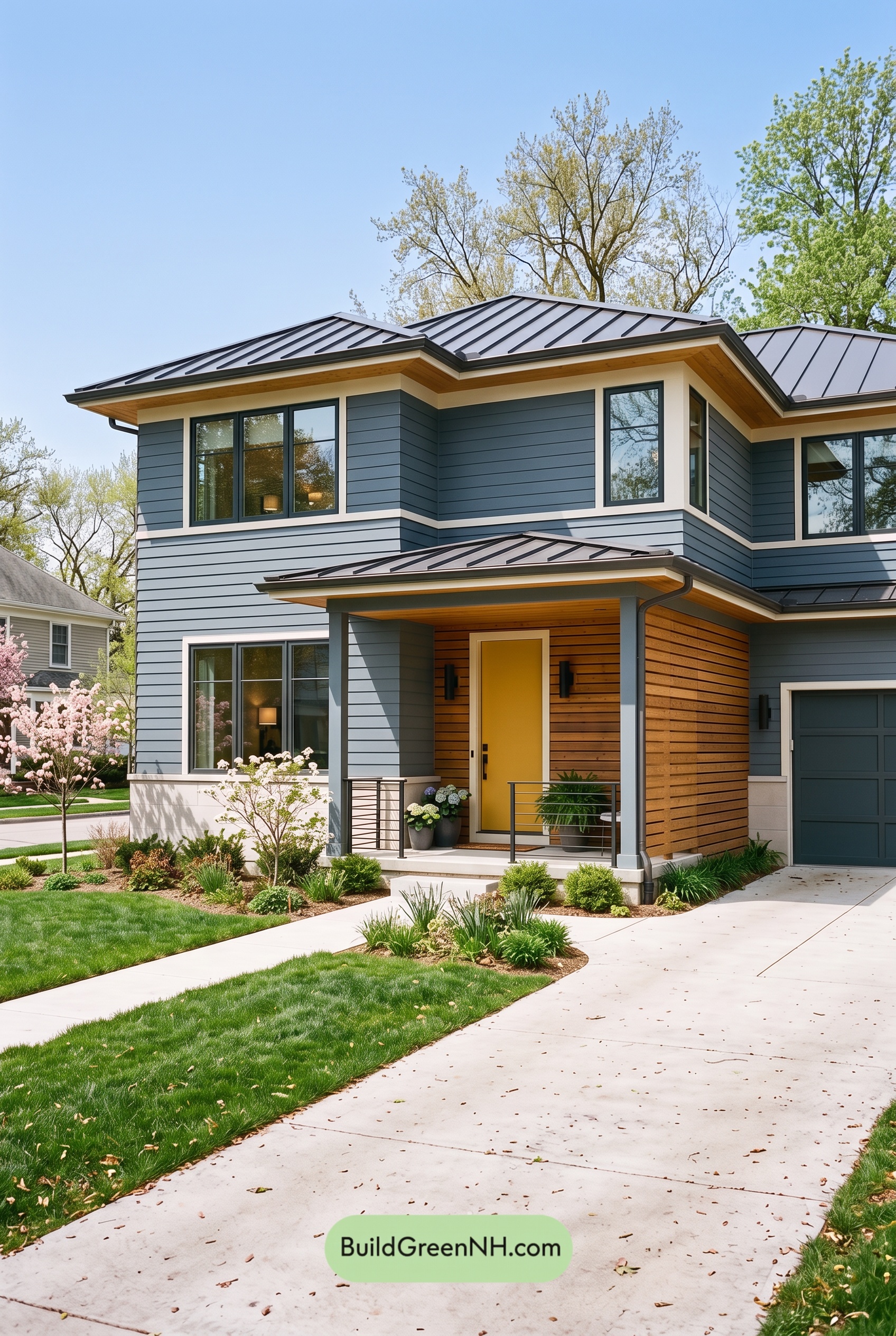 Blue House Front Door Color Scheme: Harbor Saffron
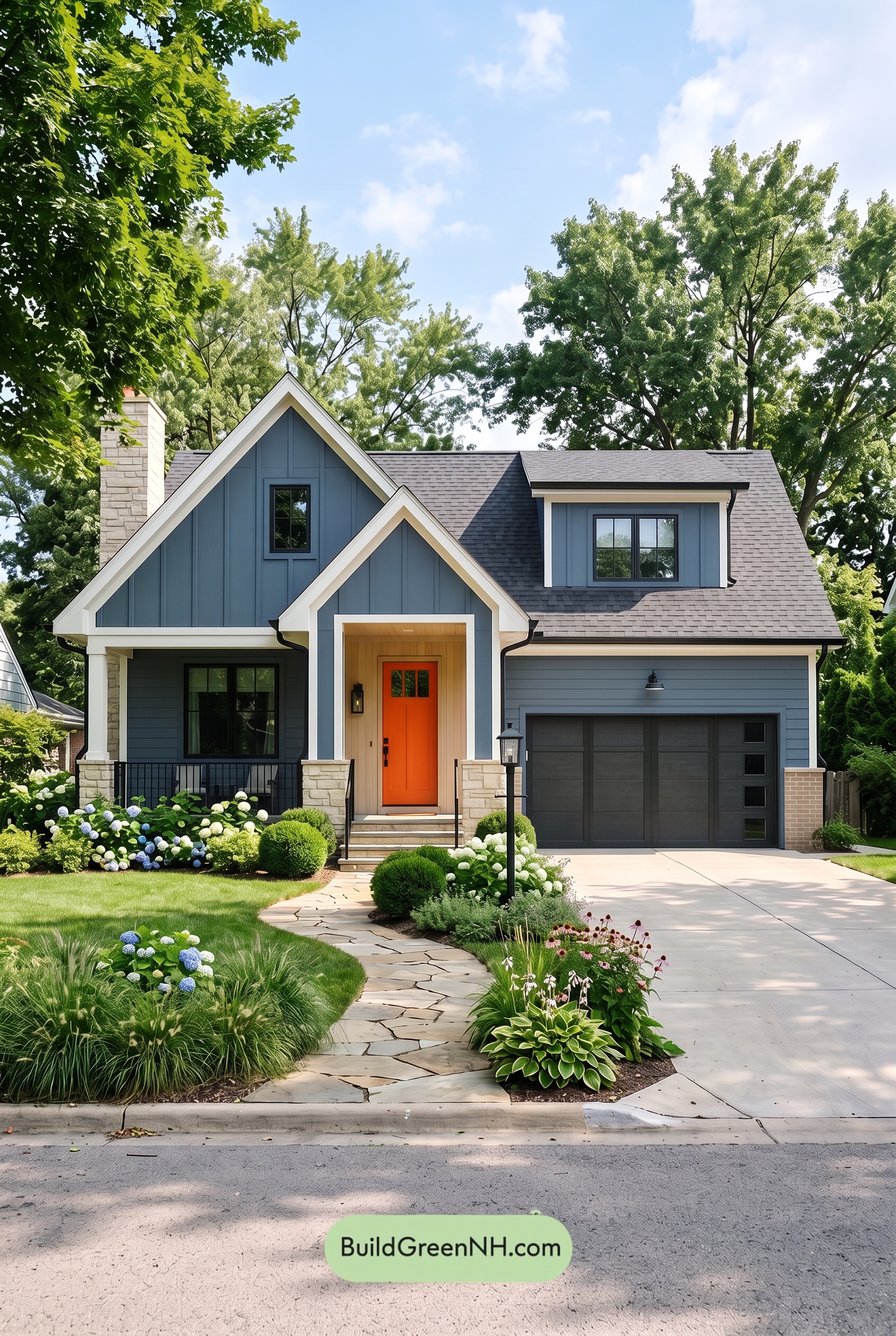 Blue House Front Door Color Scheme: Cobalt Persimmon
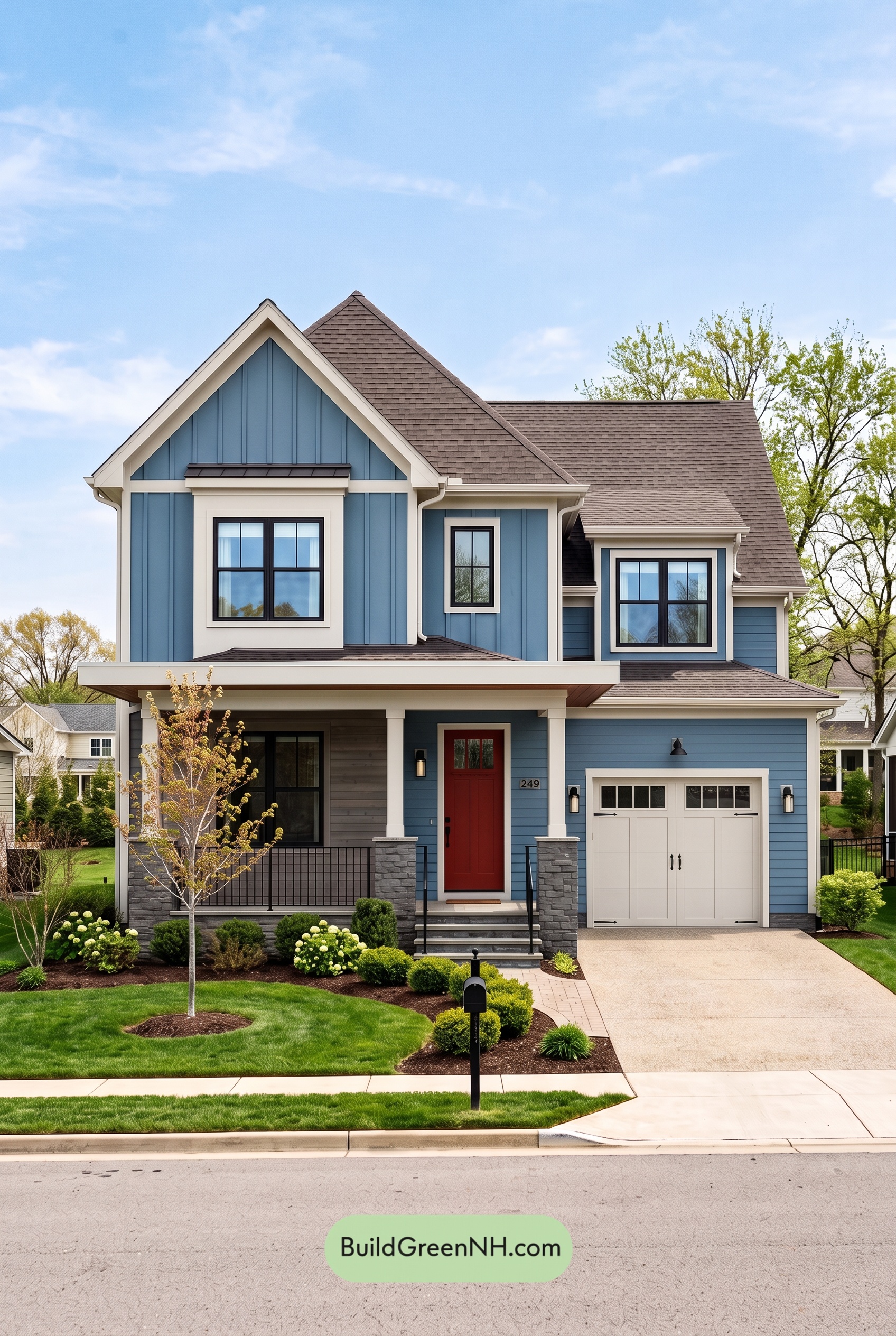 Blue House Front Door Color Scheme: Denim Poppy
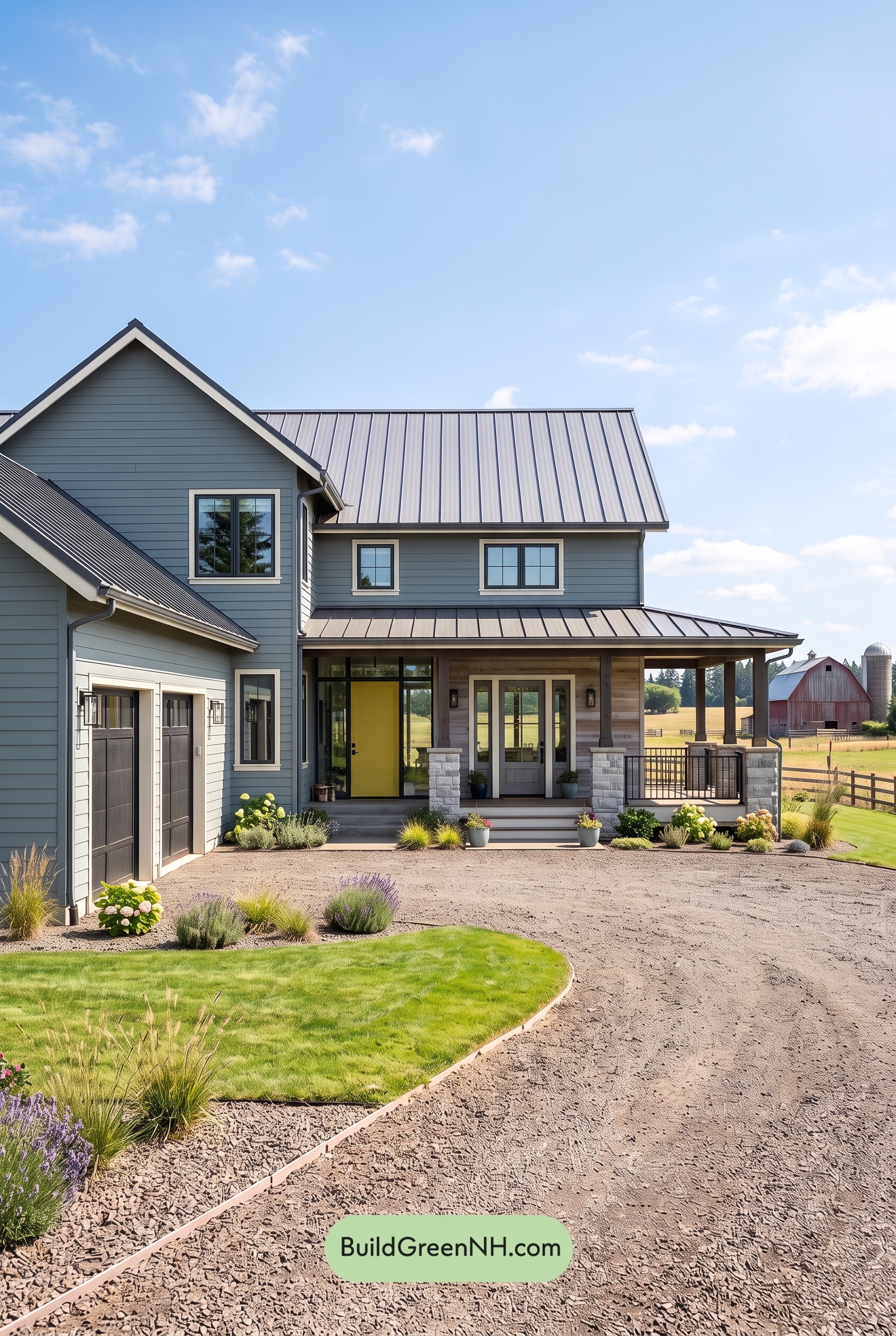 Blue House Front Door Color Scheme: Slate Citron
 Blue House Front Door Color Scheme: Mist Blue Haven
Table of Contents