Last updated on
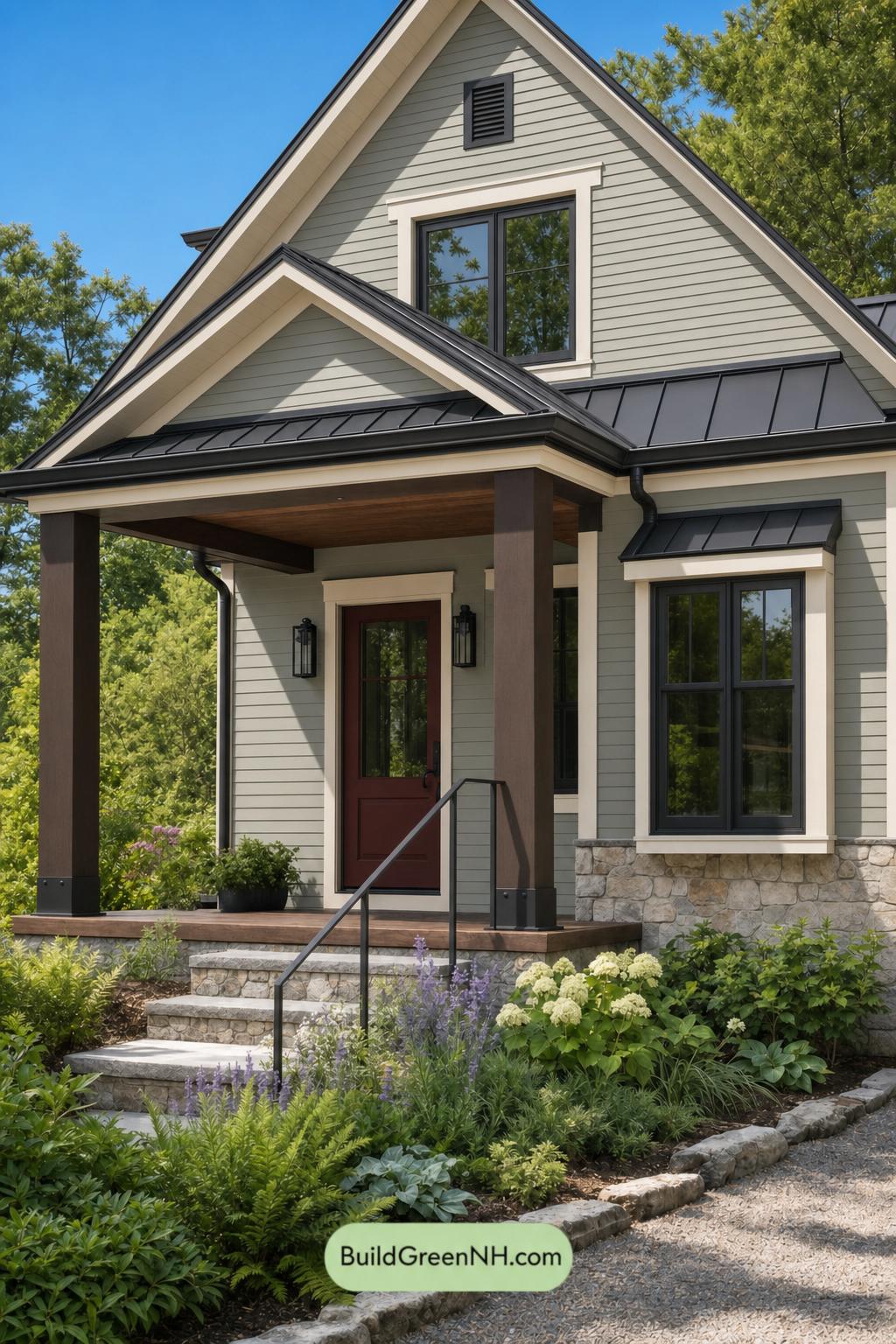

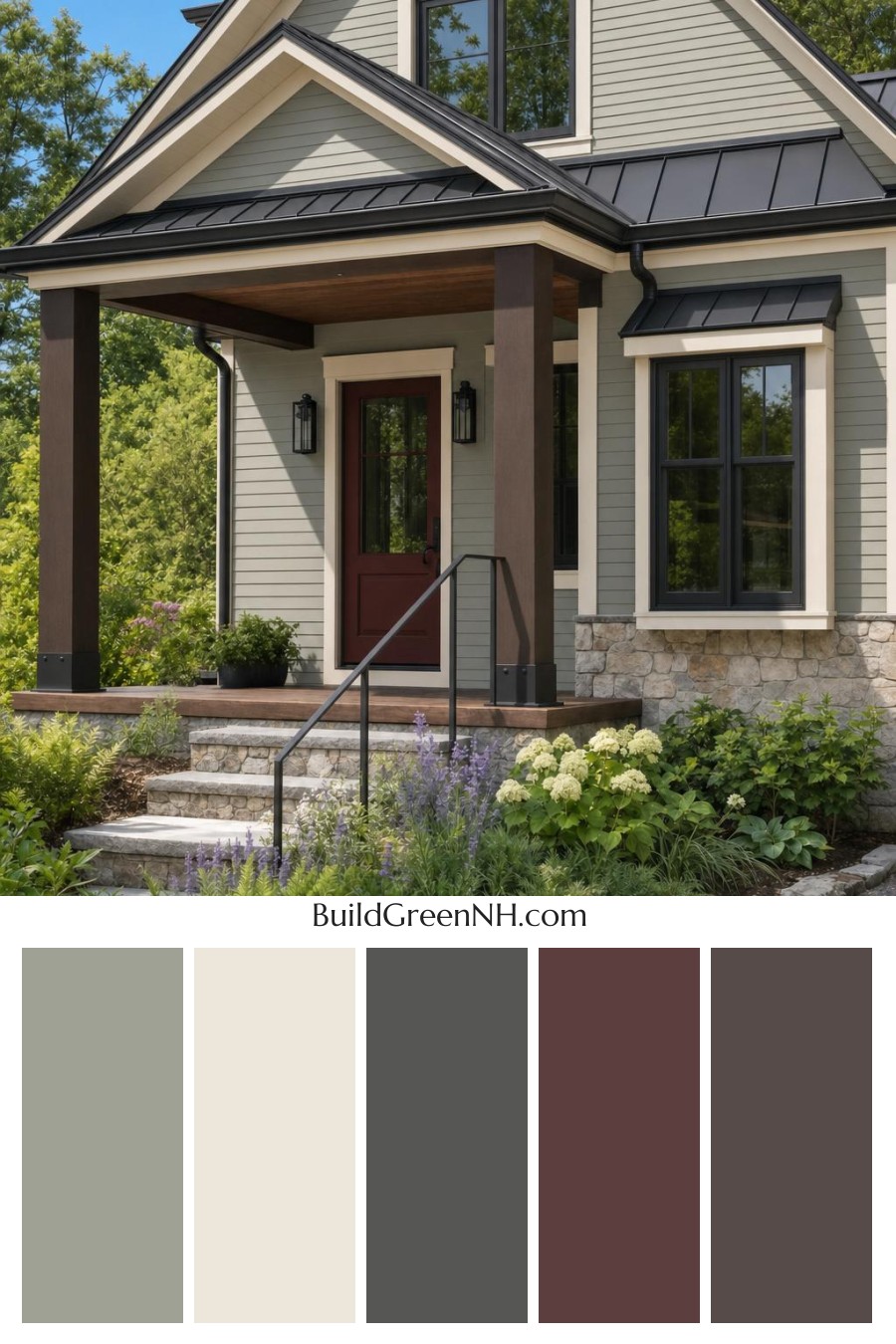
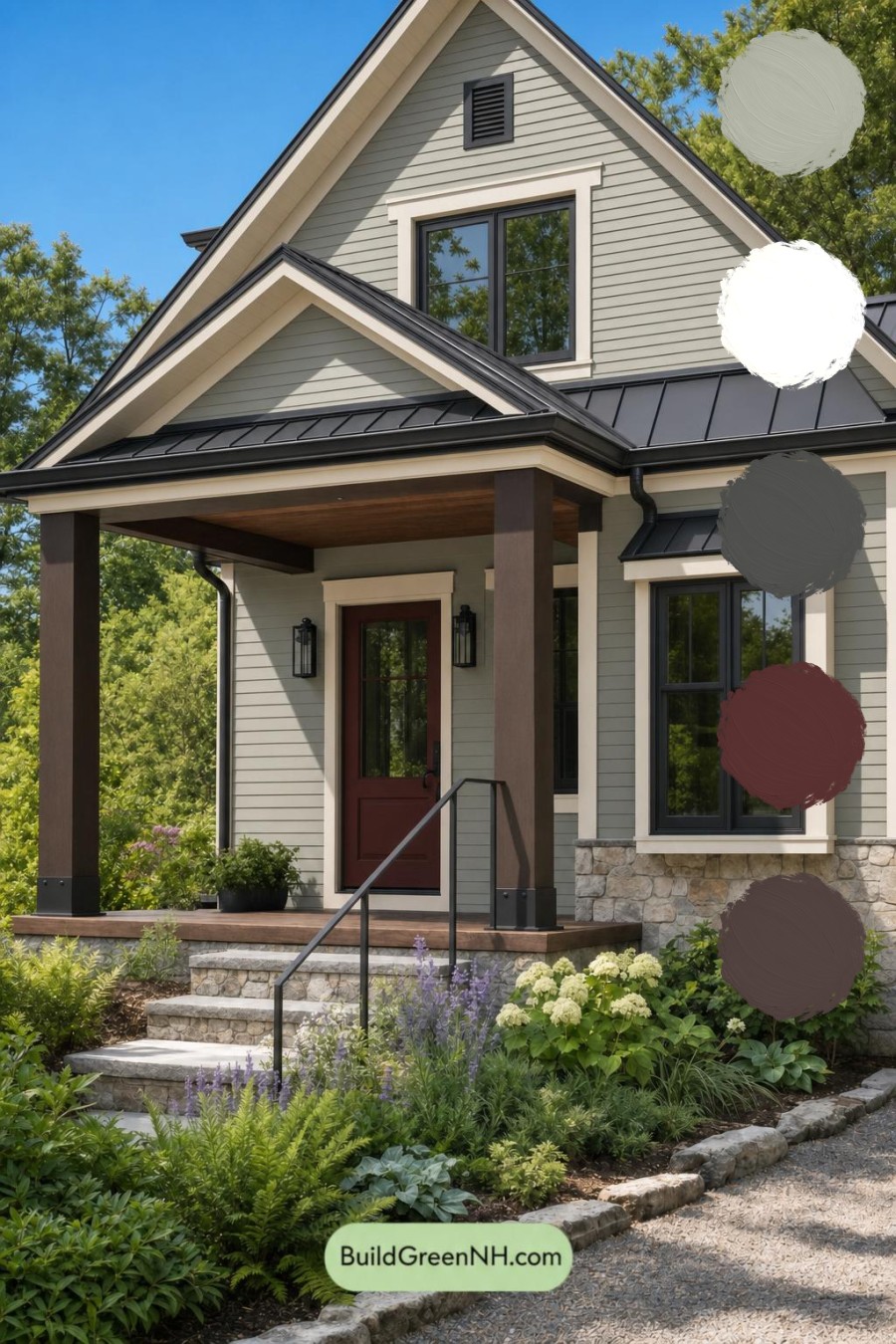
This layered mix of soft gray, crisp light trim, and rich dark accents gives the home a polished look that feels both welcoming and enduring.
A Calm, Refined Foundation
The main siding is finished in a light, muted gray that brings a calm, airy presence to the exterior. Its subtle cool undertone works beautifully with the surrounding greenery, while the horizontal boards add gentle texture across the façade. This shade is understated enough to feel timeless, yet distinctive enough to keep the home from looking flat.
Light Trim That Defines Every Detail
Bright warm-white trim frames the rooflines, windows, porch, and gables with clean definition. The contrast against the gray siding highlights the home’s classic architecture, especially the layered peaks and substantial window casings. This light trim also keeps the dark accents from feeling too heavy, giving the whole exterior a balanced, freshly finished appearance.
Deep Accents Add Structure
Deep charcoal-gray window frames, railings, gutters, and roof surfaces introduce sharp architectural depth. These nearly black details outline the windows and roof planes with confidence, creating a tailored effect that suits the home’s mix of traditional and contemporary design. The dark roof also visually anchors the tall gables and ties the separate exterior elements together.
Warm Brown Brings the Porch to Life
Rich brown porch columns and a deep reddish-brown front door soften the cooler gray-and-white palette. Their earthy warmth makes the entry feel more inviting and creates a natural connection to the wood-toned porch floor. The front door becomes a subtle focal point rather than an overpowering splash of color, while the columns give the porch a grounded, substantial presence.
A Balanced, Nature-Friendly Exterior
The result is a color scheme that feels sophisticated without becoming formal. Cool gray siding, warm light trim, dark charcoal accents, and brown entry details each have a clear role, creating contrast with plenty of harmony. Paired with the soft gray and beige tones of the stone base and steps, the palette settles beautifully into its landscaped setting and gives the house lasting curb appeal.
Next, see how this color scheme looks under different lighting simulations throughout the day.
Overcast
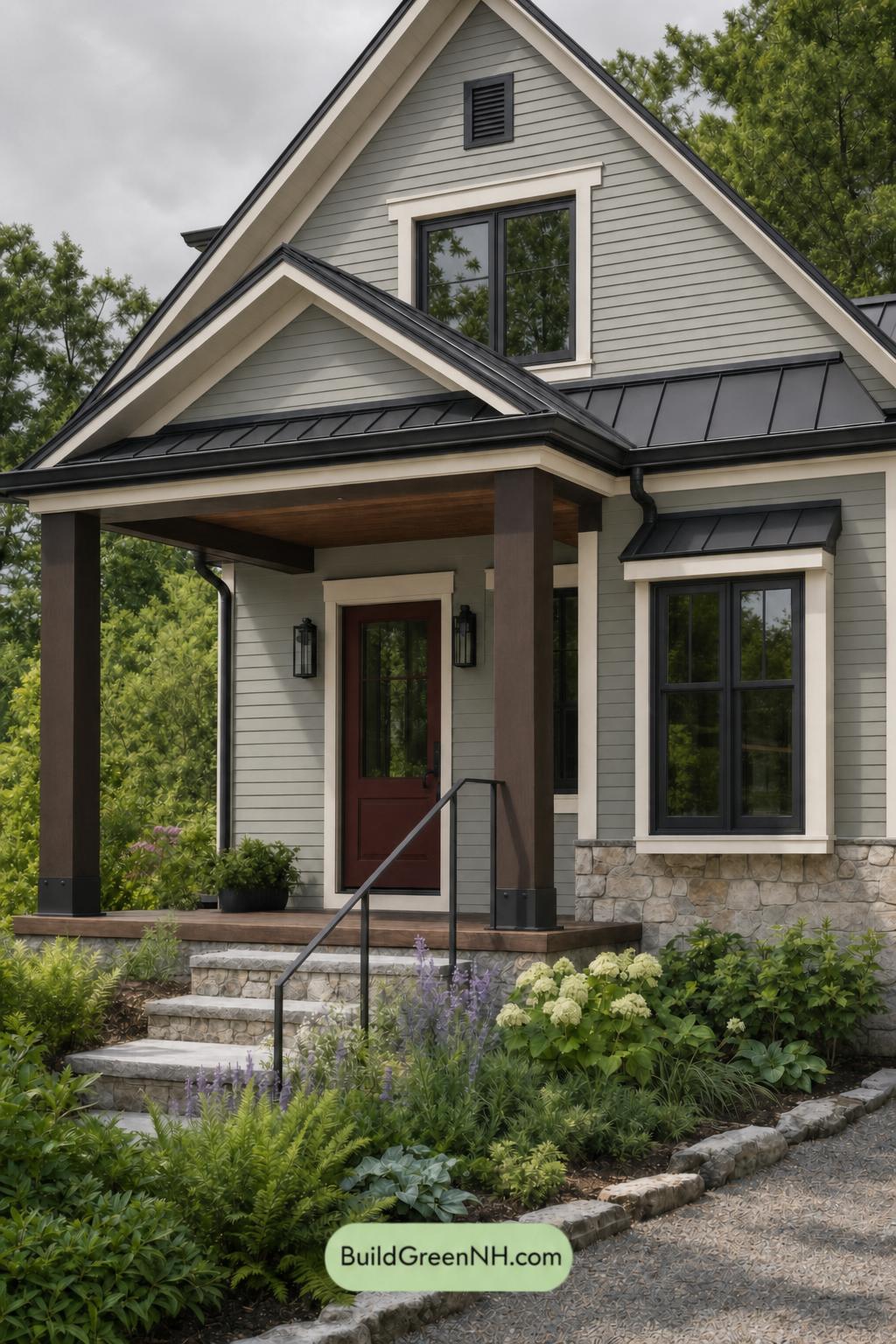
Under overcast skies, the soft gray siding reads quieter and slightly deeper than it does in neutral daylight, with less saturation and fewer bright highlights across the lap boards. The white trim loses some of its crisp sunlit sparkle, becoming creamier and more subdued, while the darker gray window frames and railings hold a steadier, more pronounced outline.
The brown door and columns appear richer but less warm without direct sun, giving the entry a grounded, sheltered feeling. Diffused light softens sharp shadows beneath the porch and rooflines, reducing contrast overall and creating a calm, refined mood where the gray, white, and brown shades feel especially cohesive.
Golden Hour
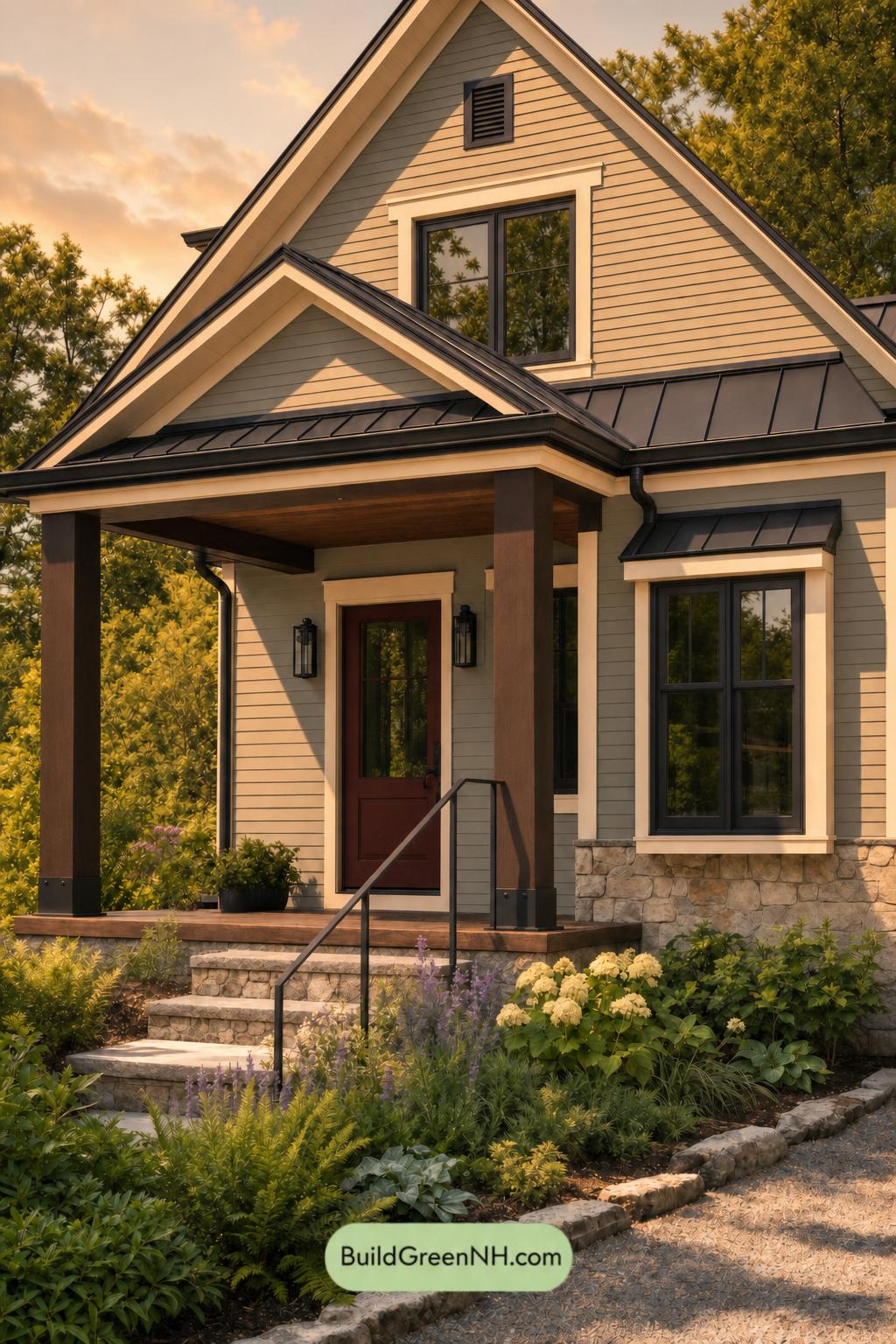
Under Golden Hour light, the gray siding takes on a softer, warmer cast than it has in neutral daylight, while the white trim shifts from crisp and bright to a creamy, sunlit shade. The brown door and columns appear richer and more saturated, giving the entry a deeper, more welcoming presence.
Low-angle sunlight creates long, pronounced shadows beneath the rooflines and porch, deepening the darker gray details and sharpening the contrast around windows and railings. Compared with neutral daylight’s balanced, straightforward look, this warm glow gives the exterior a relaxed, inviting mood with more depth and visual drama.
Shade
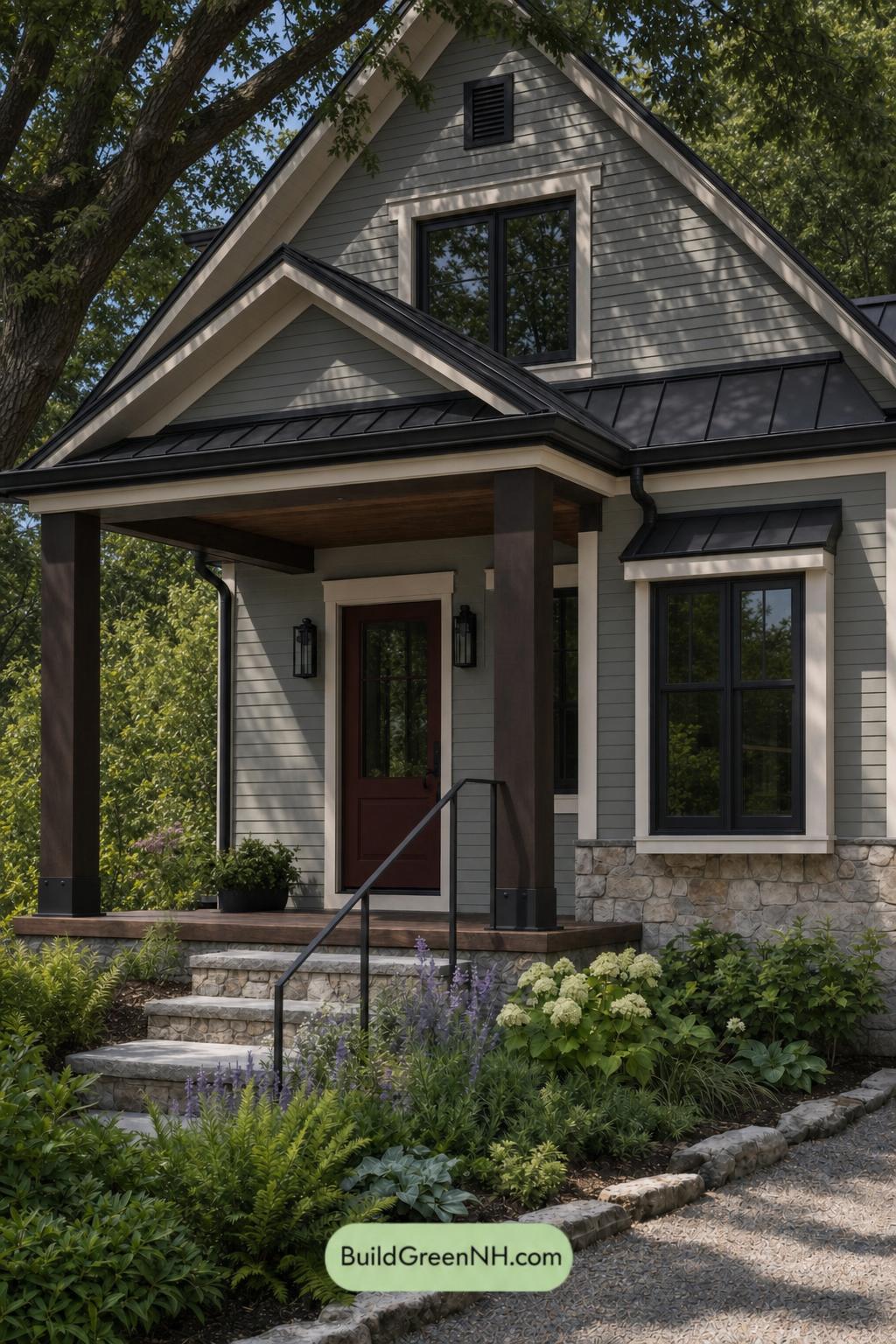
In shade, the gray siding reads deeper and more subdued than it does in neutral daylight, with its cooler undertones becoming more noticeable beneath the tree canopy. The white trim softens from crisp and bright to a gentler off-white appearance, while the dark gray window frames and railings gain visual weight, creating sharper outlines around the home’s architectural details.
The brown door and columns take on a richer, more muted warmth in the lowered light, adding depth against the softened gray backdrop. Dappled shadows shift the contrast across the facade, giving the palette a calm, wooded mood that feels more intimate and layered than the clearer, brighter look it would have in neutral daylight.
Nighttime
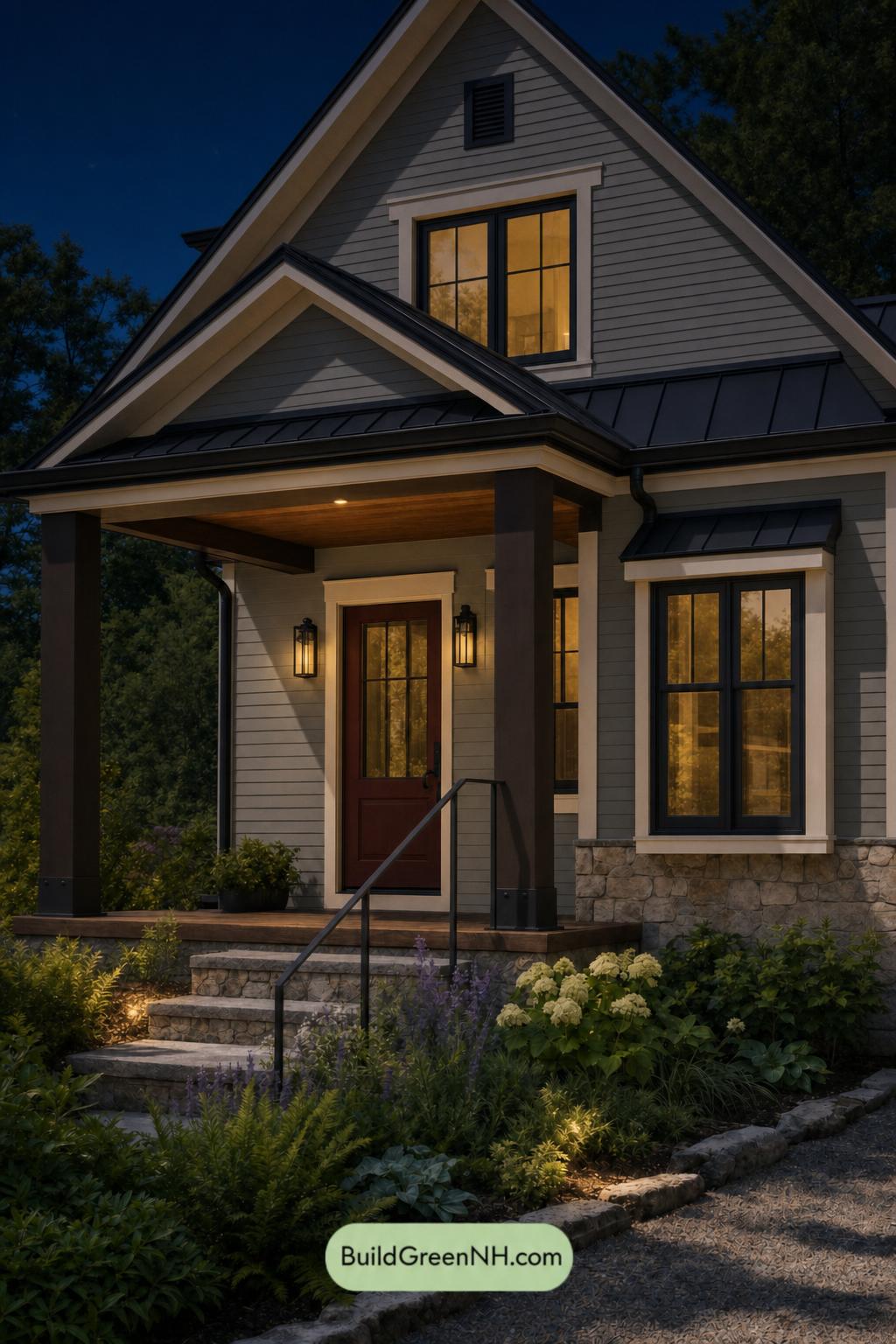
At night, the gray siding reads deeper and more muted than it does in neutral daylight, with the darker gray elements settling into shadow for a more layered, low-saturation look. The white trim catches available light and appears warmer and creamier, creating crisp contrast around the rooflines and windows without feeling stark.
Warm lighting at the entry enriches the brown door and columns, bringing out a welcoming, earthy depth against the cool nighttime surroundings. Darkened window frames and railings become more defined silhouettes, while the mix of warm highlights and soft shadows gives the exterior a cozy, dramatic mood.
Pin these for later:
Want More?
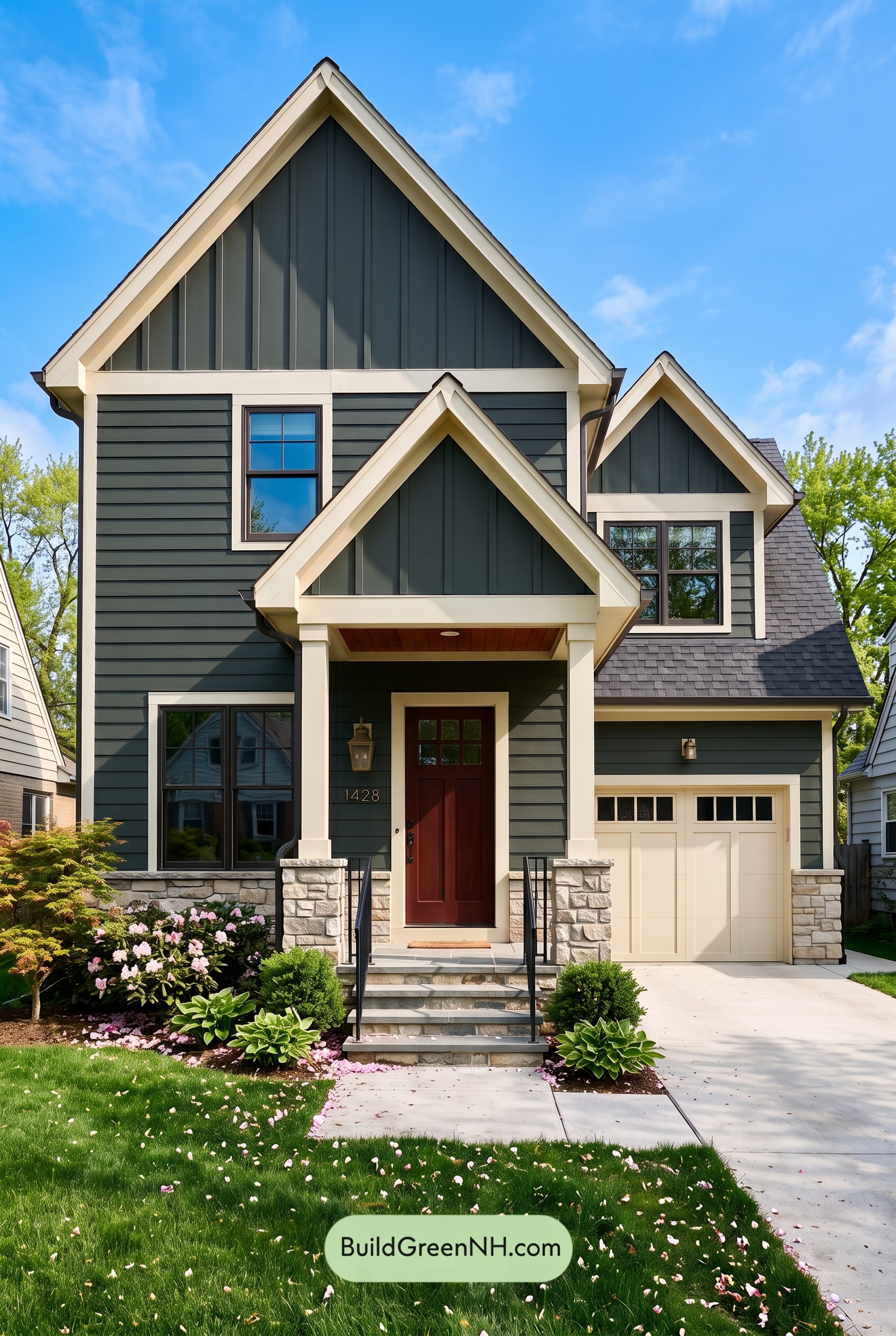 Exterior Color Scheme with Stone Accents: Pine Brass Threshold
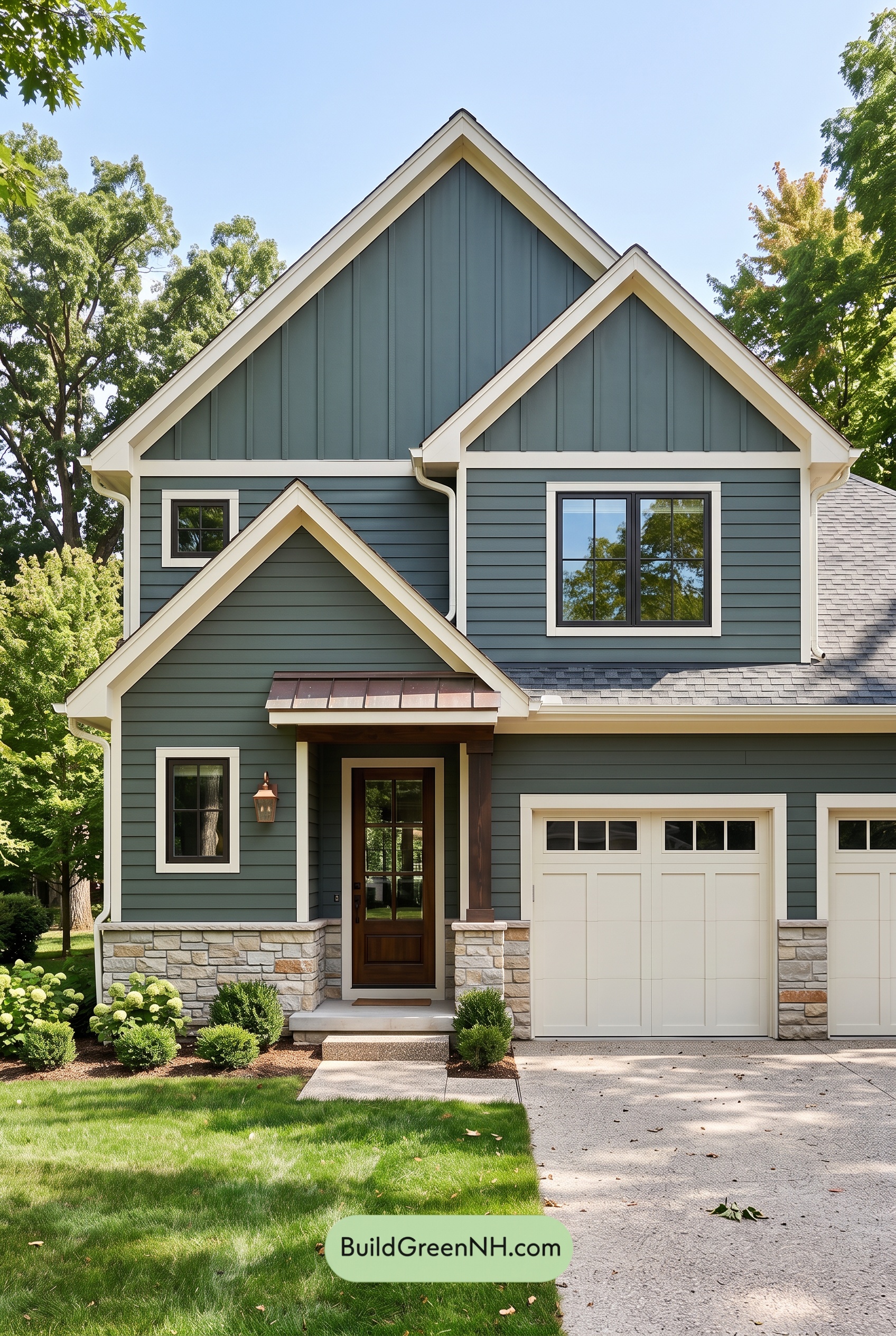 Exterior Color Scheme with Stone Accents: Evergreen Copper Welcome
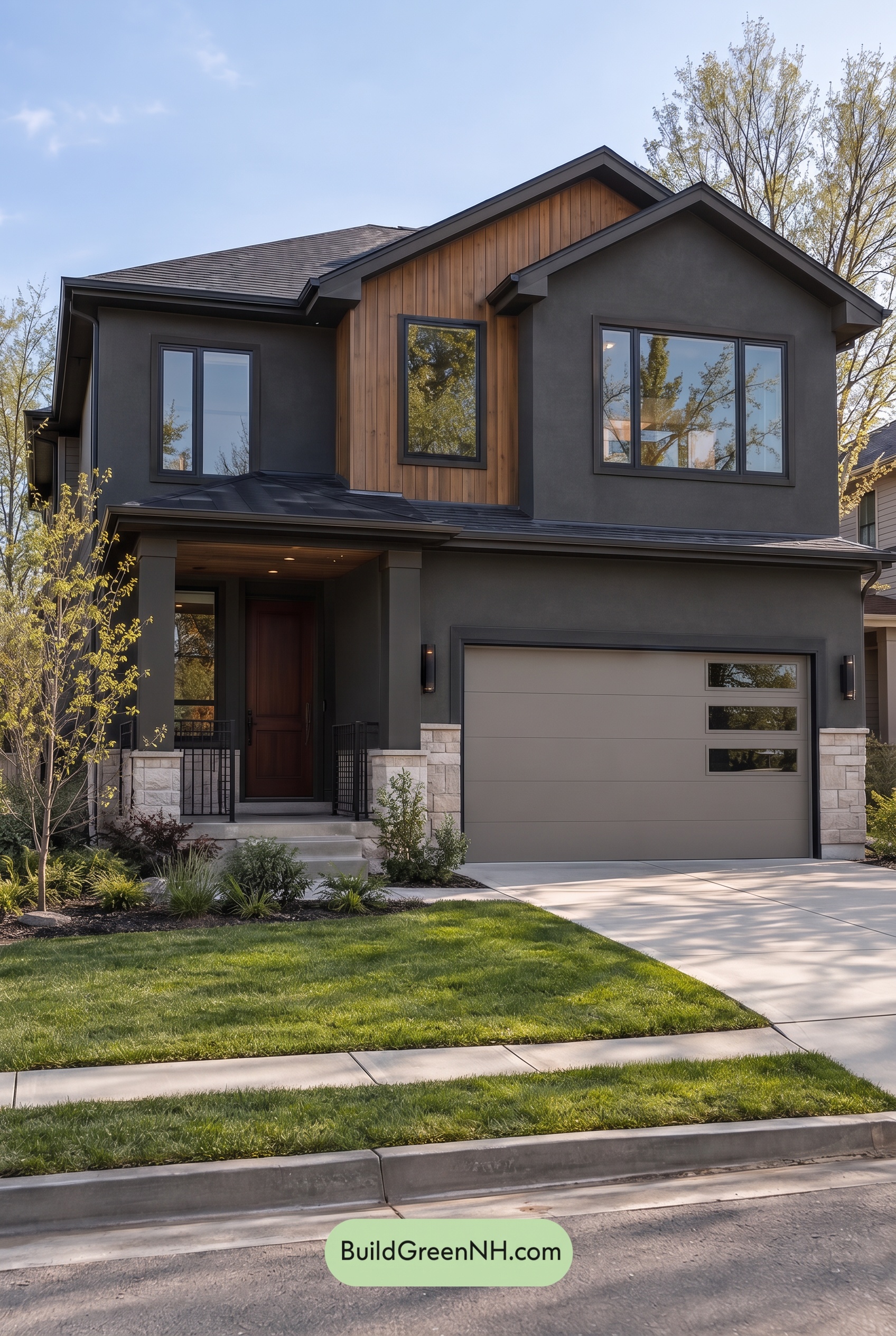 Dark Stucco House Exterior Color Scheme: Cedar Ember Calm
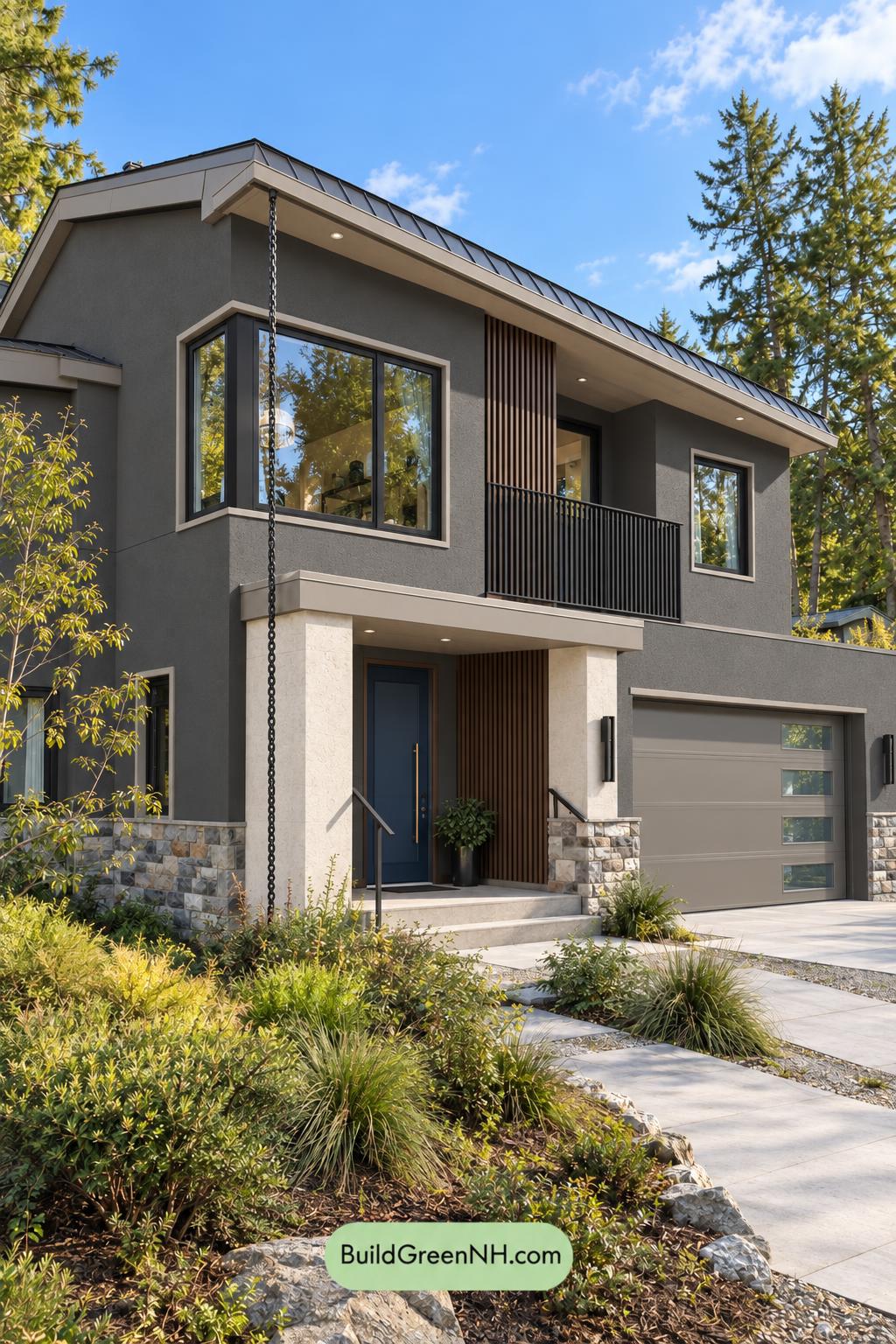 Dark Stucco House Exterior Color Scheme: Silver Pine Shelter
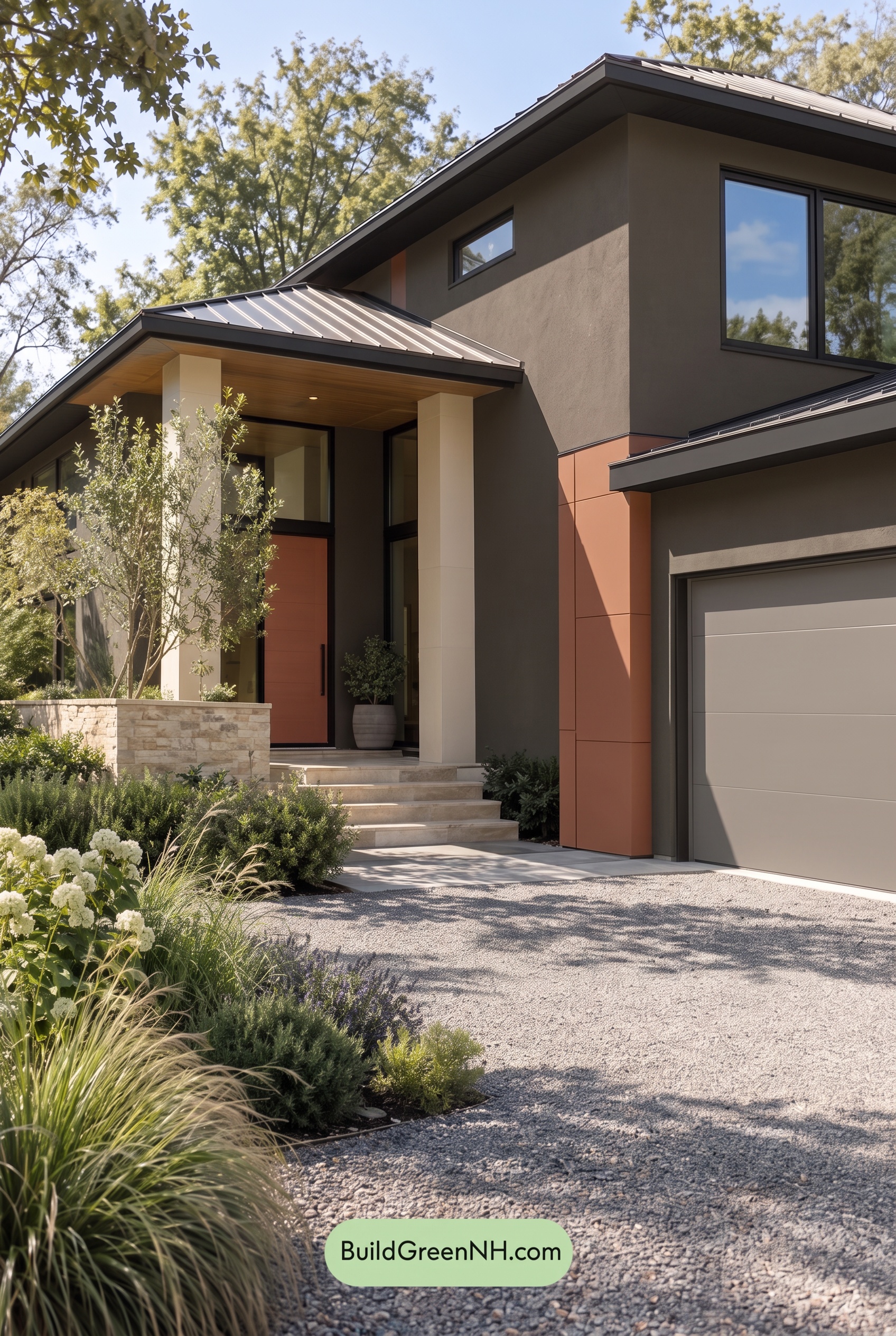 Dark Stucco House Exterior Color Scheme: Copper Orchard House
Table of Contents