Last updated on
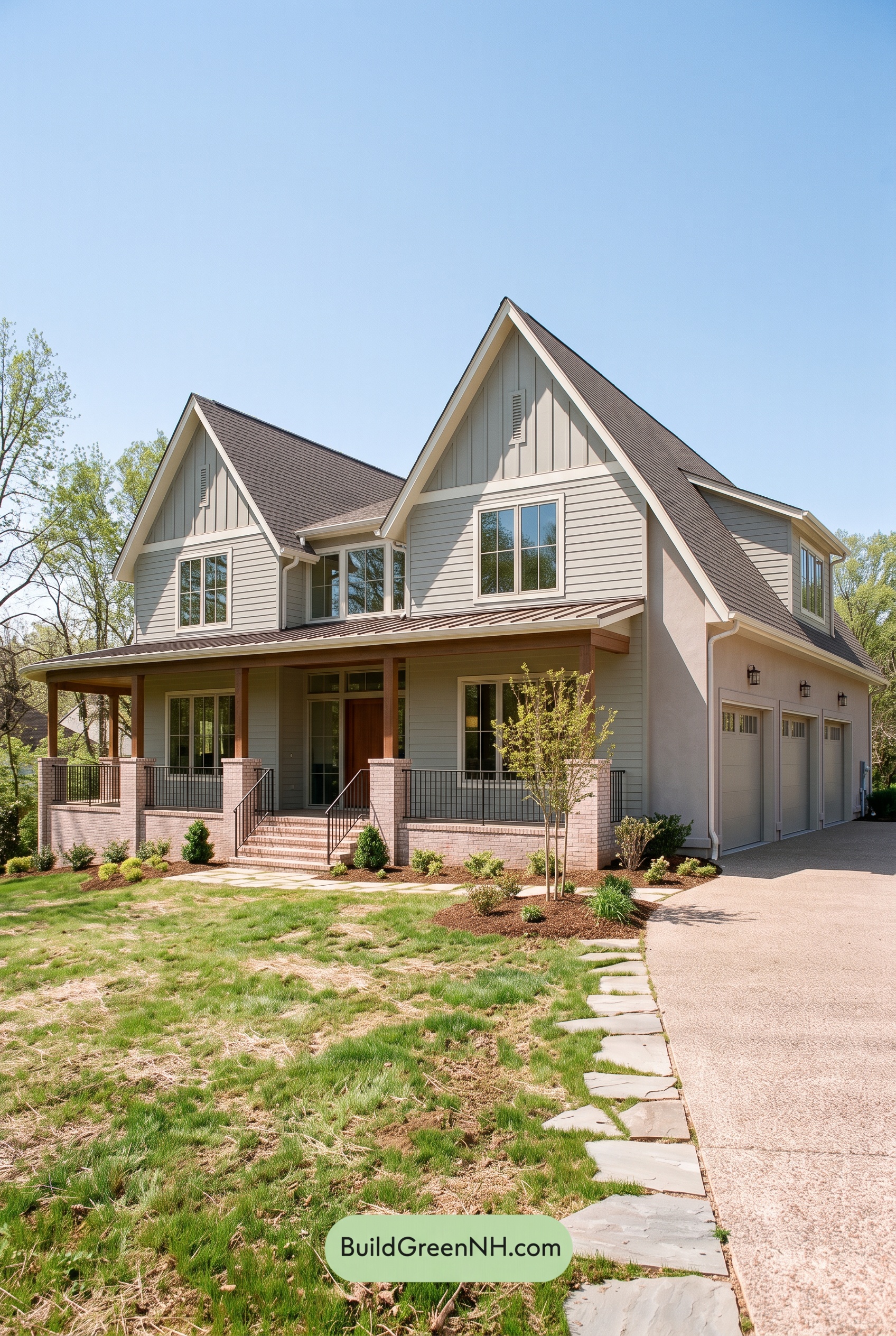

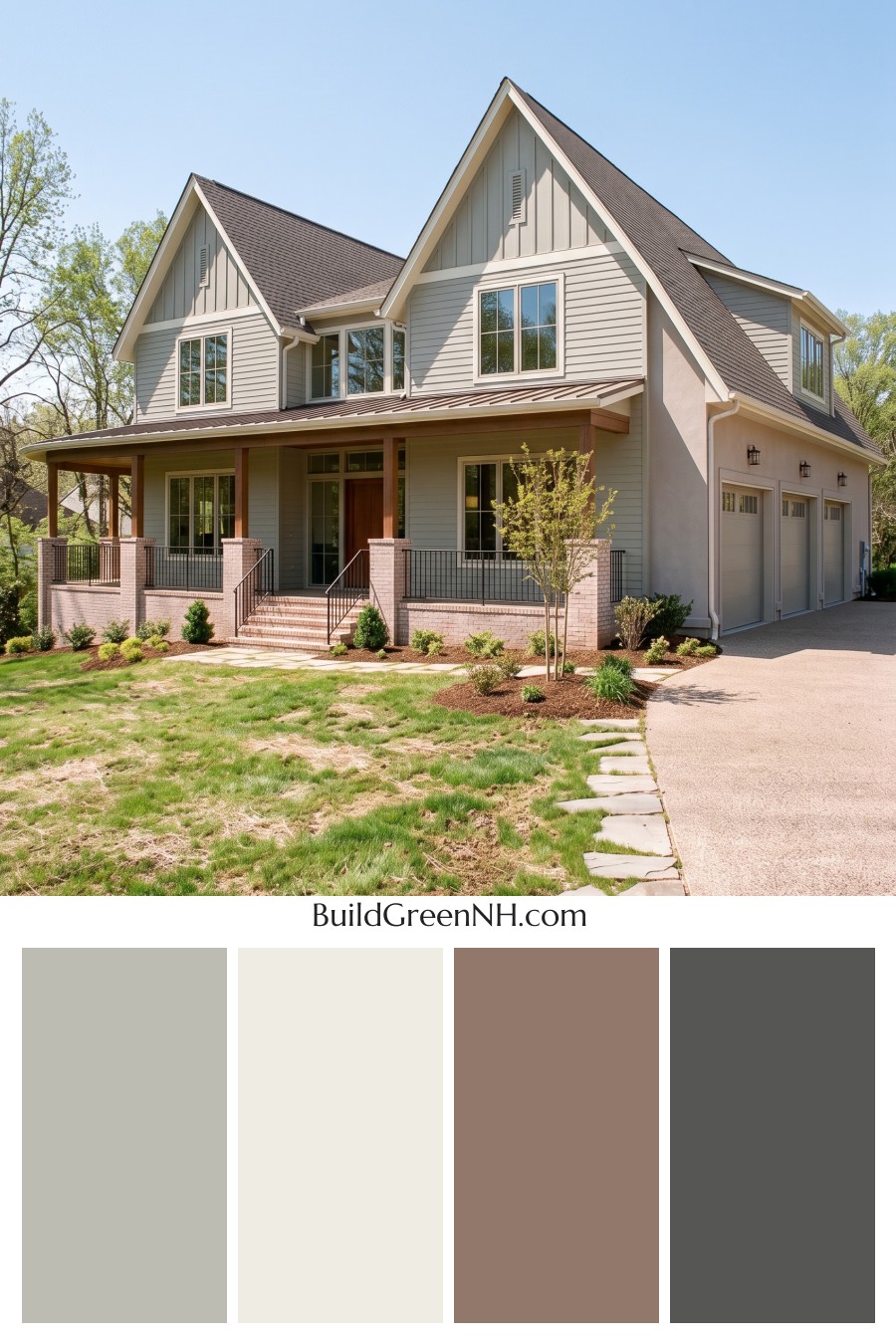
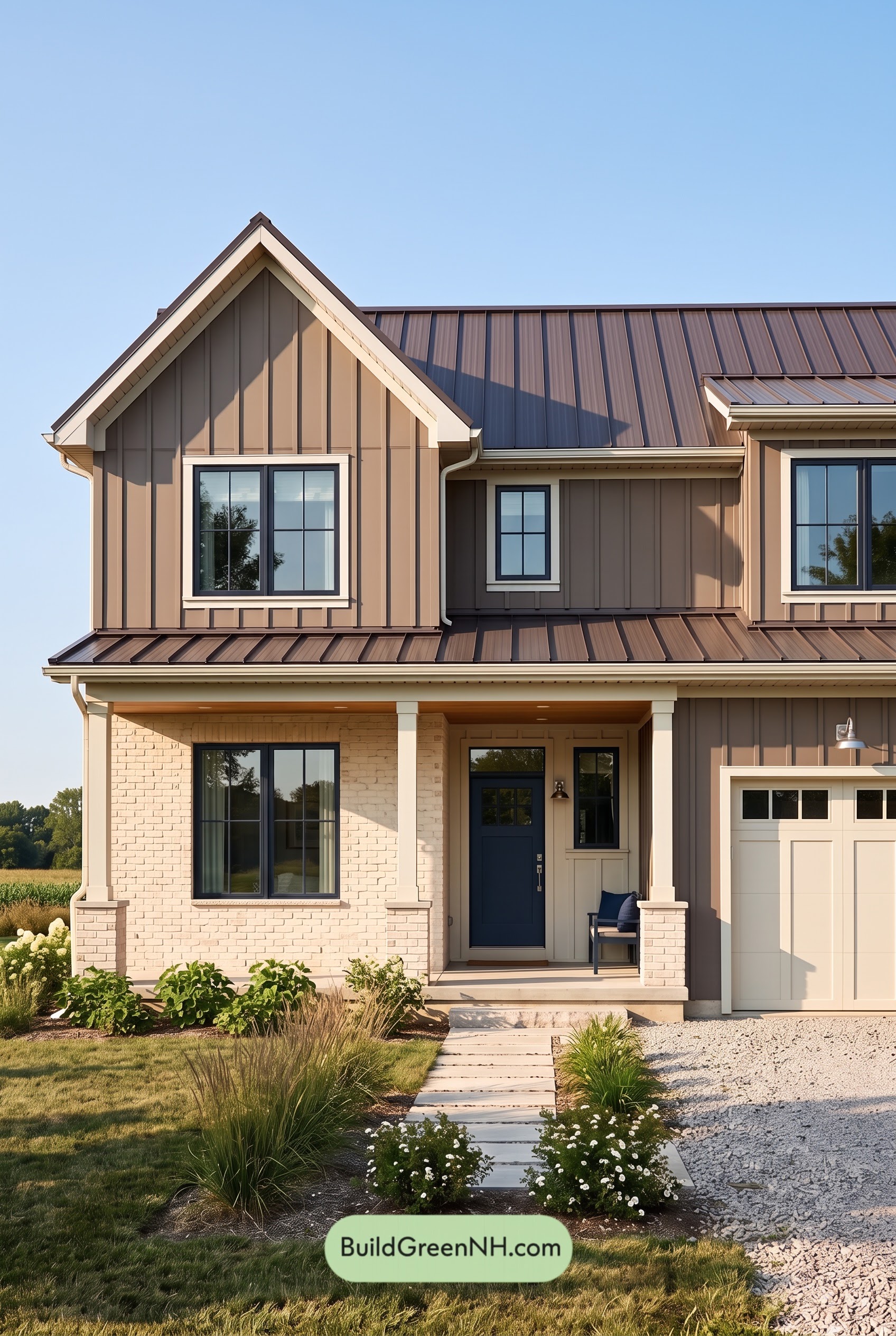
Soft gray siding, warm white trim, and rich brown accents give this home a beautiful balance of crisp architectural detail and inviting warmth.
A Soft Gray Foundation
A light, warm shade of gray brings a calm, cohesive feel to the exterior. It flows across the horizontal siding and the vertical siding within the steep front gables, letting those contrasting textures add interest without introducing another color. The result feels thoughtfully layered rather than busy.
In direct sunlight, the gray looks soft and airy. Beneath the covered porch, it takes on more depth, creating a gentle backdrop for the warmer entry details.
Warm White That Defines the Architecture
Warm white trim traces the dramatic rooflines, outlines the windows, and brightens the edges of the porch. Against the gray siding, it provides clear definition without the sharpness of a cooler, brighter white.
The white window frames repeat that contrast throughout the facade. This repetition helps connect the two prominent gables with the lower porch and side garage, making the entire exterior feel unified. Even the gutters and downspouts blend into the trim rather than becoming separate visual accents.
Brown Accents Make the Porch Feel Welcoming
The front door introduces a rich, warm brown that draws the eye toward the entrance. Brown porch columns and overhead beams carry that warmth across the front of the house, giving the expansive porch a comfortable, grounded presence.
These brown elements are especially effective because they interrupt the gray-and-white palette selectively. There is enough warmth to make the entrance inviting, but not so much that it competes with the architecture. Deep gray railings add a finer, darker outline while keeping views across the porch open.
A Roof and Garage That Support the Scheme
The main roof’s deep gray-brown shade anchors the tall gables and adds weight above the pale siding. A warmer brown tone on the shallow porch roof echoes the columns below, linking the roof and entry through color.
Along the side, the light gray garage doors stay close to the surrounding wall color. This restrained contrast keeps their broad surfaces from overpowering the front entrance, while white edging gives each opening a neat finish.
Quiet Contrast, Lasting Curb Appeal
Pale beige brick with subtle pink undertones adds another layer of warmth around the porch base and steps. It bridges the soft gray walls and richer brown accents beautifully.
That balance is what makes this scheme so appealing: light shades keep the house fresh, dark details give it definition, and warm accents make it feel like home.
Next, see how this color scheme looks under different lighting simulations throughout the day.
Overcast
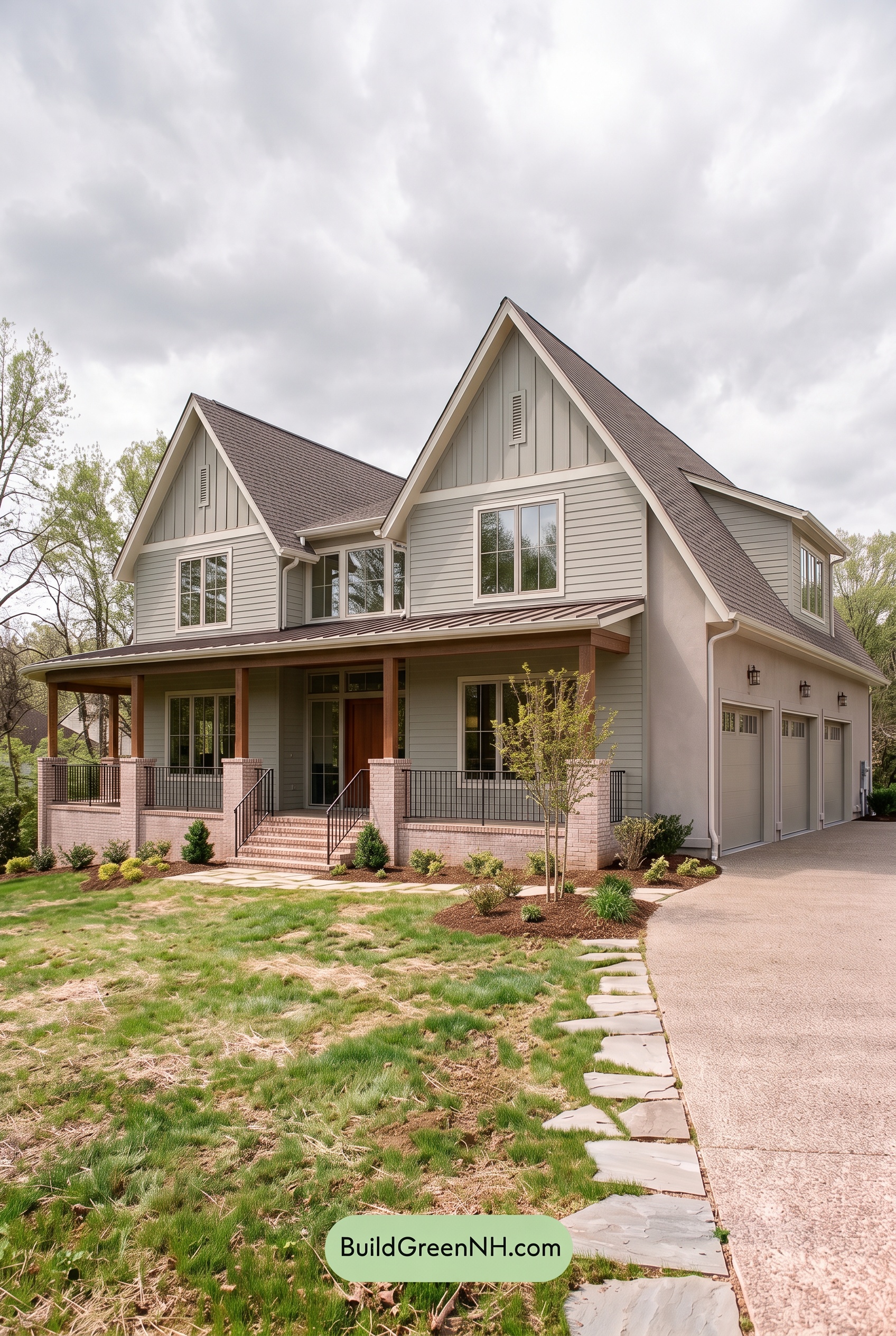
Under overcast skies, the house’s light gray shades can read a little cooler and deeper than in neutral daylight, with their subtle warmth less noticeable. The whites look softer rather than brilliant, while the warm browns appear less saturated but still bring a welcoming touch to the restrained palette.
Diffused light softens shadows beneath the gables and across the porch, making transitions between light and dark more gradual. The deep gray accents still provide definition, but the overall contrast feels gentler. Compared with neutral daylight, the effect is quieter and more subdued, giving the exterior a calm, cohesive mood.
Golden Hour
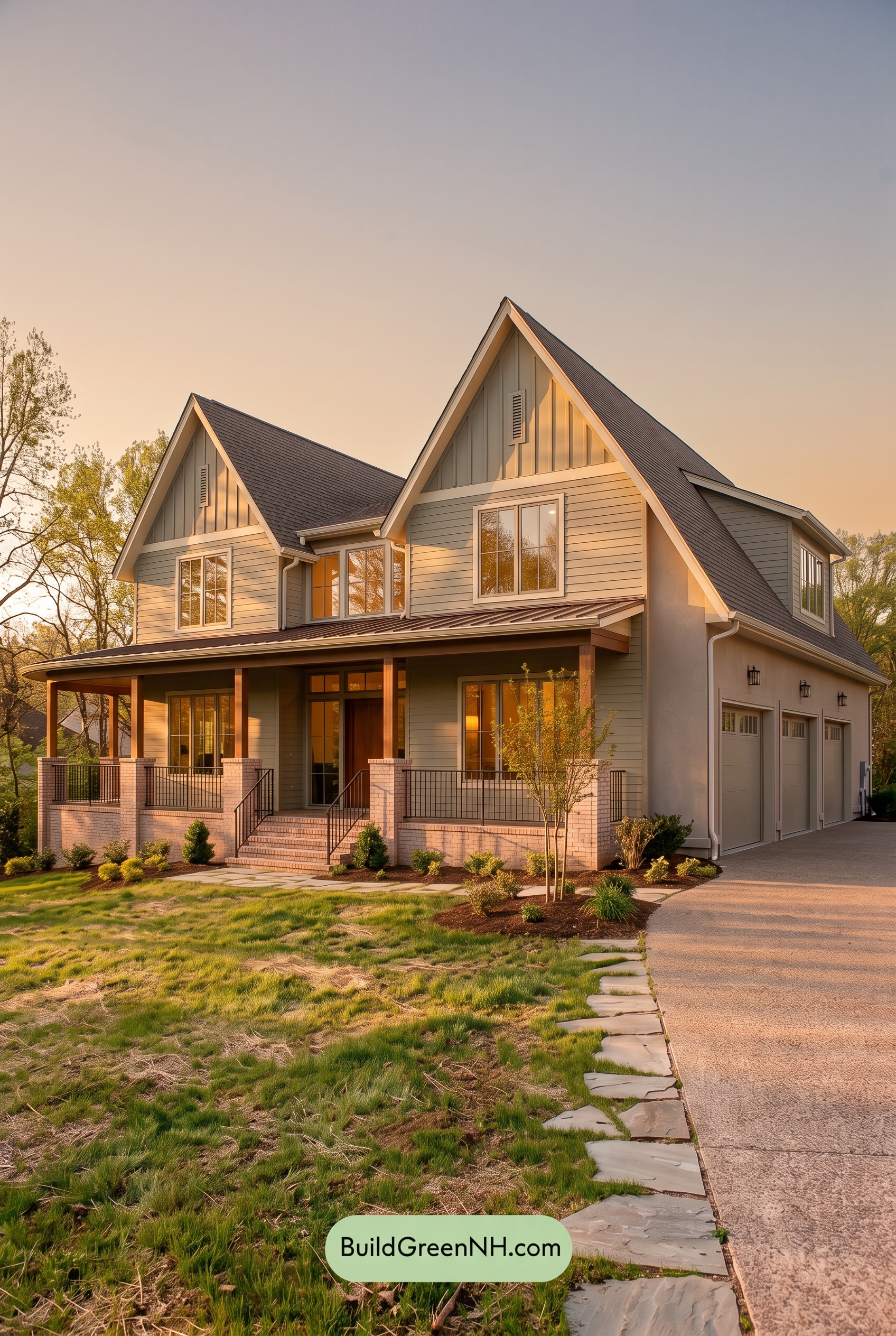
Golden Hour gives this home’s soft grays a warm beige cast, shifting them away from the cooler, more restrained appearance of neutral daylight. The whites look creamier and less crisp, while the browns appear richer and more saturated, bringing a welcoming warmth to the palette without making the muted grays feel overly colorful.
Long, angled shadows deepen the grays beneath the porch and eaves, creating stronger light-to-dark contrast against the sunlit surfaces. Although the warmth softens the distinction between the pale shades, those deeper shadows add definition and depth. Compared with neutral daylight’s cleaner, more even appearance, the overall mood feels softer, calmer, and more inviting.
Shade
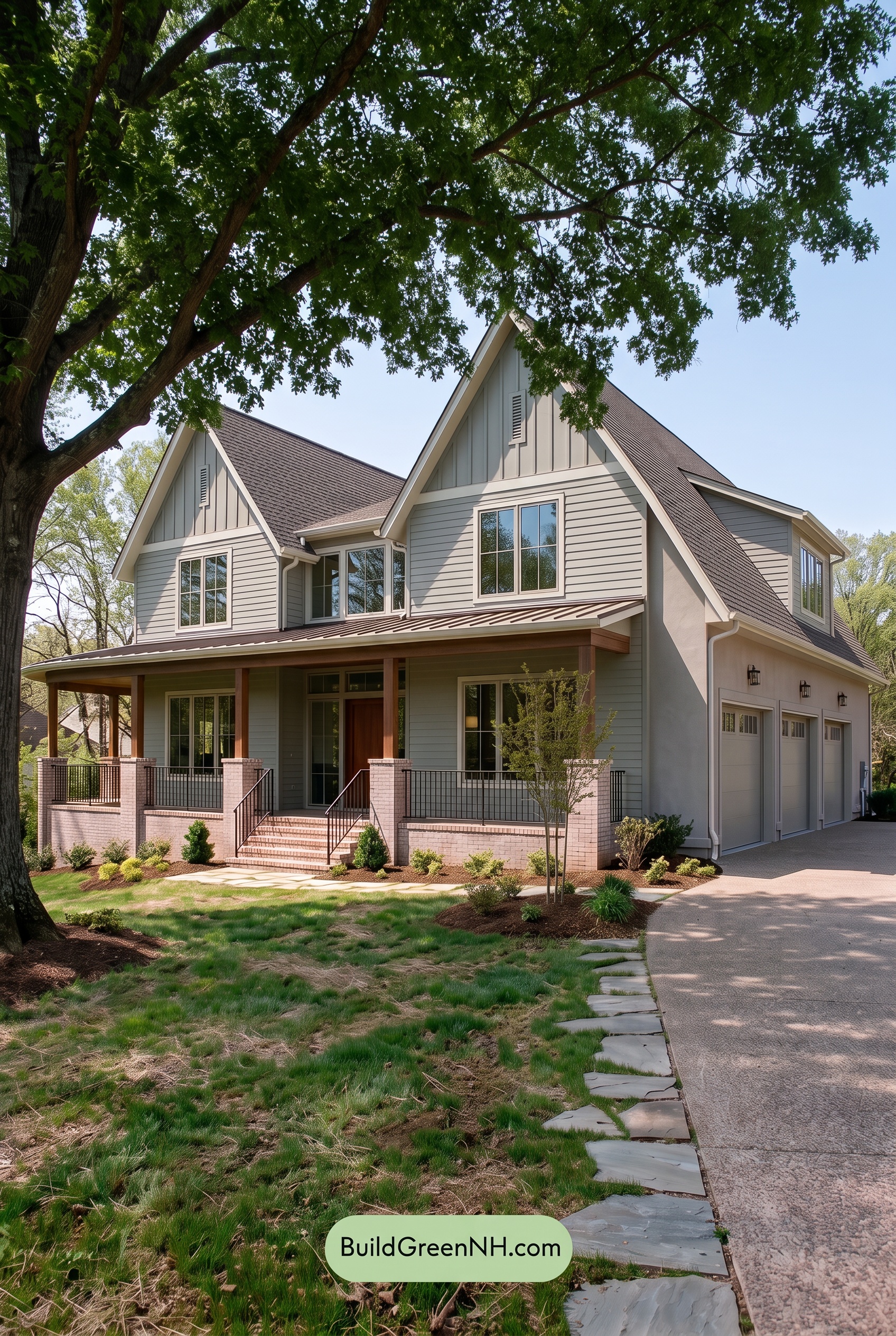
In shade, the light grays appear deeper and cooler than they would in neutral daylight, with subtle blue-green undertones becoming more noticeable. The whites lose some brightness and take on a soft gray cast, keeping the contrast clear without feeling stark. Beneath the porch, deeper shadows make the same gray shades look noticeably darker than those on the open gables.
The warm browns also deepen, but their reddish warmth and apparent saturation become more subdued. Against the cooler grays, they still offer a welcoming touch. Compared with neutral daylight, the shaded palette feels quieter and more sheltered, with gentle color shifts giving the exterior depth.
Nighttime
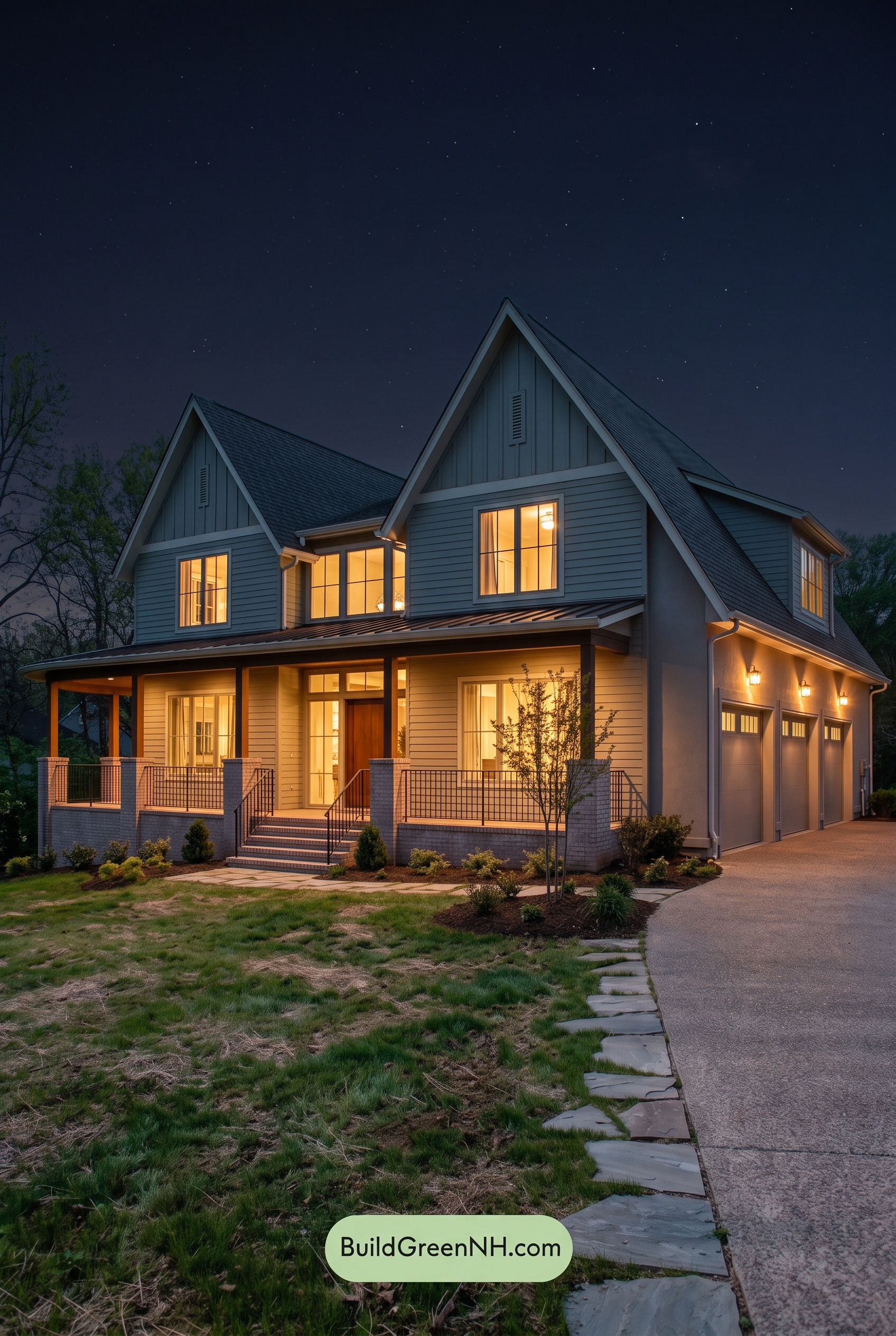
At night, the gray siding looks deeper and cooler, taking on a blue-gray cast across the upper gables rather than the more balanced gray of neutral daylight. Subtle color differences become less distinct in shadow, while warm lighting washes the lower walls and garage doors with soft beige undertones. The white trim shifts, too: muted and cool along the roofline, but creamy near the glowing windows and porch lights.
The brown door and columns appear richer where illuminated, then deepen into dark brown beneath the porch roof. Gray railings recede toward nearly black silhouettes, sharpening their contrast with the softly lit walls. Compared with daylight’s even clarity, this mix of cool shadows and warm highlights gives the exterior a cozier, more dramatic mood.
Pin these for later:
Want More?
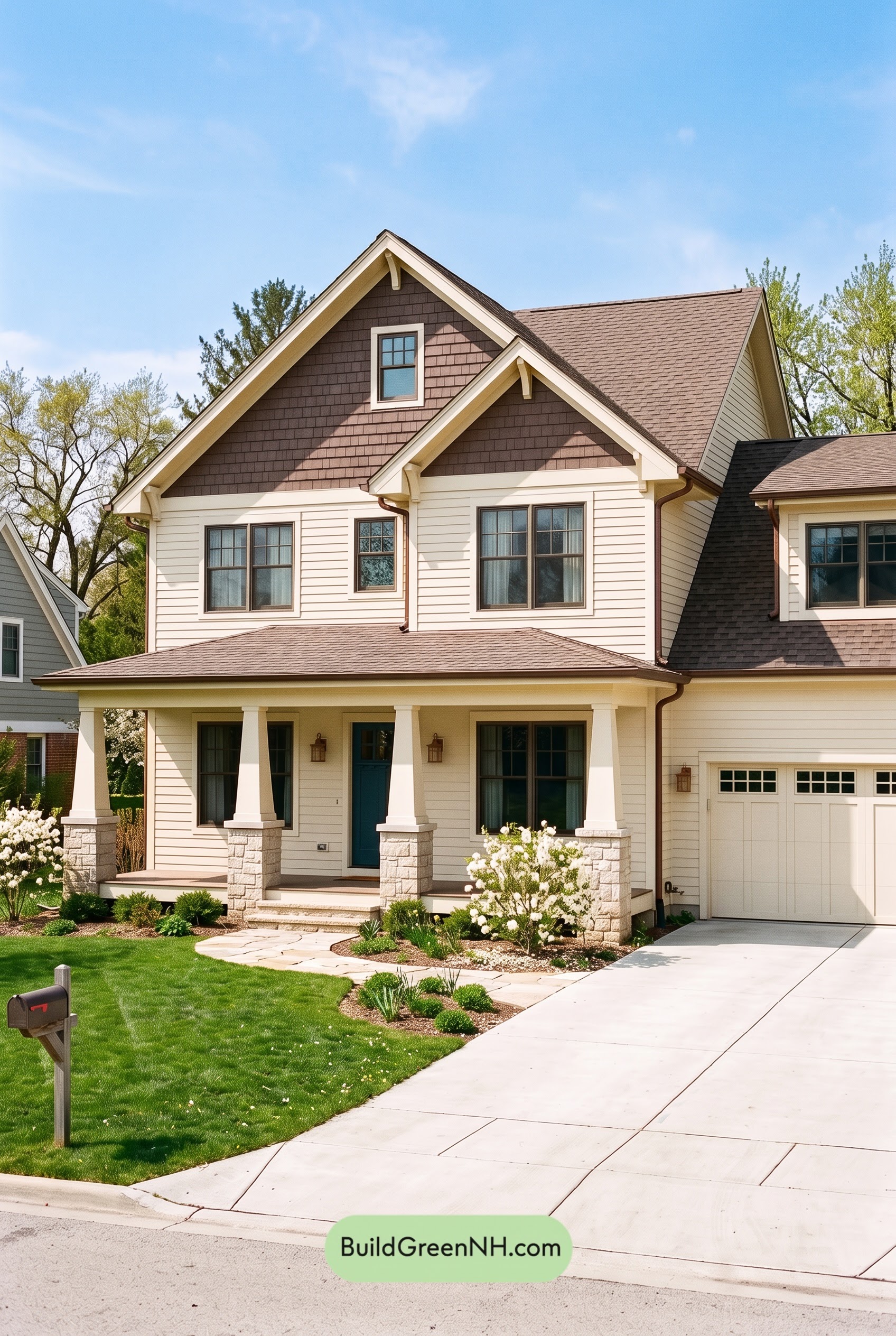 Cream Exterior Paint Color Schemes With a Brown Roof: Cream and Teal Welcome
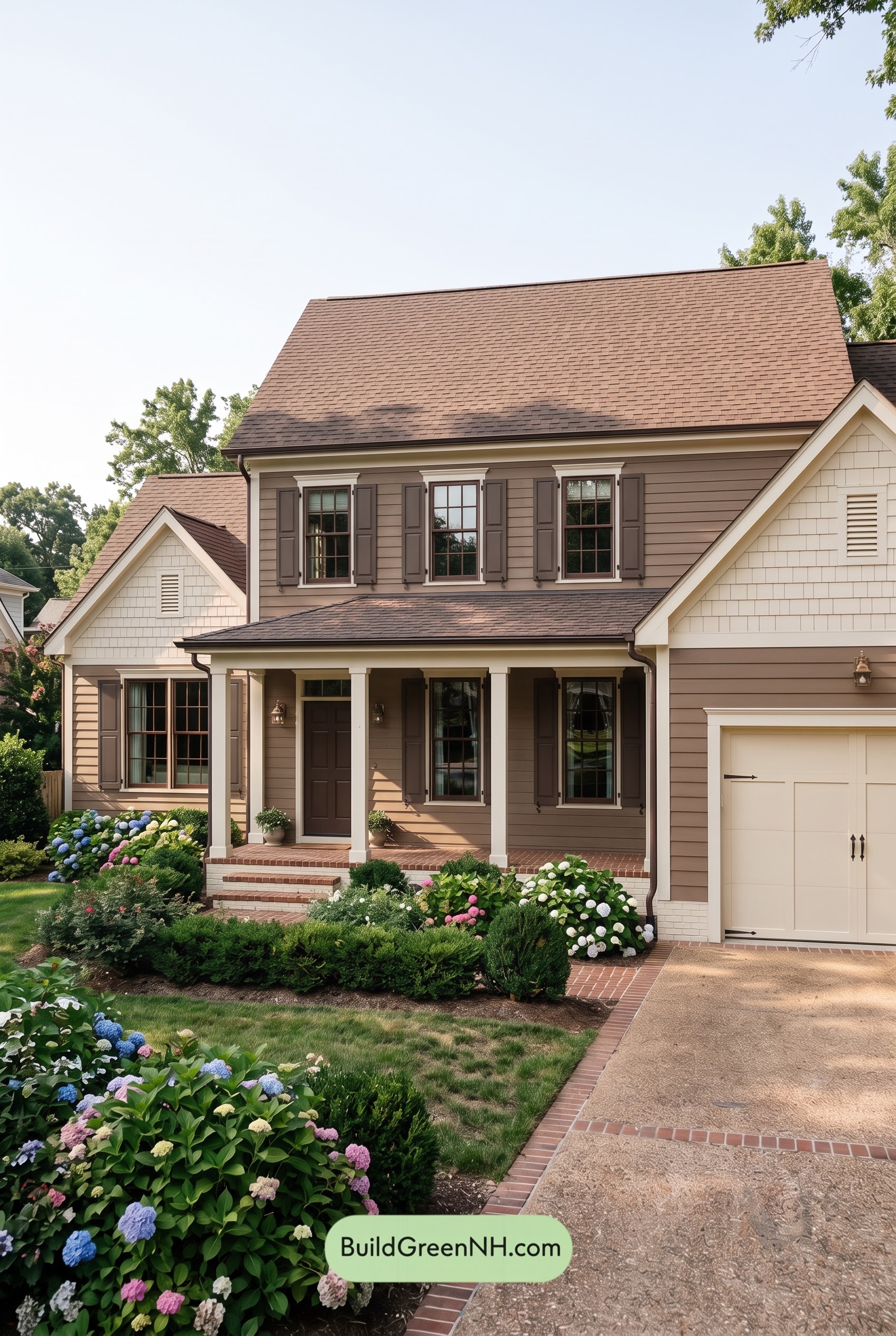 Cream Exterior Paint Color Schemes With a Brown Roof: Cocoa and Burgundy Embrace
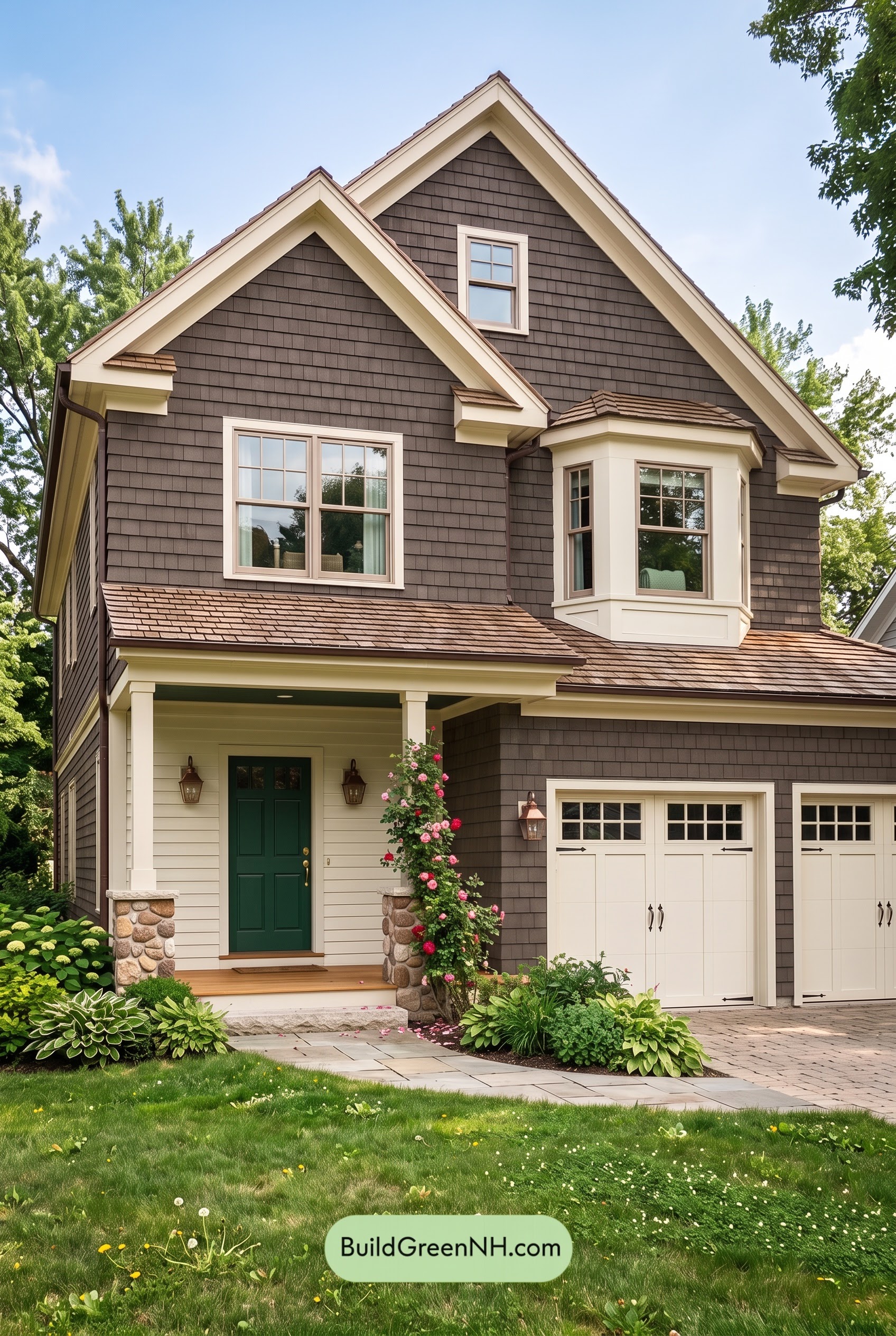 Cream Exterior Paint Color Schemes With a Brown Roof: Cocoa and Green Grace
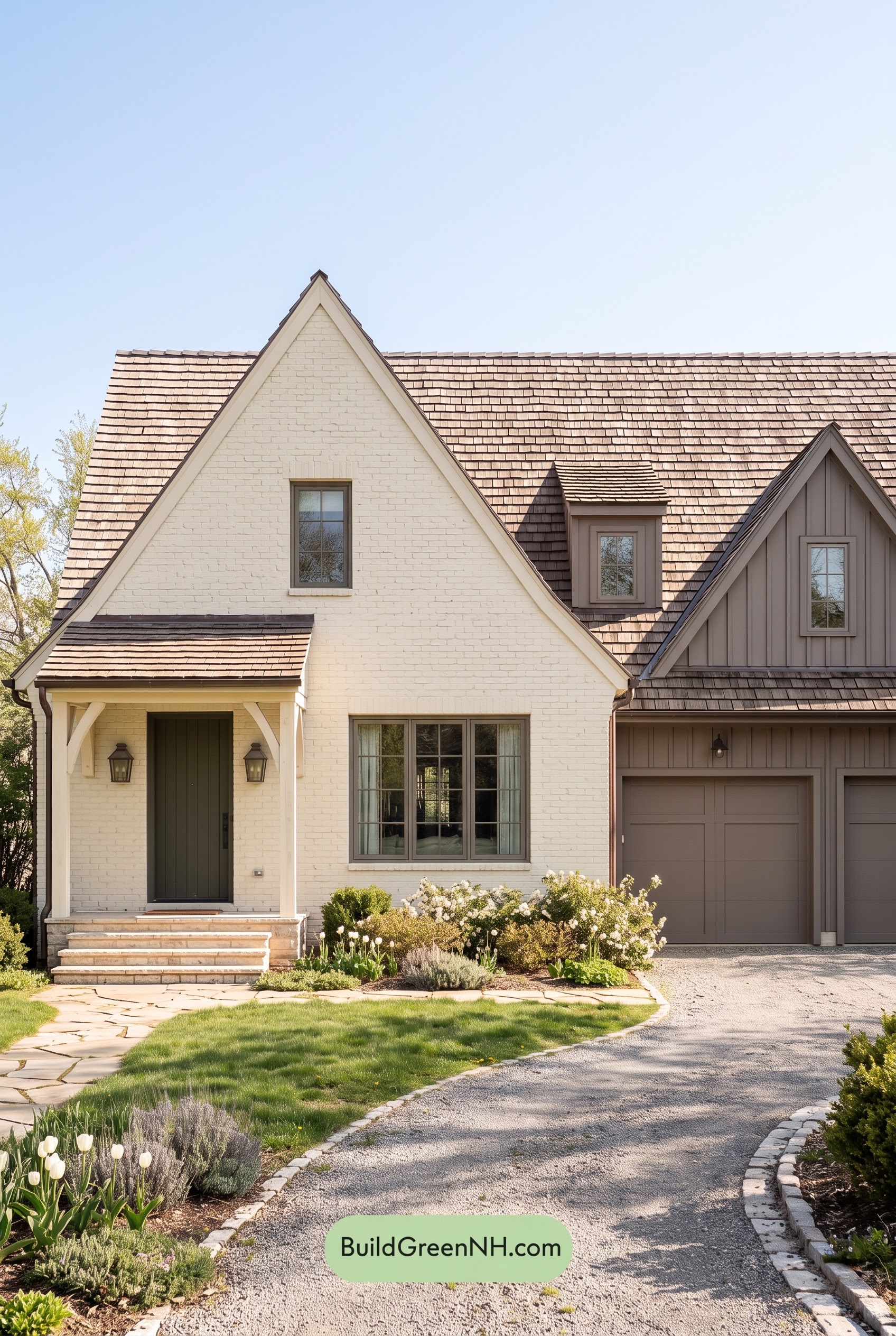 Cream Exterior Paint Color Schemes With a Brown Roof: Cream and Sage Serenity
 Cream Exterior Paint Color Schemes With a Brown Roof: Cocoa and Navy Assurance
Table of Contents